Cider-Braised Chicken with Caramelized Onions and Herbs: A Cozy, Flavor-Packed Fall Feast
Imagine the most comforting aroma filling your kitchen: sweet apples, savory herbs, and tender chicken mingling together. This Cider-Braised Chicken with Caramelized Onions and Herbs recipe is the ultimate one-pot wonder for chilly evenings. It transforms simple ingredients into a deeply flavorful, company-worthy meal with minimal fuss. The process of braising, a classic cooking method, ensures the chicken becomes incredibly succulent while the sauce reduces to a glossy, rich glaze.
This dish is a celebration of autumn’s bounty, featuring hard apple cider and fresh herbs. The caramelized onions add a foundational sweetness that perfectly balances the cider’s tang. Ultimately, you create a symphony of flavors that is both rustic and elegant. Serve it over mashed potatoes or crusty bread to soak up every last drop of the incredible sauce. Let’s explore how to master this comforting braised chicken dinner.
Furthermore, this recipe is wonderfully adaptable. You can use bone-in, skin-on chicken thighs for maximum flavor or opt for breasts if you prefer. Similarly, the herbs are flexible based on what you have fresh in your garden or fridge. This Cider-Braised Chicken with Caramelized Onions and Herbs is more than just a meal; it’s an experience that brings warmth and joy to your table.
Quick Recipe Highlights
- Flavor Profile: This dish boasts a beautiful sweet-and-savory balance. The apple cider provides a fruity acidity, while the caramelized onions contribute a deep, umami-rich sweetness. Fresh herbs like thyme and rosemary add an aromatic, earthy backbone that ties everything together.
- Texture: You get wonderfully tender, fall-off-the-bone chicken from the braising process. The caramelized onions melt into the sauce, creating a velvety, luxurious texture. The chicken skin, if seared properly, offers a delightful contrast with its crispness.
- Aroma: As it cooks, your kitchen will fill with the inviting scents of sautéing onions, toasting herbs, and reducing apple cider. It’s a quintessential autumnal fragrance that promises a delicious, hearty meal is on its way.
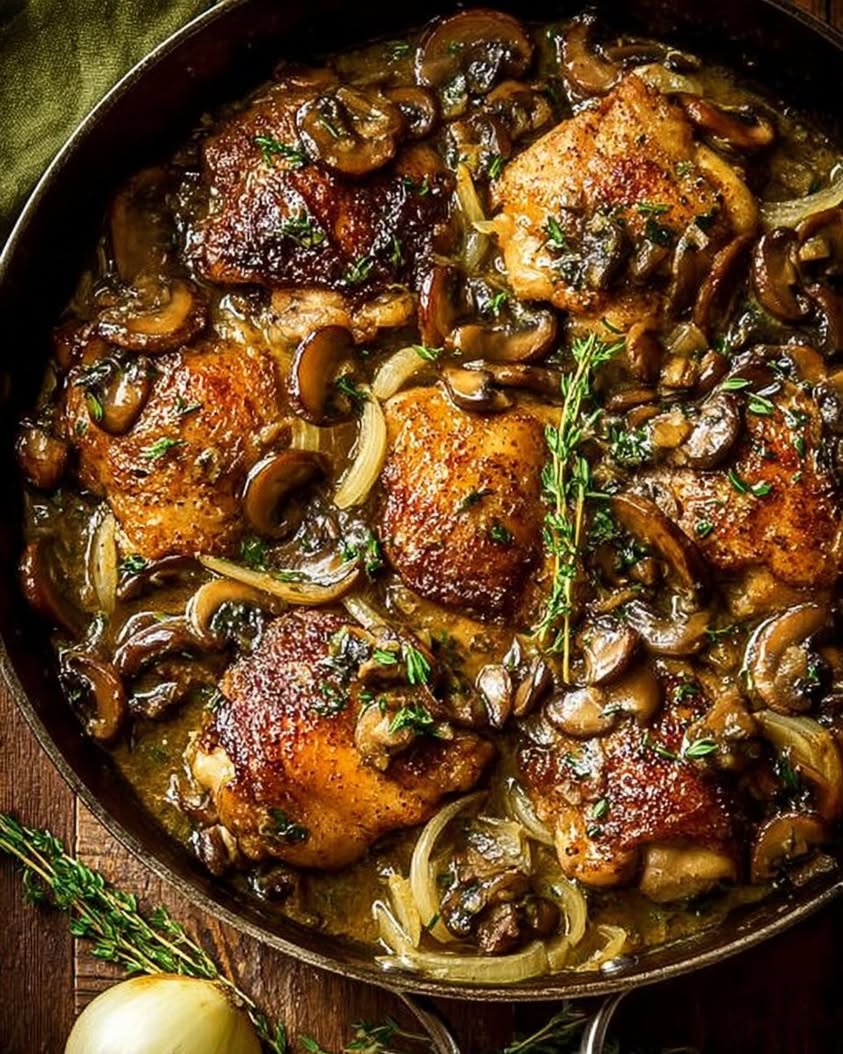
- Visual Appeal: The finished dish presents beautifully with golden-brown chicken nestled in a rich, amber-colored sauce. Garnished with fresh herbs, it looks rustic and elegant, perfect for serving directly from the Dutch oven at the table.
- Skill Level Needed: This recipe is accessible to intermediate home cooks. It requires patience for caramelizing onions and confidence in searing meat. However, the braising itself is largely hands-off, making it a great recipe to build foundational skills.
- Special Equipment: A heavy-bottomed Dutch oven or large oven-safe pot with a lid is essential for even heat distribution and successful braising. You’ll also need a good wooden spoon for stirring the onions.
Recipe Overview
- Difficulty Level: We rate this Cider-Braised Chicken with Caramelized Onions and Herbs as moderate. The techniques involved—properly searing chicken and patiently caramelizing onions—require attention to detail. However, the steps are sequential and clearly defined, making it an excellent project for cooks looking to level up their skills without excessive stress.
- Category: This is a quintessential main course, ideal for a family dinner or entertaining guests. It falls squarely into the comfort food category but with a touch of gourmet flair. It’s a hearty, satisfying dish that serves as the centerpiece of any meal.
- Cuisine: While not tied to one specific region, this recipe draws heavily from French and American farmhouse traditions. The technique of braising is classic French, while the use of apple cider is a nod to autumn harvests in places like New England and the Pacific Northwest.
- Cost: This is a cost-effective meal, especially if you purchase chicken thighs, which are often more affordable than breasts. Onions, cider, and basic herbs are inexpensive staples. Using a dry hard cider for cooking and a splash for the cook keeps the budget in check while maximizing flavor.
- Season: This recipe shines in the fall and winter. Apple cider is at its peak freshness in autumn, and the hearty, warming nature of braised dishes is perfect for colder weather. It’s a fantastic way to utilize seasonal produce and create a meal that matches the cozy atmosphere.
- Occasion: Perfect for Sunday family dinners, casual dinner parties, or holiday gatherings like Thanksgiving or Friendsgiving. Its make-ahead potential also makes it a brilliant choice for potlucks or preparing during weekend meal prep for easy weekday dinners.
Why You’ll Love This Recipe
First and foremost, the taste and texture of this Cider-Braised Chicken with Caramelized Onions and Herbs are utterly irresistible. The braising process breaks down the chicken’s connective tissue, resulting in meat so tender it practically dissolves on your tongue. Meanwhile, the sauce reduces to a concentrated, glossy essence of cider and onion that clings to every bite. Each forkful delivers a complex harmony of sweet, savory, and herbal notes that is deeply satisfying and far greater than the sum of its parts.
From a convenience standpoint, this braised chicken dinner is a winner. It’s a one-pot meal, meaning fewer dishes to wash. After the initial searing and sautéing, the oven does most of the work, freeing you up to set the table or prepare sides. Additionally, the flavors actually improve when made a day ahead, making it a strategic choice for busy hosts. You can easily double the recipe to feed a crowd without significantly increasing your active kitchen time.
Nutritionally, this dish offers a good balance. Chicken thighs provide high-quality protein and essential nutrients like iron and zinc. Onions are rich in antioxidants and prebiotic fibers that support gut health. Using a whole, unprocessed ingredient like hard apple cider adds flavor without the need for excessive salt or artificial additives. By controlling the ingredients, you create a wholesome, comforting meal from scratch.
The social and entertaining value of this recipe is high. There’s something profoundly welcoming about serving a fragrant, steaming pot of braised chicken directly to the table. It encourages sharing and conversation. This dish feels special and thoughtfully prepared, impressing guests with its depth of flavor, yet it doesn’t require last-minute fussing. It’s the kind of meal that makes people feel cared for and content.
Finally, this Cider-Braised Chicken with Caramelized Onions and Herbs is remarkably cost-effective and accessible. The ingredients are pantry-friendly and easy to find at any grocery store. Chicken thighs are an economical cut that becomes luxurious through slow cooking. You can often find local apple cider at farmers’ markets for an authentic touch. This recipe proves that you don’t need expensive ingredients to create a restaurant-quality, memorable meal at home.
Historical Background and Cultural Significance
The technique of braising is one of humanity’s oldest cooking methods, dating back to the earliest use of pots over fire. Essentially, it was a practical way to tenderize tougher, less desirable cuts of meat by cooking them slowly in liquid. Every culture with a pottery tradition has some form of braised dish. The specific combination of poultry with fruit, however, has strong roots in European culinary history, particularly in regions like Normandy, France, where chicken cooked with apples and cider is a classic.
In America, the use of apple cider in cooking is deeply tied to colonial and early American history. Settlers planted apple orchards not just for eating apples, but for cider—a crucial, often safer alternative to water. Using this abundant, locally-produced cider to braise meat was a natural evolution of resourcefulness. This Cider-Braised Chicken with Caramelized Onions and Herbs recipe is a modern homage to that tradition, blending Old World technique with New World ingredients.
The recipe has evolved significantly from its humble origins. Originally, it would have been cooked in a heavy iron pot over an open hearth for many hours. Today, our modern ovens and Dutch ovens give us precise temperature control, allowing for more consistent and often quicker results. The inclusion of deliberate caramelization of onions reflects a more contemporary understanding of building layered flavors, a concept emphasized in modern culinary training.
Regional variations of this dish abound. In Brittany, you might find a similar dish using dry Breton cider and crème fraîche. In the American South, a version could include a splash of bourbon alongside the cider. Some cooks add root vegetables like carrots and parsnips to the pot for a complete meal. The beauty of this Cider-Braised Chicken recipe is its adaptability; it serves as a canvas for regional tastes and personal preferences while maintaining its core comforting identity.
Ingredient Deep Dive
Chicken Thighs (Bone-in, Skin-on): This cut is the hero of any braised chicken dinner for good reason. The bone contributes immense flavor to the braising liquid and helps conduct heat evenly. The skin, when seared, provides a protective layer that keeps the meat moist and adds crucial textural contrast and richness. Culturally, using the whole animal, including these flavorful but less tender cuts, reflects a nose-to-tail philosophy that minimizes waste. Nutritionally, thighs contain more iron and zinc than white meat. For the best results, choose thighs that are similar in size for even cooking, and pat them extremely dry before searing to achieve that perfect golden crust.
Hard Apple Cider: This is the soul of the dish, not just a liquid. Hard cider brings a complex blend of apple sweetness, fermentation acidity, and subtle tannins. Its history as a staple beverage in Europe and colonial America is long and storied. For cooking, select a dry, still cider rather than a sweet or sparkling one, as the dryness won’t overpower the dish with sugar. The alcohol cooks off, leaving behind a concentrated apple essence. If you cannot find hard cider, a combination of good-quality fresh apple cider and a splash of white wine or apple cider vinegar can mimic its flavor profile.
Yellow Onions: The process of slowly caramelizing onions is transformative. It breaks down their sharp, sulfuric compounds through the Maillard reaction, creating new molecules that offer deep sweetness and umami. This forms the flavor foundation for the entire sauce. Onions are rich in quercetin, an antioxidant, and prebiotic fibers that feed beneficial gut bacteria. To caramelize them perfectly, slice them evenly and cook them low and slow with a pinch of salt. Rushing this step by using too high heat will cause them to burn rather than caramelize. Store whole onions in a cool, dark, dry place with good air circulation.
Fresh Herbs (Thyme & Rosemary): Fresh herbs are non-negotiable for their bright, aromatic qualities. Thyme offers a subtle, earthy lemon note, while rosemary provides a piney, robust fragrance that stands up to long cooking. Historically, these Mediterranean herbs have been used for centuries both for flavor and their perceived medicinal properties. They contain beneficial volatile oils and antioxidants. When selecting, look for perky, vibrant green sprigs without any wilting or black spots. To store, wrap them loosely in a damp paper towel and place in a resealable bag in the refrigerator. For a substitution, you can use sage or marjoram, but avoid dried herbs in the same quantity as they can become bitter.
Common Mistakes to Avoid
- Not Drying the Chicken: Failing to pat the chicken thighs completely dry with paper towels before searing is a critical error. Moisture on the surface creates steam, which prevents the skin from crisping up and achieving that essential golden-brown sear. Always take this simple step for a better texture and flavor foundation.
- Overcrowding the Pot During Searing: If you put all the chicken in the pot at once, the temperature drops drastically. Consequently, the chicken steams and releases its juices instead of searing. Sear in batches to ensure each piece has contact with the hot surface, creating a proper fond (the browned bits) on the bottom of the pot.
- Rushing the Onions: Caramelizing onions cannot be hurried. Cooking them over medium-high heat will cause them to burn on the outside while remaining raw and pungent inside. True caramelization requires low, slow heat and frequent stirring over 25-30 minutes to develop their natural sugars and deep, sweet flavor.
- Using Sweet Cider: Opting for a sweet commercial cider or apple juice can make the final sauce cloying and one-dimensional. A dry, alcoholic hard cider provides a more complex, balanced acidity that reduces to a sophisticated sauce. The alcohol also helps deglaze the pan and extract flavors from the fond.
- Adding Herbs Too Early: If you add delicate fresh herbs like thyme at the very beginning of braising, their flavor can become muted or bitter. Instead, add a portion early for foundational flavor and stir in a fresh garnish just before serving to brighten the entire dish.
- Not Reducing the Sauce Enough: After braising, the cooking liquid will be flavorful but thin. Skipping the reduction step on the stovetop means you’ll have a watery sauce. Simmer it uncovered until it thickens slightly and coats the back of a spoon for a luxurious, glaze-like consistency.
- Overcooking the Chicken: While braising is forgiving, chicken can still become dry if left in the oven for too long. The meat is done when it reaches an internal temperature of 165°F and pulls away from the bone easily. Use a meat thermometer for precision.
- Forgetting to Season in Layers: Seasoning only at the end results in a bland dish. Season the chicken before searing, season the onions as they cook, and always taste and adjust the seasoning of the sauce after reducing. This builds depth of flavor at every stage.
Essential Techniques
Patting Chicken Dry: This is the single most important step for achieving a perfect sear. Surface moisture is the enemy of browning because water must evaporate before the Maillard reaction (browning) can occur. By using paper towels to thoroughly dry the skin, you ensure immediate contact with the hot oil, leading to a crisp, golden crust that seals in juices and adds tremendous flavor to both the chicken and the subsequent sauce.
Building a Fond: The fond refers to the browned, caramelized bits of protein and sugars that stick to the bottom of the pot after searing the chicken and sautéing the onions. This layer is pure flavor. The key technique is deglazing: adding liquid (like cider) and using a wooden spoon to scrape these bits loose. This dissolves the fond into your braising liquid, creating a rich, complex base for your sauce. Never let these precious bits burn; adjust heat as needed.
Low-and-Slow Caramelization: True caramelization is a chemical process that slowly converts the sugars in onions into new, complex compounds. The technique requires patience: slice onions evenly, cook them in fat over medium-low heat, and stir frequently. A pinch of salt helps draw out moisture. They are done when they are uniformly soft, deeply golden brown, and sweet, which should take at least 25-30 minutes. Rushing this creates burnt, bitter flavors.
The Braise Itself: Braising combines two cooking methods: initial high-heat searing (dry heat) followed by simmering in liquid (moist heat) in a covered pot. The technique tenderizes tough cuts by gently breaking down collagen into gelatin over time. For success, ensure the braising liquid comes about halfway up the sides of the chicken, not submerging it completely. This allows the exposed top to continue browning slightly while the bottom simmers. A tight-fitting lid is crucial to retain moisture and heat.
Pro Tips for Perfect Cider-Braised Chicken
First, for the crispiest skin, let the patted-dry chicken thighs sit uncovered on a plate in the refrigerator for 30 minutes before cooking. This further dries the skin surface. Second, use a neutral oil with a high smoke point, like avocado or grapeseed oil, for searing. Olive oil can burn at the high temperatures needed for a good sear. Third, when caramelizing onions, if they seem to be drying out or cooking too quickly, add a tablespoon of water to the pan. This will deglaze the bottom and slow the cooking, preventing burning.
Fourth, after removing the cooked chicken to rest, don’t just reduce the sauce. Instead, use a fat separator or carefully spoon off excess fat from the surface before reducing. This results in a cleaner, more refined sauce that isn’t greasy. Fifth, if your sauce isn’t thickening to your liking, create a quick slurry by mixing a teaspoon of cornstarch with a tablespoon of cold water. Whisk this into the simmering sauce until it reaches the desired consistency.
Sixth, for an extra layer of flavor, add a tablespoon of whole grain mustard or a teaspoon of apple cider vinegar to the sauce during the reduction step. This brightens the flavor and cuts through the richness. Seventh, always let the braised chicken rest for about 10 minutes after removing it from the oven and before serving. This allows the juices to redistribute throughout the meat, ensuring every bite is moist.
Variations and Adaptations
For regional variations, consider a French twist by adding a cup of sliced mushrooms when sautéing the onions and finishing the reduced sauce with a swirl of crème fraîche. For a German-inspired version, use a dark beer in place of half the cider and add a few juniper berries and a bay leaf during the braise. An American Southern adaptation might include a diced apple in with the onions and a splash of bourbon added when deglazing the pan.
Seasonal adaptations are simple. In spring, use fresh sage and tarragon instead of rosemary and thyme, and add a handful of fresh peas to the pot during the last 5 minutes of cooking. For a summer version, use a lighter, crisper cider and finish the dish with a bright gremolata made of lemon zest, parsley, and garlic sprinkled on top. In deep winter, add root vegetables like parsnips, turnips, or carrots to the pot to braise alongside the chicken for a complete one-pot meal.
Dietary modifications are straightforward. For a gluten-free meal, ensure your hard cider is certified gluten-free (most are) and serve with gluten-free sides like polenta or rice. To make it dairy-free, simply omit any butter used for finishing the sauce; the dish is rich enough without it. For a lower-carb or keto version, thicken the sauce with a xanthan gum slurry instead of flour and serve over mashed cauliflower or roasted vegetables instead of potatoes.
Flavor variations can personalize the dish. Add warmth with a pinch of red pepper flakes or a cinnamon stick during the braise. For a deeper umami punch, stir a tablespoon of tomato paste into the onions after they caramelize and let it cook for a minute before deglazing. For a brighter, more acidic profile, use a combination of half cider and half dry white wine. Texture can be modified by using skinless thighs for a leaner result or adding pearl onions in addition to the caramelized slices for a pleasant pop.
Serving and Presentation Guide
Plating techniques matter for this rustic yet elegant dish. For family style, present the entire Dutch oven at the table, allowing guests to serve themselves—this creates a warm, communal feel. For individual plating, place a portion of your chosen base (mashed potatoes, polenta, or crusty bread) in the center of a shallow bowl. Nestle one or two chicken thighs on top, then spoon the caramelized onions and ample sauce generously over and around the chicken and base.
Garnishing is the final touch that elevates the visual appeal. A simple sprinkle of finely chopped fresh parsley, chives, or the reserved thyme leaves adds a vital pop of green color. For a more sophisticated look, a few delicate microgreens or edible flowers work beautifully. A final grind of black pepper over the top just before serving adds visual texture and a hint of fresh spice.
Traditional accompaniments include creamy mashed potatoes, buttery egg noodles, or a thick slice of crusty, toasted sourdough bread to soak up the sauce. Modern serving suggestions might feature creamy polenta, cauliflower puree, or a bed of wilted kale or spinach for a healthier twist. A simple side salad with a sharp vinaigrette helps cut through the richness of the main dish. Remember to consider temperature: serve the braised chicken and its sauce piping hot, while any side salad should be cool and crisp for contrast.
Wine and Beverage Pairing
Wine pairings for this Cider-Braised Chicken should complement its sweet, savory, and herbal notes. A medium-bodied white wine with good acidity is ideal. A French Chardonnay (unoaked or lightly oaked) from Burgundy or a dry Riesling from Alsace will mirror the apple notes and cut through the richness. For red wine lovers, choose a lighter, low-tannin red like a Pinot Noir or a French Beaujolais. Their bright red fruit flavors won’t overpower the dish and will harmonize with the caramelized onions.
Non-alcoholic alternatives can be just as thoughtful. Sparkling apple cider or a non-alcoholic dry cider served in a wine glass makes a perfect thematic match. For a more complex option, try a ginger beer with a squeeze of lime, as the spice plays well with the herbs. Iced herbal tea, like a rosemary or thyme-infused tea, can echo the herbal elements in the dish. Serve all non-alcoholic beverages well-chilled to provide a refreshing counterpoint to the warm, braised food.
If serving this as a cozy weekend lunch, consider coffee or tea pairings. A medium-roast coffee with low acidity and notes of caramel or nut will complement the sweet onions without clashing. For tea, a smoky Lapsang Souchong can stand up to the robust flavors, or a gentle chamomile tea can provide a soothing finish. The key is to avoid overly bitter or astringent beverages that would compete with the balanced sauce. Ultimately, let the season and occasion guide your choice.
Storage and Shelf Life
Proper storage is key to enjoying leftovers. First, allow the Cider-Braised Chicken with Caramelized Onions and Herbs to cool to room temperature, but do not leave it out for more than two hours to prevent bacterial growth. Then, transfer the chicken and sauce to an airtight container. You can store them together or separately, but keeping the chicken submerged in the sauce helps prevent it from drying out. Refrigerate promptly; it will keep safely for 3 to 4 days.
For freezing, this dish is an excellent candidate. Place cooled portions in freezer-safe containers or heavy-duty zip-top bags, removing as much air as possible. Label with the date. Properly stored, it will maintain best quality for 2 to 3 months, though it remains safe beyond that. Thaw overnight in the refrigerator before reheating. Note that the texture of the onions may become slightly softer after freezing and thawing, but the flavor will remain excellent.
Reheating instructions are simple but important. For best results, reheat gently on the stovetop over low heat, adding a splash of water or chicken broth if the sauce has thickened too much. You can also reheat in a covered oven-safe dish at 300°F until warmed through. If using a microwave, use a lower power setting and stir occasionally to ensure even heating. Always ensure the internal temperature reaches 165°F before serving again. Signs of spoilage include an off smell, a sour taste, or visible mold; when in doubt, throw it out.
Make Ahead Strategies
This braised chicken dinner is a make-ahead dream, as the flavors meld and deepen overnight. You can complete the entire recipe 1-2 days in advance. After cooking, let it cool completely, then store it in the refrigerator in its cooking vessel (if oven-safe) or an airtight container. The fat will rise and solidify on top, which actually acts as a protective seal. When ready to serve, gently reheat it on the stovetop or in a 300°F oven until bubbling hot, skimming off the solidified fat layer first if desired.
For a prep timeline, you can break down the steps. The day before, you can caramelize the onions and store them in the fridge. You can also trim and dry the chicken thighs. On cooking day, you simply need to sear the chicken, deglaze with cider, and combine everything for the braise. This splits the active cooking time and makes the process feel much quicker. Storing components separately for a day has minimal impact on quality, especially for the onions.
When making ahead, consider what elements to add fresh. If you plan to garnish with fresh herbs, add them upon reheating or just before serving to preserve their vibrant color and aroma. If you’ve added vegetables like carrots to the braise, they will hold up well. For the best texture, if you’ve made it more than a day in advance, you may want to remove the chicken from the bone after the first chill, as it can become extremely tender. Then reheat the meat in the sauce to prevent it from overcooking and becoming stringy.
Scaling Instructions
Scaling this Cider-Braised Chicken recipe up or down is straightforward, but requires attention to equipment and timing. For halving the recipe to serve two, simply divide all ingredient quantities in half. Use a smaller Dutch oven or heavy pot (like a 3-quart size) to ensure the braising liquid still comes halfway up the chicken pieces. The cook time may be slightly reduced by 10-15 minutes; always rely on the internal temperature of 165°F as your guide.
Doubling or tripling the recipe for a crowd is easy, but you must adjust your equipment. Do not overcrowd a single pot; the chicken needs space to sear properly in batches, and the onions need room to caramelize evenly. Use the largest Dutch oven you have, or consider using two separate pots. You may need to increase the initial searing time in batches. The oven braising time will remain roughly the same, as the heat penetrates the food, not the volume of the pot. However, allow extra time for the larger volume of sauce to reduce on the stovetop after braising.
Storage considerations change when scaling. A doubled recipe will yield more leftovers, so ensure you have enough appropriate-sized containers for refrigeration or freezing. When reheating a large batch, it’s often better to reheat only the portion you plan to serve immediately to maintain the best texture of the remaining chicken. Remember, scaling a recipe is not just about multiplying numbers; it’s about managing the process to ensure consistent, high-quality results for every guest.
Nutritional Deep Dive
This Cider-Braised Chicken with Caramelized Onions and Herbs offers a balanced macronutrient profile. A typical serving provides a substantial amount of high-quality protein from the chicken thighs, essential for muscle repair and satiety. The fat content, primarily from the chicken skin and cooking oil, contributes to the feeling of fullness and carries the fat-soluble flavors of the herbs and spices. The carbohydrates come mainly from the onions and the natural sugars in the cider, providing energy. This dish is not overly high in carbs, making it adaptable to various dietary approaches.
Micronutrient analysis reveals several benefits. Chicken thighs are an excellent source of B vitamins, particularly B12 and niacin, which are crucial for energy metabolism and nervous system health. They also provide minerals like selenium, zinc, and iron. Onions are rich in vitamin C, B vitamins, and potassium, and they contain the antioxidant quercetin, which has anti-inflammatory properties. The herbs, though used in small quantities, contribute trace amounts of vitamins and beneficial plant compounds. Using bone-in chicken may also impart minimal minerals like calcium and magnesium into the sauce.
From a health perspective, this is a whole-food-based meal without processed ingredients. The cooking method of braising helps retain nutrients that might be lost in boiling. For weight management, the high protein and fat content promote satiety, which can help prevent overeating. To make it even lighter, you can remove the chicken skin after cooking and skim excess fat from the sauce before serving. Portion control is easy: one to two thighs with a generous serving of vegetables makes a complete and satisfying meal.
Dietary Adaptations
For a gluten-free version, this recipe is naturally compliant as long as you verify your hard cider is gluten-free (most are, but check labels if you have celiac disease). Also, ensure any broth used is certified gluten-free. Serve with gluten-free sides like mashed potatoes, rice, or polenta. Thicken the sauce with a cornstarch slurry instead of flour if needed.
This dish is easily made dairy-free, as the core recipe contains no dairy. Simply avoid finishing the sauce with a pat of butter at the end. The richness from the chicken skin and reduced cider creates a luxurious sauce without any need for dairy. For a vegan adaptation, it’s more challenging but possible. Substitute chicken with large, meaty king oyster mushrooms or seitan pieces. Use vegetable broth and a non-alcoholic apple cider. The caramelized onion and herb base will still provide incredible flavor.
For low-carb and keto diets, this recipe works well with minor adjustments. Ensure you use a dry hard cider with no added sugar. Thicken the sauce, if desired, with a xanthan gum or glucomannan powder slurry instead of any flour or cornstarch. Serve the chicken and sauce over cauliflower mash, zucchini noodles, or simply on a bed of sautéed greens instead of potatoes or bread to keep carbs in check.
For a Paleo adaptation, use a sugar-free hard cider or substitute with chicken broth and a tablespoon of apple cider vinegar for tang. Make sure any bacon or broth used is sugar-free and compliant. For a Low-FODMAP version, the onions are a problem. Substitute with the green tops of leeks or scallions (green parts only), and use a garlic-infused oil instead of sautéing garlic cloves. Use a lactose-free hard cider if necessary.
Troubleshooting Guide
If your sauce is too thin, the likely cause is insufficient reduction. Return the pot to the stovetop and simmer uncovered, stirring occasionally, until it reduces to your desired consistency. Conversely, if the sauce is too thick or reduced too much, simply whisk in a splash of chicken broth, water, or even a bit more cider to loosen it to the right texture. Remember, the sauce will continue to thicken slightly as it cools on the plate.
If the chicken is tough, it is likely undercooked. Braising relies on time and low heat to break down collagen. Return it to the pot with more liquid if needed, cover, and continue cooking in a 300°F oven until fork-tender. If the chicken is dry, it may have been overcooked or used a very lean cut. Unfortunately, this is hard to fix, but serving it with plenty of the flavorful sauce will help mask the dryness. Next time, use bone-in, skin-on thighs and check temperature earlier.
If the dish tastes bland, the issue is almost always underseasoning. Braising liquids need ample salt to bring out the flavors of all the ingredients. Season in layers as described earlier. If it’s already cooked, you can still adjust by adding salt to the sauce in small increments, tasting as you go. A splash of acidity—like apple cider vinegar or lemon juice—can also brighten and define the flavors if they seem flat.
If the onions burned during caramelization, unfortunately, they will impart a bitter flavor to the entire dish. It’s best to discard them and start over, as that bitterness will permeate the sauce. To prevent this, always use low heat, add a pinch of salt to draw out moisture, and stir frequently. If the chicken skin didn’t crisp, the pot was likely overcrowded, the heat wasn’t high enough, or the chicken wasn’t dry enough. Patience and proper technique in the searing step are non-negotiable for the best results.
Recipe Success Stories
Community feedback on this Cider-Braised Chicken recipe has been overwhelmingly positive. Many home cooks report that it has become their go-to impressive-but-easy dinner for guests. One reader shared that she made it for a fall potluck and received multiple requests for the recipe, with guests marveling at the depth of flavor. Another mentioned that their family, usually hesitant about “fancy” chicken dishes, asked for seconds and now requests it regularly. These stories highlight the recipe’s universal appeal and reliability.
Variation successes from readers are inspiring. A home cook from the Pacific Northwest tried adding wild chanterelle mushrooms she foraged, creating an incredibly special autumn version. Another reader with a dairy allergy used the dairy-free adaptation and said it was the best chicken dish they’d made all year. A parent shared that they successfully hid extra vegetables like finely chopped carrots and celery in the onion mix, and their kids devoured it without complaint, proving its versatility as a family meal.
Reader suggestions have also improved the recipe. One astute cook recommended adding a single star anise pod during the braise for a subtle, intriguing spice note—a tip we now often share. Another suggested using a mix of chicken thighs and drumsticks for variety. Photography tips from readers include using a dark, rustic bowl for plating to make the golden sauce pop, and garnishing with a single fresh thyme sprig laid across the chicken for a simple, professional touch. This collaborative spirit makes the recipe even better over time.
Cider-Braised Chicken with Caramelized Onions & Herbs
- Total Time: 45 minutes
- Yield: 4
Description
A comforting, savory-sweet chicken dish where tender chicken thighs are braised in apple cider with deeply caramelized onions and fresh herbs for a rich, aromatic meal.
Ingredients
- 4 bone-in, skin-on chicken thighs
- 2 large yellow onions, thinly sliced
- 1 cup apple cider
- 1/2 cup chicken broth
- 3 cloves garlic, minced
- 2 sprigs fresh thyme
- 1 sprig fresh rosemary
- 2 tablespoons olive oil
- 1 tablespoon butter
- Salt and black pepper to taste
- 1 tablespoon all-purpose flour (optional, for thickening)
Instructions
- Season chicken thighs generously with salt and pepper. Heat olive oil in a large skillet or Dutch oven over medium-high heat. Add chicken, skin-side down, and sear until golden brown, about 5-7 minutes per side. Remove chicken and set aside.
- Reduce heat to medium-low. Add butter to the skillet, then add sliced onions. Cook, stirring occasionally, until onions are deeply caramelized and golden brown, about 20-25 minutes.
- Stir in minced garlic and cook for 1 minute until fragrant. Sprinkle flour (if using) over onions and stir to coat. Pour in apple cider and chicken broth, scraping up any browned bits from the bottom of the pan.
- Return chicken to the skillet, nestling it into the onions. Add thyme and rosemary sprigs. Bring to a simmer, then cover and reduce heat to low. Braise for 25-30 minutes, until chicken is cooked through and tender.
- Remove chicken and herbs. If desired, simmer sauce uncovered for 5-10 minutes to thicken slightly. Season sauce with salt and pepper to taste. Serve chicken topped with caramelized onions and sauce.
Notes
You can customize the seasonings to taste.
- Prep Time: 15 minutes
- Cook Time: 30 minutes
- Method: Main
- Cuisine: American