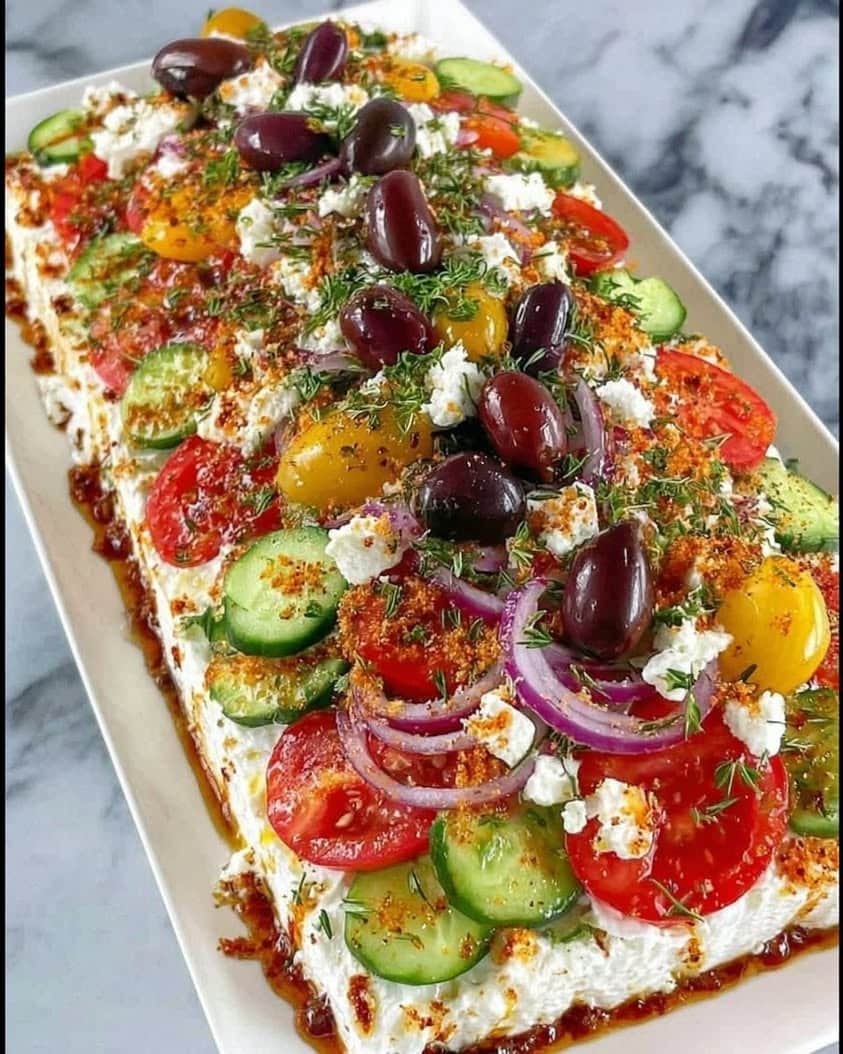
Greek Feta Board with Hot Honey + Crispy Fried Onions: The Ultimate Crowd-Pleasing Appetizer
Imagine a dish that perfectly captures the essence of a Mediterranean sunset: creamy, salty, sweet, and spicy all at once. This Greek Feta Board with Hot Honey and Crispy Fried Onions is exactly that. It transforms a simple block of feta into a stunning, shareable centerpiece that will have your guests gathering around the table in anticipation. Ultimately, this recipe is a masterclass in balancing bold flavors and contrasting textures for an unforgettable appetizer experience.
The magic of this Greek Feta Board lies in its beautiful simplicity and explosive taste. You start with a high-quality block of feta cheese, then you crown it with a generous drizzle of spicy-sweet hot honey. Next, you add a crunchy blanket of golden, crispy fried onions. The final result is a warm, melty, and utterly addictive dip or spread that pairs perfectly with crusty bread, fresh vegetables, or pita chips. Consequently, it’s the ideal starter for any gathering, from casual weeknights to festive dinner parties.
This dish is more than just cheese on a board; it’s a sensory journey. Firstly, the aroma of frying onions and warm honey is irresistible. Then, the visual appeal of the golden onions against the white feta is stunning. Finally, the first bite delivers a symphony of creamy saltiness, floral heat, and satisfying crunch. This Greek Feta Board with Hot Honey and Crispy Fried Onions is guaranteed to become your new favorite trick for effortless, impressive entertaining.
Quick Recipe Highlights
- Flavor Profile: This board delivers a perfect harmony of salty, creamy feta against the spicy-sweet kick of hot honey. The savory, umami depth from the crispy fried onions ties everything together for a complex and addictive taste.
- Texture: Experience a delightful contrast between the soft, warm, and slightly melty feta and the shattering, golden crunch of the fried onions. This combination creates a mouthfeel that is both luxurious and exciting.
- Aroma: The scent of onions caramelizing in olive oil fills your kitchen, followed by the warm, floral notes of honey infused with chili. These aromas promise a deeply flavorful and comforting dish.
- Visual Appeal: The presentation is rustic and elegant, featuring a stark white block of feta drizzled with glossy amber honey and topped with a golden-brown mound of crispy onions. It’s a visually striking centerpiece.
- Skill Level Needed: This recipe is beginner-friendly. The techniques involve simple pan-frying and assembly. Therefore, even novice cooks can achieve restaurant-quality results with minimal effort.
- Special Equipment: You only need a good skillet or frying pan and a slotted spoon. No special tools are required, making this an accessible recipe for any home kitchen.
Recipe Overview
- Difficulty Level: This Greek Feta Board is rated easy because it involves straightforward techniques like slicing and frying onions, and simple assembly. There is no complex cooking or baking required. The process is forgiving and focuses on layering flavors rather than precise culinary skills.
- Category: This dish falls perfectly into the appetizer and snack category. It is also an excellent meze, which is a selection of small dishes served in Mediterranean cuisine. Furthermore, it can function as a luxurious cheese course or a standout party food.
- Cuisine: The recipe is rooted in Greek and broader Mediterranean culinary traditions, celebrating ingredients like feta cheese and olive oil. The addition of hot honey adds a modern, global twist, creating a fusion that respects its origins while embracing contemporary flavor trends.
- Cost: This is a cost-effective appetizer. A block of feta, an onion, honey, and basic pantry spices form the core. Consequently, you can create an impressive dish for a crowd without a significant grocery bill, especially compared to purchasing pre-made cheese boards or dips.
- Season: This Greek Feta Board is truly a year-round recipe. It’s light and fresh enough for spring and summer gatherings, yet the warm, comforting elements make it equally suitable for cozy fall and winter evenings. It’s a versatile choice for any season.
- Occasion: It is perfect for casual entertaining, game day, potlucks, holiday parties, or even a special weeknight treat. Its shareable nature makes it ideal for social events where guests can graze and mingle around a beautiful, delicious centerpiece.
Why You’ll Love This Recipe
You will adore the incredible taste and texture appeal of this Greek Feta Board. The primary experience is one of beautiful contrast. The cool, tangy, and crumbly feta becomes wonderfully soft and spreadable when warmed by the hot honey. Simultaneously, the crispy fried onions add a necessary savory crunch that prevents the dish from feeling one-dimensional. Each bite is a layered adventure, moving from sweet heat to salty creaminess to savory crispness. This dynamic profile keeps you coming back for more, ensuring the board is always the first empty plate at the party.
The convenience and preparation benefits are another major reason to love this recipe. Unlike a complex charcuterie board requiring meticulous arrangement of dozens of items, this Greek Feta Board with Hot Honey and Crispy Fried Onions comes together with just a few key components. You can prepare the crispy onions and hot honey in advance, then simply assemble and warm the board before serving. This makes it a stress-free option for hosts who want to spend time with guests rather than stuck in the kitchen. It’s impressive without being intimidating.
From a nutritional perspective, this appetizer offers some distinct advantages when enjoyed in moderation. Feta cheese is a good source of calcium and protein. Using a high-quality olive oil for frying adds heart-healthy monounsaturated fats. Additionally, onions provide antioxidants and prebiotic fibers. While it is a rich dish, pairing it with fresh vegetable crudités like cucumber, bell peppers, and cherry tomatoes can balance the meal with vitamins and fiber. This allows you to indulge thoughtfully.
The social and entertaining value of this dish is unparalleled. A Greek Feta Board is inherently interactive and communal. Placed in the center of the table, it encourages conversation and sharing. Guests can customize their own bites, choosing more honey or more onions according to their preference. This interactive element makes it more engaging than individual pre-plated appetizers. It creates a focal point and a memorable experience that guests will talk about long after the event is over.
Finally, the cost-effectiveness and accessibility of the ingredients make this a go-to recipe. You likely have many components like olive oil, honey, and spices in your pantry already. Feta cheese and onions are inexpensive and available at any grocery store. For a relatively small investment, you can create a show-stopping dish that looks and tastes luxurious. This accessibility means you can enjoy a taste of gourmet entertaining any night of the week without breaking the bank.
Historical Background and Cultural Significance
The story of this dish begins with its cornerstone: feta cheese. Feta holds a protected designation of origin (PDO) status in the European Union, meaning true feta can only come from Greece. Its history stretches back thousands of years, with references to brined cheese appearing in ancient Greek texts. Traditionally, feta was made from sheep’s milk or a blend with goat’s milk, stored in wooden barrels, and preserved in brine. This method was practical for preservation and resulted in the tangy, crumbly cheese central to Greek cuisine. The practice of serving cheese as a meze, or small shared plate, is deeply embedded in Greek dining culture, emphasizing community and leisurely enjoyment of food.
The cultural importance of meze cannot be overstated in Greek and broader Mediterranean social life. Meze are not just appetizers; they are a style of eating that promotes conversation, sharing, and extended time at the table. A block of feta drizzled with olive oil and sprinkled with oregano is a classic, humble meze. This Greek Feta Board with Hot Honey and Crispy Fried Onions is a modern, elevated evolution of that tradition. It respects the communal spirit while introducing new global flavor profiles, illustrating how food traditions can adapt and thrive.
The evolution of this specific recipe reflects contemporary culinary trends. The addition of hot honey is a relatively new phenomenon that gained widespread popularity in the last decade, particularly in American food scenes. It combines the ancient use of honey as a sweetener with the modern love for spicy flavors. Applying this to feta is a natural yet innovative step. Similarly, using crispy fried onions adds a textural element inspired by various global cuisines. This fusion creates a dish that is both familiar and excitingly new, bridging traditional Greek practices with modern palates.
Regional variations of serving feta are abundant throughout Greece and the Mediterranean. In some areas, feta is baked in a phyllo pastry with honey and sesame seeds (Feta me Meli). In others, it is grilled or fried and served with a squeeze of lemon. The concept of adding something sweet, like fig jam or honey, to salty cheese is a common theme. This Greek Feta Board with Hot Honey and Crispy Fried Onions sits comfortably within this tradition of contrast while distinguishing itself with its specific combination of heat and crunch. It’s a testament to the endless adaptability of simple, quality ingredients.
Ingredient Deep Dive
Feta Cheese is the undisputed star. Authentic Greek feta, made from at least 70% sheep’s milk blended with goat’s milk, offers a superior tangy, salty, and creamy flavor with a crumbly yet moist texture. Nutritionally, it provides a good dose of calcium, protein, and beneficial fats like conjugated linoleic acid (CLA). When selecting feta, look for blocks stored in brine, as they stay fresher and more flavorful than pre-crumbled versions. For storage, keep the feta submerged in its brine in an airtight container in the refrigerator. If you need a substitution, a firm goat cheese (chèvre) or a salty halloumi can work, though the flavor profile will shift.
Hot Honey is the transformative element. You can use a store-bought version or easily make your own by gently warming honey with red pepper flakes, chili flakes, or even a dash of hot sauce. The heat level is fully customizable. Honey brings natural sweetness and floral notes that perfectly cut the saltiness of the feta. From a health perspective, raw, local honey may contain antioxidants and trace enzymes. For storage, keep honey in a cool, dark place. As a substitute, you could use maple syrup infused with chili, though the flavor will be different. The key is achieving that sweet-heat balance.
Crispy Fried Onions provide the essential crunch and savory depth. Yellow or white onions work best, caramelizing to a sweet, golden brown. Thin, even slicing is crucial for uniform cooking. Frying them in a good quality olive oil imparts a rich, fruity flavor that complements the other ingredients. Onions are a great source of vitamin C, B vitamins, and the antioxidant quercetin. For a shortcut, high-quality store-bought fried onions or shallots can be used, but homemade offers a fresher, less greasy taste. As an alternative, try frying thinly sliced shallots for a more delicate, sweet crunch.
Olive Oil is the cooking medium and a flavor contributor. Use a good extra-virgin olive oil for its robust, peppery notes that enhance the overall Mediterranean character of the dish. It’s rich in monounsaturated fats and antioxidants. For frying the onions, a medium-high smoke point oil is fine. You’ll also use it to drizzle on the board before baking for added richness. Store olive oil in a dark, cool cupboard away from heat. While another neutral oil like avocado oil can be used for frying, you’ll lose the distinct olive flavor, so consider finishing the dish with a drizzle of EVOO.
Accompaniments like crusty bread, pita, and fresh vegetables complete the experience. A warm, rustic baguette or grilled pita bread is ideal for scooping up the creamy feta. Fresh vegetables like cucumber spears, cherry tomatoes, and bell pepper strips add color, freshness, and a healthy crunch. They also help balance the richness of the cheese and oil. These elements are flexible; use what’s in season or what you have on hand. Their role is to provide vehicles for enjoying the star of the show: that glorious Greek Feta Board with Hot Honey and Crispy Fried Onions.
Common Mistakes to Avoid
- Using Pre-Crumbled Feta: Pre-crumbled feta is often drier, less flavorful, and coated with anti-caking agents. Always opt for a solid block of feta stored in brine. The block will become beautifully soft and spreadable when warmed, while pre-crumbled cheese may just dry out further.
- Overcooking the Onions: Frying the onions too quickly over high heat will burn them before they become tender and sweet. Cook them over medium heat, stirring frequently, until they are a deep, even golden brown. Burnt onions will introduce a bitter flavor that can ruin the balance of the dish.
- Skipping the Onion Draining Step: Failing to drain the fried onions on paper towels will leave them greasy. This excess oil can make the entire board feel heavy and can cause the onions to lose their crispness quickly. Proper draining ensures a light, shattering crunch.
- Using Low-Quality Honey: The honey’s flavor is prominent. A bland, highly processed honey won’t contribute much. Choose a flavorful raw honey or a good-quality wildflower honey. The better the honey, the more complex and delightful your hot honey drizzle will be.
- Not Warming the Board Before Serving: Serving the feta stone-cold misses the point. The gentle warmth softens the cheese, melds the flavors, and makes it spreadable. Whether you briefly bake it or microwave it, ensure the feta is slightly warmed through for the best texture and flavor integration.
- Adding the Onions Too Early: If you are baking the assembled board, add the crispy fried onions after baking. If you put them on before, they will steam and become soggy in the oven. The onions should be the last component added to preserve their essential crispy texture.
- Ignoring the Salt Balance: Feta is already very salty. Be cautious about adding extra salt to the onions or the board itself. Always taste after assembly before considering any additional seasoning. The salt from the feta and the savory onions is usually sufficient.
- Forgetting the Garnish: A final flourish makes the presentation pop. A sprinkle of fresh herbs like oregano or thyme, a crack of black pepper, or a drizzle of extra olive oil adds visual appeal and a fresh aromatic layer that elevates the dish from simple to sophisticated.
Essential Techniques
Thinly Slicing Onions is the foundation for perfect crispiness. Use a sharp chef’s knife to cut the onion in half through the root, peel it, then make thin slices against the grain. Consistent thickness ensures all pieces cook at the same rate, preventing some from burning while others remain limp. If you have a mandoline, use it with caution for paper-thin, uniform slices. The goal is to create strands that will fry up into light, golden threads, not thick chunks that will stay oily and soft in the center.
Pan-Frying to Golden Perfection requires patience and the right temperature. Heat your oil over medium heat. Test it with a single onion strand; it should sizzle gently. Adding all the onions at once will drop the oil temperature and lead to steaming rather than frying. Cook in batches if necessary, stirring often, until the onions turn a deep, uniform golden brown. They will continue to crisp up as they drain on paper towels. This technique transforms the pungent raw onion into a sweet, savory, and crunchy garnish.
Making Hot Honey is a simple infusion process. Gently warm honey in a small saucepan over low heat. Do not boil it, as high heat can destroy delicate flavors. Add your chosen chili flakes or sliced fresh chili and let it steep for 5-10 minutes off the heat. The gentle warmth opens up the honey’s viscosity and allows the chili’s capsaicin to infuse, creating a harmonious blend of sweet and heat. This technique allows you to fully control the spice level to your preference.
Gently Warming the Feta is crucial for texture. Place the feta block on an oven-safe board or dish. You can warm it in a preheated oven at 350°F for just 5-8 minutes, or microwave it in short 10-second bursts. The goal is to soften the cheese so it’s spreadable and slightly warm to the touch, not to melt it into a liquid. This gentle warming enhances the cheese’s creaminess and allows it to better absorb the flavors of the honey and olive oil.
Pro Tips for Perfect Greek Feta Board with Hot Honey and Crispy Fried Onions
For the crispiest onions, toss the sliced onions in a tablespoon of flour or cornstarch before frying. This light coating absorbs excess moisture and promotes an even, golden, and extra-crispy result. It’s a small step that makes a significant textural difference.
Let your hot honey infusion sit for at least an hour, or even overnight, for maximum flavor development. The longer the chili steeps in the honey, the more complex and well-integrated the heat becomes. Make a big batch to keep on hand for other uses.
Use the leftover flavorful olive oil from frying the onions. After draining the onions, let the oil cool slightly, then strain it through a fine-mesh sieve. This onion-infused oil is fantastic for drizzling over the finished board, roasting vegetables, or making salad dressings.
If serving a crowd, consider setting up two smaller boards instead of one large one. This prevents overcrowding and ensures everyone has easy access. It also keeps the presentation looking abundant and fresh throughout your event.
Add a bright, acidic element to cut through the richness. A side of marinated olives, a few lemon wedges for squeezing, or a small bowl of peppery arugula dressed with lemon juice provides a refreshing contrast that cleanses the palate between bites.
For a dramatic presentation, place the whole block of feta on the board and use the back of a spoon to make a shallow indentation in the top. Pour the hot honey into this well so it pools beautifully on the cheese before cascading down the sides.
If you’re short on time, you can use a high-quality, plain store-bought fried onion topping (like the ones for green bean casserole) in a pinch. To refresh them and add flavor, toast them in a dry skillet for a minute before sprinkling over the feta.
Always serve the board with a small cheese knife or spreader. This makes it easy for guests to scoop up the softened feta along with the toppings, ensuring they get the perfect ratio of cheese, honey, and onion in every bite.
Variations and Adaptations
For regional variations, explore different cheese bases. Try this concept with Cypriot halloumi, pan-searing it until golden before drizzling with honey and topping with crispy onions. Alternatively, use a baked Brie or Camembert for a richer, gooier French-inspired version. The core idea of sweet, spicy, and crunchy on cheese is endlessly adaptable across culinary traditions.
Seasonal adaptations are simple and effective. In the summer, top the board with fresh, juicy peach slices or figs alongside the onions. In the fall, incorporate roasted grapes or a sprinkle of pumpkin seeds. For winter, add a dusting of warming spices like smoked paprika or cinnamon to the hot honey. Spring calls for a garnish of fresh peas or edible flowers.
Dietary modifications are straightforward. For a gluten-free board, ensure your bread or cracker accompaniments are certified gluten-free. To make it vegetarian, it already is—just confirm your feta is made with microbial rennet if that’s a concern. For a lower-fat version, air-fry the onion slices with a light spray of oil instead of pan-frying, and use a reduced-fat feta (though texture will change).
Flavor variations can take this board in new directions. Swap the hot honey for a balsamic glaze reduction or a pomegranate molasses for a tangy-sweet profile. Infuse the oil with rosemary or garlic before frying the onions. Add a layer of sun-dried tomato pesto or tapenade under the feta block for an extra savory punch. The basic framework welcomes creativity.
Texture modifications can cater to different preferences. Instead of fried onions, use toasted walnuts, pecans, or pine nuts for a different kind of crunch. For a dual-texture experience, use half fried onions and half something chewy like chopped dried apricots or dates. You could even add a layer of coarse sea salt for a final salty crunch.
Presentation alternatives can refresh the look. Instead of one large block, use smaller individual feta portions on a shared board. Deconstruct the elements into a “mezze platter” with a bowl of warm feta dip, a small pitcher of hot honey, and a bowl of crispy onions, allowing guests to build their own bites. Serve it in a small, rustic cast-iron skillet for a homey, warm presentation.
Serving and Presentation Guide
Plating techniques start with choosing the right board. A wooden cheese board, a slate slab, or a beautiful ceramic platter all work well. Place the slightly warmed feta block slightly off-center to create visual interest. Drizzle the hot honey in a zigzag or circular pattern over the cheese, allowing it to drip down the sides. Then, artfully pile the crispy fried onions on and around the feta, creating height and texture.
Garnishing ideas add the final professional touch. A sprinkle of fresh chopped herbs like oregano, thyme, or dill introduces color and fragrance. A light dusting of flaky sea salt (like Maldon) or freshly cracked black pepper enhances flavors. For a colorful pop, add a few whole chili flakes from the honey infusion or some pink peppercorns. A final light drizzle of your best extra-virgin olive oil adds shine.
Traditional accompaniments are key for serving. Warm, torn pieces of crusty baguette or grilled pita bread are non-negotiable for scooping. Include a variety of fresh, crisp vegetables for dipping and balancing richness: cucumber spears, radish slices, endive leaves, and cherry tomatoes. A small bowl of mixed olives or marinated artichoke hearts complements the Mediterranean theme perfectly.
Modern serving suggestions can streamline the experience. Provide small plates, cheese knives, and cocktail napkins for each guest. Consider offering small spoons for the hot honey and onions to make serving easier. If you’re serving it as part of a larger spread, position the Greek Feta Board as the centerpiece and arrange other dishes around it.
Temperature considerations are crucial for optimal enjoyment. The feta should be slightly warm and soft, the honey should be at room temperature or gently warmed so it’s pourable, and the onions should be at room temperature but still crisp. Assemble the board just before serving to prevent the onions from softening from the heat of the cheese or the moisture of the honey.
Portion control tips help when planning. A standard 8-ounce block of feta comfortably serves 4-6 people as an appetizer when paired with ample bread and veggies. For a larger party, plan on two blocks or supplement with other meze dishes. Remember, because it’s rich and flavorful, people will likely eat smaller amounts than they would of a less intense dip.
Wine and Beverage Pairing
Wine pairings should complement the bold, salty, and sweet-spicy flavors. A crisp, acidic white wine like Assyrtiko from Greece is a classic and perfect match—its citrus and mineral notes cut through the richness. A dry Rosé with bright red fruit flavors also works beautifully. For red wine lovers, choose a light-bodied, low-tannin red like a Beaujolais or a Greek Xinomavro, which won’t overpower the feta. The key is to avoid overly oaky or high-alcohol wines that could clash with the dish’s complexity.
Non-alcoholic alternatives can be just as thoughtful. Sparkling water with a squeeze of lemon or lime cleanses the palate between bites. A tart pomegranate juice or a ginger beer provides a sweet and spicy counterpoint that echoes the hot honey. For a more elaborate option, a virgin mojito with mint and lime offers a refreshing, herbal contrast to the salty cheese.
Coffee and tea pairings are excellent for a brunch or late-evening setting. A medium-roast coffee with low acidity won’t compete with the flavors. A cup of strong, minty Moroccan tea can be a delightful companion, its sweetness harmonizing with the honey. For an herbal option, a chamomile or lemon verbena tea provides a soothing, floral note that complements the dish without overwhelming it.
Temperature considerations for beverages are straightforward. White wines, Rosés, and sparkling waters should be served well-chilled. Red wines should be served slightly cooler than room temperature. Non-alcoholic juices and teas can be served iced or hot, depending on the season and setting. The goal is to have a refreshing element that contrasts the warm, rich board.
Serving suggestions include offering a variety of drinks to cater to different preferences. Set up a small beverage station nearby with a chilled bottle of white wine, a pitcher of infused water, and some sparkling options. Clearly label non-alcoholic choices. Providing enough glassware ensures guests can easily enjoy their preferred drink alongside this spectacular Greek Feta Board with Hot Honey and Crispy Fried Onions.
Storage and Shelf Life
Storage methods for leftovers require separating the components. Store any uneaten feta (without toppings) in an airtight container, covered with brine or a splash of water to prevent drying out. Place the crispy fried onions in a separate paper towel-lined container at room temperature to maintain crispness; do not refrigerate them, as moisture will make them soggy. Store the hot honey in a sealed jar at room temperature.
Temperature requirements are specific to each part. Feta must always be refrigerated at or below 40°F. The crispy onions are best kept in a cool, dry pantry. Honey is shelf-stable. Never store the assembled board with all components together in the fridge, as the onions will become irreversibly soggy and the feta may absorb too much honey flavor.
Container recommendations are important for preserving quality. Use glass or BPA-free plastic containers with tight-fitting lids. For the onions, a container that allows for some air circulation is better than an completely airtight one if you’re storing them for more than a day; a mason jar with the lid slightly loose works well.
Signs of spoilage to watch for include mold on the feta (unlikely if stored in brine), a sour or off smell from any component, or the onions becoming soft, chewy, or having a rancid odor. Honey may crystallize over time, which is natural and can be reversed by gently warming the jar in hot water.
Reheating instructions are simple for the feta. To enjoy leftovers, gently warm the plain feta block in the microwave in 10-second intervals or in a 300°F oven until just softened. Re-crisp the onions if needed by spreading them on a baking sheet and placing them in a 350°F oven for 3-5 minutes. Then, reassemble with fresh honey drizzle.
Freezing guidelines are not recommended for this dish. Freezing will completely ruin the texture of the feta, making it grainy and crumbly upon thawing. The crispy onions will lose all their crunch and become limp. The honey may also undergo textural changes. This is a dish best enjoyed fresh or stored for short-term leftovers.
Make Ahead Strategies
Prep timeline can be spread over two days. Day 1: Prepare the hot honey infusion and store it at room temperature. Thinly slice the onions and store them in an airtight container in the fridge. Day 2 (2-3 hours before serving): Fry the onions and let them drain and cool completely. Store them in a paper towel-lined container. Just before guests arrive, warm the feta and assemble the board. This timeline maximizes freshness and minimizes last-minute work.
Storage between steps is key. Keep the sliced raw onions refrigerated. Store the cooled fried onions at room temperature, away from humidity. The hot honey sits at room temperature. The feta remains in its brine in the fridge until the final warm-up. Keeping components separate until assembly is the golden rule for maintaining ideal textures.
Quality impact assessment shows that make-ahead is highly effective. The hot honey benefits from longer infusion time. The onions, if fried and stored properly, retain excellent crispness for 24 hours. The feta is unaffected by waiting. The only element that must be done at the last minute is gently warming the cheese. Therefore, almost the entire Greek Feta Board can be prepped in advance without sacrificing quality.
Assembly tips for last-minute ease: Have your board, serving utensils, and garnishes ready. Warm the feta on an oven-safe dish. While it’s warming, transfer your crispy onions and hot honey to easy-to-pour containers. As soon as the feta is warmed, transfer it to the board, drizzle, top, garnish, and serve immediately. This final assembly should take less than 2 minutes.
Reheating guidelines for pre-assembled components are not recommended. Do not assemble the entire board and then try to reheat it later. The onions will become soggy. Instead, reheat the plain feta as described, and then add the room-temperature toppings. This ensures the textures remain distinct and perfect.
Fresh element additions should be done at the end. Any fresh herb garnishes or delicate vegetable accompaniments (like sliced cucumber) should be prepared and added just before serving to maintain their crispness and vibrant color. This keeps the presentation looking fresh and appetizing.
Scaling Instructions
Halving the recipe is simple for a smaller gathering. Use a 4-ounce block of feta. Use half an onion for frying. Reduce the honey to 2-3 tablespoons and the chili flakes proportionally. All cooking times remain the same, though the onion frying time may be slightly shorter due to the smaller batch. This is perfect for a romantic appetizer or a snack for two.
Doubling or tripling for a party requires some adjustments. Use multiple blocks of feta on one very large board or on several medium boards. Fry the onions in multiple batches to avoid overcrowding the pan, which leads to steaming. You may need to make a larger batch of hot honey in a saucepan. Consider setting up a “feta board station” as part of a larger buffet.
Equipment adjustments may be necessary when scaling up. For large batches of onions, use a large Dutch oven or a deep fryer for more consistent results and easier temperature control. Ensure you have a baking sheet large enough to hold all the draining onions lined with multiple layers of paper towels. Have a large, attractive serving platter or board ready for presentation.
Timing modifications are minimal. The frying time for onions will increase linearly as you cook in batches. Allow extra time for this step. Warming multiple feta blocks might require baking them on a sheet pan instead of individually microwaving. The assembly time will also be slightly longer when dealing with multiple boards.
Storage considerations become more important with larger quantities. You will have more leftover components. Plan storage containers in advance. Leftover fried onions from a large batch can be stored for later use on salads, soups, or other dishes. Extra hot honey can be bottled and given as gifts or used in other recipes.
Nutritional Deep Dive
Macro breakdown for a serving (1/6 of board with feta, oil, honey, onions) is approximate: Calories: 250-300, primarily from fats (18-22g) from the feta and olive oil, and carbohydrates (15-20g) from the honey and onions. Protein content is moderate (8-10g) from the cheese. This makes it a satisfying, energy-dense appetizer. The fat content is largely from dairy and olive oil, which includes beneficial monounsaturated fats.
Micronutrient analysis reveals valuable nutrients. Feta provides a significant amount of calcium, essential for bone health, along with phosphorus, vitamin B12, and riboflavin. Onions contribute vitamin C, folate, and potassium. Honey contains trace amounts of minerals and antioxidants, especially if raw and local. Olive oil is rich in vitamin E and polyphenols, which have anti-inflammatory properties.
Health benefits, when consumed as part of a balanced diet, include supporting bone density from the calcium in feta. The monounsaturated fats in olive oil are heart-healthy. The antioxidants in onions, honey, and olive oil can help combat oxidative stress. The protein and fat provide satiety, which can help prevent overeating later in the meal.
Dietary considerations are important to note. This dish is naturally gluten-free if served with appropriate bread. It is high in sodium due to the feta, so those on sodium-restricted diets should consume a smaller portion. It contains dairy and is not suitable for a vegan diet without significant modification (see below). The carbohydrate content comes mainly from simple sugars in the honey.
Portion analysis suggests that a little goes a long way due to the rich, intense flavors. A serving size of about 1.5 ounces of feta with toppings is satisfying. Pairing it with plenty of fresh vegetables increases the volume of food without adding many calories, helping you feel full while balancing the richness of the cheese and oil.
Weight management tips include being mindful of the bread used for scooping. Opt for whole-grain or seeded crackers for added fiber. Load up on the vegetable accompaniments to fill your plate. Enjoy this Greek Feta Board as a special appetizer rather than an everyday snack, and be conscious of the portion of cheese and honey you consume.
PrintGreek Feta Board with Hot Honey + Crispy Fried Onions
- Total Time: 45 minutes
- Yield: 4
Description
A vibrant, shareable appetizer featuring creamy feta cheese drizzled with spicy hot honey and topped with crispy fried onions, served alongside fresh vegetables, olives, and warm pita bread.
Ingredients
- 1 block (8 oz) Greek feta cheese
- 1/4 cup hot honey (store-bought or homemade)
- 1 large onion, thinly sliced
- 1/2 cup all-purpose flour
- 1/2 tsp paprika
- 1/4 tsp salt
- Vegetable oil for frying
- 1 cup mixed olives (Kalamata and green)
- 1 cucumber, sliced
- 1 cup cherry tomatoes
- 1/2 red onion, thinly sliced
- Fresh oregano leaves for garnish
- Warm pita bread or flatbread for serving
Instructions
- Prepare the crispy fried onions: In a bowl, toss the sliced onion with flour, paprika, and salt until evenly coated. Heat about 1 inch of vegetable oil in a skillet over medium-high heat. Fry the onions in batches until golden and crispy, about 3-4 minutes per batch. Drain on paper towels.
- Assemble the board: Place the block of feta cheese in the center of a large serving board or platter. Arrange the olives, cucumber slices, cherry tomatoes, and red onion slices around the feta.
- Drizzle and garnish: Warm the hot honey slightly if it's too thick, then drizzle it generously over the feta cheese. Scatter the crispy fried onions on top and sprinkle with fresh oregano leaves.
- Serve immediately with warm pita bread or flatbread on the side for dipping and scooping.
Notes
You can customize the seasonings to taste.
- Prep Time: 15 minutes
- Cook Time: 30 minutes
- Method: Appetizer
- Cuisine: Greek