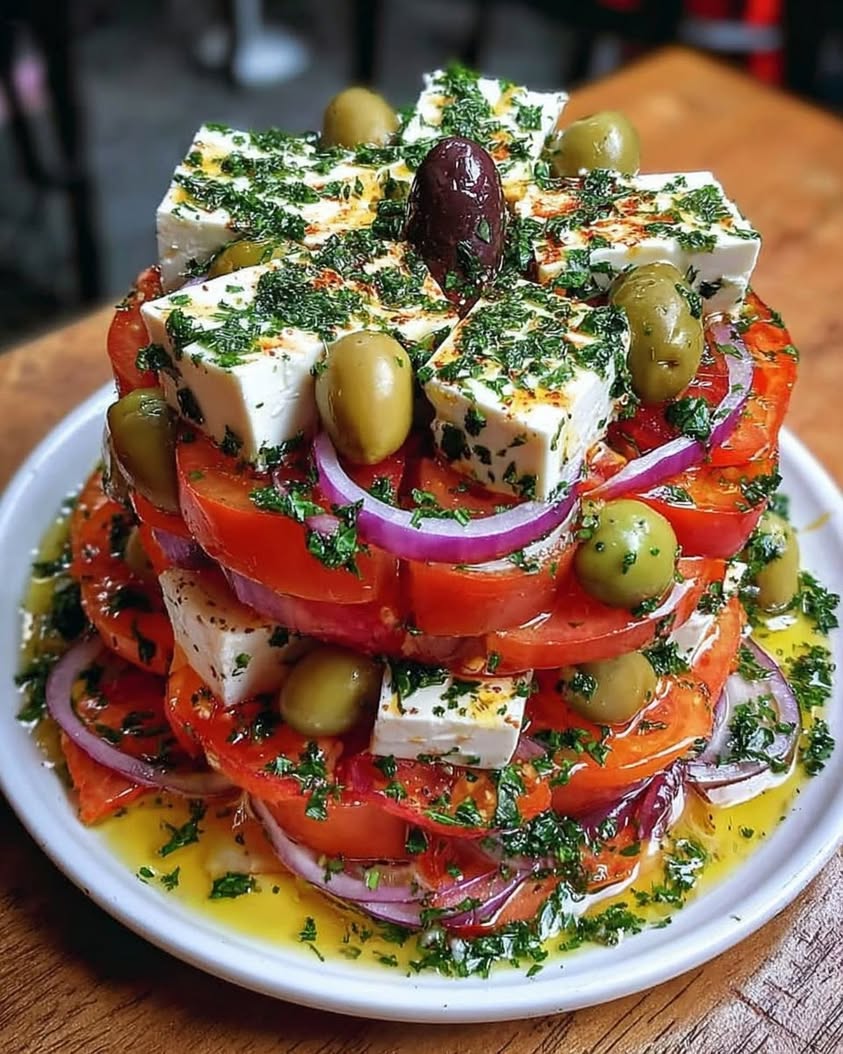
Greek Feta Salad Tower: An Elegant and Easy Appetizer
Imagine presenting a dish that looks like it came from a high-end restaurant but took you mere minutes to assemble. That is the magic of a Greek Feta Salad Tower. This recipe transforms the beloved, rustic flavors of a traditional Greek salad into a stunning vertical presentation. Consequently, it becomes the perfect centerpiece for any gathering. Moreover, it captures all the vibrant, fresh tastes of the Mediterranean in one elegant bite.
The beauty of this dish lies in its simplicity and visual impact. You layer crisp cucumbers, juicy tomatoes, briny Kalamata olives, and creamy feta cheese. Then, you bind it all with a bright, herby vinaigrette. Ultimately, you create a tower that is as delicious as it is beautiful. This Greek Feta Salad Tower is not just food; it is an experience. It invites your guests to admire it before diving in to enjoy the classic combination of flavors.
Furthermore, this recipe is incredibly versatile. You can serve it as a show-stopping appetizer, a light lunch, or a sophisticated side dish. The process requires no cooking, just fresh ingredients and a little assembly. Therefore, it is ideal for warm weather entertaining when you want to impress without heating up the kitchen. In essence, this tower brings a touch of gourmet elegance to your table with minimal effort.
Quick Recipe Highlights
- Flavor Profile: This Greek Feta Salad Tower delivers a perfect balance of tangy, salty, and fresh notes. The creamy, salty feta cheese contrasts beautifully with the sweet acidity of ripe tomatoes. Additionally, the oregano-infused dressing ties all the Mediterranean flavors together harmoniously.
- Texture: You will enjoy a wonderful contrast of textures in every layer. Expect the crisp crunch of cucumber against the juicy burst of tomato. Meanwhile, the firm yet creamy feta and the meaty bite of Kalamata olives add substantial mouthfeel.
- Aroma: The aroma is instantly evocative of a sunny Greek taverna. Fresh oregano and parsley provide a grassy, earthy scent. Simultaneously, the sharp tang of red wine vinegar and the richness of extra virgin olive oil complete the fragrant profile.
- Visual Appeal: The tower presentation is dramatically beautiful. Vibrant red tomatoes, green cucumbers, black olives, and white feta create a stunning color palette. This visual feast makes the dish perfect for photography and special occasions.
- Skill Level Needed: This recipe is beginner-friendly and requires no advanced culinary skills. The most important technique is careful layering in the mold. Otherwise, it involves simple chopping and mixing, making it accessible to cooks of all levels.
- Special Equipment: You only need a ring mold, pastry cutter, or even a clean tin can with both ends removed. This simple tool is the key to creating the impressive tower shape. No other special equipment is necessary.
Recipe Overview
- Difficulty Level: We rate this Greek Feta Salad Tower as easy because it involves no cooking or complex techniques. The primary skill is assembling ingredients in a mold. Consequently, even a novice cook can achieve professional-looking results with this straightforward guide.
- Category: This dish fits perfectly into multiple categories: Appetizers, Salads, and Side Dishes. It is substantial enough for a light vegetarian main course yet elegant enough to start a fancy dinner party. Ultimately, its flexibility is a major strength.
- Cuisine: This is a modern presentation of a classic Greek salad, or Horiatiki. It stays true to the core ingredients and flavors of traditional Greek cuisine. However, the vertical plating offers a contemporary, chef-inspired twist on the rustic original.
- Cost: The cost is very reasonable, especially when tomatoes and cucumbers are in season. Feta cheese and Kalamata olives are the only potentially pricier items. Overall, you can create this impressive dish for a fraction of a restaurant’s price.
- Season: This recipe shines brightest in late summer when tomatoes and cucumbers are at their peak flavor. Nevertheless, you can make it year-round with good greenhouse vegetables. It is particularly refreshing during warm spring and summer months.
- Occasion: It is ideal for dinner parties, bridal showers, holiday appetizers, or any event where presentation matters. Furthermore, it makes a fantastic healthy option for potlucks. People always remember this visually striking dish.
Why You’ll Love This Recipe
First and foremost, you will adore the incredible taste and texture of this Greek Feta Salad Tower. Each bite delivers a symphony of Mediterranean flavors. The salty feta, acidic tomato, cool cucumber, and briny olive combine seamlessly. Moreover, the oregano and olive oil dressing enhances every component. This is not a boring salad; it is a flavor explosion in an elegant package. The contrast between the creamy cheese and crisp vegetables keeps your palate engaged from the first bite to the last. Ultimately, it satisfies cravings for something fresh, savory, and tangy all at once.
Secondly, the convenience and preparation benefits are enormous. This entire dish comes together without turning on your stove. Therefore, it is perfect for hot days or when you are short on time. The assembly is simple and even fun. You can prepare the components ahead of time and construct the towers just before serving. This make-ahead flexibility reduces party day stress significantly. Consequently, you get to spend more time with your guests instead of being stuck in the kitchen.
Next, consider the nutritional advantages. This Greek Feta Salad Tower is packed with wholesome ingredients. Tomatoes provide lycopene and vitamin C, while cucumbers offer hydration and fiber. Furthermore, olive oil delivers heart-healthy monounsaturated fats. Feta cheese adds protein and calcium. It is a balanced, nutrient-dense choice that feels indulgent but is genuinely good for you. You can enjoy this dish guilt-free, knowing you are feeding your body vibrant, real food.
Additionally, the social and entertaining value is through the roof. This dish is a guaranteed conversation starter. Guests are always impressed by its beautiful, restaurant-quality presentation. It shows thoughtfulness and effort, making people feel special. Serving individual towers makes portion control easy and adds a personalized touch to each plate. Whether for a casual family dinner or a formal event, this recipe elevates the entire dining experience. It demonstrates that you care about both flavor and presentation.
Finally, the cost-effectiveness and accessibility are major wins. You create a gourmet-looking appetizer with simple, affordable ingredients. Most components are pantry staples or easy to find at any grocery store. Compared to ordering expensive hors d’oeuvres, this homemade version saves money without sacrificing quality. You control the ingredient quality, opting for organic vegetables or premium olive oil if desired. This recipe proves that impressive cooking does not require a large budget, just a little creativity.
Historical Background and Cultural Significance
The origin story of this dish begins with the classic Greek salad, known in Greece as “Horiatiki,” meaning “village” or “peasant” salad. This rustic dish originated in the early 1900s as a simple meal for farmers and laborers. It traditionally included tomatoes, cucumbers, onions, olives, and a large slab of feta cheese, all dressed with olive oil and oregano. The concept of stacking or towering the ingredients, however, is a modern culinary innovation. Chefs in the late 20th century began deconstructing and reassembling traditional dishes for visual drama. Thus, the Greek Feta Salad Tower was born from a desire to present timeless flavors in a new, elegant form.
The cultural importance of the core ingredients cannot be overstated. In Greek cuisine, a meal is not complete without a salad, and Horiatiki is the national standard. It represents the Mediterranean diet’s principles: fresh, seasonal produce, high-quality olive oil, and protein from cheese rather than meat. The salad is a staple in homes and tavernas across the country, served year-round. It symbolizes simplicity, health, and the vibrant flavors of the Greek landscape. Transforming it into a tower pays homage to this tradition while allowing for creative expression.
The evolution of the recipe from a mixed salad to a structured tower reflects broader trends in global cuisine. As plating became an essential part of the dining experience, chefs looked for ways to add height and structure to familiar dishes. The tower format allows each ingredient to be distinctly visible, celebrating its individual beauty before combining in the mouth. This evolution also caters to modern dining styles, such as individual plating and appetizer portions. While traditionalists may prefer the rustic mix, the tower format has introduced these classic flavors to new audiences who appreciate artistic presentation.
Regional variations of the base salad exist throughout Greece and the Mediterranean. Some islands add capers; others might include green peppers or different herbs. The tower format invites similar adaptation. You might see versions incorporating grilled vegetables, adding a layer of roasted eggplant or bell pepper. Some modern interpretations include a base of creamy hummus or a drizzle of balsamic glaze. These variations show the recipe’s flexibility while maintaining its Greek soul. The core idea—layering fresh, flavorful components—provides a canvas for endless personalization based on local ingredients and taste preferences.
Ingredient Deep Dive
Feta Cheese: Authentic Greek feta is a protected designation of origin (PDO) product, made from at least 70% sheep’s milk, often blended with goat’s milk. This brined curd cheese has a history dating back to ancient Greece. Nutritionally, it is a good source of calcium, protein, and probiotics due to its fermentation. When selecting feta, look for blocks stored in brine, which stay fresher and creamier than pre-crumbled versions. For the best flavor and texture in your Greek Feta Salad Tower, choose a firm, tangy feta that will hold its shape when layered. Store leftover feta submerged in its brine or in a saltwater solution in the refrigerator.
Tomatoes: Use the ripest, most flavorful tomatoes you can find. Vine-ripened or heirloom varieties offer superior sweetness and acidity. Tomatoes are rich in lycopene, an antioxidant linked to reduced heart disease risk, and vitamins C and K. For the tower, you need firm tomatoes that can be diced neatly without becoming mushy. Roma (plum) tomatoes are an excellent choice for their lower water content and meaty texture. Never refrigerate ripe tomatoes, as cold temperatures degrade their flavor and texture. Instead, keep them at room temperature until ready to use to ensure they contribute maximum juiciness and taste to your dish.
Cucumber: English or Persian cucumbers are ideal for this recipe because they have fewer seeds, thinner skin, and a crisp, less watery flesh. They provide hydration, fiber, and vitamin K. Their cool, clean crunch is essential for balancing the richer elements. Before dicing, you may choose to peel them in stripes for visual appeal or leave the skin on for added color and nutrients. If using a standard cucumber, consider seeding it to prevent excess moisture from weakening your tower’s structure. Always pat diced cucumber dry with a paper towel before assembling to ensure a stable construction.
Kalamata Olives: These iconic, almond-shaped olives from Greece are deep purple, meaty, and have a rich, fruity, and winy flavor. They are typically preserved in vinegar or olive oil. They are a good source of healthy monounsaturated fats and antioxidants. For the best quality, purchase olives from the deli counter or in jars, avoiding canned varieties which can be mushy and overly salty. Look for olives with the PDO designation to guarantee authenticity. Before adding to your tower, pit them thoroughly. Their intense, briny punch is a defining flavor component of the entire dish.
Extra Virgin Olive Oil: This is the cornerstone of Greek cuisine and the salad dressing. High-quality extra virgin olive oil (EVOO) offers fruity, peppery notes and health benefits from polyphenols. It should be the base of your simple vinaigrette. Always choose cold-pressed EVOO for its superior flavor and nutrient profile. It pairs perfectly with the sharpness of red wine vinegar and the earthiness of dried oregano. Since the oil is not cooked, its flavor is front and center, making quality paramount. Store your olive oil in a cool, dark place to prevent rancidity and preserve its fresh taste.
Common Mistakes to Avoid
- Using Watery Vegetables: Do not forget to seed your tomatoes and cucumbers if they are very juicy. Excess moisture will pool at the bottom of your mold, causing the tower to slump when you lift the ring. Always pat diced vegetables dry with a clean towel before layering for the sturdiest construction.
- Choosing Pre-Crumbled Feta: Avoid using pre-crumbled feta cheese from a bag. It is often drier, less flavorful, and coated with anti-caking agents. Instead, buy a block of feta in brine and cube it yourself. This ensures a creamier texture and richer taste that is essential for a luxurious tower.
- Skipping the Dressing Drainage: Never pour the dressing directly into the mold with the vegetables. You must toss the vegetables in the dressing first, then use a slotted spoon to transfer them. This leaves excess vinaigrette behind, preventing a soggy, unstable tower that falls apart on the plate.
- Overfilling the Mold: Resist the urge to pack the ingredients too tightly into your ring mold. Gently press each layer to compact it slightly, but do not force it. Over-packing makes the tower dense and difficult to release cleanly. It can also crush the delicate vegetables.
- Using a Dull Knife: Avoid chopping your vegetables with a dull knife. A sharp blade creates clean cuts without bruising or crushing the tomatoes and cucumbers. Clean, uniform dice not only looks more professional but also allows for more even stacking and better texture in every bite.
- Assembling Too Far in Advance: Do not assemble the complete towers more than 30 minutes before serving. While you can prep all components ahead, the assembled tower will eventually release moisture and soften. For the best texture and structural integrity, build them just before your guests arrive.
- Neglecting Seasoning Layers: Remember to season each component lightly as you build. While the dressing has flavor, a tiny pinch of salt and pepper on the tomato and cucumber layers enhances their natural taste. This ensures every layer is perfectly seasoned, not just the outside.
- Using the Wrong Mold Size: Avoid using a mold that is too wide or too narrow. A 3-inch diameter ring mold is ideal for individual appetizer portions. A wider mold will require more ingredients and may become unstable, while a narrower one is difficult to layer neatly.
Essential Techniques
Dicing Uniformly: Uniform dicing is crucial for both aesthetics and structural stability. Use a sharp chef’s knife to cut the tomatoes, cucumbers, and feta into consistent, small cubes, roughly 1/4 to 1/2 inch in size. Consistent pieces stack evenly, creating stable layers without large gaps. This also ensures you get a bit of every ingredient in each forkful. Practice your knife skills by first creating even slices, then stacking and cutting those slices into sticks, and finally dicing across the sticks. Uniformity is the secret to a professional-looking Greek Feta Salad Tower.
Draining Dressed Ingredients: This technique prevents a watery disaster. After tossing your vegetables in the vinaigrette, you must drain them before layering. Simply use a slotted spoon or your hands to lift the vegetables from the bowl, letting the excess dressing drip back. Alternatively, you can toss them in a strainer over a bowl. The goal is to have flavorful, coated vegetables without a pool of free-flowing liquid at the bottom of your mold. This step is non-negotiable for a tower that holds its shape proudly on the plate.
Layering and Compacting: Proper layering builds a stable tower. Start with a base ingredient like cucumber for a firm foundation. Add each component in even, distinct layers, gently pressing down with the back of a spoon after each addition. The pressure should be firm enough to eliminate large air pockets and create cohesion, but not so hard that you crush the vegetables into a paste. Think of it as “tamping” rather than “pressing.” This controlled compaction is what allows the tower to stand alone after you remove the mold.
Unmolding with Confidence:
The unmolding moment requires a steady hand. Place your mold on the serving plate. Once fully layered, gently run a thin paring knife around the very inside edge of the mold to loosen any sticking ingredients. Then, slowly and smoothly lift the ring mold straight up. If it resists, do not wiggle it; simply run the knife around again. For extra insurance, you can place the mold on a small piece of parchment paper on the plate for easy sliding. A confident, vertical lift is the key to a clean reveal.
Pro Tips for Perfect Greek Feta Salad Tower
First, chill your ring mold in the freezer for 10 minutes before using. A cold metal mold helps the ingredients, especially the feta, firm up slightly on contact. This results in a cleaner, more defined shape when you unmold.
Second, create a flavor base by drizzling a small pool of the reserved vinaigrette on the plate before placing the mold. When you lift the tower, it sits in this flavorful pool, enhancing every bite from the bottom up.
Third, for an extra touch of freshness, sprinkle finely chopped fresh dill or mint over the assembled tower just before serving. These herbs add a bright, new aromatic dimension that complements the traditional oregano beautifully.
Fourth, if your feta is very soft, pop the cubed pieces in the freezer for 5-10 minutes before assembling. This brief chill firms them up just enough to maintain their cube shape during layering without affecting their creamy texture inside.
Fifth, use a small offset spatula or the bottom of a spoon to smooth the top layer of the tower flat. This gives it a neat, finished appearance, as if it were a crafted dessert, making the presentation even more impressive.
Sixth, for large parties, prepare multiple molds. You can assemble several towers on a large baking sheet, then quickly transfer each one to an individual plate when it is time to serve, streamlining your workflow dramatically.
Variations and Adaptations
Regional Variations: Explore different Mediterranean influences. For an Italian twist, substitute fresh mozzarella for feta and add fresh basil. For a French Provençal version, use Niçoise olives and add thin slices of radish. A Middle Eastern adaptation could include a layer of hummus at the base and a sprinkle of sumac on top. These variations honor the layered salad concept while traveling through different flavor landscapes.
Seasonal Adaptations: Adapt the tower to what is fresh. In winter, use roasted cubes of butternut squash and pomegranate arils with a citrus vinaigrette. Spring invites the addition of shaved asparagus and fresh peas. Autumn pairs well with roasted beets and walnuts. The basic technique remains the same, but the ingredients rotate with the calendar, keeping the dish exciting year-round.
Dietary Modifications: This recipe is easily adaptable. For a vegan Greek Feta Salad Tower, use a firm tofu or almond-based “feta” alternative. To make it gluten-free, simply ensure all packaged ingredients like olives are certified GF—it is naturally compliant. For a lower-carb version, increase the cucumber and reduce the tomato slightly, focusing on the olives and feta for bulk.
Flavor Variations: Infuse your olive oil with garlic or lemon zest before making the dressing for an extra layer of flavor. Add a teaspoon of capers to the vegetable mix for a briny punch. A pinch of red pepper flakes in the dressing introduces a subtle heat that contrasts nicely with the cool vegetables and creamy cheese.
Texture Modifications: Add crunch with a layer of toasted pine nuts or chopped walnuts between the vegetables. For a creamier element, spread a thin layer of tzatziki sauce on the plate under the tower. You can also include finely diced red onion or bell pepper for additional crispness and color contrast.
Presentation Alternatives: Instead of a round tower, use a square mold for a modern look. Deconstruct the tower entirely and serve the components in a wide glass as a “salad parfait.” For a family-style presentation, create one large, wide tower on a platter and let guests scoop portions onto their plates.
Serving and Presentation Guide
Plating Techniques: Choose a plain, white plate to make the vibrant colors of the Greek Feta Salad Tower pop. Center the tower slightly off-center on the plate for visual interest. Wipe any drips or smudges from the plate rim for a clean, professional finish. The plate itself is the frame for your edible artwork, so keep the background simple and elegant.
Garnishing Ideas: A final drizzle of high-quality extra virgin olive oil around the base adds shine. Place a single, perfect Kalamata olive or a small sprig of fresh oregano on top of the tower. A light dusting of dried oregano or cracked black pepper over the top adds color and aroma. Microgreens are another elegant, modern garnish that introduces a fresh, peppery note.
Traditional Accompaniments: Serve with warm, grilled pita bread or pita chips on the side for scooping. A small bowl of extra tzatziki or hummus makes a delicious dipping companion. In Greece, this salad often comes alongside grilled meats like souvlaki or lamb chops, making the tower a perfect starter for a Mediterranean-themed feast.
Modern Serving Suggestions: For a cocktail party, create mini towers using a 1.5-inch mold and serve them as a one-bite amuse-bouche on small spoons or Asian soup spoons. Alternatively, present the deconstructed ingredients beautifully on a board and let guests build their own towers in provided molds for an interactive dining experience.
Temperature Considerations: All components should be cold but not ice-cold. Remove the feta and vegetables from the refrigerator about 15 minutes before assembling. This takes the harsh chill off, allowing the full flavors to blossom. A tower made with freezing-cold ingredients can taste muted and will sweat excessively on the plate.
Portion Control Tips: The standard 3-inch tower is perfect as an appetizer or side. For a light main course, use a 4-inch mold and consider adding a protein layer, such as shredded rotisserie chicken or chickpeas, to make it more substantial. For a tasting menu, a 2-inch tower is an elegant, palate-cleansing course.
Wine and Beverage Pairing
Wine Pairings: The salty feta and acidic tomatoes call for wines with good acidity. A crisp, dry Greek Assyrtiko is the classic and perfect match, cutting through the richness with its mineral notes. A New Zealand Sauvignon Blanc with its grassy, citrusy profile also complements the herbal dressing beautifully. For a red option, choose a light-bodied, low-tannin wine like a Beaujolais or a Greek Xinomavro rosé, which will not overpower the salad’s delicate flavors.
Non-Alcoholic Alternatives: Sparkling water with a squeeze of lemon and a sprig of rosemary is a refreshing, elegant choice. A homemade cucumber-mint infused water enhances the salad’s cool flavors. For something sweeter, a pomegranate spritzer (pomegranate juice mixed with club soda) offers a fruity counterpoint to the salty olives and cheese without added alcohol.
Coffee/Tea Pairings: While not a typical pairing for a salad course, if serving as a light lunch, follow it with a bright, citrusy herbal tea like lemon verbena or mint tea. These aid digestion and continue the fresh, clean theme. A light, floral black tea like Darjeeling could also work if served slightly cooled.
Temperature Considerations: Serve white wines well-chilled, between 45-50°F. Sparkling waters and non-alcoholic spritzers should be ice-cold. The goal is to have beverages that refresh the palate between bites of the savory, rich tower. A warm drink would clash with the salad’s cool, crisp nature.
Serving Suggestions: Always offer a glass of still water alongside any other beverage. Present wine in appropriate stemware to enhance the aroma. For non-alcoholic options, use beautiful glassware with ice and garnishes like citrus wheels or herb sprigs to make them feel just as special as the alcoholic selections.
Storage and Shelf Life
Storage Methods: Do not store assembled towers. The components will break down and become soggy. Instead, store chopped vegetables, cubed feta, and dressing separately in airtight containers in the refrigerator. The vegetables (tomatoes and cucumbers) are best used within 1-2 days of chopping. The dressing can be kept for up to a week. Store feta in its brine in the fridge for 1-2 weeks.
Temperature Requirements: All components must be refrigerated at or below 40°F until ready to use. The feta is a dairy product and requires constant refrigeration. The olive oil in the dressing may solidify slightly when cold; this is normal. Simply let the dressing container sit at room temperature for 10 minutes before using, then shake to re-emulsify.
Container Recommendations: Use glass containers with tight-fitting lids for the dressing and vegetables. This prevents plastic odors from transferring and keeps ingredients fresher. Store feta in its original brine in a shallow container, ensuring the cheese is fully submerged to prevent drying and mold growth.
Signs of Spoilage: Discard any vegetables that become slimy, discolored, or develop an off odor. Feta that smells overly sour, ammonia-like, or shows signs of unusual mold (beyond the typical harmless surface spots) should be thrown away. If the dressing separates irreversibly or smells rancid, it is time to make a fresh batch.
Reheating Instructions: This is a cold dish and should never be reheated. If ingredients are too cold, simply let them sit at room temperature briefly before assembly to allow flavors to awaken.
Freezing Guidelines: Freezing is not recommended for any component of this salad. Freezing will utterly destroy the texture of the cucumbers and tomatoes, turning them to mush upon thawing. Feta can become crumbly and lose its creamy quality. The dressing may separate. This is a strictly fresh dish.
Make Ahead Strategies
Prep Timeline: You can prep almost everything 1 day in advance. The day before: cube the feta (store in brine), make the vinaigrette, and wash/dry the herbs. On the day of serving, 2-3 hours ahead: dice the tomatoes and cucumbers. Store them separately, with the tomatoes at room temperature and the cucumbers in the fridge. This last-minute dicing ensures maximum freshness and prevents excess moisture release.
Storage Between Steps: Keep all components in their designated containers until assembly. Do not mix the dressed vegetables ahead of time. The key to a successful make-ahead strategy is keeping elements separate until the final moment. This preserves individual textures and prevents the salad from becoming watery or soggy before it even hits the mold.
Quality Impact Assessment: Pre-dicing vegetables may cause a minimal loss of crispness in the cucumber over several hours, but patting them dry mitigates this. The flavors of the vinaigrette will actually improve as they meld overnight. The feta will not suffer from being cubed a day early if kept submerged. Overall, prepping ahead has a very positive impact by reducing stress.
Assembly Tips: Set up an assembly line: molds on plates, bowls of drained/dressed vegetables, cubed feta, and garnishes. This allows for quick, efficient construction just before serving. Having everything measured and ready turns the assembly into a 5-minute task instead of a 20-minute one.
Reheating Guidelines: Not applicable. This is a cold dish. The only “last-minute” task is taking the chilled components out of the fridge to take the edge off the cold, which improves flavor perception.
Fresh Element Additions: Always add the final garnishes—the fresh herb sprinkle, the last drizzle of oil—after unmolding and immediately before serving. These fresh touches provide aroma and visual appeal that can be lost if added too early. They are the final, non-negotiable step for a perfect presentation.
Scaling Instructions
Halving the Recipe: Halving is straightforward for small gatherings. Simply divide all ingredient quantities by two. Use the same size mold for individual portions; you will just make fewer towers. The assembly process and timing remain identical. This is perfect for a romantic dinner for two, where you can create two beautiful, restaurant-style starters with minimal waste.
Doubling or Tripling: For a party, doubling or tripling works perfectly. Use a large, wide bowl to toss the vegetables in batches with the proportionate amount of dressing. Consider enlisting a helper for an assembly line: one person layers while another garnishes. Ensure you have enough ring molds (or clean cans) for all the towers you plan to serve simultaneously.
Equipment Adjustments: When scaling up, you may need additional mixing bowls and serving platters. A baking sheet is invaluable for holding multiple assembled towers before they are moved to individual plates. If you lack enough ring molds, you can assemble towers in stages, cleaning and reusing molds as you go.
Timing Modifications: Prepping for a crowd will take more time, but not linearly. Chopping a larger volume of vegetables takes longer, but making a bigger batch of dressing is just as quick. Factor in extra time for assembly. Allow 2-3 minutes per tower for careful layering and unmolding when working in larger quantities.
Storage Considerations: When making components for a scaled-up recipe, storage space in your refrigerator becomes critical. Use large, flat containers for vegetables to prevent crushing. Label containers if making different variations. Remember, you cannot assemble all towers hours ahead; plan to do it in batches close to serving time.
Nutritional Deep Dive
Macro Breakdown: A typical serving of this Greek Feta Salad Tower provides a balanced mix of macros. The healthy fats come primarily from the olive oil, olives, and feta cheese. Protein is supplied by the feta. Carbohydrates are present in the tomatoes and cucumbers, but they are primarily the complex, fibrous kind. This balance helps keep you satiated. The dish is relatively low in net carbs, making it friendly for various eating styles.
Micronutrient Analysis: This tower is a micronutrient powerhouse. Tomatoes offer vitamin C, potassium, and the antioxidant lycopene. Cucumbers provide vitamin K and potassium. Feta cheese is an excellent source of calcium, phosphorus, and B vitamins. Olive oil contributes vitamin E and polyphenols. Kalamata olives add iron and copper. Together, they create a nutrient-dense package that supports bone health, heart health, and immune function.
Health Benefits: Following the principles of the Mediterranean diet, this dish is linked to numerous health benefits. The monounsaturated fats from olive oil can improve cholesterol levels. The antioxidants combat inflammation. The fiber from vegetables aids digestion. The calcium strengthens bones. Regularly consuming meals like this is associated with a lower risk of chronic diseases, including heart disease and certain cancers.
Dietary Considerations: It is naturally gluten-free and vegetarian. For those monitoring sodium, be mindful that feta and olives are salty; you can reduce sodium by rinsing olives and using less feta. The dish contains dairy. The fat content, while healthy, is moderate to high, so portion awareness is key for specific calorie-controlled diets.
Portion Analysis: One 3-inch tower is a satisfying appetizer or side portion. It is visually substantial without being overly heavy. For a main course, consider two towers or adding a protein source. The visual appeal of the tower naturally encourages mindful eating, as you are likely to savor each deliberate layer rather than mindlessly consuming a large, mixed salad.
Weight Management Tips: This is an excellent choice for weight management due to its high volume, fiber, and protein content, which promote fullness. To reduce calories slightly, you can decrease the amount of olive oil in the dressing by a teaspoon or two. The key is that the tower feels like a treat, which helps with dietary adherence, preventing feelings of deprivation.
PrintGreek Feta Salad Tower
- Total Time: 15 minutes
- Yield: 4
Description
A stunning layered salad featuring crisp vegetables, tangy feta, and a zesty lemon-oregano dressing, perfect for a light lunch or elegant appetizer.
Ingredients
- 2 large cucumbers, peeled and diced
- 4 ripe tomatoes, diced
- 1 red onion, thinly sliced
- 1 green bell pepper, diced
- 200g feta cheese, crumbled
- 1/2 cup Kalamata olives, pitted
- 1/4 cup fresh parsley, chopped
- 1/4 cup extra virgin olive oil
- 2 tbsp fresh lemon juice
- 1 tsp dried oregano
- Salt and black pepper to taste
Instructions
- In a large bowl, combine cucumbers, tomatoes, red onion, bell pepper, and parsley.
- In a small bowl, whisk together olive oil, lemon juice, oregano, salt, and pepper to make the dressing.
- Gently toss the vegetable mixture with half of the dressing until evenly coated.
- Using a ring mold or tall glass, layer the salad: start with a base of vegetables, add a layer of crumbled feta, then more vegetables, and top with olives.
- Carefully remove the mold and drizzle the remaining dressing over the tower.
- Serve immediately or chill for up to 30 minutes before serving.
Notes
You can customize the seasonings to taste.
- Prep Time: 15 minutes
- Cook Time: 0 minutes
- Method: Appetizer
- Cuisine: Greek