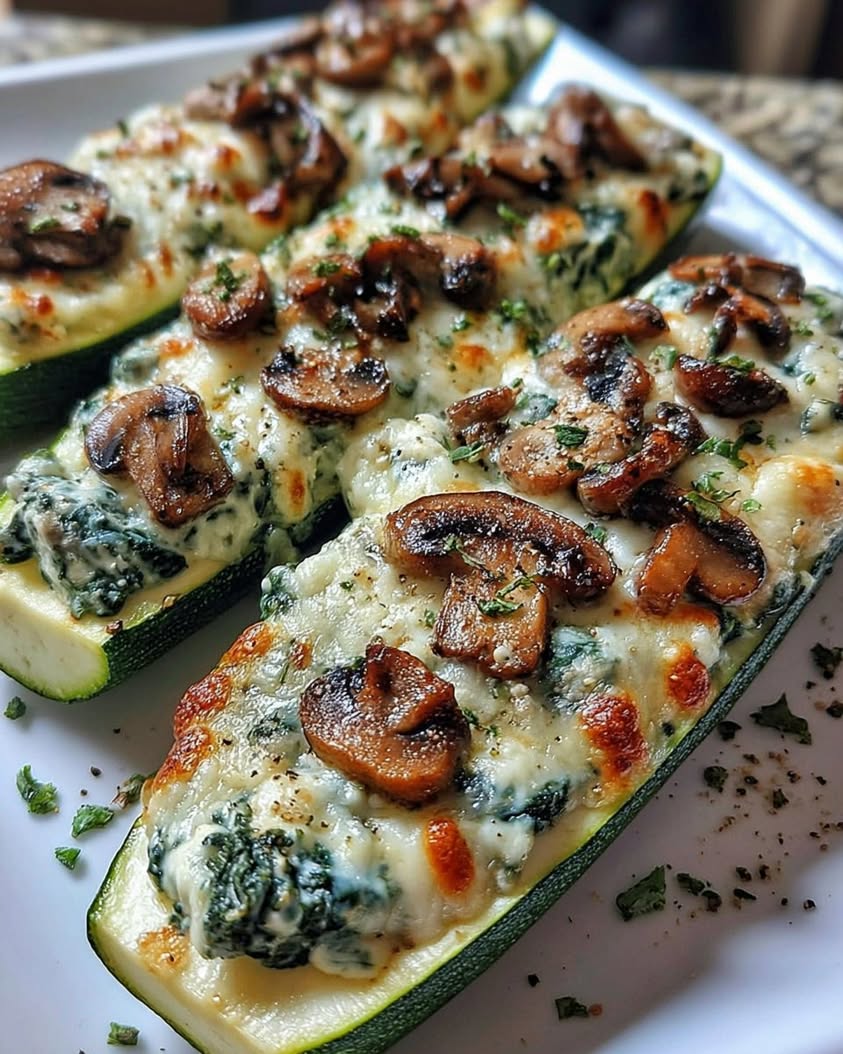
Delicious Spinach Mushroom Ricotta Stuffed Zucchini Boats Recipe: A Flavorful Low-Carb Dinner
Searching for a healthy dinner that doesn’t sacrifice flavor? Look no further than this incredible Spinach Mushroom Ricotta Stuffed Zucchini Boats recipe. This dish transforms humble zucchini into elegant edible vessels brimming with a savory, creamy filling. Ultimately, it’s a perfect solution for anyone wanting a satisfying meal that’s naturally low-carb and packed with vegetables.
The magic of these stuffed zucchini boats lies in their harmonious flavor combination. You get the earthy depth from sautéed mushrooms, the vibrant freshness of spinach, and the luxurious creaminess of ricotta cheese. Additionally, a blend of garlic, herbs, and melted mozzarella creates a mouthwatering aroma that will fill your kitchen. Consequently, this recipe proves that healthy eating can be an absolute delight for your taste buds.
These Spinach Mushroom Ricotta Stuffed Zucchini Boats are incredibly versatile. For instance, they work beautifully as a light main course, a substantial side dish, or even impressive party appetizers. Furthermore, they come together in under an hour, making them ideal for busy weeknights. Whether you’re following a specific diet or simply craving delicious, real food, this recipe is sure to become a new favorite in your regular rotation.
Quick Recipe Highlights
- Flavor Profile: These zucchini boats deliver a masterful balance of savory, creamy, and earthy notes. The umami-rich mushrooms pair perfectly with the mild ricotta, while garlic and herbs provide a fragrant backbone. A final topping of golden, bubbly cheese adds a delicious salty finish.
- Texture: Experience a wonderful contrast in every bite. The tender-crisp zucchini hull softens beautifully in the oven, creating a perfect base. Meanwhile, the filling is luxuriously creamy from the ricotta, with satisfying bits of sautéed mushroom and wilted spinach throughout.
- Aroma: As these boats bake, your kitchen will fill with an irresistible fragrance. First, you’ll smell the savory garlic and onions cooking. Then, the earthy scent of mushrooms and herbs emerges. Finally, the unmistakable aroma of melting, toasting cheese signals that dinner is ready.
- Visual Appeal: This dish is a feast for the eyes with its vibrant green zucchini shells overflowing with a creamy white and speckled filling. The golden-brown, bubbly cheese topping provides a beautiful color contrast, making the boats look restaurant-worthy on any plate.
- Skill Level Needed: This is a beginner-friendly recipe requiring only basic kitchen skills like chopping, sautéing, and scooping. No advanced techniques are necessary. If you can handle a knife and a skillet, you can absolutely master these stuffed zucchini boats.
- Special Equipment: You need only standard kitchen tools: a sharp knife, a cutting board, a large skillet, a mixing bowl, and a baking dish. A spoon or melon baller helps scoop out the zucchini flesh efficiently. Otherwise, no special gadgets are required.
Recipe Overview
- Difficulty Level: We rate this recipe as “Easy” because it involves straightforward, sequential steps. The techniques—scooping, sautéing, mixing, and baking—are fundamental. There’s no tricky timing or complex procedures, making it very approachable for cooks of all experience levels.
- Category: This dish is wonderfully multi-category. It functions perfectly as a vegetarian main course, a hearty side dish alongside grilled protein, or a standout appetizer for gatherings. Its flexibility is one of its greatest strengths for meal planning.
- Cuisine: While stuffed vegetables appear in many global cuisines, this recipe leans into Italian-American flavors with its use of ricotta, mozzarella, garlic, and herbs. However, it’s a modern, health-conscious take that adapts these classic flavors into a low-carb format.
- Cost: This is a budget-friendly recipe, especially during summer zucchini season. Zucchini and spinach are typically inexpensive vegetables. Ricotta and mushrooms are moderately priced, and a small amount of cheese goes a long way. Overall, it’s a cost-effective way to feed a family.
- Season: Summer is the prime season for this dish when zucchini is at its peak freshness, flavor, and lowest price. However, it’s a fantastic year-round recipe because all ingredients are readily available in grocery stores any time of the year.
- Occasion: These stuffed boats are suitable for countless occasions. They are simple enough for a casual Tuesday dinner, yet elegant enough for a weekend dinner party. They also fit well into holiday menus as a lighter, vegetable-centric option.
Why You’ll Love This Recipe
First and foremost, you will adore the incredible taste and texture of these Spinach Mushroom Ricotta Stuffed Zucchini Boats. Each component brings something special to the table. The zucchini becomes tender and slightly sweet when roasted, providing a sturdy yet delicate vessel. Meanwhile, the filling is a creamy, savory dream with the earthy mushrooms and iron-rich spinach perfectly complementing the mild ricotta. Every forkful delivers a harmonious blend that is both comforting and sophisticated. Ultimately, it’s a flavor experience that will satisfy even the pickiest eaters at your table.
From a convenience standpoint, this recipe is a true weeknight hero. The preparation is logical and simple, with a clear progression from prep to plate. You can easily multitask by sautéing the filling while the zucchini halves pre-bake. Furthermore, the ingredient list is short and composed of items you can find at any supermarket. There is no need for complicated reductions or hard-to-find spices. This accessibility means you can decide to make this dish on a whim without a special shopping trip.
Nutritionally, these stuffed zucchini boats are a powerhouse. They are naturally low in carbohydrates and calories, yet high in volume and satisfaction, making them excellent for weight management. Zucchini provides vitamin C and potassium, spinach delivers a huge dose of vitamins A and K, and mushrooms offer B vitamins and selenium. The ricotta and mozzarella contribute protein and calcium. Consequently, you get a well-rounded meal that nourishes your body without leaving you feeling heavy or sluggish.
For entertaining, this dish offers tremendous social value. It looks impressive and colorful on a platter, sparking conversation. It accommodates vegetarian guests effortlessly. You can assemble the boats ahead of time and simply pop them in the oven when guests arrive, minimizing last-minute kitchen stress. Serving individual portions also makes dinner feel special and thoughtfully composed. It’s a recipe that allows you to be a present host, not a harried cook.
Finally, the cost-effectiveness and accessibility of this recipe are major wins. Zucchini is one of the most affordable vegetables, especially in season. You can stretch a single container of ricotta and a bag of spinach across multiple meals. Compared to eating out or buying pre-made “health” meals, preparing these zucchini boats at home saves significant money. Additionally, the recipe is highly adaptable based on what you have on hand, reducing food waste and encouraging kitchen creativity.
Historical Background and Cultural Significance
The concept of stuffing vegetables is an ancient culinary practice born from frugality and creativity. Cooks across the Mediterranean and Middle East have been hollowing out vegetables like peppers, tomatoes, eggplants, and squash for centuries, filling them with grains, meats, and herbs. This method allowed people to stretch expensive proteins, utilize leftover scraps, and create a complete, handheld meal. The specific idea of a “zucchini boat” is a more modern iteration, likely emerging as Italian immigrants in America adapted Old World stuffed vegetable traditions to New World ingredients and sensibilities.
Culturally, stuffed vegetables hold significant importance in many societies, often associated with family gatherings, holidays, and communal feasts. In Greek cuisine, stuffed tomatoes and peppers (“gemista”) are a summer staple. In Turkish cooking, stuffed eggplants (“karnıyarık”) are a beloved classic. The Italian version often features zucchini or bell peppers filled with a breadcrumb and cheese mixture. These dishes symbolize abundance, care, and the skillful transformation of humble ingredients into something celebratory. Our Spinach Mushroom Ricotta Stuffed Zucchini Boats recipe sits firmly within this rich, global tradition of vegetable-based vessels.
The evolution of this particular recipe reflects broader dietary trends. The classic stuffed zucchini often relied on breadcrumbs or rice as a filler. The contemporary shift towards low-carb and gluten-free eating inspired cooks to omit the grains and focus on a protein and vegetable-rich filling. The addition of ricotta and spinach is a nod to classic Italian fillings for pasta like ravioli and cannelloni, effectively transferring those beloved flavors into a vegetable shell. This evolution shows how traditional recipes continuously adapt to meet modern nutritional preferences and tastes.
Regional variations of stuffed zucchini are fascinating. In the south of France, “courgettes farcies” might include sausage and tomatoes. In Lebanon, “koosa mahshi” features zucchini stuffed with spiced lamb and rice. An Italian-American version might use ground beef and tomato sauce. Our vegetarian Spinach Mushroom Ricotta version offers a lighter, cheese-centric alternative that highlights the vegetables themselves. This adaptability is the hallmark of a great culinary concept—it provides a template that can be infinitely personalized based on local ingredients, dietary rules, and personal preference.
Ingredient Deep Dive
Let’s start with zucchini, the star of our “boat.” Zucchini, also known as courgette, is a summer squash native to the Americas but cultivated worldwide today. It’s incredibly low in calories—about 20 per cup—and provides a good amount of vitamin C, potassium, and folate. When selecting zucchini for stuffing, choose medium-sized, firm specimens with glossy, unblemished skin. Avoid overly large zucchinis as they can be seedy and watery. Store them unwashed in a plastic bag in your refrigerator’s crisper drawer for up to a week. For a variation, yellow summer squash makes an excellent and colorful substitute.
Cremini mushrooms form the savory, umami heart of the filling. These are simply immature portobello mushrooms, offering a deeper, earthier flavor than white button mushrooms. They are a good source of B vitamins, selenium, and antioxidants. Look for mushrooms that are firm with closed caps, not slimy or shriveled. Store them in a paper bag in the fridge; plastic traps moisture and speeds spoilage. If you can’t find creminis, white button mushrooms work fine, or for a richer flavor, use sliced shiitake mushrooms. Dried porcini mushrooms, rehydrated, would add an incredible depth of flavor for a special occasion.
Fresh spinach brings vibrant color and a nutritional boost. Spinach has a long history, prized in Persian cuisine and spreading across the globe. It’s loaded with iron, calcium, vitamins A, C, and K, and antioxidants. For this recipe, using fresh spinach that you wilt down is preferable to frozen, as it avoids excess water. Choose bunches with deep green, crisp leaves. To store, remove any bands, wrap in a paper towel, and place in a plastic bag in the crisper. As a substitute, other hearty greens like Swiss chard or kale would work, though they may require a slightly longer sautéing time to tenderize.
Whole milk ricotta cheese provides the luxurious, creamy base for the stuffing. Ricotta, meaning “recooked” in Italian, is made from the whey leftover from cheesemaking. It’s a fresh cheese with a mild, slightly sweet flavor and a granular texture. Opt for whole milk ricotta for the best flavor and creaminess; part-skim can be grainy. For storage, keep it tightly sealed in its original container in the fridge and use by the date. If you need a substitute, cottage cheese (pulsed in a food processor until smoother) or fresh goat cheese can work, though the flavor profile will change.
Common Mistakes to Avoid
- Not Salting the Zucchini Halves First: Skipping the light salting step before baking can lead to watery boats. The salt draws out excess moisture, preventing a soggy final dish. Always pat them dry after the brief salting and resting period.
- Overcooking the Filling Before Baking: Sauté the mushroom and spinach mixture just until the mushrooms release their liquid and the spinach wilts. If you cook it until it’s dry, the filling can become too dense and the vegetables may lose their texture during the second bake.
- Using Watery Ricotta: Some ricotta brands contain stabilizers and excess water. If your ricotta seems wet, drain it in a fine-mesh strainer for 15-30 minutes before mixing. This ensures your filling is creamy, not runny, and helps the boats hold their shape.
- Overstuffing the Boats: It’s tempting to pile the filling high, but overstuffing can cause it to spill over and burn in the baking dish. Aim for a generous mound that stays within the borders of the zucchini shell for the best presentation and even cooking.
- Skipping the Pre-Bake on the Zucchini: Baking the hollowed zucchini halves for a short time before filling is crucial. This step starts the cooking process, ensuring the zucchini is tender by the time the filling is hot and the cheese is melted. Otherwise, you risk undercooked, crunchy zucchini.
- Not Letting Them Rest After Baking: Like many baked dishes, these stuffed zucchini boats benefit from a 5-minute rest after coming out of the oven. This allows the filling to set slightly, making them easier to serve without everything spilling out onto the plate.
- Using Pre-Shredded Mozzarella: While convenient, pre-shredded cheese contains anti-caking agents that can prevent it from melting as smoothly and evenly as cheese you shred yourself from a block. For the best, gooey, golden topping, take the extra minute to shred your own.
- Choosing Zucchini That Are Too Large or Too Small: Very large zucchini can be tough and seedy, while very small ones offer little room for filling. Aim for medium-sized zucchini, about 7-8 inches long and 2 inches in diameter, for the perfect vessel-to-filling ratio.
Essential Techniques
Hollowing the Zucchini: This is the foundational technique for creating your “boats.” First, slice the zucchini evenly in half lengthwise. Then, using a small spoon or a melon baller, carefully scoop out the seeded center flesh, leaving a 1/4-inch thick border all around. The goal is to create a sturdy canoe-like shape that can hold the filling without collapsing. A common pitfall is scooping too close to the skin, making the sides too thin and prone to breaking. Apply gentle, consistent pressure and work from the center outwards. Success is a clean, even hollow with no punctures in the bottom.
Sweating Vegetables: This refers to cooking vegetables like mushrooms and onions over medium heat with a little fat to release their moisture and concentrate their flavor. For the mushrooms, you want them to go from raw and spongy to golden brown and tender, having released their liquid, which then evaporates. The key is not to crowd the skillet; if the mushrooms are piled on top of each other, they will steam instead of sauté. Stir occasionally and be patient. The visual cue for success is the mushrooms shrinking in size, becoming a rich brown color, and the skillet looking dry rather than watery.
Wilt-Squeeze-Dry for Spinach: Fresh spinach contains a tremendous amount of water. If you add it directly to the filling, that water will leach out during baking. The proper technique is to wilt it in the pan with the mushrooms, then transfer the mixture to a colander or, even better, onto a clean kitchen towel. Once it’s cool enough to handle, gather the towel or use your hands to squeeze out as much liquid as possible. This step is non-negotiable for a filling with perfect texture. The spinach should be a compact, dry-ish mass before being chopped and mixed with the ricotta.
Blind Baking the Shells: Pre-baking the hollowed zucchini halves is a form of “blind baking.” This partial cooking ensures the zucchini is perfectly tender by the time the filling is heated through and the cheese is golden. If you skip this, you’ll either have to overcook the top to get the bottom tender, or end up with undercooked zucchini. Place them cut-side up on a baking sheet, season, and bake just until they start to soften and lose their raw rigidity, about 8-10 minutes. They should be pliable but not fully cooked.
Pro Tips for Perfect Spinach Mushroom Ricotta Stuffed Zucchini Boats
Boost the flavor of your filling by adding a pinch of freshly grated nutmeg to the ricotta mixture. Nutmeg has a magical affinity with creamy dairy and spinach, adding a warm, subtle depth that elevates the entire dish without being identifiable.
For a richer, more complex mushroom flavor, use a combination of cremini and shiitake mushrooms. Sauté them with a teaspoon of tomato paste until the paste darkens slightly; this adds a wonderful savory-sweet umami layer to the filling.
Prevent sticking and make cleanup easier by lining your baking dish with parchment paper or a light coating of non-stick spray before arranging the zucchini boats. This is especially helpful if any cheese bubbles over during baking.
If your zucchini halves are rolling around on the baking sheet, slice a tiny piece off the skin-side bottom to create a flat, stable base. This simple trick ensures they stay upright and your filling stays put.
For a beautiful, restaurant-style finish, use a kitchen torch to quickly blister and brown the cheese topping after baking. This gives you more control than the broiler and creates fantastic visual texture without risking burnt zucchini edges.
Add a textural contrast by sprinkling a mixture of panko breadcrumbs and grated Parmesan over the cheese topping before the final bake. The crumbs will toast up crispy, providing a delightful crunch against the creamy filling.
Let the cooked filling cool for 5-10 minutes before mixing it with the ricotta and egg. Adding a hot mixture to the ricotta can cause the cheese to break or the egg to scramble prematurely, affecting the final texture.
Use a piping bag or a zip-top bag with the corner snipped off to fill the zucchini boats. This method is much neater than using a spoon and allows you to control the amount of filling perfectly, creating a professional-looking result.
Variations and Adaptations
For regional variations, explore global flavor profiles. Create a Greek-inspired version by adding crumbled feta, kalamata olives, and oregano to the filling, topping with a sprinkle of crumbled feta after baking. For a Mexican twist, mix in black beans, corn, cumin, and chili powder, then top with pepper jack cheese and a dollop of salsa or avocado crema after baking. An Italian-American classic would include cooked Italian sausage or ground beef mixed into the filling and a spoonful of marinara sauce baked on top under the cheese.
Seasonal adaptations make this recipe a year-round chameleon. In spring, use asparagus tips and fresh peas instead of spinach. During summer’s peak, add diced fresh tomatoes or roasted corn to the filling. In the fall, incorporate roasted cubes of butternut squash and sage. For a winter version, use hearty kale and roasted mushrooms, adding a touch of cream to the ricotta for extra richness against the cold.
Dietary modifications are straightforward. For a gluten-free version, ensure any added breadcrumbs are certified GF or use almond flour. To make it dairy-free, substitute the ricotta with blended firm tofu or a store-bought vegan ricotta, and use a plant-based mozzarella shred. For a keto or ultra-low-carb version, simply omit any starchy add-ins and confirm your mushrooms and onions fit within your daily carb allowance.
Flavor variations can personalize the dish to your palate. Add sun-dried tomatoes and basil for a Mediterranean punch. Stir in pesto directly into the ricotta mixture for an herby, garlicky kick. For a spicy take, include diced jalapeños or a dash of red pepper flakes in the sauté. A tablespoon of Worcestershire sauce or soy sauce in the mushroom mix will amplify the umami flavor dramatically.
Texture modifications can cater to different preferences. For a chunkier filling, chop the sautéed mushrooms and spinach more coarsely. For a smoother, more uniform filling, pulse the cooled sautéed mixture in a food processor a few times before mixing with the ricotta. To add crunch, mix in toasted pine nuts or walnuts into the filling, or sprinkle them on top before serving.
Presentation alternatives offer creative serving options. Instead of full zucchini halves, slice zucchini into thick rounds, hollow out the center to create “cups,” and fill them for a bite-sized appetizer. For a deconstructed approach, cube the zucchini, roast it, and mix it with the filling ingredients in a casserole dish, topping with cheese for a stuffed zucchini bake. You can also use the filling to stuff large portobello mushroom caps or hollowed-out bell peppers following similar baking instructions.
Serving and Presentation Guide
Plating techniques can elevate this homey dish. For individual servings, place two zucchini boats slightly overlapping on a warm plate. Use a offset spatula for a clean transfer from the baking dish. Wipe any spills from the plate rim for a tidy look. For family-style serving, arrange all the boats in a single layer on a large, rustic platter or a rectangular serving dish, garnishing the platter itself with fresh herb sprigs or lemon wedges for color.
Garnishing adds the final touch of freshness and color. A light sprinkle of chopped fresh parsley, basil, or chives right before serving adds a bright green contrast. A drizzle of high-quality extra virgin olive oil or a balsamic glaze over the top adds shine and a hint of acidity. For a bit of zest, add a few shreds of lemon zest over the cheesy top. A light dusting of flaky sea salt, like Maldon, enhances flavor and provides a subtle crunch.
Traditional accompaniments keep the meal light and Italian-inspired. A simple side salad of mixed greens with a lemony vinaigrette balances the richness of the cheese. Garlic bread or a crusty baguette is perfect for scooping up any escaped filling. For a heartier meal, serve alongside a bowl of marinara for dipping or a light pasta, like angel hair with garlic and oil.
Modern serving suggestions blend cuisines and styles. Pair the boats with a quinoa or farro salad for a protein-packed, whole-grain side. Serve them over a pool of creamy polenta or cauliflower puree for an elegant restaurant-style presentation. For a low-carb feast, accompany them with a spiralized vegetable “noodle” salad or roasted cherry tomatoes.
Temperature considerations are key for the best experience. Serve the zucchini boats immediately after baking while the cheese is molten and the zucchini is piping hot. If preparing for a crowd, you can hold them in a warm oven (around 200°F) for up to 15 minutes, though the cheese may lose some of its stretch. The filling inside will remain very hot, so caution guests to let them cool for a minute before biting in.
Portion control is built into this recipe, as each person typically gets two boat halves. However, for a lighter appetizer or part of a larger spread, one half per person is sufficient. If serving as a side dish to a protein like grilled chicken or fish, one boat half is an appropriate portion. The visual nature of the individual boats naturally helps with serving size awareness.
Wine and Beverage Pairing
Wine pairings should complement the creamy, earthy, and savory notes of the dish. A crisp, unoaked white wine like Pinot Grigio or Sauvignon Blanc cuts through the richness of the ricotta beautifully. For a more aromatic option, a dry Riesling offers a lovely counterpoint. If you prefer red wine, choose a light-bodied, low-tannin red such as Pinot Noir or a chilled Beaujolais. These won’t overpower the vegetables and will harmonize with the earthy mushrooms. Avoid heavily oaked Chardonnays or big, tannic reds like Cabernet Sauvignon, as they can clash with the dish’s delicate balance.
Non-alcoholic alternatives provide sophisticated pairing options. Sparkling water with a squeeze of lemon or lime is always refreshing. For something more special, try a tart cherry or pomegranate juice spritzer. An herbal iced tea, like mint or lemon verbena, complements the herbal notes in the filling. A virgin Bloody Mary or a tomato-based shrub drink can also pair wonderfully, playing on the savory elements of the meal.
While not a classic coffee dish, if serving these for a brunch or lunch, coffee and tea pairings can work. A medium-roast coffee with low acidity won’t compete with the food’s flavors. For tea, a green tea like Sencha or a white tea offers a clean, palate-cleansing effect. Avoid strong, bitter black teas or heavily flavored coffees that might overwhelm the subtlety of the zucchini and ricotta.
Temperature considerations for beverages are straightforward. White wines and non-alcoholic spritzers should be served well-chilled, around 45-50°F. Light reds like Pinot Noir are best served slightly cooler than room temperature, around 55°F. Iced teas and sparkling waters should be cold with plenty of ice. The goal is to have your drink provide a refreshing contrast to the warm, baked dish.
Serving suggestions for your beverage pairing enhance the experience. Pour wines into appropriate glassware to appreciate their aroma. For non-alcoholic drinks, use tall, elegant glasses with garnishes like citrus wheels or herb sprigs. Always offer water alongside any other beverage to keep palates cleansed. Setting the table with the drinks ready before the hot boats come out of the oven makes the meal feel complete and thoughtfully planned.
Storage and Shelf Life
Storage methods are simple but important for food safety and quality. Allow any leftover Spinach Mushroom Ricotta Stuffed Zucchini Boats to cool completely to room temperature, which should take no more than an hour. Do not leave them out longer than two hours total. Once cool, transfer them to an airtight container. You can stack them carefully with parchment paper between layers to prevent sticking. Alternatively, place them in a single layer on a plate and wrap the whole plate tightly with plastic wrap.
Temperature requirements are non-negotiable. The stuffed zucchini boats must be refrigerated at 40°F or below. They are a perishable dairy and vegetable product. Never store them at room temperature. In the refrigerator, they will keep for 3-4 days. For longer storage, freezing is an option (see below), but the texture of the zucchini will become softer upon thawing.
Container recommendations focus on maintaining texture. A shallow, rectangular glass container is ideal as it allows for minimal stacking and even cooling. If using a deeper container, avoid packing the boats in tightly. For single servings, small individual containers are convenient for next-day lunches. Always ensure the container has a tight-sealing lid to prevent the boats from absorbing other refrigerator odors and to maintain moisture.
Signs of spoilage are important to recognize for safety. Discard leftovers if you notice an off or sour smell, which can indicate bacterial growth. Visible mold, of any color, is an immediate discard signal. If the zucchini becomes slimy or mushy beyond its normal cooked texture, it’s past its prime. When in doubt, remember the old adage: “When in doubt, throw it out.”
Reheating instructions are crucial for best results. The oven or toaster oven is the best method to restore texture. Preheat to 350°F, place the boats on a baking sheet, and cover loosely with foil to prevent over-browning. Heat for 10-15 minutes, or until hot throughout. The microwave is quick but will make the zucchini very soft and the cheese rubbery. If using a microwave, heat on medium power in 30-second intervals and place a cup of water in the microwave to help keep things moist.
Freezing guidelines can extend the shelf life to about 2-3 months. Freeze the baked and cooled boats on a parchment-lined baking sheet until solid (about 2 hours), then transfer to a freezer-safe bag or container, removing as much air as possible. To reheat from frozen, do not thaw. Bake covered at 375°F for 25-30 minutes, then uncover for the last 5-10 minutes. Note that the zucchini will be much softer after freezing and reheating.
Make Ahead Strategies
Prep timeline for maximum efficiency can span up to 24 hours. You can hollow and salt the zucchini up to a day in advance; store them wrapped in paper towels in a container in the fridge. The entire filling can be prepared 1-2 days ahead and stored separately in an airtight container. Assemble the boats just before you plan to bake them for the freshest texture and to prevent the zucchini shells from becoming soggy from the filling.
Storage between steps is simple with proper planning. Pre-baked zucchini shells can be refrigerated for a day. The cooked and cooled mushroom-spinach mixture can be stored in the fridge. Keep the ricotta mixture (ricotta, egg, Parmesan) separate until assembly time. This prevents the egg from breaking down and keeps the herbs fresh. Bring the ricotta mixture to cool room temperature before mixing with the chilled sautéed veggies to avoid temperature shock.
Quality impact assessment of make-ahead steps is generally positive. The flavors of the filling often improve as they meld overnight. The primary concern is moisture: the zucchini may release a little more water, and the spinach mixture might weep. To counter this, be extra diligent about squeezing the spinach dry and patting the zucchini shells dry before filling. The final baked result from a fully assembled-ahead dish may be slightly softer but still delicious.
Assembly tips for prepped components make the final cook a breeze. When ready to bake, let the chilled zucchini shells sit at room temperature for 10 minutes. Mix the cold sautéed mixture into the ricotta mixture thoroughly. Fill the shells, top with cheese, and bake as directed, adding maybe 2-3 extra minutes to the baking time since you’re starting with cold components. There’s no need to bring everything fully to room temperature before baking.
Reheating guidelines for fully assembled, unbaked boats are specific. If you assemble the boats completely (filled and cheesed) and refrigerate them, you can bake them directly from the fridge. Add 5-10 minutes to the covered baking time, and check that the filling is hot (at least 165°F in the center) and the cheese is fully melted and bubbly. The extended time is necessary to heat the cold core of the filling.
Fresh element additions can revive make-ahead dishes. If you prepared the filling a day ahead, the herbs may lose some vibrancy. Stir in an extra tablespoon of freshly chopped herbs just before assembling the boats. After baking, a fresh garnish of herbs, a drizzle of good oil, or a squeeze of lemon juice just before serving adds a bright, “just-made” finish that elevates the entire dish.
Scaling Instructions
Halving the recipe is straightforward for smaller households. Use 2 medium zucchini, 4 oz mushrooms, 2 cups fresh spinach, 1/2 cup ricotta, 1 small egg (or half a large egg, beaten), and reduce all other ingredients by roughly half. Use a smaller skillet for sautéing and an 8×8 baking dish. The prep and cook times remain largely the same, though the baking time might decrease by a minute or two since there’s less mass in the oven.
Doubling or tripling the recipe for a crowd requires some adjustments. Use multiple baking sheets or very large roasting pans to keep the zucchini boats in a single layer; crowding leads to steaming. You may need to sauté the mushroom filling in batches to avoid overcrowding the pan, which causes steaming instead of browning. Baking time may increase slightly—start checking at the original time, but be prepared to add 5-8 minutes for a fully loaded oven. Rotate the pans halfway through for even cooking.
Equipment adjustments are necessary when scaling. For a double batch, ensure you have a large enough mixing bowl for the filling. A 13×18 inch half-sheet pan can typically hold 8 zucchini halves (a single recipe) comfortably. For a double batch, you’ll likely need two of these pans. If tripling, consider using the oven’s top and bottom racks and rotate the pans front-to-back and top-to-bottom midway through baking.
Timing modifications are minimal but important. The prep time will increase linearly—chopping double the vegetables takes roughly double the time. The active cooking time for the filling may increase if you’re doing batches. The oven preheating time and the baking time itself are the constants that do not scale. Factor in extra time for assembly when working with large quantities to avoid the first-stuffed boats sitting out too long before going in the oven.
Storage considerations for scaled-up recipes are practical. If you’re not serving all the boats at once, consider baking them in shifts to ensure everyone gets a hot, fresh-from-the-oven portion. Leftovers from a large batch should be cooled and stored as usual. If you’ve scaled up but only want to bake some now, you can freeze the unbaked, assembled boats as described earlier, providing ready-made meals for future busy nights.
PrintSpinach, Mushroom, and Ricotta Stuffed Zucchini Boats
- Total Time: 45 minutes
- Yield: 4
Description
Tender zucchini halves filled with a savory mixture of sautéed mushrooms, spinach, and creamy ricotta cheese, baked until golden and bubbly.
Ingredients
- 4 medium zucchinis, halved lengthwise
- 1 tablespoon olive oil
- 8 ounces cremini mushrooms, finely chopped
- 2 cloves garlic, minced
- 2 cups fresh spinach, chopped
- 1 cup ricotta cheese
- 1/2 cup grated Parmesan cheese
- 1 large egg
- 1 teaspoon dried oregano
- Salt and black pepper to taste
- 1/2 cup shredded mozzarella cheese for topping
Instructions
- Preheat oven to 375°F (190°C). Scoop out the flesh from each zucchini half, leaving a 1/4-inch thick shell. Chop the scooped flesh and set aside.
- Heat olive oil in a skillet over medium heat. Add mushrooms and cook until softened, about 5 minutes. Add garlic and chopped zucchini flesh; cook for 3 more minutes.
- Stir in spinach and cook until wilted, about 2 minutes. Remove from heat and let cool slightly.
- In a bowl, combine ricotta, Parmesan, egg, oregano, salt, and pepper. Mix in the cooled vegetable mixture.
- Spoon the filling into the zucchini boats, mounding slightly. Place on a baking sheet and top with mozzarella cheese.
- Bake for 20-25 minutes, until zucchini is tender and cheese is golden. Serve warm.
Notes
You can customize the seasonings to taste.
- Prep Time: 15 minutes
- Cook Time: 30 minutes
- Method: Main
- Cuisine: American