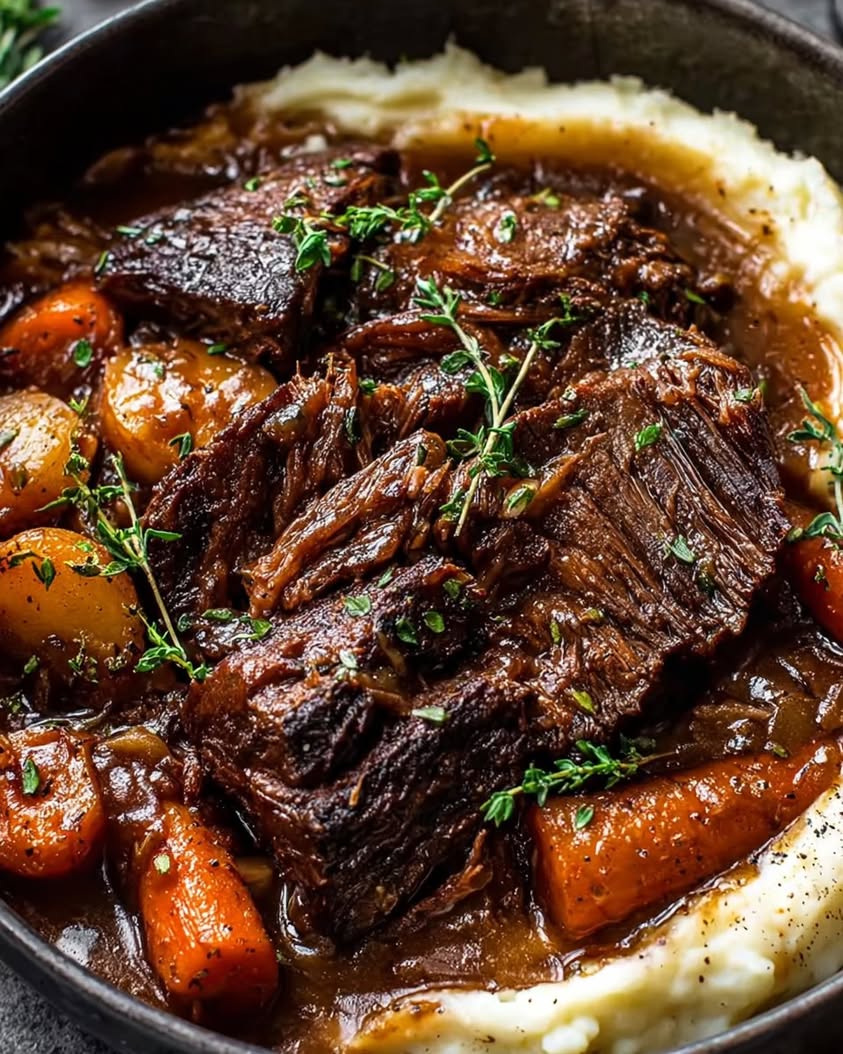
Tender Pot Roast with Mashed Potatoes: The Ultimate Comfort Food
Nothing welcomes you home quite like the rich, savory aroma of tender pot roast with mashed potatoes simmering slowly in the oven. This classic American comfort dish transforms an economical chuck roast into a melt-in-your-mouth masterpiece that feeds a hungry family without breaking the bank. When you serve tender pot roast with mashed potatoes, you deliver a complete meal that satisfies every craving for warmth, richness, and home-cooked goodness.
The magic of tender pot roast with mashed potatoes lies in its simplicity and its patience. You season a well-marbled beef roast, sear it until deeply browned, then let it braise for hours alongside carrots, onions, and potatoes until the meat surrenders to the gentlest touch of a fork. Consequently, the resulting gravy becomes a luscious, velvety sauce that cascades over creamy mashed potatoes and coats every bite with concentrated flavor. Few dishes rival the emotional and culinary satisfaction of tender pot roast with mashed potatoes on a chilly evening.
Whether you grew up eating this dish at your grandmother’s table or you discovered it as an adult seeking hearty, affordable meals, tender pot roast with mashed potatoes connects us to tradition. This recipe guides you through every step with clear instructions and proven techniques. As a result, even a beginner cook can achieve spectacular results. Furthermore, the recipe accommodates busy schedules because the oven does most of the work while you tend to other tasks. Indeed, tender pot roast with mashed potatoes represents the ultimate set-it-and-forget-it dinner that impresses everyone at the table.
Quick Recipe Highlights
- Flavor Profile: The beef develops a deep, beefy richness with caramelized notes from searing and slow braising. Fresh thyme and rosemary add earthy herbal layers, while red wine and tomato paste contribute subtle acidity and umami. The gravy ties everything together with a savory, slightly tangy finish.
- Texture: The chuck roast becomes impossibly fork-tender and shreds with minimal effort. Carrots and onions soften into buttery morsels, while the mashed potatoes deliver a cloud-like, creamy smoothness. Every bite offers a pleasing contrast between the lush gravy and the fluffy potatoes.
- Aroma: As the roast braises, your kitchen fills with the intoxicating scent of slow-cooked beef, garlic, and fresh herbs. The aroma builds gradually and signals comfort and abundance. By the time you remove the lid, the fragrance alone draws everyone to the table.
- Visual Appeal: A golden-brown roast surrounded by vibrant orange carrots and pearl onions sits proudly in a rich, glossy gravy. The creamy white mashed potatoes provide a beautiful contrast when spooned beside the meat. Fresh parsley adds a pop of green that brightens the entire plate.
- Skill Level Needed: This recipe suits cooks of all experience levels because it relies on fundamental techniques rather than advanced skills. You need only basic knife skills for chopping vegetables and confidence with a hot skillet for searing. The oven handles the difficult work, so precision matters far less than patience.
- Special Equipment: A heavy Dutch oven provides the ideal vessel for searing and braising because it distributes heat evenly and retains moisture. You also need a large skillet or the same Dutch oven for browning the meat. A potato masher or ricer ensures smooth mashed potatoes, and a fine-mesh strainer helps create a silky gravy.
Recipe Overview
- Difficulty Level: This recipe earns an easy rating because it requires no complicated techniques or specialized knowledge. You brown the meat, sauté the aromatics, add liquid, and let the oven work its magic. The only skills you need involve basic chopping and attentive searing. Consequently, novice cooks can serve tender pot roast with mashed potatoes confidently on their first attempt.
- Category: This dish qualifies as a main course that doubles as a complete meal since the vegetables cook alongside the meat. You can categorize it as a Sunday dinner, a holiday entrée, or a weeknight comfort meal. Many families consider tender pot roast with mashed potatoes the centerpiece of special gatherings.
- Cuisine: Tender pot roast with mashed potatoes represents classic American home cooking with roots in European braising traditions. English and Irish immigrants brought their methods for slow-cooked meats to North America, where beef became more affordable and abundant. Over generations, the dish evolved into a distinctly American staple. Today, it embodies nostalgic, hearty cuisine that celebrates simple ingredients and patient cooking.
- Cost: An entire meal for eight people costs roughly eighteen to twenty-five dollars depending on beef prices and seasonal vegetable availability. Chuck roast remains one of the most economical cuts because it requires long cooking but rewards you with incredible flavor. Potatoes, carrots, and onions rank among the cheapest produce items at any grocery store. Therefore, tender pot roast with mashed potatoes delivers outstanding value for feeding a crowd.
- Season: Fall and winter suit this dish best because the hearty flavors and warm spices complement cool weather. Nevertheless, you can enjoy tender pot roast with mashed potatoes year-round since grocery stores stock the ingredients consistently. Many families serve it on rainy days or during cold snaps when comfort food hits the spot. Spring and summer gatherings also welcome this dish when served with lighter sides.
- Occasion: Sunday family dinners, holiday celebrations, potlucks, and casual get-togethers all provide perfect opportunities for this recipe. The dish feeds a crowd generously and requires minimal last-minute attention. Additionally, it works beautifully for meal prep because leftovers taste even better the next day. Consequently, tender pot roast with mashed potatoes fits virtually any occasion that calls for satisfying, home-cooked food.
Why You’ll Love This Recipe
The taste and texture of tender pot roast with mashed potatoes deliver pure, unadulterated comfort that few dishes can match. The beef absorbs the flavors of red wine, garlic, thyme, and bay leaf during its long braise, developing a complex, savory depth that tastes like hours of careful labor. Meanwhile, the collagen in the chuck roast breaks down into gelatin, which gives the gravy a naturally rich, silky body without any thickeners. When you pair that succulent meat and luxurious gravy with creamy mashed potatoes, every bite creates a symphony of flavors and textures that lingers pleasantly on the palate.
Convenience and preparation benefits make tender pot roast with mashed potatoes a weeknight hero despite its long cook time. You spend only about twenty-five minutes actively preparing the ingredients before the oven takes over for three and a half hours. During that hands-off time, you can work, exercise, help kids with homework, or simply relax. Furthermore, the recipe uses one Dutch oven for both searing and braising, which minimizes cleanup. As a result, you enjoy a spectacular meal without spending your entire evening in the kitchen.
Nutritional advantages abound in this recipe because it features lean protein, fiber-rich vegetables, and potassium-packed potatoes. A single serving provides a substantial dose of iron, zinc, and B vitamins from the beef, along with vitamin A from carrots and vitamin C from potatoes. The slow cooking method preserves nutrients better than high-heat frying because gentle heat and moisture retain water-soluble vitamins. Additionally, you control the sodium and fat content by adjusting the recipe to your dietary needs. Consequently, tender pot roast with mashed potatoes nourishes your body as thoroughly as it comforts your soul.
Social and entertaining value sets this dish apart because it encourages gathering and sharing. Placing a steaming Dutch oven in the center of the table invites everyone to serve themselves and linger over conversation. The generous yield means you can feed unexpected guests without stress or last-minute scrambling. Similarly, the dish appeals to diverse palates because it avoids extreme spiciness or controversial ingredients. Therefore, tender pot roast with mashed potatoes excels as a crowd-pleasing centerpiece for dinner parties, holiday feasts, and casual get-togethers.
Cost-effectiveness and accessibility ensure that tender pot roast with mashed potatoes remains a staple in American kitchens. Chuck roast typically costs far less per pound than steak or prime rib, yet it delivers comparable satisfaction when cooked properly. The supporting ingredients, including onions, carrots, potatoes, and broth, rank among the most affordable items in any supermarket. Moreover, you can stretch the meal further by adding extra vegetables or serving with crusty bread. Consequently, this recipe proves that extraordinary meals do not require extraordinary budgets.
Historical Background and Cultural Significance
The origin story of tender pot roast with mashed potatoes traces back to European braising traditions that immigrants carried to North America in the eighteenth and nineteenth centuries. English and Irish cooks perfected the art of slow-cooking tough cuts of meat in covered pots over hearth fires, a technique born from necessity and resourcefulness. When these immigrants settled in New England and the Midwest, they adapted their methods to local ingredients, including abundant beef and root vegetables. Consequently, the dish evolved into a distinctly American creation that celebrated both tradition and innovation.
Cultural importance surrounds tender pot roast with mashed potatoes because it symbolizes home, family, and hospitality in American cuisine. Families across the country associate the dish with Sunday suppers, holiday gatherings, and grandmother’s kitchen. The slow cooking process itself carries cultural weight because it represents patience, care, and the belief that good things come to those who wait. Furthermore, the dish appears in countless community cookbooks, church potlucks, and family reunion tables. Therefore, tender pot roast with mashed potatoes functions as both a meal and a cultural touchstone.
The evolution of this recipe reflects changes in technology, agriculture, and home economics throughout American history. Early versions cooked over open hearths in heavy cast-iron pots, while later generations embraced wood stoves and eventually electric ovens. The introduction of affordable chuck roast as a supermarket staple made the dish accessible to working-class families. Meanwhile, food writers and home economists standardized recipes and promoted the dish through magazines and cookbooks. Consequently, tender pot roast with mashed potatoes adapted to each era while retaining its essential character.
Regional variations showcase the remarkable flexibility of tender pot roast with mashed potatoes across the United States. New England cooks often add root vegetables like parsnips and turnips, while Southern versions incorporate tomatoes or barbecue-inspired seasonings. Midwestern families frequently serve the dish with egg noodles instead of potatoes, and some California cooks add red wine and Mediterranean herbs. Additionally, Pennsylvania Dutch communities prepare a similar dish called sauerbraten with vinegar and ginger snap gravy. Therefore, tender pot roast with mashed potatoes thrives as a living recipe that welcomes regional interpretation.
Ingredient Deep Dive
Chuck roast serves as the foundation of tender pot roast with mashed potatoes because its rich marbling and connective tissue transform into succulent, flavorful meat during braising. This cut comes from the shoulder area of the cow, which gets plenty of exercise and therefore develops deep flavor and toughness that slow cooking remedies. Historically, butchers and home cooks prized chuck roast for its affordability and versatility, making it a staple of working-class kitchens. Nutritionally, chuck roast provides abundant protein, iron, zinc, and B vitamins, especially B12 and niacin. When selecting a chuck roast, look for even marbling, a deep red color, and a thick fat cap that bastes the meat as it cooks. You can substitute brisket, round roast, or seven-bone roast if chuck proves unavailable, though cooking times may vary slightly.
Storage recommendations for chuck roast include keeping it in its original packaging in the refrigerator for up to five days after purchase. For longer storage, wrap the roast tightly in freezer paper or vacuum-seal it and freeze for up to six months. Thaw frozen roast in the refrigerator overnight before cooking to ensure even braising. Additionally, pat the meat completely dry with paper towels before searing because moisture prevents proper browning. Consequently, proper handling and storage preserve the quality of this essential ingredient for tender pot roast with mashed potatoes.
Yukon Gold potatoes provide the creamiest foundation for the mashed potatoes portion of tender pot roast with mashed potatoes. These potatoes originated in Canada in the early twentieth century and quickly became a favorite among chefs and home cooks for their buttery texture and golden flesh. Their moderate starch content creates mashed potatoes that taste rich without becoming gluey or heavy. Nutritionally, Yukon Golds deliver potassium, vitamin C, and dietary fiber, along with a satisfying energy boost. When selecting potatoes, choose firm, smooth specimens without green spots, sprouts, or soft areas. You can substitute Russet potatoes for a fluffier texture or red potatoes for a waxier, denser result depending on your preference.
Store potatoes in a cool, dark, well-ventilated place such as a pantry or cellar, away from onions and direct light. Avoid refrigerating raw potatoes because cold temperatures convert their starches to sugar and alter the flavor. For tender pot roast with mashed potatoes, plan to use potatoes within two to three weeks of purchase for the best results. Furthermore, discard any potatoes that show signs of sprouting, greening, or soft rot because these indicate spoilage.
Carrots contribute natural sweetness, vibrant color, and nutritional value to tender pot roast with mashed potatoes. This root vegetable has sustained human civilizations for thousands of years, with evidence of cultivation dating back to ancient Persia and Afghanistan. Carrots traveled along trade routes to Europe and eventually to the Americas, where they became a garden staple. They provide beta-carotene, fiber, vitamin K, and antioxidants that support eye health and immune function. Choose firm, bright orange carrots with smooth skins and crisp texture for the best flavor. You can substitute parsnips, turnips, or sweet potatoes if you want to vary the flavor profile of your tender pot roast with mashed potatoes.
Proper storage of carrots involves removing leafy tops if present and keeping the roots in a perforated plastic bag in the refrigerator crisper drawer. They stay fresh for three to four weeks under these conditions. Additionally, cut carrots into uniform chunks so they cook evenly alongside the roast. Consequently, well-stored and properly prepared carrots enhance both the appearance and taste of tender pot roast with mashed potatoes.
Common Mistakes to Avoid
- Skipping the sear: Many cooks rush past searing to save time, but this step creates the deep browned crust that flavors the entire dish. Without a proper sear, your tender pot roast with mashed potatoes tastes flat and pale. Always pat the meat dry and sear it in a hot pan until deeply browned on all sides.
- Using the wrong cut of beef: Selecting a lean cut like sirloin or tenderloin leads to dry, stringy meat after braising because these cuts lack the connective tissue that breaks down into gelatin. Conversely, chuck roast or brisket provides the marbling and collagen necessary for succulent results. Therefore, choose the right cut for tender pot roast with mashed potatoes.
- Not seasoning the meat adequately: Under-seasoning before searing means the meat never develops proper flavor throughout. Season generously with salt and pepper on all sides at least thirty minutes before cooking. Consequently, the seasoning penetrates the meat and enhances the overall taste of tender pot roast with mashed potatoes.
- Adding too much liquid: Some recipes drown the roast in broth, which dilutes the gravy and prevents proper caramelization. Use just enough liquid to come halfway up the sides of the meat. As a result, the meat braises rather than boils, and the gravy concentrates beautifully for tender pot roast with mashed potatoes.
- Opening the oven too often: Each time you open the oven door, heat escapes and the cooking temperature drops. Resist the urge to check the roast repeatedly because steady, consistent heat produces the most tender results. Trust the process and let tender pot roast with mashed potatoes cook undisturbed.
- Under-cooking the roast: Chuck roast requires at least three hours in the oven to break down tough connective tissue. Pulling it out early results in chewy, tough meat that disappoints everyone at the table. Therefore, allow the full cooking time and test for fork tenderness before serving tender pot roast with mashed potatoes.
- Over-mashing the potatoes: Using a food processor or overworking the potatoes with a mixer turns them gluey and dense. Mash gently with a hand masher or ricer, and fold in butter and cream until just combined. Consequently, your mashed potatoes stay fluffy and light alongside the tender pot roast.
- Discarding the braising liquid: The cooking liquid contains incredible flavor and becomes the base for your gravy. Pour it through a fine-mesh strainer, skim excess fat, and simmer it with a cornstarch slurry until thickened. Therefore, never waste this liquid gold when preparing tender pot roast with mashed potatoes.
- Cutting the meat immediately: Resting allows the juices to redistribute throughout the meat. Cutting too soon causes those juices to run out and leaves the meat dry. Let tender pot roast rest for at least fifteen minutes before shredding or slicing.
- Ignoring the vegetables: Overcooked vegetables turn mushy and unappetizing, while undercooked ones remain hard and bland. Add tender vegetables like potatoes during the last hour of cooking. As a result, every component of tender pot roast with mashed potatoes reaches perfect doneness.
Essential Techniques
Searing the meat ranks as the most important technique for building flavor in tender pot roast with mashed potatoes. This step triggers the Maillard reaction, a chemical process that browns proteins and sugars to create hundreds of new flavor compounds. To master searing, heat a heavy Dutch oven over medium-high heat until a drop of water sizzles immediately, then add oil with a high smoke point such as canola or avocado oil. Place the seasoned roast in the pan and leave it undisturbed for four to five minutes per side until a deep brown crust forms. Common pitfalls include moving the meat too soon, which prevents crust formation, and using insufficient heat, which steams rather than sears. Visual cues for success include a rich mahogany color and a slight release of the meat from the pan when properly browned.
Deglazing the pan after searing lifts the flavorful browned bits, called fond, from the bottom of the Dutch oven. These caramelized bits dissolve into the braising liquid and contribute intense savory depth to the gravy. To deglaze, pour red wine or broth into the hot pan and scrape the bottom vigorously with a wooden spoon while the liquid simmers. Continue until the liquid reduces slightly and the pan bottom looks clean. Avoid skipping this step because those stuck-on bits represent concentrated flavor. Consequently, proper deglazing transforms ordinary broth into a rich, complex sauce for tender pot roast with mashed potatoes.
Braising combines dry and moist heat to cook tough cuts gently over a long period. This technique works because the low, consistent temperature slowly hydrolyzes collagen into gelatin, which gives the meat its tender texture and the sauce its body. To braise properly, keep the liquid at a bare simmer rather than a rolling boil, and cover the pot tightly to trap steam. Check the liquid level occasionally and add more broth if it evaporates too quickly. Common pitfalls include braising at too high a temperature, which toughens the meat, and using too little liquid, which causes burning. Visual cues include gentle bubbles breaking the surface and meat that yields easily to a fork.
Ricing or mashing potatoes correctly determines whether your mashed potatoes turn out fluffy or gluey. Cook peeled and cubed potatoes in salted water until a knife slides in easily, then drain them thoroughly and let them steam dry for a few minutes. Pass the potatoes through a ricer or mash them with a hand masher in a gentle, folding motion. Add warm butter and cream gradually, stirring just until incorporated. Avoid using a food processor or electric mixer because these tools overwork the starch and create a sticky, pasty texture. Consequently, proper technique yields the cloud-like mashed potatoes that complete tender pot roast with mashed potatoes.
Pro Tips for Perfect Tender Pot Roast with Mashed Potatoes
Choose a roast that weighs between three and four pounds for optimal results because smaller roasts dry out and larger ones require extended cooking that can overwhelm the vegetables. Additionally, look for a roast with a thick layer of fat on one side, which bastes the meat as it cooks. Trim excess fat but leave about a quarter inch to protect the meat during braising. Consequently, proper roast selection sets the stage for exceptional tender pot roast with mashed potatoes.
Brown the roast in batches if your Dutch oven cannot accommodate the entire piece without crowding. Overcrowding lowers the pan temperature and steams the meat instead of searing it. Therefore, work in batches or use a larger vessel to ensure proper browning. This extra step takes only a few minutes and dramatically improves the final flavor of tender pot roast with mashed potatoes.
Layer aromatics beneath the roast to prevent the meat from sticking and to infuse the gravy with flavor. Arrange sliced onions, carrots, and garlic in an even bed before placing the seared roast on top. As the vegetables soften, they release sweetness and moisture that enrich the braising liquid. Consequently, this simple technique elevates the depth of your tender pot roast with mashed potatoes.
Add fresh herbs in two stages for layered herbal flavor. Place sturdy herbs like thyme and rosemary beneath and around the roast at the beginning, then stir in chopped fresh parsley at the end for brightness. The long-cooked herbs infuse the meat and gravy with earthy notes, while the finishing herbs add a fresh, vibrant lift. As a result, tender pot roast with mashed potatoes develops complex, well-rounded flavor.
Let the roast rest before shredding to allow juices to redistribute throughout the meat. During resting, the internal temperature continues to equalize and the muscle fibers relax. Consequently, the meat retains moisture and shreds into succulent, juicy pieces. Always rest tender pot roast with mashed potatoes for at least fifteen minutes before serving.
Warm your mashed potato ingredients before combining them with the potatoes. Cold butter and cold cream lower the temperature of the potatoes and create a grainy texture. Therefore, melt the butter and warm the cream gently before folding them into the riced potatoes. This small detail makes a noticeable difference in the silkiness of your tender pot roast with mashed potatoes.
Thicken the gravy with a cornstarch slurry rather than flour for a glossy, lump-free finish. Whisk equal parts cornstarch and cold water, then stir the mixture into simmering liquid and cook for two minutes until thickened. Flour can clump and requires longer cooking to eliminate its raw taste. Consequently, cornstarch provides a cleaner, faster thickening method for tender pot roast with mashed potatoes.
Season every component separately throughout the cooking process. Salt the meat before searing, season the vegetables as they sauté, and taste the gravy before serving. Layered seasoning creates depth, while last-minute salting tastes flat and one-dimensional. Therefore, attentive seasoning at every stage produces superior tender pot roast with mashed potatoes.
Variations and Adaptations
Regional variations of tender pot roast with mashed potatoes reflect local ingredients and cultural preferences across the country. In the South, cooks often add diced tomatoes, Worcestershire sauce, and a touch of brown sugar to create a sweet-tangy gravy. New England versions emphasize root vegetables like parsnips, turnips, and rutabagas alongside the carrots and potatoes. Meanwhile, Midwestern cooks sometimes substitute beer for wine and serve the roast over egg noodles instead of mashed potatoes. Additionally, Southwestern adaptations incorporate cumin, chili powder, and jalapeños for a spicy kick. Consequently, you can tailor tender pot roast with mashed potatoes to reflect any regional tradition.
Seasonal adaptations allow you to enjoy this dish throughout the year with fresh, local produce. In spring, add fresh peas and pearl onions during the last twenty minutes of cooking for a bright, garden-fresh quality. Summer versions might feature fresh corn cut from the cob and cherry tomatoes stirred in at the end. During fall, incorporate butternut squash, apple chunks, and fresh sage for autumnal warmth. Winter calls for hearty additions like parsnips, celery root, and dried mushrooms. Therefore, tender pot roast with mashed potatoes adapts beautifully to every season and its available ingredients.
Dietary modifications make this recipe accessible to diners with various restrictions and preferences. For a gluten-free version, use cornstarch instead of flour for thickening and ensure all broths and wines lack gluten. Dairy-free mashed potatoes come together with olive oil, coconut cream, or unsweetened almond milk in place of butter and cream. Vegan adaptations replace the beef with large portobello mushrooms or jackfruit and use vegetable broth for braising. Consequently, nearly everyone can enjoy a version of tender pot roast with mashed potatoes tailored to their needs.
Flavor variations let you reinvent the dish while preserving its comforting character. Add smoked paprika and chipotle peppers for a smoky, spicy profile. Alternatively, stir in Dijon mustard, tarragon, and white wine for a French-inspired twist. Asian-influenced versions incorporate soy sauce, ginger, star anise, and rice vinegar for a fragrant, savory result. Mediterranean adaptations feature oregano, lemon zest, olives, and feta crumbles. As a result, tender pot roast with mashed potatoes never grows boring when you explore new flavor directions.
Texture modifications accommodate different preferences and dietary needs. Shred the meat finely for a pulled texture that works well in sandwiches or over nachos. Conversely, slice the roast into thick portions for a more traditional presentation. For the potatoes, leave the skins on for rustic mashed potatoes with extra fiber and texture. You can also puree the vegetables into the gravy for a smoother sauce or serve them whole for a chunky, hearty appearance. Therefore, tender pot roast with mashed potatoes offers remarkable flexibility in texture.
Presentation alternatives transform the dish for different occasions and dining styles. Serve the roast and vegetables in individual Dutch ovens for elegant dinner parties. Alternatively, build a mashed potato bar with various toppings so guests customize their plates. For casual gatherings, set everything out family-style and let guests serve themselves. You can also plate the dish in shallow bowls with the gravy poured tableside for dramatic effect. Consequently, tender pot roast with mashed potatoes suits both formal and informal dining alike.
Serving and Presentation Guide
Plating techniques for tender pot roast with mashed potatoes begin with a generous mound of mashed potatoes placed slightly off-center on a warm plate. Create a shallow well in the center of the potatoes to cradle the meat and capture the gravy. Place a portion of shredded or sliced roast atop the potatoes, then arrange carrots and onions alongside. Finally, ladle gravy over the meat and let it cascade down the sides of the potatoes. Consequently, this presentation highlights every component and encourages the flavors to mingle beautifully.
Garnishing ideas elevate the visual appeal of tender pot roast with mashed potatoes without complicating the preparation. Sprinkle freshly chopped parsley, chives, or thyme over the top for a pop of green color and fresh flavor. Add a dollop of sour cream or horseradish cream to the mashed potatoes for elegance. Crispy fried onions or shallots provide textural contrast and visual interest. Therefore, simple garnishes transform a homey dish into a stunning centerpiece.
Traditional accompaniments for tender pot roast with mashed potatoes include crusty bread for sopping up gravy, a simple green salad with vinaigrette, and pickled vegetables for acidity. Dinner rolls, biscuits, or cornbread also pair beautifully with the meal. Steamed green beans, roasted Brussels sprouts, or buttered peas add color and nutrition. Consequently, these classic sides complete the comforting experience of tender pot roast with mashed potatoes.
Modern serving suggestions reimagine the dish for contemporary tastes and dietary trends. Serve the roast over cauliflower puree instead of potatoes for a lower-carb option. Alternatively, spoon the meat and gravy over creamy polenta or buttered egg noodles. For a fun twist, pile the shredded beef onto slider buns with mashed potatoes and gravy for hearty sandwiches. You can also serve the components in lettuce cups for a lighter, gluten-free presentation. As a result, tender pot roast with mashed potatoes fits modern dining preferences.
Temperature considerations ensure that every element reaches the table at its ideal warmth. Serve the mashed potatoes piping hot because they cool quickly and lose their appeal when lukewarm. The roast should rest until it reaches a comfortable serving temperature, around one hundred forty-five degrees Fahrenheit. Warm the plates in a low oven before plating to keep everything hot throughout the meal. Therefore, attention to temperature guarantees a satisfying dining experience with tender pot roast with mashed potatoes.
Portion control tips help you serve satisfying portions without waste. A standard serving includes about six ounces of cooked meat, one cup of mashed potatoes, and a half cup of vegetables. Adjust portions based on appetites and the richness of accompanying side dishes. For buffet-style service, provide a serving spoon and let guests choose their own portions. Consequently, thoughtful portioning ensures that everyone enjoys tender pot roast with mashed potatoes without overeating or running short.
Wine and Beverage Pairing
Wine pairings for tender pot roast with mashed potatoes favor bold reds with sufficient tannin and acidity to cut through the rich, savory gravy. Cabernet Sauvignon offers dark fruit flavors and firm tannins that complement the beef beautifully. A full-bodied Merlot provides softer tannins and plum notes that harmonize with the herbs and root vegetables. Zinfandel delivers jammy fruit and moderate spice that stands up to the robust flavors. Alternatively, a Syrah or Shiraz brings peppery, smoky notes that echo the caramelized meat. Therefore, choose a red wine with structure and depth to enhance tender pot roast with mashed potatoes.
Non-alcoholic alternatives pair equally well with this hearty dish. Sparkling water with lemon or lime cleanses the palate between bites of rich meat and gravy. Unsweetened iced tea offers gentle tannins and refreshing acidity that mirror wine’s role. Cranberry juice mixed with sparkling water provides tartness and festive color. Additionally, a simple shrub made with apple cider vinegar and fruit syrup adds sophisticated tang. Consequently, guests who avoid alcohol still enjoy thoughtful beverage options alongside tender pot roast with mashed potatoes.
Coffee and tea pairings might seem unconventional, but they complement the deep, roasted flavors of the beef remarkably well. A medium-bodied black coffee with notes of chocolate and nuts echoes the gravy’s richness. Earl Grey tea contributes bergamot brightness that cuts through the heaviness. Similarly, a robust English breakfast tea offers maltiness that mirrors the seared meat. After dinner, a cup of chamomile or peppermint tea soothes the palate. Therefore, hot beverages provide comforting companions to tender pot roast with mashed potatoes.
Temperature considerations for beverages matter as much as the choice of drink itself. Serve red wines slightly below room temperature at around sixty to sixty-five degrees Fahrenheit to preserve their aromatics. Likewise, serve sparkling water well chilled for maximum refreshment. Hot tea and coffee should steam gently but not burn the tongue. Consequently, proper serving temperatures maximize enjoyment of every beverage paired with tender pot roast with mashed potatoes.
Serving suggestions for beverages include offering a selection rather than a single option. Set out wine glasses, water glasses, and teacups so guests choose what appeals to them. Decant young red wines for thirty minutes to soften their tannins before serving. Provide ice buckets or coolers for white wines and sparkling water. Therefore, thoughtful beverage service rounds out the dining experience of tender pot roast with mashed potatoes.
Storage and Shelf Life
Storage methods for tender pot roast with mashed potatoes determine how well leftovers retain their quality and flavor. Cool the roast and gravy to room temperature within two hours of cooking, then transfer them to shallow airtight containers. Store the mashed potatoes separately because they absorb gravy and become soggy over time. Keep the vegetables with the meat so they continue absorbing the flavorful braising liquid. Consequently, proper storage preserves the taste and texture of tender pot roast with mashed potatoes for several days.
Temperature requirements for food safety dictate that leftovers stay below forty degrees Fahrenheit in the refrigerator. Place containers in the coldest part of the fridge rather than the door, where temperatures fluctuate. Use a refrigerator thermometer to verify that your appliance maintains safe temperatures. Consequently, storing tender pot roast with mashed potatoes at proper temperatures prevents bacterial growth and keeps the food safe to eat.
Container recommendations include glass or hard plastic containers with tight-fitting lids that prevent leaks and odors. Avoid storing hot food in thin plastic containers because they warp and may leach chemicals. For larger quantities, divide the roast and gravy among several smaller containers so they cool faster. Similarly, press plastic wrap directly onto the surface of the gravy to prevent a skin from forming. As a result, appropriate containers keep tender pot roast with mashed potatoes fresh and appetizing.
Signs of spoilage in tender pot roast with mashed potatoes include off odors, sliminess, mold growth, and unusual color changes. Gravy that develops a sour smell or bubbly appearance should be discarded immediately. Likewise, meat that feels sticky or has turned grayish-brown indicates bacterial growth. Never taste questionable food to determine safety. Therefore, discard any leftovers showing signs of spoilage to avoid foodborne illness.
Reheating instructions ensure that leftovers taste nearly as good as the original meal. Reheat the roast and gravy gently on the stovetop over medium-low heat, adding a splash of broth to loosen the sauce. Warm the mashed potatoes in the microwave with a splash of milk or cream, stirring halfway through. Alternatively, reheat everything together in a covered baking dish at three hundred twenty-five degrees Fahrenheit for twenty minutes. Consequently, gentle reheating preserves the texture and flavor of tender pot roast with mashed potatoes.
Freezing guidelines allow you to preserve tender pot roast with mashed potatoes for up to three months. Freeze the meat and gravy together in freezer-safe containers, leaving headroom for expansion. Mashed potatoes freeze acceptably but may develop a slightly grainy texture upon thawing. For best results, freeze them separately and refresh with additional butter and cream after reheating. Therefore, proper freezing techniques let you enjoy tender pot roast with mashed potatoes long after cooking day.
Make Ahead Strategies
Prep timeline for tender pot roast with mashed potatoes begins up to three days before serving. Chop onions, carrots, and celery, then store them in airtight containers in the refrigerator. Measure spices and herbs into small bowls or bags for quick assembly on cooking day. Season the roast and refrigerate it overnight for deeper flavor penetration. Consequently, spreading preparation across several days makes cooking day relaxed and enjoyable.
Storage between steps requires careful attention to food safety and quality. After searing and deglazing, you can refrigerate the cooled pot and its contents overnight before finishing the braise the next day. Similarly, boil and rice the potatoes up to a day ahead, then reheat them gently with butter and cream before serving. Store gravy separately and reheat it Print
Tender Pot Roast with Mashed Potatoes
- Total Time: 3 hours 15 minutes
- Yield: 4
Description
A classic comfort food dish featuring a perfectly seasoned chuck roast slow-cooked to fall-apart tenderness, served with creamy mashed potatoes and a rich, savory gravy.
Ingredients
- 3-4 lb beef chuck roast
- 2 tablespoons olive oil
- 1 large onion, chopped
- 4 cloves garlic, minced
- 4 carrots, cut into chunks
- 4 celery stalks, cut into chunks
- 2 cups beef broth
- 1 cup red wine (optional)
- 2 tablespoons tomato paste
- 1 teaspoon dried thyme
- 1 teaspoon dried rosemary
- 2 bay leaves
- Salt and black pepper to taste
- For Mashed Potatoes:
- 2 lbs russet potatoes, peeled and quartered
- 1/2 cup warm milk
- 4 tablespoons butter
- Salt and pepper to taste
Instructions
- Preheat oven to 325°F (165°C). Pat the chuck roast dry with paper towels and season generously with salt and black pepper on all sides.
- In a large Dutch oven, heat olive oil over medium-high heat. Sear the roast until browned on all sides, about 4-5 minutes per side. Remove the roast and set aside.
- Reduce heat to medium. Add onion, garlic, carrots, and celery to the pot. Cook until softened, about 5 minutes. Stir in tomato paste and cook for 1 minute.
- Pour in beef broth and red wine (if using), scraping up any browned bits. Add thyme, rosemary, and bay leaves. Return the roast to the pot.
- Cover the Dutch oven and transfer to the preheated oven. Cook for 3 to 3.5 hours, until the meat is fork-tender.
- While the roast cooks, prepare mashed potatoes: Place potatoes in a large pot and cover with cold water. Bring to a boil, then reduce heat and simmer until tender, about 15-20 minutes. Drain well.
- Mash potatoes with a potato masher or ricer. Add warm milk and butter, and mix until smooth. Season with salt and pepper to taste.
- Remove roast from oven and let rest for 10 minutes. Skim excess fat from the cooking liquid if desired. Serve the pot roast and vegetables over mashed potatoes, spooning some of the cooking liquid (gravy) over the top.
Notes
You can customize the seasonings to taste.
- Prep Time: 15 minutes
- Cook Time: 3 hours
- Method: Main
- Cuisine: American