Sweet Potato & Beet Stacks with Pesto, Burrata & Walnuts: A Vibrant Fall Appetizer
This Sweet Potato & Beet Stacks with Pesto, Burrata & Walnuts recipe is the perfect centerpiece for your next gathering. It layers roasted sweet potatoes and earthy beets with creamy burrata and a bright, herbaceous pesto. The crunchy walnuts on top add a satisfying textural finish. These vibrant stacks are not only visually stunning but also incredibly delicious. They bring a sophisticated touch to any fall menu, making them a must-try for home cooks and entertainers alike.
The combination of sweet and earthy root vegetables with rich, creamy cheese creates a balanced flavor profile that appeals to a wide range of palates. The pesto adds a fresh, herby note that cuts through the richness of the burrata. Furthermore, the walnuts provide a nutty crunch that completes each bite. You can serve these stacks as an elegant appetizer, a light lunch, or a stunning side dish. They are naturally gluten-free and can easily be adapted for vegetarian diets, ensuring everyone at your table can enjoy them.
This Sweet Potato & Beet Stacks with Pesto, Burrata & Walnuts recipe is straightforward to prepare, requiring minimal active cooking time. The oven does most of the work, roasting the vegetables to tender perfection. Meanwhile, you can prepare the pesto and assemble the other components. As a result, these stacks are ideal for both weeknight dinners and special occasions. Their impressive presentation will make you look like a culinary pro, without requiring hours of complex work in the kitchen.
Quick Recipe Highlights
- Flavor Profile: This Sweet Potato & Beet Stacks with Pesto, Burrata & Walnuts offers a delightful balance of earthy sweetness from the roasted root vegetables, creamy richness from the burrata, and bright, herbaceous notes from the basil pesto. The walnuts add a subtle, nutty bitterness that grounds the entire dish.
- Texture: The textures are wonderfully varied. The roasted sweet potatoes and beets become tender with a slight caramelization on the edges. The burrata provides a cold, creamy, and luscious contrast, while the walnuts offer a satisfying, crunchy finish.
- Aroma: The aroma is incredibly inviting. You will smell the caramelizing sugars of the roasting sweet potatoes and beets, the fragrant basil and garlic from the pesto, and the toasty, warm scent of the walnuts.
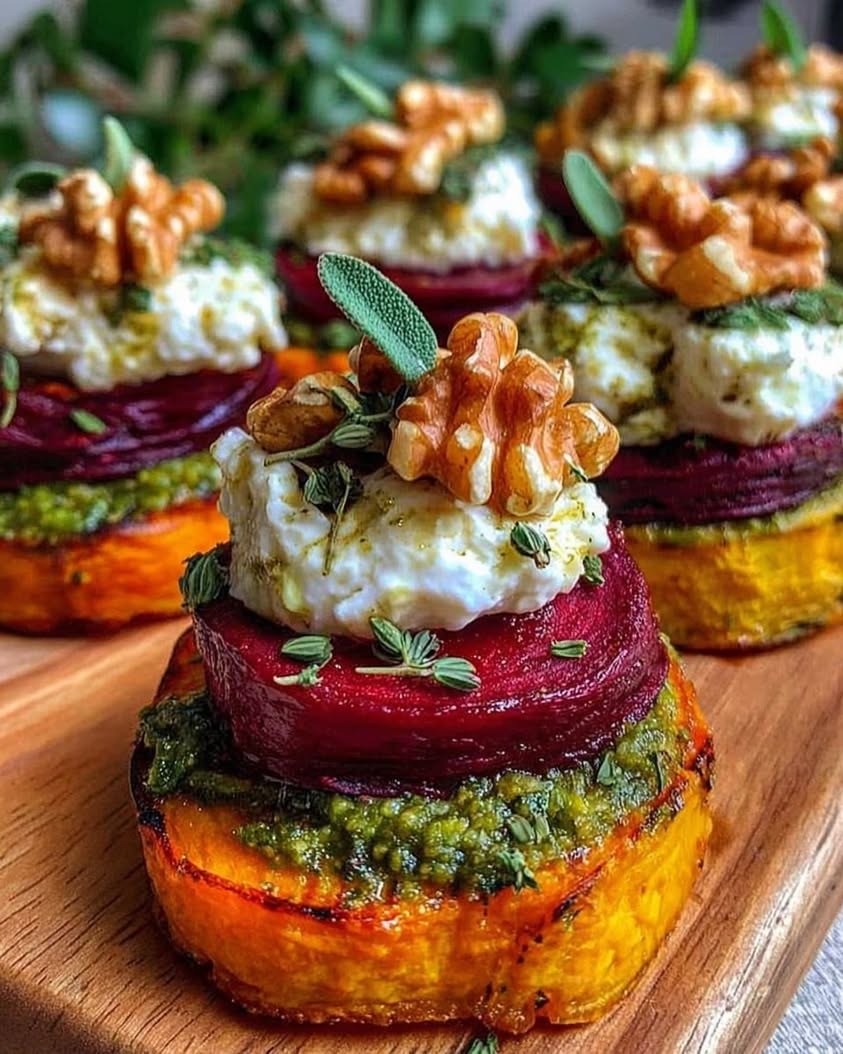
- Visual Appeal: These stacks are a feast for the eyes. The deep orange of the sweet potatoes contrasts beautifully with the vibrant red of the beets and the pure white of the burrata. A drizzle of green pesto and a sprinkle of toasted walnuts create a stunning, artistic presentation.
- Skill Level Needed: This recipe is perfect for beginner and intermediate cooks. There are no advanced techniques required. The main steps involve roasting vegetables, making a simple pesto, and assembling the stacks. Attention to slicing the vegetables evenly is the most important skill.
- Special Equipment: You will need a sharp chef’s knife for slicing the vegetables uniformly. A baking sheet is required for roasting, and a food processor is recommended for making the pesto quickly, though a mortar and pestle will also work.
Recipe Overview
- Difficulty Level: This Sweet Potato & Beet Stacks with Pesto, Burrata & Walnuts recipe is classified as easy. The preparation is simple, and the cooking process is mostly hands-off. The main challenge is ensuring the vegetables are sliced evenly for even cooking. Overall, it is a very approachable recipe that yields impressive results with minimal effort.
- Category: This dish can be served as an elegant appetizer, a light vegetarian main course, or a sophisticated side dish for roasted meats or fish. It fits perfectly into the category of modern American cuisine with Italian influences.
- Cuisine: The recipe draws inspiration from Italian flavors, particularly through the use of fresh basil pesto and creamy burrata cheese. The technique of roasting and layering vegetables is common in Mediterranean cooking. This gives the dish a rustic yet refined feel that is both comforting and chic.
- Cost: The cost of this recipe is moderate. Sweet potatoes and beets are inexpensive root vegetables. Basil and walnuts can be slightly more costly, especially if not in season. Burrata is a specialty cheese that is pricier than mozzarella. However, the total cost per serving is reasonable for a special occasion dish.
- Season: This Sweet Potato & Beet Stacks with Pesto, Burrata & Walnuts is best enjoyed in the fall and winter. Sweet potatoes and beets are at their peak during these cooler months, offering the best flavor and sweetness. The hearty nature of the dish also makes it perfect for cozy weather entertaining.
- Occasion: This dish is ideal for fall dinner parties, holiday gatherings like Thanksgiving or Christmas, and festive brunches. It is also a fantastic choice for a romantic dinner at home or a special vegetarian meal for guests. Its beautiful presentation makes it a reliable showstopper for any occasion.
Why You’ll Love This Recipe
The primary reason you will adore this Sweet Potato & Beet Stacks with Pesto, Burrata & Walnuts is its incredible taste. The sweet, caramelized flavor of the roasted sweet potatoes complements the earthy, slightly sweet beets perfectly. The creamy, mild burrata then melts into the warm vegetables, creating a luxurious mouthfeel. The pesto adds a bright, herby, and slightly garlicky punch that cuts through the richness. Finally, the toasted walnuts provide a nutty, crunchy contrast. This harmonious blend of flavors and textures makes every single bite interesting and deeply satisfying.
In terms of convenience, this recipe is a winner for busy home cooks. You can roast the sweet potatoes and beets in advance, which saves significant time on the day of serving. The pesto can also be made a few days ahead and stored in the refrigerator. Assembly only takes a few minutes right before you are ready to serve. This makes it a stress-free option for entertaining, allowing you to spend more time with your guests and less time in the kitchen.
These stacks also offer significant nutritional advantages. Sweet potatoes are packed with vitamin A, fiber, and antioxidants. Beets are a great source of folate, manganese, and nitrates, which are beneficial for heart health. Walnuts provide healthy omega-3 fatty acids and protein. Even the pesto, made with basil and olive oil, contributes healthy fats and vitamins. This makes the dish a nutrient-dense option that feels indulgent but is actually quite good for you.
From a social and entertaining perspective, this recipe is a fantastic choice. The individual stacks create a beautiful, restaurant-quality presentation that impresses guests. They are easy to serve and eat, making them perfect for cocktail parties or seated dinners. The vibrant colors and elegant stacking also make for a great conversation starter. You can easily double the recipe to feed a larger crowd, making it a versatile and reliable party dish.
Finally, this recipe is both cost-effective and accessible. Sweet potatoes and beets are among the most affordable vegetables at the grocery store. Basil and walnuts are reasonably priced, especially when purchased in bulk. Burrata is the most expensive ingredient, but a little goes a long way when creating these stacks. You can also substitute regular mozzarella if you want to save money. This makes it an impressive dish that does not break the bank, perfect for weeknight meals or special celebrations.
Historical Background and Cultural Significance
The individual components of this Sweet Potato & Beet Stacks with Pesto, Burrata & Walnuts have rich histories. Sweet potatoes originated in Central and South America over 5,000 years ago. They were a staple food for ancient civilizations like the Incas and Aztecs. European explorers brought them back to Europe in the 15th century, where they quickly spread to other parts of the world. Today, they are a beloved ingredient in many cuisines, particularly in the American South, where they are often roasted or used in pies. Their natural sweetness and versatility make them a global favorite.
Beets have an equally long history, with wild varieties first cultivated in the Mediterranean region. They were initially grown for their leaves, similar to chard. The modern, round, red root we know today was developed in Germany in the 16th century. Beets have been used for everything from food to natural dye and even as a medicinal tonic. In Eastern European cuisine, they are famously used in borscht. Their earthy flavor and vibrant color have made them a staple in both home kitchens and traditional dishes worldwide.
Pesto, specifically pesto alla genovese, originates from Genoa, Italy, in the Liguria region. Its name comes from the Genoese word “pestâ,” meaning “to pound” or “to crush,” referring to the traditional method of grinding the ingredients in a mortar and pestle. The classic recipe, first documented in the 19th century, uses fresh basil, garlic, pine nuts, Parmesan cheese, and olive oil. It has since become one of the most famous sauces in the world, celebrated for its fresh, bright flavor and versatility. The combination of basil and garlic was originally used by sailors to prevent scurvy.
Burrata is a more recent invention, created in the early 20th century in the Apulia region of southern Italy. It was developed as a way to use up leftover mozzarella scraps. The outer shell is made of mozzarella, while the inside is filled with stracciatella (shredded mozzarella curds) and cream. This gives burrata its signature soft, luscious center. It was originally a local specialty, but it has gained international popularity in recent decades. Its creamy texture and mild, milky flavor have made it a favorite among chefs and food lovers for adding a touch of luxury to simple dishes.
Ingredient Deep Dive
Sweet Potatoes are a cornerstone of this dish. Culturally, they are a symbol of comfort and abundance in American cuisine, especially around the fall holidays. Nutritionally, they are an excellent source of beta-carotene, which the body converts to vitamin A, supporting eye health and immune function. They are also rich in fiber, vitamin C, and potassium. When selecting sweet potatoes, look for firm ones with smooth, unblemished skin. They should feel heavy for their size. Store them in a cool, dark, well-ventilated place, but not in the refrigerator, as cold temperatures can alter their flavor. For a substitution, you can use yams or butternut squash, which offer a similar sweetness and texture when roasted.
Beets bring an earthy sweetness and a stunning visual contrast to the stacks. Historically, they were used in ancient times for their leaves and later for their roots, which were believed to have aphrodisiac qualities. Nutritionally, beets are rich in folate, manganese, and nitrates, which have been shown to help lower blood pressure and improve athletic performance. They also contain betalains, powerful antioxidants with anti-inflammatory properties. When choosing beets, select small to medium ones for the sweetest flavor and tenderest texture. They should be firm with fresh, green tops if attached. Store them in a plastic bag in the refrigerator crisper drawer for up to two weeks. Golden beets can be substituted for a milder, less earthy flavor that also avoids staining.
Basil Pesto provides the vibrant, herbaceous heart of this recipe. Culturally, pesto is a proud symbol of Italian culinary tradition, representing the fresh, simple flavors of the Mediterranean. Nutritionally, basil is a good source of vitamin K, vitamin A, and antioxidants. The olive oil and walnuts in this version provide healthy monounsaturated fats and omega-3s. For the best flavor, use fresh, bright green basil leaves without any dark spots. Store fresh basil like a bouquet of flowers, with stems in water and a plastic bag over the leaves, at room temperature. For a faster option, you can use high-quality store-bought pesto. A substitution can be made with sun-dried tomato pesto or arugula pesto for a different flavor profile.
Burrata is the luxurious, creamy component that elevates these stacks. Its cultural significance lies in its Italian heritage and its status as a gourmet indulgence. Nutritionally, it is high in protein and calcium but also in fat due to the cream content. The key to perfect burrata is selecting a fresh one. Look for a ball that feels slightly heavy and has a soft, delicate outer shell. It should be stored in its own whey in the refrigerator and used within a day or two of purchase for the best texture. For the richest flavor, allow it to come to room temperature for about 20 minutes before serving. A good substitute is fresh mozzarella, though it will not have the same creamy, spreadable interior. If using mozzarella, slice it thinly and layer it.
Walnuts add a crucial crunch and nutty flavor to the stacks. Historically, walnuts have been cultivated for thousands of years and were prized by ancient Greeks and Romans for their health benefits. Nutritionally, they are one of the best plant sources of omega-3 fatty acids, which are beneficial for brain and heart health. They also contain antioxidants and fiber. When selecting walnuts, look for ones that are plump and uniform in color. You can buy them shelled or in their shells, which last longer. Store shelled walnuts in an airtight container in the refrigerator or freezer to prevent them from going rancid. Toasting them before use deeply enhances their flavor. A good alternative is pecans or pine nuts, which provide a similar rich, nutty taste and satisfying crunch.
Common Mistakes to Avoid
- Do not slice the sweet potatoes and beets into different thicknesses. This leads to uneven cooking, with some pieces burning while others remain hard. Use a mandoline or a sharp knife to ensure all slices are about 1/4-inch thick for uniform roasting.
- Avoid skipping the step of toasting the walnuts. Raw walnuts have a slightly bitter, soft texture. Toasting them in a dry pan or oven for a few minutes releases their natural oils and makes them wonderfully crunchy and more flavorful, which is essential for the final texture.
- Do not overcrowd the baking sheet. If the sweet potato and beet slices are too close together, they will steam rather than roast. This prevents caramelization and results in a soggy texture. Use two baking sheets if necessary to give the vegetables space to brown.
- Do not forget to salt the vegetables before roasting. Salt is crucial for drawing out moisture and enhancing the natural sweetness of the sweet potatoes and beets. Season them generously with kosher salt and black pepper right after tossing them with oil.
- Avoid using a food processor to make the pesto for too long. Over-processing can cause the basil to heat up and oxidize, turning the pesto brown and dulling its bright flavor. Pulse the ingredients until just combined, then fold in the cheese and oil by hand if needed.
- Do not skip the step of draining the burrata. Fresh burrata is packed in whey, which can make the stacks watery if not removed. Gently pat the burrata dry with a paper towel before placing it on the stacks.
- Avoid assembling the stacks too far in advance. The hot vegetables can cause the burrata to melt and the walnuts to become soggy. Assemble the stacks just before serving for the best texture and presentation.
- Do not use low-quality olive oil for the pesto. The flavor of the oil is a primary component of the sauce. Use a good extra-virgin olive oil with a fruity, peppery flavor to give the pesto depth and richness.
- Do not forget to peel the beets. While you can technically eat the skin, it can be tough and slightly bitter. Peeling the beets ensures a tender, smooth texture that melds well with the other ingredients.
Essential Techniques
Roasting Root Vegetables is the foundational technique for this recipe. Roasting at a high temperature, around 400 degrees Fahrenheit, caramelizes the natural sugars in the sweet potatoes and beets. This creates a deep, sweet flavor and a tender interior. It is important to toss the slices in olive oil and salt to ensure even browning. Spreading them in a single layer is critical to prevent steaming. You will know they are done when they are fork-tender and have golden-brown edges. This technique transforms simple vegetables into a delicious, complex component.
Making Fresh Basil Pesto is a simple but essential technique. The traditional method uses a mortar and pestle to crush the basil and garlic into a paste, which releases their oils and aromas. For convenience, a food processor works well, but it is important to pulse rather than puree continuously. This prevents the heat from the motor from cooking the basil. The key is to add the olive oil in a slow, steady stream while the processor is running to create an emulsion. This results in a vibrant, emulsified sauce that coats the pasta or vegetables perfectly. Tasting and adjusting the salt and acid at the end is crucial for balance.
Toasting Nuts is a quick technique that dramatically enhances the flavor and texture of the walnuts. Toasting can be done in a dry skillet over medium heat or on a baking sheet in the oven. The nuts should be stirred frequently to prevent burning. They are done when they become fragrant and turn a shade darker. This process releases their natural oils and creates a rich, warm, nutty flavor. It also makes them considerably crunchier. Always let them cool completely before adding them to the dish to prevent them from softening the other ingredients.
Layering and Stacking is the presentation technique that makes this dish special. Start by placing the largest, most stable sweet potato slice on the bottom. Then, add a layer of pesto, a slice of roasted beet, and a few walnuts. Repeat this layering process, building a stack that is about four to five slices high. The final layer should be a generous dollop of burrata. This method ensures each bite contains a balance of all the flavors and textures. A gentle press on top of the stack will help it hold together, but it should not be compressed too much.
Pro Tips for Perfect Sweet Potato & Beet Stacks with Pesto, Burrata & Walnuts
Use a mandoline slicer for perfectly uniform 1/4-inch thick slices of sweet potatoes and beets. This is the single most important step for even cooking and a professional-looking stack. If you do not have a mandoline, use a very sharp knife and take your time.
Season the sweet potato and beet slices generously with kosher salt and black pepper before roasting. Do not be shy. The salt helps to draw out moisture, concentrate the flavor, and promote caramelization, resulting in a much more flavorful vegetable.
Let the roasted sweet potato and beet slices cool slightly on the baking sheet before assembling the stacks. This prevents them from being too hot, which would melt the burrata immediately. A slight warmth is good, but they should be just warm to the touch.
Make the pesto in advance to save time and allow the flavors to meld. You can make it up to three days ahead. Store it in an airtight container in the refrigerator, with a thin layer of olive oil on top to prevent the basil from oxidizing and turning brown.
Drain the burrata on a paper towel for at least 10 minutes before using it. This removes excess moisture that would otherwise make the stacks watery and dilute the flavors. A dry burrata also holds its shape better on top of the stack.
Toast the walnuts just until they are fragrant and slightly golden. This usually takes about 3 to 5 minutes in a dry pan. Do not walk away from them, as they can burn quickly. Once they are cool, chop them roughly for a satisfying crunch in every bite.
Drizzle a small amount of balsamic glaze over the finished stacks for an extra layer of sweetness and acidity. This is not in the original recipe, but it complements the roasted vegetables and creamy burrata wonderfully. It also adds a beautiful, dark, glossy finish.
Variations and Adaptations
Regional Variations can be inspired by different cuisines. For a Mediterranean twist, use sun-dried tomato pesto and crumbled feta cheese instead of basil pesto and burrata. For a Mexican-inspired version, roast the vegetables with chili powder and cumin, then top with a cilantro-lime crema and toasted pepitas. These variations keep the core concept of roasted vegetable stacks but completely transform the flavor profile based on regional tastes.
Seasonal Adaptations allow you to enjoy this dish year-round. In the spring, swap the sweet potatoes and beets for thick slices of zucchini and yellow squash. In the summer, use grilled eggplant and tomato slices. For a winter version, use parsnips and carrots with a sage-infused pesto. Each season offers a new vegetable that can be layered to create a beautiful and delicious stack.
Dietary Modifications are easy to accommodate. To make this recipe vegan, substitute the burrata with a high-quality cashew-based ricotta or a crumbled, marinated tofu. For the pesto, use a vegan Parmesan substitute or nutritional yeast. For a dairy-free option, you can use a simple olive oil and herb drizzle instead of the pesto and completely omit the burrata, or use a plant-based cheese alternative.
Flavor Variations can be achieved by changing the pesto. Try using arugula pesto for a peppery kick, roasted red pepper pesto for a smoky sweetness, or a parsley and almond pesto for a fresh, nutty flavor. You can also infuse the olive oil used for roasting with garlic or rosemary to add another layer of flavor to the vegetables themselves.
Texture Modifications can be made by adding a creamy element. A layer of whipped goat cheese or a spoonful of hummus at the base of the stack adds a different kind of creaminess. For extra crunch, add a sprinkle of crispy fried shallots or a crumble of crunchy granola alongside the walnuts.
Presentation Alternatives are fun to explore. Instead of stacking the vegetables vertically, you can create a horizontal “napoleon” by layering the ingredients on a plate in a flat stack. You can also serve the components deconstructed on a large platter as a salad, allowing guests to build their own stack. A wide, shallow bowl also makes a beautiful presentation for the stacks.
Serving and Presentation Guide
For plating, place each Sweet Potato & Beet Stack in the center of a small, individual plate. A white or light-colored plate works best to let the vibrant colors of the dish shine. Gently place the burrata on top of the stack, then drizzle a generous spoonful of pesto around the base of the stack and a small amount on the burrata itself. This creates a beautiful, artistic effect. The final touch is a scattered handful of toasted walnuts on top and around the plate.
Garnishing is key to an elegant presentation. A few fresh basil leaves or microgreens placed on top of the burrata add a pop of green and a fresh finish. A light drizzle of high-quality extra-virgin olive oil over the entire plate adds a glossy sheen and extra flavor. A sprinkle of flaky sea salt, like Maldon, just before serving will provide a satisfying textural and flavor contrast.
Traditional accompaniments for this dish are simple. A side of crusty bread or toasted baguette slices is perfect for sopping up any leftover pesto and creamy cheese. A fresh arugula salad with a simple lemon vinaigrette provides a peppery, acidic contrast that cuts through the richness. You could also serve it alongside a bowl of roasted tomato soup for a cozy, complete meal.
Modern serving suggestions include using the stacks as a topping for a bed of creamy polenta or a grain like farro or quinoa. This turns the appetizer into a hearty, satisfying main course. You can also serve them as a side dish to a roasted chicken or a piece of grilled salmon, where the stacks provide a beautiful, flavorful accompaniment to the protein.
Temperature is important for this dish. The roasted vegetables should be served warm or at room temperature. The burrata should be cold but not icy, so take it out of the refrigerator about 20 minutes before assembling. This contrast in temperature is part of what makes the dish so appealing. Serve the stacks immediately after assembling to prevent them from becoming soggy or warm.
Portion control tips are easy to follow. One stack per person is the standard as an appetizer. For a main course, you can serve two stacks per person. If you are serving a larger spread of appetizers, you can also cut the stacks in half horizontally to create smaller, bite-sized portions. This makes them perfect for cocktail parties where guests might be standing and eating with their hands.
Wine and Beverage Pairing
For wine, this Sweet Potato & Beet Stacks with Pesto, Burrata & Walnuts pairs beautifully with a crisp, acidic white wine. A Sauvignon Blanc from New Zealand, with its grassy, herbaceous notes, echoes the basil in the pesto beautifully. Another excellent choice is a dry Pinot Grigio from Italy, which offers bright citrus and floral notes that cut through the richness of the burrata. The acidity in these wines helps to cleanse the palate between each rich, creamy bite.
If you prefer red wine, a light-bodied, chilled red is a surprising but excellent choice. A Pinot Noir from Burgundy or Oregon, with its earthy, fruity notes, complements the earthiness of the beets and the sweetness of the potatoes. Another option is a Gamay from Beaujolais, which is light, fruity, and low in tannins. It is also best served slightly chilled, making it a refreshing pairing for this dish. Avoid heavy, tannic reds, which can overwhelm the delicate flavors.
For non-alcoholic alternatives, a sparkling water with a splash of pomegranate or cranberry juice is a festive and flavorful choice. The acidity and bubbles cut through the richness. A cold-brewed herbal iced tea, such as a hibiscus or mint tea, offers a refreshing, slightly tart complement to the sweet and savory flavors. A simple lemonade with fresh basil is also a fantastic, palate-cleansing option.
Temperature considerations are important for the beverages. White wines and non-alcoholic drinks should be served well-chilled. The red wine options, like Pinot Noir and Gamay, should be served slightly chilled, around 55 degrees Fahrenheit, to be most refreshing. The goal is for the beverage to be a refreshing counterpoint to the warm, rich components of the stack.
For serving suggestions, pour the wine into appropriate stemware. A white wine glass or a universal glass works perfectly. For non-alcoholic options, a highball glass or a stemless wine glass is stylish. Garnish the sparkling water or juice with a sprig of fresh basil or a slice of citrus to tie it visually back to the dish.
Storage and Shelf Life
Storage of the individual components is best. Roasted sweet potatoes and beets can be stored together in an airtight container in the refrigerator for up to four days. They are best used within two days for the freshest flavor. The pesto should be stored in a separate airtight container, with a thin layer of olive oil poured on top to prevent oxidation. It will last for up to a week in the refrigerator.
Temperature requirements are standard for refrigeration. All components should be stored at a consistent temperature of 40 degrees Fahrenheit or below. The burrata should always be kept refrigerated in its original brine or whey until just before use. The walnuts should be stored at room temperature in an airtight container, or in the freezer for long-term storage to prevent them from going rancid.
Container recommendations are straightforward. Glass or plastic containers with airtight lids are ideal for the vegetables and pesto. For the burrata, keep it in its original container or transfer it to a small bowl covered with plastic wrap. The walnuts are best kept in a sealed glass jar or a zip-top bag. This prevents them from absorbing moisture or odors from the refrigerator.
Signs of spoilage are easy to spot. The sweet potatoes and beets will become mushy or develop a slimy texture if they are spoiling. They may also develop an off, sour smell. The pesto will turn dark brown and the oil may separate, but this is less a sign of spoilage and more a sign of oxidation. However, if it smells sour or fermented, it should be discarded. The burrata will become watery and develop a strong, sour smell if it is past its prime. The walnuts will taste bitter and stale if they have gone rancid.
Reheating instructions are simple. The roasted vegetables can be reheated in a 350-degree Fahrenheit oven for about 5 to 7 minutes, or in a microwave for a quick option. The goal is to warm them through without drying them out. The pesto, burrata, and walnuts should never be reheated. They are added to the stack just before serving to preserve their fresh, cold, or crunchy textures.
Freezing guidelines are limited. It is not recommended to freeze the assembled stacks. The texture of the roasted vegetables would become watery and mushy upon thawing. The burrata would also separate and become grainy. The pesto can be frozen in ice cube trays for up to three months, but its flavor will be less bright after thawing. It is best to make and serve this dish fresh for the best quality.
Make Ahead Strategies
A good prep timeline involves making the components two to three days in advance. You can roast the sweet potatoes and beets on a Sunday and store them in the refrigerator. You can also make the pesto and toast the walnuts two days ahead. The burrata is best purchased and stored no more than one day in advance. This strategy spreads out the work, making the final assembly on serving day quick and easy.
Storage between steps is crucial for maintaining quality. Keep all components in separate, airtight containers in the refrigerator. Do not combine the roasted vegetables with the pesto or walnuts until you are ready to serve. This prevents the vegetables from becoming soggy and the walnuts from losing their crunch. The pesto should be stored with a layer of olive oil on top to keep it green.
Quality impact assessment is generally positive. The roasted vegetables actually taste a little better the next day as the flavors meld. The pesto will remain vibrant for a couple of days. The only risk is that the vegetables might release a little more moisture as they sit. For the best quality, reheat the vegetables in a hot oven to re-crisp the edges before assembling the stacks.
Assembly tips for make-ahead success are important. Never assemble the stacks more than 30 minutes before serving. When you are ready to serve, simply reheat the vegetables in a 350-degree Fahrenheit oven for 5 to 10 minutes. Let them cool slightly, then assemble the stacks with the pesto, walnuts, and burrata. This keeps each element at its optimal temperature and texture.
Reheating guidelines are simple. The best way to reheat the vegetables is to spread them on a baking sheet and place them in a preheated 350-degree Fahrenheit oven for about 5 to 7 minutes. This restores their warmth and a bit of their roasted texture. Microwaving is faster but can make them slightly soft. The key is to ensure they are hot in the center but not dried out on the edges.
Fresh element additions should always be done at the last minute. The pesto should be stirred well and left at room temperature for about 15 minutes before serving to soften its texture. The burrata should be drained and patted dry right before assembly. The walnuts should be toasted and cooled completely, then added at the end to preserve their crunch. This final step is what brings the entire dish to life.
Scaling Instructions
Halving the Sweet Potato & Beet Stacks with Pesto, Burrata & Walnuts recipe is straightforward. Simply divide all ingredient quantities by two. You will need one small sweet potato and one small beet. The cooking time for the vegetables will remain roughly the same, though you should check for doneness a few minutes early since there will be less moisture in the oven. You will only need half a ball of burrata, which is perfectly manageable. This is an excellent option for a romantic dinner for two.
Doubling or tripling the recipe is equally simple. Just multiply all ingredient quantities by two or three. The main challenge when scaling up is oven space. You will likely need two or three baking sheets to avoid overcrowding the vegetables. Rotate the pans halfway through cooking to ensure even roasting. You may also need to roast the vegetables in batches to maintain the high oven temperature needed for caramelization.
Equipment adjustments become necessary when scaling up. You will need more baking sheets, mixing bowls, and storage containers. If you are using a food processor for the pesto, you can make a large batch in one go as long as your processor bowl is large enough. For very large batches, it is easier to make the pesto in two separate batches. You will also need a larger serving platter or more individual plates for serving the stacks.
Timing modifications are minor but important. When cooking larger quantities of vegetables, the total roasting time may increase by 5 to 10 minutes because the oven has to work harder to heat all the food. Check the vegetables a few minutes before the original recipe time, but be prepared to add time if needed. The pesto and walnut preparation time remains the same regardless of quantity.
Storage considerations become critical for large batches. You will need bulk airtight containers for the roasted vegetables, pesto, and walnuts. Do not store the components together. The vegetables can be stored for up to four days, but larger batches are best used within two to three days for optimal freshness. The pesto will keep for a Print
Sweet Potato & Beet Stacks with Pesto, Burrata & Walnuts
- Total Time: 37 minutes
- Yield: 4
Description
Elegant roasted vegetable stacks topped with creamy burrata, fresh pesto, and crunchy walnuts – perfect as a starter or light main.
Ingredients
- 2 medium sweet potatoes, sliced into 1/4-inch rounds
- 2 medium red beets, sliced into 1/4-inch rounds
- 3 tablespoons olive oil, divided
- Salt and black pepper to taste
- 1/2 cup basil pesto (store-bought or homemade)
- 8 ounces burrata cheese, at room temperature
- 1/2 cup walnut halves, toasted and roughly chopped
- Fresh basil leaves for garnish
Instructions
- Preheat oven to 400°F (200°C). Line two baking sheets with parchment paper.
- In a bowl, toss sweet potato and beet slices with 2 tablespoons olive oil, salt, and pepper until coated. Arrange in a single layer on the baking sheets.
- Roast for 18-22 minutes, flipping halfway, until tender and lightly browned. Let cool slightly.
- On a serving plate, stack alternating slices of sweet potato and beet, creating 4 stacks (about 4-5 slices each).
- Drizzle each stack with pesto, then place a generous spoonful of burrata on top.
- Sprinkle with toasted walnuts, drizzle with remaining 1 tablespoon olive oil, and garnish with basil. Serve warm or at room temperature.
Notes
You can customize the seasonings to taste. For a vegan version, replace burrata with cashew ricotta.
- Prep Time: 15 minutes
- Cook Time: 22 minutes
- Method: Main
- Cuisine: American