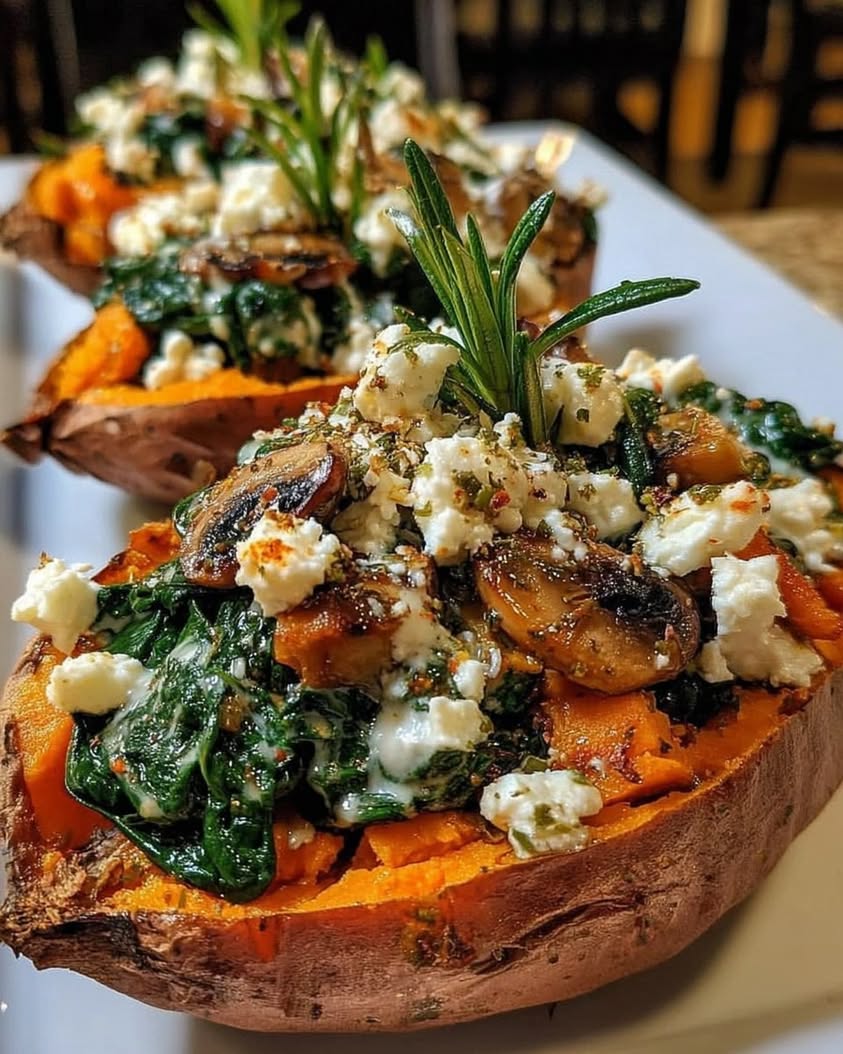
Stuffed Sweet Potatoes with Spinach, Mushroom, Feta and Rosemary Drizzled with Lemon Garlic Yogurt Sauce: A Wholesome Family Dinner
Imagine pulling a perfectly roasted sweet potato from the oven, its skin caramelized and crisp, while the inside remains incredibly fluffy and sweet. You cut it open and pile it high with a savory mixture of sautéed spinach, earthy mushrooms, and salty feta cheese, all brought together with the woodsy aroma of fresh rosemary. Then, you finish the whole creation with a cool, tangy drizzle of lemon garlic yogurt sauce that cuts through the richness. This is the magic of these Stuffed Sweet Potatoes with Spinach, Mushroom, Feta and Rosemary Drizzled with Lemon Garlic Yogurt Sauce, a meal that feels both indulgent and incredibly wholesome.
This recipe is designed to be your new weeknight hero. It delivers a complete, balanced dinner in about an hour with very little hands-on work. The sweet potato bakes away in the oven while you quickly prepare the simple, flavorful filling. Therefore, you spend less time cleaning and more time enjoying a restaurant-quality meal at home. Because the ingredients are straightforward and the technique is forgiving, even beginner cooks can achieve outstanding results. This dish is a perfect way to use up vegetables in your fridge, and it is naturally packed with vitamins, fiber, and protein.
The beauty of this meal lies in its incredible flavor contrast. The natural sweetness of the potato is a fantastic canvas for the savory, umami-rich mushroom and spinach filling. The salty, creamy feta adds a briny pop, while the fresh rosemary brings a pine-like, aromatic quality. Finally, the lemon garlic yogurt sauce brightens everything up with its acidity and creamy coolness. This Stuffed Sweet Potatoes with Spinach, Mushroom, Feta and Rosemary Drizzled with Lemon Garlic Yogurt Sauce is not just a recipe; it is an experience. It is a warm hug on a cold evening and a vibrant, satisfying meal that everyone at the table will love.
Quick Recipe Highlights
- Flavor Profile: You get a beautiful balance of sweet from the potato, savory and earthy from the mushrooms and spinach, salty from the feta, and tangy and bright from the lemon garlic yogurt sauce. The rosemary adds a fragrant, woodsy note that ties everything together perfectly.
- Texture: The texture journey is a highlight. You have the soft, fluffy interior of the potato contrasted with its slightly chewy, caramelized skin. The filling offers a tender bite from the spinach and a meaty, satisfying chew from the mushrooms, all topped with the creamy, smooth yogurt sauce.
- Aroma: Your kitchen will smell incredible. The sweet potato roasting fills the air with a sweet, comforting scent. As you sauté the mushrooms and spinach with garlic and rosemary, an earthy, savory, and herbaceous aroma takes over. The lemon garlic sauce adds a final, fresh, and zesty note.
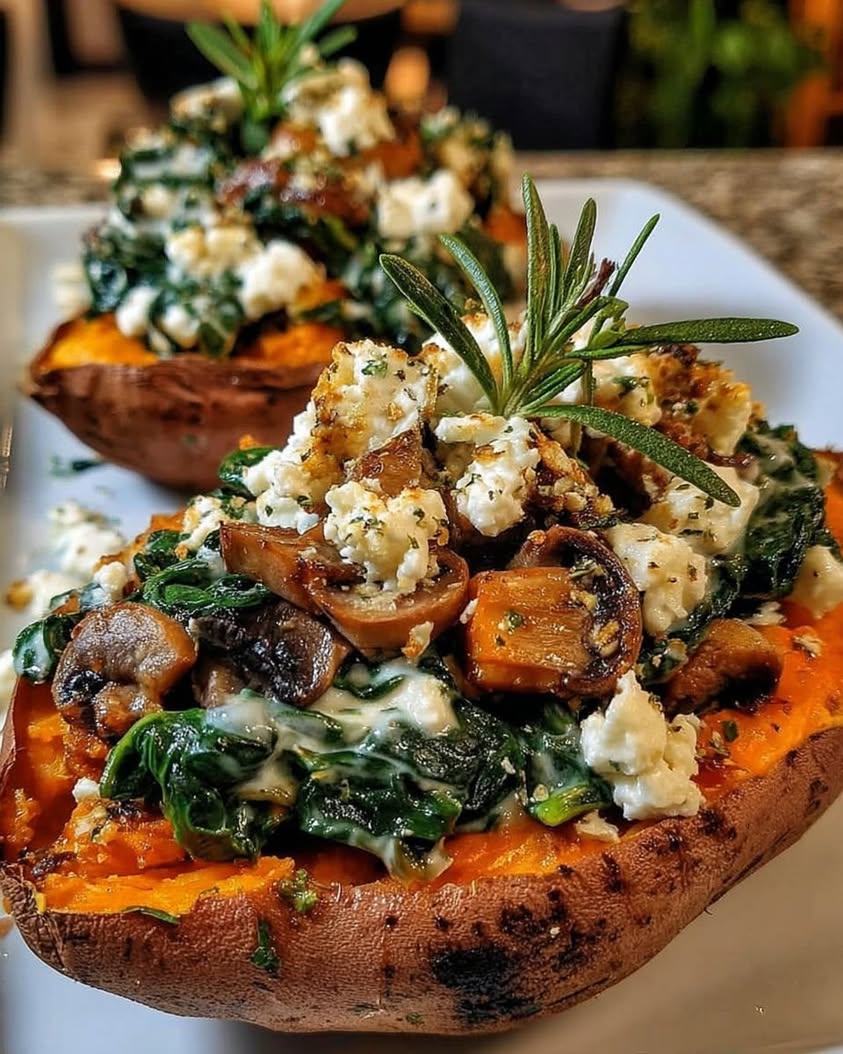
- Visual Appeal: The presentation is vibrant and inviting. The bright orange of the sweet potato contrasts with the deep green of the spinach and the golden-brown mushrooms. Crumbs of white feta and specks of dark green rosemary add texture, while a white swirl of the lemon garlic yogurt sauce creates a beautiful, finished look.
- Skill Level Needed: This recipe is perfect for cooks of all levels. The techniques are basic: roasting, sautéing, and whisking. There are no complicated steps or special skills required. Therefore, it is a great confidence booster for beginners and a reliable, quick meal for experienced cooks.
- Special Equipment: You will need a basic sheet pan or baking dish for the potatoes and a large skillet for the filling. A small bowl for the sauce is also required. A microplane or fine grater is useful for the garlic and lemon zest, but a sharp knife works just as well for mincing.
Recipe Overview
- Difficulty Level: We rate this as an easy recipe because each step is straightforward. Roasting a sweet potato requires no active work. Sautéing vegetables is a fundamental skill, and the sauce is simply whisked together. There is no tricky timing or intricate assembly required. Even if you are new to cooking, you can confidently tackle this dish.
- Category: This is a fantastic main course for a wholesome dinner. It also works beautifully as a hearty lunch or a satisfying meal-prep option. Because it is a complete meal in one package, it simplifies your planning. You could even serve these as a smaller, elegant side dish for a holiday gathering.
- Cuisine: While the ingredients are widely loved, this recipe draws inspiration from Mediterranean and modern American cooking. The combination of spinach, feta, and lemon is classic Mediterranean. The stuffed potato concept, however, is a beloved American comfort food. This fusion creates a dish that is both familiar and excitingly fresh.
- Cost: This is a very budget-friendly meal. Sweet potatoes, spinach, and mushrooms are some of the most affordable produce items. Feta cheese is reasonably priced for the amount of flavor it provides. Pantry staples like garlic, lemon, and yogurt round out the ingredients list. Therefore, you can feed a family of four for a fraction of the cost of takeout.
- Season: This dish is incredibly versatile across seasons. In the fall and winter, the warm, hearty filling and roasted sweet potatoes are deeply comforting. During spring and summer, the bright, fresh lemon garlic yogurt sauce makes the meal feel lighter and more vibrant. You can easily adapt the filling to use whatever vegetables are in season.
- Occasion: It is perfect for a busy weeknight dinner when you need something delicious and efficient. It is also impressive enough to serve to guests at a casual dinner party. Because it can be prepped in advance, it is an excellent choice for a relaxed weekend meal. It is even a hit at potlucks, as it can be transported and assembled on site.
Why You Will Love This Recipe
The taste is the first thing that will win you over. Every forkful delivers a complex harmony of flavors. The sweet potato provides a natural, candy-like sweetness that perfectly counterbalances the savory, umami-rich mushrooms and the salty, tangy feta cheese. The fresh rosemary adds an aromatic, almost pine-like quality that elevates the entire dish. Then, the lemon garlic yogurt sauce swoops in with its bright, acidic creaminess, cutting through the richness and tying all the elements together into a truly unforgettable bite.
The convenience of this recipe is a major selling point. You can have a gourmet-feeling dinner on the table with minimal active effort. While the potatoes roast unattended in the oven, you can prepare the filling and the sauce in the time it takes to watch a short TV show. This means less time hovering over the stove and more time relaxing. Additionally, the cleanup is a breeze, requiring only a sheet pan, a skillet, and a small bowl. This makes it an ideal choice for those evenings when you are tired but still want a home-cooked, nourishing meal.
Nutritionally, this dish is a powerhouse. Sweet potatoes are loaded with Vitamin A, fiber, and antioxidants, which support eye health and digestion. Spinach and mushrooms provide a wealth of vitamins, minerals, and antioxidants while being low in calories. The feta adds a good dose of calcium and protein, and the yogurt-based sauce offers probiotics for gut health. Therefore, you can feel fantastic about serving this meal to your family. It is a delicious way to pack in several servings of vegetables without anyone feeling deprived.
This recipe also excels in its social and entertaining value. It is a naturally interactive dish, perfect for a build-your-own dinner party. You can set out a platter of roasted potatoes, bowls of filling, crumbled feta, and the sauce, and let your guests assemble their own creations. This makes for a fun, low-stress gathering where everyone can customize their meal. Furthermore, the presentation is stunning, with vibrant colors and elegant components that look far more complicated than they are, guaranteeing you will impress your guests.
Finally, the cost-effectiveness and accessibility of the ingredients make this a recipe you will return to again and again. All the primary ingredients are available year-round at any standard grocery store, and they are almost always on sale. You do not need any expensive cuts of meat or hard-to-find specialty items. This means you can create a healthy, delicious, and satisfying meal for your family even on a tight budget. It is a reliable, wallet-friendly hero that proves good food does not have to be expensive.
Historical Background and Cultural Significance
The origin story of this dish is a beautiful example of culinary fusion. The sweet potato itself is native to the Americas, with evidence of its cultivation dating back over 5,000 years in Peru. It was a staple food for many indigenous cultures long before European contact. Today, it remains a beloved ingredient in Southern American cuisine, particularly in the United States. The concept of a “stuffed” potato, however, has diverse roots, from the loaded baked potatoes of the American Midwest to the filled potatoes found in many European cuisines.
The cultural importance of this specific combination of flavors is deeply rooted in the Mediterranean tradition. Spinach, feta cheese, and lemon are cornerstones of Greek and broader Mediterranean cooking. The use of rosemary, an herb native to the Mediterranean region, adds an authentic, earthy depth. The creamy yogurt sauce is a classic element in Middle Eastern and Greek cuisine, often used to temper rich or spicy foods. Therefore, this recipe is a celebration of the Mediterranean diet, which is globally recognized for its health benefits and incredible flavor.
The evolution of this recipe from simple components to a cohesive, modern meal represents a trend in home cooking toward combining global flavors with comfort food classics. Chefs and home cooks alike have increasingly looked for ways to make familiar dishes more nutritious and exciting. By swapping a white potato for a nutrient-dense sweet potato and adding a vibrant vegetable filling, this recipe modernizes the classic loaded potato. The addition of a bright, homemade sauce elevates it from simple weeknight fare to a dish that feels special and carefully curated.
Regional variations of stuffed potatoes are vast and fascinating. In the Southern United States, you might find sweet potatoes loaded with butter, brown sugar, and pecans. In British cuisine, a jacket potato is often filled with baked beans and cheese. This recipe draws inspiration from the Mediterranean region, where vegetables and herbs are celebrated. Variations might include sun-dried tomatoes, Kalamata olives, or a sprinkle of oregano. This flexibility shows how a single base concept can be adapted to reflect local tastes and available ingredients.
Ingredient Deep Dive
Sweet Potatoes: Sweet potatoes have a rich cultural history that spans millennia. They were a primary food source for ancient civilizations in Central and South America and were later introduced to Europe and Asia by explorers. Nutritionally, they are a superstar, packed with beta-carotene, which the body converts to Vitamin A. They are also a great source of fiber, Vitamin C, and potassium. When selecting sweet potatoes, look for ones that are firm, smooth, and free from cracks or soft spots. Store them in a cool, dark, well-ventilated place, never in the refrigerator. For a substitution, you can use regular baking potatoes or even Japanese sweet potatoes, which have a nuttier, denser texture.
Spinach: Spinach has been cultivated for over a thousand years, originating in ancient Persia before spreading to Europe and Asia. It is famously rich in Iron, Calcium, and Vitamins A, C, and K. This leafy green is a powerful antioxidant and supports everything from bone health to immune function. When buying spinach, choose leaves that are vibrant green, crisp, and free from any yellowing or sliminess. Store fresh spinach in a sealed bag in the refrigerator with a paper towel to absorb excess moisture. For a substitution, you can use kale, Swiss chard, or arugula, but keep in mind they have stronger flavors and may require longer cooking times.
Mushrooms: Mushrooms have been used for both culinary and medicinal purposes for centuries across Asia and Europe. They are unique in that they are one of the few non-animal sources of Vitamin D. Furthermore, they are rich in B vitamins, selenium, and powerful antioxidants that support the immune system. When selecting mushrooms, look for ones that are firm, dry, and have a smooth, clean cap. Store them in a paper bag in the refrigerator to prevent them from becoming slimy. For a substitution, cremini, shiitake, or portobello mushrooms all work wonderfully, each offering a slightly different, deeper flavor profile.
Feta Cheese: Feta is a brined curd white cheese with a long history in Greek and Mediterranean cuisine, dating back to the 8th century BC. It is traditionally made from sheep’s milk or a mixture of sheep and goat milk. Feta provides a significant amount of calcium and protein, along with a unique tangy and salty flavor that is hard to replicate. When buying feta, look for it stored in its brine, as this helps it stay moist and flavorful. Store feta in its brine in the refrigerator, where it will last for several weeks. For a substitution, you can use goat cheese for a similar tang, or ricotta salata for a saltier, firmer option.
Rosemary: Rosemary is an aromatic herb native to the Mediterranean region, where it has been used for centuries in cooking, medicine, and even as a symbol of remembrance. It offers a distinctive, woodsy, and slightly peppery flavor that pairs beautifully with roasted vegetables and meats. It is also rich in antioxidants and anti-inflammatory compounds. When selecting rosemary, choose sprigs that are bright green, firm, and fragrant. Store fresh rosemary in a damp paper towel inside a plastic bag in the refrigerator, or by standing the stems in a glass of water. For a substitution, you can use dried rosemary, but use only half as much, or try thyme or oregano for a different but equally delicious herbal note.
Lemon Garlic Yogurt Sauce: This sauce is a modern take on the classic Mediterranean tzatziki, omitting the cucumber for a simpler, more versatile condiment. Yogurt is a fantastic source of probiotics, calcium, and protein, which are essential for gut and bone health. The lemon provides a burst of Vitamin C, while garlic offers allicin, a compound known for its immune-boosting properties. When making this sauce, use thick, plain yogurt such as Greek yogurt for the best creamy texture. Store the sauce in an airtight container in the refrigerator for up to a week. For a substitution, you can use sour cream or a dairy-free yogurt alternative for a similar tangy effect.
Common Mistakes to Avoid
- Do not undercook the sweet potatoes. They need to be fork-tender all the way through. If they are not fully cooked, the texture will be hard and unpleasant. Bake them until the thickest part is easily pierced with a knife.
- Do not overcrowd the mushrooms in the pan. If you put too many mushrooms in the skillet at once, they will steam instead of brown. Cook them in a single layer to achieve a beautiful, caramelized golden color and deep, savory flavor.
- Do not skip washing the spinach, even if it says pre-washed. Spinach can still have grit or sand. Give it a quick rinse in a colander and shake off the excess water before adding it to the pan.
- Do not add too much moisture to the filling. If you wash the mushrooms or add wet spinach without drying it, the filling will become watery. A soggy filling will make the potato skin feel soft and unappetizing.
- Do not use pre-shredded feta cheese. Pre-shredded cheese often contains anti-caking agents that prevent it from melting or crumbling nicely. Buy a block of feta and crumble it yourself for the best texture and flavor.
- Do not forget to season each component separately. The potatoes and the filling need salt to taste their best. Underseasoning will result in a bland final dish, even with the sauce.
- Do not over-squeeze the lemon juice for the sauce. A little goes a long way. Start with half the juice, taste, and add more if you want a brighter, more acidic sauce.
- Do not assemble the stuffed potatoes too far in advance. The filling and yogurt sauce can make the potato skin soggy if they sit too long. It is best to assemble them right before serving.
- Do not use old garlic for the sauce. Fresh, firm garlic cloves will give you the best pungent and aromatic flavor. Old, sprouting garlic can be bitter and less potent.
- Do not bake the potatoes with the filling already inside. Roast the potatoes whole until tender, then cut and stuff. Baking the filling inside can cause it to dry out or the potato to become unevenly cooked.
Essential Techniques
Roasting Sweet Potatoes: Roasting is the best method for bringing out the natural sugars in sweet potatoes. The dry, high heat of the oven caramelizes the starches on the outside, creating a deliciously crisp skin and a fluffy, tender interior. To master this, always wash and dry the potatoes thoroughly, then prick them a few times with a fork to allow steam to escape. Rub them with a little oil and salt before baking. A common pitfall is cooking them at too low a temperature, which makes them take too long and become gummy. The visual cue for doneness is when the skin has shriveled slightly and a knife slides into the flesh with no resistance.
Sautéing Mushrooms for Maximum Flavor: Sautéing mushrooms properly is crucial for developing their deep, umami-rich taste. The key is to start with a hot pan and a little oil. Adding the mushrooms in a single, uncrowded layer allows them to make direct contact with the hot surface. At first, they will release their moisture and look like they are steaming. You must resist the urge to stir them constantly. Let them cook undisturbed for several minutes until the liquid evaporates and they begin to brown. Mastering this technique involves patience. The most common pitfall is stirring too frequently, which prevents browning. The visual cue is a deep golden-brown color on the edges of the mushrooms.
Making a Silky Lemon Garlic Yogurt Sauce: Making a stable, creamy yogurt sauce is all about emulsification and flavor extraction. The technique starts with mincing your garlic very finely or grating it on a microplane. This ensures the raw garlic flavor is evenly distributed without large, overpowering chunks. Then, you combine the garlic with the yogurt, lemon juice, and zest. Whisking vigorously is essential to create a smooth, uniform sauce. A common pitfall is adding all the lemon juice at once, which can make the sauce too thin. The visual cue for a perfect sauce is a smooth, lump-free consistency that is thick enough to coat the back of a spoon.
Wiltiing Spinach Properly: Wilting is a gentle cooking technique that reduces the volume of spinach without turning it into a mushy paste. The key is to use a high, residual heat and the moisture left on the leaves after washing. After cooking the mushrooms, you simply pile the spinach into the hot skillet and cover it for a minute. The steam will quickly wilt the leaves. Then, you stir them into the mushroom mixture. A common mistake is cooking them too long, which leaches out their color and nutrients. The visual cue is when the leaves become a deep, vibrant green and have reduced to about a quarter of their original volume.
Pro Tips for Perfect Stuffed Sweet Potatoes
For the best texture, choose potatoes that are similar in size so they cook evenly. Medium to large potatoes work best as they provide a substantial base for the filling. If your potatoes are on the smaller side, you may need to adjust the baking time down by a few minutes.
Do not skip the step of rubbing the potatoes with oil and salt. The oil helps the skin crisp up beautifully in the oven, while the salt seasons the entire potato from the outside in. This simple step makes a significant difference in the final taste and texture.
When preparing the mushrooms, let them cool slightly before adding the spinach. If the pan is too hot when you add the delicate spinach, it can scorch the garlic. Letting the temperature drop just a touch ensures the garlic infuses the dish without burning.
For the lemon garlic yogurt sauce, let it sit for at least 10 minutes after you make it. This resting time allows the flavors of the garlic and lemon to meld together perfectly. The sauce will taste much more unified and delicious than if you serve it immediately.
Toast a tablespoon of pine nuts or chopped walnuts in a dry pan for a few minutes. Sprinkle these over the finished stuffed potatoes for a wonderful, buttery crunch that contrasts nicely with the soft filling and creamy sauce.
Use fresh rosemary if you can. Dried rosemary is more brittle and can have a slightly bitter, dusty flavor. Fresh rosemary has a brighter, more aromatic quality that truly elevates the entire dish. Just make sure to strip the leaves from the woody stem before chopping.
If you want a bit of heat, add a pinch of red pepper flakes to the mushroom mixture while it cooks. This adds a subtle, pleasant warmth that complements the sweetness of the potato and the creaminess of the feta beautifully.
When stuffing the potatoes, fluff the flesh inside the skin with a fork before adding the filling. This creates a nice, fluffy bed for the mushrooms and spinach. It also allows the flavors to intermingle more effectively.
Variations and Adaptations
Regional variations of this dish often reflect local produce. In the American Southwest, you could add black beans, corn, and a poblano pepper to the filling for a smoky, slightly spicy flavor. You could then top it with a dollop of salsa verde or a sprinkle of cotija cheese instead of feta. This variation celebrates the vibrant flavors of Tex-Mex cuisine while keeping the base of the recipe intact.
Seasonal adaptations are a wonderful way to keep this dish feeling fresh year-round. In the summer, you could add grilled zucchini, cherry tomatoes, and fresh basil to the filling. In the fall, consider adding roasted butternut squash cubes, dried cranberries, and a touch of maple syrup to harmonize with the sweet potato. Each season offers new opportunities to experiment with the filling ingredients.
Dietary modifications make this recipe incredibly inclusive. For a vegan version, simply use a high-quality vegan feta-style cheese or nutritional yeast for a salty, cheesy flavor. Substitute the yogurt in the sauce with a thick, plain coconut or soy-based yogurt. The rest of the ingredients are naturally vegan-friendly, making this a fantastic plant-based dinner option.
Flavor variations can completely transform the profile of this dish. Try swapping the rosemary for fresh thyme or oregano for a different herbal note. You could also add a tablespoon of sun-dried tomato paste to the mushroom mixture for a more umami-rich, Italian-inspired flavor. A splash of balsamic vinegar at the end of cooking adds a wonderful sweet and tangy depth.
Texture modifications can adjust the heartiness of the meal. For a creamier filling, stir a couple of tablespoons of the yogurt sauce directly into the mushroom and spinach mixture before stuffing the potatoes. For a crunchier texture, add a handful of toasted panko breadcrumbs tossed with olive oil and a pinch of salt on top of the filling before serving.
Presentation alternatives allow for creative serving. Instead of stuffing a whole potato, you can slice the baked potatoes in half and lay them cut-side up on a platter. Pile the filling on top and drizzle the sauce over everything. Or, you can scoop out the baked potato flesh, mash it into the filling, and then return the mixture to the potato skins for a more fully integrated dish.
Serving and Presentation Guide
Plating techniques are simple but important for a beautiful result. Place a single stuffed sweet potato in the center of each plate. Use a large spoon to make a slight well in the top of the filling, then drizzle a generous ribbon of the lemon garlic yogurt sauce right into that well. This ensures the sauce is present in every bite and creates a visually appealing focal point.
Garnishing ideas elevate the dish from home cooking to restaurant quality. A sprinkle of fresh, chopped parsley or chives adds a pop of bright green color. A few extra crumbles of feta cheese on top provide texture and visual interest. A light dusting of freshly cracked black pepper and a tiny pinch of flaky sea salt right before serving enhances all the flavors beautifully.
Traditional accompaniments are light and fresh. A simple side salad with a lemony vinaigrette is a perfect contrast to the rich, warm potato. The acidity of the dressing echoes the lemon in the sauce. You could also serve it with a side of steamed green beans or roasted asparagus for an extra serving of vegetables.
Modern serving suggestions encourage interaction. You can serve the components family-style, with the roasted potatoes on a platter, the filling in a bowl, the feta in a small dish, and the sauce in a pitcher. Let everyone build their own potato to their liking. This is perfect for a casual get-together where you want guests to feel involved.
Temperature considerations are key to the best experience. The potatoes and filling should be served hot, fresh from the oven and skillet. The lemon garlic yogurt sauce should be cold from the refrigerator. This hot-cold contrast is a major part of the dish’s appeal. If you are serving family-style, keep the sauce chilled until the last moment.
Portion control tips are useful for a balanced meal. One medium-to-large stuffed potato is a very satisfying serving for a main course. If you are serving it as a side dish, half a potato per person is usually plenty. For a lighter lunch, you can use smaller sweet potatoes and serve one per person with a large side salad.
Wine and Beverage Pairing
Wine pairings for this dish are delightful and straightforward. A crisp, unoaked Sauvignon Blanc is an excellent choice. Its bright acidity and herbaceous notes, reminiscent of green grass and bell pepper, will complement the lemon in the sauce and the earthy rosemary. Another fantastic option is a dry, light-bodied Pinot Noir. Its delicate fruit flavors and soft tannins will not overpower the filling and will play nicely with the sweet potato.
Non-alcoholic alternatives are just as satisfying. A sparkling water with a squeeze of fresh lemon or a sprig of mint is a perfectly refreshing and palate-cleansing choice. A classic iced tea, either unsweetened or lightly sweetened with a touch of honey, pairs wonderfully with the savory and sweet flavors. The slight bitterness of the tea is a great counterpoint.
If you are considering beer, a Belgian Witbier or a Hefeweizen are wonderful options. These wheat beers are light, slightly cloudy, and often have notes of citrus and spice. Their creamy texture and moderate carbonation make them an ideal match for the creamy yogurt sauce and the tender potato. They will not overwhelm the delicate flavors.
Temperature considerations for your beverage are important. If you choose a white wine or beer, serve them well-chilled. The cold temperature will refresh your palate between bites of the warm, rich potato. If you choose a red wine like Pinot Noir, serve it slightly cool, around 55-60 degrees Fahrenheit, to keep the flavors bright.
Serving suggestions for a complete meal include a small glass of the wine or beer alongside the main course. For a dinner party, you could even offer a wine flight with a small sample of both the Sauvignon Blanc and the Pinot Noir, letting guests decide which they prefer. This adds an element of fun and sophistication to the dining experience.
Storage and Shelf Life
Storage methods are crucial for maintaining quality. You should store the components separately for the best results. The leftover roasted sweet potatoes, vegetable filling, and lemon garlic yogurt sauce should each be placed in their own airtight container. This prevents the sauce from making the potato and filling soggy during storage.
Temperature requirements are straightforward. All cooked components must be refrigerated within two hours of cooking. The sweet potatoes and filling can be stored in the main part of your refrigerator. The yogurt sauce must also be kept cold to prevent spoilage. No component should be left at room temperature for extended periods.
Container recommendations focus on airtight seals. Glass containers with tight-fitting lids are ideal because they do not absorb odors and allow you to see the contents. Plastic containers also work well. The most important thing is that the container is sealed to prevent your food from drying out and to stop it from absorbing other smells in the fridge.
Signs of spoilage to watch for include an off smell, a slimy texture on the vegetables, or any mold growth. The yogurt sauce may separate slightly upon standing, which is normal, but if it develops a watery layer and a sour, unpleasant smell, it has gone bad. Always trust your senses when deciding if leftovers are safe to eat.
Reheating instructions are simple for the potato and filling. The best way is in the oven or a toaster oven at 350 degrees Fahrenheit. Reheat the potato and filling together in an oven-safe dish for about 10-15 minutes, or until warmed through. The microwave works in a pinch, but it will make the potato skin soft. Do not reheat the yogurt sauce; add it fresh after reheating the potato.
Freezing guidelines are possible but not highly recommended. You can freeze the roasted sweet potatoes and the vegetable filling separately for up to 2 months. Thaw them overnight in the refrigerator before reheating. The yogurt sauce does not freeze well, as it will become grainy and watery upon thawing. It is always best to make it fresh.
Make Ahead Strategies
Prep timeline is the key to efficiency. You can complete the entire active preparation a day in advance. Roast the sweet potatoes, cook the mushroom and spinach filling, and make the lemon garlic yogurt sauce. Store each component in a separate container in the refrigerator. Then, all you need to do on serving day is reheat and assemble.
Storage between steps requires careful planning. Keep the roasted potatoes whole and unsplit. This protects their interior from drying out. The filling should be cooled completely before being sealed in its container to prevent condensation from making it watery. The sauce can be kept in a squeeze bottle or a jar for easy drizzling later.
Quality impact assessment is positive. The flavors of the filling actually deepen and meld together beautifully overnight. The roasted potato’s texture remains excellent when reheated. The only potential quality loss is in the sauce, which is at its best when fresh, but it will still be delicious for up to two days.
Assembly tips for serving day are simple. Reheat the potatoes in a 350 degree oven for about 15 minutes. At the same time, reheat the filling in a skillet over medium heat, adding a tiny splash of water if it seems dry. Split the hot potatoes, stuff them with the hot filling, and then drizzle the cold sauce on top.
Reheating guidelines emphasize gentle heat. The oven is always best for the potatoes to maintain their texture. The microwave is acceptable for the filling alone if you are short on time, but use a low power setting to avoid drying it out. Always reheat the filling until it is steaming hot all the way through.
Fresh element additions can bring the dish back to life. When reheating, consider adding a small handful of fresh spinach to the filling for a pop of color and freshness. A final squeeze of lemon juice over the top before serving can brighten the flavors. A sprinkle of fresh herbs, like parsley or chives, completes the revived dish.
Scaling Instructions
Halving the recipe is very straightforward. For two servings, use two medium sweet potatoes, half the amount of mushrooms and spinach, and a third of the feta. The sauce ingredients, which include yogurt, lemon juice, and garlic, can be easily halved. The cooking times for the potatoes will remain the same as they are based on the size of the potato, not the quantity.
Doubling or tripling the recipe is also simple, but requires some forethought. For a larger batch, you will need to use two sheet pans for the potatoes to ensure they roast evenly. Give them enough space around each other. For the filling, cook the mushrooms in batches to avoid overcrowding the pan. Do not try to double the ingredients in a single skillet.
Equipment adjustments are necessary for larger quantities. You will need a very large skillet or a Dutch oven to cook the filling for a triple batch. If you do not have one, cook the filling in two separate pans. You will also need a large mixing bowl for the filling and a big jar or bowl for the doubled or tripled sauce.
Timing modifications for larger batches are minor. The sweet potatoes will take the same amount of time to roast because they are of the same size. The filling may take a little longer to cook because you are working in batches. The sauce comes together just as quickly. Overall, the total active time increases only by about 10 to 15 minutes for a triple batch.
Storage considerations change when scaling up. You will need much larger containers to store the components. Plan Print
Stuffed Sweet Potatoes with Spinach, Mushroom, Feta & Rosemary Drizzled with Lemon Garlic Yogurt Sauce
- Total Time: 1 hour
- Yield: 4
Description
Perfectly baked sweet potatoes loaded with a savory sauté of spinach, mushrooms, and feta, infused with aromatic rosemary, then finished with a bright lemon garlic yogurt sauce. A hearty and healthy main or side dish.
Ingredients
- 4 medium sweet potatoes
- 2 tablespoons olive oil, divided
- 1 small onion, diced
- 8 ounces mushrooms, sliced
- 3 cloves garlic, minced
- 5 ounces fresh spinach
- 1 teaspoon dried rosemary (or 1 tablespoon fresh, chopped)
- Salt and pepper to taste
- 1/2 cup crumbled feta cheese
- 1/2 cup plain Greek yogurt
- 1 tablespoon lemon juice
- 1 clove garlic, minced (for sauce)
Instructions
- Preheat oven to 400°F (200°C). Scrub sweet potatoes and pierce them several times with a fork. Rub with 1 tablespoon olive oil and place on a baking sheet. Bake for 40-50 minutes until tender.
- While potatoes bake, heat remaining 1 tablespoon olive oil in a large skillet over medium heat. Add onion and cook until softened, about 3-4 minutes. Add mushrooms and cook until golden and liquid has evaporated, about 5-6 minutes. Add minced garlic and cook for 1 minute.
- Add spinach to the skillet and cook until wilted, about 2-3 minutes. Stir in dried rosemary, salt, and pepper. Remove from heat and stir in crumbled feta cheese.
- In a small bowl, whisk together Greek yogurt, lemon juice, and remaining minced garlic. Season with a pinch of salt.
- Once sweet potatoes are cool enough to handle, slice each open lengthwise and fluff the flesh with a fork. Spoon the spinach-mushroom mixture into the potatoes. Drizzle with lemon garlic yogurt sauce and serve immediately.
Notes
You can customize the seasonings to taste. For a spicier kick, add red pepper flakes when cooking the mushrooms. To make it vegan, omit the feta and use a plant-based yogurt.
- Prep Time: 15 minutes
- Cook Time: 45 minutes
- Method: Main
- Cuisine: American