Spinach Garlic Meatballs Stuffed with Mozzarella: A Flavorful Bite
Imagine a juicy, savory meatball that hides a molten, cheesy heart. That is exactly what you get with these incredible Spinach Garlic Meatballs Stuffed with Mozzarella. This recipe transforms the humble meatball into a show-stopping centerpiece, perfect for a cozy family dinner or an impressive appetizer for guests. Each bite delivers a perfect harmony of seasoned meat, earthy spinach, aromatic garlic, and that glorious, stretchy mozzarella surprise in the middle. Ultimately, this dish proves that comfort food can be both elegant and deeply satisfying.
Creating these stuffed meatballs is a rewarding kitchen project. The process is straightforward, yet the result feels special and restaurant-quality. You start with a flavorful blend of ground meat, fresh spinach, and plenty of garlic. Then, you encase cubes of mozzarella cheese within the mixture. As they bake or pan-fry, the exterior browns beautifully while the cheese inside melts into a perfect, gooey pocket. The aroma that fills your kitchen is absolutely irresistible, a promise of the delicious meal to come.
These Spinach Garlic Meatballs Stuffed with Mozzarella are incredibly versatile. You can serve them over a bed of spaghetti with marinara for a classic Italian twist. Alternatively, you can nestle them into a sub roll for an epic sandwich. They also shine on their own as a protein-packed main course alongside roasted vegetables or a crisp salad. No matter how you serve them, they are guaranteed to become a new favorite in your recipe rotation. Let’s dive into how to make these cheesy, flavorful bites of joy.
Quick Recipe Highlights
- Flavor Profile: These meatballs offer a robust savory taste from the garlic and meat, balanced by the mild, creamy mozzarella and the fresh, slightly earthy note of spinach. The seasoning creates a well-rounded, Italian-inspired flavor that is both familiar and exciting.
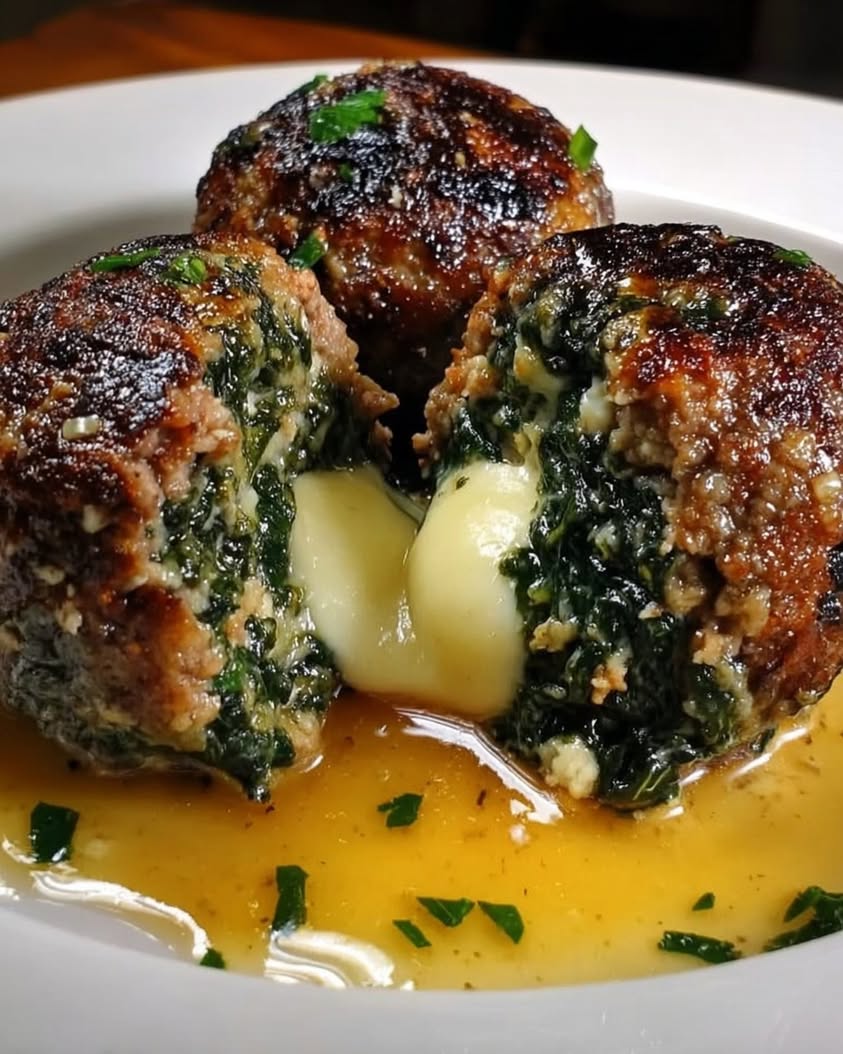
- Texture: Experience a delightful contrast between the tender, juicy interior of the meatball and the crispy, golden-brown exterior. The star, of course, is the molten, stretchy mozzarella center that provides a wonderfully gooey and satisfying mouthfeel with every bite.
- Aroma: As they cook, the kitchen fills with the mouthwatering scent of roasting garlic and browning meat, underscored by the herbal notes of parsley and the comforting smell of melting cheese. It’s an aroma that builds anticipation perfectly.
- Visual Appeal: These meatballs are a feast for the eyes with their golden-brown crust, flecks of green spinach, and the dramatic, cheesy pull when you cut one open. They look professional and inviting on any plate.
- Skill Level Needed: This recipe is perfect for a confident beginner or intermediate home cook. It involves basic mixing and shaping techniques, along with the fun step of stuffing. No advanced culinary skills are required, just a bit of patience and care.
- Special Equipment: You need no special tools. A mixing bowl, a baking sheet (if baking), or a large skillet (if pan-frying) will do. Parchment paper is helpful for easy cleanup on the baking sheet.
Recipe Overview
- Difficulty Level: We rate this recipe as intermediate because it involves a multi-step process of preparing the spinach, mixing the meatball base, and carefully stuffing and sealing the cheese inside. However, each step is simple and clearly explained, making it very achievable for most home cooks with a little focus.
- Category: This dish falls squarely into the main course category but is incredibly flexible. You can also present it as a substantial appetizer, a hearty sandwich filling, or a featured protein in a pasta bowl. Its versatility is one of its greatest strengths.
- Cuisine: The flavor profile is rooted in Italian-American cuisine, drawing on classic meatball ingredients like garlic, parsley, and Parmesan. The addition of spinach adds a modern, health-conscious twist, while the stuffed mozzarella center elevates it to a more decadent, contemporary dish.
- Cost: This is a very cost-effective meal. Ground meat (beef, pork, turkey, or a blend) is affordable, and spinach, garlic, and basic pantry seasonings are inexpensive. Mozzarella cheese is the main splurge, but a small amount goes a long way. Overall, it delivers high perceived value for a reasonable price.
- Season: These meatballs are truly an all-season dish. They provide warmth and comfort in the fall and winter. Conversely, in spring and summer, they pair wonderfully with lighter sides like a fresh tomato salad or zucchini noodles, making them a year-round staple.
- Occasion: Perfect for a casual weeknight family dinner, yet impressive enough for a dinner party or holiday gathering like a game-day spread. They are a crowd-pleaser that suits both everyday meals and special celebrations.
Why You’ll Love This Recipe
First and foremost, the taste and texture are utterly irresistible. The combination of savory garlic, nutritious spinach, and rich meat creates a deeply flavorful base. Then, you discover the hidden treasure: a core of melted, stretchy mozzarella that makes each bite a delightful surprise. This contrast between the seasoned exterior and the creamy interior is what sets these Spinach Garlic Meatballs Stuffed with Mozzarella apart from any ordinary meatball. Every element works in harmony to create a memorable eating experience that will have everyone asking for seconds.
Furthermore, the preparation offers great convenience. You can mix the meatball base ahead of time, even the day before. Additionally, the cooking methods are flexible; you can bake a large batch evenly in the oven or pan-fry them for a quicker, crispier finish. This adaptability makes the recipe fit seamlessly into any schedule. Moreover, the ingredients are simple and easy to find at any grocery store. You likely have many of them in your pantry or fridge already, which means you can decide to make this dish spontaneously without a special shopping trip.
From a nutritional standpoint, these meatballs pack a powerful punch. Spinach is a superstar green, loaded with iron, vitamins A, C, and K, and fiber. By incorporating it directly into the meatball, you add nutrients and moisture without altering the classic meatball texture that people love. Using lean ground turkey or chicken can make the dish lighter, while a blend of beef and pork offers richer flavor. The protein from the meat and cheese will keep you feeling full and satisfied. Ultimately, it’s a delicious way to eat your greens.
For social and entertaining value, this recipe is a true winner. These stuffed meatballs are guaranteed to impress guests with their “wow” factor when cut open. They are perfect finger food for parties or a stunning centerpiece for a family-style pasta night. Because you can prepare components in advance, you spend less time in the kitchen when your company arrives and more time enjoying the meal with them. The universal appeal of cheese and meatballs ensures that this dish will please a wide range of tastes and ages.
Finally, the cost-effectiveness and accessibility are major benefits. As mentioned, the ingredients are affordable and readily available. You can stretch a pound of ground meat to feed four people generously, especially when served with budget-friendly sides like pasta, rice, or bread. The recipe is also highly adaptable to what you have on hand; for instance, you can use frozen spinach instead of fresh, or different types of hard cheese in the mix. This makes the Spinach Garlic Meatballs Stuffed with Mozzarella a practical and economical choice for any home cook.
Historical Background and Cultural Significance
The meatball, in its countless forms, is a global culinary staple with ancient roots. Essentially, the concept of grinding meat, mixing it with binders and flavorings, and shaping it into balls appears in cultures from Sweden to Vietnam. The Italian polpette, however, are the direct ancestors of the American-Italian meatball we know today. Traditionally, Italian meatballs were smaller, often served in broth or as a main course without sauce, and were a resourceful way to stretch expensive meat with breadcrumbs and other fillers.
In the United States, Italian immigrants adapted their recipes to new resources. With meat being more affordable, American meatballs became larger. They also almost invariably found their home swimming in tomato sauce atop a mountain of spaghetti. This dish, spaghetti and meatballs, became a cornerstone of Italian-American cuisine. It symbolized abundance and comfort for immigrant families and eventually became a beloved fixture in restaurants and home kitchens across the country, representing a fusion of Old World tradition and New World plenty.
The evolution to stuffed meatballs, or “meatballs ripieni,” is a natural progression of the desire for more decadent and surprising dishes. Stuffing a meatball with cheese elevates it from a simple staple to a special occasion treat. The addition of spinach reflects a more modern culinary trend focused on incorporating vegetables into familiar dishes for added nutrition and color. Therefore, the Spinach Garlic Meatballs Stuffed with Mozzarella recipe represents a contemporary twist on a classic, marrying traditional Italian-American flavors with current tastes for hidden fillings and vegetable-forward cooking.
Regional variations of stuffed meatballs are fascinating. In Italy, you might find meatballs stuffed with boiled egg or raisins and pine nuts in certain regions. In the Middle East, kofta kebabs sometimes hide a filling of garlic or onion. The American innovation often involves cheese, from mozzarella to blue cheese. Our recipe specifically combines the green of spinach, the punch of garlic, and the melt of mozzarella, creating a version that is distinctly modern and designed for maximum flavor impact and visual appeal in today’s home kitchen.
Ingredient Deep Dive
Let’s start with the star: fresh spinach. This leafy green has a history dating back to Persia and has been cultivated worldwide for centuries. Nutritionally, it’s a powerhouse of iron, calcium, magnesium, and vitamins A, C, and K. For this recipe, wilting the spinach removes excess water, preventing soggy meatballs. Always choose vibrant, dark green leaves without yellowing. You can easily substitute frozen chopped spinach that has been thoroughly thawed and squeezed dry. Store fresh spinach in the refrigerator in a bag with a paper towel to absorb moisture.
Garlic is non-negotiable for its aromatic punch. Historically used both as food and medicine, garlic adds a deep, savory base note that defines many Italian dishes. Its health benefits include allicin, a compound with antimicrobial properties. For the best flavor, use fresh garlic cloves and mince them finely. Avoid pre-minced jarred garlic if possible, as it can have a bitter taste. A single head of garlic stored in a cool, dark place will last for weeks. If you must substitute, garlic powder can work in a pinch, but use about one-third the amount.
The ground meat forms the foundation. A blend of beef and pork offers the ideal balance of flavor and fat for juicy meatballs. Ground turkey or chicken creates a lighter version. Culturally, the choice of meat often reflected local availability. From a nutritional standpoint, leaner meats reduce saturated fat. Select meat with a bit of fat (85/15 or 90/10) for the best texture. For storage, keep meat refrigerated and use within 1-2 days of purchase, or freeze it for longer storage. Always handle raw meat safely on separate surfaces.
Mozzarella cheese provides the glorious molten center. Traditionally made from buffalo or cow’s milk, fresh mozzarella is soft and high-moisture. For stuffing, low-moisture, part-skim mozzarella blocks work best because they hold their shape when cubed and melt beautifully without leaking excessive oil. This cheese is a good source of calcium and protein. Look for a block of cheese you can cube yourself, as pre-shredded cheese contains anti-caking agents that can affect melt quality. Store unused mozzarella tightly wrapped in the refrigerator. For a dairy-free version, use a plant-based mozzarella that melts well.
Common Mistakes to Avoid
- Not Removing Enough Moisture from Spinach: Using soggy spinach will make your meatball mixture too wet, causing it to fall apart during cooking. Always wilt fresh spinach and squeeze it in a clean kitchen towel until very dry, or thoroughly squeeze thawed frozen spinach.
- Overmixing the Meatball Base: Overworking the meat mixture activates the proteins, resulting in tough, dense meatballs. Mix the ingredients with your hands or a fork just until everything is combined. A light touch is key for a tender texture.
- Using Pre-Shredded Mozzarella: Pre-shredded cheese contains cellulose to prevent clumping, which can hinder a smooth, stretchy melt. Always buy a block of low-moisture mozzarella and cut it into small cubes yourself for the perfect gooey center.
- Making the Meatballs Too Large or Too Small: If they are too large, the outside may overcook before the cheese fully melts. If they are too small, you cannot fit enough cheese inside. Aim for meatballs about 1.5 to 2 inches in diameter for the ideal ratio.
- Not Sealing the Cheese Properly: If you do not completely encase the cheese cube within the meat mixture, it will leak out during cooking. Ensure the meat layer is even around the cheese and pinch the seams firmly to seal it in.
- Skipping the Browning Step: Whether baking or pan-frying, achieving a good sear on the outside is crucial for flavor and texture. Do not crowd the pan when frying, and ensure your oven is hot enough to promote browning if baking.
- Underseasoning the Meat Mixture: The interior of the meatball needs ample seasoning since you are not just coating it in sauce. Taste a tiny bit of the raw mixture (or cook a small patty) to check salt and garlic levels before forming all the meatballs.
- Moving Meatballs Too Soon in the Pan: When pan-frying, let the meatballs develop a firm, browned crust before attempting to turn them. If you move them too early, they will stick and break apart. Be patient and let the sear do its work.
Essential Techniques
Wilting and Drying Spinach is the first critical technique. Why is it important? Spinach contains a huge amount of water. If you add it raw and wet to the meat mixture, that water will steam out during cooking, making your meatballs loose and potentially causing them to fall apart. To master it, simply sauté the spinach in a pan with a tiny bit of oil or water until it wilts dramatically. Then, transfer it to a clean kitchen towel, let it cool, and wring it out forcefully until no more moisture releases. The visual cue for success is a small, dry, compact ball of spinach.
Proper Meatball Mixing is the difference between tender and tough. The goal is to distribute ingredients evenly without developing the meat’s gluten-like proteins. How to master it? Use a light hand. Combine your breadcrumbs, egg, seasonings, and spinach first. Then, add the ground meat and use your fingers to gently fold and mix just until no dry pockets remain. Stop immediately once it’s uniform. A common pitfall is kneading it like dough. The mixture should look combined but still loose, not pasty or firm.
Stuffing and Sealing is the signature technique for this recipe. Its importance is obvious: it creates the cheesy surprise. To master it, take a portion of meat mixture and flatten it slightly in your palm. Place a cheese cube in the center. Then, carefully fold the meat up and around the cheese, rolling gently between your palms to form a smooth ball. Ensure no cheese is peeking through. The common pitfall is using too little meat, making the wall too thin. The visual cue for success is a perfectly round ball with no visible seams or cheese.
Pro Tips for Perfect Spinach Garlic Meatballs Stuffed with Mozzarella
Chill the meatball mixture for 15-20 minutes before shaping. This firms up the fat and makes the mixture much easier to handle, resulting in neater, rounder meatballs that hold their shape better during cooking.
Use a small cookie scoop or ice cream scoop to portion the meat mixture. This ensures all your meatballs are the same size, which promotes even cooking. It also makes the stuffing process faster and more consistent.
For extra flavor, toast your breadcrumbs lightly in a dry pan before adding them to the mixture. This adds a nutty depth that complements the garlic and Parmesan beautifully.
If baking, place the formed meatballs on a wire rack set over a baking sheet. This allows hot air to circulate all around them, ensuring they brown evenly on all sides without steaming on the bottom.
Let the cooked meatballs rest for 5 minutes before serving. This allows the juices to redistribute and the internal cheese to set slightly, preventing a scalding, immediate ooze when you cut into them.
For a glossier finish and extra flavor, brush the meatballs with a little olive oil before baking, or baste them with the pan juices if you are frying them.
If serving with sauce, consider simmering the baked or fried meatballs in the warm sauce for a few minutes before serving. This allows them to absorb some of the sauce’s flavor and become even more tender.
Variations and Adaptations
For regional variations, explore different stuffings. Try a small piece of pepperoni or a sun-dried tomato alongside the mozzarella for a Calabrian twist. For a Greek-inspired version, use lamb meat, add oregano and mint to the mix, and stuff with a cube of feta cheese. An Asian-fusion take could involve pork, ginger, and scallions, stuffed with a bit of cream cheese.
Seasonal adaptations are simple. In summer, incorporate finely chopped fresh basil into the meat mixture and serve the meatballs with a light, fresh tomato salad. During fall, add a pinch of nutmeg to the spinach and serve with a creamy polenta. For a winter holiday feel, use a blend of beef and pork and serve with a rich mushroom gravy.
Dietary modifications are straightforward. For gluten-free, use certified gluten-free breadcrumbs or rolled oats pulsed into a coarse meal. For dairy-free, omit the Parmesan from the mix and use a high-quality vegan mozzarella block for stuffing. For a keto or low-carb version, replace breadcrumbs with finely grated Parmesan or crushed pork rinds.
Flavor variations can personalize the dish. Add a teaspoon of fennel seeds for a sausage-like flavor. Mix in a tablespoon of pesto for a herby punch. For a spicy kick, add red pepper flakes to the meat mixture or use a pepper jack cheese cube for stuffing.
Texture modifications can cater to preference. For a finer, more uniform texture, pulse the spinach and garlic in a food processor before mixing. For a chunkier, more rustic feel, hand-chop the spinach and leave the garlic in slightly larger pieces.
Presentation alternatives are fun. Make mini versions for appetizers, using smaller cheese cubes. Skewer two or three mini meatballs with a toothpick for easy serving. For a family-style presentation, nestle a large batch in a baking dish, cover with sauce and extra cheese, and broil until bubbly.
Serving and Presentation Guide
Plating techniques matter. For a pasta dish, twirl a nest of spaghetti in the center of a shallow bowl, place 2-3 meatballs on top, and spoon sauce over everything. Garnish with fresh basil and a sprinkle of Parmesan. For a more modern look, use a rectangular plate. Place a swipe of sauce on one side, arrange the meatballs in a line, and add your sides (like roasted broccoli or a salad) neatly on the other.
Garnishing adds the final touch. Fresh herbs like chopped parsley, basil, or oregano provide color and freshness. A light dusting of finely grated Parmesan or Pecorino Romano adds a salty finish. A drizzle of high-quality extra virgin olive oil or a balsamic glaze around the plate adds shine and a touch of acidity.
Traditional accompaniments include, of course, pasta with marinara sauce. But also consider creamy polenta, crusty garlic bread for dipping, or a simple side of sautéed greens like escarole or broccoli rabe. These sides complement the Italian flavors perfectly.
Modern serving suggestions are endless. Slice the meatballs and arrange them on a charcuterie board with olives and artichokes. Crumble them over a pizza before baking. Chop them and add to a grain bowl with quinoa, roasted vegetables, and a lemony tahini dressing. Their versatility is a major asset.
Temperature considerations are key. Serve the meatballs and any accompanying pasta or polenta piping hot. If serving as an appetizer, keep them warm in a slow cooker or chafing dish. Salads or vegetable sides should be at room temperature or cool to provide a pleasant contrast.
Portion control tips are helpful. As a main course, 3-4 meatballs per person is standard. For an appetizer, plan for 2-3 per person. If serving buffet-style, provide a serving spoon to prevent guests from taking too many and ensure there is enough for everyone.
Wine and Beverage Pairing
Wine pairings should complement the savory, garlicky meat and rich cheese. A medium-bodied Italian red like Chianti Classico or Sangiovese is a classic choice, as its bright acidity cuts through the fat and its earthy notes match the dish. Alternatively, a fruity but dry Zinfandel can stand up to the robust flavors. For white wine lovers, a full-bodied Chardonnay with a touch of oak can pair nicely, especially if the dish is served in a cream sauce.
Non-alcoholic alternatives are just as important. A sparkling water with a squeeze of lemon or lime cleanses the palate. For something more flavorful, try a tart cherry juice spritzer or a ginger beer. Iced herbal tea, like rosemary or mint, can also be a refreshing and sophisticated pairing that doesn’t compete with the food.
Coffee and tea pairings work well after the meal. A dark roast espresso or French press coffee can be a great digestif after this hearty dish. For tea, consider a bold black tea like English Breakfast or an herbal peppermint tea to aid digestion and provide a clean, fresh finish to the meal.
Temperature considerations for beverages are straightforward. Serve red wines slightly below room temperature (around 60-65°F). White wines and sparkling waters should be well-chilled. Non-alcoholic spritzers and iced teas are best served cold to provide a refreshing contrast to the warm, rich meatballs.
Serving suggestions include offering both red and white wine options if you have guests with different preferences. Always provide plenty of water on the table. For a party, consider creating a signature mocktail, like a basil lemonade, that echoes the herbal notes in the meatballs.
Storage and Shelf Life
Storage methods are simple but crucial. Allow cooked meatballs to cool completely to room temperature. Then, transfer them to an airtight container. You can store them in a single layer or separate layers with parchment paper to prevent sticking. Always refrigerate them promptly.
Temperature requirements are non-negotiable for safety. Cooked meatballs must be stored in the refrigerator at 40°F or below. Do not leave them at room temperature for more than two hours. In the fridge, they will maintain quality for 3-4 days.
Container recommendations include glass or BPA-free plastic containers with tight-fitting lids. For freezing, use heavy-duty freezer bags, pressing out as much air as possible, or vacuum-seal them for the best protection against freezer burn.
Signs of spoilage include an off or sour smell, a slimy texture on the surface, or any visible mold. If you notice any of these signs, discard the meatballs immediately. When in doubt, it is always safer to throw it out.
Reheating instructions are key to restoring texture. The best method is to reheat them gently in a saucepan with a bit of sauce over low heat until warmed through. You can also microwave them in 30-second intervals, but this may make the cheese overly hot and leak. For oven reheating, place them on a baking sheet, cover with foil, and warm at 325°F for 10-15 minutes.
Freezing guidelines are excellent for meal prep. Place cooled meatballs in a single layer on a baking sheet and freeze until solid (flash freezing). Then, transfer them to a freezer bag. They will keep for 2-3 months. Reheat frozen meatballs directly in sauce on the stovetop, adding a few extra minutes to the cooking time, or bake from frozen at 350°F until hot.
Make Ahead Strategies
Your prep timeline can be spread over two days. Day 1: Wilt and squeeze the spinach. Mince the garlic. Grate the Parmesan. Cube the mozzarella. You can store each component separately in airtight containers in the fridge. Day 2: Combine the ingredients, form, and cook the meatballs. This breaks up the work and makes dinner preparation much faster.
Storage between steps is easy. The fully mixed meatball mixture (without shaping) can be covered tightly and refrigerated for up to 24 hours before you form and cook the meatballs. This can actually improve flavor as the seasonings meld.
Quality impact assessment is positive. Making the mixture ahead does not harm the texture; in fact, chilling it makes it easier to handle. Cooking the meatballs fully ahead of time is also fine, though the cheese pull will be less dramatic upon reheating compared to serving fresh.
Assembly tips for make-ahead: If you want to shape the meatballs ahead, you can. Arrange the raw, stuffed meatballs on a parchment-lined tray, cover tightly with plastic wrap, and refrigerate for up to 8 hours before cooking. This is perfect for getting a head start on a dinner party.
Reheating guidelines for pre-cooked meatballs are covered above. The key is gentle reheating to avoid drying them out. Simmering in sauce is the best method for restoring moisture and flavor.
Fresh element additions upon serving can brighten up a make-ahead dish. Even if you reheated the meatballs in sauce, finish the plated dish with a sprinkle of freshly chopped herbs, a drizzle of new olive oil, or a grating of fresh Parmesan just before serving to add a layer of fresh flavor and aroma.
Scaling Instructions
Halving the recipe is straightforward if cooking for one or two. Simply divide all ingredient quantities by two. Use a medium egg by whisking a whole egg and using approximately half, or use a small egg. The cooking time may reduce slightly, so keep a close eye on them. All other techniques remain the same.
Doubling or tripling the recipe is excellent for a crowd or for bulk meal prep. Multiply all ingredients consistently. Use a very large bowl for mixing, or mix in two separate batches to avoid overworking. When cooking, you will likely need to work in batches if pan-frying, or use multiple baking sheets in the oven, rotating them halfway through for even browning.
Equipment adjustments are necessary when scaling up. For a double batch, you may need two large skillets or to bake on two oven racks. Ensure you have a large enough mixing bowl. For a triple batch, consider using an electric stand mixer with the paddle attachment on low speed to combine the ingredients quickly without overmixing by hand.
Timing modifications are minimal for baking, as a full baking sheet will take roughly the same time. For pan-frying, scaling up significantly increases active cooking time, as you must cook in batches. Factor this extra time into your meal planning to ensure everything is ready at once.
Storage considerations for large batches are important. If making a huge batch for the freezer, use the flash-freezing method described earlier. Label bags with the date and contents. Remember that reheating a large frozen batch will take longer; thawing in the refrigerator overnight before reheating is the most effective method.
Nutritional Deep Dive
The macro breakdown of these meatballs provides a balance of protein, fat, and carbohydrates. Using a 90/10 lean ground beef blend, each meatball offers a good dose of high-quality protein for muscle repair and satiety. The fat content comes primarily from the meat and cheese, providing energy and helping absorb fat-soluble vitamins. Carbohydrates are present in small amounts from the breadcrumbs and spinach. This macro profile supports sustained energy release.
Micronutrient analysis reveals a wealth of vitamins and minerals. Spinach contributes significant amounts of Vitamin K for bone health, Vitamin A for vision, and folate. Garlic provides manganese and Vitamin B6. Mozzarella and Parmesan are excellent sources of calcium and phosphorus. The meat adds iron and zinc. Together, they create a nutrient-dense food that contributes to various bodily functions.
Health benefits are numerous. The iron from spinach and meat helps prevent anemia. The calcium from cheese supports bone density. The allicin in garlic has been linked to cardiovascular benefits. The protein promotes fullness, which can aid in weight management. The fiber from spinach supports digestive health. This dish is a functional food that tastes great while contributing positively to your well-being.
Dietary considerations include the presence of dairy (cheese) and gluten (breadcrumbs), which can be adapted as previously discussed. The dish is naturally low in sugar. For those monitoring sodium, you can control the amount of added salt and use low-sodium cheese.
Portion analysis is key for balanced eating. Three to four meatballs constitute a reasonable main course portion, providing ample protein without excessive calories, especially when paired with vegetable-heavy sides. Be mindful of portion sizes if serving with large amounts of pasta or bread, as the carbohydrates can add up quickly.
Weight management tips include choosing lean ground turkey or chicken, using whole-wheat breadcrumbs for extra fiber, and baking instead of frying to reduce added fat. Pair the meatballs with a large side salad or steamed vegetables to increase volume and nutrients without significantly increasing calories, promoting a feeling of fullness.
Dietary Adaptations
For a gluten-free version, replace the breadcrumbs with an equal amount of gluten-free panko, crushed gluten-free crackers, or almond flour. Ensure all other ingredients, like Parmesan cheese, are certified gluten-free, as some brands use anti-caking agents that contain gluten.
A dairy-free adaptation requires two swaps. Omit the Parmesan cheese from the mixture or use a nutritional yeast or vegan Parmesan alternative. For the stuffing, use a high-quality vegan mozzarella cheese block that is known to melt well. Brands vary, so you may need to experiment to find your favorite.
A vegan version builds on the dairy-free changes and replaces the ground meat. Use a plant-based ground “meat” product or a mixture of cooked lentils, finely chopped mushrooms, and walnuts for texture. Use a flax egg (1 tbsp ground flax + 3 tbsp water) to bind the mixture. Stuff with vegan mozzarella.
For a low-carb or keto adaptation, replace breadcrumbs with 1/4 cup of finely grated Parmesan cheese or crushed pork rinds. Ensure the spinach is very well-dried. Use full-fat mozzarella for stuffing. Serve with zucchini noodles or atop a cauliflower mash instead of pasta.
A Paleo adaptation also avoids grains and dairy. Use almond flour or tapioca flour as a binder. Omit the cheese entirely or stuff with a small piece of avocado for creaminess (add after cooking). Use nutritional yeast for a cheesy flavor if desired. Ensure the meat is grass-fed if following strict Paleo guidelines.
For a Low-FODMAP version, garlic is the main issue. Use garlic-infused oil for cooking the spinach to impart flavor without the fructans. Omit the raw garlic from the mixture. Use a lactose-free mozzarella cheese for stuffing, as hard cheeses are typically low in lactose. Ensure breadcrumbs are gluten-free if sensitive.
Troubleshooting Guide
If your meatballs are falling apart, the mixture is likely too wet. Solution: Next time, squeeze the spinach more thoroughly. You can also add an extra tablespoon of breadcrumbs to the mixture to help absorb excess moisture. For immediate salvage, gently press the broken meatball back together in the pan and let it cook through; it may not be pretty but will still taste good.
If the cheese leaks out during cooking, the seal was not complete or the meat layer was too thin. Solution: Ensure you are using enough meat to fully encase the cheese cube, and pinch the seams firmly. Also, avoid overhandling the meatballs after shaping, as this can create micro-tears. If leaking occurs, it’s not a disaster—you’ll have cheesy, flavorful pan drippings!
If the meatballs are dry on the inside, the meat was too lean or they were overcooked. Solution: Use meat with a slightly higher fat content (85/15). Also, avoid overmixing. Use a meat thermometer to check for doneness; they are ready at an internal temperature of 165°F. Remember, they will continue to cook slightly from residual heat after being removed from the oven or pan.
If the meatballs are not browning, the pan or oven was not hot enough, or they were crowded. Solution: Ensure your skillet is preheated over medium-high heat before adding oil and meatballs. Do not overcrowd the pan; cook in batches. If baking, ensure the oven is fully preheated and consider using the convection setting if available, or place them on a wire rack for better air circulation.
If the flavor is bland, the mixture was underseasoned. Solution: Always taste a tiny bit of the raw mixture (or cook a mini patty) and adjust salt, garlic, and herbs before forming all the meatballs. Remember, the interior needs its own seasoning, as it’s not just relying on sauce. Don’t be shy with the garlic and Parmesan.
Recipe Success Stories
Community feedback on this recipe has been overwhelmingly positive. Many home cooks report that these Spinach Garlic Meatballs Stuffed with Mozzarella were a hit with picky eaters, especially children who were delighted by the “cheesy surprise.” Several readers have mentioned successfully hiding extra vegetables, like finely grated zucchini or carrots, in the mixture, making it a stealthy healthy meal.
Variation successes are fun to hear about. One reader used ground venison for a lean, game Print
Spinach Garlic Meatballs Stuffed with Mozzarella
- Total Time: 45 minutes
- Yield: 4
Description
Juicy, flavorful meatballs packed with spinach and garlic, each hiding a melty mozzarella center. Perfect over pasta or as an appetizer.
Ingredients
- 1 lb ground beef (80/20)
- 1 cup fresh spinach, finely chopped
- 3 cloves garlic, minced
- 1/2 cup breadcrumbs
- 1 large egg
- 1/4 cup grated Parmesan cheese
- 1 tsp dried oregano
- Salt and black pepper to taste
- 4 oz mozzarella cheese, cut into 1/2-inch cubes
- 2 tbsp olive oil
- 1 cup marinara sauce (for serving)
Instructions
- Preheat oven to 400°F (200°C). Line a baking sheet with parchment paper.
- In a large bowl, combine ground beef, spinach, garlic, breadcrumbs, egg, Parmesan, oregano, salt, and pepper. Mix gently until just combined.
- Take a portion of the meat mixture and flatten it in your hand. Place a mozzarella cube in the center and wrap the meat around it, forming a ball. Repeat with remaining mixture.
- Heat olive oil in a skillet over medium-high heat. Brown meatballs on all sides, about 2-3 minutes total, then transfer to the prepared baking sheet.
- Bake for 15-20 minutes, until meatballs are cooked through and cheese is melted inside.
- Serve warm with marinara sauce for dipping or over pasta.
Notes
You can customize the seasonings to taste.
- Prep Time: 15 minutes
- Cook Time: 30 minutes
- Method: Main
- Cuisine: Italian-American