The Ultimate Spicy Garlic Chicken Bowl with Hummus and Cucumber Salad
Picture this: a tender, juicy chicken breast marinated in a fiery blend of garlic, chili flakes, and smoked paprika, seared to perfection until the edges caramelize and the aroma fills your kitchen. Now imagine that vibrant chicken resting on a bed of silky, homemade hummus, accompanied by a crisp, tangy cucumber salad that cuts through the heat with every refreshing bite. This is not just a meal; it is an experience that brings together bold flavors and satisfying textures in one bowl. The Ultimate Spicy Garlic Chicken Bowl with Hummus and Cucumber Salad is the kind of recipe you will crave on busy weeknights, lazy weekends, and everything in between.
What makes this dish truly special is how easily it comes together without sacrificing depth of flavor. The spicy garlic chicken bowl delivers a punch of heat that warms you from the inside out, while the cool, creamy hummus provides a soothing counterbalance. You get crunch from fresh cucumbers, creaminess from tahini-rich hummus, and a savory kick from the perfectly seasoned chicken. Every element works in harmony to create a balanced, nutrient-dense meal that feels indulgent but fits seamlessly into a health-conscious lifestyle. Whether you meal prep for the week or cook for a family dinner, this recipe adapts beautifully to your needs.
Beyond the taste, there is something deeply satisfying about building your own bowl. You control the portions, the spice level, and the toppings. You can make it as mild or as fiery as you like. You can serve it warm or at room temperature. You can double the recipe for a crowd or halve it for a solo lunch. The flexibility here is unmatched, and the results are consistently delicious. Once you try this Ultimate Spicy Garlic Chicken Bowl with Hummus and Cucumber Salad, you will understand why it deserves a permanent spot in your weekly rotation.
Quick Recipe Highlights
- Flavor Profile: This bowl brings together bold, spicy heat from garlic and chili, balanced by the nutty, creamy notes of hummus. The cucumber salad adds a bright, tangy freshness that lifts every bite. You get layers of savory, acidic, and aromatic flavors that keep you coming back for more.
- Texture: You experience multiple textures in every forkful. The chicken offers a crisp, caramelized exterior with a tender, juicy interior. The hummus is luxuriously smooth, while the cucumber salad provides a satisfying crunch that contrasts beautifully with the soft components.
- Aroma: The scent of garlic hitting hot oil is intoxicating. Smoked paprika and cumin add warmth and earthiness, while fresh lemon and herbs from the cucumber salad create a bright, inviting fragrance. Your whole kitchen will smell like a Mediterranean feast.
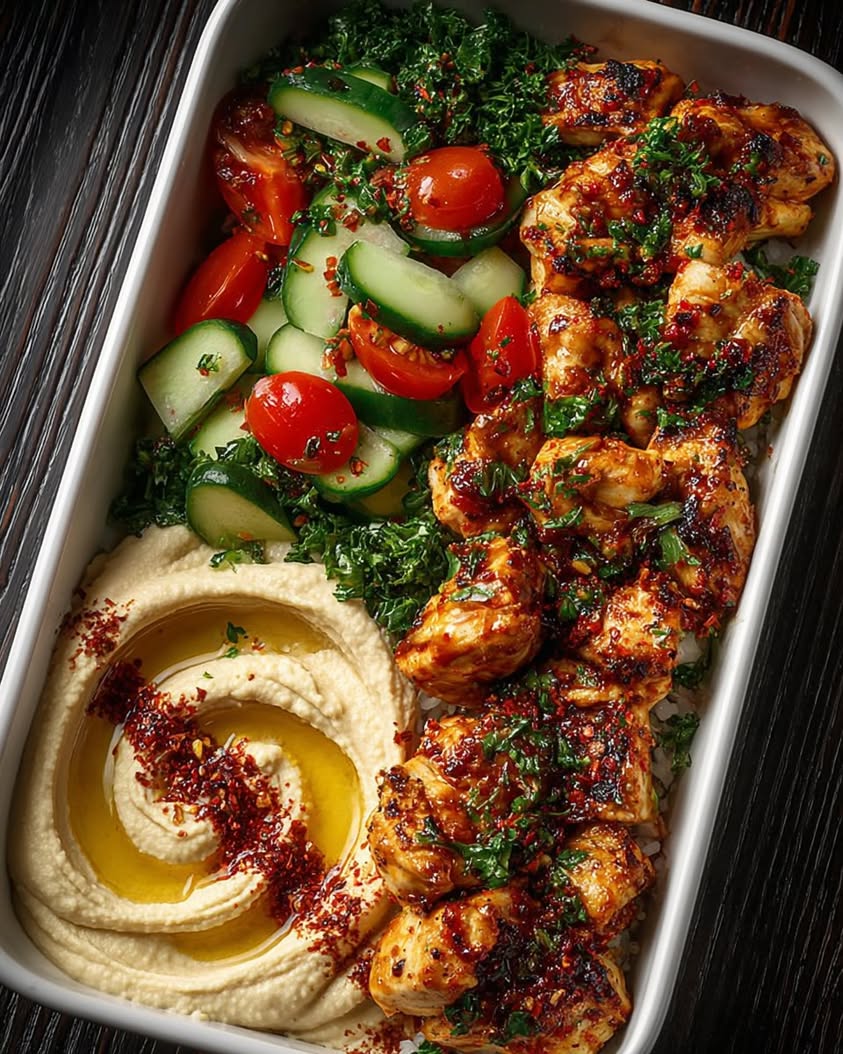
- Visual Appeal: This bowl is a feast for the eyes. Golden-brown chicken rests on a bed of pale, creamy hummus. Bright green cucumber pieces and specks of red chili pepper add pops of color. A drizzle of olive oil and a sprinkle of fresh parsley complete the picture-perfect presentation.
- Skill Level Needed: This recipe is designed for home cooks of all levels. You only need basic knife skills and the ability to sear chicken in a skillet. The steps are straightforward, and the timing is forgiving. Even beginners can achieve restaurant-quality results with confidence.
- Special Equipment: You need a large skillet or cast-iron pan for searing the chicken. A food processor makes hummus preparation effortless, but you can also use a blender. A sharp chef’s knife and a cutting board are essential for prepping vegetables.
Recipe Overview
- Difficulty Level: We rate this recipe as easy because the techniques involved are fundamental. You marinate, sear, and assemble. There are no complex sauces, no advanced knife cuts, and no finicky temperature requirements. The hummus requires only blending, and the cucumber salad involves simple tossing. With clear instructions, anyone can master this dish on the first try. The lack of complicated steps means you can cook it confidently even after a long day at work.
- Category: This bowl falls under the main course category, specifically in the realm of grain-free bowls and Mediterranean-inspired dishes. It works beautifully as a hearty lunch or a satisfying dinner. You can also serve it as part of a larger mezze spread for entertaining. The versatility makes it suitable for multiple meal occasions without feeling repetitive.
- Cuisine: The inspiration draws heavily from Middle Eastern and Mediterranean culinary traditions. Hummus originates from the Levant region, while spiced grilled chicken appears across North Africa and the Eastern Mediterranean. The cucumber salad echoes classic Greek or Turkish preparations with lemon, herbs, and olive oil. This fusion creates a harmonious blend of familiar flavors that feels both authentic and innovative.
- Cost: This recipe is budget-friendly, especially when you use pantry staples. Chicken thighs or breasts are affordable protein options, and chickpeas for hummus cost pennies per serving. Cucumbers, lemons, and garlic are inexpensive year round. The total cost per serving comes to roughly three to four dollars, making it an economical choice for feeding a family or meal prepping for the week.
- Season: This bowl shines in the warmer months when cucumbers are at their peak and fresh herbs are abundant. The light, refreshing nature of the dish makes it perfect for spring and summer dinners. However, the warming spices in the chicken also make it comforting during fall and winter. You can enjoy it year round by adjusting the side salad to include seasonal vegetables.
- Occasion: This recipe suits casual weeknight dinners, weekend meal prep, and small gatherings. It travels well for picnics or potlucks when packed separately. It also makes an impressive yet approachable dish for date night or dinner parties. The build-your-own bowl format encourages interaction and customization, which guests always appreciate.
Why You’ll Love This Recipe
The taste and texture combination in this spicy garlic chicken bowl is genuinely addictive. The chicken gets a deep, savory crust from the marinade, while the interior stays moist and tender. The hummus adds a velvety richness that complements the heat without overpowering it. Then the cucumber salad cuts through all that richness with a bright, acidic crunch. Every forkful delivers a new sensation: creamy then crunchy, spicy then cooling. This balance keeps your palate engaged from the first bite to the last. You never get bored because each element brings something different to the table.
Convenience is another major reason to love this recipe. You can prepare the hummus and chop the vegetables while the chicken marinates. The total active cooking time is under thirty minutes, which is impressive for a meal this complex. Cleanup is minimal because you use only one pan for the chicken and a food processor bowl for the hummus. The ingredients are all common and easy to find at any grocery store. You can even buy pre-made hummus to save time, though homemade is always better. This recipe respects your busy schedule without compromising on quality or taste.
Nutritionally, this bowl is a powerhouse. The chicken provides lean protein that supports muscle maintenance and keeps you full for hours. Chickpeas offer fiber and plant-based protein, while tahini adds healthy fats and calcium. Cucumbers are hydrating and low in calories, and olive oil delivers heart-healthy monounsaturated fats. The garlic and spices provide anti-inflammatory benefits and antioxidants. You get a complete meal with balanced macros and plenty of micronutrients. This is the kind of food that fuels your body and satisfies your cravings at the same time.
From a social perspective, this recipe is a winner. You can set up a bowl bar with all the components and let guests build their own creations. It encourages conversation and customization, making everyone feel involved. The vibrant colors and beautiful presentation make it Instagram-worthy without requiring advanced plating skills. You can easily scale it up for larger groups or scale down for an intimate dinner. The dish also pairs wonderfully with a variety of beverages, from crisp white wine to sparkling water with lemon. It is the kind of meal that brings people together around the table.
Cost-effectiveness and accessibility seal the deal. Chicken remains one of the most affordable animal proteins, especially when you buy in bulk or on sale. Chickpeas are among the cheapest sources of protein and fiber available. Cucumbers and garlic are almost always inexpensive. Even specialty ingredients like tahini and sumac are pantry staples that last for months. You get restaurant-quality flavor for a fraction of the cost. This recipe proves that eating well does not have to break the bank. You can enjoy a luxurious, satisfying meal any night of the week without stressing about your grocery budget.
Historical Background and Cultural Significance
The origins of hummus trace back thousands of years to the ancient lands of the Levant, which includes modern-day Lebanon, Syria, Israel, Palestine, and Jordan. Chickpeas have been cultivated in the Middle East since Neolithic times, and early versions of chickpea purees appear in medieval Egyptian cookbooks. The combination of chickpeas, tahini, lemon, and garlic became a cornerstone of Levantine cuisine, valued for its nutrition, flavor, and simplicity. Hummus historically served as a nourishing breakfast or snack, often eaten with fresh bread and vegetables. Its popularity spread across the Ottoman Empire and eventually reached global acclaim.
Spiced grilled chicken has deep roots in Mediterranean and North African cooking traditions. In countries like Morocco, chicken is often marinated in a blend of garlic, cumin, paprika, and chili before being grilled over charcoal. Turkish cuisine features similar preparations with yogurt-based marinades and a focus on bold spices. The combination of garlic and chili is ubiquitous in these regions, valued both for flavor and for its preservative qualities in warm climates. This cooking style emphasizes the importance of simple, high-quality ingredients enhanced by aromatic spices. The tradition of grilling spiced meat over an open flame remains central to social gatherings and festive meals.
The cucumber salad component draws from Greek, Turkish, and Persian culinary traditions. In Greece, a simple salad of cucumbers, tomatoes, olives, and feta dressed with lemon and olive oil is a national staple. Turkish cuisine features cacik, a yogurt-based cucumber salad with garlic and mint, while Persian cuisine includes cucumber and herb salads called sabzi. These salads are designed to refresh the palate and balance richer dishes. The combination of cool cucumber, tangy lemon, and fresh herbs provides a counterpoint to heavy meats and creamy dips, a principle that is central to Mediterranean dining philosophy.
Modern bowl culture represents a fusion of these ancient traditions with contemporary eating habits. The concept of a single bowl containing protein, starch, vegetables, and sauce became popular in the United States through the rise of fast-casual chains and health-conscious dining. It reflects a desire for customizable, nutrient-dense meals that are both convenient and visually appealing. The spicy garlic chicken bowl with hummus and cucumber salad is a perfect example of this trend, honoring traditional flavors while adapting to modern lifestyles. It shows how culinary heritage can evolve without losing its essential character.
Ingredient Deep Dive
Chicken is the star protein in this dish, and its history is as old as human civilization. Chickens were domesticated in Southeast Asia over eight thousand years ago and spread globally through trade and exploration. Chicken is prized for its mild flavor, versatility, and quick cooking time, making it a staple in cuisines worldwide. Nutritionally, it is an excellent source of lean protein, B vitamins, and selenium. When selecting chicken, look for breasts or thighs that are firm to the touch and have a pinkish hue without any off odors. Organic or free-range options often have better flavor and texture. Store raw chicken in the coldest part of your refrigerator and use it within two days of purchase, or freeze it for up to three months. If you prefer a different protein, you can substitute turkey breast, firm tofu, or even portobello mushrooms for a vegetarian version.
Garlic is the defining flavor of this spicy garlic chicken bowl, and it holds a special place in culinary history. Ancient Egyptians revered garlic for its strength-giving properties, and it was fed to pyramid builders for endurance. Garlic contains allicin, a compound responsible for its pungent aroma and numerous health benefits, including immune support and cardiovascular protection. When selecting garlic, look for firm, plump bulbs with tight, unbroken skin. Avoid any that feel soft or show signs of sprouting. Store garlic in a cool, dark, well-ventilated area, and avoid refrigeration as it can cause sprouting. For this recipe, fresh garlic is non-negotiable; the pre-minced jarred versions lack the sharp, aromatic punch that makes the marinade so effective. You can adjust the amount to suit your tolerance, but do not skip it entirely.
Chickpeas, also known as garbanzo beans, are the foundation of the hummus. These legumes have been cultivated in the Middle East for over seven thousand years and are a cornerstone of Mediterranean and South Asian cuisines. They are rich in fiber, protein, iron, and folate, making them an exceptionally nutritious ingredient. Canned chickpeas are convenient and work perfectly fine, but dried chickpeas that you cook yourself yield a creamier texture and deeper flavor. When using canned chickpeas, drain and rinse them thoroughly to remove excess sodium and canned taste. For the smoothest hummus, remove the skins from the chickpeas by pinching them off; this simple step dramatically improves the texture. Store cooked chickpeas in an airtight container in the refrigerator for up to five days, or freeze them for up to three months.
Tahini is a paste made from toasted, ground sesame seeds and is essential for authentic hummus. Sesame seeds are one of the oldest oilseed crops, domesticated in India and Africa over three thousand years ago. Tahini adds a nutty, slightly bitter depth that balances the richness of the chickpeas and the acidity of the lemon. It is also a good source of healthy fats, calcium, and magnesium. When buying tahini, look for brands that list only sesame seeds as an ingredient, without added oils or preservatives. Stir the tahini well before using, as the oil separates naturally. If your tahini tastes bitter or stale, it may be old; fresh tahini has a rich, buttery flavor. Store tahini in a cool, dark cupboard, though refrigeration helps extend its shelf life.
Cucumbers provide the refreshing crunch in the salad. Cucumbers originated in India over three thousand years ago and spread to the Mediterranean through trade routes. They are composed of about ninety-six percent water, making them exceptionally hydrating and low in calories. Choose cucumbers that are firm, dark green, and free from soft spots or wrinkles. English cucumbers, also called hothouse cucumbers, have thinner skins and fewer seeds, making them ideal for salads without peeling. Regular garden cucumbers work as well but benefit from partial peeling and seeding. Store cucumbers in the refrigerator crisper drawer, but use them within a few days as they lose moisture quickly. If you want to make the salad ahead of time, add the dressing just before serving to prevent the cucumbers from becoming soggy.
Common Mistakes to Avoid
- Overcooking the chicken is the most frequent error. Chicken breasts cook quickly, and leaving them on the heat too long results in dry, stringy meat. Use an instant-read thermometer to check for an internal temperature of 165 degrees Fahrenheit, then remove the chicken from the pan immediately.
- Skipping the marinade time reduces the flavor impact. The garlic and spices need at least fifteen minutes to penetrate the chicken. If you rush this step, the seasoning stays mostly on the surface. Aim for thirty minutes if you have the time.
- Using cold chicken straight from the refrigerator leads to uneven cooking. Let the chicken sit at room temperature for about ten minutes before searing. This simple step helps the interior cook through before the exterior burns.
- Adding too much liquid to the hummus makes it runny. Start with two tablespoons of water or lemon juice and add more slowly. You can always thin it out, but you cannot fix a soupy hummus easily.
- Forgetting to peel the chickpeas results in a grainy hummus. While it is an extra step, removing the skins creates an incredibly smooth, velvety texture. Pinch each chickpea between your fingers; the skins slip off easily.
- Using low-quality tahini can make your hummus bitter. Taste your tahini before using it. If it is harsh or unpleasant, find a fresher brand. Good tahini should taste nutty and smooth.
- Slicing the cucumbers too thick results in a clunky salad. Cut them into small, uniform dice or half-moons so they integrate well with the dressing and fit neatly in the bowl. Consistency in size ensures even seasoning.
- Dressing the cucumber salad too far in advance makes it watery. The salt draws moisture out of the cucumbers over time. Toss the salad with the dressing no more than ten minutes before serving for maximum crunch.
- Overcrowding the pan when searing the chicken causes steaming instead of browning. The chicken needs space to form a golden crust. Cook in batches if necessary, and let the pan reheat between batches.
- Serving the hummus straight from the refrigerator makes it stiff and less flavorful. Let it come to room temperature for about twenty minutes before serving, or warm it gently in a microwave. This simple step improves the texture dramatically.
Essential Techniques
Mastering the searing technique is crucial for achieving that golden, flavorful crust on the chicken. Searing relies on the Maillard reaction, a chemical process that occurs when proteins and sugars are exposed to high heat, producing complex, savory flavors. Start with a hot pan and a small amount of oil. Pat the chicken dry with paper towels before adding it to the pan; moisture is the enemy of browning. Place the chicken in the pan and do not move it for at least four minutes. You will know it is ready to flip when it releases easily from the pan without sticking. The surface should be deeply browned with crisp edges. If your pan is not hot enough, the chicken will steam rather than sear, resulting in a pale, unappetizing exterior.
Making smooth hummus requires a specific approach to blending. Traditional recipes call for a food processor, but a high-speed blender works if you are patient. The key is to process the tahini and lemon juice first, creating an emulsion that provides a creamy base. Then add the chickpeas and blend for a full two to three minutes, pausing to scrape down the sides. For the silkiest texture, add ice-cold water or a couple of ice cubes while blending; the cold temperature helps the hummus whip up light and airy. Do not rush this process. The longer you blend, the smoother the result. If the hummus is too thick, add water one tablespoon at a time until it reaches the consistency of thick cream. Taste and adjust salt and lemon at the very end.
Preparing the cucumber salad requires attention to salting and dressing. Salt draws excess moisture out of the cucumbers, concentrating their flavor and preventing the salad from becoming watery. After slicing the cucumbers, toss them with a pinch of salt and let them sit for five minutes. Then drain the liquid that collects at the bottom of the bowl. This step is optional but highly recommended if you are making the salad in advance. For the dressing, use a ratio of three parts olive oil to one part lemon juice, plus a pinch of salt and pepper. Add fresh herbs like dill or mint right before serving to preserve their color and fragrance. Toss gently to coat without bruising the herbs.
Pro Tips for Perfect The Ultimate Spicy Garlic Chicken Bowl with Hummus and Cucumber Salad
Let the chicken rest for at least five minutes after cooking before slicing it. This allows the juices to redistribute throughout the meat, ensuring every bite is moist and tender. If you slice immediately, the juices run out onto the cutting board and leave you with dry chicken.
Toast your cumin and coriander seeds in a dry pan before grinding them for the marinade. This quick step awakens their essential oils and adds a deeper, more aromatic flavor to the spicy garlic chicken bowl. You can see the spices darken slightly and smell their fragrance in about thirty seconds.
Add a small pinch of baking soda to the chickpeas while cooking or blending. Baking soda softens the chickpeas and helps them break down more easily, resulting in an exceptionally creamy hummus. Just a quarter teaspoon makes a noticeable difference in texture.
Use a microplane or fine grater for the garlic in the marinade. Minced garlic can be uneven and leave harsh chunks, while grated garlic dissolves into the oil and seasonings, distributing its flavor evenly throughout the chicken. This technique ensures no one bites into an overpowering piece of raw garlic.
Warm the hummus gently before serving to intensify its flavor and improve its spreadability. Place it in a microwave-safe bowl and heat it in fifteen-second bursts, stirring between each, until it is just warm to the touch. Alternatively, transfer it to a small saucepan and warm it over low heat, stirring constantly.
Drizzle high-quality extra virgin olive oil over the finished bowl right before serving. The oil adds a peppery, fruity note that ties all the components together. Look for an oil with a harvest date within the last year for the freshest flavor.
Garnish with toasted pine nuts or crushed pistachios for added crunch and visual appeal. The nuts provide a buttery, nutty contrast to the creamy hummus and tangy cucumber salad. Toast them in a dry skillet over medium heat for two to three minutes, shaking the pan frequently to prevent burning.
Prepare all components before you start cooking to streamline the process. Have the hummus ready and the cucumber salad chopped. Then sear the chicken, slice it, and assemble the bowls immediately. This mise en place approach reduces stress and ensures everything comes together at the right temperature.
Variations and Adaptations
Regional variations of this bowl can be found across the Mediterranean and Middle East. In Israel, the chicken might be grilled over charcoal and served with a dollop of zhug, a spicy cilantro-based sauce. In Turkey, cooks often use a yogurt marinade for the chicken and serve it with a side of grilled vegetables. Greek versions might include feta cheese and Kalamata olives in the cucumber salad. Each region adds its own twist while maintaining the core elements of spiced chicken, creamy dip, and fresh salad. You can explore these interpretations by changing the seasoning or adding regional ingredients like sumac, zaatar, or preserved lemons.
Seasonal adaptations allow you to enjoy this bowl year round. In summer, use heirloom tomatoes and fresh basil in place of or alongside the cucumber salad. In fall, add roasted butternut squash or sweet potatoes for heartiness. During winter, you can serve the bowl with warm pita bread and a side of roasted red peppers. In spring, incorporate fresh peas, asparagus, or radishes for a lighter, greener dish. The hummus and chicken base remains constant, while the vegetable component rotates with what is fresh and available. This flexibility makes the recipe a true year-round staple.
Dietary modifications are easy to implement. For a gluten-free version, simply ensure your spices and tahini are certified gluten-free, and serve the bowl without pita bread. For a dairy-free option, the recipe is already dairy-free as written. For a vegan adaptation, replace the chicken with grilled portobello mushrooms, extra-firm tofu, or seasoned chickpea patties. The marinade works beautifully on vegetables, providing deep umami flavor without animal products. For a low-carb or keto version, reduce the chickpeas in the hummus and increase the tahini and olive oil, or substitute roasted cauliflower for the chicken. Each modification preserves the spirit of the dish while accommodating specific dietary needs.
Flavor variations let you customize the heat and spice profile. For a milder version, reduce the chili flakes and use sweet paprika instead of smoked. For extra heat, add a minced serrano pepper or a drizzle of harissa paste to the marinade. You can also experiment with different spice blends: try curry powder for an Indian twist, or jerk seasoning for Caribbean flair. The hummus itself can be flavored with roasted red peppers, sun-dried tomatoes, or fresh herbs like basil and cilantro. The cucumber salad can incorporate mint, dill, or tarragon for distinct herbal notes. The possibilities are endless, so feel free to experiment based on your mood and pantry.
Texture modifications can completely change the eating experience. If you prefer a crunchy element, add toasted pita chips or croutons on top. For a softer texture, serve the bowl over a bed of warm quinoa or rice. You can also swap the cucumber salad for a shredded cabbage slaw with a lemon vinaigrette for a different kind of crunch. For a creamier bowl, add a dollop of Greek yogurt or a drizzle of tahini sauce. Each modification creates a new mouthfeel while keeping the core flavors intact.
Presentation alternatives make this bowl suitable for different occasions. For a family-style dinner, arrange all components on a large platter and let everyone build their own plate. For individual servings, use wide, shallow bowls that show off the colorful layers. For a picnic or packed lunch, pack the components separately and assemble just before eating to maintain texture and freshness. You can also serve the hummus and cucumber salad as sides alongside the chicken for a deconstructed version. The presentation should always highlight the vibrant colors and textures of the dish.
Serving and Presentation Guide
Plating this bowl is all about creating visual layers and contrast. Start with a generous scoop of hummus as the base, spreading it slightly with the back of a spoon to create a well in the center. Arrange the sliced chicken breast on top of the hummus, fanning the pieces out for an elegant look. Spoon the cucumber salad over one side of the bowl, allowing the dressing to drizzle down. Drizzle a final swirl of olive oil over the hummus and finish with a sprinkle of fresh parsley, a pinch of smoked paprika, and a few black sesame seeds. The goal is to create a dish that looks as good as it tastes.
Garnishing adds the finishing touch and elevates the dish from simple to special. Fresh herbs like parsley, mint, or cilantro provide a pop of green and a fragrant finish. A sprinkle of sumac gives a tangy, lemony flavor that complements the hummus. Toasted pine nuts or sliced almonds add a welcome crunch. A drizzle of hot honey or pomegranate molasses introduces a sweet and sour note that balances the spice. Keep garnishes simple and intentional; you want to enhance the flavors, not overwhelm them.
Traditional accompaniments make this bowl a complete meal. Warm pita bread or flatbread is the classic choice for scooping up hummus and chicken. Grilled vegetables like zucchini, bell peppers, and eggplant add smoky depth. Pickled turnips or olives provide a briny contrast. A simple green salad with a lemon vinaigrette rounds out the meal without adding heaviness. These accompaniments honor the Mediterranean roots of the dish and create a satisfying spread.
Modern serving suggestions cater to contemporary tastes and dietary preferences. Serve the bowl over a bed of arugula or mixed greens for added freshness and volume. Use cauliflower rice or quinoa as a base for a grain-free or higher-protein option. For a low-carb version, increase the portion of chicken and cucumber salad while reducing the hummus. You can also serve the components separately as a deconstructed salad for a lighter presentation. The modern approach emphasizes customization and flexibility.
Temperature considerations are important for the best eating experience. The hummus should be at room temperature or slightly warm, not cold from the refrigerator. The chicken should be hot from the pan, ideally rested for five minutes. The cucumber salad should be cool and crisp. This combination of temperatures creates a dynamic contrast that makes each bite interesting. If you are serving the bowl later, reheat the chicken gently in a skillet and bring the hummus to room temperature before assembling.
Portion control tips help you serve the right amount for different appetites. A standard serving includes about six ounces of chicken, a generous half cup of hummus, and one cup of cucumber salad. For larger appetites, increase the chicken to eight ounces and add a side of pita or rice. For smaller portions, reduce the hummus and focus on the vegetables. The bowl format makes it easy to adjust portions without sacrificing the visual appeal of the dish.
Wine and Beverage Pairing
Wine pairings for this spicy garlic chicken bowl should complement the heat and creaminess. A dry Riesling with high acidity works beautifully, as its slight sweetness balances the spice while cutting through the rich hummus. An unoaked Chardonnay offers a crisp, refreshing option that does not overpower the garlic. For red wine lovers, a light-bodied Pinot Noir with low tannins provides enough fruitiness to stand up to the paprika without clashing. A chilled rosé from Provence is also an excellent choice, offering notes of strawberry and herbs that echo the Mediterranean flavors. Serve all white wines and rosés well-chilled, around 45 to 50 degrees Fahrenheit, to maximize their refreshing qualities.
Non-alcoholic alternatives are just as exciting. Sparkling water with a squeeze of fresh lemon and a pinch of salt cleanses the palate between bites and enhances the flavors of the dish. A homemade lemonade with a touch of fresh mint adds sweetness and brightness. For a more complex option, try a kombucha with ginger and turmeric, which mirrors the warming spices in the marinade. Iced green tea with a hint of honey offers a subtle earthiness that pairs well with the hummus. The key is to choose beverages that are not overly sweet or heavy, so they do not compete with the bold flavors of the bowl.
Coffee and tea pairings are less common but still possible for a hearty dinner. A medium-roast pour-over coffee with notes of chocolate and nuts echoes the savory richness of the tahini. For a caffeine-free option, chamomile tea with a touch of honey provides a soothing, floral counterpoint to the spicy chicken. Moroccan mint tea, with its sweetness and fresh herb notes, is a classic pairing for North African-inspired dishes. Serve these beverages on the side in small cups for a relaxed, communal dining experience.
Temperature considerations for beverages matter as much as for food. Cold drinks are ideal for cooling down the heat from the chili, while room-temperature beverages allow the wine flavors to open up. For a balanced approach, start with a chilled drink and let it warm slightly as you eat. Serve alcoholic beverages in appropriate glassware to enhance aromas and flavors. For non-alcoholic options, use tall glasses filled with ice for maximum refreshment.
Serving suggestions encourage a leisurely dining experience. Pour the wine or beverage first and let it breathe for a few minutes if it is red. Arrange the bowls on a large platter with the accompaniments and let guests serve themselves. Encourage conversation and second servings. The meal should feel relaxed and convivial, with the beverage flowing freely alongside the food.
Storage and Shelf Life
Proper storage methods ensure your leftovers remain delicious for days. Store the hummus in an airtight container, pressing a layer of plastic wrap directly onto the surface to prevent a skin from forming. It will keep in the refrigerator for up to five days. The cooked chicken should be cooled to room temperature before being placed in a sealed container, where it will stay fresh for three to four days. The cucumber salad does not store well due to its high moisture content, so only prepare as much as you plan to eat. If you have leftover salad, drain the excess liquid and store it separately for up to one day, though the texture will be less crisp.
Temperature requirements are critical for food safety. Keep all cooked components refrigerated at 40 degrees Fahrenheit or below. Do not leave the assembled bowl at room temperature for more than two hours. When reheating, only reheat the chicken separately, not the hummus or salad. The hummus should be brought to room temperature or gently warmed, while the cucumber salad should always be served cold. Following these guidelines ensures your food remains safe and appetizing.
Container recommendations focus on maintaining quality. Use glass or BPA-free plastic containers with tight-fitting lids. For the hummus, a wide, shallow container is ideal because it allows even chilling and easier scooping. For the chicken, a container that fits the pieces snugly prevents them from drying out. Avoid storing components together in the same container, as the moisture from the salad can make the hummus watery and the chicken soggy. Separate containers preserve each element’s texture and flavor.
Signs of spoilage are easy to spot. Hummus that develops a sour smell or mold on the surface should be discarded. Chicken that becomes slimy or has an off odor is no longer safe to eat. Cucumber salad that turns brown or releases excessive liquid has lost its quality. Always trust your senses; if something looks or smells questionable, throw it away. Proper storage minimizes waste but does not eliminate the need for vigilance.
Reheating instructions focus on restoring the chicken’s texture. The best method is to reheat the chicken in a skillet over medium heat with a splash of chicken broth or water. Cover the pan to trap steam, which helps rehydrate the meat. Heat for two to three minutes on each side until warmed through. Alternatively, use a microwave on medium power in thirty-second intervals, but be aware that microwaving can make the chicken rubbery. The hummus should never be microwaved on high; instead, warm it gently over low heat on the stove or in short bursts in the microwave, stirring frequently. The cucumber salad should not be reheated at all.
Freezing guidelines extend the shelf life of some components. Cooked chicken freezes well for up to three months when stored in a freezer-safe bag or container with the air pressed out. Thaw it overnight in the refrigerator before reheating. Hummus also freezes reasonably well, though the texture may become slightly grainy after thawing. To freeze hummus, transfer it to a freezer-safe container, leaving a half-inch of headspace for expansion. Thaw it in the refrigerator and whisk it well before serving. The cucumber salad should never be frozen, as it will become mushy and watery upon thawing.
Make Ahead Strategies
A well-planned prep timeline makes this spicy garlic chicken bowl achievable even on the busiest days. Up to two days in advance, you can make the hummus and store it in the refrigerator. One day ahead, marinate the chicken in the garlic and spice mixture, then cover and refrigerate. The morning of serving, prepare the cucumber salad dressing and chop the cucumber, but wait to combine them until just before serving. This staggered approach spreads the workload across multiple days without compromising freshness. When you are Print
Spicy Garlic Chicken Bowl with Hummus & Cucumber Salad
- Total Time: 30 minutes
- Yield: 4
Description
A vibrant and healthy bowl featuring spicy garlic chicken, creamy hummus, and refreshing cucumber salad. Perfect for a quick and satisfying meal.
Ingredients
- 2 boneless, skinless chicken breasts
- 4 cloves garlic, minced
- 1 teaspoon paprika
- 1/2 teaspoon cayenne pepper
- 1/2 teaspoon cumin
- Salt and pepper to taste
- 2 tablespoons olive oil
- 1 cup hummus
- 1 cucumber, diced
- 1/2 red onion, thinly sliced
- 2 tablespoons lemon juice
- 1 tablespoon chopped fresh parsley
- 4 pita breads or cooked rice (for serving)
Instructions
- In a bowl, combine minced garlic, paprika, cayenne pepper, cumin, salt, and pepper. Add chicken breasts and coat evenly. Drizzle with olive oil.
- Heat a grill or skillet over medium-high heat. Cook chicken for 6-7 minutes per side until golden and cooked through. Let rest for 5 minutes, then slice.
- In another bowl, mix diced cucumber, red onion, lemon juice, and parsley. Season with salt and pepper to taste.
- To assemble bowls, spread a generous spoonful of hummus on the bottom. Top with sliced chicken and cucumber salad. Serve with pita or rice.
Notes
You can customize the seasonings to taste. For extra heat, add more cayenne or a dash of chili flakes.
- Prep Time: 15 minutes
- Cook Time: 15 minutes
- Method: Main
- Cuisine: Mediterranean