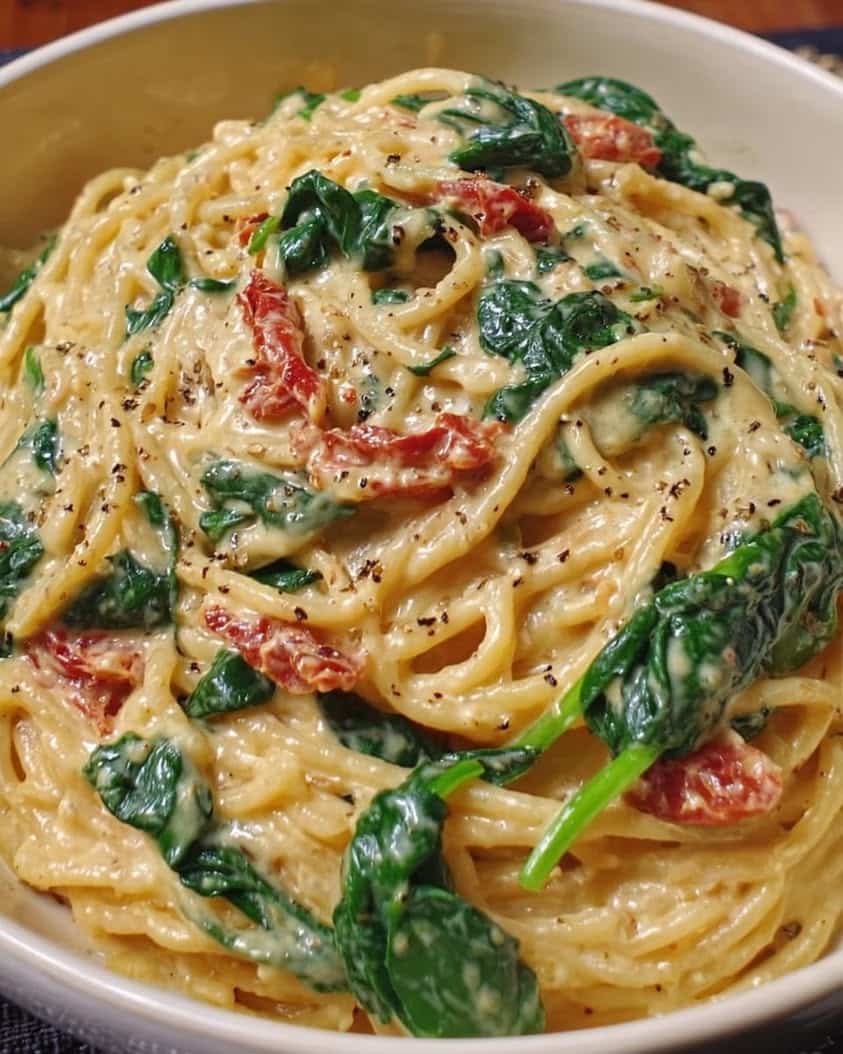
Spaghetti and Spinach with Sun-Dried Tomato Cream Sauce: A Restaurant-Worthy Dinner in 30 Minutes
If you crave a dinner that tastes like it came from your favorite Italian bistro but comes together on a busy weeknight, this spaghetti and spinach with sun-dried tomato cream sauce delivers exactly that. The sauce clings to every strand of pasta with a velvety richness, while the sun-dried tomatoes bring a sweet-tart punch that cuts through the cream. Meanwhile, the spinach wilts into the sauce and adds a fresh, earthy contrast that keeps every bite balanced. You get big, bold flavor without a long ingredient list or complicated technique.
What makes this spaghetti and spinach with sun-dried tomato cream sauce so appealing is the way it layers flavors quickly. You start by blooming garlic and sun-dried tomatoes in olive oil, and that step alone fills your kitchen with an irresistible aroma. Then cream and a splash of pasta water come together to build a glossy sauce that feels indulgent but never heavy. Finally, tender spinach and perfectly cooked spaghetti join the pan, and everything gets tossed until each strand glistens. The whole process takes about as long as it takes to boil water and cook pasta, which means you can serve a stunning dinner even after the longest day.
Beyond speed and flavor, this dish earns a permanent spot in your rotation because it is endlessly flexible and surprisingly affordable. You can swap in kale or arugula for the spinach, adjust the cream for a lighter version, or add protein like chicken or shrimp. Serve it for a cozy family dinner, a casual date night, or a potluck where you want to impress without stressing. Once you master the basic technique, you gain a reliable crowd-pleaser that works with whatever you have on hand. Let this spaghetti and spinach with sun-dried tomato cream sauce become your secret weapon for fast, elegant meals.
Quick Recipe Highlights
- Flavor Profile: This dish balances sweet-tart sun-dried tomatoes, savory garlic, and a creamy, slightly tangy sauce. A hint of nutty Parmesan rounds everything out with a salty finish that lingers pleasantly.
- Texture: Expect silky, al dente spaghetti coated in a lush cream sauce. Wilted spinach adds a soft, tender bite, while the sun-dried tomatoes bring a satisfying chewy contrast that keeps the dish interesting.
- Aroma: The kitchen fills with the warm fragrance of garlic blooming in olive oil. Sun-dried tomatoes release a concentrated, sweet tomato scent, and the cream adds a mellow richness that invites everyone to the table.
- Visual Appeal: Deep red tomato pieces dot a pale, glossy cream sauce, and bright green spinach leaves create a striking contrast. A shower of Parmesan and cracked pepper makes the plate look polished and restaurant-ready.
- Skill Level Needed: This recipe suits beginners who can boil pasta and simmer a sauce. The technique stays simple and forgiving, and the dish rewards you even if your knife skills are not perfect.
- Special Equipment: You only need a large pot for pasta and a wide skillet or saute pan for the sauce. A pair of tongs helps toss the pasta, and a colander handles draining, so no specialty tools are required.
Recipe Overview
- Difficulty Level: This recipe ranks easy because it relies on basic stovetop skills and short, clear steps. You boil pasta, saute aromatics, and simmer cream, so timing stays manageable. The sauce forgives small mistakes, and you can adjust seasonings at the end. Beginners can succeed on the first try with minimal stress.
- Category: This dish works as a main course for lunch or dinner and doubles as a meatless entree. It also fits a pasta night theme or a quick weeknight supper. You can serve it as a side for grilled proteins if you prefer smaller portions.
- Cuisine: The recipe draws on Italian-American cooking traditions that celebrate pasta with cream-based sauces. Sun-dried tomatoes reflect southern Italian preservation techniques, while the creamy sauce nods to Roman and American restaurant styles. The combination feels familiar yet modern, and it fits easily into home cooking across the United States.
- Cost: The ingredients stay affordable and rely on pantry staples like pasta, garlic, and olive oil. Sun-dried tomatoes and Parmesan cost a bit more, but a little goes a long way. Overall, you can feed four people for roughly the price of a single restaurant entree.
- Season: This dish shines year-round because it uses shelf-stable sun-dried tomatoes and fresh spinach available in every season. It feels especially welcome in cooler months when you crave comfort food. In summer, you can lighten the sauce and pair it with a crisp salad.
- Occasion: Serve this spaghetti and spinach with sun-dried tomato cream sauce for family dinners, casual date nights, or small gatherings. It suits potlucks and holiday buffets because it holds well and looks festive. You can also make it for meal prep and enjoy it for lunch during the week.
Why You’ll Love This Recipe
First, the taste and texture appeal of this spaghetti and spinach with sun-dried tomato cream sauce wins people over immediately. The cream sauce coats your tongue with a lush, velvety richness, and the sun-dried tomatoes introduce a bright, concentrated sweetness that keeps each bite lively. Garlic adds a savory backbone, and Parmesan brings a salty, nutty edge that ties everything together. The spinach softens just enough to blend into the sauce while still offering a fresh, green note. Because the pasta cooks to al dente, you get a satisfying chew that contrasts beautifully with the smooth sauce, and every forkful feels balanced rather than heavy.
Second, convenience and preparation benefits make this dish a weeknight hero. You need only one pot and one pan, which means fewer dishes and a faster cleanup. The ingredient list stays short, and most items live in your pantry already. From start to finish, you can have dinner on the table in about thirty minutes, and you can prep the garlic and measure the cream while the pasta water heats. Since the sauce comes together while the spaghetti boils, you save time and keep the process flowing smoothly. This efficiency makes the recipe ideal for busy schedules without sacrificing quality.
Third, nutritional advantages give this dish an edge over heavier cream pastas. Fresh spinach adds vitamins A, C, and K along with iron and fiber, and sun-dried tomatoes contribute antioxidants like lycopene. You control the amount of cream, so you can keep the sauce lighter without losing richness. Parmesan adds protein and calcium, and olive oil brings healthy fats. Because you use pasta water to loosen the sauce, you need less cream than you might expect, which trims calories while keeping the texture luxurious.
Fourth, social and entertaining value makes this spaghetti and spinach with sun-dried tomato cream sauce a reliable crowd-pleaser. The colors pop on the plate, and the aroma draws guests into the kitchen before you even call them to the table. You can serve it family-style in a big bowl, which encourages passing and sharing. The recipe scales easily for a larger group, and it pairs well with simple appetizers like bruschetta or a green salad. Whether you host a casual supper club or a holiday gathering, this dish looks impressive and tastes memorable.
Fifth, cost-effectiveness and accessibility round out the reasons to love this recipe. Pasta, garlic, and olive oil are budget-friendly staples, and a jar of sun-dried tomatoes lasts through several meals. Fresh spinach costs little and adds volume and nutrition, while a small wedge of Parmesan delivers big flavor. You avoid expensive cuts of meat and still serve a satisfying main course. Because the ingredients are easy to find at any grocery store, you can make this dish anytime, and you can adjust quantities to fit your budget without compromising taste.
Historical Background and Cultural Significance
The origin story of this spaghetti and spinach with sun-dried tomato cream sauce traces back to the sun-drenched fields of southern Italy, where cooks dried tomatoes on wooden boards to preserve the summer harvest. Those concentrated, chewy tomatoes became a pantry staple in regions like Puglia and Sicily, and they later traveled with Italian immigrants to the United States. Meanwhile, cream sauces gained popularity in Italian-American restaurants during the twentieth century, where chefs adapted traditional recipes for local tastes. This dish sits at the intersection of those traditions, blending old-world preservation techniques with modern American pasta culture.
Cultural importance shows up in the way this dish connects families around the table. In Italian households, pasta represents comfort, hospitality, and everyday abundance, and a simple sauce made from pantry ingredients reflects that philosophy. Sun-dried tomatoes carry a sense of tradition because they recall late-summer harvests and the patience of slow drying. When you pair them with cream and spinach, you honor that heritage while embracing convenience. The recipe also fits into meatless meal traditions, which have deep roots in Italian cooking and continue to grow in popularity across the United States.
The evolution of the recipe reflects changing home cooking habits and ingredient availability. Early versions likely used fresh tomatoes and heavy cream, but modern cooks embraced jarred sun-dried tomatoes for their year-round convenience and intense flavor. Food magazines and cooking shows popularized creamy tomato pasta dishes in the 1990s and 2000s, and home cooks began adding greens like spinach to boost nutrition and color. Today, this spaghetti and spinach with sun-dried tomato cream sauce appears in countless variations online, which shows how a simple idea can adapt across generations and kitchens.
Regional variations abound because cooks everywhere put their own spin on the concept. In the American South, you might see Cajun seasoning or a pinch of cayenne for heat. In California, fresh basil and a squeeze of lemon brighten the sauce. Some Italian cooks skip cream altogether and use a tomato-based sauce with olive oil and garlic, while others add mascarpone or ricotta for extra richness. These differences show that the dish belongs to no single region but thrives through creativity, and you can adapt it to reflect your own family traditions and pantry.
Ingredient Deep Dive
Spaghetti serves as the backbone of this dish, and its cultural significance runs deep in Italian cuisine. Long, thin strands of pasta date back centuries, and spaghetti became a global symbol of Italian cooking after immigrants brought it to the Americas. Nutritionally, spaghetti provides carbohydrates for energy along with some protein and fiber, especially in whole wheat versions. Choose a brand made with durum wheat semolina for the best texture, and look for bronze-die pasta if you want a rougher surface that holds sauce well. Store dry pasta in a cool, dry place for up to a year, and swap in linguine, fettuccine, or penne if you prefer.
Sun-dried tomatoes bring concentrated sweetness and a chewy texture to the sauce. Southern Italian cooks perfected the art of drying tomatoes in the sun, and the technique preserved summer flavors for leaner months. These tomatoes deliver lycopene, vitamin C, and fiber, and they add intense umami that makes the dish taste richer than it is. Look for tomatoes packed in oil for convenience, or choose dry-packed ones and rehydrate them in warm water. Store oil-packed tomatoes in the refrigerator after opening, and substitute roasted red peppers or tomato paste mixed with a little sugar if needed.
Fresh spinach adds color, nutrition, and a tender bite to the pasta. Spinach has a long history in Mediterranean cooking, and it appears in everything from Greek spanakopita to Italian ravioli fillings. The leafy green supplies iron, vitamins A, C, and K, and folate, and it wilts quickly in the hot sauce. Choose bright, crisp leaves with no yellowing, and wash them thoroughly to remove grit. Store spinach in a sealed bag with a paper towel in the refrigerator, and use it within a few days. If you want a substitute, try baby kale, arugula, or Swiss chard.
Heavy cream creates the luxurious texture that defines this sun-dried tomato cream sauce. Cream has a place in cuisines worldwide, from French sauces to Indian curries, and it adds richness and body to pasta dishes. Nutritionally, cream contributes fat and calories, but you can lighten the dish with half-and-half or evaporated milk. Choose fresh cream with a clean, sweet smell, and check the expiration date before buying. Store cream in the coldest part of your refrigerator and use it within a week. For dairy-free options, try full-fat coconut milk or cashew cream.
Garlic provides the savory foundation that makes this spaghetti and spinach with sun-dried tomato cream sauce so fragrant. Garlic has traveled from ancient Central Asia to kitchens around the world, and it remains a cornerstone of Mediterranean cooking. The pungent cloves offer antibacterial compounds and antioxidants, and they add depth that no other ingredient can match. Select firm, tight heads with no sprouting, and store them in a cool, dry, dark place with good airflow. Substitute garlic powder in a pinch, but fresh garlic delivers the best flavor and aroma.
Parmesan cheese finishes the sauce with a salty, nutty edge that elevates every bite. This aged Italian cheese comes from the Emilia-Romagna region, where producers have crafted it for nearly a thousand years. Parmesan provides protein and calcium along with a savory umami punch, and a little goes a long way. Look for Parmigiano-Reggiano with a textured rind and a fruity aroma, and grate it fresh for the best melt. Store wedges wrapped in parchment in the refrigerator, and substitute Pecorino Romano or nutritional yeast for a dairy-free version.
Common Mistakes to Avoid
- Overcooking the pasta. Spaghetti turns mushy and loses its bite when you cook it past al dente, so start tasting a minute before the package time ends. Reserve pasta water before draining so you can loosen the sauce later.
- Burning the garlic. Garlic turns bitter in seconds once it browns, so keep the heat moderate and stir constantly. Add the sun-dried tomatoes right after the garlic turns fragrant to slow the cooking.
- Adding cold cream to a hot pan. Cold cream can curdle when it hits high heat, so let the cream sit at room temperature for a few minutes first. Lower the heat before pouring it in and stir gently.
- Skipping the pasta water. Pasta water contains starch that helps the sauce cling to the noodles, and forgetting it leaves you with a thin, watery sauce. Always reserve at least a cup before draining.
- Adding spinach too early. Spinach wilts in seconds, and overcooking turns it dark and slimy. Stir it in at the very end and let residual heat do the work.
- Overcrowding the pan. A crowded pan steams instead of sautes, which dulls the flavors and prevents browning. Use a wide skillet and cook in batches if you double the recipe.
- Underseasoning the sauce. Cream sauces need enough salt to taste bright, so season in layers with salt, pepper, and Parmesan. Taste as you go and adjust before serving.
- Using low-fat cream. Fat carries flavor and creates a silky texture, so low-fat cream can make the sauce taste thin. If you want lighter results, use half-and-half rather than fat-free products.
- Forgetting to drain oil from sun-dried tomatoes. Excess oil can make the sauce greasy, so blot oil-packed tomatoes with a paper towel. Save a teaspoon of the oil to boost flavor if you like.
- Rushing the sauce reduction. Simmering the cream for a few minutes thickens it and melds the flavors, and skipping this step leaves a loose sauce. Give it time and stir occasionally.
Essential Techniques
Building the flavor base matters most because it sets the tone for the entire dish. You start by heating olive oil and adding garlic, then you stir in the sun-dried tomatoes so their sugars caramelize slightly. This step releases fat-soluble flavor compounds that infuse the oil, and the aroma tells you when the base is ready. Master this by keeping the heat at medium and stirring constantly for one to two minutes. A common pitfall is scorching the garlic, so watch for a pale golden color rather than brown, and add the tomatoes as soon as the garlic turns fragrant.
Emulsifying the sauce with pasta water transforms a simple cream sauce into a glossy, cohesive coating. Starch from the pasta water binds with the fat in the cream and creates a smooth texture that clings to every strand. To master this, add pasta water a splash at a time while tossing the pasta over medium heat, and stop when the sauce coats the back of a spoon. A common pitfall is adding too much water at once, which thins the sauce. Watch for a shiny, velvety sheen and a sauce that leaves a clear trail when you drag a spoon through it.
Tossing the pasta in the pan rather than in a bowl ensures even distribution and better flavor absorption. The heat of the pan helps the pasta soak up the sauce, and the tossing motion coats each strand evenly. Master this by using tongs to lift and turn the pasta continuously for about a minute. A common pitfall is dumping everything into a cold bowl, which cools the dish and leaves some noodles bare. Watch for every strand glistening with sauce and no pools of liquid at the bottom of the pan.
Pro Tips for Perfect Spaghetti and Spinach with Sun-Dried Tomato Cream Sauce
Salt your pasta water generously because it seasons the spaghetti from the inside out. Use about a tablespoon of salt per gallon of water, and taste the water to make sure it resembles a mild sea breeze. This step elevates the final dish more than any finishing salt can.
Slice the sun-dried tomatoes into thin strips so they distribute evenly and release flavor in every bite. Thin slices also prevent clumps and give the sauce a more refined texture. Use kitchen shears to snip them quickly right over the pan.
Reserve more pasta water than you think you need because the sauce tightens as it sits. Keep a cup on hand and add it gradually until you reach the perfect consistency. Extra pasta water also helps if you reheat leftovers.
Grate the Parmesan fresh for a smoother melt and brighter flavor. Pre-grated cheese often contains anti-caking agents that prevent proper melting. A microplane makes quick work of a small wedge.
Warm your serving bowls before plating because warm bowls keep the pasta hot longer. A quick rinse with hot water or a minute in a low oven does the trick. This small step makes the dish feel more polished.
Add a squeeze of lemon at the end to brighten the cream sauce and lift the flavors. Acid balances richness and makes the sun-dried tomatoes taste even sweeter. Start with a teaspoon and adjust to taste.
Finish with a drizzle of good olive oil for a fresh, fruity note that complements the cream. Use your best extra-virgin oil for finishing rather than cooking. This final touch adds a restaurant-quality flourish.
Season the sauce at the end rather than the beginning because reductions concentrate saltiness. Taste after the cream simmers and adjust with salt, pepper, and Parmesan. This approach prevents oversalting and keeps the flavors balanced.
Variations and Adaptations
Regional variations let you explore different flavor profiles while keeping the core technique intact. In southern Italy, cooks might skip the cream and use a base of olive oil, garlic, and crushed tomatoes with a handful of sun-dried tomatoes for depth. In the American Southwest, a pinch of red pepper flakes and a squeeze of lime add heat and brightness. Mediterranean cooks often crumble feta into the sauce for a tangy twist, while French-inspired versions add a splash of white wine before the cream. Pick a direction and adjust the seasoning to match.
Seasonal adaptations keep this spaghetti and spinach with sun-dried tomato cream sauce fresh throughout the year. In spring, fold in blanched asparagus tips or peas alongside the spinach for a bright, green flavor. Summer calls for fresh basil, cherry tomatoes, and a lighter hand with the cream. In autumn, roasted butternut squash cubes or sauteed mushrooms add earthy depth. Winter versions benefit from wilted kale, a pinch of nutmeg, and extra Parmesan for comfort.
Dietary modifications make the dish accessible to more eaters without sacrificing flavor. Use gluten-free spaghetti and confirm that all packaged ingredients are certified gluten-free. For dairy-free needs, replace the cream with full-fat coconut milk and the Parmesan with nutritional yeast or a dairy-free hard cheese. Vegan cooks can follow the same swaps and add a pinch of miso for umami. Low-carb eaters can serve the sauce over spiralized zucchini or spaghetti squash.
Flavor variations range from smoky to spicy to herb-forward. Add crispy pancetta or bacon for a smoky, savory note, or stir in a spoonful of harissa or Calabrian chili paste for heat. A teaspoon of pesto swirled into the cream sauce brings a fresh basil punch, while a pinch of smoked paprika adds depth. For a tangy version, stir in a little goat cheese or creme fraiche at the end. Taste as you go and adjust the balance of salt, acid, and fat.
Texture modifications help you tailor the dish to your preferences. Add toasted pine nuts or crushed almonds for crunch, or top with crispy breadcrumbs for a contrast to the creamy sauce. A handful of fresh arugula tossed in at the last minute keeps a bit of bite, and chopped sun-dried tomatoes add chew. If you want a smoother sauce, puree half of it before tossing with the pasta. Each tweak changes the eating experience while preserving the dish’s character.
Presentation alternatives let you serve the same recipe in different formats. Toss everything together for a classic pasta bowl, or plate individual portions with a nest of spaghetti and a spoonful of sauce on top. For a pasta bar, set out the sauce, spinach, and Parmesan separately and let guests build their own bowls. You can also bake the mixture with a cheese topping for a pasta casserole, or serve it in small bowls as an appetizer portion.
Serving and Presentation Guide
Plating techniques make a big difference in how this spaghetti and spinach with sun-dried tomato cream sauce comes across at the table. Use tongs to twist the pasta into a neat nest in the center of a warm bowl, then spoon the sauce and spinach over the top. Leave a little space around the rim for a clean look, and avoid piling the pasta too high. A shallow bowl works better than a flat plate because it keeps the sauce contained. Wipe the rim with a clean cloth before serving for a polished finish.
Garnishing ideas add color and texture without overwhelming the dish. A shower of freshly grated Parmesan and a crack of black pepper gives a classic look, and torn basil leaves add a fresh green accent. Toasted pine nuts or crushed red pepper flakes bring visual interest and a hint of crunch. A drizzle of olive oil or a small dollop of ricotta can make each portion feel special. Keep garnishes simple so the sun-dried tomatoes and spinach remain the stars.
Traditional accompaniments round out the meal with Italian-inspired sides. A simple green salad with lemon vinaigrette balances the richness of the cream sauce, and garlic bread or focaccia soaks up every last drop. Steamed broccoli or roasted green beans add extra vegetables, while a small plate of olives and cured meats works as an antipasto. For a heartier meal, serve grilled chicken or shrimp alongside, or add a bowl of minestrone soup to start.
Modern serving suggestions fit contemporary dining styles and preferences. Serve the pasta in individual bowls for a dinner party, or set up a build-your-own pasta bar with toppings like extra spinach, Parmesan, and chili flakes. For a lighter meal, pair a smaller portion with a big salad and a glass of sparkling water. You can also serve the dish at room temperature as a pasta salad for a picnic or buffet. Choose the style that fits your occasion and guests.
Temperature considerations matter because cream sauces taste best when hot but not scorching. Serve the pasta immediately after tossing so the sauce stays glossy and the spinach retains its bright color. Warm the bowls beforehand to keep the dish hot through the meal. If you need to hold the pasta for a few minutes, keep it covered over low heat and add a splash of pasta water to loosen the sauce. Avoid reheating in a microwave on high, which can separate the cream.
Portion control tips help you serve satisfying portions without waste. A standard serving of dry spaghetti is about two ounces per person, which yields a generous bowl once the sauce and spinach are added. Use a kitchen scale for accuracy, or measure with a pasta measure tool. For a lighter meal, serve one and a half ounces per person and add a side salad. Offer extra spinach and vegetables to bulk up portions without adding many calories.
Wine and Beverage Pairing
Wine pairings for this spaghetti and spinach with sun-dried tomato cream sauce should balance richness with acidity. A crisp white like Pinot Grigio or Sauvignon Blanc cuts through the cream and complements the spinach, while a medium-bodied Chardonnay with light oak adds a buttery note that echoes the sauce. For red wine lovers, a light Sangiovese or Barbera offers bright acidity and red fruit that stands up to the tomatoes. Avoid heavily oaked reds, which can overwhelm the delicate cream. Serve white wines well chilled and reds slightly below room temperature.
Non-alcoholic alternatives keep the meal festive for everyone at the table. Sparkling water with a squeeze of lemon cleanses the palate between bites, and a homemade Italian soda with citrus and basil feels special. Iced tea with lemon or a virgin bloody mary brings acidity and spice that pair well with the tomatoes. For a cozy option, try a warm herbal tea with fennel or mint after the meal. Offer a couple of choices so guests can pick what they enjoy.
Coffee and tea pairings work best after the meal rather than during it. An espresso or a strong cup of coffee cuts through the richness of the cream and echoes the Italian tradition of ending dinner with a small, intense cup. Herbal teas like chamomile or peppermint soothe the palate and aid digestion. If you prefer tea during the meal, choose a light green tea or a citrus-infused white tea that will not compete with the food. Keep the drinks simple so the pasta remains the focus.
Temperature considerations apply to beverages as well as food. Serve white wine and sparkling drinks well chilled to refresh the palate, and keep red wine slightly cool so it does not feel heavy against the creamy sauce. For non-alcoholic options, offer ice and a small pitcher so guests can adjust the temperature themselves. A warm drink after the meal provides a comforting contrast to the rich pasta. Plan ahead so drinks stay at the right temperature throughout dinner.
Serving suggestions make beverage service easy and elegant. Set up a small drink station with glasses, a bottle of wine, and a pitcher of sparkling water so guests can help themselves. Offer lemon wedges and fresh herbs as garnishes for drinks, which adds a fun, interactive element. Keep water glasses filled throughout the meal to cleanse the palate. A simple, well-organized drink setup lets you enjoy the meal along with your guests.
Storage and Shelf Life
Storage methods determine how well leftovers of this spaghetti and spinach with sun-dried tomato cream sauce hold up. Transfer cooled pasta to an airtight container and press plastic wrap directly onto the surface to limit air exposure. Keep the sauce and pasta together so the flavors continue to meld, or store them separately if you want to refresh the pasta later. Label the container with the date so you know when to use it. Proper storage keeps the dish safe and preserves its texture for a few days.
Temperature requirements for food safety are critical with cream-based sauces. Store leftovers in the refrigerator at or below forty degrees Fahrenheit, and never leave the pasta at room temperature for more than two hours. Place the container in the coldest part of the fridge rather than the door, where temperatures fluctuate. Keep the pasta away from raw meat and seafood to prevent cross-contamination. Follow these rules and you can safely enjoy the dish within the recommended window.
Container recommendations help maintain quality and prevent leaks. Choose glass containers with tight-fitting lids or high-quality plastic containers designed for food storage. Leave a little headspace if you plan to freeze the pasta, because the sauce expands as it freezes. Divide leftovers into single-serving portions for faster cooling and easier reheating. Stackable containers save space and keep your refrigerator organized, which makes leftovers more appealing.
Signs of spoilage help you decide when to discard leftovers rather than risk illness. Look for an off smell, a sour taste, or a change in color, and check for mold or a slimy texture on the pasta. If the sauce looks separated or watery after reheating, that can be normal, but an unpleasant odor is not. When in doubt, throw it out, and never taste food you suspect has spoiled. Use leftovers within three to four days for the best quality and safety.
Reheating instructions preserve the texture and flavor of the dish. Warm leftovers gently on the stovetop over low heat with a splash of water or cream, stirring until the sauce loosens and coats the pasta. A microwave works in a pinch if you use a lower power setting and stir halfway through. Avoid high heat, which can split the cream and toughen the pasta. Taste after reheating and add a little Parmesan or lemon to refresh the flavors.
Freezing guidelines help you save portions for later without ruining the sauce. Freeze the pasta and sauce together in an airtight container for up to two months, and thaw overnight in the refrigerator before reheating. The cream sauce may separate slightly during freezing, so whisk in a little fresh cream or pasta water as you reheat. Spinach may lose some texture, so consider adding fresh spinach during reheating for a brighter result. Label the container with the date and reheat thoroughly before serving.
Make Ahead Strategies
A prep timeline makes this spaghetti and spinach with sun-dried tomato cream sauce easy to fit into a busy day. Wash and dry the spinach, slice the sun-dried tomatoes, and mince the garlic up to a day ahead, then store each in separate containers in the refrigerator. Grate the Parmesan and measure the cream so the cooking step moves quickly. You can even cook the pasta ahead, toss it with a little oil, and refrigerate it for up to two days. With the prep done, dinner comes together in about fifteen minutes.
Storage between steps keeps prepped ingredients fresh and organized. Keep the garlic airtight so it does not scent the entire refrigerator, and store spinach in a sealed bag with a paper towel to absorb moisture. Label containers with the ingredient name and prep date so you know what you have. Keep the cream in its original carton until you are ready to use it. A little organization makes the cooking process smoother and reduces last-minute stress.
Quality impact assessment helps you decide which steps to do ahead and which to save for the last minute. Prep work like chopping and grating holds up well, but cooked pasta can dry out if stored too long. The cream sauce tastes best when made fresh, so prepare it on the day you plan to serve the dish. Spinach loses its bright color after a day, so add it fresh during cooking. Prioritize flavor and texture by prepping ingredients rather than the finished dish.
Assembly tips streamline the final steps and keep the dish tasting fresh. Set out all prepped ingredients in the order you will use them, and start boiling the pasta before you begin the sauce. Warm the serving bowls while the pasta cooks. Then saute the aromatics, add the cream, and toss everything together in one smooth sequence. This mise en place approach makes the cooking feel effortless and ensures you do not forget an ingredient.
Reheating guidelines for make-ahead portions protect the quality of the dish. If you cooked the pasta ahead, reheat it briefly in boiling water before tossing it with freshly made sauce. Warm leftover sauce gently on the stovetop and add a splash of water or cream to loosen it. Stir in fresh spinach at the end so it keeps its color and bite. Taste and adjust the seasoning after reheating, since flavors can dull in the refrigerator.
Fresh element additions bring a just-cooked feel to make-ahead meals. Top the dish with fresh basil, a squeeze of lemon, or a final shower of Parmesan right before serving. Add a handful of baby spinach or arugula at the last minute for a bright, fresh bite. A drizzle of good olive oil and a crack of black pepper wakes up the flavors. These small touches make make-ahead meals taste like they came straight from the stove.
Scaling Instructions
Halving the recipe suits smaller households or a dinner for two with a lunch portion left over. Use half the pasta, cream, and sun-dried tomatoes, but keep the garlic and spinach generous for flavor. Cook the sauce in a smaller skillet so it does not spread too thin and dry out. Timing stays nearly the same because the sauce comes together quickly regardless of quantity. Taste and adjust the seasoning since smaller batches can concentrate salt.
Doubling or tripling the recipe works well for gatherings, but you need to plan the equipment and timing. Use a large pot for the pasta and a wide skillet or two pans for the sauce so the ingredients have room to saute. Cook the pasta in batches if your pot cannot handle the full amount, and reserve extra pasta water. Keep the sauce warm in a slow cooker or low oven while you finish the pasta. Taste each batch and season carefully for consistent flavor.
Equipment adjustments help you scale up without sacrificing quality. A larger skillet or a Dutch oven gives the sauce room to simmer, and a second pot handles extra pasta. Use a large colander or a spider skimmer to move pasta from the pot to the pan without losing the water. Have extra bowls and tongs ready for serving a crowd. Planning the equipment upfront prevents bottlenecks and keeps the Print
Spaghetti & Spinach with Sun-Dried Tomato Cream Sauce
- Total Time: 30 minutes
- Yield: 4
Description
A creamy and flavorful pasta dish featuring sun-dried tomatoes and fresh spinach, perfect for a weeknight dinner.
Ingredients
- 12 oz spaghetti
- 2 tbsp olive oil
- 1/2 cup sun-dried tomatoes (oil-packed), chopped
- 3 cloves garlic, minced
- 1 cup heavy cream
- 1/2 cup grated Parmesan cheese
- 4 cups fresh spinach
- Salt and pepper to taste
- Red pepper flakes (optional)
Instructions
- Cook spaghetti according to package instructions. Reserve 1 cup pasta water, then drain.
- In a large skillet, heat olive oil over medium heat. Add sun-dried tomatoes and garlic; sauté for 2 minutes.
- Stir in heavy cream and bring to a simmer. Add Parmesan cheese and stir until melted.
- Add spinach and cook until wilted, about 2-3 minutes.
- Add cooked spaghetti to the skillet and toss to coat. If sauce is too thick, add reserved pasta water as needed.
- Season with salt, pepper, and red pepper flakes if desired. Serve hot.
Notes
You can customize the seasonings to taste.
- Prep Time: 10 minutes
- Cook Time: 20 minutes
- Method: Main
- Cuisine: Italian