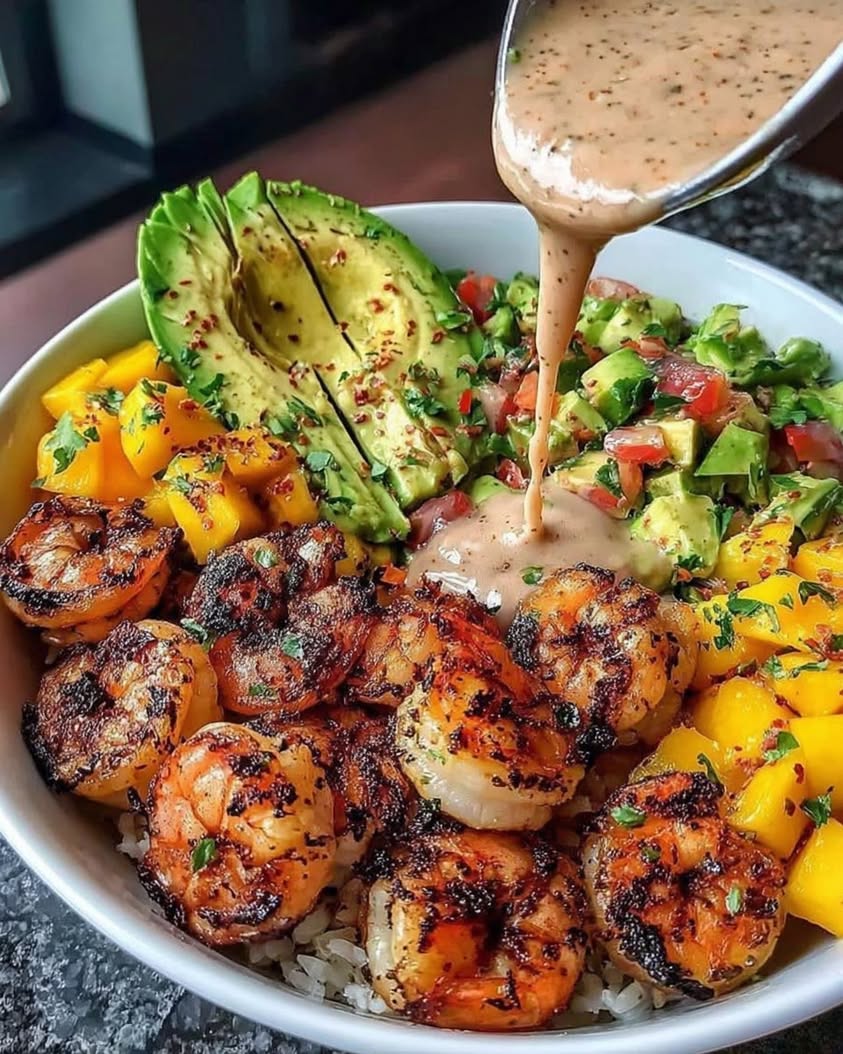
Zesty Shrimp and Avocado Bowls with Mango Salsa: A Tropical Weeknight Wonder
Imagine a meal that transports your taste buds to a sunny beach with every bite. That is the exact experience these Zesty Shrimp and Avocado Bowls with Mango Salsa deliver. This recipe masterfully combines succulent, perfectly seasoned shrimp with creamy avocado and a bright, sweet-and-spicy mango salsa. Ultimately, it is a vibrant, restaurant-quality dish you can create in your own kitchen in under thirty minutes.
The magic of these shrimp and avocado bowls lies in their incredible balance. For instance, the rich, buttery texture of the avocado beautifully contrasts the juicy pop of the shrimp. Meanwhile, the fresh mango salsa adds a necessary burst of acidity and fruitiness. Drizzled with a tangy lime-chili sauce, every component sings in harmony. Consequently, this dish feels both indulgent and refreshingly light, making it a perfect choice for any season.
Furthermore, this recipe is a fantastic solution for busy weeknights. It requires minimal cooking and relies on fresh, simple ingredients. You can easily customize the spice level or swap in different grains. Whether you are meal-prepping for the week or impressing last-minute guests, these bowls are endlessly adaptable. They are a guaranteed way to bring a splash of color and excitement to your dinner table.
Quick Recipe Highlights
- Flavor Profile: These Zesty Shrimp and Avocado Bowls offer a dynamic taste experience. The shrimp are savory with a hint of chili and garlic, while the mango salsa brings sweet, tangy, and slightly spicy notes. Finally, the lime-chili sauce ties everything together with a bright, citrusy kick.
- Texture: This dish is a delightful textural journey. You get the firm, juicy bite of the shrimp against the cool, creamy softness of the avocado. Additionally, the diced mango and red onion in the salsa provide a satisfying crunch, creating a perfectly balanced mouthfeel.
- Aroma: As you cook, the kitchen fills with the irresistible scent of garlic and chili powder sizzling with shrimp. Then, the fresh aromas of chopped cilantro and lime zest from the salsa cut through, promising a fresh and vibrant meal.
- Visual Appeal: The presentation is stunning with its rainbow of colors. Think pink shrimp, vibrant green avocado, sunny yellow mango, and flecks of red onion and cilantro. Consequently, these bowls are incredibly photogenic and appetizing.
- Skill Level Needed: This is a beginner-friendly recipe ideal for home cooks of all levels. The techniques involve simple chopping, quick stovetop cooking, and easy assembly. No special skills are required to achieve a delicious result.
- Special Equipment: You only need basic kitchen tools: a sharp knife, cutting board, mixing bowls, and a large skillet. A microplane for zesting the lime is helpful but not essential. Ultimately, you likely have everything you need already.
Recipe Overview
- Difficulty Level: We rate this recipe as “Easy” because it breaks down into straightforward, manageable steps. The cooking process for the shrimp takes less than 10 minutes. Moreover, the salsa and sauce require no cooking, just simple mixing. Even a novice cook can follow this process confidently.
- Category: This dish fits beautifully into several meal categories. It is a fantastic main course for lunch or dinner. Alternatively, you can serve it as a substantial, healthy salad. It also works wonderfully for meal prep, as components store well separately.
- Cuisine: These bowls draw inspiration from coastal and tropical cuisines, particularly those of the Caribbean and Mexico. The use of shrimp, avocado, lime, and chili is a classic combination in these regions. However, the bowl format gives it a modern, customizable twist.
- Cost: This is a moderately priced meal that feels luxurious. Shrimp is the primary expense, but buying frozen, peeled, and deveined shrimp can save money. Avocados, mango, and other fresh ingredients are affordable, especially when in season. Overall, it is far cheaper than ordering a similar dish at a restaurant.
- Season: This recipe shines brightest in late spring and summer when mangoes and avocados are at their peak. Nevertheless, thanks to global availability, you can enjoy these Zesty Shrimp and Avocado Bowls year-round. They are particularly welcome as a bright, fresh meal during colder months.
- Occasion: These bowls are incredibly versatile for different events. They are perfect for a quick, healthy weeknight dinner. Simultaneously, they are elegant enough for a casual dinner party or a summer picnic. You can even pack them for a beautiful and satisfying work lunch.
Why You’ll Love This Recipe
First and foremost, the taste and texture combination is utterly addictive. Each forkful delivers a party of flavors: the savory, garlicky shrimp, the cool, rich avocado, and the explosive sweetness of the mango salsa. The lime-chili sauce adds a final layer of tangy heat that wakes up all the other ingredients. Consequently, every bite is complex, satisfying, and incredibly fresh. You will find yourself craving this specific blend of coastal and tropical notes regularly.
From a practical standpoint, the convenience factor is a major win. These Zesty Shrimp and Avocado Bowls come together in about 30 minutes with minimal active cooking time. You can prepare the salsa and sauce while the shrimp cook, making the process highly efficient. Furthermore, cleanup is a breeze since you mainly use one skillet and a few bowls. This recipe proves that a stunning, healthy meal does not require hours in the kitchen or a sink full of dishes.
Nutritionally, this dish is a powerhouse. Shrimp provides lean protein and essential minerals like selenium and iodine. Avocado contributes heart-healthy monounsaturated fats and fiber. Meanwhile, mango is packed with vitamins A and C. Together, they create a balanced meal that fuels your body without weighing you down. It is a fantastic option for anyone looking to eat cleaner or incorporate more whole foods into their diet.
For entertaining, these bowls are a social superstar. They offer a build-your-own-bowl setup that guests adore. You can lay out all the components—shrimp, salsa, avocado, rice, extra sauce—and let everyone customize their perfect meal. This interactive style is fun, casual, and takes the pressure off the host. Visually, the vibrant colors make your table look festive and inviting, guaranteeing compliments from your friends and family.
Finally, this recipe is wonderfully cost-effective and accessible. While shrimp can be a splurge, using frozen varieties or buying on sale keeps costs manageable. The other ingredients are pantry staples or inexpensive fresh produce. Compared to ordering a similar “poke” or “tropical bowl” at a restaurant, making it at home saves significant money. Additionally, you control the quality and quantity of every ingredient, ensuring a meal tailored exactly to your preferences.
Historical Background and Cultural Significance
The concept of combining seafood with avocado and citrus has deep roots in the coastal cuisines of Latin America, particularly Mexico and Peru. In Mexico, dishes like “aguachile” feature raw shrimp cured in lime juice with chili peppers, often served with avocado. Similarly, Peruvian “ceviche” celebrates the marriage of fresh seafood, lime, onion, and chili. Our Zesty Shrimp and Avocado Bowls are a direct descendant of these traditions, adapting the core flavor principles into a hearty, assembled bowl format that suits modern eating habits.
Culturally, these ingredients hold significant importance. The avocado, native to central Mexico, has been cultivated for thousands of years and was revered by the Aztecs. The mango, originating in South Asia, was spread globally through trade and colonization, becoming a staple in tropical regions worldwide. Shrimp harvesting is a vital industry for many coastal communities. Therefore, this dish represents a beautiful fusion of ingredients with rich, global histories, each bringing its own story to the plate.
The evolution of this recipe mirrors the rise of the “bowl” trend in contemporary wellness and food culture. Over the last decade, grain bowls, poke bowls, and Buddha bowls have become immensely popular for their balanced, Instagram-worthy presentation. This recipe takes that modern framework and fills it with classic, time-tested flavor combinations. It is a perfect example of how traditional foodways can be reinterpreted for today’s health-conscious, visually-driven consumer without losing their soul.
Regional variations of this concept are endless. In the Caribbean, you might find similar shrimp served with fried plantains. In Hawaii, it could be layered over sushi rice with a touch of soy sauce. Some versions in the American Southwest might include black beans and corn. The beauty of these Zesty Shrimp and Avocado Bowls is their adaptability. They provide a delicious template that welcomes inspiration from any cuisine that loves bright, fresh, and bold flavors.
Ingredient Deep Dive
Let us start with the star: shrimp. Shrimp have been a crucial food source for coastal populations for millennia. Nutritionally, they are an excellent source of lean protein, very low in fat, and rich in selenium, which supports thyroid function and antioxidant defenses. When selecting shrimp, look for firm, translucent flesh with a mild sea smell. For sustainability, choose wild-caught or responsibly farmed shrimp certified by organizations like the Marine Stewardship Council. Store them in the coldest part of your fridge and use within 1-2 days, or freeze immediately.
Next, the avocado. This creamy fruit, historically called “ahuacatl” by the Aztecs, is packed with monounsaturated fats that promote heart health and fiber that aids digestion. A ripe avocado should yield slightly to gentle pressure at the stem end. To speed ripening, place it in a paper bag with a banana. Once cut, store it with the pit and a squeeze of lime juice to prevent browning. If you need a substitute, a ripe, mashed chickpea mixture with a little olive oil can mimic the texture, though not the flavor.
The mango salsa brings the party. Mangoes are native to India and have been cultivated for over 4,000 years. They are a phenomenal source of vitamins A and C, boosting immunity and skin health. Choose a mango that is fragrant and gives slightly when squeezed. To dice it easily, slice off the cheeks, score the flesh in a grid, and push the skin inward. For a less sweet salsa, peaches or pineapple make excellent substitutes. Always add the diced mango to the salsa just before serving to maintain its perfect texture.
Finally, the lime-chili sauce. Lime juice, rich in vitamin C, was historically used to prevent scurvy on long sea voyages. Its acidity is crucial for “cooking” the shrimp flavor and balancing the dish’s richness. Always use fresh lime juice, not bottled, for the brightest flavor. The chili powder (like ancho or chipotle) provides depth and warmth. For a smoother sauce, you can blend all the ingredients. If you are out of fresh limes, lemon juice can work in a pinch, though the flavor profile will shift slightly.
Common Mistakes to Avoid
- Overcooking the Shrimp: This is the most common error. Shrimp cook incredibly fast and become rubbery and tough when overdone. They are ready as soon as they turn opaque and form a loose “C” shape. Immediately remove them from the heat to prevent carryover cooking.
- Using Unripe Avocado: An unripe avocado is hard and flavorless, ruining the creamy texture of the bowl. Always plan ahead and buy avocados a few days before you need them. A ripe avocado should be slightly soft but not mushy.
- Preparing the Mango Salsa Too Early: If you dice the mango and mix the salsa hours in advance, it can become watery and mushy. The acid in the lime juice starts to break down the fruit. For best results, prepare the salsa no more than 30 minutes before serving.
- Skipping the Deveining Step: While peeled shrimp save time, the dark digestive tract (the “vein”) can contain grit and impart a bitter flavor. Taking an extra minute to remove it with a paring knife ensures a cleaner, sweeter shrimp taste.
- Not Patting the Shrimp Dry: Moist shrimp will steam instead of sear in the pan, preventing you from getting those nice, flavorful browned bits. Always pat shrimp thoroughly dry with paper towels before seasoning and cooking.
- Forgetting to Season in Layers: Do not just season the shrimp. Remember to add a pinch of salt to the avocado, the mango salsa, and even your base (like rice or greens). Building layers of seasoning is the key to a deeply flavorful dish.
- Using Bottled Lime Juice: The flavor difference between fresh and bottled lime juice is dramatic. Bottled juice often has a metallic, flat taste. Freshly squeezed lime juice is vibrant and essential for the bright character of both the salsa and the sauce.
- Neglecting to Taste as You Go: Before assembling the final bowls, taste each component. Does the salsa need more lime or salt? Is the sauce spicy enough? Adjusting each element individually ensures the final combination is perfect.
Essential Techniques
Perfectly Searing Shrimp: This technique is vital for developing flavor, not just cooking the protein. First, ensure your skillet is very hot before adding the oil. Then, add the shrimp in a single layer without crowding. Crowding causes them to steam. Let them cook undisturbed for 1-2 minutes to develop a golden sear on one side before flipping. The goal is a quick, high-heat cook that leaves the interior juicy. The visual cue for success is opaque flesh with slight browning on the edges.
Dicing an Avocado Neatly: Proper dicing prevents mess and bruising. Cut the avocado in half lengthwise and twist to separate. Safely remove the pit by tapping it with your knife’s heel and twisting. Then, while the avocado is still in its skin, make lengthwise and crosswise cuts through the flesh down to the skin. Finally, use a spoon to scoop out the perfectly diced cubes. This method keeps the avocado intact and makes for beautiful, even pieces in your bowl.
Balancing a Fresh Salsa: A great salsa relies on the harmony of sweet, acid, salt, and heat. Start with your sweet base (mango), then add acid (lime juice). Next, incorporate aromatic crunch (onion, cilantro). Season with salt, which will help draw out the juices. Finally, add your heat (jalapeño). Always let the salsa sit for 10-15 minutes after mixing. This resting time allows the flavors to meld and the salt to work its magic, transforming separate ingredients into a cohesive condiment.
Emulsifying a Simple Sauce: The lime-chili sauce is a basic vinaigrette-style emulsion. The key is to slowly incorporate the oil into the acid while whisking vigorously. This action breaks the oil into tiny droplets that suspend in the lime juice, creating a smooth, unified sauce. If you add the oil all at once, it will separate. For an even smoother sauce, you can blend all ingredients. The sauce is ready when it is slightly thickened and uniform in color.
Pro Tips for Perfect Zesty Shrimp and Avocado Bowls
Use frozen shrimp for convenience and often better quality. Most shrimp are frozen immediately after catch. Thaw them overnight in the fridge in a colander to drain excess water. This method is superior to quick-thawing in water, which can make them waterlogged.
Amplify the flavor by marinating the shrimp briefly. Toss the dried shrimp with the chili powder, garlic powder, and a tablespoon of the lime juice from the sauce recipe. Let them sit for 10-15 minutes in the fridge before cooking. This infuses them with more depth.
Add a textural contrast with your base. While rice is classic, try quinoa, cauliflower rice, mixed greens, or even shredded cabbage. Each base offers a different nutritional profile and mouthfeel, keeping the recipe exciting.
Prevent avocado browning by storing the diced avocado with the mango salsa. The acid from the lime juice in the salsa will coat the avocado pieces and significantly slow down the oxidation process, keeping them green for hours.
Double the lime-chili sauce recipe. This tangy sauce is incredibly versatile. Extra sauce can be used as a salad dressing, a dip for vegetables, or a marinade for chicken or fish later in the week.
Garnish with something crunchy just before serving. A sprinkle of toasted sesame seeds, crushed tortilla chips, or pumpkin seeds adds a final layer of texture that elevates the entire bowl experience.
Cook the shrimp in batches if your skillet is not large enough. It is better to take an extra few minutes than to overcrowd the pan. Overcrowding drops the pan’s temperature and leads to steamed, rubbery shrimp.
Warm your serving bowls. For the most comforting experience, place your empty serving bowls in a warm oven (turned off) while you cook. A warm bowl keeps the food at an ideal temperature longer.
Variations and Adaptations
For regional twists, consider a Hawaiian poke-style version by marinating the raw shrimp in soy sauce, sesame oil, and ginger instead of cooking them. A Caribbean adaptation might include a sprinkle of jerk seasoning on the shrimp and serving with fried sweet plantains. A Mediterranean take could feature oregano and lemon on the shrimp, with a salsa of diced cucumber, tomato, and kalamata olives.
Seasonal adaptations are simple and rewarding. In winter, use citrus like oranges or grapefruit in place of mango for the salsa. For fall, roasted sweet potato cubes make a wonderful base instead of rice. In spring, add fresh peas or asparagus tips to the bowl. Summer is the perfect time to use peak-season peaches or nectarines in your salsa.
Dietary modifications are straightforward. For a Paleo or Whole30 version, serve the bowl over cauliflower rice and ensure your chili powder contains no additives. To make it vegan, replace the shrimp with seasoned, roasted chickpeas or marinated tofu cubes. For a lower-carb option, simply increase the avocado and serve over a bed of leafy greens instead of rice.
Experiment with flavor variations by changing the spice profile. Use smoked paprika on the shrimp for a deeper flavor. Add a teaspoon of fish sauce to the lime-chili sauce for umami complexity. Mix a little coconut milk into the sauce for a creamier, tropical twist. The basic formula is durable and welcomes your creativity.
Texture modifications can cater to personal preference. If you love crunch, add diced jicama or radish to the salsa. For extra creaminess, drizzle the bowl with a cilantro-lime crema made from Greek yogurt or sour cream. If you prefer a smoother eating experience, you can puree half the mango salsa into the sauce.
Presentation alternatives can make the meal feel new. Instead of a bowl, serve the components as a layered salad in a large glass trifle dish. You can also use the shrimp and salsa as fillings for lettuce wraps or stuff them into halved avocados for a no-grain option. For parties, set up a DIY bowl bar with all ingredients in separate containers.
Serving and Presentation Guide
Start with your base. Fluff your rice or grains with a fork and place a warm scoop at the bottom of a wide, shallow bowl. This creates a foundation and prevents the other ingredients from sinking. Using a bowl with contrasting colors, like a white or dark ceramic bowl, makes the vibrant ingredients truly pop.
Arrange the components thoughtfully instead of dumping them in. Place the warm shrimp in a pile on one side of the bowl. Fan out a few avocado slices or neatly pile the diced avocado opposite the shrimp. Spoon the mango salsa in a bright mound in the center or off to a third section. This organized, intentional plating looks restaurant-quality.
Garnishing is the final touch. A generous drizzle of the lime-chili sauce over everything is essential. Then, add a final sprinkle of fresh chopped cilantro or thinly sliced green onion. A lime wedge on the side allows guests to add an extra burst of acid. For color, a single edible flower or a small radish slice adds a professional finish.
Consider traditional accompaniments. Warm corn tortillas or tortilla chips on the side are perfect for scooping. A simple side of black beans seasoned with cumin complements the flavors beautifully. For a more substantial meal, a side of grilled corn or a simple cabbage slaw works wonderfully.
Modern serving suggestions include deconstructing the bowl for a shareable appetizer. Serve the shrimp on skewers with the mango salsa and avocado crema as dips. Alternatively, pack the components separately in a meal prep container for a lunch that stays fresh. Layer the sauce at the bottom, then rice, then avocado (tossed in lime juice), then salsa, with shrimp on top in a separate small container.
Temperature considerations are key for the best experience. Serve the shrimp warm or at room temperature, never piping hot or cold from the fridge. The avocado and mango salsa should be cool. This contrast between the warm shrimp/rice and the cool, fresh toppings is part of the dish’s magic.
Wine and Beverage Pairing
For wine pairings, focus on bottles that complement the dish’s zest and slight sweetness. A crisp, dry Riesling or a Sauvignon Blanc with strong citrus notes cuts through the richness of the avocado and mirrors the lime. A Spanish Albariño, with its stone fruit and saline quality, is another stellar match. If you prefer rosé, choose a dry Provencal style. For a light red, a slightly chilled Pinot Noir with low tannins can work beautifully with the savory shrimp.
Non-alcoholic alternatives should be equally refreshing. Sparkling water with a squeeze of lime and a few muddled mint leaves is a classic choice. A homemade agua fresca, blending mango, lime, and water, echoes the dish’s flavors. Iced hibiscus tea (agua de jamaica) offers a tart, cranberry-like flavor that pairs wonderfully. For something creamy, a coconut water-based smoothie or a virgin mojito mocktail would be delightful.
Coffee and tea pairings are less traditional but can work post-meal. A light, citrusy tea like Earl Grey or a lemongrass-ginger herbal tea would be a soothing, palate-cleansing finish. For coffee, a bright, fruity cold brew or a light roast with citrusy notes would complement rather than clash with the meal’s flavors. Avoid heavy, chocolatey coffees that would overwhelm the dish’s delicacy.
Always consider serving temperature. White wines and non-alcoholic sparklers should be well-chilled but not ice-cold, as extreme cold mutes flavor. Iced teas and aguas frescas are best served very cold. The goal is for the beverage to refresh the palate between bites of the flavorful, sometimes spicy, bowl.
Storage and Shelf Life
Store components separately for maximum freshness and shelf life. Place cooked, cooled shrimp in an airtight container in the refrigerator for up to 3 days. The mango salsa is best consumed within 24 hours but will keep for 2 days; it will become increasingly watery. Store diced avocado tossed with extra lime juice in a sealed container for 1 day. The lime-chili sauce can be refrigerated for up to 5 days. Never store assembled bowls for more than a few hours, as the avocado will brown and the salsa will make the base soggy.
For freezing, only the cooked shrimp are a good candidate. Freeze them in a single layer on a baking sheet before transferring to a freezer bag to prevent clumping. They will keep for 2-3 months. Thaw overnight in the refrigerator. The avocado, mango salsa, and sauce do not freeze well, as their textures will be destroyed upon thawing.
Reheating instructions are simple. Gently reheat the shrimp in a skillet over low heat with a tiny splash of water or broth to prevent drying out. You can also microwave them in 15-second intervals. The goal is just to take the chill off, not to cook them further. Always add the cold components (avocado, salsa, sauce) after reheating the shrimp and base.
Signs of spoilage are important to recognize. Shrimp should smell fresh and of the sea, not ammonia-like or foul. Discard if they become slimy. Avocado will darken and develop an off smell. Mango salsa that has fermented will bubble and taste unpleasantly sour. When in doubt, throw it out. The fresh nature of this dish means it does not have a long shelf life.
Make Ahead Strategies
You can efficiently prep this recipe over a two-day timeline. The day before, cook your base (rice, quinoa) and let it cool completely before storing it in the fridge. Prepare the lime-chili sauce and store it in a jar. Chop the red onion and cilantro for the salsa; store them together in a container. Thaw your shrimp in the refrigerator. This prep cuts your active cooking time on serving day to just 15 minutes.
For storage between steps, keep all prepped ingredients in separate, clearly labeled containers. This prevents cross-contamination of flavors and textures. For instance, storing onion with mango too early will make the mango taste strongly of onion. Keeping the sauce separate ensures you can control how much you use per serving.
Assessing quality impact is crucial. Pre-cooked rice will be fine, though slightly drier; refresh it with a sprinkle of water before reheating. The pre-chopped onion and cilantro will lose some vibrancy but are still good. The sauce’s flavor may even improve as it melds. The only elements that must be done at the last minute are cooking the shrimp, dicing the avocado and mango, and mixing the salsa.
Final assembly tips for make-ahead: When ready to serve, reheat your base and shrimp gently. Dice the avocado and mango, mix with the pre-chopped onion and cilantro to make the salsa, and assemble the bowls immediately. Drizzle with the pre-made sauce. This workflow gives you the convenience of prep with the freshness of a just-made meal.
Scaling Instructions
Halving the recipe for two people is simple. Use half of all ingredients. The cook time for the shrimp may reduce by a minute or two since there will be less in the pan. Use a medium skillet instead of a large one. Be precise when halving the lime juice for the sauce; one whole lime is typically about 2 tablespoons, so for a half recipe, use 1 tablespoon.
Doubling or tripling for a crowd requires slight adjustments. Cook the shrimp in multiple batches to avoid overcrowding; keep the cooked batches warm in a low oven (200°F) on a baking sheet. You may need to make the salsa in two separate bowls to ensure even mixing. Consider using a large serving platter for a family-style presentation instead of individual bowls. For the sauce, simply multiply the ingredients in a large jar and shake well.
Equipment adjustments are necessary when scaling up. You will need a very large skillet or use two skillets simultaneously for the shrimp. For the salsa, a very large mixing bowl is essential. If tripling, you might want to use a food processor with a pulse function to chop the onion and cilantro, but be careful not to over-process.
Timing modifications are minimal. The prep time will increase linearly as you have more chopping. The cook time for the shrimp will only increase by the time it takes to cook additional batches. Allow about 5-10 extra minutes of active cooking time per additional batch of shrimp. Start the first batch of shrimp while you are finishing the prep for the salsa to save time.
Nutritional Deep Dive
Macronutrient breakdown per serving is impressive. This dish provides a balanced mix: high-quality protein from the shrimp (about 20 grams), healthy fats from the avocado (15-20 grams, mostly monounsaturated), and complex carbohydrates from the base like brown rice (around 30-40 grams). The mango adds natural sugars and fiber. This balance supports sustained energy, muscle repair, and satiety, making it an excellent meal for active individuals or anyone managing weight.
The micronutrient profile is where this bowl truly shines. Shrimp are rich in selenium, iodine, and vitamin B12. Avocado delivers vitamin K, folate, and potassium. Mango is loaded with vitamins A and C, powerful antioxidants. Red onion provides quercetin, and cilantro offers various phytonutrients. Together, they create a nutrient-dense meal that supports immune function, heart health, vision, and inflammation reduction.
For weight management, this recipe is a fantastic tool. The combination of protein, fiber, and healthy fats promotes a feeling of fullness, helping to prevent overeating. It is naturally lower in calories than many restaurant bowls laden with heavy dressings and excessive oils. By controlling your portion of base (like ½ cup of cooked rice) and using the avocado for healthy fats, you can create a satisfying meal within a specific calorie range.
Dietary considerations are largely positive. The dish is naturally gluten-free and dairy-free. It can be made low-carb by substituting cauliflower rice. For those on a low-sodium diet, you can reduce or omit the added salt and rely on the natural flavors of lime, chili, and herbs. The shrimp do contain dietary cholesterol, but current nutritional science indicates dietary cholesterol has a minimal impact on blood cholesterol for most people, especially in the context of an overall healthy diet.
Dietary Adaptations
For a gluten-free version, this recipe is already compliant as written. Simply ensure that your chili powder and any other packaged spices are certified gluten-free, as cross-contamination can sometimes occur in processing facilities. Serve with a gluten-free grain like rice or quinoa.
A dairy-free adaptation requires no changes, as the original recipe contains no dairy. Be cautious if using a store-bought chili powder blend, as some may contain dairy-based anti-caking agents. Always check the label or use pure, single-ingredient chili powder.
To make it vegan, replace the shrimp with a plant-based protein. Excellent options include one 15-ounce can of chickpeas (drained, patted dry, and roasted with the same spices), extra-firm tofu cubes, or store-bought vegan “shrimp” if available. Use agave nectar instead of honey in the sauce if your vegan diet excludes honey.
For a low-carb or keto adaptation, replace the rice base with cauliflower rice or a bed of leafy greens like spinach or kale. Omit the mango from the salsa or use a very small amount of diced bell pepper instead. Increase the portion of avocado and shrimp to maintain satiety. Ensure your chili powder has no added sugar.
A Paleo version follows similar guidelines to keto: use cauliflower rice, ensure all spices are pure with no additives, and use honey (which is Paleo-approved) in the sauce. Verify that your shrimp are wild-caught and not treated with preservatives like sodium tripolyphosphate.
For a Low-FODMAP adaptation, this requires more changes. Shrimp and avocado are low-FODMAP in standard servings. Replace the mango with an equal amount of diced papaya or pineapple (in limited quantities). Use only the green tops of scallions instead of red onion. Omit the garlic powder from the shrimp seasoning and use a garlic-infused oil for cooking instead. Ensure the chili powder contains no onion or garlic powder.
Troubleshooting Guide
If your shrimp turned out rubbery, you likely overcooked them. Unfortunately, you cannot reverse this. For next time, remember shrimp cook in just 2-3 minutes total. For the current meal, chop the overcooked shrimp finely and mix them into the salsa or rice where their texture will be less noticeable. Serve with extra sauce to add moisture.
If the dish tastes bland, you probably underseasoned. Do not just add salt at the end. Try adjusting each component separately. Add a pinch of salt and a squeeze of lime to the avocado. Stir a little more salt and cilantro into the salsa. Drizzle extra sauce over everything. Blandness often comes from not seasoning in layers throughout the process.
If your avocado browned before serving, it oxidized. You can scrape off the top browned layer if it is not too deep. For presentation, mix the avocado gently into the rice or salsa where the color will be hidden. To prevent this next time, always toss diced avocado with acid (lime or lemon juice) immediately after cutting.
If the mango salsa became too watery, the mango was likely very ripe or it sat too long. Drain off the excess liquid in the bottom of the bowl before serving. You can also add a tablespoon of finely diced cucumber or jicama to help absorb some moisture. In the future, prepare the salsa closer to serving time and use a mango that is ripe but still firm.
If the lime-chili sauce separated, it just needs re-emulsifying. Shake it vigorously in its sealed jar or whisk it again in a bowl. If it is stubborn, add a tiny drop of honey or Dijon mustard as an extra emulsifier and whisk again. This is a common issue with vinaigrettes and is easily fixed.
Recipe Success Stories
Community feedback on this recipe has been overwhelmingly positive. Many readers report it has become a weekly staple in their homes. One common theme is how much children enjoy it, especially when they can build their own bowls. Parents love that it is a healthy meal the whole family eats without complaint. Several readers have mentioned successfully using frozen mango chunks from the freezer aisle when fresh mango was out of season, which is a fantastic tip for year-round enjoyment.
Variation successes are fun to hear about. One reader made a “surf and turf” version by adding thinly sliced, quickly seared steak alongside the shrimp. Another created a “breakfast bowl” by using the shrimp and salsa to top scrambled eggs. A group of friends hosted a “tropical bowl” potluck where everyone brought a different component, making for a festive and easy communal meal. These stories highlight the recipe’s fantastic adaptability.
Reader suggestions have also improved the recipe. One savvy cook suggested adding a teaspoon of coconut aminos or fish sauce to the lime-chili sauce for an umami boost, which we now often recommend. Another recommended toasting the chili powder in a dry pan for 30 seconds before adding it to the shrimp seasoning, deepening its flavor. We love how the cooking community builds on a great idea.
For photography tips, readers have found that natural, indirect light is best for capturing the vibrant colors. Shooting from directly above Print
Shrimp and Avocado Bowls with Mango Salsa & Lime-Chili Sauce
- Total Time: 45 minutes
- Yield: 4
Description
A vibrant, fresh, and flavorful bowl featuring juicy shrimp, creamy avocado, zesty mango salsa, and a tangy lime-chili sauce, perfect for a light and healthy meal.
Ingredients
- 1 lb large shrimp, peeled and deveined
- 2 ripe avocados, sliced
- 1 cup cooked quinoa or rice
- 1 mango, diced
- 1/2 red onion, finely chopped
- 1 jalapeño, seeded and minced
- 1/4 cup fresh cilantro, chopped
- Juice of 2 limes
- 2 tbsp olive oil
- 1 tsp chili powder
- Salt and pepper to taste
- 1/4 cup Greek yogurt or sour cream
- 1 tbsp honey
Instructions
- Prepare the mango salsa by combining diced mango, red onion, jalapeño, cilantro, and juice of 1 lime in a bowl. Season with salt and set aside.
- In a small bowl, mix Greek yogurt, remaining lime juice, chili powder, honey, and a pinch of salt to make the lime-chili sauce. Adjust to taste.
- Heat olive oil in a skillet over medium-high heat. Season shrimp with salt, pepper, and chili powder. Cook for 2-3 minutes per side until pink and opaque.
- Assemble bowls by dividing cooked quinoa or rice among four bowls. Top with shrimp, avocado slices, and mango salsa. Drizzle with lime-chili sauce before serving.
Notes
You can customize the seasonings to taste.
- Prep Time: 15 minutes
- Cook Time: 30 minutes
- Method: Main
- Cuisine: American