Salted Caramel Chocolate Chip Cheesecake: The Ultimate Indulgent Recipe
If you crave a dessert that balances sweet and salty in every single bite, this Salted Caramel Chocolate Chip Cheesecake delivers exactly that experience. You get a buttery graham cracker crust, a silky cream cheese filling studded with chocolate chips, and a glossy caramel drizzle finished with flaky sea salt. This recipe walks you through every step so you can serve a bakery-quality cheesecake at home.
The combination of tangy cream cheese, rich caramel, and melty chocolate creates a flavor profile that feels both nostalgic and sophisticated. Because the caramel brings deep toasted sugar notes, the salt cuts through the sweetness and keeps each bite balanced. Meanwhile, the chocolate chips add pockets of richness that make this cheesecake feel extra special. This is the kind of dessert that disappears fast at any gathering.
Many home bakers avoid cheesecake because they worry about cracks or a dense texture. However, this Salted Caramel Chocolate Chip Cheesecake uses a water bath, a low oven temperature, and a slow cooldown to keep the surface smooth and the interior creamy. Furthermore, you can make it a day ahead, which makes it ideal for holidays and parties. Keep reading to learn the techniques, tips, and variations that guarantee success.
Quick Recipe Highlights
- Flavor Profile: Expect a rich caramel sweetness with toasted sugar depth, tangy cream cheese, and semi-sweet chocolate. The flaky salt on top adds a clean savory finish that balances every spoonful.
- Texture: The filling bakes into a dense, creamy, and velvety consistency. The crust stays crisp and crumbly, while the caramel layer adds a soft, gooey contrast that melts on the tongue.
- Aroma: Warm caramel and vanilla dominate the aroma as the cake bakes. Chocolate and butter notes round out the scent, and the sea salt adds a subtle freshness right before serving.
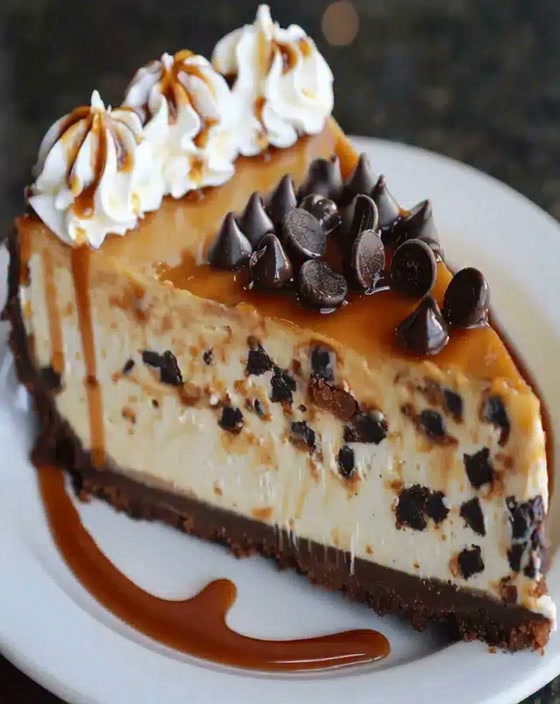
- Visual Appeal: The cheesecake shows a pale golden surface with a deep amber caramel drizzle. Chocolate chips peek through the top, and a sprinkle of flaky salt adds sparkle and contrast.
- Skill Level Needed: This recipe suits confident beginners and intermediate bakers. You need basic mixing skills plus comfort with a water bath and slow cooling, yet the steps stay clear and manageable.
- Special Equipment: You need a 9-inch springform pan, heavy-duty aluminum foil, a roasting pan for the water bath, and an electric mixer. A kitchen scale helps for accuracy, and an instant-read thermometer improves doneness checks.
Recipe Overview
- Difficulty Level: This recipe lands at intermediate because it involves a water bath and a gradual cooldown. These steps protect the custard texture and prevent cracks, and they reward you with a smooth top. You also make a homemade caramel, which requires attention but stays simple. Overall, the process feels straightforward once you organize your ingredients.
- Category: This dessert fits the cheesecake, baked dessert, and celebration cake categories. It works as a finale for dinner parties and as a centerpiece for holidays. You can also slice it into smaller portions for dessert tables.
- Cuisine: This recipe draws from American cheesecake traditions with a modern caramel twist. New York style inspires the dense, creamy filling, while the salted caramel reflects contemporary dessert trends. The graham crust grounds it in classic American home baking.
- Cost: Expect moderate costs because cream cheese, caramel ingredients, and chocolate chips add up. A homemade caramel saves money compared with store-bought sauce. Overall, the cake costs less than a bakery cheesecake of similar size.
- Season: This cheesecake works year-round, yet it shines in fall and winter when caramel flavors feel cozy. It also suits summer gatherings when served chilled. Because ingredients stay available, you can bake it anytime.
- Occasion: Serve it for birthdays, holidays, dinner parties, and potlucks. It also makes a thoughtful gift for new neighbors and friends. Because it slices cleanly, it fits buffets and formal plated dinners alike.
Why You’ll Love This Recipe
The taste and texture appeal of this Salted Caramel Chocolate Chip Cheesecake comes from layers of contrast. The tangy cream cheese filling balances the deep sweetness of caramel, and the chocolate chips add rich pockets throughout. Moreover, the flaky salt creates a bright finish that keeps you coming back for another bite. Each forkful feels creamy, crisp, and gooey all at once, which makes the dessert memorable.
Convenience also makes this recipe a winner because you can bake it a day ahead. The cheesecake needs a long chill anyway, so you gain time for other tasks. In addition, the caramel sauce keeps well in the fridge for weeks. Therefore, you can prep components in stages and assemble with ease on serving day.
Nutritionally, this dessert delivers indulgence in controlled portions, and that mindset supports balance. Cream cheese provides calcium and protein, while eggs add protein and richness. Chocolate contributes antioxidants from cocoa, and you control the sugar by adjusting the caramel. Because you slice it into twelve servings, each portion stays reasonable.
Socially, this cheesecake sparks conversation and compliments at every table. The salted caramel drizzle looks impressive, yet it takes just minutes. Guests love the salty-sweet combination, and they often request the recipe. Consequently, you gain a reliable showstopper for entertaining without restaurant prices.
Cost-effectiveness rounds out the appeal because homemade desserts beat bakery prices. You control ingredient quality, and you avoid preservatives found in packaged cheesecakes. Furthermore, the recipe uses pantry staples like sugar, flour, and vanilla. As a result, you get a premium dessert at a practical price.
Historical Background and Cultural Significance
Cheesecake traces back to ancient Greece, where cooks made simple cakes with cheese, honey, and flour. Over centuries, the dessert traveled through Europe and evolved with regional dairy traditions. Eventually, immigrants brought cheesecake recipes to America, where cream cheese became the star. This history explains why cheesecake feels both ancient and modern at once.
New York style cheesecake rose to fame in the twentieth century with its dense, tall filling and crisp crust. Delis and bakeries popularized the rich texture that home bakers now recreate. Meanwhile, caramel has deep roots in candy making, where cooks learned to toast sugar for depth. The salted caramel trend arrived later and changed dessert menus everywhere.
The salted caramel chocolate chip cheesecake represents a modern mashup of these traditions. Bakers combined the creamy cheesecake base with chocolate chips and a caramel finish. Then they added flaky salt to balance the sweetness, which mirrors the broader salty-sweet movement. Today, the dessert appears on restaurant menus and in home kitchens alike.
Regional variations abound, from Southern versions with bourbon caramel to West Coast styles with dark chocolate. Some bakers swirl caramel into the batter, while others layer it on top. Additionally, holiday versions add cinnamon or pumpkin spice to the crust. These adaptations show how a single recipe can reflect local tastes and creativity.
Ingredient Deep Dive
Cream cheese serves as the backbone of this Salted Caramel Chocolate Chip Cheesecake, and its history ties to early twentieth-century American dairy innovation. Full-fat blocks deliver the creamiest texture, so choose a reputable brand and avoid whipped varieties. Nutritionally, cream cheese offers calcium, protein, and vitamin A in moderation. Select blocks with fresh dates, store them in the fridge, and soften at room temperature before mixing. For substitutions, mascarpone adds richness, though it changes the tang.
Caramel brings cultural significance as a confection tied to French and American candy traditions. Homemade caramel uses sugar, butter, and cream, and it delivers toasted flavor that jarred sauces rarely match. Nutritionally, caramel contributes sugar and small amounts of minerals, so portion control matters. Choose recipes with clear temperature cues, and store sauce in a sealed jar in the fridge. As a substitute, use a high-quality store-bought caramel sauce with real butter.
Chocolate chips add history from mid-century American baking convenience, and semi-sweet chips balance the caramel sweetness. Nutritionally, dark chocolate offers antioxidants and minerals like iron. Select chips with cocoa butter for better melt, and store them in a cool pantry away from heat. For substitutions, chop a good chocolate bar for rustic pockets of chocolate.
Graham crackers form the crust and reflect American home baking traditions dating to the nineteenth century. Nutritionally, graham flour adds fiber, while butter contributes richness. Select fresh crackers with a crisp snap, and store them sealed to prevent sogginess. For substitutions, digestive biscuits or shortbread create similar structure with a different flavor.
Eggs provide structure and richness in cheesecake, and they carry cultural weight as a universal baking staple. Nutritionally, eggs deliver complete protein and choline. Select fresh eggs, store them refrigerated, and bring them to room temperature for smooth batter. For substitutions, pasteurized liquid eggs work in a pinch, though freshness wins.
Heavy cream enriches both the filling and caramel, and its history connects to dairy farming traditions. Nutritionally, cream adds fat and small amounts of vitamin D. Select fresh cream with a clean taste, store it cold, and avoid over-whipping. For substitutions, coconut cream offers a dairy-free option with a slight flavor shift.
Flaky sea salt finishes the dessert and ties to ancient salt harvesting traditions. Nutritionally, salt provides sodium and trace minerals, so use it with intention. Select flakes with a clean crunch, store them dry, and crush lightly before sprinkling. For substitutions, coarse kosher salt works in smaller amounts.
Common Mistakes to Avoid
- Overmixing the batter after adding eggs incorporates air and causes cracks. Mix at low speed until just combined. Stop as soon as the batter turns uniform.
- Skipping room-temperature cream cheese leads to lumps that never smooth out. Soften blocks for at least an hour on the counter. Then beat them alone before adding other ingredients.
- Using a water bath without sealing the pan lets water seep into the crust. Wrap the springform pan tightly with two layers of heavy foil. Also place the pan in a larger roasting pan before adding hot water.
- Baking at too high a temperature causes a puffed top and a dry texture. Keep the oven at 325°F and use an instant-read thermometer to check the center. The middle should read 150°F to 155°F.
- Cooling the cheesecake too fast creates cracks from sudden temperature change. Turn off the oven, crack the door, and let the cake sit inside for one hour. Then move it to a counter to finish cooling.
- Releasing the springform ring too early can tear the filling. Chill the cheesecake for at least six hours before unclamping. Run a thin knife around the edge first.
- Adding hot caramel to a cold cake causes the sauce to seize or slide off. Warm the caramel slightly so it drizzles smoothly. Then drizzle right before serving for the best look.
- Underbaking the center leads to a soupy slice, while overbaking causes dryness. Use the jiggle test and the thermometer together. The center should wobble slightly when gently shaken.
- Overcrowding the oven blocks even heat and causes uneven baking. Place the water bath on the center rack with space around it. Rotate the pan only if your oven runs hot on one side.
- Ignoring ingredient temperatures throws off the batter emulsion. Bring eggs and cream cheese to room temperature, and warm the cream slightly. Consistent temperatures create a smooth, stable filling.
Essential Techniques
The water bath technique matters because steam gently surrounds the pan and evens out the heat. To master it, wrap the springform pan with two layers of heavy foil, then set it in a roasting pan. Add hot water until it reaches halfway up the sides of the pan. Common pitfalls include leaks and a shallow water level, so check the foil and refill as needed. You succeed when the cheesecake surface looks smooth and pale golden after baking.
Proper creaming of cream cheese builds the foundation for a lump-free filling. Start with softened blocks and beat them alone until silky, scraping the bowl often. Add sugar gradually and keep the mixer on medium-low speed to avoid excess air. A pitfall involves cold cream cheese and rushed mixing, which create lumps. Visual cues for success include a smooth, glossy mixture with no visible curds.
Egg incorporation requires patience because eggs trap air and cause cracks when overmixed. Add eggs one at a time on low speed and stop as soon as each disappears. Scrape the bowl between additions to catch pockets of batter. A common pitfall involves beating too long after the final egg. The batter should look uniform, fluid, and slightly thick when you finish.
Making caramel demands attention because sugar transforms quickly once it melts. Stir sugar and water gently until it dissolves, then stop stirring and watch the color. Add warm cream and butter carefully, since the mixture bubbles vigorously. A frequent pitfall involves crystallization from dirty pan sides. You succeed when the caramel turns deep amber and coats a spoon.
Slow cooling protects the texture and prevents cracks. Turn off the oven, prop the door open, and leave the cheesecake inside for one hour. Then cool on a rack until room temperature before chilling. A pitfall involves moving the cake too soon or chilling it warm. Visual cues include a set surface with a slight center wobble that firms up in the fridge.
Unmolding ensures a clean presentation and protects the crust. Run a thin knife around the edge, then release the ring slowly. If the cake sticks, warm the pan briefly with a towel soaked in hot water. A pitfall involves forcing the ring and tearing the filling. You succeed when the sides look smooth and the crust stays intact.
Pro Tips for Perfect Salted Caramel Chocolate Chip Cheesecake
Use a kitchen scale to weigh cream cheese and sugar for consistency. Weight measurements eliminate guesswork and lead to repeatable results. You also avoid overpacking the crust when you weigh crumbs.
Press the crust firmly with the bottom of a measuring cup. Even pressure prevents crumbly edges and keeps the base intact when sliced. Moreover, a compact crust resists moisture from the filling.
Bake the crust briefly before adding filling to set the butter and deepen flavor. This step creates a crisp barrier that stays sturdy under the creamy filling. As a result, slices hold their shape better.
Keep the mixer on low after adding eggs and avoid extra air. A gentle mix preserves the dense, velvety texture that defines great cheesecake. Therefore, resist the urge to whip the batter.
Check doneness with both the jiggle test and an instant-read thermometer. The center should wobble slightly and read around 150°F to 155°F. This dual check prevents overbaking.
Chill overnight for the cleanest slices and best flavor. Resting allows the filling to set fully and the caramel notes to meld. Consequently, serving day feels effortless.
Drizzle caramel just before serving so it stays glossy. Warm the sauce slightly for a smooth flow, and finish with flaky salt. This timing keeps the topping picture-perfect.
Slice with a hot, dry knife and wipe between cuts. Clean cuts highlight the layers and keep the crust from dragging. Moreover, warm blades glide through the filling.
Variations and Adaptations
Regional variations include a Southern bourbon caramel that adds warmth and depth. Cooks in that style often stir a spoonful of bourbon into the caramel after it comes off the heat. Meanwhile, some New York bakers keep the caramel plain and double the chocolate. Either way, the cheesecake reflects local taste preferences.
Seasonal adaptations let you shift flavors throughout the year. In fall, add cinnamon and nutmeg to the crust for cozy warmth. During summer, top with fresh berries and a lighter caramel drizzle. These tweaks keep the recipe fresh without changing the core method.
Dietary modifications include gluten-free crusts made with crushed gluten-free cookies or almond flour. Use a certified gluten-free graham style cracker for safety. For dairy-free versions, choose plant-based cream cheese and coconut cream, and expect a slightly different texture. Always taste the batter and adjust sweetness.
Flavor variations range from espresso caramel to dark chocolate and orange. Espresso powder in the caramel deepens the toasted notes, while orange zest brightens the filling. You can also swirl peanut butter into the batter for a candy-like twist. Choose one variation at a time to keep the balance.
Texture modifications include folding in chopped nuts for crunch or adding a brownie layer for chew. A thin layer of crushed pretzels in the crust adds salty crunch that echoes the topping. For a lighter texture, whip the cream cheese more thoroughly, though cracks become more likely. Adjust the water bath and cooling to protect the surface.
Presentation alternatives include mini cheesecakes baked in a muffin pan with liners. Reduce the bake time and watch closely for doneness. You can also serve the cheesecake in jars as parfaits with crushed crust and caramel layers. These formats work well for parties and potlucks.
Serving and Presentation Guide
Plating techniques start with a chilled slice and a warm knife for clean edges. Place the slice slightly off-center on a dessert plate to create visual interest. Add a small pool of caramel beside the cake rather than over it. This approach keeps the crust crisp and the presentation elegant.
Garnishing ideas include flaky salt, chocolate curls, and a single berry for color. A light dusting of cocoa adds contrast without overwhelming the caramel. Additionally, a small dollop of whipped cream balances the richness. Keep garnishes minimal so the cheesecake remains the focus.
Traditional accompaniments include coffee, whipped cream, and a drizzle of extra caramel. Some families serve cheesecake with fresh fruit to cut the richness. A simple graham crumble adds texture and echoes the crust. These pairings feel familiar and comforting.
Modern serving suggestions include a salted caramel cheesecake sundae with vanilla ice cream. You can also serve slices with a side of espresso granita for a grown-up touch. Another option involves a caramel flight with three sauces for tasting. These ideas suit entertaining and special occasions.
Temperature considerations matter because cheesecake tastes best slightly chilled rather than ice cold. Pull the cake from the fridge fifteen to twenty minutes before serving. This rest softens the filling and amplifies the caramel aroma. Avoid warm slices, which turn soft and messy.
Portion control tips include slicing twelve even pieces with a guide. Smaller slices satisfy because the dessert is rich. Serve on smaller plates to make portions look generous. Additionally, pre-slice the whole cake before guests arrive for easy service.
Wine and Beverage Pairing
Wine pairings favor tawny port because its caramel and nut notes echo the topping. A late-harvest Riesling offers sweetness with bright acidity that cuts through the cream. For a sparkling option, a demi-sec Champagne adds elegance and lifts the palate. Serve these wines lightly chilled for balance.
Non-alcoholic alternatives include cold brew coffee with cream, which mirrors the dessert’s richness. A salted caramel steamer with steamed milk feels cozy and family friendly. Sparkling apple cider offers acidity and bubbles that refresh the palate. These options suit guests of all ages.
Coffee and tea pairings include a dark roast espresso to contrast the sweetness. A vanilla black tea adds aromatic warmth without competing. For tea lovers, a lightly smoked black tea complements the caramel. Serve coffee hot and tea just below boiling for best flavor.
Temperature considerations include serving dessert wines cool but not icy. Cold temperatures mute aromas, while warm temperatures feel cloying. Aim for a cellar-cool range and let the glass warm in your hand. This balance enhances the pairing.
Serving suggestions include a small tasting pour alongside each slice. Offer water with citrus for palate cleansing between bites. Keep refills easy so guests can linger over dessert. These details make the pairing feel thoughtful.
Storage and Shelf Life
Storage methods include covering the cheesecake tightly with plastic wrap or a dome. Keep it in the coldest part of the fridge and away from strong odors. Cheesecake absorbs smells quickly, so seal it well. These steps preserve flavor and texture.
Temperature requirements call for consistent refrigeration between 35°F and 40°F. Avoid leaving the cake at room temperature for more than two hours. Warm conditions encourage bacterial growth and soften the crust. Use a fridge thermometer for confidence.
Container recommendations include a cake carrier or a springform pan with a tight lid. If you use foil, press it gently to avoid touching the caramel. Alternatively, store slices in airtight containers for easy access. Choose containers that fit your shelf space.
Signs of spoilage include sour odors, visible mold, and a watery or slimy texture. The crust may also turn soggy from excess moisture. Discard any portion that shows these signs. When in doubt, throw it out.
Reheating instructions rarely apply to cheesecake because it serves cold. However, you can warm individual slices for ten seconds in the microwave if desired. Warm the caramel separately and drizzle fresh. Avoid overheating, which breaks the emulsion.
Freezing guidelines allow you to freeze whole cakes or slices for up to two months. Wrap portions tightly and place them in a freezer bag. Thaw overnight in the fridge for best texture. Add fresh caramel after thawing.
Make Ahead Strategies
A prep timeline helps you spread work across two days. Day one focuses on the crust, filling, and bake, followed by an overnight chill. Day two covers the caramel and garnish. This schedule keeps the process calm and organized.
Storage between steps protects quality and prevents sogginess. Keep the baked cheesecake covered in the fridge and store caramel in a jar. Leave the crust unfilled only if you bake it the same day. Label components with dates for clarity.
Quality impact assessment shows that cheesecake improves with a day of rest. Flavors meld, and the texture firms to a clean slice. Caramel stays best when added close to serving. Therefore, make ahead strategies boost quality rather than reduce it.
Assembly tips include warming the caramel to a drizzly consistency. Use a spoon to create thin lines across the top. Finish with flaky salt right before guests arrive. This order keeps the surface glossy.
Reheating guidelines stay minimal because the dessert serves chilled. Let slices stand briefly at room temperature for the best flavor. Avoid microwaving whole slices unless you prefer a softer texture. Keep toppings fresh.
Fresh element additions include berries, whipped cream, and chocolate shavings added at serving. These touches lift the presentation without extra work. They also balance the richness of the caramel. Keep extras chilled until needed.
Scaling Instructions
Halving the recipe works best in a smaller springform pan such as a six-inch size. Adjust the bake time downward and check doneness early. Keep the water bath and slow cooling steps the same. Expect fewer servings and a slightly shorter chill time.
Doubling or tripling requires multiple pans rather than one deep pan. Deep batter bakes unevenly and risks a raw center. Use two nine-inch pans and rotate racks if needed. Plan extra time for chilling and caramel making.
Equipment adjustments include a larger roasting pan for multiple springforms. Ensure water reaches halfway up each pan and refill as needed. Use extra foil layers for leak protection. Organize racks so heat circulates evenly.
Timing modifications include longer mixing and baking windows for larger batches. However, keep the oven temperature the same for consistency. Check doneness with a thermometer rather than relying on time alone. Allow extra cooling time before chilling.
Storage considerations grow with batch size, so clear fridge space ahead. Stack slices in airtight containers with parchment between layers. Freeze extra portions for later. Label everything with dates and flavors.
Nutritional Deep Dive
The macro breakdown for a twelve-slice cheesecake shows substantial fat from cream cheese and butter. Carbs come from sugar, graham crumbs, and chocolate chips, while protein arrives mainly from cream cheese and eggs. Because portions are rich, serve modest slices. Balancing the meal with lighter sides keeps the day in check.
Micronutrient analysis highlights calcium from dairy, plus small amounts of iron and magnesium from chocolate. Eggs add choline and vitamin B12. Salt provides sodium, so adjust the topping to your needs. These nutrients contribute to a balanced eating pattern when portions stay sensible.
Health benefits come from enjoyment and satisfaction, which support a healthy relationship with food. Chocolate adds cocoa flavanols, and dairy offers protein. Because the dessert is rich, mindfulness matters. Savor each bite and pair it with balanced meals.
Dietary considerations include gluten and dairy sensitivities, which require substitutions. Sugar and fat content matter for some health conditions, so consult a professional when needed. Portion awareness helps everyone enjoy dessert comfortably. Plan ahead when serving guests with restrictions.
Portion analysis shows that smaller slices satisfy because flavor intensity runs high. Use a slicing guide and serve on smaller plates. Add fruit or coffee to extend the experience. These habits keep portions reasonable.
Weight management tips include freezing leftover slices individually to avoid overeating. Serve dessert after a balanced meal and stay hydrated. Additionally, save cheesecake for planned indulgences rather than daily habits. These strategies support goals without deprivation.
Dietary Adaptations
Gluten-free versions rely on gluten-free graham style crumbs or crushed gluten-free cookies. Check labels for certified gluten-free status and avoid cross-contamination. The filling is naturally gluten-free, so only the crust changes. Taste the crust and adjust butter for binding.
Dairy-free versions use plant-based cream cheese, coconut cream, and dairy-free butter. Expect a softer set, so chill longer before slicing. Choose brands with a neutral flavor for the best results. Adjust sugar to match the sweetness of the alternatives.
Vegan versions require vegan cream cheese, egg replacements, and plant cream. Use a commercial egg replacer or silken tofu blended smooth, and expect a denser texture. Bake gently and cool slowly to avoid cracks. Taste the batter and adjust vanilla and salt.
Low-carb versions swap the graham crust for almond flour and reduce sugar in the filling. Use a sugar-free caramel with care because it can crystallize. Keep the water bath and slow cooling to protect texture. Check sweetness and add a little salt to balance.
Keto versions mirror low-carb changes and use erythritol or allulose for sweetness. Choose sugar-free chocolate chips and a keto-friendly caramel sauce. Watch bake time because alternative sweeteners brown differently. Taste and adjust flavors before baking.
Paleo versions use almond flour crust and natural sweeteners like honey or maple. Dairy-free cream cheese alternatives work, though texture varies. Keep ingredients simple and avoid refined sugars. Expect a softer, more delicate slice.
Low-FODMAP versions require lactose-free cream cheese and careful sweetener choices. Use plain graham style crumbs that avoid high-FODMAP ingredients. Keep portions modest because richness can trigger symptoms. Test tolerance and adjust serving size.
Other specific diets may need swaps for sugar, fat, or additives. Always read labels and make one change at a time. Keep notes so you can repeat successes. Prioritize flavor and food safety with every adaptation.
Troubleshooting Guide
Texture issues like cracks usually come from overmixing or fast cooling. Mix gently after adding eggs and use a water bath with a slow cooldown. If cracks appear, cover with caramel and chocolate curls. The flavor stays excellent even when the top cracks.
Flavor balance problems often involve caramel that tastes bitter or overly sweet. Watch the sugar color closely and pull it at deep amber. Add salt to taste and use a pinch in the filling. Balance sweetness with tangy cream cheese and a touch of lemon.
Temperature problems include an oven that runs hot or cold, which alters bake time. Use an oven thermometer and adjust the dial as needed. Keep the water bath hot and the oven door closed. Check doneness with a thermometer for reliability.
Equipment challenges include leaky springform pans, which foil can solve. Use heavy-duty foil and double layers for safety. If your mixer struggles, mix in batches by hand. Confirm your roasting pan fits the springform with space around it.
Ingredient substitutions can change texture and flavor. Make one swap at a time and note the results. Adjust sugar, salt, and vanilla after tasting. Expect dairy-free and vegan versions to set differently and bake accordingly.
Timing concerns often arise around chilling and serving. Bake early enough for an overnight chill, and start caramel before serving. Set a timer for cooling steps to avoid rushing. A simple timeline prevents last-minute stress.
Recipe Success Stories
Community feedback often highlights how the water bath and slow cooling turn first-time cheesecake bakers into confident hosts. Readers report smooth tops and clean slices, even in home ovens. Many say the salty-sweet balance wins over guests who claim they do not like cheesecake. These stories show that technique matters more than fancy equipment.
Variation successes include espresso caramel versions that readers describe as tasting like a coffeehouse dessert. Others add pretzel crumbs to the crust for extra crunch and report rave reviews. A few bakers swirl in peanut butter and call it a candy lover’s dream. These variations prove the recipe adapts well.
Adaptation stories feature gluten-free crusts that readers say fooled their families. Dairy-free bakers note that longer chilling solves most texture gaps. Some readers halve the recipe for small households and bake in a six-inch pan. These adaptations keep the dessert accessible to more people.
Reader suggestions include drizzling caramel in a tight grid for a bakery look. Others sprinkle sea salt at the table so guests control the intensity. A popular idea involves freezing individual slices for surprise desserts. These tips come straight from home kitchens.
Photography tips include shooting slices near a window with soft daylight. Wipe the plate edges and add a small caramel pool for shine. Use a shallow depth of field to focus on the layers. A tiny pinch of salt on top adds texture in photos.
Frequently Asked Questions
How do I prevent cracks in my Salted Caramel Chocolate Chip Cheesecake? Prevent cracks by mixing gently after adding eggs and baking in a water bath at a low temperature. Cool the cake slowly inside the oven with the door cracked, then chill it overnight. Also, avoid overbaking by checking the center with a thermometer and aiming for a slight wobble.
Can I make this cheesecake without a water bath? Yes, you can bake it without a water bath, but the risk of cracks and dryness increases. If you skip the bath, place a pan of hot water on a lower rack for steam and lower the oven temperature slightly. Still cool slowly and chill overnight, and cover any cracks with caramel.
How long does this cheesecake last in the fridge? Store it tightly covered in the fridge for up to five days. Keep caramel sauce separately for the best texture and drizzle it fresh before serving. Discard any slice that smells sour or shows mold, and always keep the cake chilled.
Can I freeze Salted Caramel Chocolate Chip Cheesecake? Yes, freeze whole cakes or slices wrapped tightly for up to two months. Thaw overnight in the fridge to protect the texture. Add caramel and flaky salt after thawing, and avoid refreezing thawed slices for best quality.
What is the best way to drizzle caramel on cheesecake? Warm the caramel briefly so it flows, then spoon thin lines across the chilled cake. Work quickly and finish with flaky salt before the sauce sets. Drizzle right before serving so the surface stays glossy and the crust stays crisp.
Can I use store-bought caramel sauce? Yes, choose a high-quality sauce with real butter and cream for better flavor. Warm it gently and taste before using, then add a pinch of salt if needed. Homemade caramel offers deeper flavor, yet store-bought saves time on busy days.
Why did my cheesecake turn out dense and heavy? Dense results often come from overmixing or using cold ingredients that never emulsify. Soften cream cheese fully and mix on low speed after adding eggs. Also, measure ingredients by weight and avoid overbaking, which dries the filling.
How do I get clean slices? Chill overnight, then slice with a hot, dry knife and wipe the blade between cuts. Run the knife under hot water and dry it before each slice. Additionally, release the springform ring only after the cake is fully chilled.
Can I add more chocolate chips? You can increase chocolate chips slightly, but too many weigh down the batter and change the texture. Toss chips in a little flour before folding them in so they stay suspended. Taste the batter and keep the total additions moderate.
Do I have to use a springform pan? A springform pan makes release easy, but you can use a tall cake pan lined with parchment. Grease and line the pan well, and cool completely before inverting. Expect a slightly different presentation without the springform sides.
Can I make this recipe gluten-free? Yes, use certified gluten-free graham style crumbs or crushed gluten-free cookies for the crust. The filling contains no flour, so only the crust changes. Check labels carefully and avoid cross-contamination in your kitchen.
What temperature should the cheesecake reach when done? Aim for about 150°F to 155°F in the center for a creamy set. The center should wobble Print
Salted Caramel Chocolate Chip Cheesecake
- Total Time: 1 hour 20 minutes (plus chilling time)
- Yield: 12
Description
A creamy chocolate chip cheesecake with a buttery graham cracker crust, topped with rich salted caramel sauce. Perfect for any occasion.
Ingredients
- For the crust: 1 1/2 cups graham cracker crumbs
- For the crust: 1/4 cup granulated sugar
- For the crust: 1/2 cup unsalted butter, melted
- For the filling: 24 oz cream cheese, softened
- For the filling: 3/4 cup granulated sugar
- For the filling: 3 large eggs
- For the filling: 1 tsp vanilla extract
- For the filling: 1 cup mini chocolate chips
- For the topping: 1 cup salted caramel sauce
- For the topping: 1/4 cup mini chocolate chips (optional)
Instructions
- Preheat oven to 325°F (163°C). Grease a 9-inch springform pan.
- In a medium bowl, combine graham cracker crumbs, sugar, and melted butter. Press mixture into the bottom of the prepared pan. Bake for 10 minutes, then set aside.
- In a large bowl, beat cream cheese and sugar until smooth. Add eggs one at a time, beating well after each addition. Stir in vanilla extract and mini chocolate chips.
- Pour filling over crust. Bake for 50-60 minutes, or until center is almost set. Turn off oven and leave cheesecake in oven with door slightly open for 1 hour to prevent cracking.
- Remove from oven and cool completely. Refrigerate for at least 4 hours or overnight.
- Before serving, drizzle salted caramel sauce over top and sprinkle with additional mini chocolate chips if desired.
Notes
You can customize the seasonings to taste.
- Prep Time: 20 minutes
- Cook Time: 60 minutes
- Method: Dessert
- Cuisine: American