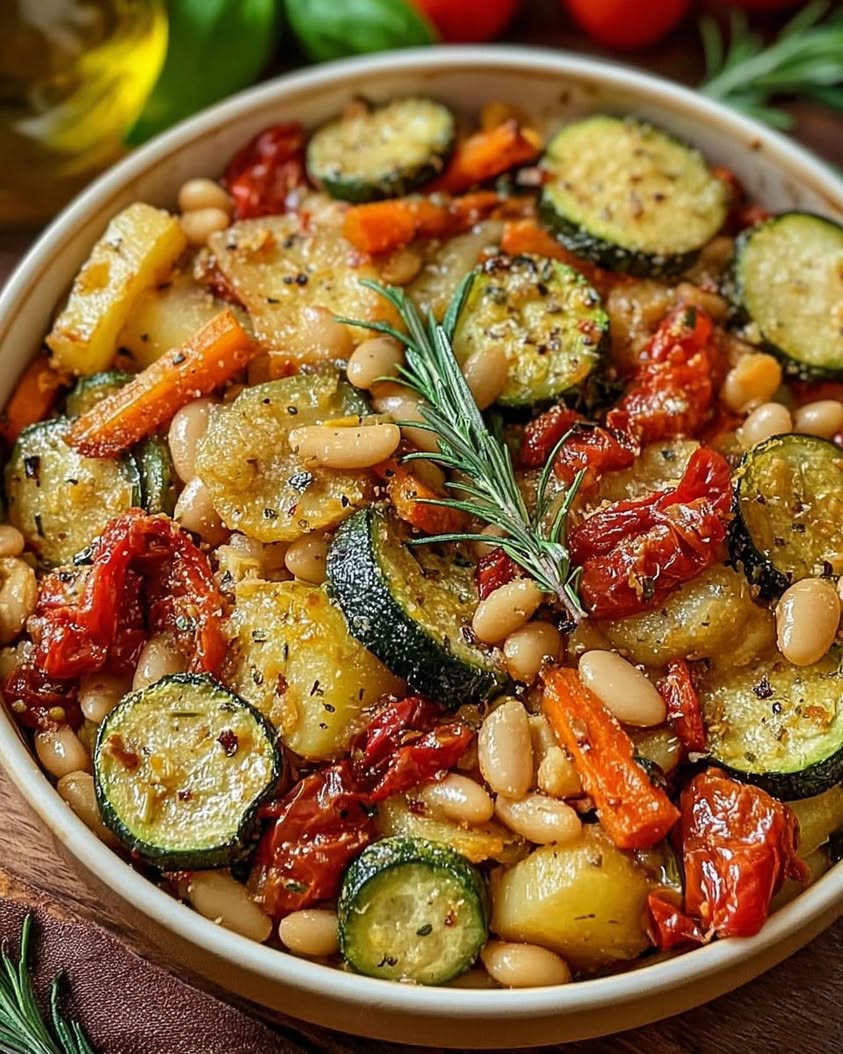
Rustic Roasted Vegetable Bake with Cannellini Beans: A Hearty One-Pan Dinner
Imagine a dish that brings the warmth of a wood-fired oven right into your kitchen. This Rustic Roasted Vegetable Bake with Cannellini Beans delivers that exact experience. It transforms humble vegetables like bell peppers, zucchini, and eggplant into a deeply savory, caramelized feast. The creamy cannellini beans soak up all those rich, roasted juices, creating a satisfying and nutritious meal that feels both indulgent and wholesome.
You will love how the simple act of roasting unlocks a world of flavor. The high heat concentrates the natural sugars in the vegetables, giving them a sweet, smoky edge. This Rustic Roasted Vegetable Bake with Cannellini Beans is not just a side dish, it is a complete meal in one pan. It works beautifully as a hearty main course for a weeknight dinner or as a stunning centerpiece for a casual gathering with friends. The aroma alone will draw everyone to the table.
This recipe is designed for real life. It requires minimal hands-on prep work, and the oven does the heavy lifting. You can easily customize it based on what seasonal vegetables you have on hand. Furthermore, the leftovers are incredible, making this an excellent choice for meal prep. A dollop of fresh pesto or a sprinkle of feta cheese before serving adds a final flourish that elevates this simple bake into something truly memorable.
Quick Recipe Highlights
- Flavor Profile: The flavor is a beautiful balance of sweet and savory. The caramelized vegetables offer a deep, natural sweetness that is complemented by the earthy, mellow taste of the cannellini beans. A hint of garlic and fresh herbs like rosemary or thyme adds an aromatic layer of complexity.
- Texture: Expect a wonderful contrast of textures. The vegetables become tender with slightly crisp, golden-brown edges. The cannellini beans remain creamy and soft on the inside, creating a luscious, almost stew-like component that binds all the elements together.
- Aroma: The kitchen will fill with an incredible, comforting aroma. The scent of roasting vegetables mingling with garlic and herbs is both inviting and appetizing. It is the kind of smell that promises a warm, satisfying meal and makes everyone hungry.
- Visual Appeal: This dish is a feast for the eyes. The vibrant colors of the roasted vegetables, from the deep reds and oranges of bell peppers to the rich purples of eggplant, create a stunning presentation. The creamy white beans scattered throughout provide a beautiful contrast on the plate.
- Skill Level Needed: This recipe is very beginner-friendly. The techniques are straightforward, involving mostly chopping and stirring. Roasting is a forgiving cooking method, so there is plenty of room for error. It is an excellent recipe for building confidence in the kitchen.
- Special Equipment: You only need a few basic kitchen tools. A large baking sheet or a roasting pan is essential to give the vegetables and beans enough space. A good chef’s knife and a cutting board are needed for prepping the produce. No fancy gadgets are required.
Recipe Overview
- Difficulty Level: We classify this Rustic Roasted Vegetable Bake with Cannellini Beans as easy. The reason is the simplicity of the steps. You chop vegetables, toss them with oil and seasonings, and then let the oven work its magic. There are no complex sauces to make, no finicky techniques, and no precise timing required to get great results.
- Category: This versatile dish fits perfectly into several categories. It works as a main course for a vegetarian dinner, a hearty side dish for grilled meats or fish, or a satisfying lunch. It is also a fantastic side dish to bring to a potluck or a holiday table, as it pleases both meat-eaters and vegetarians.
- Cuisine: While the technique of roasting vegetables is universal, this dish draws strong inspiration from Mediterranean cuisine. The combination of vegetables, legumes, garlic, and olive oil is a classic foundation in countries like Italy, Greece, and Spain. It reflects a rustic, simple way of cooking that focuses on high-quality, fresh ingredients.
- Cost: This is a very budget-friendly recipe. The primary ingredients are affordable vegetables and a humble can of cannellini beans. Using seasonal produce can further reduce the cost. It provides a high volume of food for a relatively low price, making it a wallet-friendly choice for feeding a family or meal prepping for the week.
- Season: This bake is best enjoyed during the late summer and early fall. This is when vegetables like zucchini, bell peppers, and eggplant are at their peak flavor and lowest cost. However, it is adaptable for other seasons. During winter, you can swap in root vegetables like butternut squash, carrots, and parsnips for a different but equally delicious version.
- Occasion: This Rustic Roasted Vegetable Bake with Cannellini Beans is perfect for many occasions. It is ideal for a relaxed Sunday supper, a healthy family weeknight meal, or a simple yet impressive dish for casual entertaining. Its vibrant colors also make it a welcome addition to a holiday buffet or a summer barbecue.
Why You’ll Love This Recipe
The primary reason to love this recipe is the incredible taste and texture it delivers with so little effort. When you roast vegetables at a high temperature, they undergo a transformation. Their natural sugars caramelize, creating a complex sweet and savory flavor that is far more interesting than steamed or boiled vegetables. The edges get a little char, adding a pleasant hint of smokiness. The creamy cannellini beans provide a soft, comforting counterpoint to the firmer, chewier vegetables. Every bite is a harmonious blend of textures from the tender zucchini to the slightly crisp peppers.
Convenience is a major selling point for this dish. The recipe requires just 20 minutes of active prep time. After chopping the vegetables and mixing them with the beans and seasoning, you simply spread everything on a baking sheet and slide it into the oven. This leaves you with a full 40 minutes of free time. You can clean the kitchen, prepare a salad, or just relax. The cleanup is also easy because you cooked everything on one pan, making it a perfect choice for busy weeknights when you want a homemade meal without a sink full of dishes.
From a nutritional standpoint, this Rustic Roasted Vegetable Bake with Cannellini Beans is a powerhouse. It is naturally high in fiber and plant-based protein, thanks to the cannellini beans and the variety of vegetables. It is also packed with essential vitamins, minerals, and antioxidants. Bell peppers are rich in Vitamin C, eggplant provides fiber and antioxidants, and zucchini offers potassium. This hearty bake is naturally low in fat and free from cholesterol, making it an excellent choice for anyone looking to maintain a healthy diet without sacrificing flavor or satisfaction.
This dish also excels in its social and entertaining value. It is a forgiving dish that can be easily scaled up to feed a crowd. The vibrant colors and rustic, family-style presentation are very appealing. You can set it out on a platter, and guests can help themselves. It pairs wonderfully with a wide range of proteins, from grilled chicken and fish to sausages. It is a conversation starter, as people often are surprised by how much flavor can be achieved with such simple, wholesome ingredients. It makes you look like a chef without all the hard work.
Finally, the cost-effectiveness and accessibility of the ingredients make this a go-to recipe. Canned cannellini beans are one of the most affordable sources of protein and fiber available. Vegetables like zucchini, bell peppers, and onions are generally inexpensive, especially when they are in season. You likely already have the olive oil, garlic, and herbs in your pantry. This means you can create a large, satisfying, and healthy meal for a very small amount of money, proving that eating well does not have to be expensive.
Historical Background and Cultural Significance
The precise origin of a dish like a roasted vegetable and bean bake is difficult to pinpoint, as it stems from the ancient practice of cooking food over an open fire. However, its roots are deeply embedded in the culinary traditions of the Mediterranean region. For centuries, peasants and farmers in countries like Italy, Greece, and Southern France have relied on simple, rustic methods to cook their harvest. Combining vegetables, legumes, and olive oil in a single pot or on a stone hearth was a practical way to create a filling and nutritious meal using whatever was available.
Culturally, this style of cooking reflects the core values of Mediterranean cuisine. It emphasizes simplicity, seasonality, and respect for the ingredients. The dish is not about elaborate sauces or complex techniques. Instead, it is a celebration of the natural flavors of the produce. In Italy, a similar dish might be called a “forno” or a “teglia,” meaning a baked dish cooked in a large pan or tray. It is a staple of “cucina povera,” the “poor kitchen,” which highlights how ingenuity and resourcefulness can create incredibly delicious food from humble ingredients.
The evolution of this dish is tied to the accessibility of ingredients and cooking technology. The introduction of the oven in home kitchens made it much easier to achieve the consistent, even heat required for proper roasting. In the past, this was done in a wood-fired oven. Today, modern convection ovens provide an excellent environment for caramelizing vegetables. Furthermore, the canning process made cannellini beans available year-round, transforming a seasonal ingredient into a convenient pantry staple. This allowed the dish to move from a summer-only affair to a comfort food enjoyed any time of the year.
Regional variations of this Rustic Roasted Vegetable Bake with Cannellini Beans are endless. In Provence, France, you might find a dish called “ratatouille,” which is a similar stew of cooked vegetables, often served as a side. In Greece, a “tourlou tourlou” is a baked vegetable medley typically cooked with potatoes and herbs. In Spain, a “pisto” is a similar vegetable hash. The common thread is the use of eggplant, zucchini, bell peppers, tomatoes, and onions. The cannellini beans are a particularly Italian touch, adding a creamy protein element that makes the bake a complete meal in itself.
Ingredient Deep Dive
Cannellini Beans. These creamy white kidney beans are a staple in Italian cuisine, particularly in Tuscan cooking. They are sometimes called “fagioli cannellini” and are featured in classic dishes like ribollita and minestrone. Historically, they have been a vital source of protein for Italian peasants, earning them the nickname “poor man’s meat.” Nutritionally, they are a fantastic source of plant-based protein and dietary fiber, which promotes digestive health and helps you feel full and satisfied. They also provide essential minerals like iron, magnesium, and potassium.
When selecting cannellini beans, you have two primary options: canned or dried. Canned beans are incredibly convenient and perfectly acceptable for this recipe. Look for low-sodium or no-salt-added varieties to control the salt content. Before using, always rinse and drain the beans in a colander to remove the starchy, salty liquid. If you choose dried beans, you will need to soak them overnight and then cook them until tender before using. Store unopened canned beans in a cool, dark pantry. Once opened, transfer leftover beans to an airtight container and refrigerate for up to 4 days.
Eggplant. Eggplant, also known as aubergine, has a long and fascinating history. It originated in India and was cultivated in China over 1,500 years ago. Arab traders introduced it to the Mediterranean region during the Middle Ages. It has a unique, spongy texture that absorbs flavors beautifully. Nutritionally, eggplant is low in calories and provides fiber, antioxidants, and various vitamins. It contains nasunin, a powerful antioxidant found in the purple skin that can help protect cells from damage.
Choosing a good eggplant is key. Look for one that feels heavy for its size with smooth, shiny, and tight skin. The stem should be green and fresh. Avoid eggplants with brown spots, wrinkles, or soft spots, as these indicate age. You can store a whole eggplant at room temperature for a day or two, but it is best used fresh. For longer storage, keep it in the crisper drawer of your refrigerator, but use it within 5 days. For this recipe, there is no need to salt and sweat the eggplant to remove bitterness, as modern varieties are generally not bitter, and the roasting process will fully cook it.
Zucchini and Bell Peppers. Zucchini, a summer squash, originated in the Americas but was developed into the variety we know today in Italy. It is extremely versatile and mild in flavor, making it a perfect canvas for other ingredients. Bell peppers, on the other hand, come in a rainbow of colors, each offering a slightly different flavor profile. Red peppers are the sweetest because they are fully ripened, while green peppers are more bitter and grassy. Both are excellent sources of Vitamin C, with red peppers containing significantly more.
When selecting zucchini, choose small to medium-sized ones, as they are more tender and have fewer seeds. The skin should be firm, glossy, and free of blemishes. For bell peppers, look for firm, crisp peppers with vibrant, unblemished skin. Store zucchini in the refrigerator crisper drawer and use it within 3 to 5 days. Bell peppers also store well in the refrigerator for up to a week. For this bake, feel free to use a mix of bell pepper colors to enhance the visual appeal. You can also consider substituting yellow squash for some of the zucchini.
Garlic and Olive Oil. These two ingredients form the aromatic and flavorful foundation of countless Mediterranean dishes. Garlic has been used for both culinary and medicinal purposes for thousands of years. Its pungent, sharp flavor mellows and sweetens during roasting, becoming nutty and almost buttery. Nutritionally, garlic is known for its immune-boosting properties and contains compounds like allicin that have anti-inflammatory effects. Look for firm, dry heads of garlic with tight, unbroken skins. Store it in a cool, dark, well-ventilated place, and it will last for several weeks.
Olive oil is arguably the most important ingredient in Mediterranean cooking. Extra virgin olive oil is the highest quality, made from the first cold pressing of olives. It has a fruity, peppery flavor that enhances every dish. For roasting, a good quality extra virgin olive oil is ideal because it can tolerate moderate heat. It provides healthy monounsaturated fats and antioxidants. Store olive oil in a cool, dark cabinet away from heat and light to preserve its flavor and prevent it from going rancid. Do not refrigerate it, as this can cause condensation and cloudiness.
Fresh Herbs. Fresh herbs like rosemary and thyme are the perfect finishing touch for this Rustic Roasted Vegetable Bake with Cannellini Beans. Rosemary has a strong, pine-like aroma and a slightly bitter, peppery taste. It pairs exceptionally well with roasted vegetables and beans. Thyme is more delicate and earthy, with subtle floral notes. Both herbs are rich in antioxidants and have antimicrobial properties. When selecting, look for bright, perky leaves without any signs of wilting or yellowing. Store fresh herbs by trimming the stems and placing them in a glass of water, covered loosely with a plastic bag, in the refrigerator.
If you do not have fresh herbs, dried herbs are a perfectly good substitute. As a general rule, use about one-third the amount of dried herbs as you would fresh. So, if a recipe calls for 1 tablespoon of fresh rosemary, you can use about 1 teaspoon of dried. Add dried herbs earlier in the roasting process to allow their flavors to rehydrate and infuse the dish. For a different flavor profile, you could also use oregano, basil, or sage. A sprinkle of fresh parsley at the end of cooking adds a bright, clean finish to the dish.
Common Mistakes to Avoid
- Overcrowding the pan is a critical error. When vegetables are crowded, they steam instead of roast. This prevents them from caramelizing and leads to a soggy, unappetizing texture. You must give them space. Use a large enough baking sheet so the vegetables are in a single layer with a little room around each piece. If necessary, use two baking sheets.
- Cutting the vegetables into uneven sizes is another frequent mistake. Uniform pieces are essential for even cooking. Large chunks will remain undercooked while smaller ones burn. Take the time to chop your zucchini, peppers, and eggplant into similarly sized pieces, roughly 1 to 1.5 inches. This ensures everything finishes cooking at the same time.
- Forgetting to season properly at the start is a common oversight. Vegetables need a generous amount of salt and pepper. Salt is crucial for drawing out moisture and enhancing flavor. Do not be shy. Season the vegetables and beans with salt and pepper before drizzling with oil and tossing. You can always adjust seasoning at the end, but you cannot add it back after cooking.
- Using a pan that is too small or the wrong type is a mistake. A dark, non-stick baking sheet will cause the bottoms of the vegetables to burn before the tops are roasted. A light-colored, rimmed baking sheet is best for reflecting heat and promoting even browning. The rim is essential to catch any juices that might run off.
- Failing to preheat the oven adequately is a big mistake. You want a hot oven, typically around 400 degrees Fahrenheit or 200 degrees Celsius, to create immediate caramelization. If you put the tray into a cold oven, the vegetables will cook slowly and become mushy. Always allow your oven to fully preheat before roasting.
- Not tossing the vegetables halfway through the cooking process will lead to uneven cooking. The vegetables on the edges of the pan will cook faster than those in the center. Giving everything a good stir with a spatula redistributes them and promotes even browning. This step is simple but very important for the best results.
- Skimping on the olive oil can cause the vegetables to dry out and burn. The oil helps the vegetables cook evenly and creates a beautiful golden crust. Use enough oil to lightly coat all the pieces. If the vegetables look dry after tossing, do not be afraid to add a little more. A tablespoon or two extra can make a big difference.
- Adding the cannellini beans too early is a potential misstep. While you can add them at the start, they might become a bit mushy and dry out. A better approach is to add them in the last 15 to 20 minutes of roasting. This allows them to heat through and absorb the juices without becoming overcooked.
Essential Techniques
Proper Chopping. The foundation of any good pan-roasted dish is consistent cutting. The technique of dicing vegetables into even, bite-sized pieces is not just about appearance, it is about heat distribution. A 1-inch cube of zucchini will cook at the same rate as a 1-inch cube of eggplant if they are cut similarly. If you cut your peppers into large strips and your onion into small dice, they will be done at completely different times. Mastering a basic dice involves first squaring off the sides of a vegetable, cutting it into planks, then into sticks, and finally into cubes of the desired size. This skill is easily transferable to soups, stews, and salads.
Why is this technique so important for this specific dish? It ensures you do not end up with a mix of burnt and raw vegetables. Imagine biting into a perfectly tender piece of eggplant next to a rock-hard piece of bell pepper. It would be a very disappointing experience. By taking the extra few minutes to make your cuts uniform, you guarantee a cohesive final dish. A common pitfall is rushing through this step. Take your time, sharpen your knife, and you will be rewarded with a beautifully textured meal. The visual cue for a successful dice is a pile of pieces that all look very similar in size and shape.
Even Tossing and Coating. Once your vegetables are chopped, you must ensure they are thoroughly and evenly coated with oil and seasonings. This is not about randomly drizzling a little oil on top and hoping for the best. You should use a large bowl or directly on the baking sheet. Start by drizzling the olive oil over the vegetables and beans. Then, add your salt, pepper, and any dried herbs. Using your clean hands or a large spatula, gently toss everything together. This is the most effective way to ensure every single vegetable piece is slicked with oil and seasoning.
The importance of this technique cannot be overstated. An uncoated piece of zucchini will simply dry out in the oven. A piece that is heavily coated will fry in its own little pool of oil and become too greasy. You are aiming for a light, even sheen on every surface. A common pitfall is using too much oil, which can make the vegetables soggy. Start with a moderate amount, toss, and then add more only if the vegetables look dry. The visual cue you are looking for is a glistening, uniform coating. The oil should not be pooling at the bottom of the bowl or pan.
Roasting. Roasting is a dry-heat cooking method that uses hot air to cook food evenly. It is the single most important technique for this recipe because it is what creates the deep, caramelized flavor. When you roast at a high temperature, the natural sugars in the vegetables begin to break down and brown in a process called the Maillard reaction. This is where all the flavor magic happens. To master roasting, you need a hot oven and a single, non-crowded layer of food on the pan. This allows the hot air to circulate freely around each piece.
Why does this technique matter for your Rustic Roasted Vegetable Bake with Cannellini Beans? Without proper roasting, you would just have a tray of steamed vegetables. A common pitfall is opening the oven door too frequently, which causes the temperature to drop and slows down the browning process. It is best to give the pan a good stir halfway through and otherwise leave the door closed. The visual cues for success are deep, golden-brown edges on the vegetables and a slightly shriveled appearance. The smell of caramelizing vegetables is also a reliable indicator that you are on the right track.
Pro Tips for Perfect Rustic Roasted Vegetable Bake with Cannellini Beans
For the best flavor, always use high-quality extra virgin olive oil. The oil is a primary flavoring agent in this simple dish. A robust, peppery oil will add a wonderful layer of complexity that a cheap, neutral oil simply cannot match. It is worth the investment for the final taste.
Do not skip the step of rinsing and draining your canned cannellini beans. The liquid they are packed in is thick, starchy, and often high in sodium. Rinsing removes this and prevents the bake from becoming overly salty and creating a gluey sauce. It allows the beans to absorb the natural juices from the vegetables instead.
To get the best char on your vegetables, resist the urge to stir them too often. Let them sit undisturbed for the first 20 minutes of roasting. This allows a nice crust to develop on the bottom side. When you do stir them, scrape up any browned bits from the pan, as they are full of flavor.
Consider roasting your garlic cloves with their skins on. The skins protect the cloves, preventing them from burning and turning bitter. After about 20 minutes, you can easily squeeze the soft, sweet roasted garlic out of its skin. This creates a luscious, concentrated paste that you can stir into the beans for incredible depth of flavor.
Season the dish in layers. Start by seasoning the raw vegetables with salt and pepper. Then, after you add the beans halfway through, taste a piece of a vegetable and season again if needed. A final squeeze of lemon juice or a splash of balsamic vinegar right before serving can brighten the flavors and cut through the richness.
For the best texture, do not add the cannellini beans at the very beginning. Stir them in during the last 15 to 20 minutes of the cooking time. This allows them to warm through and absorb the delicious pan juices without turning into a mushy paste. You want them to retain some of their creamy, distinct shape.
Variations and Adaptations
Regional Variations. While this recipe has a strong Italian influence, you can easily adapt it to other Mediterranean cuisines. For a Greek twist, add some Kalamata olives, a sprinkle of feta cheese, and dried oregano. For a Provencal version, swap the rosemary and thyme for herbes de Provence, a classic French blend that includes lavender, marjoram, and savory. A Spanish-inspired variation could include smoked paprika and some cooked chorizo or chickpeas on the side for a non-vegetarian option.
Seasonal Adaptations. This bake is incredibly flexible based on what is available at the market. In the spring, substitute the winter squash with asparagus, artichoke hearts, and spring onions. In the summer, this original recipe is perfection. In the autumn, swap out the zucchini for cubes of butternut squash or sweet potato. For a winter version, use hearty root vegetables like carrots, parsnips, and turnips. Just remember that root vegetables often take a bit longer to cook, so you might need to start roasting them 10 minutes before adding the other ingredients.
Dietary Modifications. This dish is naturally vegan, vegetarian, and gluten-free, making it a safe choice for many dietary needs. To keep it strictly gluten-free, just ensure your herbs and any other seasonings you add are certified gluten-free. It is already dairy-free if you skip any cheese toppings. For a lower-carb option, feel free to add extra zucchini, bell peppers, and eggplant, and consider omitting the cannellini beans or reducing them significantly. The dish will still be delicious and satisfying.
Flavor Variations. Do not be afraid to experiment with different flavor profiles. For a spicier version, add a pinch of red pepper flakes or a finely diced chili pepper along with the garlic. For an extra savory, umami-rich dish, toss the vegetables with a tablespoon of balsamic vinegar and a tablespoon of soy sauce or tamari before roasting. A sprinkle of nutritional yeast at the end will add a cheesy, nutty flavor without dairy. You can also add a handful of sun-dried tomatoes for a sweet, intense burst of flavor.
Texture Modifications. If you prefer a softer, more stew-like texture, you can cover the baking dish with foil for the first 20 minutes of cooking. This will steam the vegetables, making them very tender. Then, remove the foil for the remaining 20 minutes to allow the edges to brown and crisp up. Conversely, if you want a very crisp, almost dehydrated texture, you can leave the vegetables in the oven for an extra 10 to 15 minutes, keeping a close eye on them to prevent burning.
Presentation Alternatives. While serving this in a rustic baking dish is charming, you have several other options. For a more elegant presentation, portion the bake into individual gratin dishes. This makes for a beautiful plate at a dinner party. You can also serve the roasted vegetables and beans over a bed of creamy polenta or quinoa for a more substantial main course. Another idea is to spoon the hot bake onto a large platter and garnish with fresh basil leaves and a drizzle of high-quality olive oil.
Serving and Presentation Guide
Plating a rustic dish like this is all about showcasing its natural beauty. The best approach is a family-style presentation. Bring the entire baking dish or a large, beautiful platter to the table. This allows everyone to serve themselves and creates a warm, communal feel. Arrange the vegetables so their vibrant colors are on display. Use a wide, shallow bowl or a rimmed platter to prevent the juices from spilling everywhere. The goal is to make it look abundant and inviting.
Garnishing can elevate the dish from simple to stunning. A final flourish of fresh herbs is always welcome. Sprinkle chopped parsley, basil, or chives over the hot bake right before serving. A drizzle of high-quality balsamic glaze adds a touch of sweetness and a beautiful dark swirl. A scattering of toasted pine nuts or pumpkin seeds adds a welcome crunch and a nutty flavor. If you are not serving vegans, a few crumbles of creamy goat cheese or salty feta cheese provide a wonderful tangy contrast.
Traditional accompaniments for this Rustic Roasted Vegetable Bake with Cannellini Beans are simple and complementary. A crusty loaf of bread is essential for soaking up the delicious, savory juices. A simple green salad with a bright lemon vinaigrette provides a refreshing contrast to the rich, warm bake. It also pairs beautifully with grilled or roasted proteins like herbed chicken, a seared steak, or baked fish. For a truly satisfying meal, serve it alongside a bowl of creamy polenta or a bed of fluffy couscous.
Modern serving suggestions can make this dish even more versatile. Use the leftover bake as a filling for burrito bowls or tacos. Spoon it over a plate of creamy hummus for a unique and satisfying lunch. You can also mash it slightly and use it as a topping for bruschetta or crostini for a fantastic appetizer. For a hearty breakfast, serve it alongside a fried egg. The possibilities are endless, making it a great recipe to have in your rotation.
Temperature is a key consideration. The dish is best served hot, straight from the oven. This is when the vegetables are at their crispiest and the flavors are most vibrant. However, it is also very good at room temperature, making it perfect for picnics or potlucks. If you are serving it as a side dish, it will stay warm for a surprisingly long time in a preheated serving dish. For portion control, plan for about one and a half cups of the bake per person as a main course. As a side dish, one cup per person is usually enough.
Wine and Beverage Pairing
For wine pairings, this rustic dish calls for something with good acidity and low to medium tannins. A crisp, unoaked white wine is a fantastic choice. A Sauvignon Blanc from New Zealand or the Loire Valley offers bright citrus and herbaceous notes that will complement the roasted vegetables beautifully. Another excellent option is a Vermentino from Italy, which has a lovely minerality and a touch of saltiness. If you prefer red wine, a lighter-bodied red like a Pinot Noir from Oregon or a young, unoaked Tempranillo from Spain will not overpower the delicate flavors of the vegetables. The key is to avoid heavy, oaky, or high-tannin wines that will clash with the dish.
Non-alcoholic alternatives are plentiful and equally delicious. A sparkling water with a splash of lemon or lime is a classic, refreshing palate cleanser. A good quality iced tea, perhaps flavored with lemon or peach, works well. For a more sophisticated option, consider a seedlip-based drink, which is a botanical spirit that mimics the complexity of wine or cocktails. A simple spritzer made with sparkling water, a splash of pomegranate juice, and a few fresh mint leaves is another excellent choice that is both festive and alcohol-free.
For those who enjoy a warm beverage, a simple green tea or a chamomile tea can be a soothing end to a meal. However, for a true flavor match, consider a glass of chilled dry sherry, like a Fino or Manzanilla. Its briny, nutty profile is a surprisingly wonderful companion to roasted vegetables and earthy beans. It is a classic tapas pairing that is often overlooked. The temperature of the beverage matters. Serve white wines and non-alcoholic drinks well-chilled. Red wines should be served slightly below room temperature, around 55 to 60 degrees Fahrenheit, to feel refreshing.
When serving wine, consider the glassware. A standard white wine glass or a small, tulip-shaped red wine glass is appropriate. The shape helps to concentrate the aromas. For non-alcoholic drinks, a highball glass or a stemless wine glass works well. The most important thing is to offer a variety of options to accommodate different tastes. Placing a pitcher of infused water with cucumber and mint on the table alongside a bottle of wine is a thoughtful and inclusive touch that ensures everyone has a lovely beverage to pair with the meal.
Storage and Shelf Life
Proper storage is essential to maintain the quality of your leftover Rustic Roasted Vegetable Bake with Cannellini Beans. Allow the bake to cool completely to room temperature before storing. This step is important because placing hot food directly into the refrigerator can raise the internal temperature and compromise the safety of other foods. Once cooled, transfer the leftovers to an airtight container. Glass containers are preferred because they do not absorb odors and allow you to see the contents. The dish will stay fresh in the refrigerator for three to four days.
Temperature requirements are straightforward. The refrigerator should be set to 40 degrees Fahrenheit or below. This prevents the growth of harmful bacteria. Do not leave the bake out at room temperature for more than two hours. If you are serving it at a gathering, use a chafing dish or slow cooker to keep it hot. Signs of spoilage to watch for include an off or sour smell, the presence of mold, or a slimy texture. If you notice any of these, discard the leftovers immediately. Do not taste them to check.
Container recommendations go beyond just airtight. For best results, use a container that is the right size for the amount of leftovers. Too much empty space in the container will leave more air in contact with the food, which can lead to faster spoilage and a loss of flavor. You can also divide the leftovers into smaller, single-serving containers. This makes reheating quicker and more convenient. It also prevents you from having to reheat the entire batch multiple times, which can degrade the texture of the vegetables and beans.
Reheating instructions are key to reviving the dish. The best method is to reheat the bake in the oven. Preheat your oven to 350 degrees Fahrenheit. Spread the leftovers on a baking sheet or in an oven-safe dish. Add a splash of water or a drizzle of olive oil to help rehydrate the vegetables. Cover with foil and bake for 10 to 15 minutes, or until heated through. For a crispier texture, remove the foil for the last 5 minutes. You can also reheat individual portions in the microwave, but Print
Rustic Roasted Vegetable Bake with Cannellini Beans
- Total Time: 55 minutes
- Yield: 6
Description
A hearty, wholesome, and colorful bake featuring seasonal roasted vegetables and creamy cannellini beans, finished with a crispy breadcrumb topping.
Ingredients
- 2 medium zucchini, chopped
- 1 red bell pepper, chopped
- 1 yellow bell pepper, chopped
- 1 large red onion, chopped
- 1 pint cherry tomatoes, halved
- 4 cloves garlic, minced
- 3 tbsp olive oil
- 1 tsp dried oregano
- 1 tsp dried thyme
- Salt and black pepper to taste
- 2 (15 oz) cans cannellini beans, drained and rinsed
- 1/2 cup vegetable broth
- 1/4 cup fresh parsley, chopped
- 1/2 cup panko breadcrumbs
- 1/4 cup grated Parmesan cheese (optional)
Instructions
- Preheat oven to 400°F (200°C).
- In a large bowl, toss zucchini, bell peppers, red onion, cherry tomatoes, and garlic with olive oil, oregano, thyme, salt, and pepper.
- Spread vegetables in a single layer on a large baking sheet. Roast for 25 minutes, stirring halfway, until tender and caramelized.
- In a separate bowl, combine cannellini beans and vegetable broth; mash about 1/4 of the beans to create creaminess.
- Transfer roasted vegetables to a 9×13-inch baking dish. Add the bean mixture and fresh parsley; stir gently to combine.
- In a small bowl, mix panko breadcrumbs and Parmesan (if using). Sprinkle evenly over the vegetable-bean mixture.
- Bake for an additional 10–15 minutes until the topping is golden and the casserole is bubbly. Let cool for 5 minutes before serving.
Notes
You can customize the seasonings to taste. Add red pepper flakes for heat or swap cannellini beans for chickpeas or Great Northern beans.
- Prep Time: 15 minutes
- Cook Time: 40 minutes
- Method: Main
- Cuisine: American