No-Knead Rosemary Cranberry Bread with Olive Oil & Sea Salt: The Easiest Artisan Loaf You Will Ever Make
Imagine pulling a golden, crusty loaf of bread from your oven without hours of kneading or dirtying a single extra bowl. That is the magic of this no-knead rosemary cranberry bread with olive oil and sea salt. This recipe transforms simple pantry staples into a bakery-worthy centerpiece that fills your home with the irresistible aroma of fresh herbs and warm yeast. The combination of fragrant rosemary, tart dried cranberries, fruity olive oil, and crunchy sea salt flakes creates a flavor profile that is both rustic and refined. If you have ever been intimidated by the idea of baking bread from scratch, this is your perfect starting point.
This no-knead rosemary cranberry bread with olive oil and sea salt relies on time instead of elbow grease to develop its structure and flavor. A long, slow rise works the gluten for you, resulting in a light, airy crumb with a satisfyingly crisp crust. The olive oil adds moisture and a subtle richness, while the sea salt provides a delightful pop of salinity that enhances every bite. Whether you are a seasoned home baker or a complete beginner, this recipe delivers consistently impressive results without the fuss. It is the kind of bread that makes any meal feel special, from a simple soup to a holiday feast.
Quick Recipe Highlights
- Flavor Profile: This loaf offers a stunning balance of savory and sweet. The piney, earthy notes of fresh rosemary perfectly complement the sharp, tangy bursts from the dried cranberries. The fruity olive oil ties everything together, while the flaky sea salt provides a bright, clean finish that lingers on your palate.
- Texture: Expect a thick, crackling crust that shatters when you slice into it. Inside, the crumb is soft, tender, and open, with a satisfying chew that is neither dense nor gummy. The cranberries add little pockets of chewy sweetness, which contrasts beautifully with the crisp exterior.
- Aroma: The moment this bread hits the oven, your kitchen will fill with a heady, aromatic blend. The scent of toasted rosemary is dominant, followed by a rich, yeasty warmth that is deeply comforting. The olive oil adds a faint, grassy perfume that makes the experience even more inviting.
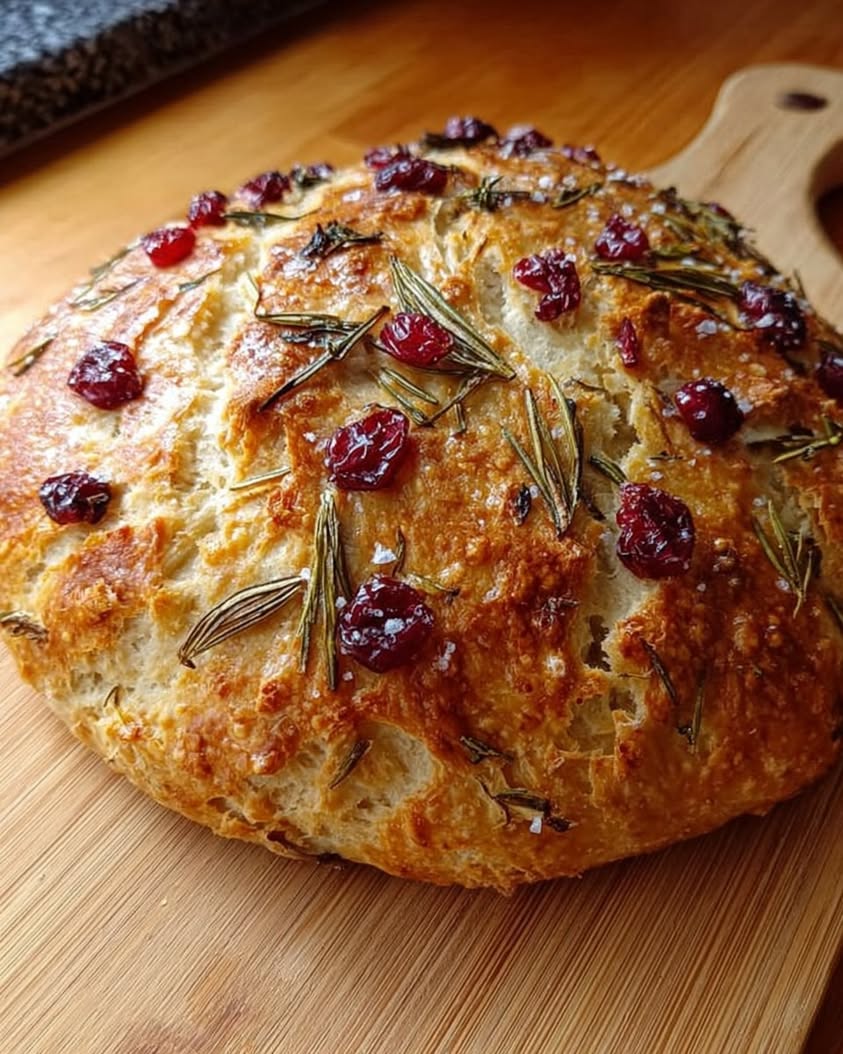
- Visual Appeal: This bread is a showstopper in its simplicity. It bakes into a round, rustic boule with a deeply browned crust speckled with dark green rosemary and bright red cranberries. A generous sprinkle of flaky sea salt on top catches the light, making it look like something straight from an artisan bakery.
- Skill Level Needed: This recipe is truly beginner-friendly. You need no prior bread-making experience, no stand mixer, and no special skills. The dough is wet, sticky, and incredibly forgiving. If you can stir ingredients together in a bowl and wait, you can make this bread.
- Special Equipment: You will need a large mixing bowl, a wooden spoon, plastic wrap, and a heavy pot with a lid. A Dutch oven is ideal, but any oven-safe pot or deep baking dish that can be covered works perfectly.
Recipe Overview
- Difficulty Level: We rate this recipe as very easy because it eliminates the most intimidating step of traditional bread baking: kneading. There is no need to develop gluten by hand or with a machine. The wet dough does all the work during an overnight rise. This hands-off approach makes it accessible to anyone, regardless of their baking confidence.
- Category: This loaf fits perfectly into the artisan bread category, but it also works as a quick bread in terms of assembly. It is ideal for breakfast with butter and jam, served alongside a hearty soup or stew for lunch, or as a dinner table centerpiece. It also makes incredible toast for savory and sweet toppings alike.
- Cuisine: The flavors in this bread draw heavily from Mediterranean and rustic Italian baking traditions. Rosemary and olive oil are staples of Tuscan cuisine, while the addition of dried fruit and sea salt nods to French and American artisan baking. It is a wonderful fusion of Old World techniques with modern convenience.
- Cost: This is an exceptionally affordable bread to make. The main ingredients are flour, water, yeast, and salt, which cost pennies per loaf. The dried cranberries and fresh rosemary are the heftier items, but you can often find them on sale. Fresh rosemary is easy to grow at home, which further reduces the cost. You can easily make two loaves for less than the price of one from a bakery.
- Season: This bread is wonderful year-round, but it truly shines in the fall and winter. The flavors of rosemary and cranberry pair perfectly with the comfort foods of these seasons, such as roasted meats, squash soup, and hearty casseroles. The warm, aromatic scent also fills a home beautifully during the holiday season.
- Occasion: This no-knead rosemary cranberry bread with olive oil and sea salt is versatile enough for any occasion. It is a perfect choice for Thanksgiving dinner, Christmas brunch, or an elegant New Year’s Eve party. It also makes a thoughtful homemade gift when wrapped in a linen cloth and tied with twine.
Why You Will Love This Recipe
The taste and texture of this bread are simply incredible. You get a perfectly crisp, shatteringly crunchy crust that gives way to a soft, airy, and slightly chewy interior. The tart cranberries burst with sweetness, and the rosemary adds an earthy, piney fragrance that elevates every single bite. The finishing touch of flaky sea salt does not just sit on top; it melts into the crust, creating tiny pockets of salty flavor that make this bread completely addictive. It is the kind of loaf you will want to eat straight from the oven, still warm and slathered in butter.
The convenience of this recipe is what makes it a true game-changer. You mix the dough in just ten minutes, with no kneading required. Then, you let it sit for twelve to eighteen hours, which means you can do all the active work the night before and bake it fresh the next day. The hands-on time is almost zero, making it perfect for busy weeknights or lazy weekends. You do not need any special equipment, and the cleanup is as simple as washing one bowl and one spoon. This is proof that incredible food does not require hours of labor.
This bread also offers surprising nutritional advantages over store-bought options. You control the quality of every ingredient, using organic flour if you choose, high-quality olive oil, and real sea salt. The rosemary provides antioxidants and anti-inflammatory compounds, while the cranberries are a great source of fiber and vitamin C. Olive oil is a heart-healthy fat that adds richness without the saturated fat found in butter. By baking your own bread, you avoid the preservatives, dough conditioners, and added sugars often found in commercial loaves.
This bread has fantastic social and entertaining value. It makes an instant impression on guests, who will assume you spent hours perfecting your technique. The aroma of baking bread creates an immediate sense of warmth and hospitality, making any gathering feel more special. You can serve it as an appetizer with a selection of cheeses and olives, use it for crostini at a cocktail party, or present it as the star of a bread basket at a family dinner. It is a conversation starter that shows you care about the food you share.
Finally, this recipe is incredibly cost-effective and accessible. You do not need a stand mixer, a bread machine, or a proofing basket. The ingredients are all available at any grocery store for a few dollars. This makes it possible to bake fresh, artisan-quality bread regularly, even on a tight budget. You can also adapt the recipe easily using the ingredients you already have on hand, making it a reliable go-to when you want to bake without a special trip to the store.
Historical Background and Cultural Significance
The technique of no-knead bread is a relatively modern innovation, but it is rooted in ancient baking traditions. For thousands of years, bakers relied on time and natural fermentation to develop dough structure. The no-knead method was popularized in the early 2000s by baker Jim Lahey and New York Times columnist Mark Bittman. They discovered that a very wet dough left to rest for an extended period would form strong gluten strands on its own, eliminating the need for kneading. This simple insight revolutionized home baking, making artisan loaves accessible to everyone.
Rosemary has a long and storied history in Mediterranean cultures. Ancient Greeks and Romans considered it a sacred herb, using it for memory, love, and purification. It was often woven into wreaths and used in wedding ceremonies. In cooking, rosemary has been a staple of Italian, Greek, and Spanish cuisines for centuries, valued for its ability to pair with lamb, poultry, and bread. Its use in this bread connects you to those ancient traditions, bringing a piece of Mediterranean history to your kitchen.
Cranberries are a deeply American fruit, native to North America and harvested by Indigenous peoples for centuries. They used cranberries for food, medicine, and dye long before European settlers arrived. Cranberries became a symbol of the first Thanksgiving, though the modern jellied sauce is a later invention. In this recipe, dried cranberries add a sweet-tart element that mirrors the wild berries foraged by early Americans. Using them in a bread recipe is a modern twist on a classic ingredient, blending European bread-making techniques with American flavors.
Regional variations of this style of bread exist all over the world. In Italy, you might find a similar loaf called pan di ramerino, which is made with raisins and rosemary. In France, bakers use olive oil and herbs in fougasse or pain de campagne. The addition of sea salt crust is common in many artisan bread traditions, where coarse salt is sprinkled on top just before baking to create a flavorful finish. This recipe welcomes personalization, so you can adapt it with different herbs, fruits, nuts, or seeds to reflect the culinary traditions you love.
Ingredient Deep Dive
Bread flour is the backbone of this loaf, providing the protein necessary for gluten development. Culturally, wheat has been a staple of human civilization for thousands of years, and bread flour specifically has a higher protein content that creates a stronger, chewier texture. Nutritionally, bread flour offers complex carbohydrates for sustained energy, along with small amounts of B vitamins and iron. When selecting bread flour, look for brands with at least 12% protein content for the best rise and structure. Store it in an airtight container in a cool, dry place for up to six months. You can substitute all-purpose flour, but the crumb will be slightly less chewy and the loaf may not rise as high.
Olive oil is a key flavor component in this recipe, adding moisture and a fruity richness. Olive oil has been a cornerstone of Mediterranean cuisine for millennia, prized for its flavor and health benefits. It is rich in monounsaturated fats and antioxidants, which support heart health and reduce inflammation. For this bread, use a good-quality extra-virgin olive oil with a fruity, not bitter, flavor. Avoid using cheap, highly processed oils as they will not add the same depth of taste. Store your olive oil in a dark, cool cabinet away from heat and light, and use it within a few months of opening for the best flavor. If you need a substitution, melted butter or avocado oil will work, though the flavor will change.
Dried cranberries bring a burst of tart sweetness that cuts through the savory elements of this bread. Cranberries are native to North America and have been used by Indigenous peoples for centuries for their nutritional and medicinal properties. They are packed with antioxidants, particularly proanthocyanidins, which support urinary tract health and reduce inflammation. When buying dried cranberries, look for ones that are plump and moist, not hard or overly sugary. You can often find them sweetened with apple juice instead of refined sugar. Store them in an airtight container in a cool, dark place for up to a year. You can substitute raisins, dried cherries, or chopped dried apricots for a different fruit flavor.
Fresh rosemary is the star herb in this recipe, providing a piney, aromatic flavor that is unmistakable. Rosemary has been used in cooking and medicine since ancient times, and it is a symbol of remembrance in many cultures. It is rich in antioxidants, anti-inflammatory compounds, and iron. When choosing fresh rosemary, look for bright green, pliable sprigs with no wilting or yellowing. You can store it in the refrigerator wrapped in a damp paper towel inside a plastic bag for up to two weeks. Dried rosemary can be used in a pinch, but use half the amount as it is more concentrated. Fresh thyme or sage makes a good substitute.
Flaky sea salt is the finishing touch that elevates this loaf from good to great. Sea salt is harvested from evaporated seawater and contains trace minerals that add complexity to its flavor. Unlike table salt, which can taste harsh and metallic, flaky sea salt has a delicate, crunchy texture that melts slowly on the tongue. It provides a clean, bright salinity that enhances every other flavor in the bread. Look for brands like Maldon or Fleur de Sel for the best results. Store it in a dry container away from moisture. If you do not have flaky sea salt, you can use coarse kosher salt, but it will not have the same delicate crunch.
Common Mistakes to Avoid
- Using cold water is a frequent error because it slows down yeast activity. The yeast needs warm water around 70-75 degrees Fahrenheit to activate and feed properly. Cold water will lead to a very slow rise, or no rise at all, leaving you with a flat, dense loaf.
- Skipping the long rise time is another common mistake. The eighteen-hour rest is not optional; it is what develops the gluten and creates the bread’s signature texture. Cutting this time short will result in a loaf that is dense, gummy, and lacking in flavor complexity.
- Adding too much flour when the dough is sticky is a natural impulse, but it will ruin the bread. This is a wet dough by design. Adding extra flour will create a dry, tough loaf. Trust the process and keep your hands oiled when handling the dough.
- Forgetting to preheat the pot is a step that many bakers skip. The hot pot creates a burst of steam that helps the bread spring up in the oven and develop a crackling crust. If you add the dough to a cold pot, you will not get that initial oven spring.
- Not using enough flour on the work surface when shaping will cause the dough to stick. This dough is very wet and sticky. A generous dusting of flour on your counter and your hands will prevent frustration and make shaping much easier.
- Skipping the scoring step prevents the bread from expanding properly. Scoring is not just decorative; it creates a weak point where the bread can burst open as it expands in the oven. Without it, the bread may crack randomly or tear along the bottom.
- Cutting the bread too soon after baking is a common mistake that leads to a gummy interior. The bread needs at least one hour of resting time to finish setting the crumb structure. Cutting it hot releases too much steam and results in a soggy loaf.
- Overcrowding the oven with other dishes can affect the temperature and steam levels. For the best rise and crust, bake this bread when the oven is otherwise empty. You want the heat to be consistent and intense.
Essential Techniques
The folding technique is crucial for developing structure without kneading. After the initial rise, you will gently fold the dough over itself three or four times. This process strengthens the gluten network and redistributes the yeast and air pockets. To master it, wet your hands or oil them lightly to prevent sticking. Gently lift one side of the dough and fold it over the center, then repeat from the other three sides. The dough will become firmer and more elastic with each fold. A visual cue for success is a smooth, taut surface on the dough ball after folding.
Proper shaping creates surface tension, which helps the bread hold its shape and rise upward in the oven. After folding, you will shape the dough into a round boule. To do this, gently tuck the edges of the dough underneath itself, rotating it as you go. The goal is to create a smooth, tight skin on the top. A common pitfall is being too rough, which can deflate the dough. If you see the dough tearing, you are pulling too hard. The dough should feel like a taut balloon. Let it rest seam-side down before baking.
Preheating your Dutch oven or baking pot is essential for achieving that artisan crust. The high heat and trapped steam from the pot mimic the conditions of a professional bread oven. Place your pot in the oven while it preheats for at least 30 minutes. When you drop the dough into the hot pot, you will hear a satisfying sizzle. This initial blast of heat causes the water in the dough to turn to steam, which puffs up the loaf and sets the crust. For a visual cue, the bread should be deeply golden brown after the first 30 minutes of baking.
Pro Tips for Perfect No-Knead Rosemary Cranberry Bread
Use a digital kitchen scale to measure your flour by weight for the most consistent results. Volume measurements can vary significantly based on how you scoop the flour, leading to a dough that is too dry or too wet. A scale eliminates this guesswork entirely.
Toast the dried cranberries in a dry skillet for a few minutes before adding them to the dough. This simple step intensifies their sweetness and gives them a slightly chewier texture. It also brings out their natural sugars, which adds another layer of flavor to the finished loaf.
Add the fresh rosemary during the folding stage rather than the initial mix. This prevents the delicate herb from being bruised or overworked, which would diminish its flavor. Gently fold it in during the shaping step to keep the pieces whole and fragrant.
Let your dough rise in a warm, draft-free spot for the best results. If your kitchen is cool, place the bowl in your oven with just the light turned on. The gentle warmth will help the yeast activity without overheating the dough.
Do not skip the final proofing step after shaping. The dough needs to rest for about 30 minutes before it hits the hot pot. This allows the gluten to relax and the yeast to start a final burst of activity, which helps create a light, open crumb.
Use a sharp razor blade or a very sharp knife to score the top of the loaf. A dull blade will drag and tear the dough instead of creating a clean slash. The score should be about half an inch deep and at a 45-degree angle for the best expansion.
Let the bread cool completely on a wire rack before slicing. This allows the steam to escape completely and the crumb to set properly. If you cut it too soon, the inside will be gummy and the crust will turn soft.
Variations and Adaptations
Regional variations of this bread are endless and fun to explore. For a Tuscan-inspired version, replace the dried cranberries with golden raisins and add a tablespoon of fennel seeds to the dough. The sweet raisins and licorice-like fennel create a classic Italian flavor profile that pairs beautifully with the rosemary. This variation is especially wonderful with roasted pork or served alongside a cheese platter.
Seasonal adaptations allow you to use what is freshest throughout the year. In the spring, substitute fresh chives and dill for the rosemary, and use dried cherries or chopped fresh apricots in place of the cranberries. For a summer twist, add fresh thyme and chopped sun-dried tomatoes, omitting the dried fruit altogether for a more savory loaf. In the fall, you can use dried apples and a pinch of cinnamon for a cozy, harvest-inspired bread.
Dietary modifications make this recipe accessible to more people. For a gluten-free version, use a high-quality gluten-free all-purpose flour blend that includes xanthan gum. The wet dough will behave a bit differently, so you may need to reduce the water slightly. For a dairy-free option, the recipe is already dairy-free as written, but be sure to check your sea salt for added anti-caking agents that may contain dairy.
Flavor variations can completely transform the profile of this bread. Try using fresh tarragon and dried apricots for a unique, slightly anise-like flavor. For a spicy kick, add a teaspoon of red pepper flakes along with the rosemary. You can also incorporate chopped, pitted Kalamata olives and sun-dried tomatoes for a savory Mediterranean version that is excellent with hummus or tzatziki.
Texture modifications change the mouthfeel of the final loaf. For a nuttier, more rustic texture, replace half of the bread flour with whole wheat flour. This will make the bread slightly denser but adds a wonderful nutty flavor. Adding a half cup of rolled oats to the dough creates a heartier, more substantial crumb. For a softer crust, you can brush the top of the baked loaf with melted butter immediately after it comes out of the oven.
Presentation alternatives make this bread suitable for different occasions. Instead of baking it as one large boule, you can divide the dough into smaller rounds to make individual rolls. Bake them for 20 to 25 minutes instead of 40. You can also shape the dough into a long batard shape and bake it on a preheated baking stone. For an even more rustic look, bake it in a cast-iron skillet for a free-form shape with a beautifully browned bottom crust.
Serving and Presentation Guide
Plating techniques for this bread are simple but impactful. Place the whole boule on a wooden cutting board or a slate serving platter for a rustic, artisan look. You can also slice it before serving and arrange the pieces in a fan shape on a large plate or in a lined bread basket. The contrasting colors of the crust, rosemary, and cranberries make it visually appealing no matter how you present it.
Garnishing ideas can enhance the visual appeal even further. For a finishing touch, you can lay a few fresh rosemary sprigs alongside the bread on the serving board. A small dish of flaky sea salt placed next to the bread invites guests to add an extra pinch if they desire. Drizzling a little high-quality olive oil in a small bowl for dipping is another elegant and delicious garnish.
Traditional accompaniments for this bread are classic and comforting. It is incredible served warm with salted butter and a drizzle of honey. For a more savory pairing, serve it with a wedge of aged cheddar or a soft, creamy goat cheese. It also shines alongside a bowl of tomato soup, a hearty minestrone, or a roasted chicken. The bread is sturdy enough to hold up to dips and spreads.
Modern serving suggestions can make this bread the star of a more contemporary meal. Use slices of it to make an elevated grilled cheese sandwich with brie, fig jam, and arugula. Cube it and toast it to make croutons for a fall salad with roasted squash and pumpkin seeds. You can also use it as the base for a savory bread pudding or a breakfast strata.
Temperature considerations are important for the best eating experience. This bread is at its peak when served slightly warm, within a few hours of baking. The crust is perfectly crisp, and the interior is soft and tender. If you need to serve it later, reheat whole slices in a toaster or a 350-degree oven for five minutes to restore the crust.
Portion control tips help you get the most out of your loaf. A single loaf yields about twelve generous slices. For a dinner party, plan on two to three slices per person if you are serving it as a side. For a lighter snack or breakfast, one slice is usually enough. You can easily halve the recipe if you are baking for a smaller household.
Wine and Beverage Pairing
Wine pairings for this no-knead rosemary cranberry bread with olive oil and sea salt are delightful and varied. The herbal notes of the rosemary and the tartness of the cranberries make it a natural companion for a crisp, unoaked white wine like Sauvignon Blanc. The citrus and grassy flavors in the wine mirror the herbal qualities of the bread. A dry Riesling with its high acidity also cuts through the richness of the olive oil beautifully.
For red wine lovers, a light-bodied Pinot Noir is an excellent choice. Its earthy, red fruit notes complement the cranberry tartness without overwhelming the bread. A young, fruity Beaujolais works well too, especially if you are serving the bread with cheese. Avoid heavy, tannic reds like Cabernet Sauvignon, as they will clash with the delicate flavors of the bread.
Non-alcoholic alternatives are just as delicious. A sparkling water with a squeeze of lemon and a sprig of fresh rosemary makes an elegant and refreshing pairing. A tart cherry juice or pomegranate juice echoes the cranberry notes and provides a beautiful color contrast. Herbal teas like chamomile or mint also work well, offering a calming counterpoint to the savory bread.
Coffee and tea pairings are wonderful for breakfast or brunch serving. A medium-roast coffee with bright acidity and a hint of fruitiness complements the cranberries and rosemary. A chai latte with its warm spices creates a cozy, comforting combination. For a more traditional pairing, a strong black tea like English Breakfast or Earl Grey stands up well to the bread’s robust flavor.
Temperature considerations matter for beverages just as they do for the bread. Serve white wines and sparkling water well-chilled. Red wines should be served slightly below room temperature, around 55 to 60 degrees Fahrenheit, to keep their fruit flavors bright. Coffee and tea should be served hot to contrast with a cool, airy slice of bread.
Serving suggestions enhance the experience. For a wine and cheese party, set out small bowls of olive oil and balsamic vinegar for dipping alongside the bread. For a breakfast spread, lay out butter, honey, and fruit preserves. For a casual lunch, serve the bread with a bowl of soup and a side of olive oil for dipping.
Storage and Shelf Life
Storage methods depend on when you plan to eat the bread. For the first day, store it at room temperature. The best way is to keep it in a paper bag or wrapped in a clean kitchen towel. This allows the crust to stay crisp while the interior remains soft. Plastic bags trap moisture and will make the crust soggy quickly.
Temperature requirements are straightforward. Room temperature is ideal for the first two days. If you live in a very humid climate, the bread may start to soften sooner. In that case, you can store it in a bread box or a cool, dry cupboard. Avoid storing it in the refrigerator, as the cold air will dry out the bread and accelerate staling.
Container recommendations vary based on your needs. A ceramic bread crock with a loose-fitting lid is excellent for keeping bread fresh. If you do not have a crock, wrapping the bread tightly in plastic wrap after it has fully cooled and then placing it in a paper bag on the counter works well. For longer storage, you can also freeze the whole loaf or individual slices.
Signs of spoilage are easy to spot. The first sign is usually the crust becoming very hard and dry. Next, you may notice mold, which appears as fuzzy spots in green, white, or black. If you see any mold, discard the entire loaf, as mold spores spread quickly through porous bread. Off smells, like a sour or musty odor, also indicate the bread is no longer good.
Reheating instructions restore the bread to its former glory. To reheat a whole loaf, place it in a 350-degree oven for ten to fifteen minutes. For individual slices, toast them in a toaster or under the broiler for a minute or two. You can also refresh a slightly stale loaf by running it under cool water and then baking it at 350 degrees for ten minutes, which adds steam back into the crust.
Freezing guidelines are simple and effective. Let the bread cool completely before freezing. Wrap it tightly in two layers of plastic wrap, then in a layer of aluminum foil. You can freeze the whole loaf or pre-slice it for easy access. Frozen bread will keep its quality for up to three months. To thaw, let it sit at room temperature for a few hours, then reheat as directed.
Make Ahead Strategies
The beauty of this recipe is that all the active work happens a full day ahead. You can mix the dough the night before you plan to serve the bread. Simply stir together the flour, yeast, salt, water, olive oil, and rosemary, cover the bowl, and let it sit at room temperature for twelve to eighteen hours. This means you can do all the messy work when you have time and bake the bread fresh the next day.
Storage between steps is easy because the dough is very forgiving. Once you mix it, you simply cover the bowl tightly with plastic wrap and leave it on your counter. Do not put it in the refrigerator for the initial rise. The long, slow fermentation at room temperature is what develops the flavor and texture. If your kitchen is very warm, the dough may rise faster, so check it at the twelve-hour mark.
Quality impact assessment shows that making the dough ahead actually improves the final bread. The longer fermentation allows the flavors to develop more deeply, giving you a more complex, tangy taste. The texture also benefits from the extended rest because the gluten has more time to relax and form strong bonds. This is one of those rare cases where waiting makes everything better.
Assembly tips for the morning of baking are straightforward. After the long rise, you will fold the dough, shape it into a ball, and let it rest for a second, shorter proof of about thirty minutes. During this time, you can preheat your oven and your Dutch oven. The entire process from shaping to baking takes less than an hour of active time.
Reheating guidelines are important if you need to serve the bread at a specific time. Once it has cooled completely, you can reheat it in a 350-degree oven for ten minutes just before serving. This restores the crust to its full crunchiness and warms the interior. If you are serving it for a later meal, you can simply toast individual slices.
Fresh element additions can brighten the flavor of a make-ahead loaf. After reheating, you can drizzle the top with a little more high-quality olive oil and sprinkle on a pinch of fresh sea salt. If you have fresh rosemary, you can garnish the serving board with a few sprigs. These small touches make the bread feel freshly baked even if it has been sitting for a few hours.
Scaling Instructions
Halving the recipe is easy if you want a smaller loaf. Simply divide all of the ingredients by two. You will need to use a smaller pot for baking or shape the dough into a smaller round. The baking time will be slightly shorter, around 35 minutes instead of 40. The fermentation time remains the same at twelve to eighteen hours.
Doubling or tripling the recipe works very well for large gatherings or for gifting. When you double the recipe, mix the dough in a very large bowl to allow for expansion. You will need to bake the bread in two separate pots because you cannot crowd the dough. If you only have one pot, you can keep the second portion of dough in the refrigerator for up to a day before baking.
Equipment adjustments are necessary when scaling up. For a single loaf, a 4 to 6 quart Dutch oven is perfect. For two loaves, you either need two Dutch ovens or you can bake one loaf in your Dutch oven and the second loaf on a preheated baking stone with a metal pan of water on the lower rack to create steam. The timing for the second method may vary slightly.
Timing modifications are minimal when scaling. The fermentation time does not change because it is based on temperature, not volume. The baking time may need a slight adjustment. For larger loaves, add five to ten minutes to the baking time. For smaller loaves, subtract five minutes. Always use a digital thermometer to check the internal temperature, which should be about 200 degrees Fahrenheit.
Storage considerations change with larger batches. If you double the recipe, you will have two loaves. One can be served fresh, and the other can be wrapped and frozen for later use. Slicing and freezing individual slices makes for easy grab-and-go toast or snacks. You can also share the second loaf with a neighbor or friend.
Nutritional Deep Dive
The macro breakdown for this bread is based on one slice out of twelve. Each slice contains approximately 180 calories, with 4 grams of protein, 35 grams of carbohydrates, and 3 grams of fat. The protein comes primarily from the bread flour, and the fat from the olive oil and any natural oils in the cranberries. The carbohydrates are mostly complex, providing sustained energy release. This bread is not a significant source of sugar, with less than 5 grams per slice.
Micronutrient analysis reveals several beneficial elements. Bread flour provides small amounts of B vitamins, including thiamin, niacin, and folate, which are essential for energy metabolism. The olive oil contains vitamin E, a powerful antioxidant that supports skin and immune health. The dried cranberries offer vitamin C and fiber, which aids digestion and supports overall gut health. Rosemary is a concentrated source of antioxidants like rosmarinic acid.
Health benefits of baking your own bread are significant. You control the sodium content, which is naturally lower than many store-bought options. This recipe uses a modest amount of salt, and you can reduce it further if desired. The olive oil provides heart-healthy monounsaturated fats, which have been linked to lower cholesterol and reduced risk of heart disease. The complex carbohydrates provide steady energy without the blood sugar spike of refined, sugary foods.
Dietary considerations make this bread suitable for many eating patterns. It is naturally dairy-free and vegan, as it contains no butter, milk, or eggs. It is also egg-free and soy-free, making it a safe choice for common allergies. The main allergen to be aware of is wheat gluten. For those following a low-fat diet, you can reduce the olive oil to one tablespoon, though the texture will be slightly less tender.
Portion analysis helps with mindful eating. One slice of this bread is a satisfying serving size. It pairs well with protein-rich foods like eggs, nut butter, or cheese to create a balanced meal. For weight management, the high fiber content from the cranberries and whole grains helps you feel full longer, reducing the urge to snack between meals.
Weight management tips include using this bread as part of a balanced diet. Because it is made from whole ingredients, it is far more nutritious than white sandwich bread. If you are watching your carbohydrate intake, you can enjoy a single slice with a salad or soup for a satisfying meal. The key is to pair it with plenty of vegetables and lean proteins to create a well-rounded plate.
Dietary Adaptations
For a gluten-free adaptation, you need a good quality gluten-free all-purpose flour blend. Look for one that contains xanthan gum, which mimics the binding properties of gluten. You may need to increase the water slightly because gluten-free flours absorb liquid differently. The baking time will be similar, but the bread will be more crumbly. Let it cool completely before slicing to prevent breakage.
For a dairy-free adaptation, this recipe is already perfect. There is no dairy in the ingredients list, so you can follow the recipe as written. Be cautious when choosing your sea salt, as some brands use anti-caking agents that are processed with dairy. Pure flaky sea salt is naturally dairy-free. Serve it with dairy-free butter or olive oil for dipping.
For a vegan adaptation, this recipe Print
No-Knead Rosemary Cranberry Bread with Olive Oil & Sea Salt
- Total Time: 13 hours (including rise time)
- Yield: 8
Description
A rustic, artisan-style bread with fragrant rosemary, tart cranberries, and a crispy olive oil crust topped with flaky sea salt. The no-knead method makes it easy to achieve a bakery-quality loaf at home.
Ingredients
- 3 cups all-purpose flour
- 1 1/2 teaspoons salt
- 1/2 teaspoon active dry yeast
- 1 1/2 cups lukewarm water
- 2 tablespoons olive oil (plus extra for coating)
- 1/2 cup dried cranberries
- 2 tablespoons fresh rosemary, finely chopped
- 1 teaspoon flaky sea salt (for topping)
Instructions
- In a large bowl, whisk together flour, salt, and yeast. Add lukewarm water and olive oil; stir with a wooden spoon until a shaggy dough forms. Fold in cranberries and rosemary.
- Cover the bowl with plastic wrap or a damp towel and let rise at room temperature for 12–18 hours (overnight is best) until the surface is dotted with bubbles.
- Lightly flour a work surface. Turn the dough out onto the floured surface and fold it over itself a few times to shape into a round loaf. Place on a piece of parchment paper.
- Cover with a towel and let rest for 30 minutes while you preheat the oven to 450°F (230°C). Place a Dutch oven or heavy covered pot inside the oven to heat.
- Carefully remove the hot pot, lift the parchment with the dough, and place it into the pot. Drizzle with a tablespoon of olive oil and sprinkle flaky sea salt on top. Score the surface with a sharp knife.
- Cover and bake for 30 minutes. Remove the lid and bake for another 10–15 minutes until deep golden brown. Transfer to a wire rack to cool completely before slicing.
Notes
You can customize the seasonings to taste. For a sweeter bread, add 1 tablespoon of honey to the water. The dough can be refrigerated up to 2 days before baking.
- Prep Time: 15 minutes
- Cook Time: 45 minutes
- Method: Side
- Cuisine: American