Root Vegetable Gratin with Sweet Potatoes, Parsnips, and Beets: A Colorful Comfort Classic
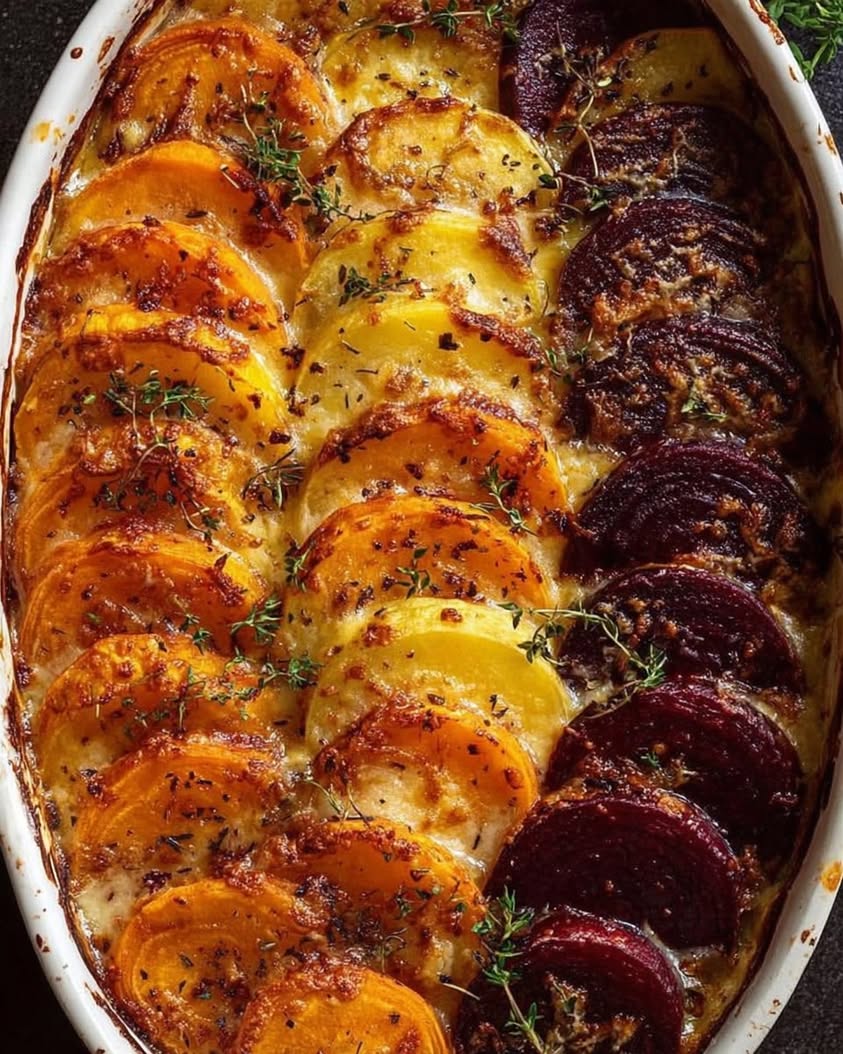
This Root Vegetable Gratin with Sweet Potatoes, Parsnips, and Beets transforms humble winter vegetables into a showstopping centerpiece that warms both body and soul. Imagine layers of ruby-red beets, golden sweet potatoes, and ivory parsnips nestled beneath a blanket of bubbling, golden-brown cheese and cream. The aroma alone will draw your family to the kitchen before the dish even finishes baking. Whether you serve it as a vegetarian main course or a stunning side for holiday gatherings, this Root Vegetable Gratin with Sweet Potatoes, Parsnips, and Beets delivers restaurant-quality elegance with home-kitchen simplicity. The natural sweetness of the vegetables plays beautifully against savory herbs and rich dairy, creating a harmonious balance that keeps everyone coming back for seconds.
What makes this Root Vegetable Gratin with Sweet Potatoes, Parsnips, and Beets truly special is how it celebrates the humble root vegetable in all its glory. Sweet potatoes bring creamy sweetness, parsnips add a subtle nutty depth, and beets contribute earthy complexity plus that unmistakable jewel-toned hue. The layers intermingle as they bake, allowing flavors to meld while each vegetable retains its distinct character. A touch of fresh thyme and garlic infuses the cream, elevating the entire dish beyond ordinary comfort food. This recipe proves that simple ingredients, handled with care, can create something extraordinary.
Root vegetable gratins have long graced French tables as a celebration of the autumn harvest, yet this modern version adapts beautifully for year-round cooking thanks to widely available produce. The dish comes together with modest effort yet looks impressive enough for special occasions. Home cooks of all skill levels will appreciate the straightforward technique: slice, layer, pour, and bake. The oven does the heavy lifting while you attend to other tasks. By the time you pull this golden masterpiece from the heat, your kitchen will smell like a rustic countryside bistro, and your dinner guests will be thoroughly impressed.
Quick Recipe Highlights
- Flavor Profile: Earthy sweetness from roasted root vegetables meets savory garlic and thyme cream. A hint of nutmeg adds warmth, while Gruyere cheese contributes nutty umami. The interplay between sweet and savory creates remarkable depth in every bite.
- Texture: Tender vegetable slices offer a satisfying bite, while the crispy cheese crust provides textural contrast. Creamy sauce binds everything together without overwhelming the vegetables. Each forkful delivers a balance of softness and crunch.
- Aroma: Fragrant thyme and garlic perfume the air as the gratin bakes. Sweet potatoes release caramel notes, while beets lend subtle earthiness. The final aroma is warm, inviting, and undeniably comforting.
- Visual Appeal: Layers of magenta beets, orange sweet potatoes, and cream-colored parsnips create a stunning mosaic pattern. The golden-brown cheese crust crowns the dish beautifully. This gratin looks as impressive as it tastes.
- Skill Level Needed: Beginner to intermediate cooks will find this recipe manageable. Slicing technique and layering represent the most involved steps. Following the cream infusion process ensures success even for first-time gratin makers.
- Special Equipment: A sharp chef’s knife or mandoline slicer produces uniform vegetable rounds for even cooking. A 9×13-inch baking dish or 10-inch round gratin dish works perfectly. You will also need a saucepan for warming the cream mixture.
Recipe Overview
- Difficulty Level: This gratin rates as moderately easy on the cooking difficulty scale, requiring basic knife skills and attention to layering technique. The recipe uses straightforward methods accessible to home cooks without formal training. Most of the effort involves slicing vegetables and whisking cream. Patience during baking ensures perfect results.
- Category: Serve this dish as a vegetarian entree for meatless Mondays or as a sophisticated side dish alongside roasted meats. It fits beautifully into holiday menus and cozy weeknight dinners alike. The recipe also shines as a potluck contribution that travels well.
- Cuisine: Root vegetable gratin draws inspiration from classic French cuisine, specifically the traditional pommes de terre au gratin from the Dauphine region. The technique marries rustic European cooking with American comfort food sensibilities. Modern cooks have adapted the original to showcase seasonal produce. This version honors that heritage while embracing contemporary tastes.
- Cost: The recipe remains budget-friendly thanks to inexpensive root vegetables that form the dish’s backbone. Specialty cheese represents the primary cost, though Gruyere substitutes with Swiss or white cheddar affordably. Cream and butter round out the dairy requirements. Feeding eight people for under fifteen dollars makes this gratin remarkably economical.
- Season: Fall and winter showcase root vegetables at their peak, making this gratin ideal for cool-weather cooking. The dish provides warming comfort during dark months when hearty food appeals most. Sweet potatoes and parsnips reach optimal sweetness after frost. Spring and summer cooks can still prepare this recipe with quality results.
- Occasion: Holiday gatherings like Thanksgiving and Christmas often feature this gratin as a vegetarian showstopper. Sunday suppers and dinner parties benefit from its impressive presentation. Weeknight meals simplify with advance preparation. The recipe suits both casual family dinners and formal entertaining with equal grace.
Why You’ll Love This Recipe
The taste and texture appeal of this Root Vegetable Gratin with Sweet Potatoes, Parsnips, and Beets immediately captivates. Each vegetable contributes unique flavor notes that harmonize beautifully together. Sweet potatoes offer natural sugars that caramelize during baking, creating irresistible edges. Parsnips bring mild nuttiness with subtle peppery undertones. Beets add earthy complexity along with their dramatic visual presence. The cream sauce, infused with garlic and thyme, binds everything in savory richness. Meanwhile, the cheesy crust provides that essential textural contrast: crispy, golden, and deeply satisfying.
Convenience and preparation benefits make this recipe a weeknight hero. Home cooks can assemble the entire dish up to twenty-four hours before baking. Slicing vegetables takes roughly twenty minutes with a sharp knife or fifteen with a mandoline. The oven handles everything else, freeing you to prepare other courses or simply relax. Cleanup proves minimal since the gratin bakes in one dish and the cream warms in one saucepan. This single-dish approach makes weeknight cooking feel effortless.
Nutritional advantages abound in this vegetable-forward recipe. Root vegetables deliver fiber, potassium, and vitamins A and C in abundance. Beets specifically contribute folate and nitrates that support heart health. Sweet potatoes provide beta-carotene for eye and immune function. Dairy offers protein and calcium, while thyme adds antioxidant compounds. Compared to meat-heavy entrees, this gratin provides substantial nutrition with fewer calories and less saturated fat. Portion control remains manageable since the dish satisfies deeply.
Social and entertaining value distinguishes this gratin as a conversation starter. The striped, multicolored layers photograph beautifully for sharing online. Guests often ask for the recipe before finishing their first helping. Serving a vegetarian centerpiece that satisfies meat-eaters demonstrates thoughtful hosting. The dish also accommodates gluten-free guests easily with simple modifications. Bring this gratin to potlucks and watch it disappear faster than any store-bought offering.
Cost-effectiveness and accessibility round out the reasons to love this recipe. Root vegetables cost pennies per pound compared to protein-heavy dishes. The ingredients remain available year-round at any grocery store. No specialty equipment beyond a baking dish proves necessary. Leftovers reheat beautifully for lunches throughout the week. Budget-conscious families appreciate how this elegant dish stretches their dollars while delivering restaurant-quality results that impress everyone at the table.
Historical Background and Cultural Significance
The origin story of vegetable gratins traces back to French regional cooking centuries ago. The word “gratin” derives from the French verb “gratter,” meaning to scrape or grate. Early gratins referred to any dish with a browned crust formed by breadcrumbs, cheese, or both. French households of modest means relied on root vegetables and dairy readily available to them. These cooks layered sliced vegetables with cream and baked them in communal bread ovens. The technique spread throughout France, eventually reaching aristocratic tables where noble cooks refined the preparation. Immigrants carried gratin traditions to America, where they evolved with local ingredients.
Cultural importance of this dish lies in its roots as peasant food elevated through careful technique. Root vegetables sustained European populations through long winters when fresh produce became scarce. Sweet potatoes arrived from the Americas and integrated into European cooking gradually. Beets, native to the Mediterranean region, spread northward through trade routes. Parsnips, long prized in Roman cookery, remained essential winter fare. This gratin represents the marriage of Old World techniques with New World ingredients, symbolizing culinary exchange across continents.
The evolution of the recipe reflects changing tastes and available ingredients over time. Traditional French gratins often featured potatoes exclusively, arriving after Spain brought them from Peru. Cooks discovered root vegetables offered superior flavor and nutrition in their gratins. The addition of Gruyere cheese elevated the dish beyond basic sustenance. Modern cooks now experiment with various vegetables, dairy alternatives, and flavor profiles. Health-conscious adaptations reduce cream and cheese without sacrificing satisfaction. The recipe continues evolving while honoring its heritage.
Regional variations of vegetable gratins appear across many cultures worldwide. In France, Dauphinoise potatoes represent the most famous iteration. British cooking features layered vegetable bakes with cheddar and breadcrumb toppings. Scandinavian cuisines present root vegetable gratins with dill and horseradish. Eastern European kitchens create gratins with cabbage and smoked cheeses. American cooks adapted the format to include regional favorites like sweet potatoes and corn. Each variation tells a story of local ingredients and cultural preferences, creating a rich tapestry of culinary tradition that continues inspiring home cooks today.
Ingredient Deep Dive
Sweet Potatoes: Cultural significance surrounds sweet potatoes as a cornerstone crop in many global cuisines. Native to Central and South America, sweet potatoes spread throughout the Caribbean and southern United States. Nutritionally, they deliver exceptional beta-carotene, fiber, and complex carbohydrates. When selecting sweet potatoes, choose firm specimens with smooth skin and no soft spots. Store them in a cool, dark place for up to three weeks. Substitutes include butternut squash or kabocha squash for similar sweetness and texture.
Sweet potatoes offer remarkable versatility in gratins because their sugars caramelize beautifully during baking. Their dense flesh slices cleanly and holds shape through extended cooking. Orange varieties provide classic sweetness, while purple sweet potatoes add stunning color. Avoid refrigerating raw sweet potatoes, which damages their texture. The natural sweetness balances the earthy parsnips and beets perfectly, creating harmonious flavor relationships.
Parsnips: Parsnips hold historical importance as a staple European root vegetable predating the potato’s arrival. Romans praised parsnips for their sweet, nutty flavor and versatility. Nutritionally, parsnips provide folate, fiber, and vitamin C. Select medium-sized parsnips with creamy color and firm texture, avoiding oversized specimens with woody cores. Store wrapped in plastic in the refrigerator crisper drawer for two to three weeks. Carrots offer a reasonable substitute, though with notably different sweetness.
Parsnips develop deeper sweetness after frost exposure, making late-season harvests especially prized. Their pale flesh contrasts beautifully with beets and sweet potatoes in layered presentations. The subtle peppery notes complement rich dairy sauces. Parsnips absorb flavors readily while maintaining texture, making them ideal for gratins. Remove woody cores from large specimens before slicing. Combining parsnips with sweet potatoes creates nuanced sweetness beyond simple sugar intensity.
Beets: Beets carry cultural significance across Eastern Europe, where borscht celebrates their earthy complexity. Nutritionally, beets abound in folate, manganese, and beneficial nitrates. Choose beets with firm, unblemished skin and vibrant green tops, if attached. Store in the refrigerator for up to two weeks, keeping them away from other vegetables since their pigment bleeds. Golden beets offer an alternative with similar flavor but less intense color. Canned beets work in emergencies but lack the superior texture of fresh.
Beets contribute dramatic visual impact to gratins with their deep burgundy hue. Their earthy sweetness balances richer dairy components beautifully. Wear gloves when handling beets to prevent staining hands and work surfaces. Roasting beets before slicing deepens flavor but extends preparation time. Raw beets slice beautifully on mandolines for thin, uniform rounds. The natural sugars caramelize during baking, creating complex flavors that mellow their characteristic earthiness.
Cream and Dairy: Cream provides the luxurious sauce that binds gratin layers together. Heavy cream offers richness without flour thickeners, keeping the dish gluten-free naturally. For lighter versions, half-and-half or whole milk produce acceptable though less decadent results. Store cream in the coldest part of the refrigerator and use within a week of opening. Coconut cream substitutes for dairy-free adaptations with pleasant results.
Gruyere cheese delivers nutty complexity that complements root vegetables beautifully. Swiss cheese offers similar flavor at lower cost, while white cheddar provides sharper notes. Freshly grate cheese for superior melting quality and flavor. Parmesan adds sharp saltiness but melts differently than semi-soft cheeses. Nutritional yeast provides vegan cheesy flavor without dairy. Combining multiple cheeses creates depth beyond single varieties.
Common Mistakes to Avoid
- Slicing vegetables unevenly: Uneven slices cook at different rates, leaving some pieces mushy while others remain crunchy. Use a mandoline or sharp knife to maintain consistent thickness. Aim for uniform eighth-inch rounds throughout the dish for even baking.
- Skipping the cream infusion: Warming cream with herbs and garlic extracts flavors that infuse throughout the gratin. Pouring cold cream directly over vegetables produces flat, less complex results. Simmer gently for five minutes to release aromatic compounds.
- Overcrowding the baking dish: Packing vegetables too tightly creates soggy, steamed results rather than tender baked layers. Choose an appropriately sized dish that holds layers snugly without compression. The gratin should fit with slight overlap at the edges.
- Under-seasoning the layers: Seasoning only the cream leaves vegetables bland in the center. Salt and pepper each layer as you build the gratin. Remember that cheese adds saltiness, so taste the cream mixture before adjusting overall seasoning levels.
- Rushing the baking time: Under-baked gratin leaves vegetables tough and cream watery. Allow the full baking time for vegetables to become fork-tender and cream to reduce. The cheese should develop a deep golden crust before removing from the oven.
- Not resting before serving: Cutting into the gratin immediately after baking causes layers to collapse into a runny mess. Rest for fifteen minutes to allow the cream to set and layers to bind. This waiting period results in clean, beautiful servings.
- Using poorly washed beets: Beet grit hides in the skin’s crevices and ruins the gratin’s texture. Scrub beets thoroughly under running water before slicing. Peel beets for a cleaner appearance, though peels are technically edible.
- Ignoring the importance of thyme: Thyme specifically complements root vegetables with its earthy, slightly minty flavor. Dried thyme works in a pinch but fresh branches infuse cream beautifully. Strip leaves from stems and add whole stems to the simmering cream for deeper extraction.
- Choosing the wrong baking dish: Metal pans can react with beet pigments, while glass shows off the beautiful layers. Ceramic or glass gratin dishes provide even heat distribution and attractive presentation. Avoid aluminum foil covering, which reacts with acidic ingredients.
- Overbaking until dry: Though the gratin needs full cooking time, excessive baking evaporates too much cream. Cover with foil if the top browns before vegetables finish cooking. Check doneness at the minimum time and adjust accordingly.
Essential Techniques
Uniform Slicing: Consistent vegetable thickness proves crucial for even cooking and beautiful presentation. A mandoline slicer produces perfectly uniform eighth-inch rounds in minutes. Without a mandoline, use a sharp chef’s knife and steady pressure to maintain consistent thickness. Practice on one vegetable before committing entire quantities to the cut. Visual cues include seeing light through slices and feeling consistent resistance on the knife. Uniform slices stack neatly and cook simultaneously.
Cream Infusion: This technique elevates the gratin from ordinary to extraordinary. Gently heat cream, garlic, thyme, and seasonings without boiling, allowing flavors to bloom into the liquid. Bring to a bare simmer and hold for five minutes, watching carefully to prevent scorching. Strain out solids or leave aromatic pieces for rustic presentation. Visual cues include slight bubbling around pan edges and fragrant steam rising. The infused cream should taste distinctly garlicky and herbal before pouring.
Layering Pattern: Strategic layering creates the visual drama that makes this gratin special. Arrange vegetable slices in alternating patterns, shingling them like tiles or fish scales. Overlap slices by one-third for stability. Season between layers and drizzle portions of cream as you build. This technique ensures even distribution of flavors and moisture. The finished layers should form gentle waves or arcs visible through glass dishes. Intentional layering transforms cooking into art.
Cheese Crust Perfection: The final cheese layer requires attention for that ideal golden crust. Pat grated cheese evenly over the cream-soaked vegetables without pressing down. Bake uncovered for the primary cooking period, then assess browning. If the cheese browns too quickly, tent with foil while vegetables finish. Visual cues include even golden color, bubbling edges, and a fragrant cheesy aroma. The crust should crackle slightly when pressed and resist the touch of a finger.
Pro Tips for Perfect Root Vegetable Gratin
- Slice all vegetables immediately before assembling to prevent oxidation and drying. Keep beets separate until layering to avoid color bleeding throughout the dish. Work efficiently once slicing begins for best results.
- Choose similarly sized vegetables when shopping so slices stack evenly. Vary sizes by trimming larger specimens down. Uniform dimensions create professional-looking presentation with even cooking times throughout.
- Use a thermometer to monitor oven temperature since inaccurate ovens cause uneven results. Verify the 375-degree setting with an oven thermometer before baking. Adjust accordingly and check doneness earlier or later as needed.
- Rub the baking dish with a garlic clove before buttering for subtle background flavor. This small step adds aromatic complexity without additional effort. The garlic infuses into all layers from the bottom up.
- Save the green beet tops for another use like sauteing or adding to soups. Removing them before storage prevents moisture loss from the bulbs. Tops make excellent additions to salads and grain bowls.
- Double the cream mixture if your vegetables seem especially thick or dry. More cream ensures tender, succulent results without burning. The gratin should look slightly jiggly when done, not dry.
- Consider pre-roasting beets separately if you prefer softer texture. Raw beet slices can remain slightly firm even when fully baked. Roasted quarters slice beautifully and intensify sweetness notably.
- Let the finished gratin rest on a wire rack rather than the stovetop. Air circulates underneath for even settling of cream. The gratin continues cooking slightly as it rests.
Variations and Adaptations
Regional variations of root vegetable gratins reflect local cuisines and available ingredients. French versions emphasize Gruyere and minimal herbs for elegance. British adaptations add mustard and cheddar for sharper flavor. Scandinavian renditions include dill and nutmeg with creamier sauces. German cooks layer root vegetables with bacon for smoky richness. Eastern European variations incorporate horseradish and sour cream. American versions celebrate the harvest with pecan crust toppings or bourbon cream infusions. Each variation honors local palates while maintaining the essential gratin technique.
Seasonal adaptations keep this recipe relevant year-round. Spring brings tender radishes and turnips with lighter cream and fresh herbs. Summer favors zucchini, tomatoes, and corn in the gratin format. Autumn inspires pumpkin, butternut squash, and apple combinations. Winter naturally suits this recipe with its root vegetable focus. Adjusting portions and baking times accounts for seasonal vegetable differences. The fundamental technique of layered vegetables with cream and cheese works across all seasons with satisfying results.
Dietary modifications allow everyone to enjoy this dish regardless of restrictions. Gluten-free versions work simply by ensuring no flour thickeners. Dairy-free adaptations use coconut cream and nutritional yeast or vegan cheese. Vegan versions eliminate all animal products successfully. Low-carb followers reduce sweet potatoes and increase greens. Keto adaptations use celery root and rutabaga. Paleo versions skip dairy entirely for vegetable-only layers. The recipe structure accommodates numerous dietary needs with small adjustments.
Flavor variations create endless possibilities for this gratin format. Add smoked paprika for Spanish flair with chorizo-style seasoning. Harissa paste contributes North African heat and complexity. Dijon mustard adds French tanginess to cream sauces. Fresh pesto swirls create Italian-inspired versions. Curry powder and coconut cream produce Indian-flavored gratins. The recipe accepts countless flavor directions while maintaining its essential character. Explore these variations to keep the dish exciting throughout the year.
Texture modifications address different preferences and needs. Add breadcrumb topping over cheese for extra crunch and texture. Skip cheese entirely for lighter, dairy-forward gratins. Insert thinly sliced bread between layers to create stuffing-like richness. Use crushed crackers or potato chips for unexpected crunch. Include leeks or onions between vegetable layers for softer textures. Adjusting textures makes this recipe work for every table and every preference.
Presentation alternatives extend gratin formats beyond rectangular baking dishes. Individual ramekins create elegant single-serve portions perfect for dinner parties. Cast iron skillets provide rustic charm for family-style service. Muffin tins make adorable mini gratins for appetizers and brunches. Round gratin dishes showcase the layering beautifully. However you present this dish, the colorful layers remain the star attraction. Choosing appropriate vessels elevates the dining experience effortlessly.
Serving and Presentation Guide
Plating techniques matter when presenting this stunning gratin. Use a sharp knife to cut clean portions revealing the colorful layers. Lift servings carefully with a wide spatula to prevent layer collapse. Arrange portions slightly off-center on warmed plates for professional presentation. Add a sprinkle of fresh herbs or flaky salt for visual interest. Drizzle a spoonful of any remaining cream from the pan over each serving. Deliberate plating elevates the dish from homestyle to restaurant-quality.
Garnishing ideas enhance the gratin’s inherent beauty. Fresh thyme sprigs scattered across the top add green contrast. Crispy fried shallots provide texture and flavor contrast. Microgreens contribute bright freshness and elegance. A dollop of creme fraiche offers cooling contrast against the rich gratin. Toasted breadcrumbs or nuts accent the golden cheese topping. Choose garnishes that complement rather than overwhelm the vegetable flavors. Simple touches often prove most effective with already-beautiful dishes.
Traditional accompaniments complement this gratin beautifully. Serve with a simple green salad dressed in vinaigrette for contrast. Crusty bread proves essential for sopping up every drop of sauce. Braised greens or roasted green beans add bright vegetable balance. A cheese board offers richness alongside the gratin. For holiday meals, this gratin pairs perfectly with roasted turkey or ham. Vegetarian mains work beautifully with this gratin as the star attraction.
Modern serving suggestions bring fresh perspective to this classic dish. Pair with grain bowls for hearty vegetarian meals. Serve alongside poached eggs for brunch presentations. Incorporate leftovers into breakfasts with baked eggs over gratin portions. Top with a fried egg for a complete meal. Pair with grilled sausages for casual entertaining. The versatility of this gratin allows any meal occasion to benefit from its presence.
Temperature considerations affect the gratin’s flavor and texture dramatically. Serve hot from the oven after a brief rest for optimal cream setting. Warm temperatures best showcase the flavors and textures. Room temperature works adequately but sauce may appear less fluid. Reheating preserves most qualities though the crust softens. Avoid serving cold since flavors become muted. The ideal serving temperature falls just above warm for optimal experience.
Portion control tips help manage this rich dish appropriately. A modest two-inch square satisfies most diners alongside other dishes. As a main course, plan larger portions with a side salad. Small portions go far since the gratin is quite rich. Use a ruler or measuring guide for consistent restaurant-quality servings. Serve smaller portions initially with an offer for seconds rather than overfilling plates. Portion control ensures guests enjoy the dish without feeling overwhelmed.
Wine and Beverage Pairing
Wine pairings for this Root Vegetable Gratin with Sweet Potatoes, Parsnips, and Beets require careful consideration. The vegetables’ sweetness and earthiness complicate matching. A medium-bodied white like Viognier offers stone fruit flavors with good acidity. Chardonnay aged in oak complements the buttery cream and cheese. Dry Riesling cuts through richness with bright acidity and minerality. For red options, Gamay or light Pinot Noir pair well without overwhelming the vegetables. Sparkling wine creates delightful contrast with the gratin’s richness. Avoid heavily oaked reds that battle the delicate vegetable flavors.
Non-alcoholic alternatives allow everyone to enjoy appropriate beverages with this dish. Sparkling apple cider offers effervescent sweetness that mirrors the vegetables. Fresh-pressed apple juice complements the sweetness without alcohol. Warming mulled cider creates cozy winter pairings. Kombucha provides acidic complexity for more adventurous palates. Fizzy water with lemon refreshes between rich bites. Herbal iced teas with lemon balm complement the thyme in the recipe. Thoughtful non-alcoholic pairings enhance the dining experience equally.
Though less common, beer pairings work creatively with this gratin. Saison-style farmhouse ales feature earthy, herbal notes echoing the thyme. Belgian-style wheat beers provide soft citrus qualities. Amber ales contribute caramel notes that complement sweet potatoes. Porter and stout work for adventurous pairings but may overwhelm delicate flavors. Crisp pilsners refresh the palate between rich bites. Experiment with local craft options to discover surprising complementary combinations that suit your preferences.
Temperature considerations apply to beverage service as much as to the dish itself. White wines profit from serving at fifty to fifty-five degrees Fahrenheit, slightly warmer than refrigerator temperature. Reds taste best at sixty to sixty-five degrees. Sparkling wines need thorough chilling for proper effervescence. Beers serve according to style, generally forty to fifty degrees for most ales. Non-alcoholic beverages often benefit from serving over ice or well chilled. Proper beverage temperatures enhance the entire dining experience.
Serving suggestions for beverages round out the hospitality experience. Offer water glasses alongside all options for guest comfort. Provide a small beverage menu for dinner parties to assist choices. Prepare pitchers of non-alcoholic options for easy self-service. Consider offering samples of wine options for guests to try before committing. Place beverages conveniently for guests to refill independently. Small touches make hospitality easier and guests more comfortable throughout the meal.
Storage and Shelf Life
Storage methods for leftover gratin determine how well it keeps for future meals. Cool the gratin within two hours of serving to prevent spoilage. Store in the baking dish with the original crust intact, covered tightly with foil or plastic wrap. Alternatively, transfer portions to smaller containers for easier reheating. Individual portions store more efficiently and reheat more evenly than large sections. Whether in the dish or containers, seal well to prevent absorption of refrigerator odors.
Temperature requirements for safe storage follow standard food safety guidelines. Refrigerators should hold forty degrees Fahrenheit or below for the gratin. Avoid storing near fresh produce since the gratin may absorb vegetable odors. Keep covered away from strong-smelling foods. For longest storage, position on a refrigerator shelf where the gratin will not drip onto other items. Monitor refrigerator temperatures with a thermometer for safety. Proper storage temperature preserves both quality and safety of leftovers.
Container recommendations for storing gratin maximize quality. Glass containers work beautifully since they don’t retain odors or stains. Ceramic containers with lids also perform excellently. Plastic containers work for short-term storage but may stain with beet pigment. Use containers sized appropriately for portions to minimize air exposure. Press plastic wrap directly onto the gratin surface before covering with a lid for extra protection. The correct containers extend shelf life and preserve flavors.
Signs of spoilage help you identify when to discard leftovers. The gratin should smell appetizing and cheesy, never sour or off. Any visible mold requires immediate disposal of the entire dish. Slimy texture or changed color indicates bacterial growth. The cream should look set, not separated or runny. When in doubt, throw it out rather than risk illness. Proper food safety prevents foodborne illness that ruins positive dining experiences.
Reheating instructions for gratin preserve its original qualities. The oven maintains the best texture and preventing drying. Reheat covered with foil at 350 degrees for fifteen to twenty minutes. Individual portions reheat in five to ten minutes. Microwave reheating produces acceptable but slightly softer results. Add a splash of cream or milk before reheating to restore moisture. The crust will soften but flavors remain intact. Thoughtful reheating extends the dish’s appeal.
Freezing guidelines allow longer-term storage of leftovers. Portion the gratin into freezer-safe containers after fully cooling. Freeze for up to two months for best quality. Wrap tightly to prevent freezer burn, which affects texture. Thaw overnight in the refrigerator before reheating. Whole unbaked assembled gratins freeze brilliantly for future meals. Prepare through the assembly stage, freeze unbaked, then thaw and bake fresh. This method offers unparalleled convenience for meal planning.
Make Ahead Strategies
A prep timeline for make-ahead gratin transforms the entire cooking experience. Slice all vegetables a day ahead and store separately in sealed containers with damp paper towels. The cream can be infused and chilled for up to three days. Grate cheese and store in the refrigerator, adding a small amount of cornstarch to prevent clumping. Assemble the entire gratin the night before and refrigerate wrapped tightly. Simply bake the next day and transform a stressful meal into effortless entertaining.
Storage between steps maintains quality during the preparation process. Keep sliced root vegetables in cold water to prevent oxidation and browning. Drain and pat dry thoroughly before assembling. Cooked components like caramelized onions store refrigerated for up to three days. The cream mixture needs cooling before refrigeration, then rewarming to pour over layers. Cheese slices hold well wrapped in parchment paper. Strategic storage between steps allows home cooks to spread preparation across multiple days.
Quality impact assessment determines which steps benefit from advance preparation. Slicing vegetables ahead proves completely successful since nothing changes in taste or texture. Infusing cream ahead concentrates flavors beautifully. Pre-grating cheese maintains quality well when properly stored. Assembling the entire gratin a day ahead works wonderfully; some cooks report improved flavor as ingredients marry. However, adding breadcrumb toppings should wait until baking day for crispet results. Understanding which steps benefit from advance preparation guides efficient meal planning.
Assembly tips for make-ahead gratin ensure successful results. Use a baking dish that fits neatly in the refrigerator without crowding. Cover with parchment then plastic wrap to prevent plastic contact with cream. Add cheese topping right before baking rather than before storage. Store in the coldest part of the refrigerator to extend freshness. Let assembled gratin sit at room temperature for thirty minutes before baking. These simple practices ensure the best possible outcome from make-ahead preparation.
Reheating guidelines for advance-prepared gratin reflect the dish’s preparation state. Unbaked assembled gratins require slightly longer baking than freshly assembled versions. Add ten to fifteen minutes and cover with foil initially to prevent over-browning. Fully baked reheated gratin needs only twenty minutes at 350 degrees to heat through. Individual portions require proportionally less time. Always check internal temperature reaches 165 degrees for safety. The baked gratin tastes nearly as good as freshly baked.
Fresh element additions before serving restore quality to make-ahead gratins. Add fresh herbs after reheating rather than before since heat mutes their flavor. Drizzle a bit of fresh cream over reheated portions for restored richness. Top with fresh breadcrumbs toasted separately for crunchy contrast. Add a squeeze of lemon to cut through richness. Small fresh touches transform reheated leftovers from adequate to excellent. These final touches show that careful attention extends throughout the cooking and serving process.
Scaling Instructions
Halving the recipe offers flexibility for smaller households. Use an eight-inch square baking dish and reduce layering without changing proportions. Bake the smaller gratin in the same temperature but check doneness ten minutes earlier. Leftovers from a halved recipe disappear quickly, often making ideal portions for two to four servings. Be mindful that shallower gratins brown more quickly on top. Check at twenty minutes, then tent with foil if browning progresses too quickly.
Doubling or tripling the recipe works beautifully for feeding crowds. Use two or three baking dishes rather than one enormous pan for even cooking. Stagger the dishes on oven racks with space between for air circulation. Add ten to fifteen minutes to the base cooking time but check frequently. Assembling multiple gratins takes time but follows identical steps. For large gatherings, consider assembling ahead and baking consecutively or in two ovens. Crowd-sized gratins make impressive buffet presentations.
Equipment adjustments facilitate scaling without sacrificing quality. For doubled recipes, use a mandoline slicer to accelerate vegetable preparation. Large baking dishes with handles ease transport. Invest in insulated baking sheets to protect surfaces during service. For tripled recipes, borrow extra baking dishes from friends or purchase disposables. Ensure oven capacity accommodates full loads comfortably without crowding. Adequate equipment for scaling makes large-scale cooking stress-free.
Timing modifications account for scaling differences. Smaller gratins shorten cooking times by ten to fifteen minutes. Larger gratin dishes require longer cooking and additional resting times. Multi-dish baking extends total time since dishes may bake in sequence. Preheating the oven adequately becomes more critical with larger batches. Check temperatures in multiple spots to confirm doneness. Understand timing adjustments prevent undercooking or overcooking at any scale.
Storage considerations expand with scaled recipes. Large batches require substantial refrigerator and freezer space. Consider portioning extras early for sharing with friends or neighbors. The gratin freezes beautifully when wrapped tightly in individual portions. The versatile dish works for both immediate consumption and future meals. Plan storage before cooking large batches to avoid scrambling for containers. Strategic storage preserves quality and generosity.
Nutritional Deep Dive
The macro breakdown of this gratin reflects its vegetable-forward nature. Each serving provides approximately 320 calories with 38 grams of carbohydrate, 7 grams of protein, and 16 grams of fat. Root vegetables contribute the majority of carbohydrates through complex starches and natural sugars. Dairy provides the bulk of protein and fat in the dish. The modest protein content comes primarily from cheese and cream. Portion size significantly influences actual intake, especially for those monitoring macros.
Micronutrient analysis reveals impressive nutrient density. Sweet potatoes deliver exceptional beta-carotene in amounts exceeding daily needs. Beets provide folate, manganese, and dietary nitrates. Parsnips contribute vitamin C and folate. Thyme supplies vitamin K and antioxidant compounds. Dairy offers calcium, phosphorus, and vitamin D. The gratin’s rich micronutrient profile supports overall health beyond basic nutrition. Every ingredient adds specific nutritional value, creating a truly nutrient-dense dish.
Health benefits of this recipe extend beyond basic nutrition. Dietary fiber from root vegetables supports digestive health and stable blood sugar. Beet nitrates improve exercise performance and support cardiovascular function. Beta-carotene from sweet potatoes promotes eye health. Calcium and vitamin D support bone strength. Antioxidants from various ingredients combat oxidative stress. The dish delivers medicinal qualities alongside satisfying flavor. Regular consumption of such vegetable-rich dishes promotes long-term wellness outcomes.
Dietary considerations for those with specific health goals determine how to approach this dish. Diabetics should know root vegetables contain significant carbohydrates affecting blood sugar. Portion control and pairing with proteins slow glucose absorption. Those watching sodium find cream contributes less than cheese, allowing cheese reduction if desired. Heart-health-conscious cooks can reduce dairy fat while keeping flavor. The recipe adapts well to broader health goals with small modifications that maintain culinary integrity.
Portion analysis helps diners make informed choices. A quarter-recipe portion (from an eight-serving dish) delivers roughly 320 calories, a reasonable portion for most adults. Vegetables comprise the majority of volume, filling stomachs with modest calories. The richness comes primarily from dairy, Print
Root Vegetable Gratin with Sweet Potatoes, Parsnips, and Beets
- Total Time: 45 minutes
- Yield: 4
Description
A colorful and comforting gratin featuring layers of sweet potatoes, parsnips, and beets, baked in a creamy, cheesy sauce until golden and bubbly.
Ingredients
- 1 large sweet potato, peeled and thinly sliced
- 2 parsnips, peeled and thinly sliced
- 2 medium beets, peeled and thinly sliced
- 1 cup heavy cream
- 1/2 cup whole milk
- 2 cloves garlic, minced
- 1 teaspoon salt
- 1/2 teaspoon black pepper
- 1/4 teaspoon nutmeg
- 1 cup shredded Gruyère cheese
- 1/2 cup grated Parmesan cheese
- 2 tablespoons butter, plus more for greasing
- Fresh thyme leaves, for garnish
Instructions
- Preheat oven to 375°F (190°C). Grease a 9×13-inch baking dish with butter.
- In a medium saucepan, combine heavy cream, milk, garlic, salt, pepper, and nutmeg. Warm over low heat, but do not boil.
- Layer half of the sweet potato slices in the bottom of the prepared dish. Top with half of the parsnip slices, then half of the beet slices. Sprinkle with half of the Gruyère and Parmesan. Repeat layers with remaining vegetables and cheeses.
- Pour the warm cream mixture evenly over the top. Dot with butter.
- Cover with foil and bake for 30 minutes. Remove foil and bake for another 25-30 minutes, until vegetables are tender and top is golden and bubbly.
- Let rest for 10 minutes before serving. Garnish with fresh thyme.
Notes
You can customize the seasonings to taste.
- Prep Time: 15 minutes
- Cook Time: 30 minutes
- Method: Main
- Cuisine: American