Roasted Sweet Potatoes Stuffed with Ricotta, Cherry Tomatoes & Pesto: The Ultimate Healthy Comfort Food
Imagine a dish that perfectly balances sweet, savory, and creamy textures in one gorgeous package. These roasted sweet potatoes stuffed with ricotta, cherry tomatoes, and pesto deliver exactly that. Moreover, they transform humble ingredients into a stunning centerpiece worthy of any dinner table. The natural caramelized sweetness of the potato plays beautifully against the tangy, creamy ricotta. Simultaneously, the vibrant, garlicky pesto and juicy, blistered tomatoes cut through the richness. Ultimately, this recipe creates a symphony of flavors and textures that feels both indulgent and nourishing.
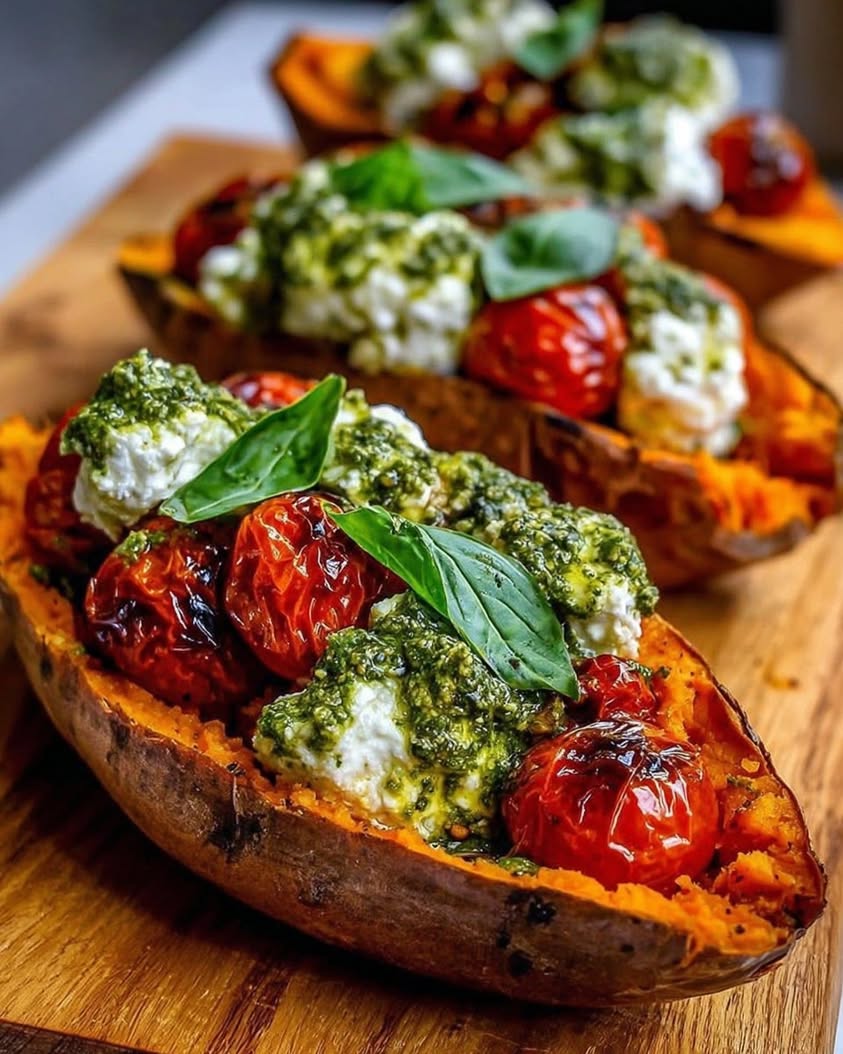
This recipe for roasted sweet potatoes with ricotta, pesto, and blistered tomatoes is a true crowd-pleaser. For instance, it works equally well for a casual weeknight dinner or an impressive meal for guests. Consequently, you get a versatile dish that adapts to any occasion. The process is wonderfully straightforward, involving simple roasting and easy assembly. Therefore, even novice cooks can achieve restaurant-quality results. The final presentation, with the bright green pesto drizzled over the creamy white ricotta and ruby-red tomatoes, is visually spectacular. In short, this dish proves that healthy food can be incredibly delicious and beautiful.
Fundamentally, these stuffed sweet potatoes celebrate whole, real ingredients. Each component brings its own unique nutritional profile to create a balanced meal. Sweet potatoes provide complex carbs and fiber, while ricotta offers a boost of protein and calcium. Meanwhile, the pesto, packed with heart-healthy fats from olive oil and nuts, adds depth and flavor. The cherry tomatoes contribute a pop of freshness and lycopene. Together, they create a satisfying dish that fuels your body and delights your taste buds. This recipe is a fantastic way to enjoy a meatless meal that doesn’t skimp on flavor or satisfaction.
Quick Recipe Highlights
- Flavor Profile: This dish masterfully combines the earthy sweetness of roasted sweet potato with the rich, tangy creaminess of ricotta cheese. The basil pesto adds a punch of herbal, garlicky brightness, while the blistered cherry tomatoes offer a burst of juicy acidity. Every bite is a complex and satisfying balance of sweet, savory, and fresh.
- Texture: You experience a wonderful contrast of textures, starting with the tender, almost custardy flesh of the perfectly roasted sweet potato. The ricotta filling is luxuriously smooth and creamy, providing a cool contrast to the warm potato. Finally, the pesto is silky, and the tomatoes add a delightful pop and slight chew.
- Aroma: As the sweet potatoes roast, your kitchen fills with a warm, caramelized scent. When you add the tomatoes to blister, their sweet, tangy aroma joins the mix. The fresh pesto, with its powerful notes of basil, garlic, and toasted pine nuts, completes the olfactory experience, making the dish irresistible before you even take a bite.
- Visual Appeal: This dish is a feast for the eyes with its stunning color palette. The vibrant orange potato boats act as a canvas for the snowy white ricotta. Consequently, the emerald green pesto drizzle and the bright red tomatoes create a visually striking presentation that looks professional and inviting.
- Skill Level Needed: This is an accessible recipe for cooks of all levels. The techniques involved—scrubbing, roasting, and simple mixing—are fundamental. Therefore, beginners can follow it with confidence, while more experienced cooks can appreciate its elegant simplicity and focus on high-quality ingredients.
- Special Equipment: You need only basic kitchen tools: a baking sheet, a small mixing bowl, a spoon, and a knife. A fork for fluffing the potato and a small skillet for blistering the tomatoes (optional) are helpful. No fancy gadgets are required, making this recipe easy to prepare in any kitchen.
Recipe Overview
- Difficulty Level: We rate this recipe as “Easy” because it breaks down into very simple, sequential steps. First, you prepare the sweet potatoes through roasting, which is largely hands-off. Next, you mix the ricotta filling, which requires no cooking. Finally, you assemble the ingredients. There are no complicated knife skills or precise tempering techniques required, making it perfect for a stress-free cooking experience.
- Category: This dish beautifully straddles multiple categories. It can serve as a hearty vegetarian main course, a substantial side dish alongside grilled chicken or fish, or even a standout appetizer if you use smaller sweet potatoes. Its flexibility is one of its greatest strengths, allowing it to fit seamlessly into various meal plans.
- Cuisine: While not tied to one specific tradition, this recipe draws inspiration from Mediterranean and Italian-American flavors. The use of ricotta and pesto is classically Italian, while the focus on roasted vegetables and simple, clean flavors aligns with modern Mediterranean diet principles. It’s a fusion that celebrates fresh, wholesome ingredients.
- Cost: This is a very cost-effective recipe, especially if you make your own pesto. Sweet potatoes and cherry tomatoes are typically affordable, particularly in season. Ricotta cheese is a reasonably priced dairy option. If you buy pre-made pesto, the cost increases slightly, but the dish remains an economical way to create an impressive meal.
- Season: This recipe shines year-round but is particularly wonderful in late summer and early fall. That’s when sweet potatoes and cherry tomatoes are at their peak sweetness and flavor. However, the ingredients are readily available in grocery stores throughout the year, making it a reliable choice for any season.
- Occasion: These stuffed sweet potatoes are incredibly versatile for different events. They are casual enough for a cozy family dinner, yet elegant enough for a dinner party or holiday gathering (think a colorful Thanksgiving side). They also make excellent packed lunches when prepared ahead, as they taste great at room temperature.
Why You’ll Love This Recipe
First and foremost, the taste and texture appeal is off the charts. Each component brings something unique to the table, creating a harmonious and exciting eating experience. The natural sugar in the sweet potatoes caramelizes during roasting, deepening their flavor. Then, the cool, mild ricotta provides a creamy base that mellows the dish. The pesto injects a vibrant, herbaceous kick, and the tomatoes offer little bursts of tangy juice. Consequently, every forkful is a delightful adventure, ensuring you won’t get bored with this meal. It satisfies cravings for something rich and comforting while still feeling fresh and light.
Furthermore, the convenience and preparation benefits are significant. This recipe for roasted sweet potatoes with ricotta, pesto, and blistered tomatoes involves minimal hands-on work. After you pop the potatoes in the oven, you have plenty of time to prepare the filling or attend to other tasks. The assembly is quick and intuitive—no fussy techniques required. Additionally, the ingredients are easy to find at any standard supermarket. You can even use store-bought pesto to save even more time without sacrificing too much flavor. It’s the ideal solution for busy weeknights when you want a healthy, homemade meal without spending hours in the kitchen.
From a health perspective, the nutritional advantages are substantial. Sweet potatoes are a powerhouse of beta-carotene, fiber, and vitamins. Ricotta cheese is a fantastic source of protein and calcium, which helps keep you full and supports bone health. The olive oil in the pesto provides healthy monounsaturated fats, beneficial for heart health. Cherry tomatoes are rich in antioxidants like lycopene. Together, they create a balanced meal that supports sustained energy, digestive health, and overall wellness. You can feel good about serving this dish to your family, knowing it’s as nourishing as it is delicious.
Moreover, the social and entertaining value of this dish is high. These stuffed sweet potatoes make a stunning presentation on a platter, guaranteed to draw compliments from guests. They are naturally individual servings, which makes plating for a dinner party effortless. Because the recipe is vegetarian, it easily accommodates diverse dietary preferences at the table. You can prepare elements in advance, so you’re not stuck in the kitchen while your guests arrive. Ultimately, it allows you to be a present host while serving a meal that looks and tastes like you put in far more effort than you actually did.
Finally, the cost-effectiveness and accessibility make this a repeat-worthy recipe. As mentioned, the core ingredients are budget-friendly. You can adapt the recipe based on what you have on hand—try different herbs in the ricotta or use a different nut in the pesto. If sweet potatoes are expensive, you could even use russet potatoes as a variation. The recipe is forgiving and flexible. This accessibility means you can enjoy a gourmet-tasting, healthy meal without blowing your grocery budget. It’s a formula you’ll return to again and again for its simplicity, flavor, and reliability.
Historical Background and Cultural Significance
The story of the stuffed vegetable is ancient and spans countless cultures. From stuffed grape leaves in the Middle East to stuffed peppers in Central Europe, the concept of filling a vegetable vessel is a global tradition of resourcefulness and flavor layering. The sweet potato itself has a rich history, originating in Central or South America over 5,000 years ago. It was a staple for indigenous peoples long before European contact. Columbus brought sweet potatoes to Europe, and from there, they spread across the world via trade routes. Their natural sweetness and hearty texture made them a valuable and versatile food source in many cuisines.
In the United States, sweet potatoes hold deep cultural importance, particularly in Southern cuisine. They are a cornerstone of soul food and holiday traditions, often appearing candied, mashed, or in pies. The practice of stuffing vegetables gained popularity in American home cooking as a way to create a complete, economical meal. Combining a stuffed vegetable concept with the beloved sweet potato is a relatively modern fusion. It reflects contemporary culinary trends that prioritize vegetable-centric meals, global flavors, and beautiful, Instagram-worthy presentations. This recipe is a product of today’s food culture, where accessibility, health, and visual appeal are paramount.
The evolution of this specific recipe likely stems from the rise of the vegetarian and “bowl food” trends. As people sought satisfying meatless options, cooks began treating sturdy vegetables like sweet potatoes and portobello mushrooms as edible bowls or bases. The addition of ricotta and pesto is a natural pairing borrowed from Italian pasta dishes and crostini. Blistered tomatoes add a restaurant-style touch, a technique popularized by chefs to intensify flavor. Therefore, this dish didn’t appear from one specific tradition but evolved organically from the cross-pollination of culinary ideas in the modern home kitchen. It represents how home cooks creatively adapt techniques and flavors from around the world.
Regional variations of this concept are endless. In the South, you might find a stuffed sweet potato with pecans, marshmallows, and bourbon. In Mexico, a similar dish could be stuffed with black beans, corn, and cotija cheese. A Mediterranean version might feature feta, olives, and oregano. The version with ricotta, pesto, and cherry tomatoes leans into Italian-American flavors, which have become deeply integrated into mainstream American cooking. This adaptability is a testament to the sweet potato’s versatility. It acts as a neutral, sweet canvas that can carry a vast array of stuffings, from savory to sweet, making it a truly global ingredient.
Ingredient Deep Dive
Sweet Potatoes: Botanically distinct from yams, sweet potatoes are native to the Americas. They were domesticated at least 5,000 years ago and were a vital crop for many pre-Columbian civilizations. Nutritionally, they are superstars, packed with beta-carotene (which converts to Vitamin A), fiber, Vitamin C, and potassium. Their complex carbohydrates provide sustained energy. For this recipe, choose medium-sized, firm sweet potatoes with smooth, unblemished skin. Avoid any with soft spots or signs of sprouting. Store them in a cool, dark, well-ventilated place—not the refrigerator, as cold temperatures can alter their texture and flavor. For a twist, try Japanese purple sweet potatoes or Hannah white sweet potatoes.
Ricotta Cheese: Ricotta, meaning “recooked” in Italian, is a fresh cheese made from the whey leftover from producing other cheeses. This resourceful process dates back to the Bronze Age. It’s a light, creamy cheese with a slightly sweet, milky flavor. Nutritionally, it’s a good source of protein, calcium, and phosphorus, and is lower in fat and sodium than many hard cheeses. For the best flavor and texture in your roasted sweet potatoes with ricotta, seek out whole-milk ricotta from the dairy section, not the shelf-stable tubs. Drain any excess liquid before using. Store it tightly sealed in the refrigerator and use within a few days of opening. For a dairy-free version, blended firm tofu or cashew cream can work.
Basil Pesto: Pesto Genovese hails from the Liguria region of Italy, specifically Genoa. Traditionally, it’s made with a mortar and pestle (“pesto” means “to pound”) using basil, garlic, pine nuts, Parmigiano-Reggiano, Pecorino, and olive oil. It’s a celebration of summer basil. It provides healthy fats from olive oil and nuts, along with antioxidants from the fresh herbs. For the brightest flavor, make your own with fresh basil, or look for refrigerated pesto in the deli section. Jarred pesto is a convenient backup. Store homemade pesto with a layer of olive oil on top in the fridge, or freeze it. You can substitute arugula, spinach, or kale for basil, and use walnuts or almonds instead of pine nuts.
Cherry Tomatoes: These small, round tomatoes are believed to be the direct descendants of the first wild tomatoes from South America. They are known for their intense, sweet flavor, especially when cooked. They are rich in vitamins C and K, potassium, and the antioxidant lycopene, which is more bioavailable when cooked. Choose tomatoes that are plump, shiny, and firm with a deep red color. Avoid packs with wrinkled skins or mold. Store them at room temperature away from direct sunlight to preserve flavor; refrigeration can make them mealy. For this recipe, blistering them concentrates their sweetness. You can substitute grape tomatoes or sun-dried tomatoes (rehydrated) for a different flavor profile.
Common Mistakes to Avoid
- Underseasoning the Sweet Potato Flesh: After scooping out the potato, many people forget to season the inside. Always sprinkle the cavity with a little salt and pepper before adding the filling. This simple step layers seasoning throughout the entire dish, not just on top.
- Overcrowding the Baking Sheet: Placing the sweet potatoes too close together on the pan steams them instead of roasting them. For proper caramelization and crispy skin, ensure there is at least an inch of space between each potato. This allows hot air to circulate effectively.
- Using Watery Ricotta: Ricotta often sits in liquid in its container. If you don’t drain it, that extra moisture will make your filling runny and can sog out the potato. Drain the ricotta in a fine-mesh strainer for 10-15 minutes before mixing for a thicker, creamier texture.
- Skipping the Broil on the Tomatoes: Simply roasting tomatoes is fine, but a quick blast under the broiler for the last few minutes creates the coveted blistered, charred spots that add immense smoky-sweet flavor and visual appeal. Don’t skip this easy, high-impact step.
- Adding Cold Ricotta Filling: Taking ricotta straight from the fridge and plopping it into the hot sweet potato can create an unpleasant temperature contrast. Let the ricotta mixture sit at room temperature for 10-15 minutes before assembling to take the chill off.
- Not Fluffing the Potato Flesh: Before adding filling, use a fork to gently fluff the insides of the roasted sweet potato. This creates little nooks and crannies for the ricotta to settle into, ensuring every bite is a perfect mix of potato and filling, rather than two separate layers.
- Using Stale, Brown Pesto: Pesto oxidizes and turns brown quickly when exposed to air. Always use fresh, vibrant green pesto for the best flavor and presentation. If making ahead, press plastic wrap directly onto the surface of the pesto before sealing the container to limit air exposure.
- Undercooking the Sweet Potatoes: A sweet potato that isn’t tender all the way through is disappointing. Test for doneness by piercing the thickest part with a paring knife or fork; it should slide in with absolutely no resistance. If it’s still hard, continue roasting in 5-minute increments.
Essential Techniques
Roasting for Caramelization: Roasting is the crucial technique that transforms the sweet potato’s flavor and texture. The dry, consistent heat of the oven concentrates the potato’s natural sugars, causing them to caramelize on the surface and edges. This process creates a deeper, richer, sweeter flavor and a desirable tender interior. To master it, ensure your oven is fully preheated and use a rimmed baking sheet (not a pan with sides) for better air circulation. A common pitfall is roasting at too low a temperature, which steams the potato instead. Visual cues for success are a slightly shrunken, wrinkled skin and a fork that pierces the flesh effortlessly.
Blistering Tomatoes: Blistering is a quick, high-heat cooking method that chars the skin of the tomato without fully cooking the interior to mush. This technique intensifies sweetness, adds a subtle smoky note, and creates an appealing rustic texture. It’s important because it elevates a simple ingredient with minimal effort. To master it, use a very hot skillet or the broiler and don’t move the tomatoes too much—let the heat do its work. The common pitfall is crowding the pan, which causes the tomatoes to steam. Visual cues are popped, blackened skins and tomatoes that are just starting to collapse but still hold their shape.
Preparing a Creamy Ricotta Filling: The goal is a cohesive, seasoned, spreadable filling that holds its shape. The technique involves draining excess moisture from the ricotta and then gently combining it with seasonings without overworking it, which can make it gummy. This is important for both texture and flavor distribution. To master it, drain the ricotta well and use a fork to mix in salt, pepper, and lemon zest. A common pitfall is stirring too vigorously. The visual cue is a homogeneous mixture that is thick enough to mound on a spoon but still soft and creamy.
Pro Tips for Perfect Roasted Sweet Potatoes Stuffed with Ricotta, Cherry Tomatoes & Pesto
First, prick the sweet potatoes all over with a fork before roasting. This allows steam to escape during cooking, preventing them from bursting in your oven and ensuring even cooking from the inside out.
For extra flavor, rub the scrubbed sweet potatoes with a tiny amount of olive oil and sprinkle them with kosher salt before roasting. This enhances the crispy texture of the skin and seasons the potato from the outside.
Add a flavor boost to the ricotta by mixing in a teaspoon of lemon zest, a pinch of red pepper flakes, or a tablespoon of finely chopped fresh herbs like chives or parsley. This simple step elevates the filling from plain to extraordinary.
If your pesto is very thick, loosen it with a teaspoon or two of warm water or the oil from the blistered tomatoes before drizzling. This will help it flow beautifully over the stuffed potatoes for that perfect finishing touch.
For the blistered tomatoes, toss them in the hot pan you used for the tomatoes (off the heat) with a minced garlic clove for 30 seconds. The residual heat will lightly cook the garlic, adding another layer of aromatic flavor to the topping.
Let the roasted sweet potatoes cool for 5-10 minutes before handling and slicing them open. They will be extremely hot inside, and this rest period allows the flesh to set slightly, making them easier to stuff without falling apart.
For a golden, slightly crispy topping on the ricotta, you can place the assembled potatoes under the broiler for 1-2 minutes at the very end. Watch them closely to prevent burning.
Use an ice cream scoop to portion the ricotta filling into the sweet potato boats. This creates a neat, rounded mound of filling that looks professional and is easy to control.
Variations and Adaptations
Regional Variations: Take your stuffed sweet potatoes on a world tour. For a Greek twist, use feta cheese, Kalamata olives, and a drizzle of tzatziki. For a Southwestern flair, fill them with black beans, corn, avocado, and a chipotle-lime crema. An Indian-inspired version could feature a spiced chickpea (chana masala) filling and a cilantro-mint chutney. The basic formula of a roasted sweet potato base is endlessly adaptable to the flavor profiles you love.
Seasonal Adaptations: Embrace what’s fresh. In spring, use peas, asparagus, and fresh mint in the ricotta. For summer, incorporate grilled zucchini and a sun-dried tomato pesto. In fall, try a filling with sautéed mushrooms, kale, and a sage-brown butter drizzle. Winter calls for hearty combinations like roasted Brussels sprouts and a cranberry-walnut relish. This keeps the recipe exciting all year long.
Dietary Modifications: This recipe is easily modified. For a vegan version, use a firm tofu or cashew-based “ricotta” and dairy-free pesto. To make it gluten-free, ensure your pesto doesn’t contain any hidden wheat-based additives. For a lower-carb option, reduce the amount of sweet potato flesh you eat or substitute a roasted acorn squash half. For paleo, use a nut-based cheese and a pesto without dairy cheese.
Flavor Variations: Experiment with different cheese and sauce combinations. Instead of ricotta, try goat cheese, whipped feta, or even a sharp cheddar. Swap the basil pesto for cilantro-jalapeño pesto, sun-dried tomato pesto, or a simple herb oil. Add cooked, crumbled sausage or bacon to the ricotta for a meaty version. A drizzle of balsamic glaze or hot honey can add a sweet-tangy or spicy-sweet finish.
Texture Modifications: Play with textures for interest. Add chopped toasted nuts (walnuts, pecans) or seeds (pepitas, sunflower seeds) to the ricotta or as a garnish for crunch. Mix in cooked, crispy quinoa or farro for a grain-based chew. For extra creaminess, stir a spoonful of Greek yogurt or mascarpone into the ricotta filling.
Presentation Alternatives: Instead of serving them as whole “boats,” slice the roasted sweet potatoes into thick rounds, top each round with ricotta and toppings for elegant crostini-style appetizers. Alternatively, cube the roasted sweet potato and toss everything together in a bowl for a deconstructed, salad-like presentation. For a family-style dish, mash the roasted sweet potato flesh lightly in a baking dish, swirl in the ricotta and pesto, top with tomatoes, and bake until bubbly.
Serving and Presentation Guide
Plating Techniques: For individual servings, place each stuffed sweet potato boat on a warm plate. Use a small offset spatula or spoon to create a smooth, inviting mound of ricotta. Drizzle the pesto in a zigzag or circular pattern over the ricotta and let some drip down the sides of the potato. Artfully scatter the blistered tomatoes around and on top. For a family-style presentation, arrange all the stuffed potatoes closely together on a large wooden board or rustic platter and garnish generously over the entire spread.
Garnishing Ideas: Fresh garnishes add color, texture, and freshness. A final sprinkle of flaky sea salt and cracked black pepper is essential. Add a few whole small basil leaves, microgreens, or arugula for a green pop. A dusting of grated Parmesan or Pecorino cheese adds savoriness. A drizzle of high-quality extra virgin olive oil just before serving enhances richness. For a bit of color, add edible flowers or a pinch of red pepper flakes.
Traditional Accompaniments: As a main course, these stuffed sweet potatoes pair beautifully with a simple green salad dressed with a light vinaigrette to cut the richness. A crusty piece of whole-grain bread or a garlic knot is perfect for soaking up any extra pesto and ricotta. For a heartier meal, serve alongside a bowl of lentil soup or a white bean stew.
Modern Serving Suggestions: For a trendy “bowl” meal, flake the sweet potato flesh into a bowl and layer the ricotta, pesto, tomatoes, and other veggies like roasted broccoli or chickpeas. They also make fantastic next-day lunches served cold or at room temperature. For brunch, top a stuffed sweet potato with a softly poached or fried egg for an extra protein boost.
Temperature Considerations: Serve these potatoes warm for the best texture and flavor harmony. The ricotta should be cool but not cold, and the pesto should be at room temperature. If the potatoes have sat after assembly, a quick 5-minute warm-up in a hot oven or toaster oven can revive them perfectly without overcooking the fresh toppings.
Portion Control Tips: One medium sweet potato per person is a standard main course serving. For a larger appetizer or side dish, you can slice larger sweet potatoes in half lengthwise after roasting to create two shorter “boats” from each potato, effectively doubling your yield for a crowd.
Wine and Beverage Pairing
Wine Pairings: The sweet, earthy, and creamy elements of this dish call for wines with good acidity to cleanse the palate. A crisp, unoaked white like Sauvignon Blanc or Pinot Grigio works wonderfully, as their citrus notes complement the pesto and ricotta. A light-bodied, fruity red like Pinot Noir or Beaujolais can also pair nicely if served slightly chilled, as their red fruit flavors harmonize with the sweet potato and tomatoes. Avoid heavily oaked or high-tannin wines, as they can clash with the sweetness and creaminess.
Non-Alcoholic Alternatives: Sparkling water with a squeeze of lemon or lime is a classic, refreshing choice. For something more special, try a basil-infused lemonade or iced tea, which echoes the herbal notes in the pesto. A ginger beer or spicy ginger ale can provide a nice contrast to the richness. Kombucha, particularly a plain or ginger flavor, offers acidity and effervescence that pairs well with the dish.
Coffee/Tea Pairings: While not a typical pairing for this meal, if serving for brunch or lunch, a medium-roast coffee with low acidity would be pleasant. For tea, a green tea like sencha or a herbal tea such as peppermint or lemon verbena would be light and digestif after the meal.
Temperature Considerations: Whites and light reds should be served well-chilled (45-50°F for whites, 55°F for light reds). Non-alcoholic sparkling drinks are best served very cold. This contrast between the cool beverage and the warm food is part of the enjoyable experience.
Serving Suggestions: Always offer water alongside any other beverage. If serving wine, pour a modest glass to allow the food to remain the star. For non-alcoholic options, consider serving in a nice glass with garnish (a lemon wheel, a sprig of basil) to make the meal feel special.
Storage and Shelf Life
Storage Methods: Store leftover stuffed sweet potatoes in an airtight container in the refrigerator. For best results, store the components separately if possible: keep the roasted sweet potatoes, ricotta mixture, pesto, and tomatoes in their own containers. This prevents the potato skin from getting soggy and preserves the fresh textures.
Temperature Requirements: All components must be refrigerated at 40°F or below. Do not leave assembled potatoes at room temperature for more than two hours, as the dairy-based filling is perishable.
Container Recommendations: Use shallow containers for the sweet potato halves to prevent them from getting squashed. Store pesto in a small jar with a layer of olive oil on top to prevent oxidation. Use a sealed container for the ricotta mixture.
Signs of Spoilage: Discard any component that develops an off smell, sour taste, or visible mold. Ricotta that separates excessively or becomes slimy should be thrown out. Pesto that turns a very dark brown or black and smells rancid is no longer good.
Reheating Instructions: Reheat sweet potato halves (without toppings) in a 350°F oven for 10-15 minutes until warmed through, or in the microwave for 1-2 minutes. Add the cold ricotta, pesto, and tomatoes after reheating. If reheating fully assembled, use the oven method to avoid a soggy texture; the microwave will make the ricotta very hot and potentially separate.
Freezing Guidelines: Freezing is not recommended for the assembled dish, as the ricotta can become grainy and the sweet potato texture watery upon thawing. You can, however, freeze roasted sweet potato halves (without filling) and pesto successfully for up to 3 months. Thaw in the refrigerator before using.
Make Ahead Strategies
Prep Timeline: You can prep almost every component 1-2 days in advance. Roast the sweet potatoes and let them cool completely before storing. Prepare the ricotta mixture (without herbs if using delicate ones) and store it covered. Make or portion your pesto. Wash and dry the cherry tomatoes. The day of serving, blister the tomatoes, bring components to room temperature, assemble, and garnish.
Storage Between Steps: Store cooled roasted sweet potatoes in a container or wrapped in foil in the fridge. Keep the ricotta mixture in a sealed container. Press plastic wrap directly onto the surface of the pesto before sealing its container to limit browning. Keep tomatoes at room temperature until ready to blister.
Quality Impact Assessment: Pre-roasting the sweet potatoes has minimal impact on quality; they reheat beautifully. The ricotta may release a bit more liquid after sitting; simply drain or stir it before using. Homemade pesto will darken slightly but will still taste great. Blister the tomatoes just before serving for the best texture and flavor.
Assembly Tips: For a dinner party, have all your components lined up and ready. Slice the cold roasted potatoes open, fluff the flesh, and warm them in the oven for 10 minutes. Then, fill with room-temp ricotta, drizzle with pesto, and top with warm blistered tomatoes. This workflow is efficient and ensures everything is at the ideal temperature.
Reheating Guidelines: As noted, reheat the potato vessels alone. If you must assemble completely ahead, reheat in a 375°F oven for 12-15 minutes, but note the ricotta will be very hot and may brown slightly. For the best result, warm components separately and assemble just before serving.
Fresh Element Additions: Always add final garnishes like fresh basil, a drizzle of new olive oil, or a sprinkle of flaky salt right before serving. This restores brightness and texture that can be lost during storage or reheating.
Scaling Instructions
Halving the Recipe: Halving is straightforward. Use two medium sweet potatoes. Halve all other ingredient quantities. Use a smaller baking sheet. Cooking time may be slightly reduced by 5-10 minutes, so start checking for doneness early. All other techniques remain the same.
Doubling or Tripling: For a crowd, simply multiply the ingredients. The key adjustment is roasting: you will likely need to use multiple oven racks and baking sheets. Rotate the sheets top-to-bottom and front-to-back halfway through roasting to ensure even cooking. You may need to extend the roasting time by 10-15 minutes due to the increased oven load. Consider blistering the tomatoes in batches or using the broiler method on a sheet pan.
Equipment Adjustments: When scaling up, ensure you have enough baking sheets. If you don’t, roast the sweet potatoes in batches and keep the first batch warm in a low oven (200°F) while the second batch cooks. Use a large mixing bowl for the ricotta filling. A large skillet or sheet pan under the broiler is best for blistering many tomatoes at once.
Timing Modifications: With multiple trays, total active prep time will increase slightly for washing, cutting, and seasoning more potatoes. The oven time will be the main bottleneck. Plan accordingly and give yourself extra time if cooking for a large group. Prepping components the day before becomes even more valuable when scaling up.
Storage Considerations: Leftovers will increase proportionally. Have enough storage containers ready. For large batches, storing components separately is highly recommended to maintain quality for leftovers.
Nutritional Deep Dive
Macro Breakdown: One serving of this roasted sweet potatoes with ricotta, pesto, and blistered tomatoes provides a balanced mix of macronutrients. The sweet potato offers complex carbohydrates and fiber for sustained energy. The ricotta contributes a significant amount of protein and a moderate amount of fat. The pesto adds healthy fats primarily from olive oil and nuts. This combination helps keep blood sugar stable and promotes satiety, making you feel full and satisfied for hours.
Micronutrient Analysis: This dish is a micronutrient powerhouse. Sweet potatoes are exceptionally high in Vitamin A (as beta-carotene), vital for vision and immune function. They also provide Vitamin C, potassium, and manganese. Ricotta offers calcium for bones and phosphorus. Pesto, made with basil and nuts, provides Vitamin K, magnesium, and antioxidants. Cherry tomatoes add more Vitamin C Print
Roasted Sweet Potatoes Stuffed with Ricotta, Cherry Tomatoes & Pesto
- Total Time: 45 minutes
- Yield: 4
Description
A vibrant and satisfying vegetarian dish featuring tender roasted sweet potatoes filled with creamy ricotta, juicy roasted cherry tomatoes, and a fresh basil pesto.
Ingredients
- 4 medium sweet potatoes
- 1 cup whole-milk ricotta cheese
- 1 pint cherry tomatoes, halved
- 1/2 cup prepared basil pesto
- 2 tablespoons olive oil
- 1 teaspoon garlic powder
- 1/2 teaspoon salt
- 1/4 teaspoon black pepper
- Fresh basil leaves for garnish
Instructions
- Preheat oven to 400°F (200°C). Scrub sweet potatoes, pat dry, and pierce several times with a fork. Rub with 1 tablespoon olive oil and place on a baking sheet. Roast for 45-50 minutes, or until tender.
- While potatoes roast, toss cherry tomatoes with remaining olive oil, garlic powder, salt, and pepper. Spread on a separate baking sheet and roast for the last 15-20 minutes of the potato cooking time, until softened and slightly blistered.
- Let potatoes cool slightly, then slice each lengthwise and gently fluff the insides with a fork. Spoon ricotta into each potato, top with roasted cherry tomatoes, and drizzle generously with pesto. Garnish with fresh basil and serve warm.
Notes
You can customize the seasonings to taste.
- Prep Time: 15 minutes
- Cook Time: 30 minutes
- Method: Main
- Cuisine: American