The Ultimate Reuben Bake Recipe with Corned Beef and Swiss Cheese: A Comforting Casserole
This ultimate Reuben Bake recipe with corned beef and Swiss cheese takes everything we love about the classic deli sandwich and transforms it into a warm, bubbling casserole. Imagine tender layers of salty corned beef, tangy sauerkraut, gooey Swiss cheese, and a creamy sauce all baked over a bed of crispy rye bread cubes. That combination of savory meat, pungent cheese, and bright sauerkraut hits every note on the flavor spectrum. This Reuben Bake with Layers of Corned Beef, Sauerkraut, and Swiss Cheese is the perfect solution for busy weeknights or cozy family dinners when you want something hearty and undeniably satisfying.
We absolutely love how this dish simplifies a classic while keeping every signature element intact. Gone are the days of grilling individual sandwiches for a crowd. Instead, you get a single dish that delivers consistent flavor in every scoop. The rye bread soaks up all the savory goodness, turning into a soft, flavorful base that contrasts beautifully with the crisp top layer. Whether you are hosting a game day gathering or just looking for a comforting meal with minimal fuss, this casserole delivers a rich, nostalgic experience with every bite.
What sets this recipe apart is its incredible versatility and honest-to-goodness comfort. You can prepare it ahead of time, customize the layers to your liking, and even freeze leftovers for another day. The combination of corned beef and Swiss cheese creates a protein-rich dish that feels indulgent but is surprisingly straightforward to assemble. If you are ready to try something that bridges the gap between a classic sandwich and a hearty casserole, this is your new go-to meal.
Quick Recipe Highlights
- Flavor Profile: The dish delivers a bold, savory punch from the corned beef and a sharp, nutty richness from the Swiss cheese. The sauerkraut adds a bright, tangy acidity that cuts through the richness, while the rye bread introduces a subtle caraway note. A creamy Thousand Island dressing ties everything together with a sweet and tangy finish. Overall, it is a perfectly balanced mix of salty, sour, creamy, and savory elements.
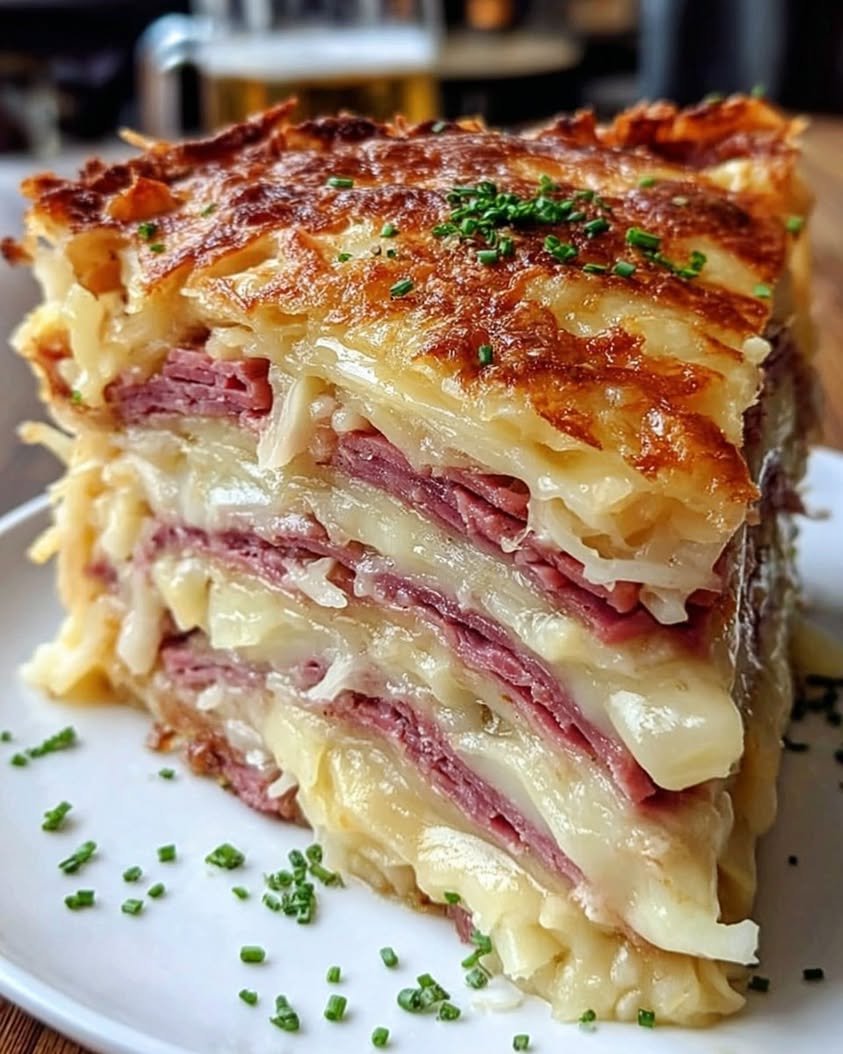
- Texture: Each bite offers a wonderful contrast of textures. The bottom layer of rye bread becomes soft and custard-like after baking, while the top edges turn slightly crispy. The corned beef remains tender and juicy, and the sauerkraut provides a pleasant, mild crunch. The melted Swiss cheese creates a stretchy, gooey layer that binds all the ingredients together in a satisfying way.
- Aroma: Your kitchen will fill with the irresistible scent of toasted rye bread, melted Swiss cheese, and savory beef. The sauerkraut releases a pleasant, tangy aroma that balances the richness of the meat and cheese. As it bakes, the hint of caraway from the rye and the creaminess of the dressing create a warm, inviting fragrance that promises a comforting meal.
- Visual Appeal: This bake looks as good as it tastes. The top becomes a beautiful golden brown with bubbles of melted cheese peeking through the surface. When you cut into it, you see distinct layers: the dark, savory corned beef, the pale sauerkraut, and the creamy cheese. A sprinkle of fresh parsley or caraway seeds adds a finishing touch that makes the dish pop.
- Skill Level Needed: This is an incredibly approachable recipe for any home cook. There is no complicated technique or special training required. The main tasks involve layering ingredients and mixing a simple sauce. Even a beginner can successfully create this impressive dish on the first try. It is a confidence-building recipe that delivers restaurant-quality results with minimal effort.
- Special Equipment: You only need basic kitchen tools for this recipe. A standard 9×13 inch baking dish works perfectly for the full batch. A large mixing bowl is needed for the sauce and for combining the sauerkraut. A wooden spoon or spatula for layering and a sharp knife for slicing the corned beef complete your equipment list. No special gadgets are necessary, which makes cleanup a breeze.
Recipe Overview
- Difficulty Level: We rate this recipe as Easy because it involves no fancy cooking techniques. The process is built around simple assembly and consistent baking. You are essentially building layers in a dish and then letting the oven do the hard work. There is no need to stand over a stove stirring a roux or worrying about precise timing. This makes it a perfect choice for a stress-free dinner.
- Category: This dish falls squarely into the casserole category, often referred to as a hot dish in some regions. It can also be classified as a baked entree or a comfort food main course. It works beautifully as a centerpiece for lunch, dinner, or even a hearty brunch. Its versatility allows it to slide seamlessly into any meal plan.
- Cuisine: While the Reuben sandwich itself is a staple of American Jewish deli culture, this casserole version is a modern American comfort food innovation. It draws heavily from the flavors of the classic New York deli but adapts them for home cooking convenience. The use of rye bread and Thousand Island dressing connects it directly to that early 20th-century deli tradition. This recipe honors those roots while making the experience more accessible to a wider audience.
- Cost: This is a very budget-friendly meal, especially when you consider how many servings it provides. Deli corned beef can be purchased on sale or during holidays like St. Patrick’s Day when prices drop significantly. Swiss cheese and sauerkraut are both affordable staples. A single batch can feed a family of eight for under 20 dollars, depending on your local grocery prices. That makes it an excellent choice for feeding a crowd without breaking the bank.
- Season: This Reuben Bake is particularly popular during the colder months of fall and winter. Its warm, hearty nature makes it a natural fit for comfort food season. It also shines around St. Patrick’s Day when corned beef is abundant and on sale. However, because it is so simple to prepare, we find ourselves making it year-round whenever a craving for something savory and satisfying strikes.
- Occasion: This dish is a superstar for casual gatherings and family dinners. It is perfect for game day parties, potlucks, and holiday brunches. Because it travels well and reheats beautifully, it is an ideal candidate for bringing to a friend’s house. It also makes a fantastic weeknight dinner when you need something hearty but don’t want to spend hours in the kitchen.
Why You’ll Love This Recipe
Taste and texture appeal are the primary reasons we keep coming back to this Reuben Bake. The combination of salty corned beef, tangy sauerkraut, and rich Swiss cheese creates a flavor profile that is both bold and familiar. The creamy sauce adds a velvety element that makes every bite feel luxurious. The rye bread provides a satisfying chew and a subtle earthy flavor that ties everything together. It hits all the right notes for a truly indulgent comfort food experience.
Convenience and preparation benefits make this recipe a winner for anyone with a busy schedule. You can assemble the entire casserole in under 20 minutes and then let the oven do the rest. There is no need to stand over a hot stove flipping sandwiches or monitoring a grill. This one-dish meal also means minimal cleanup, which is always a bonus on hectic weeknights. You can even prep it the night before and refrigerate it, making dinner the next day virtually effortless.
Nutritional advantages are another compelling reason to add this dish to your regular rotation. Corned beef provides a solid source of protein and essential B vitamins, particularly B12. Swiss cheese offers calcium and protein, contributing to bone health and muscle repair. Sauerkraut is a fermented food, which means it contains probiotics that support a healthy gut microbiome. While it is a comforting, indulgent meal, it also delivers some genuine nutritional benefits that make it a smarter choice than many fast-food alternatives.
Social and entertaining value cannot be overstated for this recipe. It is a crowd-pleaser that appeals to both adults and children. When served straight from the baking dish, it creates a beautiful, rustic presentation that feels both casual and special. It pairs wonderfully with simple sides like a green salad or roasted vegetables, rounding out a complete meal. Because it serves eight people easily, it is a fantastic option for potlucks, family reunions, or any gathering where you want to ensure everyone leaves full and happy.
Cost-effectiveness and accessibility make this recipe a practical choice for budget-conscious cooks. The ingredients are available at almost any grocery store, and many are pantry staples. Deli corned beef can be expensive if bought fresh, but you can often find it in the refrigerated section or even canned for a fraction of the cost. This bake stretches those ingredients further than sandwiches would, giving you more meals for your money. It is a smart, economical way to feed a family without sacrificing flavor or quality.
Historical Background and Cultural Significance
Origin story of the Reuben sandwich is a subject of considerable debate among food historians. The most popular narrative credits Arthur Reuben, owner of Reuben’s Delicatessen in New York City, with creating the sandwich in the early 1900s. He supposedly made it for actress Anna Seligman, combining corned beef, Swiss cheese, and sauerkraut on rye bread. Another story claims it was created by Reuben Kulakofsky, a grocer from Omaha, Nebraska, during a poker game. Regardless of its exact origin, the sandwich quickly became a staple of Jewish delis across the United States.
Cultural importance of the Reuben sandwich extends far beyond its ingredients. It represents the rich culinary tradition of Eastern European Jewish immigrants who brought their foodways to America in the late 19th and early 20th centuries. Corned beef, sauerkraut, and rye bread are all deeply rooted in that cultural heritage. The sandwich became a symbol of the American melting pot, where immigrant ingredients were combined in new, creative ways. It remains a point of pride in cities like New York and Omaha, each claiming the sandwich as their own invention.
Evolution of the recipe from a hand-held sandwich to a baked casserole is a natural progression in home cooking. As delis became less common in suburban areas, home cooks began recreating the flavors of the Reuben in easier, family-friendly formats. The casserole version likely emerged in the mid-20th century, when casseroles were at the height of their popularity in American cuisine. It allowed families to enjoy the distinctive Reuben taste without the need for a griddle or a trip to a specialty deli. This adaptation made the flavors more accessible to a wider audience.
Regional variations of the Reuben are numerous and fascinating across the United States. In the Pacific Northwest, some versions use grilled sourdough instead of rye bread. The Rachel sandwich, a close relative, substitutes coleslaw for sauerkraut and often uses pastrami instead of corned beef. In the Midwest, you might find a version with Thousand Island dressing on the side rather than spread inside. This flexibility is a testament to the sandwich’s enduring popularity and its ability to adapt to local tastes and available ingredients.
Ingredient Deep Dive
Corned beef is the heart of this Reuben Bake, and understanding its background enriches the eating experience. Traditionally made from brisket, the meat is cured in a brine that includes salt, sugar, and spices like peppercorns and bay leaves. The curing process gives it that distinctive pink color and salty, savory flavor. It is a cultural touchstone for Irish and Jewish communities, particularly around St. Patrick’s Day and Jewish holidays. Nutritionally, corned beef is an excellent source of protein, iron, and zinc, which support immune function and energy levels. When selecting corned beef, look for a piece with good marbling for tenderness, and avoid packages with excessive liquid. Store it in the refrigerator and use it within five to seven days of opening, or freeze it for up to three months. If you prefer a leaner option, you can substitute pastrami, which is typically made from the navel cut and has a more peppery flavor.
Sauerkraut provides the essential tangy counterpoint in this dish. This fermented cabbage has a long history, dating back over 2,000 years to ancient China, where it was originally made with rice wine. It eventually spread to Europe and became a staple in German and Eastern European cuisines. The fermentation process produces lactic acid, which gives sauerkraut its sour taste and creates beneficial probiotics that support digestive health. It is also low in calories and packed with vitamins C and K as well as fiber. When shopping, opt for sauerkraut sold in the refrigerated section, as it contains live cultures. Canned varieties are shelf-stable but often lack the same probiotic benefits. Rinsing and draining the sauerkraut reduces its briny intensity, which we recommend for this bake to prevent it from overwhelming the other flavors. Store an opened jar in the refrigerator for several weeks, ensuring the liquid covers the cabbage to keep it fresh.
Swiss cheese brings a nutty, buttery richness that perfectly complements the salty beef and tangy cabbage. True Swiss cheese, like Emmental or Gruyere, originates from Switzerland and is known for its distinctive holes, or eyes, which are formed by gas bubbles during fermentation. It has a high melting point compared to other cheeses, making it ideal for casseroles where you want a creamy, stretchy texture without becoming greasy. Swiss cheese is a good source of calcium and phosphorus, both essential for strong bones and teeth. When selecting Swiss cheese, look for a piece with a pleasant, nutty aroma and avoid any with an ammonia smell, which indicates it is past its prime. Store it wrapped in wax paper or cheese paper in the refrigerator, and bring it to room temperature before grating for the best melting results. A good substitute is Gruyere, which offers a slightly more complex, earthy flavor, or a mild provolone for a different but still delicious twist.
Rye bread provides the structural base for this casserole. Rye flour has a lower gluten content than wheat flour, which gives rye bread its dense, chewy texture that stands up well to soaking in the creamy sauce. Its distinct flavor comes from caraway seeds, which are traditionally added to the dough. Rye bread has a lower glycemic index than white bread, meaning it causes a slower rise in blood sugar levels, making it a slightly healthier choice. It is also a good source of fiber and several B vitamins. For this recipe, day-old or slightly stale rye bread works best because it holds its shape better when layered. You can also use pumpernickel bread, which is a darker, denser form of rye with an even richer flavor. Store rye bread in a cool, dry place for up to a week, or freeze it for several months to extend its shelf life.
Thousand Island dressing is the creamy, tangy binder that brings the casserole together. This dressing is a classic American condiment made from a base of mayonnaise and ketchup, with additions like sweet pickle relish, chopped onions, and sometimes hard-boiled eggs. It is believed to have originated in the Thousand Islands region of New York in the early 20th century. While store-bought versions are perfectly acceptable, making your own is simple and allows you to control the sweetness and tanginess. Nutritionally, it is calorie-dense due to the oil and mayo, so consider using a lighter version if you are watching your intake. For a healthier twist, substitute a Greek yogurt-based dressing that provides the same creamy texture with less fat. Store any leftover dressing in the refrigerator for up to two weeks.
Common Mistakes to Avoid
- Not properly draining the sauerkraut is a frequent error that leads to a watery casserole. We recommend pressing the sauerkraut firmly in a colander to remove as much liquid as possible before layering it in the dish.
- Overcooking the corned beef will make it dry and tough. Remember that the beef is already fully cooked when you buy it, so the bake only needs to heat it through and meld the flavors.
- Using fresh, soft rye bread instead of slightly stale bread results in a mushy bottom layer. Let the bread sit out for a day or toast it lightly before cubing it for the casserole.
- Skipping the pre-bake step for the bread cubes is a mistake we see often. A quick 10-minute toast in the oven helps the bread cubes hold their shape and absorb the sauce evenly.
- Overloading the dish with sauce will create a soupy mess. Stick to the recommended amount of dressing and milk, as the bread and other ingredients will release additional moisture during baking.
- Using pre-shredded Swiss cheese can lead to a less creamy result because anti-caking agents prevent it from melting smoothly. Always shred your own cheese from a block for the best texture.
- Not letting the casserole rest after baking is a common oversight. Allow it to sit for about 10 minutes before slicing so the layers set and the casserole holds its shape.
- Cutting the corned beef too thick can make the layers uneven and difficult to eat. Slice the beef thinly, about a quarter-inch thick, for the best texture and distribution.
- Forgetting to season the sauce is an easy mistake to make. A pinch of black pepper and a dash of Worcestershire sauce can elevate the entire dish significantly.
- Baking the casserole uncovered for the entire time can dry out the top layer. Cover it with foil for the first half of the bake to keep it moist, then uncover to brown the top.
Essential Techniques
Toasting the rye bread cubes is a simple but critical step that prevents a soggy casserole. Spread the cubed bread on a baking sheet and bake at 350 degrees Fahrenheit for about 10 minutes, or until the edges are just starting to turn golden brown. This process dries out the bread, allowing it to absorb the creamy sauce without turning into a paste. The visual cue you are looking for is a slight firmness on the outside while the inside remains slightly soft. Avoid over-toasting, as the bread will continue to absorb moisture during the bake and can become too hard if overdone.
Properly draining and pressing the sauerkraut removes excess moisture that could dilute the casserole’s flavor. Place the sauerkraut in a fine-mesh strainer or colander and use the back of a spoon or a paper towel to press down firmly. You want to extract as much liquid as possible, which helps concentrate the tangy flavor and prevents a watery final dish. A good technique is to wrap the sauerkraut in a clean kitchen towel and squeeze it tightly over the sink. The visual cue is that the sauerkraut should look dry and separate easily rather than clumping together in a wet mass.
Layering the ingredients evenly ensures that every serving has a balanced mix of flavors and textures. Start with a layer of toasted rye bread cubes at the bottom, then spread a third of the sauerkraut, followed by a third of the sliced corned beef, and finally a generous sprinkle of Swiss cheese. Repeat the layers two more times, finishing with a top layer of cheese. Press each layer down gently with a spatula to help the ingredients settle together. The visual cue is a dish that looks uniform and stacked, with no large gaps between the layers. Patience during layering pays off with a more cohesive final product.
Making the sauce correctly is essential for a creamy, cohesive bake. Whisk together the Thousand Island dressing, milk, and a beaten egg until completely smooth. The egg acts as a binder, helping the casserole set up properly as it bakes. Pour the sauce evenly over the layered ingredients, making sure it reaches the bottom of the dish by tilting the pan gently. The visual cue is a sauce that looks uniform in color and consistency, without any streaks of egg white. Do not overmix, but ensure there are no lumps of dressing remaining.
Allowing the casserole to rest after baking is a final technique that significantly improves the finished dish. Once the cheese is bubbly and the top is golden brown, remove the dish from the oven and let it sit on a wire rack for at least ten minutes. This resting period allows the liquids to redistribute and the layers to set, making it easier to slice clean squares. The visual cue is that the casserole will stop releasing steam and the surface will look slightly firmer. Cutting into it too early will result in a runny, messy serving that lacks structure.
Pro Tips for Perfect Reuben Bake
Always use full-fat Swiss cheese for the best melting and creamiest texture. Low-fat or non-fat versions contain more moisture and less fat, which can lead to a rubbery, separated final dish. The extra richness from full-fat cheese is worth the slight increase in calories.
Toast your rye bread cubes a day in advance for even better texture. Stale bread absorbs the sauce more evenly and holds up better during baking. Simply store the toasted cubes in an airtight container at room temperature until you are ready to assemble the casserole.
Add a pinch of caraway seeds to the sauce for an extra layer of authentic Reuben flavor. This small addition reinforces the rye bread notes and ties the entire dish together beautifully. It is a subtle touch that makes a big difference.
If you are using a store-bought Thousand Island dressing, consider adding a tablespoon of Dijon mustard to the sauce. This adds a gentle heat and a touch of acidity that brightens the overall flavor profile and prevents the dish from tasting too heavy.
Line your baking dish with parchment paper for the easiest cleanup possible. This is especially helpful if you plan to bring the casserole to a potluck or party. It also helps you lift the entire bake out for slicing on a cutting board.
For a crispier top, switch the oven to broil for the last two to three minutes of baking. Keep a close eye on it, as the cheese can go from perfectly browned to burnt very quickly under the intense heat. This step adds a beautiful, crunchy crust.
Letting the casserole rest for a full 15 minutes if you plan to transport it will prevent it from falling apart in the dish. The extra time allows the structure to set more firmly, making it much easier to move and serve cleanly.
Season each layer with a tiny pinch of black pepper as you build the casserole. This ensures that the seasoning is distributed throughout the dish rather than just on top. It is a small step that results in a more evenly flavored final product.
Variations and Adaptations
Regional variations of this Reuben Bake are a fun way to explore different flavor profiles. In the Midwest, some cooks add a layer of canned sauerkraut mixed with brown sugar to sweeten the tanginess slightly. In the Pacific Northwest, you might find a version that uses grilled sourdough bread cubes instead of rye, giving the dish a more pronounced sour note. A Southern twist could involve using pimento cheese instead of Swiss and adding a dash of hot sauce for heat. Each of these regional tweaks honors the core concept of the dish while allowing local tastes to shine through.
Seasonal adaptations let you enjoy this bake throughout the year. In the fall, add a layer of sliced apples between the sauerkraut and corned beef for a sweet and savory combination that pairs perfectly with the season. During the spring, consider using fresh Swiss chard or spinach in place of some sauerkraut for a lighter, greener option. In the summer, a version with grilled corned beef and fresh tomato slices can brighten the dish and make it more refreshing. These small seasonal changes keep the recipe feeling new and relevant no matter the time of year.
Dietary modifications make this dish accessible for various eating plans. For a gluten-free version, substitute the rye bread with gluten-free bread or even a layer of cooked gluten-free pasta. Ensure your Thousand Island dressing is certified gluten-free as well. A dairy-free adaptation can be achieved by using a plant-based Swiss-style cheese and a dairy-free cream sauce made from cashew cream or oat milk. These substitutions allow everyone at the table to enjoy the classic Reuben experience without compromising their dietary needs.
Flavor variations can transform the dish into something entirely new while keeping the same structure. Try using pastrami instead of corned beef for a spicier, more peppery kick. Add a layer of caramelized onions between the bread and sauerkraut for a deep, sweet flavor that complements the tang. A sprinkle of fresh dill or chives over the top before serving adds an herbaceous note that brightens the richness. Experimenting with different mustards in the sauce, like a whole-grain or spicy brown mustard, can also dramatically change the flavor profile.
Texture modifications allow you to customize the dish to your preference. For a crunchier top, mix crushed rye crackers or panko breadcrumbs with melted butter and sprinkle them over the cheese before baking. If you prefer a softer, more homogenous texture, let the casserole sit covered for the entire baking time. Adding a layer of thinly sliced potatoes between the bread and sauerkraut can create a heartier, more substantial base that absorbs even more flavor. These adjustments let you tailor the bake to exactly what you are craving.
Presentation alternatives make this dish suitable for more formal occasions. Instead of baking it in a standard casserole dish, layer the ingredients in individual ramekins for perfectly portioned servings. You can also serve it open-faced on a single large slice of toasted rye bread for a deconstructed take on the classic. Garnishing with a drizzle of extra Thousand Island dressing and a sprinkle of fresh chives adds a professional touch that elevates the dish for dinner parties or holiday gatherings.
Serving and Presentation Guide
Plating techniques for this Reuben Bake are straightforward but can be elevated with a little care. Use a sharp knife or a bench scraper to cut clean squares, wiping the blade between cuts to keep the layers intact. Slide a wide spatula under each portion to lift it out without disturbing the structure. Serve on warm plates to keep the dish hot longer, and place a small dollop of extra Thousand Island dressing on the side for dipping. A simple, rustic presentation that shows off the layers is always the most appealing.
Garnishing ideas can add both visual appeal and complementary flavors. A sprinkle of fresh, chopped parsley or chives adds a pop of green that contrasts beautifully with the golden cheese and brown meat. A few caraway seeds sprinkled on top echo the flavors of the rye bread and add an authentic touch. Thinly sliced pickles or pickled onions placed alongside the casserole provide an acidic counterpoint that cuts through the richness. Avoid heavy garnishes that might overwhelm the dish, and keep it simple and elegant.
Traditional accompaniments for a Reuben meal include a crisp pickle spear and a side of coleslaw. The acidity of the pickle and the cool crunch of the slaw balance the warm, savory casserole perfectly. A simple green salad with a tangy vinaigrette is another classic choice that lightens the meal. For a heartier spread, serve it with a cup of matzo ball soup or a bowl of hearty lentil soup to create a complete deli-inspired feast.
Modern serving suggestions can update the dish for contemporary tastes. Serve the casserole over a bed of fresh arugula or mixed greens for a lighter, more balanced plate. You can also scoop it over a toasted hot dog bun for a deconstructed Reuben sandwich experience. For a fun party presentation, bake the casserole in a cast-iron skillet and bring it directly to the table for a rustic, family-style meal. These modern touches make the dish feel current and exciting.
Temperature considerations are important for the best eating experience. Serve the casserole hot from the oven, as the cheese and sauce are at their most flavorful and enjoyable when warm. Allow it to rest for at least 10 minutes so it is not dangerously hot, but do not let it cool completely before serving. If you are serving it at a buffet, consider keeping it in a slow cooker on the warm setting to maintain the ideal temperature. Reheating leftovers in the oven is better than the microwave, as it helps restore the crispy top layer.
Portion control tips help ensure everyone gets a satisfying serving. A standard 9×13 inch dish yields eight generous portions, making it easy to estimate. For smaller appetites, cut the casserole into 12 smaller squares, which works well for a buffet or party setting. If you are serving it as a main course alongside several sides, a two-inch square per person is typically sufficient. When in doubt, it is better to make a larger batch, as leftovers store beautifully and are always welcome.
Wine and Beverage Pairing
Wine pairings for this Reuben Bake should complement its rich, savory, and tangy flavors. A light to medium-bodied red wine like a Pinot Noir is an excellent choice, as its bright acidity and soft tannins cut through the richness of the cheese and beef without overpowering the dish. A dry Riesling or a Grüner Veltliner from Austria also works wonderfully, as their high acidity and subtle fruitiness mirror the tang of the sauerkraut and dressing. For a more adventurous pairing, try a chilled Lambrusco, a slightly sparkling red wine from Italy that offers a refreshing contrast to the hearty casserole.
Non-alcoholic alternatives are just as satisfying and can be tailored to the meal. A crisp, dry ginger ale or a ginger beer provides a spicy, effervescent palate cleanser that lifts the dish. A tart cherry juice spritzer, made with seltzer water and a squeeze of lime, offers a similar acidity to wine without the alcohol. For a more traditional route, a cold glass of buttermilk can echo the creamy notes of the Swiss cheese and dressing, though it is an acquired taste for some. These options ensure everyone has a beverage that enhances the meal.
Coffee and tea pairings can work surprisingly well with this casserole, especially if you are serving it for brunch or a late lunch. A rich, dark roast coffee with notes of chocolate and caramel can complement the savory, earthy flavors of the corned beef and rye bread. A smoky Lapsang Souchong tea, with its distinct campfire aroma, pairs beautifully with the charred, grilled notes of the bread. For a non-caffeinated option, a warm cup of chamomile or rooibos tea offers a gentle, floral contrast that does not compete with the dish.
Temperature considerations for beverages are important for the best pairing experience. Serve white wines and sparkling wines thoroughly chilled, around 45 to 50 degrees Fahrenheit, to maximize their refreshing qualities. Red wines like Pinot Noir should be served slightly cool, around 55 degrees Fahrenheit, to keep their acidity bright. Non-alcoholic drinks should be served cold, ideally over ice, to provide a cool contrast to the hot casserole. Hot coffee and tea should be served at a temperature that allows you to sip them comfortably throughout the meal without burning your mouth.
Serving suggestions for beverages can elevate the overall dining experience. Offer a small carafe of the chosen wine on the table so guests can pour their own, and keep a pitcher of water infused with cucumber or lemon to cleanse the palate. For a party, consider setting up a small bar with a choice of the recommended wines and non-alcoholic options. Place the drinks on a separate sideboard or cart to keep the dining table uncluttered. This creates a more relaxed, enjoyable atmosphere for your guests.
Storage and Shelf Life
Storage methods for leftover Reuben Bake are simple, but proper technique ensures the dish retains its quality. Allow the casserole to cool completely to room temperature before covering it to prevent condensation, which can make the top layer soggy. Once cooled, cover the baking dish tightly with plastic wrap or aluminum foil, or transfer individual portions to airtight containers. Store the covered dish in the refrigerator for up to four days. For longer storage, we recommend freezing the casserole, which we discuss in the next section.
Temperature requirements for safe storage cannot be overlooked. Your refrigerator should be set to 40 degrees Fahrenheit or below to prevent bacterial growth. Do not leave the casserole out at room temperature for more than two hours after baking, as the dairy and meat components are susceptible to spoilage. If you are serving the dish at a buffet, use a chafing dish or a slow cooker to keep it above 140 degrees Fahrenheit. Always check the internal temperature with a food thermometer before serving leftovers to ensure they have been reheated to at least 165 degrees Fahrenheit.
Container recommendations help maintain the texture and flavor of the stored casserole. Glass or ceramic containers with airtight lids are ideal, as they do not absorb odors and allow you to see the contents. If you are freezing the casserole, choose freezer-safe containers or heavy-duty freezer bags. Divide leftovers into single-serving portions before freezing to make reheating more convenient. Avoid using metal containers for prolonged storage, as they can impart a metallic taste to the food after several days.
Signs of spoilage are important to recognize to avoid foodborne illness. Discard the casserole if you notice an off, sour smell that goes beyond the usual tanginess of the sauerkraut. Mold growth, which appears as fuzzy green or white spots, is an obvious sign that the dish has gone bad, especially on the top cheese layer. If the texture becomes slimy or the casserole develops a watery, separated look, it is no longer safe to eat. Always trust your senses, and when in doubt, throw it out.
Reheating instructions for leftover Reuben Bake help restore its original texture and flavor. The best method is to reheat individual portions in the oven at 350 degrees Fahrenheit for about 15 minutes, or until the cheese is bubbly and the center is hot. Cover the dish with foil to prevent the top from burning while the center heats through. The microwave is faster but can make the bread layer soggy and the cheese rubbery. If you use a microwave, heat in 30-second intervals on medium power, and add a splash of milk to restore some moisture to the casserole.
Freezing guidelines allow you to extend the life of this Reuben Bake for up to three months. To freeze, allow the casserole to cool completely, then wrap it tightly in two layers of plastic wrap and a final layer of aluminum foil. This prevents freezer burn and protects the dish from Print
Reuben Bake with Layers of Corned Beef, Sauerkraut, and Swiss Cheese
- Total Time: 45 minutes
- Yield: 6
Description
A warm, layered casserole that captures all the classic flavors of a Reuben sandwich: tender corned beef, tangy sauerkraut, creamy dressing, and melted Swiss cheese, all baked together in a satisfying dish.
Ingredients
- 2 cups rye bread, cubed
- 1/2 cup butter, melted
- 1 lb cooked corned beef, sliced or shredded
- 1 1/2 cups sauerkraut, drained and squeezed dry
- 1 cup Thousand Island dressing
- 2 cups shredded Swiss cheese
- 1 cup heavy cream
- 2 large eggs
- 1 tablespoon caraway seeds (optional)
Instructions
- Preheat oven to 350°F (175°C). Grease a 9×13-inch baking dish.
- In a small bowl, combine cubed rye bread and melted butter. Spread evenly in the bottom of the prepared dish.
- Layer half of the corned beef over the bread, followed by all of the sauerkraut.
- Drizzle half of the Thousand Island dressing over the sauerkraut, then sprinkle with half of the Swiss cheese.
- Add the remaining corned beef, then top with remaining dressing and the rest of the cheese.
- In a separate bowl, whisk together heavy cream, eggs, and caraway seeds (if using). Pour the mixture evenly over the casserole.
- Bake for 25-30 minutes, until the casserole is set and the cheese is bubbly and golden brown.
- Let rest for 5 minutes before slicing. Serve warm.
Notes
You can customize the seasonings to taste. For added flavor, use rye bread with caraway seeds or add a sprinkle of paprika before baking.
- Prep Time: 15 minutes
- Cook Time: 30 minutes
- Method: Main
- Cuisine: American