Raspberry Chocolate Lava Cupcakes: An Indulgent Dessert You’ll Love
Raspberry Chocolate Lava Cupcakes bring together two of the most beloved dessert flavors in one spectacular bite. Imagine breaking through a tender chocolate cake shell to find a warm, molten chocolate center that flows like silk onto your plate. Now add a bright burst of raspberry that cuts through the richness and lifts every spoonful into something truly memorable. These cupcakes deliver restaurant-quality drama from your own kitchen, and they come together in under forty minutes from start to finish.
The magic of these raspberry chocolate lava cupcakes lies in the contrast between the soft cake exterior and the gooey center. Fresh raspberries folded into the batter add pockets of tart sweetness, while a raspberry reduction swirled into the chocolate filling gives each bite a fruity finish. Whether you serve them for a birthday celebration, a romantic dinner, or a weekend treat, these cupcakes earn rave reviews every single time. Home bakers of all skill levels can master this recipe because the steps stay simple and the results stay consistent.
You might worry that lava cakes demand professional pastry skills, but this recipe proves otherwise. The batter mixes in one bowl, the filling takes five minutes on the stovetop, and the oven does the rest of the work. Because the cupcakes bake at high heat for a short time, the edges set while the middle stays soft and flowing. That timing trick means anyone can create a showstopping dessert without stress. Grab your muffin pan, gather a handful of pantry staples, and get ready to impress everyone at the table.
Quick Recipe Highlights
- Flavor Profile: Rich dark chocolate dominates the first bite, then raspberry arrives with a bright, tangy finish. The combination tastes like a chocolate truffle dipped in berry jam. A hint of vanilla rounds out the edges and keeps the flavors balanced.
- Texture: The cake exterior stays tender and slightly springy, while the center flows with warm molten chocolate. Fresh raspberry pieces add a juicy pop that breaks up the richness. Each spoonful moves from soft cake to silky sauce in one smooth motion.
- Aroma: Melted chocolate and butter fill the kitchen as the cupcakes bake. A subtle fruity note from the raspberry reduction drifts through the air. Vanilla and a whisper of espresso powder deepen the overall scent.
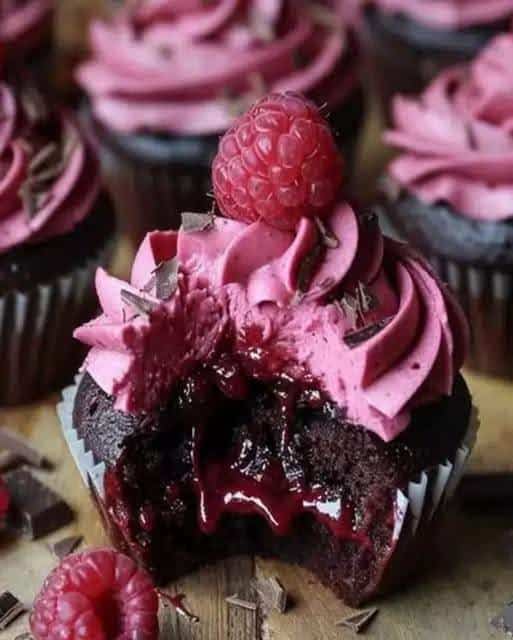
- Visual Appeal: Deep brown cakes sit in paper liners with a slight sheen on top. A dusting of powdered sugar and a fresh raspberry crown each cupcake. Cutting one open reveals a dramatic flow of chocolate and berry sauce.
- Skill Level Needed: Intermediate bakers feel comfortable here, though beginners succeed with careful timing. The batter follows standard mixing steps, and the only real challenge is pulling the cupcakes at the right moment. A timer and an oven thermometer solve most problems.
- Special Equipment: You need a standard 12-cup muffin pan and paper liners. A small saucepan handles the raspberry reduction, and a whisk keeps the chocolate filling smooth. An instant-read thermometer helps confirm the oven temperature for reliable results.
Recipe Overview
- Difficulty Level: This recipe lands at the intermediate level because the molten center requires precise timing. Underbaking by a minute leaves the cake too loose, while overbaking by a minute seals the center. However, the ingredient list stays short and the techniques remain basic. Most home cooks nail the timing by their second batch.
- Category: These cupcakes work as a dessert first and foremost. They also fit nicely into celebration menus, holiday spreads, and dinner party finales. Some bakers serve them as an afternoon treat with coffee.
- Cuisine: The lava cake tradition traces back to French chefs who popularized the molten chocolate dessert in the 1980s. American bakers adapted the idea into single-serving cupcakes for easier portioning. The raspberry addition draws on classic European pairings of chocolate and red fruit. Today the recipe belongs to modern American home baking.
- Cost: A batch costs roughly six to eight dollars when you use pantry staples and frozen raspberries. Fresh raspberries in season push the cost slightly higher. Premium chocolate raises the price but rewards you with deeper flavor.
- Season: These cupcakes shine year-round because frozen raspberries work beautifully in the reduction. Fresh berries in summer add brightness and color. Cooler months make the warm molten center especially comforting.
- Occasion: Serve them for birthdays, anniversaries, Valentine’s Day, and dinner parties. They also suit casual weekend baking when you crave something special. The individual portions make them easy to bring to potlucks and celebrations.
Why You’ll Love This Recipe
The taste and texture of these raspberry chocolate lava cupcakes create a truly memorable dessert experience. Rich dark chocolate melts into a flowing sauce at the center, and the raspberry reduction adds a tangy counterpoint that keeps every bite lively. The cake shell stays soft and tender, so each spoonful delivers both structure and gooeyness. Fresh berries tucked into the batter surprise you with little bursts of juice. Few desserts offer this much contrast in a single serving.
Convenience plays a big role in why this recipe earns a permanent spot in your rotation. The batter comes together in one bowl with a whisk, and the raspberry filling takes five minutes on the stove. Because the cupcakes bake in fourteen minutes, the whole process fits into a weeknight schedule. You can also prepare the filling and batter ahead of time, then bake fresh portions right before serving. That flexibility makes entertaining far less stressful.
The nutritional profile offers a few advantages over heavier desserts. Fresh raspberries add fiber, vitamin C, and antioxidants to the batter and filling. Portion control comes built in because each cupcake serves one person, which helps guests enjoy a treat without overindulging. Dark chocolate brings a small amount of iron and magnesium to the table. These cupcakes still count as an indulgence, but they deliver a bit more substance than a plain candy bar.
Social and entertaining value sets this dessert apart from ordinary cupcakes. The molten center creates a moment of drama when you cut into each cake, and guests always react with delight. You can plate them individually with a raspberry drizzle for a polished restaurant feel. Because they look impressive yet bake quickly, they suit both casual gatherings and formal dinners. Hosts love a dessert that starts conversations.
Cost-effectiveness keeps this recipe accessible to every budget. Pantry staples like flour, sugar, eggs, and butter form the base, and chocolate plus raspberries cover the rest. The total cost per serving lands far below restaurant lava cakes. You avoid specialty equipment and complicated techniques. Affordable ingredients and simple steps make these cupcakes a smart choice for feeding a crowd without stretching your wallet.
Historical Background and Cultural Significance
The molten chocolate cake story begins with French chef Michel Bras, who created a chocolate dessert with a warm liquid center in the early 1980s. His invention at a restaurant in Laguiole, France, sparked a worldwide fascination with lava cakes. Chefs in New York and other American cities soon adapted the concept for their own menus. The idea of a cake that flows when cut captured the imagination of diners everywhere.
Cultural importance grew as lava cakes became a symbol of celebration dining. By the 1990s, the dessert appeared on steakhouse menus and romantic dinner tables across the United States. Home cooks wanted to recreate the experience, which led to countless magazine recipes and baking videos. The raspberry pairing entered the picture because chocolate and red fruit have long complemented each other in European pastry traditions. That pairing gave the dessert a fresh, fruity identity.
The evolution of this recipe reflects broader trends in home baking. Bakers moved the concept from large cakes to individual portions, which improved portion control and shortened baking times. Cupcake pans replaced ramekins for easier serving and cleanup. Adding fruit to the center created a new layer of flavor and color. Modern versions like these raspberry chocolate lava cupcakes show how a classic idea keeps adapting.
Regional variations appear across the country. Some Southern bakers add a touch of bourbon to the chocolate filling. West Coast versions often use locally grown berries in the reduction. Midwest home cooks favor a simpler filling with vanilla extract. However you adapt it, the core idea stays the same: warm chocolate meets bright fruit inside a tender cake.
Ingredient Deep Dive
Dark chocolate forms the backbone of these raspberry chocolate lava cupcakes. Cultures around the world have treasured cacao for centuries, from Mesoamerican drinking chocolate to European confectionery. Chocolate brings deep flavor, antioxidants, and a luxurious melt. Choose a bar labeled sixty to seventy percent cacao for balanced sweetness. Higher percentages taste bitter, while lower ones turn cloying. Store chocolate in a cool, dry place wrapped tightly, and swap in semisweet chips if a bar is unavailable.
Chocolate also carries cultural weight as a gift and celebration food. It signals indulgence and comfort in American homes. Nutritionally, dark chocolate supplies iron, magnesium, and flavonoids. Check the ingredient list and pick a bar with cocoa butter rather than palm oil for the smoothest melt. Keep it away from heat and moisture, and it lasts for months. When substituting, choose a bar of similar percentage to keep the filling texture intact.
Fresh raspberries bring the signature tang to this dessert. People have gathered wild raspberries for thousands of years across Europe and North America, and they remain a summer favorite at farmers markets. The berries deliver vitamin C, fiber, and antioxidants along with their bright flavor. Look for plump, deep red berries with no soft spots, and smell the container for sweetness. Refrigerate them unwashed and rinse just before use. Frozen raspberries work equally well in the reduction and save money off-season.
Raspberries also pair naturally with chocolate because their acidity balances fat and sugar. Their cultural role as a luxury fruit dates back to European royal gardens. Nutritionally, they support immune health and add fiber to desserts. Choose berries that feel firm and dry rather than damp. Store frozen berries for up to a year and use them straight from the freezer. Substitutions include blackberries for a deeper flavor or strawberries for a sweeter result.
Butter gives these cupcakes richness and structure. Bakers have churned butter for thousands of years, and it remains a cornerstone of Western baking. Butter contributes flavor, tenderness, and moisture to the crumb. Always use unsalted butter so you control the salt level. Choose a block over a tub for consistent fat content, and store it wrapped in the refrigerator. Melted butter works here, so texture flexibility matters less than flavor.
Butter also browns beautifully if you take it one step further for a nutty note. Culturally, butter represents abundance and skill in French cuisine. It supplies fat-soluble vitamins and energy. Look for fresh butter with a clean scent and no off-colors. Freeze extra butter for up to six months. Substitute high-quality margarine only if dairy is off the table, and expect a slight flavor difference.
Eggs hold the batter together and create lift. People have baked with eggs since ancient times, and they remain essential to cake structure. Eggs add protein, fat, and moisture while helping the cake rise. Choose fresh eggs with clean shells and store them in the refrigerator. Bring them to room temperature before mixing for smoother batter. For a swap, use a commercial egg replacer in this recipe because flax eggs change the crumb too much.
Eggs also contribute color and richness that define a quality cupcake. In many cultures, eggs symbolize celebration and new beginnings. They provide complete protein and several vitamins. Check the carton date and pick the freshest dozen available. Keep eggs in their carton rather than the door shelf for steadier temperatures. Room-temperature eggs beat into the batter more evenly, so plan ahead.
Granulated sugar sweetens and tenderizes the cakes. Sugar became a household staple in the Americas through centuries of trade, and it now anchors most desserts. It balances the bitterness of dark chocolate and helps the crust brown. Buy fresh sugar and store it airtight to prevent clumping. Caster sugar substitutes well if you want a finer texture. Reducing sugar changes the texture, so follow the recipe for best results.
Sugar also carries emotional weight as a symbol of hospitality. Nutritionally it supplies quick energy with no fiber. Choose clean, dry sugar and keep it sealed against moisture. Substitute coconut sugar only with caution because it browns faster. Measure carefully, since packing affects the final sweetness. A kitchen scale gives the most accurate results.
Common Mistakes to Avoid
- Overbaking the cupcakes seals the molten center and turns the lava into ordinary cake. Set a timer and check at twelve minutes, then watch closely. Pull the pan when the edges set but the centers still jiggle slightly.
- Underbaking leaves the cake structure too loose and the center raw. The batter should hold together around the gooey middle. Use an instant-read thermometer to confirm your oven runs true, because a hot oven bakes unevenly.
- Cold eggs blend poorly and cause the batter to curdle. Let eggs sit on the counter for thirty minutes before mixing. Room-temperature eggs emulsify smoothly with melted chocolate and butter.
- Burning the chocolate filling happens fast over high heat. Melt chocolate over low heat and stir constantly with a whisk. Remove the saucepan from heat the moment the mixture turns smooth.
- Skipping the raspberry reduction strains the flavor. Cooking the berries with sugar concentrates their tang and thickens the filling. Stir often and watch for a syrupy consistency before cooling.
- Overmixing the batter develops gluten and creates tough cupcakes. Fold the flour gently until just combined. A few small streaks of flour disappear during baking and keep the crumb tender.
- Filling the liners too full causes overflow and lopsided tops. Fill each liner about two-thirds full, then add the chocolate center. This leaves room for rise and keeps the filling centered.
- Using the wrong chocolate ruins the balance. Choose a bar between sixty and seventy percent cacao and avoid chocolate chips meant for cookies. High-quality chocolate melts evenly and tastes far better.
- Baking on the wrong oven rack dries the tops. Place the pan in the center of a preheated oven and rotate once at the halfway mark. Consistent heat protects the tender centers.
- Cooling the cupcakes in the pan overcooks the middles. Let them rest two minutes, then serve immediately. The molten center firms quickly as the cakes cool.
Essential Techniques
Melting chocolate gently matters more than any other step in this recipe. Chocolate contains cocoa butter, which scorches quickly over direct high heat. Use a small saucepan over the lowest flame and stir constantly, or set a heatproof bowl over barely simmering water. The chocolate should melt into a glossy pool with no grainy specks. Watch for a smooth ribbon when you lift the whisk, and pull the pan off the heat before the last solid piece disappears. The residual heat finishes the job safely.
Folding the batter protects the tender crumb of these raspberry chocolate lava cupcakes. Folding means lifting the mixture from the bottom and turning it over the top with a spatula. This motion keeps air in the batter and limits gluten development. Stop when you see a few streaks of flour, because they vanish in the oven. Overmixing makes the cakes dense and chewy. A light hand here rewards you with a soft, fine crumb around the molten center.
Timing the bake creates the signature lava effect. These cupcakes bake at four hundred degrees for about fourteen minutes, a hot, fast method that sets the edges while the center stays soft. Watch for the visual cue of puffed edges and a slightly glossy top. The centers should still jiggle when you nudge the pan. An instant-read thermometer helps confirm your oven temperature, since an oven running cool leaves raw batter. Set two timers for extra safety and check at twelve minutes.
Building the raspberry reduction gives the filling its punch. Cook raspberries with a little sugar over medium heat until the fruit breaks down and the juices thicken. Stir frequently and press the berries with a spatula to release the liquid. Strain the mixture if you want a smooth filling, or leave the seeds for texture. The reduction should coat the back of a spoon. Cool it before folding into the chocolate so it does not seize the mixture.
Pro Tips for Perfect Raspberries and Chocolate Lava Cupcakes
Preheat your oven fully before mixing anything, and confirm the temperature with a separate thermometer. Chocolate lava cupcakes live and die by accurate heat. An extra ten minutes of preheating stabilizes the temperature. Open the door only after twelve minutes to peek. Steady heat protects the molten centers.
Chill the raspberry reduction completely before filling the cupcakes. Warm reduction thins the chocolate center and causes soggy middles. Spread the reduction on a plate to speed cooling. A cool filling also contrasts with the hot cake for a more interesting bite. Make the reduction a day ahead and refrigerate it.
Use a scoop to portion the chocolate center evenly. A small cookie scoop places the same amount in each cupcake. Consistent portions mean consistent bake times. Press the center gently below the batter surface so it stays centered. Even filling keeps every cupcake photogenic.
Serve the cupcake on its side or slice it open at the table for drama. A paring knife cut reveals the molten flow more clearly than the first spoonful. Warm a small measuring cup of raspberry sauce for drizzling. A dusting of powdered sugar adds contrast without masking the chocolate. Fresh mint leaves brighten the plate.
Keep a batch of chocolate filling in the freezer for busy days. Scoop cooled filling onto a parchment-lined sheet and freeze the portions. Drop one frozen center into each batter-filled liner and add one to two minutes to the bake time. This trick turns a special dessert into a spur-of-the-moment treat. Frozen centers also keep the batter cooler.
Weigh your ingredients if you own a kitchen scale. One cup of flour can vary wildly between measuring methods. Grams give you consistency from batch to batch. Set the bowl on the scale and use the tare button between additions. Reliable measurements lead to repeatable, perfect results.
Variations and Adaptations
Regional variations give a fresh twist to this classic. French bakers might add a spoonful of Grand Marnier to the chocolate center for an orange-chocolate pairing. Italian cooks sometimes fold espresso into the batter for depth. Southern bakers add a splash of bourbon to the filling. Each region brings its own pantry traditions to the same beloved concept, and all versions keep the signature molten flow.
Seasonal adaptations change the fruit and the finish. In summer, use fresh raspberries and top with a spoonful of whipped cream and mint. In autumn, swap the raspberry reduction for pear or fig compote. Winter calls for cranberry reduction with a hint of orange zest. Spring pairs well with strawberry filling and edible flowers. The base recipe accepts fruit swaps without any structural adjustments.
Dietary modifications work with a few careful swaps. Use a one-to-one gluten-free flour blend and check that your chocolate is certified gluten-free. Replace butter with a quality plant butter and choose dairy-free chocolate for a vegan version. For egg-free baking, use a commercial egg replacer designed for cakes. Each swap changes texture slightly, so test one batch before serving guests.
Flavor variations expand the base recipe in fun directions. Add a teaspoon of instant espresso to the batter to deepen the chocolate taste. Swap the raspberry filling for salted caramel for a candy-shop effect. Fold toasted hazelnuts into the batter for crunch and pair the centers with orange curd. Try cherry preserves with a splash of almond extract for a Black Forest spin. Raspberry remains a favorite because the tart edge balances the sweet chocolate.
Texture modifications suit different preferences. Add mini chocolate chips to the batter for extra pockets of melt. Crush freeze-dried raspberries into the powdered sugar topping for a tangy finish. Serve the cupcakes warm with a scoop of vanilla bean ice cream for a hot-and-cold contrast. Toast the flour for a few minutes to create a softer crumb if you plan to store the cupcakes.
Presentation alternatives turn the same recipe into party food. Bake the batter in mini muffin tins and reduce the bake time to nine or ten minutes. Serve cupcakes in ramekins for a restaurant-style presentation. Top each cake with a fresh raspberry, a chocolate curl, and a mint leaf. Drizzle plates with raspberry sauce before setting down each cupcake. Guests eat with their eyes first.
Serving and Presentation Guide
Plating techniques set the mood for a special dessert. Center each cupcake slightly off-center on a small plate and stripe raspberry sauce across the surface in a curve. Add a quenelle of whipped cream at one edge and a single fresh raspberry beside it. Use a squeeze bottle for clean sauce lines if you have one. The plate should look composed but not crowded. Warm plates keep the molten center flowing longer.
Garnishing ideas elevate these raspberry chocolate lava cupcakes beyond the everyday. Dust powdered sugar through a small strainer for a light snowfall effect. Add a chocolate curl with a vegetable peeler and a chilled bar. Crown each cupcake with a fresh mint leaf and one perfect raspberry. Finely chopped pistachios bring color and crunch. Keep garnishes dry so nothing turns soggy on the plate.
Traditional accompaniments include vanilla ice cream and lightly sweetened whipped cream. A small pitcher of warm chocolate sauce lets guests pour their own flair. A side of fresh berries adds color and balances the plate. Coffee pairs well with the rich chocolate. Dust the plate with cocoa powder to frame the dessert.
Modern serving suggestions include individual glass cups for a parfait-style presentation. Layer cake cubes with raspberry sauce and whipped cream for a deconstructed look. Serve cupcakes in a basket with a small bowl of extra reduction on the side. A tray of mini versions suits cocktail parties beautifully. Offer forks and spoons together since the centers flow.
Temperature considerations matter because molten means warm. Serve these cupcakes within five minutes of removing them from the oven, or hold them in a warm spot for no more than ten minutes. Chill plates only for the ice cream or whipped cream garnishes, never the cakes themselves. A gentle warm plate keeps the flow going without cooking further. Hot cupcakes plus cold ice cream create a memorable contrast.
Portion control tips keep the party pleasant. One full-size cupcake per guest satisfies most appetites, especially with ice cream. Offer mini versions for a buffet, three to a plate. Large ramekins suit a dinner party for two after a light meal. Cut the centers at the table so everyone sees the lava. Let guests add their own sauce to personalize the plate.
Wine and Beverage Pairing
Wine pairings begin with the fruity, chocolate notes of these raspberry chocolate lava cupcakes. A ruby port matches the chocolate with warm berry flavors and keeps the sweet finish clean. Brachetto d’Acqui, a sparkling red from Italy, echoes the raspberry notes beautifully with a light fizz. Late-harvest Zinfandel brings dark fruit and a smooth finish. Sweet sherries such as Pedro Ximénez pair richly with dark chocolate. Serve wines at slightly cool cellar temperatures for the best balance.
Non-alcoholic alternatives keep the celebration going for every guest. Fresh raspberry shrub with sparkling water delivers tang and fizz without alcohol. A cold-brew coffee topped with whipped cream balances the rich chocolate. Chai tea with milk adds warmth and spice. Cranberry-raspberry juice spritzers bring color and refreshment. Offer a plain glass of cold milk because classic pairings always work.
Coffee and tea pairings deserve special attention with these cupcakes. An espresso pulls out the chocolate flavors and cuts the sweetness. A dark-roast pour-over complements the deep cocoa notes. For tea drinkers, a berry hibiscus tea mirrors the fruit, while an Earl Grey adds a bergamot accent that brightens everything. Brew strong and skip the sugar so the dessert stays the star.
Temperature considerations shape how you serve drinks alongside the dessert. Warm cupcakes and cold beverages create an enjoyable contrast. Add more ice to non-alcoholic options since chocolate warms the palate. Tea should arrive hot, while wine stays wine-cellar cool. A small ice water refill between bites keeps the palate fresh. Set drinks before plates so guests can start right away.
Serving suggestions keep the pairing simple and elegant. Pour dessert wines into small glasses to keep portions modest. Offer a choice of coffee or tea after the plates go down. A small pitcher of dessert wine on the table encourages second pours. Set the dessert plate first, then the drink, so the presentation moment lands. Encourage guests to sip between bites for the best flavor arc.
Storage and Shelf Life
Storage methods matter because these raspberry chocolate lava cupcakes peak the moment they leave the oven. Leftovers keep at room temperature for one day in an airtight container, but the centers firm up completely after an hour or so. Refrigerating the cupcakes firms the texture and darkens the crumb. For the best experience, bake only what you need and enjoy the rest as a delicious experiment. When you store, separate layers with parchment paper.
Temperature requirements stay simple. Store cooled cupcakes in an airtight container at room temperature for up to twenty-four hours. Refrigerate for up to three days if you want extra safety, though the magic thins. Never store cupcakes near heat or direct sun. Freeze for longer storage and bring a slice back with a short warm-up. Label the container with the date for easy tracking.
Container recommendations make a difference in quality. Use shallow boxes with parchment liners so the cupcakes do not crush. A dome-shaped cake carrier protects the tops. For freezing, wrap each cupcake individually in plastic wrap first, then place them in a zip-top bag. Press out excess air. Glass containers keep moisture steady, while plastic works well for short periods. Avoid stacking unfrosted cupcakes that have been cut.
Signs of spoilage appear within days with dairy and eggs in the batter. Check for a sour smell, mold, or moisture on the parchment. Discard anything that looks off. Chocolate filling can darken and dull as it ages, which signals time is up. When in doubt, toss the batch. Fresh batches taste far better and cost little to make.
Reheating instructions restore a hint of the molten magic. Microwave individual cupcakes for ten to fifteen seconds to soften the center. Wrap in foil and warm in a three-hundred-degree oven for five minutes for a gentler result. Do not overheat, since the chocolate can burn the edges. Add a splash of fresh raspberry sauce after warming. A fresh berry on top hides any surface imperfections.
Freezing guidelines help you plan ahead. Freeze fully cooled cupcakes for up to two months. Thaw overnight in the refrigerator, then microwave for fifteen seconds or warm in the oven. Freeze the batter and filling separately for easier future baking. Label both with dates and contents. Frozen raspberry reduction keeps for a year and makes future batches quick.
Make Ahead Strategies
Prep timeline plans make these cupcakes easy for a party. Make the raspberry reduction two days ahead and refrigerate it in a jar. Mix the dry ingredients the night before and store them in a zip-top bag. Measure the chocolate and butter so assembly takes minutes. On serving day, assemble the batter and bake right before guests arrive. A written timeline on the counter keeps you on track.
Storage between steps protects flavor and texture. Keep the raspberry reduction sealed and chilled. Store melted chocolate at room temperature for no more than an hour. Hold the room-temperature batter for up to thirty minutes, since the leavening weakens over time. Cover any stored components tightly. Label everything so helpers can find the right pieces.
Quality impact assessment matters for planning. Make-ahead cupcakes lose the dramatic flow after a day. Reduction and dry mixes keep perfectly for days. Frozen portions of bath batter work if you add a few minutes to the bake. Consider assembling the batter fresh and holding only the components. Plan the schedule around the bake, not around storage.
Assembly tips speed up the final hour. Set the liners first and scoop the batter with a scoop for speed. Drop in the cooled filling with a small spoon. Have the oven at full temperature before the last scoop lands. Line up garnishes in small bowls so plating moves quickly. Play music and enjoy the process.
Reheating guidelines for make-ahead batches restore the experience. Warm cupcakes in a three-hundred-degree oven for five minutes if you baked them earlier in the day. Microwave works for single servings, but watch the time closely. Add fresh sauce only after reheating. A fresh berry and a dust of sugar bring back the visual appeal. Serve right away for the best flow.
Fresh element additions keep the dessert lively. Keep the garnishes separate until serving. Whip cream at the last minute for the most elegant look. Slice fresh raspberries and place them on top just before the plates go out. Add a drizzle of sauce to each plate for a burst of color. Fresh touches make fast desserts look unhurried.
Scaling Instructions
Halving the recipe creates six cupcakes for a smaller household. Divide every ingredient by two and use a six-cup muffin pan or a standard pan with empty cups. Keep the batter and liners in the filled wells and add a little water to the empty cups to prevent warping. Bake time stays nearly the same, though check a minute earlier. Measure half eggs carefully or use a scale for accuracy.
Doubling or tripling the recipe suits parties and bake sales. Use two or three pans and bake one at a time unless your oven holds multiple pans evenly. Mix the batter in a larger bowl and make the reduction in a wider saucepan so it reduces quickly. Keep batches identical by weighing ingredients. Rotate each pan just once and keep the oven door closed between checks.
Equipment adjustments follow naturally. For a double batch, borrow a second muffin pan or bake in two rounds. Use a larger saucepan for the chocolate if doubling the filling. Mixing bowls need room for folding, so choose one size up. A second scoop speeds up filling. Line everything on the counter before you start.
Timing modifications keep the centers molten. Bake one pan at a time in a fully preheated oven. If two pans share the oven, rotate them halfway and expect one to two extra minutes. Check every minute after twelve. Remove each pan individually when the edges set. Do not let a second pan wait in a hot oven.
Storage considerations for larger batches need planning. Freeze half the batch for later and store the rest airtight for a day. Label and date every container. Share with neighbors and friends if the batch threatens to overwhelm the fridge. The filling and reduction store separately for future batches. Planned storage prevents waste.
Nutritional Deep Dive
Macro breakdown shows a dessert with balanced indulgence. Each cupcake delivers roughly three hundred calories, with fat from butter and chocolate, carbohydrates from sugar and flour, and protein from eggs. The raspberry reduction adds a small amount of fiber and natural sugar. Because portions stay small, the macros fit comfortably into a balanced daily plan. Serve with fruit for an extra fiber boost.
Micronutrient analysis reveals hidden benefits. Dark chocolate contributes iron, magnesium, and antioxidants called flavonoids. Raspberries add vitamin C and additional antioxidants. Eggs supply choline and B vitamins. These nutrients do not turn dessert into a health food, but they add value compared to empty-calorie sweets. Choose higher-cacao chocolate for more minerals.
Health benefits come with the territory of real ingredients. Antioxidants from chocolate and berries support overall wellness. Moderate portions satisfy cravings and reduce the urge to overeat later. Baking at home lets you control additives and fillers. The emotional benefit of sharing a special dessert counts too. Treating yourself mindfully supports a healthy relationship with food.
Dietary considerations guide ingredient choices. Check chocolate labels for dairy in vegan versions and look for gluten-free flour blends that include gum. Watch total added sugar if you monitor intake, and reduce the sugar by a tablespoon without ruining the texture. Discuss food allergies with guests. Label desserts clearly at buffets.
Portion analysis supports mindful eating. One cupcake plus a spoon of ice cream makes a satisfying serving. A second cupcake feels indulgent but acceptable on special occasions. Mini cupcakes let guests sample without committing. A written menu helps guests plan their plates. Portion awareness keeps desserts fun and stress-free.
Weight management tips keep these cupcakes in rotation responsibly. Serve on smaller plates to make portions look bigger. Eat slowly and enjoy the molten center instead of rushing. Pair with a light meal so the dessert becomes the star. Keep extras out of sight or freeze them. A planned dessert that you look forward to beats grazing all day.
Dietary Adaptations
Gluten-free versions swap the all-purpose flour for a one-to-one gluten-free blend. Look for a blend that includes xanthan gum for structure. Check the chocolate and baking powder labels for gluten. Mix the batter gently to avoid toughening the crumb. Expect a slightly crumbly texture that still tastes delicious. Store gluten-free cupcakes tightly because they dry faster.
Dairy-free adaptations replace butter with a premium plant butter and use dairy-free chocolate. Full-fat plant butters work best for the batter, and almond milk can replace any liquid. Coconut oil adds flavor and works in a pinch if you like the taste. Whisk the melted chocolate carefully since plant chocolate can seize. Check labels for milk solids and share the substitutions with guests.
Vegan versions combine dairy-free swaps with egg replacements. Use a commercial egg replacer or follow a whipped flax method with a tablespoon of ground flax and three tablespoons of water per egg. Add a little more leavening to help the rise. Bake for one extra minute if the centers seem too loose. Test a batch before a party.
Low-carb versions replace sugar with a keto sweetener and use almond flour. Use a one-to-one erythritol blend for the sugar and an almond flour blend for the flour, adding a binder like psyllium. The centers bake faster because almond flour browns quickly. Watch the timer and check early. The result tastes richer and denser.