The Best One-Pan Parmesan Spinach Mushroom Pasta Skillet Recipe
This Parmesan Spinach Mushroom Pasta Skillet recipe is the ultimate comfort food that comes together in one single pan. You get perfectly tender pasta, earthy mushrooms, and fresh spinach all coated in a rich, creamy Parmesan sauce. This one-pan wonder is perfect for busy weeknights when you want a satisfying meal without spending hours cleaning up.
Imagine coming home after a long day and knowing that dinner is just thirty-five minutes away. The aroma of garlic and mushrooms fills your kitchen as you stir everything together in one skillet. This Parmesan Spinach Mushroom Pasta Skillet recipe delivers that experience with minimal effort. You do not need to boil pasta separately because everything cooks together. The starch from the pasta thickens the sauce naturally. The result is a silky, flavorful dish that tastes like you spent much more time on it.
This recipe also encourages you to get creative. You can swap in different types of mushrooms. You can add protein like chicken or shrimp. You can adjust the cheese to your preference. The beauty of this Parmesan Spinach Mushroom Pasta Skillet recipe is its flexibility. It works for a quick family dinner. It works for a cozy dinner for two. It even works for meal prep. The flavors stay vibrant for days. Once you try this method, you will never go back to old-fashioned stovetop pasta cooking again.
Quick Recipe Highlights
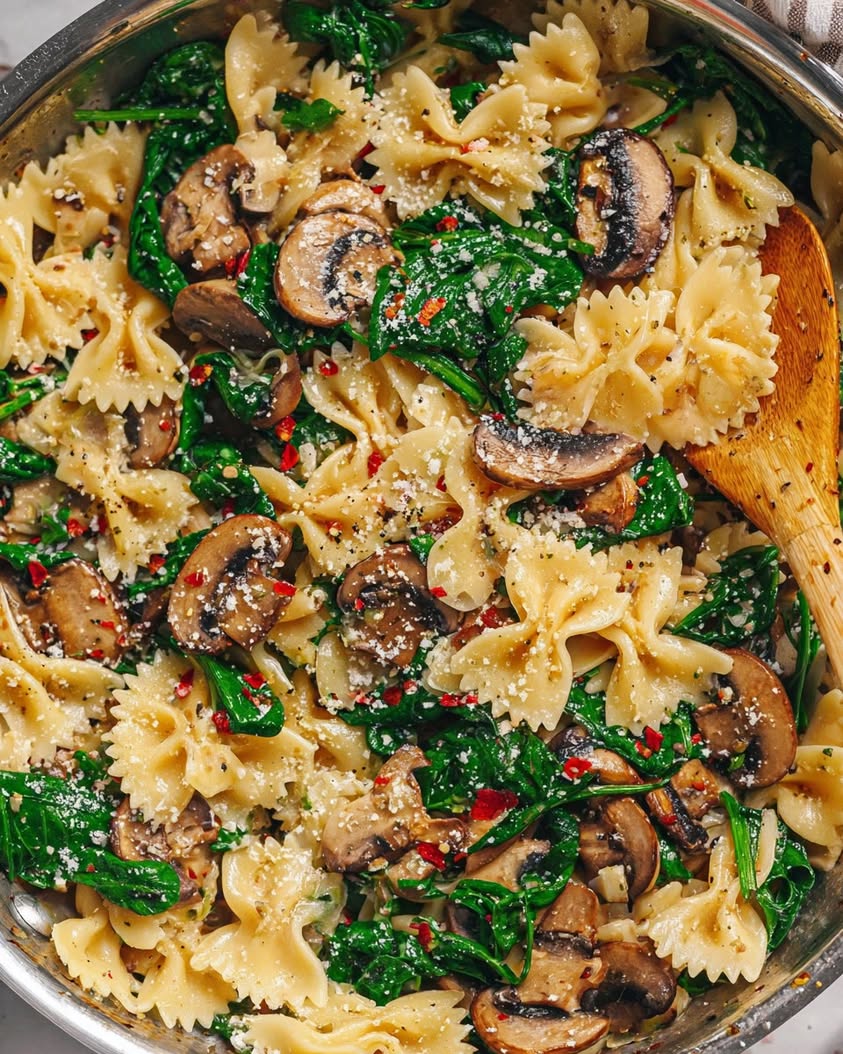
- Flavor Profile: This dish offers a savory and nutty flavor from the Parmesan cheese combined with the earthy taste of mushrooms. The spinach adds a subtle freshness that balances the creaminess. A hint of garlic and black pepper rounds out the profile perfectly.
- Texture: The pasta stays al dente while soaking up the rich sauce. The mushrooms become tender and almost meaty. The spinach wilts into soft ribbons that blend beautifully with the sauce. Every bite offers a satisfying contrast.
- Aroma: You will smell the buttery garlic first as it hits the hot skillet. Then the mushrooms release their deep, earthy fragrance. The Parmesan cheese adds a toasty, nutty note that fills your entire kitchen.
- Visual Appeal: The bright green spinach contrasts beautifully with the golden mushrooms and the creamy white sauce. The pasta glistens with a light coating of cheese. You can see flecks of black pepper adding rustic charm to the plate.
- Skill Level Needed: This recipe is perfect for beginners. You only need basic knife skills for slicing mushrooms and mincing garlic. If you can stir, you can make this dish. It is that simple.
- Special Equipment: You need a large skillet with a lid. A deep twelve-inch skillet works best. You also need a wooden spoon or spatula for stirring. That is honestly all you need.
Recipe Overview
- Difficulty Level: This is an easy-level recipe because it uses straightforward techniques. There is no advanced knife work required. You do not need to make a roux or handle delicate ingredients. Most home cooks can master it on the first try without any stress.
- Category: This dish fits perfectly under main course dinners. It also works well as a hearty vegetarian meal. You can serve it as a side dish for grilled meats, though it is substantial enough to stand alone.
- Cuisine: The recipe draws inspiration from classic Italian-American home cooking. The combination of mushrooms, spinach, and Parmesan is a traditional Italian base. The one-pan method adds a modern American convenience twist that makes it accessible to everyone.
- Cost: This is a budget-friendly meal. Mushrooms are affordable and spinach is inexpensive. Parmesan cheese costs a bit more but you only need a small amount for big flavor. The total cost per serving is under three dollars.
- Season: This recipe works best in fall and winter when you crave warm, comforting food. The earthy mushrooms pair perfectly with autumn flavors. However, because spinach is available year-round, you can make this dish in any season.
- Occasion: This recipe is ideal for casual weeknight family dinners. It also works for Sunday supper with friends. You can even serve it at a potluck because it travels well and tastes great at room temperature.
Why You Will Love This Recipe
Taste drives every decision in this Parmesan Spinach Mushroom Pasta Skillet recipe. The cheese creates a rich, savory base that coats every strand of pasta. The mushrooms add a deep umami flavor that satisfies even the biggest cravings. The spinach brings a fresh, slightly sweet note that prevents the dish from feeling heavy. You get a balanced flavor in every single bite. The texture also plays a big role in the appeal. The pasta stays firm while the sauce clings to it perfectly. The mushrooms offer a tender bite and the spinach melts into the background. You will find yourself going back for second helpings because the combination works so well.
Convenience makes this recipe a standout for busy cooks. You use only one pan which means less cleanup after dinner. You do not need to boil water in a separate pot or drain pasta in a colander. The entire cooking process happens in one skillet from start to finish. You can have dinner on the table in thirty-five minutes flat. That speed makes it perfect for weeknights when time is tight. You also do not need any special equipment. A standard skillet and a wooden spoon are all you require. The prep time is just ten minutes. You can chop the mushrooms and mince the garlic while the skillet heats up. Everything moves quickly from there.
Nutritional advantages also make this recipe a smart choice. Spinach provides iron, vitamin K, and antioxidants that support overall health. Mushrooms offer B vitamins and selenium which help with energy production and immune function. Parmesan cheese supplies calcium and protein for strong bones and muscles. The pasta gives you steady energy from complex carbohydrates. This dish creates a balanced meal with vegetables, grains, and dairy. You can feel good about serving it to your family. You can also adjust the portion sizes to fit your dietary goals. A generous serving is around four hundred calories which fits nicely into most meal plans.
Social and entertaining value makes this recipe a crowd-pleaser. You can serve it for a casual dinner party without feeling stressed. The one-pan method means you spend less time cooking and more time with your guests. The dish looks impressive when you bring the skillet to the table. The aroma of garlic and Parmesan will make everyone eager to dig in. You can easily double the recipe to feed a larger group. The flavors are mild enough to please picky eaters but sophisticated enough for food lovers. This recipe sparks conversation. People always ask for the recipe after tasting it because the flavor seems complex but the method is simple.
Cost-effectiveness and accessibility make this recipe a weeknight hero. The ingredients are available at any grocery store. You do not need to hunt for specialty items. Mushrooms cost about two dollars per package. Spinach costs around three dollars per bag. Pasta is incredibly affordable at about a dollar per box. Parmesan cheese is the most expensive ingredient but a small wedge lasts for multiple meals. You can make this dish for under twelve dollars total. That feeds four people with generous portions. Leftovers taste even better the next day. The convenience of the one-pan method also saves money on energy costs because you use only one burner.
Historical Background and Cultural Significance
The origins of this Parmesan Spinach Mushroom Pasta Skillet recipe connect directly to Italian peasant cooking traditions. Northern Italian cooks have used mushrooms and spinach together for centuries. The Apennine mountains provide wild mushrooms in the autumn season. Farmers used these foraged ingredients to stretch their meals further. The addition of Parmesan cheese originated in the Emilia-Romagna region. Parmigiano-Reggiano has been produced there for over eight centuries. Cooks grated leftover rinds and scraps into soups and pasta dishes. This practice minimized waste while adding incredible flavor. The one-pan cooking method comes from these rustic roots. Families cooked everything in a single pot to conserve fuel and reduce cleanup.
Cultural importance for this dish extends beyond simple sustenance. In Italian households, cooking together represents family bonding and tradition. Grandmothers passed down recipes through demonstration rather than written instructions. The combination of mushrooms and spinach became a staple during Lent when families avoided meat. This dish provided essential nutrients and satisfying flavor without breaking religious dietary rules. Today, this recipe carries that heritage forward. It represents resourcefulness and respect for ingredients. American home cooks embraced this style of cooking during the mid-twentieth century. The one-pan pasta method gained popularity as more women entered the workforce. They needed quick, reliable meals that still tasted homemade.
The evolution of this recipe reflects broader changes in American home cooking. Early versions used canned mushrooms and frozen spinach because fresh options were limited. Cooks relied on processed cheese products for convenience. As grocery stores improved their produce sections, fresh ingredients became standard. The rise of health consciousness in the 1990s pushed spinach into the spotlight as a superfood. Home cooks started seeking out quality Parmesan cheese and learning about umami. Food blogs and cooking shows popularized the one-pan method in the early 2000s. This recipe represents the perfect marriage between old-world techniques and modern efficiency.
Regional variations of this dish appear across different parts of Italy and the United States. In Tuscany, cooks add cannellini beans for extra protein and creaminess. The Roman version uses pecorino Romano instead of Parmesan for a sharper flavor. Sicilian variations incorporate sun-dried tomatoes and capers for a briny kick. American Southern cooks sometimes add a pinch of cayenne pepper or smoked paprika for heat. Midwest cooks often use heavy cream instead of pasta water to create a richer sauce. California versions emphasize fresh herbs like basil or thyme for brightness. Each variation reflects the local ingredients and cultural preferences of the region.
Ingredient Deep Dive
Mushrooms have a long history in human cuisine that dates back to ancient Egypt. The ancient Greeks believed mushrooms gave warriors strength in battle. In Italian cooking, porcini mushrooms have been prized since Roman times. You find them dried and rehydrated for sauces or fresh in autumn markets. Nutritional benefits make mushrooms a valuable addition to any meal. They are one of the few natural food sources of vitamin D. They also provide selenium which supports thyroid function and antioxidant activity. Mushrooms contain beta-glucans that help support immune health. They are low in calories but high in fiber and B vitamins.
When selecting mushrooms for this Parmesan Spinach Mushroom Pasta Skillet recipe, look for firm caps with no slimy spots. Fresh mushrooms should have a clean earthy smell. Avoid any that look wrinkled or have dark bruises. You can use white button mushrooms, cremini, or baby bella varieties. Cremini mushrooms offer more flavor than white buttons. Storage matters for keeping mushrooms fresh. Keep them in a paper bag inside the refrigerator. The paper allows moisture to escape which prevents sliminess. You should use them within three to five days of purchase. Mushrooms soak up water like sponges so avoid washing them until right before cooking. A quick rinse and pat dry works best.
Spinach originated in ancient Persia and spread to Europe through trade routes. Catherine de Medici brought spinach to France in the 1500s. She loved it so much that dishes made with spinach were called Florentine in her honor. Nutritional benefits make spinach a powerhouse ingredient. It contains high levels of iron which supports oxygen transport in the blood. Spinach also provides vitamin K for bone health and vitamin A for eye health. The antioxidants in spinach help fight inflammation and oxidative stress. You get all these benefits in a low-calorie package. One cup of raw spinach provides only seven calories.
When selecting spinach for this Parmesan Spinach Mushroom Pasta Skillet recipe, look for bright green leaves without yellowing or wilting. Baby spinach works best because it is tender and cooks quickly. Bagged spinach should feel crisp and not slimy inside the package. Store unwashed spinach in a breathable produce bag in the refrigerator. You should use it within three to five days. Do not wash spinach until you are ready to use it because moisture speeds up spoilage. Spinach wilts dramatically so one bag yields about two cups cooked. You can substitute kale or Swiss chard but they require longer cooking times.
Parmesan cheese has a protected designation of origin in Italy. True Parmigiano-Reggiano comes only from specific provinces in northern Italy. The cheese matures for at least twelve months and often longer. Nutritional benefits include high calcium content which supports bone density. Parmesan is also rich in protein with about ten grams per ounce. It contains probiotics from the aging process that support gut health. The cheese is naturally low in lactose because the aging process breaks down milk sugars. Many people who are lactose intolerant can eat aged Parmesan without issues.
When selecting Parmesan cheese for this recipe, always buy a wedge instead of pre-grated options. Pre-grated cheese contains cellulose which prevents clumping but affects melting. The flavor of freshly grated Parmesan is incomparable. Look for cheese with a hard, crumbly texture and a nutty aroma. The rind should have the Parmigiano-Reggiano stamp. Store Parmesan wrapped in wax paper inside a loose plastic bag in the refrigerator. It can last for several months if stored properly. You can freeze Parmesan for longer storage but the texture changes slightly. Use it grated directly into sauces for best melting results.
Pasta serves as the foundation for this dish and its history is deep. Pasta has been part of Italian cuisine since the 13th century. The exact origins are debated but Arab traders likely introduced dried pasta to Sicily. Italy eventually developed the industrial production methods that made pasta accessible to everyone. Nutritional benefits make pasta a reliable source of complex carbohydrates. It provides energy for daily activities and exercise. Pasta also contains B vitamins and iron when made from enriched flour. Whole wheat versions offer more fiber and nutrients. The key is portion control since pasta calories can add up quickly.
When selecting pasta for this Parmesan Spinach Mushroom Pasta Skillet recipe, short shapes work best. Penne, rotini, farfalle, or fusilli all hold the sauce well. The nooks and crannies in short pasta capture bits of mushroom and spinach. Look for bronze-die pasta which has a rough texture. The rough surface helps sauce cling better to the pasta. Store dried pasta in a cool, dry place in an airtight container. It lasts indefinitely but quality declines over time. Use pasta within a year of purchase for best texture. You can substitute gluten-free pasta but adjust cooking times according to the package directions.
Common Mistakes to Avoid
- Overcooking the pasta is a major mistake. You must cook the pasta until it is just al dente because it continues cooking in the hot sauce. Overcooked pasta becomes mushy and the dish loses texture. Test the pasta two minutes before the package suggests it is done.
- Adding all the liquid at once causes problems. You build flavor by adding liquid in stages. The pasta needs time to absorb the broth gradually. Dumping everything in at once creates a watery sauce that does not coat properly.
- Skipping the mushroom browning step ruins the flavor. Mushrooms need direct contact with the hot pan to develop color. Crowding the pan steams them instead of browning. You must cook them in a single layer and leave them undisturbed for several minutes.
- Using pre-shredded cheese affects the sauce texture. These product include anti-caking agents that prevent smooth melting. Your sauce will turn grainy instead of silky. Always grate Parmesan fresh from a wedge for the best results.
- Adding spinach too early leads to overcooked greens. Spinach takes only about two minutes to wilt completely. Adding it too early turns it into a brown, unappealing mess. Stir it in right at the end of cooking.
- Forgetting to season the water results in bland pasta. The pasta absorbs the water it cooks in. Unsalted water produces bland pasta. Add a generous pinch of salt to the cooking liquid.
- Stirring too frequently prevents browning. You need to let ingredients sit in the pan to develop color. Constant stirring keeps them moving and they cannot sear. Give the mushrooms and garlic time to caramelize.
- Using too small a skillet causes uneven cooking. A twelve-inch skillet provides enough surface area for everything to cook properly. A smaller pan crowds the ingredients and leads to steaming. The liquid also takes longer to reduce.
- Skipping the rest time before serving affects texture. The pasta needs a few minutes off the heat to absorb the remaining liquid. Serving immediately gives you a soupier dish. Let it sit for five minutes for the perfect consistency.
Essential Techniques
Browning mushrooms requires patience and proper heat management. You start by getting your skillet hot over medium-high heat. Add the oil and let it shimmer before adding the mushrooms. Spread them in a single layer and do not touch them for three to four minutes. You see the liquid release and then evaporate. The mushrooms then begin to brown. They make a sizzling sound that indicates the pan is hot enough. You flip them and brown the other side. The goal is deep golden color with crispy edges. Undercooked mushrooms taste watery and bland. Mastering this technique elevates the entire Parmesan Spinach Mushroom Pasta Skillet recipe.
Creating the sauce base involves deglazing the pan. After cooking the mushrooms and garlic, you add the liquid to the hot pan. Use a wooden spoon to scrape up the brown bits stuck to the bottom. Those bits contain concentrated flavor from the mushrooms and garlic. The liquid dissolves them into the sauce. This step is crucial for depth of flavor. You should scrape vigorously to release everything. The sauce will look cloudy at first but clears as it simmers. This technique transfers all the flavor from the pan into your dish.
Simmering the pasta directly in the skillet requires careful attention to liquid ratios. The pasta needs enough liquid to cook through but not so much that the sauce stays watery. You add the broth and water after deglazing. The pasta goes in raw and you bring the liquid to a boil. Then reduce the heat to maintain a steady simmer. You stir occasionally to prevent sticking. The starch releases from the pasta and thickens the sauce naturally. You watch the liquid level and add more if needed. The pasta absorbs the flavorful broth as it cooks. This technique creates a cohesive dish where every element shares the same flavor profile.
Pro Tips for Perfect Parmesan Spinach Mushroom Pasta Skillet
Always pat mushrooms dry with a paper towel before cooking. Wet mushrooms release too much moisture and steam instead of browning. Dry mushrooms hit the hot pan and develop color instantly. This small step makes a huge difference in flavor development.
Use chicken or vegetable broth for extra flavor instead of water alone. The broth adds depth that water cannot provide. Low-sodium broth lets you control the salt level yourself. You also get the benefits of simmered vegetables and aromatics.
Grate your Parmesan cheese as finely as possible. Fine grating helps the cheese melt smoothly into the sauce without clumping. You can use a microplane or the smallest holes on a box grater. The cheese dissolves almost instantly into the warm liquid.
Add the spinach in handfuls and wait for each batch to wilt before adding more. The skillet looks full at first but the spinach reduces dramatically. Adding it all at once makes stirring difficult and cooking uneven. Gradual addition ensures every leaf wilts perfectly.
Reserve a cup of the cooking liquid before adding the cheese. The starchy liquid helps emulsify the sauce and adjust consistency. You stir it in after the cheese melts to create a silky finish. Having this option available prevents a dry or gluey sauce.
Season the dish in layers throughout the cooking process. Add a pinch of salt when cooking the mushrooms. Add another pinch when you add the liquid. The final seasoning adjustment happens after adding the cheese. Layered seasoning builds complexity that you cannot achieve with salt only at the end.
Variations and Adaptations
Regional variations offer different flavor profiles for this dish. In Tuscany, cooks add cannellini beans for a creamier texture and extra protein. The beans break down slightly and thicken the sauce naturally. The Roman version uses pecorino Romano cheese which has a sharper, saltier flavor. Southern Italian variations add a pinch of red pepper flakes for heat. American Southern cooks might add a splash of cream at the end for a richer sauce. Each variation creates a different experience while keeping the core elements intact.
Seasonal adaptations let you use the freshest produce available. In spring, add fresh peas and asparagus spears for a bright, green flavor. Summer versions incorporate zucchini and cherry tomatoes. Fall calls for roasted butternut squash cubes or sage leaves. Winter versions use kale instead of spinach because it holds up better in cold storage. You can also adjust the mushroom variety based on season. Chanterelles appear in summer and porcini appear in autumn. Seasonal cooking makes this dish feel new every time you make it.
Dietary modifications allow more people to enjoy this recipe. For a gluten-free version, use gluten-free pasta made from rice or corn. Adjust the cooking time according to the package directions because gluten-free pasta behaves differently. For a dairy-free version, use nutritional yeast instead of Parmesan cheese. You can also use a dairy-free cheese alternative but check the melting properties first. For a vegan version, use vegetable broth and substitute the Parmesan with a cashew-based alternative. The spinach and mushrooms provide enough flavor that you do not miss the dairy.
Flavor variations expand the versatility of this recipe. Add sun-dried tomatoes for a tangy sweetness that complements the mushrooms. Stir in fresh basil or thyme for an herbal note. A squeeze of lemon juice brightens the flavors and cuts through the richness. Add a pinch of nutmeg which enhances the earthy flavor of spinach. You can also add artichoke hearts for a Mediterranean twist. Each addition creates a new flavor profile while keeping the base method the same.
Texture modifications change the eating experience. Use orzo pasta for a smaller, more uniform texture that mimics risotto. Use long pasta like fettuccine for a more elegant presentation. Add toasted pine nuts or walnuts for crunch on top. Include a breadcrumb topping for a crispy contrast. You can also leave the mushrooms in larger chunks for a more substantial bite. Smaller mushroom slices distribute the flavor more evenly. The choice depends on your personal preference for texture.
Presentation alternatives make this dish appropriate for different occasions. Serve the pasta directly from the skillet for a rustic family meal. Transfer it to a large serving platter for a dinner party. Individual bowls work well for portion control. Garnish with extra grated Parmesan and a sprig of fresh basil for color. A drizzle of good olive oil just before serving adds richness and sheen. Each presentation choice affects how people perceive the meal.
Serving and Presentation Guide
Plating techniques for this dish focus on showing off the ingredients. Spoon the pasta into shallow bowls to create height. Arrange a few mushroom caps on top for visual interest. Let the spinach peek through the sauce rather than hiding it. The bright green against the creamy sauce creates an appealing color contrast. You can also twirl the pasta into nests using tongs for a more formal look. Leave a small border around the edge of the bowl for a clean presentation. The sauce should pool slightly around the base of the pasta.
Garnishing ideas add the final touch to your dish. Freshly grated Parmesan cheese dusted over the top adds a nutty finish. Cracked black pepper provides visual contrast and a burst of flavor. A handful of fresh basil leaves or parsley adds color. Toasted pine nuts provide crunch and a buttery flavor. Red pepper flakes add a pop of color for those who enjoy heat. Each garnish enhances both the appearance and the eating experience.
Traditional accompaniments pair well with this dish. A simple green salad with lemon vinaigrette cuts through the richness. Garlic bread or crusty bread helps soak up any remaining sauce. Roasted vegetables like asparagus or broccoli add variety. A glass of white wine complements the creamy sauce. The simplicity of the accompaniments highlights the main dish without overwhelming it.
Modern serving suggestions make this dish versatile. Serve it as a main course with a side of grilled chicken for more protein. Use it as a side dish for steak or fish. Serve it as a vegetarian main course alongside roasted vegetables. You can also serve smaller portions as a first course for a dinner party. The flexibility makes it easy to fit into different meal structures.
Temperature considerations affect the eating experience. The dish tastes best right after it finishes resting. The sauce thickens as it cools so do not let it sit too long. You can serve it at room temperature for potlucks or picnics. Reheated leftovers work well but the spinach loses some color. You can add a splash of broth when reheating to revive the sauce consistency. The temperature range of warm to room temperature works best.
Portion control tips help you manage serving sizes. A serving is about one and a half cups of cooked pasta. Use a measuring cup to portion out the first few servings. This size works as a main course for most adults. For a side dish, reduce the portion to three-quarters of a cup. You can also use a food scale to weigh portions for more precision. The dish stores well so you can make extra for leftovers.
Wine and Beverage Pairing
Wine pairings for this dish focus on complementing the earthy flavors. A crisp Sauvignon Blanc works well because its acidity cuts through the creaminess. The herbal notes in the wine match the spinach beautifully. A unoaked Chardonnay offers a buttery texture that mirrors the sauce. The wine should be light to medium-bodied and served chilled. A Pinot Grigio from northern Italy provides a classic pairing. The wine should not overpower the delicate flavors of the mushrooms and cheese. A light red wine like Pinot Noir also works because its earthy notes pair perfectly with mushrooms.
Non-alcoholic alternatives offer options for all guests. Sparkling water with a splash of lemon or lime cleanses the palate between bites. Iced tea with a hint of mint complements the herbal flavors in the dish. A non-alcoholic white wine from brands like Fre or Surely mimics the wine experience. Mushroom broth served warm alongside the pasta creates a cohesive flavor profile. Each option provides a refreshing counterpoint to the rich, creamy pasta.
Coffee or tea pairings work if you are serving this dish for brunch or lunch. A light roast coffee with floral notes complements the Parmesan cheese. Darjeeling tea offers a delicate flavor that does not compete with the dish. Herbal teas like chamomile or mint provide a calming finish. The acidity in coffee can cut through the richness of the sauce. The choice depends on the time of day and personal preference.
Temperature considerations for beverages matter for the overall experience. White wines should be chilled to around 45 to 50 degrees Fahrenheit. Red wines work best at a slightly cool room temperature around 60 degrees. Non-alcoholic drinks should be served cold with plenty of ice. Hot beverages should be served immediately after brewing. Proper temperature enhances the pairing experience and keeps the focus on the food.
Serving suggestions for beverages include decanting wine if you use a young red. Pour sparkling water into a wine glass for the same visual experience as wine. Set up a beverage station for parties so guests can choose their own pairings. Provide tasting notes for each beverage option. The goal is to elevate the dining experience without adding stress to the host.
Storage and Shelf Life
Storage methods for this dish require careful attention to prevent drying out. Transfer leftovers to an airtight container immediately after cooking. Press a piece of plastic wrap directly onto the surface of the pasta before closing the lid. This layer prevents air from drying out the sauce. The plastic wrap keeps the pasta moist for up to four days. Do not leave the dish at room temperature for more than two hours because bacteria can grow.
Temperature requirements for storage are straightforward. Keep the container in the refrigerator at 40 degrees Fahrenheit or below. The dish stays safe to eat for three to four days. Do not store it in the door of the refrigerator because temperatures fluctuate there. Place the container on a middle shelf where the temperature remains most consistent. Check the dish before eating to ensure it still smells fresh and shows no signs of spoilage.
Container recommendations focus on preserving texture. Glass containers work best because they do not absorb flavors or odors. Plastic containers are fine but may stain from the tomato sauce. Use containers with tight-fitting lids to prevent leakage. Divide large batches into smaller containers for easier reheating. Smaller portions also cool faster in the refrigerator which keeps them safer. Label each container with the date to track how long it has been stored.
Signs of spoilage include off smells and visible mold. A sour or fermented odor indicates that the dish has gone bad. Slime on the surface of the pasta is another warning sign. Discoloration like gray or brown patches suggests spoilage. If you see any of these signs, discard the entire container immediately. Do not risk eating food that looks or smells questionable. Your health is more important than saving a few dollars.
Reheating instructions restore the dish to its original quality. Add a splash of broth or water before reheating to loosen the sauce. Reheat in a skillet over medium heat stirring occasionally. You can also use the microwave at medium power in one-minute intervals. Stop when the pasta is hot throughout. Overheating makes the spinach mushy and the sauce separate. The goal is gentle warming that preserves the original texture.
Freezing guidelines work for this dish but the texture changes. The spinach loses some of its bright color and becomes more fragile. The sauce may separate upon thawing but comes back together when reheated. To freeze, cool the dish completely in the refrigerator first. Transfer to a freezer-safe container leaving some headspace for expansion. Freeze for up to three months. Thaw overnight in the refrigerator before reheating. Do not refreeze once the dish has been thawed.
Make Ahead Strategies
Prep timeline starts with ingredient preparation up to two days ahead. You can slice the mushrooms and store them in a paper bag in the refrigerator. Mince the garlic and store it in a small container with a little oil to prevent oxidation. Grate the Parmesan cheese and store it in a sealed bag. The spinach should stay whole until cooking because washing it ahead reduces its shelf life. This prep work saves about ten minutes on cooking day.
Storage between steps requires keeping ingredients separate. Do not combine the sliced mushrooms with any liquid because they become soggy. Keep the garlic separate from other ingredients to prevent flavor transfer. The cheese can stay at room temperature for grating but refrigerate if storing overnight. The dry pasta does not need any special storage. The complete dish should not be assembled until the cooking day for best texture.
Quality impact assessment helps you decide which steps to do ahead. Chopping mushrooms ahead has no negative effect on quality. Grating cheese ahead is fine but the flavor begins to fade after a day. Cooking the mushrooms ahead is possible but they lose some texture when reheated. The best make-ahead strategy focuses on prep work rather than partial cooking. The dish comes together so quickly that cooking ahead does not save much time.
Assembly tips make the final cooking process smoother. Set all your prepped ingredients near the stove before starting. Measure the broth and water into a measuring cup so you can add it quickly. Keep the Parmesan cheese ready to grate at the last minute. The assembly itself takes only about twenty-five minutes so most of the work happens during prep. You can also cook the entire dish and reheat it later if needed.
Reheating guidelines for a fully cooked dish require careful attention. Add a tablespoon of water or broth per serving when reheating. Reheat in a covered skillet over medium-low heat for about ten minutes. Stir occasionally to prevent sticking. The goal is to heat through without further cooking the pasta. You can also reheat individual portions in the microwave for two to three minutes. The texture is best when reheated only once.
Fresh element additions improve the reheated dish significantly. Add a handful of fresh spinach just before serving to restore color and texture. Top with freshly grated Parmesan for a fresh cheese flavor. A squeeze of lemon juice brightens the flavors that may have dulled during storage. Fresh herbs like basil or parsley revive the dish visually and aromatically. These small additions make leftovers taste almost as good as the original.
Scaling Instructions
Halving the recipe works well because the technique scales down easily. Use half the amount of each ingredient and a smaller skillet. An eight-inch skillet works for half the recipe. The cooking times stay the same because the same chemical reactions occur. You need less liquid but the ratio remains the same. One serving equals the full recipe split into two portions instead of four. The dish stores well so you can make full recipe and save half for later.
Doubling or tripling the recipe requires careful equipment planning. Use a larger skillet like a fourteen-inch version or use two skillets simultaneously. Do not double the recipe in the same size skillet because it leads to steaming. The ingredients need surface area to brown properly. Cooking times increase slightly because more liquid needs to come to a boil. Expect an extra five minutes for the liquid to reach temperature. The overall cooking time may increase by ten to fifteen minutes.
Equipment adjustments for larger batches include using a Dutch oven or stockpot. These vessels have thicker bottoms that distribute heat evenly. A twelve-quart stockpot can handle a quadruple batch. Use tongs for stirring larger quantities because spoons become unwieldy. Have a larger lid available to cover the pot during simmering. The equipment must accommodate the increased volume without overcrowding.
Timing modifications for scaled recipes require attention. The pasta takes the same amount of time to cook regardless of quantity. However, larger batches take longer to come to a simmer. The sauce may also take longer to reduce because there is more liquid. Check the pasta for doneness at the same time point as the original recipe. Add extra liquid if the pasta has not finished cooking by that time. The timing is forgiving so do not stress about exact minutes.
Storage considerations for scaled batches involve using multiple containers. Divide large batches into smaller portions for easier reheating. Use shallow containers for faster cooling in the refrigerator. Label each container with the date and portion size. Large batches freeze well so you can store portions for up to three months. The effort of making a large batch pays off with multiple Print
Parmesan Spinach Mushroom Pasta Skillet
- Total Time: 30 minutes
- Yield: 4
Description
A quick and comforting one-skillet pasta dish featuring earthy mushrooms, fresh spinach, and a creamy Parmesan sauce. Perfect for busy weeknights.
Ingredients
- 8 oz (225g) pasta (penne or farfalle)
- 2 tablespoons olive oil
- 8 oz (225g) cremini mushrooms, sliced
- 3 cloves garlic, minced
- 5 oz (140g) fresh baby spinach
- 1 cup heavy cream
- 1/2 cup grated Parmesan cheese
- 1/2 teaspoon salt
- 1/4 teaspoon black pepper
- 1/4 teaspoon red pepper flakes (optional)
- 1/2 cup reserved pasta water
Instructions
- Cook pasta according to package directions until al dente. Reserve 1/2 cup pasta water before draining.
- In a large skillet, heat olive oil over medium-high heat. Add sliced mushrooms and cook until golden brown, about 5–7 minutes.
- Add garlic and cook until fragrant, about 30 seconds.
- Add spinach in handfuls, stirring until wilted. Season with salt, pepper, and red pepper flakes if using.
- Reduce heat to low. Pour in heavy cream and stir in Parmesan cheese until melted and smooth.
- Add cooked pasta and toss to combine. If sauce is too thick, add reserved pasta water a little at a time until desired consistency is reached.
- Serve immediately, garnished with extra Parmesan if desired.
Notes
You can customize the seasonings to taste. For a lighter version, use half-and-half instead of heavy cream.
- Prep Time: 10 minutes
- Cook Time: 20 minutes
- Method: Main
- Cuisine: American