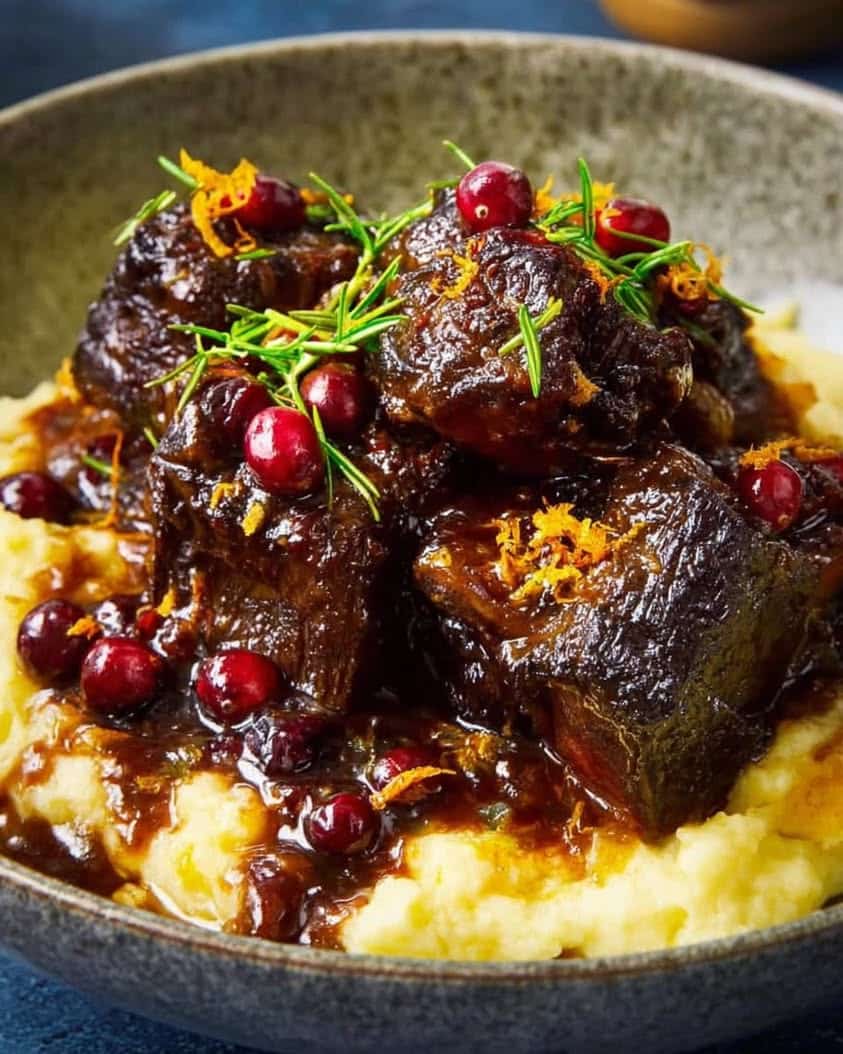
Orange-Cranberry Braised Beef Short Ribs with Ginger and Garlic: A Cozy Dinner Winner
When the weather turns cold and you crave something deeply satisfying, these Orange-Cranberry Braised Beef Short Ribs with Ginger and Garlic deliver comfort in every bite. This recipe combines rich, fall-off-the-bone beef with the bright, tangy sweetness of cranberries and fresh orange. Additionally, the warm kick of ginger and garlic transforms simple ingredients into a restaurant-quality meal. Furthermore, the slow braising process fills your kitchen with an irresistible aroma that promises something extraordinary.
You might wonder why this particular combination works so well. The answer lies in balance. The tartness of the cranberries cuts through the natural richness of the short ribs. Meanwhile, the orange adds a citrusy brightness that lifts the entire dish. The ginger and garlic, moreover, provide a savory depth that keeps every spoonful interesting. As a result, this Orange-Cranberry Braised Beef Short Ribs with Ginger and Garlic recipe has become a favorite for holiday gatherings and cozy weeknight dinners alike.
Perhaps the best part is how easy this dish is to prepare. After a quick sear and some simple chopping, the oven does most of the work. Consequently, you can focus on enjoying time with family while the short ribs braise to tender perfection. Whether you serve them over creamy mashed potatoes or polenta, these ribs always steal the show. Therefore, if you want a meal that feels special without endless effort, this Orange-Cranberry Braised Beef Short Ribs with Ginger and Garlic recipe deserves a spot in your rotation.
Quick Recipe Highlights
- Flavor Profile: This dish balances rich, beefy depth with bright citrus and tart cranberry notes. The ginger adds a gentle warmth, while the garlic contributes a savory backbone. Together, they create a sauce that tastes complex yet completely approachable.
- Texture: The short ribs become incredibly tender after hours of braising, practically melting under a fork. Meanwhile, the sauce thickens into a velvety glaze that coats every piece. The slight chew of dried cranberries adds a pleasant contrast.
- Aroma: As the ribs cook, your kitchen fills with the scent of roasted garlic and sweet orange. The cranberries release a fruity tang that mingles with the ginger. This aromatic blend signals a meal that comforts and delights.
- Visual Appeal: Deep mahogany short ribs glisten under a glossy cranberry-orange sauce. Bright orange zest and fresh herbs add colorful accents. Served over creamy polenta or mashed potatoes, the plate looks elegant enough for guests.
- Skill Level Needed: This recipe suits cooks who feel comfortable with basic searing and oven braising. You do not need advanced techniques, but patience with the slow cook helps. Beginners can succeed with careful attention to the steps.
- Special Equipment: A heavy Dutch oven or oven-safe pot is essential for even heat distribution. You will also need tongs for searing and a fine-mesh strainer for the sauce. A good chef’s knife makes quick work of the aromatics.
Recipe Overview
- Difficulty Level: This recipe lands squarely at the intermediate level. The searing step requires attention to avoid burning, and the braising time demands patience. However, the actual techniques are straightforward. Anyone who can brown meat and chop vegetables can master this dish with practice.
- Category: This dish works as a main course for dinner. It fits both casual family meals and festive holiday tables. Additionally, leftovers make excellent next-day lunches.
- Cuisine: The recipe draws from American comfort food traditions with French braising techniques. The orange-cranberry combination echoes New England flavors, while ginger and garlic nod to Asian inspiration. This fusion creates a uniquely modern American dish.
- Cost: Short ribs are relatively affordable compared to premium steaks. Expect to spend about $25 to $35 for six servings. Pantry staples like cranberries, orange, and spices add only a few dollars more. Overall, this meal offers excellent value for the quality.
- Season: Fall and winter suit this recipe best because of its hearty, warming nature. Fresh cranberries appear in stores from October through December. Nevertheless, you can make it year-round using frozen or dried cranberries.
- Occasion: Holiday dinners, Sunday suppers, and dinner parties all welcome this dish. It feels celebratory yet cozy. Furthermore, it works beautifully for make-ahead entertaining since the flavors improve overnight.
Why You’ll Love This Recipe
First and foremost, the taste of these Orange-Cranberry Braised Beef Short Ribs with Ginger and Garlic will win you over instantly. The beef absorbs all the wonderful flavors from the braising liquid, becoming savory, sweet, and tangy all at once. Each bite delivers a burst of citrus followed by the earthy warmth of ginger. Meanwhile, the cranberries add a fruity zing that keeps the palate engaged. Consequently, this dish never feels heavy or one-note, even though it uses rich short ribs.
Secondly, the convenience factor cannot be overstated. After about thirty minutes of hands-on preparation, the oven handles the rest. You simply walk away and let time work its magic. As a result, you can clean the kitchen, help kids with homework, or relax with a glass of wine. When dinnertime arrives, a complete, impressive meal awaits. This hands-off approach makes the recipe ideal for busy days when you still want something special.
From a nutritional standpoint, this dish offers more than pure indulgence. Short ribs provide generous amounts of protein, iron, and zinc. The cranberries contribute antioxidants and vitamin C. Additionally, the ginger brings anti-inflammatory properties that support overall wellness. While this is not a low-calorie meal, it delivers substantial nourishment in every serving. Therefore, you can feel good about feeding it to your family.
Socially, this Orange-Cranberry Braised Beef Short Ribs with Ginger and Garlic recipe shines at gatherings. The impressive presentation sparks conversation and compliments. Guests appreciate the complex flavors and often ask for the recipe. Moreover, serving from a communal Dutch oven creates a warm, family-style atmosphere. Whether it is a holiday celebration or a casual get-together, this dish brings people together around the table.
Finally, the cost-effectiveness makes this recipe accessible to most budgets. Short ribs cost far less than tenderloin or ribeye, yet they deliver comparable satisfaction when braised properly. The remaining ingredients are affordable pantry items. Consequently, you can serve a luxurious-tasting meal without breaking the bank. This combination of value, flavor, and ease explains why the recipe has become such a beloved favorite.
Historical Background and Cultural Significance
The story of braised short ribs begins in European peasant kitchens, where cooks transformed tough, inexpensive cuts into tender masterpieces. Slow braising allowed families to use every part of the animal while creating deeply flavorful meals. Over time, this technique spread across cultures and continents. Eventually, it became a cornerstone of comfort food traditions worldwide. The Orange-Cranberry Braised Beef Short Ribs with Ginger and Garlic recipe builds on this rich history.
Cranberries hold special significance in American culinary culture, particularly in New England. Native American tribes used these tart berries for food, medicine, and dye long before European settlers arrived. By the nineteenth century, cranberries had become a staple of holiday tables. Consequently, pairing cranberries with beef connects modern cooking to centuries of American tradition. The addition of orange, meanwhile, reflects the influence of citrus trade routes that brought bright flavors to northern kitchens.
Ginger and garlic represent a different thread in the recipe’s evolution. Both ingredients have ancient roots in Asian and Mediterranean cooking. Garlic has flavored dishes for over five thousand years, while ginger has been prized in Chinese medicine and cuisine for millennia. When these aromatics meet Western braising techniques, the result is a beautiful cross-cultural exchange. Therefore, this recipe celebrates the way global flavors enrich American home cooking.
Regional variations of braised short ribs appear across the United States today. In the South, cooks might add barbecue sauce or bourbon. Californians often incorporate wine and fresh herbs. The Orange-Cranberry Braised Beef Short Ribs with Ginger and Garlic version represents a modern, seasonal approach. Furthermore, it highlights how home cooks continue to innovate while respecting time-honored methods. Each generation adds its own chapter to the story.
Ingredient Deep Dive
Beef Short Ribs: Short ribs come from the lower chest of the cow, an area that gets plenty of exercise. Consequently, the meat contains tough connective tissue that requires slow cooking to break down. When braised properly, however, this cut becomes extraordinarily tender and flavorful. Look for bone-in English-cut ribs with good marbling for the best results. You can substitute boneless short ribs if needed, but bone-in adds richness to the sauce. Store raw short ribs in the refrigerator for up to three days or freeze for up to six months.
Historically, short ribs have been a staple in many cultures because they were affordable and delicious when cooked correctly. French cooks use them in dishes like pot-au-feu, while Korean cuisine features galbi. In American barbecue, smoked short ribs rank among the most prized cuts. Nutritionally, short ribs provide high-quality protein, B vitamins, and minerals like iron and zinc. The fat content contributes flavor and moisture, though you can skim excess fat from the sauce after cooking.
Fresh Cranberries: These brilliant red berries grow in acidic bogs primarily in Massachusetts, Wisconsin, and New Jersey. Native Americans introduced cranberries to European settlers, who quickly adopted them into their cuisine. The berries contain powerful antioxidants called proanthocyanidins that support urinary tract health. Additionally, they offer vitamin C and fiber. When selecting fresh cranberries, choose firm, plump berries with deep color. Avoid soft or shriveled ones. Fresh cranberries keep in the refrigerator for several weeks or freeze beautifully for up to a year.
In this Orange-Cranberry Braised Beef Short Ribs with Ginger and Garlic recipe, cranberries provide the signature tartness that balances the rich beef. Their natural pectin also helps thicken the sauce slightly. If fresh cranberries are unavailable, frozen work equally well without thawing. Dried cranberries offer a sweeter, chewier alternative, though you may want to reduce any added sugar. Each option brings its own character to the dish.
Orange: Oranges bring sunshine to this recipe through both juice and zest. The zest contains aromatic oils that intensify the citrus flavor. Historically, oranges originated in Southeast Asia and spread through trade routes to the Mediterranean and beyond. Spanish explorers brought them to Florida in the sixteenth century. Today, oranges rank among the most popular fruits worldwide. They provide vitamin C, folate, and potassium. Choose heavy, firm oranges with bright skin for maximum juice. Store at room temperature for a few days or refrigerate for longer keeping.
For this dish, both navel and Valencia oranges work well. Navels offer sweet juice and easy peeling, while Valencias provide more juice per fruit. Blood oranges add a dramatic color and slightly berry-like flavor if you want a twist. The combination of orange with cranberries creates a classic flavor pairing that appears in everything from sauces to desserts. In braised meat, the citrus cuts through fat and adds brightness.
Ginger: Fresh ginger root delivers a pungent, spicy warmth that distinguishes this Orange-Cranberry Braised Beef Short Ribs with Ginger and Garlic recipe. This knobby rhizome has been cultivated in Asia for thousands of years. Traditional Chinese medicine uses ginger to aid digestion and reduce inflammation. Culinary traditions worldwide incorporate it for its unique flavor. Select ginger with smooth, firm skin and a spicy aroma. Avoid pieces that look wrinkled or moldy. Store fresh ginger in the refrigerator for up to three weeks or freeze for longer use.
Gingerol, the active compound in ginger, provides both flavor and health benefits. It may help reduce nausea, fight inflammation, and support immune function. In this recipe, ginger infuses the braising liquid with gentle heat that complements the sweet-tart cranberry-orange profile. You can adjust the amount to suit your preference for spiciness. Grated ginger releases more flavor than sliced, so use a microplane or fine grater for best results.
Garlic: No savory dish feels complete without garlic, and this recipe uses a generous amount. Garlic originated in Central Asia and spread throughout the ancient world. Egyptians, Greeks, and Romans all valued it for both flavor and medicinal properties. Today, garlic appears in virtually every cuisine on Earth. It contains allicin, a compound with antimicrobial and antioxidant effects. Choose firm, heavy heads with tight papery skin. Store garlic in a cool, dark place with good ventilation, not in the refrigerator.
When garlic roasts or braises, its sharp bite mellows into sweet, nutty complexity. This transformation enhances the Orange-Cranberry Braised Beef Short Ribs with Ginger and Garlic without overwhelming other flavors. Fresh garlic dramatically outperforms jarred or powdered versions in braised dishes. Therefore, take the extra minute to peel and mince it yourself. Your taste buds will thank you.
Common Mistakes to Avoid
- Skipping the sear: Many cooks rush past browning the short ribs, but this step builds essential flavor. The Maillard reaction creates deep, savory notes that define the final dish. Therefore, always pat the meat dry and sear it in batches until deeply browned on all sides.
- Using too small a pot: Short ribs need room to braise evenly. If they crowd together, they steam instead of braise, resulting in tougher meat. Consequently, choose a Dutch oven large enough to hold the ribs in a single layer with some space between them.
- Not trimming excess fat: Short ribs carry a lot of fat, and too much can make the sauce greasy. Trim large chunks of surface fat before cooking, but leave some for flavor. After braising, skim the fat from the sauce for a cleaner result.
- Under-seasoning the braising liquid: The sauce needs bold seasoning to penetrate the meat. Taste the liquid before it goes into the oven and adjust salt, pepper, and acidity as needed. Remember that flavors concentrate during cooking.
- Rushing the cook time: Short ribs require low, slow heat to become tender. If you crank up the temperature to save time, the meat will toughen rather than soften. Consequently, plan for at least three hours and resist the urge to peek too often.
- Forgetting to deglaze: After searing, browned bits stick to the pot bottom. These bits hold tremendous flavor, so deglaze with wine, broth, or juice. Scrape them up with a wooden spoon before adding the remaining ingredients.
- Adding too much liquid: The braising liquid should come about halfway up the ribs, not cover them completely. Too much liquid dilutes the sauce and prevents proper caramelization. Therefore, measure carefully and add more only if needed during cooking.
- Neglecting the sauce finish: After the ribs cook, the sauce may need reduction to reach the right consistency. Strain it, skim the fat, and simmer until it coats the back of a spoon. This final step elevates the Orange-Cranberry Braised Beef Short Ribs with Ginger and Garlic from good to exceptional.
- Cutting the meat too soon: Resting allows the juices to redistribute throughout the meat. If you cut immediately after removing from the oven, the juices run out and the meat dries. Wait at least ten minutes before serving.
- Ignoring the zested garnish: Fresh orange zest added at the end brightens the entire dish. Without it, the flavors can taste flat after hours of cooking. Consequently, always save some zest and fresh herbs for the final presentation.
Essential Techniques
Searing Meat Properly: Searing creates the flavorful crust that defines great braised dishes. First, pat the short ribs completely dry with paper towels because moisture prevents browning. Next, heat your Dutch oven over medium-high heat until a drop of water sizzles instantly. Add oil with a high smoke point, such as avocado or grapeseed. Then, place the ribs in the pot without crowding and let them sit undisturbed for three to four minutes. Finally, flip and repeat on all sides. The visual cue for success is a deep, mahogany-brown crust. Common pitfalls include moving the meat too soon and using insufficient heat.
Deglazing the Pan: After searing, the pot bottom holds caramelized bits called fond, which pack intense flavor. To deglaze, pour a small amount of liquid such as wine, broth, or orange juice into the hot pot. Then, scrape the bottom vigorously with a wooden spoon or spatula. The liquid will bubble and lift the fond, incorporating it into your braising liquid. This technique ensures that none of that hard-earned flavor goes to waste. If you skip deglazing, those bits will burn and make your sauce bitter.
Low and Slow Braising: Braising means cooking food partially submerged in liquid at low heat for an extended time. For short ribs, set your oven between 300 and 325 degrees Fahrenheit. This gentle heat breaks down collagen into gelatin, which gives the meat its luscious, melt-in-your-mouth texture. Check the liquid level occasionally to ensure the ribs stay moist. If the liquid evaporates too quickly, add more broth. The visual cue for doneness is meat that easily pulls apart with a fork but does not fall completely off the bone.
Reducing and Thickening the Sauce: After braising, the cooking liquid becomes a flavorful sauce that needs finishing. First, strain the liquid into a saucepan and discard the solids. Next, let the sauce sit for a few minutes, then skim the fat from the surface using a spoon or fat separator. Then, simmer the sauce over medium heat until it reduces by about one-third. This concentrates the flavors and creates a glossy consistency. If you prefer a thicker sauce, whisk in a small slurry of cornstarch and water. The sauce is ready when it coats the back of a spoon.
Pro Tips for Perfect Orange-Cranberry Braised Beef Short Ribs with Ginger and Garlic
First, choose the right short ribs for the job. Look for bone-in English-cut ribs that are meaty and well-marbled. Avoid ribs that look mostly bone or have very little fat, as they will turn out dry. Ask your butcher for the thickest, most uniform pieces available. Consistent size ensures even cooking.
Second, do not skip the overnight marination if you have time. Rubbing the ribs with salt, ginger, and garlic the night before deepens the flavor significantly. The salt penetrates the meat and enhances tenderness. Even a few hours of seasoning makes a noticeable difference.
Third, layer your flavors thoughtfully. Brown the aromatics before adding liquid to build a flavor base. Toast the ginger and garlic briefly in the hot pot after searing the meat. This step awakens their essential oils and adds complexity to the final Orange-Cranberry Braised Beef Short Ribs with Ginger and Garlic.
Fourth, use both fresh and dried cranberries for texture and taste. Fresh berries break down and thicken the sauce, while dried berries hold their shape and add chew. This combination gives the dish a more interesting mouthfeel. Additionally, the dried berries contribute natural sweetness that balances the tart fresh ones.
Fifth, add a splash of acid at the very end. A teaspoon of apple cider vinegar or fresh lemon juice brightens the sauce after hours of cooking. Braised dishes sometimes taste flat without this final adjustment. Taste first, then add acid gradually until the flavors pop.
Sixth, let the ribs rest before serving. Ten to fifteen minutes of resting allows the juices to redistribute. If you skip this step, the meat will release its juices onto the plate and taste drier. Use the resting time to finish your sides and warm the plates.
Seventh, make the dish a day ahead for even better flavor. Like many braised dishes, this Orange-Cranberry Braised Beef Short Ribs with Ginger and Garlic tastes richer the next day. The flavors meld overnight, and the fat solidifies on top for easy removal. Simply reheat gently on the stovetop or in the oven.
Variations and Adaptations
Regional Variations: In the American South, cooks often add a splash of bourbon or barbecue sauce to braised short ribs for a smoky, sweet twist. In California, chefs might substitute red wine for some of the broth and add fresh rosemary. French versions, called daube, include olives, tomatoes, and herbs de Provence. Korean galbi jjim uses soy sauce, sesame oil, and Asian pears for a completely different flavor profile. Each region brings its own character to the same humble cut of meat.
Seasonal Adaptations: During summer, you can lighten the dish by reducing the braising time and serving the ribs over fresh greens. In spring, add fresh herbs like mint or parsley to the sauce for a brighter flavor. Fall calls for root vegetables like parsnips or turnips braised alongside the meat. Winter welcomes the full, hearty version with creamy polenta and crusty bread. Adapting to the seasons keeps the recipe fresh and exciting all year.
Dietary Modifications: For a gluten-free version, ensure your broth and any wine you use are certified gluten-free. Replace flour with cornstarch or arrowroot for thickening. If you follow a low-carb or keto diet, skip the flour entirely and reduce the sauce more thoroughly. Paleo eaters should choose grass-fed beef and avoid any added sugars in the cranberry component. Always double-check labels when dietary restrictions are a concern.
Flavor Variations: Swap the orange for tangerine or grapefruit for a different citrus note. Replace cranberries with cherries or pomegranate seeds for a new tartness. Add star anise or cinnamon stick to the braising liquid for warmth. A tablespoon of Dijon mustard adds tang and helps emulsify the sauce. Feel free to experiment once you master the base recipe.
Texture Modifications: If you prefer a smoother sauce, blend the braising liquid after straining and return it to the pot. For a chunkier texture, leave some of the softened cranberries and aromatics in the sauce. Shred the meat completely and serve it as a ragu over pasta or polenta. Alternatively, keep the ribs whole for a dramatic presentation. Each approach creates a distinct dining experience.
Presentation Alternatives: Serve the ribs over creamy mashed potatoes, buttered egg noodles, or soft polenta. For a lighter option, spoon them over cauliflower puree or roasted spaghetti squash. Top with gremolata made from orange zest, parsley, and garlic for a fresh finish. A drizzle of balsamic reduction adds elegance. The Orange-Cranberry Braised Beef Short Ribs with Ginger and Garlic adapts beautifully to any plating style.
Serving and Presentation Guide
Plating Techniques: For an elegant presentation, place a mound of creamy polenta or mashed potatoes in the center of a warm plate. Carefully set one or two short ribs on top, allowing the bone to protrude attractively. Spoon the glossy cranberry-orange sauce over the meat, letting it pool slightly around the base. Finally, garnish with fresh orange zest and a sprig of thyme. This simple approach highlights the beautiful colors and textures of the dish.
Garnishing Ideas: Fresh orange zest curls add bright color and aroma. Chopped fresh parsley or cilantro provides a green contrast. Toasted sliced almonds offer crunch and visual interest. Pomegranate seeds echo the cranberry theme with jewel-like sparkle. A dollop of horseradish creme fraiche adds a creamy, tangy element. Choose one or two garnishes to keep the plate clean and focused.
Traditional Accompaniments: Classic pairings include creamy mashed potatoes, buttered egg noodles, and soft polenta. These starchy bases soak up the flavorful sauce beautifully. Roasted root vegetables like carrots, parsnips, and turnips complement the autumnal flavors. A simple green salad with a citrus vinaigrette provides freshness. Crusty bread rounds out the meal for dipping.
Modern Serving Suggestions: For a contemporary twist, serve the shredded short ribs over crispy polenta cakes. Alternatively, pile the meat onto toasted sourdough for an open-faced sandwich. Tuck it into slider buns with quick-pickled onions for party-friendly bites. Spoon it over farro or quinoa for a grain bowl approach. These modern presentations appeal to younger diners and casual gatherings.
Temperature Considerations: Short ribs taste best when served hot, around 145 to 160 degrees Fahrenheit. However, the sauce should not be boiling when it hits the plate. Let the ribs rest for ten minutes after removing from the oven, then reheat the sauce separately if needed. Warm your plates in a low oven to keep the dish hot throughout the meal. Cold short ribs lose their appeal quickly.
Portion Control Tips: One large bone-in short rib per person typically suffices for a main course. If serving smaller ribs, plan for two per guest. For buffet-style service, shred the meat and offer it as a topping for various bases. This approach lets guests control their portions. Additionally, provide plenty of sauce so everyone gets a generous drizzle over their sides.
Wine and Beverage Pairing
Wine Pairings: A bold red wine complements the rich flavors of Orange-Cranberry Braised Beef Short Ribs with Ginger and Garlic beautifully. Cabernet Sauvignon offers structure and dark fruit notes that echo the beef. Zinfandel brings jammy fruit and spice that match the cranberry-orange profile. Syrah adds peppery notes that harmonize with the ginger. For a lighter option, Pinot Noir provides elegance without overwhelming the dish. Avoid overly tannic wines that can clash with the tart cranberries.
Non-Alcoholic Alternatives: Sparkling cranberry juice mixed with orange zest creates a festive, alcohol-free pairing. Unsweetened pomegranate juice offers tartness and depth. Iced hibiscus tea provides floral notes and a beautiful ruby color. Ginger beer with lime delivers spicy effervescence that mirrors the ginger in the dish. These options ensure that non-drinkers still enjoy a special beverage with their meal.
Coffee and Tea Pairings: While less traditional, certain teas pair wonderfully with braised beef. A robust Assam black tea offers maltiness that complements the savory sauce. Pu-erh tea provides earthy depth that echoes the slow-cooked flavors. For coffee lovers, a medium-roast pour-over with chocolate notes bridges the richness of the meat. Avoid very acidic or fruity coffees that might clash with the cranberry.
Temperature Considerations: Red wines should be served slightly below room temperature, around 60 to 65 degrees Fahrenheit. This temperature allows the fruit to shine without the alcohol feeling harsh. Non-alcoholic options taste best well-chilled over ice. Hot tea or coffee should be served piping hot in warmed mugs. Matching beverage temperatures to the food enhances the overall dining experience.
Serving Suggestions: Offer wine in large-bowled glasses to concentrate aromas. For non-alcoholic options, use pretty glassware with citrus garnishes to make them feel special. Set up a small beverage station so guests can serve themselves. Provide written tasting notes for wine pairings to guide curious guests. Thoughtful beverage service elevates the entire meal.
Storage and Shelf Life
Storage Methods: Allow leftover Orange-Cranberry Braised Beef Short Ribs with Ginger and Garlic to cool to room temperature before refrigerating. Store the ribs submerged in their sauce in an airtight container. The sauce protects the meat from drying out and continues to infuse flavor. Glass containers work best because they do not stain or retain odors. Alternatively, use heavy-duty plastic containers with tight-fitting lids.
Temperature Requirements: Refrigerate leftovers promptly at 40 degrees Fahrenheit or below. Do not leave the dish at room temperature for more than two hours. If the weather is hot, reduce that time to one hour. Proper refrigeration slows bacterial growth and keeps the food safe. When in doubt, throw it out rather than risk foodborne illness.
Container Recommendations: Choose containers that allow the ribs to lie flat in a single layer, if possible. This arrangement prevents the meat from becoming misshapen. If you must stack, place parchment paper between layers. Leave a small amount of headspace for expansion if freezing. Label containers with the date to track freshness.
Signs of Spoilage: Discard leftovers if you notice an off smell, slimy texture, or mold growth. The sauce should look and smell appetizing, not sour or rancid. Color changes, such as gray or green patches, indicate spoilage. When reheating, ensure the meat reaches 165 degrees Fahrenheit throughout. If anything seems questionable, err on the side of caution.
Reheating Instructions: Reheat short ribs gently on the stovetop over low heat, covered, until warmed through. Alternatively, place them in an oven-safe dish at 300 degrees Fahrenheit for 20 to 30 minutes. Add a splash of broth or water if the sauce seems thick. Avoid microwaving on high, which can toughen the meat. Slow, gentle reheating preserves the tender texture.
Freezing Guidelines: This dish freezes exceptionally well. Cool completely, then transfer to freezer-safe containers, leaving half an inch of headspace. Freeze for up to three months for best quality. Thaw overnight in the refrigerator before reheating. The sauce may separate slightly upon thawing, but stirring during reheating brings it back together. Freezing makes this Orange-Cranberry Braised Beef Short Ribs with Ginger and Garlic perfect for meal prep.
Make Ahead Strategies
Prep Timeline: You can prepare the entire dish up to three days in advance. Cook the short ribs completely, cool, and refrigerate in the sauce. On serving day, simply reheat gently and prepare your sides. Alternatively, do the prep work ahead by chopping vegetables, measuring spices, and trimming the meat. This advance preparation streamlines the cooking process on busy days.
Storage Between Steps: If you sear the meat ahead, refrigerate it separately from the braising liquid. Combine everything when you are ready to cook. Chopped aromatics like onion, garlic, and ginger keep well in the refrigerator for two to three days. Store them in small, labeled containers or zip-top bags. This organization makes assembly quick and stress-free.
Quality Impact Assessment: Braised dishes often taste even better after a day or two in the refrigerator. The flavors meld and deepen, creating a more complex sauce. The meat may become slightly more tender but remains delicious. Therefore, making this Orange-Cranberry Braised Beef Short Ribs with Ginger and Garlic ahead of time actually improves the result.
Assembly Tips: When reheating, use a pot wide enough to hold the ribs comfortably. Add a little broth if the sauce has thickened too much. Heat over low flame, basting occasionally with the sauce. If serving over polenta or mashed potatoes, prepare those fresh for the best texture. Warm the serving plates to keep everything hot.
Reheating Guidelines: For best results, reheat the ribs in their sauce on the stovetop. Bring to a gentle simmer, then reduce heat and cover. Cook for 15 to 20 minutes until heated through. Stir occasionally to prevent sticking. If using the oven, place everything in a covered dish at 325 degrees Fahrenheit. Either method produces excellent results.
Fresh Element Additions: Before serving, add fresh orange zest and chopped herbs to brighten the reheated dish. A squeeze of fresh orange juice can also revive the flavors. These small additions make leftovers taste freshly made. Consequently, no one will guess you prepared the dish days in advance.
Scaling Instructions
Halving the Recipe: To serve three instead of six, simply cut all ingredients in half. Use a smaller Dutch oven that still allows the ribs to fit in a single layer. Cooking time remains roughly the same, though you may need to check for doneness a bit earlier. The sauce reduces faster in a smaller batch, so watch it carefully during the final simmer. Leftovers from a halved recipe still taste great.
Doubling or Tripling: For larger gatherings, you can easily double or triple the recipe. Use a larger braising vessel, such as a roasting pan with a lid or an extra-large Dutch oven. You may need to sear the meat in more batches to avoid crowding. Cooking time might increase by 15 to 30 minutes for larger quantities. Check the meat periodically and add broth if the liquid runs low.
Equipment Adjustments: When scaling up, ensure your pot fits in the oven and allows for proper air circulation. If your largest pot is not big enough, divide the recipe between two vessels and rotate them halfway through cooking. Alternatively, use a slow cooker for large batches after searing the meat on the stovetop. Each approach works well with some planning.
Timing Modifications: Larger batches take longer to come to temperature and may require extended braising. Start checking for doneness at the original time, then add 15-minute increments until the meat is tender. Smaller batches may cook faster, so begin checking 20 to 30 minutes before the recipe’s stated time. Always rely on visual cues rather than strict timing.
PrintOrange-Cranberry Braised Beef Short Ribs with Ginger and Garlic
- Total Time: 3 hours 20 minutes
- Yield: 4
Description
Tender beef short ribs braised in a flavorful sauce of orange, cranberry, ginger, and garlic. A perfect comforting meal for any occasion.
Ingredients
- 4 lbs beef short ribs
- Salt and pepper to taste
- 2 tablespoons olive oil
- 1 large onion, chopped
- 4 cloves garlic, minced
- 1 tablespoon fresh ginger, grated
- 1 cup orange juice
- 1 cup cranberry sauce
- 1/2 cup beef broth
- 1/4 cup soy sauce
- 2 tablespoons brown sugar
- 1 teaspoon dried thyme
- 1 bay leaf
Instructions
- Preheat oven to 325°F (165°C). Season short ribs generously with salt and pepper.
- In a large Dutch oven, heat olive oil over medium-high heat. Sear short ribs on all sides until browned, about 3-4 minutes per side. Remove and set aside.
- In the same pot, add onion and cook until softened, about 3 minutes. Add garlic and ginger, cook for 1 minute until fragrant.
- Pour in orange juice, cranberry sauce, beef broth, soy sauce, brown sugar, thyme, and bay leaf. Stir to combine and bring to a simmer.
- Return short ribs to the pot, cover, and transfer to the oven. Braise for 2.5 to 3 hours, until meat is tender and falling off the bone.
- Remove bay leaf. Skim excess fat from the sauce if desired. Serve short ribs with the sauce spooned over.
- Garnish with fresh orange zest and chopped parsley, if desired.
Notes
You can customize the seasonings to taste. For a thicker sauce, remove the ribs and reduce the sauce on the stovetop.
- Prep Time: 20 minutes
- Cook Time: 3 hours
- Method: Main
- Cuisine: American