Loaded Mediterranean Chicken Power Bowl with Tzatziki and Feta: A Vibrant and Wholesome Meal
Imagine a bowl filled with juicy, seasoned chicken, fluffy quinoa, crisp cucumbers, and sweet cherry tomatoes. This Loaded Mediterranean Chicken Power Bowl with Tzatziki and Feta brings the sunny flavors of the Greek islands straight to your kitchen. Each spoonful delivers a burst of fresh herbs, tangy feta, and creamy tzatziki that makes healthy eating feel like a special treat. You will love how the warm, spiced chicken contrasts with the cool, crunchy vegetables.
This recipe is more than just a salad. It is a complete meal that keeps you full and energized for hours. The combination of lean protein, whole grains, and healthy fats creates a balanced plate that supports your wellness goals. As a result, this Loaded Mediterranean Chicken Power Bowl with Tzatziki and Feta works perfectly for meal prep, quick lunches, or easy weeknight dinners. The colors are stunning, and the aroma of oregano and lemon will fill your home with warmth.
Preparing this bowl is simpler than you might think. With just a few fresh ingredients and basic cooking skills, you can create a restaurant-quality dish at home. The tzatziki sauce comes together in minutes, and the chicken cooks in under twenty minutes. Because of this, you can have a nutritious, flavorful dinner on the table in less than forty minutes. Get ready to fall in love with Mediterranean cooking.
Quick Recipe Highlights
- Flavor Profile: The chicken is marinated in lemon, garlic, and oregano, providing a bright and savory base. Tangy feta cheese adds saltiness, while creamy tzatziki cools everything down. Sweet cherry tomatoes and briny kalamata olives round out the Mediterranean taste.
- Texture: You experience a wonderful contrast of textures in every bite. The chicken is tender and juicy, quinoa is fluffy, cucumbers are crisp, and feta is crumbly. The tzatziki adds a smooth, creamy element that ties everything together.
- Aroma: The scent of oregano, lemon zest, and garlic will fill your kitchen as the chicken cooks. Fresh mint and dill from the tzatziki add a clean, herbaceous note. This aromatic combination instantly transports you to a seaside taverna.
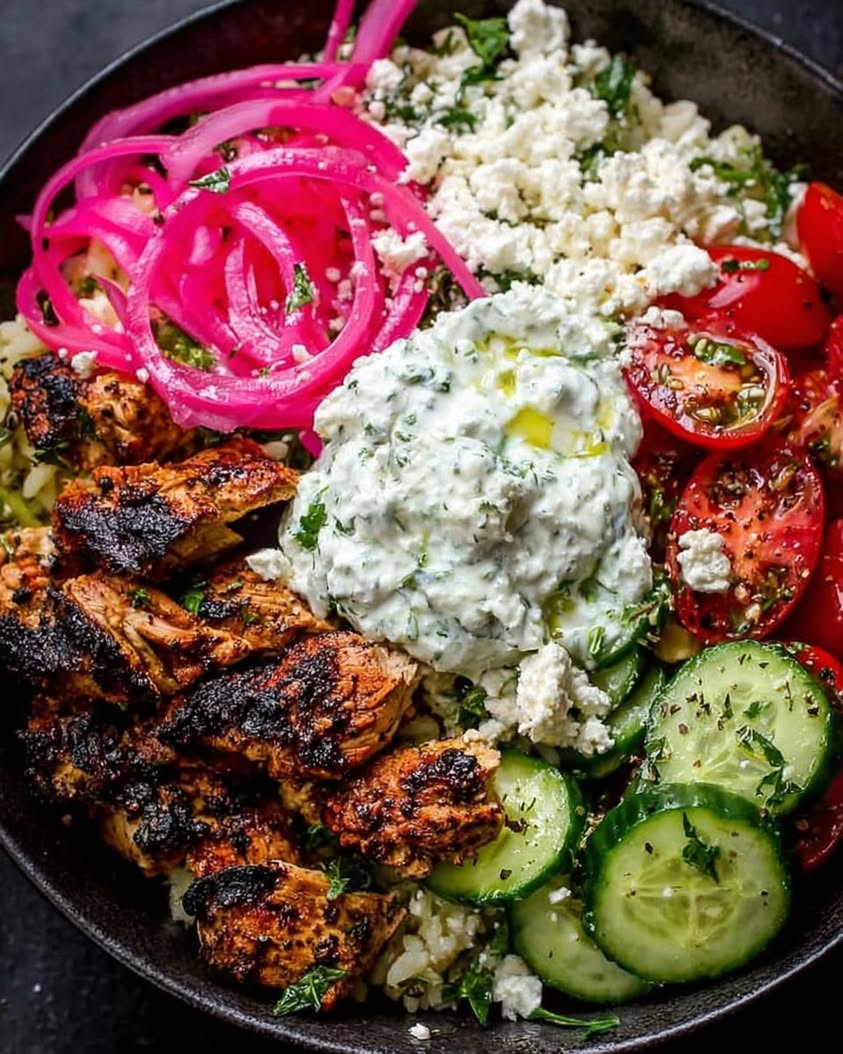
- Visual Appeal: This bowl is a feast for the eyes with its vibrant green cucumbers, red tomatoes, white feta, and golden chicken. The creamy white tzatziki contrasts beautifully with the colorful vegetables. Presentation is effortless and always impressive.
- Skill Level Needed: This recipe is beginner-friendly and requires no advanced techniques. You only need basic knife skills and the ability to grill or pan-sear chicken. Anyone can master this dish with a little confidence.
- Special Equipment: You will need a grill pan, skillet, or outdoor grill for the chicken. A box grater is useful for preparing the cucumber for tzatziki. A large mixing bowl and a sharp knife are also essential.
Recipe Overview
- Difficulty Level: I rate this recipe as easy because the steps are straightforward and forgiving. There is no complicated technique like tempering eggs or making a roux. Even if you are new to cooking, you can follow along and achieve great results.
- Category: This dish fits into the main course category, perfect for lunch or dinner. It also works well as a meal prep option since it stores and reheats nicely. You can serve it warm or cold, making it versatile for any schedule.
- Cuisine: This recipe draws inspiration from classic Greek and Eastern Mediterranean culinary traditions. The use of olive oil, lemon, oregano, and feta is characteristic of this region. Tzatziki itself is a staple Greek sauce, while quinoa is a modern, healthy grain substitution.
- Cost: The ingredients for this bowl are affordable and widely available at any grocery store. Chicken breast, quinoa, and fresh vegetables are budget-friendly staples. Feta cheese is reasonably priced, and tzatziki ingredients like yogurt and cucumber cost very little.
- Season: This dish shines in the summer when tomatoes and cucumbers are at their peak. However, the ingredients are available year-round, so you can enjoy it in any season. In colder months, you can serve the bowl with warm quinoa and hot chicken for comfort.
- Occasion: This Loaded Mediterranean Chicken Power Bowl with Tzatziki and Feta is ideal for casual dinners, outdoor gatherings, and healthy meal prep. It is elegant enough to serve to guests but simple enough for a family weeknight meal. You can also pack it for a satisfying work lunch.
Why You Will Love This Recipe
The taste and texture combination in this bowl is nothing short of addictive. Every forkful delivers a bright, herbaceous flavor from the lemon-oregano marinade. The juicy chicken pairs perfectly with the creamy, tangy tzatziki. You will appreciate the crunch of fresh cucumbers and the sweetness of roasted tomatoes. Indeed, the contrasting textures keep your palate engaged from start to finish. This is not a boring health bowl. It is a bold, satisfying meal that feels like a cheat day.
Convenience is a major factor here because everything comes together in under forty minutes. You can cook the chicken while the quinoa simmers, preparing the tzatziki and chopping veggies simultaneously. This efficient workflow makes it perfect for busy weeknights. Moreover, the leftovers taste just as good the next day. You can assemble individual bowls for meal prep that stay fresh for up to four days. Consequently, you save time and avoid decision fatigue during the week.
Nutritionally, this Loaded Mediterranean Chicken Power Bowl with Tzatziki and Feta is a powerhouse. Chicken provides lean protein for muscle repair and satiety. Quinoa is a complete protein rich in fiber and essential amino acids. The fresh vegetables deliver vitamins A, C, and K along with antioxidants. Greek yogurt in the tzatziki adds probiotics for gut health. Finally, olive oil provides heart-healthy monounsaturated fats. As a result, this bowl supports weight management, energy levels, and overall wellness.
Socially, this dish is a crowd-pleaser that works for entertaining. The vibrant colors and beautiful presentation make a statement on any dinner table. Your guests will be impressed by the flavors and the thoughtfulness of the meal. You can set up a bowl bar with different toppings, letting everyone customize their own creation. This interactive element makes mealtime fun and memorable. In fact, it is a great way to introduce friends and family to Mediterranean cuisine.
Cost-effectiveness is another reason to love this recipe. The ingredients are simple, affordable, and utilize pantry staples. A single batch feeds four people for under twenty dollars, depending on local prices. That is significantly less than ordering similar bowls from a restaurant. You control the quality of the ingredients, choosing organic or conventional based on your budget. Ultimately, this recipe proves that eating healthy does not have to break the bank.
Historical Background and Cultural Significance
The Mediterranean diet has roots that extend thousands of years into ancient Greece, Rome, and the Middle East. People in coastal regions relied on fresh seafood, olive oil, grains, and vegetables for sustenance. This cuisine emphasizes simplicity, allowing high-quality ingredients to shine. The concept of a power bowl is a modern adaptation, but the flavors are timeless. Indeed, this Loaded Mediterranean Chicken Power Bowl with Tzatziki and Feta honors that ancient heritage while fitting contemporary lifestyles.
Tzatziki sauce has a long history in Greek and Turkish cuisines, often called cacik in Turkey. It traditionally combines strained yogurt, cucumber, garlic, and herbs like dill or mint. This sauce was originally a way to preserve dairy in warm climates. Today, it remains a beloved condiment served with grilled meats, vegetables, and pita bread. The cooling effect of cucumber makes it a perfect companion for spiced or charred foods.
Quinoa, while not native to the Mediterranean, has become a popular grain alternative in modern recipes. Originally cultivated by the Incas in South America, quinoa is now a global superfood. Its high protein content and gluten-free nature make it attractive to health-conscious eaters. By incorporating quinoa into a Mediterranean bowl, we create a fusion that respects both traditions. This evolution shows how global cuisine adapts and grows over time.
Regional variations of this bowl exist throughout Greece, Lebanon, and Israel. In Greece, you might find a similar dish called a Greek salad with grilled chicken on the side. In Lebanon, the addition of tahini sauce and pickled turnips is common. Each region brings its own twist based on available ingredients. This recipe offers a balanced, accessible version that captures the essence of the Mediterranean. You can easily adapt it to reflect your favorite regional flavors.
Ingredient Deep Dive
Chicken breast is a lean protein source that takes on marinades beautifully. In Mediterranean cooking, chicken is often seasoned with lemon, garlic, and oregano to create a bright, savory flavor. Nutritionally, chicken provides about 31 grams of protein per three-ounce serving. It is also rich in B vitamins, particularly niacin and B6, which support energy metabolism. When selecting chicken, look for breasts that are plump and pink with no strong odor. Store raw chicken in the refrigerator for up to two days or freeze for up to three months. If you prefer dark meat, boneless skinless thighs work equally well and offer a slightly richer flavor.
Quinoa is a pseudocereal that has been cultivated for over five thousand years in the Andean region. It is one of the few plant-based foods that contains all nine essential amino acids, making it a complete protein. Quinoa is also high in fiber, magnesium, and iron. When buying quinoa, look for a light, fluffy texture and a mild nutty aroma. Rinse quinoa thoroughly before cooking to remove its natural bitter coating called saponin. Store uncooked quinoa in an airtight container in a cool, dark place for up to one year. Cooked quinoa can be refrigerated for up to one week.
Greek yogurt is the base for our tzatziki sauce and must be thick and creamy. Authentic Greek yogurt is strained to remove whey, resulting in a higher protein content than regular yogurt. It is rich in probiotics, calcium, and vitamin B12. Additionally, it contains less lactose, making it easier to digest for some people. Choose full-fat Greek yogurt for the creamiest tzatziki, though 2 percent works well too. Store yogurt in the coldest part of your refrigerator, and use it by the expiration date. For a dairy-free version, use thick coconut or almond yogurt, though the flavor will change slightly.
Feta cheese is a brined curd cheese that originates from Greece. It is traditionally made from sheep milk or a mixture of sheep and goat milk. Feta has a tangy, salty flavor and a crumbly texture that contrasts beautifully with other ingredients. Nutritionally, feta is lower in fat and calories than many other cheeses. It also provides calcium, phosphorus, and B vitamins. When buying feta, look for it in blocks stored in brine for maximum freshness. Avoid pre-crumbled feta, as it often contains anti-caking agents and lacks moisture. Store feta in its brine in the refrigerator for up to two weeks.
Cucumbers and cherry tomatoes form the fresh vegetable base of the bowl. English cucumbers have thin skin and fewer seeds, making them ideal for this recipe. Cherry tomatoes provide a burst of sweetness and acidity that brightens the entire dish. Both vegetables are low in calories and high in water content, which helps with hydration. They also deliver vitamins C and K, as well as antioxidants like lycopene in tomatoes. When selecting cucumbers, look for firm, dark green specimens without soft spots. Choose tomatoes that are firm, bright red, and fragrant. Store both at room temperature for peak flavor, but refrigerate if you need to extend their shelf life.
Common Mistakes to Avoid
- Overcooking the chicken is a frequent error that leads to dry, tough meat. Use an instant-read thermometer to remove the chicken at 165 degrees Fahrenheit for perfect juiciness.
- Skipping the quinoa rinse is a mistake because saponin makes it taste bitter and soapy. Always rinse quinoa in a fine-mesh sieve under cold water for at least thirty seconds before cooking.
- Using watery yogurt for tzatziki results in a thin, runny sauce that ruins the bowl texture. Always use thick Greek yogurt and squeeze the grated cucumber dry with a clean towel before mixing.
- Adding feta cheese too early can cause it to melt or break down in hot bowls. Instead, crumble feta over the bowl after all other ingredients are assembled so it retains its shape.
- Chopping vegetables too far in advance causes them to become limp and release water. Cut cucumbers and tomatoes within two hours of serving for maximum crunch and freshness.
- Forgetting to season the quinoa while it cooks leads to a bland grain layer. Always add salt and a drizzle of olive oil to the cooking water for flavorful quinoa.
- Using cold chicken straight from the refrigerator causes uneven cooking. Let the chicken sit at room temperature for fifteen minutes before cooking for more consistent results.
- Overcrowding the pan when searing the chicken prevents a golden brown crust. Cook the chicken in a single layer with space between each piece for proper caramelization.
- Dressing the entire bowl at once makes leftovers soggy and unappealing. Instead, store the components separately and assemble each bowl individually.
- Ignoring the resting time for cooked chicken leads to dry meat. Allow the chicken to rest for five minutes after cooking so the juices redistribute throughout the meat.
Essential Techniques
Mastering the marinating technique is crucial for flavor in this Loaded Mediterranean Chicken Power Bowl with Tzatziki and Feta. A marinade combines acid, oil, and seasonings to tenderize and infuse the meat. The acid in lemon juice helps break down proteins, making the chicken more tender. Always marinate chicken for at least thirty minutes but no longer than four hours. Beyond that, the acid can make the meat mushy. Use a glass or stainless steel bowl, and never reuse marinade that has touched raw chicken. Visual cues for a successful marinade include a uniform coating and a fragrant, herbaceous aroma.
Proper quinoa cooking technique ensures fluffy grains rather than mushy paste. Start by rinsing the quinoa thoroughly to remove saponin. Use a ratio of one part quinoa to two parts water or broth. Bring the liquid to a boil, then reduce to a simmer and cover the pot. Cook for precisely fifteen minutes, then remove from heat and let it steam, covered, for five more minutes. Fluff with a fork before serving. Visual cues include tiny white rings separating from the grain and a tender yet slightly chewy texture. Overcooking causes the grains to burst and become gluey.
Making authentic tzatziki requires attention to moisture control. Start by grating the cucumber using the large holes of a box grater. Place the grated cucumber in a clean kitchen towel or cheesecloth and squeeze firmly to remove excess liquid. This step is non-negotiable to avoid a watery sauce. Mix the squeezed cucumber with thick Greek yogurt, minced garlic, lemon juice, olive oil, and chopped dill or mint. Season with salt and pepper. Let the tzatziki rest in the refrigerator for at least twenty minutes before serving. This resting time allows the flavors to meld and the sauce to thicken further.
Pan-searing chicken breast requires proper heat management and patience. Pat the chicken dry with paper towels to ensure a good sear. Season generously with salt, pepper, and the marinade spices. Heat a heavy skillet or grill pan over medium-high heat until it is hot but not smoking. Add a thin layer of olive oil, then place the chicken in the pan. Do not move the chicken for four to five minutes to allow a golden crust to form. Flip once and cook until the internal temperature reaches 165 degrees Fahrenheit. Visual cues include a deep golden brown color and juices that run clear when pierced.
Pro Tips for Perfect Loaded Mediterranean Chicken Power Bowl with Tzatziki and Feta
First, butterfly thicker chicken breasts to ensure even cooking. Place your hand flat on top of the breast and slice horizontally almost all the way through. This technique creates a uniform thickness that prevents dry edges and undercooked centers.
Second, toast the quinoa in a dry pan for two minutes before adding liquid. This step enhances the nutty flavor and gives the grains a more robust texture. Stir constantly to prevent burning, then proceed with the standard cooking method.
Third, prepare the tzatziki at least one hour in advance for the best flavor. The garlic and herbs need time to infuse into the yogurt. Store it in the refrigerator until you are ready to serve, and give it a quick stir before using.
Fourth, use a microplane to grate garlic for the tzatziki instead of chopping it. This creates a paste that distributes evenly throughout the sauce without leaving harsh chunks. You get a smoother, more integrated garlic flavor.
Fifth, warm your serving bowls slightly before assembling. Cold bowls can quickly drop the temperature of the hot chicken and quinoa. A quick thirty-second blast in the microwave or a warm oven keeps everything at the perfect temperature.
Sixth, add a splash of red wine vinegar to the chopped cucumbers and tomatoes before assembling. This quick pickling step enhances the vegetable brightness and adds another layer of acidity to balance the bowl.
Seventh, let the cooked chicken rest for at least five minutes before slicing. This allows the juices to redistribute, keeping the meat moist. Slice against the grain for the most tender pieces possible.
Eighth, garnish each bowl with fresh dill sprigs and a final drizzle of quality extra virgin olive oil. This finishing touch adds freshness and visual appeal. The oil also helps the flavors meld together harmoniously.
Variations and Adaptations
Regional variations offer exciting ways to change this Loaded Mediterranean Chicken Power Bowl with Tzatziki and Feta. For a Greek twist, add roasted red peppers, artichoke hearts, and a sprinkle of dried oregano. An Israeli version might include tahini dressing, pickled turnips, and fresh parsley. For a Cypriot influence, swap the chicken for halloumi cheese and serve everything with warm pita bread. Each variation respects the core Mediterranean identity while introducing new textures and flavors.
Seasonal adaptations keep this bowl fresh throughout the year. In the summer, use peak-season tomatoes, cucumbers, and fresh mint. In the fall, replace raw vegetables with roasted butternut squash, caramelized onions, and toasted walnuts. Spring calls for asparagus, snap peas, and fresh dill. Winter versions can incorporate roasted root vegetables, kale, and pomegranate seeds for a festive touch. The base of chicken, quinoa, and tzatziki remains constant while the vegetables change with the seasons.
Dietary modifications make this bowl accessible for various needs. For a gluten-free version, ensure all ingredients are certified gluten-free, which they naturally are. To make it dairy-free, omit the feta cheese and use a dairy-free yogurt alternative for the tzatziki. For a lower-calorie option, reduce the quinoa portion and increase the vegetable volume. You can also replace the chicken with chickpeas or white beans for a vegetarian protein source. The bowl is naturally free of refined sugars and processed ingredients.
Flavor variations allow you to change the profile completely. Experiment with different spice blends like zaatar, sumac, or harissa for the chicken marinade. You can substitute the tzatziki with a creamy lemon-tahini dressing for a nutty twist. Add a spoonful of roasted red pepper hummus for extra creaminess and flavor depth. Try using fresh parsley and cilantro instead of dill for a different herbaceous note. The possibilities are endless, so feel free to get creative.
Texture modifications can change the mouthfeel of the bowl. For more crunch, add toasted pine nuts, slivered almonds, or crispy chickpeas on top. Softer textures come from roasted eggplant, zucchini, or bell peppers. You can also swap the quinoa for farro, bulgur, or couscous for a different grain experience. The goal is to balance soft, crunchy, and creamy components for a satisfying meal.
Presentation alternatives make this dish suitable for different occasions. For a dinner party, serve the components on a large platter family-style. For a lunchbox, pack the ingredients in a bento-style container with the tzatziki in a separate compartment. For a wrap version, stuff everything into a large flour tortilla or pita pocket. Each presentation option keeps the same delicious flavors while changing the dining experience.
Serving and Presentation Guide
Plating techniques elevate this Loaded Mediterranean Chicken Power Bowl with Tzatziki and Feta from simple to stunning. Start with a bed of warm quinoa spread evenly across the bottom of a shallow bowl. Arrange the sliced chicken in a neat fan pattern on one side. Group the cucumber, cherry tomatoes, and olives in separate clusters around the bowl. This intentional arrangement creates visual interest and allows each ingredient to shine individually.
Garnishing ideas add the final polish to your bowl. A generous dollop of tzatziki sauce on top of the chicken looks appealing and functional. Sprinkle crumbled feta cheese, fresh dill sprigs, and a pinch of smoked paprika over the entire bowl. A final drizzle of extra virgin olive oil adds a glossy sheen and enhances the Mediterranean flavor. For an extra touch, add a lemon wedge on the side for squeezing.
Traditional accompaniments complement this bowl beautifully. Warm pita bread or crusty sourdough is perfect for scooping up every last bit of sauce. A side of roasted lemon potatoes or Greek lemon rice makes the meal heartier. Fresh lemonade or iced tea with mint rounds out the Mediterranean theme. For a lighter meal, serve the bowl with a simple mixed green salad dressed with lemon vinaigrette.
Modern serving suggestions make this bowl adaptable for different dining settings. For a casual lunch, serve in a wide, shallow bowl with a fork and spoon. For meal prep, divide the quinoa among meal prep containers and top with the remaining components. For a buffet, set up a build-your-own bowl station with all the ingredients in separate bowls. This interactive approach encourages guests to customize their portions and preferences.
Temperature considerations affect the overall eating experience. The chicken and quinoa should be served warm or at room temperature for optimal flavor. The vegetables, tzatziki, and feta should remain cool to provide a refreshing contrast. If you are serving the bowl cold, ensure the chicken is still juicy by chilling it quickly after cooking. Avoid serving the entire bowl piping hot, as the fresh vegetables will wilt and the tzatziki will separate.
Portion control tips help with balanced eating. Use a standard bowl that holds about three cups of food. Aim for one cup of quinoa, four ounces of chicken, and one cup of vegetables per serving. Limit the feta to one ounce and the olives to a tablespoon. These proportions provide a satisfying meal without overeating. You can always add more vegetables if you want a larger volume with fewer calories.
Wine and Beverage Pairing
Wine pairings enhance the flavors of this Loaded Mediterranean Chicken Power Bowl with Tzatziki and Feta beautifully. A crisp, dry Assyrtiko from Greece is an excellent choice with its citrus and mineral notes. Sauvignon Blanc from New Zealand or the Loire Valley also works well, offering herbal and grassy flavors. For red wine lovers, a light-bodied Pinot Noir or a Gamay from Beaujolais provides enough acidity without overpowering the dish. Rosés from Provence or Greece are versatile and food-friendly, making them a safe bet for any Mediterranean meal.
Non-alcoholic alternatives are just as enjoyable for this bowl. A classic Greek lemonade made with fresh lemon juice, water, and a touch of honey is refreshing and bright. Sparkling water with a splash of pomegranate juice and fresh mint leaves offers a festive feel. Iced green tea with a squeeze of lemon provides antioxidants and a clean finish. For a more complex option, try a non-alcoholic botanical aperitif mixed with tonic water and a lemon slice.
Coffee and tea pairings are less traditional but can still work. A strong Greek coffee or a Turkish coffee served after the meal provides a bitter contrast to the creamy tzatziki. For tea lovers, a cup of chamomile or mint tea complements the herbal notes in the dish. Avoid overly sweet drinks that might clash with the savory and tangy flavors. The goal is to find a beverage that cleanses the palate between bites.
Temperature considerations for beverages are important for the overall experience. White wines and rosés should be served well-chilled, around 45 to 50 degrees Fahrenheit. Red wines for this bowl should be slightly cool, around 55 degrees, to maintain their acidity. Non-alcoholic drinks should be served over ice for maximum refreshment. Avoid serving wine or drinks too cold, as extreme temperatures can mute the flavors of both the beverage and the food.
Serving suggestions include offering a beverage that matches the occasion. For a casual dinner, a pitcher of lemonade or iced tea is simple and crowd-pleasing. For a more formal gathering, present the wine in a decanter and let guests pour their own. Provide glassware that matches the drink: stemware for wine, highball glasses for cocktails, and tumblers for water or juice. The presentation of the beverage adds to the overall dining experience.
Storage and Shelf Life
Storage methods for this Loaded Mediterranean Chicken Power Bowl with Tzatziki and Feta require some planning for best results. Store each component separately in airtight containers to maintain texture and freshness. The cooked chicken should be stored in its own container, as should the quinoa, vegetables, and tzatziki. This separation prevents the vegetables from becoming soggy and the chicken from drying out. Assemble only the portions you plan to eat immediately.
Temperature requirements are crucial for food safety and quality. Refrigerate all components within two hours of cooking to prevent bacterial growth. The refrigerator temperature should be set to 40 degrees Fahrenheit or below. Do not leave the bowl at room temperature for more than two hours total. If you are transporting the bowl for lunch, use an insulated bag with an ice pack to keep everything cool.
Container recommendations help preserve freshness and prevent leaks. Glass containers with snap-lock lids are ideal because they do not absorb odors or stain. BPA-free plastic containers are a lightweight alternative for meal prep. Use small, separate containers for the tzatziki sauce to avoid spills. For the vegetables, choose containers that are wide enough to prevent crushing the tomatoes and cucumbers.
Signs of spoilage indicate when the bowl should be discarded. The chicken will develop a sour smell and a slimy texture if it has gone bad. The tzatziki may separate slightly upon standing, but if it develops mold or an off odor, throw it away. Vegetables will become limp, brown, or slimy when they are past their prime. Quinoa can develop a sour smell if it has fermented. When in doubt, follow the rule: when in doubt, throw it out.
Reheating instructions ensure the bowl tastes as good as the first time. Remove the chicken and quinoa from the refrigerator and reheat them separately. Add the chicken to a skillet over medium heat with a splash of water or broth, cover, and warm for two to three minutes. Reheat the quinoa in the microwave for about one minute, stirring halfway. Do not reheat the vegetables, tzatziki, or feta, as they are best served cold or at room temperature.
Freezing guidelines are limited because of the fresh components. The cooked chicken can be frozen for up to three months in an airtight container. To freeze, allow the chicken to cool completely, then wrap it tightly in plastic wrap and foil. The quinoa also freezes well for up to three months. However, the vegetables, feta, and tzatziki do not freeze well and should be prepared fresh when you plan to serve the bowl. Thaw frozen chicken and quinoa in the refrigerator overnight before reheating.
Make Ahead Strategies
Prep timeline planning makes this Loaded Mediterranean Chicken Power Bowl with Tzatziki and Feta a breeze for busy weeks. Start by cooking the quinoa up to three days in advance. The same goes for the tzatziki sauce, which actually improves with a day of rest in the fridge. Chop the cucumbers and tomatoes up to one day ahead, but store them separately from the other ingredients. The chicken can be marinated up to twelve hours before cooking, but cook it the day you plan to eat for the best texture.
Storage between steps requires attention to detail. Cooked quinoa should be cooled completely before storing in an airtight container. Fluff the quinoa with a fork before refrigerating to prevent clumping. The tzatziki should be stored in a glass jar or bowl with a tight-fitting lid. Place a piece of plastic wrap directly on the surface of the sauce to prevent a skin from forming. This technique keeps the sauce creamy and fresh.
Quality impact assessment shows that most components hold up well. The tzatziki actually improves in flavor after a day of refrigeration as the garlic and herbs meld together. The quinoa remains fluffy for up to three days if stored properly. The vegetables are best within twenty-four hours of chopping, as they lose crunch over time. The chicken is best cooked the day of serving, but cooked chicken can be stored for up to four days. Expect slightly less juicy chicken after reheating.
Assembly tips streamline the final step. On serving day, reheat the quinoa and chicken while you arrange the bowl components. Spoon the warm quinoa into the bowl first, then layer the sliced chicken on top. Add the chopped vegetables and olives around the edge. Dollop the tzatziki in the center and sprinkle feta over everything. This assembly order ensures the hot ingredients do not wilt the fresh vegetables.
Reheating guidelines for make-ahead components are straightforward. For the quinoa, add a teaspoon of water per cup and microwave for one to two minutes, fluffing halfway. For the chicken, reheat gently in a covered skillet with a splash of chicken broth. Microwaving chicken directly can make it dry and rubbery. If you are serving the bowl cold, skip the reheating step entirely and enjoy a refreshing cold salad.
Fresh element additions before serving boost the final dish. Add a squeeze of fresh lemon juice over the vegetables to revive their brightness. Sprinkle extra fresh dill or mint over the top for a pop of color and flavor. A final drizzle of good extra virgin olive oil adds richness and sheen. These finishing touches ensure that even make-ahead bowls taste freshly prepared.
Scaling Instructions
Halving the recipe for this Loaded Mediterranean Chicken Power Bowl with Tzatziki and Feta is simple. Use one chicken breast instead of two, and reduce the quinoa to half a cup dry. Halve the vegetables, feta, and olives accordingly. The tzatziki recipe can easily be halved by using one small cucumber and half a cup of yogurt. Adjust the marinade ingredients proportionally. The cooking time for halved ingredients remains the same, but the chicken may cook slightly faster if it is smaller.
Doubling or tripling the recipe requires larger equipment and smart timing. Use a larger pot for the quinoa and a bigger skillet or two pans for the chicken. Cook the chicken in batches to avoid overcrowding the pan. The tzatziki can be doubled in a medium mixing bowl. For large gatherings, consider grilling the chicken outdoors to save stovetop space. Double the marinade and seasonings proportionally. The cook time for quinoa stays the same regardless of quantity, as long as the water ratio is correct.
Equipment adjustments become necessary for larger batches. A stockpot is ideal for cooking three cups or more of quinoa. For the chicken, a large cast-iron skillet or a griddle works well. If you are serving a crowd, set up a buffet line with bowls of each component. Provide tongs and serving spoons for each ingredient. This approach makes serving easy and allows guests to customize their portions.
Timing modifications help manage multiple components. Start the quinoa first because it takes about twenty minutes to cook. While the quinoa simmers, prepare the vegetables and tzatziki. Cook the chicken last so it stays hot. For larger batches, the chicken will take longer to cook because you will need to work in batches. Plan for about ten minutes of cooking time per batch of chicken. Keep cooked chicken warm in a low oven while you finish the remaining batches.
Storage considerations for scaled recipes are important for food safety. Store each component in multiple smaller containers rather than one large one. This approach allows them to cool faster and more evenly. Do not leave large amounts of cooked quinoa or chicken at room temperature for more than two hours. Refrigerate leftovers promptly in shallow containers to speed cooling. Consume scaled recipes within four days for the best quality.
Nutritional Deep Dive
Macro breakdown of this Loaded Mediterranean Chicken Power Bowl with Tzatziki and Feta reveals a balanced meal. A typical serving contains about 500 to 550 calories, depending on portion sizes and ingredient choices. The protein content is substantial at around 40 grams, coming from the chicken and quinoa. Carbohydrates total approximately 45 grams, primarily from quinoa and vegetables. Fat is around 20 grams, sourced from olive oil, feta, and the yogurt in tzatziki. This balance promotes satiety and stable energy levels.
Micronutrient analysis shows the bowl is rich in essential vitamins and minerals. The chicken provides niacin and vitamin B6, which support energy metabolism. Quinoa is an excellent source of magnesium, iron, and zinc. The vegetables deliver vitamin C from the tomatoes and vitamin K from the cucumbers. Feta contributes calcium and phosphorus for bone health. The olive oil adds vitamin E, a powerful antioxidant. Together, these nutrients support immune function, bone density, and cellular repair.
Health benefits extend beyond basic nutrition. The high protein content supports muscle maintenance and repair, especially after exercise. The fiber from quinoa and vegetables promotes digestive regularity and helps manage blood sugar levels. The healthy fats from olive oil and yogurt support heart health and Print
Loaded Mediterranean Chicken Power Bowl with Tzatziki & Feta
- Total Time: 45 minutes
- Yield: 4
Description
A vibrant, nutritious bowl featuring seasoned grilled chicken, fresh Mediterranean vegetables, creamy tzatziki, and tangy feta cheese over a bed of fluffy quinoa.
Ingredients
- 1 lb boneless skinless chicken breasts
- 2 tbsp olive oil
- 1 tsp dried oregano
- 1 tsp ground cumin
- 1/2 tsp garlic powder
- Salt and pepper to taste
- 1 cup quinoa, rinsed
- 2 cups water
- 1 cup cherry tomatoes, halved
- 1 cucumber, diced
- 1/2 red onion, thinly sliced
- 1/2 cup Kalamata olives
- 1/2 cup crumbled feta cheese
- For the tzatziki: 1 cup Greek yogurt, 1/2 cucumber (grated and squeezed dry), 2 cloves garlic (minced), 1 tbsp lemon juice, 1 tbsp fresh dill (chopped), salt to taste
Instructions
- In a bowl, mix olive oil, oregano, cumin, garlic powder, salt, and pepper. Add chicken and coat. Marinate for at least 15 minutes.
- Meanwhile, cook quinoa: combine quinoa and water in a saucepan, bring to a boil, then simmer covered for 15 minutes. Fluff with a fork.
- Grill or pan-sear the chicken over medium-high heat until cooked through (about 6-7 minutes per side). Let rest, then slice.
- Make the tzatziki: combine yogurt, grated cucumber, garlic, lemon juice, dill, and salt. Mix well.
- Assemble bowls: Divide quinoa among bowls. Top with sliced chicken, tomatoes, cucumber, red onion, olives, and feta. Dollop with tzatziki.
- Serve immediately or refrigerate for later. Enjoy!
Notes
You can customize the seasonings to taste. For meal prep, store components separately and assemble before serving.
- Prep Time: 15 minutes
- Cook Time: 30 minutes
- Method: Main
- Cuisine: Mediterranean