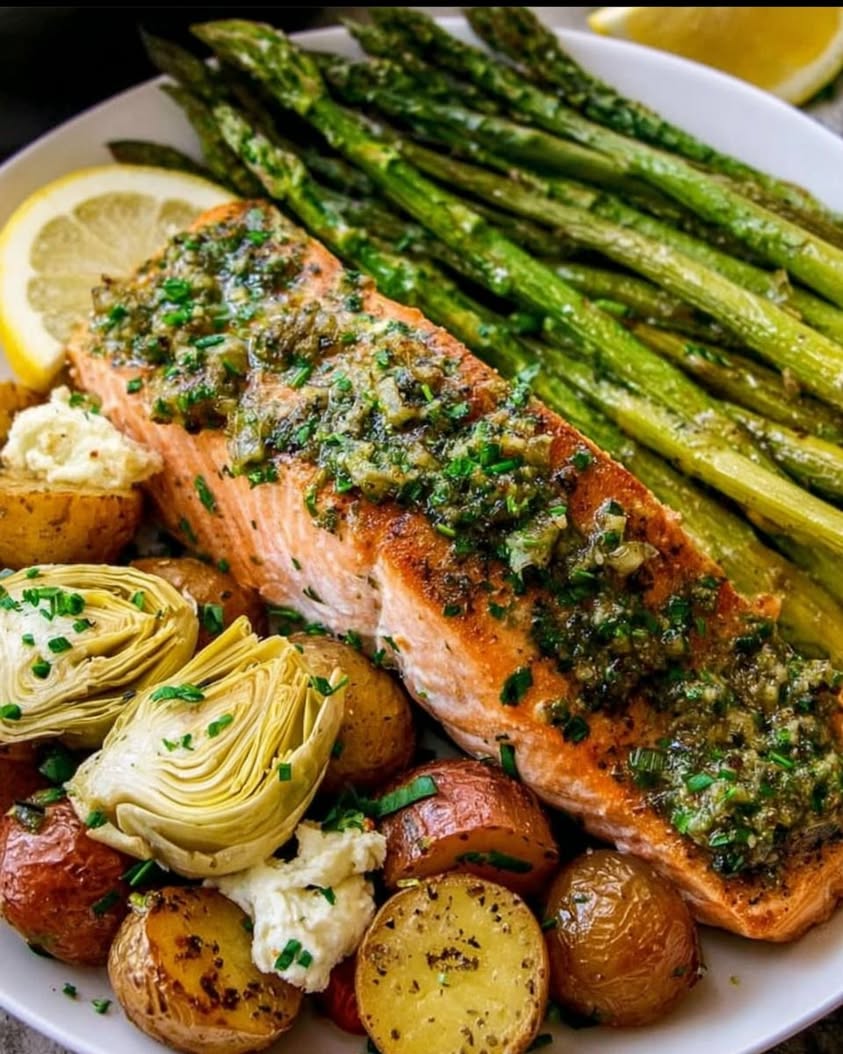
Lemony Gremolata Salmon Tray Bake: A Vibrant One-Pan Spring Feast
Imagine a complete, healthy dinner bursting with bright spring flavors, all cooked together on a single sheet pan with minimal cleanup. This Lemony Gremolata Salmon Tray Bake delivers exactly that. It is a stunning, fuss-free meal that transforms simple ingredients into something truly special. The star of the show is the vibrant fresh lemon gremolata, a zesty Italian condition that blankets the salmon and vegetables with a confetti of parsley, garlic, and lemon zest. Consequently, every bite is a perfect harmony of rich, flaky fish and tender, roasted spring vegetables.
This recipe celebrates the best of the season with baby potatoes, sweet leeks, and crisp asparagus. Roasting them together concentrates their natural sugars and creates beautifully caramelized edges. Meanwhile, the salmon fillets cook gently on top, absorbing all the aromatic flavors from the vegetables below. Ultimately, this Lemony Gremolata Salmon Tray Bake is more than just a meal; it is a colorful centerpiece for your dinner table. It proves that eating well does not have to be complicated or time-consuming. In fact, you can have this elegant dish on the table in well under an hour.
Quick Recipe Highlights
- Flavor Profile: This dish offers a masterful balance of rich, buttery salmon and bright, herbaceous notes. The fresh lemon gremolata provides a sharp, citrusy punch that cuts through the fat of the fish, while the roasted vegetables add a deep, savory sweetness. Every component works together to create a complex and satisfying taste experience.
- Texture: You will enjoy a wonderful contrast of textures in this tray bake. The salmon becomes tender and flaky, practically melting in your mouth. Conversely, the baby potatoes turn creamy inside with a slightly crisp skin, and the asparagus and leeks offer a pleasant, tender-crisp bite. The gremolata adds a final, fresh pop of texture.
- Aroma: As this Lemony Gremolata Salmon Tray Bake roasts, your kitchen will fill with an irresistible fragrance. First, you will smell the earthy, savory notes of roasting potatoes and leeks. Then, the bright, citrusy scent of lemon and the fresh, green aroma of parsley from the gremolata will take over, creating an inviting and mouthwatering atmosphere.
- Visual Appeal: This dish is a feast for the eyes with its vibrant spring colors. The pink-orange salmon, golden potatoes, green asparagus, and white leeks create a beautiful palette. Finally, the bright green sprinkle of gremolata on top adds a final touch of elegance, making it look like it came from a professional kitchen.
- Skill Level Needed: This is a beginner-friendly recipe designed for success. The techniques are straightforward: chopping vegetables, making a simple herb mix, and roasting. There is no complicated searing or flipping required. Basically, if you can use a knife and an oven, you can master this Lemony Gremolata Salmon Tray Bake.
- Special Equipment: You only need a few basic kitchen tools. A large, rimmed baking sheet is essential for containing the juices. Additionally, you will need a good chef’s knife for prepping vegetables and herbs, a microplane or fine grater for the lemon zest, and a small bowl for mixing the gremolata. That is truly all you need.
Recipe Overview
- Difficulty Level: We classify this Lemony Gremolata Salmon Tray Bake as easy for several reasons. The prep work is simple and involves mostly chopping. The cooking process is entirely hands-off once the tray goes into the oven. Furthermore, there is no need for constant monitoring or tricky techniques. It is an ideal recipe for weeknight cooks or anyone new to preparing fish.
- Category: This dish perfectly fits into multiple meal categories. It is a fantastic one-pan dinner, a healthy main course, and an excellent pescatarian option. Moreover, it works beautifully for both casual family meals and more formal entertaining. Its versatility is one of its greatest strengths.
- Cuisine: The recipe draws inspiration from Mediterranean and Italian culinary traditions. Gremolata itself is a classic Italian garnish, typically served with osso buco. Applying it to salmon and roasted vegetables is a modern, healthy twist on that tradition. The focus on fresh herbs, lemon, and olive oil is quintessentially Mediterranean.
- Cost: This is a moderately priced meal that delivers high-end flavor. Salmon is the primary cost, but using in-season spring vegetables helps keep the budget in check. Leeks, baby potatoes, and asparagus are often affordable in the spring. Importantly, you save money by cooking everything together, using less energy than multiple pots and pans.
- Season: Spring is the absolute perfect season for this Lemony Gremolata Salmon Tray Bake. This is when asparagus is at its peak sweetness and leeks are tender. The bright, fresh flavors of the gremolata also mirror the lightness of the season. Of course, you can make it year-round with great results, but it truly sings in spring.
- Occasion: This tray bake is incredibly versatile for different occasions. It is quick enough for a Tuesday night dinner yet impressive enough for a weekend gathering with friends. You can also serve it for a special Easter or Mother’s Day brunch. It is a universally appealing dish that suits almost any event.
Why You’ll Love This Recipe
First and foremost, the taste and texture of this Lemony Gremolata Salmon Tray Bake are simply outstanding. The salmon becomes incredibly moist and flavorful, infused with the aromas from the vegetables and the zesty gremolata. Each vegetable retains its unique character while harmonizing with the others. The gremolata is the star, however, adding a burst of freshness that elevates the entire dish from simple to spectacular. You get restaurant-quality flavor with minimal effort, which is always a winning combination.
Next, consider the incredible convenience of this one-pan wonder. The Lemony Gremolata Salmon Tray Bake minimizes both prep time and cleanup. You arrange everything on a single sheet pan, pop it in the oven, and let the heat do the work. Consequently, you spend less time washing dishes and more time enjoying your meal or your company. This streamlined approach is a game-changer for busy households, making healthy eating feel effortless and achievable even on the most hectic evenings.
Furthermore, this dish is a nutritional powerhouse. Salmon is loaded with high-quality protein and omega-3 fatty acids, which are essential for heart and brain health. The vegetables provide a wide array of vitamins, minerals, and dietary fiber. Cooking everything together with a modest amount of olive oil also means you use less fat overall. Therefore, you are treating yourself to a meal that is as good for your body as it is for your taste buds.
From a social perspective, this Lemony Gremolata Salmon Tray Bake has tremendous entertaining value. It looks stunning when brought directly from oven to table, creating a “wow” factor that impresses guests. Because it is mostly hands-off, you are not stuck in the kitchen while your company waits. You can socialize freely, then present a beautiful, complete meal that feels thoughtfully prepared. It takes the stress out of hosting.
Finally, this recipe is cost-effective and accessible. While salmon can be an investment, the rest of the ingredients are humble and affordable. You stretch the salmon by pairing it with hearty potatoes and vegetables, making four generous servings from a manageable amount of fish. The ingredients are also easy to find at any standard grocery store. You do not need any speciality items to create this elegant, satisfying meal.
Historical Background and Cultural Significance
The story of this dish begins with its individual components, each with a rich history. Gremolata, the vibrant herb condiment, originates from Lombardy in Northern Italy. Traditionally, it is a simple mixture of finely chopped parsley, garlic, and lemon zest. Historically, it served as a garnish for the rich, slow-braised veal shank dish known as osso buco. Its purpose was to cut through the dish’s heaviness with a sharp, aromatic lift. Chefs valued it for its ability to brighten and balance deeply savory flavors.
Culturally, gremolata represents a fundamental principle of Italian cooking: using a few, high-quality ingredients to create maximum impact. It is a “sofrito” of sorts for finishing a dish, adding a final layer of fresh, uncooked flavor. Applying gremolata to salmon is a modern adaptation that speaks to the global fusion of culinary traditions. It takes a classic Italian technique and pairs it with a beloved fish from other cuisines, creating something new and exciting while respecting its roots.
The evolution of the tray bake or sheet pan dinner is a more recent phenomenon, closely tied to modern desires for convenience and healthy eating. The concept of roasting proteins and vegetables together is ancient, but the specific method of using a single, large rimmed baking sheet gained massive popularity in the 21st century. It answered the call for quick, minimal-cleanup meals that did not sacrifice flavor. Combining this technique with an Italian gremolata was a natural and brilliant progression.
Regional variations of this concept are endless. In the American South, you might find a similar bake with catfish and okra. In the Mediterranean, swap the salmon for branzino and use oregano in the gremolata. The basic formula—protein + vegetables + aromatic finish—is universally adaptable. This particular version, the Lemony Gremolata Salmon Tray Bake, feels distinctly of the Pacific Northwest or California, where fresh salmon and a focus on bright, herb-forward, healthy cuisine converge beautifully.
Ingredient Deep Dive
Let us start with the star: salmon. This fatty fish has been a staple for coastal cultures worldwide for millennia, particularly for Indigenous peoples of the Pacific Northwest, for whom it holds deep cultural and spiritual significance. Nutritionally, it is a superstar, packed with omega-3 fatty acids EPA and DHA, high-quality protein, vitamin D, and B vitamins. For this recipe, choose center-cut fillets with the skin on for best results; the skin helps protect the flesh during roasting and can be easily removed after cooking. Look for bright, firm flesh with a fresh, ocean-like smell. Store salmon in the coldest part of your fridge and use within a day or two of purchase. For a substitution, arctic char or steelhead trout offer a similar texture and fat content.
Fresh lemon gremolata is the flavor engine of this dish. The lemon zest provides intense citrus oils without the acidity of the juice, which can “cook” the herbs. Parsley, specifically flat-leaf (Italian) parsley, has a robust, clean flavor that stands up to roasting. Garlic adds its indispensable pungent backbone. Historically, these were pantry staples in Mediterranean regions, combined to cut richness. Nutritionally, parsley is rich in vitamins K, C, and A, while lemon zest contains antioxidants and fiber. Select firm, bright yellow lemons for the zestiest gremolata. Always zest the lemon before juicing it. For a twist, you could substitute Meyer lemon for a sweeter note, or add a tablespoon of chopped capers for briny complexity.
The vegetable trio forms the hearty base. Baby potatoes are simply young potatoes harvested early; they have thin, tender skins and a creamy interior. They roast beautifully, absorbing the flavors around them. Leeks, a member of the allium family, offer a mild, sweet onion flavor when cooked. They require thorough cleaning to remove grit between their layers. Asparagus is the quintessential spring vegetable, prized for its tender spears and distinct flavor. It cooks quickly, so it is added partway through the roasting process. Together, they provide carbohydrates, fiber, vitamins C and K, and folate. Choose potatoes that are firm, leeks with crisp green tops, and asparagus with tight, firm tips. You can easily swap in other vegetables like broccoli florets, sliced fennel, or cherry tomatoes based on the season.
Common Mistakes to Avoid
- Overcrowding the Pan: This is the most common error. If the vegetables are piled on top of each other, they will steam instead of roast. You need space for hot air to circulate and create those desirable caramelized edges. Use a large enough baking sheet or roast on two pans if necessary.
- Not Preheating the Oven: A properly preheated oven is non-negotiable for a successful Lemony Gremolata Salmon Tray Bake. Starting in a hot oven ensures the vegetables begin to caramelize immediately and the salmon cooks evenly from the start. Putting a tray into a cold oven leads to soggy, uneven results.
- Adding the Asparagus Too Early: Asparagus cooks much faster than potatoes and leeks. If you add it at the beginning, it will become mushy and overcooked by the time everything else is done. Always add the asparagus halfway through the cooking time to preserve its vibrant color and tender-crisp texture.
- Using Bottled Lemon Juice in the Gremolata: The gremolata relies on the fragrant oils in fresh lemon zest, not the juice. Bottled juice has no zest, and its flavor is flat and often metallic. Always use a fresh lemon and a microplane or fine grater to get the zest without the bitter white pith.
- Overcooking the Salmon: Salmon continues to cook from residual heat after you remove it from the oven. The goal is to cook it until it is just opaque and flakes easily with a fork at the thickest part. If you wait until it looks completely done in the oven, it will be dry by the time it reaches the table.
- Not Drying the Vegetables: Excess moisture on washed vegetables will create steam on the pan, hindering the roasting process. After washing your leeks and asparagus, take a moment to pat them thoroughly dry with a clean kitchen towel or paper towels. This simple step guarantees better browning.
- Skipping the Gremolata: The gremolata is not just a garnish; it is an integral layer of flavor. It adds the essential fresh, bright note that balances the rich salmon and sweet vegetables. Do not be tempted to skip it or substitute with dried herbs. The fresh finish is what makes this dish special.
- Cutting the Vegetables Inconsistently: If your potato pieces are much larger than your leek pieces, they will not cook at the same rate. Aim for uniform sizes, especially for the potatoes and leeks, so everything is perfectly tender at the same time.
Essential Techniques
Proper Sheet Pan Roasting: This technique is the foundation of the Lemony Gremolata Salmon Tray Bake. The goal is to use dry, high heat to caramelize the natural sugars in the vegetables while cooking the salmon gently. The key is ensuring the vegetables are in a single, uncrowded layer and that your oven is fully preheated. A common pitfall is stirring the vegetables too often; let them sit undisturbed for at least 15-20 minutes to develop a golden-brown crust. Visual cues for success include golden edges on the potatoes and leeks and tender-crisp asparagus with slight blistering.
Making a Perfect Gremolata: Gremolata is about freshness and fine texture. The technique involves very finely chopping the parsley and garlic until they are almost a paste, then mixing in the lemon zest. Why is this important? A fine chop releases more of the herbs’ essential oils and ensures the flavors distribute evenly over the dish. A common mistake is a rough, chunky chop, which makes the gremolata harder to sprinkle and less integrated into each bite. Use a sharp chef’s knife and take your time. The visual cue is a vibrant, moist-looking green mixture that holds together slightly.
Timing a Multi-Component Roast: This is the art of adding ingredients to the pan at different times based on their cooking rates. Dense vegetables like potatoes and leeks need a head start. The quicker-cooking salmon and asparagus are added later. Mastering this technique prevents overcooked fish and mushy asparagus. The pitfall is adding everything at once. The visual cue is the initial vegetables being partly tender and starting to brown before you add the next round of ingredients. This staggered approach is what makes a one-pan meal truly successful.
Pro Tips for Perfect Lemony Gremolata Salmon Tray Bake
First, line your baking sheet with parchment paper for the easiest cleanup imaginable. The vegetables and salmon will release natural juices and oils that can bake onto a bare pan. Parchment prevents sticking and makes post-dinner washing a breeze.
Second, toss your potatoes and leeks generously with olive oil, salt, and pepper before roasting. This initial seasoning is crucial because it is harder to season the interior of vegetables after they are cooked. Do not be shy here.
Third, let the salmon come to room temperature for about 10-15 minutes before cooking. This helps it cook more evenly, preventing a scenario where the outside is overdone before the center is cooked through.
Fourth, use a microplane grater for the lemon zest. It creates fluffy, fine zest without any of the bitter white pith, which a standard box grater can sometimes include. This makes a significant difference in the flavor of your gremolata.
Fifth, do not mix the gremolata until just before serving. The flavors are at their peak when freshly combined. If you make it too far in advance, the parsley can wilt and the garlic can become overpowering.
Sixth, after removing the tray from the oven, let the salmon rest for 2-3 minutes before serving. This allows the juices to redistribute throughout the fillets, ensuring every bite is moist and flavorful.
Seventh, for extra crispy potato edges, place your empty baking sheet in the oven while it preheats. Carefully add the oiled potatoes and leeks to the hot pan—this gives them an instant sear.
Eighth, if you want to add another layer of flavor, scatter a few thin lemon slices on the tray with the salmon. They will roast and caramelize, offering a delicious, edible garnish.
Variations and Adaptations
For regional variations, consider a Greek-inspired version. Substitute oregano for half the parsley in the gremolata and add Kalamata olives and cherry tomatoes to the vegetable mix. A Nordic twist could use dill and a pinch of caraway in the gremolata, with root vegetables like parsnips and carrots replacing the potatoes and asparagus.
Seasonal adaptations are simple and recommended. In summer, swap asparagus for zucchini and yellow squash, and add cherry tomatoes. For fall, use sweet potato or butternut squash cubes and Brussels sprouts instead of the spring vegetables. The cooking times may need slight adjustment for denser fall veggies.
Dietary modifications are straightforward. For a Whole30 or Paleo version, ensure your salmon is wild-caught and that no non-compliant oils are used. The recipe is naturally gluten-free and dairy-free. To make it lower-carb, simply replace the baby potatoes with extra asparagus, broccoli, or cauliflower florets.
Flavor variations can personalize the dish. Add a teaspoon of smoked paprika to the oil for tossing the vegetables. Mix a tablespoon of Dijon mustard into the olive oil before coating the salmon. For an herbal twist, incorporate chopped tarragon or chives into the gremolata along with the parsley.
Texture modifications are easy. For crispier potatoes, parboil them for 5 minutes before roasting. For a creamier element, add dollops of goat cheese or feta over the vegetables during the last 5 minutes of cooking. For a crunchier topping, mix toasted pine nuts or slivered almonds into the gremolata just before serving.
Presentation alternatives can elevate the meal. Serve the entire tray bake family-style on the sheet pan for a rustic feel. Alternatively, plate individually, flaking the salmon over a bed of the vegetables and spooning the gremolata over the top. For a more formal look, you can remove the skin from the salmon after cooking.
Serving and Presentation Guide
Plating this Lemony Gremolata Salmon Tray Bake can be as casual or elegant as you like. For family-style serving, bring the entire sheet pan directly to the table—it makes a dramatic and inviting presentation. Place a large serving spoon and spatula nearby so guests can help themselves. This approach celebrates the simplicity and beauty of the one-pan method.
For individual plating, use a wide, shallow bowl or plate. Create a bed with the roasted potatoes, leeks, and asparagus. Carefully place a salmon fillet on top, then spoon a generous amount of the fresh lemon gremolata over the fish. Drizzle any flavorful juices from the pan around the vegetables for added moisture and flavor.
Garnishing ideas are simple but effective. Beyond the gremolata, a final squeeze of fresh lemon juice just before eating adds a bright note. You can also sprinkle with flaky sea salt, such as Maldon, for a final texture pop. A few whole parsley leaves or edible flowers add a touch of elegance for a special occasion.
Traditional accompaniments are light and simple. A crusty baguette is perfect for soaking up the delicious pan juices. A simple green salad with a light vinaigrette provides a fresh, crisp contrast to the warm, roasted main course. Alternatively, a grain like quinoa or farro can be served on the side for a heartier meal.
Modern serving suggestions might include a dollop of lemony aioli or tzatziki on the side. For a low-carb option, serve over a bed of cauliflower rice or zucchini noodles. You can also flake the leftover salmon and vegetables the next day to top a large, hearty salad for lunch.
Temperature considerations are key. This dish is best served immediately, straight from the oven, when the salmon is perfectly flaky and the vegetables are hot. If you must hold it, tent it loosely with foil for no more than 10 minutes. The gremolata should always be added at the last possible moment to retain its fresh texture and vibrant color.
Wine and Beverage Pairing
Wine pairings for this Lemony Gremolata Salmon Tray Bake should complement its rich yet bright profile. A classic choice is a crisp, high-acid white wine like Sauvignon Blanc or Pinot Grigio. These wines mirror the citrus notes in the gremolata and cut through the richness of the salmon beautifully. Alternatively, a light-bodied, unoaked Chardonnay can work well, offering a slightly rounder mouthfeel without overwhelming the dish. For red wine lovers, a very light Pinot Noir served slightly chilled can be a surprising and excellent match, as its red fruit notes and low tannins won’t clash with the fish.
Non-alcoholic alternatives are just as important. A sparkling water with a squeeze of lemon or a few muddled cucumber slices is refreshing and cleansing. For a more crafted option, a homemade ginger-lemon iced tea complements the dish’s flavors perfectly. Simply brew strong black tea, add fresh ginger slices and lemon juice while warm, then chill and serve over ice.
While not a traditional pairing for dinner, a light herbal tea can be a lovely post-meal accompaniment. A chamomile or mint tea aids digestion after a satisfying meal. For a daytime brunch serving of this tray bake, a high-quality coffee with bright, citrusy notes would actually pair quite nicely, creating a harmonious flavor bridge.
Temperature considerations are crucial for beverages. White wines and non-alcoholic sparklers should be served well-chilled, between 45-50°F. A light red like Pinot Noir is best served slightly cooler than room temperature, around 55°F. Iced teas and waters should be very cold to provide a refreshing contrast to the warm, savory food.
Serving suggestions include offering a choice of both a white and a red wine if you are entertaining, to cater to different preferences. Always pour water generously throughout the meal. If serving a non-alcoholic sparkler, consider it in a wine glass to make it feel just as special as the alcoholic options for those who are not drinking.
Storage and Shelf Life
Proper storage is essential for maintaining quality and safety. Allow any leftovers of your Lemony Gremolata Salmon Tray Bake to cool completely to room temperature before storing, but do not leave them out for more than two hours. Transfer the salmon and vegetables to separate airtight containers. Storing them together can cause the vegetables to become soggy from the salmon’s moisture. They will keep in the refrigerator for up to 2 days.
Temperature requirements are strict. Your refrigerator should be at or below 40°F (4°C). Do not store the leftovers on the refrigerator door, as the temperature fluctuates too much. Place the containers on a middle or lower shelf towards the back, where the temperature is most consistent and coldest.
Container recommendations are simple. Glass containers with tight-fitting lids are ideal because they do not absorb odors and allow you to see the contents. If using plastic, ensure it is BPA-free and designed for food storage. You can also use shallow containers to promote faster, more even cooling, which is better for food safety.
Signs of spoilage are important to recognize. Discard the leftovers if the salmon develops a strong, fishy ammonia smell, a slimy texture, or a significant color change. If the vegetables become excessively mushy, develop an off odor, or show any signs of mold, they should be thrown away. When in doubt, it is always safer to err on the side of caution.
Reheating instructions require care to prevent drying out the salmon. The best method is to reheat gently in a covered oven-safe dish at 275°F until just warmed through, which should take about 10-15 minutes. You can also use the microwave at 50% power in short 30-second bursts. The gremolata will not survive reheating well, so plan to make a fresh small batch to sprinkle on top after reheating.
Freezing guidelines are not generally recommended for this specific dish. The cooked salmon and the asparagus will suffer significant textural changes upon thawing, becoming mushy and watery. The potatoes may become grainy. This Lemony Gremolata Salmon Tray Bake is truly best enjoyed fresh or refrigerated for a next-day lunch.
Make Ahead Strategies
You can implement a smart prep timeline to get dinner on the table even faster. The day before, or in the morning, wash and chop your vegetables. Pat the leeks and asparagus dry, then store the potatoes and leeks together in one container and the asparagus separately in another. Keep them refrigerated. You can also mix the olive oil, salt, and pepper for tossing the vegetables in a small jar.
Storage between steps is straightforward. Keep pre-chopped vegetables in airtight containers in the fridge. You can also zest the lemon and chop the parsley and garlic for the gremolata, but store these components separately in small containers. Do not mix the gremolata until you are ready to cook, as the garlic’s flavor will intensify and the parsley may wilt.
Assessing the quality impact is key. Pre-chopping vegetables has minimal impact, especially on root vegetables like potatoes. Asparagus may lose a slight bit of crispness, so it is best chopped closer to cooking time. The salmon should always be prepped just before cooking for the best texture and food safety. Pre-mixing the gremolata ruins its fresh, bright quality, so avoid that step.
Assembly tips for a make-ahead approach are simple. When ready to cook, simply take your pre-chopped veggies from the fridge, toss them with the pre-mixed oil, and spread them on the pan. The salmon can be seasoned and placed on top. The separate components of the gremolata can be quickly combined in a bowl. This cuts active prep time down to just a few minutes.
Reheating guidelines do not apply to make-ahead components, as you are not cooking ahead, just prepping. The goal is to have everything ready to go straight into the oven. This strategy is perfect for busy weeknights or when you have guests coming and want to minimize time spent in the kitchen during the visit.
Fresh element additions are non-negotiable. The lemon gremolata must be mixed fresh right before serving. Its vibrant, uncooked character is what makes it special. Similarly, any final garnishes like an extra lemon wedge or flaky salt should be added at the table. These last-minute touches ensure the dish tastes as bright and lively as intended.
Scaling Instructions
Halving the recipe is simple for a smaller household. Use two salmon fillets and simply reduce all vegetable quantities by half. The key is to use a smaller baking sheet or quarter sheet pan to prevent the ingredients from spreading out too thinly and drying out. Cooking time may reduce by 3-5 minutes, so start checking for doneness a bit earlier. Keep an eye on the salmon, as it will cook faster with less mass in the oven.
Doubling or tripling the recipe for a crowd requires more planning. You will need to use multiple baking sheets. Do not stack two sheets in the oven on the same rack, as this blocks airflow. Instead, use two racks and rotate the pans front-to-back and top-to-bottom halfway through cooking. Cooking time may increase slightly due to the larger volume of food, so allow for an extra 5-10 minutes and rely on visual and textural cues for doneness.
Equipment adjustments are necessary when scaling. For a double batch, two standard half-sheet pans are ideal. Ensure your oven can accommodate them with enough space for air circulation. You may also need a larger bowl for tossing the increased volume of vegetables. For a half batch, a quarter sheet pan or even a large oven-safe skillet can work perfectly.
Timing modifications are minimal but important. When doubling, the vegetables might take a few minutes longer to become tender and caramelized because the pan is more crowded. However, the salmon’s cooking time is less affected, as the fillets are still individual portions. Always use a meat thermometer to check the salmon for 125-130°F at the thickest part for perfect doneness, regardless of batch size.
Storage considerations for leftovers change with scaling. If you are cooking for a crowd expecting leftovers, plan to store them as directed. If you are scaling up for meal prep, portion the cooked tray bake into individual containers immediately after it has cooled. This makes for easy grab-and-go lunches throughout the week.
Nutritional Deep Dive
This Lemony Gremolata Salmon Tray Bake offers an excellent macro breakdown. A typical serving provides a substantial amount of high-quality protein from the salmon, roughly 30-35 grams. The baby potatoes and other vegetables contribute complex carbohydrates for sustained energy, while the olive oil and the natural fats in the salmon provide healthy monounsaturated and omega-3 fats. This balance supports muscle repair, brain function, and satiety.
The micronutrient analysis is impressive. Salmon is a top source of vitamin B12, selenium, and vitamin D. The vegetables contribute vitamin C from the asparagus and lemon, vitamin K from the parsley and greens, and a range of B vitamins from the potatoes. Leeks provide prebiotic fibers that support gut health. Together, they create a nutrient-dense plate covering a wide spectrum of essential vitamins and minerals.
Health benefits are significant. The omega-3 fatty acids in salmon are renowned for reducing inflammation, supporting cardiovascular health, and promoting cognitive function. The antioxidants in the parsley, lemon, and colorful vegetables combat oxidative stress. The fiber from the vegetables aids digestion and helps regulate blood sugar levels. This meal is a powerful ally for overall wellness.
Dietary considerations are mostly positive. The dish is naturally gluten-free, dairy-free, and pescatarian. It is not suitable for a strict vegan or vegetarian diet unless the salmon is substituted. For those on a low-FODMAP diet, leeks are high in fructans and should be omitted or replaced with the green tops of scallions. The potatoes are a source of carbohydrates, so those on very low-carb or ketogenic diets may need to adjust the vegetable base.
Portion analysis shows that one fillet of salmon with a quarter of the vegetables makes a very satisfying and complete meal. The volume of vegetables helps create a feeling of fullness without excessive calories. This portion size aligns well with standard dietary guidelines for a balanced plate: half vegetables, a quarter protein, and a quarter starch.
Weight management tips related to this dish focus on its inherent balance. The high protein and fiber content promote satiety, helping to prevent overeating. Using healthy fats like olive oil also contributes to feeling satisfied. To make it even lighter, you can slightly reduce the amount of olive oil used to toss the vegetables or increase the proportion of non-starchy vegetables like asparagus relative to the potatoes.
Dietary Adaptations
Gluten-free: This Lemony Gremolata Salmon Tray Bake is naturally gluten-free as written. All ingredients—salmon, vegetables, olive oil, and herbs—are free from gluten. Always double-check labels on any pre-packaged ingredients like broth or seasoning blends if you use them, but the core recipe requires no adaptation for this dietary need.
Dairy-free: The recipe contains no dairy products. The richness comes from the salmon and olive oil. It is perfectly suited for anyone avoiding dairy. For added creaminess, you could top with a dairy-free alternative like a cashew-based “cream” or omit any such additions entirely, as the dish is complete without them.
Vegan/Vegetarian: For a vegan adaptation, replace the salmon with a plant-based protein. Large, thick slices of extra-firm tofu or tempeh, or even hearty cauliflower steaks, work well. Marinate them in lemon juice, olive oil, and garlic before adding to the tray. Increase the quantity of vegetables, particularly potatoes and chickpeas, to ensure the meal is filling. Use the same gremolata for topping.
Low-carb/Keto: Omit the baby potatoes entirely. Increase the asparagus and add other low-carb vegetables like broccoli, cauliflower florets, bell peppers, or zucchini. Ensure you use enough olive oil or avocado oil to meet fat macros for keto. The salmon and gremolata are already perfect for a low-carb lifestyle.