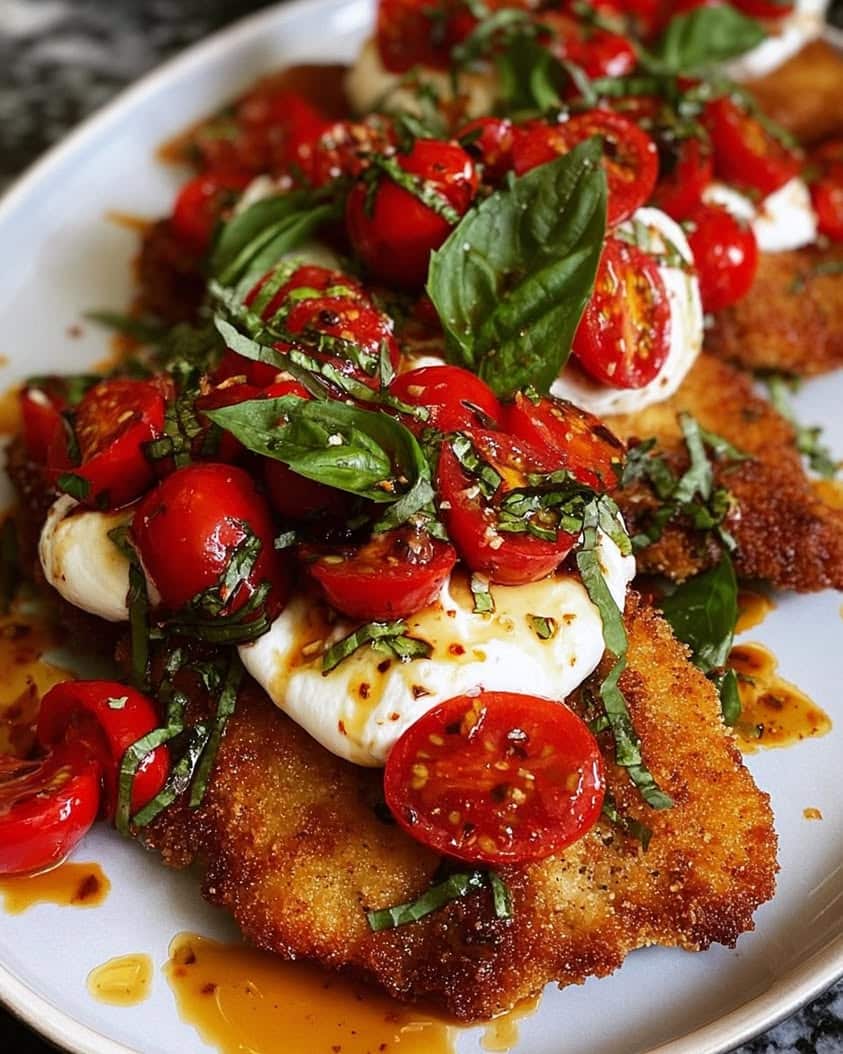
Italian Basil Chicken Cutlets with Tomato and Burrata: A Weeknight Showstopper
These Italian Basil Chicken Cutlets with Tomato and Burrata bring the warmth of a Tuscan kitchen right to your dinner table. Imagine golden, pan-seared chicken cutlets infused with fresh basil and garlic, then crowned with juicy burst cherry tomatoes and creamy burrata cheese. This Italian Basil Chicken Cutlets with Tomato and Burrata recipe delivers restaurant-quality flavor in just thirty minutes, and it has quickly become one of the most requested dishes in my home kitchen.
The magic of these Italian Basil Chicken Cutlets with Tomato and Burrata lies in the contrast of textures and temperatures. Each bite offers a crisp golden crust, tender white meat, warm sweet tomatoes, and cool, luscious burrata that melts into every crevice. Because the ingredients stay simple and fresh, the chicken shines as the star, and the burrata topping adds a luxurious finish that feels far more complicated than it truly is. Furthermore, you likely already own most of the pantry staples needed to make this dish tonight.
Whether you need a fast family dinner or an impressive meal for guests, this recipe fits the bill perfectly. The Italian Basil Chicken Cutlets with Tomato and Burrata come together in one skillet, which means fewer dishes and more time at the table. Meanwhile, the bright basil, garlic, and tomato aromas fill your kitchen and signal that something special is on the way. Keep reading to learn every detail, from ingredient selection to plating, so you can serve these cutlets with total confidence.
Quick Recipe Highlights
- Flavor Profile: Expect savory seared chicken, sweet burst tomatoes, herbaceous basil, and a mild milky finish from the burrata. A squeeze of lemon brightens the whole plate.
- Texture: The cutlets stay juicy inside with a lightly crisp exterior, while the burrata brings a soft, creamy contrast. Cherry tomatoes add a pleasant pop and release their juices into the pan sauce.
- Aroma: Fresh basil and garlic lead the way, followed by the caramelized scent of tomatoes hitting a hot skillet. The burrata adds a clean, delicate dairy note at the finish.
- Visual Appeal: Golden cutlets sit beneath a vivid tumble of red tomatoes, white burrata, and green basil. The colors mirror the Italian flag and look stunning on a simple white plate.
- Skill Level Needed: Beginner cooks can master this recipe because the technique relies on basic pan-searing and simple timing. The only real skill involves avoiding overcooking the thin cutlets.
- Special Equipment: A large heavy skillet, a meat mallet for pounding, and a sharp knife handle everything. Tongs help flip the cutlets safely and a cutting board keeps prep organized.
Recipe Overview
- Difficulty Level: This recipe earns an easy rating because it uses one pan and short cook times. Home cooks of any experience level can execute it well, and mistakes are easy to correct. The forgiving nature of the dish makes it a great confidence builder.
- Category: Serve these cutlets as a main course for dinner, and treat leftovers as a hearty lunch. They also work as a party platter when sliced and arranged on a board. The dish pairs well with pasta, salad, or crusty bread.
- Cuisine: The recipe draws on Italian culinary tradition, especially the southern love of burrata and fresh basil. It reflects the Italian habit of letting a few peak ingredients speak for themselves. At the same time, the quick skillet method feels thoroughly modern and American-friendly.
- Cost: Budget roughly twelve to sixteen dollars for four servings depending on burrata availability. Chicken cutlets, tomatoes, and basil stay affordable, while burrata represents the main splurge. Overall, the dish costs far less than a comparable restaurant entree.
- Season: Summer offers the sweetest tomatoes and the most fragrant basil for this dish. However, quality cherry tomatoes now appear year-round, so you can enjoy the recipe in any month. Spring and early fall deliver excellent results as well.
- Occasion: Weeknight dinners, date nights, and casual dinner parties all suit this recipe. The quick timeline makes it ideal for busy evenings, and the elegant presentation fits special gatherings. Serve it for Sunday supper or a celebratory family meal.
Why You’ll Love This Recipe
First and foremost, the taste and texture of this dish win people over instantly. The seared chicken delivers a savory, golden crust, and the basil and garlic in the breading infuse every bite with herby depth. Then the warm tomatoes release their sweet juices, which mingle with the creamy burrata and create a natural sauce. Because the components stay distinct on the plate, each forkful offers a new combination of crisp, tender, creamy, and juicy.
Convenience makes this recipe a repeat performer in busy households. You need one skillet, a handful of everyday ingredients, and thirty minutes from start to finish. There is no marinating, no complicated sauce, and no oven coordination required. Consequently, these Italian Basil Chicken Cutlets with Tomato and Burrata fit into even the tightest weeknight schedule without stress.
Nutritionally, the recipe brings real advantages to the table. Lean chicken breast supplies high-quality protein with very little saturated fat. Tomatoes contribute vitamins, antioxidants, and fiber, while basil adds freshness without calories. The burrata adds richness in moderation, so you can enjoy a satisfying meal that still supports balanced eating when paired with vegetables or a light grain.
Socially, these cutlets make entertaining remarkably easy and impressive. Guests see a colorful, restaurant-style plate, yet the host spends only minutes at the stove. Because the recipe scales easily, you can feed a crowd without doubling your effort. The dish also invites conversation, and friends always ask for the recipe before dessert arrives.
Finally, cost-effectiveness and accessibility set this recipe apart. Everyday grocery stores stock every ingredient, and no specialty shop trip is required. The dish delivers a luxury feel at a modest price, which makes it perfect for both budget nights and special occasions. For these reasons, these Italian Basil Chicken Cutlets with Tomato and Burrata earn a permanent spot in your rotation.
Historical Background and Cultural Significance
The dish traces its roots to classic Italian cutlet traditions, especially the beloved cotoletta and Milanese styles. Italian cooks long ago learned to pound chicken and veal thin, coat them in breadcrumbs, and fry them in olive oil. These thin cutlets cooked quickly and fed families affordably, which explains their enduring popularity across Italian regions.
Basil, of course, carries deep cultural weight throughout Italy. In Italian kitchens, basil appears in everything from pesto to tomato salads, and home cooks treat it as an essential herb rather than an accent. In southern Italy, cooks pair basil with ripe tomatoes constantly, and that pairing forms the heart of this recipe’s topping. Therefore, the dish honors a culinary marriage that has lasted for centuries.
Burrata emerged in the early twentieth century in Puglia, where cheesemakers created it as a way to use up leftover mozzarella curd. They stuffed the curd with cream and wrapped it in a mozzarella shell, creating a cheese that is soft, milky, and incredibly luxurious. Over time, burrata traveled from Puglia to the rest of Italy and beyond, and it now appears on menus worldwide. This recipe uses burrata exactly as Italian cooks intended: as a simple, elegant finish.
Regional variations of this style of dish appear across Italy and in Italian-American communities. Some cooks add capers for a briny kick, while others use pancetta for depth. In the United States, Italian-American cooks adapted the technique with chicken breast, which is more plentiful and affordable. Consequently, these Italian Basil Chicken Cutlets with Tomato and Burrata represent a happy blend of old-world technique and new-world convenience.
Ingredient Deep Dive
Chicken cutlets form the foundation of this recipe, and selecting them well matters more than any other step. Chicken breast has a long history in Italian cooking, especially in regions that favor lean cuts for quick frying. Nutritionally, chicken provides complete protein, B vitamins, and selenium with minimal saturated fat. Always choose cutlets of even thickness, and consider pounding thicker breasts yourself for consistency. Store raw chicken in the coldest part of your refrigerator and cook it within two days of purchase. If cutlets are unavailable, slice two large breasts horizontally and pound them thin, or substitute pork cutlets for a richer twist.
The choice of fresh versus dried breadcrumbs changes the final texture, so weigh your options with care. Italian cooks traditionally favor dry breadcrumbs for a crisper crust, while fresh breadcrumbs deliver a softer bite. The breadcrumb coating also gives the dish its golden color, and incorporating grated Parmesan adds savory depth. Store breadcrumbs airtight at room temperature for months. If you need a substitution, panko works beautifully for extra crunch, and gluten-free breadcrumbs perform well too.
Fresh basil gives these cutlets their signature identity, and its history stretches back thousands of years across the Mediterranean. Italian cooks treat basil as both an herb and a symbol of hospitality, and its aroma defines dishes throughout the peninsula. Nutritionally, basil offers vitamin K, antioxidants, and anti-inflammatory compounds. Choose bright green leaves with no dark spots, and store the bunch stems-down in a glass of water or wrapped loosely in the refrigerator. When basil is scarce, flat-leaf parsley plus a pinch of dried oregano makes a workable stand-in.
Cherry tomatoes deliver the sweet, juicy topping that crowns the burrata, and their quality determines the final sauce. Tomatoes arrived in Italy from the Americas and eventually reshaped Italian cuisine, especially in the south. They provide vitamin C, lycopene, and potassium, and their acidity balances the richness of the cheese. Select tomatoes that feel heavy for their size and smell sweet at the stem. Keep them at room temperature for the best flavor, and substitute halved grape tomatoes or small diced plum tomatoes if needed.
Burrata creates the recipe’s most memorable moment, and understanding it helps you buy wisely. This Puglia-born cheese consists of a mozzarella pouch filled with cream and soft curd, and it delivers a milky, buttery richness to every dish it touches. Nutritionally, burrata offers protein and calcium, though its cream center makes it a richer choice than plain mozzarella. Seek burrata sold in brine with a fresh date, and use it within a day or two of opening. Fresh mozzarella or stracciatella make excellent substitutes when burrata proves elusive.
Common Mistakes to Avoid
- Pounding cutlets unevenly creates thin edges that burn before the center cooks through. Take an extra minute to flatten each piece to a consistent quarter-inch thickness so everything sears at the same rate.
- Skipping the pat-dry step leaves moisture on the chicken, and that moisture steams off instead of letting the coating brown. Dry the cutlets thoroughly with paper towels before you bread them for a crisper, more golden crust.
- Crowding the skillet drops the oil temperature and produces soggy, greasy cutlets. Cook in batches and give each cutlet breathing room so the crust develops properly.
- Using cold oil or a cool pan prevents proper searing from the very start. Heat the oil until it shimmers and the pan feels hot before adding the first cutlet.
- Overcooking the thin cutlets dries them out quickly because they need only two to three minutes per side. Watch for a golden crust and remove the chicken the moment it reaches 165 degrees Fahrenheit internally.
- Adding garlic directly to the pan during searing often burns it in seconds. Instead, let the garlic linger in the breading and use it gently in the tomato topping.
- Draining the tomatoes too early skips the flavor-building step where they burst and concentrate. Let them blister and soften slightly before you crush a few with a spoon to create the sauce.
- Placing cold burrata on cold chicken mutes its creaminess. Bring the burrata to room temperature first, or let it sit on the warm cutlets for a minute so it softens and melds.
- Neglecting to salt the tomatoes leaves the final dish flat because tomatoes need seasoning to shine. Season with salt and pepper as they cook, then taste the pan juices before serving.
- Assembling everything too far in advance causes the crust to lose its crunch. Add the tomato topping and burrata just before serving so textures stay distinct.
Essential Techniques
Pounding the chicken matters because even thickness guarantees even cooking, and that consistency separates juicy cutlets from dry ones. Place each breast between sheets of parchment and use a meat mallet or heavy skillet to flatten it to a quarter inch. Work from the center outward with firm, steady strokes, and check thickness with your fingers as you go. The visual cue is simple: the cutlet should look uniform like a playing card. The main pitfall involves pounding too aggressively, which tears the meat, so use controlled pressure rather than force.
The breading station, commonly called the three-step dredge, creates the golden crust that defines these Italian Basil Chicken Cutlets with Tomato and Burrata. Set up flour, beaten egg, and seasoned breadcrumbs in shallow dishes, then press the crumbs firmly onto each cutlet so they adhere. Keep one hand dry and one hand wet to avoid gluey fingers, and let the coated cutlets rest for five minutes before frying. A properly breaded cutlet looks evenly coated with no bare patches. The common pitfall is a thin coating, so use your palm to press the crumbs into the surface.
Shallow frying in a heavy skillet delivers the crisp exterior that makes this dish sing. Heat a quarter inch of olive oil over medium-high heat until it shimmers, then pan-fry the cutlets in batches. Shallow frying differs from deep frying because the oil reaches only partway up the cutlet, which keeps the dish lighter while still crowning the crust. You will know the oil is ready when a breadcrumb sizzles instantly on contact. Watch for rapid browning and adjust the heat down slightly if the crust darkens too fast.
Bursting the tomatoes builds the warm topping that balances the creamy burrata. Add halved tomatoes to the same skillet after the chicken, stir in garlic for a few seconds, and let the tomatoes blister over medium heat. Press about half the tomatoes with the back of a spoon so they release their juices and form a quick sauce. The visual cue is a glossy, jammy texture with the skins beginning to wrinkle. Visit the technique often because burned garlic ruins the pan, so keep the heat moderate and stir constantly.
Pro Tips for Perfect Italian Basil Chicken Cutlets with Tomato and Burrata
Season the flour, egg, and breadcrumbs all separately, because each layer contributes to the final flavor. Many cooks only salt the crumbs, but seasoning every stage builds depth across the entire cutlet.
Add a tablespoon of grated Parmesan to the breadcrumb mixture for an umami boost that pairs beautifully with basil. The cheese melts into the crust and adds a savory note that guests always notice.
Let the breaded cutlets rest in the refrigerator for ten minutes before frying, since chilled coating adheres better and browns more evenly. This small chill also prevents the crust from sliding off during the flip.
Tilt the pan and spoon the hot oil over the top of each cutlet, a technique called basting, to cook the upper crust without flipping more than once. This approach keeps the breading intact and the meat juicy.
Finish the tomatoes with a small pinch of sugar when they taste acidic, because the sugar rounds out the sauce without making it sweet. Taste first, then add a pinch at a time.
Tear the burrata instead of cutting it so the creamy center spills naturally across the chicken. Tearing creates rustic, appealing pools of cheese that look gorgeous and taste even better.
Finish each plate with a squeeze of lemon and a flourish of torn basil, because the acid cuts through the richness of the cheese and brightens the whole dish. Add these touches right before serving so the basil stays vivid.
Warm the serving plates before plating, since warm plates keep the cutlets hot and encourage the burrata to soften slightly. This small step elevates a weeknight dinner into something memorable.
Variations and Adaptations
Regional variations offer wonderful ways to explore Italian traditions with this recipe. A Milanese-inspired version swaps the tomato topping for a simple arugula salad with lemon and shaved Parmesan. A Puglia-inspired approach leans on burrata even harder and adds a drizzle of extra virgin olive oil. Meanwhile, a Roman twist uses a spoonful of marinara instead of fresh tomatoes for a deeper, richer sauce.
Seasonal adaptations keep the Italian Basil Chicken Cutlets with Tomato and Burrata feeling fresh all year. In summer, lean on peak tomatoes and abundant basil for the simplest version. In cooler months, roast the tomatoes with garlic in a hot oven to concentrate their flavor. Spring invites the addition of fresh peas, while winter welcomes a handful of wilted spinach beneath the burrata.
Dietary modifications make the recipe flexible for different eaters. Use gluten-free breadcrumbs and flour to make the dish gluten-free with no loss of crunch. For a dairy-free version, skip the burrata and finish with a drizzle of olive oil and a pinch of flaky salt. For a low-carb twist, pulse pork rinds or almonds into crumbs, and expect a deliciously rich result.
Flavor variations let you steer the dish in playful directions. Add a teaspoon of lemon zest to the breadcrumbs for a citrusy lift. Stir a pinch of crushed red pepper into the tomatoes when you want gentle heat. Alternatively, add capers and olives to the topping for a briny, Mediterranean punch.
Texture modifications adapt the dish to different preferences. For crunch, double the breadcrumb layer and press it firmly. For a softer, more tender bite, use fresh breadcrumbs and reduce the frying time slightly. If you prefer a saucier finish, crush all the tomatoes and add a splash of chicken broth.
Presentation alternatives transform the same components into new meals. Slice the cutlets and pile them onto crusty bread for a luxurious sandwich. Layer them over pasta or polenta for a heartier dinner. For parties, arrange sliced cutlets on a platter and scatter the tomatoes and torn burrata across the top.
Serving and Presentation Guide
Plating techniques make a real difference in how this dish lands at the table. Start by placing one cutlet slightly off-center on a warm plate, then spoon the burst tomatoes over the top half. Tear the burrata into pieces and nestle them among the tomatoes so they stay visible. Finally, scatter torn basil over everything and finish with a light drizzle of olive oil.
Garnishing ideas add polish with minimal effort. A shower of micro basil or small basil leaves looks elegant and stays crisp. Flaky sea salt adds sparkle and crunch, while a grind of black pepper rounds out the plate. A thin curl of lemon zest brightens the presentation and signals the citrusy finish.
Traditional accompaniments honor the Italian roots of the recipe. A green salad with lemon vinaigrette keeps the meal light and balanced. Crusty bread helps sop up the tomato juices and creamy burrata. Roasted potatoes or a simple risotto offer a heartier alternative for hungry crowds.
Modern serving suggestions suit contemporary tastes and busy schedules. Serve the cutlets over a bed of baby greens for a warm salad, or slice them into strips for a charcuterie-style board. For a grain bowl version, spoon the topping over farro or quinoa and add burrata on top. These lighter approaches keep the dish versatile.
Temperature considerations protect both safety and flavor. Serve the chicken hot from the pan, but let the burrata sit at room temperature for a few minutes before plating. When you combine the warm cutlets with the softened cheese, you achieve the creamy contrast that defines the dish. Avoid holding the plated food for long, and enjoy it within fifteen minutes of plating.
Portion control tips help you feed everyone well. One cutlet per person suits light meals, while two cutlets satisfy heartier appetites. Divide the burrata evenly so every plate gets a generous portion. Add a side of vegetables to stretch the meal further and balance the richness.
Wine and Beverage Pairing
Wine pairings elevate these Italian Basil Chicken Cutlets with Tomato and Burrata beyond a simple weeknight dinner. A crisp Pinot Grigio offers a light, citrusy profile that complements the basil and tomatoes beautifully. Alternatively, a Vermentino brings a subtle salinity that matches the creamy burrata. For red drinkers, a light Chianti or a chilled Sangiovese provides acidity without overwhelming the delicate chicken.
Non-alcoholic alternatives keep the meal festive for every guest. A sparkling water with lemon and fresh basil feels refreshing and echoes the recipe’s flavors. Iced tea with a splash of peach adds gentle sweetness that balances the tomatoes. For something special, mix a virgin spritz with club soda, orange, and a few drops of bitters.
Beer pairing offers another enjoyable route. A light lager cleanses the palate between creamy bites, and a crisp pilsner mirrors the brightness of the tomatoes. A Belgian wheat beer with subtle citrus notes pairs especially well with the basil-infused crust.
Temperature considerations improve every pairing. Serve white wines well chilled and light reds slightly cool for the best balance. Avoid serving wine too cold if you prefer the aromas to open up quickly. For non-alcoholic options, use plenty of ice in a tall glass to keep the drink crisp.
Serving suggestions keep the beverages as thoughtful as the food. Pour wine into stemmed glasses to lift the aromas, and set a pitcher of your non-alcoholic choice on the table for easy refills. Offer a small garnish station with lemon wedges and basil sprigs so guests can customize their drinks.
Storage and Shelf Life
Storage methods matter because the cutlets and toppings behave differently over time. Keep cooked chicken in an airtight container in the refrigerator for up to four days. Store the tomato topping separately from the chicken whenever possible. Keep the burrata in its original brine and use it within two days for the best flavor.
Temperature requirements protect both quality and safety. Refrigerate all leftovers promptly, within two hours of cooking, and keep the refrigerator at or below 40 degrees Fahrenheit. Never leave the burrata at room temperature for more than an hour or two. When in doubt, discard the food rather than risk illness.
Container recommendations help preserve texture. Use a shallow glass container for the chicken so the crust does not press against a lid. Store tomatoes in a separate sealed container to keep them from making the coating soggy. Keep burrata in its own covered dish so it stays soft and milky.
Signs of spoilage help you decide when to discard leftovers. Sour odors, slimy surfaces, and dull gray color on the chicken all indicate trouble. Burrata that develops a strong sour smell or yellowed liquid has passed its prime. Meanwhile, tomatoes that become fuzzy or fizzy have spoiled and belong in the trash.
Reheating instructions protect the texture of the cutlets. Rewarm them in a skillet over medium heat for a few minutes per side, which restores some crispness. Avoid the microwave, which steams the coating and leaves it soft. Warm the tomatoes separately and add fresh burrata and basil after reheating.
Freezing guidelines work well for the chicken but not for the toppings. Freeze cooked cutlets in a single layer, then transfer to a freezer bag for up to two months. Thaw overnight in the refrigerator before reheating in a skillet. Never freeze burrata, because the cream center separates and turns grainy.
Make Ahead Strategies
Prep timelines make this recipe even easier on busy days. You can pound, bread, and refrigerate the cutlets up to eighteen hours ahead. Prepare the tomatoes and tear the burrata moments before serving, however, because fresh elements lose their charm quickly. Using a simple plan keeps the finishing stage fast and effortless.
Storage between steps keeps components at their best. Store breaded cutlets on a lined sheet pan covered with plastic wrap in the refrigerator. Keep the washed basil stems-down in a glass of water, and hold the burrata in its brine until plating. These simple habits protect texture and flavor.
Quality impact assessment helps you decide what to prep ahead. The breaded cutlets actually improve after a short rest, because the coating adheres better. The tomatoes stay excellent if prepared just before cooking. Therefore, plan your effort around the chicken and leave the topping for the final minutes.
Assembly tips streamline the final moments. Set your plates near the stove, have the basil and lemon ready, and bring the burrata to room temperature before you begin searing. Then you can plate each portion in seconds while the cutlets are still hot. This orchestrated approach makes entertaining feel calm rather than chaotic.
Reheating guidelines for prepped portions mirror the same skillet method used for leftovers. Warm the chicken gently over medium heat to restore the crust. Add the tomato topping fresh whenever possible, and finish with new burrata and basil. Guests will never guess how much work happened ahead of time.
Fresh element additions make ahead-of-time cooking taste just-made. Add the basil at the last second so it stays green and fragrant. Squeeze lemon over each plate right before serving. Tear the burrata only when you plate, and these final touches keep the dish vibrant.
Scaling Instructions
Halving the recipe works smoothly for couples or small families. Use two cutlets and half the tomatoes, and keep the burrata amount the same for a generous finish. You may need a smaller skillet so the cutlets still make full contact with the oil. Cooking time stays the same because the cutlet thickness does not change.
Doubling or tripling suits dinner parties and meal prep. Cook the cutlets in two or three batches, keeping finished pieces on a wire rack in a warm oven. Prepare the tomatoes in the skillet in batches as well so they burst rather than steam. Keep the burrata chilled until the final plated moments so it stays fresh.
Equipment adjustments keep larger batches manageable. Use a wide, heavy skillet or a large electric griddle for searing multiple cutlets at once. Have extra sheet pans ready for resting the cooked chicken. Line them with paper towels or racks, and keep the finished pieces warm in a low oven.
Timing modifications matter when you cook more food at once. Each batch takes the same few minutes, so total time grows with the number of batches. Prepare the topping while the last batch cooks, and keep the finished cutlets warm rather than letting them cool. Also, salt the tomatoes a bit more when tripling the recipe, tasting as you go.
Storage considerations change with larger quantities. Divide leftovers into meal-sized portions so you reheat only what you need. Label containers with the date, and use the chicken within four days. Keep the burrata for the day of serving, since large quantities rarely improve with time.
Nutritional Deep Dive
The macro breakdown makes this dish a balanced choice for most eaters. Each serving delivers roughly thirty grams of protein from the chicken and burrata, along with moderate fat and a modest amount of carbohydrates from the breading. Most of the fat comes from the cheese and cooking oil, which keep the meal satiating. As a result, the dish fits well into a Mediterranean-style eating pattern.
Micronutrient analysis reveals surprising depth in these Italian Basil Chicken Cutlets with Tomato and Burrata. Tomatoes contribute vitamin C, potassium, and lycopene, while basil adds vitamin K. The chicken supplies B vitamins and selenium, and the burrata offers calcium. Together, the ingredients cover a broad nutritional range in a single plate.
Health benefits extend beyond basic nutrition. The lean protein supports muscle maintenance, and the tomato lycopene acts as an antioxidant. Basil contains anti-inflammatory compounds that have long been valued in Mediterranean cooking. Cooking with olive oil adds heart-healthy monounsaturated fats, so choose a good bottle and use it generously.
Dietary considerations make it easy to adjust the recipe to your needs. The core ingredients fit gluten-free plans with the right breadcrumbs and naturally suit low-carb plans with a crumb swap. For lactose concerns, the burrata can become a smaller garnish or a dairy-free alternative. Because you control the salt and oil, the dish adapts to most health goals.
Portion analysis helps you plan balanced meals. One cutlet with its share of tomatoes and burrata satisfies most adults comfortably. Serve a generous vegetable side to extend the meal without adding heaviness. If you want a lighter plate, halve the burrata portion and add extra tomatoes.
Weight management tips offer practical guidance. Pair the cutlets with a large green salad and skip starchy sides for a lighter meal. Use less oil during frying while still keeping enough to coat the pan. Finally, enjoy the dish mindfully, because the rich flavors satisfy quickly and may reduce your urge to snack afterward.
Dietary Adaptations
Gluten-free adaptations work beautifully with a simple swap. Use gluten-free all-purpose flour for the first step and gluten-free breadcrumbs for the coating. Confirm that all packaged products carry gluten-free certification to avoid cross-contamination. The result stays crisp and golden, and nobody at the table will notice the difference.
Dairy-free modifications require replacing two elements. Skip the Parmesan in the breadcrumbs or use a dairy-free alternative, and omit the burrata entirely. Finish the plate with a drizzle of olive oil, a pinch of flaky salt, and extra torn basil. The tomatoes keep the dish juicy, and the chicken stays flavorful because the basil and garlic live in the crust.
Vegan adaptations transform the dish into a plant-based meal. Substitute the chicken with thick slices of firm tofu or seared seitan, and use aquafaba instead of egg for the breading. Replace the burrata with a cashew cream or a store-bought vegan mozzarella. Season generously, because plant-based proteins benefit from bold herbs and a finishing squeeze of lemon.
Low-carb and keto adaptations suit carb-conscious eaters. Pulse pork rinds or almonds into fine crumbs and use them in place of breadcrumbs. Skip the flour step, and press the crumbs directly onto the egg-coated cutlets. Expect a rich, crunchy crust and a very low carb count, with plenty of healthy fats from the cheese and oil.
Paleo adaptations follow low-carb principles with extra care. Use almond flour for the dredge and almond or coconut crumbs for the coating. Choose olive oil or avocado oil for frying, and keep the tomato topping and burrata, which fit clean-eating principles. Skip any processed ingredients and taste for seasoning at each stage.
Low-FODMAP adaptations address garlic and dairy concerns. Replace the garlic with garlic-infused olive oil, which carries flavor without the fructans. Use a smaller portion of burrata or a lactose-free cheese, and load the plate with extra basil and lemon for brightness. These tweaks keep the dish gentle for sensitive stomachs.
Other specific diets also accommodate the recipe with small changes. Nut-free cooks can use panko or standard breadcrumbs and skip the almonds entirely. Expect adjustments in richness when you modify the cheese, so add a final drizzle of olive oil to preserve the luxurious feel.
Troubleshooting Guide
Texture issues usually stem from moisture or heat, and both respond to simple fixes. If the breading falls off, dry the chicken more thoroughly and press the crumbs firmly before frying. If the chicken turns out dry, shorten the cooking time and check the internal temperature early. If the crust turns soggy, serve promptly and avoid covering the pan.
Flavor balance problems show up as flat or overly rich plates. When the dish tastes flat, add salt, lemon juice, or extra basil and taste again. If the burrata overwhelms the chicken, use less cheese or add a squeeze of lemon. For too much garlic bite, lower the heat when cooking the topping and let it mellow.
Temperature problems ruin delicate ingredients fast, so manage the pan carefully. When the oil smokes, remove the pan from the heat and let it cool before continuing. If the outside browns before the center cooks, lower the heat and cook slightly longer. If the tomatoes scorch, add a spoonful of water and stir gently to lift the fond.
Equipment challenges rarely derail this recipe, but they do require adjustments. Thin skillets heat unevenly, so rotate the pan and move the cutlets as needed. Small pans force batches, which is fine as long as you keep the cooked chicken warm. Dull knives make pounding and slicing harder, so sharpen before you start.
Ingredient substitutions sometimes change timing or texture. Gluten-free crumbs brown more quickly, so watch them closely. Almond flour crusts can scorch, so use medium heat instead of high. Dairy-free alternatives may melt differently, so add them at the very end to avoid separation.
Timing concerns stay manageable with a clear plan. If the chicken finishes before the tomatoes, hold the cutlets in a warm oven for a few minutes. If the tomatoes finish early, set them aside and re-warm gently. Build a five-minute buffer whenever you entertain so nothing feels rushed.
Recipe Success Stories
Community feedback confirms that these Italian Basil Chicken Cutlets with Tomato and Burrata win over even picky eaters. Readers report that the dish looks impressive yet comes together quickly on weeknights. Many cooks note that their families request it weekly after the first taste. The simplicity of the ingredients and the bold final presentation earn consistent praise.
Variation successes demonstrate the recipe’s flexibility. One reader swapped the burrata for whipped ricotta and loved the lighter texture. Another added a spoonful of pesto to the tomatoes and raved about the deeper basil flavor. Others tried the low-carb crust and reported crisp results with no compromise.
Adaptation stories highlight how cooks make the dish their own. A reader from the Southwest added mild green chiles to the topping and served it with warm tortillas. A busy parent breaded the cutlets in the morning and cooked them after work, calling the strategy a weeknight lifesaver. These stories prove the recipe travels well beyond its Italian roots.
Reader suggestions continue to improve the dish. Several cooks recommend warming the serving plates, which keeps the chicken hotter through dinner. Others suggest finishing with a drizzle of aged balsamic for a sweet tang. Many readers also note that a side of grilled bread makes the meal feel complete.
Photography tips help you capture the dish at its Print
Italian Basil Chicken Cutlets with Tomato and Burrata Topping
- Total Time: 30 minutes
- Yield: 4
Description
Golden pan-seared chicken cutlets topped with a fresh tomato-basil mixture and creamy burrata cheese, finished with a drizzle of balsamic glaze.
Ingredients
- 4 boneless, skinless chicken breasts (about 1.5 lbs), pounded to 1/4-inch thickness
- 1/2 cup all-purpose flour
- 2 large eggs, beaten
- 1 cup Italian seasoned breadcrumbs
- 1/2 cup grated Parmesan cheese
- 1/4 cup olive oil, divided
- 2 cups cherry tomatoes, halved
- 8 oz burrata cheese, at room temperature
- 1/4 cup fresh basil leaves, torn
- 2 tbsp balsamic glaze
- Salt and freshly ground black pepper, to taste
Instructions
- Season chicken cutlets with salt and pepper. Set up three shallow dishes: one with flour, one with beaten eggs, and one with breadcrumbs mixed with Parmesan. Dredge each cutlet in flour, then egg, then breadcrumb mixture, pressing to adhere.
- Heat 2 tablespoons olive oil in a large skillet over medium-high heat. Cook chicken in batches, adding more oil as needed, until golden brown and cooked through, about 3-4 minutes per side. Transfer to a paper towel-lined plate.
- In a small bowl, combine cherry tomatoes, torn basil, and a pinch of salt and pepper. Toss gently.
- To serve, place a chicken cutlet on each plate. Top with a generous spoonful of the tomato-basil mixture and half a burrata ball (about 2 oz per serving). Drizzle with balsamic glaze and serve immediately.
Notes
You can customize the seasonings to taste.
- Prep Time: 15 minutes
- Cook Time: 15 minutes
- Method: Main
- Cuisine: Italian