The Ultimate Grilled Chicken with Herbed Yogurt Sauce and Rice Salad
You are about to discover your new favorite weeknight dinner. This Grilled Chicken with Herbed Yogurt Sauce and Rice Salad delivers incredible flavor with minimal effort. The chicken turns out juicy and smoky from the grill. Meanwhile, the herbed yogurt sauce adds a cool, tangy finish that ties everything together. The rice salad brings freshness with cucumber and tomato. This is a complete meal that feels special but comes together quickly. You will love how the bright herbs contrast with the charred chicken. The creamy yogurt sauce balances the acidity of the tomatoes. Every bite offers something new and delicious.
I remember the first time I made this Grilled Chicken with Herbed Yogurt Sauce and Rice Salad for my family. The kitchen smelled amazing from the herbs and garlic. My kids asked for seconds, which never happens with grilled chicken. The secret is in the simple marinade and the fresh sauce. You do not need fancy ingredients or complicated techniques. This recipe works for busy weeknights and casual weekend gatherings. The combination of warm rice, cool salad, and hot chicken creates a perfect temperature contrast. It is a balanced meal that satisfies hunger without weighing you down. The leftovers taste great cold the next day, which is a bonus.
Learning to make this Grilled Chicken with Herbed Yogurt Sauce and Rice Salad will change how you think about grilled chicken. The yogurt-based marinade keeps the meat tender and moist. The herbs brighten the entire dish. The rice salad provides crunch and freshness. This recipe uses common ingredients you probably already have. The technique is straightforward even for beginners. You will feel confident after making it once. The flavors are bold but not overwhelming. The dish pairs well with many side dishes or stands alone. It is a versatile recipe you will return to again and again.
Quick Recipe Highlights
- Flavor Profile: This dish offers a bright, tangy flavor from the herbed yogurt sauce. The grilled chicken provides smoky, savory notes. The cucumber-tomato salad adds freshness and acidity. The combination creates a balanced, satisfying meal.
- Texture: The chicken has a crispy, charred exterior with juicy, tender meat inside. The rice salad provides soft, chewy grains with crunchy cucumber and firm tomato pieces. The yogurt sauce is smooth and creamy, coating every bite perfectly.
- Aroma: Grilled chicken releases a smoky, savory scent that fills your kitchen. Fresh herbs like dill and mint add an aromatic brightness. Garlic and lemon provide a clean, zesty finish. The combination is inviting and appetizing.
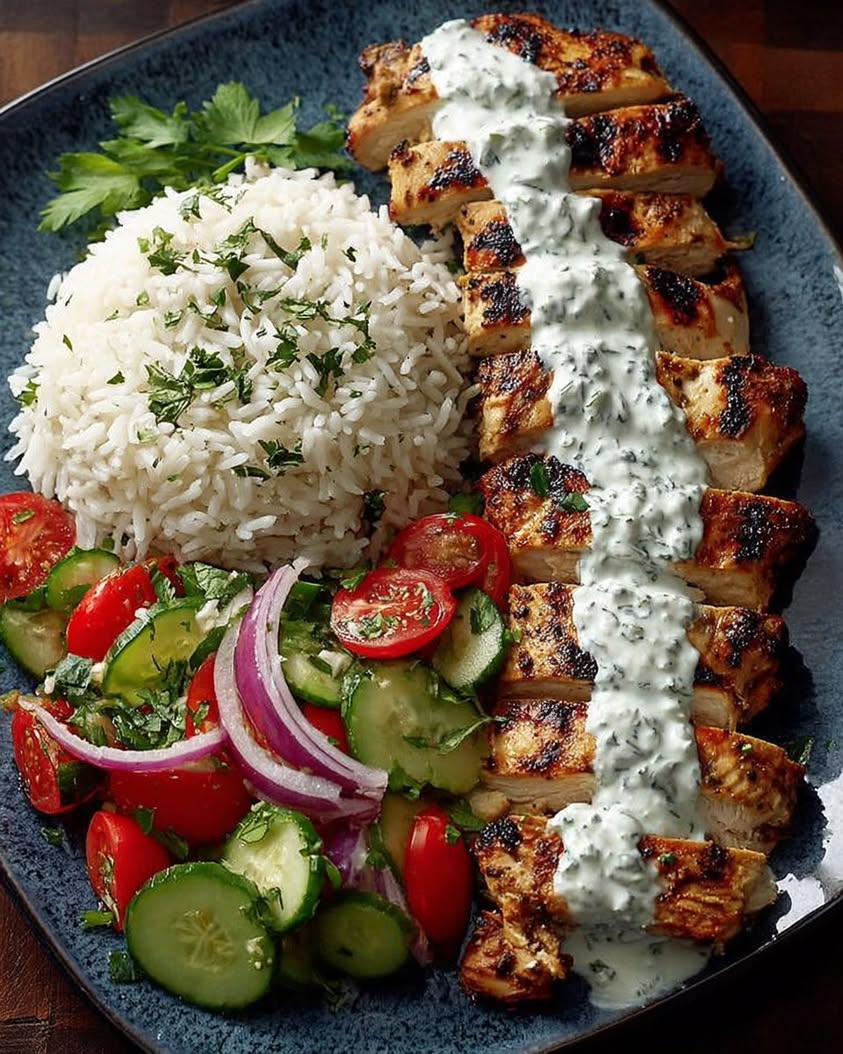
- Visual Appeal: The golden-brown grilled chicken contrasts beautifully with the white rice salad. Red tomatoes and green cucumber pieces add color. The creamy white yogurt sauce drizzled on top creates a professional presentation. This dish looks impressive with minimal effort.
- Skill Level Needed: This recipe is perfect for beginners. The steps are simple and straightforward. You only need basic grilling skills and chopping ability. Even first-time cooks can achieve great results.
- Special Equipment: You need a grill or grill pan for the chicken. A large bowl for mixing the yogurt sauce. A sharp knife for chopping vegetables. Measuring spoons for accuracy. A cutting board for preparation.
Recipe Overview
- Difficulty Level: This recipe is easy because the steps are simple and the ingredients are basic. You do not need advanced cooking techniques. The marinade and sauce require only mixing. Grilling chicken is a fundamental skill anyone can learn. The rice salad involves simple chopping and tossing. There are no tricky elements or complex procedures.
- Category: This dish works as a main course for lunch or dinner. It also serves well as a meal prep option for the week. You can enjoy it hot or cold. It fits into the balanced meal category with protein, grains, and vegetables. The recipe is versatile enough for casual or semi-formal occasions.
- Cuisine: This recipe draws inspiration from Mediterranean and Middle Eastern culinary traditions. The use of yogurt marinades and fresh herbs is common in these regions. Grilled meats paired with rice salads reflect Levantine cooking styles. The cucumber-tomato salad echoes classic Greek and Turkish meze dishes. This fusion creates a familiar yet exciting flavor profile.
- Cost: The ingredients for this recipe are very affordable. Chicken breast or thigh is reasonably priced at most grocery stores. Yogurt, herbs, cucumber, and tomato are inexpensive staples. Rice is one of the cheapest grains available. The total cost for four servings is under 15 dollars. This makes it a budget-friendly option for families.
- Season: This recipe shines in spring and summer when fresh herbs and vegetables are abundant. Cucumber and tomato taste best during warmer months. Grilling outdoors is more enjoyable in good weather. However, you can make this year-round with grocery store ingredients. The bright flavors work well in any season.
- Occasion: This dish is ideal for weeknight dinners when you want something healthy and quick. It also works for weekend barbecues and potlucks. The recipe scales easily for larger gatherings. It impresses guests without requiring hours in the kitchen. You can serve it for family meals or casual entertaining with equal success.
Why You Will Love This Recipe
The taste and texture combination in this dish is absolutely delightful. The grilled chicken develops a beautiful char on the outside while staying incredibly moist inside. The yogurt marinade tenderizes the meat and adds subtle tanginess. The herbed yogurt sauce provides a cool, creamy contrast that brightens every bite. The rice salad offers satisfying chewiness with refreshing crunch from fresh cucumber and tomato. The textures work together perfectly, creating a dynamic eating experience that never gets boring. The flavors are balanced between savory, tangy, fresh, and smoky. You will find yourself craving this combination regularly.
Convenience is a major advantage of this recipe. The preparation takes only 20 minutes of active time. The marinade comes together in one bowl with simple mixing. You can prep the rice salad while the chicken grills. The entire meal finishes in under 45 minutes from start to finish. Cleanup is minimal because you use only a few bowls and a grill pan. The ingredients are easy to find at any grocery store. You do not need special equipment or hard-to-find items. This recipe fits perfectly into busy schedules without sacrificing quality or flavor. It is a practical solution for delicious home cooking.
Nutritionally, this meal offers excellent balance and health benefits. The grilled chicken provides lean protein that supports muscle health and keeps you full. The yogurt sauce adds probiotics for digestive wellness. Fresh herbs contribute antioxidants and vitamins. Cucumber and tomato provide hydration, fiber, and essential nutrients like vitamin C and potassium. The rice offers complex carbohydrates for sustained energy. This combination creates a complete meal with protein, healthy carbs, and vegetables. You can feel good about serving this to your family. It supports a balanced diet without feeling restrictive or bland.
Socially and for entertaining, this dish is a crowd-pleaser. The presentation looks impressive with the golden chicken, colorful salad, and creamy sauce drizzle. Guests will think you spent hours preparing this meal. The recipe scales easily for larger groups. You can prepare components ahead of time and assemble before serving. The flavors appeal to a wide range of palates, including children and picky eaters. It works for casual backyard barbecues or more formal dinner parties. The dish travels well for potlucks and picnics. You will receive many compliments and requests for the recipe.
Cost-effectiveness and accessibility make this recipe a practical choice. The ingredients are budget-friendly and easy to find. Chicken is one of the most affordable protein options. Yogurt, rice, and fresh vegetables are pantry staples for many households. You can substitute ingredients based on what you have available. The recipe uses common herbs like dill and mint that are inexpensive. Leftovers store well for lunch the next day, reducing food waste. You get restaurant-quality results for a fraction of the cost. This dish proves that healthy, delicious eating does not have to be expensive or complicated.
Historical Background and Cultural Significance
The tradition of marinating meat in yogurt dates back thousands of years in Middle Eastern and South Asian cuisines. Yogurt contains lactic acid that gently tenderizes protein without making it mushy. This technique originated as a practical way to preserve meat in warm climates. Ancient cooks discovered that yogurt marinades improved texture and flavor. The practice spread throughout the Mediterranean region and beyond. Today, yogurt-marinated grilled meats remain popular across many cultures. This recipe honors that long-standing culinary wisdom by using yogurt as both a marinade and a sauce.
Grilled chicken holds cultural significance in many societies as a symbol of hospitality and celebration. In Mediterranean countries, grilling meat over open flames is a social activity that brings families together. The grill is often the centerpiece of outdoor gatherings and festivals. The herbed yogurt sauce in this recipe reflects the Greek tradition of tzatziki and the Middle Eastern tradition of labneh. These sauces have been staples for centuries, providing cooling relief from spicy or rich foods. The cucumber-tomato salad echoes the simple salads found in Turkish, Lebanese, and Greek cuisines. These elements combine to create a dish rich in cultural heritage.
The evolution of this recipe shows how traditional techniques adapt to modern lifestyles. Originally, these ingredients were prepared over wood fires with hand-ground spices. Today, we use gas grills and pre-ground seasonings for convenience. The core principles remain the same: marinate, grill, and serve with fresh accompaniments. Home cooks have simplified the process while maintaining authentic flavors. The rice salad replaces more labor-intensive grain preparations. This adaptation makes the dish accessible to busy modern families. The recipe continues to evolve as cooks experiment with new herbs and spice combinations.
Regional variations of this dish reflect local ingredients and preferences throughout the Mediterranean and Middle East. In Greece, cooks might add oregano and lemon to the marinade. Turkish versions often use sumac and red pepper flakes for warmth. Lebanese recipes include garlic and mint prominently. Indian variations incorporate turmeric, cumin, and coriander. Each region adds its unique touch while maintaining the core concept of grilled yogurt-marinated chicken. This recipe draws from these diverse influences to create a balanced, approachable version. You can adapt the herbs and spices to match your taste preferences.
Ingredient Deep Dive
Chicken is the central protein in this dish and has been a dietary staple across cultures for centuries. Domesticated chickens originated in Southeast Asia around 8,000 years ago and spread globally. Chicken provides high-quality complete protein with all essential amino acids. It is naturally low in fat when skinless, especially breast meat. Chicken contains B vitamins important for energy metabolism. It also provides selenium and phosphorus for immune and bone health. When selecting chicken, look for plump, moist-looking pieces without discoloration. The meat should feel firm and have a mild, fresh smell. For this recipe, boneless skinless thighs offer more flavor and moisture, while breast meat is leaner. Store fresh chicken in the refrigerator for up to two days or freeze for up to six months. You can substitute turkey breast or firm tofu for dietary preferences.
Greek yogurt is the base of both the marinade and the sauce, and it has a rich cultural history. Yogurt originated in Central Asia thousands of years ago as a way to preserve milk. Greeks and Turks developed thick, strained yogurt varieties that are now famous worldwide. Greek yogurt provides probiotics that support digestive health and immune function. It is high in protein, calcium, and B vitamins. The thickness of Greek yogurt helps it cling to meat during grilling. For selection, choose plain full-fat or 2 percent Greek yogurt for best results. Avoid flavored or sweetened varieties. Store yogurt in the refrigerator and use within one week of opening. You can substitute regular plain yogurt or dairy-free coconut yogurt for different dietary needs.
Cucumber adds refreshing crunch and moisture to the rice salad. Cucumbers originated in India over 3,000 years ago and spread to Europe and the Americas. They are composed of about 96 percent water, making them incredibly hydrating. Cucumbers provide vitamin K, potassium, and antioxidants like cucurbitacins. The skin contains most of the fiber and nutrients, so leave it on if possible. Select cucumbers that are firm, dark green, and free from soft spots. English cucumbers have fewer seeds and thinner skin, making them ideal for salads. Store cucumbers in the refrigerator in a plastic bag for up to one week. You can substitute zucchini or jicama for similar crunch.
Tomatoes bring acidity and sweetness to balance the creamy yogurt sauce. Tomatoes originated in South America and were domesticated in Mexico. They became a cornerstone of Mediterranean cuisine after arriving in Europe. Tomatoes are rich in lycopene, an antioxidant linked to reduced cancer and heart disease risk. They also provide vitamin C, potassium, and vitamin K. Choose tomatoes that are firm, heavy for their size, and deeply colored. Roma tomatoes work well for salads because they have fewer seeds and more flesh. Store tomatoes at room temperature away from direct sunlight for best flavor. Refrigeration can make them mealy, so use within a few days. You can substitute cherry tomatoes or roasted bell peppers.
Fresh herbs like dill, mint, and parsley are essential to the flavor profile of this dish. Dill has been used in Mediterranean and Eastern European cooking for centuries. Mint has a long history in Middle Eastern cuisine as a digestive aid. Parsley is one of the most widely used herbs globally, rich in vitamins A, C, and K. These herbs provide antioxidants and anti-inflammatory compounds. For selection, look for bright green, perky leaves without wilting. Fresh herbs should smell fragrant and pleasant. Store herbs in the refrigerator with stems in water and a plastic bag over the leaves. You can substitute dried herbs, but use one-third the amount since dried herbs are more concentrated.
Common Mistakes to Avoid
- Overcooking the chicken is the most frequent error. Grilled chicken dries out quickly when cooked past 165 degrees Fahrenheit. Use an instant-read thermometer for accuracy. Remove chicken from the grill when it reaches 160 degrees, as carryover cooking will finish it.
- Using low-quality yogurt can ruin the sauce and marinade. Thin, watery yogurt will not cling to the chicken or create a creamy sauce. Always use thick Greek yogurt for best results. Strain regular yogurt through cheesecloth if necessary.
- Skipping the marination time reduces flavor and tenderness. Even 30 minutes makes a difference, but one to two hours is ideal. The yogurt needs time to penetrate the meat. Do not rush this step for best results.
- Not patting the chicken dry before marinating prevents proper coating. Excess moisture dilutes the marinade and prevents it from sticking. Pat chicken pieces with paper towels before adding to the yogurt mixture. This ensures even coverage and better flavor.
- Cutting the cucumber and tomato too far in advance makes the salad watery. Salt draws moisture from these vegetables over time. Chop them just before serving for maximum crunch. If you must prep ahead, keep components separate until serving time.
- Grilling over too high heat burns the outside before the inside cooks. Medium-high heat is ideal for chicken pieces. Flare-ups from dripping marinade can cause charring. Adjust heat as needed and move chicken to cooler parts of the grill if burning occurs.
- Forgetting to oil the grill grates causes the chicken to stick. Use tongs and a paper towel dipped in oil to coat the grates before cooking. A well-oiled grill ensures beautiful grill marks and easy flipping. This simple step prevents frustration.
- Adding all the yogurt sauce to the chicken at serving makes it soggy. Serve the sauce on the side so each person can add as desired. This keeps the chicken crispy and the sauce fresh. Leftover sauce stores well for other uses.
- Using old or wilted herbs reduces the bright flavor impact. Fresh herbs should be vibrant and perky. Discard any yellowed or slimy leaves. Wash and dry herbs thoroughly before chopping. Fresh herbs make a significant difference in this dish.
- Neglecting to rest the chicken after grilling causes juice loss. Let the chicken rest for five minutes before slicing. This allows the juices to redistribute throughout the meat. Slicing too early results in dry, tough chicken.
Essential Techniques
Properly marinating the chicken is the foundation of this recipe. The yogurt marinade contains lactic acid that gently tenderizes the meat fibers. This process breaks down connective tissue without making the chicken mushy. To master this technique, ensure the yogurt mixture completely coats each piece. Use your hands to massage the marinade into the meat for even coverage. Place the coated chicken in a sealed container or zip-top bag. Refrigerate for at least one hour but no more than 24 hours. After eight hours, the texture may become too soft for some preferences. The marinade also protects the chicken from drying out on the grill. Remove the chicken from the refrigerator 20 minutes before cooking for even cooking. Scoop off excess marinade before grilling to prevent flare-ups.
Grilling chicken to perfection requires attention to heat management and timing. Start with clean, oiled grates over medium-high heat around 375 to 400 degrees Fahrenheit. Place the chicken on the grill and leave it undisturbed for five to six minutes. This creates attractive grill marks and a good sear. Flip the chicken only once to develop even browning. Cook the second side for another five to six minutes. Use an instant-read thermometer inserted into the thickest part to check doneness. Chicken is safe to eat at 165 degrees Fahrenheit, but remove it at 160 degrees for juicier results. The internal temperature will rise during resting. If the outside browns too quickly, move the chicken to a cooler part of the grill. Let the chicken rest for five minutes before slicing against the grain for maximum tenderness.
Making the herbed yogurt sauce requires balancing flavors and textures. Start with thick Greek yogurt as the base for best consistency. Finely chop fresh herbs to release their essential oils without bruising them. Combine the herbs with minced garlic, lemon juice, salt, and a drizzle of olive oil. Stir gently to combine without overmixing, which can make the sauce watery. Taste and adjust seasoning as needed, adding more lemon for acidity or salt for depth. Let the sauce sit for at least 15 minutes before serving to allow flavors to meld. The sauce should be thick enough to coat the back of a spoon. If it is too thick, add a tablespoon of water or lemon juice to thin it. Store any leftover sauce in the refrigerator for up to three days. The sauce also works as a dip for vegetables or a spread for sandwiches.
Assembling the cucumber-tomato salad correctly ensures maximum freshness and crunch. Start by dicing the cucumber and tomato into uniform pieces, about half-inch cubes. This ensures even distribution and consistent bites. Toss the vegetables with a pinch of salt to draw out excess moisture. Let them sit for five minutes, then drain any liquid that collects. Add chopped fresh herbs, a squeeze of lemon juice, and a drizzle of olive oil. Toss gently to combine without crushing the delicate tomato pieces. The dressing should lightly coat the vegetables without pooling at the bottom. Serve the salad immediately for the best texture. If you need to prepare it ahead, keep the dressing separate and toss just before serving. This prevents the vegetables from becoming soggy.
Pro Tips for Perfect Grilled Chicken with Herbed Yogurt Sauce and Rice Salad
Use boneless skinless chicken thighs for the juiciest results. Thighs have more fat than breasts, which keeps them moist during grilling. They also have more flavor and are harder to overcook. If you prefer breast meat, pound it to an even thickness for uniform cooking.
Toast the rice in a little oil before boiling for added nutty flavor. This simple step takes only two minutes but transforms the rice. The toasting process brings out deeper, richer notes. It also helps the rice grains stay separate and fluffy after cooking.
Let the yogurt marinade come to room temperature before adding the chicken. Cold marinade can shock the meat and slow absorption. Take the yogurt out 15 minutes before mixing. This allows the flavors to penetrate more effectively.
Use a two-zone fire on your grill for better control. Place coals or burners on one side for high heat and leave the other side cooler. Sear the chicken over high heat, then move it to the cooler side to finish cooking. This prevents burning while ensuring the inside cooks through.
Add a pinch of sugar to the tomato salad if the tomatoes are not perfectly ripe. Sugar balances acidity and enhances natural sweetness. This trick works especially well in winter when tomatoes are less flavorful. Use just a pinch to avoid making the salad sweet.
Make extra herbed yogurt sauce for other meals during the week. It works wonderfully as a dip for raw vegetables or pita chips. You can also use it as a spread for wraps and sandwiches. The sauce keeps well in the refrigerator for several days.
Slice the chicken against the grain for the most tender bites. Look for the direction of the muscle fibers and cut perpendicular to them. This shortens the fibers and makes each piece easier to chew. It also allows the meat to hold onto more sauce.
Serve the rice salad at room temperature rather than cold from the refrigerator. Cold rice can taste hard and less flavorful. Let the rice sit out for 10 minutes after cooking to cool slightly. This allows the flavors to shine and the texture to improve.
Variations and Adaptations
Regional variations of this dish offer exciting flavor twists from different culinary traditions. For a Greek-inspired version, add oregano and lemon zest to the marinade and sauce. Use feta cheese crumbles in the rice salad for salty tang. Turkish variations might include sumac and red pepper flakes for warmth and color. Lebanese versions often use more mint and garlic for bold flavor. Indian adaptations incorporate turmeric, cumin, and coriander for aromatic depth. Each variation retains the core structure of grilled chicken with yogurt sauce and fresh salad. Experimenting with different herb and spice combinations keeps this recipe interesting. You can explore one new variation each time you make it.
Seasonal adaptations allow you to enjoy this dish year-round with peak ingredients. In spring, use fresh dill and chives from the garden. Summer brings abundance of tomatoes, cucumbers, and every herb variety. Add grilled zucchini or bell peppers to the salad for extra summer flavor. Fall versions might include roasted butternut squash in the rice salad. Winter adaptations can use hearty greens like spinach or kale instead of cucumber. Canned tomatoes work in winter when fresh ones are poor quality. Adjust the herbs based on what is available and in season locally. The recipe remains flexible and delicious regardless of the season.
Dietary modifications make this recipe accessible for various eating plans. For gluten-free preparation, ensure your yogurt and spices are certified gluten-free. Rice is naturally gluten-free, so the salad is safe. Dairy-free versions can use coconut yogurt or cashew cream for both marinade and sauce. The flavor profile changes slightly but remains delicious. Vegan adaptations substitute grilled portobello mushrooms or extra-firm tofu for the chicken. The marinade works wonderfully on plant-based proteins. Low-carb versions replace rice with cauliflower rice or quinoa. The cucumber-tomato salad remains the same for freshness and crunch. Keto adaptations use full-fat yogurt and add avocado for healthy fats.
Flavor variations let you customize the dish to your personal preferences. Add smoked paprika or chipotle powder for a smoky, spicy kick. Include roasted red peppers in the rice salad for sweetness and color. Use cilantro and lime instead of dill and lemon for a Latin twist. Add a pinch of cinnamon and allspice for warm Middle Eastern flavors. Incorporate preserved lemon for intense citrus notes. Try different herb combinations like tarragon and chives for French influence. The possibilities are endless, and each variation creates a unique dining experience. Keep notes on your favorite combinations for future reference.
Texture modifications can change the eating experience significantly. For a crunchier salad, add toasted pine nuts, almonds, or walnuts. Include pomegranate seeds for juicy bursts of tartness. Use quinoa instead of rice for a lighter, fluffier texture with more protein. Add chopped roasted peanuts for Southeast Asian inspiration. Include crispy chickpeas for added protein and crunch. The base recipe works well with many texture additions. Experiment with different grains, seeds, and nuts to find your favorite combination. Each addition brings new dimension to the dish.
Presentation alternatives allow you to serve this dish in creative ways. For a family-style meal, arrange everything on a large platter with the chicken in the center. Surround it with the rice salad and drizzle the sauce artistically over the top. For individual plates, fan sliced chicken over a bed of rice salad and drizzle sauce around the edges. Serve the sauce in a small bowl on the side for dipping. You can also stuff the chicken and rice salad into warm pita bread for handheld wraps. Layer everything in a bowl for a hearty salad version. Each presentation style offers a different experience.
Serving and Presentation Guide
Plating techniques can elevate this dish from simple to stunning. Start by placing a generous bed of rice salad in the center of each plate. Arrange sliced grilled chicken on top in a fan pattern for visual appeal. Drizzle the herbed yogurt sauce over the chicken in a zigzag pattern. Garnish with fresh herb sprigs and a wedge of lemon on the side. The colors create an attractive contrast that looks professional. Use white plates to make the colors pop even more. Keep the portions balanced so each element shines equally. The goal is to create a plate that looks as good as it tastes.
Garnishing ideas add the final touch that impresses guests. Fresh dill sprigs placed artfully on top of the chicken add elegance. A sprinkle of red pepper flakes provides color and subtle heat. Edible flowers like chive blossoms or nasturtiums add sophisticated flair. Toasted pine nuts scattered over the dish offer texture and visual interest. A drizzle of good quality olive oil over the entire plate adds shine and richness. Lemon zest grated over the top brightens the presentation. Keep garnishes simple and purposeful to avoid overwhelming the dish. Each garnish should enhance the flavor and appearance simultaneously.
Traditional accompaniments complete the Mediterranean dining experience. Warm pita bread or flatbread is perfect for scooping up sauce and salad. A simple Greek salad with feta cheese and olives adds authenticity. Roasted vegetables like eggplant and zucchini complement the flavors. Hummus or baba ganoush as a starter creates a complete meal. Grilled lemon wedges add brightness and acidity. Traditional accompaniments help round out the meal and provide variety. Guests appreciate having options to customize their plates.
Modern serving suggestions make this dish suitable for contemporary entertaining. Serve the components in a deconstructed manner on a sharing board. This allows guests to build their own plates according to preference. Offer extra toppings like pickled onions, olives, and roasted peppers. Label each component for clarity and visual interest. A self-serve station works well for casual gatherings. For a more formal approach, plate individually with precise arrangement. The dish adapts to any serving style you prefer.
Temperature considerations are important for the best eating experience. Serve the grilled chicken hot off the grill for maximum juiciness. The rice salad should be at room temperature rather than cold. The herbed yogurt sauce is best slightly chilled or at room temperature. Avoid serving the chicken cold, as it becomes tough and less flavorful. If making ahead, reheat the chicken gently to avoid drying it out. The contrast between warm chicken and cool sauce is part of the appeal. Pay attention to timing so everything comes together at the right temperature.
Portion control tips help you serve the right amount for different appetites. For a main course, plan on 6 to 8 ounces of chicken per person. Serve about one cup of rice salad per person. Provide about one-quarter cup of herbed yogurt sauce per person. Adjust portions for children or light eaters accordingly. If serving multiple sides, reduce the portion sizes. Leftovers can be used for lunch the next day. Portioning correctly ensures everyone gets enough without waste.
Wine and Beverage Pairing
Wine pairings for this dish should complement the bright, tangy flavors without overwhelming them. A crisp Sauvignon Blanc from New Zealand or France works beautifully. The citrus notes in the wine echo the lemon in the sauce. Unoaked Chardonnay offers a clean, refreshing option that pairs well with the yogurt. For white wine lovers, a dry Riesling from Germany or Alsace provides nice acidity. The subtle sweetness balances any heat from spices. A light-bodied Pinot Grigio from Italy is another excellent choice. The wine should be chilled but not ice-cold for the best flavor experience.
Red wine options are also available for those who prefer reds with white meat. A light, fruity Pinot Noir from Oregon or Burgundy complements without overpowering. The earthy notes in the wine match the grilled flavors. A Beaujolais from France offers similar lightness with bright fruit. Cool-climate Syrah with moderate tannins can work if the wine is not too heavy. Avoid big, bold reds like Cabernet Sauvignon that will dominate the dish. Serve red wines slightly cool, around 55 degrees Fahrenheit, for the best pairing.
Rosé wine is perhaps the most versatile pairing for this Mediterranean-inspired dish. A dry rosé from Provence offers elegant fruit and crisp acidity. The pink color complements the visual appeal of the dish. Rosé pairs well with the yogurt sauce and the grilled chicken equally. Spanish rosado from Navarra provides slightly more body and fruit. The wine should be well-chilled and served in large glasses for maximum enjoyment. Rosé is an underrated pairing that deserves more attention.
Non-alcoholic alternatives provide equally satisfying pairing options. Sparkling water with a squeeze of lemon or lime cleanses the palate between bites. Mint lemonade echoes the fresh herbs in the dish with cooling sweetness. Iced green tea with a hint of honey offers subtle flavor without overpowering. Cucumber water is refreshing and thematic with the salad ingredients. Kombucha with ginger and lemon provides tangy complexity. These options ensure everyone can enjoy a beverage that enhances the meal.
Coffee and tea pairings work for post-meal enjoyment rather than during the main course. A light-roast coffee with citrus notes pairs well after the meal. Herbal teas like peppermint or chamomile aid digestion after eating. Mint tea specifically complements the flavors used in the dish. A cup of strong Greek coffee offers an authentic Mediterranean finish. These beverages provide a pleasant conclusion to the dining experience. Timing matters, so serve these after the meal rather than alongside it.
Serving suggestions for beverages enhance the overall dining experience. Thoroughly chill white wines and rosé before serving. Use appropriate glassware to maximize aroma and flavor presentation. Offer both alcoholic and non-alcoholic options to accommodate all guests. Provide water at the table for hydration between courses. Consider the occasion when selecting beverages, as casual gatherings call for simpler options. The right beverage pairing elevates the entire meal.
Storage and Shelf Life
Storage methods for leftovers ensure you can enjoy this dish again later. Store cooked chicken and rice salad separately for best results. Place each component in airtight containers before refrigerating. The herbed yogurt sauce stores best in its own sealed container. Combine components only when reheating to maintain texture. Label containers with the date to track freshness. Proper storage prevents spoilage and maintains food quality. Follow these guidelines for the best leftover experience.
Temperature requirements are crucial for food safety and quality. Refrigerate all leftovers within two hours of cooking. The refrigerator temperature should be 40 degrees Fahrenheit or below. Cool food quickly by dividing large portions into smaller containers. Do not leave food at room temperature for extended periods. The rice salad should be stored separately to prevent sogginess. Maintain consistent refrigerator temperature for optimal preservation. Use a refrigerator thermometer to monitor conditions accurately.
Container recommendations help maintain food quality during storage. Glass containers with tight-fitting lids work best for storing leftovers. They do not absorb odors or stains like plastic can. BPA-free plastic containers are a good alternative if glass is unavailable. Avoid using metal containers that can react with acidic ingredients. Choose containers that are appropriately sized to minimize air exposure. Stackable containers save refrigerator space efficiently. Invest in good quality containers for long-term use.
Signs of spoilage indicate when you must discard leftovers. Cooked chicken develops a sour or off smell when spoiled. The texture may become slimy or sticky to the touch. Mold growth on any component means the entire dish should be discarded. The rice salad will become watery and develop an off flavor after several days. The yogurt sauce may separate or develop mold on the surface. When in doubt, throw it out to avoid foodborne illness. Trust your senses to determine freshness.
Reheating instructions help restore the dish to near-original quality. Reheat chicken in a skillet over medium heat with a splash of water or broth. Cover the pan to trap steam and prevent drying. Alternatively, use a microwave on medium power in 30-second intervals. The rice salad should be served cold or at room temperature rather than reheated. The herbed yogurt sauce should not be heated, as it will separate. Reheat only the portions you plan to eat immediately. Avoid reheating multiple times, which degrades quality.
Freezing guidelines extend the shelf life of this dish significantly. Cooked chicken freezes well for up to three months in airtight containers. Wrap chicken individually in plastic wrap before placing in freezer bags. The rice salad does not freeze well due to the cucumber and tomato texture. The herbed yogurt sauce can be frozen for up to two months, but the texture may change upon thawing. Thaw frozen chicken overnight in the refrigerator for best results. Reheat thawed chicken promptly and consume within two days. Freezing is not recommended for the complete assembled dish.
Make Ahead Strategies
The prep timeline for this dish allows for efficient advance preparation. Start by making the herbed yogurt sauce up to three days ahead. Prepare the chicken marinade up to 24 hours in advance and refrigerate. Chop the cucumber and tomato the morning of serving but do not dress them. Cook the rice up to two days ahead and reheat before serving. Grill the chicken on the day of serving for best texture. This timeline minimizes last-minute work while ensuring fresh flavors. Adjust the schedule based on your available time each day.
Storage between steps must be done correctly to maintain quality. Keep the marinating chicken in a sealed container in the refrigerator. Store the yogurt sauce in a separate airtight container. Keep chopped vegetables in a container with a paper towel to absorb moisture. Print
Grilled Chicken with Herbed Yogurt Sauce, Rice & Cucumber-Tomato Salad
- Total Time: 45 minutes
- Yield: 4
Description
Juicy grilled chicken breasts are served over fluffy rice with a cool herbed yogurt sauce and a refreshing cucumber-tomato salad. This balanced meal is perfect for a light yet satisfying dinner, bursting with fresh flavors and herbs.
Ingredients
- 4 boneless skinless chicken breasts
- 2 tablespoons olive oil
- 1 teaspoon salt
- 1/2 teaspoon black pepper
- 1 teaspoon garlic powder
- 1 teaspoon dried oregano
- 1 cup plain Greek yogurt
- 2 tablespoons fresh lemon juice
- 1/4 cup chopped fresh dill
- 1/4 cup chopped fresh mint
- 1/4 cup chopped fresh parsley
- 1 clove garlic, minced
- 1 cup long grain white rice
- 2 cups water
- 1/2 teaspoon salt
- 1 cucumber, diced
- 2 tomatoes, diced
- 1/4 cup red onion, finely chopped
- 2 tablespoons extra virgin olive oil
- 1 tablespoon red wine vinegar
- Salt and pepper to taste
Instructions
- Preheat grill to medium-high heat. Season chicken breasts with olive oil, salt, pepper, garlic powder, and dried oregano.
- Grill chicken for 6-7 minutes per side until internal temperature reaches 165°F (74°C). Let rest for 5 minutes, then slice.
- While chicken grills, prepare rice. Combine rice, water, and salt in a saucepan. Bring to a boil, reduce heat to low, cover, and simmer for 15-20 minutes until tender. Fluff with a fork.
- Make herbed yogurt sauce: In a small bowl, mix Greek yogurt, lemon juice, dill, mint, parsley, and minced garlic. Stir until smooth. Season with salt and pepper to taste.
- Prepare cucumber-tomato salad: In a mixing bowl, combine diced cucumber, tomatoes, and red onion. Drizzle with extra virgin olive oil and red wine vinegar. Toss to coat, then season with salt and pepper.
- To serve, plate a portion of rice, top with sliced grilled chicken, drizzle with herbed yogurt sauce, and serve the cucumber-tomato salad on the side.
Notes
You can customize the seasonings to taste. For extra flavor, marinate the chicken in yogurt sauce for an hour before grilling. This dish also works well with grilled lamb or fish.
- Prep Time: 15 minutes
- Cook Time: 30 minutes
- Method: Main
- Cuisine: Mediterranean