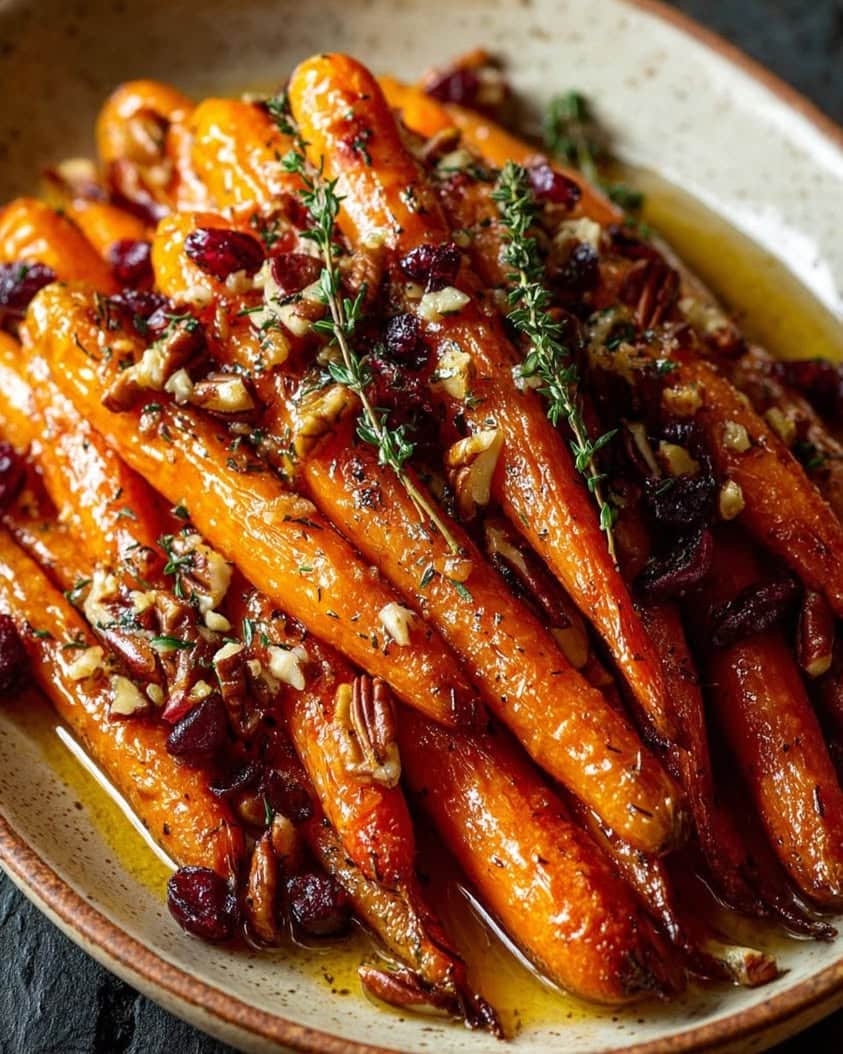
Ginger-Maple Roasted Carrots with Cranberry Butter: A Sweet and Savory Side Dish
If you want a side dish that steals the show, these ginger-maple roasted carrots with cranberry butter deliver every time. The carrots caramelize in the oven until their natural sugars turn deep and glossy, while fresh ginger adds a warm, spicy kick that balances the sweetness. A dollop of cranberry butter melts over the top, bringing tart fruitiness and a silky finish that ties everything together. This recipe transforms ordinary carrots into a memorable dish that works for weeknight dinners and holiday tables alike.
The magic of ginger-maple roasted carrots with cranberry butter comes from layering flavors. Maple syrup deepens the carrots’ earthy sweetness, ginger adds brightness and heat, and the cranberry butter contributes a tangy richness that keeps every bite interesting. You need just a handful of ingredients and one sheet pan, yet the result tastes like something from a restaurant kitchen. Home cooks of any skill level can master this dish because the oven does most of the work.
These roasted carrots with cranberry butter also fit nearly any menu. They pair beautifully with roasted chicken, pork, or turkey, and they hold their own beside grains and salads. The vibrant orange and crimson colors brighten the plate, and the aroma of ginger and maple fills the kitchen as they roast. Once you try this preparation, you may never go back to plain steamed carrots again.
Quick Recipe Highlights
- Flavor Profile: Sweet maple and earthy carrots meet warm ginger and tart cranberry. The cranberry butter adds richness and a bright finish that balances the caramelized edges.
- Texture: The carrots turn tender inside with lightly crisped, caramelized exteriors. The butter melts into a glossy coating that adds a smooth mouthfeel.
- Aroma: Expect warm ginger, toasted maple, and a hint of citrus from the cranberry butter. The scent alone makes the dish feel festive and inviting.
- Visual Appeal: The carrots take on a deep orange glaze with browned edges. A swirl of ruby-red cranberry butter adds striking color contrast.
- Skill Level Needed: This recipe suits beginners because it relies on simple roasting techniques. Anyone comfortable with an oven and a knife can execute it well.
- Special Equipment: You need a rimmed sheet pan, a cutting knife, and a small saucepan for the butter. Parchment paper helps with cleanup but is optional.
Recipe Overview
- Difficulty Level: This dish rates as easy. The steps involve peeling, cutting, tossing, and roasting, with no advanced techniques required. The cranberry butter takes minutes to stir together. Timing is forgiving because carrots roast evenly and tolerate a few extra minutes.
- Category: This serves as a vegetable side dish, a holiday accompaniment, or a component of a grain bowl. It also works as a light main dish when paired with protein and greens.
- Cuisine: The recipe draws on American comfort cooking with a nod to New England flavors. Maple and cranberry evoke Northeastern traditions, while ginger adds warmth common in modern American kitchens. The combination reflects contemporary seasonal cooking.
- Cost: The ingredients are budget-friendly and easy to find. Carrots and ginger cost little, and maple syrup and cranberries are affordable in season. The total cost per serving stays low, especially compared to meat-based sides.
- Season: Fall and winter suit this dish best because cranberries peak then and maple feels cozy. However, you can make it year-round with frozen cranberries and pantry staples. The dish shines at Thanksgiving and holiday gatherings.
- Occasion: Serve it for weeknight dinners, holiday feasts, potlucks, or dinner parties. The presentation looks impressive with minimal effort. It works equally well for casual and formal menus.
Why You’ll Love This Recipe
First, the taste and texture appeal of ginger-maple roasted carrots with cranberry butter are undeniable. The oven concentrates the carrots’ sugars, creating caramelized edges and tender interiors. Maple syrup reinforces that sweetness while ginger cuts through with warmth. Meanwhile, cranberry butter adds a tart, creamy element that keeps each bite balanced. The contrast between sweet, spicy, and tangy makes this dish hard to stop eating.
Second, the convenience factor makes this recipe a weeknight hero. You need one sheet pan and about ten minutes of active prep. The oven handles the rest while you prepare other dishes. Cleanup stays simple thanks to parchment paper. Because the ingredients are pantry-friendly, you can whip up this side dish without a special shopping trip.
Third, the nutritional advantages give you reasons to feel good about serving it. Carrots deliver beta-carotene, fiber, and vitamins, while cranberries add antioxidants. Ginger offers digestive benefits and anti-inflammatory properties. The butter adds richness, but you control the amount, so the dish stays reasonably light. Overall, this recipe balances indulgence with wholesome ingredients.
Fourth, the social and entertaining value is significant. This dish looks beautiful on a holiday table and sparks conversation. Guests appreciate the creative flavor pairing, and picky eaters often discover they love roasted carrots prepared this way. The recipe scales easily for crowds, which makes it a reliable choice for gatherings. You can serve it family-style or plated for a more elegant touch.
Fifth, the cost-effectiveness and accessibility make this recipe universally appealing. Carrots rank among the most affordable vegetables, and the remaining ingredients are common pantry items. You do not need specialty equipment or hard-to-find products. This accessibility means anyone can enjoy a restaurant-quality side dish at home without stretching their budget.
Historical Background and Cultural Significance
The origin story of this dish blends several American culinary traditions. Roasting root vegetables dates back centuries in European cooking, where households relied on carrots through cold months. Maple syrup comes from Indigenous North American foodways, where communities harvested and processed sap long before European settlement. Cranberries also hold deep roots in Native American cuisine, especially in the Northeast. Combining these elements reflects a modern American approach to seasonal cooking.
Culturally, the dish carries significance as a bridge between everyday meals and celebratory feasts. In New England, maple and cranberry appear together in many traditional recipes. Ginger entered American kitchens through global trade and immigrant influences. Today, the combination signals warmth and hospitality, especially during fall and winter holidays. Serving this dish connects home cooks to a broader story of American food history.
The evolution of the recipe reflects changing tastes and kitchen technology. Early versions likely involved stovetop glazing, while modern ovens make roasting simple. Food blogs and cooking shows popularized sheet-pan vegetable dishes, and cranberry butter emerged as a creative twist. Home cooks now adapt the recipe with air fryers, convection ovens, and plant-based butters. This evolution keeps the dish relevant across generations.
Regional variations add depth to the story. In the Northeast, cooks might use local dark maple syrup and fresh cranberries. Southern versions sometimes add warm spices like cinnamon or cayenne. Midwestern cooks may substitute honey when maple runs low. Regardless of region, the core idea remains consistent: roast carrots, glaze with sweetness, and finish with bright, tangy butter.
Ingredient Deep Dive
Carrots form the foundation of this dish and carry centuries of agricultural history. They originated in Central Asia and spread through Europe and the Americas. Today, carrots symbolize healthy eating and appear in cuisines worldwide. Nutritionally, they offer beta-carotene, fiber, potassium, and vitamin K. When selecting carrots, choose firm, bright specimens with smooth skin and no cracks. Store them in the refrigerator crisper drawer, and remove green tops to preserve moisture. If you lack carrots, parsnips or sweet potatoes make excellent substitutes.
Maple syrup brings a distinctly North American sweetness to ginger-maple roasted carrots with cranberry butter. Indigenous communities perfected sap harvesting, and the tradition continues in modern sugaring operations. Maple syrup contains trace minerals like manganese and zinc, though it remains a sugar. Choose pure maple syrup rather than pancake syrup blends. Store it in the refrigerator after opening. Honey or agave can replace maple in a pinch, though the flavor profile shifts.
Fresh ginger supplies the recipe’s signature warmth and spice. The rhizome has traveled trade routes for millennia, from Asia to the Middle East and beyond. Ginger offers gingerol, a compound linked to anti-inflammatory benefits. Select ginger that feels firm and heavy with smooth skin. Keep it in a cool, dry place or freeze it for longer storage. Ground ginger works as a substitute, but fresh delivers superior brightness.
Cranberries deliver tartness and color that define the cranberry butter. Native to North America, cranberries played a central role in Indigenous food systems and later in colonial cooking. They provide vitamin C, fiber, and antioxidants. Fresh cranberries should feel firm and avoid shriveling. Store them in the refrigerator for weeks or freeze them for months. Dried cranberries or frozen cranberries substitute well, though fresh offers the brightest flavor.
Butter gives the cranberry butter its silky richness and helps the glaze cling to the carrots. Butter has a long history in dairy cultures worldwide. It contributes fat-soluble vitamins and flavor. Choose unsalted butter so you control the seasoning. Store butter wrapped in the refrigerator and freeze extra portions. Olive oil or plant-based butter can replace dairy butter for different dietary needs.
Common Mistakes to Avoid
- Cutting carrots unevenly causes some pieces to burn while others stay raw. Aim for consistent thickness so everything roasts at the same rate. Take an extra minute to trim and cut carefully.
- Crowding the pan traps steam and prevents caramelization. Spread carrots in a single layer with space between pieces. Use two pans if necessary.
- Skipping the preheat leads to uneven cooking and pale results. Always preheat the oven fully before adding the pan. A hot oven starts the caramelization process immediately.
- Using too little fat or syrup leaves carrots dry and dull. Coat them evenly so every piece glistens. Measure ingredients rather than eyeballing.
- Overcooking turns carrots mushy and collapses their structure. Check for tenderness with a fork around the minimum time. Pull them when they are tender but still hold shape.
- Under-seasoning makes the dish flat despite the glaze. Add salt before roasting and taste before serving. A final pinch of flaky salt brightens everything.
- Melting the cranberry butter too early causes separation. Stir it together just before serving or keep it chilled until needed. A quick whisk restores smoothness if it splits.
- Ignoring the resting time means losing the glossy finish. Let carrots rest briefly so the butter and glaze settle. This step also prevents burning your mouth.
- Using dried-out ginger weakens the flavor. Choose firm, fresh ginger and grate it finely. Discard any shriveled or moldy pieces.
- Forgetting to line the pan makes cleanup frustrating. Parchment paper catches sticky glaze and protects the pan. It also prevents sticking without extra oil.
Essential Techniques
Proper knife work matters for ginger-maple roasted carrots with cranberry butter because uniform pieces cook evenly. Cut carrots into similar lengths and thickness, aiming for sticks or coins about half an inch thick. This consistency prevents burnt tips and raw centers. Master the technique by practicing a consistent cut and keeping your knife sharp. Watch for pieces that look uneven and trim them before roasting.
Even coating ensures every carrot carries the maple-ginger glaze. Toss carrots with oil, syrup, and seasoning in a bowl rather than drizzling haphazardly. This step guarantees flavor in every bite. Use your hands or a spatula to coat thoroughly. A common pitfall is adding syrup too early at high heat, which can cause burning; roast at moderate heat and watch closely.
Proper pan spacing creates the caramelized edges that make this dish shine. Arrange carrots in a single layer with breathing room. Crowding steams the vegetables and produces pale, soft results. If your pan looks full, use a second pan. Visual cues for success include browned edges and a glossy surface without scorching.
Managing the cranberry butter requires attention to temperature. Soften butter at room temperature, then mash in chopped cranberries, a touch of maple, and a pinch of salt. Keep it cool until serving so it holds its shape. If it looks greasy, chill it briefly and stir again. A successful butter looks smooth, spreadable, and bright with fruit flecks.
Pro Tips for Perfect Ginger-Maple Roasted Carrots with Cranberry Butter
- Choose carrots of similar size so they cook evenly. Thinner carrots roast faster, so halve thick ones lengthwise. Consistent sizing saves you from mixed results.
- Dry carrots thoroughly after washing. Excess moisture steams the vegetables and delays browning. Pat them dry with a clean towel before tossing.
- Grate ginger finely to distribute flavor evenly. Larger shreds can burn and create bitter spots. A microplane makes quick work of this step.
- Reserve a little maple syrup for a finishing drizzle. A light touch after roasting adds fresh sweetness without overloading the dish. Warm the syrup slightly for easier drizzling.
- Make the cranberry butter ahead and refrigerate it. Chilled butter melts slowly over hot carrots and looks beautiful. It also saves time during busy meal prep.
- Use a hot oven and a preheated pan for better browning. A warm pan starts caramelization on contact. Handle it carefully with oven mitts.
- Taste and adjust seasoning right before serving. A pinch of salt or a squeeze of lemon can sharpen the flavors. Small adjustments make a big difference.
- Let carrots rest for a few minutes before adding the butter. The residual heat softens the butter without melting it completely. This timing creates an appealing glaze.
Variations and Adaptations
Regional variations of ginger-maple roasted carrots with cranberry butter reflect local ingredients. In New England, cooks lean on dark maple syrup and fresh local cranberries. Southern kitchens might add cayenne or smoked paprika for heat. Midwestern cooks sometimes swap honey for maple when supplies run low. West Coast versions may include citrus zest or avocado oil. Each region adds its own character while preserving the core concept.
Seasonal adaptations keep the dish fresh year-round. In spring, tender baby carrots roast quickly and pair well with a lighter lemon-cranberry butter. Summer versions might use rainbow carrots and a hint of lime. Fall brings fresh cranberries and deeper maple notes, while winter invites warming spices like cinnamon and nutmeg. Adjusting herbs and citrus keeps the recipe exciting.
Dietary modifications make the recipe inclusive. For dairy-free or vegan versions, substitute plant-based butter or olive oil. Gluten-free eaters need no changes because the recipe contains no gluten. Low-carb diners can reduce maple syrup and rely on ginger and butter for flavor. Paleo cooks can use ghee and omit refined sugars. These tweaks preserve the dish’s spirit while meeting specific needs.
Flavor variations expand the recipe’s range. Swap ginger for orange zest and a splash of balsamic for an Italian twist. Add cumin and coriander for a warm, earthy profile. A spoonful of Dijon mustard in the glaze brings tangy depth. Try smoked maple syrup for a campfire note. Each variation keeps the sweet-savory balance intact.
Texture modifications suit different preferences. For extra crunch, sprinkle toasted nuts or seeds before serving. Softer textures come from longer roasting at lower heat. A crispy garnish of fried shallots adds contrast. Adjusting the cut, from coins to long sticks, also changes the eating experience.
Presentation alternatives help the dish fit any table. Serve carrots on a platter with cranberry butter dolloped in the center. Arrange them in a shallow bowl for family-style dining. For plated meals, stack carrots neatly and top with a quenelle of butter. Garnish with fresh herbs or orange zest for color.
Serving and Presentation Guide
Plating techniques elevate ginger-maple roasted carrots with cranberry butter from simple to stunning. Choose a warm platter or shallow bowl that complements the orange and red tones. Lay carrots in a loose pile rather than a tight stack. Place the cranberry butter slightly off-center so guests can see its color. Drizzle any pan juices over the top for gloss.
Garnishing ideas add freshness and visual interest. Scatter chopped parsley, thyme, or chives over the carrots. A sprinkle of toasted pecans or walnuts adds texture. Orange zest contributes bright color and aroma. Flaky sea salt finishes the dish with sparkle and crunch. Keep garnishes simple so the carrots remain the star.
Traditional accompaniments include roast chicken, turkey, pork loin, and beef. Holiday tables welcome these carrots beside stuffing and mashed potatoes. They also pair well with grains like wild rice, quinoa, or farro. A crisp green salad balances the richness. Bread for soaking up juices is never a bad idea.
Modern serving suggestions open creative possibilities. Add carrots to grain bowls with chickpeas and greens. Use them as a topping for crostini with ricotta. Fold leftovers into salads with arugula and goat cheese. Serve them alongside fish tacos for a sweet-spicy contrast. The versatility makes this recipe a kitchen staple.
Temperature considerations affect flavor and texture. Serve the carrots warm for the best balance of sweetness and spice. Room temperature works for buffets, but reheat gently to revive the glaze. Avoid serving them cold because the butter solidifies awkwardly. Keep dishes covered to retain warmth at gatherings.
Portion control tips help with menu planning. Plan about three to four carrots per guest as a side dish. Increase portions if serving as a main or for a vegetarian crowd. Smaller carrots look generous on plates, while larger ones satisfy hearty appetites. Adjust the butter quantity to match the serving size.
Wine and Beverage Pairing
Wine pairings enhance ginger-maple roasted carrots with cranberry butter beautifully. A crisp white like Sauvignon Blanc balances the sweetness and cuts through butter. Chardonnay with moderate oak complements the richness and ginger spice. For red wine lovers, a light Pinot Noir offers fruitiness without overwhelming the dish. Riesling with slight sweetness echoes the maple while its acidity refreshes the palate.
Non-alcoholic alternatives keep everyone included. Sparkling apple cider mirrors the maple and cranberry notes. Ginger beer adds a spicy kick that echoes the ginger in the dish. Cranberry spritzers bring tartness and bubbles. Iced tea with lemon provides a clean, refreshing contrast. These options feel festive and pair naturally with the recipe.
Coffee and tea pairings work surprisingly well with roasted vegetables. A light black tea like Darjeeling offers gentle astringency. Green tea with citrus notes complements the ginger. For coffee, a medium roast with nutty notes pairs with the maple. Avoid very dark roasts that overpower the food. Serve warm beverages alongside cooler options for variety.
Temperature considerations matter for beverage service. Chill white wines and sparkling options to around 45 to 50 degrees Fahrenheit. Serve reds slightly below room temperature. Keep non-alcoholic options well chilled with ice on the side. Warm drinks should be hot but not scalding. Proper temperatures make pairings more enjoyable.
Serving suggestions round out the experience. Offer a small menu card describing the pairing rationale. Set glasses near the dish for easy access. Provide water with lemon for palate cleansing. Refill glasses promptly so guests stay comfortable. Thoughtful beverage service makes the meal feel complete.
Storage and Shelf Life
Storage methods for ginger-maple roasted carrots with cranberry butter affect quality and safety. Cool leftovers within two hours of cooking. Transfer carrots to an airtight container and refrigerate promptly. Keep the cranberry butter separate if possible so it does not overwhelm the carrots. Label containers with the date for easy tracking.
Temperature requirements keep food safe and tasty. Refrigerate at or below 40 degrees Fahrenheit. Avoid leaving carrots at room temperature for extended periods. Reheat thoroughly to 165 degrees Fahrenheit before serving. Discard any portions left out overnight. Proper temperatures prevent spoilage and maintain flavor.
Container recommendations protect texture and moisture. Glass containers with tight lids work well and resist staining. BPA-free plastic containers are convenient for lunches. Avoid open bowls that dry out the carrots. Press plastic wrap directly onto the surface if transferring to a dish. Good containers preserve the glaze and prevent odors.
Signs of spoilage help you know when to discard leftovers. Look for off smells, sliminess, or mold growth. The butter may separate or turn sour. Carrots that look dull or feel sticky should go. When in doubt, throw it out. Food safety always comes first.
Reheating instructions restore the dish’s appeal. Warm carrots gently in a skillet or microwave. Add a fresh pat of cranberry butter to revive the glaze. Avoid overcooking, which makes carrots mushy. A quick broil can re-crisp edges if desired. Taste and adjust seasoning before serving.
Freezing guidelines extend shelf life for meal prep. Freeze carrots in freezer-safe bags or containers for up to three months. The texture softens after freezing, so use them in soups or purees. Freeze cranberry butter separately in small portions. Thaw overnight in the refrigerator. Reheat gently and add fresh herbs for brightness.
Make Ahead Strategies
A prep timeline makes ginger-maple roasted carrots with cranberry butter stress-free for events. Make cranberry butter up to three days ahead and refrigerate. Peel and cut carrots a day ahead and store them in water in the fridge. Measure spices and syrup into a small container. This planning spreads the work across manageable steps.
Storage between steps keeps components fresh. Keep cut carrots submerged in cold water to prevent drying. Drain and pat dry before roasting. Store cranberry butter wrapped tightly to avoid absorbing odors. Keep the glaze ingredients separate until tossing. Organized storage simplifies assembly.
Quality impact assessment helps you decide what to prep early. Cranberry butter holds beautifully and even improves as flavors meld. Cut carrots keep well for a day but may lose slight crispness. The final roast should happen close to serving time for best texture. Plan to roast within an hour of the meal.
Assembly tips streamline the final push. Toss carrots with the glaze just before roasting. Preheat the oven while you set the table. Pop the pan in when guests arrive so the aroma builds. Finish with cranberry butter right before serving. This sequence keeps the kitchen calm.
Reheating guidelines keep make-ahead portions tasting fresh. Reheat carrots in a hot oven for a few minutes rather than the microwave for better texture. Add a splash of water to the pan to prevent drying. Refresh the butter with a new dollop. A quick toss restores the glossy finish.
Fresh element additions boost make-ahead meals. Chop herbs at the last minute for color and aroma. Add citrus zest or toasted nuts before serving. A drizzle of maple or a pinch of salt freshens flavors. These small touches make prepped food taste newly made.
Scaling Instructions
Halving the recipe works easily for smaller households. Use half the carrots and adjust the glaze proportionally. The cranberry butter freezes well, so make the full batch and save half. Keep the roasting time similar but check earlier for doneness. A smaller pan prevents crowding and maintains browning.
Doubling or tripling the recipe fits holiday crowds. Use two or three sheet pans to avoid crowding. Rotate pans halfway through roasting for even cooking. Mix larger batches of cranberry butter in a stand mixer. Keep the same temperature but extend time slightly as needed. Taste a sample batch to confirm seasoning.
Equipment adjustments matter when scaling up. Home ovens often struggle with multiple pans, so use convection mode if available. Rotate pans and switch racks for consistent results. Consider roasting in batches if space is tight. Keep finished batches warm in a low oven until serving.
Timing modifications prevent chaos with larger quantities. Prep vegetables earlier in the day and store them chilled. Roast in waves and hold finished carrots in a warming drawer. Make cranberry butter a day ahead. Build a simple schedule so everything lands on the table together.
Storage considerations change with volume. Have enough containers ready for leftovers. Label and date larger batches for food safety. Cool carrots quickly by spreading them on a sheet pan before refrigerating. Proper cooling protects texture and flavor.
Nutritional Deep Dive
The macro breakdown of ginger-maple roasted carrots with cranberry butter reflects a balanced side dish. Carrots mainly provide carbohydrates and fiber with minimal protein and fat. Butter contributes fat, while maple syrup adds sugar. Together, the dish offers moderate calories per serving. Portion size controls total intake, so keep servings reasonable.
Micronutrient analysis highlights the dish’s strengths. Carrots deliver beta-carotene, vitamin K, potassium, and antioxidants. Cranberries add vitamin C and polyphenols. Ginger contributes gingerol with anti-inflammatory properties. Butter provides fat-soluble vitamins A, D, E, and K. Together, these nutrients support overall health.
Health benefits of ginger-maple roasted carrots with cranberry butter include fiber for digestion and antioxidants that counter oxidative stress. Beta-carotene supports vision and immune function. Ginger may aid digestion and reduce inflammation. Cranberries support urinary tract health. As part of a balanced diet, this dish contributes meaningful nutrition.
Dietary considerations require small adjustments. Those watching sugar can reduce maple syrup and lean on natural sweetness. Dairy-free diners swap in plant butter. Lower-fat versions use less butter and add moisture with broth. Sodium-conscious cooks use minimal salt and rely on herbs. The recipe adapts well to various needs.
Portion analysis helps with mindful eating. A serving of about three carrots with a tablespoon of cranberry butter stays modest in calories. Larger portions suit active individuals or main-dish use. Balance with lean protein and plenty of vegetables. Mindful portions allow enjoyment without excess.
Weight management tips make the dish work within health goals. Use just enough oil and syrup to coat the carrots. Measure butter rather than adding freely. Fill half the plate with vegetables, including these carrots. Pair with lean protein and whole grains. These habits support healthy eating long term.
Dietary Adaptations
Gluten-free eaters can enjoy ginger-maple roasted carrots with cranberry butter without changes because the recipe contains no gluten. Verify that maple syrup and butter are uncontaminated. Use clean cutting boards and utensils. Check spice labels for additives. With these precautions, the dish fits gluten-free diets safely.
Dairy-free versions swap butter for plant-based alternatives or olive oil. Choose a high-quality vegan butter for the cranberry butter. Taste and adjust salt because plant butters vary. The glaze works with coconut oil for a slight sweetness. These swaps preserve flavor and texture.
Vegan preparation requires plant-based butter and maple syrup, which is already vegan. Confirm the sugar content of any added ingredients. Serve the dish with vegan proteins like lentils or tofu. The carrots themselves satisfy vegan requirements with minor swaps.
Low-carb and keto adaptations reduce the maple syrup significantly. Use a sugar-free syrup alternative suitable for keto. Increase ginger and salt to maintain flavor. Keep portion sizes modest because carrots contain natural sugars. These adjustments fit the dish into low-carb plans.
Paleo cooks use ghee or olive oil and skip refined sugar. Replace maple with a small amount of raw honey if desired. Choose fresh cranberries and whole ingredients. The dish fits Paleo principles with these simple changes.
Low-FODMAP dieters need to limit portions because carrots contain fermentable carbohydrates in larger amounts. Keep servings small and pair with suitable foods. Use garlic-infused oil if adding garlic flavor. Monitor tolerance and adjust portions accordingly.
Troubleshooting Guide
Texture issues often stem from pan crowding or uneven cuts. If carrots turn out mushy, roast at higher heat for less time. For burnt edges with raw centers, reduce heat and extend time. Always spread carrots in a single layer. Adjust cut size to match cooking time.
Flavor balance problems arise from too much syrup or too little salt. Taste before serving and adjust. A squeeze of lemon can brighten an overly sweet dish. Add more ginger for extra kick. Balanced flavors make the dish sing.
Temperature problems include ovens that run hot or cold. Invest in an oven thermometer for accuracy. Rotate pans for even cooking. If using a convection oven, lower the temperature slightly. Check doneness with a fork at the minimum time.
Equipment challenges include pans that warp or lack rims. Use sturdy rimmed sheet pans for even heat. Avoid dark pans that brown too fast. A wire rack can help with airflow. Simple equipment upgrades improve results.
Ingredient substitutions can cause surprises. Honey browns faster than maple, so watch closely. Dried cranberries need soaking for softer texture. Ground ginger is stronger, so use less. Test substitutions on a small batch first.
Timing concerns are common on busy days. Prep ingredients the night before to reduce stress. Roast carrots in advance and reheat gently. Make cranberry butter early in the week. A little planning solves most timing issues.
Recipe Success Stories
Community feedback highlights how ginger-maple roasted carrots with cranberry butter wins over skeptical eaters. Readers report that kids and picky adults ask for seconds. Many note that the cranberry butter makes the dish feel special. Photos shared on social media show beautiful, glossy results. These stories inspire confidence for new cooks.
Variation successes include swapping in parsnips and rainbow carrots. Readers add pecans for crunch or orange zest for brightness. Some use the cranberry butter on toast and biscuits. Creative cooks fold leftovers into salads and grain bowls. The recipe proves flexible and forgiving.
Adaptation stories feature dietary tweaks that work. Vegan readers rave about plant butter versions. Gluten-free households appreciate the simplicity. Low-sugar cooks reduce maple and boost ginger. These adaptations expand the recipe’s reach and usefulness.
Reader suggestions include roasting at higher heat for faster results. Others recommend making a double batch of cranberry butter. Some suggest preheating the pan for extra browning. Each tip adds practical value. The community keeps improving the recipe.
Photography tips help readers share beautiful results. Natural light works best for capturing orange and red tones. Shoot from a low angle to show texture. Add a garnish for color contrast. Quick edits brighten shadows and sharpen details. These tricks make home photos pop.
Frequently Asked Questions
Can I make ginger-maple roasted carrots with cranberry butter ahead? Yes, you can prep components up to three days ahead. Make cranberry butter and refrigerate it, and cut carrots the day before. Roast shortly before serving for the best texture. Reheat gently and refresh with butter.
What type of carrots work best? Firm, fresh carrots with smooth skin work best. Thinner carrots roast quickly, while thick ones need halving. Rainbow carrots add color. Avoid limp or cracked carrots. Wash and dry them thoroughly before roasting.
How do I prevent burnt carrots? Cut pieces evenly and spread them on the pan without crowding. Use moderate heat and check at the minimum time. Toss occasionally for even browning. If edges darken too fast, reduce oven temperature slightly.
Can I use dried cranberries instead of fresh? Dried cranberries work in the butter for convenience. Soak them briefly in warm water or juice to soften. Chop them finely so they distribute evenly. Fresh or frozen cranberries offer brighter flavor and color.
Is this recipe vegan or dairy-free? As written, the butter contains dairy. For vegan or dairy-free versions, substitute plant-based butter or olive oil. The carrots and maple-ginger glaze are already vegan. Adjust salt and seasonings to taste.
What can I serve with these carrots? Pair with roast chicken, turkey, pork, or beef. Grains like wild rice and quinoa work well. Green salads and crusty bread round out the meal. The carrots also star in grain bowls and salads.
How long do leftovers last? Store leftovers in an airtight container in the refrigerator for three to four days. Reheat thoroughly and discard anything left out overnight. Freeze for up to three months, though texture softens.
Can I grill the carrots instead of roasting? Yes, grilling adds smoky flavor. Parboil or microwave carrots briefly for even cooking. Toss with glaze and grill over medium heat. Brush with cranberry butter before serving.
Why did my cranberry butter separate? Butter separates when too warm or whisked too aggressively. Start with softened butter and chopped fruit at room temperature. Stir gently. If it splits, chill briefly and stir again until smooth.
How do I make the syrup less sweet? Reduce maple syrup and add a splash of vinegar or lemon juice. Increase ginger for more heat. Taste the glaze before roasting. Balance sweetness with salt and acidity.
Can I use frozen carrots? Frozen carrots work in a pinch but release moisture and brown less. Thaw and dry them well before tossing with glaze. Roast at higher heat to compensate. Fresh carrots deliver better texture.
What is the best way to reheat leftovers? Reheat in a skillet or hot oven for a few minutes. Add a pat of cranberry butter to refresh flavor. Microwave works quickly but may soften texture. Taste and re-season before serving.
Additional Resources
Related recipes expand your menu planning with ginger-maple roasted carrots with cranberry butter. Try maple-glazed parsnips for a similar sweet-savory profile. Cranberry chutney pairs well with roasted meats and adds tang. Sheet-pan chicken with root vegetables simplifies weeknight dinners. Explore other roasted vegetable recipes to build a repertoire of reliable sides.
Technique guides help you master roasting. Learn about oven calibration and pan placement for even results. Study knife skills for consistent cuts. Explore how to make compound butters for flavored finishes. These skills improve many recipes beyond this one.
Ingredient information deepens your understanding. Read about maple syrup grades and flavor differences. Learn how cranberries are harvested and processed. Discover ginger varieties and storage methods. Knowing your ingredients builds confidence in the kitchen.
Equipment recommendations support consistent cooking. A sturdy half-sheet pan handles daily roasting. Microplane graters make ginger prep easy. Silicone spatulas and mixing bowls simplify coating. Quality tools make cooking more enjoyable and reliable.
Seasonal variations keep your menu fresh throughout the year. Spring brings baby carrots and lighter glazes. Summer calls for grilled versions and citrus notes. Fall offers fresh cranberries and deep maple. Winter welcomes warming spices and hearty portions. Embrace the seasons for the best flavors.
PrintGinger-Maple Roasted Carrots with Cranberry Butter
- Total Time: 45 minutes
- Yield: 4
Description
Tender roasted carrots glazed with ginger and maple syrup, finished with a sweet-tart cranberry butter for a vibrant, festive side dish.
Ingredients
- 2 pounds carrots, peeled and cut into 2-inch pieces
- 3 tablespoons maple syrup
- 2 tablespoons olive oil
- 1 tablespoon freshly grated ginger
- 1/2 teaspoon salt
- 1/4 teaspoon black pepper
- 4 tablespoons unsalted butter, softened
- 1/4 cup dried cranberries, finely chopped
- 1 teaspoon honey
- 1/4 teaspoon ground cinnamon
Instructions
- Preheat the oven to 425 degrees F (220 degrees C) and line a baking sheet with parchment paper.
- In a large bowl, toss the carrots with maple syrup, olive oil, grated ginger, salt, and black pepper until evenly coated, then spread them in a single layer on the prepared baking sheet.
- Roast for 25 to 30 minutes, stirring halfway through, until the carrots are tender and caramelized at the edges.
- While the carrots roast, make the cranberry butter by mashing together the softened butter, chopped dried cranberries, honey, and cinnamon until well combined.
- Transfer the roasted carrots to a serving dish and dot with the cranberry butter, letting it melt slightly before serving.
Notes
You can customize the seasonings to taste.
- Prep Time: 15 minutes
- Cook Time: 30 minutes
- Method: Side
- Cuisine: American