Garlic Mushroom Bok Choy Stir-Fry: A 15-Minute Healthy Weeknight Side Dish
When the clock strikes six and you are staring into the refrigerator hoping for inspiration, this Garlic Mushroom Bok Choy Stir-Fry is the answer you have been looking for. This dish transforms humble vegetables into a savory, satisfying side that rivals any takeout order. The combination of tender bok choy and earthy mushrooms, all coated in a glossy garlic sauce, creates a flavor profile that feels both indulgent and light. You will find that the natural sweetness of the bok choy pairs beautifully with the umami richness of the mushrooms, making this a side dish that might just steal the show from your main course.
The beauty of this Garlic Mushroom Bok Choy Stir-Fry lies in its simplicity and speed. With just a handful of ingredients and one hot wok, you can have a restaurant-quality dish on the table in under fifteen minutes. This recipe is perfect for those busy weeknights when you want something nutritious without spending hours in the kitchen. Moreover, you will appreciate how the cooking process allows the garlic to perfume the entire dish, filling your kitchen with an irresistible aroma that promises something delicious is on its way. The entire family will enjoy this dish, even those who usually shy away from leafy greens.
Furthermore, this stir-fry is more than just a quick meal; it is a celebration of fresh, wholesome ingredients. As you master this Garlic Mushroom Bok Choy Stir-Fry, you will discover a versatile base recipe that welcomes personal touches, whether you prefer a spicy kick with chili flakes or a deeper flavor with a splash of oyster sauce. Additionally, this dish aligns perfectly with various dietary preferences, being naturally vegetarian, vegan, and gluten-free when you choose the right sauces. Therefore, this recipe is not just a side dish; it is a staple that will earn a permanent place in your weekly meal rotation.
Quick Recipe Highlights
- Flavor Profile: The dominant flavors are savory garlic and earthy umami from the mushrooms, balanced by the mild, slightly sweet taste of bok choy. A touch of soy sauce adds saltiness, while a hint of sesame oil provides a nutty finish.
- Texture: This dish offers a wonderful contrast of textures. The bok choy stems remain crisp and juicy, the leaves become tender and silky, and the mushrooms develop a meaty, satisfying chew. This combination creates a complex mouthfeel with every bite.
- Aroma: The fragrant scent of garlic hitting hot oil is the first note you will notice, followed by the woodsy, earthy aroma of sautéing mushrooms. To finish, the sesame oil adds a warm, nutty fragrance that makes this dish utterly irresistible.
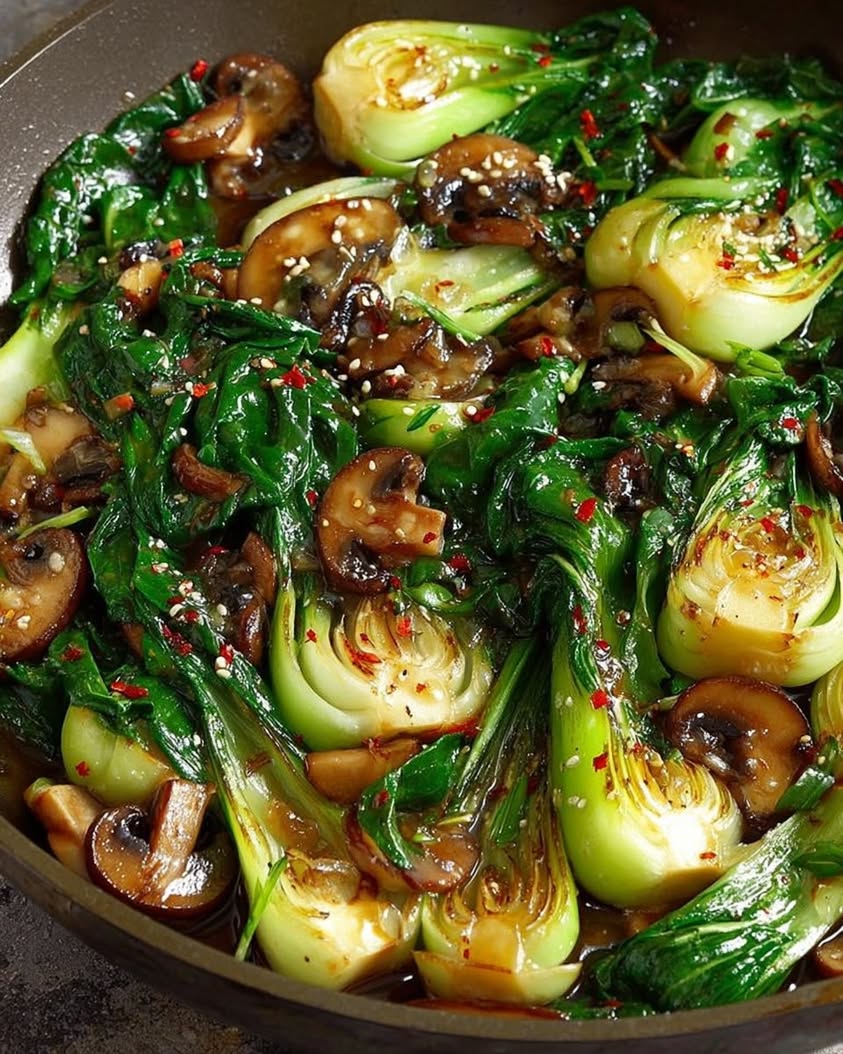
- Visual Appeal: The vibrant green of the bok choy contrasts beautifully with the deep browns and golds of the seared mushrooms. A glossy sauce coats every piece, making the vegetables shine and look incredibly appetizing.
- Skill Level Needed: This recipe is perfect for beginners and appreciated by experienced cooks. It builds confidence in fundamental stir-frying techniques while remaining forgiving and straightforward, focusing on simple steps for a quick dinner.
- Special Equipment: For the best results, you will need a wok or a large, heavy-bottomed skillet to get high heat and proper searing. Additionally, a sharp chef’s knife for prepping the vegetables and a spatula for tossing are essential tools.
Recipe Overview
- Difficulty Level: This Garlic Mushroom Bok Choy Stir-Fry is rated as easy. The main skills involved are basic knife work for slicing mushrooms and bok choy, and knowing when your wok is hot enough. As a result, even a novice cook can achieve excellent results on the first try.
- Category: This dish serves as a versatile side vegetable. However, it can easily be transformed into a light main course by serving it over steamed jasmine rice or your favorite noodles. It is a wonderful addition to a larger Asian-inspired feast.
- Cuisine: This dish is inspired by classic Cantonese stir-fry techniques. It honors the principles of preserving the natural flavor of fresh ingredients, utilizing high heat, and achieving a harmonious balance of umami, salt, and aromatics that is foundational to traditional Chinese cooking.
- Cost: The cost of this recipe is relatively low, especially when bok choy is in season. Mushrooms, whether you choose cremini or shiitake, are affordable staples. Given the small number of pantry ingredients needed, this is an economical dish that provides great value.
- Season: While you can find bok choy year-round, this dish shines in the cooler months of fall and early winter. During this time, bok choy is at its peak sweetness and crispness, and the hearty mushrooms provide the comforting warmth that suits the season.
- Occasion: This is an ideal dish for a quick and easy weeknight dinner. Furthermore, it is elegant enough to serve at a casual dinner party as a vibrant side, and its vibrant colors make it a lovely addition to holiday spreads or potluck gatherings.
Why You’ll Love This Recipe
The flavor appeal of this Garlic Mushroom Bok Choy Stir-Fry is immediate and undeniable. Firstly, the garlic is sautéed until fragrant and golden, infusing the oil with its pungent, delicious essence. Secondly, the mushrooms are seared until they release their juices and develop a deep, savory umami flavor. Finally, the bok choy is added and cooked just until crisp-tender, retaining its delicate sweetness. Every component contributes to a perfect balance, ensuring each bite is packed with a savory garlic punch and earthy depth that is simply addictive.
Moreover, the convenience and preparation benefits are significant for any home cook. This entire recipe comes together in under 15 minutes from start to finish. Above all, there is minimal prep work; a simple wash of the bok choy, a rough chop, and sliced mushrooms are all that stand between you and a delicious meal. Afterward, the cooking process is fast and almost meditative, making it a perfect stress-free choice for demanding evenings. You will spend less time cooking and more time enjoying your meal with family.
In addition to its great taste, the nutritional advantages of this dish are a major plus. Bok choy is a nutritional powerhouse, packed with vitamins A, C, and K, as well as calcium and antioxidants. Mushrooms provide a good source of B vitamins, selenium, and fiber, while garlic is celebrated for its immune-boosting properties. Consequently, this recipe offers a guilt-free way to load your plate with vital nutrients, making healthy eating feel like a treat rather than a chore.
Furthermore, this dish has great social and entertaining value. It looks impressive on a dinner plate, with its bright colors and glossy finish. It also acts as a fantastic, reliable side dish that pairs well with nearly any protein, from grilled chicken to baked salmon. When you bring this to a gathering, you will not reveal how easily it came together, but your guests will surely praise your cooking skills as they reach for second helpings.
Finally, the cost-effectiveness and accessibility of the ingredients make this recipe a winner. Bok choy is one of the more affordable leafy greens available in most supermarkets. Mushrooms are also budget-friendly, especially when you buy them in bulk. Moreover, the supporting ingredients, like soy sauce, ginger, and garlic, are pantry staples for many. Therefore, this recipe provides a big return on a small investment, both in terms of money and time spent.
Historical Background and Cultural Significance
The origin of this Garlic Mushroom Bok Choy Stir-Fry can be traced back to the ancient culinary traditions of China, where the technique of stir-frying has been perfected over centuries. The use of a wok over a high flame for a short cooking time was developed as a way to conserve precious fuel while retaining the nutrients and texture of fresh ingredients. Bok choy, a type of Chinese cabbage, has been cultivated in the region for over 5,000 years, making it a cornerstone of their cuisine, valued for its rapid growth and nutritional density.
Moreover, the cultural importance of stir-fried vegetables is deeply woven into Chinese food philosophy. The goal is to achieve “wok hei,” a unique flavor that comes from cooking food over high heat, which is often described as the breath of the wok. It represents a brilliant balance of ingredients, textures, and flavors. Additionally, the practice of eating a variety of vegetables is a core principle in a traditional meal, aimed at maintaining harmony and balance within the body. This dish exemplifies all these principles, using simple elements to create a whole that is greater than the sum of its parts.
Furthermore, the evolution of this recipe is a testament to its adaptability. As Chinese immigrants traveled around the world, they brought their cooking methods with them. In various regions, the ingredients were adapted to what was locally available. Nevertheless, the core technique remained intact. This flexibility allowed the stir-fry to gain global popularity. Today, that is how you see this dish served not only in traditional Chinese restaurants but also in modern fusion kitchens, highlighting ingredients found in local farmers’ markets across the United States.
Regional variations of this dish are subtle but interesting. In some parts of China, the dish is made with Shaoxing wine and a touch of sugar for a slightly sweet glaze. In others, the focus is on simplicity, using only salt and garlic to let the vegetables shine. Likewise, the type of mushroom used can vary significantly; shiitake are common in East Asia, while cremini or portobello are favored in Western adaptations. Consequently, this dish stands as a beautiful example of living cuisine, one that celebrates tradition while embracing the diversity of its global journey.
Ingredient Deep Dive
Bok choy, also known as Chinese white cabbage, is the star of our Garlic Mushroom Bok Choy Stir-Fry. This leafy green has a thick, crisp stem and soft, dark green leaves, offering a mild, refreshing flavor reminiscent of celery and cabbage combined. In many Asian cultures, it symbolizes prosperity and good fortune, often featured in celebratory meals. Nutritionally speaking, it is an excellent source of vitamins, minerals, and antioxidants. When selecting bok choy, look for firm, unblemished stalks and vibrant, unwilted green leaves. For storage, keep it in a plastic bag in the refrigerator’s crisper drawer, where it will stay fresh for up to five days. For our recipe, you can certainly use baby bok choy, which is smaller, sweeter, and cuts faster.
Mushrooms are the soulful counterpart in this dish, adding depth and earthiness. Whether you choose cremini, white button, or shiitake mushrooms, they all bring a savory umami flavor that anchors the greens. Furthermore, mushrooms have a rich history as a food source, celebrated for their meaty texture, especially in vegetarian cuisine. They are low in calories but rich in fiber, protein, and antioxidants. When shopping, choose mushrooms that are firm, plump, and dry, avoiding any with slimy spots. Likewise, store unwashed mushrooms in a paper bag in the fridge for up to a week. Chestnut mushrooms offer a wonderful alternative and are widely available.
Garlic is the aromatic backbone of this Garlic Mushroom Bok Choy Stir-Fry. Its pungent scent and sharp flavor transform into a sweet, nutty taste when sautéed in hot oil, creating the foundational flavor for the entire sauce. Historically, garlic has been used for both culinary and medicinal purposes for thousands of years, celebrated for its health-boosting compounds. To select the best garlic, pick bulbs that feel heavy and firm with tight, unbroken skins. In fact, garlic stores well in a cool, dry, dark place for several months. When you are in a pinch, a teaspoon of garlic paste can be substituted for two cloves of fresh garlic.
The supporting ingredients also play crucial roles. Soy sauce, or tamari for a gluten-free option, provides the salt and deep, fermented flavor. Sesame oil adds a distinct, nutty aroma and rich flavor that instantly elevates the dish. Meanwhile, ginger offers a bright, slightly spicy warmth that complements the garlic beautifully. Moreover, cornstarch is used to create a light, silky glaze that clings perfectly to the vegetables. Each pantry staple is chosen for a reason, and they all work together in harmony to create a well-balanced dish every single time.
Common Mistakes to Avoid
- Overcrowding the Pan: This is the most common mistake. If you put too many mushrooms in a cold pan, they will steam instead of sear, turning soggy and bland. Always cook them in a single layer in batches for a beautiful golden-brown crust.
- Using a Cold Pan: Patience is key. Your wok or skillet must be properly preheated over high heat before adding the oil. A cold pan will not create the sear you want, and the vegetables will boil in their own juices, leading to a less flavorful and less crispy result.
- Cooking Bok Choy Too Long: Bok choy cooks quickly. If you overcook it, especially the tender leaves, it will become mushy and lose its vibrant green color. Add the leaves at the end and stir-fry them just until they wilt, which takes about a minute.
- Slicing Ingredients Unevenly: Consistent sizing is crucial for even cooking. For example, slice mushroom caps and bok choy stems into uniform pieces. Consequently, smaller pieces will cook faster, and you want all components to be done at the same time.
- Adding Garlic Too Early: Garlic burns quickly and becomes bitter. If you add it to the pan with the mushrooms, it can scorch before the mushrooms are ready. It is best to add the garlic right when the mushrooms and bok choy stems are almost cooked, ensuring it becomes fragrant, not burnt.
- Skipping the Ginger: Do not underestimate the power of fresh ginger. While you might think it is optional, the ginger adds a bright, aromatic note that cuts through the richness and elevates the garlic and mushroom flavors. It makes the dish more complex and well-rounded.
- Not Drying the Vegetables: Wet vegetables will cause splattering and lower the pan’s temperature. Pat the bok choy and mushrooms completely dry after washing. This ensures a proper sear and helps the sauce cling to the vegetables better for a much more intense taste.
- Overloading with Sauce: It is easy to make the stir-fry sad and watery. Start with less sauce than you think you need. The goal is a light, glossy coating, not a soup. For example, this dish should be flavorful but not drenched in liquid.
Essential Techniques
Mastering the stir-fry technique is easier than you think, and it is the foundation of this Garlic Mushroom Bok Choy Stir-Fry. The most important skill is managing high heat. You want your wok or skillet to be smoking hot before you add your oil. This ensures that the vegetables sear quickly, caramelizing their natural sugars and locking in their flavor. To achieve this, heat the empty pan for a couple of minutes. Then, you can test the heat by flicking a drop of water into the pan; if it sizzles and evaporates immediately, it is ready for the oil.
Another essential technique is the “velveting” step for mushrooms, although it is simple here. Searing the mushrooms in a dry pan first, before adding oil, draws out their moisture and allows them to brown perfectly. You must not rush this process. Furthermore, let the mushrooms sit in the hot pan without moving them for a minute or two. This patience will reward you with deep, savory flavors. Once they are golden brown, you can then add your oil and aromatics. This step ensures the mushrooms are flavorful and not watery, which is a hallmark of a great stir-fry.
Finally, the art of sauce-making is about balance and consistency. The mixture of soy sauce, sesame oil, a little sugar, and cornstarch must be whisked together before you start cooking. This “mother sauce” is your key to a quick finish. When you add it to the hot pan, do so slowly and stir continuously. The heat will thicken the cornstarch, creating a glossy, silky sauce that coats every piece of vegetable. You will know it is perfect when the sauce glistens and clings to the ingredients, rather than pooling in the bottom of the wok.
Moreover, visualizing the process is vital. From the sizzling sound when vegetables hit the pan to the color change as they cook, these cues guide you. For instance, the bok choy stems should turn bright jade green and become slightly translucent at the edges. The mushrooms will shrink slightly and release a rich, savory aroma. When you see these signs, you know you are on track to a perfect result.
Pro Tips for Perfect Garlic Mushroom Bok Choy Stir-Fry
First and foremost, make sure all your ingredients are prepped before you turn on the heat. This is the golden rule of stir-frying. Since the cooking process is fast, there is no time for chopping once you start. Therefore, line up your sliced mushrooms, chopped stems, garlic, and sauce on a plate next to the stove. This smooth workflow keeps you calm and ensures perfect timing.
The sauce is where you can build or break the flavor. For example, buy a good quality soy sauce or tamari. The sauce is simple, so using a high-quality one makes a huge difference in the final taste. Moreover, do not skip the cornstarch slurry. It might seem like an extra step, but a little cornstarch is the secret to a beautiful, shiny glaze that hugs the vegetables instead of running away from them.
Consider this a base recipe and get creative with your vegetables. The technique remains similar if you want to add snap peas, bell peppers, or asparagus. You can mix and match based on the season or what is in your fridge. Likewise, add a bit of chili garlic sauce to the stir-fry glaze if you enjoy a little heat. You can also add a tablespoon of oyster sauce or hoisin for an extra layer of complexity.
Finally, the last tip is about tasting. When the sauce is added and everything has been tossed, taste your stir-fry. Does it need a pinch of salt? Maybe a touch more soy sauce? Adjust the seasoning to your own preference. Remember, you are cooking for your own family, and the goal is to make the best version of the dish for your own tastes. Trust your palate.
Variations and Adaptations
Regional variations of this family favorite are endless across Asia. In Japan, they might use a splash of mirin and a sprinkle of white sesame seeds for a sweeter, nuttier flavor profile. In Thailand, the addition of Thai basil and bird’s eye chilies would transform this into a spicy, aromatic stir-fry. Each region brings local palates and ingredients into play, making the humble stir-fry a canvas for regional cuisines.
Seasonal adaptations are also a wonderful way to keep this dish fresh and relevant. In the spring, you could add a handful of sweet green peas or snap peas for a pop of color and sweetness. During the summer, consider adding charred corn kernels or bell peppers for a smoky sweetness. In the fall, roasted butternut squash cubes would be a hearty addition. Therefore, let the seasons guide your vegetable selection for a new experience each time.
For dietary modifications, this recipe is incredibly accommodating. For a vegan dish, simply ensure your sugar is vegan and use a vegan oyster sauce alternative. For a gluten-free version, swap the soy sauce for tamari. Moreover, for a low-carb option, this dish is already excellent on its own. However, if you are keto, you can serve this over konjac noodles or cauliflower rice for a filling meal. This dish is so adaptable it can fit almost any lifestyle.
Flavor variations are a playground for home cooks. For instance, add a teaspoon of toasted sesame seeds and a drizzle of chili oil right before serving. Alternatively, incorporate a tablespoon of freshly grated ginger and a teaspoon of lime zest at the end for a zesty twist. Do not forget the umami bomb; one finely chopped anchovy fillet or a teaspoon of miso paste can deepen the savory notes in a way that will make everyone ask for your secret ingredient.
Texture modifications can completely change the character of the dish. Do you want a crunchier bite? After stir-frying, top your dish with toasted cashews, peanuts, or crispy shallots. For a silkier feel, a drizzle of cream or coconut milk could be added at the last second for a rich, creamy coating. By contrast, if you prefer a firmer bite, reduce the initial cooking time of the greens by a minute.
Presentation alternatives also make a difference. While traditionally served as a side dish, you can present this as a main course on a bed of jasmine rice. You could also fill a lettuce cup with the stir-fry for a fun, low-carb appetizer. Alternatively, serve it over crispy rice paper noodles for extra drama. The possibilities are truly endless.
Serving and Presentation Guide
Plating this dish with the intention to impress is quite simple. Start by piling your steamed jasmine rice in the center of a bowl or plate. Then, using a slotted spoon, arrange the Garlic Mushroom Bok Choy Stir-Fry artfully on top and around the rice. However, spooning the sauce over the entire assembly is key to keeping everything moist and flavorful. This creates a beautiful, cohesive meal that is ready to be devoured.
Garnishing is the final flourish that adds both color and flavor. A generous sprinkle of toasted white sesame seeds adds a subtle nutty crunch and visual appeal. In addition, a few sliced green onions, both the white and green parts, add a sharp, oniony bite that cuts through the richness. A drizzle of sriracha or chili crisp offers a beautiful red color and a spicy kick for those who enjoy heat. These final touches show that you care about the details.
Traditionally, in Chinese cuisine, side dishes like this are served alongside other courses, family-style, in the center of the table. This implies that everyone can help themselves, promoting a sense of shared pleasure and community. More modernly, this stir-fry is often served as an entree in Western cultures, over a bed of grains. This particular dish works beautifully both ways, so consider your guests and the overall meal theme.
Modern serving suggestions lean into balance. You can create a “power bowl” by serving this stir-fry over brown rice with a soft-boiled egg and a drizzle of sriracha mayo. Alternatively, for a light lunch, you can serve it cold, tossed with a light sesame vinaigrette, as a salad. Pairing it with a crisp green salad is also a nice way to balance the textures. Therefore, do not be afraid to break the mold and present this dish in a way that excites you.
Wine and Beverage Pairing
The flavors of this Garlic Mushroom Bok Choy Stir-Fry are savory and delicate, presenting some interesting opportunities for beverage pairing. For a wine pairing, your best bet is a crisp, slightly aromatic white wine. A Grüner Veltliner from Austria or an Albariño from Spain brings a zesty acidity and a hint of white pepper that complements the mushrooms and garlic. Alternatively, you could select a dry Riesling, which has a touch of sweetness to balance any salty or spicy notes.
If you prefer red wine, you should choose something light-bodied and low in tannins. A chilled light red, like a Beaujolais or a Pinot Noir, will offer notes of red fruit and earthiness without overpowering the vegetable flavors. Avoid heavy, oaky reds, as they will clash with the delicate nature of the bok choy. A sparkling wine, such as a Prosecco or Cava, also works well, as the bubbles and acidity cleanse the palate between bites.
For non-alcoholic alternatives, a chilled glass of green or jasmine tea is a classic pairing with Asian cuisine, cleansing the palate and highlighting the fresh, green flavors of the dish. A sparkling water with a squeeze of lime is always a safe and refreshing choice. Likewise, many people enjoy a light lager or a pilsner beer, as the carbonation and crispness are a perfect match for the savory, garlicky sauce.
When considering temperature, white wines and beer should be served well-chilled. In contrast, the light red wines are best served slightly below room temperature, around 55 degrees Fahrenheit. Always consider serving these beverages in the appropriate glassware to enhance the experience. Most importantly, the goal is to have a drink in hand that makes the meal more enjoyable, so definitely consider what you and your guests like best.
Storage and Shelf Life
Storing leftovers of this Garlic Mushroom Bok Choy Stir-Fry correctly ensures you can enjoy it for lunch the next day. First, let the stir-fry cool to room temperature, but do not leave it out for more than two hours to ensure food safety. Then, transfer it to an airtight container. Because it has a sauce, a glass or plastic container with a tight-fitting lid works best, as it will not absorb odors. Properly stored, this dish will last in your refrigerator for three to four days.
The temperature of your refrigerator also plays a key role in preserving shelf life. Keeping it at 40 degrees Fahrenheit or below is the ideal setting to slow bacterial growth. Placement also matters; try to store your container in the main body of the fridge rather than the door, where temperatures fluctuate the most. Therefore, be sure your fridge is set at the correct temperature for optimal food preservation.
When it comes to reheating, the microwave is the most convenient method. However, to avoid overcooking the vegetables, reheat in short intervals, stirring in between until it is heated through. The stovetop is an excellent alternative method. Use a skillet over medium-high heat and add a splash of water, soy sauce, or vegetable broth to help create steam and loosen the sauce as you reheat it.
The signs of spoilage for this dish are typical of any cooked vegetable. First, look for a marked change in color or a dull appearance. More importantly, smell it; if it has an off, sour, or unpleasant odor, it has gone bad. Also, discard the dish if you see any signs of slime or mold. When in doubt, throw it out. As a result, you can always enjoy your leftovers without worrying about your health.
Make Ahead Strategies
One of the best strategies for a busy week is to prep the ingredients for your Garlic Mushroom Bok Choy Stir-Fry ahead of time. Specifically, you can wash, dry, and chop the bok choy about a day in advance. You can also slice the mushrooms and mince the garlic. Store each component separately in airtight containers in the fridge. Hence, on the night you plan to cook, all you have to do is grab your prepped ingredients and cook in under 10-12 minutes.
Another great strategy is to make a double batch of the stir-fry sauce. This clever hack allows you to save time for another day. Whisk all the sauce ingredients together, pour into a jar or sealed container, and refrigerate. This pre-made sauce will stay fresh for at least a week. Therefore, this means that when you are ready to make another stir-fry with any vegetables you choose, the flavor is ready to go.
When it comes to the quality impact, prepping in advance honestly has very little negative effect. While the vegetables will retain their freshness if properly stored, they might lose a tiny bit of their initial crispness compared to being cut right before cooking. However, the convenience this provides is significant. The flavors will develop wonderfully as they sit in the fridge, perhaps even making the sauce more harmonious.
For final assembly, the work is done. Just preheat your wok, add a little oil, and start cooking the garlic and mushrooms. Since all your components are ready, you can focus entirely on the fast cooking process. This makes the process so much easier to manage. When you get home, you are only 15 minutes away from a delicious, healthy, home-cooked meal that rivals any takeout.
Scaling Instructions
Scaling this Garlic Mushroom Bok Choy Stir-Fry recipe is very straightforward because its proportions are very forgiving. To halve the recipe, simply use half of each ingredient. For example, if the recipe calls for one pound of mushrooms, you will use half a pound. Halving is great for a solo dinner or a small lunch. Everything is quite easy to adjust, especially since you are using a formula of one part mushrooms to one part bok choy.
Doubling or tripling the recipe is where you need to employ a few extra tactics. The flavor will stay the same if you maintain the ratio of ingredients, so be sure to do the math carefully. More importantly, when you cook, be prepared to cook in batches. A home wok or a large skillet has its limits. You will need to sear the mushrooms in a few small batches to get that beautiful golden color and avoid steaming. If you try to add all of them at once, you will be left with a watery, boiled mess.
The equipment adjustments are minimal, but critical. When using a wok, the sheer surface area is your friend. If you are tripling the recipe, it might be worth using a heavier pot, like a stockpot, or an extra-large skillet. Furthermore, you will need a bigger utensil to toss everything. You will want a strong spatula and a large serving spoon to mix the vegetables and sauce effectively without spilling food everywhere.
Timing modifications are minimal but should not be ignored. Because you are cooking in batches, the overall time will increase. Yet, each individual batch will take the same amount of time. In fact, one could argue that the time per batch could be even faster if you are super efficient. The storage considerations remain the same, just use larger containers for the leftovers. This is also a great dish to bring to a large potluck because it holds its heat well and can be scaled to feed a crowd.
Nutritional Deep Dive
Macronutrient breakdown for this Garlic Mushroom Bok Choy Stir-Fry is a healthy balance geared toward low-carb living. Most of the calories are derived from carbohydrates, primarily from the natural sugars and fiber in the root vegetables and a small amount of sugar in the sauce. It is a naturally low-fat dish, with the small amount of fat coming from the heart-healthy sesame and avocado oils. In addition, the protein content is modest, meaning it is excellent as a side dish, but you will want a protein source to round it out for a main meal.
The micronutrient analysis reveals a treasure trove of vitamins and minerals in every serving. Bok choy is exceptionally high in vitamin K, which is essential for blood clotting and bone health. It is also a super source of vitamin C, an antioxidant that bolsters the immune system. In addition, mushrooms are rich in selenium, a mineral that acts as an antioxidant, and copper, which is important for red blood cell production. Garlic and ginger bring their own antioxidant compounds to boost the overall health quotient.
The health benefits of this dish are numerous and substantial. The high fiber content promotes good digestion and supports a healthy gut microbiome. The vitamin C and antioxidants support immune function and help fight inflammation in the body. Also, the low-calorie nature of this dish makes it a valuable ally in weight management, as you can eat a large portion without consuming excess calories. Moreover, the combination of vegetables and ginger makes this a comforting dish that is associated with feelings of warmth and well-being.
Dietary considerations are greatly met by this dish. It is naturally vegetarian and vegan, and easily made gluten-free by swapping the soy sauce for tamari. Since it is full of vegetables and low in sugars, it aligns well with a whole-food, plant-based diet. For those managing their carbohydrate intake for conditions like type 2 diabetes, this stir-fry offers a low-glycemic load, helping to prevent spikes in blood sugar. Therefore, this is an all-around fantastic addition to your dietary arsenal.
When considering portion control, a standard serving is roughly one cup or one half of the entire prepared recipe. However, because vegetables are low in calories, you can afford to eat more if you are still hungry. You can consume almost double that portion and still have a healthy meal, especially compared to a processed takeout equivalent. This makes portion control less stressful, as the recipe itself is the healthy choice.
Dietary Adaptations
For a gluten-free adaptation, the main change to make is simpler than you might think. You must swap the traditional soy sauce for tamari, a gluten-free soy sauce made from fermented soybeans. You also need to be careful about the source of your ingredients, as some pre-packaged items may contain trace amounts of gluten. This change ensures that everyone with gluten sensitivities can enjoy this delicious Garlic Mushroom Bok Choy Stir-Fry without worry.
This dish is naturally dairy-free, which simplifies things for those with lactose intolerance or allergies. Since the sauce is created from soy, sesame, and seasonings, you do not have to worry about any butter or cream sneaking into the picture. As a result, this is a safe and flavorful dish to share with anyone who follows a dairy-free diet, without any substitutions or modifications being necessary.
To make this a vegan-friendly recipe is straightforward. As written, it already is vegan, as it contains no animal products. However, if you want to enrich the flavor with a traditional Chinese ingredient, you should check the label of your oyster sauce or fish sauce, as these are not vegan. To keep it plant-based, you can use a vegan mushroom sauce or simply omit it from the recipe entirely. This flexibility ensures it remains accessible to all.
For a low-carb or keto diet, this dish is practically a dream come true. Bok choy and mushrooms are both exceptionally low in carbohydrates. The only carbohydrate from the sauce comes from the sugar and cornstarch, so to keep it strictly keto, you can use a sugar substitute like erythritol or monk fruit, and perhaps skip the cornstarch if you want. However, even with the standard sauce, it will be relatively low carb and can easily fit your macros, especially when paired with a fatty protein.
The Paleo adaptation is also a good fit. Soy sauce is not Paleo because soy is a legume. However, you can substitute it with coconut aminos, a paleo-friendly sauce made from coconut sap, thus keeping the flavor profile intact while aligning with strict Paleo principles. Similarly, the cornstarch can be swapped for arrowroot powder. To make it low-FODMAP for IBS sufferers, you must be careful with garlic, which is high in the FODMAP fructan. Use garlic-infused oil instead. The rest of the dish is good for a low-FODMAP approach.
Troubleshooting Guide
If you find your stir-fry is watery and soggy, the issue is usually two-fold. First, you likely overcrowded the pan, causing a steaming effect. Moreover, you might have had a cooler pan. When mushrooms are pressed against each other in a cool pan, they release their water and stew. To fix this, remove the vegetables, drain the liquid, and re-sear them in batches on a higher heat. This will rescue the crispness.
Perhaps your sauce is clumping or is too thick. This is usually because the cornstarch was added too quickly before dissolving. It is also possible that your heat is too high, causing the sauce to seize up instantly. To salvage this, immediately add a tablespoon of water or broth and whisk vigorously until the sauce loosens up. To avoid it in the future, make sure you whisk the cornstarch into the liquid until it is fully dissolved before adding it to the wok.
Burning the garlic is another common issue that creates a bitter taste. Garlic burns easily, and burnt garlic ruins the dish with an acrid flavor. In this case, the heat might have been too high. To salvage, you can quickly remove the garlic from the pan and add fresh garlic halfway through. The best practice is to lower the heat right before adding the garlic to avoid this flavor catastrophe.
Sometimes, the flavor can be flat or lacking depth. This usually means Print
Garlic Mushroom Bok Choy Stir-Fry
- Total Time: 20 minutes
- Yield: 4
Description
A quick and savory stir-fry featuring crisp bok choy and earthy mushrooms, tossed in a fragrant garlic sauce. Perfect as a side or a light main over rice.
Ingredients
- 1 lb baby bok choy, halved lengthwise
- 8 oz cremini mushrooms, sliced
- 4 cloves garlic, minced
- 2 tablespoons soy sauce
- 1 tablespoon oyster sauce
- 1 teaspoon sesame oil
- 1 tablespoon vegetable oil
- 1/4 cup vegetable broth
- 1 teaspoon cornstarch mixed with 2 tablespoons water
- 1/4 teaspoon red pepper flakes (optional)
- 1/4 teaspoon ground black pepper
- 1 tablespoon sesame seeds for garnish
Instructions
- Wash bok choy thoroughly and pat dry. Slice larger pieces in half lengthwise.
- In a small bowl, whisk together soy sauce, oyster sauce, sesame oil, vegetable broth, and cornstarch mixture. Set aside.
- Heat vegetable oil in a large skillet or wok over medium-high heat. Add mushrooms and cook until golden brown, about 5 minutes.
- Add minced garlic and red pepper flakes (if using). Sauté for 30 seconds until fragrant.
- Add bok choy and toss with mushrooms. Cook for 2-3 minutes until leaves wilt but stems remain crisp.
- Pour the sauce over the vegetables. Stir-fry for another 1-2 minutes until sauce thickens and coats everything.
- Season with black pepper. Garnish with sesame seeds and serve hot.
Notes
You can customize the seasonings to taste. Add a splash of rice vinegar for extra tang, or swap oyster sauce for hoisin to make it vegetarian.
- Prep Time: 10 minutes
- Cook Time: 10 minutes
- Method: Side
- Cuisine: Asian