French Onion Short Rib Soup with Cheesy Gruyère Toast: A Cozy, Wine-Free Comfort Classic
Few dishes deliver the deep, soul-warming satisfaction of French Onion Short Rib Soup with Cheesy Gruyère Toast. This wine-free version captures every bit of the rich, caramelized onion flavor you crave while keeping the ingredient list approachable for any home cook. As the short ribs braise slowly, they release their beefy essence into a savory broth that mingles with sweet, jammy onions and fresh herbs. Meanwhile, the cheesy Gruyère toast waits to be floated on top, offering a golden, bubbling crown that makes each spoonful feel like a special occasion.
I created this French Onion Short Rib Soup with Cheesy Gruyère Toast recipe because I wanted the deep comfort of classic French onion soup without opening a bottle of wine. The short ribs more than make up for any missing depth. They bring a natural richness and body that transforms a simple onion broth into a meal worthy of your Sunday table. The Gruyère toast, broiled until nutty and crisp, adds a layer of indulgence that turns every bowl into a complete, satisfying experience.
Whether you are feeding a hungry family on a chilly evening or impressing guests at a dinner party, this French Onion Short Rib Soup with Cheesy Gruyère Toast delivers. The recipe rewards patience more than skill. If you can slice onions and sear meat, you can make this soup. The oven does most of the heavy lifting, and the result tastes like you spent all day tending a stove in a French bistro.
Quick Recipe Highlights
- Flavor Profile: Deeply savory and slightly sweet from slow-caramelized onions, with a robust beef backbone from bone-in short ribs. The Gruyère toast adds a nutty, salty finish that balances every bite.
- Texture: Tender shredded short rib melts in your mouth, while the broth coats your spoon with a silky body. The toast stays crisp on top and softens into a cheesy, bread-like layer underneath.
- Aroma: Sweet onions and thyme fill your kitchen first, followed by the unmistakable scent of roasting beef. Toasted bread and melting Gruyère send up a nutty, buttery perfume right before serving.
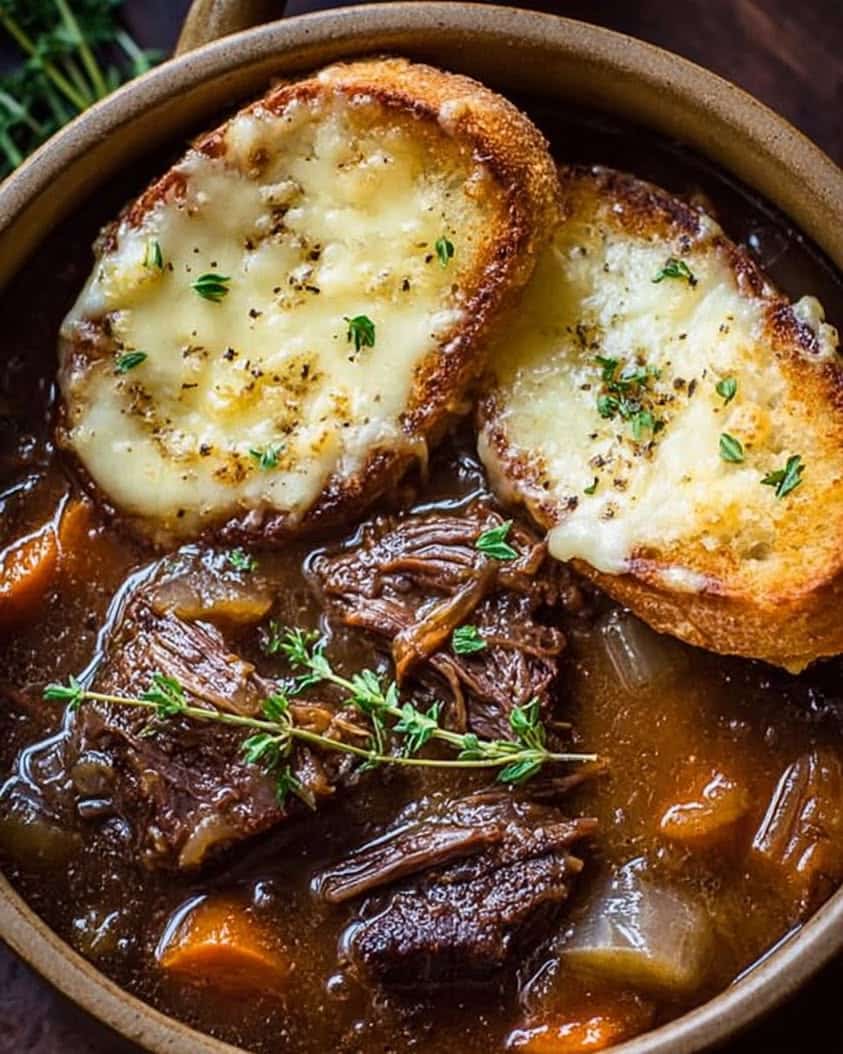
- Visual Appeal: A dark amber broth cradles chunks of beef and glossy onions. The golden, cheese-laden toast floats on top with a bronzed crust that invites the first spoonful.
- Skill Level Needed: This recipe suits a confident home cook who is comfortable with searing, simmering, and broiling. No advanced techniques are required, but patience with the onion caramelization pays off.
- Special Equipment: You will need a heavy Dutch oven or a large oven-safe pot with a lid. A sheet pan for the toast and a ladle for serving round out the essentials.
Recipe Overview
- Difficulty Level: I rate this recipe intermediate because it involves multiple stages, from searing meat to caramelizing onions and broiling toast. None of the steps are tricky on their own, but they demand attention and time. A beginner can succeed with careful reading and patience, while an experienced cook will find the process intuitive.
- Category: This dish works as both a main course soup and a hearty starter for a larger meal. It fits the comfort food, one-pot, and slow-cooked categories perfectly. You can serve it for lunch or dinner with equal success.
- Cuisine: The recipe draws on classic French onion soup traditions but blends in the richness of American braised short ribs. This fusion approach reflects how home cooks adapt European techniques with local ingredients. The result honors both culinary worlds without belonging strictly to one.
- Cost: Short ribs are the priciest component, often running twelve to eighteen dollars for three pounds. Onions, broth, and pantry spices keep the rest of the cost low. A batch feeds six people generously, which brings the per-serving cost to a reasonable range.
- Season: Fall and winter make ideal seasons for this soup because the oven warms the kitchen and the flavors satisfy cold-weather cravings. You can enjoy it year-round, though, especially on rainy spring days. The dish also shines for game-day gatherings and holiday weekends.
- Occasion: Serve this soup for Sunday dinner, a cozy date night, or a casual dinner party with friends. It also works beautifully as a make-ahead meal for busy weeks. The impressive presentation makes it feel celebratory without requiring last-minute stress.
Why You’ll Love This Recipe
The taste and texture of this French Onion Short Rib Soup with Cheesy Gruyère Toast hit every comfort note you want from a cold-weather meal. Sweet, jammy onions melt into a beef broth that tastes like it simmered for days. The short ribs turn so tender that they shred with a spoon, and each piece soaks up the savory broth. Then the cheesy Gruyère toast adds a nutty, salty crunch that contrasts beautifully with the soft, rich soup underneath.
Convenience sets this recipe apart from traditional French onion soup, which often requires constant stirring at the stove. Here, once you caramelize the onions and sear the beef, the oven takes over for nearly three hours. You can walk away, read a book, or prep the toast. The hands-off braising means you get deep flavor without hovering over a pot. The entire process breaks into manageable stages that fit around your day.
Nutritionally, this soup delivers a solid dose of protein from the short ribs and plenty of vitamins from the onions and herbs. Bone-in short ribs also contribute natural collagen, which gives the broth body and supports joint health. Gruyère adds calcium and a satisfying richness, though you control the amount. Paired with a simple salad, this dish becomes a balanced meal rather than a heavy indulgence.
Socially, this French Onion Short Rib Soup with Cheesy Gruyère Toast makes a stunning centerpiece for gatherings. You can bring the whole Dutch oven to the table and let guests serve themselves. The cheesy toast, broiled just before serving, creates a dramatic reveal that gets everyone talking. It feels like restaurant fare, yet you made it in your own kitchen with minimal fuss.
Finally, this recipe proves that you do not need wine to build extraordinary depth. The short ribs provide all the richness and umami you could want, and the caramelized onions bring their own sweetness. That makes this dish accessible to families who avoid alcohol for personal, religious, or dietary reasons. The cost per serving stays reasonable, and the ingredients are easy to find at any grocery store.
Historical Background and Cultural Significance
French onion soup traces its roots to seventeenth-century France, where cooks layered onions, bread, and cheese in a humble peasant dish. Legend credits King Louis XV with popularizing an early version after he made do with pantry staples at a hunting lodge. Over time, Parisian taverns began serving the soup late at night to hungry travelers. The dish evolved into the classic gratinée we know today, with its toasted bread and melted cheese cap.
Short ribs, meanwhile, have a long history in American barbecue and braising traditions. Butchers once considered them a tough cut fit only for long cooking, but immigrant cooks and Southern pitmasters transformed them into a delicacy. When home cooks began combining French onion soup with braised beef, a new comfort-food hybrid was born. This recipe continues that tradition of resourceful, flavorful cooking.
The evolution of this dish reflects a broader trend in American home cooking toward fusion comfort food. Cooks take familiar French techniques and pair them with hearty American cuts like short ribs. The wine-free twist makes the recipe more inclusive without sacrificing sophistication. It shows how a classic can adapt to modern kitchens and diverse dietary needs.
Regional variations of French Onion Short Rib Soup with Cheesy Gruyère Toast appear across the country. In the Midwest, cooks might add a splash of apple cider for sweetness. In the South, a dash of hot sauce or smoked paprika brings warmth. In New England, sharp cheddar sometimes replaces Gruyère. Each version keeps the soul of the original while reflecting local tastes.
Ingredient Deep Dive
Bone-in short ribs anchor this soup with their deep beef flavor and natural collagen. This cut comes from the chuck, brisket, or plate section of the cow, where tough muscle fibers need slow cooking to become tender. Cultures worldwide braise short ribs, from Korean galbi to Mexican barbacoa. Look for meaty bones with good marbling and a uniform size so they cook evenly. Store them in the coldest part of your fridge and use within three days, or freeze for up to three months.
Nutritionally, short ribs provide high-quality protein, iron, and zinc, along with collagen that enriches the broth. You can substitute boneless chuck roast or oxtail if short ribs are unavailable, though the cook time may shift. Lamb shanks offer a flavorful alternative with a different character. For a leaner option, try beef shank, which still delivers gelatin and flavor.
Yellow onions form the sweet, jammy backbone of the soup. They contain natural sugars that caramelize when cooked low and slow, creating the signature French onion taste. Onions appear in nearly every culinary tradition and have been cultivated for over five thousand years. Choose firm, heavy onions with dry, papery skins and no soft spots. Store them in a cool, dark, ventilated spot away from potatoes.
Onions deliver antioxidants like quercetin, plus vitamin C and fiber. Sweet onions, red onions, or shallots can stand in, though each brings a slightly different flavor. Sweet onions caramelize faster but may lack the same depth. Shallots offer a milder, more refined note. For the best French Onion Short Rib Soup with Cheesy Gruyère Toast, stick with yellow onions.
Gruyère cheese gives the toast its nutty, melting character. This Swiss alpine cheese has been made in the Gruyère region since the twelfth century. Its firm texture and earthy flavor make it a favorite for fondue and gratins. Buy Gruyère from a reputable cheese counter and avoid pre-shredded versions, which often contain anti-caking agents. Wrap it tightly and refrigerate for up to two weeks.
Gruyère offers calcium, protein, and vitamin A, though it is high in fat and sodium. Good substitutes include Comté, Emmental, or Jarlsberg. For a sharper bite, try aged Gouda or a mix of Gruyère and Parmesan. If you need a dairy-free option, use a meltable vegan cheese designed for gratins.
Beef broth builds the savory liquid base that ties everything together. Homemade broth made from roasted bones delivers the richest flavor, but high-quality store-bought broth works well. Look for broth with no added MSG and a short ingredient list. Store unopened broth in a cool pantry and use within four days after opening.
Broth contributes protein, collagen, and minerals, especially if you use bone broth. Chicken broth or vegetable broth can substitute in a pinch, though the flavor will shift. For a deeper, more robust soup, use a combination of beef broth and a splash of tamari or soy sauce. This trick adds umami without wine.
Common Mistakes to Avoid
- Rushing the onions: Caramelizing onions properly takes at least forty-five minutes over medium-low heat. Turning up the heat browns them unevenly and leaves a bitter taste. Stir every few minutes and let the sugars develop slowly.
- Skipping the sear: Searing the short ribs creates a brown crust that adds enormous flavor to the broth. If you skip this step, the soup tastes flat. Pat the meat dry and sear in batches so it browns instead of steams.
- Using cold broth: Adding cold liquid to a hot pot shocks the ingredients and slows the braise. Warm your broth before pouring it over the ribs. This keeps the cooking temperature steady and speeds up the process.
- Under-seasoning: Onions and beef need generous salt to taste their best. Season at each stage, from the sear to the final simmer. Taste before serving and adjust, since broth brands vary in sodium.
- Overcrowding the pot: Too many short ribs in one layer will steam rather than sear. Work in batches and give each piece space. The same rule applies when caramelizing onions if your pot is small.
- Burning the toast: The broiler works fast, and Gruyère can go from golden to black in seconds. Stay by the oven and pull the toast when the cheese bubbles and browns. Set a timer as a backup.
- Skimming too little: Fat and foam rise to the surface during braising. Skim them off for a cleaner, less greasy broth. A ladle or spoon works fine, and the effort pays off in flavor.
- Shredding the meat too early: Let the short ribs cool slightly in the broth before shredding. Hot meat falls apart into mush, while rested meat keeps a pleasant texture. Discard the bones and any large fat chunks.
- Assembling the toast too soon: If you add the cheesy toast before serving, it turns soggy. Broil the bread right before you ladle the soup into bowls. That way, the contrast between crisp and soft stays intact.
- Forgetting to taste: Every batch of onions and broth differs in sweetness and salt. Taste the finished soup and adjust with salt, pepper, or a touch of balsamic vinegar. Small tweaks make a big difference.
Essential Techniques
Caramelizing onions is the single most important technique in this French Onion Short Rib Soup with Cheesy Gruyère Toast. The process transforms raw, pungent onions into sweet, golden strands through slow heat and time. Start with sliced onions in a wide pot with melted butter or oil over medium-low heat. Stir every few minutes, scraping up browned bits, for forty-five to sixty minutes. You will know they are ready when they shrink to a quarter of their volume and turn deep amber. If they stick, add a splash of water rather than more fat.
Searing short ribs builds the flavor foundation for the entire soup. Dry the meat thoroughly with paper towels, then season generously with salt and pepper. Heat a heavy Dutch oven over medium-high heat until the oil shimmers. Place the ribs in the pot without crowding and let them sit undisturbed for three to four minutes per side. You want a dark brown crust, not a gray surface. Remove the ribs to a plate and pour off excess fat before continuing.
Deglazing lifts the browned bits from the bottom of the pot, and those bits carry concentrated flavor. After searing the meat and caramelizing the onions, pour a small amount of broth into the hot pot. Scrape the bottom with a wooden spoon as the liquid sizzles. The browned bits dissolve into the broth, adding depth to the final soup. This step also prevents burning during the long braise.
Braising turns tough short ribs into fork-tender perfection. Arrange the seared ribs in the pot, add broth until the meat is nearly covered, and bring to a gentle simmer. Cover the pot and transfer it to a low oven, around 325 degrees Fahrenheit. Cook for two and a half to three hours, until the meat falls off the bone. Check occasionally to ensure the liquid stays at a simmer rather than a boil, which can toughen the meat.
Pro Tips for Perfect French Onion Short Rib Soup with Cheesy Gruyère Toast
- Make the soup a day ahead and refrigerate it overnight. The flavors deepen, and the fat solidifies on top for easy removal.
- Use a mix of Gruyère and a sharper cheese like Parmesan for a more complex toast topping.
- Toast the bread cubes or slices in the oven before adding cheese to keep them crisp under the broiler.
- Add a tablespoon of balsamic vinegar at the end to brighten the broth without wine.
- Shred the short ribs with two forks for a rustic texture, or chop finely for a more refined soup.
- Warm your bowls before serving to keep the soup hot at the table.
- Garnish with fresh thyme leaves or chopped chives for a pop of color and freshness.
- If the broth tastes thin, simmer it uncovered for fifteen minutes to reduce and concentrate the flavor.
Variations and Adaptations
Regional variations of this soup reflect local tastes and traditions. In the American South, cooks often add a splash of bourbon or a dash of smoked paprika for warmth. In the Midwest, apple cider replaces some of the broth for a sweeter, fruitier note. New Englanders might swap Gruyère for sharp white cheddar. Each adaptation keeps the core of the French Onion Short Rib Soup with Cheesy Gruyère Toast while making it their own.
Seasonal adaptations let you enjoy this soup year-round. In spring, add fresh peas or asparagus tips during the last ten minutes of cooking. Summer calls for a lighter broth with more herbs and a squeeze of lemon. Fall invites diced squash or sweet potatoes into the pot. Winter is the natural season for the richest, most indulgent version with extra cheese and a thicker broth.
Dietary modifications make the recipe accessible to more eaters. For a gluten-free version, use gluten-free bread for the toast and confirm your broth has no gluten. Dairy-free cooks can skip the cheese or use a meltable vegan alternative. Low-carb and keto eaters can omit the bread and serve the soup with a cheese crisp instead. Each change keeps the spirit of the dish intact.
Flavor variations range from smoky to spicy to herbaceous. Add chipotle peppers in adobo for a smoky kick. Stir in a spoonful of miso paste for extra umami. Finish with fresh tarragon or parsley for a bright, herbal note. You can also add a pinch of cinnamon or star anise for a subtle warmth that complements the beef.
Texture modifications let you customize the mouthfeel. Blend half the soup for a creamier body, or leave it chunky for a hearty bite. Shred the meat finely for a more uniform texture, or keep larger pieces for a rustic feel. The toast can be cut into small croutons for a crunchy topping or left as large slices for a dramatic presentation.
Presentation alternatives suit different occasions. Serve the soup in individual oven-safe crocks and broil the cheese directly on top for a classic look. For a buffet, keep the soup in a slow cooker and offer the toast on the side. You can also serve the soup in small cups as an appetizer or in large bowls as a main course.
Serving and Presentation Guide
Plating this French Onion Short Rib Soup with Cheesy Gruyère Toast starts with a warm, wide-rimmed bowl. Ladle the soup so the chunks of short rib and onions sit prominently in the center. Place the cheesy toast gently on top, letting it float like a golden island. The contrast between the dark broth and the bronzed cheese creates an inviting visual that makes guests eager to dig in.
Garnishing ideas range from simple to elegant. A sprig of fresh thyme adds a rustic touch and a hint of green. Chopped chives or parsley bring brightness and a fresh aroma. For a special occasion, shave a few curls of Gruyère over the top and let them melt slightly. A crack of black pepper finishes the bowl with a touch of heat.
Traditional accompaniments include a crusty baguette and a simple green salad with vinaigrette. The salad cuts through the richness of the soup and adds a fresh element. A glass of dry cider or sparkling water with lemon complements the flavors without competing. Pickled onions or cornichons on the side add a tangy contrast.
Modern serving suggestions open up new possibilities. Try a dollop of sour cream or crème fraîche swirled into the broth for a creamy finish. A drizzle of truffle oil elevates the dish to restaurant quality. Serve the soup alongside a charcuterie board for a casual but impressive spread. These touches make the meal feel special without extra effort.
Temperature matters for the best experience. Serve the soup hot, around 160 degrees Fahrenheit, so the cheese stays melted and the broth warms you through. If the soup cools, reheat gently on the stove rather than in the microwave to preserve the texture. The toast should go under the broiler just before serving so it arrives crisp and bubbling.
Portion control tips help you feed a crowd or save leftovers. A one-and-a-half-cup serving of soup with one slice of toast makes a satisfying main course. For a starter, offer one cup of soup with half a slice of toast. The recipe doubles easily, and the soup freezes well for future meals.
Wine and Beverage Pairing
Even though this recipe skips wine in the cooking, a glass alongside the meal can enhance the experience. A full-bodied red like Cabernet Sauvignon or Syrah stands up to the rich beef and caramelized onions. For a lighter option, a Pinot Noir or Beaujolais brings fruit and acidity without overwhelming the dish. A dry rosé also works surprisingly well with the savory broth.
Non-alcoholic alternatives include sparkling apple cider, which echoes the sweetness of the onions. A glass of cold-brewed iced tea with lemon offers a refreshing contrast. For a cozy touch, serve hot apple cider with a cinnamon stick. These options let everyone at the table enjoy a thoughtful pairing.
Coffee and tea pairings may sound unusual, but they can work beautifully. A dark roast coffee brings out the roasted notes in the short ribs. An English breakfast tea adds a malty depth that complements the beef. For an after-dinner touch, a cup of chamomile tea soothes while the flavors linger.
Temperature considerations matter for beverage service. Serve red wines slightly below room temperature, around 60 to 65 degrees Fahrenheit. White wines and rosés should be chilled but not ice cold. Non-alcoholic options taste best when served at their ideal temperature, whether hot or cold.
Serving suggestions include offering a choice of two beverages so guests feel cared for. Set out glasses and let people pour their own to keep the meal relaxed. A pitcher of water with lemon slices on the table ensures everyone stays hydrated. These small touches make the meal feel complete.
Storage and Shelf Life
Storing this French Onion Short Rib Soup with Cheesy Gruyère Toast properly keeps it safe and delicious for days. Cool the soup to room temperature within two hours of cooking, then transfer it to airtight containers. Store the soup and the toast components separately so the bread stays crisp. Refrigerate the soup for up to four days and the toast for up to two days.
Temperature requirements for storage follow standard food safety rules. Keep the soup below 40 degrees Fahrenheit in the refrigerator. If you plan to freeze it, cool it completely before sealing. Avoid leaving the soup at room temperature for more than two hours, as bacteria multiply quickly in the danger zone.
Container recommendations include glass or heavy plastic containers with tight-fitting lids. Glass does not stain or hold odors, making it ideal for soups with strong flavors. Leave an inch of headspace if you plan to freeze, since liquids expand. Label containers with the date so you know when to use them.
Signs of spoilage include a sour smell, cloudy broth, or a slimy texture on the meat. If you see mold or notice an off flavor, discard the soup immediately. When in doubt, throw it out. Proper storage and prompt refrigeration prevent most spoilage issues.
Reheating instructions call for gentle heat on the stovetop. Pour the soup into a pot and warm it over medium-low heat, stirring occasionally. Bring it to a simmer but do not boil, which can toughen the meat. For the toast, broil it fresh rather than reheating, so the cheese melts properly.
Freezing guidelines allow you to enjoy this soup months later. Freeze the soup without the toast in freezer-safe containers for up to three months. Thaw overnight in the refrigerator before reheating. The texture of the meat may soften slightly, but the flavor remains excellent. Add fresh toast when you serve.
Make Ahead Strategies
The prep timeline for this recipe breaks into easy stages. You can caramelize the onions up to three days ahead and refrigerate them. Sear the short ribs the day before and store them with the onions. On serving day, combine everything and braise, or reheat the finished soup and make the toast fresh.
Storage between steps keeps each component fresh. Keep caramelized onions in a covered container in the fridge for up to five days. Store seared short ribs separately if you plan to braise later. Once the soup is fully cooked, it keeps for four days, and the flavors improve overnight.
Quality impact assessment shows that make-ahead methods often improve the final dish. The soup deepens in flavor as it sits, and the fat rises to the top for easy removal. The only element that suffers from advance prep is the toast, which should always be made fresh. Plan accordingly for the best results.
Assembly tips streamline the final steps. Reheat the soup on the stove while you slice the bread and grate the cheese. Broil the toast just before ladling the soup into bowls. Set out garnishes and let guests add their own. This approach keeps the meal relaxed and the kitchen calm.
Reheating guidelines for make-ahead soup call for medium-low heat and occasional stirring. If the soup seems thick, add a splash of broth or water to loosen it. Taste and adjust the seasoning, since flavors can fade after refrigeration. A pinch of salt or a dash of vinegar brings them back to life.
Fresh element additions at serving time boost the dish. Add chopped fresh herbs, a squeeze of lemon, or a swirl of cream just before serving. These small touches make reheated soup taste newly made. The cheesy toast, broiled at the last minute, provides the crowning fresh element.
Scaling Instructions
Halving the recipe works well for smaller households. Use one and a half pounds of short ribs and three large onions. Reduce the broth to four cups and shorten the braising time slightly, checking for tenderness at two hours. The toast recipe halves easily, using three slices of bread and half the cheese.
Doubling or tripling the recipe suits a crowd or a freezer stash. Use a larger Dutch oven or two pots to avoid overcrowding. Increase the broth proportionally, but you may need less than double if you want a thicker soup. The braising time stays roughly the same, though a larger volume may need an extra thirty minutes.
Equipment adjustments matter when you scale up. A six-quart Dutch oven handles a double batch comfortably. For a triple batch, use two pots or a large roasting pan with a lid. Sheet pans for the toast should be large enough to hold all the slices in a single layer.
Timing modifications include longer caramelization for more onions. A larger batch of onions takes longer to release their moisture and brown. Add ten to fifteen minutes to the caramelizing stage for each additional batch. The braise time may also increase slightly with more meat in the pot.
Storage considerations for scaled batches require more containers and freezer space. Portion the soup into meal-sized containers before freezing so you can thaw only what you need. Label everything with the date and contents. A well-organized freezer makes future meals effortless.
Nutritional Deep Dive
The macro breakdown of this French Onion Short Rib Soup with Cheesy Gruyère Toast shows a balance of protein, fat, and carbohydrates. Each serving provides roughly thirty-five grams of protein from the short ribs, along with twenty grams of fat and twenty-five grams of carbs. The toast contributes most of the carbs, while the soup itself stays relatively low in sugar.
Micronutrient analysis reveals a wealth of vitamins and minerals. The onions supply vitamin C, vitamin B6, and quercetin, an antioxidant. The beef delivers iron, zinc, and B12, which support energy and immune function. Gruyère adds calcium and vitamin A, while the herbs contribute small amounts of vitamin K and antioxidants.
Health benefits of this dish include sustained energy from protein and fat, plus the comfort of a warming meal. The collagen from bone-in short ribs supports skin, joints, and gut health. Onions provide prebiotic fiber that feeds beneficial gut bacteria. Enjoying this soup as part of a balanced diet supports overall wellness.
Dietary considerations include sodium, which can run high depending on your broth. Choose low-sodium broth and season with salt at the end to control the total. Those watching fat intake can skim the broth thoroughly after chilling. The recipe adapts well to lighter versions without losing flavor.
Portion analysis helps you fit this soup into your daily goals. A one-and-a-half-cup serving with one slice of toast lands around 450 to 550 calories. For a lighter meal, serve a smaller portion with a side salad. The soup keeps you full thanks to its protein and fat content.
Weight management tips include using less cheese on the toast and adding more vegetables to the soup. Bulk up the broth with mushrooms, celery, or carrots for extra fiber. Serve the soup in smaller bowls and fill half the plate with a green salad. These tweaks keep the meal satisfying without overdoing it.
Dietary Adaptations
For a gluten-free version, use gluten-free bread for the toast and check that your broth contains no gluten. Most beef broths are naturally gluten-free, but some brands add wheat-based flavorings. Tamari or gluten-free soy sauce can replace regular soy sauce if you use it. The rest of the recipe is naturally gluten-free.
Dairy-free adaptations require swapping the butter for olive oil and the Gruyère for a meltable vegan cheese. Nutritional yeast adds a cheesy flavor to the toast without dairy. Coconut oil or plant-based butter works for caramelizing the onions. The soup itself is naturally dairy-free once you make these swaps.
Vegan versions of this French Onion Short Rib Soup with Cheesy Gruyère Toast need more creativity. Replace the short ribs with portobello mushrooms and jackfruit for a meaty texture. Use vegetable broth and vegan cheese for the toast. The result tastes different but still delivers deep, savory comfort.
Low-carb and keto adaptations focus on reducing the bread. Serve the soup without the toast and add a cheese crisp on top instead. The soup itself fits a low-carb plan once you skip the bread. Add extra fat with a drizzle of olive oil or a pat of butter.
Paleo eaters can enjoy a version with grass-fed short ribs and a grain-free bread for the toast. Use ghee instead of butter and skip the cheese, or choose a paleo-friendly cheese alternative. The core ingredients, meat, onions, and broth, all fit a paleo template. Adjust the toast to keep the meal compliant.
Low-FODMAP adaptations require limiting onions, which are high in fructans. Use the green tops of scallions or leeks instead, and add a pinch of asafoetida for onion flavor. Choose a low-FODMAP broth and skip the bread if it contains high-FODMAP ingredients. This version tastes milder but remains satisfying.
Other diets, such as Whole30, call for skipping the cheese and bread entirely. Serve the soup as a rich, flavorful stew with a side of roasted vegetables. The short ribs and onions provide plenty of satisfaction on their own. Adjust the seasonings to keep the dish compliant with your chosen plan.
Troubleshooting Guide
Texture issues often arise when the soup turns out too thin or too thick. If the broth seems watery, simmer it uncovered for fifteen to twenty minutes to reduce and concentrate the flavor. If it is too thick, add warm broth a half cup at a time until you reach the desired consistency. Shredded meat can also thicken the soup, so adjust accordingly.
Flavor balance problems usually come down to salt, sweetness, or acidity. If the soup tastes flat, add salt in small increments and taste after each addition. If it tastes too sweet, a splash of vinegar or lemon juice brightens it. If it tastes too salty, add a peeled potato to absorb some salt, then remove it before serving.
Temperature problems can ruin the texture of the meat. If the braise boils instead of simmers, the short ribs turn tough and stringy. Keep the oven at 325 degrees Fahrenheit and check that the liquid barely bubbles. If the soup cools too much before serving, reheat gently on the stove rather than boiling.
Equipment challenges include pots that are too small or ovens that run hot. Use a pot large enough to hold the ribs in a single layer. If your oven runs hot, lower the temperature by twenty-five degrees and check the meat earlier. An instant-read thermometer helps you monitor the broth temperature.
Ingredient substitutions can change the outcome, so adjust as needed. If you use boneless chuck instead of short ribs, reduce the braising time by thirty minutes. If you swap the cheese, choose one that melts well. If you skip the wine substitute, add a bit more broth and a splash of vinegar.
Timing concerns arise when the meat is not tender after the recommended time. Continue braising in thirty-minute increments until the meat shreds easily with a fork. Older animals or larger bones may need more time. Patience is the key, and the soup only improves with longer, slower cooking.
Recipe Success Stories
Community feedback on this French Onion Short Rib Soup with Cheesy Gruyère Toast has been overwhelmingly positive. Readers love how the wine-free version delivers restaurant-quality flavor at home. Many report making it for holidays and family gatherings, where it disappears quickly. The cheesy toast earns special praise for its crunch and nutty taste.
Variation successes include a reader who added smoked paprika and chipotle for a Tex-Mex twist. Another swapped in lamb shanks and reported a rich, gamey version that delighted her guests. A third used apple cider instead of some broth for a fall-inspired batch. Each variation shows how flexible the recipe can be.
Adaptation stories highlight cooks who made the soup gluten-free, dairy-free, or vegan with great results. One reader served it in a slow cooker for a potluck and came home with an empty pot. Another froze individual portions for postpartum meals and called them lifesavers. These stories show the recipe fits many lives and kitchens.
Reader suggestions include adding a splash of fish sauce for extra umami and using leftover pot roast instead of short ribs. Some recommend doubling the onions for a deeper flavor. Others suggest making the toast with sourdough for extra tang. These tips enrich the recipe and inspire new cooks.
Photography tips from readers emphasize natural light and a shallow depth of field. Shoot the soup from a forty-five-degree angle to capture the floating toast. Use a dark background to make the golden cheese pop. A few fresh thyme leaves Print
French Onion Short Rib Soup with Cheesy Gruyère Toast (No Wine)
- Total Time: 3 hours 15 minutes
- Yield: 4
Description
A rich and hearty soup featuring tender short ribs in a deeply caramelized onion broth, topped with a cheesy Gruyère toast. Made without wine, this comforting dish is perfect for cozy evenings.
Ingredients
- 2 lbs bone-in beef short ribs
- 2 tablespoons olive oil
- 4 large onions, thinly sliced
- 3 cloves garlic, minced
- 2 tablespoons all-purpose flour
- 8 cups beef broth
- 2 sprigs fresh thyme
- 1 bay leaf
- 1 tablespoon Worcestershire sauce
- Salt and black pepper, to taste
- 1 baguette, sliced into 1-inch thick pieces
- 2 cups shredded Gruyère cheese
Instructions
- Season short ribs generously with salt and pepper. In a large Dutch oven, heat olive oil over medium-high heat. Sear short ribs on all sides until browned, about 4-5 minutes per side. Remove and set aside.
- Reduce heat to medium. Add onions to the pot and cook, stirring occasionally, until deeply caramelized, about 25-30 minutes. Add garlic and cook for 1 minute.
- Sprinkle flour over onions and stir to coat. Cook for 2 minutes. Slowly whisk in beef broth, scraping up any browned bits. Add thyme, bay leaf, Worcestershire sauce, and return short ribs to the pot. Bring to a simmer, then cover and cook on low for 2.5 to 3 hours, until meat is tender.
- Remove short ribs from pot. Discard bones and thyme sprigs and bay leaf. Shred meat and return to pot. Season soup with salt and pepper to taste.
- Preheat broiler. Place baguette slices on a baking sheet and toast under broiler until lightly golden, about 1-2 minutes per side. Top each slice with shredded Gruyère and broil until melted and bubbly.
- Ladle soup into bowls and top with 1-2 slices of cheesy Gruyère toast. Serve hot.
Notes
You can customize the seasonings to taste. For a deeper flavor, caramelize the onions longer. If you prefer a thicker soup, mash some of the onions or add a cornstarch slurry.
- Prep Time: 15 minutes
- Cook Time: 3 hours
- Method: Main
- Cuisine: French