French Onion Short Rib Soup with Cheesy Gruyère Toast: A No-Wine Twist
This French Onion Short Rib Soup with Cheesy Gruyère Toast is a comforting, hearty dish that transforms a classic soup into a full meal. You get the deep, savory flavor of caramelized onions paired with tender, fall-off-the-bone short ribs. This version skips the wine entirely, making it accessible for everyone without sacrificing richness or complexity. The soup base builds flavor through a careful process of browning meat and vegetables, creating a broth that tastes like it simmered all day. It is the perfect project for a lazy weekend, filling your home with an incredible aroma that promises warmth and satisfaction.
The magic of this soup lies in the contrast between the rich, beefy broth and the salty, nutty Gruyère cheese melted over crusty bread. Each spoonful offers layers of flavor, from the sweet caramelized onions to the succulent short rib meat. The cheesy toast acts as a lid, trapping steam and softening slightly while the cheese bubbles and browns. This recipe is designed to be straightforward, even though it takes time. The actual hands-on work is minimal, and the oven does most of the heavy lifting, making it a great choice for a special dinner without constant attention.
When you make this French Onion Short Rib Soup with Cheesy Gruyère Toast, you are not just making a meal. You are creating an experience. The process is therapeutic, from slicing the onions to watching the cheese melt. The final dish is impressive enough for guests but comforting enough for a quiet night at home. It is a bowl of pure comfort that highlights how simple, high-quality ingredients can create something truly spectacular. Without the wine, the beef and onion flavors shine even brighter, proving that you do not need alcohol to build an incredible depth of taste.
Quick Recipe Highlights
- Flavor Profile: The soup has a deep, savory richness from browned short ribs and sweet, caramelized onions. The broth is beefy and slightly sweet, with herbal notes from thyme and bay leaves. The Gruyère adds a nutty, salty finish that perfectly balances the soup.
- Texture: The short ribs are meltingly tender, shredding easily with a fork. The onions are silky and soft, having given up all their structure to the broth. The toast remains crisp around the edges but becomes soft and soaked in the center, topped with a gooey, bubbly cheese layer.
- Aroma: The dominant aroma is of slowly browning beef and onions, a rich, savory scent that fills the kitchen. Cooked thyme and garlic add an earthy, herbal layer. The final hit of toasted bread and melted Gruyère creates an irresistible, comforting fragrance.
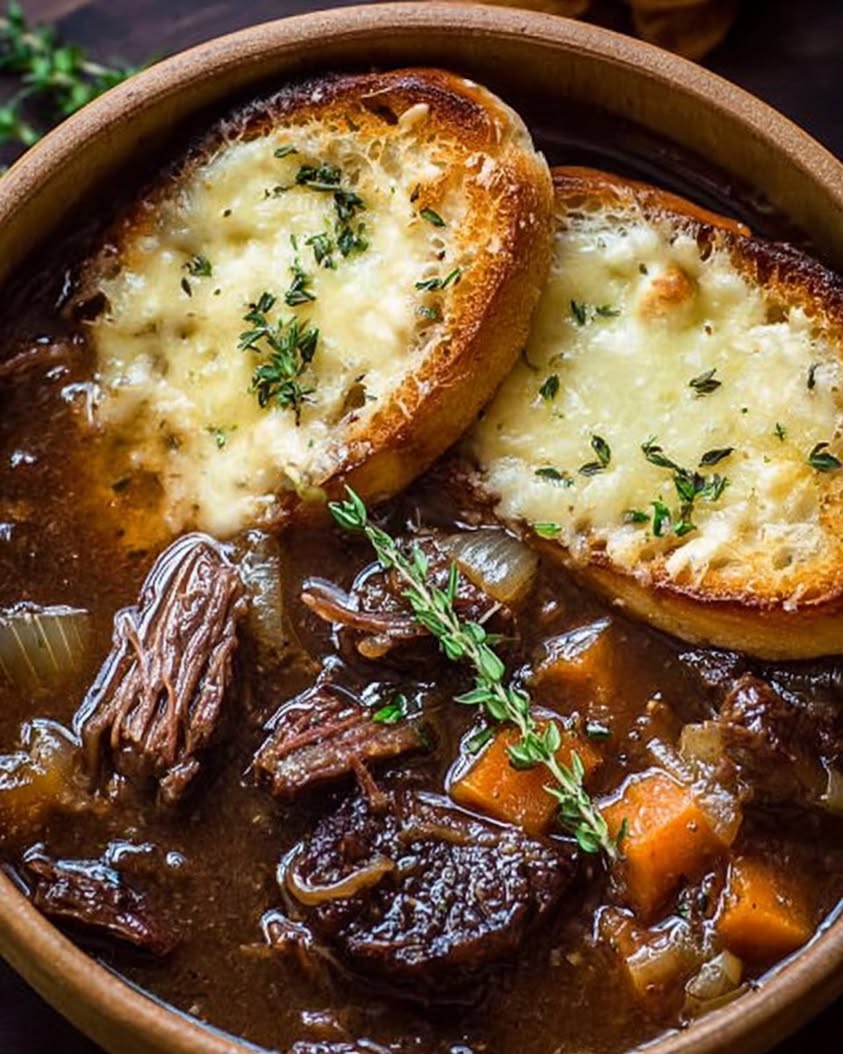
- Visual Appeal: The soup is a deep, dark brown color, almost mahogany, from the caramelized onions and seared meat. The surface is glossy with rendered fat. A golden, bubbling crust of cheese covers the toast, with some strings stretching as you lift the spoon.
- Skill Level Needed: This recipe is ideal for a confident beginner to intermediate home cook. It requires basic knife skills for slicing onions and searing meat. The main challenge is patience for the long, slow cooking time, but the techniques themselves are quite simple.
- Special Equipment: You will need a large, heavy-bottomed pot or Dutch oven with a lid. This is essential for even heat distribution and effective browning. An oven-safe bowl or ramekin is also needed for broiling the cheese toast right on top of the soup.
Recipe Overview
- Difficulty Level: I call this a medium difficulty recipe because of its time commitment and multiple steps, not because of complex techniques. You must sear meat, deglaze the pan, and simmer for hours, but each step is straightforward. A beginner can succeed with careful attention to browning the ingredients well.
- Category: This dish is a hybrid of soup and a main course, perfect for a hearty lunch or dinner. It sits comfortably in the comfort food category, but its rich flavors make it acceptable for a semi-formal dinner party. It works as a complete meal on its own with the cheesy toast.
- Cuisine: The foundation is classic French cuisine, based on the traditional French onion soup. This version, however, incorporates braised short ribs, an influence from American comfort food and slow-cooking traditions. It is a modern fusion that honors the original while adding more substance.
- Cost: This recipe is moderately expensive due to the short ribs, which are a premium cut of beef. Gruyère cheese is also pricier than many other melting cheeses. However, the other ingredients are very affordable, and the cost per serving, especially as a main course, is quite reasonable.
- Season: This soup is best for fall and winter, when cold weather calls for rich, warming meals. It is perfect for a chilly evening, a post-ski dinner, or a Sunday supper. The long cooking time also suits a day when you are home and can enjoy the aromas.
- Occasion: It is ideal for a festive dinner party where you want to impress without being in the kitchen all night. It is also a wonderful choice for a romantic date night at home or a family gathering. The individual servings make it feel special and personal.
Why You’ll Love This Recipe
The taste of this soup is absolutely addictive. The broth is intensely beefy, having soaked up all the flavor from the seared short ribs and slowly caramelized onions. Each bite of the tender meat melts in your mouth, while the cheese pulls into long, luscious strings. The sweet and savory notes are perfectly balanced, and the whole experience is incredibly satisfying. It feels luxurious without being fussy, and the flavor depth rivals something from a high-end restaurant.
For all its deep flavor, this recipe is surprisingly convenient. The active cooking time is only about thirty minutes. After that, the oven does all the work for three hours, leaving you free to do other things. You can also make the soup base a day or two ahead of time, making it perfect for entertaining. The final step of adding the toast and broiling the cheese takes just a few minutes, meaning you can relax with your guests until the very last moment.
From a nutritional standpoint, this soup is a powerhouse of protein and minerals. The short ribs provide high-quality protein, iron, and zinc from the beef. The bone broth base is rich in collagen and gelatin, which are great for joint and skin health. Onions are full of antioxidants and prebiotic fiber that support gut health. This is a nutrient-dense meal that makes you feel nourished and full, not heavy and sluggish.
This recipe is a social success story. Serving this soup in individual bowls with a bubbling cheese crust is an impressive presentation. It feels like a special event, even on a weeknight. Guests love the interactive element of breaking through the cheesy toast to get to the soup underneath. It sparks conversation and delight, making you look like a culinary star with minimal last-minute effort. The aroma that greets people at the door sets the stage for a wonderful evening.
Financially, this recipe is a smart investment. A few short ribs can create a luxurious meal for multiple people, stretching a premium cut of meat effectively. The other ingredients, like onions, carrots, and garlic, are pantry staples that cost very little. You are essentially creating a high-end dining experience for a fraction of the cost of eating out. It also makes fantastic leftovers that taste even better the next day, giving you multiple meals from a single cooking session.
Historical Background and Cultural Significance
French onion soup, the direct ancestor of this recipe, has deep roots in French culinary history. It dates back to ancient Roman times, but its modern form became popular in the 18th century. Onions were a cheap, abundant vegetable, and the soup was a staple for the working class in Paris. It was considered a humble, restorative dish, often eaten late at night by market workers and laborers at the famous Les Halles market.
The cultural importance of this soup in France cannot be overstated. It is a symbol of French comfort food, representing the principle of transforming simple ingredients into something extraordinary. The addition of a gratinéed cheese and bread topping was a later innovation that elevated the dish from peasant fare to a bistro classic. It is now a beloved icon of French cuisine, served everywhere from rustic cafes to Michelin-starred restaurants, and is a source of national pride.
This specific recipe has evolved from that classic bistro soup by integrating the concept of braised short ribs. The trend of combining soups with braised meats is relatively modern, coming from the American farm-to-table and comfort food movements. Chefs began adding leftover pot roast or braised beef to soups to create heartier, more substantial meals. This fusion respects the original technique of slowly caramelizing onions and using a rich broth, while adding a new level of protein and richness.
Regional variations of this hybrid soup are common. In the American South, you might find it made with pulled pork or smoked brisket instead of short ribs. In the Midwest, a beer-based broth might replace the wine or stock. Some versions in the Pacific Northwest add foraged mushrooms for earthiness. This recipe, by omitting the wine, creates a version that is more universally appealing and friendly for families. It shows how a classic dish can travel and adapt to different tastes and pantries.
Ingredient Deep Dive
The short ribs are the heart of this French Onion Short Rib Soup with Cheesy Gruyère Toast. They are a beef cut from the lower part of the rib cage, known for its high fat content and rich flavor. This marbling allows them to become incredibly tender after long, slow cooking. The bones also release collagen into the broth, adding body and a luxurious mouthfeel. When selecting short ribs, look for ones with a good amount of meat and even fat distribution. English-cut ribs are best, as they are easier to sear and handle. Store them wrapped in the refrigerator for up to three days, or freeze them for several months.
Onions are the second crucial ingredient, forming the very soul of the soup. For this recipe, you will use a large quantity of yellow or sweet onions. They have a high sugar content, which is essential for deep caramelization. This process transforms their sharp, pungent flavor into something sweet, savory, and almost jammy. Onions are also packed with quercetin, a powerful antioxidant, and inulin, a prebiotic fiber. Choose onions that are firm, heavy for their size, and free from soft spots or sprouts. Store them in a cool, dark, and dry place, away from potatoes, which can cause them to sprout more quickly.
Gruyère cheese is the classic choice for the top of the toast, and for good reason. This Swiss cheese has a wonderfully nutty, slightly sweet, and salty flavor that becomes even more complex when melted. It has a high moisture content that makes it melt smoothly and create a stringy, gooey texture. It also browns beautifully under the broiler without becoming greasy. For the best results, buy a block of Gruyère and grate it yourself. Pre-shredded cheese often contains cellulosic powders that prevent smooth melting. You can find great options at the deli counter of most grocery stores.
Beef broth is the liquid base of this entire dish, so its quality matters greatly. A high-quality, low-sodium store-bought broth works well, but homemade beef stock is superior. The short ribs themselves will enrich the broth as they cook, but starting with a good base is key. Look for a broth that is deeply colored and has a clear beef flavor without being too salty or watery. If using store-bought, try to find one that is not just flavored but actually made from bones. Store opened broth in the refrigerator and use it within a week, or freeze it in portions for future soups.
Thyme and bay leaves provide the herbal backbone of this soup. Thyme has a slightly minty, earthy, and floral flavor that pairs perfectly with beef and onions. Bay leaves offer a more subtle, woodsy, and slightly floral note that blends into the background. Both of these are dried staples in most kitchens, and they work wonderfully here. Fresh thyme sprigs are even better if you have them, as they add a brighter, more fragrant note. Always use dried bay leaves with care, as they can be very strong. Remember to remove the bay leaves and thyme stems before serving the soup.
Common Mistakes to Avoid- Do not rush the caramelization of the onions. They need at least 30 to 40 minutes of low, slow cooking to become properly sweet and deep brown. If you try to speed this up with high heat, they will burn and become bitter. Patience is the most important ingredient for a great onion soup.
- A common error is not searing the short ribs well enough. You need to get a deep, dark crust on all sides of the meat. This browning is what creates the rich, savory flavor in the final broth. Do not crowd the pot, and let the meat sit undisturbed for several minutes to develop that crust.
- Do not add too much liquid at the start. The short ribs and vegetables need to braise, not boil. Adding too much broth will make the soup watery and dilute the flavor. You can always add more liquid later if the level gets too low, but you cannot take it out.
- Forgetting to deglaze the pot is a major missed opportunity. After searing the ribs, there will be brown bits stuck to the bottom of the pot. These are packed with flavor. Pour in a little broth and scrape them up with a wooden spoon. This step adds an enormous amount of depth to the soup.
- Using pre-shredded cheese for the toast is a common mistake. It will not melt as smoothly and can become grainy or greasy. Always buy a block of Gruyère and shred it yourself for that perfect, gooey, stretchy cheese topping.
- Do not overfill the bowls before broiling the cheese. The soup should not come all the way to the rim, or it will spill over in the oven. Leave about half an inch of space so the toast and cheese can sit on top without causing a mess.
- Skipping the step of toasting the bread is another error. If you put soft bread directly on the soup, it will turn into a soggy mess before the cheese melts. Lightly toasting the bread first gives it structure so it can hold up to the liquid and still have some texture.
- Adding garlic too early can cause it to burn and become acrid. Garlic cooks much faster than onions. You should add it only in the last few minutes of caramelizing the onions, just until it becomes fragrant, to avoid a bitter taste.
- Do not forget to skim the fat from the top of the soup. Short ribs release a significant amount of fat as they cook. If you leave it in, the soup will be greasy and unpleasant. You can skim it with a spoon while hot, or chill the soup and lift off the solidified fat.
- Seasoning the soup too early is a frequent mistake. As the broth reduces and the ribs release their natural salt, the soup can become overly salty. It is best to adjust the salt only at the very end, after the long simmering time is complete.
Essential Techniques
Caramelizing onions is the most important technique here. It is not just about cooking them until soft but coaxing out their natural sugars until they turn a deep, golden brown. The key is low, steady heat and patience. Start by slicing the onions thinly and evenly. Cook them in butter and oil over medium-low heat, stirring occasionally. Do not rush this step. As they cook, they will release their water, then slowly start to brown. A pinch of salt helps draw out moisture. The process can take 30 to 40 minutes, and you want them to be sticky, soft, and deeply colored, not burnt or crispy.
Searing meat is the second critical technique. This involves cooking the surface of the short ribs over high heat until a dark brown crust forms. This crust is created by the Maillard reaction, a chemical process that produces hundreds of new flavor compounds. Pat the ribs dry with paper towels to ensure a good sear. Season them generously with salt and pepper. Place them in a hot, dry pan or Dutch oven with a little oil. Do not move them for 3 to 4 minutes per side. A good sear is dark brown, almost mahogany, but not black. This step cannot be skipped, as it is the foundation of the soup’s deep flavor.
Deglazing the pan is a simple but powerful technique. After you remove the seared short ribs, you will see browned bits stuck to the bottom of the pot. These are called the fond, and they hold intense flavor. To deglaze, pour a small amount of liquid, such as beef broth, into the hot pot. Use a wooden spoon to scrape the bottom, loosening all those browned bits. This action incorporates all the flavor from the fond back into the soup. It only takes a minute but makes a huge difference in the final taste, ensuring nothing is wasted.
Broiling the cheese toasts requires careful attention. This final step turns the soup into a showstopper. Place the oven-safe bowls on a baking sheet for easy handling. Float the toasted bread on top of the soup and pile on the shredded Gruyère. Place the sheet under the broiler. Watch it constantly, as the cheese can go from perfectly melted to burnt in seconds. You want the cheese to bubble and turn spotty brown. Rotate the pan if needed for even browning. This creates a beautiful, golden crust that is both crisp and gooey.
Pro Tips for Perfect French Onion Short Rib Soup with Cheesy Gruyère Toast
For the best caramelization, do not use too high a heat. It is better to cook the onions a little longer on a lower flame than to try and rush them. If they start to stick, add a splash of water or broth to the pot to deglaze naturally. This adds more flavor and prevents burning.
Always season the short ribs generously with salt and pepper right before searing. The salt draws out surface moisture, which helps the browning process. Do not season them too far in advance, or the salt will draw out too much moisture and make them steam instead of sear.
Use a heavy-bottomed pot like a Dutch oven. It holds heat evenly and is perfect for both searing and long braising. A thin pot can cause hot spots that burn the fond or make the meat cook unevenly. This is one investment that will improve many of your recipes.
Do not skip the step of shredding the short rib meat. After the ribs are tender, take them out of the pot and let them cool slightly. Pull the meat off the bones and shred it into bite-sized pieces. Discard the bones and any large pieces of fat. Stir the meat back into the soup for a perfect, even texture.
To ensure the cheese melts perfectly, grate it while it is still cold. Cold cheese grates more easily and evenly. Once grated, let it sit at room temperature for a few minutes before piling it onto the bread. This helps it melt more quickly and evenly under the broiler.
For a richer broth, let the soup cool completely and refrigerate it overnight before serving. This allows the flavors to meld and deepen. The fat will solidify on top, making it incredibly easy to remove. Reheat the soup gently before adding the toast and broiling the cheese.
Variations and Adaptations
Regional variations of this soup are fun to explore. In the American Southwest, you could replace the Gruyère with a sharp, melty Monterey Jack or Pepper Jack cheese for a different flavor profile. Adding a pinch of smoked paprika or chipotle powder to the broth creates a smoky, spicy twist. You could also finish each serving with a few pickled jalapeños on top of the cheese for a bright, acidic kick.
Seasonal adaptations allow you to enjoy this soup all year. In the fall, add cubed butternut squash or sweet potatoes to the pot along with the broth. They will soften and add a subtle sweetness. In the spring, you could stir in some fresh peas or asparagus tips during the last few minutes of cooking for a pop of color and freshness. In the winter, a splash of dark beer or stout can add a rich, roasty complexity.
Dietary modifications are easy to make. For a gluten-free version, simply use a gluten-free baguette or a thick slice of gluten-free sourdough bread. Ensure your beef broth is also certified gluten-free. For a dairy-free adaptation, skip the cheese topping entirely or use a high-quality dairy-free cheese alternative that melts well, such as a nut-based or oat-based cheese.
Flavor variations can completely change the character of the soup. Add a tablespoon of tomato paste to the pot while cooking the onions. It adds acidity and umami. You could also add a few sprigs of fresh rosemary along with the thyme for a more aromatic broth. A splash of balsamic vinegar at the very end can brighten the flavors and add a touch of sweetness.
Texture modifications can make the soup feel new. For a chunkier soup, leave the short rib meat in larger pieces instead of shredding it finely. You could also add some sliced mushrooms along with the onions for an earthy texture. If you want a smoother broth, you can puree a portion of the onions with an immersion blender before adding the meat back in.
Presentation alternatives make this soup great for different settings. For a casual meal, serve the soup in a large tureen or pot in the center of the table. Let everyone help themselves and add their own toast. For an elegant dinner party, use individual oven-safe crocks or ramekins. The individual servings make the presentation feel refined and allow each guest to have their own perfect cheese crust.
Serving and Presentation Guide
Plating this soup is all about the individual serving. Use a deep, oven-safe bowl or a classic onion soup crock. Ladle the hot soup into the bowls, leaving some space at the top. Place a slice of toasted baguette on top, making sure it floats. Pile a generous amount of shredded Gruyère on the bread, letting it spill over the edges for a dramatic, cheesy crust.
Garnishing ideas add a final touch of elegance. Right before serving, you can sprinkle a tiny bit of fresh thyme leaves over the hot cheese. A light crack of black pepper is also a nice finishing touch. Some people like to add a thin slice of raw red onion on top of the cheese before broiling for a sharper flavor, but this is optional and can be polarizing.
Traditional accompaniments are simple but effective. A simple side salad with a light vinaigrette is perfect, as it cuts through the richness of the soup. The acidity from the dressing helps balance the fat from the cheese and beef. Crusty bread on the side is never a bad idea, especially to soak up any last drops of broth from the bottom of the bowl.
Modern serving suggestions can elevate the experience. Serve the soup as a starter for a steak dinner, as the flavors complement red meat beautifully. It also works as a main course for a casual lunch party. For a fun twist, you can make smaller versions in espresso cups for a passed appetizer at a cocktail party, using small croutons instead of full toast slices.
Temperature considerations are important for safety and taste. The soup itself should be piping hot when served, but let it cool for a minute or two before eating so no one burns their mouth. The cheese crust should be bubbly and hot, but the inside of the bread will be warm and slightly soaked. Serve immediately after broiling for the best texture.
Portion control tips help with planning. A standard serving is about 1.5 to 2 cups of soup, which is quite filling due to the meat and bread. For a main course, one bowl is usually enough for an average adult. If you are serving it as a starter, you can use smaller bowls and serve about 1 cup per person before the main course.
Wine and Beverage Pairing
Even though the soup itself does not use wine, it pairs wonderfully with a glass of red wine. A light to medium-bodied red with bright acidity is your best friend. Think of a Pinot Noir, a Beaujolais, or a young Barbera. These wines have enough acidity to cut through the richness of the cheese and beef without overwhelming the delicate onion flavor. They also have fruity notes that complement the sweetness of the caramelized onions.
Non-alcoholic alternatives are equally delicious. A rich, dark beer like a stout or a porter is a fantastic choice. The roasted, coffee, and chocolate notes in the beer pair beautifully with the caramelized flavors in the soup. For a non-alcoholic option, try a tart cherry juice or a sparkling apple cider. The acidity and fruitiness provide a refreshing contrast to the heavy, savory soup.
Coffee and tea pairings are also excellent. A strong, dark roast coffee can be a surprisingly good companion, especially if you serve the soup as a late dinner. The coffee’s bitterness balances the sweetness of the onions. An English breakfast or a smoky Lapsang Souchong tea also works well, with the latter’s distinct smoky character echoing the charred flavors from the grill or broiler.
Temperature considerations matter for drink pairings. If you serve red wine, make sure it is slightly below room temperature, around 60 to 65 degrees Fahrenheit. If you choose a beer, a cool but not ice-cold temperature is best. For hot drinks, serve them alongside the soup so the guest can sip alternately, letting the soup cool slightly while the drink is hot, creating a nice temperature contrast.
Serving suggestions for beverages are simple. Offer the beverage choices before the meal so guests can decide. If you are hosting a dinner party, consider pairing a wine and a non-alcoholic option. You can also serve a light, crisp lager or a hard cider, both of which have enough acidity and carbonation to cleanse the palate between bites of the rich soup.
Storage and Shelf Life
Proper storage is key to making this soup last. The soup base, including the meat, can be stored in an airtight container in the refrigerator for up to four days. The flavors will actually improve over the first two days as they meld together. The cheese toasts should never be stored assembled. Store the toasted bread and shredded cheese separately and assemble right before serving.
Temperature requirements are clear. The soup must be cooled to room temperature before you put it in the refrigerator. Do not put hot soup directly in the fridge, as it can raise the temperature and cause other foods to spoil. You can speed up cooling by placing the pot in an ice bath and stirring the soup occasionally.
Container recommendations are important for safety and quality. Use glass or BPA-free plastic containers with tight-fitting lids. Metal containers can sometimes react with the acidic ingredients and give a metallic taste. Leave a little headspace in the container, as the soup will expand slightly when frozen. For freezing, use freezer-safe bags or containers marked with the date.
Signs of spoilage are easy to spot. The soup should smell rich and savory, not sour or off. If you see any mold growth on the surface, or if the texture becomes slimy, discard the entire batch. When in doubt, throw it out. The high meat content makes it important to be careful with leftovers.
Reheating instructions are simple for best results. Reheat the soup gently on the stovetop over medium-low heat, stirring occasionally. You can also use a microwave, but be sure to do it in short bursts and stir well to avoid hot spots. Do not boil the soup aggressively, as this can toughen the meat. Once the soup is hot, add the fresh toast and cheese and broil as directed.
Freezing guidelines allow you to keep this soup for months. The soup freezes very well because of its high fat and collagen content. Portion it into individual serving sizes for easy thawing. Freeze it for up to three months. Thaw it overnight in the refrigerator before reheating. The cheese and bread should never be frozen and must always be prepared fresh.
Make Ahead Strategies
A solid prep timeline makes this recipe stress-free. You can caramelize the onions and sear the short ribs up to two days in advance. Store them separately in the refrigerator. When you are ready to cook, you can combine everything and proceed with the braising step. This spreads the work over multiple days.
Storage between steps is simple. If you make the onions and sear the ribs ahead of time, keep them in covered containers. The onions can be stored in their own fat. The seared ribs can be stored whole. When you are ready to braise, you can start by heating the pot and then deglazing it with the broth, adding the onions and ribs back in.
Quality impact assessment shows no downside to making it ahead. In fact, the soup tastes better on day two or three. The flavors meld and deepen, creating an even more complex and satisfying broth. This is a classic case where patience is richly rewarded. Do not worry about the soup sitting; it only gets better.
Assembly tips are crucial for the final step. When you are ready to serve, reheat the soup fully. While it is heating, slice and toast your bread and grate your cheese. Ladle the hot soup into bowls, top with bread and cheese, and broil. This process takes less than 10 minutes, allowing you to serve a complex meal with almost no last-minute effort.
Reheating guidelines keep the soup at its best. Always reheat the soup until it is simmering gently before adding the toppings. This ensures the cheese melts properly and the bread gets the perfect texture. Do not reheat the soup in the microwave if you can avoid it, as the stovetop provides more even heat and better results.
Fresh element additions are the key to success. The bread and cheese must be added fresh before serving. Do not try to assemble the toasts ahead of time. The bread will become soggy and the cheese will lose its gooey texture. This final step is what makes the soup special, so keep it for the very end.
Scaling Instructions
Halving the recipe is straightforward. Cut all ingredients in half. The cooking time will remain essentially the same, as the pot size and heat settings are similar. You might need a slightly smaller pot, but a standard Dutch oven works fine. The depth of the liquid will be less, so you might need to check it halfway through to ensure it is not reducing too quickly.
Doubling or tripling the recipe is also possible. You will need a very large pot, like a large stockpot or a 12-quart Dutch oven. Do not crowd the pot when searing the meat. Sear the ribs in batches to ensure a good crust. The cooking time might increase slightly because the larger volume of food takes longer to heat through. The key is to maintain a gentle simmer, not a vigorous boil.
Equipment adjustments are necessary for large batches. You might not have enough oven-safe bowls to do all the cheese toasts at once. You can use a large baking dish to broil the toasts in batches. Alternatively, you can bake the assembled soup in a large casserole dish at 400 degrees Fahrenheit for 10 minutes until the cheese is bubbly and browned.
Timing modifications are important for consistency. When doubling the recipe, expect the braising time to stay about the same, maybe adding 15 to 30 minutes. The most important indicator is the tenderness of the meat. Always test it with a fork, not the clock. If the meat is not falling apart, it needs more time, regardless of the recipe size.
Storage considerations for larger batches are crucial. You will have significantly more leftovers, so ensure you have enough storage containers. The soup freezes beautifully, so you can portion it and freeze it for later meals. This makes the extra effort of a double batch worthwhile, giving you future dinners with zero work.
Nutritional Deep Dive
The macronutrient breakdown of this soup is rich in protein and fat, with a moderate amount of carbohydrates from the onions and bread. A single serving contains approximately 45 to 55 grams of protein, mostly from the short ribs. The fat content is high, around 30 to 40 grams, due to the beef and cheese. The carbohydrates come mainly from the bread and onions, totaling about 30 to 40 grams per serving.
The micronutrient analysis reveals a good source of several key vitamins and minerals. Onions are rich in vitamin C, vitamin B6, and potassium. Beef provides a significant amount of iron, zinc, and selenium. Gruyère cheese is an excellent source of calcium and vitamin A. This soup is also very high in sodium, so it is best enjoyed in moderation or with low-sodium broth if you are watching your salt intake.
Health benefits from this soup are notable. The high protein content is excellent for muscle repair and satiety, making it a satisfying meal that keeps you full for hours. The collagen from the short rib bones and connective tissue is great for joint health, skin elasticity, and gut health. The prebiotic fiber from the onions supports a healthy gut microbiome, promoting good digestion.
Dietary considerations are important for some people. This soup is naturally gluten-free if you use a gluten-free bread for the toast. It is not suitable for a low-fat or low-sodium diet without significant modifications. It is also not dairy-free due to the cheese and butter. However, it is a whole-food meal, free from processed ingredients and artificial additives.
Portion analysis helps with moderation. A standard serving of about 2 cups is quite filling. It is easy to eat more, but the high fat and protein content will naturally signal fullness quickly. If you are trying to manage your weight, pair this soup with a large side salad to add volume and fiber Print
French Onion Short Rib Soup with Cheesy Gruyère Toast (No Wine)
- Total Time: 3 hours 10 minutes
- Yield: 4
Description
A hearty and comforting soup with tender short ribs, rich caramelized onions, and a savory broth, topped with a gooey Gruyère toast. No wine needed for deep flavor.
Ingredients
- 2 lbs boneless beef short ribs, cut into chunks
- 4 large yellow onions, thinly sliced
- 3 tablespoons butter
- 2 tablespoons olive oil
- 4 cups beef broth (low sodium)
- 2 cups chicken broth
- 1 tablespoon Worcestershire sauce
- 1 teaspoon dried thyme
- 1 bay leaf
- Salt and black pepper to taste
- 4 slices French bread or baguette
- 1 1/2 cups grated Gruyère cheese
- 2 cloves garlic, minced (optional for broth)
Instructions
- In a large pot or Dutch oven, heat butter and olive oil over medium heat. Add the sliced onions and cook, stirring occasionally, for about 30-40 minutes until deeply caramelized and golden brown. Reduce heat if needed to prevent burning.
- Season the short rib chunks with salt and pepper. Push the onions to the side of the pot and add the short ribs. Brown the meat on all sides (about 5-7 minutes).
- Stir in the garlic, thyme, and bay leaf. Cook for 1 minute until fragrant.
- Pour in the beef broth, chicken broth, and Worcestershire sauce. Bring to a boil, then reduce heat to low. Cover and simmer for 2-2.5 hours until the short ribs are very tender.
- Remove the bay leaf. Using two forks, shred the short rib meat into the soup or leave in chunks as desired. Taste and adjust salt and pepper.
- For the toast: Preheat broiler. Place bread slices on a baking sheet and toast lightly on one side. Flip and top each with a generous amount of Gruyère cheese. Broil until cheese is melted and bubbly (about 2-3 minutes).
- Ladle the soup into bowls and float a cheesy toast on top or serve on the side. Can also garnish with fresh thyme if desired.
Notes
You can customize the seasonings to taste. For extra depth, add a splash of balsamic vinegar or a teaspoon of sugar to the onions while caramelizing.
- Prep Time: 20 minutes
- Cook Time: 2 hours 50 minutes
- Method: Main
- Cuisine: French-American