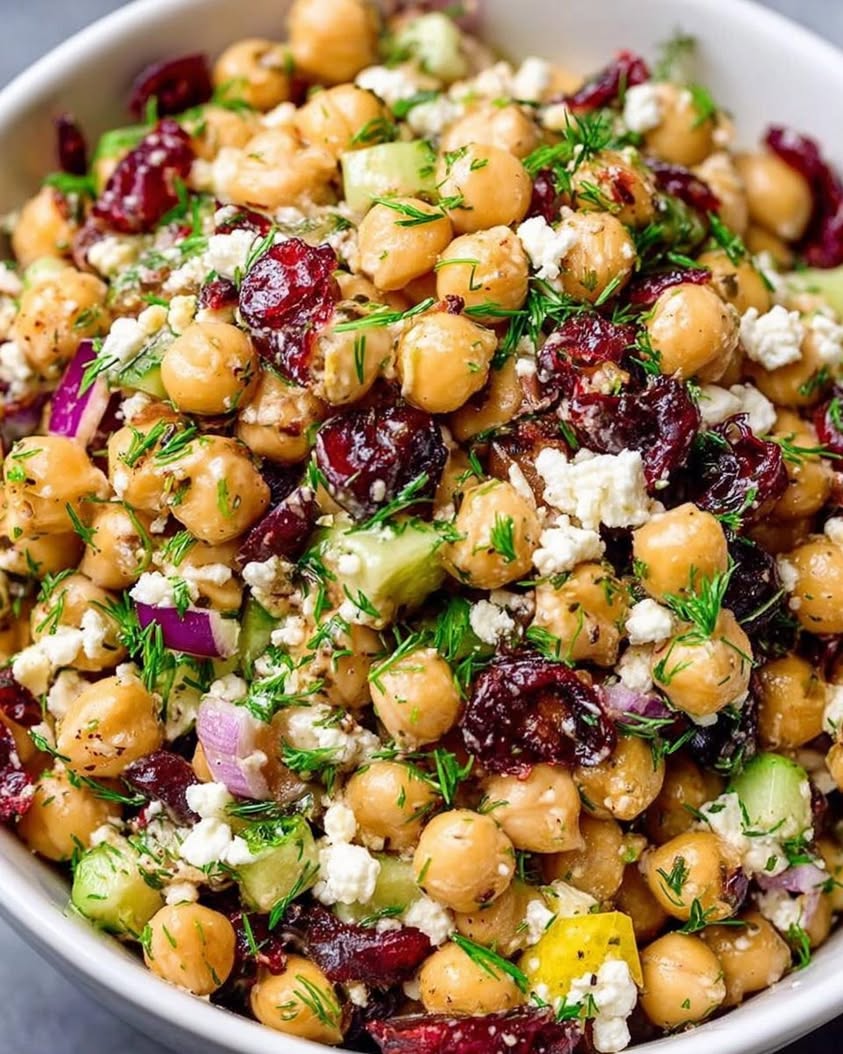
Bright Feta and Cranberry Chickpea Salad with Lemon Vinaigrette: A Flavorful Power Bowl
Imagine a salad that bursts with flavor in every single bite. This Feta and Cranberry Chickpea Salad with Lemon Vinaigrette is exactly that kind of dish. It combines creamy, salty feta cheese with sweet, chewy dried cranberries and hearty chickpeas. The entire mixture gets tossed in a vibrant, zesty lemon vinaigrette that ties all the elements together perfectly. Consequently, you get a meal that is satisfying, nutritious, and incredibly delicious. It is a true celebration of textures and tastes in one convenient bowl.
Furthermore, this salad is a fantastic solution for busy weeknights or elegant lunches. It requires absolutely no cooking, which means you can have a gourmet-quality meal ready in about fifteen minutes. The recipe leverages simple, wholesome ingredients that you can easily keep in your pantry. Ultimately, it delivers a powerful punch of protein and fiber from the chickpeas, making it a filling main course or a stellar side dish. Whether you are meal-prepping for the week or need a last-minute potluck contribution, this chickpea salad recipe is your perfect answer.
Visually, this Feta and Cranberry Chickpea Salad is a feast for the eyes. The bright white feta cubes pop against the deep red cranberries and the golden chickpeas. Fresh green herbs like parsley add a final touch of color and freshness. The lemon vinaigrette coats everything in a light, glossy sheen that makes the salad look professionally prepared. Therefore, it is a dish you will be proud to serve to guests or enjoy as a special treat for yourself. It proves that healthy eating does not have to be boring or bland in the slightest.
Quick Recipe Highlights
- Flavor Profile: This salad masterfully balances tangy, sweet, salty, and fresh notes. The sharpness of the feta cheese and lemon juice contrasts beautifully with the natural sweetness of the cranberries. Meanwhile, fresh herbs add a clean, aromatic finish that elevates the entire dish.
- Texture: You will experience a wonderful contrast of creamy, chewy, and tender elements. The chickpeas provide a soft, substantial bite, while the cranberries offer a pleasant chew. Additionally, the feta crumbles deliver a creamy richness that melts in your mouth.
- Aroma: The primary aromatic notes come from the fresh lemon zest and juice, which provide an immediate citrusy brightness. Fresh parsley or mint adds an underlying herbal fragrance. Finally, a hint of extra virgin olive oil rounds out the scent with a subtle, fruity aroma.
- Visual Appeal: This salad is incredibly colorful and inviting. The white feta, red cranberries, and green herbs create a festive, tricolor presentation. It looks abundant and fresh, making it perfect for photographing or serving at a gathering.
- Skill Level Needed: This is a beginner-friendly recipe requiring only basic knife skills for chopping herbs and whisking a simple dressing. There is no heat involved, so it is impossible to burn or overcook anything. Essentially, if you can open a can and stir, you can make this salad.
- Special Equipment: You only need a few basic kitchen tools: a mixing bowl, a whisk or fork for the vinaigrette, and a sharp knife. A can opener is helpful for the chickpeas. For optimal flavor, a microplane for zesting the lemon is recommended but not strictly necessary.
Recipe Overview
- Difficulty Level: This Feta and Cranberry Chickpea Salad is rated “Easy” because it involves no cooking techniques. The process is purely assembly-based, making it accessible for cooks of all levels. The most complex step is emulsifying the vinaigrette, which is a simple whisking action. Therefore, it is a foolproof recipe perfect for beginners or anyone short on time.
- Category: This dish fits beautifully into multiple meal categories. It serves as a complete vegetarian main course salad packed with protein. Alternatively, it works wonderfully as a substantial side dish alongside grilled chicken or fish. It is also ideal for picnics, potlucks, and packed lunches.
- Cuisine: While not tied to one specific tradition, this salad draws inspiration from Mediterranean and Middle Eastern culinary styles. The use of chickpeas, lemon, and olive oil is classic to those regions. The addition of sweet cranberries adds a modern, fusion twist that is popular in contemporary American cooking.
- Cost: This is a very budget-friendly recipe, especially when using canned chickpeas. Feta cheese and dried cranberries can be purchased in bulk for savings. Overall, the cost per serving is quite low, making it an economical choice for feeding a family or a crowd.
- Season: This salad is truly a year-round champion. It feels light and refreshing for spring and summer meals. Conversely, the hearty chickpeas and sweet cranberries make it comforting enough for fall and winter. It is particularly festive during the holiday season thanks to its red and white colors.
- Occasion: It is incredibly versatile for any event. Serve it for a quick weekday dinner, a healthy lunch, or a weekend barbecue. It is also elegant enough for holiday gatherings, baby showers, or bridal luncheons. Basically, it is a crowd-pleaser for any setting.
Why You’ll Love This Recipe
First and foremost, the taste and texture of this Feta and Cranberry Chickpea Salad are utterly addictive. Each forkful delivers a symphony of contrasting flavors that keep your palate interested. The creamy saltiness of the feta perfectly cuts through the sweet-tart pop of the cranberries. Meanwhile, the chickpeas provide a hearty, satisfying base that makes the salad feel like a complete meal. The lemon vinaigrette acts as the unifying conductor, brightening every component and ensuring the flavors sing in harmony. You will find yourself craving this combination long after the bowl is empty.
From a convenience standpoint, this recipe is an absolute lifesaver. It comes together in about fifteen minutes with zero cooking required. You can easily double or triple the batch for meal prep or a party. Furthermore, the ingredients are pantry and fridge staples that are simple to keep on hand. When hunger strikes unexpectedly, you can whip up this impressive salad without a last-minute grocery run. It transforms the concept of a “quick fix” into something genuinely gourmet and satisfying.
Nutritionally, this chickpea salad is a powerhouse. Chickpeas are an excellent source of plant-based protein and dietary fiber, which promote fullness and digestive health. Feta cheese provides calcium and protein, while the olive oil in the vinaigrette offers heart-healthy monounsaturated fats. Dried cranberries, in moderation, add antioxidants and a touch of natural sweetness. Consequently, this dish supports balanced energy levels and overall wellness. It is a delicious way to fuel your body with wholesome, nutrient-dense ingredients.
For social and entertaining value, this salad is a guaranteed hit. Its vibrant colors and fresh flavors appeal to a wide range of tastes, including picky eaters. It is a safe option for gatherings where dietary preferences vary, as it is vegetarian and easily adaptable. Bringing this dish to a potluck instantly makes you the hero, as it stands out from typical pasta or potato salads. It encourages people to eat healthily without feeling like they are sacrificing flavor or indulgence.
Finally, this recipe is remarkably cost-effective and accessible. Canned chickpeas are one of the most affordable protein sources available. You can customize the add-ins based on what is on sale or in your pantry. For example, substitute sun-dried tomatoes for cranberries or use a different herb. This flexibility means you can create a delicious, healthy meal on a tight budget. It demonstrates that eating well does not require expensive, obscure ingredients, but rather smart combinations of simple, quality staples.
Historical Background and Cultural Significance
The story of this salad begins with its core ingredient: the chickpea. Chickpeas, or garbanzo beans, have been cultivated in the Middle East and Mediterranean for over 7,000 years. They were a staple food for ancient civilizations like the Romans and Greeks, prized for their nutrition and storage ability. Traditionally, they were often stewed or ground into flour. The concept of using them cold in a salad is a more modern interpretation, reflecting contemporary desires for quick, healthy meals. Our Feta and Cranberry Chickpea Salad is a direct descendant of these ancient, practical food traditions.
Culturally, the combination of legumes with cheese and acid is a hallmark of many regional cuisines. In Greece, a simple salad of chickpeas, red onion, and lemon is common. Turkish cuisine features beans with herbs and olive oil. The addition of feta cheese directly ties the recipe to Greek culinary heritage, where feta is a protected designation of origin product. Using this cheese connects the dish to centuries of pastoral farming and cheese-making traditions in the Balkan region. Therefore, each bite carries a taste of history.
The recipe has evolved significantly with global trade and modern tastes. Dried cranberries are a distinctly New World ingredient, native to North America. Their incorporation into a Mediterranean-style salad is a perfect example of fusion cuisine. This evolution mirrors how recipes travel and adapt, absorbing local ingredients and preferences. The sweet-and-savory profile is particularly appealing to the modern American palate, which enjoys bold flavor contrasts. Thus, the salad represents a beautiful dialogue between Old World foundations and New World innovation.
Regional variations of chickpea salad are endless, showcasing local ingredients. In the Middle East, you might find it with sumac and pomegranate molasses. An Indian version would include chaat masala and cilantro. Our version with cranberries and a simple lemon vinaigrette leans into a more universally accessible, slightly sweet profile. This adaptability is the true cultural significance of legume-based salads. They are a culinary canvas, reflecting the resources and tastes of the people who make them. Our Feta and Cranberry Chickpea Salad is a delicious chapter in that ongoing, global story.
Ingredient Deep Dive
Let us start with chickpeas, the foundation of this salad. Historically, chickpeas were one of the earliest cultivated legumes in the Fertile Crescent. They are packed with protein, fiber, folate, and iron. For the best texture in your Feta and Cranberry Chickpea Salad, opt for low-sodium canned chickpeas and rinse them thoroughly to remove the starchy liquid. You can also use dried chickpeas soaked and cooked until tender. Store dried chickpeas in a cool, dark pantry, and keep canned chickpeas in your cupboard for years. For a substitution, try white beans or lentils for a different but equally nutritious base.
Feta cheese brings a creamy, tangy saltiness that is irreplaceable. Authentic Greek feta is made from at least 70% sheep’s milk, often blended with goat’s milk. It is a brilliant source of calcium and probiotics. When selecting feta for your chickpea salad, choose a block stored in brine for the best flavor and texture, then crumble it yourself. Pre-crumbled feta often contains anti-caking agents. Store opened feta submerged in its brine in the refrigerator. For a dairy-free version, use a firm, salty tofu or a vegan feta alternative made from almonds or coconut oil.
Dried cranberries provide the essential sweet contrast. Native Americans used cranberries medicinally and as a food source long before European settlement. They are rich in vitamin C and unique antioxidants called proanthocyanidins. For this recipe, look for unsweetened or fruit-juice-sweetened dried cranberries to control added sugar. Avoid those with high-fructose corn syrup. You can substitute them with dried cherries, chopped apricots, or raisins for a different flavor profile. Store dried cranberries in an airtight container in your pantry to keep them chewy and prevent hardening.
The lemon vinaigrette is the lifeblood of the salad. Lemon juice and zest provide vibrant acidity and aroma, while extra virgin olive oil adds richness and carries the flavors. Olive oil has been a cornerstone of Mediterranean diets for millennia, associated with longevity and heart health. Always use fresh lemon juice, not bottled, for the brightest flavor. A high-quality, fruity extra virgin olive oil makes a noticeable difference. For the best emulsion, whisk the vinaigrette vigorously or shake it in a jar. As a substitute for lemon, a good white wine vinegar or champagne vinegar can work in a pinch.
Fresh herbs like flat-leaf parsley or mint are the finishing touch. Parsley has been used since ancient times as both a garnish and a digestive aid. It is loaded with vitamins K, C, and A. Mint offers a cool, refreshing note and has a long history in medicinal teas. For the chickpea salad, chop the herbs just before adding to maintain their bright color and volatile oils. You can store fresh herbs stem-down in a glass of water in the fridge, covered with a plastic bag. If you lack fresh herbs, a teaspoon of dried oregano or dill can provide a different but pleasant herbal note.
Common Mistakes to Avoid
- Using unrinsed canned chickpeas. The liquid in the can is starchy and can make your salad dressing gloppy and dull the flavors. Always drain and rinse your chickpeas thoroughly under cold water. This step also helps improve digestibility.
- Overlooking the power of lemon zest. The zest contains essential oils that carry intense lemon flavor without the sharp acidity of the juice. For a truly vibrant Feta and Cranberry Chickpea Salad, always zest your lemon before juicing it. This simple act doubles the citrus impact.
- Adding the dressing too early. If you dress the salad hours in advance, the chickpeas can start to absorb the liquid and become mushy. The herbs will also wilt. For the best texture, combine the salad ingredients and dressing no more than 30 minutes before serving.
- Using pre-crumbled feta cheese. Blocks of feta stored in brine are far superior in flavor and moisture. Pre-crumbled varieties are often drier and coated in anti-caking powders. Take the extra minute to crumble the cheese yourself for a creamier, more authentic texture.
- Skimping on the salt. While feta is salty, chickpeas and other ingredients are not. The vinaigrette needs proper seasoning to balance the sweetness of the cranberries and the acidity of the lemon. Always taste and season your dressing before tossing it with the salad.
- Choosing low-quality olive oil. Since the dressing is simple, the flavor of the oil shines through. A bland or rancid oil will make the entire salad taste off. Invest in a good bottle of extra virgin olive oil for dressings; it makes a world of difference.
- Not allowing time for flavors to meld. While you should not dress it too early, letting the tossed salad sit for 10-15 minutes before serving is crucial. This rest period allows the chickpeas to soak up some of the vinaigrette and the flavors to harmonize.
- Forgetting to adjust for sweetness. Depending on your cranberries, the salad might need a tiny pinch of sugar or honey in the dressing to perfect the sweet-tart balance. Taste after mixing and adjust with a quarter teaspoon at a time if needed.
Essential Techniques
Mastering the vinaigrette emulsion is key. A vinaigrette is a temporary emulsion of oil and acid. Whisking the lemon juice, mustard, and seasonings vigorously before slowly streaming in the oil encourages the droplets to suspend evenly. This technique ensures every bite of your Chickpea Salad is coated in flavor, not just oil. The common pitfall is adding the oil all at once, which will cause separation. For success, use a bowl with a non-slip base or a tight-sealing jar for shaking. The visual cue is a slightly thickened, homogenous mixture that clings to a spoon.
Properly draining and drying chickpeas is crucial for texture. After rinsing, spread the chickpeas on a clean kitchen towel or paper towels and pat them dry. This removes excess water that would dilute your dressing. Additionally, you can optionally roll them gently in the towel to loosen and remove the thin, translucent skins. Removing some skins leads to a creamier chickpea texture and better dressing adhesion. The technique is not mandatory but is a pro move for superior mouthfeel. The goal is dry, ready-to-absorb-flavor chickpeas for your salad.
Herb preparation affects flavor and appearance. Instead of chopping herbs haphazardly, use the “chiffonade” technique for mint or basil: stack leaves, roll tightly, and slice thinly crosswise. For parsley, pick the leaves from the tough stems and then rock your knife through them. This preserves the delicate cell structure, preventing bruising and blackening. The importance lies in maximizing fresh, green flavor and achieving an elegant, fine texture that distributes evenly. Always chop herbs just before adding them to prevent wilting and loss of aromatic oils.
Pro Tips for Perfect Feta and Cranberry Chickpea Salad
Toast your chickpeas lightly for a deeper flavor. Spread rinsed and dried chickpeas on a baking sheet, drizzle with a teaspoon of olive oil and a pinch of salt, and roast at 400°F for 15-20 minutes until slightly golden. Let them cool completely before adding to the salad. This adds a wonderful nutty dimension.
Massage your kale if using it as a base. If you serve the salad over kale, add a teaspoon of the dressing to the chopped kale and massage it with your hands for a minute. This breaks down the tough fibers, making the kale tender, sweeter, and more receptive to flavors.
Bloom your dried spices. If you add dried oregano or thyme to the dressing, whisk it into the lemon juice and let it sit for 5 minutes before adding the oil. This rehydrates the herbs and releases their full aromatic potential into the vinaigrette.
Use the chickpea brine. The liquid from a can of chickpeas, called aquafaba, can be used to make a creamier, dairy-free dressing. Substitute a tablespoon of it for the Dijon mustard to help emulsify the vinaigrette, especially for vegan versions.
Add crunch for textural contrast. Just before serving, sprinkle with toasted pine nuts, slivered almonds, or pumpkin seeds. This adds a crucial crunchy element that elevates the salad from great to extraordinary.
Season in layers. Season the drained chickpeas with a tiny pinch of salt. Season the dressing. Then taste and season the final assembled salad. This layered approach ensures perfectly balanced seasoning throughout every component.
Warm your feta slightly. Take the feta out of the fridge 15-20 minutes before crumbling. Cold feta crumbles less easily and can be chalky. Slightly warmer feta is creamier and blends more luxuriously into the salad.
Variations and Adaptations
For regional variations, explore global flavor profiles. A Moroccan-inspired version could include chopped preserved lemon, olives, and a pinch of cumin in the dressing. A Mexican twist might feature black beans instead of chickpeas, cotija cheese, lime vinaigrette, and fresh corn. An Indian adaptation could use chaat masala, cilantro, and a drizzle of tamarind chutney. These changes transport the basic formula around the world using familiar seasoning techniques.
Seasonal adaptations keep the salad exciting year-round. In summer, add fresh sweet corn, diced cucumber, and cherry tomatoes. For fall, incorporate roasted sweet potato cubes and swap cranberries for pomegranate arils. In winter, add roasted Brussels sprout halves for a hearty twist. Spring welcomes fresh peas, asparagus tips, and radishes. This approach utilizes the best produce each season offers.
Dietary modifications are straightforward. For a vegan Feta and Cranberry Chickpea Salad, use a plant-based feta alternative and ensure your dried cranberries are sweetened with juice, not honey. To make it gluten-free, simply confirm all packaged ingredients are certified GF, which they typically are. For a lower-carb version, reduce the amount of chickpeas and increase non-starchy vegetables like chopped bell peppers and celery.
Flavor variations can cater to different preferences. For a richer profile, add crumbled crispy bacon or pancetta. For an umami boost, include sun-dried tomatoes or kalamata olives. If you prefer less sweetness, use chopped green apple or pear instead of cranberries. A spicy version can include a minced jalapeño in the dressing or a dash of red pepper flakes.
Texture modifications can tailor the experience. For a creamier salad, mash half of the chickpeas lightly with a fork before mixing. For more chew, add cooked farro or quinoa. To emphasize crunch, add diced jicama, celery, or fennel bulb. Changing the texture profile can make the same base ingredients feel like a completely new dish.
Presentation alternatives enhance visual appeal. Instead of tossing everything, layer the salad in a clear glass bowl or jar. Serve it in endive or butter lettuce cups as an appetizer. Or, pile it onto a platter over a bed of vibrant greens, arranging the feta and cranberries artfully on top for a more composed presentation.
Serving and Presentation Guide
Plating techniques matter for visual impact. For individual servings, use a ring mold to create a neat, cylindrical tower of salad in the center of the plate. Alternatively, spoon the salad into a wide, shallow bowl for a rustic, abundant look. On a buffet, serve the Feta and Cranberry Chickpea Salad in a wide, low dish rather than a deep bowl, making it easy for guests to scoop. Always fluff the salad with forks just before presenting to lift the ingredients and create height.
Garnishing is the final touch of professionalism. A final drizzle of high-quality olive oil over the plated salad adds sheen. Sprinkle with extra fresh herb leaves, a few whole dried cranberries, and some larger feta crumbles reserved from the mix. A light dusting of sumac or freshly cracked black pepper on top adds color and a flavor hint. Edible flowers like nasturtiums make a stunning garnish for special occasions.
Traditional accompaniments keep the meal balanced. In Mediterranean fashion, serve this chickpea salad with warm pita bread or toasted pita chips for scooping. It pairs beautifully with other mezze like hummus, baba ganoush, and stuffed grape leaves. For a simple lunch, accompany it with a bowl of soup like avgolemono or a rustic lentil soup.
Modern serving suggestions are versatile. Use it as a high-protein topping for a bed of mixed greens or baby spinach. Stuff it into a whole-wheat pita pocket with fresh spinach for a portable lunch. Alternatively, serve it alongside grilled proteins like salmon, chicken skewers, or lamb burgers. It also makes an excellent filling for a vegetarian wrap with a smear of tzatziki.
Temperature considerations affect enjoyment. This salad is best served at cool room temperature. If made ahead and refrigerated, take it out about 20-30 minutes before serving to allow the olive oil in the dressing to loosen and the flavors to become more pronounced. Avoid serving it ice-cold, as this mutes the flavors and hardens the fats.
Portion control tips help with meal planning. As a main course, plan for about 1.5 to 2 cups per person. As a side dish, ¾ to 1 cup is sufficient. When meal-prepping, divide the salad evenly into four airtight containers immediately after making it to ensure consistent, ready-to-go portions for the week ahead.
Wine and Beverage Pairing
Wine pairings should complement the salad’s bright acidity and salty-sweet profile. A crisp, dry white wine like Sauvignon Blanc or Pinot Grigio mirrors the lemon’s zestiness and cuts through the richness of the feta. A Greek Assyrtiko, with its mineral notes and sharp acidity, is a perfect regional match. For rosé lovers, a dry Provençal rosé offers berry notes that harmonize with the cranberries without adding sweetness. Generally, avoid heavily oaked wines, as they can clash with the salad’s fresh, vibrant character.
Non-alcoholic alternatives can be just as sophisticated. A sparkling lemonade or limeade echoes the citrus notes beautifully. For an herbal pairing, brew a chilled mint or verbena tea. A cucumber-infused water or sparkling water with a twist of lemon is always a refreshing, cleansing choice. These options enhance the meal without competing with the flavors of the Feta and Cranberry Chickpea Salad.
While not typical for salad, certain light coffees or teas could work if this is part of a brunch. A mild, citrusy tea like Earl Grey or a light roast coffee with bright acidity would not overpower the dish. The key is to choose beverages that are light-bodied and not overly bitter or sweet, allowing the salad’s balance to remain the star.
Temperature is crucial for beverage pairing. White wines, rosés, and non-alcoholic sparklers should be served well-chilled, between 45-55°F. Iced teas and infused waters should be cold but not diluted with too much ice. Serving beverages at their ideal temperature ensures they refresh the palate between bites of the savory, tangy salad.
Serving suggestions include offering a variety. For a gathering, set out a bottle of chilled white wine and a carafe of homemade mint-infused sparkling water. Provide glassware that suits each drink—stemmed glasses for wine and tall glasses for non-alcoholic options. This allows guests to choose their preferred pairing and elevates the entire dining experience.
Storage and Shelf Life
Proper storage methods are essential for food safety and quality. Store the assembled Feta and Cranberry Chickpea Salad in an airtight container in the refrigerator. Glass containers are ideal as they do not absorb odors or stains. If possible, store the dressing separately and combine just before serving to maintain the best texture. Always use clean utensils to scoop out portions to prevent bacterial contamination.
Temperature requirements are non-negotiable. This salad must be kept refrigerated at 40°F or below. Do not leave it out at room temperature for more than two hours, or one hour if the ambient temperature is above 90°F. If transporting for a picnic, pack it in a cooler with ice packs to keep it consistently cold until serving time.
Container recommendations focus on preserving freshness. A container with a tight-sealing lid is a must. For portioned meal prep, use individual containers. If storing a large batch, a wide, shallow container allows the salad to cool more quickly and evenly in the fridge, which is safer than storing a deep, warm mass of food.
Signs of spoilage are important to recognize. Discard the salad if you notice an off or sour smell, significant sliminess on the chickpeas, or mold growth. The herbs will wilt over time, but that is a textural issue, not necessarily a safety one. When in doubt, remember the adage: “When in doubt, throw it out.”
Reheating instructions are simple: do not reheat. This is a cold salad meant to be enjoyed chilled or at room temperature. Attempting to warm it will melt the feta, wilt the herbs, and create an unappealing texture. Simply take it from the fridge and let it sit for a short while to take the chill off if desired.
Freezing guidelines are not recommended. Freezing will completely destroy the texture of the chickpeas, turning them mushy and grainy. The feta will become crumbly and watery upon thawing. The salad components do not freeze well, so it is best enjoyed fresh or stored in the fridge for a few days.
Make Ahead Strategies
A smart prep timeline maximizes freshness. Up to two days ahead, you can rinse and dry the chickpeas, crumble the feta, and chop any sturdy vegetables like red onion. Store each component separately in the fridge. Make the lemon vinaigrette up to three days ahead and keep it in a jar in the refrigerator. On the day of serving, combine everything and add the fresh herbs. This strategy spreads the work out while ensuring peak flavor and texture.
Storage between steps is key. Keep dried ingredients like cranberries at room temperature. Store prepped wet ingredients (chickpeas, onions) in separate sealed containers in the fridge. The dressing may solidify when cold due to the olive oil; simply let it sit at room temperature for 15 minutes and shake vigorously to re-emulsify before using.
Assessing quality impact is crucial. Pre-chopping onions may intensify their sharpness; a quick rinse under cold water before adding can mellow them. Pre-crumbled feta may dry out slightly; storing it with a damp paper towel in its container can help. Understanding these small changes allows you to adjust final seasoning accordingly.
Assembly tips for make-ahead success. When ready to serve, combine the chickpeas, cranberries, and any pre-chopped veggies in a large bowl. Shake or whisk the dressing thoroughly, then add most of it, tossing to coat. Add the feta and fresh herbs last, tossing gently to avoid breaking the cheese. Taste and add more dressing or seasoning as needed.
Reheating guidelines do not apply, but “refreshing” does. If the salad has been in the fridge for a day, it may need a splash of fresh lemon juice or a drizzle of olive oil to wake up the flavors. Give it a good stir to redistribute the dressing that may have settled at the bottom of the container.
Fresh element additions are your secret weapon. Always reserve a small portion of fresh herbs, extra cranberries, and feta to sprinkle on top of the salad just before serving, even if you mixed the main batch ahead. This creates a visual and textural contrast that makes the salad look freshly made.
Scaling Instructions
Halving the recipe is straightforward for smaller households. Simply divide all ingredient quantities by two. Use a standard 15-ounce can of chickpeas, drain and rinse them, and use half for the salad, saving the rest for another use. Whisk the dressing in a small jar so you can easily shake any leftovers. The preparation method and timing remain exactly the same, just with smaller volumes.
Doubling or tripling for a crowd requires slight adjustments. Use a very large bowl for mixing to ensure even distribution of dressing. Consider making the dressing in separate batches to maintain a good oil-to-acid emulsion; a single huge batch can be harder to emulsify properly. Taste and season carefully, as scaling up spices and salt is not always a linear process. Start with slightly less salt, then adjust after mixing.
Equipment adjustments may be necessary when scaling. A large sheet pan can be useful for drying a big batch of chickpeas. For a tripled recipe, you might need to use two mixing bowls and combine them at the end. Ensure you have a serving platter or bowl large enough to hold the final salad without overcrowding.
Timing modifications are minimal since there is no cooking. The main time increase comes from the physical action of opening more cans, chopping more herbs, and whisking more dressing. Allow an extra 5-10 minutes of active prep time when doubling the recipe. The “marrying” time remains the same—10-15 minutes before serving.
Storage considerations change with scale. A large batch will take longer to cool in the refrigerator. Spread the salad into two shallow containers instead of one deep one for faster, safer cooling. Label containers with the date if you are not serving it all immediately. Remember that a larger quantity may be handled more during serving, so be vigilant about keeping it chilled.
Nutritional Deep Dive
The macro breakdown of this salad is well-balanced. A serving provides approximately 15-20 grams of plant-based protein from the chickpeas and feta, supporting muscle maintenance. The healthy fats from olive oil and cheese, around 15-20 grams, aid in nutrient absorption and satiety. Complex carbohydrates from the chickpeas and fiber from all components, totaling about 30-35 grams, offer sustained energy. This macro profile makes the Feta and Cranberry Chickpea Salad a complete and satisfying meal that stabilizes blood sugar levels.
A micronutrient analysis reveals a wealth of vitamins and minerals. Chickpeas are high in folate, iron, and phosphorus. Feta cheese contributes significant calcium, vitamin B12, and riboflavin. Lemon juice provides vitamin C, while olive oil offers vitamin E. The herbs add vitamin K and various antioxidants. Together, these micronutrients support bone health, immune function, energy production, and cellular repair, making the salad a nutrient-dense choice.
Specific health benefits are numerous. The fiber promotes digestive health and feeds beneficial gut bacteria. The monounsaturated fats support heart health by improving cholesterol levels. The combination of protein and fiber creates a powerful satiety effect, which can aid in weight management by preventing overeating. The antioxidants from cranberries, olive oil, and herbs combat oxidative stress and inflammation in the body.
Dietary considerations are mostly positive. The salad is naturally vegetarian and can be adapted to be gluten-free and vegan. For those monitoring sodium, choose low-sodium chickpeas and reduce the amount of feta or use a lower-sodium variety. For diabetics, the fiber helps moderate the glycemic response, but be mindful of the portion of dried cranberries if they are sweetened.
Portion analysis shows it is a volumous, satisfying meal. A standard serving is filling due to the high fiber and water content of the vegetables and legumes. This volume helps you feel full on fewer calories, a principle beneficial for weight maintenance. It is difficult to overeat this salad because the fiber provides strong satiety signals to the brain.
Weight management tips include using this salad as a core component. Incorporate it as a regular lunch to avoid less healthy, processed options. To reduce calories slightly, you can decrease the olive oil in the dressing by a tablespoon and add a splash of water instead. Remember, the healthy fats are crucial for satisfaction, so do not eliminate them entirely.
Dietary Adaptations
For a gluten-free version, this salad is naturally compliant. Simply double-check that your canned chickpeas and dried cranberries are processed in a gluten-free facility, which most major brands are. Ensure any added spices or mustard are certified gluten-free. This adaptation requires no ingredient swaps, making it one of the easiest modifications.
A dairy-free or vegan Feta and Cranberry Chickpea Salad is easily achieved. Omit the feta cheese or replace it with a store-bought Print
Feta and Cranberry Chickpea Salad with Lemon Vinaigrette
- Total Time: 25 minutes
- Yield: 4
Description
A vibrant and protein-packed salad featuring chickpeas, tangy feta, sweet cranberries, and a zesty lemon vinaigrette, perfect for a light lunch or side dish.
Ingredients
- 2 cans (15 oz each) chickpeas, rinsed and drained
- 1 cup crumbled feta cheese
- 1/2 cup dried cranberries
- 1/4 cup chopped fresh parsley
- 1/4 cup chopped red onion
- 1/4 cup extra virgin olive oil
- 3 tablespoons fresh lemon juice
- 1 teaspoon Dijon mustard
- 1 clove garlic, minced
- Salt and black pepper to taste
Instructions
- In a large bowl, combine chickpeas, feta cheese, cranberries, parsley, and red onion.
- In a small bowl, whisk together olive oil, lemon juice, Dijon mustard, minced garlic, salt, and pepper until emulsified.
- Pour the vinaigrette over the chickpea mixture and toss gently to coat evenly.
- Let the salad sit for 10 minutes to allow flavors to meld before serving.
Notes
You can customize the seasonings to taste.
- Prep Time: 15 minutes
- Cook Time: 0 minutes
- Method: Side
- Cuisine: Mediterranean