The Ultimate Comforting French Onion Pot Roast Recipe for Cozy Dinners
This Comforting French Onion Pot Roast recipe transforms a classic Sunday dinner into an unforgettable experience. Imagine a perfectly seared chuck roast that has simmered for hours in a rich broth of caramelized onions, beef stock, and a splash of sherry. The meat becomes so tender that it falls apart with the gentle nudge of a fork, soaking up all the deep, savory flavors from the onions and herbs. This dish takes the beloved flavors of French onion soup and combines them with the hearty satisfaction of a slow-cooked pot roast, making it the ideal meal for chilly evenings when you crave something warm and substantial.
The magic of this Comforting French Onion Pot Roast lies in the process of building layers of flavor. You start by slowly caramelizing a mountain of onions until they become sweet and golden brown, a step that requires patience but rewards you tremendously. After that, the roast gets a beautiful sear to lock in its juices before it is nestled into the pot with the onions, garlic, thyme, and a good glug of red wine. As the roast cooks slowly in the oven, your kitchen fills with an incredible aroma that signals a truly special dinner is on its way. The result is a pot roast that is not just a meal but a moment of pure comfort.
This recipe is designed to be accessible for home cooks who want to impress their family without spending all day in the kitchen. While the cooking time is lengthy, the active preparation is straightforward. You can even do most of the work the day before. The final touch of melting Gruyère cheese over the top of the pot roast, just like the classic soup, adds a luxurious, bubbly crust that elevates the entire dish. Whether you are serving it for a holiday gathering, a Sunday supper, or a simple weeknight treat, this Ultimate Comforting French Onion Pot Roast Recipe for Cozy Dinners will become a new family favorite.
Quick Recipe Highlights
- Flavor Profile: This pot roast delivers a complex blend of savory umami from the beef and caramelized onions, balanced by a subtle sweetness and a touch of acidity from the sherry and thyme.
- Texture: The beef is incredibly fork-tender and succulent, while the sauce is rich and velvety. The onions melt into the broth, creating a thick, luxurious gravy that coats every bite.
- Aroma: The kitchen fills with the sweet and earthy scent of slowly caramelizing onions, mingled with the hearty aroma of seared beef, garlic, and fresh thyme. It is a deeply comforting and appetizing fragrance.
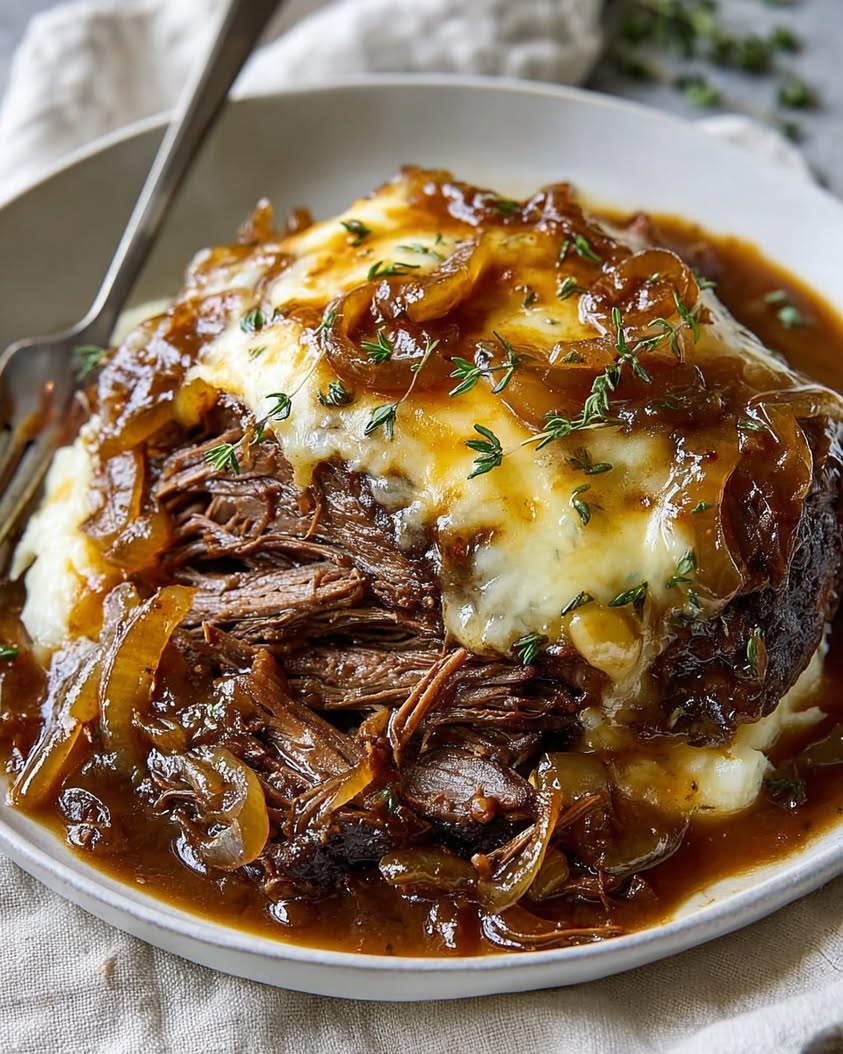
- Visual Appeal: A deep, dark brown roast sits in a rich, mahogany-colored sauce, studded with soft, translucent onions. The final topping of melted, bubbly Gruyère cheese provides a beautiful golden crust that is visually stunning.
- Skill Level Needed: You need basic knife skills for slicing onions and a bit of patience for the caramelization and long braise. However, the techniques are simple and require no advanced culinary training.
- Special Equipment: A large, heavy-bottomed Dutch oven or an oven-safe pot with a tight-fitting lid is essential. A sharp chef’s knife and a wooden spoon are also needed for the preparation.
Recipe Overview
- Difficulty Level: This recipe is categorized as intermediate mainly due to the time required for caramelizing the onions and the long braising process. The techniques themselves are very manageable, but you must monitor the pot and manage your timing. Success comes from patience and attention to detail, not from complex skills.
- Category: This dish is a perfect main course for dinner. It fits beautifully into comfort food, American cuisine, and slow-cooked meal categories. It can also be served as a special occasion entree for holidays like Christmas or New Year’s Day.
- Cuisine: This recipe is a modern fusion of classic French culinary traditions with American home-style cooking. The flavors are directly inspired by French onion soup, a bistro classic, while the pot roast method is a staple of American comfort food. It represents the best of both worlds.
- Cost: The cost is moderate. A chuck roast is a relatively affordable cut of beef, and onions, garlic, and herbs are inexpensive. The main cost variable is the cheese; Gruyère can be pricey, but you can substitute a good Swiss or provolone for a more budget-friendly option. The wine and sherry are used in small amounts.
- Season: This pot roast is best enjoyed in the fall and winter months. The long, slow simmer warms the kitchen and the heart, making it perfect for cold, rainy, or snowy days. It is a quintessential comfort food for the cozy season.
- Occasion: This dish is ideal for family dinners, Sunday suppers, and holiday gatherings. It is impressive enough for company but easy enough for a weeknight project. It also makes fantastic leftovers for a hearty lunch the next day.
Why You Will Love This Recipe
The first reason you will love this Comforting French Onion Pot Roast is the incredible taste experience it delivers. The combination of sweet, savory, and slightly tangy flavors is nothing short of spectacular. The beef becomes so tender that it virtually melts in your mouth, while the sauce is rich enough to coat a spoon. The final addition of melted cheese provides a salty, nutty finish that complements the beef perfectly. Every single bite is a harmonious blend of textures and tastes that satisfies deeply. This is not just a meal; it is a treat for your senses.
Another major benefit is the remarkable convenience of this recipe despite its sophisticated outcome. Most of the cooking time is hands-off, allowing you to go about your day while the oven does the work. You can very easily prepare it a day ahead and reheat it before serving. This makes it an excellent choice for busy home cooks who want to serve a homemade meal without standing over the stove for hours. The cleanup is also minimal since everything cooks in one pot. You get a gourmet result with a fraction of the effort.
From a nutritional perspective, this pot roast offers a good balance of protein and essential nutrients. Beef is a fantastic source of iron, zinc, and B vitamins, which support energy and immune function. Onions provide antioxidants and prebiotic fiber that are great for gut health. When you pair this dish with a side of roasted vegetables or a green salad, you create a well-rounded meal that is both nourishing and filling. It is a hearty, satisfying way to fuel your body during the colder months.
The social and entertaining value of this recipe is also very high. When you bring this pot roast to the table, it makes a powerful impression on your guests. The sight of the bubbling cheese and the aroma of thyme and beef will draw everyone in. It is a dish that encourages people to slow down, take their time, and enjoy the company around the table. You can serve it directly from the Dutch oven for a rustic, family-style presentation that feels both warm and elegant. It turns an ordinary dinner into a memorable occasion.
Finally, this recipe is incredibly cost-effective and uses accessible ingredients. Chuck roast is one of the most affordable cuts of beef, and it becomes incredibly tender with slow cooking. Onions, garlic, and broth are pantry staples that cost very little. You can even use a budget-friendly wine for the braising liquid. This means you can create a restaurant-quality meal at home without breaking the bank. The value you get from the quality of the meal versus the cost of ingredients is outstanding, making it a smart choice for feeding a crowd.
Historical Background and Cultural Significance
The origins of this dish are deeply rooted in French culinary history. French onion soup, or soupe à l’oignon, has been a staple of Parisian bistros since the 18th century. It was originally considered a humble meal for the working class because onions were cheap and abundant. The soup was traditionally made by slowly caramelizing onions in butter, adding broth, and then topping it with bread and cheese. This same flavor profile is the soul of our Comforting French Onion Pot Roast, which pays homage to that classic comfort food.
In French culture, onion soup is more than just a meal; it is a symbol of warmth and hospitality. It is often enjoyed after a night out or as a restorative late-night snack. The addition of Gruyère cheese and a crusty piece of bread creates a satisfying, hearty dish that is both simple and elegant. This pot roast adaptation takes that same spirit of comfort and transforms it into a main course. It respects the French tradition of transforming simple ingredients into something truly special through careful technique and patience.
The recipe has evolved significantly from the original soup to the pot roast we know today. American home cooks in the mid-20th century began looking for ways to combine the bold flavors of French cuisine with the convenience of slow cooking. The idea of using a pot roast as a vehicle for the flavors of French onion soup was a natural innovation. By braising the beef in the savory onion broth, cooks discovered that the meat absorbed all the complex flavors. This evolution shows how classic recipes are constantly reimagined to fit new cooking methods and tastes.
Regional variations of this dish have emerged across the United States. In the Midwest, some cooks add a dash of beer to the broth for extra depth. In the South, you might find a version with a splash of Worcestershire sauce or a pinch of cayenne pepper for heat. On the West Coast, variations often include fresh herbs like rosemary or a splash of balsamic vinegar. Each adaptation reflects the local palate and available ingredients. This recipe is a wonderful example of how a classic French idea can be adapted to create a new American comfort food tradition.
Ingredient Deep Dive
Onions are the star of this dish, and they have a rich history in cooking around the world. Cultivated for over 5,000 years, onions have been a staple in nearly every cuisine for their ability to add a savory base to dishes. Nutritionally, they are low in calories but high in vitamin C, B vitamins, and potassium. They also contain powerful antioxidants like quercetin, which can help reduce inflammation. When selecting onions, look for firm, heavy bulbs with dry, papery skins. Yellow onions are the best choice for this recipe because they become sweet and mellow when caramelized. Store them in a cool, dark place away from potatoes, as they can spoil quickly. If you do not have yellow onions, white or sweet onions will also work, though they may change the sweetness level slightly.
The chuck roast is the most important cut of beef for this recipe, and it brings its own history to the table. Chuck comes from the shoulder area of the cow, a well-used muscle that contains a lot of connective tissue. This tissue breaks down during long, slow cooking, which makes the meat incredibly tender and rich. Nutritionally, chuck roast is a great source of high-quality protein, iron, and zinc. When selecting your roast, look for one with good marbling, which is the white streaks of fat running through the meat. This marbling ensures the meat will stay moist and flavorful during the long braise. Store fresh beef in the refrigerator for up to three days before cooking. If you need a substitute, a brisket or a bottom round roast can be used, but they may be slightly less tender.
Gruyère cheese is a classic Swiss cheese known for its nutty, slightly sweet flavor and excellent melting qualities. It has been produced in Switzerland since the 12th century and is a key ingredient in many traditional dishes. Nutritionally, Gruyère is high in calcium and protein. When you are at the store, look for a wheel that is firm but not hard, with a rich golden color and small holes. The rind should be clean and dry. Gruyère is very forgiving to store; just wrap it in wax paper and then plastic wrap, and it will keep in the refrigerator for several weeks. For a more budget-friendly option, you can substitute Swiss cheese, provolone, or even a good mozzarella. Each will give you that wonderful, bubbly, cheesy crust on top of your pot roast.
Common Mistakes to Avoid
- Rushing the caramelization of the onions is a common error. If you cook them over high heat, they will burn instead of turning sweet and golden. You need to cook them slowly over medium-low heat for at least 30 minutes, stirring frequently, to extract their natural sugars.
- Not searing the roast properly before braising is another mistake. Searing creates a deep, brown crust that is packed with flavor. If you skip this step, you will lose a major source of the savory taste in the final dish. Make sure the pot is hot and the roast is dry before adding it to the pan.
- Using a pot that is too small can lead to a messy and unevenly cooked dinner. The roast needs room to be surrounded by the braising liquid. If the pot is overcrowded, the meat will steam instead of braise. Always use a large Dutch oven that fits the roast with some space around it.
- Adding the cheese too early in the cooking process is a frequent oversight. The cheese should only be added during the last 10 minutes of cooking under the broiler. If you add it too soon, it will melt away into the sauce instead of forming a crusty, golden top.
- Forgetting to season the roast generously before searing is a loss of opportunity. Salt and pepper are essential for building flavor. You should season the roast on all sides just before you place it in the hot pan. This initial seasoning makes a huge difference in the final taste.
- Cutting the onions into uneven pieces can cause some to burn while others remain raw. You should slice all your onions to a uniform thickness, about 1/4 inch. This ensures they all cook at the same rate and caramelize evenly.
- Lifting the lid too often during the braise is a common temptation. Each time you open the lid, heat and moisture escape. This can extend the cooking time and dry out the roast. Try to resist checking it until the very end of the cooking time.
- Storing leftovers improperly can ruin them. You must let the pot roast cool completely before placing it in the refrigerator. Store it in an airtight container, and make sure the meat is covered in its own sauce to keep it moist. It will last for up to four days.
Essential Techniques
Caramelizing onions is one of the most important techniques in this recipe. It transforms raw, pungent onions into sweet, golden, and melt-in-your-mouth goodness. To master this technique, you must start with a heavy-bottomed pan and plenty of butter or oil. Cook the onions over medium heat, stirring them every few minutes. After about 10 minutes, they will start to soften and become translucent. Then, you lower the heat to medium-low and continue stirring. The key is patience: you want them to turn a deep golden brown, which can take up to 40 minutes. If they start to stick, add a splash of water or broth to deglaze the pan. The visual cue for success is a uniform, rich golden color across all the onions.
Searing the roast is another critical step that builds the foundation of flavor. When you place the roast in a hot pan, the heat causes the Maillard reaction, which creates hundreds of new flavor compounds. To do it correctly, pat the roast completely dry with paper towels. This step is essential because any moisture on the surface will create steam and prevent browning. Heat a tablespoon of oil in your Dutch oven over high heat until it shimmers. Carefully place the roast in the pan and do not move it for about 4 minutes. You want a deep, dark crust. Then, rotate it to sear all sides, including the ends. The perfect sear is a rich, mahogany brown.
Deglazing the pan after searing is a simple but powerful technique. After you remove the roast and cook the onions, you will have browned bits, or fond, stuck to the bottom of the pot. These bits are pure flavor. To deglaze, add a splash of wine, sherry, or broth to the hot pot. Use a wooden spoon to scrape up all those browned bits as the liquid sizzles. This step incorporates all that concentrated flavor back into your sauce. The fond will dissolve into the liquid, creating a deep, rich color and taste. You should continue scraping until the bottom of the pot is clean and the liquid has reduced slightly.
Pro Tips for Perfect French Onion Pot Roast
For the best flavor, use a combination of beef broth and a dry red wine for the braising liquid. The wine adds acidity that balances the richness of the beef and the sweetness of the onions. A good option is a Cabernet Sauvignon or a Merlot. If you do not have wine, you can use all beef broth with a teaspoon of balsamic vinegar to add that necessary tang.
To ensure your onions caramelize perfectly, do not overcrowd the pot. If you have a large number of onions, cook them in batches. Too many onions in the pot will release too much water and they will steam instead of caramelize. It is better to take your time and achieve that deep golden color in stages.
When you are ready to add the cheese, turn on your oven’s broiler for the final step. After the roast is done braising, sprinkle the shredded Gruyère evenly over the top. Place the pot uncovered under the broiler for 2-4 minutes. Watch it closely because the cheese can burn quickly. You want it to be bubbly and golden brown.
If your sauce is too thin at the end, you can thicken it easily. Remove the roast and keep it warm. Place the pot on the stovetop over medium heat. Mix two tablespoons of cornstarch with two tablespoons of cold water to make a slurry. Whisk the slurry into the simmering sauce and cook for a few minutes until it thickens to your liking.
You can make this recipe a day ahead to save time. After the roast has cooked, let it cool completely and then refrigerate it in the pot. This step allows the flavors to meld even further. The next day, you can skim off any solidified fat from the surface and then reheat the roast gently on the stovetop or in the oven before adding the cheese.
Do not skip the step of seasoning the roast with salt and pepper at least 30 minutes before cooking. This dry brine allows the salt to penetrate the meat, seasoning it from the inside out. You can even do this the night before and leave the roast uncovered in the refrigerator. This technique guarantees a more flavorful and tender result.
Variations and Adaptations
There are many regional variations of this dish across the United States. In the Midwest, some cooks add a cup of dark beer, like a stout or porter, to the braising liquid for a richer, earthier flavor. In the South, you might find a version that includes a tablespoon of Worcestershire sauce and a few dashes of hot sauce for a spicier kick. These simple additions can change the character of the dish while still honoring the classic French onion flavor. Experimenting with these regional tweaks can keep the recipe exciting.
Seasonal adaptations can also make this dish special throughout the year. In the fall, you can add sliced apples or pears to the pot during the last hour of cooking for a sweet, fruity note. In the winter, root vegetables like carrots, parsnips, and celery root can be added to the pot to make it a complete one-pot meal. In the spring, a handful of fresh peas stirred in at the very end adds a pop of color and sweetness. Each season brings its own way to customize this comforting dish.
Dietary modifications are easy to implement for this recipe. For a gluten-free version, simply use gluten-free beef broth and ensure your Worcestershire sauce is gluten-free. The cornstarch slurry for thickening is naturally gluten-free. For a dairy-free adaptation, substitute the butter with a high-quality olive oil or vegan butter, and use a dairy-free cheese alternative for the topping, such as a nut-based mozzarella. By making these small swaps, you can accommodate common dietary restrictions without losing the essence of the dish.
Serving and Presentation Guide
To plate this pot roast beautifully, start by slicing the roast against the grain into thick, even pieces. Arrange several slices on a warmed plate or a large platter. Generously spoon the rich onion gravy over the top of the meat, ensuring each piece is well coated. The final touch is to place the golden, bubbly Gruyère crust on top of the meat. This layered presentation shows off the fork-tender texture of the beef and the lusciousness of the sauce. It creates an elegant yet rustic look that is very inviting.
Garnishing ideas can elevate your presentation even further. A sprinkle of fresh chopped parsley or thyme leaves adds a bright, green contrast to the dark brown sauce. You could also add a few pickled shallots or a pinch of flaky sea salt right before serving for extra texture and flavor. For a bistro-style look, serve the pot roast in a shallow bowl or a rimmed plate. This allows the sauce to pool around the meat, making it easy to sop up with crusty bread.
Regarding traditional accompaniments, egg noodles or mashed potatoes are the classic choices. Their mild flavor and creamy texture are perfect for soaking up the savory onion gravy. You can also serve it with a side of steamed green beans, roasted carrots, or a simple green salad. The key is to choose sides that complement the richness of the pot roast without competing with it. Crusty bread is also essential for wiping the plate clean.
Wine and Beverage Pairing
When it comes to wine pairings, a full-bodied red wine is your best friend for this dish. A good choice is a Syrah or a Côtes du Rhône, which have spicy notes that match the savory elements of the pot roast. A juicy Zinfandel also works very well, as its rich fruit flavors balance the umami of the beef and the sweetness of the onions. If you prefer a lighter wine, a Pinot Noir from California or Oregon can work, but choose one that is a bit more robust. The wine should have enough body to stand up to the hearty flavors of the meal.
For non-alcoholic alternatives, a full-bodied grape juice or a non-alcoholic red wine are excellent options. They provide a similar flavor profile without the alcohol. Another great choice is a sparkling water with a splash of pomegranate juice and a sprig of rosemary. This pairing is both refreshing and elegant. For a cozy evening, a hot cup of strong black tea or an herbal tea like chamomile can be a soothing finish to the meal. The warmth of the drink complements the heartiness of the pot roast.
Storage and Shelf Life
Proper storage is essential for keeping your leftover pot roast delicious. First, let the roast cool completely at room temperature for no more than two hours. Then, transfer the meat and the sauce to an airtight container. It is better to store them together because the sauce keeps the meat moist. Your pot roast will stay fresh in the refrigerator for up to four days. For maximum flavor, the leftovers often taste even better the next day as the flavors continue to meld together.
Temperature requirements are straightforward: keep the pot roast at a consistent temperature below 40 degrees Fahrenheit. When you are ready to reheat it, you have a few good options. The best method is to place the meat and sauce in a covered pot on the stovetop over low heat and warm it gently. You can also reheat it in the oven at 300 degrees Fahrenheit until it is heated through. If you are in a hurry, the microwave works, but it might make the meat slightly tougher. Always reheat until the internal temperature reaches 165 degrees Fahrenheit for food safety.
Make Ahead Strategies
To successfully make this pot roast ahead of time, follow a specific timeline. You can caramelize the onions and sear the roast up to two days in advance. Store them separately in the refrigerator after they have cooled completely. On the day you plan to serve the meal, simply combine them in your Dutch oven with the broth and other ingredients. Then, proceed with the braising as directed. This strategy significantly reduces the active cooking time on the day of serving. It allows you to spread the work across a few days.
Another excellent make-ahead strategy is to cook the entire dish one day before you plan to serve it. After the roast has finished braising, let it cool down completely. Then, place the entire pot in the refrigerator overnight. The next day, you can easily skim off any solidified fat from the surface of the sauce. This step eliminates a lot of the extra fat and makes the final dish lighter. When you are ready to serve, reheat the pot roast slowly on the stovetop or in the oven, then add the cheese and broil it. The flavors will be even more developed.
Scaling Instructions
If you want to halve this recipe, you need to be careful with the equipment. Use a smaller Dutch oven so the liquid still covers the meat adequately. When you halve the ingredients, the cooking time will remain mostly the same because the thickness of the roast and the caramelization process for the onions do not change. However, you should start checking the meat for tenderness about 30 minutes early. The smaller amount of liquid in the pot may evaporate faster, so keep an eye on the level and add a little extra broth if needed.
Doubling or tripling this recipe for a large gathering requires some planning. You will likely need two large Dutch ovens or a very large roasting pan with a lid. The main challenge is ensuring even cooking. If you use a large roasting pan, the meat may cook faster because it is in a thinner layer. Monitor the internal temperature closely and start checking for tenderness earlier than you would with a single roast. You will also need to caramelize the onions in batches to avoid overcrowding the pan. The storage of leftovers will also require more space, but the flavor will still be fantastic.
Nutritional Deep Dive
From a macronutrient perspective, this Pot Roast is a high-protein, moderate-fat dish. A single serving provides a substantial amount of protein, which supports muscle repair and satiety. The fat content comes from the beef, the butter used for the onions, and the cheese. These fats are not just for flavor; they also help you feel full and satisfied. The dish contains very few carbohydrates, mainly from the onions and a small amount from the wine and sherry. This makes it a suitable main course for those following a lower-carb or keto-friendly diet.
On the micronutrient side, this dish is packed with essential vitamins and minerals. Beef is one of the best dietary sources of iron, which is crucial for oxygen transport in the blood. It is also rich in zinc, a mineral that supports immune function and wound healing. Onions contribute a good amount of vitamin C, which acts as an antioxidant. The herbs and garlic provide various phytonutrients that have anti-inflammatory properties. When you pair this dish with a side of leafy greens, you get a meal that supports your entire system and provides a wide array of beneficial nutrients.
Dietary Adaptations
For a gluten-free version of this Comforting French Onion Pot Roast, the main adjustment is the broth and the thickening agent. Use a certified gluten-free beef broth and check that your Worcestershire sauce is also gluten-free. The cornstarch slurry for thickening the sauce is naturally gluten-free. You should also check that the cheese you use is not processed with any gluten-containing additives. With these simple swaps, you can enjoy this dish without any gluten-related concerns.
For a dairy-free adaptation, the key is to replace the butter and the cheese. Use a high-quality olive oil or a vegan butter alternative instead of butter for caramelizing the onions. For the cheese topping, there are many excellent dairy-free cheese alternatives available today. A cashew-based mozzarella or a dairy-free provolone works well under the broiler. Before you buy, check the label to ensure it melts well. This adaptation allows those who are lactose intolerant or following a vegan diet to still enjoy this rich, comforting dish.
Troubleshooting Guide
If your pot roast comes out tough instead of tender, it likely did not cook long enough. Chuck roast contains a lot of connective tissue that needs time to break down. The cooking time of 3 to 4 hours is a guideline, but the actual time can vary based on the size of the roast and your oven. The easiest fix is to continue cooking it for another 30 to 60 minutes. Check it every 20 minutes with a fork. When it is done, the meat should pull apart easily with little resistance.
If your sauce is too watery at the end, there are several ways to fix it. The simplest method is to remove the roast and keep it warm, then simmer the sauce on the stovetop over medium heat for 10 to 15 minutes. This allows the excess liquid to evaporate and thicken the sauce naturally. If you need a quicker solution, make a cornstarch slurry as described earlier and whisk it in. Another option is to mash a few of the softened onions into the sauce to help thicken it. Do not be afraid to adjust the sauce until it reaches the perfect consistency.
Recipe Success Stories
Many home cooks have shared their success with this Comforting French Onion Pot Roast. One reader from Ohio mentioned that it was the first time her entire family agreed on a meal. She reported that the house smelled amazing and that even her picky eaters asked for seconds. She said the cheese crust was a huge hit with the kids. Another reader from California shared a variation where she added a tablespoon of balsamic vinegar at the end. She said it added a beautiful tanginess that balanced the sweetness of the onions perfectly.
A community member from Texas shared a story about using this recipe for a Sunday dinner with friends. She adapted it by adding a cup of dark beer and a few chipotle peppers in adobo sauce for a smoky, spicy twist. She reported that her guests raved about the flavor and that the dish was the centerpiece of the evening. Several readers have also shared their photography tips, emphasizing the importance of good lighting and using a shallow dish to showcase the cheese crust and the rich sauce.
Frequently Asked Questions
Can I use a different cut of beef for this recipe? Yes, you can use brisket or bottom round roast. However, these cuts may be leaner and could require a slightly longer cooking time to become tender. Chuck roast is preferred because of its perfect balance of fat and connective tissue.
Do I have to use sherry, or can I skip it? You can absolutely skip the sherry. It adds a nutty, slightly sweet flavor, but you can substitute it with an equal amount of additional beef broth or a splash of apple cider vinegar for acidity. The dish will still be delicious.
How do I make the cheese crust if I do not have a broiler? If you do not have a broiler, you can achieve a similar result. After the roast is done, increase your oven temperature to 450 degrees Fahrenheit. Sprinkle the cheese on top and bake for 10 to 12 minutes, or until the cheese is melted and bubbly and starting to brown.
Can I cook this in a slow cooker? Yes, this recipe works very well in a slow cooker. You will still need to caramelize the onions and sear the roast in a pan first. Then, transfer everything to the slow cooker and cook on low for 8 hours or on high for 4-5 hours. Add the cheese under the broiler at the end.
How do I make the sauce thicker? The easiest method is to use a cornstarch slurry. Mix 2 tablespoons of cornstarch with 2 tablespoons of cold water until smooth. Stir this into the simmering sauce and cook for a few minutes until it thickens. You can also simmer the sauce uncovered to reduce it naturally.
Is it necessary to use Gruyère cheese? No, it is not necessary. Gruyère is classic, but you can substitute it with Swiss cheese, provolone, fontina, or even a good-quality mozzarella. Each cheese will give you a different flavor and melt profile, but all will be delicious.
Can I add vegetables to the pot while cooking? Yes, you can add vegetables like carrots, potatoes, and celery during the last hour of braising. This turns the dish into a complete one-pot meal. Just be sure to cut them into large chunks so they do not fall apart during the long cooking time.
How do I store leftover pot roast? Let the pot roast cool completely, then store it in an airtight container in the refrigerator. Make sure the meat is covered in its own sauce to keep it moist. It will stay fresh for up to four days. You can also freeze it for up to three months.
Can I make this dish completely in an Instant Pot? You can adapt this for an Instant Pot. Use the sauté function for the onions and the searing. Then, pressure cook on high for about 60 minutes with a natural release. You will then need to transfer the roast to a baking dish to add the cheese and broil it in a separate oven.
Why did my onions burn instead of caramelize? This usually happens when the heat is too high. Caramelization requires low and slow heat. If your onions are burning, lower the heat immediately. You can also add a splash of water or broth to cool the Print
Comforting French Onion Pot Roast
- Total Time: 3 hours 20 minutes
- Yield: 6
Description
A hearty, slow-cooked pot roast infused with rich French onion flavors, tender beef, caramelized onions, and a savory broth that’s perfect for a cozy dinner.
Ingredients
- 3-4 lbs beef chuck roast
- 2 tablespoons olive oil
- 4 large yellow onions, thinly sliced
- 4 cloves garlic, minced
- 2 tablespoons all-purpose flour
- 1 cup beef broth
- 1 cup dry red wine (or additional beef broth)
- 1 tablespoon Worcestershire sauce
- 1 teaspoon dried thyme
- 1 teaspoon dried rosemary
- 2 bay leaves
- Salt and black pepper to taste
- 4 cups sliced mushrooms (optional)
- Fresh parsley for garnish
Instructions
- Season the chuck roast generously with salt and pepper. Heat olive oil in a large Dutch oven over medium-high heat. Sear the roast on all sides until deeply browned, about 4-5 minutes per side. Remove and set aside.
- Reduce heat to medium. Add sliced onions and cook, stirring occasionally, until deeply caramelized, about 20-25 minutes. Add garlic and cook for 1 minute more.
- Sprinkle flour over the onions and stir well, cooking for 1-2 minutes. Pour in beef broth and red wine, scraping up any browned bits from the bottom. Add Worcestershire sauce, thyme, rosemary, and bay leaves.
- Return the roast to the pot. Add mushrooms if using. Cover and cook on low heat (simmer) for 2.5-3 hours, or until the meat is fork-tender. Alternatively, cook in a 325°F oven for the same time.
- Remove bay leaves. Taste and adjust salt and pepper. Garnish with fresh parsley before serving. Serve over mashed potatoes, egg noodles, or with crusty bread.
Notes
You can customize the seasonings to taste. For a richer flavor, use a good quality red wine. The pot roast can also be made in a slow cooker: after searing and caramelizing, transfer everything to a slow cooker and cook on low for 8 hours.
- Prep Time: 20 minutes
- Cook Time: 3 hours
- Method: Main
- Cuisine: French-American