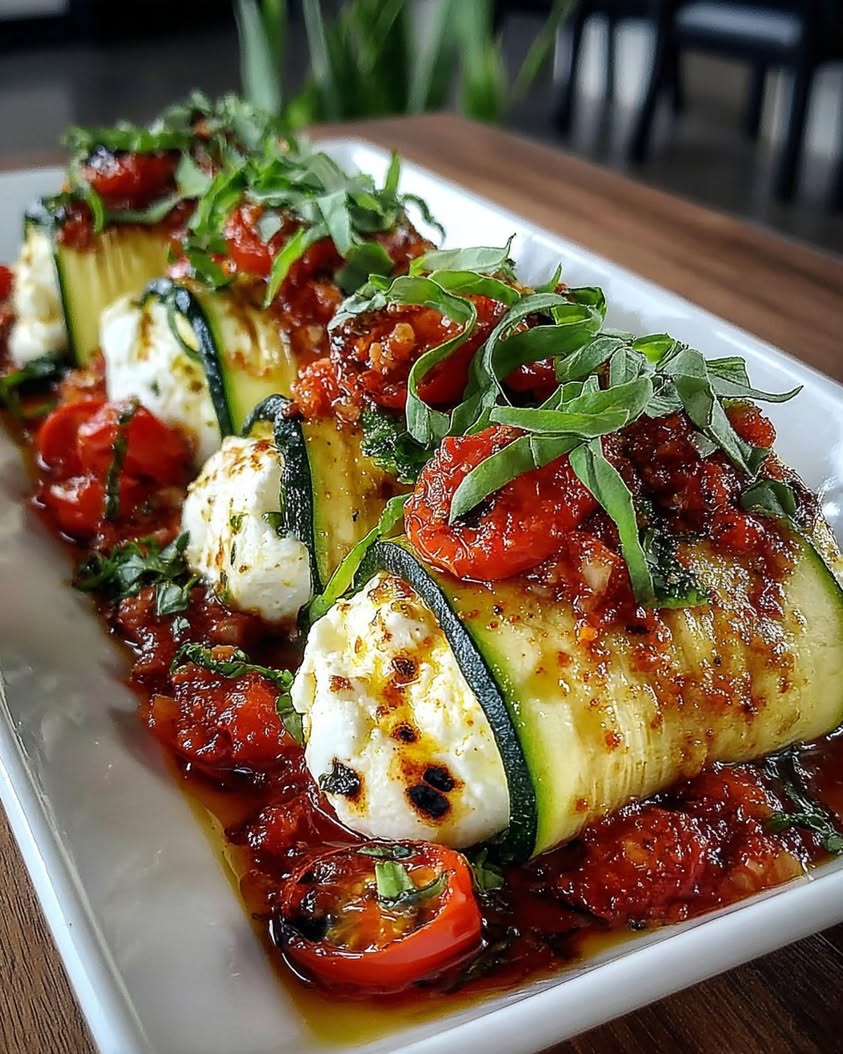
Creamy Burrata Stuffed Zucchini Rolls with Tomato Glaze: An Elegant Appetizer Made Simple
Creamy Burrata Stuffed Zucchini Rolls with Tomato Glaze bring a touch of Italian elegance to your table without demanding hours in the kitchen. If you love burrata recipes that feel restaurant quality yet remain approachable at home, this dish will quickly become a favorite. The recipe pairs tender ribbons of zucchini with pillowy burrata cheese, then finishes everything with a bright, glossy tomato glaze that ties the whole plate together. Every bite delivers a creamy center, a gentle tang from the glaze, and a fresh herbal note that keeps you coming back for more.
This Creamy Burrata Stuffed Zucchini Rolls with Tomato Glaze recipe shines because it balances rich and light elements so beautifully. The zucchini stays crisp tender, the burrata brings that unmistakable luscious texture, and the tomato glaze adds sweetness and acidity in equal measure. Whether you serve it as a starter for a dinner party or as a light vegetarian main, guests always ask for the recipe. The best part is that the whole dish comes together in about forty minutes, which means you can pull off something impressive even on a busy weeknight.
Home cooks searching for stuffed zucchini recipes often worry that rolling vegetables takes special skill. This burrata appetizer proves otherwise. You simply slice the zucchini thin, soften the slices briefly, spread the creamy filling, and roll. The tomato glaze simmers on the stove while you work, and the whole process feels calm and satisfying. By the end, you have a platter of elegant zucchini rolls that look like you spent far longer than you did. Serve this creamy burrata recipe at your next gathering, and watch it disappear before the main course even arrives.
Quick Recipe Highlights
- Flavor Profile: The creamy burrata stuffed zucchini rolls deliver a mild, milky richness that contrasts beautifully with the sweet tang of the tomato glaze. A hint of garlic and fresh basil rounds out each bite with a savory finish.
- Texture: Tender zucchini ribbons wrap around soft, oozing burrata for a delightful contrast of firm and silky. The glaze clings lightly and adds a smooth, glossy mouthfeel that keeps the dish from feeling heavy.
- Aroma: Fresh basil and garlic fill the kitchen as the tomato glaze simmers. The burrata brings a clean dairy scent, and the zucchini offers a subtle garden freshness that makes the whole plate smell inviting.
- Visual Appeal: Bright green zucchini rolls sit against a vibrant red tomato glaze for a striking color contrast. A drizzle of olive oil and a few basil leaves make the platter look polished and photo ready.
- Skill Level Needed: This recipe suits confident beginners who can handle a knife and a skillet. The rolling technique takes a light touch, but the forgiving nature of zucchini means small imperfections disappear once plated.
- Special Equipment: You need a sharp knife or mandoline for thin zucchini slices, a skillet for softening, and a saucepan for the glaze. A small spoon or piping bag helps distribute the burrata filling neatly.
Recipe Overview
- Difficulty Level: This creamy burrata stuffed zucchini rolls recipe lands in the easy to intermediate range because it involves two simple techniques and a bit of assembly. Slicing zucchini evenly requires attention, and rolling takes a gentle hand. Neither step demands professional training. Most home cooks master the process on the first attempt.
- Category: Serve this dish as an appetizer, a starter, or a light vegetarian main course. It also works beautifully as part of an antipasto spread alongside cured meats and crusty bread. Many families enjoy it as a side dish next to grilled chicken or fish.
- Cuisine: The recipe draws clear inspiration from Italian cuisine, particularly the southern regions where burrata reigns supreme. Zucchini appears in Italian cooking throughout summer, and tomato glazes echo the country’s love of simple, bright sauces. This dish honors those traditions while adapting them for modern home kitchens.
- Cost: Burrata costs more than standard mozzarella, so expect to spend a little extra on the star ingredient. Zucchini, tomatoes, garlic, and basil remain budget friendly, especially in summer. Overall, the dish costs a moderate amount per serving and feels far more expensive than it is.
- Season: Summer is the ideal season for this creamy burrata recipe because both zucchini and tomatoes peak in flavor and price. Late spring works well too if you find good greenhouse zucchini. In cooler months, you can still make it, though the tomatoes may need a little help from a pinch of sugar.
- Occasion: This stuffed zucchini recipe suits dinner parties, bridal showers, holiday appetizer tables, and romantic date nights at home. It also makes a lovely contribution to potlucks because it holds up well at room temperature. Serve it whenever you want something special without heavy effort.
Why You’ll Love This Recipe
The taste and texture of these creamy burrata stuffed zucchini rolls create a genuine wow moment on the palate. Burrata offers a creamy, delicate center that spills out when you cut into a roll. Zucchini brings a subtle sweetness and a tender bite, which keeps the richness in check. The tomato glaze adds a bright, tangy counterpoint that lifts everything. Meanwhile, fresh basil contributes an aromatic finish, and a swirl of olive oil brings the whole dish together with a silky mouthfeel.
Convenience makes this burrata appetizer a realistic choice for busy households. You need no special cooking skills and only a handful of tools. The recipe moves quickly from prep to plate in about forty minutes. Because the zucchini rolls hold well, you can assemble them ahead and glaze them just before serving. Fewer dirty dishes and a short ingredient list mean cleanup stays easy, which matters on nights when you want to enjoy your company instead of scrubbing pans.
Nutritionally, this creamy burrata recipe offers real advantages for people who want lighter, vegetable forward meals. Zucchini delivers hydration, fiber, and vitamin C for very few calories. Burrata contributes protein and calcium along with its luxurious texture. The tomato glaze brings lycopene and antioxidants from cooked tomatoes. Since the recipe avoids heavy cream and deep frying, you get richness without greasiness, making this dish a sensible part of a balanced eating plan.
Social and entertaining value sets these stuffed zucchini rolls apart from ordinary appetizers. The presentation looks impressive, so guests assume you fussed for hours. The rolls are easy to pick up with a fork or even your fingers, which makes them ideal for standing cocktail parties. They also spark conversation, since burrata remains a trendy ingredient that people love to discover. Serving this dish signals care and generosity, and your guests will feel it.
Cost effectiveness and accessibility round out the reasons to love this recipe. The ingredient list stays short, and most items already live in your pantry or fridge. Zucchini is one of the most affordable vegetables at any grocery store, and it appears at farmers markets all summer. Even burrata, though pricier than mozzarella, feeds four people comfortably at a reasonable price per serving. Overall, this dish proves you can serve restaurant quality food without stretching your budget.
Historical Background and Cultural Significance
The story of burrata begins in the early twentieth century in the Puglia region of southern Italy. Farmers there crafted a way to use leftover scraps of mozzarella by wrapping them in a fresh mozzarella shell filled with cream. This clever solution turned scraps into a luxurious cheese now beloved worldwide. The name burrata comes from the Italian word for buttered, which hints at the rich, buttery interior. Today, artisanal producers across Puglia still hand make burrata using traditional methods that preserve its delicate character.
Zucchini holds deep cultural importance across Italian and Mediterranean cooking. Though the vegetable originated in the Americas, it spread through Europe and became a staple of Italian home gardens and kitchens. Italian cooks perfected techniques like stuffing, rolling, and grilling zucchini to celebrate its mild flavor and tender texture. In many Italian households, zucchini dishes represent the abundance of summer gardens and the resourcefulness of home cooks. Rolling zucchini around rich fillings became a classic way to elevate humble vegetables into elegant fare.
This creamy burrata stuffed zucchini rolls with tomato glaze recipe evolved from those traditions into a modern interpretation. Contemporary chefs began pairing burrata with vegetables to create dishes that feel indulgent yet fresh. The tomato glaze adds a modern touch, borrowing from reduced balsamic and sun dried tomato techniques. As food blogs and social media spread interest in burrata recipes, home cooks adapted the idea into approachable versions. The result is a dish that honors southern Italian roots while fitting neatly into a modern American kitchen.
Regional variations of stuffed zucchini appear across the Mediterranean and beyond. In Italy, some cooks stuff zucchini with ricotta and herbs, while others use meat fillings for a heartier version. Greek cooks often add feta and mint, and Middle Eastern kitchens incorporate spiced rice or lamb. The tomato glaze itself varies by region, with some versions leaning sweet and others emphasizing vinegar. This recipe sits within that broad family of zucchini roll dishes, offering a creamy burrata twist that feels both familiar and refreshingly new.
Ingredient Deep Dive
Burrata serves as the heart of this dish and deserves careful attention. This Italian cheese originated in Puglia as a way to stretch mozzarella and cream into something extraordinary. Culturally, burrata signifies Italian craftsmanship and the value of using every part of an ingredient. Nutritionally, it provides protein, calcium, and a satisfying richness that helps you feel full. When selecting burrata, look for a label that lists cream as an ingredient and choose a ball packed in liquid, since dry versions lose their signature texture. Store burrata in its liquid in the coldest part of your fridge and use it within two days of opening. If burrata is unavailable, fresh mozzarella with a splash of heavy cream stirred into the center makes a reasonable substitute.
Understanding burrata more deeply helps you appreciate the creamy burrata stuffed zucchini rolls experience. The cheese forms a shell of mozzarella around stracciatella, a mixture of shredded mozzarella curds and cream. This structure explains why burrata oozes so beautifully when cut. Burrata carries a shorter shelf life than firmer cheeses, so buy it as close to serving day as possible. Look for artisanal brands at cheese counters or specialty stores for the best flavor. Avoid burrata that smells sour or looks bloated in its packaging, as those signs suggest it has turned.
Zucchini provides the delicate wrapper for this recipe and offers plenty of cultural and nutritional value. Native to the Americas, zucchini joined Mediterranean cuisine centuries ago and now thrives in Italian summer gardens. Nutritionally, zucchini boasts fiber, potassium, vitamin C, and high water content, which keeps the dish light. Choose zucchini that feel firm and heavy with glossy, unblemished skin. Smaller to medium zucchini work best because they have fewer seeds and firmer flesh. Store zucchini in the crisper drawer and use within a week. Yellow summer squash makes a colorful substitute, and cucumber can work in a pinch for a raw version.
Zucchini also rewards careful handling, which matters for stuffed zucchini recipes. Slicing thin ribbons requires firm, straight zucchini. Avoid oversized specimens, which turn watery and seedy in the center. If you grow zucchini at home, harvest young for the best texture. Zucchini absorbs flavors readily, so the brief cooking step helps it soften without turning mushy. Pat slices dry before filling, since excess moisture can make the rolls slip apart. These small steps protect the texture of the finished dish.
Tomatoes anchor the glaze and bring essential acidity and sweetness to balance the rich burrata. Tomatoes originated in South America and became central to Italian cooking after their introduction to Europe. Nutritionally, cooked tomatoes supply lycopene, vitamin C, and antioxidants, especially when reduced into a glaze. Choose ripe, fragrant tomatoes for the best flavor, or use canned San Marzano tomatoes in cooler months. Store fresh tomatoes at room temperature until ripe, then refrigerate once cut. Cherry tomatoes make a convenient substitute, and a tablespoon of tomato paste can intensify the glaze when tomatoes taste flat.
Common Mistakes to Avoid
- Slicing the zucchini unevenly causes rolls that cook at different rates and tear during assembly. Use a mandoline or a sharp knife and aim for slices about one eighth inch thick. Consistent slices make rolling far easier and produce a polished presentation.
- Overcooking the zucchini leads to mushy ribbons that fall apart when you fill them. Soften the slices briefly in a warm skillet, about thirty seconds per side, then transfer them to a plate. They should bend without breaking, not collapse.
- Skipping the drying step leaves excess moisture on the zucchini, which makes the burrata filling slide out of the rolls. Pat slices dry with paper towels after softening. This small habit keeps the rolls intact and the plate clean.
- Using cold burrata straight from the fridge makes the filling stiff and hard to spread. Let burrata sit at room temperature for fifteen to twenty minutes before assembling. It becomes easier to spoon and blends better with herbs.
- Overfilling the rolls pushes the cheese out and creates a messy plate. Use about one tablespoon of filing per roll, then resist adding more. The rolls should feel delicate, not stuffed like a burrito.
- Rushing the tomato glaze results in a watery sauce that pools on the plate. Simmer it until it thickens enough to coat the back of a spoon. The reduction concentrates flavor and gives the glaze its glossy finish.
- Skipping seasoning leaves the whole dish tasting flat, since burrata and zucchini both carry mild flavors. Salt the zucchini lightly after cooking and season the glaze as it simmers. Taste as you go and adjust before serving.
- Assembling too far in advance without proper storage makes the rolls soggy. If you must prep ahead, store components separately and roll just before serving. Zucchini releases water over time, so timing matters.
- Neglecting the garnish makes the dish look plain and unfinished. Add fresh basil, a drizzle of olive oil, and cracked pepper right before serving. Garnishes add aroma as well as color.
- Serving the dish ice cold mutes the flavors and firms up the burrata. Let the finished platter sit at room temperature for a few minutes before serving. This short rest lets the cheese soften and the flavors bloom.
Essential Techniques
Slicing zucchini into thin, even ribbons is the foundational technique for these creamy burrata stuffed zucchini rolls. Uniform slices matter because they cook evenly and roll without cracking. A mandoline produces flawless slices, though a sharp chef’s knife works well with practice. Hold the zucchini steady and slice lengthwise at a slight angle for wider ribbons. Common pitfalls include slices that are too thick to roll and slices with jagged edges that tear. Visual cues for success include ribbons that look translucent at the edges and bend easily without breaking.
Softening the zucchini slices gently is the next essential skill, since raw slices crack when rolled. Warm a skillet over medium heat with a touch of olive oil and cook slices briefly on each side. The goal is pliability, not browning. Working in batches keeps the pan from steaming the slices, which makes them watery. A common mistake involves leaving slices unattended, so they turn limp and fragile. You will know a slice is ready when it drapes softly over the back of a spoon and smells mildly sweet.
Filling and rolling the zucchini demands a light, confident hand. Spread a teaspoon of burrata along one end of a cooled slice, then roll from that end while gently tucking in the sides. Place the seam side down to secure the roll. Rolling too tightly squeezes out the filling, while rolling too loosely lets the roll unfurl. A helpful visual cue is a roll that holds its shape with gentle pressure from your fingers. Always work on a dry plate so the rolls do not slip.
Reducing the tomato glaze teaches you to balance flavor and texture in a single pan. Simmer tomatoes with garlic and olive oil until the mixture thickens and deepens in color. Stir often and press the tomatoes with a spoon to release their juices. Common pitfalls include boiling too hard, which spatters and scorches the sauce. The glaze is ready when it coats a spoon and smells sweet and tangy. Taste at the end and adjust with salt, pepper, and a touch of sugar if needed.
Pro Tips for Perfect Creamy Burrata Stuffed Zucchini Rolls
Let burrata sit at room temperature for a full twenty minutes before you start filling the rolls. This softens the cheese so it spreads easily and blends smoothly with herbs. If you skip this step, the filling tears the delicate zucchini slices as you spread.
Use a small cookie scoop or piping bag to portion the burrata. A scoop drops filling precisely in the center of each slice, and a piping bag offers even more control. Both tools save time and keep the presentation neat, especially when you assemble many rolls for a party.
Pat the zucchini slices completely dry after softening them. A dry surface helps the roll grip itself and holds the filling in place. Keep a stack of paper towels nearby and press gently until the towel feels only slightly damp.
Simmer the tomato glaze a few minutes longer than you think necessary. The extra time thickens the sauce and concentrates the sweetness, which stands up to the rich burrata. Stir often so the bottom does not catch, and taste for seasoning right before you pull the pan from the heat.
Season the burrata filling itself with a pinch of salt, lemon zest, and chopped basil. The cheese tastes mild on its own, so these additions brighten the entire roll. Zest especially lifts the creamy filling and echoes the tomato glaze beautifully.
Arrange the finished rolls on a platter that shows off the red glaze at the edges. A white plate or a shallow bowl makes the green and red contrast pop. This small choice elevates the dish from tasty to stunning.
Plate and serve within thirty minutes of assembly for the best texture. The rolls hold for a bit longer on a cool table, but the zucchini softens over time. If you need extra time, chill the components separately and roll right before guests arrive.
Keep a spare zucchini on hand; small tearing mistakes happen even to practiced cooks. A second zucchini costs little and lets you re-slice a ribbon without stress. This small backup keeps the process relaxed and the final platter flawless.
Variations and Adaptations
Regional variations of stuffed zucchini span the Mediterranean, so you have plenty of room to play. Italian cooks in Puglia might fold in stracciatella and top the rolls with toasted breadcrumbs and olive oil. In Sicily, sweet raisins and pine nuts often join the filling for a sweet and savory contrast. Greek versions add crumbled feta and fresh mint. Try folding a little lemon zest and oregano into the burrata to echo the coastal flavors of southern Italy.
Seasonal adaptations keep this creamy burrata recipe fresh all year. In summer, use garden ripe tomatoes and fresh basil, which deliver the brightest flavor. In cooler months, canned San Marzano tomatoes make a richer glaze, and you can substitute roasted red peppers for a smokier profile. Late spring brings sweet, small zucchini, which roll up more easily than large summer specimens. Adjust cooking times slightly for younger vegetables, since they soften faster.
Dietary modifications expand the appeal of these stuffed zucchini rolls. For a vegan version, replace burrata with cashew cream cheese mixed with lemon juice and a pinch of salt. Cashew based ricotta also works beautifully. For dairy free diets, use a plant based tofu ricotta with garlic and basil. If you follow a gluten free plan, the recipe already fits naturally, so simply check labels on any store bought tomato products.
Flavor variations let you reinvent the dish every season. Add sun dried tomatoes and a pinch of red pepper flakes to the glaze for bold intensity. Swap basil for tarragon or dill for a different aromatic profile. A drizzle of balsamic reduction instead of the tomato glaze creates a sweeter, darker finish. You can even replace the tomato glaze with pesto thinned with lemon juice for a vibrant green alternative.
Texture modifications help you adjust the dish to different tastes. For a crunchy element, sprinkle toasted pine nuts or panko breadcrumbs over the finished rolls. If you prefer a warmer, softer dish, bake the rolls at 350 degrees for eight minutes before glazing. For a heartier bite, use slightly thicker zucchini slices, though you may need to cook them a few seconds longer. Citrus zest across the top adds a bright texture contrast as well.
Presentation alternatives suit any service style. Serve the rolls on a platter as a shared appetizer, or plate three rolls per person over a pool of tomato glaze as a starter. For a buffet, spear each roll with a frilled toothpick for easy pickup. You can also arrange the rolls on a bed of arugula for a fresh, peppery base. In smaller settings, a single roll topped with glaze makes an elegant amuse bouche.
Serving and Presentation Guide
Plating techniques make a real difference with these creamy burrata stuffed zucchini rolls. Spoon a generous swoosh of tomato glaze onto a white plate, then place the rolls gently on top so their green edges face upward. Three rolls per plate looks balanced for a starter. For a larger party platter, pour the glaze in a wide circle and arrange the rolls in a spiral, leaving room for garnish. Keep the plate dry at the edges so the presentation stays clean.
Garnishing ideas turn the dish into a showpiece. Scatter small basil leaves and a few torn pieces of burrata over the rolls. A light drizzle of olive oil catches the light and brightens the colors. Finely grated lemon zest adds tiny yellow flecks and a fresh aroma. Cracked black pepper and a pinch of flaky sea salt finish the plate with texture and sparkle.
Traditional accompaniments connect the dish to its Italian roots. Serve thin slices of prosciutto or soppressata alongside the rolls, and add a basket of crusty ciabatta. Good olive oil for dipping and a small bowl of olives complete the spread. A simple arugula salad with lemon and parmesan balances the richness perfectly. These pairings turn the appetizer into a generous antipasto experience.
Modern serving suggestions fit contemporary tastes. Serve the rolls over creamy polenta for a vegetarian main course. Arrange them atop toasted sourdough slices for an open faced appetizer. For a buffet, offer the rolls in small cups with tomato glaze ladled over the top. A side of charred focaccia makes an easy companion, and a sprinkle of toasted breadcrumbs adds a bright crunch.
Temperature considerations matter more than many cooks realize. Serve the rolls lightly chilled or at room temperature, never straight from the fridge. Let the finished platter rest for ten minutes so the burrata softens and the glaze loosens. Avoid serving the dish piping hot, since heat melts the burrata into a puddle and wilts the zucchini. A cool room during summer is ideal for keeping the presentation sharp.
Portion control tips help you plan for different events. For an appetizer spread, plan two to three rolls per guest. For a light lunch with salad, four to five rolls make a satisfying serving. As a main course with a starch, count on five to six rolls per person. These guidelines keep your shopping simple and your platters full without waste.
Wine and Beverage Pairing
Wine pairings should complement the creamy burrata without overpowering the delicate zucchini. A crisp Falanghina from southern Italy makes an excellent match because its bright acidity cuts through the richness. Sauvignon Blanc brings grassy notes that echo fresh herbs, while a light Pinot Grigio offers easygoing freshness. For red drinkers, a light Schiavo or a chilled Barbera works well thanks to low tannins and bright fruit. Avoid heavy oaky whites, which overwhelm the dish.
Non alcoholic alternatives keep the experience fresh and festive. Sparkling water with lemon and basil feels elegant and refreshes the palate between bites. A cucumber mint spritzer brings garden flavors that echo the zucchini. Cold brewed chamomile tea with lemon tastes soft and herbal alongside the burrata. For something a little more festive, a grapefruit sparkling soda delivers bright acidity that mirrors the tomato glaze.
Coffee and tea pairings fit occasional appetizer settings, especially in winter. A light green tea with lemon complements the herbal notes of basil. A delicate white tea with floral tones keeps the palate refreshed. If you serve the rolls at brunch, a light jasmine tea or a smooth oat milk latte makes a pleasant companion. Keep the beverages mildly flavored so they do not compete with the burrata.
Temperature considerations shape every pairing decision. White wines and sparkling drinks should stay around 45 to 50 degrees Fahrenheit to protect their aromas. For light reds, a quick chill in the fridge brings them down from room temperature to the right serving range. Teas and coffee taste best when served warm but not hot, since extreme temperatures blunt the palate. Aim for balance so the dish and drink shine together.
Serving suggestions make the beverages as thoughtful as the food. Pour white wine into stemmed glasses to concentrate the aroma and show off the pale color against the zucchini rolls. Offer sparkling water in a pitcher with cucumber and basil so guests can serve themselves. Keep a tray of glasses chilled in advance, and set out a small station with garnishes. These touches make even a simple appetizer feel like a celebration.
Storage and Shelf Life
Storage methods determine how well these rolls hold up after serving. Place leftover rolls in a shallow container with a lid and keep them in the coldest part of the fridge. The tomato glaze keeps best in a separate jar so the zucchini does not become soggy. If you plan to serve leftovers, store components separately: rolls in one container, glaze in another, and fresh garnish aside. This approach preserves texture and flavor far better than stacking everything together.
Temperature requirements remain straightforward for this creamy burrata recipe. Refrigerate the rolls and glaze at 40 degrees Fahrenheit or below. Never leave the dish at room temperature for more than two hours, especially in summer. Because burrata is a fresh cheese, it spoils faster than aged cheese and demands careful chilling. Keep the container sealed so the cheese does not pick up other refrigerator odors.
Container recommendations help your dish stay fresh and attractive. Use a glass dish with a snug lid or an airtight plastic container lined with paper towels. The towels absorb condensation and keep the zucchini from sitting in moisture. For the glaze, a small glass jar with a screw top works perfectly. Store the fresh basil separately, wrapped in a damp paper towel, so it does not darken in the fridge.
Signs of spoilage help you know when to discard leftovers. The zucchini rolls and glaze last about two days in the fridge, and you should discard them if the burrata smells sour or the zucchini turns slimy. Fresh basil that blackens or the appearance of mold means the dish has gone bad. When in doubt, throw it out, especially with fresh cheese.
Reheating instructions matter for the baked version of this dish. If you bake the rolls, warm them at 325 degrees for five to seven minutes until just heated through. Avoid the microwave, which can make the zucchini rubbery and the burrata watery. For the unbaked version, enjoy leftovers cold or at room temperature, since reheating fresh burrata rarely improves the texture. Warm the glaze separately in a small pan if you prefer it hot.
Freezing guidelines keep your expectations realistic. These rolls do not freeze well because zucchini releases water as it thaws and burrata separates from its cream. The tomato glaze, however, freezes beautifully for up to three months. Store the glaze in a freezer safe container, thaw it in the fridge overnight, and reheat gently. For a fresh batch later, freeze the glaze and plan to buy zucchini and burrata at the time you plan to serve.
Make Ahead Strategies
Prep timeline planning makes this creamy burrata stuffed zucchini rolls recipe perfect for entertaining. You can slice and soften the zucchini up to a day ahead, storing the cooled slices flat between paper towels in the fridge. Chop the basil and garlic the morning of your event. This staggered approach spreads the work so you never feel rushed in the final hour. Just keep the components separate and assemble fresh for the best texture.
Storage between steps protects the integrity of each component. Keep zucchini slices in a single layer in a covered container so they do not press on each other and stick. Store the tomato glaze in a jar and the burrata in its original liquid. Fifteen minutes before serving, pull the burrata from the fridge so it reaches room temperature. These small pauses keep everything looking fresh and tasting bright.
Quality impact assessment helps you decide what to prep early. The tomato glaze improves when made a day ahead because the flavors meld and deepen. Zucchini slices hold reasonably well overnight, though they lose a little firmness. Burrata should stay sealed until you plan to use it, since opening starts its countdown. Fresh herbs should be chopped at the last minute because they darken quickly.
Assembly tips keep the final prep quick and calm. Set up a workstation with clean zucchini slices, a bowl of seasoned burrata, and a plate for finished rolls. Use a small spoon to portion the filling and roll each slice in one motion. Work left to right across your station, and place each finished roll seam side down. This rhythm makes assembly feel effortless even when you have guests arriving.
Reheating guidelines matter only if you bake the rolls. For the baked version, assemble fully, refrigerate, and bake the day of serving. If you plan to serve the rolls chilled, remove them from the fridge fifteen minutes before plating so the flavor opens up. Avoid rewarming assembled burrata rolls, which can break the delicate filling and release the cream.
Fresh element additions complete the dish at the last moment. Add basil, lemon zest, and a final drizzle of olive oil right before serving for maximum aroma. A sprinkle of flaky salt and cracked pepper adds visual texture. These tiny finishing touches deliver a lot because they sit right on top, where every guest notices them.
Scaling Instructions
Halving the recipe suits dinners for two or small gatherings. Use one large zucchini, one ball of burrata, and half the glaze ingredients. Note that the glaze may reduce faster in a smaller pan, so watch the heat and stir often. A halved recipe still yields enough for a generous appetizer with a few leftovers. Keep the same slicing technique, though you may skip the second batch of zucchini.
Doubling or tripling the recipe works easily for larger parties. Buy two to three times the zucchini, burrata, and tomato ingredients. Use a larger skillet or work in batches so the zucchini does not steam rather than soften. Make the glaze in a wide pan and simmer a little longer to reduce the extra volume. Serve the rolls on multiple platters to keep the presentation elegant.
Equipment adjustments keep scaled batches manageable. For doubles, use your largest sheet pan and a wide Dutch oven for the glaze. When tripling, borrow a second skillet so you can soften zucchini faster. Portion the burrata filling into small bowls for each station if two people assemble together. Splitting the work prevents bottlenecks and keeps rolls consistent.
Timing modifications matter as volume grows. Doubling the glaze adds five to ten minutes of simmering because a larger volume needs more time to reduce. Softening zucchini in batches also adds minutes to the prep, so start early or enlist help. Assemble just before serving to protect the texture. Plan for ten extra minutes per batch to keep the schedule realistic.
Storage considerations change with larger batches. Use multiple shallow containers so the rolls do not stack too high and crush each other. Label the glaze with the date your prepared it and keep it in dedicated jars. If you plan to transport the dish to a party, pack rolls and glaze separately and assemble on site. This approach protects the look of the platter all the way to the table.
Nutritional Deep Dive
The macro breakdown of these creamy burrata stuffed zucchini rolls shows a balanced profile. Each serving provides moderate calories, meaningful protein from the cheese, and modest carbohydrates from the vegetables and tomatoes. Fat content runs higher because of the cream in burrata, though the dish still fits within a balanced meal when portioned sensibly. Most of the carbohydrates come from zucchini and tomatoes, which are low impact sources.
Micronutrient analysis reveals plenty to feel good about. Zucchini brings vitamin C, potassium, and folate along with impressive water content. Tomatoes add lycopene, vitamin A, and antioxidants that support heart health. Burrata contributes calcium, phosphorus, and vitamin B12. Together, the ingredients deliver a broad set of nutrients that support both satiety and overall wellness.
Health benefits extend beyond basic nutrition. The recipe emphasizes vegetables as the main component, which supports dietary guidelines recommending more produce at meals. The olive oil and tomatoes supply unsaturated fats and antioxidants that promote heart health. Because the dish avoids heavy cream sauces and frying, it delivers richness without excess grease. Serving the rolls with salad or lean protein rounds out the plate beautifully.
Dietary considerations help you plan the dish within specific eating patterns. The recipe suits vegetarian diets naturally. For lower calorie needs, portion the burrata carefully and serve with extra vegetables. People watching saturated fat intake can swap half the burrata for part skim ricotta. The dish also fits a Mediterranean style eating pattern thanks to olive oil, vegetables, and fresh cheese.
Portion analysis guides realistic serving sizes. A four serving recipe makes a hearty appetizer plate, while a main course serving for hungry diners may shrink the serving count to three. Each roll carries a modest amount of cheese, which keeps calories in a reasonable range. Serving the rolls over greens adds volume without significant calories, so guests feel satisfied with less.
Weight management tips fit beautifully into this recipe. Fill each roll with just one tablespoon of burrata to control calories while keeping the creamy texture. Pile the plate with arugula or serve with a lemon dressed salad for extra volume. The tomato glaze adds flavor without fat, so use it generously. These simple strategies keep the dish satisfying without extra calories.
Dietary Adaptations
For a gluten free version, the recipe already fits naturally since it uses no breadcrumbs or pasta. Simply check labels on any store bought tomato products or broths for hidden gluten. Serve the rolls without bread for a completely gluten free dish. If you add a crunchy topping, choose gluten free panko or toasted almonds. This adaptation requires almost no effort and opens Print
Creamy Burrata Stuffed Zucchini Rolls with Tomato Glaze
- Total Time: 45 minutes
- Yield: 4
Description
Delicate zucchini ribbons rolled around creamy burrata, baked with a sweet and tangy tomato glaze.
Ingredients
- 2 large zucchini
- 8 oz burrata cheese
- 1 cup cherry tomatoes, halved
- 1 tbsp olive oil
- 2 cloves garlic, minced
- 1/4 tsp salt
- 1/4 tsp black pepper
- 1/4 cup fresh basil, chopped
- 2 tbsp balsamic vinegar
- 1 tbsp honey
Instructions
- Preheat oven to 375°F (190°C). Slice zucchini lengthwise into 1/4-inch thick ribbons using a mandoline or vegetable peeler. Blanch in boiling water for 1 minute, then transfer to an ice bath to cool. Pat dry.
- In a small bowl, mix cherry tomatoes, olive oil, garlic, salt, and pepper. Spread on a baking sheet and roast for 10 minutes until softened. Mash with a fork to make a chunky glaze. Stir in balsamic vinegar and honey.
- Place a spoonful of burrata at one end of each zucchini ribbon and roll up. Secure with a toothpick if needed. Arrange rolls in a baking dish. Spoon tomato glaze over the rolls. Bake for 10-12 minutes until heated through. Garnish with fresh basil before serving.
Notes
You can customize the seasonings to taste.
- Prep Time: 15 minutes
- Cook Time: 30 minutes
- Method: Main
- Cuisine: American