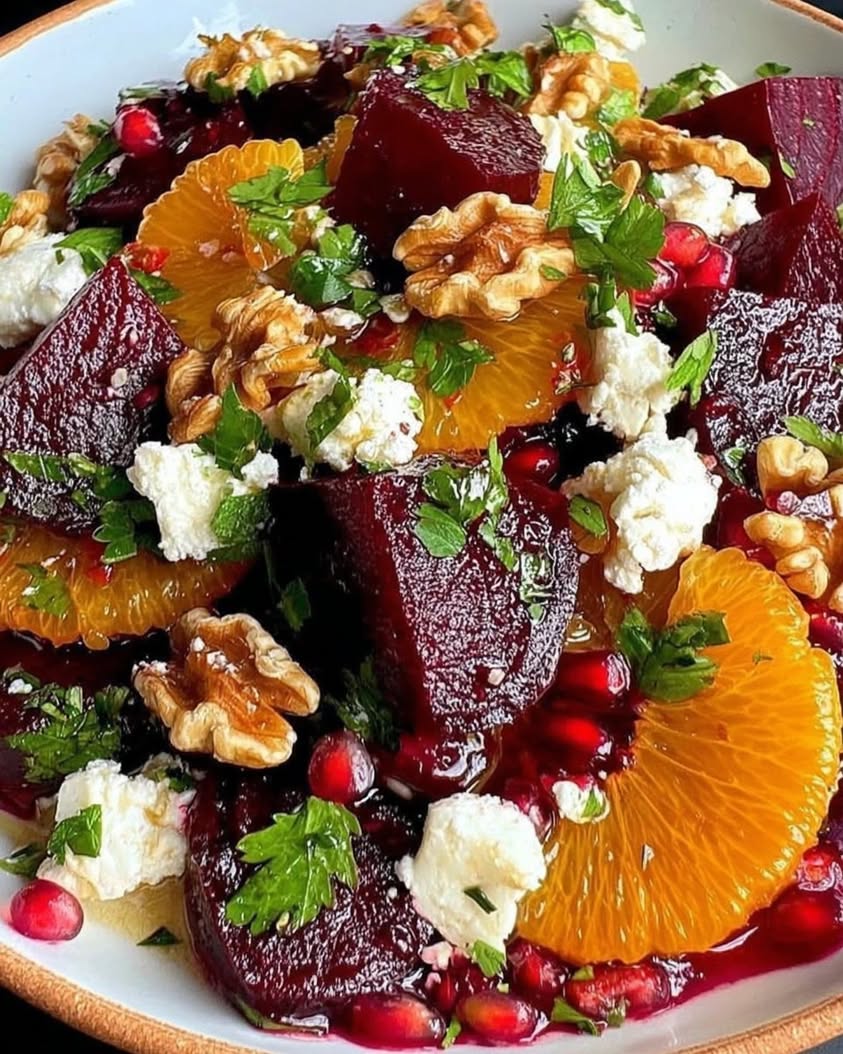
Ruby Beet and Citrus Salad with Pomegranate, Feta and Walnuts: A Winter Jewel
The Ruby Beet and Citrus Salad with Pomegranate, Feta and Walnuts is more than a side dish; it is a celebration of winter’s finest produce, a symphony of colors, and a testament to the beauty of simple, high-quality ingredients. When the days grow short and the air turns crisp, this salad arrives like a burst of sunshine on the plate. The deep, earthy sweetness of roasted beets mingles with the bright, zesty punch of fresh citrus, while the jewel-toned pomegranate seeds add a pop of tartness that awakens the palate. This is not merely a combination of ingredients; it is a carefully orchestrated balance of flavors and textures that elevates the humble salad into a memorable culinary experience.
Furthermore, this recipe is a true powerhouse of nutrition, offering an impressive array of vitamins, antioxidants, and healthy fats. The vibrant red of the beets signals their high content of folate and betalains, which are known for their anti-inflammatory properties. The citrus fruits, whether you choose blood oranges, navel oranges, or grapefruit, deliver a massive dose of immune-boosting Vitamin C. The pomegranate seeds are packed with polyphenols, and the walnuts provide heart-healthy Omega-3 fatty acids. Additionally, the creamy, salty feta cheese adds a satisfying richness that perfectly counterpoints the bright, acidic elements. Therefore, this salad is not just a feast for the eyes and taste buds; it is a nourishing meal that supports overall wellness from the inside out.
Moreover, the beauty of this Ruby Beet and Citrus Salad with Pomegranate, Feta and Walnuts lies in its incredible versatility. It is elegant enough to grace a holiday table yet simple enough for a weeknight dinner. You can serve it as a refreshing starter, a substantial side dish, or even as a light main course with the addition of some grilled chicken or chickpeas. The preparation is straightforward, with most of the time dedicated to roasting the beets, which you can do ahead of time. The assembly is quick and visually stunning, making it a perfect recipe for entertaining when you want to impress your guests without spending hours in the kitchen. Ultimately, this salad is a reliable and rewarding dish that delivers on every level, making it a true gem in any home cook’s repertoire.
Quick Recipe Highlights
- Flavor Profile: This salad is a delightful study in contrasts. The earthy, sweet, and slightly caramelized flavor of roasted beets forms a robust base, which is then brightened by the tart and tangy notes of fresh citrus. The pomegranate adds a pop of sweet-tart juice, while the salty, creamy feta provides a savory counterpoint. Finally, the toasted walnuts bring a warm, nutty depth that ties all the elements together beautifully.
- Texture: The texture of this dish is just as dynamic as its flavor. You will experience the tender, melt-in-your-mouth softness of the roasted beets alongside the juicy, crisp segments of citrus. The pomegranate seeds offer a satisfying little burst of juice, while the creamy, crumbly feta provides a soft, rich contrast. The toasted walnuts are the star of the show texturally, adding a wonderfully crunchy and slightly chewy element in every bite.
- Aroma: The primary aromatic notes in this salad are fresh and invigorating. The citrus fruits release a bright, zesty, and fragrant essential oil as you segment them, which instantly lifts the spirits. The walnuts, after being toasted, emit a deep, nutty, and slightly sweet aroma that adds a layer of warmth and complexity to the overall scent profile of the dish.
- Visual Appeal: This salad is a true feast for the eyes, often described as a jewel box on a plate. The deep, crimson red of the roasted beets contrasts beautifully with the vibrant orange hues of the citrus segments. The ruby-red pomegranate seeds are scattered like precious gems, while the stark white of the feta cheese and the golden-brown of the toasted walnuts complete a stunning and appetizing color palette that is sure to impress.
- Skill Level Needed: The recipe is remarkably accessible and perfect for cooks of every level. While the techniques involved, such as roasting and segmenting citrus, are simple to master, the final result looks and tastes like it came from a fine dining restaurant. Therefore, it is an excellent choice for beginners looking to build confidence and for seasoned cooks who want a quick, beautiful, and reliable dish.
- Special Equipment: You will need very little specialized equipment for this recipe. A reliable chef’s knife and a sturdy cutting board are essential for preparing the vegetables and fruit. A sheet pan is necessary for roasting the beets and walnuts, and a large, shallow serving platter will best showcase the salad’s beautiful colors.
Recipe Overview
- Difficulty Level: The recipe is rated as easy because the methods used are fundamental and do not require precise or advanced culinary techniques. Roasting vegetables is a forgiving and straightforward process, and segmenting citrus is a simple skill that can be mastered with a bit of practice. The most time-consuming part is the roasting, which requires little active effort. This makes the recipe incredibly approachable and perfect for a relaxed cooking experience.
- Category: This dish primarily shines as a spectacular side salad or a refreshing starter course. However, its substantial nature, thanks to the beets and walnuts, also makes it a wonderful candidate for a light vegetarian main course. It fits perfectly into the category of a “composed salad,” where each element is prepared separately and then artfully arranged on the plate to create a cohesive and impressive whole.
- Cuisine: The Ruby Beet and Citrus Salad with Pomegranate, Feta and Walnuts draws its inspiration from the vibrant and sunny culinary traditions of the Mediterranean and the Middle East. These regions are famous for their masterful use of fresh produce, bold flavors, and the perfect balance of sweet, sour, and salty elements. This salad is a classic example of that tradition, incorporating staple ingredients of the area such as olive oil, walnuts, pomegranates, and feta cheese.
- Cost: The cost of this salad is moderate and largely depends on the season and where you source your ingredients. Beets and citrus are generally very affordable. Pomegranates can be slightly more expensive but are in season during the winter. Walnuts and feta cheese are the most costly ingredients, but you can manage the expense by buying them in bulk from the baking aisle or from a deli counter, respectively. Overall, it is a cost-effective dish for the impressive flavor and nutritional value it provides.
- Season: This salad is a celebration of the winter season and is best made between late fall and early spring. This is when beets are at their sweetest and most flavorful, and when citrus fruits are at their absolute peak, bursting with juice and vibrant color. Pomegranates also share this season, making it a perfect harmony of ingredients that are all at their best during the colder months.
- Occasion: This elegant and vibrant salad is incredibly versatile and can grace many occasions. It is a standout candidate for holiday feasts like Thanksgiving and Christmas, where its bright colors and fresh flavors provide a welcome contrast to heavier, richer dishes. In addition, it is perfect for dinner parties, potlucks, and celebratory brunches, where its beautiful presentation and impressive flavors are sure to be a talking point.
Why You’ll Love This Recipe
The primary reason you will fall head over heels for this Ruby Beet and Citrus Salad with Pomegranate, Feta and Walnuts is its extraordinary balance of flavors. Each forkful is an adventure, beginning with the deep, earthy sweetness of the roasted beets. Then, a juicy bite of citrus punctures through with a bright, tangy acidity, cleansing the palate. The pomegranate seeds then add their own unique sweet-tart pop, which is quickly followed by the creamy, salty richness of the feta cheese. Finally, the toasted walnuts provide a warm, nutty crunch that perfectly rounds out the tasting experience. There is no single dominant flavor; instead, each ingredient plays a vital role in a harmonious and complex symphony of taste that never gets boring.
Furthermore, the convenience and ease of preparation make this recipe a winner for busy individuals and families. The hands-on time is minimal, especially if you roast the beets and toast the walnuts in advance. In fact, you can roast the beets up to three days before you need to assemble the salad, which makes it an incredible stress-saver for holiday meal prep or dinner parties. Once your components are ready, the final assembly takes just a few minutes. This makes the salad both a fantastic make-ahead option and a quick and easy dish to throw together on a busy weeknight, proving that healthy and delicious meals do not require hours in the kitchen.
Nutritionally, this salad is an absolute powerhouse, offering a wealth of health benefits that make it as good for you as it is delicious. The beets are rich in essential vitamins and minerals like folate, manganese, and potassium, as well as unique antioxidants called betalains that support detoxification and reduce inflammation. The citrus fruits are legendary for their high Vitamin C content, which is crucial for a robust immune system and glowing skin. Pomegranates are packed with potent polyphenols, while walnuts provide a generous helping of Omega-3 fatty acids, which are vital for brain health. This salad delivers a massive nutritional punch that nourishes your body from the inside out, making it a smart and flavorful choice for a health-conscious lifestyle.
From an entertaining perspective, this salad is a social superstar. Its sheer visual beauty, with a stunning array of vivid reds, bright oranges, and deep greens, immediately commands attention on a buffet table or at the dinner table. It looks like a special occasion dish that took hours of effort to prepare, a perception that will be a great surprise to your guests when they learn it was simple to assemble. The fact that it can be made ahead of time frees you up to mingle and enjoy the company of your friends and family. Serving a dish this beautiful and delicious will elevate any gathering and make you feel like a truly accomplished host, effortlessly drawing praise from everyone at the table.
Finally, this recipe is surprisingly cost-effective and offers great value for the money spent. All the ingredients are widely available at any grocery store, and none are what you might consider exotic or prohibitively expensive. Beets and citrus are among the most budget-friendly produce items you can find, especially when they are in season. By purchasing walnuts in bulk and feta from a deli, you can manage the overall expenses efficiently. When you consider the fact that this salad is substantial enough to be a main course, provides exceptional nutritional value, and delivers a dining experience that rivals a high-end restaurant, the cost per serving is actually quite low, making it an affordable weekly staple.
Historical Background and Cultural Significance
The ingredients within this salad boast rich and storied pasts that span across ancient civilizations. Beets have been cultivated for thousands of years, with early evidence pointing to their origins in the Mediterranean region. Initially, it was the beet greens that were highly prized for their nutritional value, a practice common among the ancient Romans and Greeks. The cultivation of beets specifically for their roots is a more recent development, becoming popular in Europe during the 16th century. Since then, they have become a beloved staple in many culinary traditions, from the borscht of Eastern Europe to the elegant salads of France and the vibrant pickled beets of the American South, where the earthy root has truly found a home.
Similarly, citrus fruits have a deeply woven history that is intertwined with trade, exploration, and luxury. Originating in Southeast Asia, they were so highly prized that they were not only symbols of wealth but also considered medicinal. They slowly traveled westward along the Silk Road, eventually finding ideal growing conditions in the Mediterranean climate. The arrival of citrus fruits in Europe was a game-changer, inspiring a flurry of botanical innovation and culinary creativity. The creation of the famous “orange” in Portugal, a sweet mutation of a sour variety, revolutionized European cuisine and solidified the fruit’s place as a staple in both sweet and savory dishes, a tradition that continues today.
The recipe itself has evolved as a modern interpretation of classic winter salads from the Middle East and Mediterranean regions. In these areas, it is common to pair earthy root vegetables with bright, acidic fruits to create a balanced and refreshing dish. The combination of beets, citrus, and walnuts appears in various forms across these cuisines. For instance, in Georgian cuisine, walnut paste is a common accompaniment to beets. In Moroccan cuisine, oranges are often dressed with cinnamon and olive oil. This particular salad is a modern, composed twist on these traditions, bringing together their most beloved components onto a single plate for a truly cosmopolitan flavor profile.
The addition of pomegranate and feta solidifies the salad’s connection to the Eastern Mediterranean. Pomegranates have been a powerful cultural and culinary symbol for millennia, representing fertility, abundance, and prosperity in many ancient cultures. Likewise, feta cheese has a Protected Designation of Origin status in the European Union, meaning it is legally required to be produced in Greece using traditional methods. Its tangy, salty flavor is a cornerstone of Greek cuisine. Therefore, this salad is not just a random collection of healthy ingredients; it is a beautiful and delicious representation of the culinary history and cultural significance of an entire region, bringing together ancient ingredients into a contemporary and beloved dish.
Ingredient Deep Dive
Beets are the undeniable heart of this Ruby Beet and Citrus Salad with Pomegranate, Feta and Walnuts, providing its earthy depth and stunning crimson hue. Their cultural significance spans from ancient Greece, where they were offered to Apollo at the temple of Delphi, to the modern day, where they are celebrated as a nutritional powerhouse. Throughout history, they have symbolized everything from love to abundance. Nutritionally, beets are rich in folate, a key B vitamin necessary for cell division, and an excellent source of the mineral manganese, which is important for bone health. Their deep red color comes from betalains, powerful antioxidants with anti-inflammatory properties.
When selecting beets, you should look for firm, smooth bulbs with fresh, vibrant green tops still attached. The greens should look crisp, not wilted, as this is a sign of freshness. Smaller to medium-sized beets are generally more tender and sweeter than their larger, woodier counterparts. To store them, remove the greens and store the roots in a plastic bag in the refrigerator, where they will keep for several weeks. For this recipe, you want to roast them to concentrate their natural sweetness. However, if you are short on time, you can use pre-cooked beets from the grocery store, although the flavor and texture of freshly roasted beets are undeniably superior.
The citrus fruits in this salad are not just an accompaniment; they are a primary source of bright, refreshing acidity that cuts through the earthiness of the beets. Their history is long and storied, beginning in Southeast Asia and spreading across the globe via trade routes. They were once so valuable that they were given as gifts to royalty and featured in artwork as symbols of wealth. Oranges and grapefruits are renowned for their high vitamin C content, a vital nutrient for immune function and collagen production. They also provide a good amount of fiber and various other antioxidants.
When selecting citrus, choose fruits that feel heavy for their size, as this indicates a high juice content. They should be firm and fragrant, with smooth, brightly colored skin. While you can use a mix of whatever citrus you enjoy, a combination of tart pink grapefruit, sweet navel orange, and slightly floral blood oranges creates a beautiful and complex flavor profile. Store your citrus at room temperature for up to a week, or in the refrigerator for a bit longer, for optimal freshness. When preparing the salad, take the time to cut away the bitter white pith and have a sharp knife to cut clean segments, making a simple “supreme” cut that results in a much better texture and eating experience.
Pomegranate seeds, or arils, are the glistening jewels of this salad, adding a delightful burst of tart-sweetness and a vibrant pop of ruby-red color. The pomegranate is one of the oldest known fruits, with a history dating back to ancient Persia. It is steeped in mythology and symbolism, representing life, fertility, and rebirth in many diverse cultures. These little gems are packed with potent antioxidants, particularly punicalagins, which are incredibly powerful and are the primary source of the fruit’s health benefits. They also provide a good amount of Vitamin C, potassium, and fiber, making them a nutrient-dense addition to any meal.
You have a few options when sourcing pomegranate seeds. You can buy fresh, whole pomegranates and seed them yourself, a process that can be slightly messy but rewarding. To do this, score the skin, break it apart under water to prevent splattering, and gently pick out the seeds. Alternatively, you can buy packages of pre-seeded pomegranate arils in the refrigerated section of most major supermarkets, which is a considerable time-saver. When stored in an airtight container in the refrigerator, fresh seeds will keep for up to a week, and they also freeze beautifully for later use in smoothies, salads, or as a snack.
Feta cheese provides the salty, creamy counterpoint to the sweet and tart elements in this salad. Feta is a brined curd white cheese with a Protected Designation of Origin (PDO) status in the European Union, meaning it can only officially be called “feta” if it is made in Greece from sheep’s milk or a mixture of sheep’s and goat’s milk. Its history is ancient, with references to cheesemaking in Homer’s Odyssey. Traditionally, it is aged in a barrel, which gives it a distinctively tangy, salty flavor and a crumbly texture. It is an excellent source of protein, calcium, and Vitamin B12, contributing to strong bones and a healthy nervous system.
For the best flavor, it is always recommended to buy feta in a block or wedge, as it is more flavorful and moist than the pre-crumbled kind, which is often coated in cellulose to prevent clumping. Look for a block that is stored in a brine solution in the refrigerated section of your market. When you get it home, store it submerged in the brine in an airtight container in the fridge. Before serving, pat the block dry and crumble it yourself. If you are looking for a richer, creamier alternative, you could substitute a good-quality fresh goat cheese or a mild, creamy blue cheese, but the classic taste of Greek feta is the perfect pairing for this specific salad.
Toasted walnuts are the final essential component, providing a warm, earthy, and deeply nutty crunch that balances the salad’s softer elements. Walnuts have been cultivated for thousands of years and are one of the oldest tree foods known to humanity, with origins in ancient Persia. They were so highly valued in Roman times that they were imported in large quantities and were a staple of the diet. Nutritionally, they are remarkable as they are one of the best non-fish sources of Alpha-Linolenic Acid (ALA), a type of Omega-3 fatty acid that is crucial for heart health and brain function. They also contain a wealth of antioxidants and essential minerals like copper and manganese.
For this recipe, it is imperative to toast the walnuts to bring out their full nutty potential. You can do this in a dry skillet over medium heat for a few minutes, or in a 350-degree oven on a baking sheet for about 8-10 minutes until fragrant. Keep a close eye on them because they burn very quickly and turn bitter. When buying walnuts, look for nuts that are plump an even in color, and choose pieces over halves if you are looking for a great value. To maintain their freshness and prevent them from going rancid, store them in an airtight container in the refrigerator, where they can last for up to six months.
Common Mistakes to Avoid
- One of the most common mistakes is not roasting the beets thoroughly, leading to a hard, crunchy texture in the center that detracts from the salad’s overall mouthfeel. The beets should be roasted until they are completely fork-tender and easily pierced, a process that requires a long, slow roast in the oven. You can check them by using a small, sharp knife to see if it slides in with absolutely no resistance, and if they are prepared in advance, taste a piece to ensure they have the desired tenderness before assembling the final salad.
- Another frequent error is accidentally staining the other salad ingredients by tossing the beets with everything else in the mixing bowl. The beet’s magenta juice is a powerful dye and will color the citrus segments, the feta, and even the walnuts a blotchy pink, which ruins the beautiful jewel-like presentation. To avoid this, always toss the beets in a separate bowl with a little olive oil and orange juice to get them coated. Then, artfully arrange them on the serving platter before adding the other ingredients.
- Neglecting to toast the walnuts is a missed opportunity to dramatically enhance the flavor of the final dish. Raw walnuts are soft, have a slightly bitter and astringent flavor, and do not contribute to the salad’s textural variety. Toasting them, on the other hand, awakens their natural oils and creates a deep, rich, nutty flavor and a satisfying, crunchy texture. This simple extra step is what elevates the salad from good to absolutely unforgettable.
- Using day-old or poor quality citrus that is dry and past its prime will leave you with a salad lacking in the essential bright, juicy, and acidic punch. The entire flavor balance of this dish depends on the citrus providing a fresh, tart contrast to the earthy beets. Therefore, you must use heavy, fresh, and fragrant fruits. Additionally, be sure to supreme the citrus and remove all the bitter, tough white pith, as leaving this pith on will introduce a harsh, unpleasant bitter note to the entire salad.
- Overdressing the salad is a major pitfall that can quickly turn the carefully composed elements into a soggy mess. A vinaigrette is meant to lightly coat and enhance the ingredients, not drench them. The red wine and shallot dressing should be drizzled sparingly over the salad right before serving. Since the feta is salty and the citrus is juicy, you honestly may not need a lot of dressing at all. It is always safer to start with a little and add more if necessary.
- Another key mistake is slicing the citrus incorrectly by not removing the pith and pips properly or by slicing it into round wheels. Round citrus wheels, while pretty, contain a slippery, stringy membrane of pith that makes them awkward and unpleasantly chewy to eat in a salad. Instead, always perform the “supreme” cut, which is the process of slicing off the skin and pith and then carefully removing the individual, clean fleshy segments. It takes a bit more effort, but the resulting refined texture is absolutely worth it.
- Crumbling the feta cheese while it is still ice-cold from the refrigerator results in a messy clump of crumbles that lack any nuance of flavor. To get a better texture and more release of its flavor, let the feta block come to room temperature for about 20 minutes before you crumble it. This will yield fluffy, rustic crumbs that blend beautifully with the other ingredients. Furthermore, using the high-quality block feta instead of pre-crumbled feta will give you a superior, creamier and more authentic flavor experience.
- Assembling the salad too far in advance is a common error that leads to a wilted, watery, and less visually appealing final product. The salt in the feta will draw out the juices from the beets and citrus, creating an unappetizing puddle of liquid at the bottom of the platter. Moreover, the walnuts will lose their crunch if they sit in the dressing for too long. This is a dish that is best assembled and dressed at the last minute, so you can serve it at its absolute freshest.
- Neglecting the temperature of the beets is a mistake that affects the overall contrast of the dish. If you add still-warm beets to the cold salad greens, they will immediately wilt them. Conversely, serving the salad with the beets too cold will mute their sweet, roasted flavor. The best approach is to roast your beets in advance and let them come to room temperature before assembling. Your dressings and feta can be cold, but the roasted vegetables should be at room temperature to have a full flavor impact.
Essential Techniques
The technique of roasting beets, also known as dry-heat cooking, is fundamental to this salad and is what transforms the root vegetable from a slightly crunchy, earthy root into a sweet, tender, and caramelized treasure. These are prepared by wrapping them in aluminum foil and placing them in a moderate oven. The goal is to bake them slowly until they are easily pierced with a fork. The dry, even heat of the oven draws out the moisture, which in turn concentrates the natural sugars within the beet, creating a deep and complex flavor profile. It is especially important to roast them until the skin begins to wrinkle and pull away from the flesh, as this is a visual cue that they are perfectly cooked and ready to be peeled.
Mastering this technique is essential. It is useful to toss the beets in a little olive oil and salt before wrapping to enhance their flavor and help them to caramelize slightly. The most common pitfall is undercooking them, which will result in a hard, crunchy bite that is not pleasant in a salad. You need to be patient and dedicated to this process, as it takes about 45 minutes to an hour. A visual cue for success is when the beets release their juice and the foil packet contains a small amount of deep purple liquid, signaling that they have become tender and flavorful, ready to be sliced and added to the salad.
Segmenting citrus, often referred to as “supreming,” is a professional technique for removing the bitter white pith and the membranes to get clean, perfect slices of fruit for a composed salad. It is a kitchen skill that involves trimming the top and bottom of the fruit, then slicing the peels and all white pith off in vertical strips, following the curve of the fruit. Once the flesh is fully exposed, you hold the fruit over a bowl to catch the juices and cuts carefully along the sides of each segment, releasing them as neat, peeled wedges. This technique is important because it results in a beautiful, refined presentation and a vastly improved texture, as the tough fibers of the pith are completely removed.
It is a technique that you will use for more than just this salad, and mastering it will elevate many desserts and drinks. The common pitfall here is cutting off too much of the fruit with the peel, wasting some of the valuable juices and flesh. The visual cue for success is a clean, perfect wedge of fruit, free of any white part. The success of this step is measured by the lack of pith, and you will find that your fingers become sticky with sweet juice, which you should let drip into the bowl to dress the salad later. As you practice, you will get faster and more efficient at it, and the refined texture it gives to any dish is always worth the extra effort.
The process of toasting walnuts is a quick, high-heat method that transforms raw nuts from being slightly pale and soft with a slightly bitter flavor into fragrant, crisp, and deeply flavorful ingredients. To toast them, you can use a dry skillet over medium heat, shaking them frequently, or spread them on a baking sheet in a preheated oven. The heat encourages the natural oils in the walnuts to surface and react with the heat, which unlocks a rich, buttery, and nutty aroma and flavor that is entirely different from their raw state. It is important to watch them carefully, as they can go from perfectly toasted to burnt in the span of a few seconds.
This simple technique is important for maximizing flavor across countless recipes. The common pitfall is walking away from the stove, as the high oil content often makes the nuts burn quickly at the edges where they touch the hot pan. Instead, you should stay close, shake the pan frequently for even browning, and make sure to stir them often. The visual cue for success is when the walnuts turn a shade darker and begin to emit a wonderful, nutty fragrance. You know they are done when they have a golden-brown hue and smell strongly of toasted hazelnuts or almonds, at which point you should remove them from the pan immediately to prevent them from burning.
The technique of making a simple vinaigrette is a fundamental skill every home cook should have. Instead of being a heavy, creamy dressing, this vinaigrette is a light and flavorful emulsion of oil and acid, in this case, red wine vinegar and orange juice. You are creating a stable mixture by whisking a bit of dijon mustard, dark red shallot, and a pinch of salt and pepper to act as an emulsifier. The key is a high ratio of oil to acid, and crucially, you must add the oil slowly while whisking constantly to form a creamy, unified dressing. This method is important because it binds the flavors together and allows the dressing to coat each ingredient evenly.
Mastering the vinaigrette ensures that your salad tastes bright and balanced, not oily or murky. The common pitfall is pouring the oil in too quickly, which prevents the mixture from emulsifying and causes the oil and vinegar to separate, leaving the salad not properly coated. The visual cue for success is a dressing with a slightly thick and creamy, opaque consistency. You can also make the dressing in a mason jar by adding all the ingredients and shaking it vigorously, which achieves the same effect. This simple technique will give you a reliable and delicious dressing that can be used on a variety of different salads throughout the week.
Pro Tips for Perfect Ruby Beet and Citrus Salad with Pomegranate, Feta and Walnuts
When roasting your beets for the Ruby Beet and Citrus Salad with Pomegranate, Feta and Walnuts, consider roasting a mix of red and golden beets. This will add a beautiful variegated color to your final presentation, creating a visually even more stunning salad. The golden beets have a slightly more delicate and sweet flavor that pairs beautifully with the earthy red ones. The combination of colors makes the salad look like it is full of gems, especially when you add the bright red pomegranate seeds and the deep orange citrus segments, creating an absolutely breathtaking centerpiece for your table.
For the best and most robust flavor, always season the sliced beets with a little salt and black pepper as soon as they come out of the oven and are peeled. The warm beets will absorb the seasoning readily, ensuring that they are not bland. Meanwhile, a simple addition of a pinch of ground cinnamon or a dash of smoked paprika to the beets while they are still warm will add an unexpected layer of warmth and complexity to the overall flavor profile of this salad, elevating it from a simple salad to a gourmet dish.
When toasting your walnuts, consider using sheet pan to toast all the walnuts for the salad at once in the oven. This is much more efficient than toasting them on the stovetop when you are also managing the roasting beets. Spread them out in a single layer on a rimmed baking sheet and toast them at 350°F for about 8-10 minutes, shaking the pan halfway through to ensure even browning. Once they are done, immediately pull them out, and while they are still warm, toss them in a little bit of honey and a pinch of sea salt for a sweet and salty variation that is absolutely irresistible.
The dressing for this salad is a key component and should be thoughtfully prepared. Instead of just whisking it in a bowl, infuse the vinaigrette with extra flavor. You can do this by muddling the minced shallot and a small pinch of orange zest directly into the red wine vinegar, and allowing it to sit for about 5-10 minutes to let the shallot mellow and perfume the vinegar. Finally, substitute half of the olive oil with a high-quality, peppery extra-virgin olive oil, which will add a depth of flavor that the salad will truly benefit from, making a noticeable difference in the overall quality of the dish.
Before you start assembling the final salad, ensure all your components are prepped and ready. This is the concept of “mise en place,” a key pro-tip for any successful recipe that prevents any last-minute stress and mistakes. Have your citrus segments in a bowl, your beets ready to be sliced, your pomegranate arils and feta crumbled, and your walnuts toasted. When you are ready to serve, you can quickly assemble the salad in a matter of minutes, ensuring each element is fresh and beautiful, and allowing you to serve the dish at its peak of flavor and presentation.
A fantastic final pro tip is to consider presentation seriously. For the Ruby Beet and Citrus Salad with Pomegranate, Feta and Walnuts, instead of tossing everything together, arrange the ingredients on a large, flat, white platter. Start with a bed of arugula or watercress, then lay the beets in a line, then the citrus segments, and finish with the feta and pomegranate seeds. This creates a visually spectacular “composed” salad that is typical of high-end restaurants and will elevate your entire meal, making this salad the showstopper it is meant to be.
Variations and Adaptations
While the Ruby Beet and Citrus Salad with Pomegranate, Feta and Walnuts is a classic, there are many regional variations across the Mediterranean. In some parts of the Middle East, you might find a sprinkle of za’atar spice blend or some toasted pine nuts in place of the walnuts, which are common ingredient there. In Morocco, a similar salad might be made with a sprinkle of ground cinnamon and a squeeze of fresh orange juice rather than a vinaigrette. This shows how the base ingredients of beets and oranges have been adapted to reflect local tastes and ingredient availability, making each variation unique to the area it is prepared in.
Seasonal adaptations can also change the character of this dish. During the spring, you can add some fresh, crisp green beans or blanched asparagus spears to perk up the salad and add a seasonal green element. In the summer, some fresh slivered mint or basil leaves can be added to the final dish for a burst of freshness that complements the fruit. However, in the autumn, a handful of dried cranberries or cherries can add an earthy sweetness, and you can swap the pomegranate for fresh figs if they are in season, creating a delicious and flavorful alternative that really shines through this time of year.
Dietary modifications are simple and incredibly impactful with this salad, making it a great base for various health needs. To make this salad vegan, you can simply omit the feta cheese, Print
Ruby Beet & Citrus Salad with Pomegranate, Feta & Toasted Walnuts
- Total Time: 1 hour 5 minutes
- Yield: 4
Description
This vibrant salad combines sweet roasted beets, bright citrus segments, juicy pomegranate arils, creamy feta, and crunchy toasted walnuts, all tossed in a zesty citrus vinaigrette. It’s a colorful and refreshing dish perfect for any season.
Ingredients
- 4 medium red beets, trimmed and scrubbed
- 2 tablespoons olive oil, plus extra for drizzling
- 2 navel oranges or 1 large grapefruit
- 1/2 cup pomegranate arils
- 1/2 cup crumbled feta cheese
- 1/3 cup walnut halves, toasted
- 2 tablespoons extra-virgin olive oil
- 1 tablespoon fresh lemon juice
- 1 teaspoon honey or maple syrup
- 1/2 teaspoon Dijon mustard
- 1/4 teaspoon salt
- 1/8 teaspoon black pepper
- Fresh mint or parsley leaves for garnish (optional)
Instructions
- Preheat oven to 400°F (200°C). Place beets on a large sheet of aluminum foil, drizzle with olive oil, and wrap tightly. Roast for 45-60 minutes or until tender when pierced with a knife. Let cool slightly, then peel and slice into wedges or rounds.
- While beets roast, segment the citrus: cut off the top and bottom of each orange (or grapefruit), then slice off the peel and pith. Hold the fruit over a bowl and cut along the membranes to release the segments. Squeeze any remaining juice into the bowl.
- In a small bowl, whisk together 2 tablespoons extra-virgin olive oil, 1 tablespoon lemon juice, honey, Dijon mustard, salt, and pepper. Set aside.
- Toast walnuts in a dry skillet over medium heat for 3-5 minutes, stirring frequently until fragrant. Remove from heat and let cool.
- On a large serving platter, arrange the roasted beet slices and citrus segments. Scatter pomegranate arils and toasted walnuts over the top. Drizzle with the vinaigrette.
- Finish by crumbling feta cheese over the salad and garnish with fresh mint or parsley if desired. Serve immediately or chill for up to 30 minutes before serving.
Notes
You can customize the seasonings to taste. For a sweeter dressing, add more honey. Try substituting goat cheese for feta or adding baby arugula for extra greens.
- Prep Time: 15 minutes
- Cook Time: 50 minutes
- Method: Salad
- Cuisine: Mediterranean