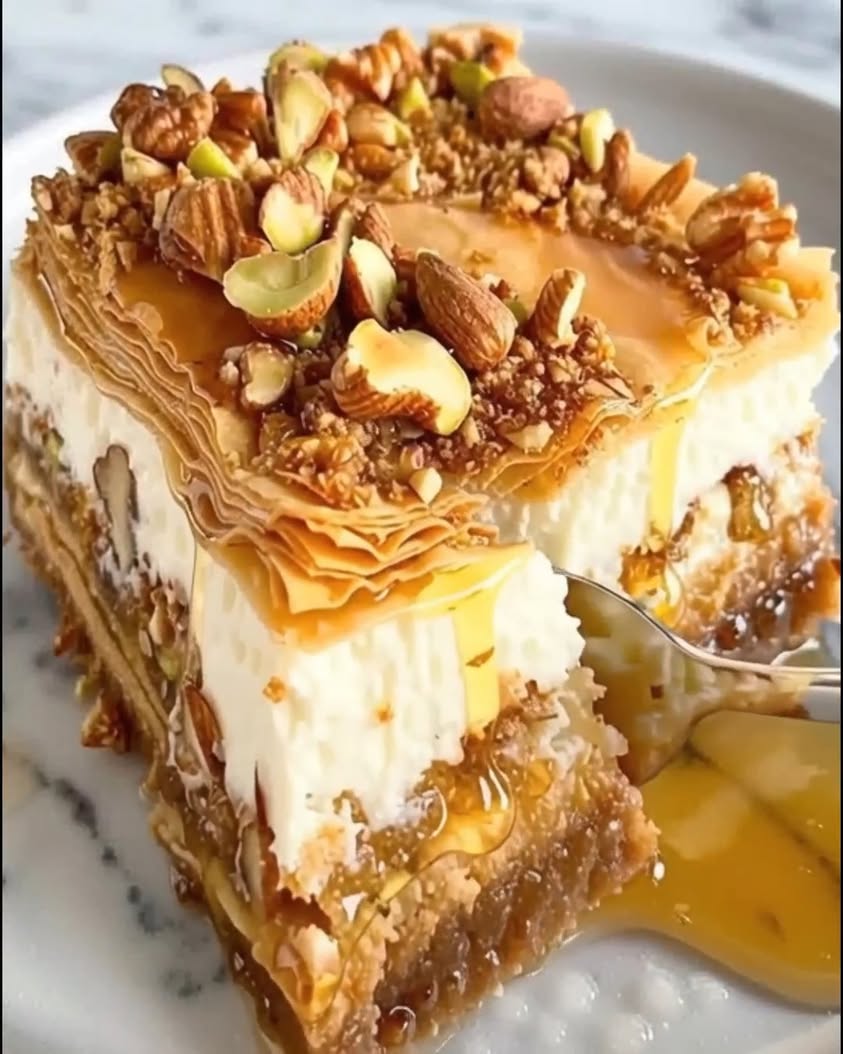
Baklava Cheesecake: A Honey-Soaked Phyllo Dessert Masterpiece
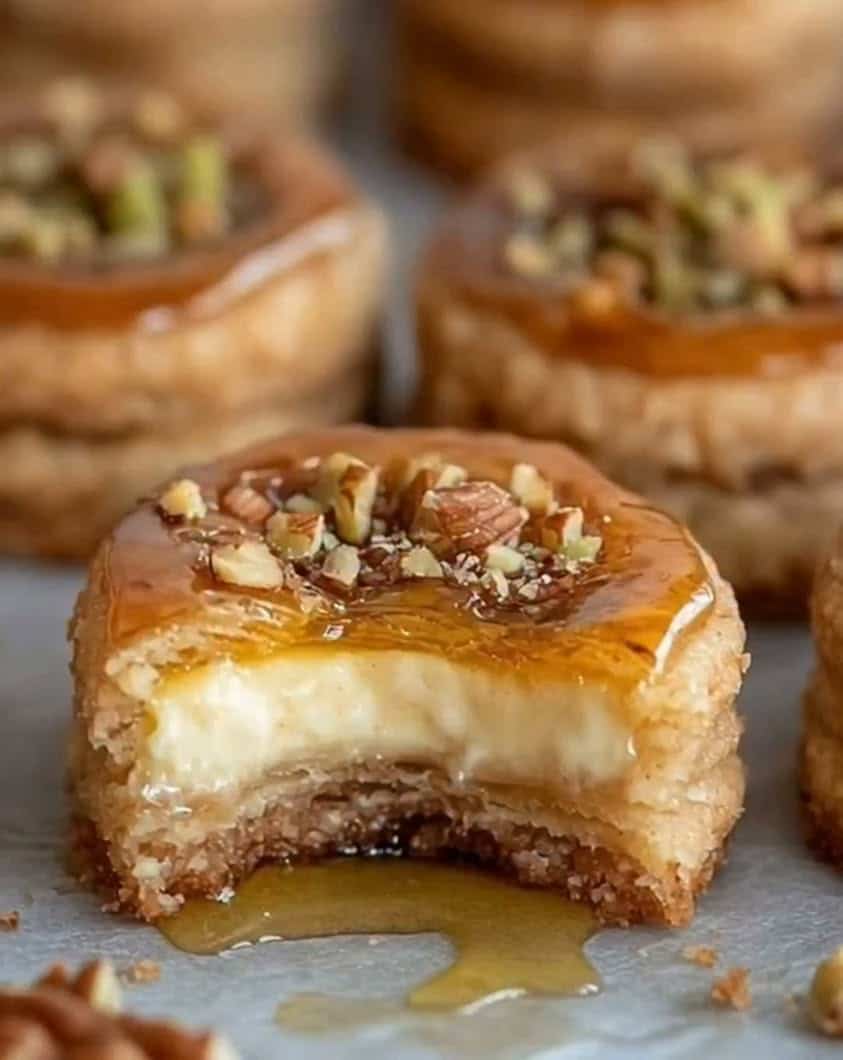
Imagine the crisp, buttery shatter of golden phyllo dough giving way to a sweet and spiced nut filling. Now, picture that classic flavor cradling a rich, impossibly creamy cheesecake center. Finally, envision the entire creation glistening with fragrant honey syrup. This is the magic of baklava cheesecake, a stunning dessert that marries two iconic treats into one unforgettable experience. Consequently, it is a showstopper that will have your guests asking for the recipe before they even finish their first bite.
This baklava cheesecake recipe is a labor of love, but the results are absolutely worth the effort. Furthermore, it transforms familiar ingredients like walnuts, cinnamon, and honey into something spectacularly new. Each forkful delivers a symphony of textures, from the flaky layers to the dense nut filling and the smooth, tangy cheesecake. Ultimately, it is a dessert that feels both comforting and luxurious, perfect for holidays, celebrations, or any time you want to create a truly special sweet ending.
Creating this dessert involves a few key steps, but the process is straightforward with a little patience. First, you will build a crisp phyllo crust layered with melted butter. Next, you will prepare a traditional baklava nut mixture. Then, you will whip up a simple, no-water-bath cheesecake batter. Finally, you will bake it all together and finish with a generous pour of warm honey syrup. The final product is a stunning, multi-layered dessert that is as beautiful as it is delicious.
Quick Recipe Highlights
- Flavor Profile: This baklava cheesecake delivers a perfect balance of sweet honey, warm cinnamon, and toasted nuts, all complemented by the subtle tang of cream cheese. The flavors are rich and complex, yet harmoniously blended.
- Texture: Experience a delightful contrast with every bite: shatteringly crisp phyllo, a crunchy nut layer, and a supremely creamy, dense cheesecake filling. The honey syrup adds a lovely sticky moisture that ties it all together.
- Aroma: As it bakes, your kitchen will fill with the warm, inviting scents of butter toasting, cinnamon and clove spicing the air, and sweet honey caramelizing. It is an aroma that promises pure indulgence.
- Visual Appeal: The finished baklava cheesecake boasts gorgeous, golden-brown, flaky layers on top. When sliced, it reveals striking horizontal stripes of phyllo, nut filling, and creamy white cheesecake.
- Skill Level Needed: This is an intermediate recipe. It requires careful handling of delicate phyllo dough and attention to mixing times for the cheesecake batter to prevent cracking. However, clear instructions make it achievable for confident bakers.
- Special Equipment: You will need a 9-inch springform pan, a food processor for the nuts, and a pastry brush for buttering the phyllo layers. A stand or hand mixer is also essential for the cheesecake filling.
Recipe Overview
- Difficulty Level: We rate this baklava cheesecake as intermediate. Primarily, the challenge lies in working with phyllo dough, which can dry out quickly. Additionally, achieving the perfect creamy cheesecake texture without a water bath requires precise mixing and baking. However, each step is broken down simply, so a careful home baker can absolutely master it.
- Category: This dessert falls squarely into the special occasion and holiday baking categories. It is also a fantastic project for experienced bakers looking to impress. Moreover, it fits into the fusion dessert trend, beautifully combining two classic recipes.
- Cuisine: This recipe is a creative fusion, drawing inspiration from Eastern Mediterranean and Middle Eastern pastry traditions (baklava) and classic American diner-style cheesecake. The result is a modern dessert that honors its roots while creating something entirely new.
- Cost: The cost is moderate, largely due to the quantity of nuts, quality honey, and multiple packages of cream cheese. Phyllo dough is relatively inexpensive. Overall, it is comparable to buying a premium dessert from a bakery but yields far more servings.
- Season: This baklava cheesecake is wonderful year-round but feels particularly festive during the fall and winter holidays. The warm spices pair beautifully with cooler weather. Conversely, it is also a stunning centerpiece for spring gatherings and summer celebrations when served slightly chilled.
- Occasion: It is perfect for Thanksgiving, Christmas, Eid, or any potluck where you want to be the talk of the table. Furthermore, it makes an extraordinary birthday cake for dessert lovers. It is also ideal for dinner parties where you want to offer a memorable, homemade finale.
Why You’ll Love This Recipe
First and foremost, the taste and texture of this baklava cheesecake are simply unparalleled. You get the nostalgic, honey-drenched flavor of baklava combined with the rich, creamy satisfaction of cheesecake in every single bite. The contrast between the crisp phyllo, crunchy nuts, and smooth filling creates a mouthfeel that is endlessly interesting. Consequently, it satisfies multiple dessert cravings at once, making it a universal crowd-pleaser that appeals to almost every palate.
From a convenience standpoint, this recipe is designed for success. Importantly, it uses a no-water-bath method for the cheesecake, simplifying the baking process significantly. While there are distinct components, they can be prepared in a logical sequence without overwhelming the cook. Additionally, many steps, like preparing the nut mixture or making the syrup, can be done ahead of time. Therefore, you can break up the work and assemble the dessert with confidence when you are ready to bake.
While this is an indulgent dessert, it offers some nutritional perspective when enjoyed in moderation. Nuts provide healthy fats, protein, and fiber. Honey, unlike refined white sugar, contains trace amounts of vitamins and antioxidants. Of course, the cream cheese and butter contribute to the richness. Ultimately, a small slice is incredibly satisfying, which naturally helps with portion control. You can savor a luxurious treat without needing a huge serving to feel content.
The social and entertaining value of this baklava cheesecake is immense. It is a conversation starter and a guaranteed showstopper on any dessert table. Bringing this to a gathering demonstrates care and effort, impressing hosts and guests alike. Moreover, it serves a large group, making it cost-effective for parties. The stunning visual appeal also makes it highly photogenic, perfect for sharing your baking triumph on social media or simply admiring on your own table.
Finally, this recipe is cost-effective and accessible. Compared to purchasing a similar dessert from a specialty bakery, making it at home saves a considerable amount of money. The ingredients are readily available in most well-stocked supermarkets. While phyllo dough might seem intimidating, it is found in the freezer aisle and is quite forgiving in this layered application. By following the detailed instructions, you can create a professional-quality, luxurious dessert at a fraction of the boutique price.
Historical Background and Cultural Significance
The origin story of this dessert is a tale of two iconic recipes. Baklava’s history is ancient and hotly debated, with roots potentially in the Assyrian empire around the 8th century B.C. The modern form, featuring layered phyllo dough, nuts, and syrup, was perfected in the kitchens of the Topkapi Palace in Istanbul during the Ottoman Empire. It spread throughout the Mediterranean and Middle East, becoming a cornerstone of festive and religious celebrations. Cheesecake, meanwhile, dates back to ancient Greece, where it was served to athletes. The creamy, cheese-based dessert evolved in Europe and found its rich, dense American form in New York City diners. This baklava cheesecake is a beautiful modern fusion of these two deep culinary lineages.
Both components hold immense cultural importance. Baklava is more than a sweet; it is a symbol of hospitality, celebration, and community. It is traditionally served during Eid, Christmas, and other significant holidays across many cultures. The careful layering of phyllo represents patience and skill. Cheesecake, particularly in America, symbolizes indulgence and celebration, often marking birthdays and anniversaries. By combining them, this recipe honors the celebratory spirit of both traditions. It creates a new dessert that respects its origins while appealing to a contemporary, global palate.
The evolution of the baklava cheesecake recipe is a testament to modern culinary creativity. As food culture has become more interconnected through travel and media, chefs and home bakers began experimenting with fusion desserts. The logical pairing of baklava’s crunchy, syrupy texture with cheesecake’s creamy base emerged as a natural and brilliant combination. Initially found in high-end patisseries, the concept has been adapted for the home kitchen. This particular recipe simplifies techniques without compromising flavor, making a once-chef-only creation accessible to passionate home bakers who want to explore the boundaries of traditional pastry.
Regional variations of this concept are already emerging, reflecting local tastes. For instance, some versions might use pistachios or almonds instead of walnuts, mirroring regional preferences in traditional baklava. Others might infuse the honey syrup with orange blossom or rose water for a distinct floral note. The cheesecake base could be flavored with lemon zest or a touch of mahleb (cherry pit spice) for added complexity. These adaptations show how the core idea of a baklava cheesecake is a fantastic canvas for personalization. Bakers can incorporate flavors from their own heritage or simply use their favorite nut blend to make the recipe uniquely theirs.
Ingredient Deep Dive
Phyllo dough is the architectural wonder of this baklava cheesecake. This paper-thin pastry of flour, water, and a little oil originated in the Ottoman Empire and requires immense skill to stretch by hand. For home bakers, frozen phyllo is a perfect, high-quality shortcut. It provides the essential flaky, crisp layers that define the texture. When selecting it, ensure the box is tightly sealed and free of frost crystals. Thaw it slowly in the refrigerator overnight, never at room temperature, to prevent condensation that makes the sheets gummy. Keep unused sheets covered with a damp towel while working to stop them from drying out and cracking.
Walnuts are the classic choice for the nut filling, offering a robust, slightly bitter flavor that balances the honey’s sweetness. They are rich in omega-3 fatty acids, antioxidants, and protein. For the best flavor, always buy walnuts in small quantities from a source with high turnover and store them in the freezer to prevent rancidity. Toast them lightly before chopping to deepen their nutty aroma. If you prefer, you can substitute with an equal mix of pistachios and almonds for a more traditional Middle Eastern profile, or use pecans for a richer, buttery note.
Cream cheese is the heart of the creamy center. For a baklava cheesecake with the best texture, use full-fat, brick-style cream cheese, not the spreadable kind in tubs. The higher fat content and stabilizers in block cream cheese ensure a dense, smooth, and sliceable filling. Always bring it to full room temperature before mixing; cold cream cheese will lead to a lumpy batter. When beating, mix just until the ingredients are incorporated and smooth. Over-beating incorporates too much air, which can cause the cheesecake to puff and then crack as it cools.
Honey is not just a sweetener here; it is the defining flavor agent. It adds floral notes, moisture, and a beautiful glossy sheen. Use a high-quality, flavorful honey like orange blossom, wildflower, or even a darker buckwheat honey for a more intense taste. The syrup is boiled briefly to thicken it slightly so it soaks into the layers properly instead of pooling. For the best absorption, pour the warm syrup over the hot, freshly baked dessert. The temperature difference helps the phyllo drink it up, creating that signature sticky-sweet texture without sogginess.
Common Mistakes to Avoid
- Using Cold Ingredients: Adding cold cream cheese or eggs to your batter will result in a lumpy, uneven cheesecake filling. Consequently, always ensure your dairy and eggs are at true room temperature for a perfectly smooth consistency.
- Overworking the Phyllo: Phyllo dough is delicate. Brushing butter too aggressively or tearing sheets can compromise the flaky layers. Instead, work gently and quickly, and do not worry about minor tears; they will be hidden in the layers.
- Over-mixing the Cheesecake Batter: Once you add the eggs, mix only until just combined. Over-beating incorporates excess air, which expands during baking and then collapses, leading to a sunken or cracked surface on your baklava cheesecake.
- Pouring Cold Syrup on a Cooled Cake: The honey syrup must be warm when it meets the hot baklava cheesecake. This allows it to soak in properly. If either is cold, the syrup will just sit on top, making the top layer soggy and the bottom dry.
- Not Letting it Cool Gradually: After baking, run a knife around the edge of the springform pan to release the cheesecake from the sides. This prevents it from pulling and cracking as it contracts during cooling. Then, let it cool completely at room temperature before refrigerating.
- Skipping the Toasted Nuts: Toasting the walnuts is a non-negotiable step. It removes raw bitterness and unlocks their deep, nutty flavor and aroma, which is essential for balancing the sweetness of the honey and cheesecake.
- Cutting Too Soon: Impatience is the enemy of a clean slice. You must chill the fully cooled baklava cheesecake for at least 8 hours, preferably overnight. This sets the cheesecake layer firmly, allowing you to cut through the crisp phyllo without squishing the filling.
- Using a Dull Knife: A sharp, thin-bladed knife is crucial for slicing. Dip it in hot water and wipe it clean between each cut. This technique glides through the sticky phyllo and creamy filling, giving you picture-perfect portions.
Essential Techniques
Buttering the phyllo layers is the most critical technique for achieving that signature flaky, shatteringly crisp texture. Use a soft-bristled pastry brush and melted, cooled butter. Brush each sheet lightly but evenly, ensuring you reach the edges. The butter acts as both an adhesive between layers and a frying agent in the oven, causing the dough to puff and separate into hundreds of delicate leaves. The key is speed and a gentle touch to prevent the thin sheets from tearing. Do not drench the sheets; a thin, even coat is sufficient. Proper buttering guarantees a golden, layered crust that holds its structure against the moist filling.
Creating the cheesecake batter requires a specific mixing method to avoid incorporating air. Start by beating the room-temperature cream cheese alone until it is completely smooth and free of lumps. Next, add the sugar and beat again until just combined. Then, add the flavorings like vanilla. Finally, add the eggs one at a time, mixing on low speed until each is just incorporated. Stop mixing as soon as the last streak of yolk disappears. Over-mixing after adding the eggs is the primary cause of cracks, as it whips air into the batter that expands and then deflates during the cooling process.
Preparing the honey syrup correctly ensures proper flavor and texture integration. Combine the honey, water, sugar, and any aromatics like lemon juice or cinnamon in a saucepan. Bring it to a simmer, stirring just until the sugar dissolves. Then, let it simmer gently for about 10 minutes without stirring. This allows it to thicken slightly so it will coat the baklava cheesecake rather than soak straight through to the bottom. Let it cool for a few minutes so it is warm but not boiling when you pour it over the hot dessert. The warm syrup will be readily absorbed by the hot phyllo, flavoring every layer.
Pro Tips for Perfect Baklava Cheesecake
For the ultimate phyllo crust, sprinkle a very fine layer of your ground nut mixture between every few sheets of buttered phyllo. This little trick adds extra flavor and helps separate the layers for maximum flakiness as it bakes.
Always use a springform pan for this dessert. The removable sides are essential for releasing the baklava cheesecake without destroying the delicate phyllo walls. For extra security against leaks, wrap the outside bottom of the pan in aluminum foil before adding the crust.
To prevent a soggy bottom, pre-bake the phyllo crust for about 10 minutes before adding the fillings. This initial bake sets the bottom layers, creating a barrier that helps them stay crisp under the weight of the wet cheesecake batter and nut filling.
If you notice the top of your baklava cheesecake browning too quickly during the long bake, tent it loosely with a piece of aluminum foil. This will shield the phyllo from direct heat, allowing the center to cook through without the top burning.
For clean slicing, use a long, thin, sharp knife. Dip the blade in very hot water and wipe it dry before each cut. The heat helps the knife glide smoothly through the sticky honey and crisp layers, resulting in professional-looking slices.
Let the dessert rest after adding the syrup. Once you pour the warm honey syrup over the hot baklava cheesecake, let it sit at room temperature for at least two hours. This allows the syrup to fully penetrate and flavor every component before you chill it.
Garnish just before serving. Sprinkle with finely chopped toasted nuts or a light dusting of ground cinnamon. Add fresh edible flowers or a drizzle of extra honey for a beautiful, restaurant-quality presentation on each plate.
Variations and Adaptations
Regional variations can easily transform the flavor profile of your baklava cheesecake. For a Turkish-inspired version, use primarily pistachios and add a tablespoon of rose water to the honey syrup. A Greek variation might feature a blend of walnuts and almonds with a splash of brandy in the syrup. For an American twist, use pecans and a dash of bourbon in the cheesecake batter. These simple swaps connect the dessert to different culinary traditions while maintaining the stunning layered structure that makes it so special.
Seasonal adaptations are simple and effective. In the fall, add a teaspoon of pumpkin pie spice to the nut mixture. For a winter holiday version, spike the honey syrup with a cinnamon stick and a few whole cloves while simmering. In the spring, use orange blossom honey and add a teaspoon of orange zest to the cheesecake filling. Summer calls for a lighter touch; serve slices with a side of fresh berries and a dollop of lightly sweetened whipped cream to cut through the richness.
Dietary modifications are entirely possible. For a gluten-free baklava cheesecake, use a certified gluten-free phyllo dough, which is increasingly available. A dairy-free version requires vegan butter for the phyllo and a high-quality vegan cream cheese alternative for the filling. To make it vegan, also use a flax egg substitute and agave nectar in place of honey. Note that textures will vary slightly with substitutions, but the core concept of layered crispness and creamy filling remains achievable.
Flavor variations let you personalize the dessert. Add a layer of semisweet chocolate chips between the nut layer and the cheesecake batter. Infuse the honey syrup with fresh thyme or a strip of lemon peel for an herbal note. Mix a tablespoon of instant espresso powder into the cheesecake batter for a mocha baklava cheesecake. The basic recipe is wonderfully adaptable, encouraging you to experiment with flavors you love.
Serving and Presentation Guide
Plating this dessert is part of the experience. Use a sharp, thin knife to cut clean slices, wiping the blade between cuts. Place each slice on a simple, white dessert plate to let the beautiful layers stand out. You can also serve it on a small pool of thinned Greek yogurt or a sprinkle of crushed nuts for added texture on the plate. For a family-style presentation, leave the whole baklava cheesecake on a cake stand and let guests serve themselves, showcasing the impressive cross-section of layers.
Garnishing adds the final touch of elegance. A light dusting of confectioners’ sugar or ground cinnamon over the top is classic. Alternatively, sprinkle each slice with finely chopped, brightly green pistachios for a color contrast. A tiny drizzle of extra honey or a few edible gold flakes makes it exceptionally luxurious. A fresh mint leaf on the side of the plate adds a pop of color and a hint of freshness that complements the sweet, rich flavors perfectly.
Traditional accompaniments are simple. In many cultures, baklava is served with a strong, bitter Turkish coffee or a glass of cold milk. For this fusion dessert, those pairings still work wonderfully. A small cup of espresso cuts through the sweetness. For a modern twist, offer a scoop of vanilla bean ice cream or a dollop of lightly sweetened whipped cream on the side. The cool, creamy element provides a delightful temperature and texture contrast to the sticky, room-temperature cake.
Wine and Beverage Pairing
Wine pairings should complement the dessert’s sweetness without overpowering it. A golden, honeyed Sauternes or a late-harvest Riesling is a classic and perfect match. Their natural sweetness and acidity balance the richness of the baklava cheesecake. For a fortified wine option, try a Pedro Ximénez sherry or a rich Tawny Port; their nutty, raisiny flavors echo the walnut filling beautifully. If you prefer red, a light, fruity Lambrusco with its slight effervescence can be a surprising and delightful partner.
Non-alcoholic alternatives are just as important. A strong, black Turkish coffee or Greek coffee is the most traditional and excellent choice. Its bitterness provides a perfect counterpoint to the honey. For a cooler option, serve with a glass of cold, whole milk or a creamy almond milk. Sparkling water with a twist of lemon or orange helps cleanse the palate between bites. A pot of mint tea or a spiced chai tea also pairs wonderfully, offering warmth and aromatic complexity.
Storage and Shelf Life
Proper storage is key to maintaining texture. Once cooled and syruped, cover the baklava cheesecake tightly with plastic wrap or store it in an airtight container. It must be refrigerated due to the dairy content. Under these conditions, it will keep beautifully for up to 5 days. The phyllo will soften slightly over time as it continues to absorb moisture from the filling and syrup, but it will remain delicious. For the best textural experience, however, enjoy it within the first 2-3 days.
Freezing is an option for longer storage. Wrap the fully chilled and set dessert tightly in several layers of plastic wrap, then in aluminum foil. Freeze for up to 2 months. To serve, thaw it overnight in the refrigerator. Do not freeze before adding the honey syrup, as it can create ice crystals and a soggy texture. Add the syrup after thawing for the best results. Note that the phyllo will lose some of its crispness after freezing, but the flavors will remain intact.
Make Ahead Strategies
You can break this recipe into stages over two days. On Day 1, prepare the honey syrup and let it cool completely at room temperature, then refrigerate. Also, toast and chop the nuts, storing them in an airtight container. You can even layer and pre-bake the phyllo crust in the springform pan, then let it cool and store it, covered, at room temperature overnight. On Day 2, bring your ingredients to temperature, assemble the nut and cheesecake layers, and bake. Finally, re-warm the syrup and pour it over the hot dessert. This staged approach makes the process much more manageable.
Scaling Instructions
This recipe is designed for a 9-inch springform pan and serves 12 generously. To make a smaller, 6-inch baklava cheesecake, halve all the ingredients. Use a 6-inch springform pan and reduce the baking time by about 15-20 minutes, watching for visual cues. To double the recipe for a crowd, use two 9-inch pans; do not try to bake one giant cake, as the center will not set properly. Baking times may need a slight increase for two pans in the oven simultaneously. Always rely on the jiggle test—the center should be set but still have a slight wobble—rather than strict time.
Nutritional Deep Dive
A single serving of this indulgent dessert is rich in energy. It provides a balance of carbohydrates from the phyllo, honey, and sugar, healthy fats from the nuts and butter, and a moderate amount of protein from the nuts, cream cheese, and eggs. The walnuts contribute omega-3 fatty acids, which are beneficial for heart health. Honey offers trace amounts of minerals and antioxidants. While it is a calorie-dense treat, the complexity of flavors and textures means a small slice is deeply satisfying, which can naturally aid in portion control. Enjoy it as an occasional celebratory food within a balanced diet.
Dietary Adaptations
For a gluten-free baklava cheesecake, seek out certified gluten-free phyllo dough. Brands like Athens and Fillo Factory offer gluten-free versions in some markets. Ensure all other ingredients, like vanilla extract, are certified gluten-free. The method remains identical. For a dairy-free version, use a high-quality vegan butter stick for brushing the phyllo and a plain, firm vegan cream cheese for the filling. Coconut cream can sometimes be used to supplement the texture. A vegan adaptation requires all the above, plus replacing the eggs with a commercial egg replacer or a flax egg mixture, and using agave nectar instead of honey.
Troubleshooting Guide
If your phyllo layers are soggy, the most likely cause is under-baking or pouring cold syrup on a cooled cake. Ensure you pre-bake the crust and pour warm syrup over the hot dessert straight from the oven. If the cheesecake center cracks, it was likely over-mixed, over-baked, or cooled too quickly. Next time, mix less after adding eggs, bake until just set with a slight wobble, and let it cool gradually in the turned-off oven with the door ajar. If the nuts taste bitter, they may be rancid or not toasted enough. Always taste nuts before using and toast them until fragrant to enhance their flavor.
Recipe Success Stories
Bakers who have tried this recipe often rave about the stunning presentation and the “wow” factor it delivers. Many report that while it requires attention to detail, the step-by-step process is clear and leads to reliable results. A common success tip from the community is to absolutely not skip the step of running a knife around the edge after baking; this simple action is credited with preventing countless cracks. Others love sharing their variations, such as adding a layer of dark chocolate or using a mix of different nuts. Photographers note that slicing the chilled cake with a hot, wet knife and capturing the side view to show all the layers makes for the most beautiful food photos.
Frequently Asked Questions
Can I use frozen phyllo dough? Absolutely. Frozen phyllo is the standard for home bakers. The key is to thaw it slowly in the refrigerator for 24 hours, not at room temperature, to prevent moisture buildup that makes it sticky.
My phyllo keeps tearing. What should I do? Do not panic. Minor tears are normal and will be hidden within the layers. Work quickly, keep other sheets covered with a damp towel, and use a gentle hand with the pastry brush.
Can I make this without a springform pan? It is not recommended. The removable sides are crucial for releasing the dessert without destroying the delicate phyllo crust. A regular cake pan will not work for this recipe.
How do I know when the cheesecake is done baking? The edges should be set, and the center should have a slight jiggle, like Jell-O, when you gently shake the pan. It will firm up completely as it chills.
Why did my cheesecake crack? The top three causes are over-mixing the batter (incorporating too much air), over-baking, or cooling too quickly. Follow the mixing instructions precisely and allow for gradual cooling.
Can I use a different type of nut? Yes. Pistachios, almonds, pecans, or a mix are all excellent. The total volume should remain the same. Toast any nuts you use for the best flavor.
How far in advance can I make this? You can fully assemble, bake, syrup, and chill it 1-2 days before serving. The flavors actually improve as they meld. Store it covered in the refrigerator.
Is it supposed to be served cold or at room temperature? It is best served slightly chilled but not ice-cold. Take it out of the refrigerator 20-30 minutes before serving to allow the flavors and textures to soften slightly.
Can I freeze the leftovers? Yes. Wrap individual slices or the whole cake tightly and freeze for up to 2 months. Thaw in the refrigerator. The phyllo will be less crisp but still tasty.
What’s the best way to cut it cleanly? Use a long, sharp, thin-bladed knife. Dip it in very hot water and wipe it dry before each cut. This method gives you clean slices through the sticky layers.
Additional Resources
If you loved mastering this baklava cheesecake, you might enjoy other layered dessert projects. Consider trying a classic Greek spanakopita to practice your phyllo skills in a savory context. For more cheesecake adventures, a Basque burnt cheesecake offers a wonderfully creamy, caramelized alternative. To dive deeper into nut-based desserts, a traditional walnut baklava or a pistachio ma’amoul cookie recipe would be perfect next steps. Exploring the world of honey, from light acacia to dark chestnut varieties, can also inspire new syrup flavors for your future baking creations.
PrintHoney Baklava Cheesecake
- Total Time: 45 minutes
- Yield: 12
Description
A decadent fusion dessert featuring flaky phyllo layers, a sweet nutty baklava filling, and a creamy cheesecake center, all drenched in honey for the ultimate treat.
Ingredients
- 1 package (16 oz) phyllo dough, thawed
- 1 cup unsalted butter, melted
- 2 cups walnuts, finely chopped
- 1 cup pistachios, finely chopped
- 1/2 cup granulated sugar
- 1 tsp ground cinnamon
- 16 oz cream cheese, softened
- 1 cup granulated sugar
- 3 large eggs
- 1 tsp vanilla extract
- 1 cup honey
- 1/2 cup water
- 1 tsp lemon juice
Instructions
- Preheat oven to 350°F (175°C). Brush a 9×13-inch baking dish with melted butter. Layer 8 sheets of phyllo dough in the dish, brushing each sheet with butter.
- In a bowl, mix walnuts, pistachios, 1/2 cup sugar, and cinnamon. Sprinkle half of the nut mixture over the phyllo layers.
- In another bowl, beat cream cheese, 1 cup sugar, eggs, and vanilla until smooth. Pour over the nut layer in the dish.
- Sprinkle remaining nut mixture over the cheesecake layer. Top with 8 more phyllo sheets, brushing each with butter. Score the top into diamond shapes.
- Bake for 45-50 minutes until golden. While baking, simmer honey, water, and lemon juice for 10 minutes. Pour hot syrup over the baked dessert. Cool completely before serving.
Notes
You can customize the seasonings to taste.
- Prep Time: 15 minutes
- Cook Time: 30 minutes
- Method: Dessert
- Cuisine: Fusion