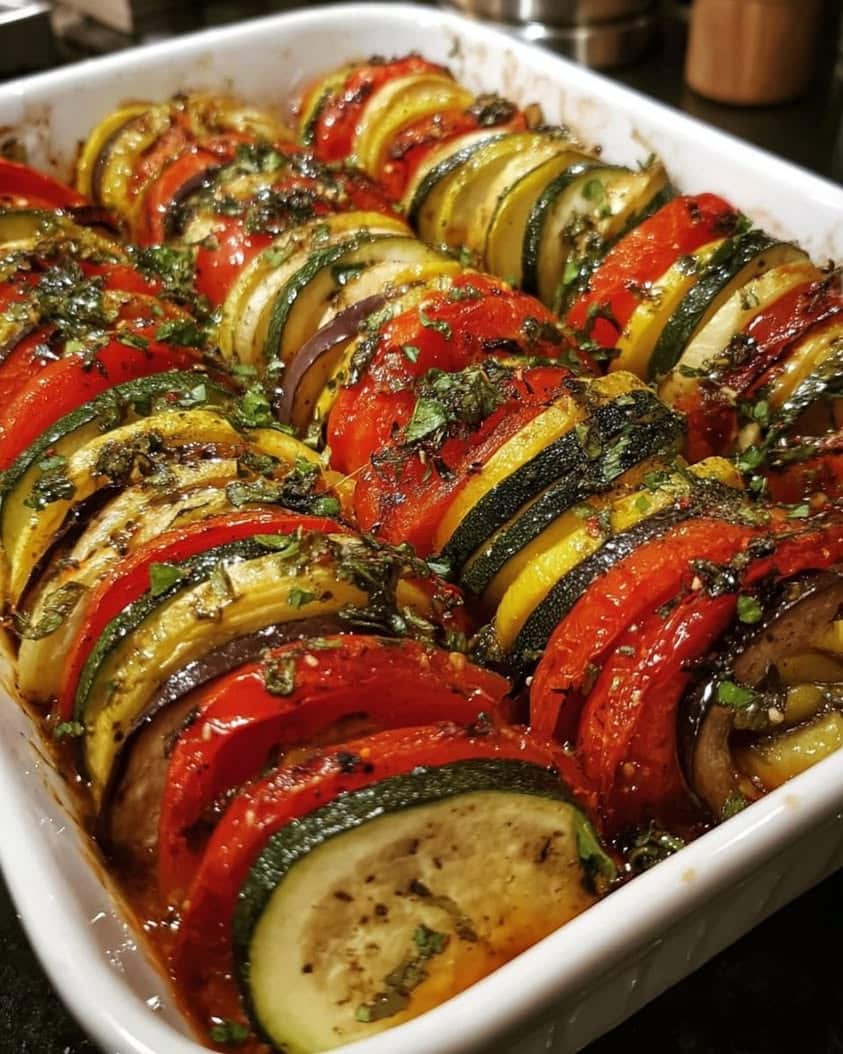
Easy Baked Ratatouille Recipe with Tomatoes, Zucchini, and Eggplant: A Rustic French Classic
Imagine a dish that captures the very essence of a sun-drenched French summer garden. This easy baked ratatouille recipe with tomatoes, zucchini, and eggplant does exactly that. It transforms humble, peak-season vegetables into a vibrant, aromatic masterpiece. The magic happens in the oven, where the vegetables slowly roast and caramelize, concentrating their natural sugars and melding their flavors into a harmonious, savory-sweet stew. Consequently, you get a meal that is both deeply comforting and impressively elegant.
This baked ratatouille recipe is a celebration of simplicity. It requires minimal hands-on effort, allowing the oven to do the heavy lifting. As the vegetables bake, your kitchen fills with an intoxicating aroma of garlic, herbs, and roasting produce. The result is a versatile dish that can serve as a stunning vegetarian main course, a hearty side for grilled meats, or a flavorful topping for pasta or crusty bread. Ultimately, it’s a foolproof way to enjoy the best of summer’s bounty in one delicious, healthy package.
Quick Recipe Highlights
- Flavor Profile: This dish offers a beautiful balance of sweet, savory, and tangy notes. The tomatoes provide a bright acidity, the zucchini adds a mild sweetness, and the eggplant contributes a deep, meaty umami. Fresh herbs and garlic tie everything together with aromatic complexity.
- Texture: The baked ratatouille features a wonderful contrast of textures. The zucchini and eggplant become meltingly tender, while the tomatoes break down into a luscious sauce. The edges of the vegetables caramelize slightly, adding delightful little bites of concentrated flavor.
- Aroma: While baking, the kitchen fills with the quintessential scent of Provençal cooking. You’ll smell the earthy fragrance of roasting eggplant, the sweet perfume of tomatoes, and the pungent, herbal notes of thyme and garlic mingling with olive oil.
- Visual Appeal: This dish is a feast for the eyes with its rainbow of colors. The deep purple of the eggplant, vibrant green of the zucchini, and rich red of the tomatoes create a stunning mosaic that looks beautiful served straight from the baking dish.
- Skill Level Needed: This is an ideal recipe for cooks of all levels. It involves straightforward slicing, simple layering, and passive oven time. There’s no complicated technique required, making it perfect for weeknight dinners or impressive enough for guests.
- Special Equipment: You only need a sharp knife, a cutting board, and a large baking dish or casserole pan. A mandoline slicer can speed up prep for uniformly thin slices, but it’s completely optional.
Recipe Overview
- Difficulty Level: We rate this easy baked ratatouille recipe as “Easy” for several reasons. First, the preparation involves basic knife skills—simply slicing vegetables. Second, there is no fussy sautéing in batches; everything bakes together. Finally, the oven does most of the work, requiring only an occasional check. It’s virtually impossible to mess up.
- Category: This versatile dish fits multiple categories beautifully. It’s a complete vegetarian and vegan main course, a substantial and colorful side dish for proteins like chicken or fish, and a fantastic component for meal prep. Additionally, it can be a stunning centerpiece for a plant-based feast.
- Cuisine: This recipe is firmly rooted in the rustic cuisine of Provence in southeastern France. Ratatouille is a traditional Provençal stewed vegetable dish. This baked version simplifies the classic stovetop method while honoring its core ingredients and flavors, celebrating the region’s sun-ripened produce.
- Cost: This is an incredibly cost-effective meal, especially in the summer when these vegetables are at their peak and most affordable. The main ingredients are all vegetables, with olive oil, garlic, and herbs as pantry staples. It yields a large quantity for a very modest investment.
- Season: Late summer and early fall are the absolute best seasons for this easy baked ratatouille recipe. This is when tomatoes, zucchini, and eggplant are at their flavorful peak, being sweet, juicy, and abundant. Making it in-season ensures the deepest, most authentic taste.
- Occasion: This dish is wonderfully adaptable for any occasion. It’s casual enough for a simple family dinner, yet elegant enough for a dinner party. It’s perfect for potlucks, holiday gatherings needing a vibrant vegetable side, or for weekly meal prep for healthy lunches.
Why You’ll Love This Recipe
First and foremost, the taste and texture of this easy baked ratatouille recipe are utterly irresistible. Each vegetable softens and sweetens in the oven, creating a melt-in-your-mouth experience. The tomatoes collapse into a rich, savory sauce that coats every slice. Furthermore, the edges of the vegetables caramelize, offering little bursts of deep, concentrated flavor that contrast beautifully with the tender interiors. It’s a symphony of summer in every single bite.
From a convenience standpoint, this recipe is a true winner. Unlike traditional stovetop ratatouille that requires sautéing each vegetable separately, this version uses a streamlined “dump and bake” method. You simply slice, layer, season, and let the oven work its magic. This hands-off approach frees you up to prepare other parts of your meal or simply relax. Moreover, it results in fewer dishes to wash, which is always a bonus.
Nutritionally, this dish is a powerhouse. It’s packed with vitamins, minerals, and antioxidants from its colorful array of vegetables. The olive oil provides heart-healthy monounsaturated fats. It’s naturally gluten-free, vegan, and low in calories yet high in volume and fiber, making it incredibly satisfying. Therefore, it supports a healthy lifestyle without sacrificing an ounce of flavor or comfort.
For social and entertaining value, this baked ratatouille is a showstopper. Its vibrant appearance is guaranteed to draw compliments. It serves a crowd easily and can be made ahead of time, actually improving in flavor as it sits. It accommodates various dietary preferences seamlessly, taking the stress out of menu planning. Consequently, you can enjoy your own party knowing you’ve served something beautiful and delicious.
Finally, the cost-effectiveness and accessibility of this recipe are unmatched. The ingredients are humble, seasonal, and easy to find at any grocery store or farmers market. You can feed a large family or group of friends on a very modest budget. It turns inexpensive produce into a dish that feels luxurious and special. In short, this easy baked ratatouille recipe with tomatoes, zucchini, and eggplant delivers maximum flavor and satisfaction with minimal effort and expense.
Historical Background and Cultural Significance
The origin story of ratatouille is deeply tied to the land and climate of Provence. It emerged as a humble peasant dish, a brilliant way for farmers and home cooks to use up the abundant summer harvest. The name itself comes from the French verbs “ratouiller” and “tatouiller,” which are old slang meaning “to stir up” or “to toss.” Initially, it was a simple, economical stew made with whatever vegetables were on hand, slow-cooked in a pot over the fire.
Culturally, ratatouille is more than just food; it’s a symbol of Provençal identity and the Mediterranean way of life. It represents the French concept of “terroir”—the taste of a specific place. The dish encapsulates the sun, soil, and tradition of southern France. It’s a staple at family gatherings and summer festivals. Interestingly, its global popularity soared after the 2007 Pixar film of the same name, which romanticized the dish and the artistry of French cooking.
The evolution of the recipe from a stovetop stew to this easy baked ratatouille recipe reflects modern cooking preferences. The traditional method involves sautéing each vegetable separately in olive oil before combining them to stew, which preserves their individual textures. The baked method, sometimes called “ratatouille confit byaldi,” gained fame from the movie and offers a more presentation-friendly, layered approach. This version simplifies the process while achieving a similar, if not more caramelized, flavor profile.
Regional variations of ratatouille exist throughout the Mediterranean. In Italy, a similar dish is called “ciambotta” or “caponata” (though caponata includes sweet and sour elements). In Spain, “pisto manchego” is a close cousin. Each region uses its local oils, herbs, and vegetable ratios. Some French cooks insist on a specific order of adding vegetables, while others, like in this easy baked version, embrace a more flexible, combined approach. The core principle remains: celebrating seasonal vegetables through slow, loving cooking.
Ingredient Deep Dive
Eggplant is the cornerstone that provides a meaty, substantial texture to this easy baked ratatouille recipe. Historically, eggplant traveled from Asia to the Mediterranean via Arab traders. It’s rich in fiber, antioxidants like nasunin found in its skin, and vitamins. When selecting, choose firm, heavy eggplants with smooth, shiny skin and a bright green cap. Avoid those with wrinkles or soft spots. To prevent bitterness, you can salt slices and let them sweat for 30 minutes before rinsing and patting dry, though this step is often unnecessary with modern, less-bitter varieties.
Zucchini, or courgette, adds a delicate sweetness and lightness. A summer squash, it’s native to the Americas but was cultivated into its modern form in Italy. It’s low in calories and a good source of vitamin C, potassium, and manganese. Choose small to medium-sized zucchini that feel firm and have vibrant, unblemished skin. Larger zucchinis can be seedy and watery. There’s no need to peel them; the skin adds color and nutrients. For best texture in your baked ratatouille, slice it uniformly so it cooks evenly with the other vegetables.
Tomatoes form the saucy, tangy base of the dish. In this recipe, ripe Roma or plum tomatoes are ideal for their meaty flesh and lower water content. Tomatoes are packed with lycopene, a powerful antioxidant enhanced by cooking. Select tomatoes that are deeply colored, firm yet slightly yielding to gentle pressure, and fragrant at the stem end. Out of season, canned whole San Marzano tomatoes, crushed by hand, are an excellent substitute. They provide consistent, year-round flavor and are a staple in many modern interpretations of this classic.
Extra Virgin Olive Oil is not just a cooking medium; it’s a key flavor component. Use a good-quality, fruity olive oil for the best results. It carries the fat-soluble flavors of the herbs and garlic and helps the vegetables caramelize. Olive oil is central to the Mediterranean diet, linked to heart health. Fresh Herbs—typically thyme, oregano, or herbes de Provence—provide the aromatic signature. Fresh is always best, but dried herbs work in a pinch; use about one-third the amount. Garlic adds indispensable pungent depth. Always use fresh cloves, minced or thinly sliced, for the most vibrant flavor.
Common Mistakes to Avoid
- Cutting Vegetables Too Thick or Unevenly: This leads to inconsistent cooking. Some pieces will be mushy while others remain crunchy. Aim for uniform slices, about 1/4-inch thick, to ensure everything bakes evenly and achieves the perfect tender texture.
- Skipping the Salt Layering: Underseasoning is a common pitfall. Vegetables need ample salt to bring out their natural flavors. Season each layer as you build the dish, not just on top. Remember, the salt will penetrate and season the vegetables from within as they release their juices.
- Using a Baking Dish That’s Too Small: Overcrowding the pan steams the vegetables instead of roasting them. You want them in a relatively single layer with a little overlap. A crowded dish will result in a watery, steamed ratatouille rather than one with concentrated, caramelized flavors.
- Not Preheating the Oven: Starting in a cold oven can make the vegetables stew in their own liquid for too long. A properly preheated oven ensures immediate roasting action, helping to evaporate excess moisture quickly and promote browning from the start.
- Stirring During Baking: Resist the urge to stir! The layered structure allows for proper heat circulation and caramelization. Stirring will break down the vegetables prematurely and prevent those delicious crispy edges from forming on top.
- Under-baking: Removing the dish too early means the vegetables won’t have time to fully soften and meld their flavors. The tomatoes need to break down completely into a sauce. Bake until the top is beautifully spotted with brown and the vegetables are fork-tender.
- Using Old, Out-of-Season Produce: The flavor of your easy baked ratatouille recipe depends entirely on the quality of the vegetables. Winter greenhouse tomatoes and woody zucchini will yield a bland result. Whenever possible, make this dish in season for the best taste.
- Forgetting to Let it Rest: Serving immediately from the oven is tempting, but letting it rest for 10-15 minutes allows the juices to redistribute. This resting period also brings the temperature to a perfect, palatable level and lets the flavors settle and intensify.
Essential Techniques
Uniform Slicing: This is the most critical prep technique for an even-cooking easy baked ratatouille recipe. Consistent thickness ensures all vegetables soften at the same rate. Use a sharp chef’s knife and take your time. Alternatively, a mandoline slicer set to 1/4-inch guarantees perfect slices in seconds, but always use the safety guard. The visual result of even slices is also part of the dish’s rustic charm.
Layering, Not Mixing: Arranging the sliced vegetables in a concentric, overlapping pattern serves multiple purposes. Firstly, it creates a stunning presentation. Secondly, it allows heat and steam to circulate evenly between the slices, promoting uniform cooking. Finally, it prevents the vegetables from becoming a homogenous mush, preserving some individual texture. Simply alternate the vegetables in a spiral from the outer edge of the dish to the center.
Seasoning in Layers: Don’t just sprinkle salt and pepper on top. As you build each layer of vegetables, give them a light seasoning. This ensures the seasoning penetrates the entire dish, not just the top layer. Think of it as seasoning the ratatouille from the inside out. This technique builds depth of flavor that you simply can’t achieve by seasoning only at the end.
High-Heat Roasting: Baking at a relatively high temperature (around 400°F) is essential. This heat quickly evaporates the water released by the vegetables, concentrating their sugars and encouraging caramelization. If the oven is too low, the vegetables will stew and become watery. The high heat is what transforms simple sliced veggies into a rich, complex, and deeply flavorful dish.
Pro Tips for Perfect Easy Baked Ratatouille
Salt the Eggplant (Optional but Effective): If you’re using larger globe eggplants or are concerned about bitterness, salt the slices and let them sit for 30 minutes. This draws out excess moisture and any bitter compounds. Rinse and pat them thoroughly dry before assembling. This step can yield a firmer, more concentrated eggplant texture.
Add a Flavor Base: Before layering your sliced vegetables, spread a thin layer of tomato sauce or passata on the bottom of the baking dish. You can sauté a chopped onion and bell pepper until soft, then mix it with crushed tomatoes. This creates a flavorful “bed” that the vegetables roast into, adding another dimension of taste.
Fresh Herbs at the End: While dried herbs are fine for baking, finish the dish with a flourish of fresh herbs. Sprinkle chopped fresh basil, parsley, or chives over the hot ratatouille just before serving. The heat will wilt them slightly, releasing their brightest, most aromatic oils and adding a pop of fresh color and flavor.
Use the Best Olive Oil You Can: Since olive oil is a primary flavor carrier, its quality matters. A robust, fruity extra virgin olive oil will impart a wonderful flavor to the finished dish. Drizzle a little extra over the top after baking for a fresh, peppery finish that elevates the entire experience.
Let it Cool for Maximum Flavor: Ratatouille is one of those dishes that often tastes even better the next day. The flavors continue to meld and deepen as it sits. If you can plan ahead, make it a few hours before serving, or even the day before. Gently reheat it or serve it at room temperature.
Check for Doneness with a Fork: The visual cue is a nicely browned top, but the true test is tenderness. Insert a fork into the center of the dish; it should slide into the eggplant and zucchini with no resistance. The tomatoes should be completely broken down and saucy.
Variations and Adaptations
Regional Variations: To mimic different Mediterranean styles, tweak your herbs and additions. For an Italian twist, use oregano and basil, and add a layer of sliced mozzarella or Parmesan in the last 10 minutes of baking. For a Spanish “pisto” feel, include diced green bell pepper and finish with a drizzle of sherry vinegar.
Seasonal Adaptations: While summer is prime time, you can adapt this easy baked ratatouille recipe for other seasons. In winter, use a base of canned San Marzano tomatoes and add heartier vegetables like cubed butternut squash or parsnips, adjusting the bake time as needed. The core technique remains wonderfully flexible.
Dietary Modifications: This dish is naturally vegan and gluten-free. To add protein for a complete meal, mix in a can of drained chickpeas or white beans before baking. For a richer, non-vegan version, scatter grated Gruyère or Parmesan cheese over the top for the last 15 minutes of baking until golden and bubbly.
Flavor Variations: Introduce different flavor profiles with spice blends. A pinch of smoked paprika or red pepper flakes adds warmth. For a Middle Eastern flair, season with cumin and coriander, and finish with pomegranate molasses and mint. A splash of balsamic glaze after baking adds a sweet-tart complexity.
Texture Modifications: For a more stew-like, traditional ratatouille texture, chop all the vegetables into 1-inch cubes instead of slicing. Toss them with the oil and herbs in a bowl, then spread in the baking dish. The bake time may be slightly shorter. This chunkier version is perfect for spooning over grains.
Presentation Alternatives: For individual servings, layer the sliced vegetables in small ramekins or mason jars. Bake until tender for a personalized touch. Alternatively, arrange the slices vertically in a round baking dish for a stunning “tian” presentation that looks incredibly professional.
Serving and Presentation Guide
Plating Techniques: For a family-style presentation, serve the easy baked ratatouille directly from its beautiful baking dish at the table. Use a large, shallow spoon to scoop down through the layers. For individual plates, carefully lift out a vertical section to showcase all the colorful layers. Place it beside or over a bed of creamy polenta, couscous, or quinoa.
Garnishing Ideas: Garnishes add freshness and contrast. A handful of torn fresh basil leaves, flat-leaf parsley, or microgreens scattered on top is classic. A drizzle of high-quality extra virgin olive oil or a balsamic reduction adds shine and flavor. For texture, sprinkle with toasted pine nuts, slivered almonds, or crispy breadcrumbs.
Traditional Accompaniments: In Provence, ratatouille is often served as a side to simply grilled lamb, chicken, or fish. It’s also perfect with a fried egg on top for a hearty breakfast or brunch. A crusty baguette is non-negotiable for soaking up every last drop of the delicious juices.
Modern Serving Suggestions: Think beyond the plate. Use leftover ratatouille as a filling for omelets or frittatas. Toss it with hot pasta and a little pasta water for a quick sauce. Spoon it onto toasted crusty bread for a bruschetta, or use it as a flavorful topping for baked potatoes or savory crepes.
Temperature Considerations: This dish is incredibly versatile temperature-wise. It’s sublime served hot from the oven, comforting and rich. It’s equally delicious served warm or at room temperature, which allows the flavors to shine. Chilled ratatouille can even be enjoyed as a refreshing salad or dip.
Portion Control Tips: As a main course, plan for about 1.5 to 2 cups per person. As a side dish, 3/4 to 1 cup is sufficient. Remember, it’s very vegetable-forward and not overly heavy, so portions can be generous. Leftovers keep beautifully, so don’t be afraid to make the full recipe even for a smaller household.
Wine and Beverage Pairing
Wine Pairings: The bright acidity and herbal notes of this easy baked ratatouille recipe call for wines with similar characteristics. A classic Provençal rosé, with its dry, crisp, and fruity profile, is a perfect match. A light-bodied, earthy red like a Pinot Noir or a Grenache-based Côtes du Rhône complements the savory, roasted vegetables without overpowering them. For white wine lovers, a Sauvignon Blanc or a Vermentino offers refreshing acidity that cuts through the richness of the olive oil.
Non-Alcoholic Alternatives: Sparkling water with a squeeze of lemon or a twist of orange peel provides a clean, palate-cleansing effervescence. For something more complex, try a chilled herbal iced tea, like lemon verbena or mint. A tomato-based gazpacho-style juice or a virgin Bloody Mary mix can mirror the dish’s savory flavors in a fun, thematic way.
Coffee/Tea Pairings: While not a typical pairing for the meal itself, a post-dinner espresso or a cup of herbal tea complements the experience nicely. A light, floral tea like chamomile or jasmine green tea can be a soothing finish. Avoid heavy, bitter coffees that might clash with the dish’s delicate vegetable sweetness.
Temperature Considerations: Generally, serve your chosen beverage at the temperature that best suits it: white wines and rosés well-chilled, red wines slightly below room temperature, and non-alcoholic options cold or over ice. The contrast between a cool, crisp drink and the warm, savory ratatouille is particularly enjoyable.
Serving Suggestions: Offer a carafe of water on the table, as the dish’s savory nature will make guests thirsty. If serving wine, a standard 5-ounce pour per person is appropriate. For a dinner party, having both a red and a white option allows guests to choose their preference, as the dish pairs well with both.
Storage and Shelf Life
Storage Methods: Allow your easy baked ratatouille to cool completely to room temperature before storing. Transfer it to an airtight container. Glass containers are ideal as they don’t absorb odors or stains. You can store it in one large container or divide it into single-serving portions for easy grab-and-go meals.
Temperature Requirements: Always refrigerate ratatouille. Do not leave it at room temperature for more than two hours after cooking. In the refrigerator, it will keep safely for 4 to 5 days. The flavors will continue to develop and meld, often tasting even better on days two and three.
Container Recommendations: Airtight glass or BPA-free plastic containers with secure lids are best. If using the original baking dish, cover it tightly with plastic wrap or aluminum foil. For maximum freshness, minimize the amount of air in the container by using a size that fits the leftovers snugly.
Signs of Spoilage: Discard the ratatouille if you notice an off or sour smell, significant mold growth (often fuzzy white, green, or black spots), or an excessively slimy texture on the vegetables. If it’s been in the fridge for over 5 days, it’s safest to compost it.
Reheating Instructions: Reheat gently to prevent scorching. The microwave is convenient: cover a portion with a damp paper towel and heat in 30-second intervals, stirring in between. On the stovetop, warm it in a saucepan over low heat, stirring occasionally. You may need to add a splash of water or broth if it has thickened too much.
Freezing Guidelines: Ratatouille freezes exceptionally well for up to 3 months. Cool it completely, then portion it into freezer-safe bags or containers, leaving about an inch of headspace for expansion. Thaw overnight in the refrigerator before reheating. Note that the texture of the zucchini may become a bit softer after freezing, but the flavor will remain excellent.
Make Ahead Strategies
Prep Timeline: You can fully prepare this easy baked ratatouille recipe 1-2 days in advance. Simply bake it as directed, let it cool completely, cover, and refrigerate. The flavors improve with time. Alternatively, you can do the vegetable slicing 1 day ahead. Store the sliced eggplant, zucchini, and tomatoes separately in airtight containers or zip-top bags in the fridge. This makes assembly on the day of serving incredibly fast.
Storage Between Steps: If pre-slicing vegetables, keep them separated. Eggplant can discolor slightly; a squeeze of lemon juice in its bag can help. Pat all slices dry with paper towels before assembling if they’ve released any moisture in the fridge. This ensures your baked dish won’t be too watery.
Quality Impact Assessment: Making ratatouille ahead is highly recommended. The resting time allows the vegetables to fully absorb the herb-infused olive oil and tomato juices, creating a more cohesive and deeply flavored dish. The texture may become slightly more uniform and stew-like, which many people prefer.
Assembly Tips: If assembling the dish ahead of time but baking later, cover the layered, unbaked dish tightly with plastic wrap and refrigerate for up to 8 hours. Let it sit at room temperature for about 20-30 minutes before baking to take the chill off, then bake as directed. You may need to add a few extra minutes to the bake time.
Reheating Guidelines: Reheat a full make-ahead dish in a 350°F oven, covered with foil, until warmed through (about 20-30 minutes). For individual portions, the microwave method works best. Stir gently when reheating to redistribute the juices without completely mashing the vegetable slices.
Fresh Element Additions: If making ahead, add fresh herbs as a garnish just before serving, not before storing. This preserves their bright color and vibrant flavor. A final drizzle of fresh olive oil and a sprinkle of flaky sea salt after reheating will also refresh the dish beautifully.
Scaling Instructions
Halving the Recipe: To make a smaller batch, simply divide all ingredient quantities by two. Use a smaller baking dish, like an 8×8 inch square or a 9-inch round pan, to maintain the appropriate depth of layers. The bake time may be slightly reduced; start checking for doneness around the 35-minute mark.
Doubling or Tripling: For a crowd, double or triple the ingredients. You will need to use multiple baking dishes to avoid overcrowding. Do not pile the vegetables deeper in one dish; this will lead to steaming and uneven cooking. Bake the dishes on the same oven rack if possible, or switch their positions halfway through baking to ensure even browning. The total bake time may increase by 5-10 minutes.
Equipment Adjustments: Scaling up requires planning your bakeware. For a double batch, two 9×13 inch dishes are perfect. If using a very large roasting pan, ensure the vegetable layer is no more than 1.5 to 2 inches deep. For a half batch, a smaller dish is crucial for proper caramelization and to prevent the layer from being too shallow and drying out.
Timing Modifications: While prep time scales linearly, bake time does not. A double batch in two separate dishes will bake in roughly the same time as a single batch. A single, deeper batch in a larger dish may require a longer bake time. Always use visual and textural cues (browned top, fork-tender vegetables) as your primary guide rather than strictly following the clock.
Storage Considerations: Scaling up is great for meal prep. Portion the large batch into individual containers after cooling for easy lunches throughout the week. Remember that a larger quantity of hot food will take longer to cool to a safe refrigeration temperature. Spread it out in shallow containers or divide it to speed up the cooling process before storing.
Nutritional Deep Dive
Macro Breakdown: This easy baked ratatouille recipe is predominantly carbohydrates from the vegetables, but they are complex carbs packed with fiber. It contains a moderate amount of healthy fats from olive oil, which are essential for absorbing the fat-soluble vitamins in the vegetables. Protein content is low, making it ideal to pair with a protein source like beans, lentils, grilled chicken, or fish for a balanced meal.
Micronutrient Analysis: This dish is a micronutrient powerhouse. Eggplant provides nasunin (an antioxidant) and fiber. Zucchini offers vitamin C, potassium, and manganese. Tomatoes are famous for lycopene, vitamin C, and potassium. Garlic contributes allicin, which has noted health benefits. Olive oil adds vitamin E and polyphenols. Together, they create a nutrient-dense, anti-inflammatory food.
Health Benefits: Regular consumption of dishes like this is linked to the benefits of the Mediterranean diet: improved heart health, better weight management, and reduced risk of chronic diseases. The high fiber content promotes digestive health and sustained energy. The antioxidants combat oxidative stress. It’s a low-glycemic index food, making it suitable for blood sugar management.
Dietary Considerations: This recipe is naturally gluten-free, dairy-free, vegan, and vegetarian. It’s also nut-free and soy-free. It fits well into Whole30 and Paleo diets when you ensure no non-compliant ingredients are in your herb blend. Its whole-food, plant-based profile makes it a staple for many healthy eating plans.
Portion Analysis: A standard serving (about 1.5 cups) is voluminous and satisfying due to its high water and fiber content, yet it remains relatively low in calories. This makes it an excellent choice for volume eating. You can enjoy a large, flavorful portion that fills you up without a high caloric cost.
Weight Management Tips: This dish is a fantastic ally for weight management. Its high fiber and water content promote satiety, helping you feel full longer. To keep it lean, be mindful of the amount of olive oil used. Measuring the oil instead of free-pouring can help control calories without sacrificing the essential flavor and cooking properties it provides.
Dietary Adaptations
Gluten-Free: This easy baked ratatouille recipe is naturally gluten-free as it contains no grains or gluten-containing ingredients. Always check labels on dried herb blends, as some may contain anti-caking agents with gluten. Serve it with certified gluten-free grains like quinoa, rice, or polenta.
Dairy-Free: The recipe is inherently dairy-free. For a cheesy flavor without dairy, sprinkle nutritional yeast over the top before serving or mix in a tablespoon of miso paste with the olive oil and herbs for a deep, savory, umami richness that mimics cheese.
Vegan: No adaptations are needed; the recipe is fully vegan. To boost protein content in a vegan meal, serve it over a bed of lentils, cannellini beans, or chickpeas, or alongside a vegan protein like baked tofu or tempeh.
Low-Carb/Keto: The main vegetables (tomatoes, zucchini, eggplant) do contain carbohydrates. For a stricter low-carb or keto version, reduce or omit the tomatoes and increase the ratio of zucchini and eggplant. Add low-carb vegetables like bell peppers and mushrooms. Be mindful of the onion and garlic if following a very strict keto protocol.
Paleo: This dish is Paleo-friendly as written, using whole vegetables, herbs, and olive oil. Confirm that your dried herb blend contains no non-Paleo additives or sugars. It makes a perfect side for grilled meats or a base for a Paleo breakfast bowl with eggs.
Low-FODMAP: Garlic and onion are high in FODMAPs. For a Low-FODMAP adaptation, infuse the olive oil with garlic flavor by gently heating a few whole cloves in the oil, then removing them before using. Use only the green tops of scallions (chives) for an onion-like flavor without the high-FODMAP bulbs.
Other Specific Diets: For Whole30, ensure all ingredients are compliant (check herb blends). For a low-sodium diet, reduce or omit the added salt and rely on the natural flavors of the vegetables and herbs. The dish is easily adaptable to fit most dietary frameworks due to its simple, whole-food foundation.
Troubleshooting Guide
Texture Issues (Too Watery): If your ratatouille is soupy, the vegetables likely released too much moisture. Next time, salt the eggplant and zucchini slices and let them drain in a colander for 30 minutes before assembling. Pat them very dry. Also, ensure your oven is fully preheated and you’re using a Print
Baked Ratatouille with Tomatoes, Zucchini, and Eggplant
- Total Time: 45 minutes
- Yield: 4
Description
A classic French vegetable medley baked to perfection, featuring layers of tomatoes, zucchini, and eggplant in a savory herb-infused sauce.
Ingredients
- 2 medium eggplants, sliced into rounds
- 2 medium zucchinis, sliced into rounds
- 4 large tomatoes, sliced into rounds
- 1 large onion, thinly sliced
- 4 cloves garlic, minced
- 1/4 cup olive oil
- 1 teaspoon dried thyme
- 1 teaspoon dried rosemary
- 1 teaspoon dried oregano
- Salt and black pepper to taste
- 1/2 cup grated Parmesan cheese (optional)
- Fresh basil leaves for garnish
Instructions
- Preheat oven to 375°F (190°C). Grease a large baking dish with olive oil.
- Arrange the eggplant, zucchini, and tomato slices in alternating layers in the baking dish, sprinkling onion slices and minced garlic between layers.
- Drizzle olive oil evenly over the vegetables, then sprinkle with thyme, rosemary, oregano, salt, and pepper.
- Cover the dish with aluminum foil and bake for 25 minutes, or until vegetables are tender.
- Remove foil, sprinkle with Parmesan cheese if using, and bake uncovered for an additional 5-10 minutes until golden.
- Garnish with fresh basil leaves before serving warm.
Notes
You can customize the seasonings to taste.
- Prep Time: 15 minutes
- Cook Time: 30 minutes
- Method: Main
- Cuisine: French