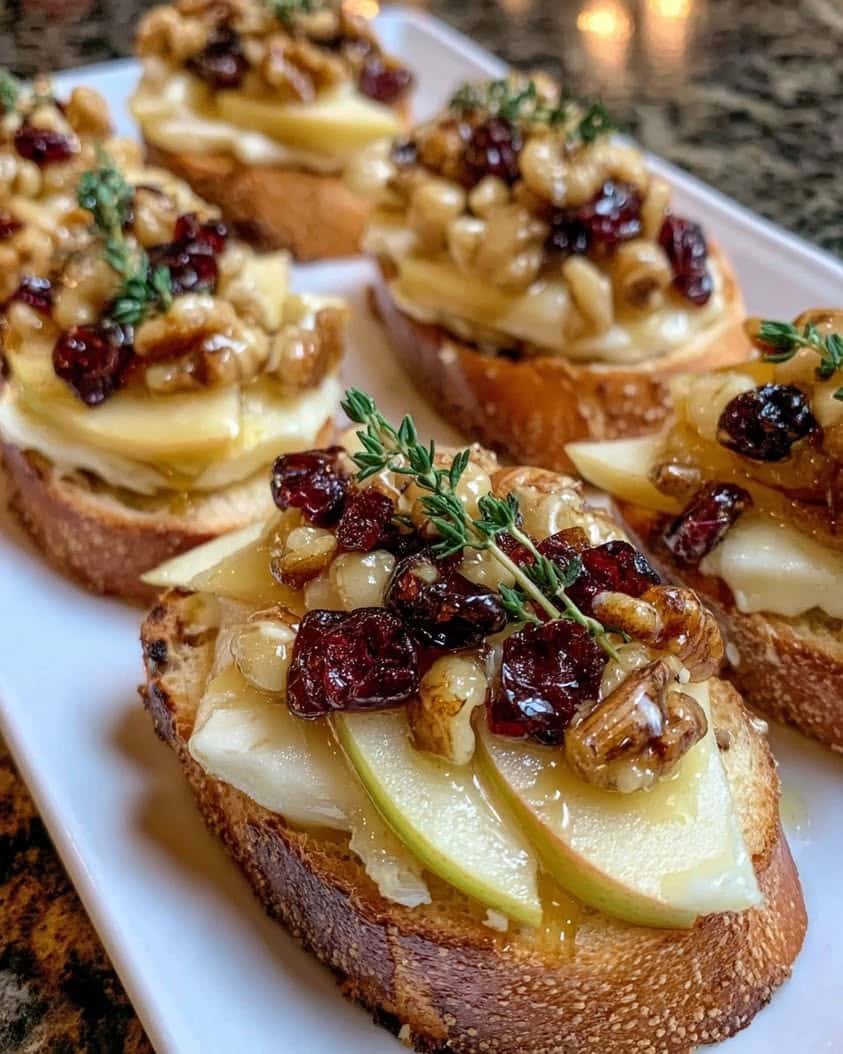
Warm Apple, Brie and Cranberry Crostini with Honey Walnuts: An Easy Party Appetizer
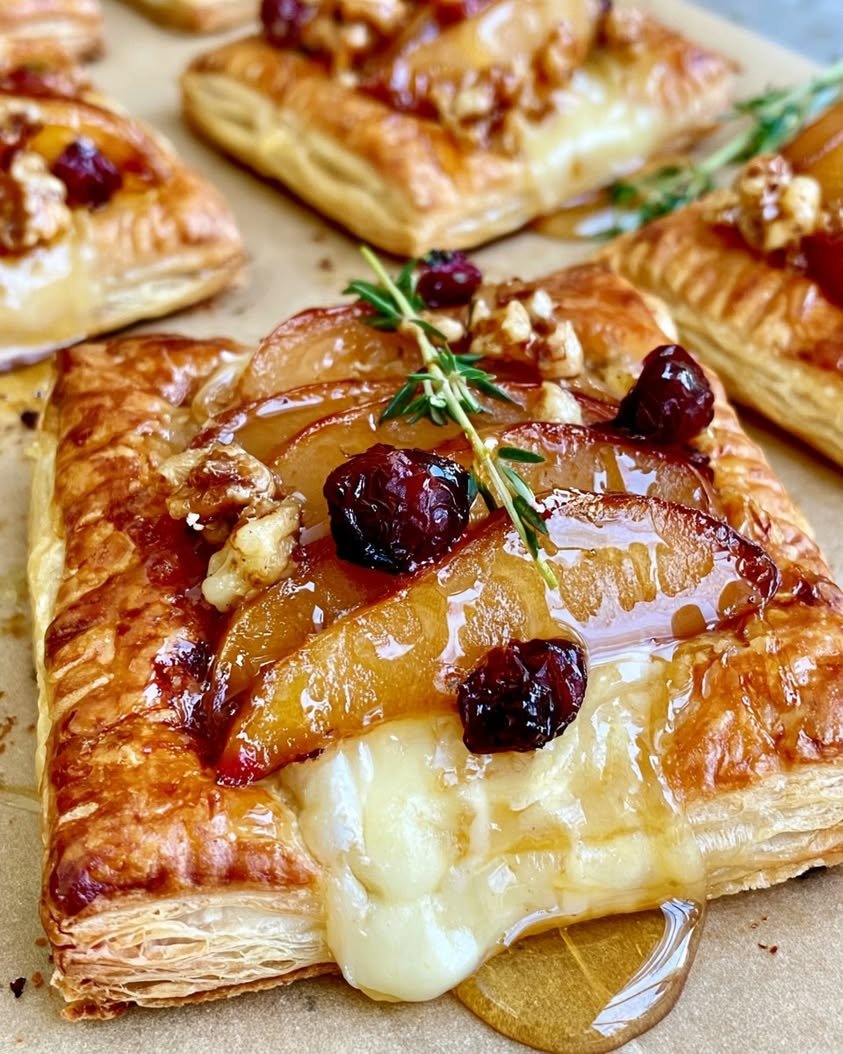
If you want a party appetizer that disappears before you can set the platter down, this Warm Apple, Brie and Cranberry Crostini with Honey Walnuts recipe delivers every single time. The combination of melted brie, tender cinnamon-kissed apples, tart cranberry sauce, and crunchy honey-glazed walnuts piled onto toasted baguette slices creates a bite that tastes like autumn on a plate. Therefore, whether you host a holiday gathering or simply crave a cozy snack on a chilly evening, this crostini recipe fits the moment perfectly.
Honestly, the magic happens in the layers. First, the crisp baguette gives way to creamy, warm brie. Then, the soft apples bring a gentle sweetness that balances the tangy cranberry spread. Finally, the honey walnuts add a candied crunch that ties everything together. Consequently, each bite offers sweet, savory, tart, and salty notes in perfect harmony. Best of all, you need only 27 minutes and a handful of everyday ingredients to pull it off, which makes this warm apple brie crostini a reliable choice for both spontaneous gatherings and planned celebrations.
Additionally, this recipe scales beautifully and welcomes customization. You can swap in pears, use camembert instead of brie, or drizzle extra honey for a sweeter finish. Because the components come together quickly, you can prep the elements ahead and assemble right before serving. As a result, you get a stress-free appetizer that looks elegant and tastes gourmet without demanding professional skills. Keep reading, and you will learn every technique, tip, and variation you need to master this crowd-pleasing crostini at home.
Quick Recipe Highlights
- Flavor Profile: Sweet honey and apple notes meet the earthy creaminess of brie. Tart cranberry sauce cuts through the richness, while toasted walnuts add a subtle bitterness that keeps every bite balanced.
- Texture: Crunchy toasted baguette forms the base, followed by silky melted brie and soft apple slices. The candied walnuts deliver a final crackle that makes each bite satisfying.
- Aroma: Warm cinnamon and apple fill the kitchen as the fruit caramelizes. Meanwhile, toasted nuts and melted cheese create an inviting, comforting scent that draws guests to the platter.
- Visual Appeal: Golden baguette slices topped with ivory brie, ruby-red cranberry sauce, and glossy honey walnuts create a striking contrast. A sprinkle of fresh thyme adds a pop of green.
- Skill Level Needed: This recipe suits beginners because it requires only basic knife skills and simple oven work. However, attention to toasting times matters, since bread and nuts burn quickly.
- Special Equipment: You need a rimmed baking sheet, a small skillet, and a sharp serrated knife for clean baguette slices. A pastry brush helps apply olive oil evenly across the bread.
Recipe Overview
- Difficulty Level: This dish earns an easy rating because each step uses straightforward techniques. You toast bread, warm brie, sauté apples, and candy walnuts with minimal fuss. Furthermore, the recipe tolerates small timing errors, so beginners can cook with confidence.
- Category: This recipe works as an appetizer, hors d’oeuvre, or party snack. You can also serve it as a light lunch alongside a simple salad or soup.
- Cuisine: The dish draws from American entertaining traditions with French influences. Brie and baguette come from French culinary practice, while cranberry sauce and candied walnuts reflect American holiday flavors. Consequently, the recipe feels familiar yet refined.
- Cost: Expect to spend roughly 12 to 16 dollars on ingredients, depending on brie quality and walnut prices. The baguette and cranberry sauce cost very little, and seasonal apples keep the total budget friendly. Overall, each serving costs about one dollar.
- Season: Fall and winter suit this recipe best because apples, cranberries, and warm spices peak during those months. However, you can make it year-round with stored fruit and canned cranberry sauce.
- Occasion: Serve this crostini at Thanksgiving, Christmas parties, New Year’s Eve gatherings, or casual game nights. It also shines at bridal showers and wine tastings where elegant finger food matters.
Why You’ll Love This Recipe
The taste and texture appeal of this Warm Apple, Brie and Cranberry Crostini with Honey Walnuts recipe wins people over instantly. Creamy brie melts into the warm bread and coats your tongue with rich, buttery flavor. Meanwhile, the tart cranberry sauce brightens the richness, and the honey walnuts add sweetness plus a satisfying crunch. Because each layer contributes a distinct texture, the crostini never feels one-note. In fact, most guests reach for a second piece before finishing the first.
Convenience also makes this recipe a keeper. You need only 15 minutes of prep and 12 minutes of cooking, so the whole dish comes together in under half an hour. Additionally, you can prepare the components separately and assemble at the last moment. As a result, the recipe fits busy schedules without sacrificing presentation. Cleanup stays minimal too, since you use just one baking sheet and one skillet.
Nutritionally, this crostini offers more than empty indulgence. Apples supply fiber and vitamin C, while walnuts deliver omega-3 fatty acids and protein. Brie contributes calcium and protein, and cranberries add antioxidants. Certainly, the dish contains fat and carbs, but sensible portions keep it reasonable. Therefore, you can enjoy a festive appetizer without abandoning healthy eating entirely.
Social and entertaining value sets this recipe apart. Finger foods encourage mingling, and the crostini looks impressive on any platter. Furthermore, guests love the familiar flavors, so picky eaters and adventurous diners both find something to enjoy. Because the recipe scales easily, you can feed a crowd of six or a party of thirty without stress. Ultimately, hosts appreciate a dish that earns compliments while demanding little effort.
Cost-effectiveness rounds out the appeal. Baguette, apples, and cranberry sauce rank among the most affordable grocery items. Even brie and walnuts, the pricier components, stretch across twelve servings. Consequently, you can feed a party for about the price of a single restaurant appetizer. For budget-conscious hosts, that math makes this crostini an obvious choice for entertaining season.
Historical Background and Cultural Significance
The origin story of crostini traces back to Italy, where cooks toasted bread to salvage stale loaves. The word crostini means little crusts in Italian, and early versions featured olive oil, garlic, and simple toppings. Over centuries, the idea spread across Europe, and French cooks applied similar techniques to baguette slices. Eventually, American home cooks adopted the format and layered it with local ingredients, which led to creations like this apple brie crostini.
Culturally, the combination of apples, brie, and cranberries carries strong American holiday associations. Cranberry sauce appears on Thanksgiving tables nationwide, while baked brie became a party staple in the twentieth century. Apples symbolize harvest season across many cultures, and honey walnuts echo old-world candied nut traditions. Therefore, this recipe blends European technique with American seasonal identity, and it feels both nostalgic and modern.
The evolution of this recipe reflects broader trends in home entertaining. During the 1980s and 1990s, baked brie wrapped in pastry gained popularity at dinner parties. Later, home cooks began deconstructing that idea into individual crostini for easier serving. Social media accelerated the trend, since photogenic finger foods perform well online. Consequently, warm apple brie crostini with cranberry and honey walnuts became a recognizable holiday appetizer in many American kitchens.
Regional variations abound. In New England, cooks lean on local cranberries and sharp cheddar accents. Meanwhile, Pacific Northwest versions often feature crisp Honeycrisp apples and local honey. Some Southern hosts add pecans instead of walnuts, and Midwestern versions sometimes include a drizzle of maple syrup. Regardless of region, the core formula of warm bread, melted cheese, fruit, and nuts endures because it simply works.
Ingredient Deep Dive
Apples anchor the flavor of this Warm Apple, Brie and Cranberry Crostini with Honey Walnuts recipe. Historically, apples spread from Central Asia along trade routes and became a staple crop in Europe and North America. Nutritionally, they provide fiber, vitamin C, and antioxidants like quercetin. For selection, choose firm, crisp varieties such as Honeycrisp, Fuji, or Gala because they hold shape when sautéed. Store apples in the refrigerator crisper drawer, and use within two weeks. If needed, pears make an excellent substitute with a similar texture and sweetness.
When cooking with apples, remember that variety changes the result. Tart apples like Granny Smith bring brightness that balances the sweet honey, while sweeter apples intensify the dessert-like quality. Additionally, leave the skins on for color and extra fiber, since the peel softens during sautéing. If you plan ahead, slice apples just before cooking to prevent browning, or toss them with lemon juice. Finally, taste a slice before cooking to gauge sweetness, and adjust the honey drizzle accordingly.
Brie contributes the luxurious, melty heart of the crostini. This soft-ripened French cheese dates back centuries to the Île-de-France region, and it earned protected status in Europe. Nutritionally, brie supplies protein, calcium, and vitamin B12, though it also contains saturated fat. When shopping, pick a wheel that feels soft but not runny, with a snowy white rind and mild ammonia scent. Store brie wrapped in parchment in the refrigerator and use within a week. For substitutions, camembert offers a nearly identical experience, and a mild fontina works for those who prefer firmer cheese.
Serving temperature matters enormously with brie. Cold brie slices awkwardly and tastes flat, so let it sit at room temperature for about thirty minutes before baking. Furthermore, avoid trimming the rind, since it holds the wheel together and remains edible. If you want a milder flavor, choose a younger brie; aged wheels develop stronger, earthier notes. Consequently, tasting before you buy from a cheese counter helps you pick the right wheel for your palate.
Cranberry sauce brings tart brightness that cuts through the richness. Cranberries grew wild in North American bogs, and Indigenous communities used them for food, medicine, and dye long before European settlers arrived. The berry offers vitamin C, fiber, and antioxidant compounds called proanthocyanidins. When buying, choose whole-berry sauce for texture, and check labels for excess sugar. Homemade sauce keeps for two weeks in the refrigerator, while canned sauce lasts longer. In a pinch, raspberry preserves or fig jam substitute nicely.
Walnuts add crunch and earthy depth to the honey glaze. These nuts originated in ancient Persia and spread along Silk Road trade routes, eventually becoming a California crop. Nutritionally, walnuts deliver omega-3 fatty acids, protein, and magnesium, which makes them one of the healthiest nuts available. Select walnut halves that smell fresh and avoid any that seem bitter or rubbery. Store walnuts in the freezer to prevent rancidity, since their high oil content shortens shelf life. Pecans or almonds work well as substitutes.
Honey binds the walnut coating and reinforces the recipe’s autumnal character. Humans have harvested honey for thousands of years, and it remains one of the few foods that never spoils when stored properly. Beyond sweetness, honey contains trace minerals and antioxidants. Choose a mild variety like clover for versatility, or try buckwheat honey for a bolder, molasses-like note. Keep honey at room temperature, and if it crystallizes, warm the jar in hot water. Maple syrup offers a vegan-friendly alternative.
Baguette provides the sturdy base that holds every topping. This French bread became standardized in the nineteenth century, and its crisp crust and airy crumb suit crostini perfectly. Nutritionally, baguette offers carbohydrates and small amounts of protein and iron. Pick a loaf with a golden crust and springy interior, ideally baked the same day. Store it in paper rather than plastic to preserve the crust. Sourdough, ciabatta, or whole-grain bread all make excellent substitutes.
Fresh thyme adds an herbal finish that elevates the whole plate. This Mediterranean herb appears in ancient Greek and Roman cooking, and it symbolizes courage in some traditions. Thyme supplies vitamin C and antioxidant compounds, plus a piney, lemon-like flavor. Choose bunches with bright green leaves and no wilting, then store them loosely wrapped in the refrigerator. Rosemary or sage can replace thyme when you want a different aromatic profile.
Common Mistakes to Avoid
- Slicing the baguette too thick creates a topping-to-bread imbalance. Aim for half-inch slices so each piece stays crisp and manageable. Thick slices also become chewy after toasting, which hurts the overall texture.
- Toasting the bread until rock hard makes the crostini difficult to bite. Toast until golden with a slight give in the center, and remember the bread firms up further as it cools.
- Using cold brie straight from the refrigerator prevents even melting. Let the cheese sit at room temperature for thirty minutes so it softens before baking. Otherwise, the bread over-browns while the cheese stays firm.
- Overloading each slice with toppings causes the crostini to collapse. Spread modest layers of brie, apples, and cranberry sauce so guests can eat them in one or two bites. Balance matters more than abundance here.
- Burning the walnuts turns the honey glaze bitter. Stir constantly over medium heat and pull the pan off the stove the moment the nuts smell toasty. Walnuts burn faster than most people expect.
- Skipping the salt leaves the whole dish flat. A light sprinkle of flaky salt over the apples and cheese sharpens every flavor. Taste as you go and adjust carefully.
- Assembling too far in advance makes the bread soggy. Add wet ingredients just before serving, or bake assembled crostini right before guests arrive. Crispness defines this appetizer.
- Choosing mushy apple varieties leads to a soft, unstructured topping. Firm apples like Honeycrisp or Fuji hold their shape during sautéing. Soft varieties turn to applesauce under heat.
- Under-caramelizing the apples leaves raw, sharp flavors. Cook them until the edges turn golden and the centers soften slightly. That browning develops sweetness and depth.
- Forgetting to cool the honey walnuts before topping causes the brie to melt prematurely. Spread the nuts on parchment for a few minutes so they set and crisp up. Warm nuts also slide off the crostini.
Essential Techniques
Even toasting builds the foundation of a great crostini. When bread toasts evenly, it stays crisp under wet toppings and delivers a satisfying crunch. Brush both sides lightly with olive oil, arrange slices on a rimmed baking sheet, and bake at 375 degrees Fahrenheit for about eight minutes, flipping once. Watch for golden edges rather than deep brown, because carryover heat continues the process. Common pitfalls include crowding the pan, which steams the bread instead of crisping it. Visual cue: the surface turns light gold and the center feels dry to the touch.
Sautéing apples properly unlocks sweetness and texture. This step matters because raw apples release moisture onto the bread and taste harsh against the brie. Use medium heat with butter or olive oil, arrange slices in a single layer, and resist stirring constantly. Let each side brown for two to three minutes before flipping. Pitfalls include overcrowding, which causes steaming, and high heat, which burns the sugars. Visual cue: edges turn golden-brown and the fruit smells fragrant like pie filling.
Candying walnuts develops the signature honey crunch. Heating honey with nuts coats each piece in a glossy shell that firms as it cools. Stir the walnuts constantly over medium heat for three to four minutes until they smell toasted and the glaze thickens. Pitfalls include walking away, since nuts scorch in seconds, and adding cold nuts to hot honey, which causes splatter. Visual cue: the glaze clings to the nuts and darkens slightly. Transfer to parchment immediately to prevent sticking.
Warming brie gently preserves its creamy texture. Overheating breaks the cheese into a greasy pool, while underheating leaves it stiff. Bake assembled crostini at 375 degrees for four to five minutes, just until the cheese slumps. Alternatively, warm thick brie slices on the toasting bread during the final two minutes. Pitfalls include using thin slices that melt too fast. Visual cue: the cheese softens and yields when pressed but keeps its shape.
Pro Tips for Perfect Warm Apple, Brie and Cranberry Crostini with Honey Walnuts
Set out the brie thirty to sixty minutes before baking so it reaches room temperature. Soft cheese spreads and melts more evenly, and the flavor blooms noticeably.
Slice the baguette on a slight diagonal to increase surface area. Larger slices hold toppings better and present more attractively on the platter.
Make the honey walnuts up to three days ahead and store them in an airtight container at room temperature. This single move removes the busiest step from party day.
Pat apple slices dry with a paper towel before sautéing. Excess moisture on the surface prevents browning and steams the fruit instead of caramelizing it.
Add a pinch of cinnamon and a tablespoon of brown sugar to the apples during the last minute of cooking. The spices deepen the autumnal flavor and pair beautifully with cranberry.
Keep the assembled crostini small enough for one or two bites. Guests juggle drinks and plates at parties, and oversized appetizers create awkward moments.
Finish each crostini with flaky sea salt and a thyme leaf right before serving. The salt sharpens the sweetness, and the herb adds a fresh, professional touch.
Warm the cranberry sauce slightly before spooning it on. Room-temperature or warm sauce spreads more easily and contrasts nicely with the hot brie.
Variations and Adaptations
Regional variations offer fresh spins on the recipe. In New England, cooks sometimes top the crostini with sharp white cheddar alongside brie for extra bite. Southern versions swap walnuts for candied pecans and add a drizzle of bourbon honey. Meanwhile, West Coast hosts often use local fig jam instead of cranberry sauce, which pairs wonderfully with warm brie and apples.
Seasonal adaptations keep the recipe relevant all year. In spring, replace apples with roasted strawberries and use ricotta in place of brie. During summer, grilled peaches and goat cheese create a bright, smoky version. Come winter, the original apple and cranberry formula hits its stride, so lean into warm spices and extra honey.
Dietary modifications make the recipe accessible to more guests. For gluten-free needs, use gluten-free baguette or toasted gluten-free crackers. Dairy-free diners can substitute a plant-based brie alternative or whipped cashew cheese. Additionally, vegan versions work well when you swap honey for maple syrup and cheese for nut-based spreads.
Flavor variations let you tailor the crostini to your menu. Add balsamic drizzle for tangy depth, or include crispy prosciutto on half the batch for a savory option. A sprinkle of cinnamon sugar on the apples creates a dessert-leaning bite, and cracked black pepper sharpens the cheese. Therefore, one base recipe yields several distinct appetizers for the same event.
Texture modifications suit different preferences. For extra crunch, toast the bread longer and add a layer of crushed pecans. If you prefer softer bites, warm the apples until tender and choose a younger, creamier brie. Adding a thin slice of prosciutto introduces a chewy contrast that many guests enjoy.
Presentation alternatives expand your serving options. Instead of individual crostini, build one large flatbread topped with the same ingredients and slice it at the table. You can also serve the components as a crostini bar, letting guests assemble their own bites. Both approaches reduce last-minute work and encourage interaction.
Serving and Presentation Guide
Plating technique shapes first impressions, so arrange crostini in a single layer on a wooden board or slate platter. Fan the slices in a gentle arc and group them close together, which looks abundant and intentional. Additionally, leave small gaps between pieces so guests can grab one without disturbing the display. Avoid stacking, since stacked crostini turn soggy quickly.
Garnishing ideas elevate the visual finish. Scatter fresh thyme sprigs and a few whole cranberries around the platter for color. Drizzle thin ribbons of honey over a few crostini right before serving, and finish with flaky salt. A small bowl of extra honey walnuts on the side invites guests to add more crunch.
Traditional accompaniments round out the spread. Pair the crostini with a cheese board, spiced nuts, and a simple green salad. Hot cider or mulled wine complements the autumnal flavors, and crusty bread sits naturally alongside. These supporting items make the crostini feel part of a cohesive seasonal menu.
Modern serving suggestions fit contemporary gatherings. Offer the crostini as a passed hors d’oeuvre on small napkins for cocktail hour. Alternatively, set up a build-your-own station with warmed bread, brie, apples, cranberry sauce, and walnuts in separate bowls. This interactive approach works especially well for casual parties and open houses.
Temperature considerations matter for flavor and food safety. Serve the crostini warm or at room temperature, and keep brie out of the danger zone for more than two hours. If the party stretches long, bake fresh batches in shifts rather than leaving everything out. Warm bites simply taste better, so timing your baking matters.
Portion control tips keep the appetizer experience pleasant. Keep slices small, roughly three inches long, so guests can eat them in one or two bites. Count on two to three pieces per guest during cocktail hour, and add more if the crostini serves as the main appetizer. Planning portions prevents waste and keeps the platter looking fresh.
Wine and Beverage Pairing
Wine pairings make this crostini shine. A dry sparkling wine like champagne or cava cuts through the creamy brie with bright acidity. For still wines, an unoaked Chardonnay complements the apple and honey notes, while a light Pinot Noir bridges the cranberry tartness. Additionally, a Riesling with slight sweetness balances the honey walnuts beautifully. Therefore, offer two options so guests with different preferences both find a match.
Non-alcoholic alternatives deserve equal attention. Sparkling apple cider echoes the fruit and feels festive in a champagne flute. Cranberry spritzer with lime adds tart refreshment, and hot spiced cider warms guests on cold evenings. For something herbal, a thyme-infused lemonade surprises and delights.
Tea and coffee pairings suit daytime gatherings. A cinnamon black tea mirrors the warm spices in the apples, and chamomile offers a gentle herbal counterpoint. For coffee lovers, a medium-roast pour-over complements the brie without overpowering the fruit. These options work well for brunches and afternoon parties.
Temperature considerations affect how beverages interact with the food. Serve white and sparkling wines well chilled, around 45 degrees Fahrenheit, and reds slightly below room temperature. Warm drinks should sit comfortably hot, not scalding. Matching temperatures to the food keeps the palate balanced.
Serving suggestions simplify your beverage planning. Set up a self-serve drink station with labeled bottles and glassware so guests help themselves. Offer water with citrus slices as a palate cleanser, and keep extra ice on hand. A well-planned drink station frees you to focus on the food.
Storage and Shelf Life
Storage methods vary by component, and separating them preserves quality. Store toasted baguette slices in an airtight container at room temperature for up to two days. Keep brie wrapped in parchment in the refrigerator, sautéed apples in a sealed container for three days, and honey walnuts at room temperature for a week.
Temperature requirements protect both flavor and safety. Refrigerate brie and cooked apples below 40 degrees Fahrenheit, and never leave assembled crostini at room temperature beyond two hours. Reheat components gently, since high heat damages texture and flavor. Following these rules prevents waste and illness.
Container recommendations matter for freshness. Use glass containers with tight lids for apples and cranberry sauce, and paper bags or breathable wraps for bread. Airtight jars keep walnuts crisp, while plastic wrap traps moisture and softens the bread. Label containers with dates so you use the oldest items first.
Signs of spoilage help you avoid serving compromised food. Brie develops a strong ammonia smell or pink discoloration when past its prime. Apples turn mushy and sour, and walnuts smell bitter or rubbery when rancid. When in doubt, throw it out, since food safety always outweighs frugality.
Reheating instructions preserve the crostini experience. Warm bread and brie in a 350-degree oven for three to four minutes, and reheat apples in a skillet over low heat. Avoid microwaving brie, which turns rubbery, and skip the microwave for bread, which toughens it. Gentle oven heat restores the original magic.
Freezing guidelines extend shelf life for some components. Freeze honey walnuts for up to three months in a sealed bag, and freeze cranberry sauce for two months. Brie freezes poorly and turns grainy, so avoid freezing it. Assembled crostini never freeze well, so build fresh batches instead.
Make Ahead Strategies
Prep timeline planning transforms party day from chaotic to calm. Two days ahead, candy the walnuts and refrigerate the cranberry sauce. One day ahead, slice the baguette, sauté the apples, and store everything separately. On party day, simply toast, assemble, and bake. This staggered approach keeps the kitchen stress-free.
Storage between steps protects quality at every stage. Keep apples and cranberry sauce refrigerated in sealed containers, and leave toasted bread uncovered at room temperature so it stays crisp. Bring brie to room temperature an hour before assembly. Labeling each container keeps the workflow smooth.
Quality impact assessment helps you decide what to prep early. Honey walnuts actually improve after a day, and cranberry sauce deepens in flavor overnight. Apples hold up well for a day, though they lose a bit of crispness. Bread tastes best toasted the same day, so reserve that step for the final hour.
Assembly tips speed up the final push. Set up a station with bread, brie, apples, cranberry sauce, walnuts, and thyme in order. Assemble in a line, working quickly so the bread stays crisp. If guests arrive early, slide the pan into the oven and serve warm within minutes.
Reheating guidelines keep make-ahead components tasting fresh. Reheat apples in a skillet with a splash of water, and warm brie crostini in the oven just before serving. Avoid reheating walnuts, which stay crisp at room temperature. Small reheating touches restore the just-made experience.
Fresh element additions brighten prepped components. Add fresh thyme and flaky salt at the last moment, and drizzle honey right before serving. A squeeze of lemon over the apples lifts their flavor after refrigeration. These quick finishes make prepped food taste newly made.
Scaling Instructions
Halving the recipe suits small gatherings without waste. Use half a baguette, four ounces of brie, one apple, and half the walnuts. Cooking times stay nearly the same, though the smaller batch browns faster, so watch closely. Therefore, taste and adjust seasoning since smaller volumes concentrate flavors.
Doubling or tripling the recipe works beautifully for large parties. Use two baking sheets and toast bread in batches to avoid crowding. Cook apples in two skillets or in stages, and candy walnuts in batches so the honey coats evenly. Consequently, plan an extra fifteen minutes for the larger volume, and keep finished batches warm in a low oven.
Equipment adjustments prevent bottlenecks at scale. Two rimmed baking sheets, a large skillet, and an extra platter make big batches manageable. If oven space runs short, toast bread ahead and reheat briefly before assembly. Borrowing a second skillet from a neighbor beats overcrowding one pan.
Timing modifications keep large batches on schedule. Start prepping two hours before the party, and work in assembly line fashion. Bake crostini in shifts of twelve to fifteen slices, serving each batch as it emerges. This steady flow keeps guests fed and the platter fresh.
Storage considerations change with volume. Use larger airtight containers for apples and cranberry sauce, and label everything with dates. Keep extra walnuts in the freezer if you candy a double batch. Planning storage before cooking prevents a refrigerator pileup.
Nutritional Deep Dive
The macro breakdown of this Warm Apple, Brie and Cranberry Crostini with Honey Walnuts recipe lands around 180 to 210 calories per crostini. Each piece contains roughly 10 grams of fat, 18 grams of carbohydrates, and 6 grams of protein. Brie and walnuts supply most of the fat, while the baguette and honey contribute carbohydrates. Therefore, it fits comfortably into a balanced appetizer spread.
Micronutrient analysis reveals impressive contributions. Apples deliver vitamin C, potassium, and quercetin, and cranberries add vitamin C plus antioxidant proanthocyanidins. Walnuts provide omega-3 fatty acids, magnesium, and vitamin E. Brie contributes calcium, vitamin B12, and riboflavin, which makes this indulgent bite surprisingly nutritious.
Health benefits extend beyond vitamins. The fiber in apples and walnuts supports digestion, and the omega-3s in walnuts promote heart health. Cranberry compounds may support urinary tract health, and the combination of fat, fiber, and protein slows digestion. Consequently, guests feel satisfied rather than stuffed after a few pieces.
Dietary considerations matter for guests with restrictions. Brie contains dairy, baguette contains gluten, and honey is not vegan. Walnuts pose a tree nut allergen risk. Label the platter clearly or prepare a modified batch so everyone can enjoy the appetizer safely.
Portion analysis helps you plan for health-conscious guests. Two crostini deliver a reasonable appetizer portion of about 400 calories. Guests watching intake can enjoy one piece and pair it with vegetables or a lighter main dish. Offering smaller slices lets everyone moderate naturally.
Weight management tips keep the recipe in a healthy rotation. Use a lighter smear of brie, skip extra honey drizzle, and choose whole-grain baguette for extra fiber. These small swaps trim calories without sacrificing flavor. Balance matters more than restriction, so enjoy the crostini as part of a varied menu.
Dietary Adaptations
Gluten-free adaptations work easily with this recipe. Choose a gluten-free baguette or sturdy gluten-free crackers, and toast them carefully since gluten-free bread browns faster. Check labels on cranberry sauce and honey walnuts for hidden wheat. With those swaps, the crostini fits gluten-free diets without compromise.
Dairy-free versions require a cheese substitute. Plant-based brie alternatives made from cashews or cultured coconut milk melt reasonably well. Alternatively, whipped cashew cheese with nutritional yeast delivers creamy tang. Taste and adjust salt, since dairy-free cheeses vary widely in seasoning.
Vegan adaptations combine several swaps. Use a vegan cheese alternative, replace honey with maple syrup, and confirm the bread contains no dairy or eggs. The apples and cranberry sauce already fit vegan diets. Consequently, the final plate looks and tastes nearly identical to the original.
Low-carb and keto adaptations target the bread and sugar. Swap baguette for almond flour crackers or cucumber rounds, and use a sugar-free cranberry sauce sweetened with monk fruit. Reduce honey to a teaspoon or use a low-carb syrup. These changes cut net carbs dramatically while keeping the flavor profile intact.
Paleo adaptations favor whole ingredients. Use grain-free crackers or sweet potato rounds as the base, and choose a grass-fed brie or omit cheese entirely. Replace honey with a small amount of maple syrup, which many paleo eaters accept. The result honors paleo principles while preserving the dish’s spirit.
Low-FODMAP adaptations suit sensitive digestions. Apples contain excess fructose, so substitute firm pears or use a small amount of blueberries. Choose lactose-free brie or hard cheese, and skip the honey in favor of maple syrup. Portion control matters most, so keep servings modest.
Other dietary adaptations include nut-free and low-sodium versions. For nut allergies, replace walnuts with toasted pumpkin seeds for crunch. For low-sodium needs, use unsalted butter, rinse the cheese surface, and skip added salt. Each tweak keeps the crostini accessible to more guests.
Troubleshooting Guide
Texture issues arise most often with soggy bread. If the crostini turns soft, the toppings went on too early or the bread was under-toasted. Toast slices until dry and golden, and assemble just before serving. A quick re-toast in a hot oven rescues slightly soft bread.
Flavor balance problems usually trace to excess sweetness or flat seasoning. If the honey and cranberry dominate, add flaky salt and a squeeze of lemon. If the dish tastes dull, increase the thyme and black pepper. Taste components separately before assembly so you can adjust each layer.
Temperature problems show up as greasy brie or burnt bread. Overheated brie separates into oil, so bake at 375 degrees and pull the pan as soon as the cheese slumps. If the bread browns too fast, move the rack lower or cover the edges with foil. Watch the oven closely during the final minutes.
Equipment challenges include uneven toasting and sticky pans. Rotate the baking sheet halfway through toasting for even color. For honey walnuts, use a nonstick skillet or a well-seasoned pan, and stir constantly to prevent sticking. Soaking the pan in hot water loosens hardened honey quickly.
Ingredient substitutions can shift results, so adjust accordingly. Camembert melts faster Print
Warm Apple, Brie & Cranberry Crostini with Honey Walnuts
- Total Time: 45 minutes
- Yield: 4
Description
A delightful appetizer featuring toasted baguette slices topped with melted Brie, caramelized apples, tart cranberry sauce, and crunchy honey-glazed walnuts. Perfect for holiday gatherings or any festive occasion.
Ingredients
- 1 baguette, sliced into 1/2-inch thick rounds
- 8 oz Brie cheese, sliced
- 2 apples (such as Honeycrisp or Gala), thinly sliced
- 1/2 cup whole berry cranberry sauce
- 1/2 cup walnuts, chopped
- 2 tablespoons honey
- 2 tablespoons butter
- 1 tablespoon brown sugar
- 1/2 teaspoon cinnamon
- Pinch of salt
Instructions
- Preheat oven to 350°F (175°C). Arrange baguette slices on a baking sheet and toast for 5-7 minutes until lightly crisp.
- In a small skillet, melt butter over medium heat. Add apple slices, brown sugar, and cinnamon. Cook for 5-8 minutes until apples are tender and caramelized. Set aside.
- In the same skillet, combine walnuts and honey. Cook over medium heat, stirring constantly, for 2-3 minutes until walnuts are coated and fragrant. Transfer to a plate to cool.
- Top each toasted baguette slice with a slice of Brie. Return to oven for 3-5 minutes until Brie is melted.
- Remove from oven and top each crostini with a spoonful of caramelized apples, a dollop of cranberry sauce, and a sprinkle of honey walnuts. Serve warm.
Notes
You can customize the seasonings to taste.
- Prep Time: 15 minutes
- Cook Time: 30 minutes
- Method: Appetizer
- Cuisine: American