Honey Cranberry Chicken with Roasted Butternut Squash, Apples and Brie: A Cozy One-Pan Dinner
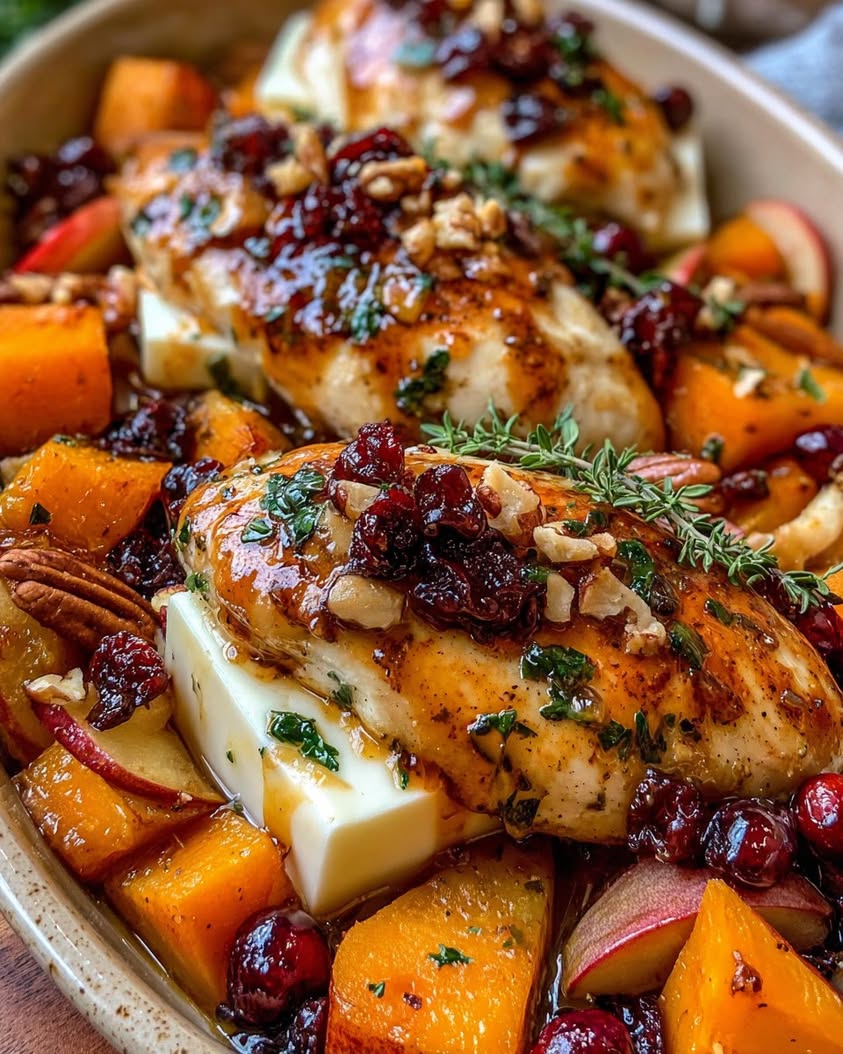
This Honey Cranberry Chicken with Roasted Butternut Squash, Apples and Brie brings together sweet, savory, and creamy flavors in a single baking dish. You get juicy chicken thighs glazed in a sticky honey cranberry sauce, tender roasted butternut squash, caramelized apple slices, and melty brie on top. The whole meal captures the warmth of autumn comfort food while staying simple enough for a weeknight. Because everything roasts on one sheet pan, cleanup stays easy and the flavors meld beautifully. This Honey Cranberry Chicken with Roasted Butternut Squash, Apples and Brie also looks stunning on the table, so it works just as well for a holiday gathering as it does for a casual family dinner.
The magic of this dish comes from the balance of textures and tastes. Tart cranberries cut through the richness of brie, while honey softens the acidity and adds a glossy finish. The butternut squash turns golden and tender in the oven, and the apples bring a gentle sweetness that ties everything together. When you pull the pan from the oven, the aroma of rosemary, thyme, and caramelized fruit fills the kitchen. Home cooks of any skill level can master this Honey Cranberry Chicken with Roasted Butternut Squash, Apples and Brie because the oven does most of the work. You simply prep, arrange, and roast.
Seasonal cooking feels rewarding when a recipe highlights fresh ingredients at their peak. Butternut squash and apples both shine in fall and winter, and cranberries appear in stores right when the weather turns cold. This Honey Cranberry Chicken with Roasted Butternut Squash, Apples and Brie celebrates that harvest window. Meanwhile, the chicken provides lean protein that keeps the meal satisfying. Whether you serve it for a Sunday supper or a holiday table, this recipe delivers impressive results with minimal fuss. Keep reading to learn the techniques, tips, and variations that make it a repeat favorite.
Quick Recipe Highlights
- Flavor Profile: Sweet honey and tart cranberries balance savory chicken and earthy squash. Creamy brie adds a rich, mellow note that rounds out every bite.
- Texture: Juicy, tender chicken pairs with soft roasted squash and slightly crisp apple edges. Melted brie brings a luscious, creamy contrast.
- Aroma: Rosemary and thyme release warm, woody notes as the dish roasts. Cranberries and honey create a sweet-tart fragrance that fills the kitchen.
- Visual Appeal: Deep golden chicken sits beside bright orange squash and ruby-red cranberries. Melted brie and fresh herbs add an elegant finishing touch.
- Skill Level Needed: Beginner to intermediate cooks can handle this recipe with ease. Basic knife skills and oven timing are the only requirements.
- Special Equipment: A large sheet pan or rimmed baking sheet works best. You also need a small saucepan, a whisk, and a sharp chef’s knife.
Recipe Overview
- Difficulty Level: This dish rates as easy to moderate because it involves simple roasting and a quick stovetop sauce. You do not need advanced techniques, and the oven handles most of the cooking. Beginners can succeed by following the timing cues, and experienced cooks will appreciate the streamlined process.
- Category: This recipe works as a main course for dinner. It also fits as a holiday entrée or a potluck contribution. Leftovers make an excellent next-day lunch.
- Cuisine: The dish draws from American comfort food traditions with a nod to New England harvest flavors. Cranberries and maple-sweetened squash reflect Northeastern cooking, while brie adds a French touch. The result feels familiar yet slightly elevated.
- Cost: Chicken thighs remain one of the most affordable proteins at the butcher counter. Butternut squash and apples stay budget-friendly in season, and cranberries cost little fresh or frozen. Brie adds a modest splurge, but a small wedge goes a long way.
- Season: Fall and winter suit this recipe best because squash, apples, and cranberries peak then. The warm, cozy flavors match cool weather and holiday menus. You can make it year-round with frozen cranberries and stored squash.
- Occasion: Weeknight dinners, Sunday suppers, and holiday gatherings all work well. The one-pan presentation impresses guests without stress. It also suits meal prep for busy weeks.
Why You’ll Love This Recipe
First, the taste and texture appeal make this Honey Cranberry Chicken with Roasted Butternut Squash, Apples and Brie stand out. The chicken stays juicy thanks to thigh meat and a honey glaze that seals in moisture. Cranberries bring a bright tartness that stops the dish from tasting too sweet. Meanwhile, the brie melts into a creamy layer that coats each bite. Roasted squash turns velvety and caramelized at the edges, and the apples soften while keeping a pleasant bite. Every forkful delivers contrast, which keeps the meal interesting from start to finish.
Second, convenience and preparation benefits make this recipe a weeknight hero. You chop a few ingredients, whisk a quick sauce, and let the oven do the rest. The entire meal cooks on one sheet pan, which means fewer dishes and faster cleanup. You can also prep components ahead and assemble later. Because the recipe uses common pantry staples like honey, olive oil, and dried herbs, you avoid a long shopping list. This Honey Cranberry Chicken with Roasted Butternut Squash, Apples and Brie saves time without sacrificing flavor.
Third, nutritional advantages give home cooks peace of mind. Chicken thighs provide high-quality protein and important minerals like iron and zinc. Butternut squash delivers vitamin A, vitamin C, and fiber, while apples add more fiber and antioxidants. Cranberries contribute vitamin C and beneficial plant compounds. Brie adds calcium and a bit of satisfying fat that helps you feel full. Overall, this Honey Cranberry Chicken with Roasted Butternut Squash, Apples and Brie offers a balanced plate with protein, produce, and dairy in one dish.
Fourth, social and entertaining value runs high with this recipe. The pan arrives at the table looking colorful and impressive, so guests immediately reach for a serving. You can scale it easily for a crowd and keep the oven free for other dishes. Because it needs little last-minute attention, you spend more time with your guests. The sweet-savory flavor profile appeals to kids and adults alike. Hosts love that this Honey Cranberry Chicken with Roasted Butternut Squash, Apples and Brie feels special without demanding restaurant-level skills.
Fifth, cost-effectiveness and accessibility keep this dish in regular rotation. Chicken thighs cost less than breasts and stay juicier during roasting. Seasonal produce keeps the grocery bill low, and frozen cranberries work just as well as fresh. Brie comes in small wedges that fit most budgets. You likely already own the honey, oil, and dried herbs. Therefore, this Honey Cranberry Chicken with Roasted Butternut Squash, Apples and Brie delivers a luxurious-tasting meal at an everyday price point.
Historical Background and Cultural Significance
The origin story of this recipe connects several American food traditions. Cranberries have grown in North American bogs for centuries, and Indigenous communities used them for food and medicine long before settlers arrived. Honey-glazed poultry appears throughout American home cooking, especially in holiday menus. Roasting squash and apples together reflects early colonial and farmhouse cooking, where root cellars supplied winter ingredients. This Honey Cranberry Chicken with Roasted Butternut Squash, Apples and Brie combines those threads into a modern one-pan meal.
Cultural importance ties closely to the New England harvest. Cranberry bogs in Massachusetts and Wisconsin supply most of the country’s crop, and the fruit carries strong regional identity. Apple orchards dot the Northeast and Midwest, and fall harvest festivals celebrate both crops. Butternut squash belongs to the winter squash family that sustains communities through cold months. When home cooks pair these ingredients with chicken, they honor a long tradition of seasonal, resourceful cooking.
The evolution of the recipe reflects changing kitchen habits. Older versions of cranberry chicken often used canned sauce and baked in a covered casserole. Modern cooks favor sheet-pan roasting for browning and caramelization. Adding brie nods to recent interest in cheese-topped main dishes and charcuterie-inspired flavors. Meanwhile, honey replaced refined sugar in many home kitchens, giving the glaze a rounder taste. This Honey Cranberry Chicken with Roasted Butternut Squash, Apples and Brie represents that shift toward fresher, simpler cooking.
Regional variations appear across the country. In New England, cooks might add maple syrup instead of honey and use sharp cheddar in place of brie. Midwestern versions sometimes include wild rice on the side. Southern cooks may add a pinch of cayenne for heat. West Coast kitchens often swap in delicata squash or pears. Regardless of region, the core idea stays the same: sweet-tart fruit, roasted vegetables, and tender chicken come together in one satisfying dish.
Ingredient Deep Dive
Chicken thighs anchor this recipe with rich flavor and moisture. Dark meat stays tender through roasting, while breast meat can dry out quickly. Thighs also cost less, which makes this Honey Cranberry Chicken with Roasted Butternut Squash, Apples and Brie budget-friendly. Historically, poultry has served as a centerpiece protein in American cooking for generations. Thighs contain more iron and zinc than breasts, and they deliver satisfying protein. When shopping, choose thighs with firm flesh, pale pink color, and no strong odor. Look for even thickness so they cook at the same rate. Store raw chicken in the coldest part of the fridge and use it within two days. For substitutions, boneless breasts work if you reduce roasting time, and turkey thighs offer a heartier alternative.
Butternut squash brings natural sweetness and a creamy texture to the pan. This winter squash originated in the Americas and remains a staple in fall and winter kitchens. It supplies vitamin A, vitamin C, potassium, and fiber, which support immune and digestive health. Choose a squash that feels heavy for its size with a matte, unblemished skin. Store whole squash in a cool, dry spot for up to a month. Once cut, wrap it tightly and refrigerate for up to four days. If you cannot find butternut, try delicata, acorn, or honeynut squash. Each offers similar sweetness with slightly different textures.
Apples add brightness and gentle acidity that balance the honey glaze. Apples have deep roots in American orchards and appear in countless home recipes. They contribute fiber, vitamin C, and antioxidants, especially in the skin. Firm varieties like Honeycrisp, Gala, or Braeburn hold their shape during roasting. Pick apples that feel heavy and firm with smooth skin. Refrigerate them in the crisper drawer for several weeks. For substitutions, pears work beautifully and bring a softer texture. If you prefer less sweetness, try tart Granny Smith apples.
Fresh cranberries deliver the signature tartness of this Honey Cranberry Chicken with Roasted Butternut Squash, Apples and Brie. These native berries grow in bogs and have supported American diets for centuries. They contain vitamin C and plant compounds that may support urinary health. Choose berries that feel firm and have deep red color. Store fresh cranberries in the fridge for up to a month or freeze them for a year. Frozen cranberries work directly in the sauce without thawing. If cranberries are unavailable, use dried cranberries soaked in warm water or a spoonful of tart cherry preserves.
Honey creates the glossy glaze that defines this dish. Beekeeping and honey production have shaped agriculture worldwide for thousands of years. Honey adds natural sweetness along with trace minerals and antioxidants. Choose a mild variety like clover for a neutral flavor or wildflower for more complexity. Store honey at room temperature in a sealed jar and avoid refrigeration, which speeds crystallization. For a vegan or lower-sugar option, substitute maple syrup or agave nectar. Each swap changes the flavor slightly but keeps the glaze working well.
Brie brings a creamy, luxurious finish to the roasted pan. This soft French cheese has centuries of history and remains a favorite on cheese boards. Brie provides calcium and protein along with a rich, buttery texture. Buy a firm wedge with a white rind and a mild, earthy scent. Keep it wrapped in the fridge and use it within a week. If brie is unavailable, camembert offers a close match. For dairy-free cooks, a plant-based soft cheese melts reasonably well across the top.
Rosemary and thyme add the herbal backbone of the dish. These Mediterranean herbs have long histories in European cooking and now grow widely in American gardens. They supply antioxidants and intense aroma. Choose fresh sprigs when possible, or use dried herbs at reduced amounts. Store fresh herbs wrapped in damp paper towels inside the fridge. Dried herbs keep in a cool, dark cabinet for up to a year. If you lack rosemary, sage or oregano work well. Thyme pairs nicely with marjoram as a substitute.
Common Mistakes to Avoid
- Overcrowding the sheet pan: Too many pieces steam instead of roast. Give each ingredient space so the edges caramelize. Use two pans if needed.
- Cutting squash unevenly: Uneven pieces cook at different rates. Cut squash into similar one-inch cubes so everything finishes together. This keeps the texture consistent.
- Adding brie too early: Brie melts fast and can burn. Wait until the last ten minutes of roasting. That timing gives you a creamy top without a scorched rind.
- Skipping the pat dry step: Moist chicken browns poorly. Pat thighs dry with paper towels before seasoning. This simple step improves browning and sauce adhesion.
- Using cold sauce on hot pan: A cold glaze can seize and cool the pan. Warm the honey cranberry sauce briefly before brushing it on. The sauce spreads more evenly.
- Under-seasoning the squash: Winter squash needs salt to shine. Season it before roasting, and taste after. A pinch of salt transforms its flavor.
- Ignoring oven hot spots: Home ovens often run uneven. Rotate the pan halfway through cooking. This prevents burnt edges and undercooked centers.
- Cutting apples too thin: Thin slices turn to mush. Use half-inch wedges that hold their shape. They soften while keeping a pleasant bite.
- Letting chicken rest too little: Resting keeps juices in the meat. Wait five to ten minutes before serving. Cutting early releases moisture onto the pan.
- Using a dull knife on squash: Dull blades slip and cause injuries. Sharpen your chef’s knife before cutting squash. A sharp knife makes clean, safe cuts.
Essential Techniques
Sheet-pan roasting matters because it creates even browning and concentrated flavor. Arrange ingredients in a single layer with a little space between pieces. Preheat the oven fully so the pan starts hot. Toss vegetables in oil and seasoning before spreading them out. Common pitfalls include using a pan that is too small or overcrowding. A successful pan shows deep color on the edges of the squash, lightly browned chicken skin, and bubbling juices.
Sauce reduction builds the sticky glaze that defines the recipe. Simmer honey, cranberries, broth, and aromatics in a small saucepan over medium heat. Stir often and watch for a syrupy consistency that coats the back of a spoon. If you reduce too far, the glaze turns candy-like and hard. Add a splash of broth to loosen it. A finished sauce looks glossy and drips slowly from a spoon.
Testing chicken doneness protects both flavor and safety. Insert an instant-read thermometer into the thickest part of a thigh without touching bone. Look for 170 to 175 degrees Fahrenheit, which yields tender, juicy meat. Undercooked chicken looks pink near the bone, while overcooked chicken turns stringy. The visual cue is clear juices and browned skin. Always let the meat rest before serving.
Balancing sweet and tart flavors keeps the dish from tasting flat. Taste the sauce before roasting and adjust with a squeeze of lemon or a pinch of salt. Cranberries vary in tartness, so tasting matters. If the sauce tastes too sharp, add a little more honey. If it tastes too sweet, add lemon juice or extra cranberries. The perfect balance leaves your mouth watering for another bite.
Pro Tips for Perfect Honey Cranberry Chicken with Roasted Butternut Squash, Apples and Brie
- Preheat the sheet pan in the oven for five minutes before adding ingredients. A hot pan starts the browning process right away and prevents sticking.
- Brush the chicken with glaze twice, once before roasting and once near the end. Layering the glaze builds a deeper, more complex flavor.
- Save a few fresh cranberries for the final garnish. Their bright color and tart pop lift the finished plate.
- Add the apples halfway through roasting so they keep their shape. Early addition softens them too much and muddles the texture.
- Let brie come to room temperature for fifteen minutes before placing it on the pan. It melts more evenly and turns creamier.
- Toss squash with a pinch of cinnamon or nutmeg for a subtle warmth. The spice complements the honey glaze without overpowering it.
- Reserve a spoonful of the sauce at the start for drizzling at the table. Fresh sauce adds brightness and moisture to each plate.
- Use a rimmed pan lined with parchment for faster cleanup. The parchment also prevents sticky honey from burning onto the metal.
Variations and Adaptations
Regional variations let home cooks put their own spin on the recipe. New England cooks may swap brie for sharp cheddar and add maple syrup to the glaze. Southern kitchens often add a pinch of cayenne or smoked paprika for gentle heat. Midwestern versions might serve the dish over wild rice to soak up the sauce. Regardless of region, the sweet-tart-savory balance remains the guiding principle in this Honey Cranberry Chicken with Roasted Butternut Squash, Apples and Brie.
Seasonal adaptations keep the recipe useful all year. In summer, replace squash with zucchini and peaches for a brighter pan. Spring brings asparagus and strawberries, which roast quickly and pair well with brie. Winter calls for hearty roots like parsnips and sweet potatoes. Adjust roasting times for delicate ingredients, and add them later in the process. These changes preserve the spirit of the recipe while matching what looks best at the market.
Dietary modifications help more people enjoy the dish. Use bone-in skin-on thighs for more flavor, or choose boneless skinless thighs for a leaner plate. If dairy is a concern, omit the brie and drizzle a dairy-free cream sauce at the end. Keto cooks can skip the honey and use a sugar-free sweetener with cranberries. Gluten-free diners need no changes, since the recipe contains no flour. Always check cheese labels when serving guests with dietary restrictions.
Flavor variations draw on global pantry staples. Add a spoonful of Dijon mustard to the glaze for tangy depth. A splash of balsamic vinegar deepens the sauce and pairs well with brie. Orange zest brightens the cranberries and adds a citrus note. Indian-inspired cooks might add garam masala and a pinch of chili. Each twist keeps the recipe fresh across different cravings.
Texture modifications help you match the dish to your preferences. Leave the apple skin on for extra fiber and slightly firmer bites. Slice brie thick for a gooey layer, or cube it for even melting. Roast squash a little longer for a softer mash-like texture. Crisp the chicken skin by broiling the last two minutes. These small choices let you tailor this Honey Cranberry Chicken with Roasted Butternut Squash, Apples and Brie to your table.
Presentation alternatives suit different occasions. Serve family-style on the sheet pan for casual nights. Transfer to a warm platter for holidays and add extra herbs on top. Plate individual portions with a wedge of brie for an elegant dinner-party look. Create a shallow bowl version with the sauce at the bottom for a restaurant feel. Leftovers also make a fantastic grain bowl topping the next day.
Serving and Presentation Guide
Plating techniques matter because presentation sets the tone for the meal. Arrange chicken slightly off-center and fan the squash and apples around it. Spoon extra glaze over the top rather than pooling it underneath. Place brie slices at the end so their pale color stands out. Use a wide, shallow plate to keep all components visible and easy to serve.
Garnishing ideas add the finishing polish. Fresh rosemary sprigs bring a pop of green and a hint of aroma. A handful of pomegranate seeds adds ruby color and crunch. Toasted pecans or walnuts bring warmth and texture. A small drizzle of warmed honey near the end gives the plate a glossy shine. Keep garnishes simple so they enhance rather than crowd.
Traditional accompaniments round out the plate naturally. A side of wild rice or couscous soaks up the sauce. Crusty bread helps scoop up every drop of glaze. Steamed green beans or roasted Brussels sprouts add a fresh counterpoint. A simple green salad with a tangy vinaigrette balances the richness of the brie.
Modern serving suggestions fit current home-cooking trends. Turn leftovers into a grain bowl with quinoa and baby spinach. Layer slices of chicken and squash into a warm sandwich with soft bread. Top a flatbread with brie, squash, and apples for a quick appetizer. Add arugula and lemon vinaigrette for a fresh lunch salad. These options show the versatility of this Honey Cranberry Chicken with Roasted Butternut Squash, Apples and Brie.
Temperature considerations affect the eating experience. Serve the dish warm right from the oven for maximum creaminess. Brie tastes best when slightly melted, so serve promptly after the resting period. If you make the dish ahead, reheat portions gently in the oven at 325 degrees Fahrenheit. Avoid microwaving chicken and brie too long, which toughens the meat and ruins the cheese texture.
Portion control tips keep the meal balanced. One thigh with about a cup of vegetables suits most appetites. Add more squash for heartier eaters, or extra chicken for athletes. Cut brie into small pieces so everyone gets a taste without overwhelming the plate. Offer the sauce on the side so guests can control their sweetness level. These small choices make serving easier and more personal.
Wine and Beverage Pairing
Wine pairings should balance the sweetness and tartness of the dish. A lightly oaked Chardonnay brings creamy notes that match the brie. Riesling works well because its sweetness mirrors the honey while its acidity cuts through the richness. Pinot Noir offers red fruit flavors that complement cranberries. Avoid very tannic reds, which can clash with the sweet glaze.
Non-alcoholic alternatives keep the meal family-friendly. Sparkling apple cider echoes the apple flavor and feels festive. Cranberry spritzers bring a tart pop that mirrors the sauce. Chilled herbal tea with lemon brightens the palate between bites. Sparkling water with lemon and rosemary feels elegant for holiday dinners.
Coffee and tea pairings suit cozy evenings and brunch-style leftovers. A medium-roast coffee highlights the caramel notes in the glaze. Hibiscus or cranberry tea mirrors the tartness of the berries. Chai adds warm spice that complements the rosemary. Serve hot drinks in mugs alongside the meal rather than before it.
Temperature considerations keep drinks balanced. Serve white wines lightly chilled, around 50 to 55 degrees Fahrenheit. Reds taste best slightly below room temperature. Sparkling options should stay cold to feel refreshing. Warm drinks pair nicely with cool weather servings of this Honey Cranberry Chicken with Roasted Butternut Squash, Apples and Brie.
Serving suggestions make beverage service smooth. Pour sparkling drinks tableside for a festive moment. Offer a small wine tasting with two options so guests can choose. Keep water glasses filled throughout the meal. Pair each drink with a brief note about why it works, which adds a fun educational touch.
Storage and Shelf Life
Storage methods should protect both texture and safety. Cool leftovers to room temperature within two hours, then transfer to shallow airtight containers. Keep ingredients separate if possible so chicken stays moist and brie does not melt into everything. Label containers with the date to track freshness.
Temperature requirements matter for food safety. Refrigerate leftovers at 40 degrees Fahrenheit or below. Keep raw chicken and cooked dishes on separate shelves. Avoid leaving the dish on the counter for long periods during serving. When in doubt, follow food safety guidance and discard questionable leftovers.
Container recommendations help preserve quality. Glass containers work well because they do not stain and hold temperature evenly. Silicone lids or tight-fitting lids keep moisture in. Small containers portioned out for lunches save time later. Use parchment layers between pieces to prevent them from sticking together in the fridge.
Signs of spoilage keep the family safe. Discard leftovers if they smell sour, look slimy, or show mold on the brie. Reheat only once to avoid repeated warming cycles. If the chicken feels sticky or the sauce smells off, toss it. Trust your senses rather than the calendar date alone.
Reheating instructions protect flavor and texture. Warm portions in a 325-degree Fahrenheit oven for ten to fifteen minutes. Cover loosely with foil to keep moisture in. Remove the foil for the last few minutes so the chicken edges crisp. Avoid high heat, which toughens the meat and splits the brie.
Freezing guidelines extend storage but change texture. Freeze chicken and squash together in freezer-safe bags for up to two months. Leave out brie before freezing, then add fresh cheese during reheating. Thaw in the fridge overnight for best results. Reheat gently and expect the squash to soften more than when first cooked.
Make Ahead Strategies
A prep timeline keeps cooking day stress-free. Wash and chop squash and apples the day before and store them in the fridge. Mix the honey cranberry sauce up to three days ahead and refrigerate. Season the chicken in the morning so flavors absorb. On cooking day, you just assemble and roast.
Storage between steps protects each component. Keep chopped squash and apples in separate containers to avoid sogginess. Store the sauce in a jar with a lid. Place marinated chicken on the bottom shelf in a covered dish. Label everything with dates so you remember freshness windows.
Quality impact assessment helps plan realistically. Chopped squash holds well for two days before losing freshness. Sliced apples brown, so toss them with a little lemon juice before storing. The sauce tastes even better after a day as flavors meld. Seasoned chicken stays flavorful up to 24 hours in the fridge.
Assembly tips speed busy evenings. Preheat the oven while you set the table. Arrange prepped ingredients on the sheet pan in minutes. Warm the sauce on the stove while the oven heats. This rhythm keeps everything moving smoothly on a busy night.
Reheating guidelines apply whether you make the dish ahead fully or in parts. Reheat prepped components separately for best texture. Warm squash in the oven rather than the microwave to keep the edges crisp. Add brie at the last moment so it turns creamy without overcooking.
Fresh element additions brighten make-ahead meals. Add fresh herbs right before serving. Squeeze lemon over the pan after reheating for brightness. A handful of fresh cranberries or pomegranate seeds adds color. These touches make leftovers taste almost new again.
Scaling Instructions
Halving the recipe works well for two servings. Use one large chicken thigh per person and a small squash. Reduce the sauce ingredients by half but keep the same simmering time. Watch the pan carefully because fewer ingredients brown faster. Use a smaller sheet pan to avoid spreading ingredients too thin.
Doubling or tripling helps feed a crowd. Use two or three sheet pans rather than overcrowding one. Rotate the pans between racks halfway through for even cooking. Make extra sauce in a larger saucepan and simmer a bit longer. Increase the ingredient amounts proportionally but keep seasonings to taste.
Equipment adjustments support larger batches. Medium sheet pans fit two pans side by side on most oven racks. Use a wide two-burner saucepan for a large batch of sauce. A larger cutting board makes chopping for a crowd faster and safer. Have extra containers ready for leftovers.
Timing modifications matter with bigger batches. Add five to ten minutes of roasting when using multiple pans at once. Check doneness earlier because oven temperature fluctuates when loaded. Simmer the sauce slightly longer so it thickens despite the larger volume. Stay near the kitchen near the end of cooking.
Storage considerations help when cooking extra. Divide leftovers into meal-sized containers for easy reheating. Freeze half of the batch if you will not eat it within four days. Share portions with neighbors or family for a warm gift. Label everything clearly to avoid mystery containers later.
Nutritional Deep Dive
The macro breakdown of this dish reflects balance. Each serving delivers a solid dose of protein from chicken and moderate carbohydrates from squash, apples, and honey. Fat comes from the brie and olive oil, which helps you feel satisfied. Overall, the macros support steady energy without heaviness.
Micronutrient analysis shows impressive coverage. Chicken thighs supply iron, zinc, and B vitamins, while squash delivers large amounts of vitamin A. Apples add vitamin C and potassium, and cranberries contribute additional vitamin C. Brie provides calcium and some vitamin A and vitamin D. The combination covers a wide range of daily needs.
Health benefits come from whole-food ingredients. This Honey Cranberry Chicken with Roasted Butternut Squash, Apples and Brie supports heart health through lean protein and fiber. The antioxidants in cranberries and apples may help fight inflammation. Vitamin A from squash supports vision and immune function. Because the dish uses olive oil rather than butter for roasting, it stays moderately heart-healthy.
Dietary considerations shape how different eaters approach the recipe. Gluten-free diners enjoy this dish without changes because it uses no grains. Low-carb eaters skip the honey and apples, keeping the sauce tart. Dairy-sensitive guests can leave off the brie. People watching sodium should reduce added salt and rely on herbs for flavor.
Portion analysis keeps eating satisfying. A serving of one thigh with a generous scoop of vegetables provides a balanced plate. Add a little extra brie for indulgence or skip it for a lighter meal. Pair with a small starch like quinoa for active days. Balance your plate with the suggestions above to hit your goals.
Weight management tips help those focused on goals. Keep honey amounts moderate and choose chicken thighs with trimmed fat or breasts for lower calories. Increase the vegetable portion to fill more of the plate. Use a smaller plate to control portions. These small habits support long-term consistency with this Honey Cranberry Chicken with Roasted Butternut Squash, Apples and Brie.
Dietary Adaptations
Gluten-free diners can enjoy the recipe as written because no flour or breadcrumbs appear in the ingredients. Verify that broths and sauces are certified gluten-free before use. Use parchment paper for a clean, gluten-free work surface. Check your honey and cranberries for cross-contamination risk in shared kitchens.
Dairy-free versions work with plant-based cheese or by skipping brie entirely. A drizzle of coconut cream mixed with dijon adds richness without dairy. Use olive oil instead of butter in any sauce steps. Read labels on broths and prepared sauces to avoid hidden dairy. The result still tastes delicious.
Vegan cooks face challenges because chicken is central, but plant-based swaps exist. Substitute pressed extra-firm tofu or tempeh for chicken, and use maple syrup instead of honey. Vegan cheese melts over the top as a substitute for brie. Roast tofu with cornstarch for a crisp exterior. This vegan take still echoes the sweet-tart flavors of the original.
Low-carb and keto eaters modify the recipe easily. Skip the honey and use a sugar-free sweetener in the sauce. Choose less apple or replace apples with fennel for crunch. Butternut squash contains natural carbs, so use it in moderation or swap for cauliflower. Use full-fat brie to keep fats satisfying.
Paleo cooks can adapt with a few changes. Substitute honey with maple syrup if strict paleo allows it, or use date syrup. Skip brie or use a paleo-approved cheese alternative, or leave it off entirely. Keep olive oil for roasting. Serve the dish with extra greens to round out the plate.
Low-FODMAP eaters need careful attention to fruit and dairy. Use small portions of butternut squash because it can cause symptoms in large amounts. Replace apples with firm green banana slices at the start, which are easier to digest. Choose lactose-free cheese alternatives or skip brie. Read all labels on sauces to avoid garlic and onion.
Other specific diets may need adjustments. Whole30 cooks skip honey and dairy, replacing the glaze with orange juice and cranberries. Mediterranean-style eaters keep the dish mostly intact and serve it with a big leafy salad. Low-sodium eaters reduce the salt and use fresh herbs generously. Each adaptation keeps the spirit of this Honey Cranberry Chicken with Roasted Butternut Squash, Apples and Brie intact.
Troubleshooting Guide
Texture issues often trace to timing or moisture. If the chicken feels rubbery, it cooked too long or was reheated at high heat. Roast until just 170 to 175 degrees Fahrenheit and let it rest. If squash turns mushy, cutting pieces too small or crowding the pan caused steaming. Use larger cubes and spread them out. If apples become shreds, add them later in the roasting process.
Flavor balance challenges are common with sweet-tart dishes. A sauce that tastes too sweet needs a squeeze of lemon or extra cranberries. Too tart means a bit more honey and a pinch of salt. If the dish tastes flat, add fresh herbs, black pepper, or a splash of balsamic vinegar. Tasting as you go prevents unpleasant surprises.
Temperature problems usually involve oven discrepancies. If the chicken browns too fast, lower the oven temperature slightly and tent with foil. If brie burns quickly, add it later or place it over the chicken rather than directly on the hot pan. Use an oven thermometer to confirm accuracy. Small adjustments solve most issues.
Equipment challenges include uneven pans and dull knives. Thin pans warp and cook unevenly, so invest in a sturdy rimmed baking sheet. A dull knife on squash leads to dangerous slips, so sharpen it first. If your pan sticks, use parchment paper. These small investments save frustration and improve results.
Ingredient substitutions can change timing and texture. If you swap in delicate squash, reduce roasting time. If you use a different cheese, add it near the end regardless of type. Frozen cranberries may need one extra minute of simmering. Taste after each substitution to ensure the flavor stays balanced.
Timing concerns come up when making the recipe for a busy night. Start by preheating the oven early and chopping fast. Make the sauce while the oven heats. Consider prepping vegetables the night before. If you run short on time, increase the oven temperature slightly and check early. Planning ahead reduces stress and improves results with this Honey Cranberry Chicken with Roasted Butternut Squash, Apples and Brie.
Recipe Success Stories
Community feedback highlights how often this dish lands on repeat menus. Home cooks praise the balance of flavors and the easy cleanup. Many users note that picky family members who usually refuse squash finish their plates. Some readers mentioned serving it at Thanksgiving and receiving requests for the recipe. The consistent praise shows how accessible and crowd-pleasing the recipe remains.
Variation successes range from maple-pecan glazes to pear and gouda swaps. One reader used delicata squash and reported a faster cook time with excellent results. Another swapped in plant-based brie and found the recipe worked for a dairy-free dinner party. Others added dried cherries and orange zest to the sauce. These creative spins show the flexibility of the recipe.
Adaptation stories show the recipe fits many lifestyles. A reader following a low-carb plan used cauliflower and skip the honey, and loved the result. Another used leftover turkey after the holidays for a quick remix. A college student shared that the dish impressed roommates with little effort. These stories Print
Honey Cranberry Chicken with Roasted Butternut Squash, Apples & Brie
- Total Time: 45 minutes
- Yield: 4
Description
A delightful fall-inspired dish featuring juicy chicken breasts glazed with honey and cranberry, served alongside roasted butternut squash, apples, and creamy brie.
Ingredients
- 4 boneless, skinless chicken breasts
- 1/2 cup honey
- 1/2 cup cranberry sauce
- 2 tablespoons Dijon mustard
- 2 tablespoons olive oil
- 1 medium butternut squash, peeled and cubed
- 2 apples, cored and sliced
- 8 ounces brie, cut into wedges
- Salt and pepper to taste
- Fresh rosemary for garnish (optional)
Instructions
- Preheat oven to 400°F (200°C).
- In a small bowl, mix honey, cranberry sauce, and Dijon mustard. Set aside.
- In a large bowl, toss butternut squash and apple slices with olive oil, salt, and pepper. Spread on a baking sheet and roast for 25-30 minutes until tender.
- While vegetables roast, heat a large skillet over medium-high heat. Season chicken with salt and pepper. Cook chicken for 5-6 minutes per side until golden and cooked through.
- Brush chicken with honey-cranberry glaze during the last few minutes of cooking. Remove from heat.
- In the last 5 minutes of roasting, add brie wedges to the baking sheet with squash and apples, and continue roasting until brie is soft.
- Serve chicken with roasted vegetables and brie on the side. Garnish with fresh rosemary if desired.
Notes
You can customize the seasonings to taste.
- Prep Time: 15 minutes
- Cook Time: 30 minutes
- Method: Main
- Cuisine: American