Barefoot Contessa Pear and Blue Cheese Salad: A Perfect Fall Recipe
If you have ever flipped through a Barefoot Contessa cookbook, you know Ina Garten has a gift for turning simple ingredients into something unforgettable. This Barefoot Contessa Pear and Blue Cheese Salad is a perfect example of that magic. Sweet, juicy pears meet tangy, creamy blue cheese, and together they create a flavor combination that feels both elegant and comforting at the same time.
This Barefoot Contessa Pear and Blue Cheese Salad comes together in just fifteen minutes, which makes it ideal for busy weeknights or last-minute dinner parties. You get the sweetness of ripe pears, the bold bite of blue cheese, and the crunch of toasted walnuts all in one beautiful bowl. The dressing is light and tangy, bringing everything together without overpowering the delicate fruit.
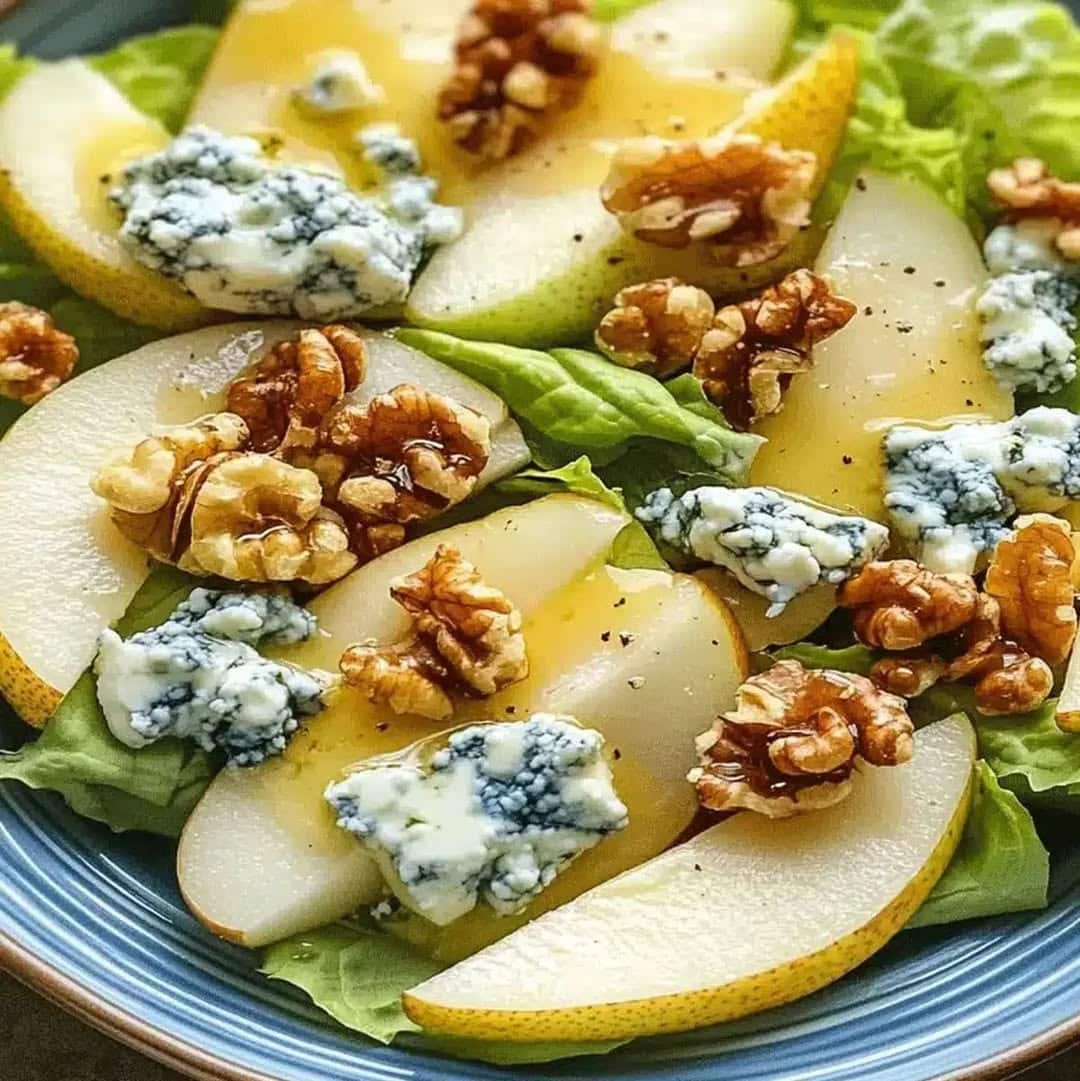
Whether you serve this Barefoot Contessa Pear and Blue Cheese Salad as a starter or a light main course, it delivers restaurant-quality results with minimal effort. The colors alone make it a showstopper on any table. Golden pears, white and blue cheese crumbles, and vibrant greens create a plate that looks as good as it tastes.
Quick Recipe Highlights
- Flavor Profile: This salad balances sweet and savory notes beautifully. The pears bring natural sugar, while the blue cheese adds a sharp, salty kick. Toasted walnuts contribute a nutty depth that ties everything together.
- Texture: You get soft, buttery pear slices alongside creamy cheese crumbles. The toasted walnuts add a satisfying crunch, and the fresh greens provide a crisp, refreshing bite.
- Aroma: The toasted walnuts release a warm, earthy scent that fills the kitchen. Fresh lemon in the dressing adds a bright citrus note that lifts the entire dish.
- Visual Appeal: The contrast of golden pears against white and blue cheese creates a stunning plate. Deep green leaves frame the ingredients beautifully, making this salad a centerpiece.
- Skill Level Needed: This recipe suits beginners perfectly. You only need basic knife skills and a willingness to toast nuts. No advanced techniques or special training required.
- Special Equipment: A good chef’s knife and a cutting board handle most of the work. You will also want a small skillet for toasting walnuts and a simple whisk for the dressing.
Recipe Overview
- Difficulty Level: This recipe earns an Easy rating because it requires no cooking beyond toasting walnuts. The steps are straightforward and forgiving, so even first-time cooks will succeed. You simply slice, whisk, and assemble.
- Category: This dish works as a side salad, an appetizer, or a light lunch. It pairs well with roasted meats or stands alone as a satisfying starter. Many home cooks serve it as a first course for holiday dinners.
- Cuisine: This salad draws from French culinary tradition, where fruit and cheese pairings are common. Ina Garten’s version reflects her classic French training with a focus on fresh, high-quality ingredients. The combination of pears, blue cheese, and walnuts is a staple in European cuisine.
- Cost: Expect to spend around twelve to eighteen dollars on ingredients for four servings. The pears and blue cheese drive most of the cost. Buying walnuts in bulk helps keep the total budget-friendly.
- Season: Fall and winter are the best times to make this salad because pears reach peak ripeness. Fresh pears from local orchards taste far superior to out-of-season fruit. The warm, cozy flavors also suit cooler weather perfectly.
- Occasion: This salad shines at holiday gatherings, dinner parties, and weekend brunches. It adds elegance to Thanksgiving or Christmas tables without extra stress. Casual family dinners also welcome this fresh, flavorful side.
Why You’ll Love This Recipe
Taste and texture make this salad truly memorable. The natural sweetness of ripe pears contrasts perfectly with the bold, tangy flavor of blue cheese. Each bite delivers a mix of creamy, crunchy, and juicy sensations that keep you coming back for more. The toasted walnuts add a warm, nutty richness that rounds out every mouthful.
Convenience sets this recipe apart from other elegant dishes. You need only fifteen minutes from start to finish, with no complicated cooking steps. Most of the work involves slicing pears and whisking a simple dressing. Cleanup is minimal, which means you spend more time enjoying your meal and less time scrubbing pots.
Nutritional advantages give this salad real staying power. Pears provide fiber and vitamin C, while walnuts deliver healthy omega-3 fatty acids. Blue cheese contributes calcium and protein in moderation. Fresh greens add vitamins and antioxidants, making this a nutrient-dense addition to any meal.
Social and entertaining value cannot be overstated. This salad impresses guests with its beautiful presentation and sophisticated flavor profile. It pairs well with wine and complements almost any main course. Hosts love it because it looks fancy but takes almost no effort.
Cost-effectiveness makes this recipe accessible to home cooks on any budget. The ingredients are easy to find at most grocery stores, and none of them break the bank. You can adjust portions easily to feed a crowd without doubling your spending. Simple, affordable ingredients create a dish that tastes far more expensive than it is.
Historical Background and Cultural Significance
The pairing of pears and blue cheese has deep roots in European culinary history. French and Italian cooks have combined fruit with cheese for centuries, recognizing how sweetness and tang balance each other. This tradition spread across Europe and eventually reached American kitchens through classically trained chefs.
Ina Garten brought this combination to mainstream American cooking through her Barefoot Contessa cookbooks and television show. Her approach emphasizes simple, quality ingredients prepared with care. The pear and blue cheese salad became a signature dish in her repertoire, showcasing her belief that great food does not need to be complicated.
The recipe evolved from traditional European cheese courses, where fruit and cheese were served together after meals. Over time, cooks transformed this pairing into a composed salad with greens and vinaigrette. The modern version reflects a shift toward lighter, fresher presentations of classic flavor combinations.
Regional variations exist across different cultures. In France, similar salads often include endive and Roquefort cheese. Italian versions might feature Gorgonzola and arugula. American cooks frequently adapt the recipe with local pears and domestic blue cheese varieties, creating their own regional twists on this beloved classic.
Ingredient Deep Dive
Pears serve as the star ingredient in this salad, bringing natural sweetness and juicy texture. Cultivated for thousands of years, pears hold cultural significance in many societies as symbols of abundance and hospitality. Nutritionally, pears offer fiber, vitamin C, and potassium, supporting digestive health and heart function. Choose pears that yield slightly to gentle pressure near the stem, indicating ripeness. Store them at room temperature until ripe, then refrigerate for up to five days. Bosc and Anjou varieties work beautifully, though Asian pears offer a crisp alternative.
Blue cheese delivers the bold, tangy counterpoint that makes this salad unforgettable. This cheese style originated in European caves where mold naturally developed, creating distinctive blue-green veins. Today, blue cheese production spans the globe, with each region offering unique flavor profiles. Blue cheese provides calcium, protein, and beneficial probiotics. Look for cheeses with even vein distribution and a creamy texture. Wrap tightly and store in the refrigerator for up to two weeks. Gorgonzola, Roquefort, or Stilton make excellent substitutes.
Toasted walnuts add crunch and earthy richness to every bite. Walnuts have sustained human civilizations for thousands of years, valued for their oil and nutritional density. These nuts deliver omega-3 fatty acids, protein, and antioxidants that support brain health. Select walnuts that smell fresh and avoid any with a bitter odor. Store them in an airtight container in the refrigerator or freezer to prevent rancidity. Pecans or almonds work well as substitutes for different texture profiles.
Fresh greens form the foundation of this salad, providing color and crisp texture. Arugula brings a peppery bite that complements the sweetness of pears. Mixed greens or baby spinach offer milder alternatives. Choose leaves that look vibrant and avoid any wilting or browning. Wash greens thoroughly and dry them completely before assembling the salad. Store in a sealed container with a paper towel to absorb moisture.
The vinaigrette brings everything together with bright, tangy flavor. A simple combination of olive oil, vinegar, and seasonings creates a dressing that enhances without overpowering. Dijon mustard adds emulsifying power and complexity. Fresh lemon juice contributes brightness and acidity. Whisk everything together just before serving for the best texture and flavor integration.
Common Mistakes to Avoid
- Using underripe pears creates a hard, bland salad with no sweetness. Always check for slight softness near the stem before slicing. Let pears ripen at room temperature if needed.
- Overdressing the salad weighs down the greens and makes them soggy. Add dressing gradually and toss gently. You want a light coating, not a drowned salad.
- Skipping the toasting step for walnuts loses a world of flavor. Toasting brings out the nuts’ natural oils and creates deeper, richer taste. Never skip this simple step.
- Using cold blue cheese straight from the refrigerator mutes its flavor. Let cheese sit at room temperature for fifteen minutes before crumbling. This simple step enhances aroma and taste.
- Cutting pears too early causes browning and mushiness. Slice pears right before assembly and toss with a little lemon juice. This keeps them fresh and bright.
- Wet greens dilute the dressing and ruin texture. Dry greens thoroughly with a salad spinner or clean towels. Dry leaves hold dressing properly.
- Adding too much blue cheese overwhelms the delicate pear flavor. Use restraint and let each ingredient shine. A little blue cheese goes a long way.
- Ignoring walnut freshness creates an unpleasant bitter taste. Always taste walnuts before using them. Fresh walnuts smell sweet and nutty.
- Assembling too far in advance leads to wilted greens and soggy nuts. Dress the salad just before serving. Keep components separate until the last moment.
- Using a heavy dressing masks the fresh ingredients. Stick with a light vinaigrette that enhances rather than covers. Simple olive oil and lemon work beautifully.
Essential Techniques
Proper pear slicing technique ensures beautiful presentation and even distribution. Start by cutting the pear in half lengthwise, then scoop out the core with a melon baller or spoon. Place the flat side down and slice into thin, even pieces about a quarter-inch thick. Uniform slices look elegant and ensure each bite has the right balance of fruit. Work quickly to prevent browning, or toss slices with lemon juice.
Toasting walnuts correctly brings out their full flavor potential. Heat a dry skillet over medium heat and add walnuts in a single layer. Stir frequently and watch carefully, as nuts burn quickly. Toast for three to five minutes until fragrant and slightly darker. Remove from the pan immediately to stop the cooking process. Let cool completely before adding to the salad.
Whisking vinaigrette properly creates a stable emulsion that coats every leaf evenly. Combine vinegar, mustard, and seasonings in a small bowl first. Slowly drizzle in olive oil while whisking constantly. The mustard helps bind the oil and vinegar together. Taste and adjust seasoning before dressing the salad. A well-made vinaigrette should look slightly thickened and glossy.
Gentle tossing distributes dressing without bruising delicate greens. Place greens in a large bowl and drizzle dressing over the top. Use salad tongs or clean hands to lift and turn the leaves gently. Stop as soon as everything is lightly coated. Overworking the greens damages their structure and creates a wilted texture.
Pro Tips for Perfect Pear and Blue Cheese Salad
- Choose pears that are ripe but still firm to hold their shape when sliced. Overripe pears turn mushy and break down in the salad. A gentle press near the stem tells you if they are ready.
- Toast walnuts in batches and store extras for future salads. Having toasted nuts on hand speeds up assembly and adds crunch to many dishes. Store them in an airtight container for up to two weeks.
- Use a light hand with the dressing and serve extra on the side. Guests appreciate the ability to control their own dressing amount. This also prevents the salad from becoming soggy.
- Crumble blue cheese by hand for the best texture and appearance. Hand-crumbled pieces create interesting shapes and sizes. Pre-crumbled cheese often lacks the same visual appeal.
- Add a drizzle of honey or a sprinkle of dried cranberries for extra sweetness. These additions complement the pears and create deeper flavor complexity. Adjust amounts to taste.
- Serve the salad on chilled plates for a restaurant-quality touch. Cold plates keep the greens crisp longer and feel elegant. Simply place plates in the refrigerator for ten minutes before serving.
- Consider adding thinly sliced red onion for a pop of color and mild heat. Soak onion slices in cold water for five minutes to mellow their bite. Pat dry before adding to the salad.
- Pair this salad with crusty bread to soak up every drop of dressing. Warm bread complements the fresh, cool salad beautifully. It also makes the meal more satisfying.
Variations and Adaptations
Regional variations offer endless inspiration for customizing this salad. A French-inspired version might include endive leaves and Roquefort cheese for a more bitter, complex flavor. Italian cooks might use Gorgonzola and arugula with a balsamic dressing. American home cooks often add candied pecans and dried cranberries for a sweeter, more holiday-focused approach.
Seasonal adaptations keep this salad fresh throughout the year. In fall, use Bosc pears and add roasted squash cubes for warmth and heartiness. Spring versions might feature fresh strawberries alongside pear slices. Summer adaptations could include peaches or nectarines for a juicy, bright twist on the original.
Dietary modifications make this recipe accessible to everyone at the table. Skip the blue cheese and add extra nuts to create a vegan-friendly version. Use a dairy-free cheese alternative for those avoiding lactose. Gluten-free eaters need no changes since the recipe contains no wheat products.
Flavor variations let you explore different taste profiles within the same basic structure. Add fresh herbs like tarragon or thyme to the dressing for aromatic complexity. A drizzle of balsamic reduction creates a sweet, tangy finish. Crushed red pepper flakes add a subtle kick for those who enjoy heat.
Texture modifications suit different preferences and dietary needs. Replace walnuts with candied pecans for extra sweetness and crunch. Add crispy prosciutto or bacon for a savory, salty contrast. Toasted pumpkin seeds offer a nut-free alternative with excellent crunch.
Presentation alternatives keep the salad exciting for repeat servings. Serve in individual endive cups for elegant appetizer portions. Layer ingredients in a Mason jar for a portable lunch option. Arrange on a large platter for family-style dining that encourages sharing.
Serving and Presentation Guide
Plating techniques transform this simple salad into a stunning centerpiece. Start with a bed of greens arranged loosely on a large plate. Fan pear slices across the top, allowing them to overlap slightly for visual interest. Scatter blue cheese crumbles and walnuts evenly, then drizzle dressing in a thin stream over the top.
Garnishing ideas elevate the salad’s appearance with minimal effort. Fresh herb sprigs like parsley or chives add color and freshness. A sprinkle of flaky sea salt and cracked black pepper enhances both flavor and visual appeal. Dried cranberries add jewel-like pops of red that brighten the plate.
Traditional accompaniments round out the meal beautifully. Crusty French bread and butter compliment the fresh flavors. A simple soup like butternut squash or tomato creates a satisfying lunch. Roasted chicken or pork makes this salad a complete dinner.
Modern serving suggestions bring contemporary flair to this classic dish. Offer the salad as part of a grazing board with cheeses, fruits, and crackers. Serve in small bowls as elegant appetizers for cocktail parties. Pair with a glass of white wine for an instant restaurant experience.
Temperature considerations affect the salad’s taste and texture significantly. Serve greens and pears chilled or at cool room temperature for maximum crispness. Let blue cheese sit out briefly to soften and release flavor. Warm walnuts contrast beautifully with cool ingredients.
Portion control tips help manage servings for different occasions. Use about two cups of greens per person for a main course salad. For a side salad, one to one and a half cups works well. Allow two pear halves and two tablespoons of blue cheese per serving.
Wine and Beverage Pairing
Wine pairings enhance the flavors of this salad beautifully. A crisp Sauvignon Blanc cuts through the richness of blue cheese with bright acidity. Riesling offers slight sweetness that complements the pears perfectly. For red wine lovers, a light Pinot Noir provides fruitiness without overpowering the delicate salad.
Non-alcoholic alternatives suit guests who prefer to skip alcohol. Sparkling water with lemon provides refreshing effervescence. Apple cider offers seasonal sweetness that echoes the pears. Iced green tea brings subtle bitterness that balances the cheese.
Coffee and tea pairings work surprisingly well with this salad. A light green tea complements the fresh flavors without competing. Iced chamomile tea adds gentle floral notes that enhance the fruit. For coffee lovers, a mild roast pairs nicely with the walnuts.
Temperature considerations for beverages matter just as much as the salad itself. Serve white wines well-chilled and red wines at cellar temperature. Non-alcoholic options taste best ice cold. Room temperature beverages can feel heavy alongside the fresh salad.
Storage and Shelf Life
Storage methods determine how long components stay fresh. Keep dressing separate in a sealed jar for up to one week. Store washed and dried greens in a container with paper towels. Keep pears whole and un-sliced until serving for the best texture.
Temperature requirements vary by ingredient. Refrigerate greens, cheese, and dressing at all times. Store pears at room temperature until ripe, then refrigerate. Walnuts keep best in the refrigerator or freezer to prevent rancidity.
Container recommendations ensure proper preservation. Glass jars work best for dressings and allow you to see the contents. Airtight plastic containers suit greens and nuts. Wrap blue cheese tightly in plastic wrap or foil to prevent drying.
Signs of spoilage help you know when to discard ingredients. Wilted or slimy greens should go immediately. Mold on cheese beyond the natural blue veins indicates spoilage. Rancid walnuts smell bitter and should never be used.
Reheating instructions do not apply to this fresh salad, which is best served cold. However, you can refresh wilted greens by soaking them in ice water for ten minutes. Dry thoroughly before using. The salad does not freeze well, so make only what you plan to eat.
Make Ahead Strategies
Prep timeline planning makes serving this salad effortless. Wash and dry greens up to two days ahead and store in the refrigerator. Toast walnuts and store in an airtight container for up to two weeks. Make dressing up to one week in advance and refrigerate.
Storage between steps keeps components fresh and ready. Keep all prepared components separate until just before serving. This prevents sogginess and maintains optimal texture. Arrange everything in your refrigerator for quick assembly.
Quality impact assessment helps you prioritize freshness. Pears lose quality fastest once sliced, so cut them last. Greens hold up well when properly dried and stored. Dressing improves after a few hours as flavors meld.
Assembly tips ensure quick, beautiful presentation. Set out all components and tools before beginning assembly. Work quickly but carefully to preserve textures. Dress the salad at the very last moment before serving.
Fresh element additions keep the salad tasting vibrant. Add freshly sliced pears just before serving. Toss in the dressing and combine gently. Top with walnuts last to maintain their crunch.
Scaling Instructions
Halving the recipe works easily for smaller households. Use one pear and half the blue cheese and walnuts. Reduce the dressing ingredients by half but keep extra on hand for serving. The timing stays the same since no cooking is involved.
Doubling or tripling the recipe suits larger gatherings. Multiply all ingredients accordingly but use a larger serving bowl. Toss in batches if space is tight. Prepare extra dressing and keep it on the side.
Equipment adjustments may be needed for larger batches. Use a very large bowl or two medium bowls for tossing. A larger cutting board speeds up pear slicing. Multiple skillets can toast more walnuts at once.
Timing modifications remain minimal since this is a no-cook recipe. Add extra time for slicing more pears and toasting more walnuts. Allow fifteen extra minutes when doubling the recipe. Proper organization makes scaling simple.
Storage considerations change with larger batches. Use larger containers for storing components. Label containers with dates to track freshness. Only dress what you plan to serve immediately.
Nutritional Deep Dive
Macro breakdown reveals a well-balanced nutritional profile. Each serving contains approximately fifteen grams of fat, twelve grams of carbohydrates, and six grams of protein. The fat comes primarily from healthy sources like walnuts and olive oil. Carbohydrates come largely from pears and provide steady energy.
Micronutrient analysis shows impressive vitamin and mineral content. Pears deliver vitamin C, potassium, and vitamin K. Blue cheese contributes calcium and phosphorus. Walnuts provide magnesium and vitamin E. Greens add iron and folate.
Health benefits make this salad a smart choice for many diets. Omega-3 fatty acids from walnuts support heart and brain health. Fiber from pears aids digestion and helps maintain stable blood sugar. Antioxidants in greens and pears protect cells from damage.
Dietary considerations matter for people with specific health needs. Those watching sodium should moderate blue cheese amounts. Individuals with nut allergies can substitute seeds. Lactose-intolerant diners can use aged cheeses which contain less lactose.
Portion analysis helps you make informed eating choices. A side salad portion delivers around two hundred fifty calories. Main course portions reach four hundred calories. Adding bread or other sides increases the total significantly.
Weight management tips help you enjoy this salad as part of a healthy lifestyle. Keep dressing moderate to control fat intake. Add lean protein like grilled chicken for a more filling meal. Use extra greens to increase volume without adding many calories.
Dietary Adaptations
Gluten-free eaters can enjoy this recipe without any changes. The salad contains no wheat, barley, or rye ingredients. Always check labels on blue cheese and dressing components. Some blue cheese varieties use bread mold cultures, so verify with the manufacturer.
Dairy-free versions require removing or replacing the blue cheese. Substitute with a dairy-free cheese alternative or omit entirely. Add extra nuts and pears for substance. The dressing can remain the same if using olive oil and vinegar.
Vegan adaptations focus on plant-based swaps. Replace blue cheese with marinated tofu or a vegan cheese. Use maple syrup instead of honey in the dressing if you add sweetener. The result remains satisfying and full of flavor.
Low-carb dieters can reduce the pear quantity. Use fewer slices and add extra greens and nuts. Choose a dressing without added sugar. The salad still delivers plenty of flavor without excess carbohydrates.
Keto variations need careful attention to sugar content. Reduce pears to a minimum and increase walnuts and cheese. Olive oil based dressing fits keto macros well. Track carbohydrates from fruit carefully.
Paleo followers should skip the cheese and use a simple olive oil and lemon dressing. Choose raw nuts and avoid any processed ingredients. Fresh, whole ingredients align perfectly with paleo principles.
Low-FODMAP dieters should moderate pear and blue cheese amounts. Pears contain excess fructose that can trigger symptoms. Smaller portions may be tolerated. Consult a healthcare provider for personalized guidance.
Troubleshooting Guide
Texture issues usually stem from improper ingredient handling. If greens feel wilted, revive them in ice water. If pears turn mushy, they were too ripe. Toast walnuts longer for extra crunch if they seem soft.
Flavor balance problems are easy to fix with small adjustments. If the salad tastes too sweet, add extra lemon juice. If it tastes too sharp, balance with a drizzle of honey. Always taste and adjust before serving.
Temperature problems affect presentation and taste. Warm ingredients can wilt greens quickly. Keep everything chilled until serving. Do not let the salad sit out for more than thirty minutes.
Equipment challenges rarely occur with such a simple recipe. A dull knife makes pear slicing difficult, so sharpen it first. If you lack a salad spinner, pat greens dry with clean towels. Use any skillet for toasting nuts.
Ingredient substitutions work well when you plan ahead. No pears available? Try apples or peaches. Skip blue cheese and use goat cheese for a milder flavor. Replace walnuts with pecans or almonds.
Timing concerns arise mostly when preparing multiple dishes. Make components ahead of time to reduce last-minute stress. Set a timer for walnut toasting to prevent burning. Assemble the salad just before serving.
Recipe Success Stories
Community feedback shows overwhelmingly positive responses to this recipe. Home cooks praise its simplicity and impressive results. Many report making it regularly for family dinners and special occasions. The consistent success encourages cooks of all skill levels to try it.
Variation successes demonstrate the recipe’s flexibility. Readers share creative twists like adding fresh figs or substituting goat cheese. Others describe using candied pecans for extra sweetness. These adaptations inspire new cooks to experiment confidently.
Adaptation stories highlight how the recipe fits different lifestyles. Busy parents appreciate the quick preparation time. Frugal cooks value the affordable ingredients. Entertainers love the impressive presentation with minimal effort.
Reader suggestions continually improve this classic recipe. Some recommend adding dried cherries or cranberries for color. Others suggest a balsamic glaze drizzle for deeper flavor. These ideas show the recipe’s adaptability to personal preferences.
Photography tips help readers capture the salad’s beauty. Natural light works best for photographing greens and pears. Shallow bowls display the ingredients elegantly. Include blue cheese crumbles and walnut pieces prominently in shots.
Frequently Asked Questions
Can I use a different cheese instead of blue cheese? Yes, several alternatives work well. Goat cheese offers a creamy, tangy substitute. Feta provides a similar salty bite with milder flavor. Gorgonzola delivers an even bolder taste for those who love strong cheeses.
How do I know when pears are ripe enough for this salad? Gently press near the stem. A slight give indicates ripeness. Pears should feel firm but not hard. Ripen them at room temperature in a paper bag for a day or two if needed.
Can I prepare this salad in advance for a party? Prepare components separately up to a day ahead. Wash and dry greens, toast walnuts, and make dressing. Slice pears just before serving and toss everything together. This keeps textures fresh.
What can I use instead of walnuts? Pecans offer similar texture and flavor. Almonds provide a firmer crunch. Pumpkin seeds work well for nut-free households. Any of these make excellent substitutes without major flavor changes.
Is blue cheese safe during pregnancy? Soft cheeses like blue cheese can carry listeria risk. Pregnant women should consult their doctor. Some cooked blue cheese dishes are safe since heat kills bacteria. Always prioritize safety.
How many calories are in this salad? A side serving contains about two hundred fifty calories. Main course portions reach around four hundred calories. Adding bread or proteins increases the total. Portion sizes dictate final calorie counts.
Can I make this salad vegan? Yes, skip the blue cheese and add extra nuts. Use a dairy-free cheese alternative if desired. Keep the dressing oil-based with lemon. The result remains flavorful and satisfying.
What type of pear works best? Bosc pears hold their shape well when sliced. Anjou and Bartlett also work beautifully. Choose pears that are ripe but still slightly firm. Avoid very soft pears that may turn mushy.
How long does the dressing last? Store leftover vinaigrette in a sealed jar for up to one week. Refrigerate and shake well before using. Ingredients separate naturally, so shaking restores the emulsion. Properly stored, the dressing stays fresh.
Can I serve this salad warm? While traditionally served cold, a warm version works nicely. Sauté pear slices briefly in butter and add warm cheese and nuts. Serve over slightly wilted greens or warm grains. This creates a cozy, cold-weather variation.
What main dishes pair well with this salad? Roasted chicken complements the sweet and savory flavors. Grilled pork and balsamic glaze create a perfect match. Vegetarians enjoy pairing it with stuffed squash or roasted vegetables.
How do I prevent pears from browning? Toss slices with fresh lemon juice right after cutting. Work quickly and add pears to the salad just before serving. Keep slices in acidulated water if preparing ahead. This simple step keeps pears bright and fresh.
Additional Resources
Related recipes expand your repertoire with similar flavor themes. Try roasted pear and gorgonzola crostini for an elegant appetizer. Warm pear and blue cheese tartlets make impressive party bites. Pear and walnut muffins bring these flavors into breakfast territory.
Technique guides help you master fundamental skills. Learn proper knife cuts for even pear slices. Study vinaigrette ratios for perfect balance every time. Understand how toasting nuts transforms their flavor. These guides build confidence for future recipes.
Ingredient information deepens appreciation for each component. Explore blue cheese varieties from around the world. Discover pear seasonality and growing regions. Learn proper storage methods to extend freshness. Knowing ingredients helps you choose wisely at the store.
Equipment recommendations improve your cooking experience. Invest in a quality chef’s knife for clean, safe cutting. A salad spinner quickly dries washed greens. Small cast iron skillets toast nuts evenly. These tools become kitchen staples.
Seasonal variations invite year-round enjoyment. Fall features ripe pears and warm spices. Winter brings citrus adaptations for brightness. Spring adds fresh berries for color. Summer highlights stone fruit substitutes for pears.
This Barefoot Contessa Pear and Blue Cheese Salad represents everything great about simple cooking. Quality ingredients, minimal effort, and beautiful presentation create a dish that impresses every time. Try it for your next gathering and watch it disappear from the table.
PrintBarefoot Contessa Pear and Blue Cheese Salad
- Total Time: 25 minutes
- Yield: 4
Description
A classic Ina Garten-inspired salad featuring sweet ripe pears, tangy blue cheese, toasted walnuts, and baby greens tossed in a light Dijon vinaigrette.
Ingredients
- 2 ripe but firm Bartlett or Anjou pears
- 1/2 cup walnut halves
- 5 ounces mixed baby greens (about 6 cups)
- 4 ounces good blue cheese, such as Roquefort or Gorgonzola, crumbled
- 3 tablespoons good olive oil
- 1 1/2 tablespoons red wine vinegar
- 1 teaspoon Dijon mustard
- 1/2 teaspoon kosher salt
- 1/4 teaspoon freshly ground black pepper
Instructions
- Preheat the oven to 350 degrees F. Place the walnuts on a sheet pan and toast for 8 to 10 minutes, until fragrant. Set aside to cool.
- In a small bowl, whisk together the olive oil, red wine vinegar, Dijon mustard, salt, and pepper until emulsified.
- Core the pears and cut them into thin slices or wedges. If desired, toss the pear slices gently with a little of the vinaigrette to prevent browning.
- In a large salad bowl, combine the baby greens, toasted walnuts, and crumbled blue cheese. Add the pear slices.
- Drizzle the dressing over the salad and toss gently to coat. Serve immediately.
Notes
You can customize the seasonings to taste. For a variation, try adding dried cranberries or substituting candied pecans for the walnuts. The dressing can be made ahead and refrigerated; bring to room temperature before using.
- Prep Time: 15 minutes
- Cook Time: 10 minutes
- Method: Salad
- Cuisine: American