Slow-Braised Beef Brisket with Herb Grits: The Ultimate Comfort Food Recipe
Few dishes deliver the kind of deep, soul-warming satisfaction that this Slow-Braised Beef Brisket with Herb Grits recipe provides. Imagine fork-tender beef that pulls apart with the gentlest touch, soaked in a rich, savory braising liquid that clings to every fiber. Beneath it sits a creamy bed of stone-ground grits flecked with fresh herbs and finished with butter. This is the kind of meal that makes people close their eyes after the first bite.
The magic of this Slow-Braised Beef Brisket with Herb Grits recipe comes from patience and layering. You season the brisket generously, sear it until a dark crust forms, then let it bathe in a bath of beef stock, red wine, tomatoes, and aromatics for hours until it surrenders completely. Meanwhile, the herb grits come together in under thirty minutes, giving you a luxurious, cheesy base that soaks up every drop of the braising sauce. Weekends were made for cooking like this.
Whether you grew up eating Sunday suppers in the South or you simply crave a hearty, crowd-pleasing meal, this Slow-Braised Beef Brisket with Herb Grits recipe belongs in your rotation. It feeds a crowd, it freezes beautifully, and it tastes even better the next day. Home cooks of all skill levels can master it with the right guidance, and this post walks you through every step with practical tips and time-tested techniques.
Quick Recipe Highlights
- Flavor Profile: Expect a bold, savory depth from the braised brisket with subtle smokiness, a hint of red wine, and mellow garlic and onion notes. The herb grits bring a buttery, cheesy richness that balances the beef beautifully.
- Texture: The brisket turns incredibly tender and shreds with almost no effort, while the grits stay creamy and smooth. Crisp seared edges on the meat add just enough contrast.
- Aroma: Your kitchen will fill with the scent of simmering beef, thyme, rosemary, and a whisper of wine. The herb butter stirred into the grits adds a fresh, green finish.
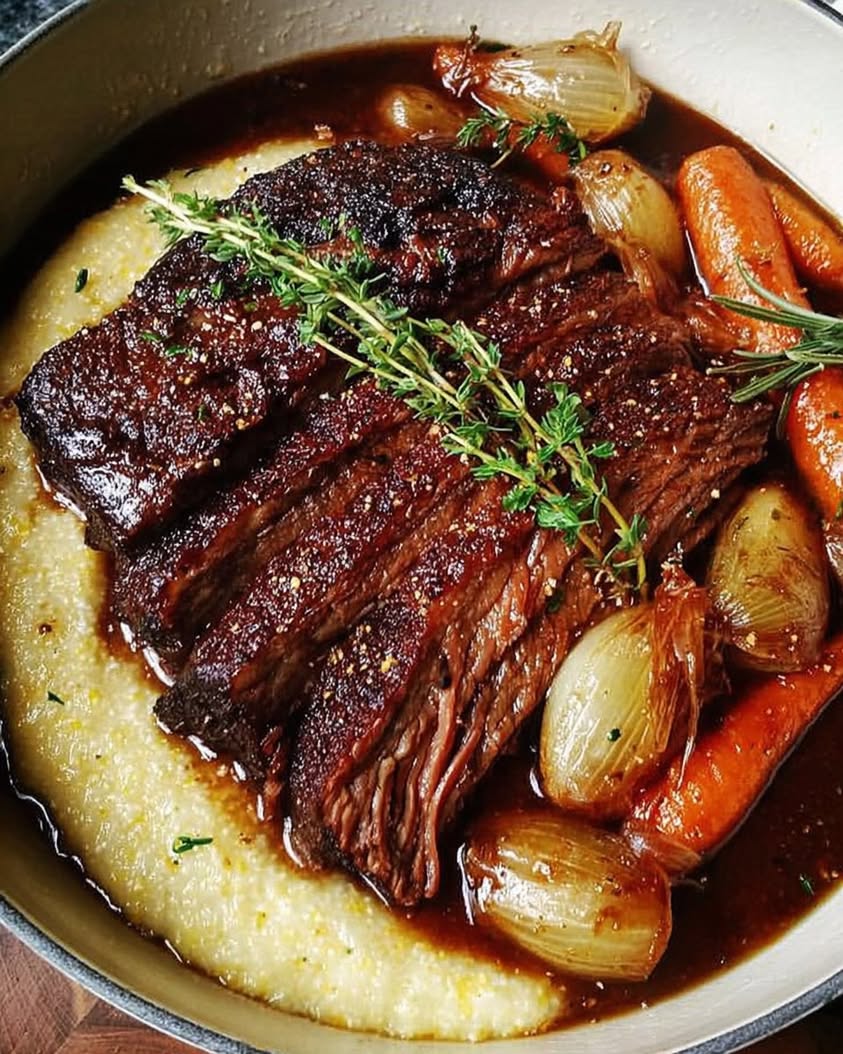
- Visual Appeal: Deep mahogany braised beef piled over golden, creamy grits makes a stunning plate. A sprinkle of fresh parsley and a few turns of black pepper complete the look.
- Skill Level Needed: An intermediate cook will feel right at home, though beginners can succeed with patience and attention to browning. The oven does most of the work after the initial sear.
- Special Equipment: A heavy Dutch oven is the star tool here, along with a good pair of tongs and a sharp knife. A whisk helps you stir the grits to a silky finish.
Recipe Overview
- Difficulty Level: I rate this recipe as intermediate because it involves searing a large cut of meat, deglazing, and managing a long braise. None of these steps require professional training, and each one builds confidence. The payoff is a dish that looks and tastes like you spent all day in the kitchen.
- Category: This dish works as a main course for dinner and shines as a centerpiece for holiday meals. It also doubles as an impressive brunch centerpiece when served alongside eggs.
- Cuisine: The recipe draws on classic Southern American cooking, blending low-and-slow barbecue traditions with the comfort of creamy stone-ground grits. French braising techniques inform the cooking method. The result is a distinctly American hybrid that celebrates regional ingredients.
- Cost: A whole brisket feeds eight people generously for roughly $4 to $6 per serving, making it a budget-friendly way to entertain. The grits and pantry staples add very little to the total. Buying a larger brisket and freezing leftovers stretches the value even further.
- Season: This dish shines in fall and winter when you crave warmth and hearty meals. It also works beautifully for summer gatherings when you want to avoid standing over a hot grill. The oven does the work while you enjoy your guests.
- Occasion: Serve it for Sunday supper, holiday dinners, Super Bowl parties, or any gathering where you want to impress without fuss. It suits casual family meals and elegant dinner parties equally well.
Why You’ll Love This Recipe
The taste and texture of this Slow-Braised Beef Brisket with Herb Grits recipe will win you over at first bite. The beef develops a concentrated, savory flavor as it braises, absorbing the wine, stock, and aromatics. Each shred carries a glossy sheen of sauce, and the grits beneath add a creamy, soothing contrast. The combination of tender meat and velvety grits creates a mouthfeel that feels indulgent yet utterly homey.
Convenience matters, and this recipe delivers it in spades. Once you sear the brisket and get it into the oven, you have three to four hours of hands-off time. That means you can clean the kitchen, run errands, or simply relax while dinner cooks itself. The grits take only thirty minutes, so the final push to the table stays quick and stress-free.
Nutritionally, brisket brings a serious dose of protein, iron, and zinc to the table. The slow braise helps break down connective tissue, making the meat easier to digest. Grits supply energy-rich carbohydrates and, when made with milk and butter, add calcium and comforting fats. This is a balanced, satisfying meal that fuels you without feeling heavy.
Social and entertaining value runs high here because the dish feeds a crowd and presents beautifully. Friends and family love gathering around a platter of tender brisket and creamy grits. The recipe scales easily, so you can host eight or eighteen without stress. It also makes a memorable potluck contribution that people remember long after the plates are cleared.
Cost-effectiveness and accessibility round out the appeal. Brisket remains one of the most affordable cuts of beef, especially when bought whole. Grits are inexpensive pantry staples, and the remaining ingredients are common household items. With minimal investment, you produce a meal that rivals restaurant fare, which makes this Slow-Braised Beef Brisket with Herb Grits recipe a smart choice for any budget.
Historical Background and Cultural Significance
The story of braised brisket begins with resourcefulness. Jewish immigrants in Eastern Europe and later in the United States transformed a tough, inexpensive cut into tender, flavorful meals through slow cooking. As families moved across the country, they carried their braising traditions with them. The technique spread, and brisket became a beloved centerpiece at holidays and family gatherings across many communities.
In the American South, grits hold a place of honor at the table. Native Americans introduced early settlers to ground corn, and the dish became a staple of Southern cooking. Over generations, grits evolved from a simple porridge into a canvas for butter, cheese, and fresh herbs. Pairing braised beef with creamy grits brings together two distinct culinary traditions on a single plate.
The evolution of this recipe reflects the way American cooking blends influences. French braising methods meet Southern grits traditions, and the result feels both classic and contemporary. Home cooks have embraced the combination because it delivers deep flavor with modest effort. Today, the pairing appears on restaurant menus and family tables alike.
Regional variations abound, from Texas-style brisket with smoky barbecue notes to Carolina versions with tangy vinegar undertones. Some cooks add tomatoes, others skip them. Herb grits shift with the seasons, featuring basil in summer or rosemary in winter. That flexibility keeps the dish alive and relevant in kitchens across the country.
Ingredient Deep Dive
Beef brisket, the star of the recipe, comes from the lower chest of the cow and carries deep historical roots in barbecue and braising traditions. This cut contains generous connective tissue that melts into gelatin during long cooking, creating that signature tender texture. Generations of cooks have prized brisket for turning an inexpensive cut into a luxurious meal.
Nutritionally, brisket delivers high-quality protein, iron, and zinc, along with B vitamins. Choose a brisket with a good fat cap and even marbling for the best results, and look for a deep red color. Store it in the coldest part of your fridge and use it within three to five days of purchase. For substitutions, chuck roast works well and brings similar flavor with a slightly shorter cook time.
Stone-ground grits provide the creamy foundation and carry their own cultural weight as a Southern staple. Coarser grinds offer more texture and nutty flavor than instant varieties. They deliver complex carbohydrates and, when cooked with milk, add calcium and protein. Select grits with a consistent grind and a fresh corn aroma, and store them in an airtight container in a cool, dark place.
Fresh herbs such as thyme, rosemary, and parsley elevate both the brisket and the grits with bright, aromatic notes. Thyme brings earthy warmth, rosemary adds piney depth, and parsley contributes a clean finish. Herbs also supply antioxidants and trace vitamins. Choose vibrant, perky leaves and store them wrapped in damp paper towels inside the fridge. Dried herbs work in a pinch, though fresh delivers far more impact.
Red wine and beef stock form the backbone of the braising liquid, contributing acidity, depth, and body. The wine’s tannins help balance the richness of the meat, while stock adds savory richness. Choose a dry red you would happily drink, and look for low-sodium stock so you control the seasoning. Substitute extra stock plus a splash of vinegar when you prefer to skip alcohol.
Common Mistakes to Avoid
- Skipping the sear undermines flavor development because browning creates deep, savory notes. Take time to brown every side of the brisket in a hot Dutch oven before adding liquid. This step builds the foundation of the entire dish.
- Using insufficient seasoning leaves the beef tasting flat after hours of cooking. Season generously with salt and pepper before searing, and taste the braising liquid before it goes into the oven. Remember that long cooking dilutes flavors, so start bold.
- Braiding at too high a temperature causes the meat to dry out and turn tough. Maintain a gentle simmer around 300 degrees Fahrenheit and check that the liquid never boils aggressively. Low and slow wins this race.
- Letting the braising liquid evaporate completely risks scorching the meat. Add enough stock to come halfway up the brisket and check periodically during cooking. Top off with more stock if the pan runs dry.
- Cutting the brisket against the grain makes even tender meat feel chewy. Identify the direction of the muscle fibers and slice perpendicular to them. This simple step transforms the texture.
- Rushing the grits leads to lumps and a gritty texture. Whisk constantly as you add the grits to the liquid and stir often during cooking. Patience produces a silky, luxurious result.
- Serving immediately after braising shortchanges the flavor because resting allows juices to redistribute. Let the brisket rest for at least twenty minutes before slicing. The meat becomes juicier and easier to handle.
- Overcrowding the Dutch oven during searing steams the meat instead of browning it. Work in batches if needed and give each piece space. Proper browning requires direct contact with the hot pan.
- Ignoring the fat cap wastes a natural asset because the fat bastes the meat during cooking. Trim excess fat but leave a quarter-inch layer to render and flavor the sauce. You can skim excess fat from the sauce later.
- Underseasoning the grits leaves the dish unbalanced since grits need generous salt and butter. Taste and adjust as you stir, and finish with a knob of herb butter. The grits should taste delicious on their own.
Essential Techniques
Searing creates the flavor foundation of the entire dish through the Maillard reaction, which browns proteins and sugars into hundreds of new flavor compounds. Master it by patting the brisket completely dry, heating the Dutch oven until it is genuinely hot, and adding oil with a high smoke point. Lay the meat down and leave it alone until it releases naturally from the pan. Visual cues include a deep mahogany crust and a sizzle that sounds steady rather than explosive.
Deglazing lifts the browned bits stuck to the pan, which hold concentrated flavor. After removing the brisket, pour in the wine and scrape the bottom with a wooden spoon as it bubbles. The liquid should turn dark and fragrant within a minute or two. Common pitfalls include using too little liquid or skipping the scrape, so keep the heat moderate and work the entire surface of the pan.
Braised cooking transforms tough cuts through gentle, moist heat over hours. Maintain a bare simmer, cover the pot tightly, and resist the urge to peek too often. The meat should become fork-tender and offer no resistance when pierced. If the liquid bubbles vigorously, lower the oven temperature, since a rolling boil toughens the fibers.
Whisking grits properly prevents lumps and yields a creamy texture. Add the grits slowly to simmering liquid while whisking constantly, then stir frequently as they cook. Watch for the mixture to thicken and pull away slightly from the sides of the pot. A finished batch tastes smooth, rich, and free of any raw corn flavor.
Resting and slicing determine how the final plate feels in your mouth. Let the brisket rest so juices redistribute, then slice across the grain into thick, generous pieces. Look for clean cuts with a moist interior. A sharp knife and a steady hand make all the difference, and the reward is tender meat that holds together beautifully.
Pro Tips for Perfect Slow-Braised Beef Brisket with Herb Grits
Season the brisket the night before and let it sit uncovered in the fridge for deeper flavor penetration. The dry surface also sears more effectively the next day. Just remember to pat it dry before it hits the pan.
Choose a Dutch oven that fits the brisket snugly but not tightly, since too much empty space lets liquid evaporate. A heavy lid seals in moisture and maintains even heat. This single piece of equipment makes the biggest difference in the final result.
Layer flavors at every stage by adding aromatics after searing and blooming the tomato paste until it darkens. Each step builds complexity that you can taste in the finished sauce. Small details compound into a deeply satisfying dish.
Stir the herb butter into the grits at the very end so the fresh flavors stay bright. Add the chopped herbs off the heat and taste for salt. This finishing touch makes the grits feel restaurant quality.
Skim the fat from the braising liquid and reduce it into a glossy sauce. Spoon it over the sliced brisket right before serving. A concentrated sauce ties the whole plate together.
Warm your serving platter and bowls before plating so the dish stays hot at the table. Warm grits hold their creamy texture longer, and the beef stays juicy. Small hospitality touches like this elevate the experience.
Make extra grits because guests always ask for seconds. Leftover grits reheat beautifully with a splash of milk. Nobody ever complains about too much creamy, herby goodness.
Variations and Adaptations
Regional variations let you take this dish in exciting directions. A Texas-inspired version adds smoked paprika and a splash of Worcestershire to the braise, nodding to barbecue traditions. A Carolina approach introduces apple cider vinegar and a touch of brown sugar for tangy balance. Each region brings its own personality to the same beloved cut.
Seasonal adaptations keep the recipe fresh all year. In summer, fold basil and chives into the grits and serve the brisket with a bright tomato salad. In winter, lean on rosemary and thyme and pair the dish with roasted root vegetables. The braise itself works in any season.
Dietary modifications make the recipe accessible to more people. Use gluten-free stock and cornmeal verified gluten-free for a gluten-free version. Swap butter for olive oil and milk for a plant-based alternative to create a dairy-free plate. These simple swaps preserve the soul of the dish.
Flavor variations can shift the whole profile with small tweaks. Add chipotle peppers for smoky heat, or stir miso into the braising liquid for umami depth. A splash of bourbon brings warmth and sweetness. Experiment boldly, since braises forgive creativity.
Texture modifications suit different preferences. Shred the brisket finely for a more spoonable dish, or slice it thickly for a steakhouse feel. Blend half the grits for a smoother consistency, or leave them coarse for rustic character. Adjust to match the mood of the meal.
Presentation alternatives range from family-style platters to individually plated portions. Serve the brisket over grits in shallow bowls for a cozy look, or plate neat mounds with sauce drizzled tableside. A cast-iron skillet presentation adds rustic charm. Choose the style that fits your gathering.
Serving and Presentation Guide
Plating techniques matter when you want the dish to look as good as it tastes. Spoon a generous pool of grits into a shallow bowl and nestle sliced brisket on top. Drizzle the reduced sauce over the meat and let it pool slightly at the edges. This layered approach looks polished and invites the first bite.
Garnishing ideas add color and freshness. Scatter chopped parsley, chives, or a few sprigs of thyme over the top. A pinch of flaky salt and a crack of black pepper finish the plate. Pickled onions or a squeeze of lemon brighten the rich flavors.
Traditional accompaniments include collard greens, green beans, or a simple slaw. Cornbread and pickles round out a Southern-inspired spread. These sides complement the richness of the brisket without competing.
Modern serving suggestions lean lighter with a crisp green salad or roasted vegetables. A spoonful of chimichurri adds a fresh, herbal punch. Consider serving the dish in small bowls as an appetizer course for parties.
Temperature considerations keep the meal at its best. Serve the brisket hot and the grits just as warm, since grits firm up as they cool. Warm your plates and bowls ahead of time. This small step keeps every bite enjoyable.
Portion control tips help you feed a crowd evenly. Plan for about six to eight ounces of brisket and three-quarters of a cup of grits per person. Slice the meat just before serving to keep it moist. Generous but measured portions ensure everyone leaves satisfied.
Wine and Beverage Pairing
Wine pairings should match the richness of the braised brisket. A full-bodied red such as Cabernet Sauvignon or Syrah stands up to the deep flavors of the sauce. Zinfandel brings fruit and spice that complement the tomatoes and herbs. Choose a wine with enough acidity to cut through the richness.
Non-alcoholic alternatives deserve just as much attention. A strong brewed iced tea with lemon refreshes between bites. Sparkling water with a splash of pomegranate juice adds brightness. Craft root beer brings a fun, nostalgic pairing that works surprisingly well.
Coffee and tea pairings might sound unusual, but a dark roast coffee echoes the deep flavors of the braise. Cold-brew coffee served over ice makes a bold accompaniment. A smoky black tea adds an earthy note that complements the meat.
Temperature considerations matter for the perfect sip. Serve red wines slightly below room temperature to keep them refreshing. Chill non-alcoholic options well and offer plenty of ice. The right temperature keeps the pairing lively.
Serving suggestions include offering a small wine tasting alongside the meal. Let guests try two different reds with the brisket and compare notes. Provide water glasses and refill generously. Hospitality shines through these thoughtful touches.
Storage and Shelf Life
Storage methods determine how well leftovers keep their quality. Cool the brisket and grits separately, then transfer each to shallow airtight containers. Keep the braising liquid with the meat so it stays moist. Store grits in their own container with a splash of milk to prevent drying.
Temperature requirements are straightforward since both components should live in the refrigerator at or below 40 degrees Fahrenheit. Place containers on a middle shelf rather than the door, where temperatures fluctuate. Label with the date for easy tracking. Proper cooling before storage matters most.
Container recommendations favor glass or sturdy plastic with tight-fitting lids. Glass resists stains and odors and reheats evenly. For freezing, choose freezer-safe containers that leave a little headroom for expansion. Squeeze out excess air to prevent freezer burn.
Signs of spoilage include sour odors, slimy textures, or visible mold. Brisket should smell savory, and grits should smell mild and buttery. When in doubt, discard the food rather than risk illness. Trust your senses.
Reheating instructions keep leftovers tasting fresh. Warm brisket gently in a covered pan with a splash of stock or in the microwave at reduced power. Reheat grits with a little milk, stirring to restore creaminess. Both reheat best when not overheated.
Freezing guidelines extend the life of the dish considerably. Freeze brisket with its sauce for up to three months, and freeze grits separately for up to one month. Thaw overnight in the refrigerator before reheating. The flavors hold up remarkably well.
Make Ahead Strategies
A prep timeline makes entertaining calm and organized. Chop vegetables and measure spices the night before, and sear the brisket in the morning. Start the braise early enough to finish hours before dinner. This schedule keeps the kitchen relaxed.
Storage between steps is simple with the right containers. Keep chopped aromatics in small bowls in the fridge, and hold the seared brisket covered at room temperature briefly before braising. Once the braise finishes, cool and refrigerate it for up to three days. Grits taste best made fresh, though par-cooked versions hold well overnight.
Quality impact assessment shows that braises actually improve on day two as flavors meld. Grits lose a little silkiness overnight but recover with gentle reheating and added liquid. Plan for these changes so the final meal tastes as good as the first. Thoughtful timing pays off.
Assembly tips keep serving swift and stress-free. Reheat the brisket and sauce together on low heat while you cook the grits. Slice the meat just before serving, then plate and garnish quickly. A streamlined assembly keeps everything hot.
Reheating guidelines suggest low, gentle heat for both components. Overheating toughens the brisket and dries the grits. Stir frequently and add liquid as needed. Patience during reheating protects the texture.
Fresh element additions brighten the make-ahead meal. Stir fresh herbs into the grits right before serving and garnish with parsley. A squeeze of lemon or a handful of pickled onions wakes up the plate. These small touches make leftovers taste brand new.
Scaling Instructions
Halving the recipe works well for smaller households, though you may need a smaller Dutch oven to keep the braise snug. Cut the brisket in half and reduce the liquid accordingly. Cooking time may shorten slightly, so start checking earlier. The result tastes just as good.
Doubling or tripling suits big gatherings and holidays. Use a larger roasting pan with a tight lid or divide the braise between two Dutch ovens. Keep the liquid ratio consistent and maintain the same oven temperature. More volume means a slightly longer cook time, so plan extra time.
Equipment adjustments keep scaling smooth. A wide roasting pan fits two briskets side by side, while a large stockpot handles a triple batch of grits. Ensure pans fit your oven before committing. Good gear makes big batches manageable.
Timing modifications reflect the physics of larger volumes. Bigger batches take longer to heat through and may need an extra thirty to forty-five minutes. Check the meat for tenderness rather than relying on the clock. Taste and adjust seasoning as the batch size grows.
Storage considerations matter when you cook in bulk. Have plenty of airtight containers ready and cool the food in batches. Freeze portions for later meals and label with dates. Scaling up also means planning ahead for storage space.
Nutritional Deep Dive
The macro breakdown shows a protein-rich main course. A serving of brisket supplies roughly 35 to 40 grams of protein along with meaningful fat, while the grits contribute carbohydrates for energy. Overall, the dish runs around 550 to 650 calories per serving depending on portion size. This balance supports satiety and lasting energy.
Micronutrient analysis reveals strong levels of iron, zinc, and B vitamins from the beef. Grits contribute selenium and some B vitamins, while fresh herbs add vitamin K and antioxidants. Calcium comes from the milk and cheese in the grits. This combination covers a wide nutritional base.
Health benefits stem from the protein and minerals in the beef and the comforting energy of the grits. Long braising makes the meat tender and easy to digest. Antioxidants from herbs and tomatoes add protective value. Balanced portions keep the dish part of a healthy diet.
Dietary considerations include sodium management, since braising liquids can run salty. Use low-sodium stock and season thoughtfully. Those watching fat intake can trim more of the fat cap and skim the sauce. Smaller portions of grits keep carbohydrates in check.
Portion analysis helps guests serve themselves wisely. A palm-sized portion of brisket and a half-cup of grits balances the plate. Pair with plenty of vegetables to round out the meal. Mindful portions let everyone enjoy the dish comfortably.
Weight management tips include serving the brisket over extra vegetables in place of some grits. Choose leaner slices from the flat end of the brisket. Keep added butter and cheese moderate. These tweaks keep the meal satisfying yet lighter.
Dietary Adaptations
For a gluten-free version, use gluten-free stock and verify that all processed ingredients carry gluten-free certification. The core ingredients in this recipe are naturally gluten-free. Check wine labels if you are highly sensitive. Always read labels carefully.
A dairy-free version swaps the butter in the grits for olive oil and the milk for a plant-based alternative. Nutritional yeast can mimic some of the cheesy flavor. The brisket itself contains no dairy, so only the grits need changes. This adaptation keeps the dish creamy and satisfying.
A vegan version requires replacing the beef entirely, though the result becomes a different dish. Try braised jackfruit or portobello mushrooms with the same liquid, and make the grits with plant-based milk and oil. The technique translates well to plant-based cooking. Expect a lighter, faster cook.
Low-carb adaptations focus on reducing the grits portion and serving the brisket over cauliflower rice or roasted vegetables. The beef is naturally low in carbohydrates. Keep portions of sauce moderate to control hidden sugars. This approach preserves the rich flavors.
Keto adaptations follow the same logic, with the brisket offering protein and fat while the sauce stays low in carbs. Skip the wine reduction if desired and use extra stock. Serve with a green salad and plenty of butter. The dish adapts easily to keto macros.
Paleo adaptations remove the grits, replacing them with mashed cauliflower or roasted sweet potatoes. Choose butter alternatives that fit paleo guidelines, and confirm the stock contains no additives. The braised beef itself fits paleo eating. This version feels hearty and clean.
Low-FODMAP adaptations require careful choices since garlic and onion are common triggers. Use garlic-infused oil and the green parts of scallions instead. Choose a stock without onion powder. These swaps keep the flavor while supporting sensitive digestion.
Troubleshooting Guide
Texture issues usually trace back to temperature or timing. Tough brisket needs more time at a gentle simmer, so return it to the oven for another thirty minutes and check again. Mushy grits may need less liquid or more stirring time. Adjust gradually and taste as you go.
Flavor balance can be corrected at the finish. If the sauce tastes flat, add a splash of vinegar or a pinch of salt. If it tastes too rich, brighten it with lemon. Taste before serving and make small adjustments until the flavors sing.
Temperature problems arise when the oven runs hot or cold, so verify with an oven thermometer. Keep the braise at a bare simmer and the grits at a gentle bubble. Steady heat produces consistent results. Never let the pan boil dry.
Equipment challenges include pots that are too thin or lids that do not seal. A heavy Dutch oven solves most problems, and a sheet of foil under the lid improves the seal. Borrow or invest in good gear if you cook this dish often. The difference is real.
Ingredient substitutions should preserve balance. Chuck roast stands in for brisket with a slightly shorter cook, while quick grits can replace stone-ground in a pinch with adjusted timing. If you swap wine for stock, add a little vinegar for acidity. Taste and adjust as you cook.
Timing concerns often come from starting too late or expecting exact times. Treat the clock as a guide and use the tenderness of the meat as your true test. Start early and hold finished brisket on warm. Flexibility removes the stress.
Recipe Success Stories
Community feedback after testing this Slow-Braised Beef Brisket with Herb Grits recipe has been enthusiastic. Readers report that the instructions made the process feel approachable and that the results impressed their families. Many note that the herb grits stole the show. Home cooks love a recipe that delivers confidence along with dinner.
Variation successes include readers who added smoked paprika for a barbecue twist and those who used sharp cheddar in the grits for extra bite. One tester served the brisket over polenta during a snowstorm and called it the best meal of the season. These adaptations show how well the recipe flexes.
Adaptation stories highlight a reader who made the dish for a graduation party for twenty guests and reported empty platters within an hour. Another family turned the leftovers into tacos and raved about the results. The recipe fits celebrations and everyday meals alike.
Reader suggestions include cooking the brisket in a smoker before braising for extra smoky depth. Others recommend adding a parmesan rind to the grits for richer flavor. Many ask for a spicy version and add jalapenos to the braise. The community keeps refining the recipe with great ideas.
Photography tips from testers include shooting in natural light and piling the brisket high over the grits for height. A drizzle of sauce and a few herb sprigs add visual interest. Warm tones in the props make the dish look inviting. Great photos do the recipe justice.
Frequently Asked Questions
What cut of beef works best for Slow-Braised Beef Brisket with Herb Grits? Choose a whole packer brisket or a flat cut with a good fat cap. Look for even marbling and a deep red color. Chuck roast substitutes well if brisket is unavailable. Ask your butcher for advice if you are unsure.
How long should I braise the brisket for the herb grits recipe? Plan on three to four hours at 300 degrees Fahrenheit for a three-to-four-pound brisket. The meat is ready when it shreds easily with a fork. Smaller cuts finish sooner, so check after two and a half hours.
Can I make this Slow-Braised Beef Brisket with Herb Grits recipe ahead of time? Yes, and the flavors actually improve overnight. Cool and refrigerate the brisket in its sauce for up to three days. Reheat gently on the stovetop and make the grits fresh the day you serve.
What type of grits should I use for the herb grits? Stone-ground or old-fashioned grits deliver the best texture and flavor. Instant grits work in a pinch but turn out less creamy. Coarse grinds need a bit more liquid and time. Choose quality grits for the best result.
How do I prevent my grits from getting lumpy? Whisk constantly as you pour the grits into simmering liquid. Stir often throughout cooking and keep the heat at a gentle simmer. A flat whisk and a little patience produce silky, smooth grits every time.
Can I freeze this Slow-Braised Beef Brisket with Herb Grits recipe? Yes, freeze the brisket with its sauce for up to three months and the grits separately for up to one month. Thaw overnight in the refrigerator. Reheat slowly with a splash of liquid to restore texture.
What can I use instead of red wine in the braise? Use extra beef stock plus a tablespoon of red wine vinegar or balsamic vinegar. The acid replaces the brightness the wine provides. Cranberry juice also works in small amounts for a fruity note.
Which herbs pair best with the grits? Thyme, rosemary, chives, and parsley all work beautifully. Use a mix of two or three for complexity. Add delicate herbs like parsley after cooking to preserve freshness. Adjust amounts to your taste.
How do I know when the brisket is fully cooked? The meat should shred with a fork and show no resistance at the center. A thermometer should read about 200 to 205 degrees Fahrenheit. If it still feels firm, return it to the oven for another thirty minutes.
Can I cook this in a slow cooker instead of the oven? Yes, sear the brisket on the stovetop first, then transfer it and the liquid to a slow cooker. Cook on low for eight to ten hours until tender Print
Slow-Braised Beef Brisket with Herb Grits
- Total Time: 3 hours 45 minutes
- Yield: 4
Description
Tender beef brisket slow-braised in a rich tomato-based sauce, served over creamy herb grits for a comforting and flavorful meal.
Ingredients
- 2 pounds beef brisket, trimmed of excess fat
- 1 tablespoon olive oil
- 1 large onion, sliced
- 3 cloves garlic, minced
- 1 cup beef broth
- 1 (14.5 ounce) can diced tomatoes
- 1 teaspoon smoked paprika
- 1 teaspoon dried thyme
- 1 teaspoon salt
- 1/2 teaspoon black pepper
- For the Herb Grits:
- 1 cup stone-ground grits
- 4 cups water
- 1 cup whole milk
- 2 tablespoons butter
- 1/2 cup grated Parmesan cheese
- 2 tablespoons chopped fresh parsley
- 1 tablespoon chopped fresh chives
- Salt and pepper to taste
Instructions
- Preheat oven to 325°F (165°C). Season brisket generously with salt and pepper.
- In a Dutch oven, heat olive oil over medium-high heat. Sear brisket on all sides until browned, about 4-5 minutes per side. Remove and set aside.
- In the same pot, add onion and garlic; cook until softened, about 3 minutes. Stir in beef broth, diced tomatoes, smoked paprika, dried thyme, salt, and pepper. Bring to a simmer.
- Return brisket to the pot, cover, and transfer to the oven. Braise for 3 to 3.5 hours, until meat is fork-tender.
- While brisket cooks, prepare grits: In a medium saucepan, bring water and milk to a boil. Whisk in grits and reduce heat to low. Cook, stirring frequently, until thickened, about 20-25 minutes.
- Stir in butter, Parmesan cheese, parsley, and chives. Season with salt and pepper to taste. Keep warm.
- Remove brisket from pot and slice against the grain. Serve over herb grits, spooning some braising liquid over the top.
Notes
You can customize the seasonings to taste.
- Prep Time: 15 minutes
- Cook Time: 3 hours 30 minutes
- Method: Main
- Cuisine: American