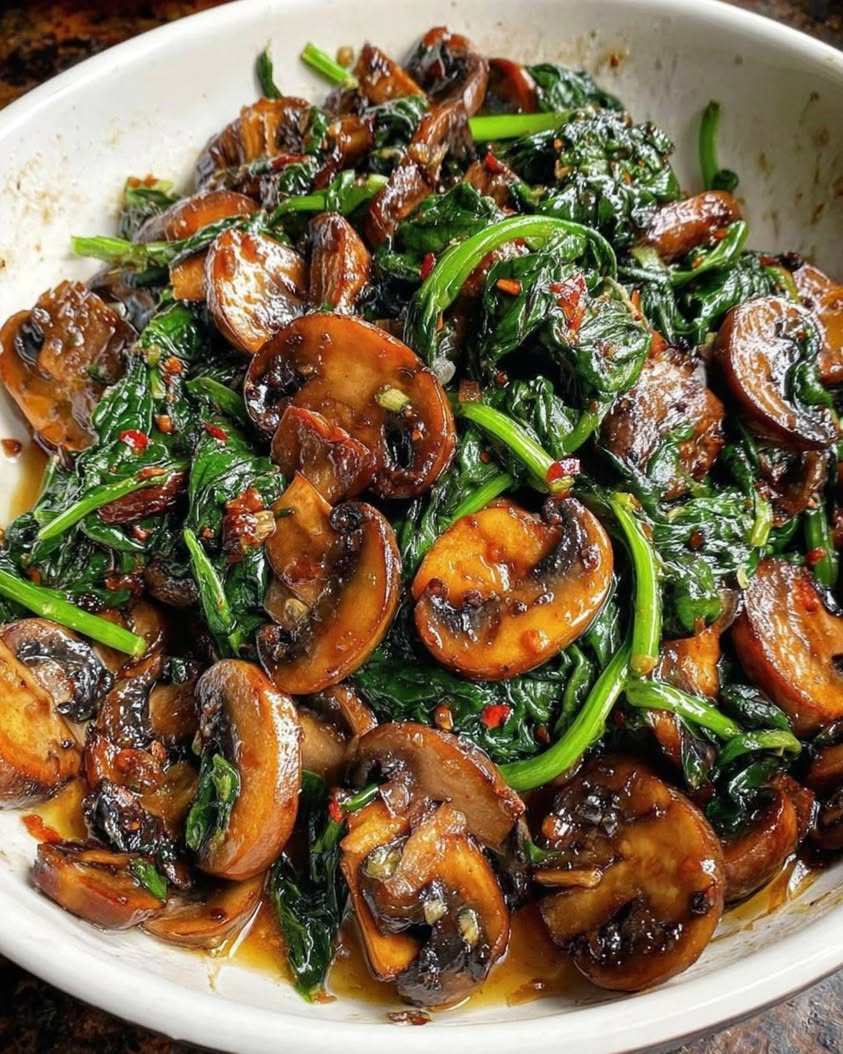
Sautéed Garlic Spinach and Mushrooms: A Quick, Healthy Side Dish
Sautéed Garlic Spinach and Mushrooms is the kind of side dish that quietly steals the show at dinner. Imagine tender spinach leaves wilted in a glossy pan, mingling with golden-brown mushroom slices and the warm, nutty perfume of toasted garlic. This simple combination transforms ordinary ingredients into something deeply savory and satisfying, and it comes together in about twenty minutes from start to finish. Whether you serve it alongside a roasted chicken, pile it onto a steak, or fold it into pasta, this sautéed garlic spinach and mushrooms recipe delivers big flavor with very little effort.
The appeal of this dish comes from the way each ingredient complements the others. Mushrooms bring an earthy, meaty quality that gives the dish real substance, while fresh spinach adds a bright, slightly sweet green note that lightens everything up. Garlic, of course, ties it all together with its unmistakable aroma and depth. A splash of olive oil, a pinch of salt, and a crack of black pepper round out the flavor profile. Because the cooking happens fast over high heat, the vegetables keep their texture and nutrients instead of turning mushy, and the whole kitchen fills with an inviting smell that makes everyone wander toward the stove.
You do not need special skills or fancy equipment to make sautéed garlic spinach and mushrooms at home. A large skillet, a wooden spoon, and a sharp knife cover almost everything you need. This recipe suits busy weeknights when you want a healthy side dish on the table fast, and it also works beautifully for holiday dinners when you need one more vegetable to round out the spread. Home cooks of every experience level can master this dish on the first try, and once you learn the basic technique, you can adapt it endlessly with herbs, citrus, or a sprinkle of cheese. Keep reading to learn every detail, from ingredient selection to storage, so you can make this sautéed garlic spinach and mushrooms recipe your own.
Quick Recipe Highlights
- Flavor Profile: This dish tastes savory and earthy from the mushrooms, bright and slightly sweet from the spinach, and warmly aromatic from the garlic. A touch of salt and pepper sharpens every layer, and a finish of fresh lemon juice adds a gentle tang that keeps the flavors lively.
- Texture: Expect tender, silky spinach leaves contrasted with meaty, golden-edged mushroom slices. The garlic softens into little mellow bits, and the olive oil gives everything a light, glossy coating without heaviness.
- Aroma: Toasted garlic leads the way with its nutty, sweet scent, followed by the deep, woodsy smell of sautéing mushrooms. Fresh spinach adds a clean green note that rounds out the kitchen fragrance.
- Visual Appeal: Deep green spinach and caramel-brown mushrooms create a striking contrast on the plate. A sprinkle of red pepper flakes or a lemon wedge adds a pop of color that makes the dish look restaurant-ready.
- Skill Level Needed: This recipe suits beginners perfectly because it relies on basic knife skills and simple pan cooking. The main things to watch are heat control and timing so the garlic does not burn and the spinach does not overcook.
- Special Equipment: A large skillet or sauté pan gives the vegetables room to cook evenly without steaming. You also need a cutting board, a sharp chef’s knife, and a wooden spoon or spatula for stirring. A colander helps rinse the spinach thoroughly.
Recipe Overview
- Difficulty Level: This sautéed garlic spinach and mushrooms recipe earns an easy rating because it uses one pan and a handful of pantry staples. The steps are straightforward: slice, sauté, wilt, and season. The only real technique is managing pan heat so the garlic turns golden instead of bitter, and even that comes quickly with practice.
- Category: This dish works as a side dish, a light main when served over rice or pasta, and even a breakfast companion next to eggs. It fits vegetable sides, quick dinners, and healthy meal prep categories equally well.
- Cuisine: The recipe draws from Mediterranean and American home cooking traditions, where sautéed vegetables with garlic appear on tables constantly. Italian cooks have long paired spinach with garlic and olive oil, and French technique contributes the gentle pan sauté method. The result is a flexible, modern dish with old-world roots.
- Cost: Fresh spinach and mushrooms rank among the most affordable produce at any U.S. grocery store. Olive oil and garlic cost pennies per serving, so the whole dish typically runs under five dollars for four servings. That makes it a budget-friendly way to add vegetables to any meal.
- Season: This dish works year-round because supermarkets stock spinach and mushrooms constantly. It shines in spring when spinach tastes sweetest and in fall when earthy mushrooms feel most comforting. Holiday tables in November and December welcome it as a lighter counterpoint to rich foods.
- Occasion: Serve this sautéed garlic spinach and mushrooms recipe at weeknight dinners, Sunday suppers, holiday feasts, or casual gatherings. It suits steak nights, pasta dinners, and healthy lunch bowls. Because it looks vibrant and tastes rich, guests never guess how simple it was to make.
Why You’ll Love This Recipe
The taste and texture of sautéed garlic spinach and mushrooms win people over immediately. The mushrooms develop a deep, savory flavor as they brown, often described as umami, which gives the dish a satisfying richness without any meat. Spinach wilts into soft, silky ribbons that soak up the garlicky olive oil, and every bite carries a balance of earthy and bright notes. The contrast between tender greens and meaty mushroom slices keeps each forkful interesting, and a final squeeze of lemon lifts the whole dish so it never feels heavy or dull.
Convenience makes this sautéed garlic spinach and mushrooms recipe a weeknight hero. It comes together in one pan in about twenty minutes, and most of that time needs only occasional stirring. You can wash and slice the vegetables ahead of time, so dinner assembles in minutes after a long workday. Cleanup stays minimal because everything cooks in a single skillet, and the ingredients are the kind you can keep on hand without a special shopping trip. Few side dishes offer this much payoff for so little effort.
Nutritional advantages give this dish a place in almost any eating plan. Spinach delivers iron, vitamin K, vitamin A, folate, and fiber for very few calories, and mushrooms add B vitamins, selenium, and antioxidants. Olive oil contributes heart-healthy monounsaturated fat, and garlic brings its own long list of beneficial compounds. Because the vegetables cook quickly, they retain more nutrients than boiled or long-simmered preparations. Anyone working toward a healthier plate can serve this sautéed garlic spinach and mushrooms recipe without a second thought.
Social and entertaining value matters too, because this dish looks and smells impressive despite its simplicity. The deep green and golden brown colors photograph beautifully for a dinner party table, and the garlicky aroma greets guests the moment they walk in. It pairs easily with almost any main course, so hosts never worry about clashing flavors. Picky eaters and vegetable lovers alike tend to clean their plates, which makes this sautéed garlic spinach and mushrooms recipe a reliable choice when you cook for a crowd.
Cost effectiveness rounds out the case for this recipe. Fresh spinach, cremini or button mushrooms, garlic, and olive oil are among the least expensive items in the produce aisle, especially compared to meat or specialty vegetables. One batch feeds four people for just a few dollars, and it stretches further when spooned over rice, pasta, or grains. Home cooks watching their grocery budget can serve a restaurant-quality vegetable dish any night of the week. That combination of low cost and high flavor explains why sautéed garlic spinach and mushrooms stays in constant rotation in so many kitchens.
Historical Background and Cultural Significance
The origin story of sautéed garlic spinach and mushrooms traces back to peasant cooking traditions across Europe, where families made the most of inexpensive garden and forest ingredients. Spinach spread from Persia through the Mediterranean centuries ago, and mushrooms have appeared in European cooking since ancient times. Farmers and foragers paired the two with garlic because all three grew or could be found easily and stored simply. The quick sauté method developed as cooks learned that high heat and fat brought out the best in both vegetables, turning humble ingredients into a dish worth setting on any table.
Cultural importance shows up in how many cuisines claim a version of this pairing. Italian cooking features spinach sautéed with garlic and olive oil as a classic contorno, or side dish, served alongside main courses. French kitchens use the sauté technique to build deep flavor quickly, and Spanish tapas menus often include garlicky mushrooms. In the American South and Midwest, home cooks embraced spinach and mushrooms as affordable, accessible vegetables, folding them into steakhouse sides and holiday menus. Across all these traditions, the dish represents everyday abundance and simple, honest cooking.
The evolution of the recipe mirrors changes in how people shop and cook. Earlier generations used whatever mushrooms grew locally or dried varieties from the pantry, while modern cooks enjoy year-round access to fresh cremini, white button, and shiitake mushrooms. Pre-washed spinach bags made the dish faster to prepare, and reliable nonstick and stainless skillets made sautéing more forgiving. Cooks also introduced variations like red pepper flakes, white wine, and lemon juice as tastes broadened. Today this sautéed garlic spinach and mushrooms recipe represents a modern, streamlined take on a very old idea.
Regional variations give the dish wonderful flexibility. Italian versions often finish with a squeeze of lemon, a pinch of chili, or a shower of grated Parmesan. Asian-inspired cooks add soy sauce, sesame oil, and ginger for a different flavor direction, while Indian kitchens incorporate cumin and turmeric into similar sautéed greens. In the U.S., steakhouse-style recipes lean on butter and plenty of black pepper, and Mediterranean cooks toss in olives or feta. Each variation shows the same core truth: sautéed garlic spinach and mushrooms adapts to local tastes while keeping its simple, vegetable-forward spirit.
Ingredient Deep Dive
Fresh spinach forms the heart of this sautéed garlic spinach and mushrooms recipe. This leafy green originated in Persia and traveled through China, the Mediterranean, and eventually Europe and North America, becoming one of the most popular vegetables worldwide. Spinach carries cultural weight in many cuisines, from Greek spanakopita to Indian palak paneer, and it symbolizes healthy, everyday cooking in American kitchens. Nutritionally, spinach packs iron, vitamin K, vitamin A, folate, and fiber, and it offers antioxidants that support overall health. When you shop, choose crisp, dark green leaves with no yellowing or slime, and favor bunched spinach for flavor or bagged varieties for convenience. Store spinach in a sealed container with a paper towel to absorb moisture, and use it within a few days. If you need a substitute, kale, Swiss chard, or baby bok choy work well, though cooking times may shift slightly.
Spinach also rewards a little care in the kitchen because it shrinks dramatically when cooked. A big bowl of fresh leaves wilts down to a modest serving, so cooks should buy more than they think they need, roughly ten ounces for four people. Wash spinach thoroughly because grit hides in the stems and folds of the leaves, and dry it well so it sizzles rather than steams. Young, tender leaves taste best in quick sautés, while thick, mature leaves suit longer cooking. Spinach also freezes well after blanching, giving cooks a backup option when fresh bunches look tired. Understanding spinach helps you get the most from this sautéed garlic spinach and mushrooms recipe.
Mushrooms bring the savory depth that defines this dish. People have gathered and cultivated mushrooms for thousands of years, and cultures worldwide revere them as both food and medicine. French cooks built entire sauces around mushrooms, and Italian, Chinese, and Eastern European cuisines each celebrate their own varieties. Nutritionally, mushrooms deliver B vitamins, selenium, potassium, and antioxidants for very few calories. When shopping, look for firm, dry caps with no sliminess, and choose cremini or white button mushrooms for everyday cooking or shiitake and oyster mushrooms for bolder flavor. Store mushrooms in a paper bag in the refrigerator so they breathe, and skip airtight plastic, which speeds spoilage. If you want a substitution, portobello slices, maitake, or even rehydrated dried mushrooms can step in beautifully.
Mushroom selection and handling make a real difference in the final dish. Wipe mushrooms clean with a damp paper towel instead of soaking them, since mushrooms absorb water like sponges and soggy mushrooms brown poorly. Slice them evenly so they cook at the same rate, and give them room in the pan so they sear instead of steam. Cremini mushrooms offer a deeper, more robust taste than white buttons, and a mix of varieties adds complexity. Mushrooms also freeze reasonably well after cooking, though raw mushrooms turn mushy in the freezer. Cooks who master mushroom handling unlock better results in every batch of sautéed garlic spinach and mushrooms.
Garlic provides the aromatic backbone of this recipe. Humans have cultivated garlic for more than five thousand years, and it appears in Mediterranean, Asian, African, and American cooking as both seasoning and medicine. Cultures as different as ancient Egypt and modern Italy treat garlic as essential to daily meals, and it carries folk traditions about health and protection. Nutritionally, garlic supplies manganese, vitamin B6, vitamin C, and sulfur compounds linked to heart health. Choose firm, tight bulbs with no soft spots or green sprouts, and store them in a cool, dry, dark place with good airflow. Fresh garlic always beats pre-minced jars in flavor, though jarred garlic works in a pinch. Shallots, garlic scapes, or a pinch of asafoetida can substitute when garlic is unavailable.
Olive oil rounds out the core ingredients with richness and flavor. Mediterranean cultures have pressed olives for oil for millennia, and olive oil anchors the cuisines of Greece, Italy, Spain, and beyond. Extra virgin olive oil brings antioxidants and heart-healthy monounsaturated fats, along with a fruity flavor that complements vegetables. Buy oil in dark glass or tins, store it away from heat and light, and choose extra virgin for finishing and regular olive oil for higher-heat cooking if you prefer. Butter or avocado oil can substitute for olive oil depending on the flavor you want. Together, these four main ingredients create the simple magic of sautéed garlic spinach and mushrooms.
Common Mistakes to Avoid
- Crowding the pan: When mushrooms and spinach pile up, they steam instead of sear, and the dish turns watery and pale. Cook in batches or use the largest skillet you own so the vegetables brown properly and keep their texture.
- Burning the garlic: Garlic goes from golden to bitter in seconds, so add it after the mushrooms or lower the heat. Many cooks slice garlic thick or add it late so its sweetness develops without charring.
- Skipping the mushroom sear: Mushrooms need undisturbed time in a hot pan to develop their golden crust. Resist the urge to stir constantly, and let them sit for a couple of minutes per side.
- Overcooking the spinach: Spinach needs only a minute or two to wilt, and longer cooking turns it dark, mushy, and bitter. Add it at the very end and pull the pan off the heat as soon as the leaves collapse.
- Wet vegetables: Waterlogged spinach or rinsed mushrooms create steam and prevent browning. Dry the spinach in a salad spinner and wipe mushrooms clean instead of soaking them.
- Underseasoning: Vegetables need generous salt to taste their best, and a pinch added in stages builds better flavor than a single dump at the end. Taste as you go and adjust with salt and pepper.
- Using stale or sprouted garlic: Old garlic with green sprouts tastes harsh and bitter. Choose fresh, firm bulbs and discard any cloves that feel soft or smell off.
- Adding acid too early: Lemon juice or vinegar added during cooking can dull the green color of spinach. Save the acid for a finish after the pan leaves the heat.
- Choosing the wrong pan: Thin pans scorch garlic and mushrooms, while a heavy skillet or stainless pan distributes heat evenly. Use a sturdy pan that holds high heat without hot spots.
- Forgetting to dry the spinach: Excess water clings to spinach leaves even after washing. A quick spin or towel dry ensures the leaves sauté instead of boil in their own moisture.
Essential Techniques
The hot pan sear matters most for the mushrooms in this sautéed garlic spinach and mushrooms recipe. A properly heated pan creates the Maillard reaction, the chemical process that browns food and builds deep, savory flavor. To master it, preheat the skillet over medium-high heat for a minute or two, add oil, and wait until it shimmers before adding mushrooms. Arrange them in a single layer and leave them alone for two to three minutes so a golden crust can form. Common pitfalls include a cold pan, which makes mushrooms release water and steam, and constant stirring, which prevents browning. Watch for edges that turn deeply golden and a pan that sounds lively rather than quiet.
Managing garlic heat protects the flavor of the entire dish. Garlic burns at fairly low temperatures, and burnt garlic turns acrid and bitter, ruining a whole pan of food. Master this by slicing garlic evenly, keeping the heat at medium, and adding it after the mushrooms have browned or moving it to one side of the pan. Stir constantly once garlic hits the oil, and pull the pan back if you smell sharp, toasty notes turning harsh. Good visual cues include garlic that turns pale gold and fragrant within thirty to sixty seconds, never dark brown. This small skill pays off in every recipe that starts with garlic and oil.
Wilt and toss technique defines how the spinach enters the pan. Spinach needs gentle, quick heat to soften without losing its structure and bright color. Add handfuls of dry spinach to the hot pan, toss with tongs or a spoon, and watch for the leaves to collapse and turn glossy within a minute or two. Pitfalls include adding all the spinach at once, which cools the pan, and overcooking, which makes the leaves limp and dull. The visual cue for success is vibrant green leaves that have just lost their raw stiffness but still hold a soft shape. Practicing this technique helps you nail sautéed garlic spinach and mushrooms every time.
Deglazing and finishing build an extra layer of flavor at the end. A splash of white wine, broth, or lemon juice loosens the browned bits from the pan and turns them into a quick sauce that coats the vegetables. Pour the liquid into the hot pan after the mushrooms brown, scrape the bottom with a spoon, and let it bubble for thirty seconds before adding spinach. A finish of lemon zest, a pat of butter, or a drizzle of good olive oil adds brightness and richness. Visual cues include a slightly glossy pan sauce that clings to the vegetables rather than pooling. This finishing step elevates sautéed garlic spinach and mushrooms from good to memorable.
Pro Tips for Perfect Sautéed Garlic Spinach and Mushrooms
Preheat the pan longer than you think necessary. A full two minutes over medium-high heat gives the skillet time to reach an even temperature, which helps mushrooms brown instead of steam. A hot pan also seals the spinach quickly so it keeps its bright color.
Slice mushrooms thick enough to hold their shape. Quarter-inch slices brown well and stay meaty, while paper-thin slices shrivel and burn. Uniform thickness also ensures the mushrooms finish cooking at the same time.
Salt the mushrooms after browning, not before. Early salt draws out moisture and stalls the sear, so wait until the mushrooms turn golden, then season and continue cooking. The same timing works well for the spinach.
Keep a lemon half ready before you start cooking. A squeeze of fresh lemon at the end wakes up the flavors and balances the richness of the oil and garlic. The acid also keeps the spinach looking green and fresh on the plate.
Add the garlic in two stages for deeper flavor. Half the garlic can go in early with the mushrooms to mellow, and the rest goes in near the end so its punch stays bright. This double approach makes sautéed garlic spinach and mushrooms taste extra layered.
Use tongs to toss spinach rather than a spoon. Tongs let you lift and fold the leaves gently, which speeds wilting and avoids bruising. They also make it easy to pull the pan off the heat at exactly the right moment.
Finish with a small knob of butter or a drizzle of olive oil off the heat. The fat carries the garlic aroma through every bite and gives the vegetables a glossy, polished look. This tiny step makes the dish feel restaurant quality.
Variations and Adaptations
Regional variations show how far this dish can travel. Italian cooks might add a pinch of red pepper flakes, a splash of white wine, and a finish of grated Parmesan or pecorino. French versions sometimes include shallots and a sprinkle of fresh thyme, while Spanish tapas-style takes use smoked paprika and a splash of sherry. Asian-inspired cooks swap olive oil for sesame oil, add ginger and soy sauce, and finish with toasted sesame seeds. Each version keeps the same core of garlic, spinach, and mushrooms while telling a different story through seasoning.
Seasonal adaptations let you enjoy sautéed garlic spinach and mushrooms all year. In spring, add fresh peas, ramps, or a handful of early herbs like tarragon. Summer versions benefit from cherry tomatoes tossed in at the end or a scatter of fresh basil. Fall invites diced apple, toasted walnuts, or a pinch of nutmeg, and winter versions welcome hearty additions like crisped bacon or a spoonful of miso. Adjusting the extras to what looks best at the market keeps the dish fresh month after month.
Dietary modifications make the recipe fit almost any eating plan. For dairy-free and vegan versions, simply skip the butter finish and rely on olive oil. Gluten-free cooks need no changes because the core recipe contains no wheat, though they should check any added sauces for gluten. Low-carb and keto diners already have an ideal dish here, and paleo followers can skip butter for ghee or olive oil. Low-FODMAP cooks should limit garlic or use garlic-infused oil for the flavor without the fructans.
Flavor variations stretch the recipe in fun directions. Add a teaspoon of Dijon mustard with the olive oil for tang, or whisk in a little tahini and lemon for a Middle Eastern twist. A sprinkle of chili crisp gives heat and crunch, and a drizzle of balsamic glaze brings sweet acidity. Curry powder, cumin, or smoked paprika each push the dish toward a different cuisine. Whatever direction you choose, the sautéed garlic spinach and mushrooms technique stays the same.
Texture modifications help you match the dish to your meal. Slice mushrooms thinly for a finer texture that works in omelets or pastas, or quarter them for a chunky steakhouse feel. Leave baby spinach leaves whole for a softer bite, or chop mature spinach coarsely for a heartier texture. Add toasted almonds, pine nuts, or crispy shallots for crunch. A final dusting of breadcrumbs gives a pleasant bite inspired by Italian greens and beans.
Presentation alternatives keep the dish looking fresh. Serve it family-style in a warm ceramic bowl, or plate individual portions with a nest of spinach and mushrooms on top. Spoon it over grilled bread as a bruschetta topping, or fold it into warm grains for a bowl. A ring of olive oil and a lemon wedge on the side of the plate adds a finished, chef-like touch that suits any table.
Serving and Presentation Guide
Plating techniques make a big difference with simple vegetable dishes. Choose a wide, shallow bowl so the colors show, and pile the spinach and mushrooms slightly off-center for a natural look. Use tongs to create height rather than spreading the vegetables flat. A small pool of pan juices around the base adds a glossy frame, and a final drizzle of olive oil catches the light beautifully.
Garnishing ideas range from simple to showy. Toasted sesame seeds, red pepper flakes, or a pinch of flaky sea salt all add visual interest in seconds. Fresh herbs like parsley, basil, or chives bring color and freshness, and a little lemon zest brightens the plate. For a richer look, shave Parmesan or crumble feta over the top. Keep garnishes small so the spinach and mushrooms stay the star.
Traditional accompaniments ground the dish in classic pairings. Serve it next to roasted chicken, grilled steak, or pan-seared fish for a steakhouse-style plate. It also works alongside roasted potatoes, polenta, or crusty bread that can soak up the garlicky juices. Holiday tables welcome it beside turkey, ham, or lamb, and Italian menus pair it with pasta or risotto. These classic matches show off sautéed garlic spinach and mushrooms at their best.
Modern serving suggestions push the dish into new territory. Spoon it over a grain bowl with farro, quinoa, or brown rice and a drizzle of tahini. Pile it onto toasted sourdough with ricotta for a quick lunch, or fold it into an omelet or frittata. It makes a great topping for pizza, a filling for quesadillas, or a bed for a poached egg. These fresh ideas keep the recipe relevant for busy modern eaters.
Temperature considerations matter more than people expect. Serve the dish hot or warm, straight from the pan, because spinach loses its appeal as it cools and turns limp. If you must hold it, keep it covered over very low heat for no more than ten minutes, and add a fresh squeeze of lemon before serving. Reheat leftovers gently in a skillet rather than the microwave so the texture stays pleasant. Warm plates help the dish stay hot at the table.
Portion control tips help the dish fit any meal plan. A generous half-cup serving works as a side for four people, while a full cup makes a satisfying vegetable main when paired with grains or protein. Spinach cooks down dramatically, so plan on about two and a half ounces of raw spinach per person. Serving with a slotted spoon keeps excess oil off the plate, and a small bowl of extra lemon wedges lets guests add brightness to taste.
Wine and Beverage Pairing
Wine pairings for sautéed garlic spinach and mushrooms favor crisp, earthy, or lightly oaked options. A dry Sauvignon Blanc brings bright acidity that cuts through the olive oil and complements the green notes of spinach. Unoaked Chardonnay offers a rounder texture that matches the mushrooms, and Pinot Noir delivers gentle red fruit and earthiness that echoes the dish’s savory depth. Dry rosé works beautifully for warmer weather, and a light Italian white like Vermentino or Pinot Grigio handles the garlic with ease. Avoid heavily oaked wines, which can overpower the vegetables.
Non-alcoholic alternatives keep the meal inclusive and refreshing. Sparkling water with lemon and a sprig of rosemary feels festive and cleanses the palate between bites. Iced green tea with mint pairs well with the earthy flavors, and a cucumber-lime spritzer offers bright acidity without alcohol. For something warmer, a light herbal tisane with lemon balm or chamomile brings gentle aromatics that complement the garlic. These options let everyone at the table enjoy a thoughtful pairing.
Coffee and tea pairings may seem unusual for a vegetable side, but they work in the right context. A light-bodied green tea or jasmine tea complements the spinach’s green flavors, and a mild black tea like Darjeeling offers structure without heaviness. If you serve the dish as part of a brunch spread, a medium-roast coffee with nutty notes echoes the browned mushrooms. Keep the drinks mild so they do not compete with the garlic.
Temperature considerations guide how you serve beverages with this dish. White wines and rosés taste best well chilled, around forty-five to fifty degrees, while Pinot Noir shows best slightly cool at fifty-five degrees. Sparkling water should be icy, and teas should be hot but not scalding. Matching the drink temperature to the warm vegetables creates a pleasant contrast on the palate.
Serving suggestions help you build a complete beverage plan. Offer a small wine list of three options, one white, one red, and one sparkling, so guests can choose their style. Set out a pitcher of citrus water and a pot of tea for non-drinkers. Provide the right glassware, white wine glasses for whites and slightly larger bowls for reds, and chill bottles in an ice bucket at the table. Thoughtful beverage service rounds out sautéed garlic spinach and mushrooms beautifully.
Storage and Shelf Life
Storage methods determine how well leftovers keep their quality. Cool the sautéed garlic spinach and mushrooms quickly and transfer them to a shallow airtight container so they chill evenly. Press a piece of plastic wrap against the surface or use a tight lid to limit air exposure, which slows oxidation and preserves color. Refrigerate within two hours of cooking to keep food safety standards. Properly stored, the dish keeps its flavor and texture far better than haphazardly covered leftovers.
Temperature requirements keep the dish safe and tasty. Store the container in the main compartment of the refrigerator at forty degrees or below, not in the door where temperatures fluctuate. Place it on a middle shelf so it chills consistently and does not drip onto other foods. Keep it away from strong-smelling items like onions or fish, since spinach absorbs odors easily. A refrigerator thermometer helps confirm your appliance holds the right temperature.
Container recommendations balance convenience and quality. Glass containers with locking lids preserve flavor best and resist staining, while high-quality plastic containers work well for shorter storage. Choose a container just large enough for the food so there is little empty air space. Small individual containers help with portioning and speed reheating. Label containers with the date so you always know how fresh the leftovers are.
Signs of spoilage help you know when to discard leftovers. Freshly cooked sautéed garlic spinach and mushrooms keep for three to four days in the refrigerator. Watch for sliminess, sour or off smells, dull gray-green color, or visible mold, all signs the dish has passed its prime. When in doubt, throw it out, because foodborne illness is never worth the risk. Proper cooling and storage extend shelf life, but three to four days remains the safe limit.
Reheating instructions protect texture and flavor. Warm leftovers gently in a skillet over medium-low heat with a teaspoon of water or olive oil to restore moisture, stirring until hot throughout. The microwave works in a pinch, though it can toughen spinach, so cover the dish and heat in short bursts. Avoid high heat, which dries the mushrooms and darkens the spinach. Reheat only what you plan to eat, since repeated reheating degrades quality.
Freezing guidelines let you plan further ahead. This dish freezes acceptably for up to two months, though spinach softens considerably after thawing. Cool completely, pack into freezer-safe containers or bags, and remove as much air as possible. Thaw overnight in the refrigerator before reheating in a skillet. Use frozen portions in soups, pasta sauces, or casseroles where texture matters less. For the best quality, enjoy sautéed garlic spinach and mushrooms fresh or refrigerated within a few days.
Make Ahead Strategies
Prep timeline planning makes this recipe even easier on busy days. Wash and dry the spinach up to two days ahead and store it in a sealed container with a paper towel. Slice mushrooms up to twenty-four hours ahead and keep them in a paper bag in the refrigerator. Peel and slice garlic a few hours before cooking, though fresh-cut garlic tastes best. With these steps done, the actual cooking takes about ten minutes, which makes weeknight dinners feel effortless.
Storage between steps keeps prepped ingredients fresh and safe. Keep spinach, mushrooms, and garlic in separate containers so moisture and odors do not transfer. Label each container with the prep date, and place mushrooms on a middle shelf where they stay dry and cool. Spinach does best in the crisper drawer, and garlic keeps well in a small covered bowl away from heat. This organization also makes the cooking process smoother because everything stays ready and visible.
Quality impact assessment helps you decide what to prep. Sliced mushrooms hold up well for a day, though they brown slightly and may release a bit of moisture. Washed spinach keeps beautifully for a couple of days in the refrigerator. Sliced garlic loses some punch after a few hours but still works fine. The finished dish tastes best the day it is made, so for parties, do the prep ahead but cook close to serving time.
Assembly tips streamline the final cook. Set out the prepped vegetables, oil, salt, pepper, and any garnishes before you turn on the heat so everything stays within reach. Preheat the pan while you gather ingredients, and have a serving bowl warming nearby. This mise en place approach keeps the fast cooking steps calm and controlled. Cooks who set up first find sautéed garlic spinach and mushrooms almost stress-free.
Reheating guidelines from the make-ahead plan protect quality. If you cook the dish a few hours ahead, cool it quickly, refrigerate, and reheat gently in a skillet with a splash of olive oil just before serving. Add a fresh squeeze of lemon and a pinch of salt after reheating to wake up the flavors. Avoid reheating twice, and hold the dish warm for no more than thirty minutes. These habits keep the dish tasting fresh.
Fresh element additions restore life to make-ahead batches. Toss in a handful of fresh baby spinach during the final reheat so some leaves stay bright and barely wilted. Add freshly toasted garlic slices, a shower of herbs, or a squeeze of citrus right before serving. A drizzle of good olive oil at the end brings back gloss and aroma. These finishing touches make reheated sautéed garlic spinach and mushrooms taste almost as good as the first time.
Scaling Instructions
Halving the recipe suits smaller households or single servings. Use five ounces of spinach and four ounces of mushrooms, and reduce the garlic to one large clove. Use a medium skillet rather than a large one so the vegetables still get good contact with the hot pan. Cooking times stay nearly the same, though everything moves a little faster, so watch the garlic closely. Season to taste and enjoy a fresh batch without weeks of leftovers.
Doubling or tripling the recipe works for parties and big families with a few adjustments. Cook in batches rather than piling everything into one pan, because overcrowding causes steaming and uneven browning. Brown the mushrooms in two rounds, then wilt the spinach in batches, combining everything in a warm serving bowl at the end Print
Sautéed Garlic Spinach and Mushrooms
- Total Time: 20 minutes
- Yield: 4
Description
A quick and healthy side dish featuring fresh spinach and mushrooms sautéed with garlic and olive oil.
Ingredients
- 2 tablespoons olive oil
- 8 ounces cremini mushrooms, sliced
- 4 cloves garlic, minced
- 10 ounces fresh spinach, washed and dried
- Salt and pepper to taste
- 1 tablespoon lemon juice (optional)
Instructions
- Heat olive oil in a large skillet over medium-high heat.
- Add mushrooms and cook, stirring occasionally, until they release their moisture and become golden brown, about 5-7 minutes.
- Add garlic and cook for 30 seconds until fragrant.
- Add spinach in batches, tossing until wilted, about 2-3 minutes.
- Season with salt, pepper, and lemon juice if desired. Serve hot.
Notes
You can customize the seasonings to taste.
- Prep Time: 10 minutes
- Cook Time: 10 minutes
- Method: Side Dish
- Cuisine: American