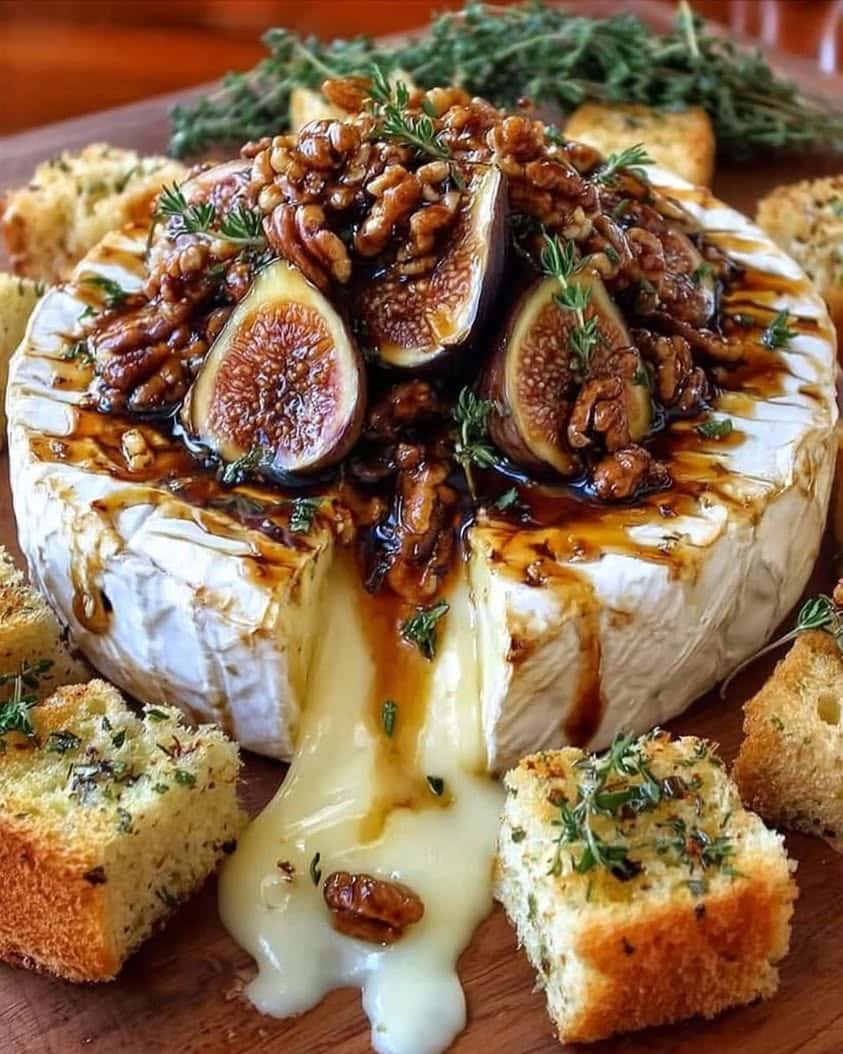
Warm Baked Brie with Figs and Pecans: An Elegant Appetizer
Warm Baked Brie with Figs and Pecans transforms a simple wheel of cheese into a showstopping appetizer that feels effortlessly luxurious. When you slice through the golden, flaky pastry crust, a river of melted brie flows out and mingles with the sweet, jammy richness of figs and the toasted crunch of pecans. This warm baked brie with figs and pecans recipe delivers restaurant-quality elegance from your own kitchen, and it comes together in under thirty minutes with just a handful of everyday ingredients. Whether you serve it at a holiday gathering, a cozy date night, or a casual weekend get-together, this dish disappears fast and earns rave reviews every single time.
The magic of this warm baked brie with figs and pecans lies in the contrast of textures and flavors. Creamy, buttery brie melts into luscious pools that soak into the buttery crust, while dried figs add a honeyed depth and pecans contribute a warm, nutty crunch. A drizzle of honey and a sprinkle of fresh thyme tie everything together with subtle herbal notes. Because the oven does most of the work, you can focus on greeting guests and pouring drinks instead of hovering over the stove. This baked brie with figs and pecans also pairs beautifully with crusty bread, crisp apple slices, and a glass of sparkling wine, so it fits seamlessly into any menu you plan.
Perhaps the best part of this warm baked brie with figs and pecans is how approachable it is for cooks at any skill level. You need no special techniques, no fancy equipment, and no prior pastry experience. Store-bought puff pastry works perfectly, and the assembly takes about ten minutes from start to finish. As a result, this recipe has become a favorite for busy home cooks who still want to impress. Once you master the basic method, you can riff on it endlessly with different jams, nuts, and herbs. Keep reading to discover why this warm baked brie with figs and pecans deserves a permanent spot in your entertaining rotation.
Quick Recipe Highlights
- Flavor Profile: Sweet dried figs balance the rich, savory creaminess of brie, while toasted pecans add warmth and a hint of bitterness. A touch of honey rounds everything out with floral sweetness.
- Texture: The crisp, golden puff pastry shatters gently under the knife, giving way to an oozing, spoonable cheese center. Crunchy pecans contrast beautifully with the soft, jammy figs.
- Aroma: Toasted nuts, melted butter, and warm pastry fill the kitchen as the brie bakes. Fresh thyme releases subtle earthy notes that make the dish smell as festive as it tastes.
- Visual Appeal: A burnished golden crust crowned with glossy figs, pecan halves, and a honey drizzle creates a centerpiece-worthy presentation. The cheese cascades out dramatically when you cut the first slice.
- Skill Level Needed: This recipe suits beginners because puff pastry does the heavy lifting and the oven handles the technique. You simply layer, wrap, and bake with minimal fuss.
- Special Equipment: You need only a baking sheet, parchment paper, and a sharp knife. A small pastry brush helps with egg wash, though your fingers work fine in a pinch.
Recipe Overview
- Difficulty Level: I rate this recipe easy because it involves no advanced techniques, no temperature-sensitive sauces, and no precise knife work. The puff pastry shields the cheese, so even a slightly uneven wrap bakes into an appealing rustic look. Beginners can nail it on the first attempt.
- Category: This dish works as an appetizer, a party snack, or part of a cheese board spread. You can also serve it as a light dessert with fruit, and it holds its own on a brunch table alongside eggs and salads.
- Cuisine: French culinary tradition inspires this recipe, since baked brie originates in France and celebrates the country’s love of soft-ripened cheese. American home cooks adapted it with puff pastry and sweet toppings, creating the modern version we enjoy today. The figs and pecans add a distinctly New World touch. Together, these influences make the dish feel both classic and contemporary.
- Cost: A wheel of brie costs roughly five to eight dollars, puff pastry runs about four dollars, and figs and pecans add another five to six dollars. The whole dish feeds eight people for under twenty dollars, which makes it a budget-friendly way to entertain.
- Season: Fall and winter suit this recipe best because figs and pecans peak in autumn and the warm, baked quality feels cozy during cold months. That said, you can serve it year-round, and it shines at summer parties when paired with fresh fruit.
- Occasion: Holidays, dinner parties, wine nights, and game days all welcome this appetizer. It also works for intimate date nights at home, since the presentation feels special without requiring hours in the kitchen.
Why You’ll Love This Recipe
The taste and texture of this warm baked brie with figs and pecans deliver pure indulgence in every bite. Creamy brie melts into a silky, spoonable center that contrasts with the crisp, buttery layers of puff pastry. Sweet figs turn tender and jammy in the oven, and toasted pecans add a satisfying crunch that keeps each bite interesting. Because the flavors balance sweet, savory, salty, and nutty notes, the dish never feels heavy or one-dimensional. Guests always ask for the recipe, and you will feel proud to share it.
Convenience sets this warm baked brie with figs and pecans apart from fussier appetizers. You assemble everything in about ten minutes, then let the oven do the rest while you mingle with guests. The ingredient list stays short and relies on pantry staples plus a few specialty items you can grab at any grocery store. Cleanup amounts to one baking sheet and a cutting board, which means you spend less time scrubbing and more time enjoying the party. For anyone who entertains often, this recipe becomes a reliable go-to.
Nutritional advantages give this dish surprising depth beyond its indulgent reputation. Brie delivers protein and calcium, pecans supply heart-healthy fats and antioxidants, and figs contribute fiber and potassium. Honey adds natural sweetness with trace minerals, and fresh thyme brings a small dose of vitamins. Portion control matters with rich foods like this, yet the nuts and fruit temper the cheese’s richness and add genuine nutritional value. You can feel good serving this warm baked brie with figs and pecans to family and friends.
Social and entertaining value makes this warm baked brie with figs and pecans a natural centerpiece. It invites sharing, since guests gather around and cut their own portions, which sparks conversation and connection. The dramatic cheese pull when you slice into the crust creates a moment everyone photographs. Because it pairs with wine, cocktails, and mocktails alike, it fits any beverage menu you plan. Hosts love a dish that doubles as entertainment, and this recipe delivers exactly that.
Cost-effectiveness and accessibility round out the reasons to love this warm baked brie with figs and pecans. You need no expensive ingredients, and the finished dish looks far more costly than it is. Puff pastry, brie, dried figs, and pecans are available year-round at mainstream supermarkets, so you never chase hard-to-find items. The recipe scales easily for larger crowds without breaking your budget. For anyone who wants maximum impact with minimum spending, this warm baked brie with figs and pecans delivers on every front.
Historical Background and Cultural Significance
Baked brie traces its roots to France, where cheesemakers have produced brie since the Middle Ages in the region around Paris. Legend ties brie to Charlemagne, who reportedly fell in love with the cheese during a visit to a bishop in the eighth century. French cooks traditionally served brie at room temperature, yet the idea of baking it gained traction as a way to transform leftover wheels into something warm and spectacular. The technique spread to American kitchens in the twentieth century, where home cooks embraced the simplicity of wrapping cheese in pastry and baking it until golden.
Figs carry their own rich cultural history that deepens this recipe’s significance. Ancient Greeks prized figs so highly that they created laws governing their export, and the fruit appears throughout Mediterranean mythology and literature. Spanish missionaries brought figs to California in the eighteenth century, and the state now grows most of America’s supply. Dried figs became a pantry staple in many cultures because they store well and concentrate their sweetness. Combining figs with brie connects Mediterranean tradition with French cheesemaking in a single dish.
Pecans originated in North America and hold a special place in Southern American cooking. Native American tribes harvested and traded pecans for centuries before European settlers commercialized them, and the name comes from an Algonquin word. Georgia, Texas, and New Mexico now lead production, and pecans appear in everything from pies to pralines. Adding pecans to baked brie gives the dish an American accent that grounds its French roots. The combination of French cheese, Mediterranean fruit, and American nuts tells a story of culinary fusion on the plate.
Regional variations of baked brie have evolved across the United States and beyond, with cooks in different areas adding their own signature touches. New England versions sometimes feature cranberries and maple syrup, while Southern cooks lean into pecans and bourbon. On the West Coast, chefs experiment with fig spreads and local honey. In France, a simpler version might omit pastry and bake brie with herbs and garlic. This warm baked brie with figs and pecans sits at the intersection of these traditions, borrowing the best ideas from each to create something universal and delicious.
Ingredient Deep Dive
Brie forms the heart of this warm baked brie with figs and pecans, and this soft-ripened cheese carries centuries of French tradition. Brie’s bloomy white rind and creamy interior made it a favorite of royalty, and today it remains one of the world’s most beloved cheeses. Nutritionally, brie offers protein, calcium, and vitamin B12, though its fat content means moderation matters. When you shop, choose a wheel that feels slightly springy rather than hard or runny, and check that the rind stays intact. Store brie in the refrigerator wrapped loosely in paper, and use it within a week of purchase. For substitutions, Camembert works beautifully, and a mild triple-cream cheese makes a fine alternative.
Dried figs bring concentrated sweetness and chewy texture to this warm baked brie with figs and pecans, and their storied past stretches back thousands of years. Figs symbolized fertility and prosperity in ancient cultures, and they remain a staple of Mediterranean cuisine today. The fruit supplies fiber, potassium, and antioxidants, which makes it a genuinely healthful addition to an indulgent dish. Look for soft, plump figs with a deep brown color and avoid any that feel hard or show crystallized sugar. Keep dried figs in an airtight container in a cool, dark place for up to six months. If you cannot find dried figs, apricots, dates, or fig jam all substitute well.
Pecans add their distinctive buttery crunch to this warm baked brie with figs and pecans, and these native American nuts boast a rich heritage. Native tribes relied on pecans as a food source long before European settlers arrived, and the nuts became a Southern agricultural staple. Pecans deliver healthy fats, vitamin E, and antioxidants, and studies link them to heart health. Select pecan halves that look plump and uniform, and avoid shriveled or rancid-smelling nuts. Store pecans in the refrigerator or freezer to preserve freshness, since their high oil content makes them prone to spoilage. Walnuts or toasted almonds work as substitutes if needed.
Puff pastry provides the golden, flaky包裹 that makes this warm baked brie with figs and pecans so impressive. French bakers perfected laminated dough centuries ago, and the technique of folding butter into dough created the signature layers we know today. Store-bought puff pastry delivers excellent results with none of the labor, so busy cooks can enjoy the same flaky texture as professional bakers. Choose a brand made with butter for the best flavor, and thaw it overnight in the refrigerator rather than at room temperature. Keep unused pastry frozen for up to six months. Phyllo dough or crescent roll sheets can substitute in a pinch, though the texture will differ.
Common Mistakes to Avoid
- Overbaking the brie until the cheese turns liquid and leaks out of the pastry. Pull the dish from the oven when the crust turns golden brown, since the cheese continues melting as it rests.
- Forgetting to thaw the puff pastry ahead of time. Cold or frozen pastry cracks and refuses to wrap, so move it to the refrigerator the night before you bake.
- Skipping the egg wash, which leaves the crust pale and dull. A quick brush of beaten egg gives the pastry its glossy, golden finish.
- Using a sharp knife to cut the hot pastry and tearing the layers. A gentle sawing motion or a serrated knife preserves the flaky texture.
- Piling on too many toppings, which prevents the pastry from sealing. Keep the fig and pecan layer moderate so the edges close properly.
- Serving the brie straight from the oven when the cheese burns mouths. Let it rest five minutes so the filling settles and cools slightly.
- Choosing an overripe brie that turns runny before baking. A slightly firm wheel holds its shape and melts evenly in the oven.
- Placing the pastry directly on an unlined baking sheet, which causes sticking and a broken crust. Always use parchment paper for easy release.
- Cutting vents in the top of the pastry and forgetting to seal the edges. Press the seams firmly so the cheese stays inside during baking.
- Reheating leftovers in the microwave, which turns the pastry soggy. Use an oven or toaster oven to restore crispness.
Essential Techniques
Thawing puff pastry properly matters more than most cooks realize, because the dough’s structure depends on cold, intact butter layers. Move the pastry from the freezer to the refrigerator the night before you plan to bake, and leave it wrapped until you use it. Cold pastry stays workable, while warm pastry turns sticky and loses its flakiness. If you forget, place the wrapped pastry in a bowl of cool water for twenty minutes as a rescue method. You know the pastry is ready when it unfolds without cracking and feels pliable but still cool to the touch.
Sealing the pastry edges prevents the cheese from escaping during baking, and this step separates a beautiful presentation from a messy one. After you fold the dough over the brie, press the seams together firmly with your fingers, then crimp them with a fork for extra security. Brush the sealed edges with egg wash to help them bond and brown. If any tears appear, patch them with a small piece of dough and press gently. A well-sealed parcel puffs into a gorgeous golden dome, while a poorly sealed one leaks cheese and deflates.
Creating vents in the top of the pastry allows steam to escape and keeps the crust crisp, yet many cooks skip this step. Use a sharp paring knife to cut two or three small slits in the top of the dough before baking. These vents release the steam that builds inside as the cheese heats, which prevents the pastry from turning soggy. Space the vents evenly and keep them small, since oversized openings let cheese bubble out. You can also use a small cookie cutter to create a decorative shape that doubles as a vent.
Toasting pecans before adding them to this warm baked brie with figs and pecans deepens their flavor and improves their texture. Spread the pecan halves on a dry skillet over medium heat and stir them for three to four minutes until they smell fragrant. Alternatively, toast them on a baking sheet at 350 degrees for about eight minutes. Watch carefully, because nuts burn quickly and turn bitter. Toasted pecans taste richer and crunchier, and the difference shows in the finished dish. Cool the nuts before arranging them on the pastry so they do not melt the butter in the dough.
Pro Tips for Perfect Warm Baked Brie
Choose the right brie wheel size for balanced results, because an oversized wheel overwhelms the pastry and an undersized one leaves too much dough. An eight-ounce wheel matches a standard sheet of puff pastry almost perfectly, so the dough wraps with a small overlap. If you buy a larger wheel, trim the pastry to fit or use two sheets. Weigh your options at the store and pick a wheel that feels proportionate to your baking sheet. Consistent sizing makes wrapping easier and baking more even.
Score the top of the brie rind lightly before wrapping it, which helps the cheese melt evenly and prevents the rind from cracking. Use a sharp knife to make shallow crisscross cuts about a quarter inch deep. This step also lets the fig and pecan flavors seep slightly into the cheese. Do not cut all the way through, since deep cuts let the cheese escape during baking. A quick scoring takes seconds and improves both texture and flavor in the finished dish.
Chill the assembled pastry parcel for fifteen minutes before baking, because cold dough puffs higher and holds its shape better in the oven. While the oven preheats, place the wrapped brie on a parchment-lined sheet and slide it into the refrigerator. This brief chill firms the butter in the pastry, which creates steam and lift during baking. If you skip this step, the pastry may slump and spread instead of rising into a crisp dome. Use the chill time to prepare garnishes and set the table.
Bake at a high temperature to achieve maximum puff, and resist the urge to lower the heat for safety. A 400-degree oven creates the rapid steam that lifts the pastry into layers, and the cheese heats through in the same window. Watch through the oven door during the final minutes, since the transition from golden to burnt happens fast. Rotate the pan halfway through if your oven heats unevenly. A properly baked parcel emerges puffed, deeply golden, and fragrant, with cheese bubbling through the vents.
Let the baked brie rest for five minutes before serving, which allows the molten cheese to thicken slightly and prevents burns. The resting period also lets the pastry set, so slices hold together instead of collapsing. Use a wide spatula to transfer the parcel to a serving board, and garnish with fresh thyme and extra pecans during this window. Warn guests that the center stays hot, especially if you serve it in a bread bowl. Patience during the rest yields a safer, more polished presentation.
Use a serrated knife to cut the pastry cleanly without crushing the layers, and guide guests to do the same. A sharp chef’s knife presses down and compresses the flaky dough, while a serrated blade saws through gently. Cut small wedges or let guests pull apart sections with a cheese knife. Serve the brie with sturdy crackers, bread slices, and fruit so guests can scoop up the melted cheese. A small spreader or spoon beside the dish encourages neat serving.
Add the honey drizzle after baking rather than before, because honey burns quickly at high heat and turns bitter. Warm two tablespoons of honey for ten seconds in the microwave, then drizzle it over the baked brie just before serving. The warm honey pools on the hot pastry and mingles with the melting cheese. Finish with flaky sea salt and fresh thyme leaves for a restaurant touch. These late additions keep their bright flavor and look fresh on the plate.
Keep a spare sheet of puff pastry in the freezer for impromptu gatherings, since this recipe makes entertaining easy on short notice. Puff pastry keeps for months when stored properly, and you can thaw it overnight for a last-minute appetizer. Stock dried figs, pecans, and honey in your pantry so you can assemble the dish anytime. With these staples on hand, you can welcome unexpected guests with a warm baked brie with figs and pecans in under thirty minutes. Preparation turns a spontaneous invitation into an elegant event.
Variations and Adaptations
Regional variations give this warm baked brie with figs and pecans a local accent wherever you cook. In the Pacific Northwest, cooks often swap figs for local blackberries or pears and use hazelnuts instead of pecans. Southern versions might add a splash of bourbon to the honey drizzle and use candied pecans. New Englanders sometimes fold in cranberry sauce and walnuts for a Thanksgiving twist. Try a French-inspired version with fig jam, thyme, and almonds to honor the dish’s roots. Each regional riff keeps the core method intact while changing the flavor story.
Seasonal adaptations let you enjoy this warm baked brie with figs and pecans all year long with fresh ingredients at their peak. In autumn, pair the brie with roasted apple slices and cinnamon-spiced pecans. Summer versions benefit from fresh figs, juicy peaches, or a drizzle of balsamic reduction. During spring, try rhubarb compote and pistachios for a bright, tangy contrast. Winter calls for dried cranberries, orange zest, and a deep honey. Adjusting the fruit and nuts to the season keeps the recipe exciting and aligned with what looks best at the market.
Dietary modifications make this warm baked brie with figs and pecans accessible to more guests without sacrificing flavor. Gluten-free puff pastry is available at most stores, and crescent roll dough offers a quick substitute. For a dairy-free version, use a plant-based brie alternative and brush the pastry with olive oil instead of egg. Vegan cooks can skip the cheese entirely and bake a fig and pecan tart with cashew cream. Low-carb diners can bake the brie without pastry in a small dish and top it with nuts and figs. Each adaptation changes the dish while preserving its spirit.
Flavor variations let you personalize this warm baked brie with figs and pecans to suit your tastes. Add a teaspoon of fresh rosemary to the topping for a piney accent, or swap honey for maple syrup during fall. A pinch of cracked black pepper balances the sweetness, and a dash of cinnamon warms the whole dish. For a savory twist, caramelize onions and thyme and layer them under the figs. Sweet-tart versions use fig jam blended with balsamic vinegar. Experiment with spices and herbs to find your signature combination.
Texture modifications help you control the mouthfeel of this warm baked brie with figs and pecans. If you prefer a softer bite, chop the pecans finely instead of using halves. For extra crunch, add a streusel topping of brown sugar, butter, and oats before baking. Some cooks wrap the entire brie in phyllo rather than puff pastry for a lighter, shatteringly crisp shell. You can also serve the brie with toasted baguette slices on the side to add a sturdy crunch. Adjusting these elements lets you tailor the dish to your preferred texture.
Presentation alternatives change how you serve this warm baked brie with figs and pecans, and the options go well beyond a single wheel. Bake individual portions in a muffin tin for party-friendly bites that guests grab and go. Shape the pastry into a star or wreath for holidays, or braid the dough around the brie for a rustic look. Mini brie rounds with fig and pecan topping make elegant passed hors d’oeuvres. Serving the baked brie in a hollowed bread bowl adds a rustic touch. Choose the presentation that fits your event and your energy level.
Serving and Presentation Guide
Plating techniques set the stage for this warm baked brie with figs and pecans, and a few simple choices elevate the look. Place the baked parcel on a round wooden board or a slate platter that contrasts with the golden crust. Arrange crackers, bread slices, and fruit in a fan around the brie so guests can reach everything easily. Leave space between the brie and the accompaniments to keep the presentation clean. A small cheese knife or spreader placed beside the dish invites guests to serve themselves and keeps the flow of the party moving.
Garnishing ideas for this warm baked brie with figs and pecans extend from classic to creative, and the right touch makes the dish pop. Scatter fresh thyme sprigs over the hot pastry for a bright green contrast. Add extra toasted pecan halves, a few dried figs, and a dusting of flaky sea salt. A drizzle of warm honey right before serving adds gloss and visual appeal. For holidays, tuck in a few pomegranate arils or cranberries. Keep garnishes simple so the dish looks intentional rather than cluttered.
Traditional accompaniments for this warm baked brie with figs and pecans include crusty baguette slices, water crackers, and crisp apple wedges. These neutral carriers let the cheese and topping shine without competing flavors. Add a small bowl of cornichons or olives for a salty counterpoint, and include a handful of grapes for freshness. A simple green salad with vinaigrette rounds out a light meal when you serve the brie as a main course. These classic pairings feel familiar and please almost every guest.
Modern serving suggestions push this warm baked brie with figs and pecans into trendy territory, and adventurous hosts love the flexibility. Pair the brie with prosciutto slices, arugula, and fig jam on a charcuterie board for a trendy spread. Serve it with gluten-free crackers and crudités for a lighter option. A side of spicy honey adds a sweet-heat twist that guests remember. Offer small plates and napkins near the board so guests can serve themselves comfortably. These contemporary touches suit casual gatherings and formal events alike.
Temperature considerations matter when serving this warm baked brie with figs and pecans, since the dish tastes best warm but not scalding. Let it rest five minutes after baking so the cheese settles to a safe temperature. Keep the brie on a warm plate or a heated board if your party runs long, and reheat slices briefly if needed. Do not let it sit for more than thirty minutes before serving, since the pastry loses crispness as it cools. Warn guests about the hot center, especially on the first cut. Mindful timing keeps every bite at its best.
Portion control tips help your guests serve themselves comfortably while ensuring everyone gets a taste of this warm baked brie with figs and pecans. Cut the brie into small wedges rather than large scoops, since the cheese is rich. Provide a small knife for guests to cut their own pieces, and set out enough bread and crackers for a moderate scoop each. A whole wheel serves eight as an appetizer, though a larger crowd might need two wheels. Place the dish at the center of the board and let guests serve themselves at their own pace.
Wine and Beverage Pairing
Wine pairings for this warm baked brie with figs and pecans range from sparkling to fortified, and the right pour elevates the experience. Champagne or prosecco cuts through the richness with bright acidity and bubbles. A dry Riesling balances the sweetness of the figs, while an off-dry Chardonnay matches the creamy cheese. For red drinkers, a light Pinot Noir offers soft fruit without overwhelming the brie. A tawny port pairs beautifully with the nuts and dried fruit, making it a festive choice for holiday gatherings. Choose a wine you enjoy, and the pairing will succeed.
Non-alcoholic alternatives for this warm baked brie with figs and pecans let every guest join the celebration with a thoughtful drink in hand. Sparkling apple cider echoes the fruit notes and offers festive bubbles. A honey-sweetened chamomile tea soothes and complements the warm, creamy dish. Elderflower spritzers bring floral notes that lift the richness. Cranberry juice mixed with soda water adds tartness that cuts through the cheese. Serve these options in wine glasses so non-drinkers feel included in the toast.
Coffee and tea pairings for this warm baked brie with figs and pecans surprise many hosts, yet these warm beverages work beautifully for after-dinner servings. A light roast coffee brings acidity that balances the cheese, while a dark roast adds depth that complements the pecans. Earl Grey tea offers bergamot notes that lift the figs, and a chai blend brings warm spice that echoes the season. Serve coffee or tea in small cups alongside the brie for a cozy dessert course. These pairings shine during cool-weather gatherings.
Temperature considerations for beverages served with this warm baked brie with figs and pecans ensure each drink tastes its best. Chill sparkling wines and ciders to about forty-five degrees so they stay crisp and refreshing. Serve red wines slightly below room temperature to keep them light against the rich dish. Warm tea and coffee should stay hot but not scalding, and offer a saucer for comfort. Keep extra bottles chilled and pour refills promptly so guests always have a fresh glass. Thoughtful temperatures round out the entire experience.
Serving suggestions for beverages alongside this warm baked brie with figs and pecans make hosting easier and more elegant. Set up a small beverage station away from the food board so guests can refill without crowding the appetizer. Offer wine glasses, water glasses, and a pitcher of sparkling water with lemon. Label each bottle or carafe so guests know what they are pouring. Include a bottle opener and a small towel for spills. A well-organized drink station keeps the party flowing and lets guests enjoy the baked brie with figs and pecans at their leisure.
Storage and Shelf Life
Storage methods for this warm baked brie with figs and pecans depend on whether you store leftovers or prepare components ahead. Wrap leftover baked brie tightly in foil and place it in an airtight container in the refrigerator. Keep the dish separate from strong-smelling foods, since brie absorbs odors quickly. Store unused puff pastry in the freezer and dried figs and pecans in sealed containers at room temperature. Good storage habits protect both flavor and texture, and they make the next serving as good as the first.
Temperature requirements play a key role in keeping this warm baked brie with figs and pecans safe and tasty. Refrigerate leftovers within two hours of serving, since dairy products spoil quickly at room temperature. Set your refrigerator to forty degrees or below and store the brie in the coldest part. Bring leftovers back to room temperature or reheat before serving, and never leave the dish out for extended periods. When in doubt, discard the food, since food safety always outweighs saving a few dollars.
Container recommendations for storing this warm baked brie with figs and pecans keep the dish fresh and prevent sogginess. Use a shallow glass or plastic container with a tight lid rather than wrapping in loose plastic. Place a paper towel under the brie to absorb excess moisture and another on top to catch condensation. Separate leftover bread and crackers from the brie so they stay crisp. Label the container with the date so you track freshness. Thoughtful containers preserve quality and make reheating easier.
Signs of spoilage in this warm baked brie with figs and pecans help you know when to toss leftovers safely. Discard the dish if you notice an off smell, a sour taste, or a slimy texture on the cheese. Mold on the pastry or cheese means the food has spoiled, and you should throw it away rather than cut around it. The nuts may turn rancid and smell like old oil, which signals spoilage. Trust your senses, and when you feel uncertain, err on the side of caution.
Reheating instructions for this warm baked brie with figs and pecans restore a bit of the original magic when done correctly. Place leftovers on a parchment-lined sheet and warm them in a 350-degree oven for eight to ten minutes, until the cheese softens and the pastry crisps. Avoid the microwave, which turns the pastry rubbery and overheats the cheese. Cover loosely with foil if the crust browns too fast. Reheat only the portion you plan to eat, since repeated reheating degrades texture and flavor.
Freezing guidelines for this warm baked brie with figs and pecans work best for unbaked portions, since fresh-baked pastry does not freeze well. Assemble the wrapped brie without the egg wash, wrap it tightly in plastic and foil, and freeze for up to two months. Thaw overnight in the refrigerator, brush with egg wash, and bake as directed. This make-ahead approach suits busy hosts who want a warm appetizer ready for a party. Track the freeze date, and use the parcel before its quality declines.
Make Ahead Strategies
Prep timeline for this warm baked brie with figs and pecans lets you break the work into manageable steps on busy days. Toast the pecans and chop the figs a day ahead, then store them in sealed containers at room temperature. Thaw the puff pastry overnight in the refrigerator so it is ready when you are. On serving day, assemble the parcel in ten minutes and chill it until guests arrive. This timeline means you bake the dish fresh right before serving without a last-minute scramble.
Storage between steps keeps each component of this warm baked brie with figs and pecans at peak quality during advance preparation. Keep the thawed pastry wrapped in the refrigerator for up to two days before assembly. Store toasted pecans at room temperature for a week, and keep dried figs in a sealed bag for months. If you assemble the whole parcel ahead, wrap it tightly and refrigerate for up to twenty-four hours before baking. These simple storage rules protect flavor and texture at every stage.
Quality impact assessment helps you decide which steps of this warm baked brie with figs and pecans to do ahead and which to save for later. The pastry and cheese taste best baked fresh, so assemble ahead but bake close to serving time. Toasted pecans hold their crunch well, and dried figs improve as they sit. Pre-chopped figs may dry out slightly, so seal them tightly. Eggs wash should be applied just before baking for the best shine. Thoughtful planning yields a dish that tastes freshly made.
Assembly tips for this warm baked brie with figs and pecans make the make-ahead process smooth and reliable. Lay the thawed pastry on parchment paper, center the brie, and arrange the Print
Warm Baked Brie with Figs and Pecans
- Total Time: 45 minutes
- Yield: 4
Description
A creamy baked brie topped with sweet figs and crunchy pecans, perfect for a festive appetizer.
Ingredients
- 1 (8-ounce) round brie cheese
- 1/4 cup fig jam
- 1/4 cup chopped pecans
- 2 tablespoons honey
- 1 teaspoon fresh thyme leaves
- Crackers or sliced baguette, for serving
Instructions
- Preheat oven to 350°F (175°C).
- Place brie on a parchment-lined baking sheet. Score the top of the brie in a crisscross pattern.
- Spread fig jam over the top of the brie. Sprinkle with chopped pecans and drizzle with honey.
- Bake for 12-15 minutes, until the cheese is soft and slightly gooey.
- Remove from oven and sprinkle with fresh thyme. Serve warm with crackers or baguette slices.
Notes
You can customize the seasonings to taste.
- Prep Time: 15 minutes
- Cook Time: 30 minutes
- Method: Main
- Cuisine: American