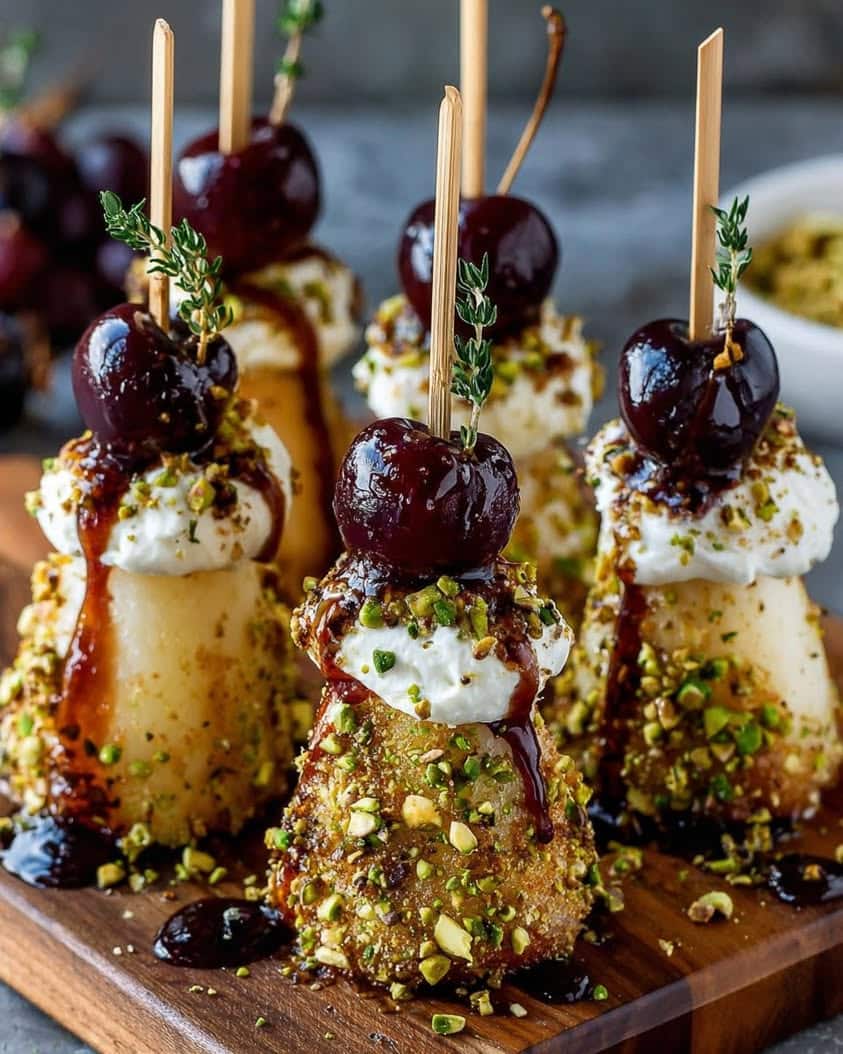
Pistachio-Crusted Pear Skewers with Whipped Brie and Cherry Honey: An Elegant Appetizer That Steals the Show
Pistachio-Crusted Pear Skewers with Whipped Brie and Cherry Honey transform a simple fruit into a stunning appetizer that guests remember long after the party ends. Imagine biting into a tender pear slice wrapped in a buttery, crunchy pistachio crust, then dipping it into clouds of silky whipped Brie and drizzling it with ruby-red cherry honey. This recipe delivers restaurant-quality elegance right from your own kitchen, and it comes together in under thirty minutes. Whether you host a holiday gathering, a bridal shower, or a casual wine night with friends, these skewers add instant sophistication to any table.
The magic of this Pistachio-Crusted Pear Skewers with Whipped Brie and Cherry Honey recipe lies in the contrast of textures and flavors. Sweet, juicy pears meet salty, roasted pistachios. Creamy Brie balances the bright tartness of cherry honey. Each element plays a role, and together they create a bite that feels both familiar and exciting. You need only a handful of ingredients and basic kitchen tools, yet the finished plate looks like it came from a high-end catering company. That combination of simplicity and wow factor makes this appetizer a true crowd-pleaser.
Furthermore, this dish fits beautifully into almost any menu. It works as a starter before a formal dinner, a contribution to a potluck, or a light bite alongside cocktails. Because pears stay firm when roasted, the skewers hold their shape beautifully on a serving platter. The whipped Brie adds a luxurious creaminess, while the cherry honey brings a glossy finish and a hint of floral sweetness. If you want an appetizer that feels special without demanding hours of labor, these Pistachio-Crusted Pear Skewers with Whipped Brie and Cherry Honey deserve a permanent spot in your recipe rotation.
Quick Recipe Highlights
- Flavor Profile: Sweet pear pairs with salty pistachios, while creamy Brie softens the bright, fruity notes of cherry honey. The result tastes balanced, rich, and lightly tangy with a warm honeyed finish.
- Texture: Crunchy crushed pistachios coat each pear slice, and the whipped Brie delivers an airy, mousse-like smoothness. Every bite contrasts crisp, creamy, and juicy elements at once.
- Aroma: Toasted pistachios release a nutty fragrance, and the cherry honey adds a subtle floral sweetness. Warm pear and melted cheese round out the inviting scent.
- Visual Appeal: Golden pear slices studded with green pistachios sit atop white Brie clouds, finished with a deep red honey drizzle. The plate looks colorful, polished, and photo-ready.
- Skill Level Needed: This recipe suits beginners because it requires no advanced techniques. Simple slicing, crushing, and whipping cover the entire process, so new cooks succeed on the first attempt.
- Special Equipment: You need wooden or metal skewers, a food processor or zip-top bag for crushing nuts, and a hand mixer for whipping the Brie. A baking sheet and parchment paper complete the setup.
Recipe Overview
- Difficulty Level: This recipe lands firmly in the easy category because each step uses basic skills. You slice pears, crush pistachios, and whip softened Brie with a mixer. No knife work demands precision, and no cooking technique requires years of practice. The five-minute roast finishes the dish, so even a first-time host can serve it confidently.
- Category: These skewers work as an appetizer, a party snack, or a light dessert course. They fit charcuterie boards, tapas spreads, and brunch tables equally well. Many hosts serve them as a passed hors d’oeuvre at receptions and holiday parties.
- Cuisine: The dish draws from French culinary tradition through Brie and honey, and it borrows Mediterranean touches from pistachios and fresh fruit. Modern American entertaining style shapes the skewer format and the playful cherry honey drizzle. Together these influences create a globally inspired appetizer with European roots.
- Cost: Expect to spend roughly twelve to eighteen dollars for a full batch that serves twelve. Pears cost little, especially in season, and a small wedge of Brie covers the whole recipe. Pistachios make up the largest expense, but a single cup goes far, and cherry preserves stretch the budget further.
- Season: Fall and winter highlight this recipe because pears reach peak sweetness from September through January. Holiday tables welcome the festive red drizzle and green nuts during November and December. Nevertheless, the dish works year-round since quality pears and preserves stay available in most markets.
- Occasion: Serve these skewers at holiday parties, New Year’s Eve gatherings, bridal showers, and wine tastings. They also shine at casual game nights and family celebrations. The elegant presentation suits formal events, while the simple prep keeps casual hosting stress-free.
Why You’ll Love This Recipe
Taste and texture appeal drive this recipe straight to the top of any appetizer list. The sweet, floral pear contrasts beautifully with the salty, roasted pistachio crust. Whipped Brie adds a rich creaminess that coats the palate, and cherry honey brings a bright, fruity finish. Each bite delivers crunch, cream, and juice in a single motion. Because the flavors balance so well, guests reach for seconds without hesitation. This Pistachio-Crusted Pear Skewers with Whipped Brie and Cherry Honey recipe proves that a few quality ingredients can outshine complicated dishes.
Convenience and preparation benefits make this appetizer ideal for busy hosts. The entire recipe takes twenty-five minutes from start to finish, including whipping the Brie and crushing the nuts. You can prepare components ahead and assemble just before guests arrive. Cleanup stays minimal because everything cooks on one sheet pan lined with parchment. Additionally, the skewer format means guests serve themselves, which frees you to enjoy the party. Few appetizers combine this level of elegance with such easy execution.
Nutritional advantages give this dish an edge over heavier party foods. Pears provide fiber and vitamin C, and pistachios deliver protein, healthy fats, and antioxidants. Brie contributes calcium and protein, while cherry honey adds natural sweetness in modest amounts. Because each skewer offers a balanced bite, guests feel satisfied without feeling stuffed. Compared to fried appetizers or cream-heavy dips, these skewers offer a lighter yet equally indulgent option. Health-conscious guests appreciate a choice that still feels celebratory.
Social and entertaining value sets this recipe apart at gatherings. The skewers look impressive on a platter and spark conversation about the unique flavor combination. Guests love the interactive format, and the bite-size design encourages mingling. You can arrange them on a board with extra cherry honey for drizzling, which turns serving into a visual event. Hosts who want a signature appetizer will find this recipe memorable and shareable. Ultimately, the dish elevates the mood of any party.
Cost-effectiveness and accessibility round out the reasons to love this recipe. All ingredients come from standard grocery stores, and none require a specialty shop visit. Pears remain affordable, especially during fall and winter, and a little Brie stretches far when whipped. Pistachios cost more than peanuts, yet one cup covers twelve skewers comfortably. Overall, the recipe delivers premium presentation at a modest price per serving. Home cooks gain a reliable, budget-friendly appetizer that looks expensive.
Historical Background and Cultural Significance
The origin story of this dish blends Old World ingredients with modern entertaining sensibilities. Pears have graced European tables for centuries, and French cooks long paired them with cheese and honey. Pistachios traveled from Middle Eastern orchards along trade routes into Mediterranean kitchens. Brie earned its place as a French classic centuries ago. Meanwhile, the skewer format emerged from contemporary catering culture, which favors portable, elegant bites. This recipe therefore connects ancient ingredients with modern presentation in a way that feels both timeless and fresh.
Cultural importance emerges through the pairing of fruit, nuts, and cheese, a combination celebrated across many cuisines. In France, cheese boards often include honey and fruit, and Italians treasure nuts with cheese and preserves. Middle Eastern cooking showcases pistachios in both sweet and savory dishes. Cherry honey echoes the preserved-fruit traditions of Eastern Europe and the American South. By weaving these traditions together, the recipe honors multiple food cultures while creating something entirely its own.
The evolution of the recipe reflects changing tastes in home entertaining. Earlier generations served baked Brie in pastry or fruit-and-cheese platters at parties. As hosts sought lighter, more visually striking options, cooks began whipping Brie for a mousse-like texture. Crushing nuts into coatings created satisfying crunch without heavy breading. The cherry honey drizzle arrived as home cooks embraced flavored honeys and fruit preserves. Each innovation built on the last and produced the polished appetizer enjoyed today.
Regional variations appear as cooks adapt the recipe to local ingredients. In the Pacific Northwest, hosts substitute local Bartlett or Anjou pears and emphasize nearby honey. Southern cooks sometimes swap in peach preserves for the cherry honey. California versions may use aged goat cheese in place of Brie for a tangier bite. European cooks might reach for Comte or Camembert. These adaptations show how a flexible recipe travels across regions and remains relevant.
Ingredient Deep Dive
Pears carry cultural significance across history, appearing in mythology, art, and folk medicine for thousands of years. European orchards cultivated pears long before colonists brought them to North America. Nutritionally, pears supply fiber, vitamin C, and potassium while remaining low in calories. When selecting pears, choose firm varieties such as Bosc or Anjou because they hold shape during roasting. Look for smooth skin and a slight give near the stem. Store pears at room temperature until ripe, then refrigerate for up to five days. If pears prove unavailable, firm apples such as Honeycrisp work as a substitute.
Pears also offer remarkable versatility, which explains their enduring popularity. Their mild sweetness accepts savory coatings and bold cheeses without clashing. Furthermore, the fruit browns slowly when sliced, especially when tossed with lemon juice. This quality makes pears dependable for make-ahead appetizers like these Pistachio-Crusted Pear Skewers with Whipped Brie and Cherry Honey. Cooks value pears for reliable texture and consistent results across recipes.
Pistachios trace their history to Central Asia and the Middle East, where traders prized them for centuries. They symbolize celebration in many cultures, appearing in festive dishes and gift baskets. Nutritionally, pistachios deliver protein, fiber, vitamin B6, and antioxidants. When buying pistachios, choose shelled, roasted, and lightly salted nuts for convenience and flavor. Avoid heavily salted varieties because the seasoning can overpower the pears. Store nuts in an airtight container at room temperature for a month or freeze them for six months. Almonds or walnuts offer workable substitutes, though the green color disappears.
Roasted pistachios also bring visual charm to the plate. Their emerald hue contrasts beautifully with golden pears and white Brie. Additionally, their dense texture crushes cleanly into a coarse coating that adheres well. Cooks who keep roasted pistachios on hand find countless uses for them in salads, desserts, and crusts like this one.
Brie originated in the French region of Brie centuries ago and became known as the cheese of kings. Its cultural importance in France remains strong, and cheese boards worldwide feature it. Brie provides protein, calcium, and vitamin B12, though it contains saturated fat that calls for moderate portions. When selecting Brie, look for a creamy interior and a bloomy white rind free of ammonia odor. Choose a wedge that feels soft but not runny. Store Brie wrapped in parchment in the refrigerator and use within a week. Camembert substitutes beautifully when Brie proves unavailable.
Whipping turns Brie into a luxurious spread with a lighter texture. The technique aerates the cheese, making it easier to pipe or dollop onto skewers. Consequently, guests enjoy the rich flavor without heavy density. This step also stretches a modest wedge further, which supports budget-friendly entertaining.
Cherry honey combines honey with cherry preserves or reduced cherry juice, creating a fruity syrup with deep color. This pairing nods to traditional fruit-preserve traditions in Eastern Europe and the American South. Nutritionally, honey offers natural sweetness plus trace minerals, and cherries add antioxidants. When buying, choose a light honey such as clover and a high-quality cherry preserve without corn syrup. Store the mixture in a sealed jar in the pantry for two weeks or refrigerate for a month. Raspberry preserves or fig butter make excellent substitutes.
Cherry honey also delivers versatility beyond this recipe. Drizzle it over cheese boards, pancakes, or roasted meats for instant flavor. The glossy red finish brings festive color to any plate. Home cooks benefit from making a double batch because the syrup keeps well and improves many dishes.
Common Mistakes to Avoid
- Using overripe pears causes the slices to fall apart during roasting and assembly. Choose firm pears with just a slight give near the stem. Firm fruit holds its shape and delivers clean bites.
- Under-whipping the Brie leaves the cheese dense and clumpy instead of airy. Let the Brie soften fully at room temperature before whipping. Then beat it for a full two minutes to achieve a smooth, mousse-like texture.
- Crushing pistachios too finely turns the coating into powder that clumps and lacks crunch. Pulse the nuts in short bursts until coarse crumbs form. Visible nut pieces provide the signature texture.
- Skipping the lemon toss on pear slices invites browning before serving. Toss the slices with a little lemon juice right after cutting. This step keeps the fruit bright and appetizing for hours.
- Overcrowding the baking sheet traps steam and makes the pears soggy. Arrange the skewers with space between them for even heat. A single layer ensures crisp edges and warm centers.
- Drizzling the cherry honey too early causes the syrup to run and pool on the plate. Wait until the final moment before serving. A last-minute drizzle gives a glossy finish and a clean presentation.
- Serving Brie cold from the refrigerator dulls its flavor and makes spreading difficult. Whip the cheese at room temperature for the best flavor and texture. Cold Brie tastes bland compared to its softened counterpart.
- Using heavily salted pistachios overwhelms the delicate pear flavor. Buy lightly salted or unsalted nuts and adjust the seasoning yourself. Balanced salt lets the fruit and honey shine through.
- Assembling skewers far in advance allows the nuts to soften. Coat and roast the pears close to serving time for maximum crunch. Prepare components ahead, then assemble shortly before guests arrive.
- Ignoring skewer safety can cause burns or splinters. Use flat wooden skewers or metal ones, and soak wooden skewers if you plan to grill. Always serve carefully and remove skewers from children’s reach.
Essential Techniques
Whipping Brie matters because texture transforms humble cheese into a luxurious spread. Start with Brie at full room temperature, then beat it with a hand mixer for two to three minutes until light and fluffy. Adding a splash of cream helps the process and creates a silkier result. A common pitfall involves using cold cheese, which stays lumpy no matter how long you beat it. Watch for the mixture to pale slightly and hold soft peaks as the visual cue for success. Therefore, patience with softening pays off with a spread that pipes beautifully. This technique also anchors the Pistachio-Crusted Pear Skewers with Whipped Brie and Cherry Honey experience because creamy texture defines each bite.
Crushing pistachios correctly determines the coating’s crunch and appearance. Place nuts in a zip-top bag and roll with a rolling pin, or pulse in a food processor using short bursts. Aim for coarse crumbs with visible pieces, roughly the size of small peas. Overprocessing creates powder that clumps and absorbs moisture. The visual cue for success is an even mix of fine crumbs and small chunks. This technique ensures the coating adheres well and delivers satisfying texture. Furthermore, even crushing prevents sharp edges that could taste harsh.
Proper pear slicing protects texture and presentation. Cut the pears into wedges about a quarter inch thick, keeping the skin on for color and structure. Cut each wedge to a uniform size so the skewers cook evenly and look tidy. Sharp knives make clean cuts, and a steady hand prevents bruising. Visual cues for success include slices that hold their shape when lifted. Uniform slicing also speeds assembly and produces a professional-looking platter.
Roasting quickly at high heat seals flavor and delivers warmth without softening the fruit too much. Set the oven to four hundred degrees and roast for five minutes only. The short time warms the pears and lightly toasts the nut coating. Overbaking causes mushiness and dulls the fresh taste. Watch for pears that look glossy and smell fragrant as the sign of readiness. This technique keeps the fruit bright and firm, which supports the overall design of the dish.
Pro Tips for Perfect Pistachio-Crusted Pear Skewers with Whipped Brie and Cherry Honey
Set the Brie out at least an hour before whipping so it softens fully. Room-temperature cheese whips faster and achieves a lighter texture. If you forget, cut the Brie into small pieces to speed softening. Additionally, a splash of heavy cream makes the mixture extra silky.
Toss pear slices with lemon juice immediately after cutting to prevent browning. A tablespoon of juice covers a whole batch. This small step keeps the fruit looking fresh even hours after assembly. Moreover, the slight tartness complements the sweet honey drizzle.
Toast the pistachios briefly in a dry pan before crushing for deeper flavor. Use medium heat and stir constantly for two minutes. Watch carefully because nuts burn quickly. Toasted nuts add a richer aroma that elevates these Pistachio-Crusted Pear Skewers with Whipped Brie and Cherry Honey to restaurant quality.
Warm the cherry honey slightly before drizzling so it flows easily. A few seconds in the microwave or a warm water bath does the job. Warm syrup coats evenly and creates a glossy finish. Avoid overheating, which thins the honey too much and causes it to drip.
Assemble skewers close to serving time to keep the pistachio coating crunchy. Prepare all components ahead and set up an assembly station just before the party. This timing protects texture and makes the process efficient.
Use a piping bag or zip-top bag with a corner snipped for the whipped Brie. Piping creates neat dollops and speeds assembly. A spoon works too, though piping produces a more polished look. Practice a couple of dollops on parchment before starting.
Choose flat wooden skewers for stability on the platter. Round skewers roll and cause pears to slide. Flat skewers keep the fruit oriented and prevent spinning when guests lift them. Bamboo skewers work well and stay affordable.
Adjust sweetness at the end by tasting the cherry honey before drizzling. Some preserves taste sweeter than others. A squeeze of lemon balances excessive sweetness. Balancing flavors ensures the dish suits a wide range of palates.
Variations and Adaptations
Regional variations offer creative ways to interpret this dish. French-inspired cooks might use Camembert and lavender honey for a classic country feel. Italian cooks could substitute creamy Gorgonzola and fig preserves for a bold twist. Southern hosts often reach for peach preserves and local sorghum honey. Each region brings its own pantry staples to the recipe, and the results stay equally delicious.
Seasonal adaptations keep the recipe relevant all year. In summer, swap pears for fresh peaches or nectarines and use basil-infused honey for brightness. During winter holidays, add cranberry preserves to the cherry honey for a festive touch. Spring menus pair well with apricot preserves and a sprinkle of thyme. Following the seasons keeps the dish exciting and highlights peak produce.
Dietary modifications ensure more guests can enjoy the skewers. Use gluten-free pistachios to keep the recipe gluten-free since no breadcrumbs appear anyway. For dairy-free versions, swap Brie for a whipped cashew cheese or a dairy-free cream cheese alternative. Vegan guests appreciate a cashew-based cheese and maple syrup mixed with cherry juice.
Flavor variations let cooks explore new profiles. Smoked almonds replace pistachios for a campfire note. Orange zest stirred into the honey adds citrus brightness. A pinch of black pepper in the whip brings a savory edge. These tweaks keep the core concept intact while offering fresh experiences.
Texture modifications accommodate different preferences. For extra crunch, add crushed graham crackers to the nut coating. Softer versions skip roasting and serve chilled pear slices as a no-cook option. Some hosts blend the Brie with whipped cream cheese for a lighter mousse.
Presentation alternatives suit different events. Instead of skewers, arrange a build-your-own station with pears, whipped Brie, and honey in separate bowls. Small spoons or forks let guests assemble bites. This approach works well for interactive parties and reduces last-minute work for the host.
Serving and Presentation Guide
Plating techniques shape the first impression of your Pistachio-Crusted Pear Skewers with Whipped Brie and Cherry Honey. Arrange skewers in a fan on a marble board or slate platter for contrast. Leave space between skewers so the honey drizzle reads clearly. A white plate highlights the green nuts and red syrup beautifully.
Garnishing ideas add the finishing touch without clutter. Scatter extra crushed pistachios around the platter for texture. A few fresh cherries or pear fans fill gaps with color. Small thyme sprigs add an elegant herbal accent that complements the honey.
Traditional accompaniments include crackers, toasted baguette slices, and a cheese board. Guests often enjoy pairing these bites with cured meats and olives. A simple green salad with vinaigrette balances the richness of Brie. Keep sides light so the skewers remain the star.
Modern serving suggestions encourage creativity. Place skewers alongside glasses of sparkling wine for a chic cocktail hour. Pair with a grazing table featuring dried fruit and nuts for a cohesive spread. Some hosts serve them as a light dessert with espresso.
Temperature considerations matter for both flavor and food safety. Serve the skewers warm or at room temperature, never cold. Brie tastes best when soft and spreadable. Keep the platter out of direct sunlight and refrigerate leftovers promptly.
Portion control tips help guests enjoy without overindulging. These skewers already provide built-in portions, which avoids the mess of cutting a wheel of Brie. Plan two to three skewers per guest for a cocktail hour and four for a main appetizer station. Place small napkins nearby, and offer hand sanitizer for sticky fingers.
Wine and Beverage Pairing
Wine pairings elevate these skewers into a complete experience. A crisp Chardonnay with light oak complements the creamy Brie and the sweet pear. Sauvignon Blanc brings bright acidity that cuts through the richness, and Riesling offers a touch of sweetness that mirrors the honey. For red wine lovers, a light Pinot Noir adds soft fruit notes without overwhelming the delicate flavors.
Non-alcoholic alternatives keep everyone included. Sparkling apple cider mirrors the pear sweetness with gentle bubbles. A chilled chamomile tea with honey echoes the floral notes in the cherry honey. Ginger ale with lime adds a refreshing bite that cleanses the palate between bites. These options feel festive and pair beautifully with warm appetizers.
Coffee and tea pairings work especially well for brunch or dessert settings. A lightly roasted coffee balances the sweetness of the honey. Earl Grey tea brings bergamot notes that lift the fruit flavors. Green tea provides a clean finish that refreshes the palate.
Temperature considerations affect the drinking experience. Serve white wine well chilled and red wine slightly below room temperature. Sparkling beverages taste best very cold. Coffee should stay hot but not scalding.
Serving suggestions ensure a smooth flow at parties. Set up a beverage station away from the food to prevent crowding. Offer glasses and a small card describing each pairing. Guests appreciate guidance, and thoughtful pairings make the appetizer feel complete.
Storage and Shelf Life
Storage methods preserve quality if you prepare components ahead. Store whipped Brie in an airtight container for up to two days. Keep pear slices in a sealed bag with a paper towel to absorb moisture. Pistachios stay crunchy in a sealed jar at room temperature. Cherry honey keeps for weeks in the pantry or refrigerator.
Temperature requirements vary by component. Brie and pear slices need refrigeration below forty degrees. Pistachios prefer cool, dry storage. Assembled skewers should not sit at room temperature for more than two hours.
Container recommendations include glass jars for honey, zip-top bags for nuts, and shallow containers for Brie. Glass prevents flavor transfer better than plastic. Label containers with dates to track freshness.
Signs of spoilage include an ammonia smell in Brie, slimy pears, and mold on nuts. When in doubt, discard the item rather than risk illness. Fresh ingredients last as expected, so plan consumption accordingly.
Reheating instructions are simple since the dish requires only gentle warming. Place assembled skewers on a sheet pan and warm at three hundred degrees for three minutes. Alternatively, let them sit out for ten minutes before serving. Avoid the microwave, which can toughen the nuts.
Freezing guidelines apply to components, not assembled skewers. Freeze pistachios in sealed bags for up to six months. Pear slices do not freeze well because they soften, so prepare fresh. The honey keeps for a month in the refrigerator after mixing.
Make Ahead Strategies
Prep timeline planning transforms this recipe into a stress-free party dish. Whip the Brie a day ahead and refrigerate it, then let it soften at room temperature before serving. Toast and crush pistachios up to three days ahead and store them in a sealed jar. Mix the cherry honey a week ahead for a head start.
Storage between steps keeps components fresh. Store pear slices in lemon water in the refrigerator for up to four hours. Keep whipped Brie covered to prevent drying. Separate all components until serving time for the best texture.
Quality impact assessment helps prioritize serve-day tasks. The pistachio coating loses crunch the longer it sits, so coat and roast the pears within an hour of serving. Everything else holds well for days. Therefore, save the final roasting and assembly for the last hour and protect the crunch.
Assembly tips speed up the process. Lay out skewers, pipe the Brie, and add pears in a line-up. A helper can drizzle honey while you arrange the platter. This rhythm cuts assembly time to ten minutes.
Reheating guidelines stay gentle to protect texture. Warm skewers briefly in the oven or serve them at room temperature. Never overheat, because excessive heat hardens the cheese and softens the nuts.
Fresh element additions keep make-ahead versions lively. Add a sprinkle of fresh thyme or a few pomegranate seeds right before serving. These touches restore the fresh appearance and add color.
Scaling Instructions
Halving the recipe suits smaller gatherings. Use half a pear per person, reduce the Brie to four ounces, and cut the pistachios to half a cup. The prep time stays similar because slicing tasks remain the same. You may need less oven space, which simplifies cleanup.
Doubling or tripling works well for large parties. Use multiple sheet pans and rotate them halfway through roasting. Mix a larger batch of cherry honey since it stores easily. Consider setting up an assembly station with helpers to speed production.
Equipment adjustments accompany larger batches. Borrow a second hand mixer if available, or whip Brie in two batches. Use large platters or rent a warming tray to keep skewers at the right temperature. Extra skewers cost little, so stock up ahead.
Timing modifications matter when scaling. Roasting time stays the same, but assembly takes longer. Start prep earlier and enlist help for coating and skewering. A group of two or three turns assembly into a quick, fun task.
Storage considerations grow with batch size. Use larger containers and label everything. If space runs short, store components in coolers with ice packs. Planning storage before the event prevents last-minute scrambling.
Nutritional Deep Dive
Macro breakdown per skewer shows a balanced profile. Each skewer provides roughly ninety to one hundred ten calories, with about four grams of protein and six grams of fat. Carbohydrates hover near eight grams, mostly from the pear and honey. These numbers make the appetizer moderate in calories compared to many party foods.
Micronutrient analysis highlights notable vitamins and minerals. Pears contribute vitamin C and potassium, and pistachios add vitamin B6 and copper. Brie brings calcium and vitamin B12. Honey offers trace amounts of antioxidants. Together these nutrients support energy metabolism and bone health.
Health benefits include fiber from pears and pistachios, which supports digestion. Healthy fats from pistachios and dairy promote satiety. Antioxidants from cherries and pistachios help fight oxidative stress. Portion sizes stay reasonable, which keeps the dish appropriate for balanced eating.
Dietary considerations apply to guests with lactose intolerance or nut allergies. Brie contains lactose, though hard cheeses tend to be lower. Pistachios are tree nuts and must be avoided by allergic guests. Always label ingredients clearly at parties.
Portion analysis shows that two or three skewers serve as a satisfying appetizer. Guests who want more can add crackers or cheese cubes. The bite-size format naturally encourages mindful eating.
Weight management tips include pairing skewers with high-protein additions such as prosciutto. Add a side salad with vinaigrette to round out the plate. Avoid heavy sauces, which add calories without enhancing flavor.
Dietary Adaptations
Gluten-free versions require almost no changes because the recipe contains no breadcrumbs. Verify that all packaged ingredients, including pistachios, remain free of cross-contamination. Serve with gluten-free crackers for dipping. This recipe naturally suits gluten-free guests.
Dairy-free adaptations swap Brie for whipped cashew cheese or a dairy-free cream cheese. Look for options that whip smoothly and taste mild. Coconut cream adds richness when mixed with dairy-free cream cheese. Check labels because some alternatives contain gluten or soy.
Vegan versions need a plant-based cheese and a honey alternative. Use maple syrup mixed with cherry juice instead of honey. Cashew-based cheese pipes beautifully and tastes rich. These swaps keep the spirit of the dish intact.
Low-carb options moderate the honey drizzle because honey adds sugar. Reduce the drizzle to a small amount per skewer. Pears contain natural carbohydrates, so portion control matters. Serve alongside protein-rich appetizers to balance the meal.
Keto adaptations are challenging because pears and honey contain sugar. Consider substituting low-sugar fruit such as raspberries or using sugar-free syrup. Brie and pistachios fit ketogenic macros well. These changes shift the flavor but preserve the creamy-nutty contrast.
Paleo versions skip the dairy and use a nut-based whipped spread. Replace honey with a paleo-friendly sweetener, and choose roasted pistachios without additives. Pears fit paleo guidelines, so the fruit stays. The result varies from the original yet still delights.
Low-FODMAP considerations require smaller portions of pear because pears contain fructose. Choose firm, less-ripe pears and serve modest portions. Brie and pistachios generally suit low-FODMAP diets. Guests with sensitivities appreciate the awareness.
Other specific diets, such as Mediterranean or DASH, accommodate the recipe almost directly. The combination of fruit, nuts, and dairy fits both patterns when portions stay reasonable. These diets emphasize whole foods, which this recipe celebrates.
Troubleshooting Guide
Texture issues often stem from improper temperatures. If the Brie appears grainy, it was too cold during whipping. Let it soften longer and re-whip briefly. If the pears turn mushy, the oven ran too hot or the roast time ran too long. Reduce the temperature and timing as needed.
Flavor balance problems surface when the honey tastes too sweet or the pistachios too salty. Add a squeeze of lemon to the honey for balance. Choose unsalted nuts and season the coating yourself. Taste each component before assembly and adjust.
Temperature problems include cold Brie that refuses to whip and pears that cool before serving. Warm the cheese with the mixer only, and roast pears close to serving time. Keep the platter out of drafts. These steps maintain the right texture and warmth.
Equipment challenges arise if you lack a hand mixer or food processor. A sturdy whisk works for softened Brie, though it takes longer. A rolling pin crushes pistachios in a zip-top bag. Creative tools solve most problems without extra purchases.
Ingredient substitutions sometimes disappoint. If a dairy-free cheese tastes bland, add a pinch of salt and onion powder. If apples replaced pears and brown quickly, toss them in extra lemon juice. Small adjustments rescue the dish.
Timing concerns occur when assembling too early or too late. Build a timeline backward from serving time and assign tasks accordingly. Keep components ready and assemble in the final thirty minutes. This approach prevents rushing and preserves freshness.