Caramelized Butternut Squash and Veggie Bake with Cranberry-Honey Glaze: A Cozy Sheet Pan Dinner
When the air turns crisp and the farmers market fills with deep orange squash and sturdy root vegetables, I start craving something warm, sweet, and a little tangy. That is exactly why this Caramelized Butternut Squash and Veggie Bake with Cranberry-Honey Glaze has become a staple in my kitchen. The caramelized butternut squash softens into buttery cubes, the carrots turn tender and sweet, the broccoli crisps at the edges, and the sweet potato brings a rich, earthy depth. Then everything gets a drizzle of tart cranberry honey glaze and a shower of salty feta, crunchy walnuts, and dried cranberries. It is the kind of dish that makes a simple weeknight feel special.
I love this Caramelized Butternut Squash and Veggie Bake because it does so much with so little effort. You chop, toss, roast, and glaze. That is it. Yet the result tastes like something you would serve at a holiday table. The oven does the heavy lifting, coaxing out natural sugars from the squash, carrots, and sweet potato until they turn golden and jammy. Meanwhile, the broccoli gets those crispy, slightly charred tips that everyone fights over. Because the cranberry-honey glaze comes together in a small saucepan in minutes, you can focus on the vegetables and still have a showstopper on the table.
Beyond flavor, this caramelized butternut squash recipe fits real life. It works as a vegetarian main dish, a holiday side, or a meal prep lunch you actually look forward to. The feta adds a creamy, salty bite. The walnuts bring crunch. The dried cranberries deliver little pops of chewiness. Therefore, every forkful hits sweet, salty, tart, and savory all at once. If you have been searching for a caramelized butternut squash and veggie bake that feels both wholesome and indulgent, this is the one.
Quick Recipe Highlights
- Flavor Profile: This dish balances deep caramel sweetness from roasted squash and sweet potato with the tangy zip of cranberry-honey glaze. Salty feta and toasted walnuts round out every bite.
- Texture: You get tender, creamy cubes of squash and sweet potato next to crisp-tender broccoli and crunchy walnuts. The glaze adds a light, sticky coating that ties everything together.
- Aroma: Expect warm notes of cinnamon, maple, and roasted garlic drifting from the oven. The cranberry glaze adds a bright, fruity perfume as it reduces on the stove.
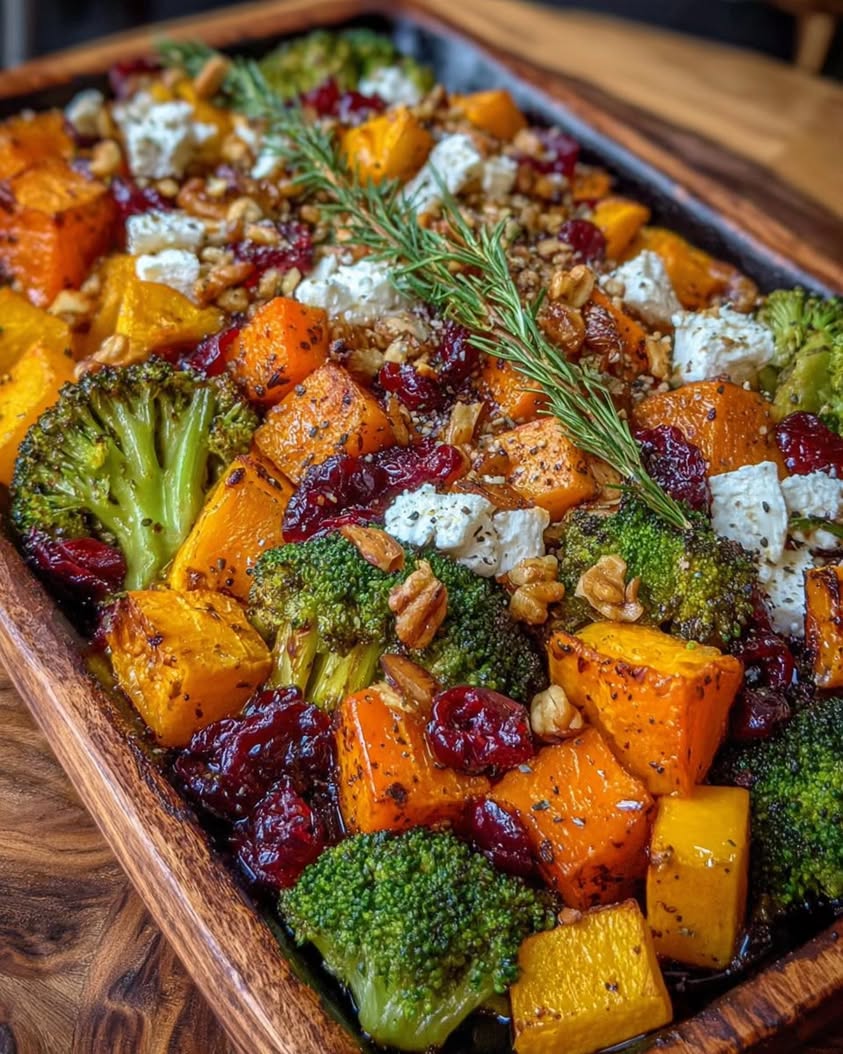
- Visual Appeal: Deep orange, bright green, and golden brown vegetables mingle on the pan. White feta crumbles, ruby dried cranberries, and toasted walnuts make it look festive and abundant.
- Skill Level Needed: This recipe suits beginners because it relies on simple chopping and roasting. However, a little attention to even cuts and glaze timing helps you nail the caramelization.
- Special Equipment: You need two large sheet pans, a small saucepan, and a good chef’s knife. Parchment paper makes cleanup easier, but it is optional.
Recipe Overview
- Difficulty Level: I rate this recipe as easy. The steps are straightforward, and the oven handles most of the work. You mainly need to cut vegetables into similar sizes and stir once or twice. Therefore, even a new cook can serve this caramelized butternut squash and veggie bake with confidence.
- Category: This dish works as a vegetarian main course, a hearty side dish, or a grain bowl topper. It also shines as a holiday side for Thanksgiving or Christmas. Because it is so versatile, you can serve it for brunch, lunch, or dinner.
- Cuisine: The recipe draws from American comfort cooking with a modern fall twist. It borrows the sheet pan approach from everyday home kitchens and the sweet-tart glaze from New England cranberry traditions. The feta and walnuts nod to Mediterranean flavors. As a result, it feels familiar yet fresh.
- Cost: The ingredients are affordable and widely available, especially in fall and winter. Squash, carrots, sweet potato, and broccoli are budget-friendly staples. Feta, walnuts, and dried cranberries add cost but go a long way. Overall, you can feed four to six people for a reasonable price.
- Season: Fall and winter are the best seasons for this caramelized butternut squash and veggie bake. That is when squash and sweet potatoes taste sweetest and cost the least. However, you can make it year-round with grocery store produce. Chilled or frozen broccoli works in a pinch.
- Occasion: Serve this dish for weeknight dinners, holiday gatherings, potlucks, and meal prep Sundays. It looks impressive enough for guests. Meanwhile, it is easy enough for a cozy night in. It also travels well to potlucks because it tastes great warm or at room temperature.
Why You’ll Love This Recipe
The taste and texture appeal of this Caramelized Butternut Squash and Veggie Bake is off the charts. Roasting concentrates the natural sugars in the squash, carrots, and sweet potato until they turn rich and almost candy-like. At the same time, the broccoli keeps a slight bite, which gives you contrast. Then the cranberry-honey glaze cuts through the sweetness with a bright, tart tang. Finally, feta and walnuts add creaminess and crunch. Consequently, each bite delivers a full spectrum of flavors and textures that keeps you coming back for more.
Convenience and preparation benefits make this caramelized butternut squash recipe a weeknight hero. You need one knife, two sheet pans, and a small pot. Cleanup is minimal because you roast everything on parchment. You can also chop the vegetables a day ahead and store them in the fridge. Therefore, dinner comes together fast on busy nights. Because the oven does the work, you can tidy the kitchen or set the table while it roasts.
Nutritional advantages give this dish real staying power. Butternut squash and carrots deliver beta-carotene and fiber. Sweet potato adds complex carbs and potassium. Broccoli brings vitamin C, vitamin K, and antioxidants. Walnuts provide healthy fats, while feta adds protein and calcium. Because you roast instead of fry, you use less oil. As a result, this caramelized butternut squash and veggie bake feels hearty without feeling heavy.
Social and entertaining value sets this recipe apart. It looks stunning on a holiday table, thanks to the jewel tones and the feta-cranberry-walnut topping. Guests can serve themselves easily from the pan. It also works as a potluck dish because it holds up well at room temperature. Furthermore, it satisfies vegetarians and meat-eaters alike, so you do not need to cook separate dishes. That makes hosting simpler and more relaxed.
Cost-effectiveness and accessibility make this caramelized butternut squash and veggie bake a smart choice. The base vegetables are among the cheapest produce items in fall and winter. You can buy squash whole and cube it yourself to save money. Alternatively, pre-cut squash saves time for a small upcharge. The glaze uses pantry staples like honey, maple syrup, and dried cranberries. Because the recipe scales easily, you can feed a crowd without breaking your budget.
Historical Background and Cultural Significance
The origin story of this dish reflects American home cooking at its best. Roasted root vegetables have long been a staple in North American and European kitchens, especially during colder months. Native American communities cultivated squash, beans, and corn as part of the Three Sisters agricultural tradition. Later, European settlers embraced squash and sweet potatoes in their own roasts. Over time, home cooks began glazing roasted vegetables with honey and maple to enhance their natural sweetness. Therefore, this caramelized butternut squash and veggie bake carries centuries of culinary history in every bite.
Cultural importance shines through the cranberry-honey glaze. Cranberries hold a special place in American food culture, particularly in New England. Indigenous peoples used cranberries for food, medicine, and dye long before settlers arrived. By the 1800s, cranberry sauce had become a Thanksgiving staple. Honey and maple syrup also carry deep roots in American cooking. When you drizzle this glaze over roasted vegetables, you connect to a long tradition of sweet-tart flavor pairings. Consequently, the dish feels both nostalgic and modern.
The evolution of this recipe mirrors changes in home kitchens over the past few decades. Sheet pan dinners exploded in popularity in the 2010s because they save time and cleanup. Meanwhile, home cooks began experimenting with global flavors, including feta and walnuts. The combination of roasted vegetables, tangy glaze, and salty cheese reflects this creative, practical era. As a result, this caramelized butternut squash and veggie bake sits at the crossroads of tradition and trends.
Regional variations of roasted squash and vegetable dishes appear across the United States and beyond. In the South, cooks might add pecans and bourbon to the glaze. In the Midwest, a maple-butter finish feels right at home. On the West Coast, chefs often lean into Mediterranean flavors with feta, herbs, and olive oil. New England cooks might double down on cranberries and maple syrup. Therefore, you can adapt this caramelized butternut squash recipe to reflect your own region and taste.
Ingredient Deep Dive
Butternut squash anchors this entire dish, and its history runs deep. This winter squash originated in Mexico and Central America thousands of years ago. Indigenous peoples cultivated it alongside corn and beans, and it later spread throughout the Americas and Europe. Nutritionally, butternut squash delivers a powerhouse of beta-carotene, vitamin C, and fiber. When you shop, choose a squash that feels heavy for its size with a matte, unblemished skin. Store it whole in a cool, dark spot for up to a month. Once cut, refrigerate the cubes in an airtight container for three to four days.
When selecting butternut squash for your caramelized butternut squash and veggie bake, look for a long neck and a small bulb. The neck holds more solid flesh and fewer seeds, which means less waste. If you want to save time, buy pre-cubed squash from the produce section. However, fresh whole squash often tastes sweeter. You can substitute delicata, acorn, or kabocha squash if needed. Each brings its own texture, yet all roast beautifully with the same glaze.
Carrots add sweetness and color to this caramelized butternut squash and veggie bake. People have grown carrots for thousands of years, originally in Asia and the Middle East. Early carrots came in purple, red, and yellow varieties. The orange carrot we know today developed in the Netherlands in the 1600s. Carrots provide beta-carotene, fiber, and vitamin K. Choose firm, bright carrots with smooth skin. Avoid limp or cracked ones. Store them in the fridge in a sealed bag for up to three weeks. If you lack carrots, parsnips or turnips work well.
Sweet potato brings a creamy texture and deep sweetness that complements the squash. This root vegetable originated in Central and South America and has been cultivated for at least 5,000 years. It traveled across the Pacific long before European contact. Sweet potatoes offer vitamin A, vitamin C, potassium, and fiber. Pick firm, smooth potatoes without soft spots or sprouts. Store them in a cool, dark place, not the fridge. For substitutions, try pumpkin or another squash variety. Each option keeps the caramelized butternut squash and veggie bake hearty and satisfying.
Broccoli adds bright green color and a crisp-tender bite. This cruciferous vegetable descends from wild cabbage in the Mediterranean region. Italian farmers cultivated it centuries ago, and it spread worldwide over time. Broccoli delivers vitamin C, vitamin K, folate, and fiber. Choose tight, dark green florets with firm stalks. Avoid yellowing or wilted heads. Store broccoli in the fridge in a loose bag for up to five days. If you prefer, cauliflower or Brussels sprouts can take its place. Each roasts well in this caramelized butternut squash recipe.
Feta cheese brings a salty, tangy counterpoint to the sweet glaze. This brined cheese originated in Greece and has been made for thousands of years. Traditionally crafted from sheep’s milk or a sheep-goat blend, feta offers protein and calcium. Look for feta packed in brine for the best flavor and texture. Store it in its brine in the fridge for up to two weeks. If you need a substitute, goat cheese or ricotta salata works nicely. Each adds creaminess to the caramelized butternut squash and veggie bake.
Walnuts add crunch and healthy fats to this dish. These tree nuts have grown wild for thousands of years across Europe and Asia. Today, California produces most of the U.S. walnut supply. Walnuts provide omega-3 fatty acids, protein, and antioxidants. Choose walnuts that smell fresh and nutty, not bitter or stale. Store them in the fridge or freezer to keep them fresh longer. Pecans or almonds can replace walnuts if you prefer. Each brings its own crunch to the caramelized butternut squash and veggie bake.
Dried cranberries deliver chewy tartness that brightens every bite. Cranberries grow in acidic bogs across North America, and Indigenous peoples harvested them for centuries. Dried cranberries became popular in the late 1900s as a shelf-stable snack. They offer fiber and antioxidants. Choose unsweetened or lightly sweetened varieties for the best flavor. Store them in a cool, dry place for up to a year. Raisins or dried cherries work as substitutes. Each adds sweetness to the caramelized butternut squash recipe.
Honey and maple syrup form the backbone of the cranberry-honey glaze. Honey has been a sweetener for thousands of years across many cultures. Maple syrup comes from the sap of sugar maple trees, a tradition rooted in Indigenous North American practices. Both add natural sweetness and depth. Choose pure honey and real maple syrup for the best results. Store honey at room temperature and maple syrup in the fridge after opening. Agave or brown sugar can substitute in a pinch. Each still glazes the caramelized butternut squash and veggie bake beautifully.
Common Mistakes to Avoid
- Cutting vegetables unevenly leads to some pieces burning while others stay raw. Take time to cube the squash and sweet potato into similar one-inch pieces. This ensures even roasting across the pan.
- Crowding the pan steams the vegetables instead of roasting them. Use two large sheet pans and spread everything in a single layer. Otherwise, you lose the caramelized edges that make this dish special.
- Skipping the preheat causes uneven cooking and pale vegetables. Always preheat your oven to 425°F before adding the pans. A hot oven jumpstarts browning and brings out natural sugars.
- Adding the glaze too early makes the vegetables soggy and prone to burning. Wait until the last ten minutes of roasting. This lets the glaze caramelize without turning bitter.
- Forgetting to toast the walnuts leaves them flat and chewy. Toast them in a dry skillet for a few minutes until fragrant. This small step adds big flavor to your caramelized butternut squash and veggie bake.
- Under-seasoning the vegetables leads to a bland dish. Season with salt and pepper before roasting, then taste after glazing. Adjust as needed for a balanced result.
- Overcooking the broccoli turns it mushy and dull. Add broccoli later in the roasting process or cut it into larger florets. This keeps it crisp-tender and bright green.
- Using stale feta or dried cranberries weakens the dish. Check freshness before using, and store opened packages properly. Fresh toppings make a noticeable difference.
- Rushing the glaze on high heat can burn the honey. Simmer gently and stir often. The glaze should coat the back of a spoon, not turn dark brown.
- Serving immediately without resting loses some flavor. Let the dish sit for five minutes so the glaze sets. Then top with feta, walnuts, and cranberries for the best texture.
Essential Techniques
Even chopping is the foundation of this caramelized butternut squash and veggie bake. When pieces vary in size, they cook at different rates, so some burn while others stay firm. Aim for one-inch cubes for squash, sweet potato, and carrots. Cut broccoli into medium florets with flat sides so they brown well. Use a sharp chef’s knife and a stable cutting board. This technique matters because even cooking creates consistent caramelization and texture across the entire pan.
High-heat roasting transforms raw vegetables into golden, sweet morsels. Set your oven to 425°F and place racks in the upper and lower thirds. Spread vegetables in a single layer with space between pieces. The high heat drives off moisture quickly, which allows browning. Stir once halfway through for even color. Visual cues for success include deep golden edges and slightly shriveled skins on the squash. If your oven runs hot, drop to 400°F to prevent burning.
Glaze reduction builds the signature sweet-tart finish of this dish. Combine cranberries, honey, maple syrup, and a splash of apple cider vinegar in a small saucepan. Simmer over medium-low heat until the cranberries plump and the liquid thickens. Stir often to prevent scorching. The glaze should coat a spoon and drip slowly. This technique matters because a thin glaze runs off the vegetables, while a thick one clings and caramelizes. Watch for a glossy sheen and softened berries as your cues.
Toasting walnuts wakes up their oils and deepens their flavor. Place walnuts in a dry skillet over medium heat. Stir frequently for three to five minutes until fragrant and lightly browned. Remove them from the pan right away to stop the cooking. This technique matters because raw walnuts taste flat next to bold roasted vegetables. Visual cues include a slightly darker color and a nutty aroma. If you skip this step, your caramelized butternut squash and veggie bake loses a layer of flavor.
Pro Tips for Perfect Caramelized Butternut Squash and Veggie Bake with Cranberry-Honey Glaze
Preheat your sheet pans in the oven for five minutes before adding the vegetables. A hot pan creates instant sizzle, which speeds up browning. This trick gives you deeper caramelization on the squash and sweet potato. Just be careful when placing the vegetables on a hot pan, and use oven mitts.
Toss the vegetables with oil directly on the pan for even coating. Drizzle olive oil and sprinkle salt, pepper, and a pinch of cinnamon. Then use your hands or a spatula to mix. This method ensures every piece gets seasoned. Consequently, the caramelized butternut squash and veggie bake tastes flavorful from edge to center.
Use two pans instead of one to avoid crowding. A single pan traps steam and turns the vegetables soft and pale. Two pans give everything room to breathe. As a result, the broccoli crisps, and the squash browns beautifully. If you only have one pan, roast in batches.
Add the broccoli about ten minutes after the squash, carrots, and sweet potato. Broccoli cooks faster and can burn before the root vegetables finish. Staggering the timing keeps each vegetable at its best texture. This small adjustment makes your caramelized butternut squash and veggie bake taste more balanced.
Make the glaze while the vegetables roast. The timing lines up perfectly because the glaze takes about ten minutes. Then you can drizzle it over the vegetables during the final stretch of roasting. This workflow keeps you efficient and reduces stress. Plus, the kitchen smells incredible.
Reserve a few tablespoons of glaze for drizzling after roasting. The fresh glaze adds brightness and shine to the finished dish. It also softens the dried cranberries and ties the toppings together. Therefore, your caramelized butternut squash recipe looks and tastes restaurant quality.
Finish with feta, walnuts, and dried cranberries right before serving. Heat can soften the feta and dull the cranberries. Adding them at the end keeps textures crisp and flavors bright. This final flourish makes the caramelized butternut squash and veggie bake truly memorable.
Taste and adjust before serving. A squeeze of lemon or a pinch of flaky salt can elevate the whole dish. Because flavors vary by brand, tasting ensures balance. Adjust sweetness, salt, and acid to your liking. Then serve with confidence.
Variations and Adaptations
Regional variations let you tailor this caramelized butternut squash and veggie bake to your roots. In the South, swap walnuts for pecans and add a splash of bourbon to the glaze. In New England, lean heavier on cranberries and maple syrup. On the West Coast, add za’atar and serve with labneh instead of feta. Each region brings its own pantry staples, so feel free to experiment.
Seasonal adaptations keep this caramelized butternut squash recipe fresh all year. In spring, add asparagus and peas during the last ten minutes of roasting. In summer, toss in cherry tomatoes and zucchini. Fall and winter suit the original combination best, but you can rotate vegetables based on what looks good at the market. Adjust roasting times based on vegetable density.
Dietary modifications make this dish accessible to more people. Skip the feta to make it dairy-free, or use a plant-based feta alternative. Omit honey and use maple syrup only to make it vegan. For a nut-free version, replace walnuts with roasted pumpkin seeds. Each swap keeps the caramelized butternut squash and veggie bake delicious and inclusive.
Flavor variations can transform the dish with a few small changes. Add curry powder and cumin for a warm, spiced profile. Try smoked paprika and garlic for a savory spin. Drizzle with balsamic glaze instead of cranberry-honey for a tangier finish. Each option pairs well with the roasted vegetables and keeps things interesting.
Texture modifications suit different preferences. Roast longer for softer, creamier vegetables. Shorten the time for a crisper bite. Add crunchy toppings like toasted pepitas or panko for extra texture. Because the base recipe is flexible, you can adjust to your family’s tastes without starting over.
Presentation alternatives help you serve this caramelized butternut squash and veggie bake in new ways. Plate it over farro, quinoa, or wild rice for a hearty bowl. Fold it into a grain salad with arugula and lemon vinaigrette. Stuff it into pita with hummus for a handheld meal. Each option turns the same recipe into something new.
Serving and Presentation Guide
Plating techniques can elevate this caramelized butternut squash and veggie bake from everyday to elegant. Spread the vegetables on a large platter instead of leaving them on the sheet pan. Then scatter feta, walnuts, and cranberries over the top. Drizzle the reserved glaze in thin ribbons. This approach shows off the colors and makes the dish look intentional.
Garnishing ideas add freshness and visual pop. Sprinkle chopped parsley, mint, or thyme over the top. Add a few flaky sea salt crystals for sparkle. A squeeze of lemon brightens the whole plate. Because the dish already bursts with color, simple garnishes work best.
Traditional accompaniments include roast chicken, turkey, or pork for meat eaters. For vegetarians, pair it with lentil soup, crusty bread, or a simple green salad. It also shines alongside mashed potatoes or stuffing at holiday meals. Therefore, it fits both everyday and festive tables.
Modern serving suggestions turn this caramelized butternut squash and veggie bake into a complete meal. Serve it over a bed of greens with a lemon-tahini dressing. Add a poached egg on top for brunch. Spoon it into tacos with avocado and hot sauce. These ideas make the recipe feel fresh and versatile.
Temperature considerations matter for flavor and texture. This dish tastes best warm or at room temperature. Cold from the fridge, the vegetables firm up and the glaze thickens. If you reheat, use the oven or a skillet to restore some crispness. Avoid the microwave, which steams the vegetables and softens the toppings.
Portion control tips help you plan for guests. As a side dish, plan about one cup per person. As a main, offer one and a half to two cups per person. If you serve it over grains, you can stretch it further. Because the dish is rich and satisfying, a little goes a long way.
Wine and Beverage Pairing
Wine pairings for this caramelized butternut squash and veggie bake should balance sweetness with acidity. A dry Riesling works beautifully because its citrus notes echo the cranberry glaze. Chardonnay with light oak adds a creamy contrast to the roasted vegetables. For red lovers, a Pinot Noir brings bright cherry notes without overpowering the dish. Each option complements the sweet, salty, and tangy flavors on the plate.
Non-alcoholic alternatives include sparkling apple cider, which mirrors the fall flavors. Cranberry spritzer with lime adds tartness and fizz. Ginger beer offers a spicy kick that cuts through the richness. Iced tea with lemon also works well. Each option keeps the meal festive without alcohol.
Coffee and tea pairings might surprise you, but they work. A medium-roast coffee with nutty notes complements the roasted vegetables. Chai tea brings warm spices that echo cinnamon in the dish. Green tea with citrus adds a clean finish. Because the dish has layers of flavor, these beverages hold their own.
Temperature considerations matter for beverages too. Serve white wines well chilled and reds slightly below room temperature. Sparkling options should be ice cold. Warm beverages like chai should be hot but not scalding. Matching temperatures to the food enhances the overall experience.
Serving suggestions include offering two options so guests can choose. Set out wine glasses and a pitcher of sparkling cider. Add a small bowl of cranberries for garnish. This setup feels welcoming and lets everyone find their perfect sip alongside the caramelized butternut squash recipe.
Storage and Shelf Life
Storage methods for this caramelized butternut squash and veggie bake are simple. Let the dish cool to room temperature before transferring to containers. Use shallow, airtight containers to cool it faster. Store the vegetables and toppings separately if possible. This keeps the feta and walnuts from getting soggy.
Temperature requirements matter for food safety and quality. Refrigerate within two hours of cooking. Keep the dish at 40°F or below. It stays fresh for three to four days in the fridge. For longer storage, freeze portions for up to three months. Label containers with the date to track freshness.
Container recommendations include glass containers with locking lids for best results. Glass does not stain or hold odors. If you use plastic, choose BPA-free options. Divide into single servings for easy reheating. Because the glaze can stain, avoid light-colored plastic containers.
Signs of spoilage include a sour smell, slimy texture, or visible mold. If the vegetables look dull or the glaze separates oddly, toss the batch. Use your senses and err on the side of caution. Freshness matters for both flavor and safety.
Reheating instructions focus on restoring texture. Spread the vegetables on a sheet pan and warm at 350°F for ten minutes. Alternatively, use a skillet over medium heat with a splash of oil. Add fresh toppings after reheating. This keeps the feta creamy and the walnuts crunchy.
Freezing guidelines help you plan ahead. Freeze the roasted vegetables without the toppings in a freezer-safe bag. Press out excess air to prevent freezer burn. Thaw overnight in the fridge before reheating. The texture softens slightly, but the flavor holds up well.
Make Ahead Strategies
Prep timeline planning makes this caramelized butternut squash and veggie bake a breeze on busy days. You can chop the squash, carrots, and sweet potato up to two days ahead. Store them in an airtight container in the fridge. Broccoli should be cut the day of cooking for the best texture. Then dinner comes together in minutes.
Storage between steps keeps ingredients fresh and ready. Keep chopped vegetables dry and covered. Make the glaze up to three days ahead and refrigerate it. Reheat the glaze gently before drizzling. This approach spreads the work across several days.
Quality impact assessment shows that make-ahead prep barely affects flavor. Roasted vegetables taste best fresh, but they reheat well. The glaze actually deepens in flavor overnight. Toppings should always be added fresh. Therefore, you lose little by prepping ahead.
Assembly tips ensure a smooth final cook. Arrange vegetables on pans while the oven preheats. Have the glaze warm and ready. Toast the walnuts during the last few minutes of roasting. Then everything comes together in one seamless flow.
Reheating guidelines help you serve leftovers that taste great. Use the oven or a skillet for the best texture. Avoid the microwave if possible. Reheat at 350°F until warm, about ten minutes. Then add fresh feta, walnuts, and cranberries.
Fresh element additions revive leftovers. Add a squeeze of lemon, a sprinkle of herbs, or a drizzle of olive oil. Toss in fresh greens like arugula or spinach. These small touches make day-old caramelized butternut squash and veggie bake taste new again.
Scaling Instructions
Halving the recipe works well for smaller households. Cut all vegetables and glaze ingredients in half. Use one sheet pan instead of two. Roasting time stays the same because the pieces are the same size. Just watch closely since smaller batches can brown faster.
Doubling or tripling the recipe suits parties and meal prep. Use three or four sheet pans to avoid crowding. Rotate pans halfway through roasting for even color. Make extra glaze in a larger saucepan. Because the dish scales easily, you can feed a crowd with minimal extra effort.
Equipment adjustments matter when scaling. A larger saucepan prevents the glaze from reducing too quickly. Extra sheet pans keep vegetables in a single layer. If you run out of pans, roast in batches and keep finished vegetables warm in a low oven.
Timing modifications may be needed for large batches. Adding more pans can slow the oven’s recovery time. Expect a few extra minutes of roasting. Rotate pans and stir once or twice. This keeps the caramelized butternut squash recipe consistent at any size.
Storage considerations apply to larger batches. Cool and portion leftovers into meal-sized containers. Freeze what you will not eat within four days. Label everything with dates. Therefore, you enjoy this dish for weeks.
Nutritional Deep Dive
Macro breakdown for this caramelized butternut squash and veggie bake shows a balanced profile. Each serving offers complex carbohydrates from squash, sweet potato, and carrots. Healthy fats come from walnuts and olive oil. Protein arrives via feta and walnuts. Because the dish is mostly vegetables, it stays relatively low in calories per serving.
Micronutrient analysis reveals a wealth of vitamins and minerals. Beta-carotene from squash and carrots supports eye health. Vitamin C from broccoli boosts immunity. Potassium from sweet potato supports heart health. Walnuts provide omega-3 fatty acids. Feta adds calcium. Together, these nutrients make the dish a nutritional powerhouse.
Health benefits extend beyond basic nutrition. Fiber from vegetables and walnuts supports digestion. Antioxidants from cranberries and squash fight inflammation. Healthy fats promote satiety and brain health. Because the dish is plant-forward, it aligns with heart-healthy eating patterns.
Dietary considerations vary by eater. The base recipe is vegetarian and gluten-free. It contains dairy and nuts, so those with allergies should adapt. Honey makes it non-vegan, but maple syrup fixes that. Each modification keeps the caramelized butternut squash and veggie bake accessible.
Portion analysis helps with meal planning. One cup as a side provides about 200 calories. As a main over grains, plan for 350 to 450 calories. Adjust portions based on your goals. The dish satisfies without weighing you down.
Weight management tips include bulking up with extra broccoli and greens. Use less oil to reduce calories. Go light on feta if you watch sodium. Because vegetables dominate the dish, it fits many eating plans. Therefore, you can enjoy it often.
Dietary Adaptations
Gluten-free eaters can enjoy this caramelized butternut squash and veggie bake with no changes. All core ingredients are naturally gluten-free. Check labels on feta and dried cranberries to avoid additives. Serve over gluten-free grains like quinoa or rice. Then the dish fits a strict gluten-free diet.
Dairy-free modifications are simple. Omit the feta or use a plant-based alternative. Choose a dairy-free feta made from almonds or coconut. The glaze contains no dairy, so it stays the same. The dish still tastes vibrant without cheese.
Vegan adaptations require two swaps. Replace honey with maple syrup in the glaze. Use vegan feta or skip it entirely. Add extra toasted nuts for richness. The result keeps the caramelized butternut squash recipe fully plant-based.
Low-carb versions focus on reducing starchy vegetables. Swap sweet potato for extra broccoli and cauliflower. Use less squash and more leafy greens. Keep the feta and walnuts for satiety. This approach lowers carbs while keeping flavor high.
Keto adaptations are trickier but possible. Skip sweet potato and use cauliflower and broccoli. Replace honey with a keto-friendly sweetener. Use full-fat feta and walnuts for healthy fats. Portions of squash should stay modest on strict keto.
Paleo eaters should skip feta and use a paleo-friendly topping. Toasted nuts and dried fruit without added sugar work well. Use olive oil and maple syrup in the glaze. The vegetables themselves fit paleo guidelines. Then the dish aligns with paleo principles.
Low-FODMAP modifications help sensitive stomachs. Broccoli contains fructans, so limit portions or swap for green beans. Use maple syrup instead of honey. Choose feta made from sheep’s milk, which is lower in lactose. These tweaks make the dish easier to digest.
Other specific diets like Mediterranean or flexitarian fit naturally. The dish emphasizes vegetables, healthy fats, and herbs. It works as a plant-based main or a side for fish and chicken. Because it is flexible, it suits many eating styles.
Troubleshooting Guide
Texture issues often stem from crowding or uneven cuts. If vegetables turn soggy, spread them on more pans. If they burn, lower the oven temperature. Cut pieces to a uniform size for even cooking. These fixes restore the ideal caramelized butternut squash texture.
Flavor balance problems happen when the glaze is too sweet or too tart. Add a pinch of salt to soften sweetness. A squeeze of lemon brightens a flat glaze. Taste before serving and adjust. Balance is the key to a memorable dish.
Temperature problems include ovens that run hot or cold. Use an oven thermometer to check accuracy. Rotate pans halfway through roasting. If the top browns too fast, move pans to a lower rack. These steps ensure even cooking for your caramelized butternut squash and veggie bake.
Equipment challenges like thin sheet pans can cause burning. Use heavy-gauge aluminum or lined pans. If you lack two pans, roast in batches. A sturdy saucepan prevents glaze scorching. Good tools make a difference.
Ingredient substitutions can change texture and flavor. If you swap squash types, adjust roasting time. Firmer squash needs more time. Softer varieties cook faster. Taste as you go and trust your senses.
Timing concerns arise when vegetables finish at different rates. Add quick-cooking vegetables later. Start dense root vegetables first. Set a timer and check often. This stagger keeps everything at peak doneness.
Recipe Success Stories
Community feedback has been overwhelmingly positive for this caramelized butternut squash and veggie bake. Readers love how easy it is to Print
Caramelized Butternut Squash, Carrots, Broccoli & Sweet Potato with Feta, Walnuts & Cranberry-Honey Glaze
- Total Time: 45 minutes
- Yield: 4
Description
A vibrant medley of roasted vegetables featuring butternut squash, carrots, broccoli, and sweet potato, caramelized to perfection. Topped with creamy feta, crunchy walnuts, and a sweet-tangy cranberry-honey glaze. Perfect as a side dish or a hearty main.
Ingredients
- 2 cups butternut squash, peeled and cubed (1-inch pieces)
- 2 cups carrots, peeled and cut into 1-inch chunks
- 2 cups broccoli florets
- 2 cups sweet potato, peeled and cubed (1-inch pieces)
- 3 tablespoons olive oil
- 1 teaspoon salt
- 1/2 teaspoon black pepper
- 1/2 cup dried cranberries
- 1/4 cup honey
- 2 tablespoons apple cider vinegar
- 1/2 cup crumbled feta cheese
- 1/2 cup walnuts, roughly chopped
Instructions
- Preheat oven to 400°F (200°C). Line a large baking sheet with parchment paper.
- In a large bowl, toss butternut squash, carrots, broccoli, and sweet potato with olive oil, salt, and pepper until evenly coated.
- Spread vegetables in a single layer on the prepared baking sheet. Roast for 25-30 minutes, stirring halfway, until tender and caramelized.
- While vegetables roast, make the glaze: In a small saucepan, combine dried cranberries, honey, and apple cider vinegar. Cook over medium heat, stirring, until cranberries plump and mixture thickens slightly, about 5 minutes. Remove from heat.
- In a small dry skillet, toast walnuts over medium heat until fragrant, about 3-4 minutes. Set aside.
- Transfer roasted vegetables to a serving dish. Drizzle with cranberry-honey glaze and toss gently.
- Sprinkle with crumbled feta and toasted walnuts. Serve warm.
Notes
You can customize the seasonings to taste. For a vegan version, omit feta or use a dairy-free alternative. Add a pinch of cinnamon or nutmeg for extra warmth.
- Prep Time: 15 minutes
- Cook Time: 30 minutes
- Method: Main
- Cuisine: American