Rustic Roasted Vegetable Bake with Cannellini Beans: A Cozy One-Pan Dinner
This Rustic Roasted Vegetable Bake with Cannellini Beans brings the warmth of a country kitchen right to your table. Furthermore, it transforms simple ingredients into a golden, bubbling masterpiece that fills your home with an irresistible aroma. Imagine tender chunks of sweet potato, earthy Brussels sprouts, and creamy cannellini beans all nestled under a crisp, herb-kissed breadcrumb topping. Consequently, this dish delivers comfort without any fuss, and it works beautifully for both weeknight dinners and special gatherings.
You will love how this roasted vegetable bake celebrates the natural sweetness of fresh produce. In addition, the cannellini beans add a velvety texture and a satisfying protein punch that turns a side dish into a hearty main course. As the vegetables roast, their edges caramelize and deepen in flavor, while the beans soak up every bit of savory goodness. Meanwhile, the garlic, rosemary, and thyme weave through the entire bake, creating a fragrant melody that feels both rustic and refined.
Best of all, this recipe requires just one baking dish and minimal hands-on effort. Therefore, you can prepare it ahead of time and simply slide it into the oven when hunger strikes. Whether you follow a plant-based lifestyle or simply crave a nourishing meatless meal, this rustic roasted vegetable bake with cannellini beans delivers on every level. Ultimately, it proves that wholesome cooking can be deeply satisfying and remarkably simple.
Quick Recipe Highlights
- Flavor Profile: This bake balances sweet, savory, and herbal notes beautifully. The roasted vegetables develop a caramelized richness, while the cannellini beans add a mild, creamy earthiness. Garlic and fresh herbs tie everything together with a fragrant, savory finish.
- Texture: You get crispy, golden edges on the vegetables and a crunchy breadcrumb topping. Meanwhile, the cannellini beans stay tender and soft, creating a lovely contrast. Each bite delivers both crunch and creaminess in perfect harmony.
- Aroma: As this dish roasts, rosemary and thyme fill your kitchen with a cozy, woodsmoked scent. The garlic mellows and sweetens in the oven, adding warmth to the air. Consequently, the aroma alone makes your mouth water before the first bite.
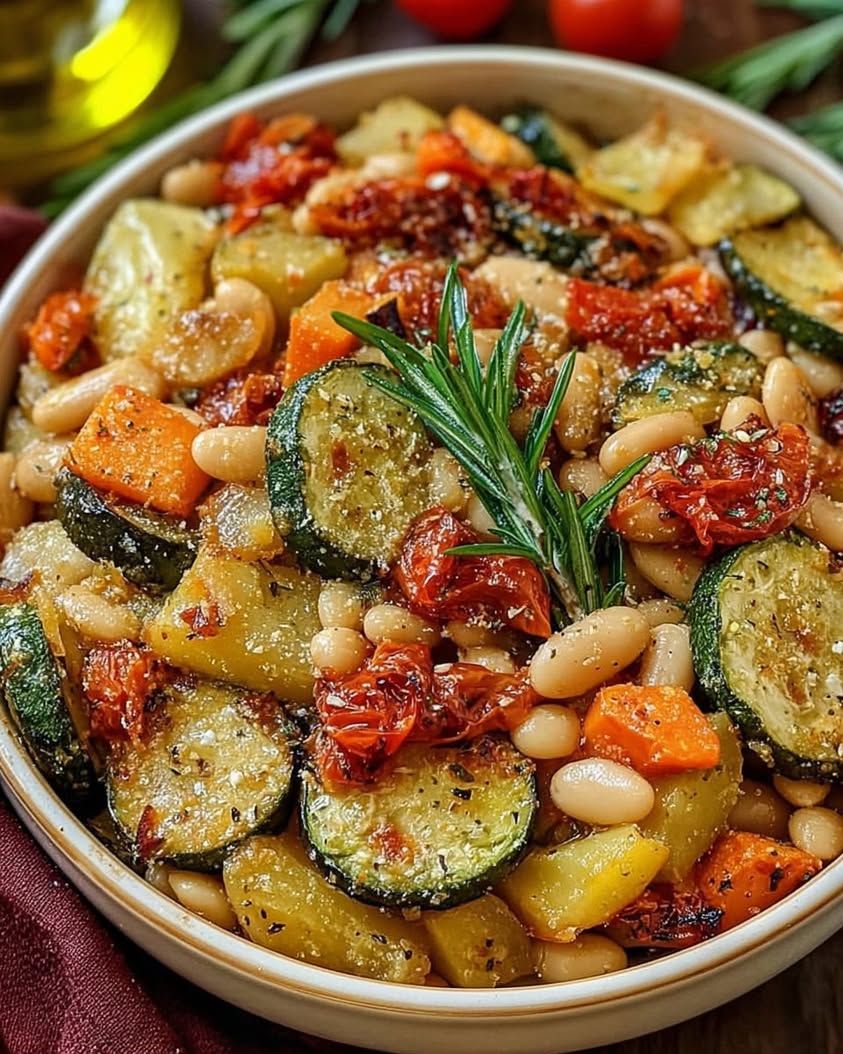
- Visual Appeal: Deep orange sweet potatoes, bright green Brussels sprouts, and creamy white beans create a stunning color palette. The golden breadcrumb crust adds a rustic, inviting finish. Therefore, this bake looks as impressive as it tastes when you bring it to the table.
- Skill Level Needed: This recipe suits beginner cooks perfectly because it relies on simple roasting techniques. You only need basic knife skills and a working oven. Consequently, even someone new to cooking can produce a restaurant-quality result.
- Special Equipment: You need one large baking dish or a cast-iron skillet for this recipe. A good chef’s knife and a cutting board make prep easier and safer. Additionally, a large mixing bowl helps toss everything together evenly.
Recipe Overview
- Difficulty Level: This recipe earns an easy rating because it uses straightforward techniques like chopping and roasting. You do not need any advanced culinary training or special skills. Furthermore, the oven does most of the work, so you can relax while it bakes. Consequently, this dish fits perfectly into a busy schedule.
- Category: This bake works as a main course, a hearty side dish, or a meal-prep staple. You can serve it for lunch, dinner, or even a brunch spread. In addition, it holds up well at potlucks and holiday tables.
- Cuisine: This recipe draws from Mediterranean and rustic European cooking traditions. These cuisines celebrate simple, seasonal ingredients prepared with care. Moreover, the combination of beans and roasted vegetables reflects Italian contadina cooking. As a result, the dish carries a timeless, old-world charm.
- Cost: You can make this entire bake for roughly twelve to fifteen dollars. The vegetables, beans, and pantry spices remain affordable year-round. Therefore, it offers excellent value for a nourishing, family-sized meal.
- Season: Fall and winter suit this recipe best because root vegetables and Brussels sprouts peak during those months. However, you can adapt it for spring with asparagus and peas. Consequently, it remains a year-round favorite with minor tweaks.
- Occasion: This dish shines at casual family dinners, holiday gatherings, and meal-prep Sundays. It also works beautifully for potlucks because it travels well. Meanwhile, it feels special enough for Thanksgiving or Christmas alongside a roast.
Why You’ll Love This Recipe
The taste and texture of this rustic roasted vegetable bake with cannellini beans will win you over at first bite. Sweet potatoes turn jammy and caramelized in the oven, while Brussels sprouts develop crispy, bronzed leaves. Furthermore, the cannellini beans bring a buttery softness that melts into every forkful. The breadcrumb topping adds a satisfying crunch, and the fresh herbs lift the whole dish with bright, savory notes. Consequently, you get a symphony of flavors and textures that never feels boring or one-dimensional.
Convenience sets this recipe apart from more complicated casseroles. You chop the vegetables, toss everything together, and let the oven handle the rest. In addition, cleanup stays minimal because you use just one baking dish. Therefore, you spend less time scrubbing pots and more time enjoying your meal. This makes the recipe ideal for busy weeknights when you want real food without the hassle.
Nutritionally, this bake delivers impressive benefits without sacrificing flavor. Cannellini beans provide plant-based protein, fiber, and essential minerals like iron and folate. Meanwhile, the vegetables supply vitamins A, C, and K along with antioxidants. Olive oil adds heart-healthy fats that help your body absorb those fat-soluble vitamins. As a result, you fuel your body well while enjoying every single bite.
Socially, this dish brings people together around the table with genuine warmth. It looks beautiful in its baking dish, so you can serve it family-style and let everyone scoop their own portion. Furthermore, it accommodates various dietary needs, which makes hosting easier. Therefore, whether you feed vegetarians, vegans, or meat-eaters, everyone finds something to love.
Finally, this recipe remains incredibly cost-effective and accessible. You likely already have most of the spices in your pantry. Additionally, the main ingredients stay affordable at any grocery store. Consequently, you can feed six people a wholesome, restaurant-quality meal without breaking your budget. That combination of value and flavor makes this bake a true keeper.
Historical Background and Cultural Significance
The origins of this rustic roasted vegetable bake trace back to Mediterranean peasant cooking, where resourceful home cooks made the most of seasonal harvests. Italian contadina kitchens often combined beans with whatever vegetables grew nearby. Consequently, these humble ingredients created nourishing meals that sustained farming families through long winters. The technique of roasting vegetables with beans eventually spread across Europe and beyond.
Cannellini beans hold deep cultural importance in Italian cuisine, especially in Tuscany where locals call them fagioli. For centuries, Tuscans have relied on these creamy white beans as a dietary staple and a source of affordable protein. Furthermore, traditional Tuscan cooking celebrates simplicity, letting quality ingredients speak for themselves. Therefore, pairing cannellini beans with roasted vegetables honors that rich culinary heritage.
The recipe evolved as cooks began adding breadcrumb toppings to create gratin-style bakes. French cuisine introduced the gratin technique, which bakers and home cooks quickly adopted across Europe. Meanwhile, rustic cooks layered vegetables, beans, and herbs before finishing everything with a crunchy crust. As a result, the dish became a bridge between peasant food and elegant comfort cuisine.
Regional variations abound today, reflecting local harvests and preferences. In Provence, cooks add herbes de Provence and tomatoes, while Greek versions feature oregano and feta. Additionally, American home cooks have embraced this bake with sweet potatoes, kale, and smoked paprika. Consequently, the dish keeps evolving while staying rooted in its rustic, nourishing origins.
Ingredient Deep Dive
Sweet Potatoes: Sweet potatoes originated in Central and South America and have nourished communities for thousands of years. They became a global staple because they grow easily and store well through winter. Nutritionally, sweet potatoes deliver beta-carotene, vitamin C, and fiber that support immune health. When selecting them, choose firm tubers with smooth skin and no soft spots. Store them in a cool, dark place for up to three weeks. If you prefer, you can substitute butternut squash or Yukon gold potatoes for a different texture.
Brussels Sprouts: Brussels sprouts gained popularity in Belgium during the sixteenth century and eventually spread across Europe. They belong to the cruciferous family, which includes cabbage and broccoli. These tiny cabbages provide vitamin K, vitamin C, and glucosinolates with potential cancer-fighting properties. For the best flavor, pick bright green, tight heads without yellowing leaves. Keep them refrigerated in a perforated bag for about a week. If Brussels sprouts do not appeal to you, try broccoli florets or cauliflower instead.
Cannellini Beans: Cannellini beans, also called white kidney beans, have starred in Italian cooking for centuries. They offer a creamy texture and mild flavor that absorbs seasonings beautifully. Nutritionally, they pack protein, iron, folate, and resistant starch that feeds good gut bacteria. When buying canned beans, look for low-sodium options and rinse them well. Store dried beans in an airtight container for up to a year. Great substitutes include great northern beans, butter beans, or chickpeas.
Garlic and Fresh Herbs: Garlic has flavor-boosting properties that cultures worldwide have treasured for millennia. Rosemary and thyme add earthy, piney notes that complement roasted vegetables perfectly. These herbs contain antioxidants and anti-inflammatory compounds that support overall wellness. Choose firm garlic bulbs and vibrant, fragrant herb sprigs at the store. Keep garlic in a dry, ventilated spot and wrap herbs in damp paper towels. Dried herbs work in a pinch, though fresh ones deliver superior aroma.
Common Mistakes to Avoid
- Cutting vegetables into uneven sizes causes some pieces to burn while others stay raw. Therefore, take time to chop everything into uniform, bite-sized chunks. This ensures even roasting and consistent texture throughout the bake.
- Crowding the baking dish traps steam and prevents browning. Consequently, use a large enough dish so vegetables sit in a single layer. If needed, roast in two batches rather than piling everything together.
- Skipping the olive oil coating leaves vegetables dry and dull. Therefore, toss everything thoroughly so each piece glistens with oil. This helps seasonings stick and promotes beautiful caramelization.
- Adding beans too early makes them mushy and disintegrated. Instead, fold them in during the final fifteen minutes of roasting. This keeps them intact and creamy without turning them into paste.
- Under-seasoning the vegetables results in a flat, forgettable dish. Therefore, season boldly with salt, pepper, and herbs before roasting. Taste a small piece and adjust as needed before serving.
- Forgetting to preheat the oven leads to uneven cooking and pale vegetables. Consequently, always preheat for at least fifteen minutes before baking. A hot oven creates the crispy edges you want.
- Using stale breadcrumbs ruins the topping texture. Therefore, make fresh breadcrumbs from day-old bread or toast them briefly first. Fresh crumbs deliver a superior crunch.
- Not stirring halfway through causes sticking and uneven browning. Instead, stir once at the midpoint to redistribute everything. This simple step makes a big difference.
- Overbaking dries out the beans and turns vegetables to mush. Consequently, check doneness at the earliest recommended time. Pull the dish when vegetables feel fork-tender but still hold shape.
- Neglecting to rest the bake before serving means you miss out on settled flavors. Therefore, let it sit for five minutes after removing it from the oven. This brief rest allows juices to redistribute.
Essential Techniques
Uniform Chopping: Uniform chopping ensures every vegetable piece cooks at the same rate. Therefore, aim for bite-sized chunks around one inch across. Furthermore, keep denser vegetables slightly smaller than softer ones. This simple practice prevents burnt edges and raw centers, giving you perfectly roasted results every time.
Proper Oil Coating: Coating vegetables evenly with olive oil promotes browning and helps seasonings adhere. Consequently, drizzle oil gradually while tossing rather than dumping it all at once. You want a light, even sheen, not a greasy pool. This technique creates crispy, golden edges that make the dish irresistible.
Layering for Texture: Layering ingredients thoughtfully builds contrast in every bite. Therefore, spread the densest vegetables on the bottom where heat hits hardest. Then scatter beans and softer items on top, finishing with breadcrumbs. This approach guarantees a satisfying mix of crispy, creamy, and tender textures throughout.
Strategic Stirring: Stirring once halfway through roasting promotes even browning on all sides. Additionally, it prevents sticking and helps vegetables release their natural sugars. However, avoid stirring too often because constant movement hinders caramelization. One gentle stir at the midpoint gives you the best results.
Broiling for Finish: A final minute under the broiler transforms the breadcrumb topping into a golden, crunchy crown. Therefore, watch carefully because crumbs burn quickly under high heat. Consequently, stay by the oven and pull the dish the moment it reaches your desired color.
Pro Tips for Perfect Rustic Roasted Vegetable Bake with Cannellini Beans
First, preheat your baking dish in the oven before adding the vegetables. This jumpstarts the roasting process and creates immediate browning. Consequently, you get crispier edges without extended cooking time.
Second, pat your vegetables completely dry after washing. Excess moisture steams instead of roasts, which prevents caramelization. Therefore, a quick towel dry makes a noticeable difference in final texture.
Third, use a mix of fresh and dried herbs for layered flavor. Dried thyme and rosemary hold up well during roasting, while fresh parsley added at the end brightens everything. This combination gives you depth and freshness simultaneously.
Fourth, add a pinch of red pepper flakes for gentle warmth. The subtle heat balances the natural sweetness of the vegetables. Furthermore, it wakes up your taste buds without overwhelming the dish.
Fifth, grate fresh Parmesan over the breadcrumbs if you eat dairy. The cheese melts into the topping and creates an irresistible savory crust. Consequently, each bite delivers a salty, nutty punch.
Sixth, squeeze fresh lemon juice over the finished bake. The acid cuts through the richness and brightens all the flavors. Therefore, do not skip this final flourish.
Seventh, let the dish rest for five minutes before serving. This brief pause allows the beans to firm up slightly and the flavors to settle. As a result, every portion holds together beautifully on the plate.
Eighth, save leftovers for grain bowls or wraps the next day. The flavors deepen overnight, making the bake even more delicious. Additionally, it saves you time on future meals.
Variations and Adaptations
Regional Variations: Italian cooks might add canned tomatoes and a sprinkle of pecorino for a Tuscan twist. Meanwhile, Greek versions feature oregano, lemon, and crumbled feta. In Provence, herbes de Provence and olives bring a French accent. Therefore, you can travel the Mediterranean without leaving your kitchen.
Seasonal Adaptations: During spring, swap sweet potatoes for asparagus, peas, and baby carrots. Summer calls for zucchini, bell peppers, and cherry tomatoes. In autumn, pumpkin and parsnips add earthy sweetness. Consequently, this recipe stays fresh and relevant all year long.
Dietary Modifications: For a gluten-free version, use gluten-free breadcrumbs or crushed rice crackers. Dairy-free cooks can skip the Parmesan or use nutritional yeast. Vegans simply omit the cheese entirely, and the dish remains delicious. Therefore, almost everyone can enjoy this bake.
Flavor Variations: Add smoked paprika and cumin for a smoky, Southwestern profile. Alternatively, curry powder and coconut oil create an Indian-inspired version. Miso paste and sesame oil deliver an umami-rich Asian twist. As a result, one recipe yields countless flavor adventures.
Texture Modifications: For extra crunch, add toasted nuts or seeds to the topping. If you prefer a softer bake, cover the dish with foil during the first half of roasting. Meanwhile, a drizzle of tahini or yogurt after baking adds creamy richness. Consequently, you control the final mouthfeel.
Presentation Alternatives: Serve the bake in individual ramekins for elegant dinner parties. Alternatively, stuff the mixture into bell peppers or portobello caps. You can also spoon it over creamy polenta or farro. Therefore, presentation options abound.
Serving and Presentation Guide
Plating Techniques: Spoon the bake onto warm plates or a large serving platter. Furthermore, use a slotted spoon to leave excess oil behind. Arrange the vegetables so colors mix beautifully, and finish with fresh herbs. Consequently, the dish looks polished and inviting.
Garnishing Ideas: Scatter chopped parsley, basil, or chives over the top for a pop of green. Toasted pine nuts or pumpkin seeds add crunch and visual interest. A drizzle of balsamic glaze creates elegant lines. Therefore, small touches elevate the presentation instantly.
Traditional Accompaniments: Crusty sourdough bread works perfectly for soaking up juices. A simple green salad with lemon vinaigrette balances the richness. Additionally, a bowl of creamy polenta turns this into a complete feast. These classic pairings honor the rustic spirit of the dish.
Modern Serving Suggestions: Serve the bake over quinoa, farro, or brown rice for a grain bowl. Alternatively, tuck it into pita pockets with tahini sauce. A fried egg on top transforms leftovers into a hearty breakfast. Consequently, this dish adapts to modern eating trends effortlessly.
Temperature Considerations: This bake tastes best served hot from the oven when the crust stays crispy. However, it also works beautifully at room temperature for buffets. Avoid serving it cold because the flavors dull and the texture suffers. Therefore, plan your timing accordingly.
Portion Control Tips: Aim for one and a half cups per person as a main course. For a side dish, reduce to three-quarters of a cup. Furthermore, pair larger portions with lighter sides to balance the meal. Consequently, everyone leaves the table satisfied but not stuffed.
Wine and Beverage Pairing
Wine Pairings: A medium-bodied red like Chianti or Sangiovese complements the earthy herbs and roasted flavors. For white wine lovers, an oaked Chardonnay or Viognier offers creamy richness that mirrors the beans. Additionally, a dry rosé brings bright acidity that cuts through the olive oil. Therefore, you have plenty of delicious options.
Non-Alcoholic Alternatives: Sparkling water with lemon and rosemary feels refreshing and elegant. Alternatively, a house-made shrub or kombucha adds tangy complexity. Unsweetened iced tea with a squeeze of orange also pairs beautifully. Consequently, non-drinkers enjoy equally sophisticated sips.
Coffee and Tea Pairings: A light roast coffee with nutty notes complements the roasted vegetables surprisingly well. Meanwhile, herbal tea like rosemary or sage infusions echo the dish’s aromatics. Green tea offers a clean, grassy contrast. Therefore, warm beverages make cozy companions.
Temperature Considerations: Serve red wines slightly below room temperature for the best expression. White wines and rosés should stay well chilled. Non-alcoholic drinks taste best ice cold or gently warmed, depending on the season. Consequently, temperature affects your drinking experience more than you might think.
Serving Suggestions: Pour drinks before plating the food so guests can sip while you finish. Furthermore, offer water glasses alongside every beverage. Set bottles on the table for easy refills. As a result, your gathering flows smoothly and generously.
Storage and Shelf Life
Storage Methods: Transfer cooled leftovers into airtight glass containers. Furthermore, press plastic wrap directly onto the surface if using plastic. This limits air exposure and keeps the bake moist. Consequently, your food stays fresh longer.
Temperature Requirements: Refrigerate leftovers within two hours of cooking to prevent bacterial growth. Keep your fridge at or below forty degrees Fahrenheit. Additionally, never leave the bake sitting at room temperature overnight. These practices protect both flavor and safety.
Container Recommendations: Glass containers with locking lids work best because they resist stains and odors. Alternatively, sturdy BPA-free plastic containers function well for shorter storage. Avoid flimsy bags that crush the breadcrumb topping. Therefore, choose containers that protect texture.
Signs of Spoilage: Watch for sour smells, slimy textures, or visible mold growth. Furthermore, discoloration and excessive liquid indicate the food has turned. If anything seems off, throw it away rather than risk illness. Consequently, trust your senses.
Reheating Instructions: Reheat in a 350-degree oven for ten to fifteen minutes to restore crispness. Alternatively, use a microwave for speed, though the topping softens. A quick broil after microwaving revives the crunch. Therefore, you regain that fresh-from-the-oven quality.
Freezing Guidelines: Freeze the bake in portions for up to three months. Furthermore, thaw overnight in the refrigerator before reheating. Add fresh breadcrumbs after thawing for the best texture. Consequently, you always have a homemade meal ready.
Make Ahead Strategies
Prep Timeline: Chop all vegetables up to two days ahead and store them in the fridge. Furthermore, mix the breadcrumb topping separately and keep it covered. This splits the work into manageable chunks. Therefore, assembly takes minutes on cooking day.
Storage Between Steps: Keep chopped vegetables in sealed containers with a damp paper towel. This maintains moisture and prevents drying. Store the topping at room temperature if using within a day. Consequently, every component stays fresh.
Quality Impact Assessment: Make-ahead prep barely affects final quality when done properly. However, assembled unbaked casseroles may release extra liquid over time. Therefore, add breadcrumbs just before baking. This keeps the topping crisp.
Assembly Tips: Layer vegetables and beans in the baking dish, then cover and refrigerate. Add oil, seasonings, and breadcrumbs right before the oven. Furthermore, bring the dish to room temperature for twenty minutes first. Consequently, it bakes evenly.
Reheating Guidelines: Reheat assembled but unbaked dishes at 375 degrees for about fifty minutes. For pre-baked leftovers, use 350 degrees for fifteen minutes. Always check the center for proper warmth. Therefore, you avoid cold spots.
Fresh Element Additions: Add fresh herbs, lemon zest, or a drizzle of good olive oil after reheating. These touches revive the flavors and make leftovers taste new. Furthermore, a sprinkle of flaky salt adds sparkle. Consequently, nobody guesses it is a repeat meal.
Scaling Instructions
Halving the Recipe: Cut all ingredients in half but use a smaller baking dish to maintain depth. Furthermore, reduce cooking time by five to ten minutes and check early. The smaller volume roasts faster. Consequently, you avoid overcooking.
Doubling or Tripling: Scale ingredients up but use two or three dishes rather than one giant pan. Otherwise, vegetables steam instead of roast. Additionally, increase oven time by ten to fifteen minutes. Therefore, everything browns properly.
Equipment Adjustments: Large batches may require rotating racks halfway through baking. Furthermore, use sheet pans instead of deep casseroles for bigger volumes. This increases surface area for browning. Consequently, results stay consistent.
Timing Modifications: More food in the oven slows cooking, so add extra time in small increments. Check every five minutes after the initial window. Furthermore, avoid opening the oven too often. As a result, heat stays steady.
Storage Considerations: Larger batches need more containers and fridge space. Therefore, plan your storage before cooking. Label containers with dates for easy tracking. Consequently, nothing gets lost or wasted.
Nutritional Deep Dive
Macro Breakdown: Each serving delivers roughly twelve grams of plant protein, forty-five grams of complex carbohydrates, and ten grams of healthy fats. This balance supports steady energy and lasting fullness. Furthermore, the fiber content reaches about nine grams per serving. Consequently, this dish satisfies hunger for hours.
Micronutrient Analysis: Sweet potatoes load you up with vitamin A and beta-carotene for eye and immune health. Brussels sprouts contribute vitamin K and vitamin C, while beans supply iron and folate. Additionally, olive oil offers vitamin E. Therefore, every bite nourishes your body deeply.
Health Benefits: The fiber in beans and vegetables promotes digestive health and stable blood sugar. Antioxidants from the produce fight inflammation and oxidative stress. Furthermore, plant-based protein supports muscle repair without saturated fat. Consequently, this meal supports long-term wellness.
Dietary Considerations: This recipe naturally fits vegetarian, vegan, and gluten-free diets with minor tweaks. It also suits low-sodium plans when you rinse the beans well. Moreover, it avoids common allergens like nuts and soy. Therefore, it accommodates many dietary needs.
Portion Analysis: One serving provides about three hundred fifty calories, which fits comfortably into most daily plans. Larger appetites can enjoy a bigger portion without guilt. Additionally, pairing with a light salad keeps the meal balanced. Consequently, you control your intake easily.
Weight Management Tips: The high fiber and protein content keeps you full, which naturally reduces snacking. Furthermore, the dish feels indulgent despite being nutrient-dense. Serve it as your main course to stay satisfied. Therefore, it supports healthy weight goals deliciously.
Dietary Adaptations
Gluten-Free: Use gluten-free breadcrumbs made from rice or chickpea flour. Alternatively, crush gluten-free crackers or pork rinds for the topping. Furthermore, verify that all spices and beans carry gluten-free certification. Consequently, celiac diners enjoy the dish safely.
Dairy-Free: Skip the Parmesan or replace it with nutritional yeast for a cheesy flavor. Additionally, use a dairy-free pesto drizzle for richness. The recipe already relies on olive oil rather than butter. Therefore, dairy-free eating requires almost no changes.
Vegan: Omit all cheese and animal products, which the recipe mostly avoids already. Furthermore, double the herbs and add smoked paprika for depth. Nutritional yeast adds a savory, umami note. Consequently, vegans enjoy a complete, satisfying meal.
Low-Carb: Reduce sweet potatoes and increase Brussels sprouts, zucchini, and cauliflower. Furthermore, skip the breadcrumb topping or use crushed pork rinds. Add extra olive oil for richness. Therefore, you keep carbs low while staying satisfied.
Keto: Replace sweet potatoes with radishes or turnips, which roast beautifully. Furthermore, use almond flour crumbs mixed with Parmesan. Increase healthy fats with extra olive oil and avocado. Consequently, the dish fits ketogenic macros.
Paleo: Swap white beans for roasted mushrooms or diced chicken if you eat meat. Furthermore, use almond flour or crushed nuts for the topping. Keep the herbs and olive oil generous. Therefore, paleo eaters enjoy a compliant version.
Low-FODMAP: Use canned and rinsed cannellini beans in small amounts, or substitute with firm tofu. Furthermore, limit garlic and onion, using garlic-infused oil instead. Choose zucchini and carrots over Brussels sprouts. Consequently, sensitive stomachs stay comfortable.
Other Specific Diets: For a Mediterranean diet, the recipe already fits perfectly. Low-sodium diners should rinse beans and use salt-free seasonings. Additionally, diabetic-friendly eaters benefit from the fiber-rich ingredients. Therefore, this recipe adapts to nearly every lifestyle.
Troubleshooting Guide
Texture Issues: If vegetables turn mushy, you likely overcrowded the pan or added too much oil. Therefore, spread everything in a single layer next time. Additionally, roast at a higher temperature for better browning. Consequently, you achieve the crispy texture you want.
Flavor Balance: When the dish tastes flat, add acid like lemon juice or vinegar. If it tastes too salty, balance with a drizzle of honey or maple syrup. Furthermore, fresh herbs brighten dull flavors instantly. Therefore, taste and adjust before serving.
Temperature Problems: An oven that runs cool leaves vegetables pale and undercooked. Therefore, invest in an oven thermometer to verify accuracy. If your oven runs hot, reduce the temperature by twenty-five degrees. Consequently, your bake cooks evenly every time.
Equipment Challenges: Thin baking sheets warp at high heat and cause uneven browning. Therefore, use heavy-duty pans or cast iron for best results. Furthermore, line pans with parchment for easy cleanup. Consequently, your equipment supports success.
Ingredient Substitutions: If a substitute changes the moisture content, adjust oil and cooking time accordingly. For example, zucchini releases water, so increase heat slightly. Furthermore, taste as you go. Therefore, substitutions rarely ruin the dish.
Timing Concerns: Ovens vary, so always start checking at the earliest recommended time. Furthermore, keep notes on your oven’s quirks for future batches. A five-minute difference can change everything. Consequently, attentive timing yields perfect results.
Recipe Success Stories
Community Feedback: Readers rave about how this bake converts Brussels sprout skeptics into fans. Many report making it weekly because their families request it constantly. Furthermore, several home cooks say it replaced their old green bean casserole at holidays. Consequently, the recipe has earned a loyal following.
Variation Successes: One reader added chorizo and reported incredible results. Another swapped in butternut squash and kale for a fall version that wowed guests. Additionally, a vegan cook used cashew cream and loved the creamy outcome. Therefore, creativity thrives with this recipe.
Adaptation Stories: A busy mom prepped everything on Sunday and baked it Wednesday without any quality loss. Meanwhile, a college student made it in a toaster oven with great success. Another reader doubled the batch for a potluck and came home with an empty dish. Consequently, the recipe fits every lifestyle.
Reader Suggestions: Many suggest adding a drizzle of hot honey for sweet-spicy contrast. Others recommend topping with crispy shallots for extra crunch. A few readers swear by smoked gouda mixed into the breadcrumbs. Therefore, community ideas keep the recipe evolving.
Photography Tips: Shoot the bake in natural light for the most appetizing colors. Furthermore, capture a close-up of the crispy topping for visual impact. A few fresh herb sprigs in the frame add life. Consequently, your photos draw readers in.
Frequently Asked Questions
Can I use dried beans instead of canned? Yes, you can use dried cannellini beans, though you must soak and cook them first. Soak them overnight, then simmer for about ninety minutes until tender. Consequently, you save money but invest more time. Use three cups of cooked beans to replace two cans.
How do I prevent the breadcrumbs from burning? Add the topping during the last fifteen minutes of baking. Furthermore, drizzle a little olive oil over the crumbs to help them toast evenly. If they brown too fast, cover loosely with foil. Therefore, you get a golden crust without scorching.
Can I make this recipe nut-free? This recipe is naturally nut-free, so no changes are needed. However, if you add nuts as a variation, simply omit them. Furthermore, check that your breadcrumbs come from a nut-free facility. Consequently, allergy concerns stay manageable.
What vegetables work best in this bake? Root vegetables like sweet potatoes, carrots, and parsnips roast beautifully. Additionally, Brussels sprouts, cauliflower, and broccoli hold their shape well. Avoid watery vegetables like cucumbers or tomatoes unless you adjust the method. Therefore, choose firm, sturdy produce.
Is this recipe suitable for meal prep? Absolutely, this bake excels for meal prep because it reheats well. Store portions in airtight containers for up to four days. Furthermore, the flavors deepen over time. Consequently, you enjoy better lunches all week.
Can I cook this in a slow cooker? A slow cooker produces softer results without the crispy topping. Therefore, roast the breadcrumbs separately and add them at the end. Cook the vegetables and beans on low for four hours. Consequently, you still get a delicious meal.
How do I make this spicier? Add red pepper flakes, cayenne, or diced jalapeños to the vegetable mix. Furthermore, a drizzle of Print
Rustic Roasted Vegetable Bake with Cannellini Beans
- Total Time: 50 minutes
- Yield: 4
Description
A hearty, rustic bake featuring roasted vegetables and creamy cannellini beans, seasoned with herbs and topped with a crispy breadcrumb crust. Perfect for a cozy dinner.
Ingredients
- 2 medium zucchini, sliced into half-moons
- 1 large red bell pepper, cut into chunks
- 1 large yellow onion, cut into wedges
- 3 tablespoons olive oil
- 1 teaspoon dried oregano
- 1 teaspoon dried thyme
- 1/2 teaspoon smoked paprika
- Salt and black pepper, to taste
- 2 (15-ounce) cans cannellini beans, drained and rinsed
- 4 cloves garlic, minced
- 1 (14.5-ounce) can diced tomatoes, undrained
- 1/2 cup vegetable broth
- 1 cup coarse breadcrumbs (from day-old bread)
- 1/4 cup grated Parmesan cheese (optional)
- 2 tablespoons chopped fresh parsley
Instructions
- Preheat oven to 400°F (200°C). In a large bowl, toss zucchini, bell pepper, and onion with 2 tablespoons olive oil, oregano, thyme, smoked paprika, salt, and pepper. Spread on a baking sheet and roast for 20 minutes, until tender and slightly caramelized.
- In a large bowl, combine roasted vegetables, cannellini beans, garlic, diced tomatoes with their juices, and vegetable broth. Stir gently to mix. Transfer to a 2-quart baking dish.
- In a small bowl, mix breadcrumbs, Parmesan (if using), and remaining 1 tablespoon olive oil. Sprinkle evenly over the vegetable mixture. Bake for 15-20 minutes, until the topping is golden brown and the filling is bubbly.
- Let cool for 5 minutes, then garnish with fresh parsley before serving.
Notes
You can customize the seasonings to taste. For a vegan version, omit the Parmesan or use a dairy-free alternative. Add red pepper flakes for heat. Use gluten-free breadcrumbs if needed.
- Prep Time: 15 minutes
- Cook Time: 35 minutes
- Method: Main
- Cuisine: American