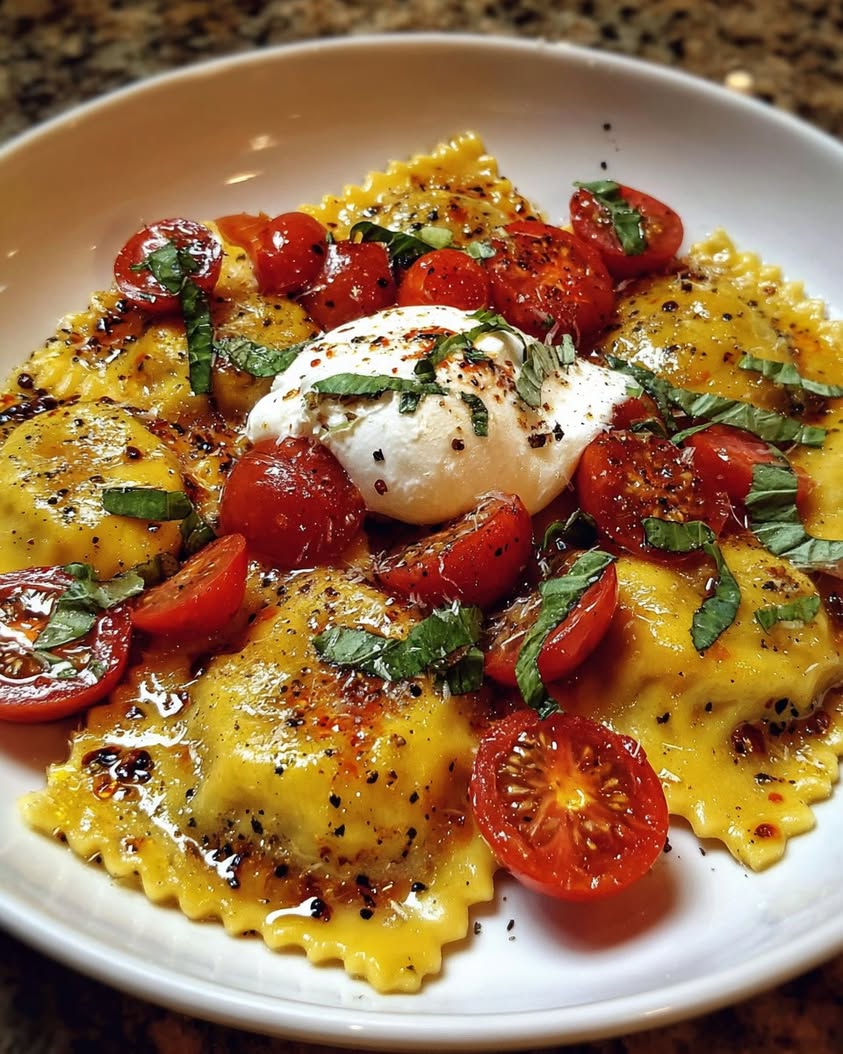
Ricotta and Lemon Zest Ravioli with Burst Tomatoes and Burrata: A Bright Italian Dinner
Ricotta and Lemon Zest Ravioli with Burst Tomatoes and Burrata brings a restaurant-quality Italian dinner right into your home kitchen. Therefore, this dish combines creamy homemade ravioli with sweet, blistered cherry tomatoes and rich, buttery burrata cheese. The bright lemon zest cuts through the richness, and as a result, every bite feels balanced and fresh. If you love fresh pasta, then this ricotta and lemon zest ravioli recipe will quickly become a favorite.
Making ricotta and lemon zest ravioli from scratch might sound intimidating, but actually, the process is quite forgiving. The pasta dough comes together with just flour, eggs, and olive oil. Meanwhile, the filling mixes creamy ricotta with parmesan, lemon zest, and fresh herbs. When you pair this ricotta and lemon zest ravioli with burst tomatoes and burrata, you create a dish that looks and tastes like it came from a trattoria in southern Italy. In addition, the whole meal comes together in about an hour, which makes it perfect for a weekend dinner or a special weeknight treat.
The magic of this ricotta and lemon zest ravioli lies in its contrast of textures and temperatures. Specifically, the warm, tender pasta pillows give way to a cool, creamy filling, while the burst tomatoes add a jammy sweetness. Then the burrata melts slightly over the top and creates a luscious sauce that clings to each piece of ravioli. Furthermore, the lemon zest in the filling brightens everything and keeps the dish from feeling too heavy. As a result, this ricotta and lemon zest ravioli with burst tomatoes and burrata delivers a truly memorable dining experience.
Quick Recipe Highlights
- Flavor Profile: Ricotta and lemon zest ravioli delivers a bright, creamy, and slightly tangy taste. The burst tomatoes add sweetness and acidity, while the burrata brings a rich, milky finish. Fresh basil and parmesan round out the flavor with savory and herbal notes.
- Texture: The homemade pasta offers a tender, silky bite that yields to a smooth ricotta filling. Burst tomatoes provide a soft, jammy pop, and the burrata adds a creamy, spreadable richness. Overall, the dish balances soft, creamy, and slightly chewy textures beautifully.
- Aroma: Fresh lemon zest releases a bright citrus scent as you mix the filling. Meanwhile, garlic sizzling in olive oil fills the kitchen with a warm, savory aroma. When the tomatoes burst, they add a sweet, roasted fragrance that makes the whole dish irresistible.
- Visual Appeal: The pale yellow ravioli sit on a bed of vibrant red burst tomatoes and creamy white burrata. Then fresh green basil leaves and a sprinkle of parmesan add color contrast. As a result, the dish looks elegant enough for guests yet cozy enough for a family dinner.
- Skill Level Needed: This ricotta and lemon zest ravioli recipe suits cooks with some pasta-making experience. However, beginners can succeed with patience and a good pasta roller. The filling and sauce require minimal technique, so the main challenge is shaping the ravioli neatly.
- Special Equipment: You will need a pasta machine or a rolling pin for thin sheets of dough. A ravioli stamp or a simple knife and fork work well for shaping. Additionally, a large skillet for the burst tomatoes and a pot for boiling pasta are essential tools.
Recipe Overview
- Difficulty Level: This ricotta and lemon zest ravioli with burst tomatoes and burrata earns an intermediate rating because of the homemade pasta. The dough itself is simple, but rolling it thin and sealing the ravioli takes practice. Meanwhile, the sauce and assembly come together easily. Therefore, a confident home cook can master this dish in one or two attempts.
- Category: This recipe works as a main course for lunch or dinner. It also shines as a first course before a lighter secondi, following Italian tradition. Furthermore, you can serve smaller portions as an elegant appetizer for a dinner party.
- Cuisine: This dish draws from Italian culinary tradition, specifically the fresh pasta culture of Emilia-Romagna and the tomato-forward cooking of southern Italy. Ricotta-filled ravioli appear throughout Italian cuisine, and lemon zest often brightens fillings in coastal regions. The burst tomato technique reflects the Italian love for simple, seasonal ingredients. Meanwhile, burrata originated in Puglia and adds a modern touch to this classic combination.
- Cost: Making ricotta and lemon zest ravioli at home costs less than ordering it at a restaurant. The main expenses include fresh ricotta, burrata, parmesan, eggs, and flour. However, these ingredients remain affordable at most grocery stores. Overall, you can feed four people for roughly the price of one restaurant entree.
- Season: Summer and early fall offer the best season for this ricotta and lemon zest ravioli because cherry tomatoes peak in sweetness. Consequently, the burst tomatoes taste vibrant and juicy during these months. Nevertheless, you can make this dish year-round with decent-quality cherry tomatoes from the supermarket.
- Occasion: This ricotta and lemon zest ravioli with burst tomatoes and burrata suits date nights, dinner parties, and holiday gatherings. It also works beautifully for a cozy Sunday supper with family. Additionally, the impressive presentation makes it a wonderful choice for celebrating anniversaries or birthdays.
Why You’ll Love This Recipe
First and foremost, the taste of this ricotta and lemon zest ravioli will win you over immediately. The creamy ricotta filling carries a gentle citrus note that lifts the entire dish. Then the burst tomatoes deliver a sweet, tangy punch that complements the mild cheese. Meanwhile, the burrata adds a luxurious, buttery quality that makes each bite feel indulgent. Consequently, the combination of flavors keeps you coming back for more without feeling overwhelmed.
Secondly, this ricotta and lemon zest ravioli recipe offers surprising convenience for a homemade pasta dish. You can prepare the dough and filling ahead of time, then assemble the ravioli when you are ready to cook. Additionally, the burst tomato sauce takes only minutes to make in a single skillet. As a result, you avoid a messy kitchen and complicated cleanup. Therefore, even busy home cooks can serve this dish on a weeknight with a little planning.
Thirdly, the nutritional profile of this ricotta and lemon zest ravioli with burst tomatoes and burrata provides a good balance of protein, carbohydrates, and healthy fats. The ricotta and burrata deliver calcium and protein, while the tomatoes contribute vitamins C and A. Furthermore, the olive oil offers heart-healthy monounsaturated fats. Meanwhile, the eggs in the pasta dough add additional protein. Consequently, this dish satisfies both your appetite and your nutritional needs.
Fourthly, this ricotta and lemon zest ravioli shines as a social and entertaining dish. The beautiful presentation impresses guests without requiring restaurant-level skills. You can plate individual portions or bring the entire skillet to the table for a family-style meal. Additionally, the recipe encourages conversation because guests often ask about the homemade pasta. As a result, serving this dish creates a warm, memorable dining experience.
Finally, the cost-effectiveness of making ricotta and lemon zest ravioli at home makes it an accessible luxury. Fresh pasta dishes at restaurants often cost twenty-five dollars or more per plate. However, the ingredients for this recipe total far less when you shop smartly. Moreover, you can stretch the recipe to feed more people by adding a simple salad and crusty bread. Therefore, this ricotta and lemon zest ravioli with burst tomatoes and burrata proves that elegant dining does not require a big budget.
Historical Background and Cultural Significance
Ravioli originated in Italy during the Middle Ages, with early records appearing in the 14th century. Specifically, Italian cooks began wrapping fillings in pasta dough as a way to use leftover ingredients. Over time, ravioli evolved into a celebrated dish with countless regional variations. Meanwhile, the ricotta and lemon zest combination reflects the Italian practice of using fresh, local dairy products. Consequently, this ricotta and lemon zest ravioli carries centuries of culinary tradition in every bite.
Ricotta holds a special place in Italian cuisine, especially in the southern regions. Shepherds and farmers made ricotta from the whey left over after cheesemaking, which made it an economical protein source. Additionally, lemon trees grow abundantly along the Amalfi Coast and Sicily, so pairing citrus with cheese feels natural. Therefore, the combination of ricotta and lemon zest in ravioli reflects the resourcefulness and flavors of southern Italy. Meanwhile, this ricotta and lemon zest ravioli with burst tomatoes honors that heritage.
The burst tomato technique represents a cornerstone of Italian home cooking. Nonna-style recipes often call for cherry tomatoes cooked quickly in olive oil until their skins split and release their juices. Furthermore, this method creates an instant sauce without requiring hours of simmering. When paired with burrata, a cheese that emerged in Puglia during the early 20th century, the dish bridges old and new Italian traditions. Consequently, this ricotta and lemon zest ravioli with burst tomatoes and burrata tells a story of Italian culinary evolution.
Regional variations of this ricotta and lemon zest ravioli exist throughout Italy. In Tuscany, cooks might add spinach to the ricotta filling for color and nutrients. Meanwhile, in Liguria, a touch of basil pesto might replace the burst tomato sauce. Additionally, some chefs in Campania finish the dish with a drizzle of aged balsamic vinegar. As a result, the ricotta and lemon zest ravioli with burst tomatoes and burrata adapts beautifully to local ingredients and personal preferences.
Ingredient Deep Dive
Ricotta serves as the heart of the ravioli filling in this ricotta and lemon zest ravioli recipe. This Italian whey cheese has a mild, slightly sweet flavor and a grainy yet creamy texture. Historically, ricotta provided an affordable protein for Italian farming families. Nutritionally, it offers calcium, vitamin A, and a good amount of protein per serving. When selecting ricotta, look for whole-milk versions that taste fresh and creamy rather than watery. Store it in the refrigerator and use it within five days of opening. If you cannot find ricotta, then cottage cheese blended until smooth works as a substitute.
Fresh ricotta makes a noticeable difference in the texture of your ricotta and lemon zest ravioli. Therefore, choose a brand that lists only milk, cream, and cultures on the label. Avoid ricotta with gums or stabilizers because they can make the filling gummy. Additionally, drain excess liquid from the ricotta before mixing the filling. As a result, your ravioli will hold their shape and taste creamy rather than watery.
Lemon zest brings brightness and complexity to this ricotta and lemon zest ravioli with burst tomatoes and burrata. The essential oils in the zest carry intense citrus flavor that the juice alone cannot provide. In Italian cooking, lemon zest appears in everything from pasta to desserts, especially along the coast. Nutritionally, lemon zest contains vitamin C and antioxidants. When selecting lemons, choose firm, heavy fruits with bright, unblemished skin. Store lemons in the refrigerator for up to two weeks. If you need a substitute, then orange zest or lime zest can work, though the flavor will shift.
Always zest lemons before juicing them, and use a microplane for the finest, most aromatic zest. Organic lemons work best because you avoid pesticide residue on the peel. Furthermore, avoid zesting the white pith, which tastes bitter. As a result, your ricotta and lemon zest ravioli will have a clean, bright lemon flavor.
Cherry tomatoes create the burst tomato sauce that tops this ricotta and lemon zest ravioli. These small, sweet tomatoes originated in South America and spread to Italy through trade routes. Today, cherry tomatoes thrive in Italian gardens and markets, especially during summer. They provide vitamin C, potassium, and the antioxidant lycopene. When selecting cherry tomatoes, pick ones that feel heavy and firm with shiny skins. Store them at room temperature for the best flavor and use them within a week. If cherry tomatoes are unavailable, then grape tomatoes or diced plum tomatoes serve as good substitutes.
Burrata elevates this ricotta and lemon zest ravioli with burst tomatoes and burrata to a truly special dish. This Italian cheese consists of a mozzarella shell filled with stracciatella and cream. Burrata originated in Puglia around 1920 as a way to use leftover mozzarella scraps. Nutritionally, it delivers protein, calcium, and rich fats that satisfy. When buying burrata, look for a firm outer shell and check the expiration date carefully. Store it in its liquid in the refrigerator and use it within two days for the best texture. If burrata is unavailable, then fresh mozzarella or a dollop of whipped ricotta can substitute.
Parmesan cheese adds salty, umami depth to the filling of this ricotta and lemon zest ravioli. This aged Italian cheese has a long history dating back to the Middle Ages in Parma. It contributes protein, calcium, and a concentrated savory flavor. Choose authentic Parmigiano-Reggiano for the best taste and grate it fresh. Store parmesan wrapped in parchment paper in the refrigerator. As a substitute, Pecorino Romano or Grana Padano work well.
Fresh basil finishes the ricotta and lemon zest ravioli with burst tomatoes and burrata with a fragrant, herbal note. Basil originated in India and reached Italy through ancient trade routes. It offers vitamins K and A along with antioxidants. Select basil with vibrant green leaves and no dark spots. Store it in a glass of water at room temperature or wrapped in a damp paper towel in the refrigerator. If basil is unavailable, then fresh mint or parsley can substitute.
Common Mistakes to Avoid
- Overworking the pasta dough makes it tough and chewy instead of tender. Therefore, mix the dough until it just comes together, then knead gently. Let the dough rest for at least 30 minutes so the gluten relaxes.
- Rolling the pasta too thick creates heavy, doughy ravioli that overpower the filling. Consequently, aim for sheets thin enough to see your hand through. A pasta machine helps you achieve consistent thickness every time.
- Using wet ricotta leads to soggy ravioli that fall apart during boiling. Therefore, drain the ricotta in a fine-mesh strainer for at least 30 minutes. You can also press it gently with paper towels to remove excess moisture.
- Overfilling the ravioli causes the seams to burst in the boiling water. As a result, use only about one teaspoon of filling per ravioli. Leave a border around the filling so the edges seal properly.
- Not sealing the edges well allows water to seep in and ruin the pasta. Therefore, brush the edges with water or egg wash before pressing them together. Then press firmly with your fingers or a fork to create a tight seal.
- Crowding the pot when boiling the ravioli makes them stick together. Consequently, cook the ravioli in batches of six to eight at a time. Stir gently with a wooden spoon to prevent sticking.
- Overcooking fresh ravioli turns them mushy and destroys their delicate texture. Therefore, taste one after two minutes and remove them as soon as they float. Fresh pasta cooks much faster than dried pasta.
- Burning the garlic in the burst tomato sauce creates a bitter flavor that ruins the dish. As a result, cook the garlic over medium-low heat and stir constantly. Add the tomatoes as soon as the garlic turns golden.
- Serving the burrata ice-cold mutes its creamy flavor and makes it clump. Therefore, let the burrata sit at room temperature for 15 to 20 minutes before serving. This allows it to soften and melt slightly over the hot pasta.
- Skipping the pasta water in the sauce leaves the dish dry and less cohesive. Consequently, reserve at least one cup of starchy pasta water before draining. Add a splash to the skillet to help the sauce cling to the ravioli.
Essential Techniques
Making fresh pasta dough forms the foundation of this ricotta and lemon zest ravioli recipe. This technique matters because the dough determines the texture of the final dish. To master it, mound flour on a clean surface, create a well in the center, and add beaten eggs and olive oil. Gradually incorporate the flour into the eggs with a fork until a shaggy dough forms. Then knead the dough for eight to ten minutes until it feels smooth and elastic. A common pitfall involves adding too much flour, which makes the dough stiff. The dough is ready when it springs back slightly when you press it with a finger.
Rolling pasta sheets thin and even ensures your ricotta and lemon zest ravioli cook uniformly. This step matters because thick spots create chewy pockets while thin spots tear. To master this technique, start with the widest setting on your pasta machine and pass the dough through repeatedly, narrowing the setting each time. If you use a rolling pin, then work from the center outward and rotate the dough often. A common pitfall involves skipping the resting period, which makes the dough spring back. The sheet is ready when you can see the outline of your hand through it.
Filling and sealing the ravioli properly prevents them from bursting during cooking. This technique matters because a poor seal ruins hours of work. To master it, place small spoonfuls of filling at regular intervals on one sheet of pasta. Then brush water around each mound and lay a second sheet on top. Press out air bubbles gently and seal the edges with your fingers. A common pitfall involves trapping air inside, which causes the ravioli to float and tear. The seal is secure when the edges feel firmly bonded with no air pockets.
Bursting the tomatoes creates an instant, flavorful sauce for your ricotta and lemon zest ravioli. This technique matters because it builds the sauce that ties the dish together. To master it, heat olive oil in a skillet, add garlic, and cook until fragrant. Then add the cherry tomatoes and cook over medium-high heat until their skins split and release their juices. A common pitfall involves cooking the tomatoes too long, which turns them into mush. The tomatoes are ready when they look blistered and have released a glossy sauce.
Pro Tips for Perfect Ricotta and Lemon Zest Ravioli with Burst Tomatoes and Burrata
- Drain your ricotta overnight in the refrigerator for the driest, creamiest filling possible. This step prevents soggy ravioli and concentrates the flavor.
- Add a pinch of nutmeg to the ricotta filling for warmth and depth. Nutmeg complements the lemon zest and adds a subtle Italian touch.
- Rest the pasta dough for at least 30 minutes before rolling it out. This allows the gluten to relax and makes the dough easier to work with.
- Use a pasta machine for the thinnest, most consistent sheets of dough. If you roll by hand, then keep the dough covered to prevent it from drying out.
- Freeze leftover ravioli on a parchment-lined tray before transferring them to a bag. This prevents them from sticking together and lets you cook them straight from frozen.
- Reserve pasta water before draining the ravioli and add it to the tomato sauce. The starch helps the sauce cling to the pasta and adds body.
- Let the burrata come to room temperature before serving so it melts beautifully. A room-temperature burrata drapes over the ravioli and creates a creamy sauce.
- Finish the ricotta and lemon zest ravioli with high-quality olive oil and flaky sea salt. These simple touches elevate the dish without masking its flavors.
Variations and Adaptations
Regional variations of this ricotta and lemon zest ravioli reflect Italy’s diverse culinary landscape. For example, in Tuscany, cooks often add blanched spinach to the ricotta filling for color and earthiness. Meanwhile, in Liguria, a spoonful of basil pesto replaces the burst tomato sauce for a different flavor profile. Additionally, Sicilian cooks might incorporate toasted pine nuts and raisins into the filling for a sweet-savory twist. As a result, you can adapt this ricotta and lemon zest ravioli to reflect different Italian regions.
Seasonal adaptations keep this ricotta and lemon zest ravioli with burst tomatoes and burrata exciting throughout the year. In summer, use fresh heirloom cherry tomatoes for the brightest flavor. During fall, roast the tomatoes with a pinch of sugar to enhance their sweetness. In winter, swap the burst tomatoes for a creamy mushroom sauce or a simple brown butter sage sauce. Consequently, this dish never feels boring and always matches the season.
Dietary modifications allow more people to enjoy this ricotta and lemon zest ravioli recipe. For a gluten-free version, use a gluten-free flour blend designed for pasta. If you avoid dairy, then substitute the ricotta with a cashew-based ricotta and skip the parmesan. Additionally, vegan cooks can use egg-free pasta dough and a plant-based burrata alternative. Therefore, this ricotta and lemon zest ravioli can accommodate many dietary needs.
Flavor variations let you customize the ricotta and lemon zest ravioli to your taste. Add chopped fresh herbs like mint or dill to the filling for a fresh twist. Alternatively, mix in a pinch of red pepper flakes for gentle heat. You can also swap the lemon zest for orange zest for a sweeter citrus note. As a result, the ricotta and lemon zest ravioli becomes a canvas for your creativity.
Texture modifications help you adjust the dish to your preferences. If you prefer a firmer bite, then roll the pasta slightly thicker. For a more delicate texture, roll the sheets very thin. Additionally, you can add toasted breadcrumbs to the filling for a bit of crunch. Consequently, the ricotta and lemon zest ravioli can suit any texture preference.
Presentation alternatives make this ricotta and lemon zest ravioli with burst tomatoes and burrata versatile for any occasion. Serve it in shallow bowls for an elegant restaurant-style look. Alternatively, plate the ravioli on a large platter for a family-style meal. For a fun twist, skewer individual ravioli as an appetizer. As a result, the ricotta and lemon zest ravioli can impress guests in many different ways.
Serving and Presentation Guide
Plating techniques matter when you serve ricotta and lemon zest ravioli with burst tomatoes and burrata. Start by spooning a layer of burst tomatoes and their juices onto each plate. Then arrange four to five ravioli on top, slightly overlapping them. Tear the burrata and drape it over the ravioli so it melts slightly. As a result, the dish looks intentional and restaurant-worthy.
Garnishing ideas elevate the visual appeal of this ricotta and lemon zest ravioli. Scatter fresh basil leaves over the top for color and fragrance. Add a sprinkle of grated parmesan and a drizzle of olive oil for shine. Then finish with flaky sea salt and cracked black pepper for texture. Consequently, a few simple garnishes transform the dish into a showstopper.
Traditional accompaniments pair beautifully with this ricotta and lemon zest ravioli. Serve a simple arugula salad with lemon vinaigrette on the side. Add a slice of crusty Italian bread to soak up the tomato juices. Additionally, a glass of crisp white wine completes the meal. Therefore, these classic sides honor the Italian roots of the dish.
Modern serving suggestions offer fresh ways to enjoy this ricotta and lemon zest ravioli with burst tomatoes and burrata. Try serving it as a starter in smaller portions at a dinner party. Alternatively, add grilled shrimp or chicken for a heartier main course. You can also pair it with a charcuterie board for a relaxed grazing meal. As a result, this ricotta and lemon zest ravioli fits many dining styles.
Temperature considerations affect how the ricotta and lemon zest ravioli tastes and feels. Serve the ravioli hot, but let the burrata sit at room temperature first. The contrast between warm pasta and cool, creamy burrata creates a delightful sensation. However, avoid serving the dish cold because the pasta turns firm. Consequently, timing matters when you plate this dish.
Portion control tips help you serve the ricotta and lemon zest ravioli with burst tomatoes and burrata appropriately. Plan for four to five ravioli per person as a main course. For an appetizer, serve two to three ravioli per guest. Additionally, offer extra burrata on the side for those who want more richness. Therefore, you can stretch the dish to feed a crowd or keep it intimate.
Wine and Beverage Pairing
Wine pairings enhance the flavors of this ricotta and lemon zest ravioli with burst tomatoes and burrata. A crisp white wine like Pinot Grigio or Vermentino balances the creamy ricotta and burrata. Meanwhile, a dry Falanghina from southern Italy complements the lemon zest beautifully. Additionally, a light Chianti or Barbera works if you prefer red wine. As a result, the right wine makes the ricotta and lemon zest ravioli taste even better.
Non-alcoholic alternatives keep the meal refreshing and inclusive. Sparkling water with lemon and basil offers a bright, clean pairing. Alternatively, an Italian soda like San Pellegrino Limonata echoes the citrus notes in the dish. Iced green tea with mint also works well. Consequently, everyone at the table can enjoy a thoughtful beverage.
Coffee and tea pairings might seem unusual for pasta, but certain options work nicely. A light, floral tea such as jasmine or chamomile complements the lemon notes. Meanwhile, an espresso after the meal aids digestion and echoes Italian dining tradition. Avoid heavy, smoky teas that overpower the delicate flavors. Therefore, choose beverages that enhance rather than compete with the ricotta and lemon zest ravioli.
Temperature considerations apply to your beverage choices as well. Serve white wines well-chilled but not ice-cold to preserve their aromas. Red wines should sit slightly below room temperature for the best flavor. Non-alcoholic drinks taste best when served cold and refreshing. As a result, proper temperature maximizes your enjoyment of the ricotta and lemon zest ravioli.
Serving suggestions for beverages include offering a choice to your guests. Set out a small selection of wines so everyone finds something they like. Additionally, provide sparkling water and lemon wedges for a simple, elegant option. You can also offer a digestif like limoncello after the meal. Consequently, your guests feel pampered and satisfied when you serve the ricotta and lemon zest ravioli.
Storage and Shelf Life
Storage methods for this ricotta and lemon zest ravioli depend on whether you store the components or the finished dish. Uncooked assembled ravioli freeze beautifully for up to two months. Cooked ravioli with sauce keeps in the refrigerator for up to three days. Meanwhile, the burst tomato sauce stores separately for up to five days. Therefore, plan your storage based on when you plan to eat the ricotta and lemon zest ravioli.
Temperature requirements matter for food safety with this ricotta and lemon zest ravioli with burst tomatoes and burrata. Keep raw ravioli in the refrigerator at 40 degrees Fahrenheit or below if you plan to cook them within 24 hours. For longer storage, freeze them at zero degrees Fahrenheit. Cooked leftovers should cool quickly and refrigerate within two hours. Consequently, proper temperature control prevents spoilage and keeps the ricotta and lemon zest ravioli safe to eat.
Container recommendations help preserve the quality of your ricotta and lemon zest ravioli. Use an airtight container for cooked ravioli and sauce. For uncooked ravioli, freeze them on a parchment-lined tray first, then transfer to a freezer bag. Squeeze out excess air to prevent freezer burn. Therefore, the right container keeps the ricotta and lemon zest ravioli fresh and ready to cook.
Signs of spoilage tell you when to discard leftovers of this ricotta and lemon zest ravioli with burst tomatoes and burrata. Sour smells, slimy textures, or visible mold indicate the food has gone bad. Additionally, the sauce may develop an off color or separation. If in doubt, then throw it out. As a result, you protect yourself and your family from foodborne illness.
Reheating instructions ensure your leftover ricotta and lemon zest ravioli tastes good the second time around. Gently warm the ravioli and sauce in a skillet over low heat with a splash of water. Avoid microwaving because it can make the pasta rubbery. Add fresh burrata and basil after reheating for the best texture. Consequently, leftovers of the ricotta and lemon zest ravioli taste almost as good as the first serving.
Freezing guidelines apply to both the uncooked and cooked components of this ricotta and lemon zest ravioli recipe. Uncooked ravioli freeze well for up to two months without losing quality. Cooked ravioli with sauce freezes for up to one month, though the texture softens slightly. The burst tomato sauce freezes beautifully for up to three months. Therefore, freezing lets you enjoy the ricotta and lemon zest ravioli whenever a craving strikes.
Make Ahead Strategies
A prep timeline makes this ricotta and lemon zest ravioli with burst tomatoes and burrata manageable for busy cooks. Make the pasta dough up to 24 hours ahead and store it wrapped in the refrigerator. Prepare the ricotta filling the day before and keep it chilled. You can even assemble the ravioli and freeze them for later. As a result, the ricotta and lemon zest ravioli comes together quickly when you are ready to cook.
Storage between steps keeps each component of the ricotta and lemon zest ravioli fresh. Wrap the pasta dough tightly in plastic to prevent drying. Cover the filling with plastic pressed directly onto the surface to avoid a skin forming. Then refrigerate the burst tomato sauce in a sealed container. Consequently, each part of the ricotta and lemon zest ravioli stays in peak condition.
Quality impact assessment helps you decide which steps to do ahead. The pasta dough actually improves after resting overnight because the gluten relaxes. The filling tastes just as good made a day ahead. However, the burst tomato sauce loses some brightness after two days, so make it close to serving time. Therefore, the ricotta and lemon zest ravioli maintains high quality with smart advance prep.
Assembly tips for making the ricotta and lemon zest ravioli ahead of time ensure success. Dust a baking sheet with semolina flour and arrange the ravioli in a single layer. Freeze them until firm, then transfer to a freezer bag. This method prevents sticking and keeps the shapes intact. As a result, you can cook the ricotta and lemon zest ravioli directly from frozen.
Reheating guidelines for pre-made components keep the ricotta and lemon zest ravioli tasting fresh. Warm the burst tomato sauce in a skillet over medium heat. Cook the ravioli fresh in boiling water for the best texture. Then assemble the dish and top with room-temperature burrata. Consequently, the ricotta and lemon zest ravioli with burst tomatoes and burrata tastes freshly made.
Fresh element additions at the end of cooking brighten the ricotta and lemon zest ravioli. Add fresh basil, lemon zest, and flaky salt just before serving. Drizzle high-quality olive oil over the top for a finishing touch. These fresh additions restore vibrancy to the dish. Therefore, the ricotta and lemon zest ravioli always tastes lively and delicious.
Scaling Instructions
Halving this ricotta and lemon zest ravioli recipe works well for a smaller household. Simply divide all ingredients by two, including the pasta dough. However, you might still need one whole egg for the dough, so adjust the flour slightly. Cook only as many ravioli as you plan to eat and freeze the rest. As a result, the ricotta and lemon zest ravioli fits a dinner for two perfectly.
Doubling or tripling this ricotta and lemon zest ravioli with burst tomatoes and burrata requires some planning. Make the pasta dough in separate batches for the best texture. Prepare extra filling and sauce in larger bowls. Additionally, use a larger pot for boiling and a bigger skillet for the sauce. Consequently, the ricotta and lemon zest ravioli scales up easily for a crowd.
Equipment adjustments matter when you scale the ricotta and lemon zest ravioli recipe. A standard pasta machine handles small batches well, so make dough in batches if needed. Use a wide, deep skillet for the burst tomatoes to prevent overflow. Additionally, have extra baking sheets ready for freezing ravioli. Therefore, the right equipment makes scaling the ricotta and lemon zest ravioli stress-free.
Timing modifications keep the ricotta and lemon zest ravioli on track when you change the batch size. Making more pasta dough takes longer to knead and roll. Boiling ravioli in batches adds time to the cooking process. However, the burst tomato sauce cooks in the same amount of time regardless of quantity. As a result, plan extra time for the ricotta and lemon zest ravioli when scaling up.
Storage considerations change when you double or triple the ricotta and lemon zest ravioli recipe. You need more freezer space for the extra ravioli. Use multiple containers for the sauce and filling. Label everything with dates so you know when to use them. Consequently, proper storage keeps the ricotta and lemon zest ravioli fresh for future meals.
Nutritional Deep Dive
The macro breakdown of this ricotta and lemon zest ravioli with burst tomatoes and burrata provides a balanced meal. Each serving contains roughly 35 grams of carbohydrates from the pasta. Additionally, you get about 22 grams of protein from the ricotta, burrata, parmesan, and eggs. The fat content reaches around 28 grams, mostly from the cheeses and olive oil. Therefore, the ricotta and lemon zest ravioli satisfies hunger and fuels your day.
Micronutrient analysis reveals the vitamins and minerals in this ricotta and lemon zest ravioli. The ricotta and burrata supply calcium for strong bones. Tomatoes contribute vitamin C, vitamin A, and lycopene. Meanwhile, the eggs add vitamin D and B vitamins. As a result, the ricotta and lemon zest ravioli with burst tomatoes and burrata offers more than just calories.
Health benefits of this ricotta and lemon zest ravioli include support for bone health and immune function. The calcium and vitamin D work together to maintain bone Print
Ricotta and Lemon Zest Ravioli with Burst Tomatoes and Burrata
- Total Time: 1 hour 15 minutes
- Yield: 4
Description
Delicate homemade ravioli filled with creamy ricotta and bright lemon zest, served with sweet burst cherry tomatoes and topped with rich, creamy burrata. A fresh and elegant Italian-inspired dish.
Ingredients
- For the pasta dough: 2 cups all-purpose flour, plus extra for dusting
- 3 large eggs
- 1 tablespoon olive oil
- 1/2 teaspoon salt
- For the filling: 1 cup whole-milk ricotta, drained
- 1/2 cup grated Parmesan cheese
- 1 large egg yolk
- Zest of 1 lemon
- 1/4 teaspoon salt
- 1/8 teaspoon black pepper
- For the sauce: 2 tablespoons olive oil
- 2 cloves garlic, thinly sliced
- 1 pint cherry tomatoes
- 1/4 teaspoon red pepper flakes (optional)
- Salt and pepper to taste
- 8 ounces burrata cheese, at room temperature
- Fresh basil leaves, for garnish
Instructions
- Make the pasta dough: In a large bowl, combine flour and salt. Make a well in the center and add eggs and olive oil. Gradually mix flour into the eggs until a dough forms. Knead on a floured surface for 8-10 minutes until smooth and elastic. Wrap in plastic and let rest for 30 minutes.
- Prepare the filling: In a medium bowl, mix ricotta, Parmesan, egg yolk, lemon zest, salt, and pepper until well combined. Set aside.
- Roll out the dough: Divide dough into 4 pieces. Using a pasta machine or rolling pin, roll each piece into thin sheets (about 1/16 inch thick).
- Assemble the ravioli: Place one sheet on a floured surface. Drop teaspoon-sized mounds of filling about 2 inches apart. Brush water around each mound. Place another sheet on top, pressing out air. Cut into squares with a knife or ravioli cutter. Press edges to seal. Repeat with remaining dough and filling.
- Cook the ravioli: Bring a large pot of salted water to a boil. Cook ravioli in batches for 3-4 minutes, until they float. Remove with a slotted spoon and set aside.
- Make the sauce: In a large skillet, heat olive oil over medium heat. Add garlic and cook until fragrant, about 1 minute. Add cherry tomatoes and red pepper flakes. Cook, stirring occasionally, until tomatoes burst and release their juices, about 8-10 minutes. Season with salt and pepper.
- Combine: Add cooked ravioli to the skillet and gently toss to coat with the sauce. Cook for 1-2 minutes to heat through.
- Serve: Divide ravioli among plates. Tear burrata into pieces and place on top. Garnish with fresh basil leaves. Serve immediately.
Notes
You can customize the seasonings to taste.
- Prep Time: 45 minutes
- Cook Time: 30 minutes
- Method: Main
- Cuisine: Italian