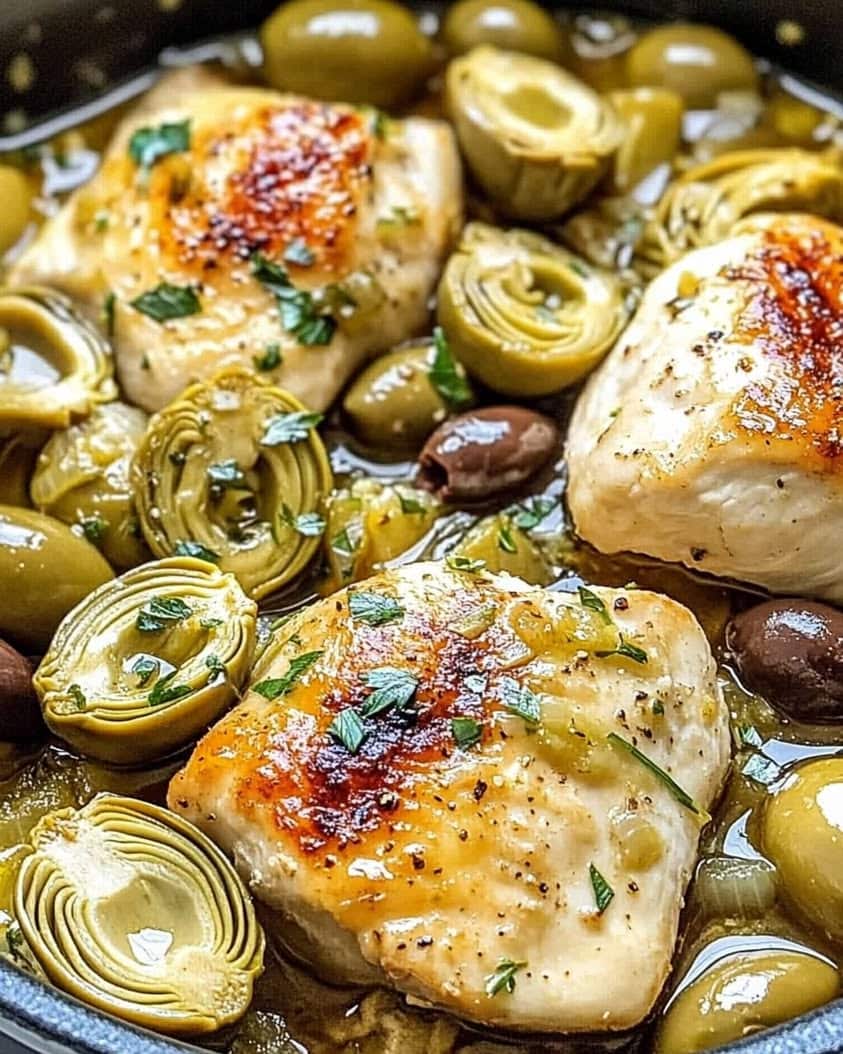
Mediterranean Lemon Chicken with Artichokes and Olives: A Bright, Briny One-Pan Dinner
Mediterranean Lemon Chicken with Artichokes and Olives brings the sunny coasts of Greece and Italy straight to your dinner table. Therefore, if you crave a meal that balances bright citrus, salty olives, and tender chicken, this recipe delivers on every level. Moreover, you need just one skillet and a handful of pantry staples to create something truly memorable. The chicken thighs soak up a garlicky lemon marinade, while artichoke hearts and Kalamata olives add briny depth. As a result, every bite tastes like a vacation on a plate.
This Mediterranean Lemon Chicken with Artichokes and Olives recipe shines because it relies on simple, honest ingredients that work together beautifully. In addition, the cooking method keeps cleanup minimal, which means you spend less time scrubbing pans and more time enjoying your meal. Consequently, busy weeknights suddenly feel elegant and effortless. The dish also welcomes substitutions, so you can adapt it to whatever your fridge holds. Meanwhile, the aromas of oregano, lemon, and garlic fill your kitchen and draw everyone to the table. Indeed, this is the kind of dinner that becomes a regular rotation favorite.
Furthermore, this Mediterranean Lemon Chicken with Artichokes and Olives recipe suits both casual family dinners and fancy weekend gatherings. Because the flavors deepen as the chicken rests, you can prepare it ahead and serve it stress-free. Additionally, the vibrant colors of golden chicken, green artichokes, and dark olives create a stunning presentation with almost no effort. As a result, your guests will assume you spent hours in the kitchen. In truth, the oven does most of the work. Therefore, keep reading to discover every detail, from ingredient selection to wine pairing, so you can nail this dish on your first try.
Quick Recipe Highlights
- Flavor Profile: This dish balances tangy lemon, savory garlic, and salty olives in perfect harmony. Moreover, a touch of oregano adds earthy warmth, while white wine brings gentle acidity. As a result, the sauce tastes complex yet clean.
- Texture: Tender, juicy chicken thighs form the heart of the meal. Meanwhile, artichoke hearts offer a soft, slightly firm bite, and olives add a pleasing pop. Consequently, every forkful delivers satisfying contrast.
- Aroma: Garlic and lemon zest release bright, mouthwatering notes as the chicken roasts. In addition, oregano and white wine deepen the scent with herbal and tangy layers. Therefore, your kitchen smells like a Mediterranean taverna.
- Visual Appeal: Golden-brown chicken sits among vibrant green artichokes and glossy black olives. Furthermore, fresh parsley and lemon slices add pops of color. As a result, the finished skillet looks restaurant-worthy.
- Skill Level Needed: This recipe suits beginners because it requires only basic knife skills and simple pan work. Moreover, the oven handles the heavy lifting. Consequently, even novice cooks can serve an impressive meal.
- Special Equipment: You need a large oven-safe skillet or a baking dish. Additionally, a sharp knife, cutting board, and measuring spoons cover the rest. Therefore, no fancy gadgets are necessary.
Recipe Overview
- Difficulty Level: This Mediterranean Lemon Chicken with Artichokes and Olives recipe earns an easy rating because it uses one pan and straightforward steps. Furthermore, the marinade does the flavor work while you relax. In addition, timing is forgiving, so slight overcooking will not ruin the dish. Therefore, beginners and experts alike can succeed.
- Category: This dish works as a main course for dinner. Moreover, you can serve it for lunch the next day. Additionally, it fits meal-prep plans because the flavors improve over time. Consequently, it covers many dining needs.
- Cuisine: The recipe draws from Greek and Italian coastal cooking traditions. Furthermore, lemon, oregano, olives, and artichokes appear throughout Mediterranean cuisine. In addition, the one-pan approach reflects rustic home cooking from the region. Therefore, it carries authentic Mediterranean character.
- Cost: Four servings cost roughly twelve to sixteen dollars depending on your market. Moreover, chicken thighs remain one of the most affordable proteins. Additionally, canned artichokes and jarred olives stretch the budget further. As a result, this meal feeds a family for less than takeout.
- Season: Spring and summer suit this dish best because fresh lemons peak and lighter meals appeal. However, the recipe works year-round thanks to pantry ingredients. Furthermore, winter citrus offers excellent flavor too. Consequently, you can enjoy it any time.
- Occasion: Weeknight dinners, Sunday suppers, and dinner parties all welcome this dish. Additionally, it shines for holiday gatherings when you want something different from heavy roasts. Moreover, potlucks love it because it travels well. Therefore, keep it in your rotation for many events.
Why You Will Love This Recipe
The taste and texture of Mediterranean Lemon Chicken with Artichokes and Olives hit every note you want in a savory meal. First, the lemon cuts through the richness of the chicken skin. Then, the olives deliver salty bursts that wake up your palate. Meanwhile, the artichokes add a subtle sweetness and a tender bite. Because the sauce reduces into a glossy pan jus, each piece of chicken stays moist and flavorful. Consequently, you get comfort food with a bright, refreshing twist.
Convenience sets this recipe apart from other chicken dinners. Specifically, you marinate the chicken for as little as fifteen minutes or as long as overnight. After that, you sear the thighs, add the aromatics, and slide the pan into the oven. Therefore, active cooking time stays under twenty minutes. In addition, cleanup involves one skillet and a few measuring tools. As a result, weeknight cooking feels genuinely manageable.
The nutritional advantages also make this Mediterranean Lemon Chicken with Artichokes and Olives recipe a smart choice. Chicken thighs provide lean protein that keeps you full. Furthermore, artichokes deliver fiber, folate, and antioxidants. Olives contribute healthy monounsaturated fats, and olive oil supports heart health. Meanwhile, lemon adds vitamin C without extra calories. Consequently, you enjoy a satisfying meal that nourishes your body.
Social and entertaining value runs high with this dish because it looks stunning in the pan. Moreover, you can place the skillet in the center of the table and let guests serve themselves. Additionally, the recipe doubles easily for larger crowds. Because the flavors appeal to diverse palates, picky eaters usually find something to enjoy. As a result, hosting becomes stress-free and impressive.
Finally, cost-effectiveness and accessibility make this Mediterranean Lemon Chicken with Artichokes and Olives recipe a keeper. Chicken thighs cost less than breasts yet taste richer. In addition, canned or jarred artichokes and olives stay affordable year-round. Pantry spices like oregano, paprika, and red pepper flakes add big flavor for pennies. Consequently, you create a restaurant-quality meal without a restaurant bill.
Historical Background and Cultural Significance
The origin story of this dish traces back to the sun-drenched coasts of Greece and southern Italy. For centuries, cooks in these regions braised chicken with lemons, olives, and wild herbs. Because olive trees and lemon groves grew abundantly, these ingredients became staples. Moreover, fishermen and farmers needed meals that used one pot and minimal fuel. Therefore, one-pan chicken dishes became a practical tradition.
Cultural importance centers on hospitality in Mediterranean communities. Specifically, serving a beautiful chicken dish signals warmth and generosity to guests. Families gather around tables laden with olives, bread, and wine. Furthermore, the shared meal strengthens bonds across generations. Consequently, this recipe carries the spirit of togetherness wherever you cook it.
The evolution of the recipe reflects centuries of trade and migration. As a result, tomatoes, peppers, and potatoes entered Mediterranean kitchens after Columbus. However, the core combination of lemon, olive, and artichoke endured. Later, immigrants brought these flavors to the United States. Meanwhile, American cooks adapted the dish with readily available ingredients. Therefore, the modern version blends old-world roots with new-world convenience.
Regional variations abound across the Mediterranean. In Greece, cooks often add dill and feta. Meanwhile, Italian versions may include capers, white wine, and rosemary. In North Africa, preserved lemons and harissa bring heat. Additionally, Spanish cooks might finish the dish with sherry vinegar. Consequently, no single version claims authority, which means you can personalize yours freely.
Ingredient Deep Dive
Chicken thighs anchor this Mediterranean Lemon Chicken with Artichokes and Olives recipe. Historically, Mediterranean cooks favored dark meat because it stays juicy during long braises. Nutritionally, thighs provide iron, zinc, and B vitamins alongside protein. When shopping, choose bone-in, skin-on thighs for maximum flavor, or go boneless for speed. Store raw chicken in the coldest part of your fridge and cook within two days. If you prefer, swap in chicken breasts, though you should reduce the cooking time.
Chicken thighs also offer versatility that makes this dish forgiving. Specifically, the fat under the skin bastes the meat as it roasts. As a result, the meat rarely dries out. Furthermore, the bone adds depth to the pan sauce. Therefore, bone-in thighs reward you with richer flavor. However, boneless thighs work fine when time is tight.
Lemons bring the signature brightness to this Mediterranean Lemon Chicken with Artichokes and Olives recipe. In Mediterranean culture, lemons symbolize hospitality and purity. Nutritionally, they pack vitamin C, fiber, and antioxidants that support immunity. Choose lemons that feel heavy and yield slightly to pressure, since those hold the most juice. Store them in the crisper drawer for up to three weeks. If you lack fresh lemons, bottled juice works in a pinch, though the zest adds irreplaceable aroma. Meyer lemons make a sweeter substitute when available.
Artichokes contribute earthy, nutty notes and a tender texture. Historically, Mediterranean cultures prized artichokes as a delicacy since Roman times. They deliver fiber, vitamin K, and antioxidants like cynarin, which supports liver health. When buying canned or jarred artichoke hearts, choose ones packed in water or olive oil without heavy preservatives. Store opened jars in the fridge for up to a week. Frozen artichoke hearts offer an excellent substitute, and fresh baby artichokes work when in season.
Kalamata olives deliver the briny punch that defines this Mediterranean Lemon Chicken with Artichokes and Olives recipe. These purple-black olives come from the Peloponnese region of Greece. Moreover, they provide healthy fats, vitamin E, and antioxidants. Select olives from a deli counter when possible, or choose jars with simple brine. Keep them refrigerated after opening for up to two months. If Kalamatas are unavailable, Niçoise or Castelvetrano olives substitute nicely.
Garlic and oregano round out the flavor base. Garlic has anchored Mediterranean cooking for thousands of years and offers antibacterial compounds. Pick firm, tight heads and store them in a cool, dark spot. Oregano, the classic Greek herb, adds earthy warmth plus antioxidants. Dried oregano keeps its potency for about a year, while fresh oregano shines as a garnish. Together, these aromatics make the dish smell irresistible.
Common Mistakes to Avoid
- Crowding the pan: When you crowd the skillet, the chicken steams instead of sears. Therefore, work in batches or use a larger pan. As a result, you get golden, crispy skin.
- Skipping the sear: The sear builds flavor and color that the oven cannot replicate. Moreover, those browned bits become the base of the pan sauce. Consequently, never rush this step.
- Using cold chicken: Cold thighs lower the pan temperature and steam the meat. Therefore, let the chicken sit at room temperature for fifteen minutes. Meanwhile, preheat the oven and prep your ingredients.
- Underseasoning the chicken: Season under the skin as well as on top. Furthermore, salt early so it penetrates the meat. As a result, every bite tastes seasoned, not just the surface.
- Burning the garlic: Garlic turns bitter in seconds over high heat. Therefore, add it after you lower the temperature. Consequently, you keep its sweet, nutty flavor.
- Draining the artichokes poorly: Excess liquid makes the sauce watery. Moreover, wet artichokes steam rather than roast. As a result, pat them dry before adding them to the pan.
- Overcooking the chicken: Thighs are forgiving, but they still dry out past 185 degrees. Therefore, use a meat thermometer and pull them at 175 degrees. Then, let them rest so the juices redistribute.
- Forgetting to rest the meat: Resting allows juices to settle back into the muscle. Furthermore, it keeps the meat tender when you slice it. Consequently, wait at least five minutes before serving.
- Ignoring the pan sauce: Those drippings hold incredible flavor. Therefore, spoon them over the chicken before serving. Additionally, a squeeze of fresh lemon at the end brightens everything.
- Using stale dried herbs: Old oregano tastes like dust. Moreover, fresh dried herbs make a noticeable difference. As a result, replace your spice jar every year.
Essential Techniques
Searing chicken properly creates the foundation of this Mediterranean Lemon Chicken with Artichokes and Olives recipe. A hot pan triggers the Maillard reaction, which browns the skin and builds deep flavor. To master it, pat the chicken completely dry, season generously, and place it skin-side down in shimmering oil. Then, resist the urge to move it for six to eight minutes. The skin releases naturally once it browns. Visual cues include a deep golden color and a crackling sound. Common pitfalls include a lukewarm pan and wet chicken, both of which prevent browning.
Deglazing transforms browned bits into a silky pan sauce. After you remove the chicken, pour white wine or broth into the hot skillet. Then, scrape the bottom with a wooden spoon as the liquid sizzles. This step lifts the fond, which carries concentrated flavor. Master it by working quickly and keeping the heat moderate. A common pitfall involves letting the pan go dry before the liquid arrives. Therefore, have your wine measured and ready before you start searing.
Roasting in the oven finishes the chicken gently and evenly. The ambient heat surrounds the meat, cooking it through without scorching. To succeed, arrange the chicken in a single layer with the artichokes and olives tucked around it. Then, roast until a thermometer reads 175 degrees in the thickest part. Visual cues include bubbling sauce and lightly browned artichoke edges. A common pitfall is overcrowding, which traps steam and prevents browning. Consequently, use the largest skillet you own.
Resting the meat preserves juiciness and improves texture. During rest, the muscle fibers relax and reabsorb moisture. To master resting, transfer the chicken to a warm plate and tent it loosely with foil. Then, wait five to ten minutes while you finish the sauce. A common pitfall is skipping this step due to hunger. However, patience pays off with noticeably juicier meat. Consequently, build rest time into your plan.
Pro Tips for Perfect Mediterranean Lemon Chicken with Artichokes and Olives
First, marinate the chicken for at least thirty minutes whenever possible. The lemon juice and garlic penetrate the meat and season it from within.
Second, zest the lemon before you juice it. The zest carries intense citrus oils that boost the marinade and the finished sauce.
Third, use a cast iron or stainless steel skillet that can go from stovetop to oven. This move saves you from dirtying two pans.
Fourth, pat the artichoke hearts and olives dry with paper towels. Dry ingredients brown beautifully, while wet ones steam.
Fifth, add a pinch of red pepper flakes for gentle heat. The warmth balances the briny and tangy elements nicely.
Sixth, finish the dish with fresh parsley and a squeeze of raw lemon. These final touches add freshness and lift the flavors.
Seventh, taste the pan sauce before serving and adjust the salt. Olives already bring salt, so you may need less than expected.
Eighth, let the dish rest before you serve it. This small pause lets the sauce thicken and the chicken finish settling.
Variations and Adaptations
Regional variations let you travel the Mediterranean without leaving your kitchen. For a Greek spin, add crumbled feta and fresh dill at the end. Meanwhile, an Italian version benefits from capers, rosemary, and a splash of balsamic. If you love North African flavors, stir in preserved lemon and a spoon of harissa. Additionally, Spanish cooks might finish the dish with smoked paprika and sherry vinegar.
Seasonal adaptations keep the recipe fresh all year. In spring, add asparagus spears during the last ten minutes of roasting. During summer, toss in cherry tomatoes and fresh basil. Come autumn, mushrooms and thyme bring warmth. In winter, serve the chicken over creamy polenta or mashed potatoes.
Dietary modifications make this Mediterranean Lemon Chicken with Artichokes and Olives recipe accessible to nearly everyone. For a low-carb version, serve it over cauliflower rice or zucchini noodles. If you avoid dairy, simply skip the feta garnish. For a gluten-free meal, use broth instead of wine and check your spice labels. Paleo eaters can enjoy the dish as written since it relies on whole foods.
Flavor variations invite creativity. Add sun-dried tomatoes for sweetness, or swap olives for roasted red peppers. A teaspoon of honey mellows the acidity if you prefer a softer sauce. Meanwhile, smoked paprika adds depth without heat. Therefore, experiment boldly and find your favorite combination.
Texture modifications also change the experience. For crispy skin, broil the chicken for two minutes at the end. If you prefer saucy chicken, add extra broth and cover the pan during roasting. Additionally, shredded chicken turns the leftovers into excellent wraps or salads.
Presentation alternatives suit every table. Serve the chicken in the skillet for a rustic look. Alternatively, plate each portion over grains and spoon sauce on top. For parties, arrange the pieces on a large platter and scatter herbs generously.
Serving and Presentation Guide
Plating techniques elevate this Mediterranean Lemon Chicken with Artichokes and Olives recipe from weeknight fare to dinner-party fare. Start by spooning a bed of creamy polenta, couscous, or orzo onto each plate. Then, place one chicken thigh slightly off center. Next, nestle artichokes and olives around the meat. Finally, spoon the pan sauce over everything so it glistens.
Garnishing ideas add color and freshness. Scatter chopped parsley or dill across the top. Add thin lemon slices for a bright accent, and crumble feta for creamy contrast. Toasted pine nuts bring crunch, while a drizzle of olive oil adds sheen. Therefore, choose two or three garnishes and keep the look clean.
Traditional accompaniments include warm pita, crusty bread, and a simple Greek salad. Moreover, roasted potatoes soak up the lemony sauce beautifully. Rice pilaf or lemony couscous also pairs well. Additionally, steamed green beans or broccoli round out the plate with color.
Modern serving suggestions include serving the chicken over farro or quinoa bowls. You can also shred the leftovers and tuck them into pita with tzatziki. For a low-carb plate, pair the chicken with cauliflower rice and arugula.
Temperature considerations matter for the best experience. Serve the chicken hot, but let it rest a few minutes first. The sauce should stay warm and glossy, not boiling. If you prepare it ahead, reheat gently so the meat stays tender.
Portion control tips help you plan. One bone-in thigh with vegetables makes a satisfying single serving, especially with a grain side. For lighter appetites, serve half a thigh with extra vegetables. Consequently, you can stretch four servings into six smaller plates.
Wine and Beverage Pairing
Wine pairings for Mediterranean Lemon Chicken with Artichokes and Olives favor crisp, acidic whites. Specifically, a Greek Assyrtiko offers minerality and citrus that mirror the lemon. Alternatively, Sauvignon Blanc brings herbal notes that complement the oregano. If you prefer red, choose a light Pinot Noir or a chilled Beaujolais. Meanwhile, a dry Provençal rosé delivers refreshing elegance.
Non-alcoholic alternatives keep everyone included. Sparkling water with lemon and rosemary feels festive and cleanses the palate. Additionally, unsweetened iced tea with mint pairs beautifully. Sparkling apple cider offers gentle sweetness that balances the brine.
Coffee and tea pairings work surprisingly well with this dish. A light green tea with lemon complements the citrus notes. Meanwhile, a mild black tea adds structure without overpowering. After dinner, espresso provides a classic Mediterranean finish.
Temperature considerations shape the experience. Serve white wines well chilled at around 45 to 50 degrees. Red wines taste best slightly cool, around 55 degrees. Moreover, cold beverages refresh the palate between bites.
Serving suggestions include offering water with lemon slices at the table. Furthermore, pour wine into stemmed glasses to enhance the aromas. Consequently, the whole meal feels considered and complete.
Storage and Shelf Life
Storage methods for Mediterranean Lemon Chicken with Artichokes and Olives keep leftovers safe and tasty. First, cool the dish within two hours of cooking. Then, transfer the chicken and vegetables into shallow airtight containers. Pour the pan sauce over the top to keep everything moist.
Temperature requirements are simple. Store the containers in the refrigerator at or below 40 degrees. The chicken keeps for three to four days this way. Meanwhile, keep the dish away from raw foods to prevent cross-contamination.
Container recommendations include glass containers with locking lids. Glass does not stain or hold odors, and it reheats evenly. If you use plastic, choose BPA-free options and let the food cool completely first.
Signs of spoilage include sour smells, slimy textures, and cloudy sauce. If you notice any of these, discard the food immediately. Additionally, never taste questionable leftovers to test them.
Reheating instructions matter for texture. Warm the chicken in a covered skillet over medium-low heat with a splash of broth. Alternatively, microwave individual portions for ninety seconds and check the center. Aim for 165 degrees throughout.
Freezing guidelines extend shelf life to three months. Wrap the chicken tightly and freeze the sauce separately. Thaw overnight in the refrigerator before reheating. Consequently, you always have a backup dinner ready.
Make Ahead Strategies
A prep timeline makes this Mediterranean Lemon Chicken with Artichokes and Olives recipe even easier. Two days ahead, marinate the chicken in the lemon-garlic mixture. One day ahead, chop the parsley and measure the spices. On cooking day, simply sear, assemble, and roast.
Storage between steps keeps everything fresh. Keep the marinating chicken covered in the refrigerator. Meanwhile, store chopped herbs in damp paper towels inside a bag. Additionally, drain and dry the artichokes right before cooking.
Quality impact assessment shows that marinating longer deepens flavor. However, avoid marinating beyond twenty-four hours because the acid can break down the meat. Vegetables hold well once prepped, and the finished dish actually tastes better the next day.
Assembly tips streamline the process. Arrange the chicken, artichokes, and olives in the skillet ahead of time. Then, cover and refrigerate until you are ready to roast. When dinner time arrives, slide the pan directly into the oven.
Reheating guidelines keep the dish moist. Add a splash of broth or wine before warming. Cover the pan to trap steam, and heat gently until the chicken reaches 165 degrees.
Fresh element additions restore brightness after reheating. Squeeze fresh lemon over the top, and scatter new parsley. A drizzle of raw olive oil also revives the flavors. Consequently, leftovers taste nearly as good as day one.
Scaling Instructions
Halving the recipe works well for two people. Use two chicken thighs and reduce the artichokes, olives, and wine by half. Keep the seasoning nearly the same, then adjust after tasting. Cooking time stays similar because the pan remains uncrowded.
Doubling or tripling the recipe requires planning. Use two large sheet pans or two skillets instead of one giant pan. Otherwise, the chicken steams and the vegetables turn soggy. Additionally, increase the sauce ingredients proportionally so every piece gets coated.
Equipment adjustments matter at scale. A half sheet pan holds a double batch comfortably. If you own a large roasting pan, that works too. Meanwhile, keep batches in a single layer for even browning.
Timing modifications keep large batches safe. Add five to ten minutes to the roasting time, and rotate the pans halfway through. Furthermore, check the internal temperature of several pieces, not just one.
Storage considerations change with volume. Cool large batches quickly by spreading them onto sheet pans. Then, portion into containers so they chill fast. Consequently, food safety stays intact.
Nutritional Deep Dive
The macro breakdown of Mediterranean Lemon Chicken with Artichokes and Olives favors balanced eating. Each serving delivers roughly 35 grams of protein, 20 grams of fat, and 12 grams of carbohydrates. These numbers vary with portion size and specific brands. Moreover, the fat comes mostly from heart-healthy olive oil and olives.
Micronutrient analysis reveals impressive numbers. Chicken thighs supply iron, zinc, and B vitamins. Artichokes contribute fiber, vitamin K, and folate. Meanwhile, olives offer vitamin E and copper, and lemon adds vitamin C.
Health benefits tie directly to the Mediterranean diet pattern. Olive oil supports cardiovascular health. Furthermore, fiber from artichokes aids digestion, and antioxidants fight inflammation. Consequently, this meal nourishes while it satisfies.
Dietary considerations include sodium from olives and added salt. If you watch sodium, rinse the olives and use less salt. Additionally, choose artichokes packed in water rather than brine.
Portion analysis helps with planning. One thigh with a cup of vegetables and a half cup of grains makes a balanced plate. For athletes, add extra protein. For lighter meals, serve more vegetables.
Weight management tips include loading half your plate with vegetables. Furthermore, eat slowly and savor the flavors. As a result, you feel full on fewer calories.
Dietary Adaptations
Gluten-free versions require only small tweaks. Use gluten-free broth instead of wine if you are sensitive. Moreover, verify that your olives and artichokes contain no gluten additives. Serve over rice, quinoa, or gluten-free pasta.
Dairy-free preparation comes naturally since the base recipe uses olive oil. If you add feta, simply omit it or use a dairy-free alternative. Furthermore, check that your wine is vegan if that matters to you.
Vegan adaptations replace chicken with hearty vegetables. Use roasted cauliflower steaks or portobello mushrooms instead. Additionally, add chickpeas for protein. The lemon, olive, and artichoke flavors still shine beautifully.
Low-carb versions skip grains entirely. Serve the chicken over sauteed spinach or zucchini noodles. Moreover, the vegetables in the dish already keep carbs low.
Keto adaptations fit easily since the recipe is naturally low in carbs. Increase olive oil for healthy fats. Add a side of avocado, and skip any sugary additions.
Paleo eaters can enjoy the dish as written. Use broth instead of wine, and choose olives without preservatives. Consequently, the meal fits paleo guidelines.
Low-FODMAP diets require caution with garlic and artichokes. Use garlic-infused oil instead of fresh garlic. Furthermore, limit artichoke portions, since they contain FODMAPs.
Troubleshooting Guide
Texture issues usually trace back to heat or moisture. If the chicken skin turns soggy, the pan was crowded or the oven too cool. Therefore, dry the chicken, use a bigger pan, and roast at 425 degrees.
Flavor balance problems happen when one element dominates. If the dish tastes too salty, add lemon juice and a pinch of sugar. Conversely, if it tastes flat, add salt, pepper, and a splash of vinegar.
Temperature problems stem from oven variance. Confirm your oven temperature with an external thermometer. Additionally, let the pan preheat before adding the chicken. Consequently, cooking times become predictable.
Equipment challenges arise with thin pans that warp. Use heavy-bottomed skillets or sheet pans. Furthermore, avoid glass dishes under the broiler, since they can shatter.
Ingredient substitutions occasionally change cooking times. Boneless chicken cooks faster, so check it five minutes early. Meanwhile, frozen artichokes release water, so pat them dry.
Timing concerns ease with a thermometer. Start checking the chicken five minutes before the recipe suggests. Then, adjust as needed. As a result, you never overcook dinner.
Recipe Success Stories
Community feedback for this Mediterranean Lemon Chicken with Artichokes and Olives recipe has been overwhelmingly positive. Readers report that the dish became a weekly staple after the first try. Furthermore, many note that picky kids actually ask for seconds.
Variation successes include swapping in shrimp and halibut. One reader added feta and dill for a Greek twist. Another used preserved lemons for a punchier flavor. Consequently, the recipe inspires creativity.
Adaptation stories highlight flexibility. A busy parent prepped everything on Sunday and roasted it Wednesday. Meanwhile, a college student made it in a toaster oven with great results.
Reader suggestions include doubling the sauce for rice bowls. Others recommend adding a handful of cherry tomatoes. Several readers toss in cannellini beans for extra protein.
Photography tips help readers capture beautiful shots. Shoot near a window for soft natural light. Furthermore, garnish right before the photo for vibrant color. A shallow bowl adds dimension to the composition.
Frequently Asked Questions
Can I use chicken breasts instead of thighs? Yes, chicken breasts work fine, though they cook faster and dry out more easily. Therefore, reduce the roasting time and check for 165 degrees. Bone-in breasts offer better flavor, but boneless breasts are convenient.
How long should I marinate the chicken? Thirty minutes is the minimum for flavor, but two to four hours works better. You can marinate overnight, though the acid may soften the texture. Consequently, stick to twenty-four hours maximum.
What can I use instead of white wine? Chicken broth with a splash of lemon juice makes an excellent substitute. You can also use vermouth diluted with water. Additionally, a tablespoon of white wine vinegar in broth adds similar brightness.
Are artichoke hearts healthy? Yes, artichoke hearts provide fiber, vitamin K, and antioxidants. They also support liver health and digestion. However, choose varieties packed in water or olive oil rather than heavy brine.
Can I make this recipe in a slow cooker? Yes, sear the chicken first, then add everything to the slow cooker. Cook on low for four hours or high for two. Add the olives near the end so they keep their texture.
How do I keep the chicken skin crispy? Dry the skin thoroughly before searing, and use a hot pan. Then, roast uncovered at high heat. Broiling for two minutes at the end also helps.
What sides go best with this dish? Couscous, orzo, rice pilaf, and crusty bread all work well. For lighter sides, choose Greek salad, roasted vegetables, or quinoa.
Can I freeze the leftovers? Yes, freeze the chicken and sauce in airtight containers for up to three months. Thaw overnight in the fridge and reheat gently. Consequently, the texture stays good.
Is this recipe gluten-free? The base recipe is gluten-free when you use broth instead of wine. Always verify your olives and artichokes on the label. Furthermore, skip any flour-based thickeners.
How spicy is this dish? As written, the recipe is mild. The red pepper flakes add gentle warmth. If you want more heat, increase the flakes or add harissa.
Can I add potatoes? Yes, add halved baby potatoes during the last twenty-five minutes of roasting. They soak up the lemon sauce beautifully. Cut them small so they cook through.
What if I do not have fresh lemons? Bottled lemon juice works in the marinade, though the zest adds irreplaceable aroma. If possible, use one fresh lemon for zest and bottled juice for the rest.
Additional Resources
Related recipes extend your Mediterranean cooking journey. Try Greek lemon potatoes, sheet pan shrimp saganaki, or Italian chicken piccata. Each dish shares the bright, briny flavor profile you love here. Furthermore, they use many of the same pantry staples.
Technique guides help you master foundational skills. Learn how to spatchcock a chicken, make a pan sauce, and roast vegetables properly. These skills improve every meal you cook. Additionally, they build confidence in the kitchen.
Ingredient information deepens your knowledge. Explore the differences between Kalamata and Niçoise olives. Read about artichoke varieties and how to clean fresh ones. Meanwhile, learn why Greek oregano tastes different from Mexican oregano.
Equipment recommendations simplify shopping. A twelve-inch cast iron skillet handles this recipe perfectly. Furthermore, an instant-read thermometer ensures perfectly cooked chicken every time Print
Mediterranean Lemon Chicken with Artichokes & Olives
- Total Time: 45 minutes
- Yield: 4
Description
A vibrant and flavorful one-pan dish featuring tender chicken breasts simmered in a tangy lemon sauce with artichoke hearts, Kalamata olives, and aromatic herbs. Perfect for a quick weeknight dinner or a special occasion.
Ingredients
- 4 boneless, skinless chicken breasts (about 1.5 lbs)
- Salt and black pepper, to taste
- 2 tablespoons olive oil
- 1 small onion, thinly sliced
- 3 cloves garlic, minced
- 1 cup chicken broth
- 1/4 cup fresh lemon juice (about 1 large lemon)
- 1 teaspoon lemon zest
- 1 teaspoon dried oregano
- 1/2 teaspoon dried thyme
- 1 (14 oz) can quartered artichoke hearts, drained
- 1/2 cup Kalamata olives, pitted
- 2 tablespoons chopped fresh parsley, for garnish
- Lemon slices, for garnish (optional)
Instructions
- Season chicken breasts with salt and pepper on both sides.
- In a large skillet, heat olive oil over medium-high heat. Add chicken and cook until golden brown on both sides, about 4-5 minutes per side. Remove chicken from skillet and set aside.
- In the same skillet, add onion and cook until softened, about 3 minutes. Add garlic and cook for 1 minute until fragrant.
- Pour in chicken broth, lemon juice, and lemon zest. Stir in oregano and thyme. Bring to a simmer, scraping up any browned bits from the bottom.
- Return chicken to the skillet. Add artichoke hearts and olives. Cover and simmer for 10-15 minutes, or until chicken is cooked through (internal temperature reaches 165°F).
- Taste sauce and adjust seasoning with salt and pepper if needed.
- Garnish with fresh parsley and lemon slices before serving.
Notes
You can customize the seasonings to taste. Serve with rice, couscous, or crusty bread to soak up the sauce.
- Prep Time: 15 minutes
- Cook Time: 30 minutes
- Method: Main
- Cuisine: Mediterranean