Ravioli with Tomatoes, Asparagus, Garlic, and Herbs: A Fresh Weeknight Skillet Dinner
Ravioli with Tomatoes, Asparagus, Garlic, and Herbs brings the flavors of a spring garden straight to your dinner table. Therefore, when you crave a meal that feels elegant yet comes together in one skillet, this ravioli with tomatoes, asparagus, garlic, and herbs recipe delivers every single time. Moreover, the dish pairs pillowy cheese ravioli with snappy asparagus, burst cherry tomatoes, and a fragrant garlic herb butter that coats every bite.
Furthermore, this ravioli with tomatoes, asparagus, garlic, and herbs recipe shines because it relies on simple, fresh ingredients rather than complicated technique. In addition, the whole dish cooks in about twenty minutes once the water boils, so it fits beautifully into busy weeknights. Meanwhile, the combination of sweet tomatoes, grassy asparagus, and savory garlic creates a balance that even picky eaters enjoy. Consequently, you get a restaurant-quality plate without leaving your kitchen.
Additionally, home cooks love this ravioli with tomatoes, asparagus, garlic, and herbs because it welcomes substitutions and seasonal swaps. For example, you can trade asparagus for green beans or use spinach when spring vegetables disappear. Similarly, the herb blend adapts to whatever grows on your windowsill. As a result, the recipe becomes a dependable template you can return to all year long.
Quick Recipe Highlights
- Flavor Profile: This ravioli with tomatoes, asparagus, garlic, and herbs tastes bright, savory, and slightly sweet. The garlic herb butter adds richness while the tomatoes bring a tangy pop. Meanwhile, a squeeze of lemon lifts every bite.
- Texture: The ravioli stays tender yet firm, and the asparagus keeps a satisfying snap. Additionally, burst tomatoes add a soft, juicy contrast. Therefore, each forkful feels balanced and never mushy.
- Aroma: Garlic sizzling in butter fills your kitchen with an irresistible scent. Furthermore, fresh basil and parsley release grassy notes as they hit the warm pan. Consequently, the aroma alone draws everyone to the table.
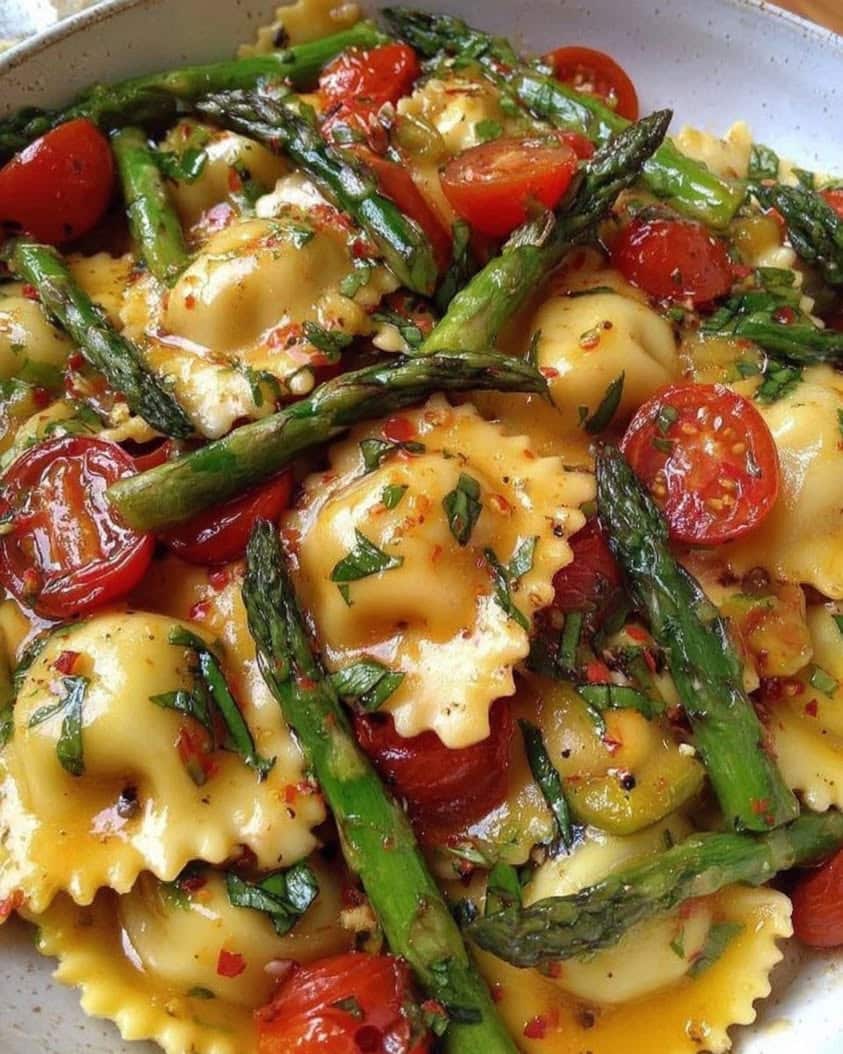
- Visual Appeal: Bright green asparagus, ruby-red tomatoes, and golden ravioli create a colorful plate. Moreover, a dusting of Parmesan adds a snowy finish. As a result, the dish looks impressive with almost no effort.
- Skill Level Needed: This ravioli with tomatoes, asparagus, garlic, and herbs suits beginners and seasoned cooks alike. Basically, you need only basic knife skills and a watchful eye. Furthermore, the recipe forgives small timing mistakes.
- Special Equipment: A large skillet or saute pan handles the entire dish. In addition, a colander and a sharp knife cover the rest. Therefore, you need no specialty tools or gadgets.
Recipe Overview
- Difficulty Level: This ravioli with tomatoes, asparagus, garlic, and herbs earns an easy rating because it uses one pan and few steps. Additionally, the cooking window is short, so you never risk long, complicated processes. Meanwhile, the biggest challenge involves timing the pasta and the sauce together, which even new cooks master quickly.
- Category: The recipe works as a main course for lunch or dinner. Furthermore, you can serve it as a hearty side dish beside grilled chicken or fish. In addition, it fits brunch menus when you want something savory and satisfying.
- Cuisine: This ravioli with tomatoes, asparagus, garlic, and herbs draws from Italian-American cooking traditions. Moreover, the garlic butter sauce nods to classic aglio e olio, while the vegetables reflect modern California-style pasta. Consequently, the dish blends old-world comfort with fresh, contemporary flavors.
- Cost: A bag of frozen or refrigerated ravioli costs about four to six dollars. Additionally, fresh asparagus, cherry tomatoes, garlic, and herbs add roughly eight to ten dollars. Therefore, the whole meal feeds four people for under fifteen dollars.
- Season: Spring and early summer suit this ravioli with tomatoes, asparagus, garlic, and herbs best because asparagus peaks then. Furthermore, cherry tomatoes taste sweetest in late summer. However, greenhouse vegetables make the dish possible year-round.
- Occasion: The recipe fits casual family dinners, date nights, and potlucks with equal ease. Moreover, it works for holiday brunches when you want a meatless option. In addition, you can double it for parties without extra stress.
Why You’ll Love This Recipe
The taste and texture of this ravioli with tomatoes, asparagus, garlic, and herbs deliver pure comfort with a fresh twist. Each bite balances creamy cheese filling against crisp asparagus and juicy tomatoes. Furthermore, the garlic herb butter ties everything together with savory depth. Meanwhile, a final shower of Parmesan adds a salty, nutty note. Consequently, your palate never grows bored.
Convenience sets this ravioli with tomatoes, asparagus, garlic, and herbs apart from fussier pasta dishes. Specifically, you boil the ravioli while the sauce simmers in a single skillet. Additionally, the whole meal lands on the table in thirty-five minutes from start to finish. Therefore, you spend less time scrubbing pots and more time enjoying dinner. In short, cleanup stays minimal.
Nutritionally, this ravioli with tomatoes, asparagus, garlic, and herbs offers more than typical pasta night fare. Asparagus brings fiber, folate, and vitamins A, C, and K. Moreover, tomatoes supply lycopene and vitamin C. In addition, garlic contributes antioxidants that support heart health. As a result, you serve a meal that tastes indulgent yet nourishes your body.
Socially, this ravioli with tomatoes, asparagus, garlic, and herbs makes entertaining feel effortless. For instance, you can set out a big bowl and let guests serve themselves. Furthermore, the colorful presentation sparks conversation and compliments. Meanwhile, the recipe scales up easily for larger crowds. Consequently, it works as a reliable party dish.
Finally, this ravioli with tomatoes, asparagus, garlic, and herbs proves remarkably cost-effective. Frozen ravioli costs far less than restaurant pasta, and seasonal vegetables keep prices low. Additionally, pantry staples like garlic, butter, and herbs stretch the budget further. Therefore, you enjoy a restaurant-quality meal at a fraction of the price. In short, your wallet stays happy too.
Historical Background and Cultural Significance
Ravioli originated in Italy during the Middle Ages, with early versions appearing in Venetian and Tuscan kitchens. Specifically, cooks stuffed pasta parcels with leftovers, cheese, and herbs to stretch precious ingredients. Furthermore, the word ravioli likely stems from an old Italian term meaning little turnips. Meanwhile, the dish spread across regions, each area developing its own filling and shape. Consequently, ravioli became a cornerstone of Italian home cooking.
Stuffed pasta carried cultural weight in Italy because families made it together during holidays and celebrations. For instance, grandmothers rolled sheets of dough by hand while children sealed each parcel. Additionally, certain regions tied specific fillings to specific festivals. Meanwhile, immigrants brought these traditions to the United States in the late nineteenth and early twentieth centuries. As a result, ravioli became an Italian-American staple found in cities like New York, Boston, and Chicago.
The modern pairing of ravioli with tomatoes, asparagus, garlic, and herbs reflects the evolution of Italian cooking in America. Particularly, the garlic butter sauce shows French and American influences rather than strictly Italian ones. Furthermore, fresh vegetable toppings grew popular during the farm-to-table movement of the 1970s and 1980s. Meanwhile, home cooks began treating pasta as a canvas for seasonal produce. Consequently, the dish represents a fusion of tradition and innovation.
Regional variations of this ravioli with tomatoes, asparagus, garlic, and herbs appear across the United States today. In the Northeast, cooks favor heavy cream and Pecorino Romano. Additionally, Southern cooks might add Cajun seasoning or smoked sausage. Meanwhile, West Coast versions lean into lemon zest, olive oil, and garden herbs. Therefore, the recipe adapts to local tastes while keeping its core identity intact.
Ingredient Deep Dive
Ravioli anchors this entire dish, so quality matters greatly. Traditionally, cheese ravioli fills small pasta pillows with ricotta, Parmesan, and herbs. Furthermore, the pasta provides a neutral base that soaks up the garlic butter sauce. When you shop, look for refrigerated ravioli with simple ingredients and no artificial preservatives. Additionally, check the sell-by date because fresh pasta spoils quickly. Meanwhile, frozen ravioli offers a budget-friendly backup that tastes nearly as good.
From a nutritional angle, ravioli delivers carbohydrates for energy plus protein from the cheese filling. Moreover, a standard serving provides roughly 250 to 300 calories. Additionally, whole wheat or spinach ravioli boosts fiber and vitamins. When you store ravioli, keep refrigerated packages in the coldest part of your fridge. Furthermore, use them within three days of purchase. Meanwhile, frozen ravioli keeps for up to three months in an airtight bag.
Cherry tomatoes bring sweetness, acidity, and color to this ravioli with tomatoes, asparagus, garlic, and herbs. Historically, tomatoes traveled from the Americas to Europe in the sixteenth century and eventually became central to Italian cuisine. Furthermore, cherry varieties like Sun Gold and Sweet 100 offer exceptional sugar levels. When selecting tomatoes, choose firm, glossy ones with no soft spots. Additionally, smell the stem end for a sweet, earthy fragrance.
Nutritionally, cherry tomatoes pack vitamin C, potassium, and lycopene, an antioxidant linked to heart health. Moreover, one cup contains only about thirty calories. When storing tomatoes, keep them at room temperature away from direct sun. Furthermore, never refrigerate fresh tomatoes because cold temperatures destroy flavor and texture. Meanwhile, use them within a week for the best taste. If you lack cherry tomatoes, grape tomatoes or diced Roma tomatoes work well.
Asparagus gives this ravioli with tomatoes, asparagus, garlic, and herbs its signature grassy flavor and satisfying crunch. Ancient Romans and Greeks prized asparagus for its medicinal properties, and it remains a springtime favorite today. Furthermore, fresh asparagus spears should feel firm and squeak when rubbed together. Additionally, look for tightly closed tips and vibrant green color. Meanwhile, thick spears offer more bite while thin spears cook faster.
Asparagus delivers folate, fiber, and vitamins A, C, E, and K. Moreover, it contains only about twenty calories per cup. When you store asparagus, trim the ends and stand the spears in a glass of water. Furthermore, cover the tips with a plastic bag and refrigerate. Meanwhile, use within three to four days for peak flavor. If asparagus is unavailable, substitute green beans, snap peas, or broccolini.
Garlic forms the aromatic backbone of this ravioli with tomatoes, asparagus, garlic, and herbs. Cultures around the world have used garlic for thousands of years as both food and medicine. Furthermore, fresh garlic cloves deliver a pungent punch that jarred garlic cannot match. When buying garlic, choose heads that feel firm and heavy with tight skin. Additionally, avoid garlic with green sprouts, which taste bitter.
Garlic provides manganese, vitamin B6, and sulfur compounds with antioxidant properties. Moreover, one clove contains just four calories. When storing garlic, keep whole heads in a cool, dark, dry place with good air flow. Furthermore, avoid the refrigerator because moisture encourages mold. Meanwhile, use whole heads within three months. If you need a substitute, shallots or garlic scapes offer milder alternatives.
Fresh herbs like basil, parsley, and thyme lift this ravioli with tomatoes, asparagus, garlic, and herbs to new heights. Historically, Mediterranean cooks have used these herbs for centuries in sauces, salads, and roasts. Furthermore, basil pairs naturally with tomatoes, while parsley adds clean freshness. When selecting herbs, look for bright color, firm stems, and no yellowing. Additionally, smell the leaves to confirm strong aroma.
Herbs contribute vitamins A, C, and K plus beneficial plant compounds. Moreover, they add flavor without extra calories, salt, or fat. When storing soft herbs like basil and parsley, wrap stems in a damp paper towel and refrigerate. Furthermore, keep basil at room temperature in water for best results. Meanwhile, dried herbs work in a pinch, though you should use one-third the amount. If you lack fresh herbs, spinach or arugula add similar green notes.
Common Mistakes to Avoid
- Overcooking the ravioli turns tender pasta into mushy pillows. Therefore, taste a piece one minute before the package instructions suggest. Additionally, drain immediately once the pasta reaches al dente texture.
- Undercooking asparagus leaves it tough and stringy. Furthermore, test a spear by piercing it with a knife after three minutes. Meanwhile, aim for a crisp-tender bite that yields slightly.
- Burning the garlic ruins the entire sauce with bitterness. Therefore, saute garlic over medium-low heat and pull it from the pan the moment it turns golden. Additionally, never walk away during this step.
- Crowding the skillet steams vegetables instead of searing them. Furthermore, use a pan large enough to hold everything in a single layer. Meanwhile, cook in batches if your skillet runs small.
- Skipping the pasta water leaves the sauce thin and watery. Therefore, reserve at least one cup of starchy cooking water before draining. Additionally, whisk a splash into the sauce to create a silky coating.
- Adding herbs too early dulls their bright flavor. Furthermore, stir delicate herbs like basil and parsley in during the final minute. Meanwhile, hardy herbs like thyme can go in earlier.
- Using cold butter creates a broken, greasy sauce. Therefore, let butter reach room temperature or cut it into small cubes. Additionally, melt it slowly over medium heat for a smooth emulsion.
- Forgetting to season in layers results in a flat-tasting dish. Furthermore, salt the pasta water generously and season the vegetables as they cook. Meanwhile, taste the finished sauce before serving.
- Letting the dish sit too long before serving causes soggy pasta. Therefore, plate and serve immediately once you toss everything together. Additionally, keep guests nearby so they can dig in right away.
- Ignoring vegetable freshness leads to dull flavor. Furthermore, shop for asparagus and tomatoes the same day you plan to cook. Meanwhile, store them properly to preserve peak taste.
Essential Techniques
Boiling pasta to the perfect al dente texture ranks as the most important skill for this ravioli with tomatoes, asparagus, garlic, and herbs. Specifically, al dente means the pasta offers a slight resistance when you bite it. Furthermore, fresh ravioli cooks in just three to five minutes, so stay close to the pot. Additionally, stir gently to prevent sticking without tearing the parcels. Meanwhile, taste frequently because the window between perfect and overcooked is narrow. Consequently, your finished dish holds its shape and texture.
Building a garlic butter sauce requires patience and controlled heat. First, melt butter over medium-low heat until it foams gently. Furthermore, add sliced or minced garlic and cook until fragrant, about thirty seconds. Additionally, watch for a pale golden color rather than deep brown. Meanwhile, whisk in pasta water to create a glossy emulsion. As a result, the sauce clings beautifully to every ravioli parcel.
Sauteing vegetables properly preserves their color, texture, and nutrients. Specifically, heat your skillet until a drop of water sizzles on contact. Furthermore, add asparagus first because it needs more time than tomatoes. Additionally, resist the urge to stir constantly, which prevents browning. Meanwhile, add tomatoes last so they burst without turning to mush. Consequently, each vegetable retains its character.
Emulsifying the sauce transforms separate ingredients into a unified, creamy coating. Particularly, the starch in pasta water acts as a binder between fat and liquid. Furthermore, add the water gradually while tossing the pasta over low heat. Additionally, the sauce should look silky rather than greasy or watery. Meanwhile, keep tossing until every piece shines. As a result, you achieve a restaurant-quality finish.
Pro Tips for Perfect Ravioli with Tomatoes, Asparagus, Garlic, and Herbs
Salt your pasta water like the sea because it seasons the ravioli from the inside out. Furthermore, add the salt after the water boils so it dissolves quickly. Additionally, taste the water to confirm a pleasant salinity before adding pasta.
Reserve extra pasta water even if you think you will not need it. Moreover, a splash can rescue a sauce that turns too thick or dry. Additionally, leftover pasta water keeps in the fridge for two days.
Slice garlic thinly rather than mincing it for a milder, sweeter flavor. Furthermore, thin slices toast evenly and avoid the harsh bite of raw garlic. Meanwhile, remove any green sprouts before slicing.
Pat asparagus dry before it hits the pan because moisture prevents browning. Additionally, dry vegetables sear rather than steam. Therefore, you get caramelized edges and deeper flavor.
Add a squeeze of fresh lemon juice at the very end to brighten the whole dish. Furthermore, acid cuts through the richness of butter and cheese. Meanwhile, lemon zest amplifies the citrus note without adding liquid.
Use a wide skillet or saute pan so the pasta has room to move. Additionally, a crowded pan traps steam and makes everything gluey. Therefore, choose the largest pan you own.
Toss the pasta and sauce off the heat to prevent the butter from splitting. Furthermore, gentle residual heat keeps the sauce smooth and creamy. Meanwhile, return the pan to low heat only if the dish needs warming.
Finish with high-quality Parmesan or Pecorino Romano for the best flavor. Moreover, grate it fresh rather than using pre-shredded cheese. Additionally, add a little to the sauce and more on top for a double layer of savoriness.
Variations and Adaptations
Regional variations of this ravioli with tomatoes, asparagus, garlic, and herbs reflect local tastes across Italy and America. In southern Italy, cooks might skip butter and use olive oil with crushed red pepper. Furthermore, northern Italian versions add cream and nutmeg for a richer sauce. Meanwhile, American cooks often include lemon zest and white wine. Consequently, the dish adapts to whatever region inspires you.
Seasonal adaptations keep this ravioli with tomatoes, asparagus, garlic, and herbs fresh all year. In spring, use asparagus and peas. Additionally, summer welcomes zucchini, corn, and heirloom tomatoes. Meanwhile, fall brings mushrooms, butternut squash, and sage. Therefore, you never grow tired of the same flavors.
Dietary modifications make the recipe accessible to more eaters. Specifically, gluten-free ravioli substitutes easily for traditional pasta. Furthermore, dairy-free butter and vegan cheese create a plant-based version. Additionally, whole wheat ravioli boosts fiber and nutrients. Meanwhile, low-carb eaters can swap pasta for zucchini noodles or cauliflower gnocchi.
Flavor variations let you customize the profile without changing the method. For example, add sun-dried tomatoes and capers for a briny Mediterranean twist. Furthermore, smoked paprika and cumin create a warm, earthy note. Meanwhile, pesto stirred into the butter sauce delivers a basil-forward punch. Consequently, one recipe yields countless meals.
Texture modifications suit different preferences. Particularly, toasted breadcrumbs add crunch on top. Additionally, toasted pine nuts or almonds bring a nutty bite. Meanwhile, crispy pancetta or bacon delivers a savory crunch. Therefore, you control the mouthfeel with simple additions.
Presentation alternatives help you plate this ravioli with tomatoes, asparagus, garlic, and herbs for any occasion. For instance, serve it family-style in a large shallow bowl. Furthermore, arrange individual portions in warm pasta bowls. Meanwhile, a white platter shows off the colors beautifully. As a result, the dish looks as good as it tastes.
Serving and Presentation Guide
Plating technique matters when you serve this ravioli with tomatoes, asparagus, garlic, and herbs. First, warm your bowls so the pasta stays hot at the table. Furthermore, twirl a portion of ravioli onto the center of each plate. Additionally, spoon the vegetables and sauce over the top for an even distribution. Meanwhile, finish with a flourish of grated cheese.
Garnishing ideas elevate the visual appeal without extra effort. Specifically, scatter fresh basil ribbons or chopped parsley over each serving. Furthermore, a dusting of red pepper flakes adds color and heat. Additionally, a lemon wedge on the rim invites guests to add brightness. Meanwhile, a drizzle of olive oil gives a glossy shine.
Traditional accompaniments include crusty Italian bread and a simple green salad. Moreover, bread soaks up the garlic butter sauce beautifully. Additionally, arugula with lemon vinaigrette cuts through the richness. Meanwhile, garlic knots or focaccia round out the meal.
Modern serving suggestions fit contemporary tastes. Particularly, a side of roasted broccolini or charred lemon adds flair. Furthermore, pairing the dish with a glass of crisp white wine feels elegant. Additionally, a sprinkle of toasted pine nuts or crispy shallots impresses guests.
Temperature considerations affect how the dish tastes. Specifically, serve ravioli with tomatoes, asparagus, garlic, and herbs piping hot because butter sauces firm up as they cool. Furthermore, warm the plates to keep everything at the right temperature. Meanwhile, never let the dish sit at room temperature for more than an hour.
Portion control tips help you plan for guests. Particularly, a standard serving equals about one cup of pasta with vegetables. Furthermore, heartier appetites may want one and a half cups. Additionally, pair with a side salad or bread to stretch the meal. Meanwhile, leftovers keep well for quick lunches.
Wine and Beverage Pairing
Wine pairings for this ravioli with tomatoes, asparagus, garlic, and herbs favor crisp, acidic whites. Specifically, Sauvignon Blanc delivers grassy notes that echo the asparagus. Furthermore, Pinot Grigio offers clean citrus that complements the tomatoes. Additionally, a dry Vermentino brings a saline minerality perfect for the garlic butter. Meanwhile, an unoaked Chardonnay adds body without overwhelming the dish.
Non-alcoholic alternatives keep the meal fresh and festive. Particularly, sparkling water with lemon wedges cleanses the palate. Furthermore, an iced green tea with mint offers subtle herbal notes. Additionally, a virgin cucumber cooler pairs beautifully with the vegetables. Meanwhile, plain cold milk or kefir suits those who prefer dairy with pasta.
Coffee and tea pairings may surprise you with this savory dish. Specifically, a light roast coffee brings subtle fruitiness that mirrors the tomatoes. Furthermore, jasmine green tea adds a delicate floral note. Additionally, chamomile tea soothes after a rich meal. Meanwhile, cold-brew coffee with cream works for brunch service.
Temperature considerations apply to beverages as well as food. Specifically, whites taste best chilled to about fifty degrees Fahrenheit. Furthermore, sparkling water should stay ice cold for maximum refreshment. Additionally, red wines like Pinot Noir taste best slightly below room temperature. Meanwhile, hot teas should cool a moment before sipping.
Serving suggestions ensure your pairing shines. Particularly, pour wine into stemmed glasses to concentrate aromas. Furthermore, offer water alongside so guests stay hydrated. Additionally, serve drinks before the meal so guests sip while you finish cooking. Meanwhile, keep a pitcher of iced tea on the table for refills.
Storage and Shelf Life
Storage methods determine how long this ravioli with tomatoes, asparagus, garlic, and herbs stays fresh. Specifically, transfer leftovers into an airtight container within two hours of cooking. Furthermore, press plastic wrap against the surface to limit air exposure. Additionally, label the container with the date for easy tracking. Meanwhile, keep the sauce and pasta together for the best results.
Temperature requirements matter for food safety. Particularly, store the dish in the refrigerator at forty degrees Fahrenheit or below. Furthermore, never leave pasta sitting at room temperature for more than two hours. Additionally, if the room runs warm, refrigerate within one hour. Meanwhile, avoid storing near the refrigerator door where temperatures fluctuate.
Container recommendations help preserve flavor and texture. Specifically, glass containers with locking lids protect against odors. Furthermore, shallow containers cool food faster than deep ones. Additionally, divide large batches into smaller portions for quicker chilling. Meanwhile, vacuum-sealed bags work for freezer storage.
Signs of spoilage tell you when to toss leftovers. Particularly, a sour smell, slimy texture, or visible mold means the dish has turned. Furthermore, pasta that looks dry and cracked has lost moisture. Additionally, any change in color signals bacteria growth. Meanwhile, when in doubt, throw it out.
Reheating instructions bring leftovers back to life. Specifically, warm portions in a skillet over medium heat with a splash of water or broth. Furthermore, the stovetop method preserves texture better than the microwave. Additionally, cover the pan to trap steam and keep pasta tender. Meanwhile, stir gently to avoid breaking the ravioli.
Freezing guidelines help you plan ahead. Particularly, this ravioli with tomatoes, asparagus, garlic, and herbs freezes well for up to two months. Furthermore, freeze in single-serving portions for easy thawing. Additionally, thaw overnight in the refrigerator before reheating. Meanwhile, expect slightly softer asparagus after freezing.
Make Ahead Strategies
A prep timeline keeps this ravioli with tomatoes, asparagus, garlic, and herbs stress-free on busy days. Specifically, wash and chop vegetables up to a day ahead. Furthermore, store them in separate containers in the fridge. Additionally, measure out garlic, herbs, and butter so everything waits ready. Meanwhile, a little planning saves fifteen minutes at dinner time.
Storage between steps protects quality at every stage. Particularly, keep chopped asparagus in a sealed bag with a paper towel. Furthermore, store tomatoes at room temperature if you plan to cook within a few hours. Additionally, submerge fresh herbs in water and refrigerate. Meanwhile, keep butter cold until you start cooking.
Quality impact assessment helps you decide what to prep in advance. Specifically, chopped vegetables hold well for a day. Furthermore, cooked pasta does not make sense to prep ahead because it turns mushy. Additionally, the garlic butter sauce tastes best when made fresh. Therefore, prep the ingredients but finish the cooking right before serving.
Assembly tips make the final steps quick. Particularly, set all ingredients within arm’s reach of the stove. Furthermore, preheat the skillet and start the pasta water simultaneously. Additionally, open the wine and set the table while the water boils. Meanwhile, you cook with calm confidence.
Reheating guidelines apply if you prep components ahead. Specifically, warm the sauce in the skillet before adding freshly cooked pasta. Furthermore, never reheat the dish twice because flavor suffers. Additionally, add fresh herbs after reheating for a bright finish. Meanwhile, toss gently to coat evenly.
Fresh element additions restore vibrancy to make-ahead meals. Particularly, squeeze lemon juice over the top before serving. Furthermore, scatter new basil leaves for color and aroma. Additionally, a final grating of cheese adds a fresh touch. Consequently, nobody guesses you prepped ahead.
Scaling Instructions
Halving the recipe suits smaller households. Specifically, use eight ounces of ravioli and half the vegetables. Furthermore, reduce the butter to two tablespoons and the garlic to two cloves. Additionally, keep the same skillet size to avoid crowding. Meanwhile, cooking times stay nearly identical.
Doubling or tripling the recipe works for parties and gatherings. Particularly, cook pasta in two pots so the water returns to a boil quickly. Furthermore, use the largest skillet you own or work in batches. Additionally, increase the sauce ingredients proportionally. Meanwhile, keep finished portions warm in a low oven.
Equipment adjustments matter as you scale. Specifically, a twelve-inch skillet handles a double batch if you toss gently. Furthermore, a stockpot speeds up boiling for large quantities. Additionally, a second sheet pan holds prepped vegetables. Meanwhile, borrow an extra colander from a neighbor if needed.
Timing modifications keep large batches manageable. Particularly, start the sauce before the pasta when cooking for a crowd. Furthermore, boil pasta in shifts and sauce each batch separately. Additionally, hold finished batches in a warm oven at two hundred degrees. Meanwhile, serve within thirty minutes for peak quality.
Storage considerations change with bigger batches. Specifically, cool large quantities quickly by spreading them on sheet pans. Furthermore, divide leftovers into multiple containers for faster chilling. Additionally, share extra portions with guests. Meanwhile, label everything with dates.
Nutritional Deep Dive
The macro breakdown of this ravioli with tomatoes, asparagus, garlic, and herbs shows a balanced profile. Specifically, each serving delivers roughly twenty grams of protein from the cheese filling. Furthermore, carbohydrates reach about forty grams, mostly from pasta. Additionally, fat lands near eighteen grams thanks to butter and cheese. Meanwhile, fiber adds about four grams per serving.
Micronutrient analysis reveals impressive vitamin and mineral content. Particularly, asparagus supplies folate, vitamin K, and vitamin A. Furthermore, tomatoes contribute vitamin C, potassium, and lycopene. Additionally, garlic offers manganese and vitamin B6. Meanwhile, Parmesan adds calcium and phosphorus.
Health benefits extend beyond basic nutrition. Specifically, lycopene from tomatoes supports heart health and may reduce inflammation. Furthermore, fiber from vegetables aids digestion and keeps you full. Additionally, garlic compounds show antimicrobial and antioxidant properties. Meanwhile, the balanced protein and carbs fuel steady energy.
Dietary considerations help you fit the dish into various eating plans. Particularly, vegetarians enjoy the recipe as written because it contains no meat. Furthermore, those watching sodium should use less cheese and skip added salt. Additionally, portion control matters for anyone managing blood sugar. Meanwhile, gluten-free pasta makes the dish celiac-friendly.
Portion analysis helps you plan meals accurately. Specifically, one cup of finished pasta with vegetables equals a standard serving. Furthermore, active adults may need one and a half cups. Additionally, children usually eat about three-quarters of a cup. Meanwhile, pair with a salad to round out the plate.
Weight management tips keep the dish light yet satisfying. Particularly, use less butter and more pasta water for a lighter sauce. Furthermore, load up on asparagus and tomatoes to increase volume without many calories. Additionally, choose part-skim ricotta ravioli for less fat. Meanwhile, add a squeeze of lemon instead of extra cheese.
Dietary Adaptations
Gluten-free versions of this ravioli with tomatoes, asparagus, garlic, and herbs work beautifully. Specifically, choose gluten-free ravioli made from rice, corn, or chickpea flour. Furthermore, check labels because some brands hide wheat in the filling. Additionally, cook gluten-free pasta carefully since it turns mushy fast. Meanwhile, taste frequently near the end of cooking.
Dairy-free adaptations suit lactose intolerance or milk allergies. Particularly, swap butter for olive oil or vegan butter. Furthermore, use dairy-free ravioli or make your own with cashew ricotta. Additionally, skip the Parmesan or use a nutritional yeast blend. Meanwhile, the dish still tastes rich and satisfying.
Vegan versions require a few thoughtful swaps. Specifically, choose vegan ravioli filled with tofu or vegetable puree. Furthermore, cook with olive oil instead of butter. Additionally, replace Parmesan with a cashew-based sprinkle. Meanwhile, fresh herbs and lemon keep the flavor bright.
Low-carb adaptations reduce the pasta load while keeping flavor high. Particularly, serve the vegetables and sauce over zucchini noodles. Furthermore, use cauliflower gnocchi instead of ravioli. Additionally, add extra asparagus and tomatoes for volume. Meanwhile, top with Parmesan for richness.
Keto versions demand even stricter carb control. Specifically, skip traditional ravioli and use cheese-based pasta alternatives. Furthermore, increase healthy fats with olive oil and full-fat cheese. Additionally, watch tomato portions because they carry natural sugar. Meanwhile, herbs and garlic add flavor without carbs.
Paleo adaptations avoid grains, legumes, and dairy. Particularly, use sweet potato or cassava flour ravioli if available. Furthermore, cook with olive oil and nutritional yeast. Additionally, load up on asparagus and tomatoes. Meanwhile, fresh herbs finish the dish beautifully.
Low-FODMAP versions help those with digestive sensitivities. Specifically, limit garlic and use garlic-infused oil instead. Furthermore, choose gluten-free ravioli without high-FODMAP fillings. Additionally, keep asparagus portions small because it contains fructans. Meanwhile, tomatoes and herbs generally sit well.
Other specific diets include Mediterranean and vegetarian plans. Particularly, the recipe fits Mediterranean eating when you use olive oil and whole wheat pasta. Furthermore, vegetarians enjoy the dish as written. Additionally, pescatarians can add shrimp or scallops. Meanwhile, flexitarians appreciate the meatless option.
Troubleshooting Guide
Texture issues often arise with this ravioli with tomatoes, asparagus, garlic, and herbs. Specifically, mushy pasta means you overcooked it, so reduce boiling time next round. Furthermore, tough asparagus signals undercooking, so add another minute. Additionally, a watery sauce calls for more pasta water whisked over heat. Meanwhile, a greasy sauce means the butter broke, so lower the heat and whisk in warm water.
Flavor balance problems have simple fixes. Particularly, a bland dish needs more salt and a squeeze of lemon. Furthermore, an overly salty sauce benefits from a splash of cream or more pasta water. Additionally, bitter garlic means it burned, so start over with fresh butter. Meanwhile, a flat taste calls for more fresh herbs.
Temperature problems affect both cooking and serving. Specifically, a skillet that runs too hot burns garlic in seconds. Furthermore, low heat steams vegetables instead of browning them. Additionally, cold plates cool the pasta fast, so warm them first. Meanwhile, cold butter breaks the sauce, so let it soften before cooking.
Equipment challenges rarely block this recipe, but they happen. Particularly, a small skillet crowds ingredients and traps steam. Furthermore, a dull knife makes chopping vegetables a chore. Additionally, a thin pot scorches pasta water quickly. Meanwhile, a broken colander slows draining, so use a spider strainer instead.
Ingredient substitutions solve last-minute problems. Specifically, frozen asparagus works when fresh is unavailable, though it cooks faster. Furthermore, canned cherry tomatoes substitute for fresh in a pinch. Additionally, garlic powder replaces fresh garlic at one-eighth the amount. Meanwhile, dried herbs work at one-third the fresh quantity.
Timing concerns trip up many home cooks. Particularly, start pasta water before prepping vegetables to save Print
Ravioli with Tomatoes, Asparagus, Garlic, and Herbs
- Total Time: 45 minutes
- Yield: 4
Description
A light and flavorful pasta dish featuring cheese ravioli tossed with fresh asparagus, cherry tomatoes, garlic, and a mix of herbs. Perfect for a quick weeknight dinner.
Ingredients
- 1 pound cheese ravioli (fresh or frozen)
- 1 bunch asparagus, trimmed and cut into 1-inch pieces
- 2 cups cherry tomatoes, halved
- 4 cloves garlic, minced
- 1/4 cup olive oil
- 1/4 cup fresh basil, chopped
- 2 tablespoons fresh parsley, chopped
- 1 teaspoon salt
- 1/2 teaspoon black pepper
- 1/4 teaspoon red pepper flakes (optional)
- 1/4 cup grated Parmesan cheese, for serving
Instructions
- Bring a large pot of salted water to a boil. Cook ravioli according to package instructions until al dente. Drain, reserving 1/2 cup of pasta water.
- While ravioli cooks, heat olive oil in a large skillet over medium heat. Add garlic and red pepper flakes; sauté for 1 minute until fragrant.
- Add asparagus and cherry tomatoes to the skillet. Cook for 5-7 minutes, until asparagus is tender-crisp and tomatoes begin to soften.
- Add cooked ravioli to the skillet along with basil, parsley, salt, and pepper. Toss gently to combine, adding a splash of reserved pasta water if needed to loosen the sauce.
- Serve immediately, topped with grated Parmesan cheese.
Notes
You can customize the seasonings to taste.
- Prep Time: 15 minutes
- Cook Time: 30 minutes
- Method: Main
- Cuisine: American