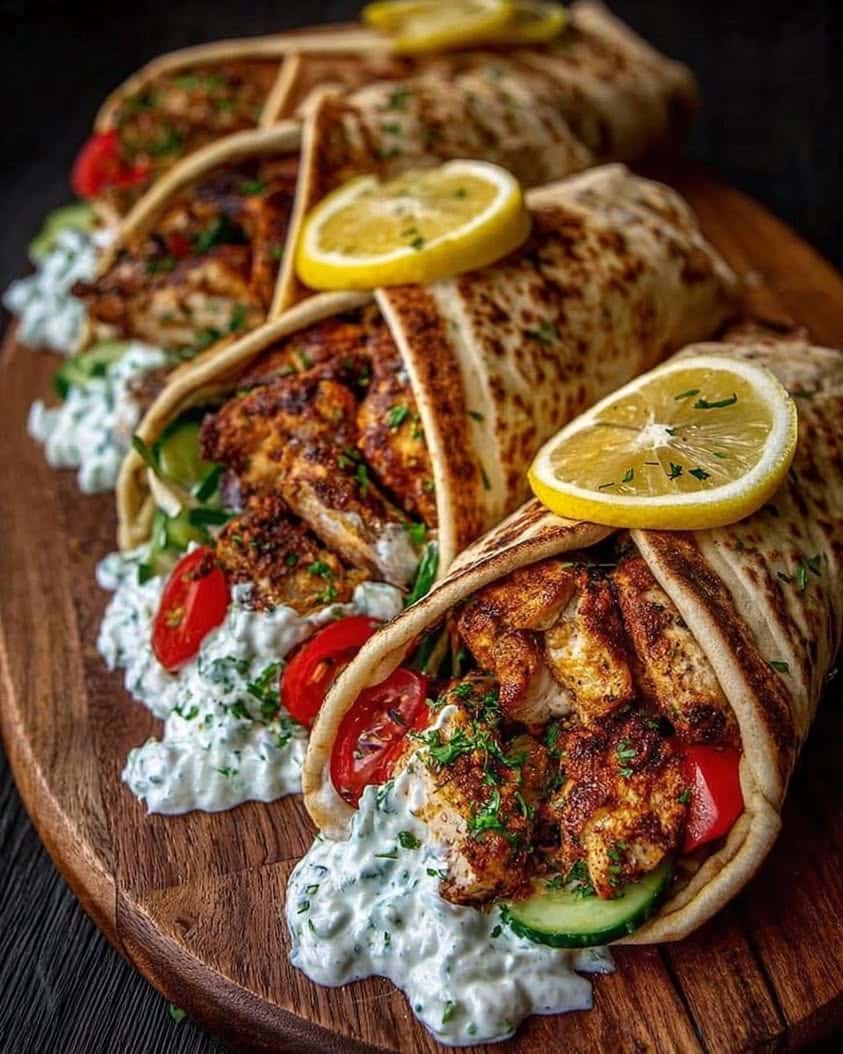
Mediterranean Lemon Chicken Pita Wraps: Easy Weeknight Dinner Recipe
If you crave bright, sunny flavors that come together fast, this Mediterranean Lemon Chicken Pita Wraps recipe delivers exactly that. Moreover, you only need one skillet, a handful of fresh ingredients, and about thirty minutes. The chicken soaks up a garlicky lemon marinade, then it sears until golden and juicy. After that, you tuck it into warm pita bread with creamy tzatziki, crisp cucumber, and ripe tomatoes. As a result, every bite tastes like a Greek taverna on a warm summer evening.
Furthermore, this Mediterranean Lemon Chicken Pita Wraps recipe fits busy weeknights perfectly. You probably already own most of the ingredients, including olive oil, garlic, lemons, and dried oregano. Because the marinade does the heavy lifting, the cooking itself stays simple and stress free. Meanwhile, the fresh vegetables add crunch and color without extra cooking. Consequently, you get a balanced dinner on the table faster than delivery would arrive.
In addition, these wraps appeal to almost everyone at the table. Kids love the mild, tangy chicken, while adults appreciate the bold Mediterranean seasoning. You can also set up a build your own pita bar so each person customizes their own wrap. Therefore, this Mediterranean Lemon Chicken Pita Wraps recipe works for family dinners, casual gatherings, and meal prep lunches alike. Finally, the leftovers taste just as good the next day, which makes this recipe a genuine keeper.
Quick Recipe Highlights
- Flavor Profile: The chicken brings a bold blend of lemon zest, garlic, and oregano with a subtle smoky finish from the skillet. Meanwhile, the tzatziki adds cool tang, and the fresh vegetables contribute sweetness and brightness.
- Texture: Juicy, tender chicken strips contrast with creamy sauce and crisp cucumber. In addition, the warm pita stays soft and pliable, so everything folds together without tearing.
- Aroma: As the chicken sears, garlic and lemon fill the kitchen with an irresistible scent. Furthermore, fresh dill in the tzatziki adds a cool, herbal note that balances the warm spices.
- Visual Appeal: Golden brown chicken, snowy white tzatziki, and ruby red tomatoes create a stunning color contrast. Moreover, a sprinkle of fresh parsley on top makes each wrap look restaurant quality.
- Skill Level Needed: This recipe suits beginners because it relies on simple searing and assembly. However, even experienced cooks will appreciate how quickly the dish comes together on a busy night.
- Special Equipment: You only need a large skillet, a mixing bowl, and a sharp knife. In addition, a meat thermometer helps you confirm the chicken reaches a safe internal temperature.
Recipe Overview
- Difficulty Level: This dish ranks as easy because it uses basic techniques like marinating, pan searing, and assembling. You do not need advanced knife skills or specialized cooking methods. Moreover, the marinade forgivingly covers any small mistakes in timing. Consequently, new cooks can serve impressive results on their first attempt.
- Category: This recipe works as a main course for lunch or dinner. In addition, you can slice the chicken over salads or grain bowls instead of pita. Therefore, it fits multiple meal categories with minimal changes.
- Cuisine: The recipe draws on Greek and broader Mediterranean culinary traditions. Specifically, it borrows the classic combination of lemon, oregano, garlic, and olive oil that defines Greek cooking. Furthermore, the pita and tzatziki reflect Middle Eastern and Eastern Mediterranean influences. As a result, the dish sits comfortably at the crossroads of several food cultures.
- Cost: The ingredients cost roughly twelve to sixteen dollars total for four servings. Chicken thighs or breasts remain among the most affordable proteins at most U.S. grocery stores. Meanwhile, pita, yogurt, cucumber, and tomatoes add only a few dollars more. Consequently, each serving lands well under five dollars.
- Season: Summer offers the best tomatoes, cucumbers, and fresh herbs for this recipe. However, the dish works year round because the chicken relies on pantry staples. In addition, citrus stays available and affordable during winter months. Therefore, you can enjoy these wraps in any season.
- Occasion: This recipe shines for casual weeknight dinners, backyard cookouts, and game day spreads. Moreover, you can double the batch for parties and let guests build their own wraps. It also works beautifully for meal prep Sundays. As a result, the dish suits both quiet family meals and lively social gatherings.
Why You’ll Love This Recipe
First, the taste and texture make this Mediterranean Lemon Chicken Pita Wraps recipe genuinely memorable. The marinade balances tart lemon, pungent garlic, and earthy oregano in perfect harmony. Moreover, searing the chicken creates caramelized edges that add deep savory flavor. Then the cool tzatziki and crunchy vegetables round out every bite. Consequently, you get a dish that feels light yet satisfying at the same time. In addition, the contrast between warm chicken and cold sauce keeps each bite interesting from start to finish.
Second, convenience sets this recipe apart from other Mediterranean chicken dishes. You marinate the chicken for as little as fifteen minutes, though longer improves the flavor. Meanwhile, you chop vegetables and stir together the sauce while the skillet heats. Because everything cooks in one pan, cleanup stays quick and painless. Furthermore, the entire meal comes together in about thirty minutes, which beats waiting for takeout. Therefore, this recipe fits even the most chaotic weeknight schedule.
Third, the nutritional profile gives you plenty of reasons to feel good about dinner. Lean chicken delivers a strong dose of protein, which keeps you full for hours. In addition, olive oil provides heart healthy fats, and the vegetables add fiber and vitamins. The yogurt based sauce contributes probiotics along with calcium. Moreover, you control the sodium and sugar because you cook from scratch. Consequently, this Mediterranean Lemon Chicken Pita Wraps recipe supports a balanced diet without sacrificing flavor.
Fourth, the social and entertaining value of these wraps deserves attention. A build your own pita bar turns an ordinary dinner into an interactive experience. Guests pile on their favorite toppings, which sparks conversation and laughter. Furthermore, the recipe scales easily, so you can feed a crowd without stress. Meanwhile, the impressive presentation makes people think you spent hours in the kitchen. As a result, this dish works wonderfully for parties, potlucks, and casual gatherings.
Fifth, cost effectiveness and accessibility make this recipe a practical favorite. Every ingredient comes from a standard American grocery store, so you avoid specialty shopping trips. In addition, chicken, pita, and yogurt often go on sale, which lowers the cost further. Because the recipe uses simple techniques, you need no fancy equipment either. Furthermore, leftovers reheat beautifully, which stretches your grocery budget even more. Therefore, this Mediterranean Lemon Chicken Pita Wraps recipe delivers outstanding value for both your wallet and your time.
Historical Background and Cultural Significance
The origin story of these wraps traces back to the ancient Mediterranean world, where flatbreads fed soldiers, travelers, and families. Specifically, Greeks, Turks, and Lebanese cooks have wrapped grilled meats in flatbread for centuries. Moreover, the combination of lemon, olive oil, and oregano appears throughout early Greek cooking texts. Pita itself has baked in Mediterranean ovens for thousands of years. Consequently, this recipe carries a long culinary lineage into your modern kitchen.
Cultural importance surrounds the dish because it reflects the Mediterranean philosophy of sharing food. In Greece, tavernas serve souvlaki and gyros wrapped in warm pita with tomatoes, onions, and yogurt sauce. Furthermore, families gather around these simple, fresh meals during festivals and everyday dinners alike. The lemon in particular symbolizes hospitality in many Mediterranean cultures. Meanwhile, offering a guest a hand held meal signals warmth and welcome. As a result, these wraps connect you to centuries of generous, communal eating.
The evolution of this recipe shows how Mediterranean cooking adapts to new homes. Greek immigrants brought souvlaki and tzatziki to the United States in the twentieth century. Subsequently, American cooks embraced pita wraps and added their own twists. Moreover, the rise of Mediterranean diets in the 1990s boosted interest in lemon chicken dishes. Today, food blogs and restaurants continue to reinvent the classic formula. Therefore, this Mediterranean Lemon Chicken Pita Wraps recipe stands as a modern chapter in an old story.
Regional variations abound across the Mediterranean and beyond. In Greece, cooks often add french fries inside the pita for a hearty touch. Meanwhile, Lebanese versions may include pickled turnips and garlic toum instead of tzatziki. Turkish cooks favor sumac onions and parsley for extra brightness. In addition, Israeli versions sometimes swap in hummus or tahini sauce. Consequently, you can travel the region through flavor just by changing a few toppings.
Ingredient Deep Dive
Chicken serves as the heart of this Mediterranean Lemon Chicken Pita Wraps recipe. Historically, poultry has provided affordable protein across Mediterranean households for generations. Nutritionally, chicken offers lean protein, B vitamins, and minerals like selenium and phosphorus. When shopping, choose boneless, skinless thighs for juiciness or breasts for a leaner option. Look for firm, pink flesh without an off odor. Store raw chicken in the coldest part of your refrigerator and cook it within two days. If you prefer, substitute turkey cutlets or even firm tofu for a meatless version.
Chicken also absorbs marinades beautifully, which makes it ideal for this dish. The acidic lemon juice tenderizes the meat while garlic and oregano penetrate deep into the fibers. Furthermore, searing locks in moisture and builds a flavorful crust. Because chicken cooks quickly, it suits fast weeknight meals. In addition, leftovers stay tender for several days in the refrigerator. Therefore, cooking extra chicken gives you a head start on future meals.
Lemon delivers the signature brightness in this recipe, and its history stretches back thousands of years. Ancient Mediterranean cultures valued lemons for both flavor and medicine. Today, we know lemons provide vitamin C, antioxidants, and compounds that support digestion. When selecting lemons, choose fruit that feels heavy for its size with smooth, glossy skin. Avoid lemons with soft spots or dull rinds. Store them in the refrigerator crisper for up to three weeks. In a pinch, bottled lemon juice works, though fresh juice tastes far better.
Lemon also plays a crucial culinary role beyond flavor. Its acid cuts through the richness of olive oil and chicken fat. Moreover, it brightens the entire dish and balances the garlic. Zest adds an intense citrus oil that juice alone cannot provide. Consequently, always zest before you juice. In addition, a little lemon over the finished wrap wakes up every other ingredient.
Garlic brings bold, pungent depth to these Mediterranean Lemon Chicken Pita Wraps. This humble bulb has seasoned Mediterranean food for over five thousand years. Nutritionally, garlic contains allicin, a compound linked to heart health and immune support. When buying garlic, pick firm, tight heads with dry papery skin. Avoid bulbs with green sprouts or soft cloves. Store garlic in a cool, dark, dry place rather than the refrigerator. Jarred minced garlic works in a hurry, but fresh cloves taste superior.
Garlic also transforms when it hits hot oil. Raw garlic bites sharply, while cooked garlic turns nutty and sweet. Therefore, sauté briefly to mellow the flavor without burning it. In addition, garlic pairs naturally with lemon and oregano in Mediterranean cooking. As a result, this trio forms the flavor backbone of the marinade.
Olive oil serves as the traditional fat in Mediterranean Lemon Chicken Pita Wraps. People have pressed olives for oil since ancient times, and the ingredient remains central to the Mediterranean diet. Nutritionally, extra virgin olive oil offers monounsaturated fats and polyphenol antioxidants. Choose cold pressed extra virgin oil for the best flavor and health benefits. Store it away from light and heat in a dark bottle or cabinet. For substitutions, avocado oil works well, though it lacks the same fruity character.
Olive oil also carries flavor and prevents sticking during searing. Moreover, it helps the marinade cling to the chicken. A generous drizzle over the finished wrap adds richness too. Consequently, keep a good bottle within reach whenever you cook Mediterranean food.
Greek yogurt creates the creamy base for the tzatziki sauce in this Mediterranean Lemon Chicken Pita Wraps recipe. Mediterranean cooks have strained yogurt for centuries to create thick, tangy sauces. The yogurt provides protein, calcium, and beneficial probiotics. When shopping, look for plain Greek yogurt with live active cultures and no added sugar. Check the expiration date and choose the freshest container available. Store it tightly sealed in the refrigerator for up to two weeks. If you need a substitute, sour cream or dairy free yogurt both work.
Greek yogurt also balances the bold spices in the chicken. Its cool tang refreshes the palate between bites. Furthermore, it holds up well when mixed with cucumber, dill, and lemon. Therefore, never skip the sauce, because it completes the wrap.
Common Mistakes to Avoid
- Marinating the chicken too briefly: Fifteen minutes works in a pinch, but thirty minutes or more lets the lemon and garlic truly penetrate the meat. If you skip the marinade entirely, the chicken tastes flat and bland. Therefore, plan ahead whenever your schedule allows.
- Overcooking the chicken: Dry, stringy chicken ruins the wrap, so pull the meat from the pan as soon as it reaches 165 degrees Fahrenheit. Otherwise, residual heat continues cooking the chicken and dries it out further. A meat thermometer removes all the guesswork.
- Burning the garlic: Garlic scorches in seconds over high heat, which turns the whole dish bitter. Add garlic to the pan only after the chicken finishes, or keep the heat moderate. Consequently, watch the pan closely during the final minute of cooking.
- Skipping the pita warming step: Cold pita cracks and tears when you fold it around the filling. Therefore, warm each round in a dry skillet or the microwave for a few seconds. As a result, the bread becomes soft, pliable, and far more pleasant to eat.
- Using watery yogurt: Thin yogurt makes the tzatziki runny and turns the pita soggy. Strain the yogurt through a fine mesh sieve for ten minutes if it looks loose. Furthermore, squeeze excess water from the grated cucumber before mixing.
- Piling on too many toppings: An overloaded wrap bursts at the seams and becomes impossible to eat. Instead, layer a modest amount of each topping and serve extra on the side. Consequently, every bite stays balanced and manageable.
- Neglecting to rest the chicken: Cutting immediately after cooking releases all the juices onto the cutting board. Therefore, let the chicken rest for five minutes before slicing. As a result, the meat stays moist and the wrap stays neat.
- Under seasoning the vegetables: Tomatoes and cucumbers taste dull without a pinch of salt. Season them lightly and let them sit while the chicken cooks. Moreover, a squeeze of lemon over the vegetables adds extra brightness.
- Ignoring the marinade time for the sauce: Tzatziki improves after twenty minutes in the refrigerator because the flavors meld. If you serve it immediately, the garlic tastes raw and harsh. Therefore, mix the sauce first, then move on to the chicken.
- Reheating chicken in the microwave on high: High heat toughens the meat quickly. Instead, reheat gently at lower power or in a covered skillet. Consequently, the chicken stays tender and juicy.
Essential Techniques
Marinating builds flavor from the inside out, which makes it essential to this Mediterranean Lemon Chicken Pita Wraps recipe. The acid in lemon juice gently breaks down proteins, while oil carries fat soluble flavors into the meat. To master marinating, whisk the marinade first, add the chicken, and toss until every piece glistens. Cover and refrigerate for at least fifteen minutes, though thirty to sixty minutes works better. A common pitfall involves marinating too long, because excessive acid turns the texture mushy. Look for chicken that looks glossy and evenly coated as your visual cue for success.
Searing creates the golden crust that gives the chicken its savory appeal. High heat triggers the Maillard reaction, which builds hundreds of new flavor compounds on the surface. To sear properly, pat the chicken dry, heat the pan until a drop of water sizzles, and lay the pieces down without crowding. Resist the urge to move the chicken for the first few minutes. A common pitfall involves a cold pan or wet meat, both of which cause steaming instead of browning. Watch for a deep golden color and easy release from the pan as your signal to flip.
Resting allows the juices inside the chicken to redistribute after cooking. During searing, heat pushes moisture toward the center of the meat. If you cut immediately, those juices run out and leave the chicken dry. To master resting, transfer the cooked chicken to a cutting board and loosely tent it with foil. Wait five minutes before slicing against the grain. A common pitfall involves skipping this step during a rushed evening. Look for juices that stay on the board rather than flooding it as your cue that resting worked.
Warming pita transforms a fragile flatbread into a soft, foldable wrap. Gentle heat relaxes the gluten and makes the bread pliable. To master this technique, warm each pita in a dry skillet for twenty to thirty seconds per side, or wrap the stack in a damp towel and microwave for thirty seconds. A common pitfall involves overheating, which toughens the bread and dries the edges. Watch for a soft, steamy flexibility as your signal that the pita is ready to fill.
Balancing the sauce requires attention to texture as much as taste. Tzatziki should coat a spoon but never drip like water. To master the technique, grate the cucumber, squeeze it dry in a clean towel, and fold it into strained yogurt with garlic, dill, lemon, and salt. A common pitfall involves skipping the draining steps, which leaves a soupy sauce. Look for a thick, creamy consistency that holds ridges from the spoon as your sign of success.
Pro Tips for Perfect Mediterranean Lemon Chicken Pita Wraps
- Zest the lemons before juicing them, because the zest carries intense citrus oils that elevate the marinade. Once you juice the fruit, the zest becomes nearly impossible to remove. Therefore, always reach for the grater first.
- Pound thick chicken breasts to an even thickness so they cook at the same rate. Uneven pieces leave you with dry edges and raw centers. Consequently, a few whacks with a rolling pin saves dinner.
- Salt the chicken fifteen minutes before cooking to improve texture and seasoning. This short dry brine helps the meat retain moisture during searing. Moreover, it deepens the flavor beyond what surface seasoning can achieve.
- Double the tzatziki recipe because it disappears fast. The sauce works as a dip for pita chips, a topping for grilled vegetables, and a spread for sandwiches. As a result, extra sauce never goes to waste.
- Slice the chicken against the grain for maximum tenderness. Cutting with the grain leaves long, chewy fibers that resist your teeth. Therefore, look for the direction of the muscle lines and cut across them.
- Warm the pita right before serving so it stays soft at the table. Cold bread cracks when folded and ruins the eating experience. Meanwhile, a quick pass in a skillet takes less than a minute.
- Set out all the toppings before you cook the chicken so assembly moves quickly. This strategy keeps the meal hot from pan to plate. In addition, it turns dinner into a fun, interactive event.
- Taste the marinade before adding the chicken, because balance varies with each lemon. Some lemons taste sweeter and others sharper. Consequently, a quick taste lets you adjust the salt and oil accordingly.
Variations and Adaptations
Regional variations let you explore the Mediterranean without leaving your kitchen. A Greek style version adds crumbled feta, red onion, and a few french fries inside the pita. Meanwhile, a Lebanese inspired wrap swaps tzatziki for garlic toum and adds pickled turnips. Turkish cooks might dust the chicken with sumac and serve it with grilled peppers. In addition, an Israeli adaptation spreads hummus on the pita before layering the chicken. Consequently, one basic recipe opens the door to dozens of cultural interpretations.
Seasonal adaptations keep this Mediterranean Lemon Chicken Pita Wraps recipe fresh all year. In summer, load the wrap with heirloom tomatoes, sweet corn, and fresh basil. During fall, roasted red peppers and caramelized onions add warmth and depth. Winter calls for quick pickled red onions and a squeeze of extra lemon to brighten heavy meals. Furthermore, spring brings tender lettuce, radishes, and fresh dill. Therefore, adjust the toppings to match what your local market offers.
Dietary modifications make the recipe accessible to nearly every eater. Gluten free diners can use certified gluten free pita or serve the chicken over rice. Meanwhile, dairy free cooks substitute coconut yogurt or a tahini lemon sauce for the tzatziki. Vegetarians can replace chicken with roasted chickpeas, halloumi, or grilled portobello mushrooms. In addition, low carb eaters wrap everything in lettuce cups instead of bread. As a result, everyone at the table enjoys the same bold Mediterranean flavors.
Flavor variations let you customize the marinade to suit your mood. Add smoked paprika for a deeper, earthier note, or harissa for a gentle kick of heat. A spoonful of honey balances the lemon for a sweeter profile. Meanwhile, fresh mint or parsley in the marinade adds herbal freshness. In addition, a dash of cumin nods toward North African cuisine. Consequently, small tweaks create entirely new dishes from the same foundation.
Texture modifications help you dial in the perfect bite. Toasted pita adds crunch, while soft butter lettuce keeps things tender. Crispy fried chickpeas bring a satisfying snap, and creamy avocado adds richness. Furthermore, pickled onions contribute both crunch and tang. Therefore, mix and match textures until the wrap feels exactly right to you.
Presentation alternatives turn this recipe into something unexpected. Serve the components as a mezze platter and let guests build their own plates. Alternatively, pile the chicken over a chopped salad for a lighter meal. You can also stuff the filling into a pita pocket or roll it in a large tortilla for a pinwheel appetizer. In addition, a rice bowl version works beautifully for lunch boxes. As a result, the recipe never feels repetitive.
Serving and Presentation Guide
Plating techniques matter when you want the wrap to look as good as it tastes. Place the filled pita seam side down on a plate so it holds together. Then lean a second wrap against the first for height and visual interest. Moreover, a small ramekin of extra tzatziki on the side invites dipping. Consequently, even a simple weeknight dinner looks polished and inviting.
Garnishing ideas elevate the presentation with minimal effort. A sprinkle of chopped parsley or dill adds fresh color on top. Crumbled feta contributes salty pops of white against the golden chicken. Meanwhile, a wedge of lemon on the rim signals the bright flavors inside. In addition, a dusting of smoked paprika adds a warm reddish hue. Therefore, spend thirty seconds on garnish and watch the plate come alive.
Traditional accompaniments round out the Mediterranean experience. A simple Greek salad with olives and feta pairs beautifully with these wraps. Meanwhile, roasted lemon potatoes soak up the extra tzatziki on the plate. Rice pilaf with orzo offers a comforting side, and grilled vegetables add smoky depth. In addition, a bowl of warm hummus with olive oil completes the spread. As a result, dinner feels like a full taverna feast.
Modern serving suggestions fit contemporary lifestyles just as well. Arrange the components on a large board for a casual grazing dinner. Alternatively, pack the chicken, pita, and toppings separately for grab and go lunches. You can also serve mini versions as party appetizers on toothpicks. Furthermore, a deconstructed bowl version works great for meal prep. Consequently, the recipe adapts to any format you need.
Temperature considerations affect how the wrap tastes and holds together. Serve the chicken warm and the tzatziki cold for the best contrast. Room temperature pita folds more easily than refrigerator cold bread. Meanwhile, chilled vegetables stay crisp and refreshing against the hot meat. In addition, avoid assembling wraps too far ahead, because the bread eventually softens. Therefore, build each wrap right before eating whenever possible.
Portion control tips help you serve satisfying meals without overloading. One large wrap with a side salad makes a complete dinner for most adults. For lighter appetites, serve a half wrap with extra vegetables. Meanwhile, active teenagers may want two wraps, especially after sports. In addition, slice wraps in half for easier handling at parties. As a result, you can tailor portions to every guest with ease.
Wine and Beverage Pairing
Wine pairings for this Mediterranean Lemon Chicken Pita Wraps recipe favor crisp, bright bottles. A dry Greek white like Assyrtiko cuts through the creamy tzatziki beautifully. Meanwhile, Sauvignon Blanc brings grassy notes that echo the fresh dill. For red drinkers, a chilled Beaujolais or light Pinot Noir works without overpowering the lemon. In addition, a dry rosé from Provence offers the perfect middle ground. Consequently, any of these choices lifts the meal to a higher level.
Non alcoholic alternatives keep the meal refreshing for every guest. Sparkling water with lemon and mint mirrors the citrus notes in the chicken. Meanwhile, a cucumber lime cooler echoes the tzatziki. Iced hibiscus tea adds tartness and a gorgeous ruby color. Furthermore, homemade lemonade with fresh mint pleases kids and adults alike. Therefore, you never need alcohol to create a festive table.
Coffee and tea pairings may seem unusual, yet they work surprisingly well. A light roasted coffee complements the smoky seared chicken. Meanwhile, Moroccan mint tea echoes the Mediterranean theme and aids digestion. Iced green tea with lemon refreshes the palate between bites. In addition, a cup of chamomile settles the stomach after a garlicky meal. Consequently, thoughtful beverage choices make the meal feel complete.
Temperature considerations apply to drinks as much as food. Serve white wine and rosé well chilled for maximum crispness. Meanwhile, light reds taste best slightly cool, around fifty five degrees. Hot teas should steep just below boiling to avoid bitterness. In addition, plenty of ice keeps summer coolers refreshing to the last sip. Therefore, mind your temperatures and every drink shines.
Serving suggestions ensure drinks flow smoothly through the meal. Set out a pitcher of water with lemon slices before guests arrive. Pour wine tableside so everyone sees the label and approves the choice. Meanwhile, keep extra glasses within reach for refills. In addition, offer a signature mocktail so non drinkers feel included. As a result, hospitality feels effortless and genuine.
Storage and Shelf Life
Storage methods determine how well leftovers hold up after dinner. Keep the chicken in an airtight container and store the toppings separately. Moreover, place the tzatziki in its own sealed jar to prevent flavor transfer. Pita stays freshest in its original bag at room temperature. Consequently, you can rebuild fresh wraps for days.
Temperature requirements keep food safe and tasty. Refrigerate all cooked chicken and dairy based sauce within two hours of serving. Set your refrigerator to forty degrees Fahrenheit or below. Meanwhile, never leave the tzatziki sitting out for long party stretches. In addition, reheat chicken to 165 degrees before eating. Therefore, simple temperature discipline protects both flavor and health.
Container recommendations make organization simple. Glass containers with locking lids preserve moisture and resist stains. Meanwhile, small mason jars work perfectly for tzatziki. Use a separate bag or box for pita so it stays soft. In addition, compartment lunch boxes let you pack everything for work. As a result, grab and go lunches take seconds to assemble.
Signs of spoilage help you decide when to toss leftovers. Chicken that smells sour or feels slimy should go straight into the trash. Meanwhile, tzatziki that separates badly or smells yeasty has passed its prime. Mold on pita or vegetables means immediate disposal. In addition, any food left at room temperature overnight becomes unsafe. Consequently, trust your senses and err on the side of caution.
Reheating instructions preserve texture as well as safety. Warm chicken in a covered skillet over medium low heat for five minutes. Alternatively, microwave at fifty percent power in short bursts. Meanwhile, avoid reheating the tzatziki, because heat ruins its creamy texture. In addition, refresh pita in a dry pan just before serving. Therefore, leftovers taste nearly as good as the first night.
Freezing guidelines extend the life of this Mediterranean Lemon Chicken Pita Wraps recipe even further. Freeze cooked chicken in a single layer, then transfer to a freezer bag for up to three months. Meanwhile, tzatziki does not freeze well, so make a fresh batch after thawing. Pita freezes beautifully and revives in the oven. In addition, label everything with the date for easy tracking. As a result, future dinners require almost no effort.
Make Ahead Strategies
A prep timeline turns this recipe into a weeknight breeze. Mix the marinade and add the chicken the night before, then refrigerate. Meanwhile, chop vegetables and stir together the tzatziki up to twenty four hours ahead. On cooking day, simply sear the chicken and warm the pita. Consequently, dinner lands on the table in under fifteen minutes.
Storage between steps keeps each component at peak quality. Keep the marinating chicken in a sealed container on the bottom shelf. Meanwhile, store chopped vegetables in damp paper towels inside bags. Tzatziki belongs in a tightly covered jar in the coldest part of the fridge. In addition, hold warm pita in a towel lined basket until serving. Therefore, every element stays fresh until assembly.
Quality impact assessment helps you plan realistically. Marinated chicken actually improves overnight as flavors deepen. Chopped tomatoes soften slightly, so wait until serving day if texture matters most. Meanwhile, tzatziki tastes even better after a day as the garlic mellows. Pita stays fresh for two to three days at room temperature. As a result, most components handle advance prep without any downside.
Assembly tips keep make ahead wraps from turning soggy. Spread a layer of tzatziki first to create a moisture barrier. Then add the chicken, followed by vegetables. Meanwhile, keep the pita separate if you plan to eat hours later. In addition, wrap tightly in foil or parchment for transport. Consequently, lunch stays crisp and appetizing.
Reheating guidelines for prepped meals keep everything safe. Warm the chicken gently and leave the vegetables cold for contrast. Meanwhile, toast the pita briefly to restore softness. In addition, refresh tzatziki with a quick stir and a squeeze of lemon. Therefore, prepped wraps taste almost identical to fresh ones.
Fresh element additions boost make ahead meals at the last moment. Add avocado slices, fresh herbs, or a squeeze of lemon right before eating. Meanwhile, a handful of crisp lettuce restores crunch. Crumbled feta adds salty freshness too. In addition, warm the pita at the final step for that just made feeling. As a result, no one guesses the meal was prepped in advance.
Scaling Instructions
Halving this Mediterranean Lemon Chicken Pita Wraps recipe suits couples or small households. Cut the chicken, pita, and yogurt in half, but keep most of the marinade for flavor. Meanwhile, use one large lemon instead of two, and reduce the garlic to two cloves. Cooking time stays nearly the same because the pan holds fewer pieces. In addition, a smaller skillet prevents crowding. Consequently, dinner for two comes together in the same half hour.
Doubling or tripling the recipe works beautifully for parties and meal prep. Multiply every ingredient by two or three, then marinate the chicken in a large zip top bag. Meanwhile, sear the chicken in batches to avoid steaming. Keep finished batches warm in a low oven while you cook the rest. In addition, make the tzatziki in a big bowl and refrigerate it until serving. As a result, you can feed a crowd without breaking a sweat.
Equipment adjustments keep large batches manageable. Use your largest skillet or a grill pan for searing, and borrow a second pan if needed. Meanwhile, a sheet pan in a warm oven holds finished chicken perfectly. For very large groups, consider grilling the chicken outdoors. In addition, set up a topping station with multiple serving spoons. Therefore, the cooking process stays organized no matter the size.
Timing modifications matter when you scale up. Marinating takes the same time regardless of quantity, though a bigger batch benefits from a longer soak. Meanwhile, searing takes roughly twice as long for double the chicken, so plan accordingly. Keep the oven at its lowest setting to hold cooked pieces. In addition, warm pita in batches right before serving. As a result, everything reaches the table hot and ready.
Storage considerations change with bigger batches too. Divide leftovers into single serving containers for easy lunches. Meanwhile, keep sauce in one large jar or several small ones. Label everything with dates so nothing gets lost in a crowded fridge. In addition, freeze portions you will not eat within four days. Consequently, big batch cooking pays off all week long.
Nutritional Deep Dive
The macro breakdown of this Mediterranean Lemon Chicken Pita Wraps recipe supports a balanced lifestyle. Each wrap delivers roughly thirty five grams of protein from the chicken and yogurt. Meanwhile, healthy fats from olive oil and yogurt round out the meal. Carbohydrates come mainly from the pita and vegetables, landing around forty grams per serving. In addition, fiber from the cucumber and tomato slows digestion. Consequently, the macros keep you full and energized for hours.
Micronutrient analysis reveals plenty of hidden benefits. The lemon delivers a strong dose of vitamin C, which supports immune function and collagen production. Meanwhile, tomatoes provide lycopene, an antioxidant linked to heart health. Garlic contributes manganese and vitamin B6, and spinach or lettuce adds folate and vitamin K. In addition, Greek yogurt supplies calcium and probiotics for gut health. Therefore, this dish nourishes far beyond basic calories.
Health benefits extend to heart health, digestion, and weight management. Olive oil and garlic both support cardiovascular function in numerous studies. Meanwhile, lean protein preserves muscle mass during weight loss. The fiber rich vegetables promote satiety and regularity. In addition, probiotics in the yogurt encourage a healthy gut microbiome. Consequently, this Mediterranean Lemon Chicken Pita Wraps recipe fits naturally into a long term healthy eating pattern.
Dietary considerations vary by individual needs, so adjust as necessary. Those watching sodium can reduce the salt in the marinade and skip the feta. Meanwhile, people with gluten sensitivity should choose certified gluten free pita. Individuals with lactose intolerance may prefer a dairy free yogurt alternative. In addition, diabetics should watch portion sizes of the pita. As a result, small tweaks keep the dish aligned with any health goal.
Portion analysis helps you fit the meal into your daily targets. One wrap with a side salad lands around five hundred calories. Meanwhile, skipping the pita and serving the chicken over greens drops the count to roughly three hundred fifty. Adding avocado or feta raises the total, so adjust based on hunger and activity. In addition, a half wrap works well as a lighter lunch. Consequently, you control the final numbers with simple choices.
Weight management tips make this recipe a reliable ally. The high protein content tames cravings and reduces snacking later in the day. Meanwhile, the volume of vegetables adds satisfaction without many calories. Eating slowly and savoring each bite also helps you feel full sooner. In addition, prepping ahead prevents last minute takeout temptations. Therefore, this Mediterranean Lemon Chicken Pita Wraps recipe supports your goals deliciously.
Dietary Adaptations
Gluten-free adaptations keep this recipe on the menu for everyone. Simply choose certified gluten free pita, which many American grocery stores Print
Mediterranean Lemon Chicken Pita Wraps
- Total Time: 30 minutes
- Yield: 4
Description
A fresh and zesty wrap featuring tender lemon-marinated chicken, crisp vegetables, and creamy tzatziki sauce, all wrapped in warm pita bread. Perfect for a quick lunch or light dinner.
Ingredients
- 1.5 lbs boneless, skinless chicken breasts, sliced into thin strips
- 1/4 cup olive oil
- Juice and zest of 2 lemons
- 3 cloves garlic, minced
- 1 teaspoon dried oregano
- 1/2 teaspoon ground cumin
- Salt and black pepper to taste
- 4 large pita breads
- 1 cup plain Greek yogurt
- 1 cucumber, grated and squeezed dry
- 1 tablespoon fresh dill, chopped
- 1 tablespoon lemon juice
- 1 clove garlic, minced (for tzatziki)
- 1 cup cherry tomatoes, halved
- 1/2 red onion, thinly sliced
- 1 cup shredded lettuce
- 1/2 cup crumbled feta cheese (optional)
Instructions
- In a large bowl, whisk together olive oil, lemon juice, lemon zest, 3 cloves minced garlic, oregano, cumin, salt, and pepper. Add chicken strips and toss to coat. Cover and refrigerate for at least 15 minutes.
- While chicken marinates, prepare tzatziki: In a small bowl, combine Greek yogurt, grated cucumber, fresh dill, 1 tablespoon lemon juice, and 1 clove minced garlic. Season with salt and pepper to taste. Refrigerate until ready to use.
- Heat a large skillet or grill pan over medium-high heat. Cook the chicken strips for 5-7 minutes per side, until cooked through and slightly charred. Remove from heat and set aside.
- Warm the pita breads in a dry skillet or microwave for about 30 seconds each, until soft and pliable.
- To assemble, spread a generous amount of tzatziki sauce on each pita. Top with cooked chicken, cherry tomatoes, red onion, shredded lettuce, and feta cheese if desired.
- Roll up the pita tightly, tucking in the sides as you go. Serve immediately.
Notes
You can customize the seasonings to taste. For a spicier kick, add a pinch of red pepper flakes to the chicken marinade. Grilled chicken also works great in this recipe.
- Prep Time: 15 minutes
- Cook Time: 15 minutes
- Method: Main
- Cuisine: Mediterranean