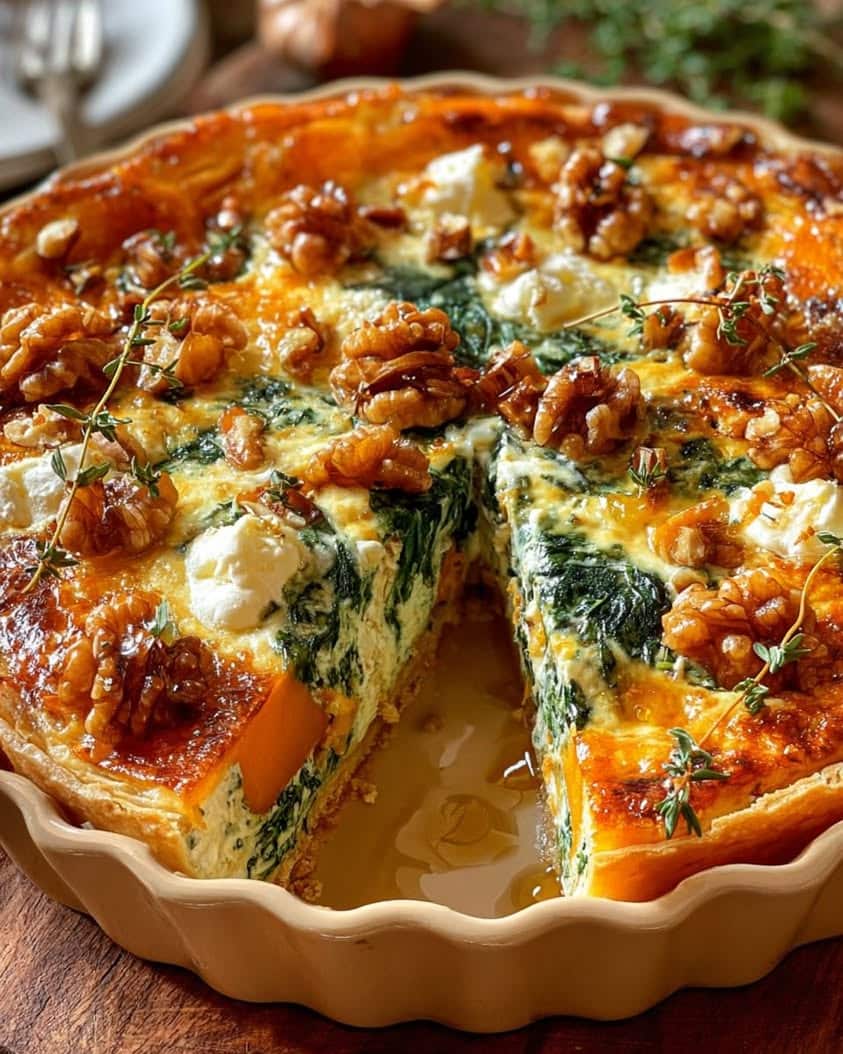
Crispy Sweet Potato & Spinach Rosti Quiche with Feta, Honey & Thyme + Walnuts: A Savory Brunch Showstopper
This Crispy Sweet Potato & Spinach Rosti Quiche with Feta, Honey & Thyme + Walnuts transforms an ordinary brunch into something truly memorable. Imagine a golden, shredded sweet potato crust that shatters gently under your fork, giving way to a silky egg custard studded with wilted spinach, briny feta, and crunchy toasted walnuts. Because the honey drizzle and fresh thyme weave through every bite, each forkful balances sweet, salty, earthy, and herbaceous notes in a way that feels effortlessly elegant.
Moreover, this Crispy Sweet Potato & Spinach Rosti Quiche with Feta, Honey & Thyme + Walnuts solves a real problem for home cooks. Traditional quiche requires making and chilling pie dough, which often intimidates busy cooks. Here, the rosti crust replaces pastry entirely, so you simply grate, squeeze, and press sweet potatoes into the pan. As a result, you get a gluten-free, visually stunning centerpiece that pairs beautifully with everything from a simple green salad to a celebratory holiday spread.
In addition, the recipe welcomes improvisation. Whether you serve it warm from the oven or at room temperature on a buffet table, the quiche holds its shape and flavor beautifully. Therefore, this dish works equally well for a lazy Sunday breakfast, a baby shower, or a weeknight dinner when you crave something comforting yet nourishing. The combination of sweet potato, spinach, feta, honey, thyme, and walnuts delivers layers of flavor that keep everyone coming back for seconds.
Quick Recipe Highlights
- Flavor Profile: The Crispy Sweet Potato & Spinach Rosti Quiche with Feta & Honey delivers a harmonious blend of savory, sweet, and tangy notes. Salty feta cuts through the natural sweetness of the potato crust. Meanwhile, the honey drizzle adds a floral finish that lingers pleasantly.
- Texture: Expect a crisp, lacy exterior from the shredded sweet potato rosti. The custard inside stays soft and creamy. Toasted walnuts add a satisfying crunch that contrasts beautifully with the tender spinach.
- Aroma: Fresh thyme releases piney, citrusy notes as the quiche bakes. The nutty fragrance of toasted walnuts and the caramelized edges of sweet potato fill the kitchen. These aromas signal a truly special meal.
- Visual Appeal: Deep orange sweet potato strands frame a golden custard dotted with emerald spinach. Crumbled white feta and amber honey drizzle complete a picture-perfect presentation. Scattered walnuts and thyme sprigs add rustic charm.
- Skill Level Needed: An intermediate cook will find this recipe comfortable and rewarding. You need basic knife skills and familiarity with a box grater. However, beginners can succeed with patience and careful squeezing of the sweet potatoes.
- Special Equipment: A 9-inch springform pan or pie dish works best for easy release. You also need a box grater, a clean kitchen towel, and a whisk. A rimmed baking sheet catches any drips during baking.
Recipe Overview
- Difficulty Level: This recipe sits squarely in the intermediate range because it involves several distinct steps. You must grate and squeeze the sweet potatoes thoroughly. Then you press the crust evenly and par-bake it before adding the custard. Each stage is simple on its own, but the sequence demands attention. Ultimately, the payoff justifies the effort.
- Category: This dish functions as a main course for brunch, lunch, or a light dinner. It also shines as a hearty appetizer cut into thin wedges. Additionally, it works as a potluck contribution because it travels well.
- Cuisine: The recipe draws from Swiss rosti tradition and French quiche technique. Then it layers in Mediterranean flavors through feta, honey, and thyme. Walnuts nod to both French and Middle Eastern cooking. The result is a modern fusion dish with global appeal.
- Cost: You can prepare this quiche for roughly twelve to fifteen dollars total. Sweet potatoes, eggs, and spinach rank among the most affordable grocery items. Feta and walnuts represent the priciest components, but you use modest amounts. Overall, it delivers excellent value for eight servings.
- Season: Autumn and winter suit this recipe best because sweet potatoes peak in flavor then. However, you can enjoy it year-round since sweet potatoes remain available. Spring brunches benefit from its bright thyme and spinach notes. The dish also fits cozy fall gatherings perfectly.
- Occasion: Serve this quiche for Easter brunch, Mother’s Day, or holiday mornings. It also suits casual weekend breakfasts and elegant dinner parties. Furthermore, it makes a thoughtful dish to bring to new neighbors. Any gathering that values beautiful, comforting food welcomes this recipe.
Why You’ll Love This Recipe
The taste and texture of this Crispy Sweet Potato & Spinach Rosti Quiche with Feta, Honey & Thyme + Walnuts create pure magic in your mouth. The sweet potato crust caramelizes in the oven, developing deep, nutty flavors. As you bite through the crisp exterior, the creamy custard yields softly. Then the salty feta, sweet honey, and earthy thyme dance together beautifully. Finally, the walnuts tie everything together with their rich, toasty crunch.
Convenience makes this recipe a weeknight hero as well. Because the rosti crust replaces traditional pastry, you skip the chilling and rolling steps entirely. Therefore, you go from craving to oven in about twenty-five minutes of active work. Additionally, the ingredient list stays short and approachable. Most items already live in your pantry or fridge, which means fewer shopping trips.
Nutritionally, this quiche delivers impressive benefits without sacrificing indulgence. Sweet potatoes provide beta-carotene, fiber, and complex carbohydrates. Spinach adds iron, calcium, and vitamins A and K. Eggs contribute high-quality protein and choline. Moreover, walnuts supply omega-3 fatty acids, while feta offers calcium and probiotics. As a result, you enjoy a balanced meal that fuels your body.
Socially, this dish earns rave reviews at gatherings because it looks impressive yet tastes approachable. Guests admire the vibrant orange crust and golden custard. The honey drizzle and walnut garnish invite compliments before anyone even takes a bite. Consequently, you gain a reputation as a thoughtful, skilled host. The recipe also sparks conversation about its Swiss and Mediterranean influences.
Finally, cost-effectiveness and accessibility make this recipe a staple. Sweet potatoes cost very little per pound, and one large potato fills the entire crust. Eggs, spinach, and basic pantry spices keep expenses low. Even the feta and walnuts, though pricier, stretch across eight servings. Therefore, you feed a crowd beautifully without straining your budget.
Historical Background and Cultural Significance
The story begins with rosti, a beloved Swiss dish from the German-speaking cantons. Farmers originally made rosti as a hearty breakfast before heading into cold mountain fields. They shredded potatoes, fried them in butter or lard, and served the golden cake sizzling hot. Over centuries, rosti became a symbol of Swiss identity and hospitality. Eventually, cooks began experimenting with different vegetables and flavorings.
Meanwhile, quiche emerged from France’s Lorraine region as an open-faced tart filled with eggs and cream. Medieval cooks baked simple egg pies in rustic kitchens. By the sixteenth century, quiche Lorraine featured bacon and cream, earning fame across Europe. French bakers perfected the custard technique, creating silky fillings that set beautifully. Today, quiche represents elegance and comfort in equal measure.
This particular recipe unites those traditions with Mediterranean influences. Sweet potatoes traveled from the Americas to Europe centuries ago and became a global staple. Spinach originated in Persia and spread through the Mediterranean and beyond. Feta, honey, and thyme anchor the dish in Greek culinary heritage. Walnuts have long enriched both European and Middle Eastern cuisines.
Regional variations abound across the world. In Greece, cooks fold spinach and feta into phyllo pies called spanakopita. In the American South, sweet potato pies grace holiday tables. Italian frittatas layer vegetables and cheese into egg cakes. This Crispy Sweet Potato & Spinach Rosti Quiche with Feta, Honey & Thyme + Walnuts honors all these traditions while creating something entirely new.
Ingredient Deep Dive
Sweet potatoes anchor this recipe’s crust, and their history stretches back thousands of years to Central and South America. Indigenous peoples cultivated them long before European explorers arrived. Today, they rank among the world’s most important root vegetables. Nutritionally, sweet potatoes deliver massive doses of beta-carotene, which supports vision and immunity. They also provide fiber, potassium, and vitamin C. When selecting sweet potatoes, choose firm specimens with smooth skin and no soft spots. Store them in a cool, dark place for up to two weeks. If you lack sweet potatoes, substitute butternut squash or Yukon gold potatoes.
Spinach brings deep green color and earthy flavor to this quiche. Originally from ancient Persia, spinach traveled the Silk Road to reach Europe and Asia. Popeye made it famous as a strength food, and modern science confirms its nutritional power. Spinach supplies iron, calcium, folate, and vitamins A and K. Look for crisp, dark green leaves without yellowing when you shop. Baby spinach works beautifully because it wilts quickly and tenderly. Store spinach in a sealed bag with a paper towel to absorb moisture. Kale or Swiss chard make excellent substitutes.
Feta cheese contributes salty, tangy brilliance that balances the sweet potato crust. Greek shepherds have made feta for centuries using sheep’s milk or a sheep-goat blend. The cheese ages in brine, developing its characteristic crumbly texture and sharp flavor. Feta offers calcium, protein, and beneficial bacteria from fermentation. Purchase feta packed in brine rather than pre-crumbled varieties for superior taste. Keep it submerged in its liquid and refrigerate for up to three months. Goat cheese or ricotta salata work well as alternatives.
Honey drizzles over the finished quiche, adding floral sweetness and glossy shine. Humans have harvested honey for at least eight thousand years, making it one of the oldest sweeteners. Bees transform flower nectar into this golden liquid through remarkable enzymatic processes. Honey contains antioxidants and natural sugars that energize the body. Choose raw, unfiltered honey for maximum flavor complexity. Store honey at room temperature in a sealed jar; it never truly spoils. Maple syrup or agave nectar can replace honey if needed.
Fresh thyme perfumes the custard with piney, citrusy notes that elevate every bite. Ancient Greeks and Romans used thyme for courage and purification. Medieval cooks added it to soups and stews for its medicinal properties. Thyme provides vitamin C, vitamin A, and powerful plant antioxidants. Select sprigs with bright green leaves and flexible stems when buying fresh thyme. Wrap them in damp paper towels and refrigerate for up to two weeks. Dried thyme works in a pinch, though fresh delivers superior aroma.
Walnuts crown this quiche with rich crunch and earthy depth. These tree nuts originated in ancient Persia and spread along trade routes to Europe and Asia. Roman cooks prized walnuts and called them Jupiter’s acorns. Walnuts supply omega-3 fatty acids, which support heart and brain health. They also offer protein, fiber, and antioxidants. Buy walnut halves rather than pieces for better freshness and appearance. Store them in the refrigerator or freezer to prevent rancidity. Pecans or toasted almonds make fine substitutes.
Eggs bind the custard together and create its silky texture. Humans domesticated chickens thousands of years ago, and eggs have nourished civilizations ever since. They provide complete protein, choline, and essential vitamins. Choose fresh, large eggs with clean shells for this recipe. Refrigerate eggs and use them within three to five weeks of purchase. For a vegan version, whisk together chickpea flour and water as a binder.
Heavy cream enriches the custard with luxurious body and mouthfeel. Dairy farming traditions stretch back millennia across Europe and Asia. Cream rises naturally to the top of unhomogenized milk, where cooks skim it for rich dishes. It contributes fat-soluble vitamins and satisfying richness. Select heavy cream with at least thirty-six percent milk fat for best results. Keep it refrigerated and use within a week of opening. Whole milk or coconut cream can substitute in a pinch.
Common Mistakes to Avoid
- Skipping the squeeze on grated sweet potatoes leads to a soggy crust. Excess moisture steams rather than crisps during baking. Therefore, always wring the shreds in a clean towel until they feel nearly dry.
- Pressing the crust too thin causes it to burn around the edges. Aim for an even quarter-inch thickness across the bottom and up the sides. This thickness ensures structural support and consistent browning.
- Pouring custard into an unbaked crust results in a gummy, undercooked base. Par-bake the rosti for at least twenty minutes first. This step sets the crust and creates that signature crunch.
- Overwhisking the eggs incorporates too much air into the custard. As a result, the filling puffs dramatically and then deflates, cracking the surface. Whisk gently until the yolks and whites just combine.
- Using wet spinach introduces unwanted moisture into the filling. Thaw frozen spinach completely and squeeze it dry. If using fresh spinach, wilt and drain it thoroughly before adding.
- Neglecting to toast the walnuts leaves them tasting flat and raw. Toasting draws out their oils and intensifies their flavor. Spread walnuts on a dry pan and toast for five minutes over medium heat.
- Cutting the quiche too soon causes the custard to run. The filling needs time to set as it cools. Rest the quiche for at least fifteen minutes before slicing.
- Under-seasoning the custard makes the final dish taste bland. Feta adds salt, but the eggs and cream still need seasoning. Add salt, pepper, and nutmeg to taste before pouring.
- Baking at too high a temperature browns the crust before the custard sets. Moderate heat around 350 degrees Fahrenheit cooks everything evenly. Check for doneness by gently jiggling the pan.
- Removing the springform ring while the quiche is hot tears the crust. Wait until the quiche cools to warm room temperature. Then release the latch and lift the ring carefully.
Essential Techniques
Squeezing moisture from grated sweet potatoes is the single most important step for a crispy rosti crust. Sweet potatoes contain significant water, which steams during baking and prevents browning. To master this technique, wrap the grated potato in a clean kitchen towel or several layers of cheesecloth. Then twist the towel tightly and wring with both hands over the sink. Repeat until no more liquid drips out. A common pitfall involves rushing this step, so take your time. Visual success looks like dry, fluffy shreds that separate easily when you toss them.
Pressing the rosti crust evenly ensures consistent thickness and structural integrity. Uneven pressure creates thin spots that burn and thick spots that stay raw. To master this technique, use the flat bottom of a measuring cup or a clean glass. Press the shreds firmly into the pan, working from the center outward and up the sides. Pay special attention to the corners where crusts often crack. Common pitfalls include pressing too aggressively, which compacts the potatoes into a dense brick. Success looks like a uniform layer with visible shred texture.
Par-baking the crust sets its structure before the custard arrives. This technique transforms raw, limp shreds into a sturdy, golden shell. To master par-baking, preheat your oven to 400 degrees Fahrenheit and bake the pressed crust for twenty to twenty-five minutes. Then reduce the heat to 350 degrees for the custard phase. Watch for edges that turn deep golden brown and pull slightly from the pan. The common pitfall involves underbaking, which leaves the center pale and soft. Visual cues include a matte surface and irresistible crispy aroma.
Tempering eggs for the custard prevents scrambled bits from forming. Cold eggs shock when they hit warm ingredients, but gentle warming solves this problem. To master tempering, whisk the eggs with cream and let the mixture sit at room temperature for fifteen minutes. Alternatively, add a spoonful of warm melted butter while whisking constantly. The common pitfall is skipping this step and pouring cold custard over hot elements. Success looks like a smooth, uniform liquid with no visible lumps.
Testing custard doneness requires a gentle jiggle rather than a knife test. Overbaking ruins the silky texture that defines great quiche. To master this technique, slide the rack gently after forty minutes of baking. The center should wobble slightly like set gelatin while the edges remain firm. A knife inserted an inch from the edge should come out clean. The common pitfall involves baking until the center feels completely solid. Visual success means a golden surface with a subtle, soft center that finishes setting as it cools.
Pro Tips for Perfect Crispy Sweet Potato & Spinach Rosti Quiche with Feta, Honey & Thyme + Walnuts
Grate the sweet potatoes on the large holes of a box grater for the best texture. Fine shreds turn mushy during baking, while thick shreds stay crunchy. Large-hole shreds strike the perfect balance between tenderness and crispness. Consequently, your crust develops that ideal shatter-when-cut quality.
Toss the squeezed sweet potato shreds with a tablespoon of cornstarch before pressing. Cornstarch absorbs lingering moisture and promotes browning. It also helps the shreds bind together without eggs. As a result, the crust holds its shape beautifully when you slice.
Brush the pan generously with melted butter or olive oil before pressing the crust. This fat layer prevents sticking and encourages golden edges. Furthermore, it adds richness that complements the sweet potato flavor. Do not skip this step, even with nonstick pans.
Add a pinch of nutmeg to the custard for warm, subtle depth. Nutmeg pairs classically with spinach and cream in European cooking. It enhances the savory notes without calling attention to itself. Therefore, just a small grating transforms the entire filling.
Crumble the feta into irregular chunks rather than fine crumbs. Larger pieces create pockets of salty tang that surprise and delight. They also look more appealing when the quiche emerges from the oven. Consequently, each slice offers visual and flavor variety.
Drizzle the honey after the quiche cools for ten minutes, not before baking. Honey burns quickly at high heat and turns bitter. Adding it at the end preserves its delicate floral notes. Then finish with fresh thyme leaves for bright aroma.
Let the quiche rest for a full fifteen minutes before slicing. This resting period allows the custard to finish setting. It also makes clean wedges possible without tearing the crust. Patience here rewards you with picture-perfect slices.
Serve the quiche at room temperature if you plan to hold it for a buffet. The flavors actually deepen as it cools. Additionally, the crust stays crisp longer at room temperature than under a heat lamp. This flexibility makes entertaining far less stressful.
Variations and Adaptations
Regional variations offer endless inspiration for this Crispy Sweet Potato & Spinach Rosti Quiche with Feta & Honey. In Greece, cooks might add chopped kalamata olives and oregano for a Mediterranean twist. French cooks could incorporate caramelized onions and gruyere for a classic Alsatian feel. Meanwhile, American Southern cooks might swap collard greens for spinach and use smoked cheddar. Each region brings its own pantry staples to the same beloved framework.
Seasonal adaptations keep this quiche fresh throughout the year. Spring calls for asparagus tips and fresh peas instead of spinach. Summer welcomes zucchini, corn, and basil folded into the custard. Autumn highlights diced apple and sage alongside the sweet potato. Winter encourages hearty kale, caramelized shallots, and a touch of smoked paprika.
Dietary modifications make this recipe accessible to nearly everyone. For a dairy-free version, use coconut cream and nutritional yeast in place of cream and feta. Vegan cooks can bind the custard with chickpea flour and water. Low-carb eaters might reduce the sweet potato and add more spinach. Each adaptation preserves the spirit of the original dish.
Flavor variations let you customize the quiche to your mood. Add curry powder and cilantro for an Indian-inspired version. Swap thyme for rosemary and add lemon zest for a brighter profile. Smoked gouda and crispy bacon turn it into a hearty brunch centerpiece. Even a drizzle of chili honey brings welcome heat.
Texture modifications address different preferences. For an extra-crispy crust, par-bake the rosti for thirty minutes instead of twenty. A creamier custard comes from adding an extra egg yolk. If you prefer more crunch, double the walnuts and scatter them across the top. These small tweaks personalize the dish beautifully.
Presentation alternatives suit every table. Bake the quiche in individual ramekins for elegant single servings. Use a rectangular tart pan for dramatic slices at a buffet. Mini muffin tins create bite-sized appetizers perfect for parties. Regardless of shape, the flavors remain irresistible.
Serving and Presentation Guide
Plating techniques elevate this quiche from delicious to stunning. Place a single wedge slightly off-center on a white plate to showcase the orange crust. Then spoon a small pool of honey alongside rather than over the top. Add a few scattered walnut pieces and a fresh thyme sprig for height. These simple touches create a restaurant-quality presentation at home.
Garnishing ideas range from rustic to refined. A light dusting of flaky sea salt adds sparkle and crunch. Microgreens or baby arugula bring fresh green contrast. Edible flowers like nasturtiums offer unexpected beauty for spring brunches. Choose garnishes that echo the quiche’s ingredients for visual harmony.
Traditional accompaniments include a simple green salad dressed with lemon vinaigrette. Crusty sourdough bread soaks up any custard left on the plate. A bowl of seasonal fruit adds brightness and balance. These classic sides let the quiche remain the star while rounding out the meal.
Modern serving suggestions push creative boundaries. Pair the quiche with a shaved fennel and citrus salad for a sophisticated lunch. Serve alongside roasted cherry tomatoes and whipped ricotta for a Mediterranean feast. A drizzle of balsamic glaze adds tangy elegance. These contemporary pairings appeal to adventurous palates.
Temperature considerations matter for optimal enjoyment. The quiche tastes best warm or at room temperature, never piping hot. Allow it to rest at least fifteen minutes after leaving the oven. If serving later, reheat gently at 300 degrees for ten minutes. Avoid microwaving, which toughens the crust and rubberizes the custard.
Portion control tips help you slice evenly and serve fairly. Cut eight generous wedges for a main course or twelve thinner slices for appetizers. Use a sharp chef’s knife and wipe it clean between cuts. This technique produces clean edges that hold together beautifully on the plate.
Wine and Beverage Pairing
Wine pairings enhance the complex flavors of this Crispy Sweet Potato & Spinach Rosti Quiche with Feta and Honey. A dry Riesling offers bright acidity that cuts through the creamy custard. Its subtle sweetness echoes the honey drizzle without overwhelming. Alternatively, a Sancerre or Sauvignon Blanc brings herbal notes that complement the thyme. For red wine lovers, a light Pinot Noir works surprisingly well.
Non-alcoholic alternatives keep everyone included in the celebration. Sparkling apple cider provides effervescence and fruity sweetness that mirrors the honey. Chilled hibiscus iced tea adds tartness and stunning color. A cucumber mint cooler refreshes the palate between bites. These options feel festive and thoughtful.
Coffee and tea pairings suit morning brunches beautifully. A medium-roast coffee with nutty notes complements the toasted walnuts. Earl Grey tea’s bergamot echoes the citrusy thyme. Chamomile tea offers calming floral notes that harmonize with honey. Choose based on the time of day and your guests’ preferences.
Temperature considerations affect how beverages interact with the food. Serve white wines well-chilled but not icy, around fifty degrees Fahrenheit. Reds should sit slightly below room temperature for balance. Hot beverages should steam gently rather than burn. Proper temperatures let each drink shine alongside the quiche.
Serving suggestions include offering a small beverage station so guests self-serve. Arrange wine glasses, sparkling water, and tea cups on a side table. Add handwritten labels describing each option. This thoughtful setup encourages experimentation and conversation. Your guests will appreciate the care you invested.
Storage and Shelf Life
Storage methods determine how well leftovers maintain quality. Cool the quiche completely within two hours of baking to prevent bacterial growth. Then wrap individual slices tightly in plastic wrap or place them in an airtight container. Separate layers with parchment paper to prevent sticking. Properly stored quiche retains its flavor and texture for days.
Temperature requirements keep food safety in check. Refrigerate the quiche at or below forty degrees Fahrenheit. Never leave it at room temperature for more than two hours. If transporting to a gathering, use a cooler with ice packs. These practices protect both flavor and health.
Container recommendations make storage easier and more effective. Glass containers with locking lids preserve the crust’s crispness better than plastic bags. Shallow containers prevent slices from stacking and crushing. For longer storage, vacuum-sealed bags offer excellent protection. Choose containers that fit your refrigerator’s layout.
Signs of spoilage help you know when to discard leftovers. Fresh quiche smells savory and eggy with hints of thyme. Off odors, sliminess, or visible mold indicate spoilage. The custard should remain firm, not watery or spongy. When in doubt, throw it out.
Reheating instructions preserve the quiche’s original appeal. Place slices on a baking sheet and warm at 300 degrees Fahrenheit for ten to twelve minutes. The oven restores crispness to the crust that a microwave destroys. Cover loosely with foil if the top browns too quickly. Room temperature serving also works beautifully.
Freezing guidelines extend shelf life up to three months. Wrap cooled slices tightly in plastic wrap, then aluminum foil. Place them in a freezer bag and label with the date. Thaw overnight in the refrigerator before reheating. While freezing slightly softens the crust, the flavor remains excellent.
Make Ahead Strategies
Prep timeline planning transforms this recipe into a stress-free endeavor. You can grate and squeeze the sweet potatoes up to two days ahead. Store them in an airtight container lined with paper towels. Cook the spinach and drain it thoroughly the day before. These steps shave twenty minutes off assembly day.
Storage between steps keeps components fresh and ready. Keep the prepared rosti mixture refrigerated in a sealed bag. Whisk the custard ingredients and store them separately in a jar. Toast the walnuts and crumble the feta ahead of time. Then simply assemble and bake when you need the quiche.
Quality impact assessment helps you decide what to prep early. The crust loses some crispness if pressed into the pan more than a day ahead. However, par-baking restores its texture beautifully. Custard actually benefits from an overnight rest because flavors meld. Therefore, focus your make-ahead efforts on the filling.
Assembly tips streamline the final baking process. Have all components at room temperature before you begin. Press the crust, par-bake, and fill within thirty minutes. This efficient workflow prevents mistakes and reduces stress. Mise en place, the French art of preparation, makes everything smoother.
Reheating guidelines ensure your make-ahead quiche tastes freshly baked. Warm it in a 300-degree oven until the center reaches 140 degrees. This gentle heat prevents overcooking while restoring warmth. A few minutes under the broiler crisps the top beautifully. Then rest for ten minutes before slicing.
Fresh element additions brighten a reheated quiche. Add the honey drizzle and fresh thyme after reheating, not before. Scatter extra walnuts on top for renewed crunch. A squeeze of lemon or sprinkle of flaky salt wakes up the flavors. These finishing touches make leftovers feel brand new.
Scaling Instructions
Halving the recipe works beautifully for smaller households. Use a 6-inch springform pan or two mini loaf pans. Reduce the baking time by ten to fifteen minutes and check for doneness early. One large sweet potato typically yields enough shreds for a half batch. Adjust the custard with one egg plus one yolk for proper setting.
Doubling or tripling requires planning and the right equipment. Use two 9-inch pans rather than one oversized pan for even baking. Alternatively, bake in a large sheet pan for a slab-style quiche. Increase the custard proportionally, but add only one extra egg per batch beyond the second. More eggs than that creates a rubbery texture.
Equipment adjustments ensure success at any scale. For large batches, a food processor grates sweet potatoes in seconds. A salad spinner helps dry the shreds after squeezing. Multiple springform pans let you bake everything simultaneously on separate racks. Rotate pans halfway through for even browning.
Timing modifications matter when you scale up or down. Larger batches take longer to bake because more mass retains heat. Add ten minutes per additional batch and check frequently. Smaller batches bake faster, so start checking five minutes early. Always rely on visual cues rather than strict time.
Storage considerations change with batch size. A double batch yields sixteen servings, perfect for freezing half. Label containers with dates and reheat instructions. Share extra quiche with neighbors or freeze for busy weeks. Generosity and planning go hand in hand.
Nutritional Deep Dive
Macro breakdown reveals a balanced profile in each serving. One wedge provides approximately 320 calories, 18 grams of carbohydrates, 20 grams of fat, and 14 grams of protein. The sweet potato contributes complex carbohydrates and fiber. Eggs and feta supply complete protein, while walnuts and cream deliver healthy fats. This macronutrient trio promotes sustained energy and satisfaction.
Micronutrient analysis showcases impressive vitamin and mineral content. Sweet potatoes deliver over 200 percent of your daily vitamin A in one serving. Spinach contributes vitamin K, folate, and iron. Eggs provide choline and B vitamins. Feta adds calcium and phosphorus, while walnuts supply magnesium and omega-3 fatty acids. Together, these ingredients cover a wide nutritional spectrum.
Health benefits extend beyond basic nutrition. The fiber in sweet potatoes and spinach supports digestive health. Omega-3 fatty acids from walnuts promote heart and brain function. Antioxidants in sweet potatoes and thyme fight inflammation. Moreover, the protein content keeps you full and stabilizes blood sugar. This quiche nourishes both body and soul.
Dietary considerations vary by individual needs. The recipe naturally suits gluten-free diets because the rosti replaces wheat crust. Vegetarians enjoy it as a satisfying meatless main. Those watching sodium should reduce added salt since feta is naturally salty. Portion size matters for anyone managing calorie intake.
Portion analysis helps you fit this dish into various eating plans. An eighth-wedge serving suits most adults as a main course. A twelfth-wedge portion works well as an appetizer or side. Pair with a large salad to increase volume without adding many calories. These strategies keep portions satisfying yet sensible.
Weight management tips make this quiche a smart choice for mindful eaters. The protein and fiber combo promotes fullness, reducing the urge to snack. Swapping half the cream for whole milk trims calories without sacrificing much richness. Using less honey in the drizzle controls added sugar. Small adjustments add up over time.
Dietary Adaptations
Gluten-free eaters can enjoy this Crispy Sweet Potato & Spinach Rosti Quiche with Feta & Honey without any changes. The rosti crust contains no wheat flour whatsoever. However, verify that your cornstarch and spices are certified gluten-free. Some brands process these ingredients on shared equipment. With careful sourcing, this recipe suits celiac and gluten-sensitive diets perfectly.
Dairy-free modifications require swapping the cream and feta. Full-fat coconut milk mimics heavy cream’s richness beautifully. Cashew cream offers another luxurious alternative. For the feta, try a dairy-free version made from almonds or tofu. Nutritional yeast adds cheesy umami. These swaps create a delicious dairy-free quiche.
Vegan adaptations transform this dish entirely. Replace eggs with a mixture of chickpea flour and water, whisked until smooth. Use coconut cream and dairy-free feta alternatives. Maple syrup substitutes for honey in the drizzle. The result tastes different but remains satisfying and beautiful. Nutritional yeast boosts the savory depth.
Low-carb versions reduce the sweet potato while keeping the flavor. Use half the sweet potato and add extra spinach or grated zucchini. This swap cuts carbohydrates significantly. The crust becomes more delicate, so consider baking in ramekins. Each serving drops to around 12 grams of carbs.
Keto adaptations push the carb count even lower. Replace sweet potato entirely with grated cauliflower or zucchini. Increase the eggs and cream to compensate for moisture differences. Use full-fat feta and skip the honey drizzle. This version delivers rich flavor with minimal carbohydrates. Macros shift toward fat and protein.
Paleo eaters need a few strategic swaps. Sweet potatoes fit paleo guidelines, but dairy does not. Use coconut cream instead of heavy cream. Replace feta with a paleo-friendly nut cheese. Skip the cornstarch and rely on eggs for binding. The resulting quiche aligns with ancestral eating principles.
Low-FODMAP diets require careful ingredient choices. Sweet potatoes contain mannitol, which bothers some sensitive individuals. Reduce the amount or substitute with grated carrots. Spinach is low-FODMAP in small servings. Feta is generally well tolerated. Test your tolerance and adjust accordingly.
Other specific diets may also accommodate this recipe. Mediterranean diet followers appreciate the olive oil, vegetables, and nuts. Diabetics should watch portion size because sweet potatoes affect blood sugar. Heart-healthy eaters benefit from the omega-3s and fiber. Always consult your healthcare provider for personalized guidance.