Decadent Carrot Cake Bars with Cream Cheese Frosting: An Easy Recipe You Will Crave
These Decadent Carrot Cake Bars with Cream Cheese Frosting deliver everything you adore about classic carrot cake, yet they come together in a single pan with far less fuss. Consequently, you get all the warm spice, the tender crumb, and the tangy frosting without the layered cake stress. If you have searched for an easy carrot cake bars recipe that truly satisfies, this is the one you will return to again and again.
Picture this scene: you pull a pan of golden, spiced carrot cake bars from the oven, and the kitchen fills with the scent of cinnamon, nutmeg, and brown sugar. Therefore, your family wanders in before the bars even cool. Then you spread a thick layer of cream cheese frosting across the top, and suddenly everyone wants a piece right away. Indeed, these carrot cake bars with cream cheese frosting taste like a celebration, yet they fit into an ordinary Tuesday afternoon.
Moreover, this recipe welcomes bakers of every skill level, because it relies on simple mixing methods and pantry staples. You do not need a stand mixer, a piping bag, or any special decorating talent. Instead, you stir the batter by hand, bake it in one pan, and frost the cooled bars with a spatula. As a result, even a beginner can serve carrot cake bars that look and taste like a bakery creation.
Quick Recipe Highlights
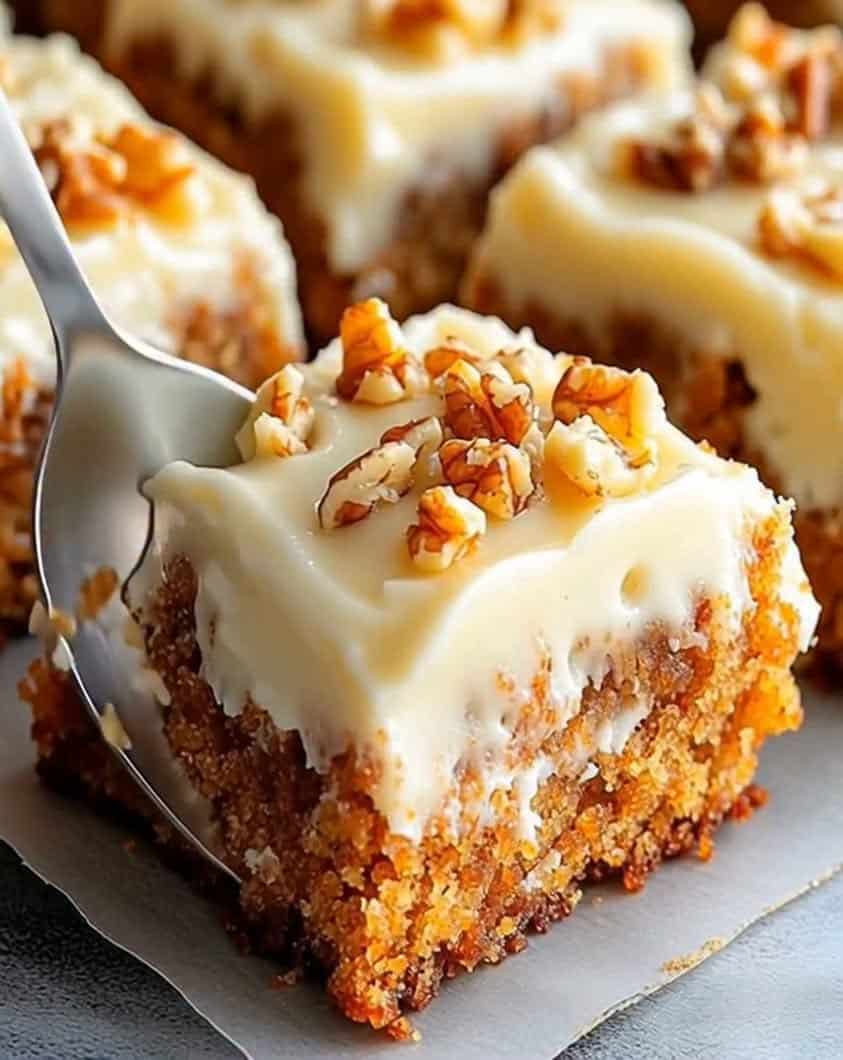
- Flavor Profile: These bars blend sweet carrots with warm cinnamon, nutmeg, and a hint of vanilla, while the cream cheese frosting adds a bright, tangy finish. The brown sugar deepens the sweetness, and a small amount of salt keeps every bite balanced. Overall, the flavor tastes rich yet never cloying.
- Texture: Each bar offers a moist, tender crumb that holds together beautifully when you slice it. The frosting stays thick and creamy, so it cushions every bite with a smooth, velvety layer. Additionally, a gentle chew from the carrots and optional nuts gives the bars satisfying substance.
- Aroma: As these bars bake, cinnamon and nutmeg perfume the entire kitchen. The scent of toasted nuts and sweet vanilla follows close behind. Once you add the frosting, a cool, tangy cream cheese note rounds out the warm spice.
- Visual Appeal: The bars bake into a deep golden orange color that hints at the carrots inside. A generous swoop of white frosting contrasts beautifully against that warm hue. If you garnish with chopped pecans or a light dusting of cinnamon, the bars look truly irresistible.
- Skill Level Needed: This recipe suits beginners because it requires only basic stirring, measuring, and baking skills. You do not need to separate eggs, temper chocolate, or master any advanced technique. Consequently, anyone who can follow simple instructions can succeed here.
- Special Equipment: You need a standard 9×13 inch baking pan, parchment paper, and a couple of mixing bowls. A whisk, a rubber spatula, and a hand mixer for the frosting cover the rest. Therefore, you likely own everything required already.
Recipe Overview
- Difficulty Level: I rate this recipe as easy because every step uses straightforward methods. You whisk dry ingredients in one bowl and wet ingredients in another, then combine them with a few strokes. The frosting comes together in minutes with a hand mixer, and the oven does the rest. Hence, new bakers and seasoned pros both breeze through this recipe.
- Category: These bars fall into the dessert category, and they shine as a snack, a bake sale item, or a potluck contribution. Furthermore, many people serve them as a breakfast treat alongside coffee. Because they travel well, they also work as a lunchbox surprise.
- Cuisine: Carrot cake bars draw from American baking traditions, especially Southern and Midwestern home cooking. Bakers in the United States have paired carrots with warm spices and cream cheese frosting for generations. This recipe honors that heritage while simplifying the format into portable bars. Consequently, it feels both nostalgic and modern.
- Cost: The ingredients cost very little because carrots, flour, sugar, eggs, and cream cheese appear on most grocery lists already. A full pan of 24 bars typically costs less than a single bakery cake. Therefore, this recipe delivers outstanding value for feeding a crowd.
- Season: These carrot cake bars with cream cheese frosting taste wonderful all year, yet they feel especially fitting in spring and fall. Spring brings fresh carrots and Easter gatherings, while fall invites cozy spice baking. In addition, the bars suit summer picnics and winter holiday trays.
- Occasion: You can serve these bars at birthdays, showers, brunches, and holiday dinners. They also excel at casual events like game nights and church potlucks. Because they need no plate or fork, they simplify any party menu.
Why You Will Love This Recipe
Taste and texture drive the appeal of these Decadent Carrot Cake Bars with Cream Cheese Frosting. The bars stay incredibly moist, because the carrots release natural sweetness and moisture during baking. Meanwhile, brown sugar and oil add tenderness that keeps each square soft for days. The cream cheese frosting contributes a cool, tangy contrast that balances the warm spice. Consequently, every bite delivers a little sweetness, a little tang, and a whole lot of comfort.
Convenience makes this recipe a weeknight favorite, since you need only one pan and about twenty minutes of hands-on work. You do not fuss with layer cakes, crumb coats, or delicate stacking. Instead, you spread the batter, bake it, and frost the cooled slab in one go. As a result, cleanup stays minimal, and the whole process feels relaxed rather than stressful.
Nutritional advantages give these bars a surprising edge over many desserts. Carrots supply beta carotene, fiber, and natural sweetness, so you use less added sugar than you might expect. Eggs contribute protein, and the cream cheese frosting offers calcium. Although these bars remain a treat, they carry more substance than a plain sugar cookie or a slice of candy.
Social and entertaining value sets this recipe apart, because bars feed a crowd with zero plating effort. You simply cut the slab into squares, arrange them on a platter, and watch them vanish. Guests appreciate the familiar carrot cake flavor in a portable form. Moreover, the bars photograph beautifully, so they shine at showers and holiday tables.
Cost effectiveness and accessibility round out the list of reasons to love this recipe. Every ingredient comes from a standard grocery store, and nothing costs more than a few dollars. You can bake 24 bars for the price of a single specialty cupcake at a cafe. Therefore, this recipe lets you serve a impressive dessert without stretching your budget.
Historical Background and Cultural Significance
The origin story of carrot cake reaches back to medieval Europe, when bakers used carrots as a sweetener because sugar cost a fortune. Those early puddings and baked goods looked quite different from modern carrot cake, yet the core idea held steady. Over centuries, the recipe traveled and evolved, and it eventually found a welcoming home in American kitchens. Today, the carrot cake tradition lives on in these easy carrot cake bars.
Cultural importance surrounds carrot cake in the United States, especially in Southern baking. Families pass down treasured recipes, and holiday tables often feature a carrot cake alongside pumpkin pie. The combination of spice, carrot, and cream cheese frosting became a signature American flavor profile. Consequently, these bars carry a bit of that heritage in every square.
The evolution of the recipe shows how home bakers adapt classics for modern life. Layer cakes demand time and skill, so busy cooks began pressing the same batter into sheet pans. Bars bake faster, slice easily, and travel well. Therefore, the carrot cake bar emerged as a practical answer to a beloved dessert.
Regional variations add delightful diversity to the carrot cake story. Some bakers add pineapple for extra moisture, while others fold in coconut, raisins, or walnuts. In the South, pecans often appear, and in some communities, a hint of orange zest brightens the batter. Regardless of the region, the cream cheese frosting remains the constant companion.
Ingredient Deep Dive
Carrots anchor this entire recipe, and their history stretches back thousands of years across Asia and Europe. Originally, people grew carrots for medicine and for their leaves rather than for the orange root. Over time, cultivation improved sweetness and color, and cooks began baking carrots into desserts. Nutritionally, carrots deliver beta carotene, fiber, and vitamin K, which support vision and digestion. When you shop, choose firm carrots with bright color and no soft spots. Store them in a cool, dark place or in the refrigerator crisper for several weeks. If you run out, you can substitute an equal amount of shredded zucchini, though the flavor shifts slightly.
Warm spices give carrot cake its signature character, and cinnamon leads the way. Cinnamon once ranked among the most valuable trade goods in the ancient world, and it still defines comfort baking today. This spice may support healthy blood sugar and offers antioxidant compounds. Look for cinnamon with a strong, sweet aroma, and store it in a sealed jar away from heat. If you prefer, you can swap in pumpkin pie spice for a similar effect. Nutmeg and ginger play supporting roles, so keep them fresh for the best results.
Cream cheese forms the heart of the frosting, and its history connects to early American dairy farming. Bakers prize cream cheese for its tangy flavor and silky texture. It provides calcium and a small amount of protein, though it also carries fat and calories. Choose full fat cream cheese in block form, because spreadable versions contain extra water and produce a runny frosting. Store cream cheese in the refrigerator and use it within a week or two of purchase. If needed, mascarpone makes a luxurious substitute.
Brown sugar brings moisture and a caramel like depth to these bars. This sweetener results from mixing molasses with refined sugar, and it has sweetened baked goods for centuries. Brown sugar contains trace minerals from the molasses, though it remains a sugar at heart. Select soft, fresh brown sugar, and keep it in an airtight container with a slice of bread to prevent hardening. In a pinch, you can combine white sugar with a spoonful of molasses.
Eggs provide structure, richness, and lift in this recipe. People have baked with eggs since ancient times, and they remain essential in most cakes and bars. Eggs supply high quality protein along with vitamins D and B12. Choose fresh eggs with clean, uncracked shells, and store them in the refrigerator. If you need a substitute, flax eggs work in a pinch, though the texture becomes slightly denser.
Oil keeps these bars exceptionally moist, and neutral oils like canola or vegetable oil work best. Unlike butter, oil stays liquid at room temperature, so it coats every flour particle and slows staling. Oil contains fat soluble vitamin E, though it also adds calories. Pick a fresh, neutral tasting oil, and store it in a cool, dark cabinet. Applesauce can replace half the oil for a lighter bar.
Common Mistakes to Avoid
- Using spreadable cream cheese instead of block cream cheese makes the frosting thin and runny. Always choose the brick style for a thick, pipeable consistency. If you only have spreadable cream cheese, chill the frosting longer and add extra powdered sugar.
- Overmixing the batter after adding the flour develops too much gluten, which creates tough, dense bars. Stir just until the dry ingredients disappear. A few small streaks of flour will blend in during the final strokes.
- Skipping the parchment paper leads to stuck bars and torn edges. Line the pan with an overhang of parchment so you can lift the whole slab out. This step also makes cutting clean squares far easier.
- Baking until the center looks completely dry causes dry bars, because carrot cake continues to set as it cools. Pull the pan when a toothpick comes out with a few moist crumbs. The center should feel soft but not wet.
- Frosting the bars while they are still warm melts the cream cheese and creates a soupy top. Wait until the bars reach room temperature. Patience here protects that beautiful thick frosting.
- Shredding carrots too far in advance dries them out and dulls their sweetness. Grate the carrots right before mixing the batter. If you must prep ahead, store shredded carrots in a damp paper towel inside a sealed bag.
- Using old, stale spices produces flat flavor, since ground spices lose potency over time. Smell each spice before you bake, and replace any that lack aroma. Fresh spices make a dramatic difference in these bars.
- Cutting the bars with a dull knife crushes the edges and smears the frosting. Use a sharp chef knife, and wipe the blade clean between cuts. For picture perfect squares, chill the frosted slab for thirty minutes first.
- Packing brown sugar into the measuring cup too tightly adds excess sugar and throws off the balance. Spoon the sugar into the cup and level it with a flat edge. This technique keeps the bars tender rather than heavy.
- Opening the oven door repeatedly during baking causes temperature swings that lead to uneven rising. Keep the door closed and use the oven light to check progress. Then rotate the pan once at the halfway mark if your oven bakes unevenly.
Essential Techniques
Grating carrots by hand gives you control over texture, and this technique matters more than many bakers realize. Fine shreds blend seamlessly into the batter, while thick shreds add noticeable chew. Hold the carrot firmly and watch your knuckles as you work down to the root. Consequently, you avoid the woody core when it feels tough. For the best carrot cake bars, aim for small, even shreds that distribute uniformly.
Creaming the cream cheese and butter for the frosting builds a smooth, lump free base. Start with both ingredients at room temperature, because cold dairy resists blending. Beat them together until no lumps remain, then add the vanilla. After that, add powdered sugar gradually on low speed to avoid a cloud of sugar. This method produces a glossy frosting that spreads like a dream.
Folding dry ingredients into wet ingredients protects the tender crumb of these bars. Use a rubber spatula and a gentle, sweeping motion from the bottom of the bowl. Stop as soon as the flour disappears, because extra strokes toughen the batter. You should still see a few flour streaks before the final fold. This light touch keeps your carrot cake bars soft and moist.
Testing doneness with a toothpick prevents both underbaking and overbaking. Insert a wooden toothpick into the center of the pan and pull it out. Moist crumbs mean the bars are ready, while wet batter means they need more time. Conversely, a completely clean toothpick suggests you baked them slightly long. Check at the earliest suggested time to protect that moist texture.
Lifting the slab from the pan with parchment simplifies cutting and cleanup. Once the bars cool, grab the parchment overhang and transfer the whole slab to a cutting board. This technique lets you slice straight, even squares without scraping the pan. Furthermore, it keeps the corners intact. Then you simply wipe the pan and store it away.
Pro Tips for Perfect Decadent Carrot Cake Bars with Cream Cheese Frosting
Toast your pecans or walnuts before folding them into the batter or sprinkling them on top. Toasting draws out the oils and deepens the nutty flavor. Spread the nuts on a dry sheet pan and bake at 350 degrees for about five minutes. Consequently, every bite gains a richer, warmer taste.
Chill the frosted bars for at least thirty minutes before slicing. Cold frosting firms up and holds clean edges, which makes your squares look professional. This step also helps the bars set fully. As a result, your knife glides through instead of dragging.
Measure your flour with the spoon and level method for consistent results. Scooping directly from the bag compacts the flour and adds too much. Spoon flour into the measuring cup, then sweep the top flat with a knife. This small habit keeps your carrot cake bars light rather than dense.
Add a tablespoon of orange zest to the batter for a bright, unexpected twist. The citrus note complements the carrots and spices beautifully. It also cuts through the sweetness of the frosting. Many readers report that this single addition becomes their favorite version.
Let the cream cheese and butter sit on the counter for at least thirty minutes before making the frosting. Room temperature dairy blends into a silky, lump free mixture. Cold ingredients clump and never fully smooth out. Therefore, plan ahead and set them out early.
Use a light hand when folding in the carrots and nuts. Overworking the batter at this stage crushes the shreds and toughens the crumb. Fold just until everything distributes evenly. Then pour the batter into the pan right away.
Line your pan with parchment that extends up two sides, and leave that overhang long. The handles let you lift the whole slab without cracking it. This trick also saves you from greasing the pan. Cleanup becomes a thirty second job.
Press the batter gently into the corners of the pan with your spatula. This step removes large air pockets and ensures even thickness. Even thickness leads to even baking, so no corner dries out. Then smooth the top before the pan goes into the oven.
Variations and Adaptations
Regional variations let you tailor these bars to your family traditions. Southern bakers often add crushed pineapple and pecans for a tropical, crunchy twist. Meanwhile, some Midwestern recipes call for coconut and raisins. In the Northeast, a hint of maple syrup sometimes replaces part of the brown sugar. Each region puts its own stamp on the classic combination, yet the cream cheese frosting stays constant.
Seasonal adaptations keep this recipe fresh all year long. In autumn, add a pinch of ground cloves and top the bars with candied pecans. During spring, fold in fresh orange zest and serve the bars at Easter brunch. Summer calls for a lighter frosting with whipped cream folded in. In winter, a drizzle of caramel turns these bars into a cozy holiday treat.
Dietary modifications help more guests enjoy these Decadent Carrot Cake Bars with Cream Cheese Frosting. A gluten free flour blend works well in place of all purpose flour, though you should add a binder like xanthan gum. For a dairy free version, swap the cream cheese for a plant based alternative and use coconut oil in the batter. These changes keep the flavor intact.
Flavor variations invite creativity once you master the base recipe. Try adding a teaspoon of espresso powder to deepen the spice notes. Alternatively, mix in shredded apple for extra moisture and a fruity note. A handful of white chocolate chips adds sweetness, while crystallized ginger brings a spicy kick.
Texture modifications range from crunchy to ultra soft. Add chopped walnuts for crunch, or stir in rolled oats for a heartier bite. If you prefer a silkier bar, pulse the carrots in a food processor until nearly smooth. Each choice changes the eating experience in a pleasant way.
Presentation alternatives suit every occasion. Bake the batter in a round pan and cut it into wedges for a cake like look. You can also bake mini bars in a muffin tin for single serving portions. For a layered dessert, spread a thin jam layer between two bars. Any of these ideas makes the recipe feel brand new.
Serving and Presentation Guide
Plating techniques set the stage for these bars, even though they look lovely straight from the pan. Arrange the squares in neat rows on a white platter so the orange crumb and white frosting pop. Stack a few squares on a small dessert plate for an elegant single serving. Add a small fork and a dusting of cinnamon for a cafe style touch.
Garnishing ideas elevate the visual appeal with almost no effort. Sprinkle chopped toasted pecans across the frosting for texture and color. Alternatively, press a few tiny carrot curls into each bar. A light dusting of cinnamon or a drizzle of caramel also works beautifully. Choose one garnish and apply it consistently.
Traditional accompaniments include a hot cup of coffee or a glass of cold milk. Many families also serve these bars alongside vanilla ice cream for a dessert sundae effect. A dollop of whipped cream adds indulgence. These classic pairings never disappoint.
Modern serving suggestions bring a fresh angle to the table. Try a cream cheese frosting swirl with a berry coulis for a restaurant style plate. You can also crumble a bar over Greek yogurt for a breakfast parfait. For parties, serve the bars in paper liners on a tiered stand. These ideas make the recipe feel current and fun.
Temperature considerations matter more than you might think. These bars taste best at room temperature, when the frosting is soft and the crumb is tender. If you chill them, let them sit out for fifteen minutes before serving. Cold mutes the spice notes and firms the texture. A brief rest restores the perfect bite.
Portion control tips help you serve a crowd without running short. Cut the slab into twenty four squares for standard servings, or cut them smaller for a dessert buffet. A sharp knife and a ruler keep the pieces uniform. Consistent portions also make the platter look polished.
Wine and Beverage Pairing
Wine pairings for these Decadent Carrot Cake Bars with Cream Cheese Frosting favor sweet and aromatic styles. A late harvest Riesling offers honeyed notes that echo the brown sugar and spice. Meanwhile, a glass of cream sherry brings nutty depth that complements the walnuts. For a sparkling option, try a Moscato d Asti, which adds a light fizz and floral sweetness.
Non-alcoholic alternatives keep the celebration inclusive and refreshing. Spiced apple cider echoes the cinnamon and nutmeg in the bars. A glass of cold whole milk remains the classic choice for carrot cake. Chai latte also pairs beautifully, because its warm spices mirror the batter.
Coffee and tea pairings deepen the experience for adult palates. A medium roast coffee with caramel notes complements the frosting without overpowering it. Alternatively, a cup of Earl Grey tea adds a citrusy bergamot note that brightens each bite. For a caffeine free option, rooibos tea brings a gentle sweetness.
Temperature considerations guide how you serve these drinks. Serve white wines and ciders well chilled, around forty five degrees. Coffee and tea taste best hot but not scalding, near one hundred sixty degrees. Milk should stay refrigerator cold. Matching temperatures to the dessert keeps the pairing balanced.
Serving suggestions tie the whole experience together. Pour drinks into glassware that matches the mood, whether that means crystal flutes or simple mason jars. Set out a small pitcher of milk for guests to help themselves. A cozy beverage station encourages second helpings. These small touches make the gathering feel special.
Storage and Shelf Life
Storage methods determine how long these bars stay fresh and delicious. Because the frosting contains dairy, the bars must go into the refrigerator after a few hours at room temperature. Place them in a single layer inside an airtight container. If you need to stack layers, separate them with parchment paper to protect the frosting.
Temperature requirements are simple, yet they matter for food safety. Keep frosted bars below forty degrees in the refrigerator. The cream cheese frosting can sit out for up to two hours during serving, but no longer. Beyond that window, bacteria grow quickly, so return the bars to the cold.
Container recommendations include airtight plastic containers, glass baking dishes with lids, and cake carriers. Choose a container that fits the bars snugly to limit air exposure. Glass works especially well because it does not absorb odors. Avoid wrapping the bars tightly in plastic, which smears the frosting.
Signs of spoilage tell you when to discard leftovers. A sour smell, discolored frosting, or a slimy texture means the bars have turned. Mold appears as fuzzy green or white patches, and it signals immediate disposal. When in doubt, throw it out, because dairy desserts spoil faster than many people expect.
Reheating instructions for these bars stay minimal, since they taste best cold or at room temperature. If you prefer a warm bar, microwave a single square for ten seconds. Any longer melts the frosting into a puddle. For a crisp edge, warm the bar in a toaster oven for two minutes.
Freezing guidelines let you enjoy these bars weeks later. Freeze unfrosted bars in a sealed container for up to three months. Wrap each bar individually in plastic, then place them in a freezer bag. Thaw overnight in the refrigerator, then frost just before serving for the freshest result.
Make Ahead Strategies
Prep timeline planning makes hosting far easier, because you can split this recipe across two days. On day one, shred the carrots, measure the dry ingredients, and bake the bars. Wrap the cooled slab tightly and refrigerate it overnight. On day two, whip the frosting and finish the bars in fifteen minutes.
Storage between steps protects quality at every stage. Keep the baked, unfrosted slab wrapped in plastic at room temperature for one day or in the refrigerator for three days. Store the frosting in a sealed container in the fridge, then bring it to room temperature before spreading. This approach keeps both components at their best.
Quality impact assessment shows that make ahead bars taste nearly identical to fresh ones. In fact, the spice flavors often deepen overnight, which many bakers prefer. The only slight change comes from the frosting, which firms in the refrigerator. A quick stir restores its creamy texture.
Assembly tips ensure a polished finish when you work ahead. Bring the frosting to room temperature and stir it until smooth. Then spread it over the chilled slab with an offset spatula. Chilled bars hold the frosting in place, so the top stays neat and even.
Reheating guidelines rarely apply here, yet a brief warm up works for individual squares. Ten seconds in the microwave softens the frosting without melting it. Avoid reheating the whole slab, which ruins the frosting. Instead, warm only what you plan to serve.
Fresh element additions boost flavor right before serving. Add the toasted nuts, a dusting of cinnamon, or fresh orange zest at the last minute. These garnishes lose their punch over time, so apply them just before the platter goes out. Consequently, every bar tastes and looks newly made.
Scaling Instructions
Halving the recipe works well when you want a smaller batch for a household of two or three. Use an 8×8 inch pan and reduce the bake time by about five minutes. Keep a close eye on the bars after twenty minutes, because smaller pans bake faster. All other ingredient amounts simply divide in half.
Doubling or tripling the recipe suits big events like weddings, bake sales, and holiday parties. Use two 9×13 pans for a double batch, and rotate them in the oven for even baking. If your oven cannot fit both pans on one rack, bake them in separate batches. This approach protects the texture of every bar.
Equipment adjustments keep the process smooth as you scale up. For large batches, use a stand mixer for the frosting and a very large bowl for the batter. A kitchen scale helps you measure accurately when you multiply ingredients. These tools save time and reduce errors.
Timing modifications matter when you increase the batch size. Larger batches take longer to mix and portion, so budget extra prep time. If you bake two pans at once, add a few minutes to the bake time and rotate the pans halfway. Always rely on the toothpick test rather than the clock alone.
Storage considerations grow more important with larger batches. Cool the bars completely before stacking, and use sturdy containers that hold up in the refrigerator. Label each container with the date so you use the oldest bars first. Proper storage keeps every batch fresh for days.
Nutritional Deep Dive
Macro breakdown for one bar reveals a balanced dessert with roughly 240 calories, 13 grams of fat, 30 grams of carbohydrates, and 3 grams of protein. The fat comes mainly from the oil and cream cheese, while the carbohydrates stem from sugar, flour, and carrots. This profile places the bars in the moderate indulgence category. Portion size keeps the numbers reasonable.
Micronutrient analysis shows meaningful contributions from the carrots and eggs. Carrots deliver beta carotene, vitamin K, and potassium, while eggs add vitamin D, choline, and B12. Cinnamon brings antioxidant compounds, and nuts contribute vitamin E and magnesium. Therefore, these bars offer more nutrition than a plain butter cookie.
Health benefits appear when you enjoy these bars in moderation. The fiber from carrots supports digestion, and the protein from eggs and cream cheese helps you feel satisfied. Antioxidants from spices fight oxidative stress in the body. Consequently, a single bar can satisfy a sweet craving without a huge sugar spike.
Dietary considerations include gluten, dairy, and eggs, so guests with allergies need alternatives. The recipe also contains added sugar, which people watching their blood sugar should limit. If you follow a low sodium diet, the cream cheese and salt contribute modest amounts. Reading labels helps you manage these factors.
Portion analysis matters because these bars taste rich and satisfying. One 2×2 inch square makes a reasonable serving, and it delivers about 240 calories. Cutting larger squares doubles the numbers quickly. Therefore, pre cut the bars before guests arrive to encourage sensible portions.
Weight management tips help you enjoy these bars without derailing your goals. Pair one bar with a source of protein, such as Greek yogurt, to slow digestion. Freeze extra bars individually so you can thaw a single portion instead of the whole batch. These strategies keep treats enjoyable and controlled.
Dietary Adaptations
Gluten free versions succeed when you choose a quality one to one flour blend that includes xanthan gum. Measure the blend the same way you measure wheat flour, using the spoon and level method. The bars may feel slightly more crumbly, so let them cool completely before slicing. Most tasters cannot tell the difference.
Dairy free adaptations require swapping the cream cheese and butter in the frosting for plant based alternatives. Choose a firm, block style vegan cream cheese for the best texture. In the batter, neutral oil already replaces butter, so no change is needed there. The result stays creamy and tangy.
Vegan versions need substitutes for the eggs as well as the dairy. Use flax eggs, which combine ground flaxseed with water, and let them gel for five minutes. Pair this with vegan cream cheese frosting, and you have a fully plant based treat. The texture turns out slightly denser but still delicious.
Low carb approaches replace the all purpose flour with almond flour and reduce the brown sugar. Keep in mind that almond flour needs extra binding, so add an extra egg. The bars turn out tender and nutty. Watch the bake time closely, because almond flour browns faster.
Keto adaptations push the low carb idea further by using a sugar free sweetener in both the batter and the frosting. Choose erythritol or a monk fruit blend that measures like sugar. Carrots add a few carbs, so some keto bakers reduce the amount to half a cup. These bars fit a ketogenic plan when you keep portions small.
Paleo versions rely on almond flour, coconut sugar, and coconut oil. Use a paleo friendly frosting made from cashews or coconut cream. The flavor shifts slightly, yet the bars remain moist and spiced. This variation pleases guests who avoid grains and refined sugar.
Low FODMAP adaptations require careful choices, since cream cheese and some sweeteners can trigger symptoms. Use lactose free cream cheese and limit the portion to one small bar. Carrots in moderate amounts generally suit a low FODMAP diet. Always consult your own tolerance and a professional if needed.
Other specific diets, such as nut free or coconut free, simply swap the add ins. Replace walnuts with sunflower seeds, and use a nut free flour blend. These small changes open the recipe to more guests. The base batter stays the same.
Troubleshooting Guide
Texture issues usually trace back to mixing or measuring errors. If your bars turn out dense, you likely overmixed the batter or packed the flour. Next time, fold gently and spoon the flour into the cup. If the bars seem gummy, they may need a few extra minutes in the oven. Small adjustments fix most texture problems.
Flavor balance problems show up as bars that taste too sweet, too flat, or too spicy. If the sweetness overwhelms, add a pinch more salt or a squeeze of lemon to the frosting. If the flavor feels flat, check your spice freshness and add a touch more cinnamon. When the spice dominates, increase the carrots slightly to mellow it out.
Temperature problems range from an oven that runs hot to bars that cool too slowly. Buy an oven thermometer to confirm your actual baking temperature. If your oven runs hot, reduce the setting by twenty five degrees. For slow cooling, place the pan on a wire rack rather than a solid surface.
Equipment challenges often involve the wrong pan size or a missing tool. If you only own an 8×8 pan, halve the recipe and shorten the bake time. When you lack a hand mixer, whisk the frosting vigorously by hand, though it takes longer. Parchment paper substitutes for greasing and works even better.
Ingredient substitutions can change the outcome, so choose wisely. Applesauce replaces up to half the oil, but using all applesauce creates a rubbery bar. Greek yogurt can stand in for some of the oil too, and it adds protein. When you swap ingredients, expect slight differences in texture and browning.