Roasted Beet Blue Cheese Towers with Pear and Balsamic Glaze: A Showstopping Salad
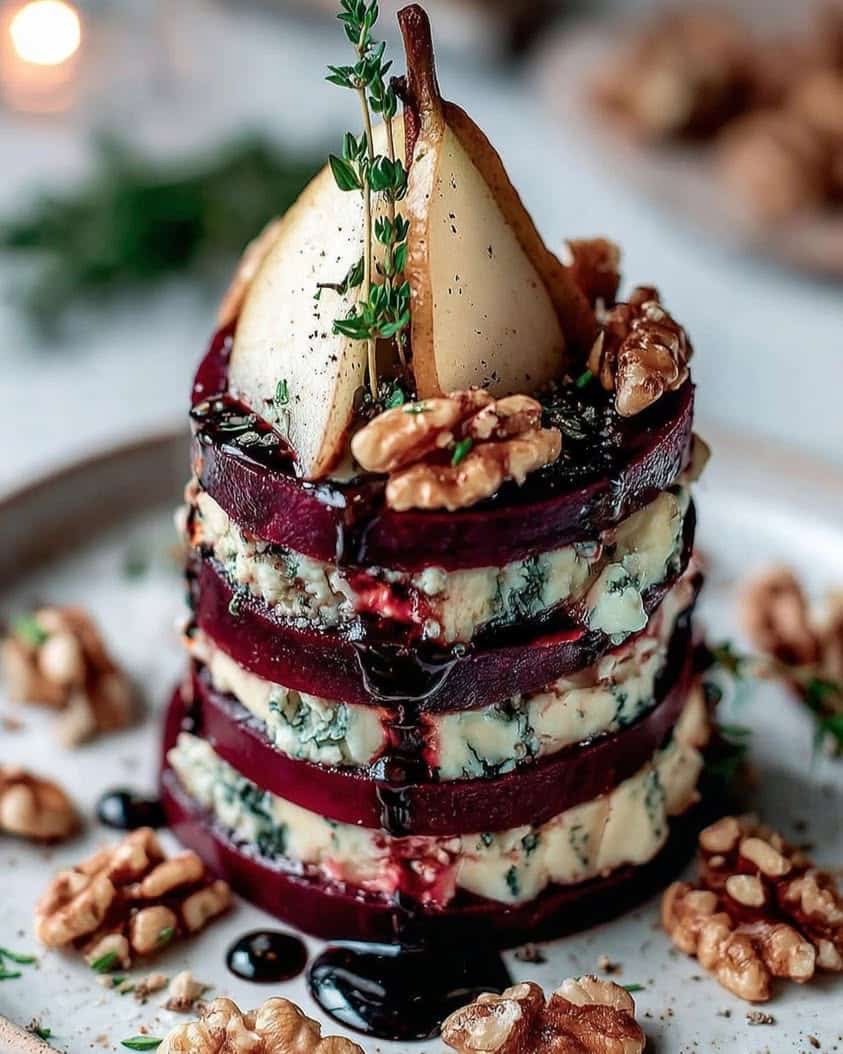
Roasted Beet Blue Cheese Towers with Pear and Balsamic Glaze bring restaurant-quality elegance straight to your home table. This stunning layered salad combines earthy roasted beets, creamy blue cheese, and sweet ripe pear into a beautiful tower that looks as impressive as it tastes. If you want a dish that earns gasps of delight when you set it down, this recipe delivers exactly that. Because the flavors balance so perfectly, even people who think they dislike beets often change their minds after one bite.
The magic of these Roasted Beet Blue Cheese Towers with Pear and Balsamic Glaze comes from the contrast between each layer. Sweet roasted beet slices meet tangy blue cheese crumbles, and juicy pear rounds tie everything together with a mellow sweetness. Then a drizzle of thick balsamic glaze adds a glossy finish that pulls all the flavors into harmony. As a result, every forkful offers something new, whether it is the crunch of candied walnuts or the smooth richness of cheese.
Moreover, this recipe fits almost any occasion, from holiday dinners to quiet weeknights when you want something special. You can prepare most of the components ahead of time, and the assembly takes only minutes. Consequently, these Roasted Beet Blue Cheese Towers with Pear and Balsamic Glaze make hosting feel effortless. Whether you serve them as a starter or a light main course, they always steal the spotlight on the table.
Quick Recipe Highlights
- Flavor Profile: Earthy sweetness from roasted beets pairs with the bold tang of blue cheese. The pear adds a gentle fruity note, and the balsamic glaze brings a syrupy tartness that rounds everything out. Together these elements create a balanced bite that feels sophisticated yet comforting.
- Texture: Each tower stacks tender beet slices, creamy cheese, and juicy pear for a soft, luscious mouthfeel. Candied walnuts or toasted seeds add a satisfying crunch that keeps the dish interesting. As a result, you get a pleasant contrast in every single bite.
- Aroma: Roasting concentrates the beets natural sugars and fills your kitchen with a warm, sweet scent. The blue cheese contributes a pungent note that mellows once combined with the pear. Meanwhile, the balsamic glaze adds a bright, tangy fragrance that wakes up the senses.
- Visual Appeal: Deep ruby beet layers alternate with ivory cheese and pale gold pear for a striking stack. The dark balsamic glaze drizzles over the top and pools slightly on the plate. Therefore, the final presentation looks like a dish from a fine dining menu.
- Skill Level Needed: This recipe suits cooks who feel comfortable roasting vegetables and slicing evenly. The assembly requires a steady hand, yet the steps stay simple and forgiving. Even a beginner can succeed with a little patience and a sharp knife.
- Special Equipment: You need a sharp chef knife, a cutting board, and a rimmed baking sheet for roasting. A small saucepan handles the balsamic glaze, and a set of ring molds helps build neat towers. However, you can stack the layers freehand if you prefer a rustic look.
Recipe Overview
- Difficulty Level: This recipe lands squarely in the intermediate range because it involves roasting, reducing a glaze, and careful assembly. None of the individual steps are hard, yet the timing and layering demand some attention. With a bit of practice, though, the process becomes second nature. The payoff justifies the effort, since the finished towers look truly professional.
- Category: These towers work beautifully as a first course, a side salad, or a light vegetarian main. They fit into brunch menus, dinner parties, and holiday spreads with equal ease. Because they feel both fresh and hearty, they bridge the gap between salad and entree.
- Cuisine: The dish draws from modern American cooking, which loves to mix sweet, salty, and tangy elements on one plate. French cuisine influences the technique through the balsamic reduction and careful plating. Italian traditions inspire the use of balsamic vinegar and fresh produce. Meanwhile, the tower format echoes contemporary restaurant presentation styles.
- Cost: Four servings cost roughly twelve to eighteen dollars depending on where you shop. Beets and pears stay affordable year round, and blue cheese varies widely in price. The balsamic glaze costs little because you make it from everyday vinegar. Overall, this dish delivers impressive value for a special occasion.
- Season: Fall and winter suit this recipe best because beets and pears peak during those months. Cool weather also makes roasted vegetables feel especially comforting. That said, you can find good beets and pears in spring and summer too. Simply chill the towers longer and serve them on warmer days.
- Occasion: Holiday dinners, dinner parties, and anniversary meals all welcome these towers. They also shine at potlucks because the presentation wows a crowd. For a casual gathering, you can deconstruct the layers into a tossed salad. Either way, the dish adapts to the mood of your event.
Why You’ll Love This Recipe
First, the taste of these Roasted Beet Blue Cheese Towers with Pear and Balsamic Glaze hits every note your palate craves. Sweet meets salty, earthy meets tangy, and creamy meets crisp in a single bite. Roasting transforms beets from harsh and dirt-like into candy-sweet morsels with deep caramel notes. The blue cheese then cuts through that sweetness with a bold, savory punch. Finally, the pear and balsamic glaze soften the edges and leave a clean, bright finish.
Second, the convenience of this recipe surprises most people. You roast the beets up to four days ahead and store them in the fridge. You also make the balsamic glaze in advance and keep it at room temperature. Then, when guests arrive, you simply slice, stack, and drizzle. As a result, the stress of entertaining disappears, and you actually enjoy your own party.
Third, the nutritional profile gives you plenty of reasons to feel good about serving these Roasted Beet Blue Cheese Towers with Pear and Balsamic Glaze. Beets deliver fiber, folate, and natural nitrates that support healthy blood flow. Pears add vitamin C and more fiber, while walnuts bring heart-healthy fats. Blue cheese contributes protein and calcium, so the dish satisfies without weighing you down. Even the balsamic glaze offers antioxidants from grape must.
Fourth, the social value of this recipe cannot be overstated. These towers make a dramatic centerpiece that sparks conversation before anyone takes a bite. Guests photograph them, ask about the layers, and request the recipe every time. Because the dish looks fancy, people assume you spent hours in the kitchen. You can smile and keep your secret about how simple the process really is.
Fifth, the cost-effectiveness keeps this recipe in your regular rotation. Beets rank among the cheapest root vegetables at the market. Pears cost little when in season, and a small wedge of blue cheese goes a long way. The glaze uses inexpensive balsamic vinegar reduced with a touch of honey. Consequently, you create a restaurant-worthy plate for a fraction of the menu price.
Historical Background and Cultural Significance
The story of these Roasted Beet Blue Cheese Towers with Pear and Balsamic Glaze begins with the humble beet, a vegetable humans have cultivated for thousands of years. Ancient Romans and Greeks grew beets for their leaves long before they prized the roots. Over centuries, cooks in Eastern and Northern Europe learned to roast and pickle the sweet roots. Those traditions eventually crossed the Atlantic and took root in American kitchens.
Blue cheese carries its own rich history that spans many cultures. Roquefort from France, Gorgonzola from Italy, and Stilton from England each developed distinct styles over hundreds of years. Legend says a shepherd left bread and cheese in a cave and returned to find it veined with blue mold. Whatever the true origin, blue cheese became a prized delicacy across Europe. Its bold character made it a natural partner for sweet produce like pears and beets.
Pears have graced tables since ancient times as well, and the pairing of pears with blue cheese ranks among the classic combinations in Western cuisine. Meanwhile, balsamic vinegar from Modena, Italy, gained fame for its syrupy richness and complex sweetness. Chefs began reducing balsamic into a glaze to decorate plates in the 1980s and 1990s. That technique spread quickly through American restaurants and then into home kitchens.
The tower format reflects the modern obsession with visual presentation that grew during the fine dining boom. Chefs started stacking ingredients to create height and drama on the plate. Home cooks soon adopted the idea because it turned simple salads into showpieces. Therefore, these Roasted Beet Blue Cheese Towers with Pear and Balsamic Glaze represent a fusion of old world ingredients and new world style. Regional variations now appear everywhere, from California wine country to New York bistros.
Ingredient Deep Dive
Beets anchor these Roasted Beet Blue Cheese Towers with Pear and Balsamic Glaze, and their history stretches back to ancient Mediterranean gardens. People first ate the leafy greens, and only later did they appreciate the sweet roots. Today, beets symbolize earthy comfort and appear in cuisines from Russia to Australia. Nutritionally, they pack folate, manganese, and nitrates that support stamina and heart health. When selecting beets, choose firm roots with smooth skin and fresh greens attached if possible. Avoid soft spots or wrinkled surfaces, which signal age. Store beets in the refrigerator crisper for up to two weeks, and keep the greens separate so they do not drain moisture from the roots. If you cannot find fresh beets, canned or vacuum packed cooked beets work as a quick substitute.
Blue cheese gives these Roasted Beet Blue Cheese Towers with Pear and Balsamic Glaze their bold, savory backbone. Cultures around the world have made blue veined cheeses for centuries, and each region developed its own signature style. The sharp, salty character of blue cheese comes from Penicillium mold introduced during production. This cheese also supplies protein, calcium, and vitamin B12, though it carries plenty of sodium and fat. For the best flavor, buy blue cheese from a specialty counter where you can taste before you buy. Look for even veining and a creamy texture without dryness. Wrap the cheese tightly in foil and store it in the refrigerator for up to two weeks. If blue cheese feels too intense, try Gorgonzola dolce or feta as a milder substitute.
Pears bring a juicy sweetness to these Roasted Beet Blue Cheese Towers with Pear and Balsamic Glaze that balances the salty cheese. Cultivated for thousands of years, pears appear in art, mythology, and holiday traditions across Europe and Asia. They offer fiber, vitamin C, and potassium while staying low in calories. When choosing pears, pick fruit that feels firm but yields slightly near the stem. Bartlett, Anjou, and Bosc varieties all work well in this recipe. Ripen pears at room temperature, then move them to the fridge to slow further softening. If pears are unavailable, apples or figs make excellent substitutes with similar sweetness.
Balsamic glaze ties these Roasted Beet Blue Cheese Towers with Pear and Balsamic Glaze together with its glossy, tangy finish. True balsamic vinegar comes from Modena, Italy, where producers age grape must in wooden barrels for years. The glaze concentrates that richness into a syrup that clings to every layer. While balsamic offers antioxidants, the glaze contains sugar, so a little goes a long way. Choose a mid-priced balsamic for reducing, since expensive aged vinegar deserves to stay uncooked. Store the finished glaze in a sealed jar at room temperature for months. If you prefer, pomegranate molasses or a honey vinegar reduction can replace the glaze.
Common Mistakes to Avoid
- Many cooks under roast the beets, which leaves them hard and earthy instead of sweet. Give them a full hour in a hot oven until a knife slides in easily. Proper roasting makes all the difference in flavor and texture.
- Some people slice the beets too thin, so the towers collapse under the weight of the cheese. Aim for quarter inch rounds that hold their shape. Uniform slices also make the stack look neat and professional.
- Others skip the resting time for the roasted beets and try to assemble while they are hot. Warm beets melt the cheese and turn the tower into a messy pile. Let the beets cool completely before building.
- A common error involves over reducing the balsamic glaze until it turns bitter and sticky. Pull the pan off the heat when the glaze coats the back of a spoon. It thickens further as it cools, so stop early.
- Some cooks use cold blue cheese straight from the fridge, which crumbles too much. Let the cheese sit at room temperature for twenty minutes first. Softer cheese spreads more evenly between the layers.
- Many people forget to dry the pear slices after cutting, and the extra juice makes the towers slippery. Pat the slices with a paper towel before stacking. This small step keeps the structure stable.
- Another mistake is dressing the plate too early, which causes the glaze to bleed into the other ingredients. Drizzle the balsamic just before serving. That way every element stays distinct and beautiful.
- Some cooks choose unripe pears that taste bland and gritty. Let the pears ripen until they give slightly to gentle pressure. Ripe fruit delivers the sweetness the recipe needs.
- A few people skip the salt and pepper on the beet slices, and the final dish tastes flat. Season each layer lightly as you build. Small amounts of seasoning sharpen all the flavors.
- Finally, some hosts assemble the towers hours ahead, and the layers slump over time. Build them within an hour of serving for the best look. You can still prep every component well in advance.
Essential Techniques
Roasting beets properly forms the foundation of these Roasted Beet Blue Cheese Towers with Pear and Balsamic Glaze. This technique matters because high heat converts the beets starches into sweet sugars and softens their tough fibers. To master it, trim the stems, scrub the roots, and wrap each beet in foil with a drizzle of oil. Place them on a baking sheet and roast at 400 degrees Fahrenheit for fifty to sixty minutes. A knife should slide in with no resistance when they finish. Watch for beets that feel firm after an hour, since undersized ovens or large roots can slow cooking. The visual cue is simple: the skin should wrinkle slightly and the surface should glisten.
Reducing balsamic vinegar into a glaze demands patience and attention, and this step gives the towers their signature shine. The technique matters because reduction concentrates flavor and creates a syrupy texture that clings to the food. To master it, simmer the vinegar with a touch of honey over medium low heat, stirring occasionally. The glaze will coat a spoon after eight to twelve minutes. A common pitfall involves boiling too hard, which burns the sugars and turns the glaze bitter. Watch for a slow, lazy bubble rather than a rolling boil. The visual cue is a glaze that leaves a clear trail when you drag a spoon through it.
Building a stable tower takes a steady hand and a smart order of operations, and this skill elevates these Roasted Beet Blue Cheese Towers with Pear and Balsamic Glaze from rustic to refined. The technique matters because a wobbly stack can topple before it reaches the table. To master it, place the largest beet slice at the bottom and work upward with slightly smaller pieces. Alternate cheese, pear, and beet, and press each layer gently into place. A common pitfall is overloading the cheese, which makes the tower slide. Use a ring mold if you want perfectly straight sides. The visual cue is a stack that stands tall without leaning.
Pro Tips for Perfect Roasted Beet Blue Cheese Towers
Choose beets of similar size so your slices match in diameter, which keeps the towers even and stable. Uniform rounds stack neatly and look polished on the plate. If sizes vary, trim the larger slices to match the smallest one.
Roast the beets a day ahead and chill them overnight, because cold beets slice far more cleanly than warm ones. The knife glides through without crushing the flesh. This step also spreads the work across two days for a calmer prep session.
Toast the walnuts in a dry skillet for three to four minutes until they smell nutty and fragrant. Toasting deepens their flavor and adds a warm crunch to every bite. Stir constantly so they do not scorch.
Make the balsamic glaze a few days early and store it in a squeeze bottle for easy drizzling. A squeeze bottle gives you control and creates elegant lines on the plate. The glaze keeps for weeks, so you can use it on other dishes too.
Season each layer lightly with flaky sea salt and cracked pepper as you build the towers. Seasoning between layers distributes flavor evenly instead of concentrating it on top. A light touch keeps the cheese and glaze from fighting the salt.
Serve the towers on chilled plates, especially in warm weather, because the cool surface helps the layers hold together. Chilled plates also make the colors pop against the white ceramic. Simply place the plates in the fridge for fifteen minutes before plating.
Add a handful of fresh arugula under each tower for color and a peppery bite that complements the sweet beets. The greens also anchor the tower and keep it from sliding. Dress the arugula lightly so it does not wilt.
Drizzle the balsamic glaze in a zigzag across the tower and the plate rather than pouring it over the top. This approach looks artistic and lets each diner control how much glaze they eat. It also prevents the tower from turning soggy.
Variations and Adaptations
Regional variations of these Roasted Beet Blue Cheese Towers with Pear and Balsamic Glaze appear across the United States and beyond. In California, chefs often add toasted hazelnuts and a drizzle of local olive oil. In the South, cooks may use pecans and a touch of bourbon in the glaze. French versions sometimes swap the blue cheese for goat cheese and call the dish a salade de betteraves. Each region puts its own stamp on the same basic idea.
Seasonal adaptations keep this recipe fresh all year long. In fall, use crisp Bosc pears and add roasted squash cubes between the layers. During winter, try blood oranges in place of pears for a bright citrus twist. Spring brings tender baby beets that roast in half the time and look adorable on the plate. In summer, serve the towers chilled with fresh berries scattered around the base.
Dietary modifications make these towers accessible to nearly everyone. For a vegan version, replace the blue cheese with a cashew based cheese and use maple syrup in the glaze. To go dairy free, choose a plant based cheese alternative or simply omit the cheese and double the pear. For a low carb option, skip the honey in the glaze and use a sugar free sweetener. These swaps keep the spirit of the dish intact while meeting your needs.
Flavor variations let you play with the recipe as your mood shifts. Add a teaspoon of Dijon mustard to the glaze for a sharper bite. Infuse the balsamic with rosemary or thyme for an herbal note. Sprinkle smoked paprika over the beet slices for a hint of warmth. You can even swap the blue cheese for feta, which offers a milder saltiness.
Texture modifications help you tailor the dish to your preferences. Swap the candied walnuts for toasted pumpkin seeds if you want a lighter crunch. Add crispy fried shallots for a savory snap. For a softer bite, layer in slices of creamy avocado. Each change adjusts the overall mouthfeel without breaking the recipe.
Presentation alternatives suit different occasions and skill levels. Instead of tall towers, arrange the components in a flat layered salad on a platter. You can also skewer small beet, cheese, and pear bites as appetizers. For a deconstructed look, scatter the ingredients loosely and drizzle the glaze over everything. Any format works as long as the flavors stay together in each bite.
Serving and Presentation Guide
Plating techniques turn these Roasted Beet Blue Cheese Towers with Pear and Balsamic Glaze into a true centerpiece. Place each tower slightly off center on a white plate to create visual interest. Use a ring mold for crisp edges, or build freehand for a more organic look. Wipe the plate clean around the base before serving. A neat plate signals care and makes the colors stand out.
Garnishing ideas elevate the dish with minimal effort and maximum impact. Scatter a few candied walnuts around the base for crunch and contrast. Add small arugula leaves for a pop of green against the ruby beets. Crumble a little extra blue cheese on top for texture. A light dusting of flaky sea salt finishes the plate beautifully.
Traditional accompaniments include crusty bread and a simple green salad, which round out the meal. The bread soaks up extra glaze and offers a pleasant chew. A tangy vinaigrette on the salad balances the richness of the cheese. Together these sides create a complete dining experience.
Modern serving suggestions push the dish in new directions. Serve the towers as part of a grazing board with cured meats and olives. Pair them with a warm grain bowl for a hearty lunch. You can also plate them beside seared salmon or roast chicken for an elegant dinner. The towers complement many main courses.
Temperature considerations matter because the dish tastes best when the beets stay cool and the glaze sits at room temperature. Cold beets hold their shape and offer a refreshing contrast to warm mains. If you serve the towers as a main course, let them sit out for ten minutes first. That brief rest takes the chill off without softening the layers.
Portion control tips help you feed a crowd without overbuilding each tower. Four to five layers per tower make a satisfying appetizer portion. For a main course, aim for six to seven layers and add a side of grains. Smaller towers work better for passed appetizers at parties. Adjust the size to match the occasion.
Wine and Beverage Pairing
Wine pairings for these Roasted Beet Blue Cheese Towers with Pear and Balsamic Glaze should balance the sweet, salty, and tangy elements on the plate. A crisp Sauvignon Blanc offers bright acidity that cuts through the creamy cheese. Dry Riesling brings a hint of sweetness that mirrors the pear and beets. For red wine lovers, a light Pinot Noir provides soft tannins without overpowering the dish. Sparkling wine also works beautifully because the bubbles refresh the palate between bites.
Non-alcoholic alternatives keep the pairing fun for every guest at the table. Sparkling water with a squeeze of lime cleanses the palate and complements the glaze. Apple cider, especially the cloudy kind, echoes the fruity notes of the pear. A cold hibiscus tea adds tartness that plays well with the balsamic. Ginger beer brings a spicy kick that stands up to the blue cheese.
Coffee and tea pairings may seem unusual for a salad, yet they work surprisingly well here. A light black tea with citrus notes mirrors the bright balsamic glaze. Green tea offers a grassy freshness that balances the earthy beets. If you prefer coffee, choose a mild roast with chocolate undertones. The slight bitterness contrasts nicely with the sweet pear.
Temperature considerations apply to every beverage you choose. Serve white wines and sparkling options well chilled for maximum refreshment. Red wines taste best slightly below room temperature so the fruit stays vibrant. Non-alcoholic drinks should be ice cold to echo the cool beets. A warm beverage, by contrast, feels cozy beside the roasted flavors.
Serving suggestions include offering two options so guests can choose their favorite. Set out wine glasses and a pitcher of sparkling water with lime. Add a small card describing each pairing to guide your guests. This small touch makes the meal feel curated and thoughtful. Everyone finds something they love.
Storage and Shelf Life
Storage methods for these Roasted Beet Blue Cheese Towers with Pear and Balsamic Glaze differ for each component, so plan accordingly. Keep roasted beets in an airtight container in the refrigerator for up to four days. Store blue cheese wrapped in foil to preserve its moisture and flavor. Keep pear slices in a sealed bag with a paper towel to absorb excess juice. The balsamic glaze stays fresh in a jar at room temperature for several weeks.
Temperature requirements matter because each ingredient has its own ideal range. Beets and pears need refrigeration between 35 and 40 degrees Fahrenheit. Blue cheese also belongs in the fridge, though it tastes best when brought to room temperature before serving. The glaze should never go in the refrigerator because cold temperatures make it too thick to drizzle. Keep it in a cool cupboard instead.
Container recommendations help you avoid common storage problems. Use glass containers for the beets, since plastic can stain and hold odors. Wrap the cheese in foil rather than plastic wrap so it can breathe. A squeeze bottle works perfectly for the glaze and makes reheating unnecessary. Label everything with dates so you use the oldest items first.
Signs of spoilage tell you when to toss a component. Beets develop a slimy texture or sour smell when they go bad. Blue cheese shows spoilage through ammonia odors or pink and brown streaks. Pears turn mushy and brown quickly once cut. The glaze lasts so long that spoilage rarely becomes an issue, though mold on the surface means it is time to discard it.
Reheating instructions stay simple because most components taste best cold or at room temperature. If you prefer warm beets, place them in a covered dish in a 300 degree oven for ten minutes. Avoid the microwave, which makes them rubbery. The glaze warms quickly in a bowl of hot water if it thickens too much. Never reheat the assembled towers, since the cheese and pear suffer.
Freezing guidelines apply mainly to the beets, which freeze well for up to three months. Slice them first, then freeze in a single layer before transferring to a bag. Blue cheese does not freeze well because it turns crumbly and grainy. Pears become mushy after freezing, so use them fresh. The glaze does not need freezing and keeps fine at room temperature.
Make Ahead Strategies
A smart prep timeline makes these Roasted Beet Blue Cheese Towers with Pear and Balsamic Glaze stress free for entertaining. Roast the beets up to four days ahead and refrigerate them whole. Make the balsamic glaze up to two weeks ahead and store it in a squeeze bottle. Toast the walnuts three days ahead and keep them in a sealed jar. Slice the pears and crumble the cheese on the day you plan to serve.
Storage between steps keeps each component in peak condition. Keep the roasted beets wrapped tightly so they do not dry out. Store the crumbled cheese in a small container with a lid. Hold the toasted nuts at room temperature so they stay crisp. The glaze needs no special care beyond a sealed jar.
Quality impact assessment shows that most components lose nothing during make ahead prep. Roasted beets actually taste better after a day in the fridge as the flavors deepen. The glaze improves as it sits and the flavors meld. Only the pear suffers from early slicing, which is why you cut it fresh. The cheese also tastes best when crumbled close to serving time.
Assembly tips help you build quickly when guests arrive. Set out all components in small bowls on a work surface. Use a ring mold for speed and consistency. Build each tower in the same order so they look uniform. Keep the plates chilled until the moment you serve.
Reheating guidelines mostly do not apply because you serve these towers cold or at room temperature. If you must warm the beets, do so gently in a low oven. Never reheat the assembled dish, since the cheese melts and the pear releases juice. The dish is designed to serve fresh and cool.
Fresh element additions bring the dish to life right before serving. Add arugula leaves, fresh herbs, or a squeeze of lemon juice at the last minute. These touches brighten the flavors and add color. A final drizzle of olive oil also adds a glossy finish. Keep these additions simple so they do not overwhelm the tower.
Scaling Instructions
Halving the recipe for these Roasted Beet Blue Cheese Towers with Pear and Balsamic Glaze works easily because the ingredients divide cleanly. Use two beets, two ounces of cheese, and one pear for two servings. Make the full batch of glaze anyway, since it keeps well and you will want extra. Roasting time stays the same even with fewer beets, so watch them closely near the end.
Doubling or tripling the recipe suits larger gatherings and holiday dinners. Use two baking sheets so the beets roast in a single layer and caramelize properly. Crowding the pan steams the beets instead of roasting them. Make the glaze in a wider saucepan so it reduces at the same rate. Assemble the towers in batches to keep them fresh.
Equipment adjustments matter when you scale up. A larger pot prevents the glaze from boiling over. Extra ring molds speed the assembly line for big batches. You may also need more plates or a large platter for serving. Plan your space before you start cooking.
Timing modifications keep the schedule on track when you multiply the recipe. Roasting takes the same time per pan, but you may need to rotate sheets for even cooking. The glaze reduces in the same window, though a bigger batch may need an extra minute or two. Assembly time grows with each tower you build, so allow extra minutes. Start early and keep components ready.
Storage considerations change with larger batches because you need more containers. Use several shallow containers for the beets so they cool quickly. Store extra glaze in multiple jars for easy use. Keep nuts in a big sealed jar at room temperature. Label everything so nothing gets lost in a crowded fridge.
Nutritional Deep Dive
The macro breakdown for these Roasted Beet Blue Cheese Towers with Pear and Balsamic Glaze shows a balanced profile for a starter or light main. Each serving delivers roughly 260 calories, with about 8 grams of protein from the cheese and nuts. Fat lands near 15 grams, mostly from the blue cheese and walnuts. Carbohydrates reach about 24 grams, with 5 grams of fiber from the beets and pear. Sugar stays moderate at around 15 grams, much of it natural.
Micronutrient analysis reveals why this dish deserves a spot in your rotation. Beets supply folate, manganese, and potassium, along with nitrates that support blood flow. Pears contribute vitamin C and copper, while walnuts offer vitamin E and omega 3 fats. Blue cheese adds calcium, vitamin B12, and phosphorus. The balsamic glaze brings small amounts of antioxidants from grape must.
Health benefits extend beyond basic nutrition. The fiber in beets and pears supports digestion and helps you feel full. Healthy fats from walnuts support heart health and brain function. Nitrates in beets may improve exercise performance and lower blood pressure. Antioxidants from the balsamic and produce fight oxidative stress. Together these elements make the dish as nourishing as it is delicious.
Dietary considerations matter for guests with specific needs. The recipe contains dairy and nuts, so label it clearly at a buffet. Blue cheese is not vegetarian in the strict sense because of the mold culture, though many vegetarians eat it. The dish also contains honey, which some vegans avoid. Adjust the recipe as needed for your guests.
Portion analysis helps you fit the dish into your daily goals. A single tower makes a light appetizer at around 260 calories. Two towers with a grain side become a filling main course. The dish pairs well with lean proteins if you want to boost the protein content. Adjust portions to match your hunger and activity level.
Weight management tips keep the dish friendly for those watching calories. Reduce the blue cheese to one ounce per serving to cut fat and sodium. Skip the candied walnuts and use plain toasted nuts instead. Use a sugar free sweetener in the glaze to lower the sugar. These small changes trim calories without sacrificing flavor.
Dietary Adaptations
Gluten-free diners can enjoy these Roasted Beet Blue Cheese Towers with Pear and Balsamic Glaze without any changes, because the recipe contains no wheat or grains. Still, check labels on the balsamic vinegar and blue cheese for added fillers. Some blue cheeses contain bread mold cultures, though the final product rarely contains gluten. When in doubt, choose a brand that labels its cheese gluten free. Serve with gluten free crackers if you add a side.
Dairy-free versions require swapping the blue cheese for a plant based alternative. Cashew cheese with a tangy culture mimics blue cheese surprisingly well. You can also use a firm tofu crumble seasoned with nutritional yeast and lemon. Coconut based cheese spreads work too, though the flavor differs. The rest of the recipe stays naturally dairy free.
Vegan adaptations combine the dairy free cheese swap with a honey replacement. Use maple syrup or agave in the balsamic glaze instead of honey. Check that your balsamic vinegar contains no added honey or dairy. Toasted seeds replace any cheese based crunch. With these changes, the dish fits a fully plant based diet.
Low-carb eaters can adjust the recipe by cutting back on the sweet elements. Skip the honey in the glaze and reduce the pear to a few thin slices. Add extra arugula and walnuts for bulk and healthy fat. The beets do contain natural sugar, so keep portions moderate. These tweaks bring the net carbs down to a friendly level.
Keto adaptations need more aggressive changes because beets and pears both carry significant carbs. Swap the beets for roasted radishes or turnips, which mimic the texture with far fewer carbs. Replace the pear with a few raspberries for tartness. Use a sugar free sweetener in the glaze. The result keeps the spirit of the dish while fitting ketogenic macros.
Pale Print
Roasted Beet Blue Cheese Towers with Pear & Balsamic Glaze
- Total Time: 1 hour 15 minutes
- Yield: 4
Description
A stunning and elegant appetizer featuring layers of roasted beets, creamy blue cheese, and fresh pear, drizzled with a sweet and tangy balsamic glaze. Perfect for impressing guests at your next dinner party.
Ingredients
- 3 medium beets, roasted, peeled, and sliced into 1/4-inch rounds
- 4 oz blue cheese, crumbled
- 2 ripe pears, cored and thinly sliced
- 1/2 cup balsamic vinegar
- 2 tbsp honey
- 2 tbsp olive oil
- Salt and freshly ground black pepper, to taste
- Fresh thyme leaves, for garnish
Instructions
- Preheat oven to 400°F (200°C). Wrap beets in foil and roast for 45-60 minutes until tender. Let cool, then peel and slice into 1/4-inch rounds.
- In a small saucepan, combine balsamic vinegar and honey. Bring to a simmer over medium heat and cook until reduced by half and syrupy, about 5-7 minutes. Set aside.
- To assemble towers: On a serving plate, place a beet slice. Top with a pear slice, then a sprinkle of blue cheese. Repeat layers, finishing with a beet slice on top. Secure with a toothpick if needed.
- Drizzle each tower with olive oil and balsamic glaze. Season with salt and pepper. Garnish with fresh thyme leaves. Serve immediately.
Notes
You can customize the seasonings to taste.
- Prep Time: 15 minutes
- Cook Time: 1 hour
- Method: Appetizer
- Cuisine: American